
Quick Answer
Choose paid tiers when revenue from early usage needs to cover acquisition and service costs. Test freemium when users can reach useful value cheaply and your cohorts show a viable upgrade path. Compare retained paying accounts and contribution margin, rather than choosing the model with the most signups.
Choosing Between Freemium and Paid Tiers#
For a payment platform, this is not an abstract free versus paid debate. The real question is whether freemium or paid tiers create the customer mix you want at a cost and revenue pace your business can sustain. In practice, the choice comes down to growth quality, support load, and when monetization starts.
Freemium gives users entry-level access for free, with paid upgrades for more capability. That free access is usually ongoing, not time-limited. Paid tiers, especially subscription plans, can bring monetization earlier and provide more predictable monthly costs. Neither model is automatically better. Each changes conversion, upgrade timing, and cost to serve in different ways.
Freemium also creates operating cost before revenue arrives. Free users still consume infrastructure, support, and product effort, so the packaging balance is delicate. Too much free value can suppress upgrades. Too little can hurt retention. That is why signup volume alone is a weak pricing signal.
Read this choice through a unit-economics lens: direct revenue and cost per unit, and what that means for break-even and gross margin. The comparison keeps tying packaging choices back to LTV, CAC, ARPU, and churn. If acquisition rises but ARPU weakens or service costs outpace upgrades, growth is not efficient. If paid tiers reduce volume but improve revenue timing and customer durability, they may be healthier.
Before comparing models, define each conversion event and its denominator: for example, paid upgrades divided by eligible free accounts in a signup cohort. Keep the window fixed so tracking changes do not masquerade as pricing gains. In Stripe subscription analytics, changes to metric definitions can take 24 to 48 hours to appear.
Use your own cohort evidence, not borrowed benchmarks. Track subscriber loss and read lifetime value alongside revenue per paying account, cost to serve and the time it takes free users to upgrade.
Freemium and paid tiers compared at a glance#
Paid tiers often give earlier, more predictable revenue. Freemium often gives broader reach, but with more uncertainty around monetization. The practical decision is how much variability you can absorb in ARPU, LTV, and gross margin. Freemium and paid tiers are packaging choices, while a subscription model is the recurring billing structure that can sit under either one.
| Processor | Key state or behavior | Timing/extra |
|---|---|---|
| Stripe | Exposes incomplete, incomplete_expired, trialing, active, past_due, canceled, unpaid, and paused | An initially incomplete subscription becomes incomplete_expired if its first invoice remains unpaid after 23 hours |
| Braintree | Failed subscription payments commonly move to Past Due | Trial subscriptions are treated as Active |
| Paddle | Unpaid renewals are marked past_due | Can auto-cancel after 30 days when Paddle Retain is off |
| Adyen | Supports recurring charging through tokenization | For future card-on-file or recurring payments |
| Criteria | Freemium | Paid tiers | Subscription model |
|---|---|---|---|
| Acquisition speed | Often faster because basic access is free | Often slower because value must justify payment earlier | Neutral by itself; depends on free, trial, or paid entry |
| Revenue timing | Delayed until upgrade | Earlier because payment starts sooner | Predictable recurring revenue once active (MRR framing) |
| Conversion quality | Can be uneven; aggressive freemium can reduce conversion rate even if signups rise | Often higher intent because payment is an early qualifier | Depends on packaging and upgrade design |
| Support burden | Varies by implementation; free and paid cohorts are handled together | Varies by implementation; most users start on paid paths | Ongoing billing operations across renewals, retries, and cancellations |
| Pricing flexibility | High for feature gates and upgrade prompts | High across flat-rate, per-seat, usage-based, tiered, package, volume, and variable setups | High for recurring variants, with lifecycle-rule constraints |
| ARPU effect | Depends on free-to-paid conversion strength | Depends on entry price and retention | Improves ARPU visibility, not ARPU by default |
| Expected LTV path | Depends on upgrade and retention over time | Starts earlier once payment begins, then depends on retention | Recurring structure supports cleaner lifetime tracking |
| Exposure to weak gross margin | Can increase if free-usage cost is not offset by upgrades | Can decrease when pricing covers cost to serve earlier | Sensitive to failed payments and recovery outcomes |
| Billing-state complexity | Can be high when free, trial, and paid states coexist | Moderate when most users start paid | High because recurring billing adds lifecycle states |
| Packaging changes | Risk if free value suppresses upgrades | Risk if paywall blocks early activation | Requires careful mapping of plans, entitlements, and state transitions |
Tooling fit (Stripe, Paddle, Adyen, Braintree) | Works with strong entitlement logic | Strong fit for paid-first recurring plans | Strong fit if you can operate processor-specific states reliably |
State handling is often a hidden operations cost. In Stripe, a subscription can begin as incomplete when the first payment is pending or needs action. If that first invoice remains unpaid after 23 hours, the subscription becomes incomplete_expired. Treat that initial-payment path separately from failed renewals on an established subscription.
Processor behavior also differs in ways that affect operations. Braintree treats trial subscriptions as Active and commonly moves failed subscription payments to Past Due. Paddle marks unpaid renewals as past_due and can auto-cancel after 30 days when Paddle Retain is off. Adyen supports recurring charging through tokenization for future card-on-file or recurring payments.
Before launch, map each customer-facing plan state to the exact processor billing states behind it. If that mapping is fuzzy, ARPU, LTV, and gross-margin reads become harder to interpret.
In recurring models, paid tiers can improve revenue predictability once customers activate and retain. Freemium can widen reach when free usage leads to upgrades that cover acquisition and servicing costs.
Stop mixing up freemium, free trial, and reverse trial#
Get the labels straight before you compare pricing performance. Freemium is basic ongoing access with paid advanced features. Free trial is temporary evaluation access. Reverse trial starts users on paid features, then moves them to freemium when the trial ends. If you blur those definitions, you end up comparing different funnels as if they were the same strategy.
| Model | What the user gets first | Time limit | What happens next | Common metric mistake |
|---|---|---|---|---|
| Freemium | Usable core product with fewer features than premium | No built-in end date | User stays free or upgrades later | High signups can mask weak paid conversion |
| Free trial | Free evaluation access, sometimes limited in important ways | Yes | Can auto-transition to regular pricing or another configured price | Trial-to-paid gets reported like freemium conversion |
| Reverse trial | Paid features first | Yes | User moves to freemium at trial end | Reported as freemium growth even though entry was premium |
Also separate nearby models so you do not mix incompatible economics:
- One-time purchase: one charge, no automatic ongoing billing.
- Paid membership: recurring payment for member perks.
- In-app purchase (IAP): in-product unlock path that can be consumable, non-consumable, or subscription-based.
This is where teams usually misread outcomes. Google Ads defines conversion rate as conversions per ad interaction, while Stripe Billing support defines subscriber churn as movement from non-zero MRR to zero MRR. So a one-time purchase flow, a paid membership model, and a reverse-trial funnel should not share the same conversion or retention story without adjustment.
Before launch, verify that your pricing page, in-product copy, entitlement logic, and billing setup all use the same model label. In Stripe, confirm whether a trial auto-transitions to regular pricing or another configured price, because that branch changes how you should read activation, conversion, and retention. For deeper acquisition mechanics, see freemium vs. free trial vs. reverse trial.
For a step-by-step walkthrough, see How to Implement a Freemium-to-Paid Conversion Funnel on Your Platform.
Use a unit-economics lens before you touch packaging#
Do not choose between freemium and paid tiers based on signup volume. If CAC payback only works with early cash recovery, favor paid tiers. If education is the bottleneck and free usage is cheap to serve, test freemium only when you have evidence that users retain and move toward paid.
| Metric | Why it matters | Freemium fits better when | Paid tiers fit better when |
|---|---|---|---|
| CAC and payback | Shows how quickly contribution from customers recovers acquisition spend | You can educate in-product and wait longer to monetize | You cannot fund a long free ramp within your cash runway |
| ARPU | Shows revenue per user | Free volume can later convert into enough higher-value upgrades | You need stronger revenue per account earlier to cover delivery and ops costs |
| Retention and LTV | High subscriber loss reduces LTV and planning reliability | You have evidence free access improves activation and supports stronger paid retention later | Attrition is already high and delaying monetization adds risk |
| Gross margin | Revenue quality depends on direct cost | You can keep free users inexpensive to process and support | Processing, support, and manual ops can make low-intent accounts unprofitable |
Set a payback target from your own cash runway. For an illustrative monthly plan, a $300 acquisition cost and $25 monthly contribution after direct costs imply 12 months to recover CAC, assuming the customer stays. If freemium adds $50 of pre-upgrade cost, payback becomes 14 months after the upgrade, plus the time spent free. A revenue-based LTV estimate alone will miss that cost.
Read ARPU, retention, and margin together. Aggressive freemium packaging can lower conversion, so widening free access before your upgrade path is reliable can increase adoption while weakening the behavior that funds the model.
Processor fees matter most on small payments. For example, with a hypothetical fee of 3% plus $0.30, a $10 monthly charge costs $0.60 to collect, leaving $9.40 before support and other direct costs. Model your actual country, payment-method, cross-border, currency-conversion and dispute charges from your provider agreement; a headline card rate does not cover all of them.
Use billing analytics to track movement, not full economics. Stripe Billing analytics shows customer-level MRR changes such as new, upgrades, downgrades, reactivations, and churn, but you still need plan-level cost accounting outside the dashboard. If you use Braintree, confirm stack fit early because recurring billing is not compatible with Braintree Marketplace. Keep the focus on profitable growth, not volume alone. That standard makes packaging decisions much clearer.
If-then rules that hold up in practice#
- If your model depends on fast CAC recovery, favor paid tiers.
- If users need product exposure to understand value and free usage is cheap, test freemium with strict upgrade instrumentation.
- If retention is already weak, do not assume freemium fixes it; high churn compresses LTV either way.
- If free-plan support load rises without paid progression, tighten free scope or move toward paid-first packaging.
Minimum evidence pack before you change packaging#
Before you change plans, make sure you have this evidence in hand:
| Evidence | Detail |
|---|---|
| Cohort retention view | By start month and plan |
| Upgrade path drop-off | From activation to pricing view to checkout to successful payment |
| Support ticket mix | By free vs paid, with issue categories |
| Margin by plan | After processor fees, chargebacks, and direct servicing cost |
If cash recovery and margin discipline are tight, default to paid tiers. Move into freemium only when retention, upgrade flow, and margin evidence are already clear.
Pressure-test ARPU, CAC payback, and margin guardrails with your own assumptions using the pricing calculator.
Hidden costs competitors gloss over#
Many pricing mistakes show up after launch, not at signup. If your margins are tight, treat Freemium as the riskier operating model until your conversion, billing, and compliance flows prove otherwise.
| Hidden cost area | Freemium exposure | Paid tiers exposure | What you should verify |
|---|---|---|---|
| ARPU and upgrade cannibalization | Users who could pay may stay free, while free usage still adds server, support, and development cost | Revenue can be captured earlier, with less reliance on later upgrades | Free-to-paid conversion by cohort, plus free-user support and infrastructure cost |
| Subscription model state changes | More entitlement and billing states across free, upgrade, downgrade, retries, and cancellations | Fewer states, but upgrade/downgrade and failed-renewal logic still matters | Billing events, product access, and customer emails stay in sync |
| Finance visibility and cash timing | Activity can look strong before cash timing and margin are clear | Earlier cash capture is possible, but still exposed to settlement and reporting gaps | Reconcile gross charges, fees, and net settlements before reading Gross margin |
| Compliance-gated actions | More risk when users hit KYC checks only when they expect to transact | Friction still exists, but can be introduced earlier | Drop-off by verification step, document-request rate, and time in pending review |
Cannibalization is usually an ARPU problem first#
The first risk is economic, not cosmetic: free usage still costs you. If you give away too much, users may not upgrade, while free users continue consuming support and infrastructure. That combination can pressure ARPU from both sides.
Freemium can still work, but its economics depend on converting free users into paying customers. Track whether value-reaching cohorts convert, and whether heavy free users look like the segment you expected to pay.
Operational drag compounds in the Subscription model#
Mixed free and paid packaging creates more state-management work. Upgrades and downgrades replace subscription items, and proration adds partial-period billing logic that has to match entitlements and messaging.
A practical failure mode is inconsistency: billing says one thing, access says another, and customer emails say a third. Recovery flows add more complexity because failed recurring payments may need multiple retries and webhook-driven handling.
Finance friction can make Gross margin look better than it is#
Bookings, cash, and recognized revenue do not move in lockstep. Under IFRS 15, revenue reporting depends on the nature, amount, timing, and uncertainty of what was delivered, not just on cash receipt.
Settlement timing creates a separate cash-planning problem. A collected subscription payment may reach your bank later and after fees or adjustments. Reconcile gross charges to net settlements for cash visibility, and calculate gross margin from revenue and direct costs rather than treating a bank deposit as revenue.
Compliance friction can increase drop-off risk when sequencing is wrong#
Payment capabilities are verification-gated, including KYC checks before processing or payout. When users hit those checks only at the point they expect to move money, drop-off risk can rise.
Move verification earlier in the journey and monitor where incomplete onboarding data triggers extra documentation requests. If pending verification becomes a common holding state, simplify packaging or move gating earlier so expectations and flow stay aligned.
Scenario recommendations for founders, product, and finance#
Start with this heuristic: if onboarding includes meaningful setup, KYC, or manual review before users can transact, consider starting with Paid tiers. Test Freemium when users can reach value in a near-self-serve flow, marginal cost per added user is low, and upgrade triggers are instrumented.
A wider funnel is useful only if enough accounts become durable paying customers. As an illustrative comparison, 1,000 free signups with 50 upgrades and 200 trial starts with 50 paid conversions produce the same number of new paying accounts. Compare how long each path takes, the costs before payment and retention after payment before declaring either one better.
| Scenario | Default recommendation | Decision rule before launch | Model variant that can fit |
|---|---|---|---|
| Early-stage acquisition push | Test Freemium only in true self-serve onboarding | If users hit activation before compliance or manual steps, freemium can be viable; otherwise consider paid entry | Tiered Subscription model with strict free limits; optional One-time purchase add-ons |
| Enterprise-heavy motion | Paid-first is often a safer starting point | If value realization depends on implementation, review, or verification work, paid-first can be cleaner | Paid recurring tiers, with a short proof period instead of ongoing free access |
| Mixed SMB and midmarket motion | Segment-specific packaging rather than one blended default | Split by segment behavior and onboarding reality, not one blended package | Core paid tiers plus In-app purchase (IAP) or one-time add-ons where channel fit is clear |
Early-stage acquisition push#
Freemium is worth testing when the first value moment happens before heavy compliance friction. In payment-platform contexts with payout requirements, users may need to complete onboarding and KYC checks before payout access, and connected-account verification can be operationally complex. If activation sits after those steps, free access may expand unverified volume without improving monetization.
Your checkpoint is activation-to-upgrade flow quality, not signup count. If you cannot define activation clearly or trace free signup to upgrade attempt and paid activation, do not choose freemium yet.
Enterprise-heavy motion#
For enterprise-leaning motions, Paid tiers can be a cleaner fit when onboarding and verification are substantial. An indefinite free plan may not remove that core friction.
Confirm billing-change mechanics before scaling paid packaging. Set the customer notice period from your contracts, applicable rules and payment-provider requirements. Tie the effective date to renewal and access changes so billing, finance and support communicate the same outcome.
Mixed SMB and midmarket motion#
Do not force one blended package on segments that onboard differently. Keep paid tiers for higher-touch or compliance-heavy paths, and test free entry only where onboarding is truly self-serve.
Hybrid monetization can support that segmentation. A Subscription model can hold core value, with One-time purchase items layered in where appropriate. In app-store channels, Google Play and Apple organize monetization around one-time products and subscriptions, and Apple supports IAP types including non-consumables and auto-renewable subscriptions.
Do not choose freemium yet#
Hold off if any of these are true:
- You do not have a clean activation metric tied to upgrade or retained usage.
- You cannot instrument free signup to upgrade attempt to paid activation.
- Support burden from non-paying users is already unresolved.
- Users must clear KYC, document review, or manual onboarding before first value.
- Incremental cost to serve free users is not low.
If these flags are present, consider starting with Paid tiers, tighten onboarding and measurement, then retest freemium with stricter upgrade triggers.
You might also find this useful: Freemium Architecture for Platforms Without Frustrating Power Users.
Signals that it is time to switch models#
Change models when the economics keep weakening, not when sentiment shifts. Move from Freemium to Paid tiers when free usage grows but conversion and retention do not. Watch for flat or weakening free-to-paid cohorts, rising cost to serve free users, and worsening unit economics.
| Current model | Trigger to investigate a switch | What to verify before changing packaging |
|---|---|---|
| Freemium | Monthly signup cohorts show flat or weakening free-to-paid upgrades | Check upgrade attempt rate, paid activation after upgrade, and whether free and paid value are clearly separated |
| Freemium | Cost to serve free users keeps climbing | Review support tickets per active user, infrastructure spend, and overhead tied to non-paying users |
| Freemium | Free-user growth outpaces monetization gains | Confirm whether LTV can still support low conversion at your current cost to serve |
| Paid-first | Demand is strong but first-week activation is weak | Compare first-week activation and retention with your own prior cohorts and the milestone users need before paying |
| Paid-first | Early churn stays high after purchase | Check whether users are paying before they reach first value, especially in month one |
The reverse trigger for paid-first products is weak activation plus high early subscriber loss despite demand. In that case, test a lower-barrier entry path before cutting price. The decision test is simple: does a lower barrier improve activation without letting users stay indefinitely in free access?
Run this review on monthly cohorts, not weekly swings. Group users by signup month, then compare activation, upgrade, retention, and margin trends across cohorts. Change packaging only after the same signal repeats across multiple cohorts.
If cohorts point to an entry barrier rather than weak demand, test a bounded lower-friction path. Keep the model definitions clear; see freemium vs. free trial vs. reverse trial.
Rollout sequence that avoids revenue shock#
Do not switch models in one move. Use a staged rollout: lock baseline metrics, define guardrails, run a narrow experiment, then expand by segment across your cohorts.
| Stage | What to lock before moving on | Common failure mode |
|---|---|---|
| Baseline metrics | Monthly cohort conversion, churn, ARPU, support volume, failed payment rate, and margin by plan | No clear read on whether the pricing change caused the decline |
| Guardrails | Written rollback thresholds and named owners across billing, product, finance, and support | Teams keep shipping because no shared stop condition exists |
| Limited experiment | One segment, new plan IDs, tested entitlements, and explicit invoice behavior | Billing side effects hit the full base at once |
| Segment expansion | Rollout order by cohort (for example: new self-serve first, then lower-risk existing accounts, then complex accounts) | High-touch or edge-case accounts migrate before issues are understood |
Start from cohort-level baselines, not anecdotes, so early post-migration changes are measurable. Set guardrails before shipping so rollback is operational, not something you debate during an incident.
Migration mechanics#
Make grandfathering explicit. Decide who keeps legacy access, what ends that status, and whether existing subscribers stay on the legacy product until cancellation. In Stripe, archiving a legacy product can support this approach because existing subscriptions on that product remain active until canceled.
Set a communication window that matches your contracts and jurisdictions, and tie messaging to renewal timing and access changes. Keep entitlement mapping in one source of truth from legacy and free states to new plan IDs, feature flags, and fallback behavior when payment fails.
Billing stack checkpoints#
In Stripe, decide proration behavior before migration because subscription changes are prorated by default. Validate subscription-item updates carefully. Adding a new price without replacing the existing subscription item can leave both prices active. Changing a subscription item price without passing quantity can reset quantity to 1.
Use Stripe pending updates when eligible invoice-generating changes need payment-success gating; otherwise a failed payment can leave you with a manual rollback. For timed plan changes, use subscription schedules and test the transition before moving existing accounts.
For webhook reconciliation, verify signatures and make handlers idempotent. Stripe can deliver duplicate events and retries failed deliveries for up to three days in live mode. Adyen places failed deliveries in a retry queue for up to 30 days. Plan backlog handling so replayed events do not apply an upgrade twice or leave access behind payment state.
Before launch, publish the customer-facing assets you will need. That can include pricing page updates, upgrade messaging in product and email, and support playbooks (or macros, if your team uses them) for edge cases such as double charges, mid-cycle upgrades, failed renewals, and grandfathered access questions.
Instrumentation and verification checkpoints#
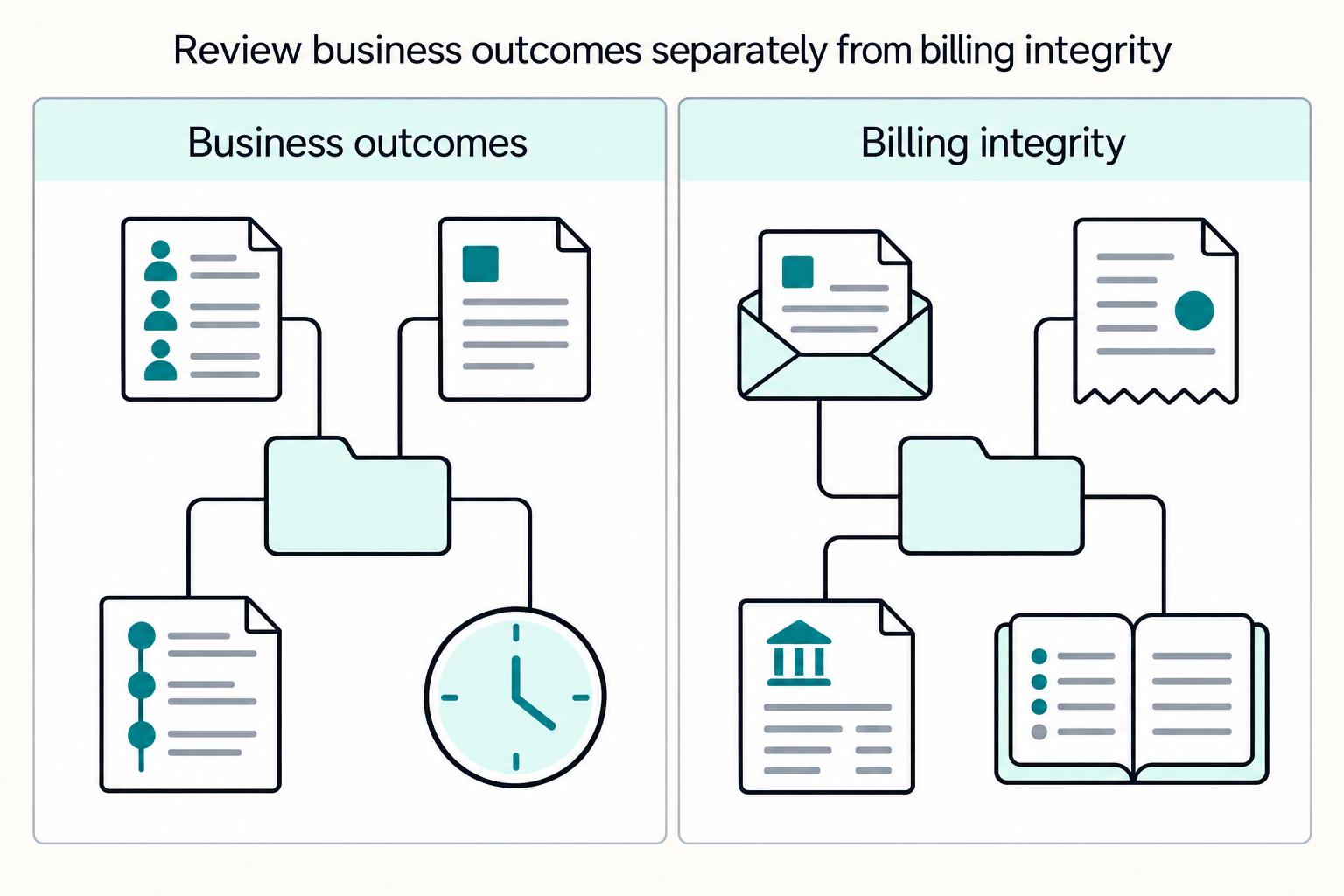
After launch, prove the new model is healthier on two separate tracks: business outcomes and billing integrity. Keep them separate, because conversion can rise while retention, recovery, or plan margin gets worse.
Use a small scorecard and keep definitions consistent. For cohort conversion rate, divide accounts that upgrade within a fixed window, such as 90 days, by eligible free accounts in that signup cohort. For monthly subscriber churn, define which paying accounts count as lost and divide losses by the paying accounts at the start of the month. Use ARPU for monthly recurring revenue divided by active paying accounts and CAC for acquisition spending divided by new paying accounts over the same window. Keep revenue-based LTV distinct from contribution after direct costs. If you only watch paid-start volume, you can miss weak retention and margin dilution.
| Checkpoint | What to review | Why it matters after a model change |
|---|---|---|
| Conversion rate | Defined upgrade or paid-start event by cohort | Confirms packaging improved monetization behavior, not just signups |
| Retention and LTV | Early retention by plan and cohort | Flags upgrades that lift short-term revenue but decay quickly |
| ARPU and margin by plan | Revenue per active subscriber and direct cost load | Shows whether pricing and usage mix are weakening unit economics |
| Upgrade latency | Time from activation milestone to paid conversion | Reveals confusion around upgrade triggers or friction in the path |
| Failed payment recovery | Retry attempts, recovery rate, payment status changes | Separates pricing friction from collections friction |
| Billing to finance reconciliation | Billing events versus payout and deposit reporting | Prevents bad decisions based on reporting mismatches |
This is where model changes often fail quietly. Measure upgrade latency from a meaningful product milestone, then watch failure handling closely. In Stripe, invoice.payment_failed is a key signal for subscription payment failures and retry updates, and subscription webhooks should also track status changes such as trial to active.
Set processor-aware expectations for retries and declines. Stripe recommends a default of 8 tries within 2 weeks for Smart Retries, but hard declines and some payment methods need different handling. Use your provider recovery settings and decline codes to decide when to request a new payment method, rather than treating every failure as another automatic retry.
Do not rely on blended averages. Read performance by segment, including motion, usage tier, and geography, and compare decline/recovery patterns at the processor level. If one segment clears guardrails and another does not, expand only the healthy segment.
Run finance verification as its own checkpoint. Reconcile billing events with finance reports and payout reporting. Stripe supports payout-to-bank-deposit reconciliation, and Paddle reconciliation maps remittances to underlying transactions and adjustments. If billed revenue and cash reconciliation drift, pause interpretation until you know why.
Write one stop-loss rule before rollout: if retention or margin in a segment degrades beyond agreed guardrails, pause rollout and manually roll back that segment. Decide those thresholds before incidents, not in the middle of one.
Common mistakes that make either model fail#
Many failures come from sequencing and measurement, not just the pricing page. If users do not reach clear value before upgrade pressure, and you do not track conversion, retention, ARPU, and LTV together, either model can look healthy in top-of-funnel metrics while revenue quality weakens.
| Failure mode | Warning sign | What to check |
|---|---|---|
| Freemium that never earns the upgrade | Free-to-paid conversion remains below the level needed to cover acquisition and free-user costs | Recheck the free boundary, the entry paid tier, and when you ask for payment |
| Paid tiers before activation proof | Users are paying before they reach first value | Check whether users who complete your activation event actually retain, and read subscriber loss on a stable window such as the past 30 days |
| Signups up, economics down | Top-of-funnel metrics look healthy while revenue quality weakens | Track conversion, activation, retention, time to conversion, revenue per user, and CAC vs. LTV |
Freemium that never earns the upgrade#
Freemium fails when the free boundary is not tied to value. Give away too much and users do not upgrade. Give away too little and they do not stay long enough to care.
Use cohort conversion as the checkpoint, not signup volume. Calculate how many upgrades your free-user cost and paid contribution require, then compare that target with observed cohorts. If the model falls short, recheck whether the free tier gives away the paid value, withholds the first useful result, or leads to an entry price users cannot justify.
Paid tiers before activation proof#
Paid tiers fail when you charge before users reliably experience value. If users are not reaching value early and often, paid starts can turn into one-time payments followed by churn.
Before changing price, confirm activation quality first. Check whether users who complete your activation event actually retain, and read subscriber loss on a stable window such as the past 30 days. If activation is weak, fix onboarding and early value delivery before you reprice.
Signups up, economics down#
Signup-heavy dashboards can hide monetization problems. Track conversion, activation, retention, time to conversion, revenue per user, and CAC vs. LTV so revenue quality shows up early.
Another common mistake is copying competitor packaging without checking your own economics. Competition-based pricing can keep you market-aligned. Without guardrails, it can turn into a race to the bottom when your economics differ.
Conclusion#
The right choice is the one that improves growth quality and unit economics together, not the one that simply drives more signups. If a model expands acquisition but weakens upgrade outcomes or profit math, it is not working.
Neither model should be your default. Freemium can widen reach, but if the free boundary is too generous, users may not upgrade. Paid tiers can support recurring revenue, but only if pricing covers costs and acquisition expense and still leaves room for profit. This is as much a financial decision as it is a growth decision.
Execution is what makes or breaks the outcome. Freemium and paid tiers can underperform when rollout is not instrumented, guardrails are missing, and tests are not disciplined. Before changing packaging, define the hypothesis and goal metric, then set guardrail metrics so a local win does not hide broader damage.
Use cohort-based reads, not blended topline numbers, to judge results over time. Then take one practical next step: run your pricing checklist against current cohort data, test one model change, and set clear success and rollback criteria before wider rollout.
If you are deciding between freemium and paid tiers across multiple markets, validate compliance gates and rollout constraints early by talking with Gruv.
Frequently Asked Questions
Which should a payment platform choose first, freemium or paid tiers?
There is no universal default. Paid tiers can be the better starting point when you need earlier revenue and users face setup friction before they reach core value. Test freemium when activation is truly self-serve, the free boundary is clear, and your data shows a reliable path from free usage to paid value.
What is the practical difference between freemium and free trial for platform monetization?
Freemium keeps a basic product free indefinitely, while a free trial gives temporary access before the configured end-of-trial action. Choose trial length around the time users need to experience value, and test what happens with and without a valid payment method at the end. For a deeper breakdown, see freemium vs. free trial vs. reverse trial.
When does freemium hurt growth more than it helps?
Freemium hurts when free-user growth rises but paid contribution does not cover the cost of acquiring and serving those users. Track upgrade timing, paid retention and the cost of free access together. A larger signup cohort is not a gain if it produces the same paid revenue with more support and infrastructure costs.
How should we decide using unit economics instead of just user growth?
Use CAC, contribution margin, paid retention and payback together. Stripe Billing estimates subscriber LTV from ARPU divided by subscriber churn, but that revenue estimate does not subtract acquisition or service costs. For a pricing decision, model the contribution a retained customer produces and include the cost incurred before a free account upgrades.
What signals show it is time to move from freemium to paid tiers?
Use repeated cohort patterns, not a single noisy week. If upgrade rates flatten, users rarely cross the free-to-paid value boundary, or CAC looks heavy relative to LTV, freemium may be hurting economics. The same applies when growth depends on free-user upgrades but many free users do not convert.
What should be in a pricing-model decision checklist for founders, product, and finance teams?
Keep one shared checklist with activation definition, upgrade trigger, acquisition cost, paid retention, contribution margin and payback. Include segmented behavior for free, trial and paid users, plus tested entitlements, billing-state handling and customer notices before the first charge or a plan change.
Try a related tool
Researched and edited by the Gruv editorial team. Gruv builds cross-border billing, payouts, and finance-operations software for global businesses.
Sources
- developer.paypal.com/braintree/docs/guides/recurring-billing/over...trusted
- docs.stripe.com/billing/subscriptions/analyticstrusted
- docs.stripe.com/billing/subscriptions/overviewtrusted
- hbs.edu/faculty/Pages/item.aspxtrusted
- london.edu/faculty-and-research/research/research-highl...trusted
- sec.gov/Archives/edgar/data/1650372/0001650372220000...trusted
- sec.gov/Archives/edgar/data/1764925/0001628280190074...trusted
- stripe.com/resources/more/freemium-pricing-explainedtrusted
Educational content only. Not legal, tax, or financial advice.
Related Posts
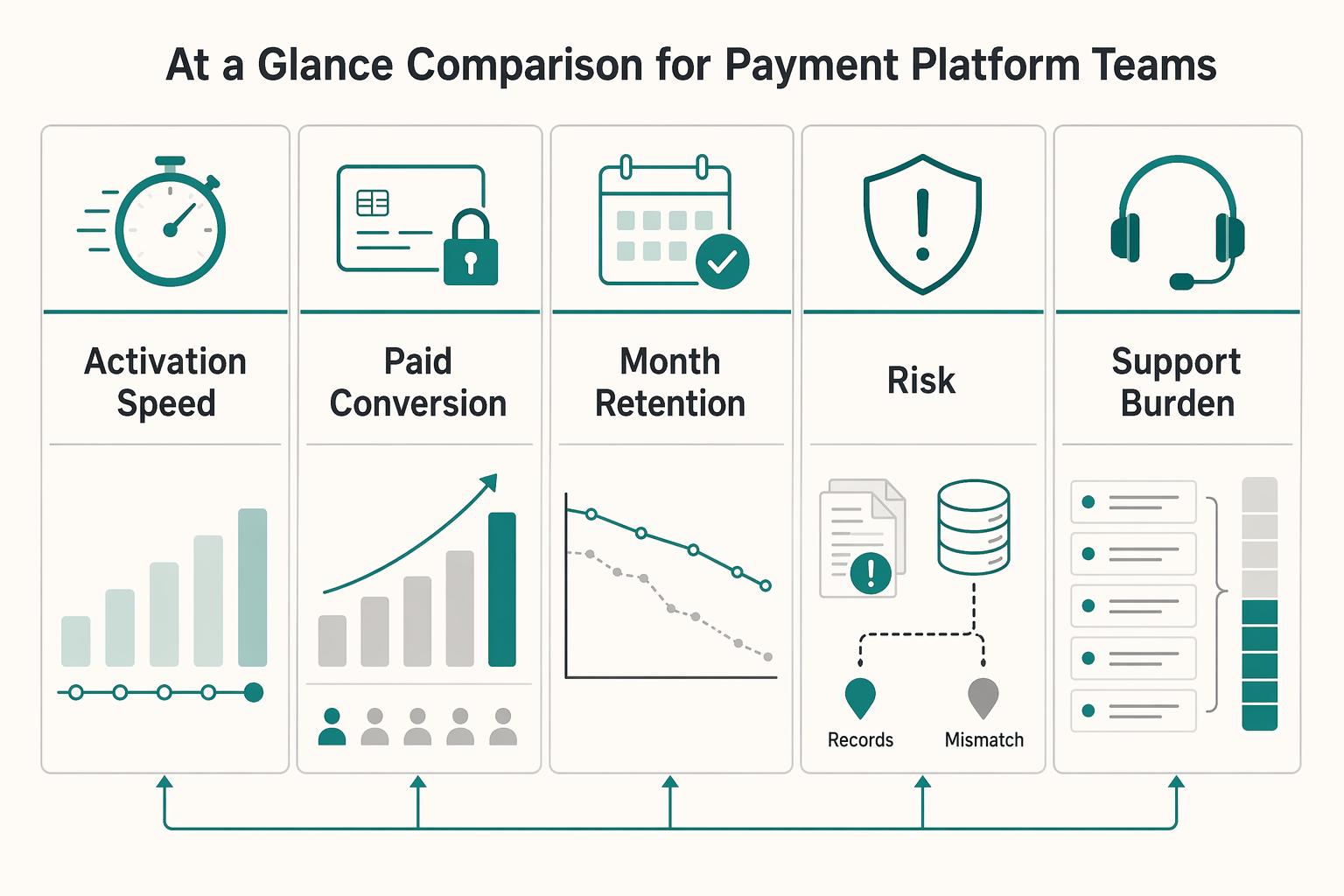
Freemium vs. Free Trial vs. Reverse Trial: Which Acquisition Model Works for Payment Platforms
If you are choosing between **freemium, free trial, and reverse trial** for a payment platform, signup lift is easy to measure and easy to overvalue. The better choice comes from conversion quality, retained revenue, downgrade behavior, abuse exposure, and the operating load your team can actually support.
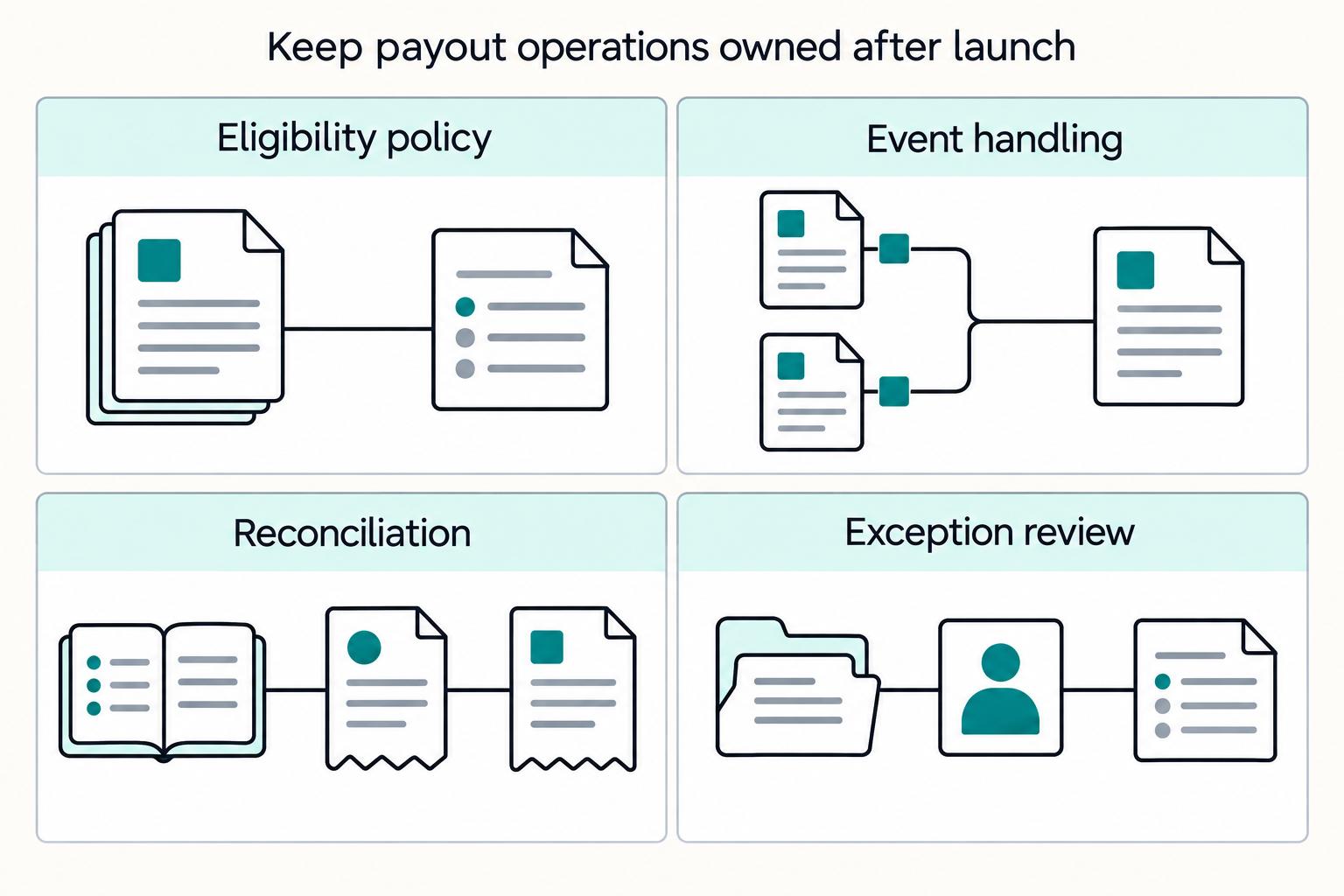
When Instant Payout Matters for Gig Platform Payments
Instant payout is a tool, not the goal. The real operating decision is where instant timing creates measurable value, where batch timing is enough, and where both should run side by side.
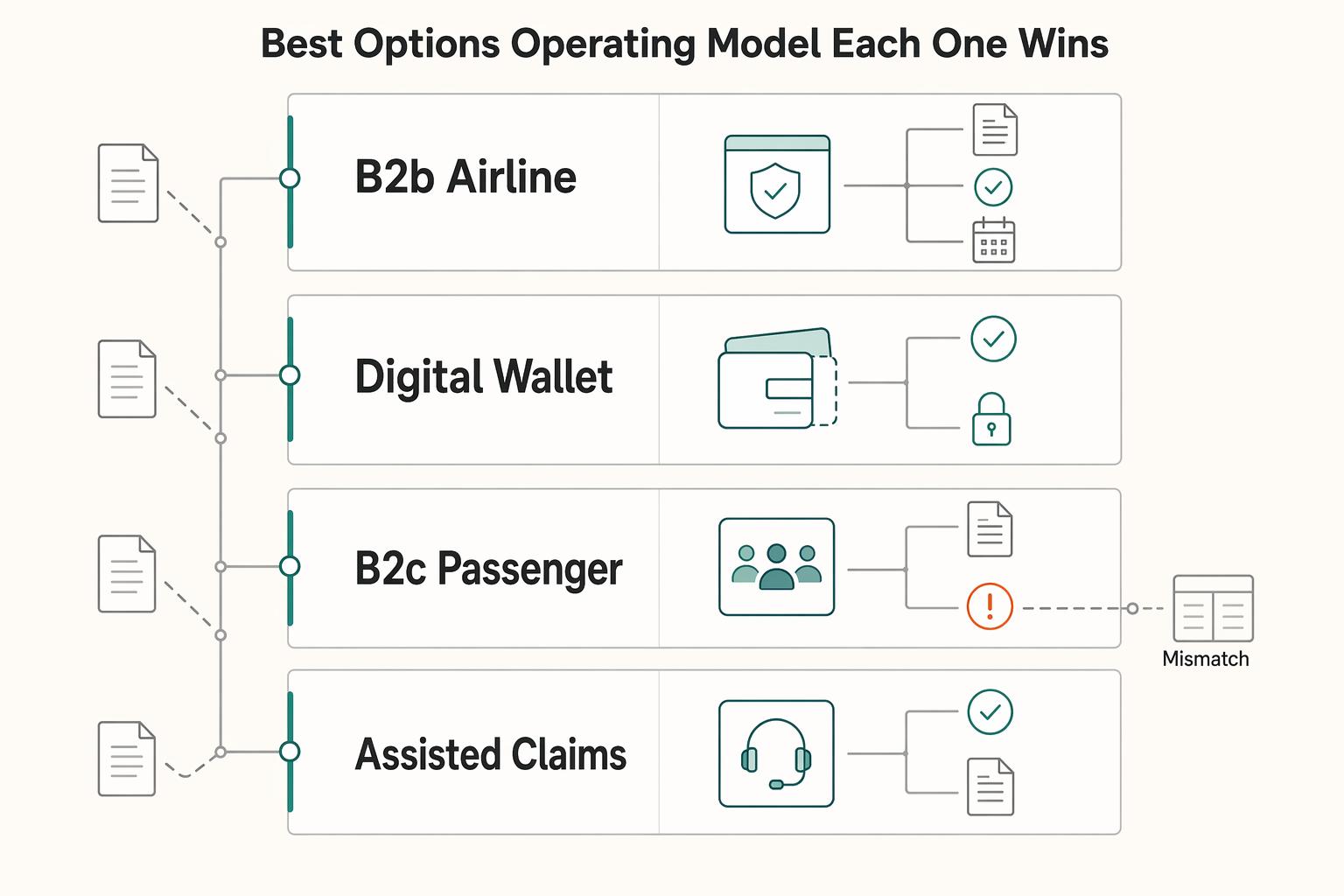
Airline Delay Compensation Payments for Customer Experience and Control
If you are evaluating an `airline compensation payments customer experience delays platform`, split the work into three lanes first: legally owed refunds, discretionary compensation, and outsourced claims recovery. Vendor pages often blur these together, but they lead to different policy choices, ledger treatment, and customer outcomes.