
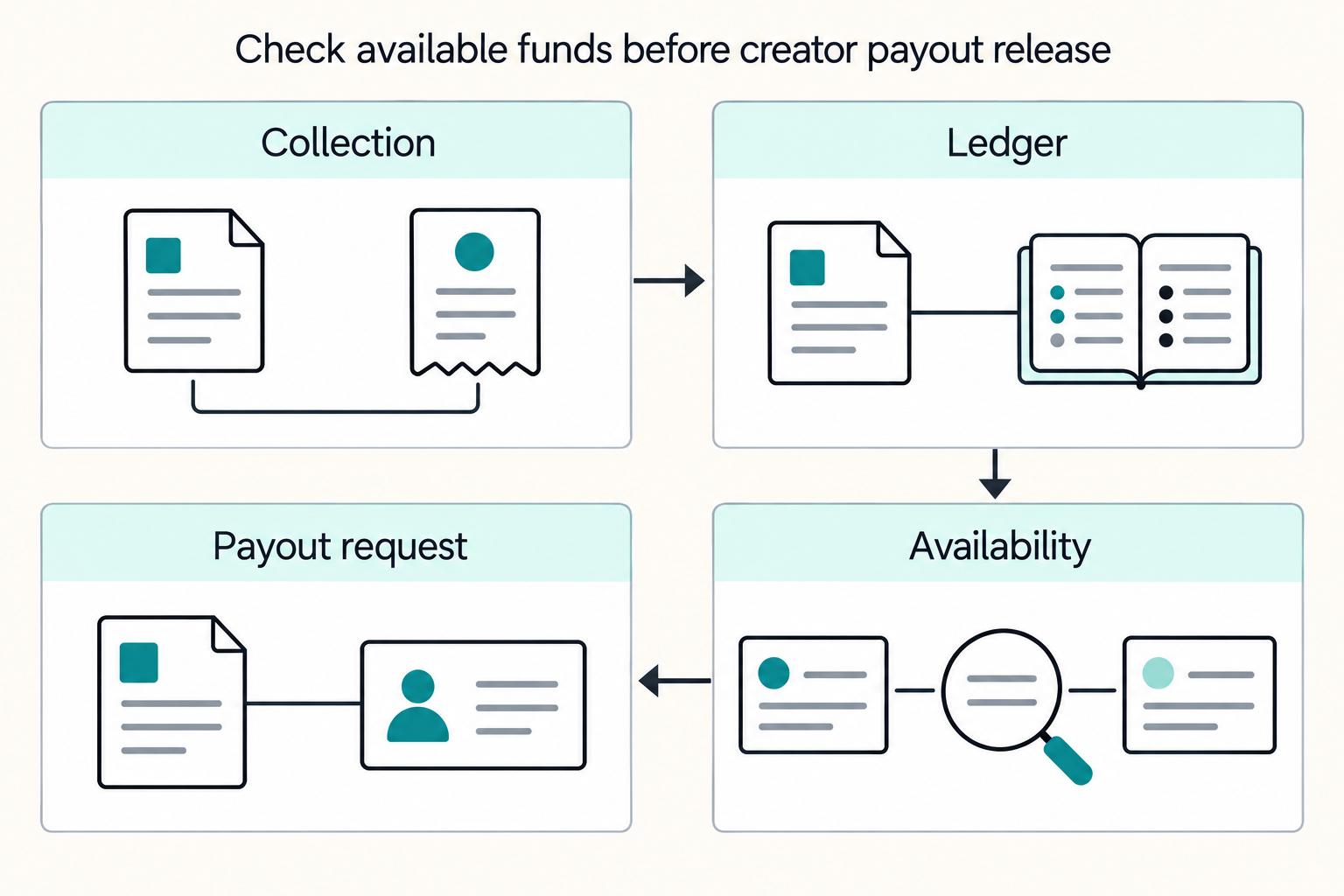
Quick Answer
Start with operating controls, not payout speed. EdTech platform payouts should launch only after you can document the full flow from collection event to funds availability, release decision, provider status, and reconciliation owner. Pick your first market where those controls are testable, then choose architecture based on who owns onboarding, compliance updates, and failure remediation. If any of those responsibilities or evidence artifacts are unclear, pause rollout and fix the model before expanding.
What EdTech Platforms Need From a Payout Setup#
EdTech platform payouts are an operating decision before they are a product feature. Once you start paying tutors, education agents, or other partners, you are not just sending money out. You are taking on partner disbursements, status tracking, and reconciliation across the money coming in and the money going back out.
That matters because education payments are messier than standard e-commerce. The flow is often more complex, more time-sensitive, and rarely ends at a single checkout event. Tuition fees, instalments, refunds, commission payouts, and reconciliation can all sit inside the same operation. If your team designs only for collection and leaves payouts for later, manual work can become a bottleneck as volume climbs.
Many teams in this category still rely on manual or outdated payment processes. The pattern is familiar: finance struggles to match payout activity to internal records, support gets pulled into "where is my payment?" tickets, and exceptions stay open longer because there is no clean source of truth. One of the biggest challenges is reconciliation, and that is the right anchor from day one.
This guide is for founders and operators making launch decisions with those realities in view. It is not a feature-list comparison. It is a decision guide for where to launch first, what to validate before you build, and which tradeoffs are acceptable as payout volume grows. If you are evaluating EdTech platform payouts, the better opening question is usually not "Can this provider send money?" It is "Can we prove what happened, to whom, and why, once volume and exceptions increase?"
Before you commit roadmap time, use one basic checkpoint: describe your payout flow in order and show how each step will be verified. You should be able to name the payout trigger, the funds-availability point, the status updates your team will rely on, and how finance will match those events during reconciliation. If you cannot explain that clearly, you are not ready to scale this function.
Start with the payments your cohort actually needs: completed tutoring sessions, course revenue shares, refunds and institutional invoices. For each, define when earnings accrue, when the recipient may request payment and which balance funds it. Market size does not answer those operational questions.
For a step-by-step walkthrough, see Gruv Platform Payments for Global B2B Payouts and Compliance.
Define EdTech platform payouts before choosing tools#
Before you compare tools, align on outcomes and evaluation criteria so selection stays tied to decisions you can defend. In EdTech, the field is crowded, so keep the evaluation tied to outcomes rather than feature sprawl.
Define a collection as incoming customer payment, earnings as the contractual amount owed to a tutor or creator, a transfer as movement into a recipient’s provider balance, and a payout as movement to an external bank account. Some providers use different labels. Map those labels before support promises that “transferred” means money has reached a bank.
Keep this first pass operational, not speculative. Document the terms your team will use, mark which decisions are still open, and assign owners for post-launch outcome checks. This keeps tool evaluation anchored to ROI and accountability instead of demos alone.
For teams planning cross-border expansion, read Global Payouts and Emerging Markets: 5 Regions Every Platform Should Prioritize.
Pick your first launch market with explicit constraints#
Choose your first market based on operational clarity, not headline demand. The right first launch is the one where your team can document how payouts are approved, handled, and supported without guesswork.
If schools are part of your first segment, treat planning depth as a launch gate. School-channel growth requires careful planning and testing, so your market choice should reflect where your team can support institution workflows consistently.
Compare launch paths with a readiness table#
Use one table for your candidate markets, for example Australia and the United States, and require owner-level answers plus evidence for every row.
| Readiness area | Market A | Market B | What must be documented before launch |
|---|---|---|---|
| Verification and compliance scope | Provider-confirmed requirements by payee type | Provider-confirmed requirements by payee type | Trigger points, review steps, payout-release owner, and evidence location |
| Tax documentation and reporting | Confirm obligations for your entity and payee mix | Confirm obligations for your entity and payee mix | Collection point, validation step, storage location, and reporting owner |
| Payout failure remediation | Define investigation and payee communication ownership | Define investigation and payee communication ownership | Retry rules, escalation path, and audit notes |
| Support playbooks | Confirm macros and resolution paths | Confirm macros and resolution paths | Clear handoff between support, finance, and product |
The table is only useful if it includes proof, not just opinions. For each row, attach the policy note, provider confirmation, onboarding example, and support response path your team will actually use.
Match the market to the segment#
If your first segment is K-12 institutions, prioritize markets where admin workflows and exception handling are clear and testable. If your first segment is creator-led EdTech, prioritize markets where onboarding and payout operations can run reliably at self-serve volume.
Set a no-go gate before engineering#
Before building, require a market memo that names policy gates, evidence artifacts, and owners for exceptions. If you cannot produce that memo for a market, do not launch there yet.
Related: Bad Payouts Are Costing You Supply: How Payout Quality Drives Contractor Retention
Choose payout architecture based on operational control#
Choose the architecture that keeps operational ownership explicit. If your team cannot name who owns onboarding, compliance updates, failed payout recovery, and audit evidence, the architecture is still undefined.
An integrated setup can consolidate onboarding, collections and payout records with one provider. A modular setup lets you select different services for each market, but your team must reconcile their identifiers and status changes. Neither architecture guarantees greater speed or compliance; compare the actual supported flows, contract responsibilities and recovery tools.
A Merchant of Record arrangement addresses who sells to the learner and bears specified payment and sales-tax responsibilities. It does not automatically employ tutors, determine creator earnings or handle their bank payouts. Confirm which seller, refund, tax and supplier-payment duties the contract covers before treating it as a payout solution.
Founder decision table#
| Architecture choice | Who owns onboarding | Who owns compliance updates | Who owns failed payout recovery | Who bears audit risk |
|---|---|---|---|---|
| Integrated payouts | Define exact provider vs internal split in writing | Define change-notice process and internal policy owner | Define first responder, escalation path, and closure owner | Define evidence owner for records, approvals, and disputes |
| Standalone / modular payouts | Define owner per component and market | Define owner for cross-vendor changes | Define owner for each failure step and handoff | Define audit boundary per system and team |
| Merchant of Record arrangement | Separate learner sale onboarding from tutor/creator verification | Identify seller obligations covered by the contract and supplier duties retained | Confirm whether supplier payments are included and who closes failures | Retain earnings calculations, supplier records and reconciliation evidence |
If any cell stays vague, pause and resolve it before signing.
Preserve traceability from request to journal#
If finance needs strict traceability, require an architecture that preserves request IDs, provider references, status history, and retry-safe records from request through ledger mapping. Without that, retries and status changes become manual reconciliation work.
A practical rule: choose modular control when you need tighter operational ownership, clearer boundaries, and market-by-market flexibility; choose integrated only when it reduces real operating burden without obscuring accountability.
For deeper comparisons, see Integrated Payouts vs. Standalone Payouts: Which Architecture Is Right for Your Platform?, Global Payouts and Emerging Markets: 5 Regions Every Platform Should Prioritize, and Crypto Payouts for Platforms Without Integration Debt.
Design compliance and tax gates before payout speed#
Speed should be your last optimization gate. If you cannot export a clear record of who was verified, what tax data was captured, why a payout was held or released, and which payout reference was used, your automation is not production-ready.
That follows from the architecture choice: a provider can make initiation feel instant, but you still own release logic and audit evidence. Define your release sequence explicitly, enforce it consistently, and treat it as both a product rule and an ops rule.
Make the release gate visible#
Use one practical test: can finance, ops, or an auditor export one record that ties the payee, verification state, hold reason, approval event, and payout reference together? If not, exceptions will be resolved through screenshots, inbox threads, and vendor tickets.
| Evidence item | What the record should include |
|---|---|
| Payee verification | payee ID and verification status at release time |
| Tax document | tax-document status required by your program |
| Approval and payout reference | hold or approval timestamp, manual reviewer (if used), and payout request reference |
A common failure mode is letting payout creation outrun document readiness, then trying to fix gaps after funds are already queued.
Separate payer documentation from personal tax advice#
For a U.S. payer program, classify the payment and payee first. Tutoring services, course licensing and employment are different arrangements. Record who is responsible for documentation, withholding and any information return; outsourcing the payment API does not settle those responsibilities.
For U.S. independent contractors, the IRS contractor guidance describes collecting Form W-9 and evaluating Form 1099-NEC reporting. Use the rules for the relevant tax year, payment type and payer role rather than hard-coding one threshold across all programs.
For foreign recipients, choose documentation based on the payee and income. IRS W-8BEN instructions distinguish foreign individuals, entities and income requiring other forms. W-8BEN is not a universal exemption from withholding, and a course royalty should not silently inherit a tutoring-service tax treatment. Keep the tax decision and form status linked to the earnings record.
Provider verification is a separate control. For example, Stripe Connect varies requirements by country, entity type, agreement and capability; monitor updates and payout eligibility after onboarding. A completed tax form does not mean the provider has enabled payouts. Personal FEIE or foreign-account filing questions belong with the recipient’s tax adviser, not your payout-release calculation.
For a practical way to size payout volume and scope, see Platform Payout Volume: What Counts?.
Map the money flow from collection to creator payout#
Record collection, contractual earnings and funds availability separately. An invoice is not collected cash; a completed lesson can create a tutor payable even while the customer payment is pending. Release only from a supported available balance or an explicitly approved prefunding arrangement.
A practical operating map is: checkout or invoice event, internal ledger posting, funds availability, payout initiation, provider acknowledgment, then final status update. Treat this as your internal control sequence, not a universal provider sequence. Keep one record, one timestamp, and one owner at each handoff.
Write the lifecycle in states you can audit#
Your ledger should distinguish an invoice, a successful collection, provider pending/available balances and the tutor payable. Release depends on sufficient eligible funds and your contract’s approval/hold policy. Provider availability does not eliminate later refunds or chargebacks.
| State | Record and release implication |
|---|---|
| Invoice or checkout created | Order/invoice exists; this alone proves neither payment success nor tutor earnings |
| Collection confirmed | Successful pay-in recorded with provider reference; settlement may still be pending |
| Earnings accrued | Contract and completed lesson/sale determine the tutor or creator payable |
| Funds available and release approved | Check eligible balance, verification, holds and payment approval |
| Transfer or payout submitted | Store each provider object and its distinct balance/bank destination |
| Final result reconciled | Match bank credit, fees, failures or returns to the payable and submission |
For an illustrative tutoring session, a learner pays $100, the tutor earns $80 under the agreement, and the provider charges the platform $3. The platform has $97 cash after fees and an $80 tutor payable; the remaining $17 is before other costs and taxes. If a contractual $10 reserve is withheld, $70 is releasable and $10 remains owed under the reserve terms. Show gross earnings, deductions and release dates on the tutor statement. If the learner is later refunded, apply the agreed tutor adjustment and refund liability separately; do not assume a customer refund reverses an earlier provider transfer. Stripe’s separate-charge flow, for example, requires separate transfer-reversal handling.
Keep one support-critical distinction explicit: provider "posted" does not guarantee recipient receipt.
Use Virtual Accounts to simplify inbound matching#
Where supported, Virtual Accounts can reduce card dependence for inbound collection and improve matching traceability through payer-specific bank transfer identifiers.
Define handling for three deposit outcomes:
- Credited when a transfer is matched and applied correctly
- Held when a transfer cannot be auto-reconciled or funds are not yet available for payout
- Returned when funds cannot be applied under your policy
Do not assume matching is always automatic. Unmatched transfers can remain unapplied until manual reconciliation.
Reconcile both sides, then queue mismatches#
Reconcile pay-ins and payouts to their actual account movements. If a record says paid while the provider reports failed, returned or delayed, put the discrepancy in an owned exception queue. Preserve actual bank entries and use controlled clearing where allocation is unresolved; do not suppress financial reporting of money that moved.
Use market timing expectations in product logic, not as blanket promises:
| Market/rail context | Grounded timing signal | Product implication |
|---|---|---|
| U.S. Same Day ACH | Nacha documents same-business-day ACH and a $1 million per-payment limit | Check provider cutoffs and eligibility; rail timing begins after release and submission |
| Other domestic or cross-border bank routes | Obtain the specific provider’s execution, credit and return windows | State the date basis, weekends, conversion steps and holds; do not reuse the ACH promise |
Related reading: Building a Referral-Based Payment Incentive Platform for Viral Growth Through Payouts.
Plan for the first things that break at scale#
Plan for ambiguity before scale: define who decides, what evidence is required, and when payout processing must pause.
The lifecycle from the previous section gives you the map. This section is the operating layer: clear stop rules, clear ownership, and consistent handling when records are incomplete or statuses are unclear.
Treat retries and status gaps as controlled events#
A retry should be a deliberate action, not an automatic response. Before resubmitting, confirm the internal request ID, the provider reference, and the latest provider-side status or export. If any of that evidence is missing, hold the record for review.
When systems show different states at the same time, route the case to one owner for a single decision. Resolve the record first, then move money.
Make missing evidence a hard block#
A payout should not proceed if required compliance, tax, or approval records are incomplete. Treat missing documentation as a release blocker, not a cleanup task for later.
For held items, keep the reason code, reviewer, missing artifact, and clear-unblock action in the record. If support or finance cannot read that trail quickly, exception queues will slow down under volume.
Set simple guardrails before adding more markets#
You do not need a complex framework, but you do need written rules your team can follow under pressure:
- Define your payout cut-off windows by rail or market, and make them visible internally.
- Define manual-review triggers in plain language.
- Define escalation ownership by severity, including who can freeze a batch and who can approve release after exception review.
When a case is unclear, pause automation, preserve the audit trail, and resolve the record before any new payout action.
Execute a 90-day rollout with verification checkpoints#
Use the first 90 days as a controlled proof period: expand only when decisions are backed by measurable signals, not opinion or demand spikes.
| Phase | Scope | Gate |
|---|---|---|
| Phase 1 | One market, one supplier cohort, and one payout cadence | Each payout record can be traced clearly from request through final status |
| Phase 2 | Add a second cohort | Evidence handling is consistently complete and reviewable |
| Phase 3 | Expand footprint | Exception handling and support handoffs are predictable under normal load |
Phase 1: keep scope narrow and make records explainable#
Start with one market, one supplier cohort, and one payout cadence. The goal is to confirm that each payout record can be traced clearly from request through final status, with accountability and transparency built into the workflow. If teams still need side conversations to explain what happened, keep the phase open.
Phase 2: expand only when evidence quality is consistent#
Add a second cohort only after evidence handling is consistently complete and reviewable. This is the checkpoint where you confirm the process is workflow-dependent, not person-dependent, so another operator can reach the same decision from the same record.
Phase 3: scale only when outcomes are predictable#
Expand footprint only when exception handling and support handoffs are predictable under normal load. The gate is operational predictability and clear ownership, not just rising volume.
End each phase with a written go/no-go check across compliance readiness, payout reliability, and finance-grade reporting artifacts. If any area is still unclear, pause and fix the workflow before moving forward.
Conclusion#
Good payout execution is often about sequencing, not just feature breadth. If you make the first market, architecture, compliance gates, and reconciliation owner explicit before build starts, you can reduce the common failure where collection feels polished but tutor or creator payouts become slow, manual, and hard to explain.
That matters because payments are not a side utility in EdTech. The sources behind this article point to the same pressure points: smooth transactions and effective onboarding, plus compliance expectations in education payments. As platforms scale, efficient and secure payment infrastructure becomes critical. And if tutors or creators are already dealing with delayed payments or high commissions, the trust and operations impact can surface early.
The practical move now is to turn your strategy into two working documents. First, build a market comparison table that forces a real launch decision instead of a hopeful one. Include the rows your team will actually argue about: onboarding burden, compliance review points, payout failure ownership, tax record collection, support effort, and how finance will reconcile each payout from request to final status. If a market still looks attractive after you write those rows down, it is probably a real candidate. If the table exposes gaps you cannot assign, that is your stop sign.
Second, create a first-phase verification checklist and test it against live-like samples before you promise speed. At minimum, you should be able to trace each payout request through release approval, provider acknowledgement or status, and the matching ledger entry without searching inboxes or chat threads. That checkpoint sounds basic, but it is often the difference between an auditable operation and a support queue full of exceptions nobody fully owns. A red flag is any payout that can be explained only by tribal knowledge rather than one complete record.
From there, confirm coverage and constraints with your provider before you commit roadmap scope. Ask the awkward questions early. What onboarding evidence is required? What payout states are exposed back to you? What happens when a payout fails or is held? What export or reporting artifacts can finance actually rely on? In practice, teams that scale more reliably are usually the ones that can show clear records of who got paid and how the money movement ties back to the books.
Frequently Asked Questions
What are EdTech platform payouts, and how are they different from payment collection?
EdTech platform payouts are the outbound payments you send to tutors, creators, or authors after funds are available for release. Collection is the inbound side, getting money from families, learners, schools, or institutions into your platform.
How should founders compare countries before launching tutor and creator payouts?
Compare recipient and platform eligibility, supported currencies, tax documents, funds availability, fees, cutoffs and failure recovery for the same sample transaction. Attach provider confirmations and name the support and finance owners. Start where those records and exception paths can be tested with the first cohort.
Can embedded school payments also solve tutor and author payout complexity?
Embedded collection can simplify learner or institution checkout, but tutor payouts still need an earnings calculation, verification, release approval and a supported destination. Check whether the integration exposes both sides and links refunds to supplier balances; checkout success alone does not establish payout readiness.
What operational risks appear first when payout volume scales?
Test duplicate submissions, delayed status updates, missing verification, refund-after-release and failed bank payouts. Assign a closure owner to each case and measure exception age and reconciliation completeness. Which issue dominates depends on your cohort and route; the guide does not supply an industry ranking.
Should we choose integrated payouts or standalone payout infrastructure first?
Choose integrated infrastructure when its supported collection and supplier-payment flow covers your first cohort and exposes the records you need. Choose modular services when a market or workflow requires a separate component and you can own cross-system reconciliation. Compare actual contracts and failure tools before committing.
Which compliance and tax documents are usually required before payout release?
Collect the service or licensing agreement, verified payee identity, payout account details, earnings approval and applicable tax documentation. For U.S. programs, distinguish W-9 recipients from foreign recipients needing an appropriate W-8 or other form. Provider requirements vary by account configuration; confirm enabled payout capability and any outstanding holds.
What is the minimum verification checklist before expanding to a second market?
Before a second market, prove supported recipient accounts and currencies, document the tax and verification owners, reconcile the pilot from collection to bank result, and close duplicate, failure, return and refund tests. Set measurable acceptance criteria and confirm that another operator can resolve a case from its record.
Try a related tool
Researched and edited by the Gruv editorial team. Gruv builds cross-border billing, payouts, and finance-operations software for global businesses.
Sources
Includes 1 external source outside the trusted-domain allowlist.
Educational content only. Not legal, tax, or financial advice.
Related Posts
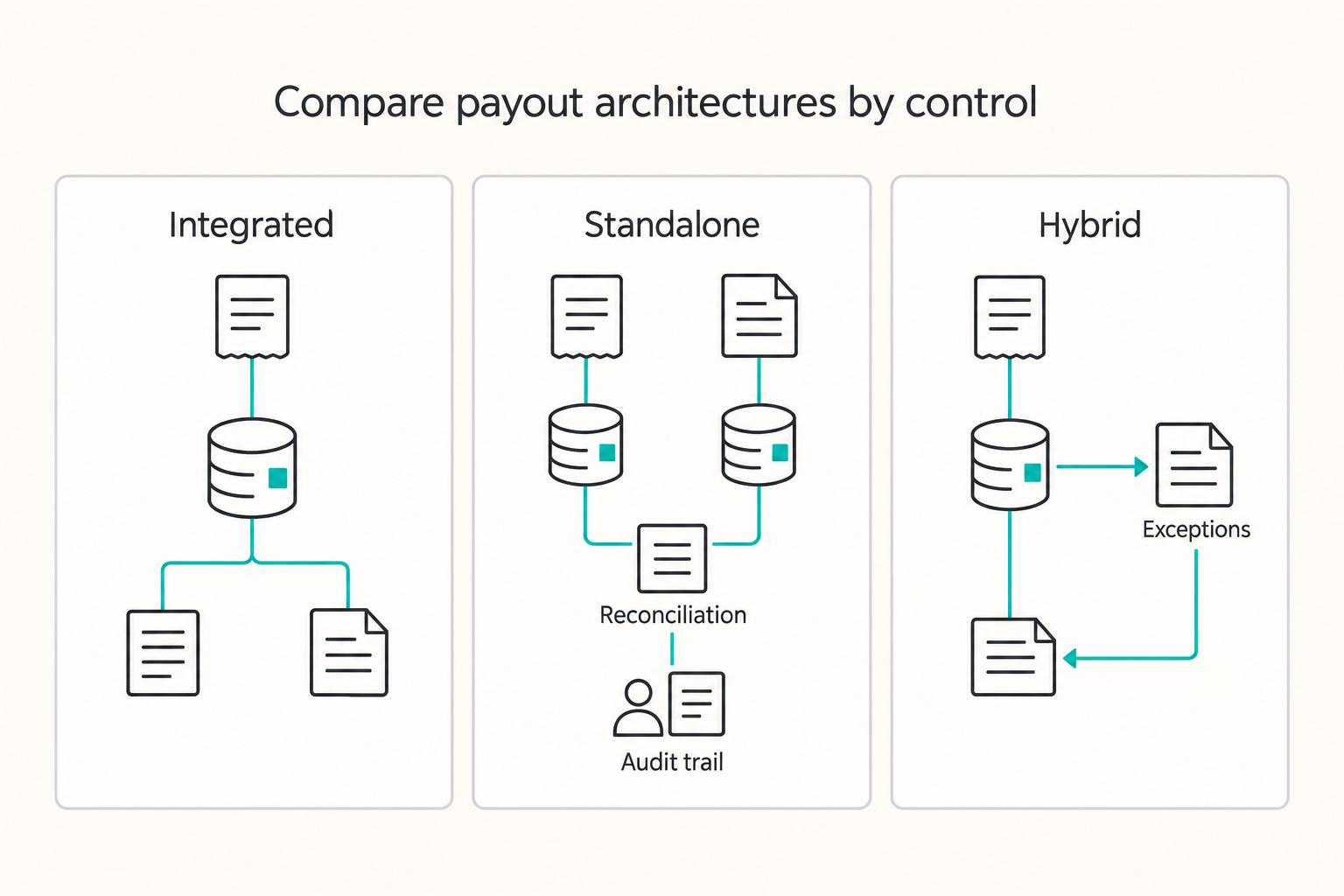
Integrated Payouts vs Standalone Payouts for Platform Architecture Decisions
Here, integrated means a provider supports both collection and payout in the platform’s funds flow. Standalone means a separate provider executes disbursements, funded from your platform or another payment system. Hybrid means multiple governed routes. These are working architecture definitions, not universal vendor product categories.
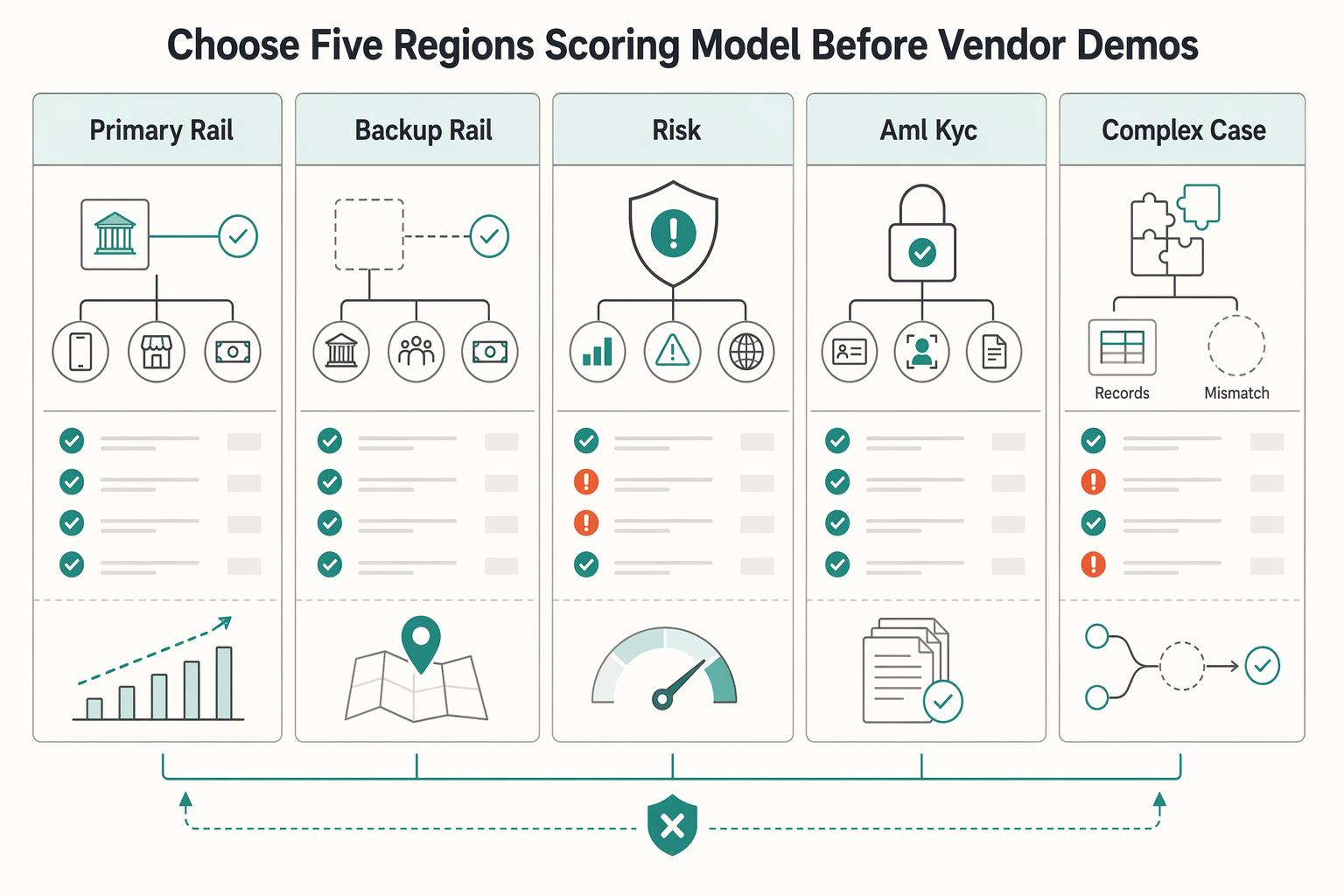
How Platforms Should Prioritize 5 Emerging-Market Payout Regions
If you are choosing where to launch cross-border payouts in 2026, start with what your team can actually run. Too many "top" lists lean on hype or market-cap tables. That may work for headlines, but it does not help with execution.
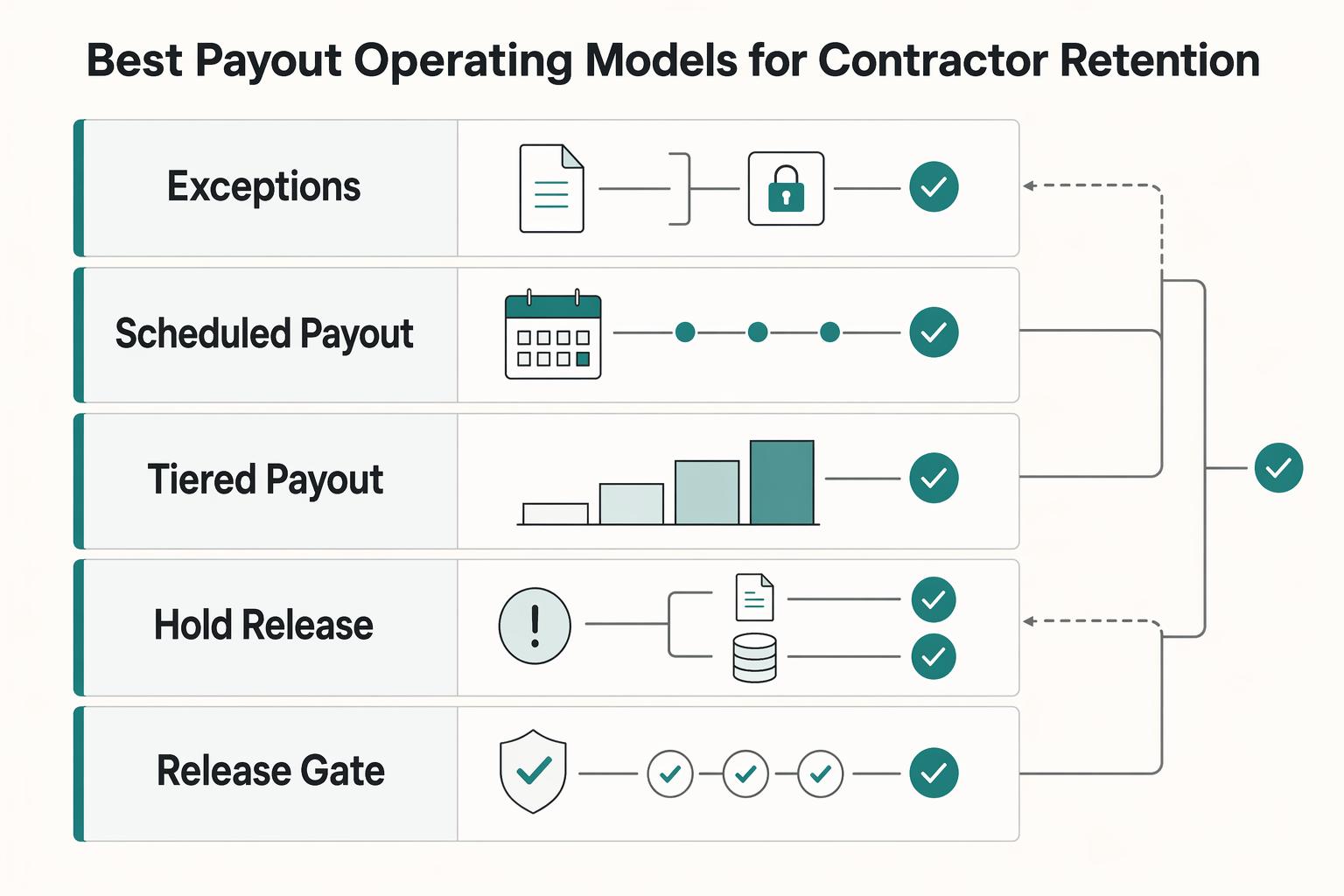
Bad Payouts Are Costing Your Supply in Two-Sided Platforms
Payout issues are not just an accounts payable cleanup task if you run a two-sided marketplace. They shape supply-side trust, repeat participation, and fill reliability. They can also blur the revenue and margin signals teams rely on.