
Quick Answer
Online marketplaces must report seller income and activity data required by each applicable local regime, using OECD MRDP as a design baseline and local law such as DAC7 or UK HMRC rules as the enforceable obligation. In practice, that means collecting and verifying seller information during normal operations, classifying reportable transactions, reconciling totals to payout records, and keeping traceable evidence for exclusions, adjustments, and filing decisions.
How MRDP, DAC7, and HMRC Reporting Fit Together#
Digital platform reporting is an operating control, not a year-end cleanup task. For online marketplaces, seller and income data should be collected and verified as part of normal operations, not reconstructed later. If you run a marketplace, you need this data model working before filing season, not after it.
That is the operational shift behind this rule set. The OECD developed its Model Rules for Reporting by Platform Operators (MRDP) in response to rapid digital-economy growth and calls for a global reporting framework. It is meant to standardize reporting and help minimize burdens for platforms and sellers. But MRDP is a model, not the enforceable rule in every market.
The enforceable duties come from local regimes. In the EU, DAC7 places reporting obligations on platform operators and entered into force on 1 January 2023, with the first exchange for 2023 data completed at the end of February 2024. In the UK, domestic rules implement the OECD model. HMRC sets a recurring filing deadline of 11:59pm on 31 January for the previous year.
The real question is which decisions you need early enough to avoid filing failure. In most teams, that means locking down a few points before filing season:
- what seller data you collect
- how seller information is verified
- which transactions are treated as reportable
- when edge cases are escalated for jurisdiction-specific legal or tax review
Timing and evidence discipline are the first operational tests. HMRC states that verification remains the operator's responsibility even when a third party is used. Submissions are also checked against schema and business rules. So a defensible file is more than an export. In practice, that usually means traceable seller records, verification status, transaction mapping, reconciliation logic, and a clear rationale for exclusions or adjustments.
Use one working rule through the rest of this guide: treat OECD MRDP as the common model, and treat local law as the obligation you must satisfy when they do not align perfectly.
For more detail, read DAC7 Reporting for Platform Seller Data: What EU Tax Authorities Can See.
The reporting baseline every marketplace should understand#
Digital platform reporting is a rules-based obligation. Platform operators collect seller income information and report it to tax authorities. If your team still treats this as optional tax-support data, your control model is out of step with the obligation. We recommend treating each seller field you collect as a reporting control, not as a courtesy form.
The common starting point is the OECD Model Rules for Reporting by Platform Operators with respect to Sellers in the Sharing and Gig Economy (MRDP). The OECD positions MRDP as a response to rapid digital-economy growth and calls for a global reporting framework, especially for sharing and gig activity. In practice, it gives you the common reporting model, not an automatic legal rule in every jurisdiction.
A similar policy logic appears across OECD, EU, and HMRC materials. Tax authorities often lack enough visibility into platform-earned income, and platform operators are often best placed to collect and verify seller information. The point is not only filing mechanics. It is visibility, compliance, and treatment closer to traditional businesses.
Keep one checkpoint explicit in your operating design: MRDP is the model baseline, and local law creates the enforceable duties. Your first defensibility pack should show that chain clearly: which jurisdictions apply, who owns the decision, and which seller and transaction fields you treat as required under the applicable local rules.
If you run a creator or gig marketplace, see Creator Platform Tax Reporting for 1099 and W-8 Expansion Decisions.
Where OECD MRDP ends and local rules begin#
Use this rule first: treat OECD MRDP as the common model, and treat local law as the enforceable obligation whenever they diverge.
The OECD DPI XML Schema provides a common reporting structure. Each filing authority can add its own schema version, business rules, and submission requirements, so validate each local output separately. DAC7 and DPI reporting for platforms describes the data model; a CSV completeness check is one preparation step, followed by validation of the actual filing XML.
| Decision point | OECD MRDP baseline | EU DAC7 overlay | UK HMRC / UK overlay |
|---|---|---|---|
| What it is | A model reporting regime for platform-operator reporting on seller income in the sharing and gig economy | Council Directive (EU) 2021/514 of 22 March 2021, an EU legal instrument amending administrative cooperation rules in taxation | UK domestic regulations that operationalize the OECD model for the United Kingdom, with HMRC as the tax authority |
| Legal force | Baseline model and standardization framework | Binding obligations through EU law | Binding obligations through UK law |
| Core policy logic | Platforms collect information on income realized by sellers for relevant activities | DAC7 recitals state platform operators are better placed to collect and verify seller information | UK rules adapt the model so references to a jurisdiction are read as references to the United Kingdom |
| Cross-border layer | Designed to support standardization and reduce fragmented reporting approaches | Supports information sharing within the EU administrative cooperation regime | HMRC states implementation of the OECD rules enables exchange with other tax authorities |
| What to build against | Common data model and reporting logic | EU legal requirements under DAC7 | UK legal requirements under UK regulations |
The main design risk is simple: building only to MRDP and treating it like filing law. If you operate in the EU and the UK, document both layers in your evidence pack: the model you designed from and the domestic law you executed against. We recommend making that split visible enough that a reviewer can trace which rule set controlled each seller population.
A practical control is one jurisdiction memo per market with four linked items: legal instrument, in-scope activity, required seller and income information, and filing owner. For the EU, name DAC7 (Directive (EU) 2021/514). For the UK, point to the HMRC-facing regulations made on 18 July 2023 and in force from 1 January 2024. If your spec cites only "OECD rules" and not the local instrument, treat that as a red flag.
The Multilateral Competent Authority Agreement on Automatic Exchange of Information on Income Derived through Digital Platforms (DPI MCAA) is a separate layer. It is the framework for annual automatic exchange of information collected under OECD model rules, and it assumes jurisdictions have implementing laws in place. It supports cross-border exchange, but it does not replace local filing or due diligence duties.
If your inputs conflict, settle precedence early: model for common design, local law for execution.
Decide if your platform is in scope before building controls#
Do not build seller-data controls or filing logic until scope has been tested market by market. If the facts are mixed, you can use an internal risk posture of "assume reportable until disproven" and require Legal or Tax to sign off any exclusion in writing.
Use OECD MRDP as your baseline design model, then apply local law to make the actual scope decision. For EU and UK operations, DAC7 and HMRC rules determine whether activity is reportable.
Start with four scoping questions#
Start with a short decision tree and tie each answer to evidence, not assumptions:
- What does the product actually do? Under the UK test, a digital platform is an app or website that connects sellers to customers for goods or services, and scope is stronger if you hold or can easily calculate amounts paid to sellers.
- Who are the sellers, and what jurisdiction ties do they have? HMRC guidance points to sellers who live in the UK or another reportable jurisdiction. For DAC7, operator nexus is the first gate, then seller and activity facts shape the result.
- What transactions happen on the platform? DAC7 covers rental of immovable property, personal services, sale of goods, and rental of any mode of transport.
- Which jurisdiction touchpoints exist? For DAC7, in-scope operators include those resident, incorporated, managed, or with a permanent establishment in an EU country, and some non-EU operators are still in scope if they perform commercial activity in the Union.
Keep one scoping pack per market with the product flow, payout logic, seller-location fields, and the legal memo supporting the conclusion.
Compare the two fact patterns teams misread most#
The mistakes usually come from reusing one market's answer somewhere else. These two scenarios deserve separate testing every time. If you expand into a new market, you should rerun the scope test instead of copying last quarter's answer.
| Scenario | What to test first | What usually matters most |
|---|---|---|
| Non-EU platform with EU commercial activity | Whether DAC7 reaches the operator despite no EU residence, incorporation, management, or permanent establishment | DAC7 can still apply when commercial activity is performed in the Union; if in scope, a Non-Union Platform Operator must register and report in one EU country |
| UK-facing marketplace | Whether the platform connects sellers and customers and can determine amounts paid to sellers | HMRC scope turns on platform function, UK nexus (such as residence, incorporation, or management), and seller ties to the UK or another reportable jurisdiction |
A common control failure is carrying one market's conclusion into another market without retesting the local rules.
Separate confirmed guidance from country-level legal advice#
You can rely on published timing anchors. DAC7 entered into force on 1 January 2023. UK regulations came into force on 1 January 2024. HMRC submissions are due by 11:59pm on 31 January for the previous year.
Do not mistake those anchors for full legal coverage. You still need local advice for thresholds, filing forms, penalties, and edge cases. Record those open points with an owner and sign-off. We recommend giving each unresolved item a dated owner so your filing path does not depend on memory.
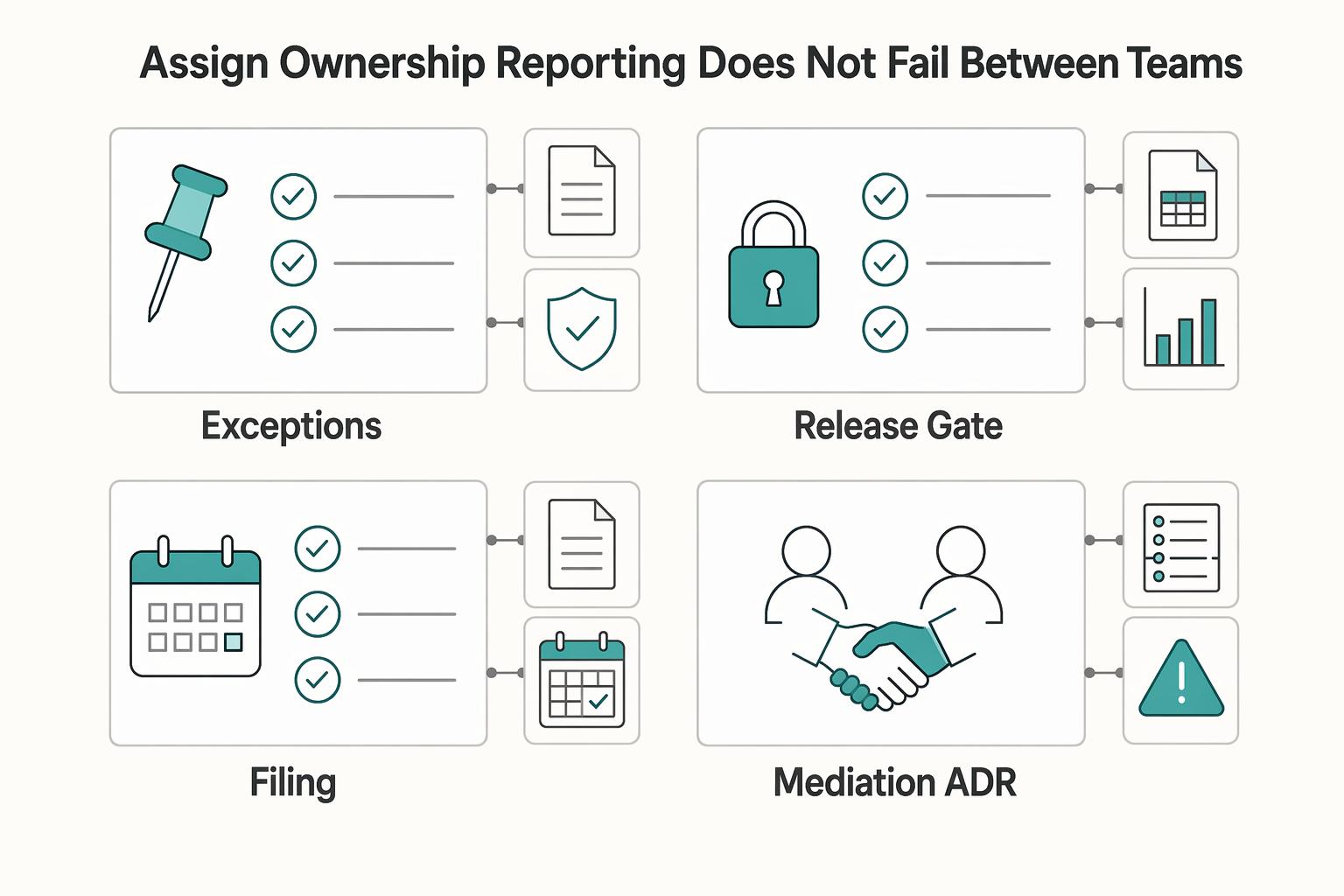
Assign ownership so reporting does not fail between teams#
Once scope is set, name owners immediately. Platform-operator duties can fail in the gaps between policy, data, and filing workstreams. DAC7 places reporting obligations on platform operators, and UK rules require due-diligence procedures and an error-free filing by deadline. Ownership needs to be explicit and testable.
Assign ownership by artifact, not by job title, and adapt team names to your operating model. That makes decisions auditable and handoffs easier to verify.
- Legal owns the written scope decision and exception memo, including whether a DAC7 Non-Union Platform Operator analysis is complete where relevant.
- Tax owns policy approval, jurisdiction positions, and the interpretation log used for reporting decisions.
- Finance owns the filing calendar, transaction-to-report reconciliation, and final sign-off that reported totals tie to payout records.
- Marketplace Ops owns seller outreach, missing-data remediation, and operational proof for required seller communications.
- Engineering owns source-field definitions, extraction logic, access controls, and evidence of which data extract version fed the filing.
What to verify before filing season#
Set one non-negotiable checkpoint: every artifact has a named owner, current version, and approval date before filing prep starts. In the UK, HMRC requires an error-free report by 11:59pm on 31 January for the previous year. Using a third party does not remove the platform operator's responsibility to verify seller information.
When to escalate#
Escalate early when an owner cannot produce a decision or complete data in time:
- Legal and Tax cannot resolve whether an activity is reportable.
- Seller identity or payout fields remain incomplete near filing deadlines.
- Non-EU operating assumptions conflict with DAC7 treatment, including cases where registration and reporting in one EU country may be required.
A common failure mode is assuming another team owns the last mile. If payout logic or seller flows change, require Legal and Tax to recheck the classification memo before Finance signs reconciliation.
Build the minimum data and evidence stack regulators expect#
Build your reporting stack so every reported seller and amount is traceable end to end, not just exportable as a file. For each figure, you should be able to show the source record, the verification step, any exclusions or adjustments, and the exact extract used for filing.
MRDP gives the baseline: collect seller income information and report it to tax authorities. Local rules add the operating detail. In the UK, HMRC due diligence requires collecting seller information, verifying it, and identifying reportable sellers. Under DAC7, your dataset also needs to support reportable activity categories and total consideration paid or credited to each seller.
Start with a minimum field-to-evidence map#
Use a reference table that ties each reporting element to its source system and retained proof. If you cannot name the system of record and the evidence for a field, treat it as not filing-ready.
| Reporting element | Typical source system | Evidence to retain |
|---|---|---|
| Seller identity (individual): full name, home address including postcode, date of birth | Seller onboarding, KYC profile, account settings | Onboarding record, verification result, timestamped change history |
| Seller identity (entity): legal business name, main business address including postcode | Business onboarding, entity registry, merchant admin | Registration record, entity verification output, approval log |
| Tax identifiers and issuing country required by the local regime (UK individuals: National Insurance number; UK entities: the relevant registration number or UTR) | Tax profile, onboarding forms, compliance workflow | Submitted value, validation notes, remediation record if missing |
| Reportable activity category (sale of goods, personal services, rental of transport, immovable property rental) | Product catalog, listing taxonomy, order logic | Classification memo, field-definition doc, config evidence |
| Reported financial amount (including total consideration paid or credited to each seller) | Ledger, payouts, payments processor, finance warehouse | Transaction extract, payout reconciliation, adjustments log, frozen filing dataset |
| Filing payload and submission outcome | Filing tool, XML generator, document repository | Submitted XML, schema-validation output, submission receipt, corrected resubmission record if needed |
Keep this table versioned so changes in onboarding, source fields, or classification logic do not drift without a dated record.
Use a disciplined order of operations#
A practical internal sequence is straightforward: collect seller identity data, map reportable transactions, reconcile totals, freeze extracts, then file. If you want a reviewer to defend the file later, your extracts should show who froze them, when, and under which rule set.
That order reduces avoidable correction work. In the UK, the reportable period runs from 1 January to 31 December, and HMRC says seller information must be collected by 31 December of that period. Treat year-end completeness checks as a hard gate. HMRC permits an extra year for pre-existing sellers where the operator makes the required notification; record that exception separately.
Freeze one filing dataset per jurisdiction and year, with extract timestamp, source-query version, and approver. If totals only tie after manual edits outside controlled extracts, stop and escalate before filing.
Require traceability for adjustments, exclusions, and remediation#
Your evidence should let a reviewer move from reported totals back to seller-level due diligence and transaction-level records. Retain, at minimum:
- An adjustments log for reversals, refunds, and other non-standard treatments.
- An exclusions log tied to your legal scope position.
- A remediation log showing missing-data follow-up, timing, and outcome.
If key fields cannot be produced reliably from controlled sources, escalate before filing. Do not patch filing values manually without an audit trail.
Handle seller data as sensitive by design#
This stack contains personal and business identity data, and directive-based exchange is subject to personal-data legal provisions. Design internal controls accordingly: restrict access to filing-prep users, use masked views where possible, and keep documented retention rules aligned to your jurisdiction.
For HMRC submissions, keep your own record of everything sent, including when a third party files on your behalf. HMRC filings are XML uploads checked against schema rules. If validation fails, correct and resubmit. Normalize mandatory fields and formats before submission day.
If your platform settles in more than one currency, see How to Handle Currency Gain and Loss Reporting for a Multi-Currency Platform.
If your team is formalizing evidence, reconciliation, and control ownership, map your runbook to policy gates, webhook events, and traceable ledger flows in Gruv: Review the docs.
Set filing cadence and escalation rules before deadlines appear#
Treat relevant 31 January deadlines as the end of a controlled process, not the start of filing work. Once your data is traceable, lock a jurisdiction-by-jurisdiction calendar with named owners, dependencies, and internal freeze points so scope, classification, and validation issues are resolved before the filing window.
Publish one jurisdiction calendar with real dependencies#
Use one control model, but execute it by jurisdiction.
| Process anchor | External timing where applicable | What your calendar should name |
|---|---|---|
| OECD MRDP-style annual reporting | 31 January after the reportable period | Reporting entity, tax administration, frozen dataset owner, seller-copy owner |
| DAC7 (EU) | No later than 31 January after the calendar year | Member State of single registration, filing owner, seller population, legal scope approver |
| HMRC (UK) | 11:59pm on 31 January for the previous year | XML submission owner, validation-check owner, seller-copy distribution owner, fallback contact |
Add the blockers that can delay filing as internal controls: seller verification completion, entity classification sign-off, reconciliation sign-off, XML generation, submission validation, and seller-copy delivery where required. For HMRC, build in time for checks. A deadline-day submission that fails validation can still create late-reporting penalty risk, and large XML files may take up to 2 days to be checked.
Define what stops filing work immediately#
Define stop-the-line events in advance as internal controls, not legal defaults. Typical triggers can include late critical identity data, unresolved entity classification, or reconciliation variances that cannot be explained from controlled records.
Use those triggers to prevent a bad filing from being sent and then unwound. If totals only tie after manual edits outside controlled extracts, or scope is still disputed, hold release and log the decision owner, affected population, and next action.
Use a simple triage rule for speed, tailored to your operating model. For example, escalate legal-scope or registration-position issues to Legal and Tax; escalate completeness, accuracy, payout-total, or file-generation issues to Finance and Ops, with Engineering when source logic is failing.
Keep the escalation record as evidence, not just chat history#
Keep a dated issue log for each escalation: jurisdiction, filing year, issue type, systems touched, decision owner, interim risk view, and whether the extract was frozen, corrected, or held. This is the record you rely on if a filing is delayed, corrected, or resubmitted.
Keep that control even if a third party helps with verification or filing. HMRC is explicit that the operator remains responsible for verification.
Centralize regulator contact and post-filing follow-up#
Route regulator questions through one controlled contact path per jurisdiction, with backups. Keep one contact log so clarifications, deadlines, and submission references are centralized and documented.
Keep that channel active after filing. Under DAC7, the first exchange for calendar year 2023 took place at the end of February 2024, so operational exposure does not end on 31 January.
Run pre-filing verification that catches errors early#
Do not let first-pass validation happen at submission time. Your pre-filing checks should show that the file is complete, correctly scoped, and traceable to controlled records before HMRC or another tax authority reviews it.
Make the file prove itself before you upload it#
Run a focused control set on the frozen extract, aimed at common platform-reporting failure points.
- Completeness tests: confirm required seller information fields are present and verified. In UK guidance, seller information should be collected by 31 December for a reportable period running 1 January to 31 December.
- Duplicate detection: check seller and transaction duplication, especially when multiple systems feed one reporting population.
- Transaction-to-summary tie-outs: ensure reported totals trace back to underlying records, with adjustments documented.
- Jurisdiction mapping validation: include only sellers who are in scope for the filing entity and jurisdiction.
For UK reporting, test both seller residence and rental-property location against HMRC’s reportable-jurisdiction rules for the relevant year. Activity coverage can also differ by jurisdiction. For example, the published 2025 list excludes New Zealand sellers’ sale-of-goods and transport-rental activity. Keep an exclusion rationale with the filing record and refresh the list for each reporting year.
Validate the exchange handoff, not just the local filing#
If your model depends on automatic exchange after local filing, test that assumption before submission. Exchange frameworks support tax-administration access, but they do not repair a weak local report.
For automatic-exchange-linked flows, verify:
- Residence mapping is coherent: seller residence used in reporting aligns with jurisdiction logic for exchange.
- Payload integrity is real: the DPI XML Schema is the standard format; HMRC checks XML against schema and business rules, notifies failures, and expects correction and resubmission. HMRC does not correct or delete submitted information for you.
- Reliance assumptions still hold: if another operator or entity is handling due diligence or reporting, recheck partner-jurisdiction and delegation conditions before filing.
Timing risk is operational, not theoretical. HMRC requires submission by 11:59pm on 31 January. Large XML files may take up to 2 days to be checked, and the upload limit is 100MB. If schema or payload testing starts on deadline day, late risk is already built in. DAC7 shows the same separation of controls: it entered into force on 1 January 2023, while the first exchange for 2023 occurred at the end of February 2024.
Write down failure modes and responses before they happen#
Predefine response paths so issues are handled from records and owners, not chat threads.
| Failure mode | Verify immediately | Triggered response |
|---|---|---|
| Missing seller data or critical identity fields | Whether verification can be completed from controlled records and whether seller access should continue | Escalate missing data to the due-diligence owner and apply the local seller-remediation rules; do not exclude a reportable seller merely because information is missing |
| Mismatched payout totals between source transactions and report summary | Whether variance is from source logic, currency treatment, exclusions, or manual edits outside controlled extracts | Stop release, reconcile to source transactions, and document adjustments; do not patch XML manually without audit trail |
| Stale classification logic after product or geography change | Whether new seller types, services, or locations changed reportable scope | Re-run scope mapping with Legal and Tax sign-off; regenerate extract if population logic changed |
Keep validation evidence with the filing record, including exceptions, resubmission notes, and the final accepted file version. HMRC guidance requires records to be retained for 5 years after the relevant reportable period. If your controls depend on stable product definitions, treat launches and expansions as mandatory triggers to re-test classification logic before year-end.
Related reading: How to Handle VAT on Platform Fees Across the EU: A Marketplace Operator's Guide.
Manage cross-border reporting handoffs without losing control#
Once validation is done, a major cross-border risk is ownership drift. Treat each filing path as an explicit decision, not an assumption that one group entity or exchange channel will cover everyone.
Decide the filing path before data prep starts#
Start with a clean split: MRDP is the model framework, while DAC7 and UK rules create enforceable reporting obligations in their scope. Exchange follows a valid local reporting path; it does not replace it.
| Regime or concept | What matters most | Who files or reports | Who receives the information |
|---|---|---|---|
| OECD MRDP | Common model for reporting by platform operators about sellers in the sharing and gig economy | Determined by domestic laws implementing the Model Rules | Local tax administration first, then possible exchange |
| DAC7 | Reporting obligation is placed on platform operators, with simplification to report in one EU country in some cases | In-scope operator | Reporting EU authority first, then EU exchange |
| UK HMRC rules | UK platform operator status and seller tax residence logic | Reporting Platform Operator reports to HMRC by 31 January following the reportable period | HMRC, then exchange with participating tax authorities where sellers are tax resident |
| DPI MCAA | Mechanism for automatic exchange of information collected under the Model Rules | Depends on domestic implementation and upstream reporting | Participating tax authorities via exchange |
If an internal note says "another country will share it," require proof of who filed, where, and under which rule set.
Put entity-to-entity reliance in writing#
If one entity relies on another to report, document that reliance before filing deadlines. UK explanatory material allows non-reporting by a Reporting Platform Operator only where it has obtained adequate assurances that another Platform Operator will report.
Your handoff memo should name:
- filing entity and legal basis
- covered seller population and any exclusions
- filing authority and deadline
- expected evidence of filing outcome and follow-up owner
- owner responsible for resolving failures and confirming completion
Do not treat "handled by affiliate" as complete unless the evidence and owner are clear.
Require a DAC7 memo for Non-EU platforms with Union activity#
If you operate as a Non-Union platform operator with commercial activity in the Union, require a written DAC7 responsibility memo. DAC7 places reporting obligations on platform operators, allows one-country EU reporting in specified cases, and has applied since 1 January 2023.
Refresh that memo on a fixed internal cadence and when your EU footprint, contracting entities, or onboarding flow changes. For deeper operational context, use this DAC7 Non-EU guide.
Keep one canonical jurisdiction matrix#
Maintain one centrally owned jurisdiction matrix reviewed by Legal, Tax, and Finance at intervals you set. For each market and entity line, track the in-scope operator, filing authority, seller residence logic, reliance position, and required evidence.
Before sign-off, each line should show either a named local filing path or a documented reliance path with evidence already received.
Marketplace reporting rules do not eliminate indirect tax exposure. See When Marketplace Platforms Still Face Sales Tax Nexus Obligations.
Avoid the mistakes that create avoidable regulator risk#
Much avoidable regulator risk comes from preventable control failures after the filing path has already been chosen.
Treat "we will fix it next cycle" as an escalation trigger when a filing is already due. In the UK, HMRC requires an error-free report by 11:59pm on 31 January for the previous year, and a submission that fails HMRC checks can still create late-reporting penalty exposure. Your final checkpoint should be accepted after validation, not just sent. If seller verification is outsourced, keep control evidence because the platform operator remains responsible for verifying seller information.
Do not rely on generic global policy text as your operating control. MRDP is a baseline framework, but multi-jurisdiction reporting still depends on domestic implementation and jurisdiction-specific obligations. Map your policy to DAC7, HMRC, and relevant MRDP-based local rules so ownership, filing location, and legal basis are explicit.
Do not let engineering-only data definitions determine reportability outcomes. Labels like "active seller," "booking completed," or "payout reversed" are data terms, not legal conclusions. Require Legal and Tax approval when definitions change scope, exclusions, residency logic, or reported totals.
Prevent silent process drift when product scope changes. Expansion into new geographies or EU-connected activity can trigger DAC7 duties, including Non-Union operator registration and reporting in one EU country. Run a mandatory change check before launch, including any reliance on automatic exchange, because exchange frameworks do not replace required local filing and implementing laws.
Scale to new markets without overbuilding the wrong controls#
The right scaling pattern is phased: build one common reporting baseline first, then add jurisdiction-specific legal modules where required. That keeps expansion moving without treating different legal regimes as interchangeable.
A practical baseline is the OECD Model Rules for Reporting by Platform Operators with respect to Sellers in the Sharing and Gig Economy (MRDP). It gives you a common structure for collecting seller income information and supports a more standardized reporting approach, but it is not a complete legal answer for every market.
Build the common layer once#
Centralize the raw reporting data model once, then reuse it across markets. In practice, that means consistent seller information capture and income records, plus a clear trail for how report outputs were produced.
If teams localize data logic too early, you can end up with duplicate records and inconsistent treatment of the same seller events across extracts. That creates rework when Legal or Tax reviews reportability decisions.
Localize the legal interpretation, not the raw data#
Apply local legal rules on top of the shared data layer. Under DAC7, reporting obligations sit with platform operators, and eligible in-scope operators, including Non-Union Platform Operators, can report in one EU country where the criteria are met. In the UK, in-scope reporting platform operators may need to collect and check seller information. They must also submit an annual report to HMRC by 11:59pm on 31 January for the previous year.
Use this operating rule: centralize facts, localize conclusions. Facts are seller and transaction data. Conclusions are reportability, filing location, and which local rule governs.
Add a real market-entry gate#
Before launch in any new market, require three internal artifacts:
- Scope memo: legal basis, likely in-scope activity, and whether DAC7, HMRC, or another local regime may apply
- Data readiness check: proof that required seller data can be collected, checked, and extracted from live systems
- Filing owner assignment: named owner for registration, filing, remediation, and regulator communications
Treat launch as conditional if any item is missing. That is usually lower risk than retrofitting controls after activity starts and a filing obligation is already live.
Conclusion#
Build for proof, not policy. A broad memo will not carry you through DAC7, HMRC filing, or DPI-MCAA exchange obligations. You need a reporting process that can show scope decisions, data lineage, ownership, and what happened when data was incomplete.
Use OECD MRDP as your baseline design, then apply local law where it actually governs. MRDP gives you a standardized reporting approach that helps reduce fragmentation, but DAC7 entered into force on 1 January 2023, and UK obligations include their own filing and verification requirements. When local law conflicts with global design, local law wins.
Those legal differences should drive your operating controls. Under DAC7, reporting obligations sit with platform operators, and Non-Union Platform Operators are required to register and report in one single EU country when the regime applies. In the UK, HMRC requires an annual report without errors by 11:59pm on 31 January for the previous year. Verification responsibility also remains with the platform operator even if a third party is involved.
A practical next step is a market-by-market gap check:
- Map current reporting data to the MRDP baseline.
- Layer DAC7, HMRC, and other local rules only where you have exposure.
- Flag every control that depends on legal interpretation, manual handling, or third-party inputs.
Treat DPI-MCAA as an exchange framework, not a replacement for local obligations. Participating jurisdictions still need domestic laws in place to implement the Model Rules. The goal is not a perfect global program. It is clear ownership, scoped legal rules, auditable data, and early escalation triggers that reduce surprises across markets.
For a step-by-step walkthrough, see GST Digital Marketplace Platform Comparison for Australia, Canada, and India.
When you are ready to pressure-test coverage by market and clarify operational ownership before filing deadlines, use this as a working session with Gruv: Contact the team.
Frequently Asked Questions
What must an online marketplace report to tax authorities?
Report the seller identity, activity, and financial information required by each applicable regime. The OECD model provides a common baseline; DAC7 covers rental of immovable property, personal services, sale of goods, and rental of any mode of transport. Retain the records supporting each reported seller and amount.
Who should own digital platform reporting inside a company?
No global rule requires one ownership model. Internal ownership can vary, but responsibilities for filing and regulator communication should be clearly assigned so work does not stall between teams.
How is OECD MRDP different from local rules like DAC7?
MRDP is a template framework, not enforceable law by itself. DAC7 is enforceable EU law and has imposed platform reporting obligations since 1 January 2023. Use MRDP as a design baseline, then apply local legal requirements where they differ.
Does automatic exchange of information remove local filing duties?
No. UK implementation materials describe reporting first, then exchange with other participating tax authorities, and DPI-MCAA is the cross-border exchange agreement for that process. Automatic exchange is not a universal substitute for local registration or filing steps.
What changes first when we expand into a new country?
Revalidate scope classification, reportable activity categories, required seller data fields, and filing timing before launch. In UK guidance, in-scope status is tied to nexus factors such as residence, incorporation under UK law, or business management in the UK. For DAC7 exposure, also test whether your facts match its EU scope concepts, including the Non-Union Platform Operator framework where applicable.
How should Non-EU platforms treat EU reporting risk?
Do not assume you are out of scope only because the platform entity is outside the EU. The European Commission states that Non-Union Platform Operators are required to register and report in one single EU country when DAC7 criteria are met. If your facts may fit that regime, document the legal analysis early; for deeper EU-specific treatment, see DAC7 for Non-EU Platforms: Does Your Marketplace Owe Tax Data to European Authorities?.
Do UK and EU rules work the same way in practice?
Not exactly. The UK Platform Operators Regulations 2023 came into force on 1 January 2024, and UK materials emphasize collecting and verifying seller identity and income information before reporting. Similar concepts across regimes do not mean identical scope tests, filing mechanics, or evidence expectations.
Try a related tool
Researched and edited by the Gruv editorial team. Gruv builds cross-border billing, payouts, and finance-operations software for global businesses.
Sources
- eur-lex.europa.eu/eli/reg_impl/2024/432/oj/engtrusted
- eur-lex.europa.eu/legal-content/EN/TXT/PDFtrusted
- legislation.gov.uk/uksi/2023/817trusted
- legislation.gov.uk/uksi/2023/817/pdfs/uksiem_20230817_en_001.pdftrusted
- mf.gov.cz/assets/attachments/2025-03-07_DPI-MCAA-CR-si...trusted
- oecd.org/en/topics/sub-issues/international-tax-compl...trusted
- oecd.org/en/publications/model-rules-for-reporting-by...trusted
- taxation-customs.ec.europa.eu/taxation/tax-transparency-cooperation/admini...trusted
Educational content only. Not legal, tax, or financial advice.
Related Posts

The Freelance Payment Penalty: A Modeled Audit of Platform Fees, FX Spreads, and Payout Delays
The money rarely disappears through a single, easy-to-spot fee. The real loss is stacked. A marketplace takes its commission, a processor adds a charge for international cards, a bank or payment company converts the currency at a spread, a platform holds the funds before release, and a wire sheds a little to intermediaries on the way in. Each layer looks defensible on its own, but the worker feels the combined result as a smaller deposit and a later payday.
How to Respond to a Subpoena for Business Records
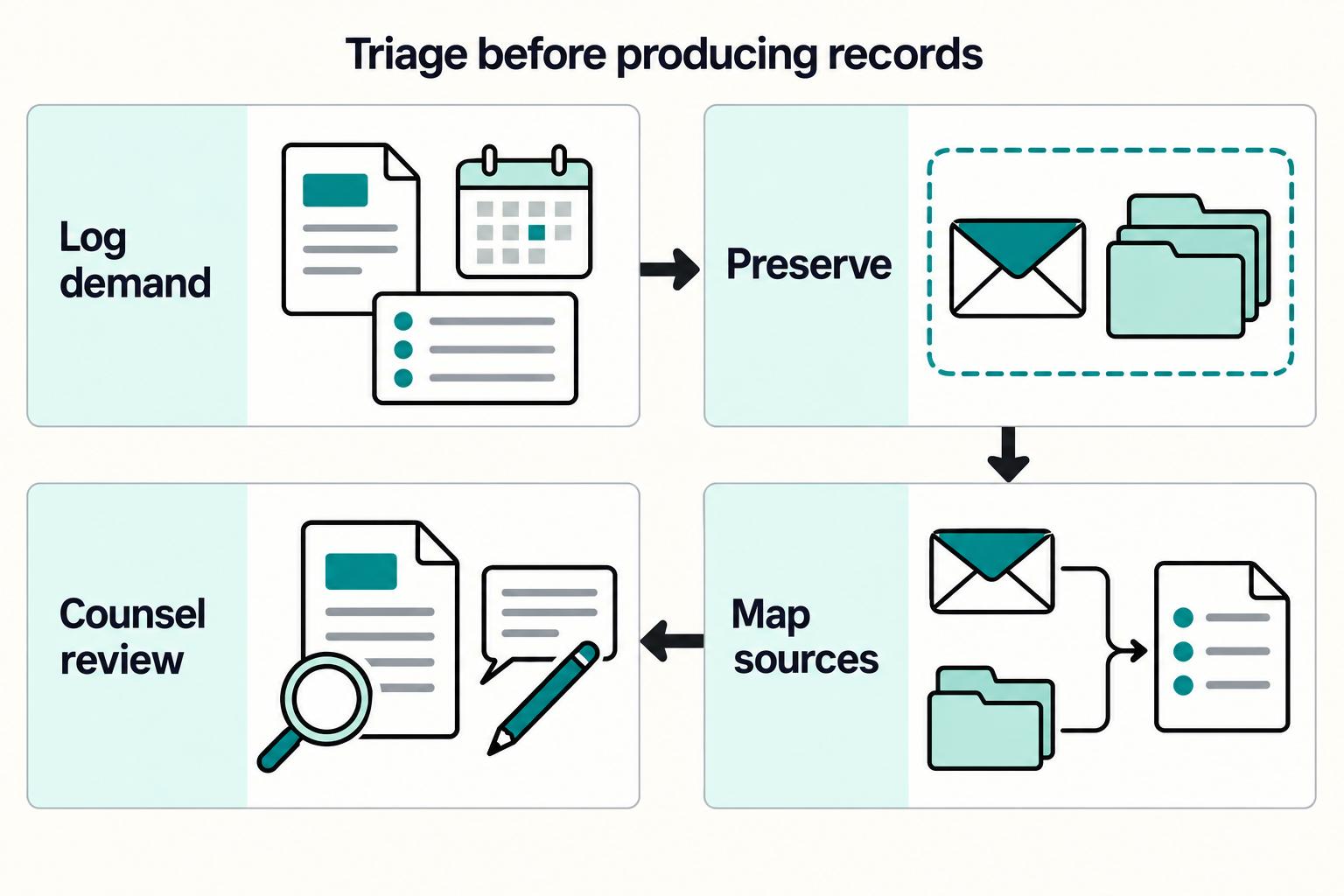
Move fast, but do not produce records on instinct. If you need to **respond to a subpoena for business records**, your immediate job is to control deadlines, preserve records, and make any later production defensible.
A US Expat's Guide to Investing in UCITS ETFs to Avoid PFIC Issues
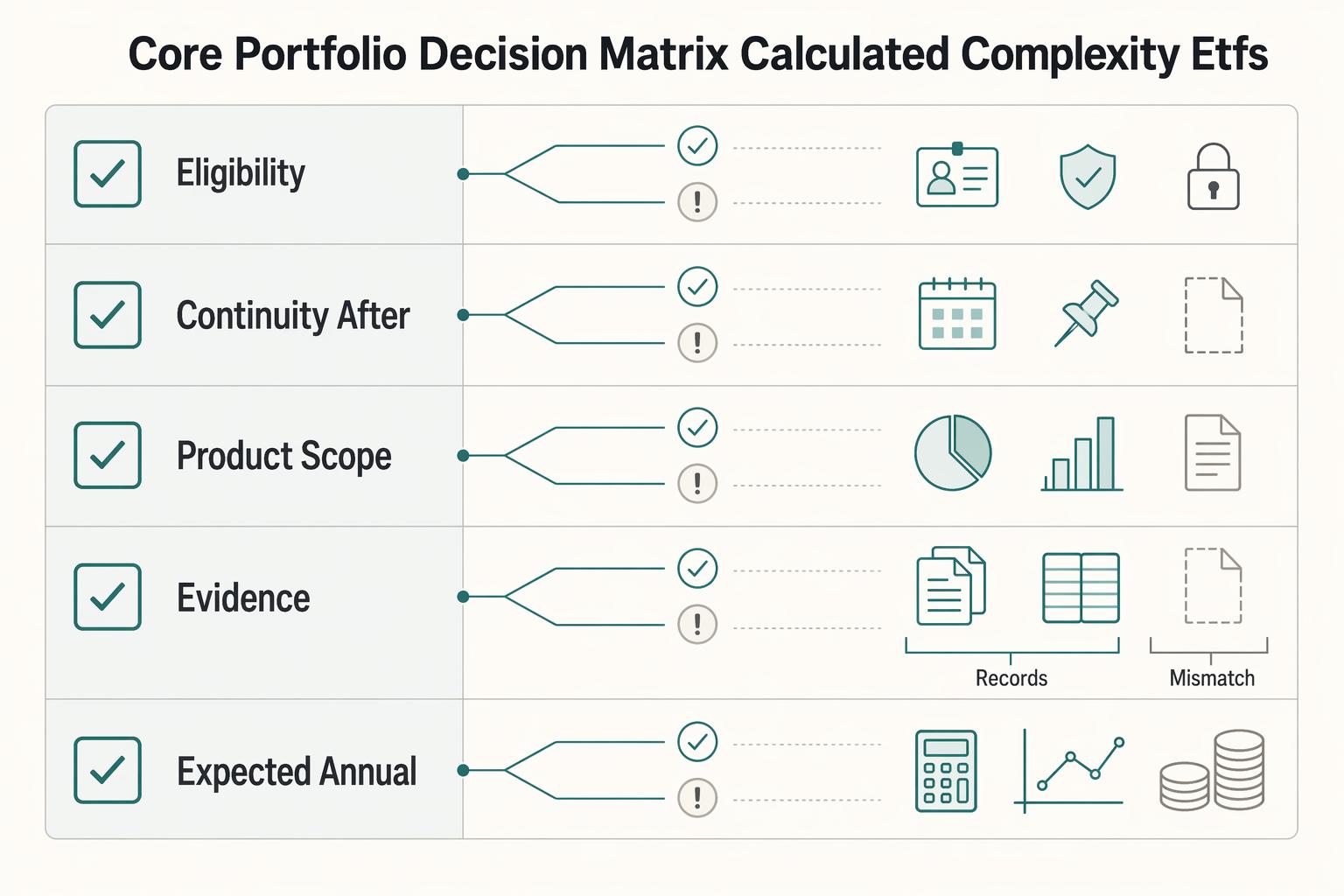
The real problem is a two-system conflict. U.S. tax treatment can punish the wrong fund choice, while local product-access constraints can block the funds you want to buy in the first place. For **us expat ucits etfs**, the practical question is not "Which product is best?" It is "What can I access, report, and keep doing every year without guessing?" Use this four-part filter before any trade: