
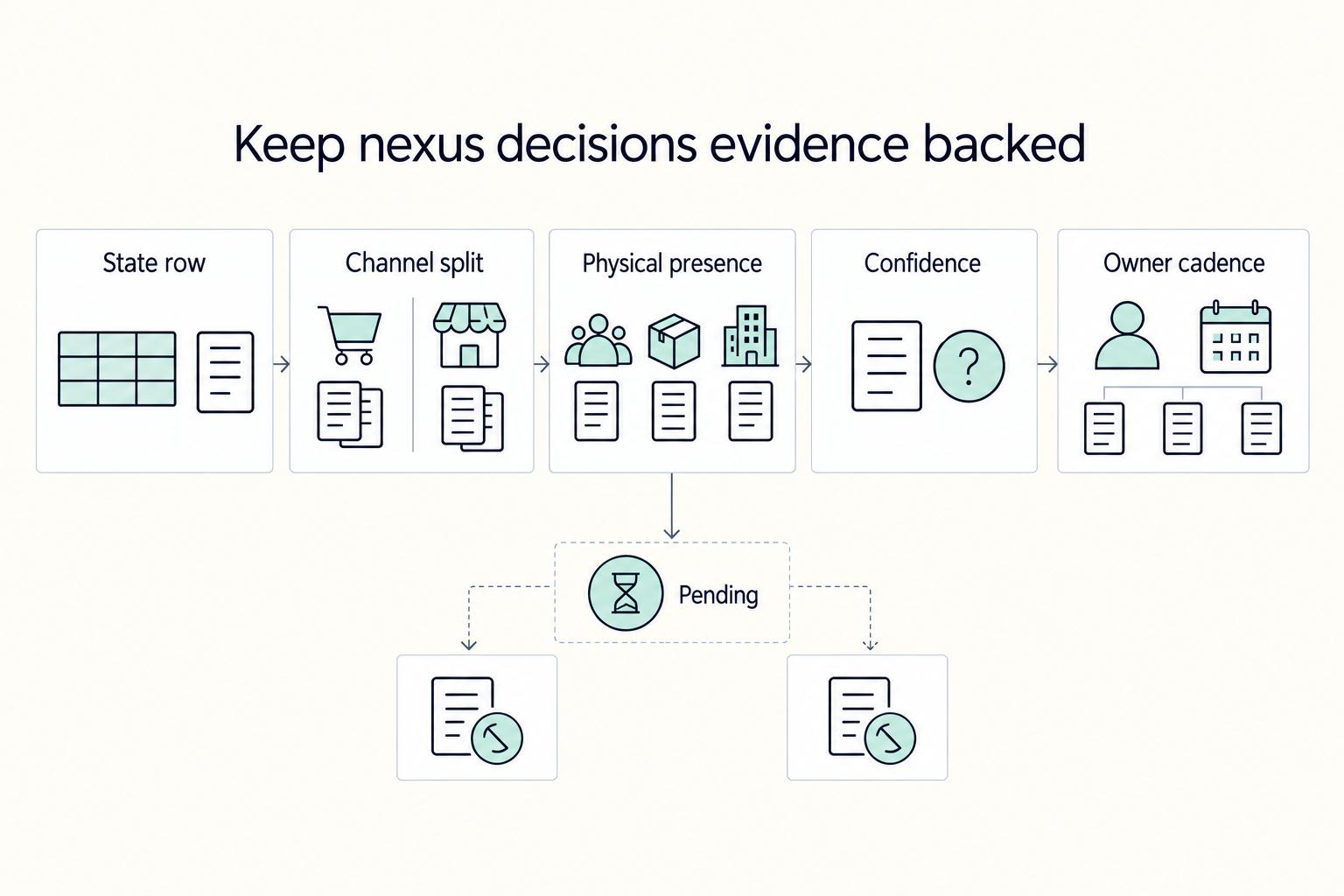
Quick Answer
Yes, facilitator collection does not close nexus exposure for most platforms. You still need a state-by-state review that separates threshold-based analysis from presence-based triggers and verifies whether sales occurred on marketplace or direct channels. South Dakota v. Wayfair expanded economic-presence enforcement, but inventory, personnel, and other in-state footprint signals can still create obligations. The practical move is to map entities and channels first, then make registration calls only after evidence quality and ownership are clear.
Sales Tax Nexus in a Marketplace Is a Platform-Level Risk#
Sales tax exposure in an online marketplace is a platform-level risk, not just a seller issue. If nexus review starts only after a state raises a registration question, teams can end up reacting under time pressure, with rushed decisions and inconsistent assumptions.
Sales tax nexus is the connection between a business and a state that determines whether the business must collect sales tax there. An online marketplace is a website where multiple sellers offer goods, so one platform can create several tax fact patterns at the same time.
Marketplace facilitator laws generally shift collection and remittance for marketplace retail sales to the facilitator, but they do not eliminate nexus analysis. Sellers can still have obligations on sales made outside the platform, and platform teams still need a defensible view of where obligations may exist.
The practical point is simple: do not assume facilitator collection closes the file, and do not register everywhere by default. The goal is fewer surprise obligations, fewer unnecessary registrations, and cleaner escalation to State and Local Tax (SALT) counsel when facts are unclear or state treatment is changing.
The legal backdrop is why this now works as a two-track review. In June 2018, South Dakota v. Wayfair opened the door to economic-presence nexus, not just physical-presence nexus. In practice, keep these checks separate:
- Economic nexus: the amount of economic activity in a state
- Physical nexus: in-state presence, including inventory in third-party fulfillment locations and in-state personnel
Start with verification before any registration decision. Confirm whether sales were made on the marketplace or outside it, whether inventory is held in third-party locations, and whether in-state personnel are involved. If your records cannot answer those questions reliably, treat that as a data-quality issue that can quickly become a tax-risk issue.
A common failure mode is incomplete or incorrect seller data. One practical facilitator checkpoint is whether you made a reasonable effort to obtain accurate, complete seller sale information. When that data is wrong, under-remittance can follow. Poor sales tax management can also create legal and reputational risk, so evidence quality matters as much as threshold monitoring.
Because states define marketplace facilitators differently, there is no national shortcut. Treat this article as an operating structure and verification sequence, not legal advice or a substitute for state-specific review.
Build your nexus map before you register anywhere#
Map the facts first, then register. Start by mapping each revenue flow by legal entity, channel, and transaction type, then assess where sales and use tax exposure may exist.
For each flow, list the entity making the sale, the entity receiving funds, and the channel used. Then classify the flow as marketplace retail sale, direct site sale, or another nonmarketplace flow. Keep those flows separate because marketplace rules vary by state and transaction type, and direct sales can create separate obligations even when marketplace collection exists.
| Flow type | Confirm first | Why it stays separate |
|---|---|---|
| Marketplace Facilitator | Whether the sale occurred on the facilitator marketplace and facilitator collection applies | Facilitator laws generally shift collection for those retail sales, but seller-side exposure can remain |
| Nonmarketplace channel | Whether the channel sits outside marketplace-facilitator coverage | These sales may create separate obligations |
| Direct Ecommerce Platform | Whether the sale happened on your own site or checkout | Direct sales are not covered by marketplace collection rules |
Before you do any threshold work, run one control check: can each state total be traced to one entity and one channel tag? If not, pause and fix the data first. Incomplete or inconsistent marketplace reporting is a known failure mode and can compound exposure, including penalties and interest over time.
As you build this, document decision ownership for each state so legal, finance, and operations can work from the same assumptions. If ownership is unclear or your entity and channel mapping conflict, consider SALT review before registration. Prioritize by risk and facts. Not every exposure needs immediate action.
You might also find this useful: DAC7 for Non-EU Platforms: Does Your Marketplace Owe Tax Data to European Authorities?.
Clarify responsibility boundaries across channels#
Once you map the flows, make the task boundaries explicit. Facilitator collection can change task ownership without fully removing seller-side exposure. Build a channel-responsibility table by state and entity. It should show who collects, who remits, who files or still monitors filing exposure, and who retains evidence for audit and liability protection.
The reportable data set is fixed by the OECD DPI XML Schema rather than by each Member State, so the field list is the same wherever the file goes. DAC7 and DPI reporting for platforms sets out each element with its requirement level, and the distinction worth carrying into a control design is between an element a validating parser rejects outright and one the rules require while the file still loads. The DAC7 seller data checker reads a CSV export in the browser and returns the gaps by seller.
| Channel model | Who collects | Who remits | Who files or still monitors | Who retains evidence |
|---|---|---|---|---|
| Marketplace-only through a Marketplace Facilitator | Usually the facilitator when the channel is covered by state facilitator rules | Usually the facilitator in many situations | Filing responsibility can vary by state; seller still monitors nexus/registration exposure and any seller-side duties that remain | Seller should retain its own evidence and not assume the facilitator is the only archive |
| Direct-site only | Typically you or your selling entity | Typically you or your selling entity | Typically you or your selling entity, subject to state rules | You or your selling entity |
| Hybrid model with a Third-Party Seller and direct sales | Split by transaction: facilitator for covered marketplace sales, seller for direct or noncovered sales | Split the same way | Can be split; seller monitors the full state picture across channels | Both sides keep channel-level support for their own transaction sets |
Do not rely on channel labels alone. The real check is whether the channel falls inside that state's facilitator definition. The MTC's July 8, 2021 white paper describes narrower definitions that require direct or indirect payment processing or collection, and broader definitions that may not. Business participants said broader definitions create more uncertainty. If a channel does not fit the state definition, do not assume collection responsibility shifted.
Use this control rule: if any channel in a state is outside facilitator coverage, treat that state as potentially active for your own sales and use tax process. Keep threshold monitoring, registration analysis, and evidence retention active for that state even when marketplace transactions are being collected elsewhere. This matters most in hybrid models, where sellers still need to monitor marketplace sales when they also sell outside a marketplace.
Treat facilitator status as conditional, not automatic. TaxConnex highlights a Nevada proposal where sales through an unregistered marketplace facilitator push registration, collection, and remittance back to the seller. Operationally, that means your control should verify facilitator scope and status before you rely on shifted responsibilities.
Related reading: How to Set Up Stripe Tax for Automatic Sales Tax Calculation.
Separate economic and physical nexus in your control logic#
Do not treat nexus as one yes-or-no test. Keep Economic Nexus and Physical Nexus as separate gates, and do not close a state as "no nexus" until both are complete.
Economic nexus is threshold-based: did you cross that state's sales revenue or transaction trigger? Physical nexus is presence-based: do you have people, inventory, or infrastructure in the state? Physical nexus can apply even when you are below an Economic Nexus Threshold.
Anchor the model in Wayfair#
This split is anchored in South Dakota v. Wayfair. In 2018, the U.S. Supreme Court allowed states to require tax collection from out-of-state businesses when economic thresholds are met. That enabled state economic-threshold collection rules, but it did not remove presence-based nexus.
So "below threshold = no nexus" is incomplete. A common example is $100,000 in sales OR 200 separate transactions in a 12-month period, but that is not universal. Threshold definitions, measurement periods, and marketplace-sales treatment vary by state.
Use a two-check close rule#
Keep the state open until both nexus tests and the evidence check are done:
- Economic review
Confirm the state's threshold rule, measurement period, and whether marketplace sales are included or excluded.
- Physical-presence review
Check for in-state inventory, employees, contractors, servers, or other property or infrastructure.
- Evidence check
Keep support for both conclusions, including contract review and reconciliation to marketplace tax reports when facilitator treatment is part of the analysis.
That makes the decision defensible. Misreading facilitator scope can lead to double collection, undercollection, or incorrect filings.
Keep your terminology fixed across teams#
Use the same legal labels in tax, finance, and ops records so triggers are interpreted the same way. Lock terms into your state matrix, approval notes, and close checklist:
- Economic Nexus: threshold-based nexus tied to sales revenue or transaction counts
- Physical Nexus: nexus tied to in-state presence, including people, inventory, and infrastructure
- No nexus conclusion: allowed only after both tests are completed and documented
Also treat people and footprint changes as nexus triggers. A single hire can create physical nexus risk, so hiring, contractor onboarding, inventory placement, and server-footprint changes should be part of tax review, not separate from it.
This pairs well with our guide on The Best Software for Calculating and Remitting Sales Tax.
Build a state rule matrix you can defend#
Build the matrix before anyone makes a filing or no-obligation call. If your current footprint includes California, Connecticut, New York, Colorado, Florida, and Georgia, start there and treat unresolved rules as active risk flags, not permission to mark a state inactive.
A defensible matrix is a working nexus study, not just a threshold list. If a row depends on "what we thought last quarter," it is not ready for registration, filing, or a no-nexus conclusion.
Start with six states and make unknowns explicit#
Use one row per state so the team can see what is confirmed, what is open, and who owns the next check.
| State | Internal confidence status | Unknowns to resolve | Last verified | Internal update cadence | Owner |
|---|---|---|---|---|---|
| California | Pending counsel review | Inclusion treatment for facilitated sales; direct vs marketplace split; physical presence inputs | Add date | Monthly and before filing/entity change | Add initials |
| Connecticut | Internal review only | Inclusion treatment; source authority to rely on; any channel exceptions | Add date | Monthly and before filing/entity change | Add initials |
| New York | Pending counsel review | Inclusion treatment; hybrid-channel treatment; physical presence overlap | Add date | Monthly and before filing/entity change | Add initials |
| Colorado | Internal review only | Inclusion treatment; direct sales aggregation; local filing impact if relevant | Add date | Monthly and before filing/entity change | Add initials |
| Florida | Internal review only | Inclusion treatment; evidence source age; direct vs facilitated sales mapping | Add date | Monthly and before filing/entity change | Add initials |
| Georgia | Pending counsel review | Inclusion treatment; threshold measurement inputs; physical presence cross-check | Add date | Monthly and before filing/entity change | Add initials |
"Pending verification" is a valid status. A false "confirmed" status is what creates bad filing positions, especially when facilitator collection and seller nexus analysis are related but not identical.
Build rows from evidence, not memory#
Tie each row to objective records, not recollection. Reconcile against the general ledger, payroll, CRM, ERP shipment data, HR location data, and travel records. Keep these fields behind each state summary:
- economic threshold source checked
- marketplace sales treatment, whether included, excluded, or unresolved
- direct sales amount for the measurement period
- marketplace sales amount for the same period
- physical presence indicators, including employees, agents, inventory, property, and travel
- evidence location, such as report name, contract folder, or counsel memo reference
Date and quantify footprint items. Timing can change the outcome, so "inventory in Colorado" is weaker than a dated, period-specific entry. Also record source freshness, for example a guide last updated November 24, 2025, so reviewers can decide whether to rely on it or re-check.
Use confidence status to prevent false certainty#
Add a confidence field people can read quickly: counsel-confirmed and current authority, internally supported but not counsel-validated, or pending. That keeps unresolved issues from being treated as settled during close.
Escalate when a state is materially active and treatment is still unclear. Missing clarity is a risk condition, not a hold-and-ignore condition.
Assign owners and cadence so rows stay usable#
Add owner initials and a review rhythm for every row. These are operational controls that expose stale assumptions before month-end close.
A practical baseline is monthly review plus off-cycle updates for new channels, entities, warehouse arrangements, or in-state workers. Treat this as an internal control cadence, not a statutory requirement. If status is still pending and volume is material, shorten the cycle and escalate to SALT counsel before registration decisions.
Once your state matrix exists, connect it to one audit trail so approvals, evidence, and payout decisions stay in sync. Start with the Gruv docs.
Decide when marketplace sales count toward thresholds#
After the matrix is in place, set one rule per state row: included, excluded, or unresolved. If current state authority says marketplace-facilitated sales count, include them in Economic Nexus threshold monitoring. If not, exclude them from that threshold test and keep separate monitoring for direct and other nonmarketplace channels.
Marketplace collection does not answer threshold treatment, and threshold treatment does not automatically remove filing obligations.
Use one state rule, not channel guesswork#
The rule is jurisdiction-specific. In Virginia, a marketplace facilitator with direct sales must use combined direct and facilitated sales to test threshold status. The published threshold is more than $100,000 in annual gross retail sales or 200 or more transactions to Virginia customers.
Nebraska shows the seller-side version: threshold testing for remote sellers includes sales through a Multivendor Marketplace Platform, its marketplace facilitator term. Nebraska also states that a seller above threshold may still need to file returns for all Nebraska sales even when the marketplace remits tax on facilitated sales.
Keep the decision logic tight#
- Confirm the current state rule: facilitated sales included, excluded, or unresolved.
- Tag same-period sales by channel: direct, marketplace facilitated, and nonmarketplace.
- Apply the state rule to the threshold test.
- Record the conclusion, source date, and approver in the state row.
If a state is excluded, do not stop monitoring. Direct or nonmarketplace channels can still cross thresholds.
Treat old summaries as leads, not authority#
Historical summaries are useful for triage, not final authority. A dated snapshot like "as of November 2021, 20 states" can be stale. Revalidate it to your current as-of date, which for this article is 2026-03-31.
Use written sign-off before changing inclusion logic#
As an internal control, consider requiring written sign-off when changing a state from included to excluded, or the reverse. At minimum, retain:
- the state source or counsel note used
- the effective date or last-verified date
- the approver and reason for the change
Before acting on the change, compare it to the prior period's sales totals. If the new logic would materially change threshold status, escalate before registration, deregistration, or filing changes.
If you want a deeper dive, read How a German Freelancer Can Handle US Sales Tax with a US LLC.
Handle hybrid selling without split compliance logic#
Once threshold treatment is set, apply it across all channels. For each state, produce one compliance decision, not separate answers for marketplace and direct-sales teams. In hybrid models, marketplace, direct-site, and other channel data are separate inputs that still need to resolve to one state outcome.
Marketplace facilitator rules can shift collection for marketplace orders, but they do not uniformly remove seller obligations. That is why direct and nonmarketplace channels still need to flow into the same threshold and filing decision.
Use one repeatable sequence#
Use one repeatable sequence so channel differences do not create inconsistent state conclusions:
- Channel tagging
Classify each order as marketplace facilitated, direct-site, or other third-party channel before nexus analysis.
- State attribution
Assign orders to states using one consistent attribution method across all channels.
- Threshold aggregation
Apply the state rule: include facilitated sales, exclude them, or mark unresolved and escalate rather than assume.
- Responsibility check
Confirm who collects, remits, files, and keeps records by channel. Marketplace collection can apply to the order while seller filing or documentation duties still remain, including returns that report marketplace sales as exempt in some cases.
- Filing decision
Decide state action only after the prior steps: no action, monitor, register, file, or escalate.
Keep channel facts separate, but centralize the state logic that drives threshold treatment, responsibility notes, and filing status.
Keep channels separate in data, unified in the decision#
| Channel type | What to test | Responsibility question | Evidence to retain |
|---|---|---|---|
| Marketplace order through a Marketplace Facilitator | Whether the state includes facilitated sales in threshold testing | Whether the facilitator collects or remits for that order, and whether you still file reporting those sales as exempt | Marketplace tax report, seller agreement or contract excerpt, state rule row, filed return if applicable |
| Direct sale on your Ecommerce Platform | Direct sales in state threshold testing | For direct-site sales (for example, Shopify), registration, reporting, and remittance responsibility remains with the merchant | Order export, tax report, registration record, filed return |
| Other third-party or Nonmarketplace Facilitator channel | Test based on the state rule and channel facts | Do not assume marketplace coverage | Contract terms, tax handling statement, settlement report, state decision record |
Add one hard stop for bad data#
If channel tags are missing, consider pausing automated nexus conclusions and route that state to manual review until classification is complete. This can reduce common failure modes: double collection, undercollection, and erroneous filings. For manual review, keep a short evidence pack:
- transaction extract showing channel classification
- marketplace or direct-site tax report used for reconciliation
- relevant contract or platform terms when responsibility is unclear
- state matrix row with last-verified date and approver
- final filing decision and return copy when applicable
Centralize rules, then feed downstream teams#
Store state inclusion rules, responsibility notes, confidence status, verification date, and evidence links in one controlled source, then feed reporting and filing work from that source. Use contract review plus reconciliation to marketplace tax reports as a checkpoint before close.
If your data clearly separates marketplace, direct, and other channels, hybrid compliance stays manageable. If it does not, require manual review before changing filing behavior.
Related: Digital Platform Reporting: What Every Online Marketplace Must Report to Tax Authorities Worldwide.
Track physical presence triggers teams miss#
Marketplace collection does not automatically remove physical presence risk. If inventory, offices or warehouses, employees, or contractors appear in a state, run a separate nexus review rather than burying it inside your economic-threshold tracker.
| Trigger | Example | Control response |
|---|---|---|
| Third-party inventory | Inventory in a third-party facility or Third-Party Warehouse Inventory in a newly appearing state | Log when inventory first appeared, which entity owned the inventory, and whether that state has a documented filing or registration review |
| Amazon FBA stock movement | Inventory in Amazon FBA or other third-party fulfillment centers | Keep the inventory-location report, pull date, and matched state decision record |
| People in a new state | A new remote hire, salesperson, or contractor in a new state | Open a review ticket before payroll or payment setup becomes routine |
| First new-state footprint | First appearance of offices, warehouses, inventory, or personnel | Create one escalation checkpoint and do not automatically close the state without documenting the review and rationale |
Misses here are often operational. Finance may be watching sales totals while operations adds a warehouse location, Amazon moves stock, or a team lead hires a remote contractor in a new state. Those events can create physical nexus independently of economic-threshold tracking.
Inventory can create nexus before sales thresholds are in focus#
Inventory can be a blind spot for marketplace-heavy sellers. Because physical nexus can be triggered by in-state inventory, warehouses, offices, or employees, stock in a third-party facility can require review on its own.
If you use Third-Party Warehouse Inventory, treat location changes as a tax input, not just a fulfillment detail. For each newly appearing state, log:
- when inventory first appeared
- which entity owned the inventory
- whether that state has a documented filing or registration review
If an inventory report cannot be tied to a reviewed state decision, escalate instead of assuming coverage.
Amazon FBA needs dedicated alerting#
If you sell through Amazon FBA, include inventory-location alerts in your regular compliance review process. Inventory in Amazon FBA or other third-party fulfillment centers is a known physical nexus trigger, and stock movement may happen before tax owners notice.
Keep an evidence trail with the inventory-location report, pull date, and matched state decision record. This helps explain why a state was opened, monitored, or escalated.
Track people-based triggers separately from thresholds#
Employee or contractor presence is also a physical nexus trigger. A new remote hire, salesperson, or contractor in a new state should trigger tax review even when that state's revenue is still low.
Keep this in a separate tracker from sales-threshold reporting. If a person appears in a state where no nexus position is documented, open a review ticket before payroll or payment setup becomes routine.
Escalate on any new-state footprint#
Create one escalation checkpoint for any first appearance of offices, warehouses, inventory, or personnel in a new state. The trigger is the appearance itself, not a final conclusion that tax is due.
Also account for potential trailing nexus. If inventory leaves a state or a contractor relationship ends, do not automatically close the state without documenting the review and rationale.
Set clear escalation triggers for SALT counsel#
After you set initial nexus alerts, decide when to escalate before an unclear state position turns into registration or filing. Escalate in the same review cycle when a rule is uncertain, recently changed, or interpreted differently across tax, legal, finance, and operations.
| Trigger | Signal | Action |
|---|---|---|
| Rule uncertainty or recent change | A rule is uncertain, recently changed, or interpreted differently across tax, legal, finance, and operations | Escalate in the same review cycle |
| Unknown or low-confidence matrix row | The state matrix is marked unknown, pending, or low-confidence and you are about to act on an assumption you cannot document | Escalate before month-end close or any registration step |
| Internal disagreement | One team includes a sales channel in nexus analysis while another does not | Escalate |
| Unclear filing responsibility | Multiple entities or mixed-channel sales where collection, remittance, and filing roles do not line up cleanly | Pause and escalate before registering |
A reliable trigger is not "we know we are wrong." It is "we cannot clearly document the position well enough to register, file, or defend later." Economic nexus is an ongoing operating reality, not a one-time study. States still vary in thresholds, definitions, and measurement periods.
When ambiguity alone should trigger escalation#
Escalate when your state matrix shows unknown treatment and you already have in-state activity through mixed channels. Escalate for internal disagreement too, such as one team including a sales channel in nexus analysis while another does not.
Use one checkpoint before month-end close or any registration step. Review rows marked unknown, pending, or low-confidence and ask whether you are about to act on an assumption you cannot document. If yes, escalate.
Escalate before registration, not after#
Pause and escalate before registering when filing responsibility is unclear. This can appear with multiple entities or mixed-channel sales where collection, remittance, and filing roles do not line up cleanly.
Do not default to "register now, sort it out later." In Florida, inconsistent or incomplete returns are cited as audit triggers, and audits can extend across multiple years with sampling. That does not mean every state follows the same pattern, but it is a concrete risk signal.
Keep counsel guidance operational#
Record counsel outcomes in the same matrix row. Include the as-of date, decision owner, issue asked, conclusion, and any follow-up condition, for example recheck on entity change or revalidate before first filing. This keeps legal decisions usable in operations and helps your team raise issues before a notice does.
For a step-by-step walkthrough, see When Remote Businesses Need to Register for Sales Tax Nexus.
Run a monthly evidence pack and verification cadence#
A monthly evidence pack helps keep the process defensible, but a required sales-and-use-tax format is not established. Keep it lean and repeatable.
| Record or check | What to keep or confirm |
|---|---|
| Decision record | A clear decision record for each in-scope item |
| Approver and verifier identity | Approver and verifier identity, if you track that internally |
| Approval and verification dates | Approval and verification dates, if captured |
| Working material reference | A stable reference to the exact working material used for that cycle |
| Official domain check | Confirm the page is on an official .gov domain |
| Connection check | Confirm the page uses https:// |
| Recency marker | Capture any visible recency marker, for example Date Updated: August 21, 2024 on OFAC FAQ entries |
For each monthly cycle, keep only what lets you reconstruct decisions without relying on memory, chat threads, or overwritten files:
- a clear decision record for each in-scope item
- approver and verifier identity, if you track that internally
- approval and verification dates, if captured
- a stable reference to the exact working material used for that cycle
When a decision relies on government guidance, run a basic source-integrity check before sharing sensitive information:
- confirm the page is on an official
.govdomain - confirm the page uses
https:// - capture any visible recency marker, for example
Date Updated: August 21, 2024on OFAC FAQ entries
Keep two guardrails in view. First, rule treatment can differ across programs, so avoid carrying one program's treatment into another without checking. Second, sales-tax-specific evidence-pack contents, nexus thresholds, and finance-close checkpoint requirements are not defined here. Treat those items as counsel-defined policy and document them consistently once set.
Avoid overbuilding while still reducing exposure#
The goal is not maximum automation. It is fewer missed registrations without hard-coding brittle logic. If your channel taxonomy and state matrix are still changing, keep the process controlled and mostly manual.
Both extremes create risk. Under-building can miss a nexus trigger. Over-building too early can lock in stale assumptions and push them into finance reporting.
What to automate first#
Automate repetitive, easy-to-verify work first, and keep judgment calls manual. Good first candidates are:
- monthly state sales aggregation by legal entity and channel
- threshold watchlists that flag states approaching or crossing your internal monitoring point
- evidence exports showing source file, as-of date, and reviewer
Keep specialist review in the loop for edge states and structural changes so automation does not create false confidence.
Put a hard gate in front of tools#
If you evaluate software, use a short gate before you buy or configure. Tool choice can affect compliance accuracy, audit risk, and finance-team efficiency, but more features do not automatically mean better control.
Confirm first that a platform supports your required tax types and jurisdictions. Then test certificate management, integration with existing systems, and scaling with transaction volume.
Save the exact comparison material used for decisions, including any visible recency marker. If a page shows "Last Updated: March 10, 2026," record that in your monthly file. Do the same for other materials, such as an article published March 27, 2026. Sales tax conditions change quickly, so stale tool assumptions become a control risk.
Where heavy automation usually breaks#
The common failure mode is false confidence. In highly complex platforms, configuration errors can go undetected for months and affect internal sales data before anyone notices.
One practical approach is to automate counting before interpretation while your state logic is still stabilizing. Until then, a controlled manual process with visible checkpoints is often the lower-risk way to reduce exposure.
For related context, see How to use Paddle to handle sales tax and VAT for a SaaS product sold globally.
Conclusion#
Disciplined controls beat maximal registration and maximal automation. Classify each channel, test economic and physical nexus separately, verify state treatment before aggregating sales, and escalate while issues are still small.
That discipline matters because state rules are not uniform. Marketplace facilitator laws remain a patchwork, and nexus can be triggered by physical presence or sales thresholds. South Dakota v. Wayfair in 2018 changed economic nexus analysis, but physical-presence signals can still matter.
The exposure is real, not theoretical. Thomson Reuters described a converging trend from two 2026 state court decisions in South Carolina and Wisconsin. In Wisconsin, more than $17 million of sales tax, penalties, and interest was at issue for platform sales from 2008 to 2013. The practical takeaway is narrow: assumptions like "we were only a facilitator" or "later facilitator statutes fixed prior years" may fail. That can happen when a state focuses on how much control the platform had over transactions.
Use a strict operating model: one living state matrix, clear ownership, and evidence tied to each decision. Treat unknown treatment, stale verification, or unresolved disagreement across tax, finance, and legal as an escalation trigger, not as permission to assume no obligation.
Your first version only needs to answer the same questions every cycle:
- what entity and channel generated the sale
- whether marketplace-facilitated sales are included in threshold analysis or still pending confirmation
- whether any physical-presence signal appeared in the period
- who approved the conclusion, when it was verified, and what evidence supports it
Keep the evidence pack lean: current matrix snapshot, channel mapping, threshold calculations, and the approval trail for each filing decision.
If your platform operates across multiple markets, build the first matrix and escalation rules this month, then improve them each cycle. That will not remove judgment calls, but it can reduce surprise liability risk and make decisions more consistent.
Need the full breakdown? Read How to Get a Sales Tax Permit as a Freelancer.
If your platform needs help aligning nexus decisions with cross-border money movement controls, contact Gruv for a practical coverage review.
Frequently Asked Questions
Do marketplace sales count toward economic nexus thresholds?
There is no single rule you can apply everywhere. Treat inclusion of marketplace-facilitated sales as jurisdiction-specific, and track the source reviewed and verification date in your matrix. Do not combine marketplace and direct sales into one threshold total until that state's treatment is confirmed.
If a marketplace collects sales tax, do we still have nexus obligations?
Marketplace collection does not automatically end seller obligations. Texas illustrates the split: marketplace-provider rules address collection responsibility, and seller duties still vary by role, such as remote seller, marketplace seller, or marketplace provider. Keep a state-by-state, entity-level record of who collected and why you did or did not register.
Does inventory in third-party warehouses create nexus?
It can, because physical presence can arise from storing inventory in a state. Economic nexus rules do not replace physical presence analysis. Review inventory-location and warehouse reports, and escalate when stock appears in a new state.
What changes when we also sell off-marketplace?
Hybrid models can add your own collection and filing exposure through direct or nonmarketplace channels, even when marketplace sales are facilitator-collected. Track gross receipts and transaction counts by channel before making a state-level determination. Kentucky, for example, applies thresholds of 200 sales or more than $100,000 in gross receipts for qualifying remote retailers and separately requires qualifying marketplace providers to collect on marketplace sales into the state.
What is the difference between economic and physical nexus?
Economic nexus is based on in-state receipts or activity, even without physical presence. Physical nexus comes from people or property in the state, such as employees, offices, or inventory. Treat a state as cleared only after both tests are complete.
How often should we revalidate state rules?
This guide does not set one universal legal cadence, so treat timing as an internal control decision. Set a regular cadence and revalidate before filings or structural changes, such as new channels, entity changes, warehouse moves, or new in-state hires. Keep dated evidence and reviewer records. In Texas, required records such as gross receipts of sales and purchases must be kept for at least four years.
Try a related tool
Researched and edited by the Gruv editorial team. Gruv builds cross-border billing, payouts, and finance-operations software for global businesses.
Sources
- comptroller.texas.gov/taxes/sales/remote-sellers-marketplace-faq.phptrusted
- dhs.gov/sites/default/files/2024-04/2024_0314_us_cus...trusted
- govinfo.gov/content/pkg/CRPT-119srpt44/html/CRPT-119srpt...trusted
- leg.colorado.gov/initiative_files/3308/downloadtrusted
- mtc.gov/wp-content/uploads/2023/02/Wayfair-and-Marke...trusted
- nvlpubs.nist.gov/nistpubs/SpecialPublications/NIST.SP.800-161...trusted
- ofac.treasury.gov/faqs/all-faqstrusted
- revenue.nebraska.gov/businesses/sales-and-use-tax/notice-remote-s...trusted
Educational content only. Not legal, tax, or financial advice.
Related Posts
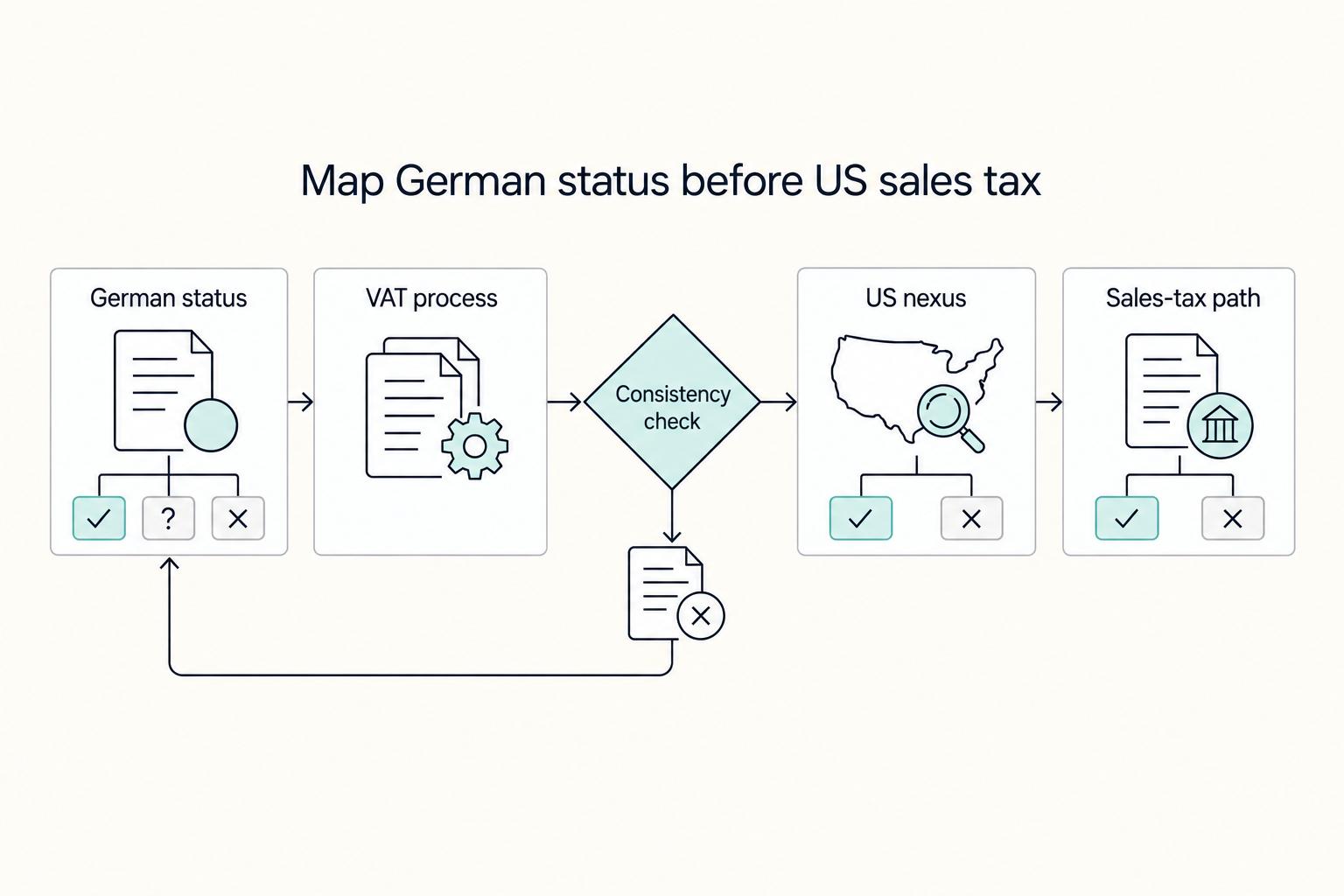
How a German Freelancer Can Navigate US Sales Tax with a US LLC
Use this as your default: a U.S. LLC can change how you operate and document the business, but it does not turn German and U.S. tax questions into one answer.
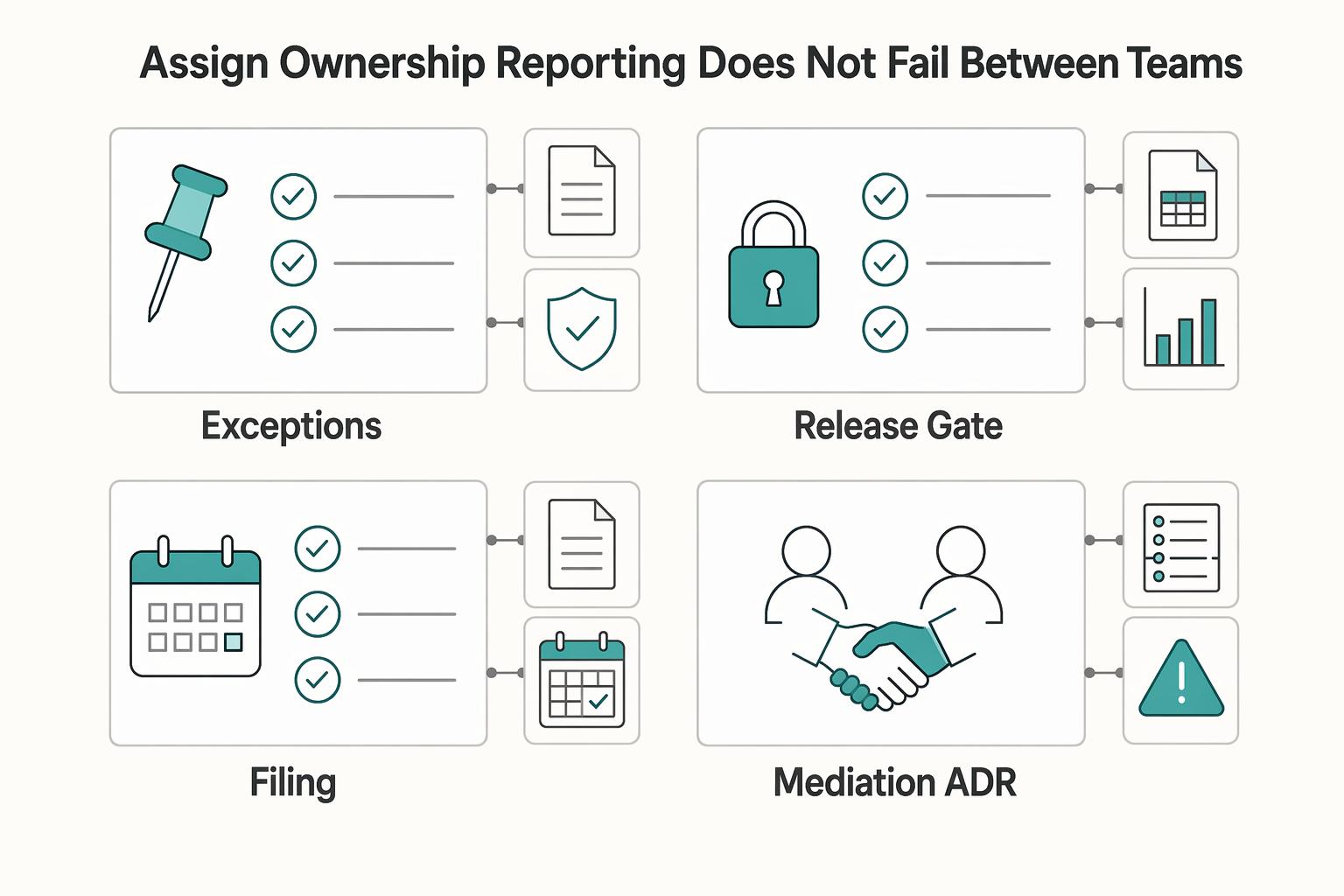
Digital Platform Reporting for Online Marketplaces: MRDP, DAC7, and UK HMRC Duties
Digital platform reporting is an operating control, not a year-end cleanup task. For online marketplaces, seller and income data should be collected and verified as part of normal operations, not reconstructed later. If you run a marketplace, you need this data model working before filing season, not after it.
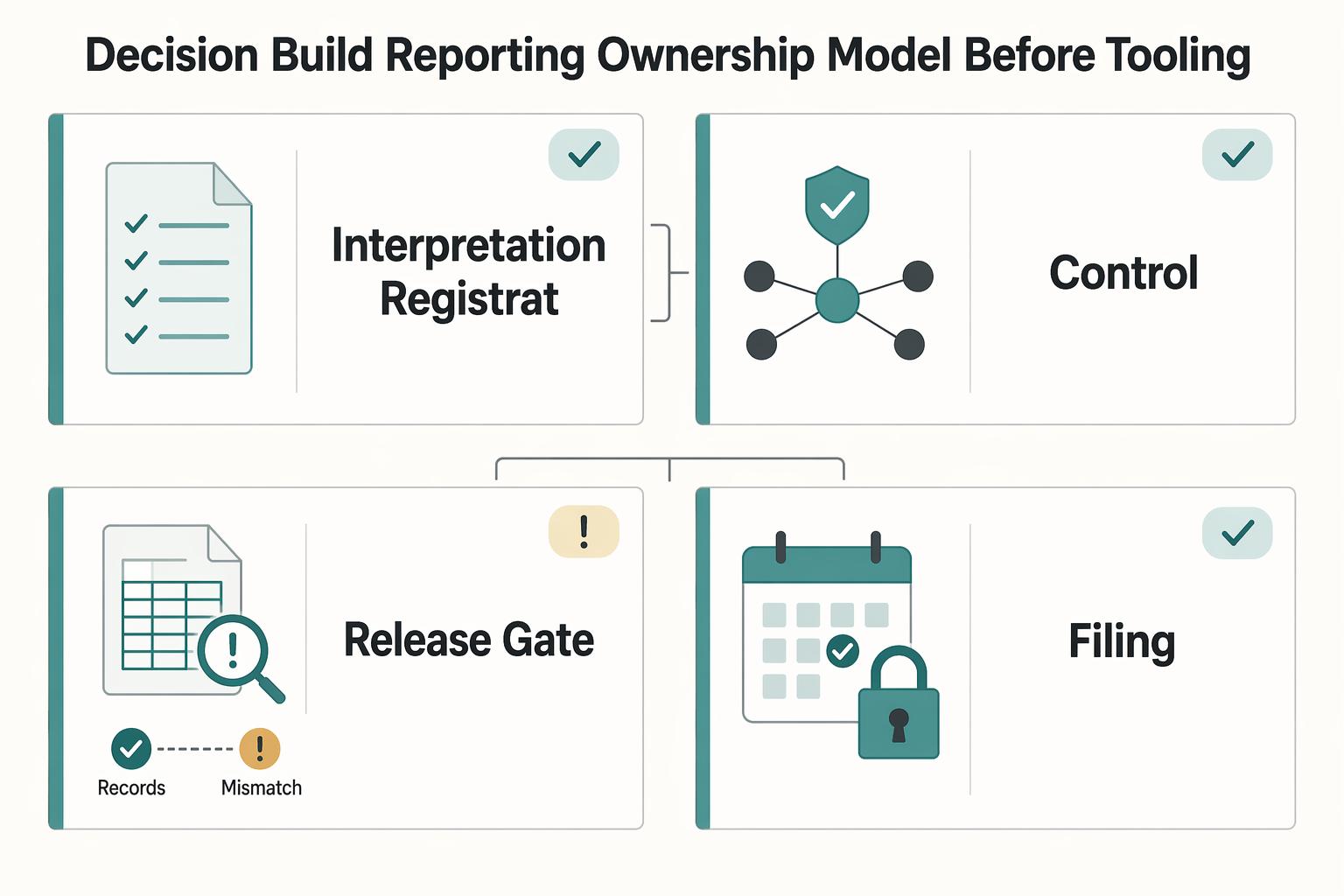
Does Your Non-EU Marketplace Owe DAC7 Tax Reporting in Europe?
Treat DAC7 first as a reporting and data-control problem, not a tax-rate problem. Council Directive (EU) 2021/514 was adopted on 22 March 2021 and entered into force on 1 January 2023. It amended the Directive on Administrative Cooperation so tax authorities can receive and exchange platform seller data across the EU. We recommend starting there so your team does not treat DAC7 like a tax-calculation project and miss the reporting controls that actually fail first.