
Quick Answer
Start by sending an event-triggered survey within 48 to 72 hours of a payout milestone, then link each response to payout ID, method, status history, timestamps, and exception flags. Score operational signals first, including timeliness, visibility, dispute pressure, and cash-flow strain, while treating CSAT and NPS as secondary context. Segment results by rail and cohort before roadmap decisions. Ship changes only when low scores map to a specific owner-led cause and keep monitoring plus rollback rules in place if unresolved exceptions rise.
What to measure in a contractor payout satisfaction survey#
Contractor payout experience is an operating signal, not just a sentiment metric. When an Independent Contractor sees delays, unclear status, or repeated exceptions, trust can erode, retention risk can rise, and finance teams end up absorbing the mess through manual follow-up and reconciliation pressure.
A Contractor Payment Satisfaction Survey is only useful if it helps you isolate fixable causes in the payout flow. For platforms running Payouts to freelancers, gig workers, and other contractors, that means capturing event-level feedback your team can trace to actual payout records, not broad opinions that cannot be investigated.
Use the survey as a decision tool for product, finance, and ops. Ask questions that map to a specific payout event, then connect responses to execution choices in the payout process. If feedback says a payout was delayed or status was unclear, you have something concrete to check against logs, provider behavior, and reconciliation records.
Start narrow so you do not drown in noise. Measure a small set of high-friction payout moments, score them consistently, and send the survey close to the event. Adjacent post-project guidance points to a 48 to 72 hour window. Then verify each low score against transaction context such as date, method, exception state, and support contact before you act.
This guide focuses on that loop: what to measure first, how to score it, and how to separate actual payout friction from broader dissatisfaction so you can choose the right next fix.
Define the payout metrics that actually predict churn and margin#
Use this scorecard as an operating tool, not as proof that any payout metric predicts churn or margin. Build a Key Performance Indicator (KPI) set you can verify against payout records, then use it to find where execution is breaking.
Step 1 Anchor metrics to observable payout events#
Treat timeliness, visibility, dispute pressure, and cash-flow strain as working buckets for analysis, not source-validated predictors. Aim to map survey feedback to a specific payout event your team can inspect.
| Working dimension | What to measure at event level | What to verify before acting |
|---|---|---|
| Timeliness | Time from payout approval to initiation, and initiation to completion | Confirm timestamps in the payout record |
| Visibility | Status clarity, status-related support contacts, and whether next steps were clear | Confirm the exact status trail shown for that payout |
| Dispute pressure | Payment disputes, reopened cases, and proof-of-payment requests | Check ticket reasons and exception notes for the same payout |
| Cash-flow strain | Direct self-reported timing impact from the recipient | Keep it segmented as reported impact, not a universal performance verdict |
Keep the measurement discipline simple. Pick measures across intermediate outcomes, outputs, and work processes, then monitor them consistently.
Step 2 Treat CSAT and NPS as optional summary signals#
If you already track CSAT and NPS, use them for trend direction only, not as your main diagnostic layer for Payout Experience.
Require low scores to map to transaction context such as payout ID, method, status, timestamps, and exception or support flags. If teams cannot reliably reconcile survey feedback to those records, the metric design is too detached to guide a real fix.
Step 3 Add segment-specific friction markers carefully#
If your contractor mix shows recurring payment-friction patterns, add internal markers from evidence you already control, such as ticket tags, call reasons, open-text themes, and exception notes. Then review those markers on a regular cadence to make sure they still reflect real operational issues.
That keeps your KPI stack small, traceable, and useful: event-level metrics for diagnosis, sentiment metrics for trend context, and segment-specific markers only where your payment model actually justifies them.
What to prepare before launching the survey#
Before you send anything, lock ownership, evidence, sampling, and language. A practical standard is to make each low score traceable to a payout event, a support signal, and a clear owner.
| Preparation area | What to lock before launch |
|---|---|
| Assign one accountable owner | Set a clear accountable owner for the survey. That owner can freeze wording, approve sampling rules, and resolve conflicts between survey results and anecdotal feedback. |
| Build the minimum evidence pack | Do not launch until responses can be matched to payout status logs and exception categories. |
| Set the sampling plan before launch | Define who gets invited, at which payout event, and how often the same contractor can be surveyed before the first send goes out. Define nonresponse handling up front as well, including item nonresponse categories. |
| Lock a plain-language data dictionary | Align internal definitions for what counts as a "delay," a "failed payout," and a "visibility gap" before rollout. Pilot the language with a small internal group, then revise before you go broad. |
Step 1 Assign one accountable owner#
Set a clear accountable owner for the survey, even if finance ops, product, and support all contribute. That owner can freeze wording, approve sampling rules, and resolve conflicts between survey results and anecdotal feedback.
Keep role boundaries explicit. Finance ops can manage payout-record access, support can manage ticket and exception language, and product can manage trigger timing and status exposure. Before launch, confirm who approves changes, who reviews results each week, and who opens root-cause tickets when Payout Experience scores fall.
Step 2 Build the minimum evidence pack#
Do not launch until responses can be matched to payout status logs and exception categories. Without that, you cannot tell whether you have a payout-process problem or a perception problem.
This matters even more in contractor mass payouts, where different amounts, schedules, and payout methods add operational complexity. Manual processing errors, including incorrect amounts or missed payments, are a known failure mode, so your records should let you trace initiation, completion, and exception context for the same payout.
Step 3 Set the sampling plan before launch#
Treat sampling as a prelaunch decision, not something to patch later. Define who gets invited, at which payout event, and how often the same contractor can be surveyed before the first send goes out.
Define nonresponse handling up front as well, including item nonresponse categories. If you leave that vague at launch, trend interpretation gets much harder later.
Step 4 Lock a plain-language data dictionary#
Define key terms once so teams read the results the same way. Align internal definitions for what counts as a "delay," a "failed payout," and a "visibility gap" before rollout.
Pilot the language with a small internal group, then revise before you go broad. Early feedback often forces meaningful changes, and it is much cheaper to absorb that before live scores start circulating.
You might also find this useful: Which Contractor Payment Experience NPS Metrics Actually Predict Retention.
Build the survey instrument and scoring model#
Build the instrument so it separates event-level feedback from broader relationship feedback. That keeps scores interpretable and practical.
Step 1 Separate event feedback from periodic relationship feedback#
Ask event-level questions only when you can map responses to a specific service record in your logs. Keep those questions concrete and operational so each low score can be tied back to evidence.
Use a separate, slower-cadence relationship pulse for broader satisfaction signals. If your volume is lower, this can look like an annual customer satisfaction format, but keep it distinct from event-triggered measurement.
Step 2 Weight indicators in a way you can defend over time#
Do not score the program with a single sentiment number. Use multiple indicators and document how you interpret them over time, while keeping improvement decisions tied to indicators you can verify.
The precedent here is methodological, not domain-specific. One contractor-satisfaction study used multiple indicators with 163 respondents and reported a 69.65% CoSI, then used importance-performance classification to separate improvement areas from lower-priority areas. Use that discipline for prioritization, but do not transfer that percentage to unrelated contexts.
Step 3 Add diagnostic fields that map to owners#
Add a small set of cause-coded fields that point directly to teams and decisions instead of leaning on overall satisfaction prompts alone. Keep the options aligned to categories you already track in status logs and case records.
A good check is simple: every diagnostic option should route to a clear owner and a likely fix path. If responses still collapse into a generic bucket, tighten the categories before you scale.
Step 4 Keep one open-text prompt for root-cause detail#
Use one open-text question to capture what the closed fields missed, not a generic comments box. Ask for the main issue and where it happened in the service journey so analysts can code responses consistently.
Test the prompt on a small sample before full rollout. If answers come back as vague sentiment, revise the wording until the responses produce usable cause detail.
Related reading: Build a Global Contractor Payment Compliance Calendar for Monthly, Quarterly, and Annual Obligations.
Segment results by contractor cohort and payout rail#
Do not make decisions from a blended score when process checkpoints differ. Segment-level readouts help show where friction sits. With the evidence here, the most defensible slices are concrete process checkpoints, not pooled averages.
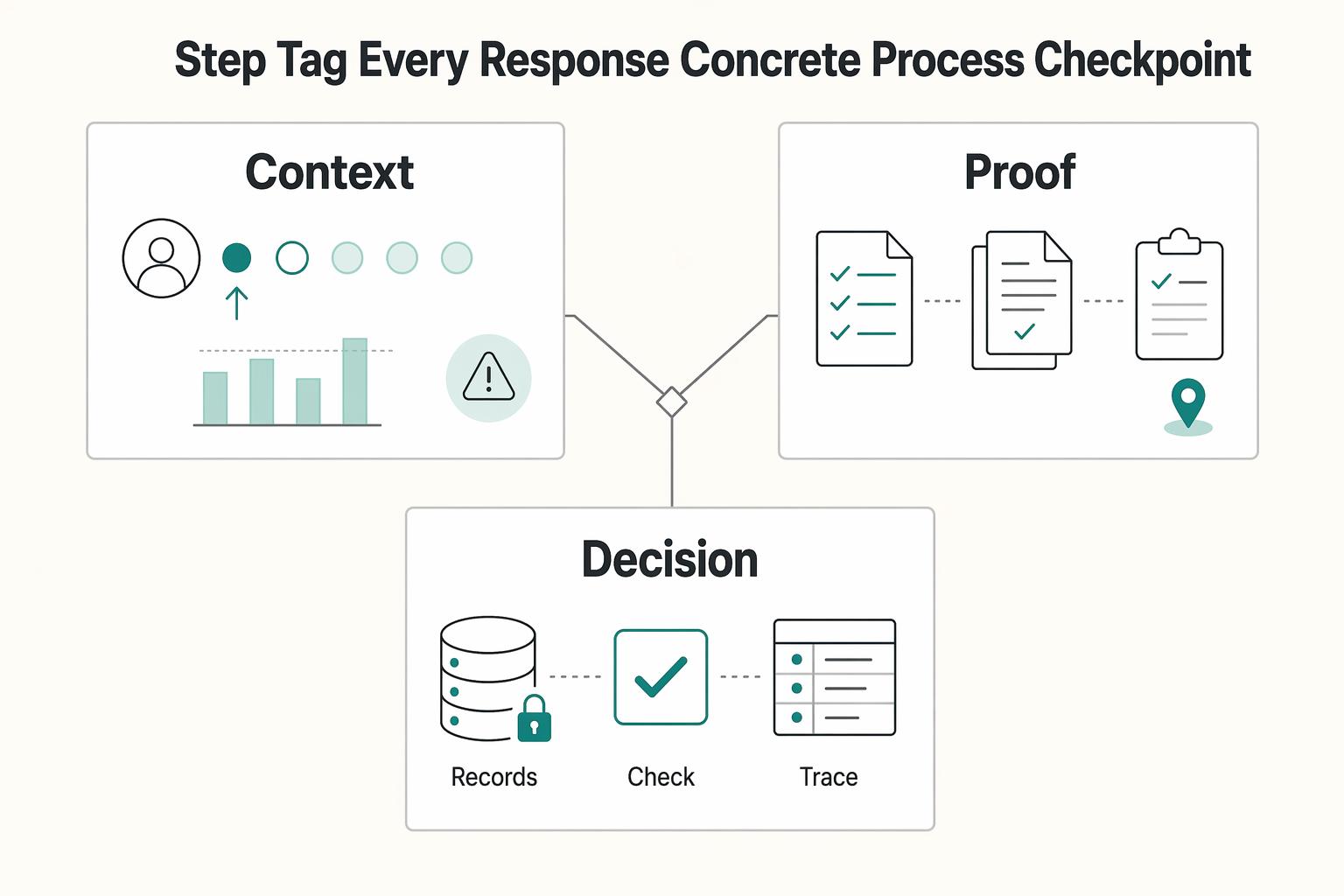
Step 1 Tag every response by concrete process checkpoint#
Start with checkpoints you can trace in records so low scores map to operations, not just sentiment. At minimum, attach fields tied to:
- payment model context (fee-for-service vs managed care organization)
- annual rate-bid submission point
- external review or approval decision before funding
- cost-control actions (including constraints or denials) and related quality concerns
- benefit and enrollment assumptions used in the bid
Verification check: pick a low score and confirm you can trace it to the underlying bid and approval record, plus the related cost and quality notes.
Step 2 Separate cohorts only when your data supports it#
Tenure- or volume-based cohort effects aren't established on their own. If you define cohorts, base them on observable process phases in your records, then keep those definitions fixed for one pilot cycle so trend comparisons stay stable.
Use evidence in your records to decide whether a low score ties to pre-funding setup steps or post-approval execution. Keep those paths separate only when the evidence shows a real difference.
Step 3 Split groups when process steps differ#
If review, approval, or funding steps differ across operating paths, analyze those groups separately. The issue is process difference, not labels on their own.
Mark policy gates explicitly so you can tell whether the problem sits in review and approval flow or in later execution. A grounded risk to watch is operational: tighter cost controls can raise quality concerns.
Step 4 Require segment-level readouts before shipping fixes#
Make this a hard rule: no global fix from pooled data alone. For each proposed change, require segment-level score movement plus segment-level counts tied to these checkpoints, such as submitted bids, approved bids, and constrained or denied cases.
If only one segment is underperforming, ship the narrow fix first. If multiple segments are moving the same way for the same reason, a broader change is easier to defend.
Related playbook: Contractor Onboarding Optimization: How to Reduce KYC Drop-Off and Get to First Payout Faster.
Map low scores to root causes in your payout stack#
Once segment readouts show where scores break, move to causality and require evidence. A low-score cluster is only a symptom until you can trace it through payment-system records.
The cited CMS pages support Medicare payment-system facts, for example PPS/IPPS design and FY 2026 IPPS update mechanics. They do not validate contractor-payout root-cause chains, payout failure classes, or dispute signals. Treat contractor-specific assertions as unknown unless your own records confirm them.
Step 1 Build the evidence chain for every low-score cluster#
For each low-score cluster, build a traceable chain from the payment-system rule to the observed outcome. In this case, that means checking whether reimbursement is predetermined (PPS), whether payment is per inpatient case or discharge (IPPS), and whether a recent CMS rate update could explain the shift.
Verification check: sample recent low scores and confirm someone outside the owning team can reproduce the chain quickly. If they cannot, fix joins, IDs, or data access before you prioritize product changes.
Step 2 Classify each case with a failure class only when evidence supports it#
Do not collapse every case into a single label. Use classes that map to confirmed evidence first.
| Failure class | What it may look like | First evidence to check | Likely owner |
|---|---|---|---|
| PPS design effect | Payment does not vary with service intensity | Predetermined-payment rule under PPS | payment policy or analytics |
| IPPS case-payment effect | Variation aligns with case/discharge-level payment design | IPPS payment per inpatient case or discharge | revenue cycle or finance |
| Annual rate-update effect | Timing aligns with yearly payment changes | CMS updates to base rates and wage indexes | finance or reimbursement |
| FY 2026 adjustment effect | Change aligns with published update math | 3.3% market basket update, 0.7 percentage-point productivity adjustment, 2.6% operating-rate increase | finance or reimbursement |
Keep one canonical timestamp for each handoff so you can isolate where the shift actually happened.
Step 3 Pull investigation signals from text and tickets, but label unsupported items as unknown#
Treat repeated mentions as investigation signals, not conclusions. Terms like Construction Lien, Construction Lien Waiver, proof-of-payment requests, and contractor payout ticket patterns are not validated here, so keep them in an unknown bucket until your internal logs and records support a causal link.
If a pattern repeats, review status messaging and proof flow alongside your own ops logs. Related design guidance: Payment Transparency for Contractors: How to Build a Payout Tracker Your Recipients Trust.
Step 4 Assign a named root cause, owner, and target date#
Use this as an internal governance rule, not as a claim from the external excerpts.
Use confidence labels consistently:
- confirmed: chain is complete and evidence is consistent with documented payment-system facts
- probable: pattern is strong but one link still needs validation
- unknown: symptoms exist but no proven cause yet
Verification check: no high-severity cluster closes without a named root cause, owner, and target date. If clusters remain unknown, treat that as a data-quality gap and fix that first.
If you want a deeper dive, read Mobile-First Payout Experience: How to Design Contractor Payment Flows for Mobile.
Choose fixes using effort, impact, and unit economics#
Once you have named root causes, prioritize fixes by expected outcome improvement, implementation effort, and downside cost if the change fails. Then make one more pass for failure risk before anything gets roadmap approval.
Use one operating principle throughout: score upside and failure cost together. The external source behind that idea supports weighing risks and benefits, and explicitly notes that interventions can fail and collaboration adds overhead. Because that evidence comes from energy-project contracting, use it as decision discipline, not as proof of payout outcomes.
Step 1 Build a fix scorecard from your own evidence#
Use the same five fields for every candidate fix: target cohort, root cause addressed, expected outcome effect, effort to ship, and downside cost if wrong.
Require evidence from the same chain you used earlier: event log, provider reference, ledger entry, support ticket, and reconciliation snapshot when finance posting is involved. If baseline exception count or handling effort is missing, do not accept impact claims.
Run a quick validation step before ranking. Ask a finance or support lead outside the owning team to reproduce one baseline. If they cannot trace the cases quickly, the ranking is not reliable yet.
Step 2 Compare fix types and label evidence quality honestly#
Separate internally validated fixes from market narrative, and be explicit about evidence quality. Treat vendor claims and SERP narratives as hypotheses until your own data confirms them.
| Fix type | What it usually tries to improve | Main downside to price in | Evidence quality |
|---|---|---|---|
| Automation of payout steps or handoffs | Fewer manual touches and fewer delayed initiations | Hidden failure paths, harder exception recovery, added integration work | Low unless your own before/after data supports it |
| Speed and status-visibility improvements | Faster perceived payout and clearer status updates | Can mask underlying failures if only some cases get faster | Low unless tested by cohort in your environment |
| Broader payout rail coverage | Better fit across contractor segments and use cases | More provider behaviors, more returns/rejections, heavier support training | Low to very low without segmented exception data |
Step 3 Force one hard tradeoff per cycle#
Write down one explicit tradeoff before launch. Pick the real tension: faster payout windows vs stricter controls, or broader coverage vs operational simplicity.
If low scores are mostly visibility-driven, test status and proof flow before moving payout release earlier. If delayed initiation is the main issue, automation can move up the list, but only if exception recovery is already clear. Do not choose the fix with the strongest product story if the economics case is weaker.
Step 4 Ship only with monitoring and rollback criteria#
If a change improves Payout Experience but increases unresolved exceptions, ship only with added monitoring and pre-defined rollback criteria. Track unresolved exception backlog, exception aging, retry success, support contacts per affected payout, and reconciliation mismatches when reconciliation is in scope.
Run the first post-launch check on failure behavior, not survey score alone. If the evidence chain stops explaining failures at the provider-reference, support-ticket, or ledger stage, pause the rollout until you understand the failure mode.
For a step-by-step walkthrough, see Improve Payment Experience Across Your Partner Network.
Before you lock the next fix cycle, align routing, status visibility, and exception handling in one operational lane with Gruv Payouts.
When should you tie payout satisfaction to team incentives?#
Tie payout satisfaction to team incentives only when the plan has clear performance rules, tracking, and risk checks.
Step 1 Confirm the measure is dependable for performance use#
Keep payout satisfaction as a diagnostic signal until you have defined performance criteria and tracking rules, and teams can apply them consistently.
Step 2 Define criteria and rules before compensation is linked#
Set explicit performance criteria and rules for what is being rewarded, then define how outcomes will be tracked and reported. That keeps incentives tied to execution reality instead of score movement alone.
Step 3 Include downside review in the plan design#
Build an explicit issues-and-considerations review into the plan before launch and while it is running. If the design pushes behavior you would not want, adjust the plan before you expand it.
Step 4 Pair payout-speed incentives with compliance quality#
Avoid rewarding payout speed in isolation. OFAC notes that sanctions prohibitions vary by program, and some rules prohibit certain financial transactions unless authorized by OFAC or exempted by statute. Any incentive design should keep compliance quality paired with payout outcomes.
Need the full breakdown? Read Bank-Rejected Contractor Payout Recovery for Platform Teams.
Roll out a 90-day pilot with governance and verification checkpoints#
Treat the first 90 days as a controlled pilot, not a broad rollout. The goal is to learn whether the signal is reliable enough for decisions and reviewable enough for finance and policy stakeholders. The payout-survey mechanics below are internal pilot assumptions, not externally validated findings.
| Pilot step | Primary action | Verification focus |
|---|---|---|
| Finalize the setup and freeze it for one pilot cycle | Finalize the question set, triage thresholds, cohort rules, and weekly review cadence for the Contractor Payment Satisfaction Survey. Freeze instrument versioning for the cycle and keep a dated change log. | Map each response to one payout milestone, one cohort, and one follow-up owner. |
| Run event-triggered collection and verify coverage | Use payout milestones as your collection trigger if that is your chosen design, then monitor completion by cohort. | Confirm that invitation and response timestamps line up with payout status records. Confirm that failed or held payouts are not silently excluded if they are supposed to be in scope for the pilot. |
| Ship a limited fix set and compare pre/post movement | Ship a small set of fixes tied to identified issues, then compare pre and post movement in Payout Experience KPIs and exception volumes. | Avoid bundling too many changes into one window if you need clear attribution. If directional metrics conflict, pause and review the tradeoff before you expand the pilot. |
| Add governance checkpoints and a finance review packet | Define explicit internal checkpoints for flows your team flags as policy-sensitive for Independent Contractor payouts, plus documentation-completeness checks for finance review. | Keep a compact packet with the frozen survey version and threshold rules, cohort definitions and completion rates, exception counts and open root causes, and documentation status for cases escalated to finance or policy review. |
Step 1 Finalize the setup and freeze it for one pilot cycle#
If you use a phased pilot, lock Phase 1 before execution starts. Finalize the question set, triage thresholds, cohort rules, and weekly review cadence for the Contractor Payment Satisfaction Survey, and document them as pilot assumptions rather than externally validated standards.
Your first checkpoint is traceability. Map each response to one payout milestone, one cohort, and one follow-up owner. Freeze instrument versioning for the cycle and keep a dated change log so week-to-week comparisons stay interpretable.
Step 2 Run event-triggered collection and verify coverage#
In Phase 2, use payout milestones as your collection trigger if that is your chosen design, then monitor completion by cohort. This can reduce the risk that aggregate reporting hides gaps across contractor segments.
Verification should focus on log alignment and inclusion scope. Confirm that invitation and response timestamps line up with payout status records. Also confirm that failed or held payouts are not silently excluded if they are supposed to be in scope for the pilot.
Step 3 Ship a limited fix set and compare pre/post movement#
If you run a Phase 3 action window, keep it intentionally narrow. Ship a small set of fixes tied to identified issues, then compare pre and post movement in Payout Experience KPIs and exception volumes.
Avoid bundling too many changes into one window if you need clear attribution. If directional metrics conflict, pause and review the tradeoff before you expand the pilot.
Step 4 Add governance checkpoints and a finance review packet#
Once fixes start moving, formal review matters as much as survey design. Define explicit internal checkpoints for flows your team flags as policy-sensitive for Independent Contractor payouts, plus documentation-completeness checks for finance review. Treat this as governance discipline.
One practical template is to mirror GAO's Fiscal Year 2025 structure by separating performance tracking, challenge review, and assurance artifacts. Anchor each cycle to accountability, integrity, and reliability standards, and keep a compact packet with the frozen survey version and threshold rules, cohort definitions and completion rates, exception counts and open root causes, and documentation status for cases escalated to finance or policy review.
Common mistakes that make survey data useless and how to recover#
One fast way to make this survey hard to use is to mix broad sentiment with payout operations and then change measurement in the middle of the pilot. To keep the data decision-useful, keep the payout scorecard narrow, stable, and internally verifiable.
| Mistake | Why it hurts | Recovery |
|---|---|---|
| Mix payout data with general satisfaction data | Customer satisfaction can be a formal monitored standard, but that signal is broad and may not diagnose payout operations on its own. | Keep a payout operations scorecard tied to payout milestones, exceptions, and follow-up owners, and a broader sentiment scorecard for overall relationship health. If a score cannot be traced to an event log, keep it out of payout KPIs. |
| Change the instrument mid-pilot | Changing wording mid-pilot can break comparability. Wording should stay neutral so the question does not steer answers. | If wording must change, treat it as a version break. Freeze the current cycle, add a dated change note, document exactly what changed and why, and report that item as pre-change vs post-change. |
| Operationalize vendor claims without testing | Do not assume vendor-specific outcome improvement is verified, and inclusion in a respected database is not the same as endorsement of article content. | Run a controlled before-and-after test with one cohort and one fixed survey version. Before scaling, check response mix, exception volume, and whether the claimed lift matches internal logs. |
Step 1 Separate payout data from general satisfaction data#
Do not fold Customer Satisfaction Survey results into your payout readout. Customer satisfaction can be a formal monitored standard, as shown by the CPUC Customer Satisfaction Standard in Investigation 06-06-014, but that signal is broad and may not diagnose payout operations on its own.
Keep two scorecards:
- a payout operations scorecard tied to payout milestones, exceptions, and follow-up owners
- a broader sentiment scorecard for overall relationship health
Use traceability as the filter. Each payout response should map to one payout event and one operational owner. If a score cannot be traced to an event log, keep it out of payout KPIs.
Step 2 Freeze the instrument for one pilot cycle#
Changing wording mid-pilot can break comparability. The provided survey guidance also warns that wording should stay neutral so the question does not steer answers.
If wording must change, treat it as a version break. Freeze the current cycle, add a dated change note, and document exactly what changed and why. Then report that item as pre-change vs post-change instead of pretending it is one continuous trend.
Step 3 Test vendor claims before you operationalize them#
Treat provider claims as hypotheses until your own data confirms them. Vendor-specific outcome improvement is not verified here, and inclusion in a respected database is not the same as endorsement of article content.
Run a controlled before-and-after test with one cohort and one fixed survey version. Before scaling, check response mix, exception volume, and whether the claimed lift matches internal logs. If survey scores rise while exceptions or support contacts also rise, treat that as a measurement issue or a tradeoff, not a win.
Turn results into a quarterly operating cadence#
If survey results do not feed a recurring operating rhythm, they stay as commentary instead of decisions. One workable cadence is a monthly review for execution and a quarterly memo for accountability.
Step 1 Set a monthly review with named owners#
Run one monthly review across product, payments ops, and finance, with a stable agenda for the full quarter. Anchor it on Key Performance Indicator (KPI) trends, owner updates, and explicit decisions.
At the start of each operating cycle, set a documented plan with objectives and required performance elements. Involve the owners who will execute it, and get reviewing-leader approval before you circulate the plan.
Step 2 Publish one quarterly decision memo#
On a quarterly cadence, publish one memo that states what changed in Payout Experience, what shipped, and what was deferred with rationale. Keep it as a decision record, not a recap.
| Memo section | What to include |
|---|---|
| Metric movement | Which KPI changed and where you see variance |
| Shipped changes | What was released and who owns follow-through |
| Deferred items | What stayed out of scope and why |
| Unknowns | Benchmark gaps, segment variance, and causal uncertainty |
Step 3 Feed only validated findings into adjacent work#
Feed adjacent initiatives only with findings you can verify in your own operational records. Route validated insights into related workstreams such as mobile payout UX and transparency tracking. That includes Payment Transparency for Contractors: How to Build a Payout Tracker Your Recipients Trust.
Treat CSAT and retention as context signals, not stand-alone proof of causation.
Step 4 Keep an explicit unknowns list visible#
Maintain an explicit unknowns list in both the monthly review and the quarterly memo. At minimum, track benchmark gaps, unexplained segment variance, causal uncertainty, and items that are hard to measure cleanly. That keeps leadership decisions evidence-aware and reduces false confidence when signals conflict.
Conclusion#
Run your payout survey as an operating discipline, not a sentiment poll. Use it to find specific payout friction, locate the operational cause, and fund fixes that reduce delay, rework, and disputes without loosening controls.
That standard matters because payout failure is operational, not cosmetic. In construction payment management, payments are validated against contractual milestones and timelines, with progress reports, documentation checks, and lien-waiver handling. Delays can damage contractor cash flow, and one 2024 study cited by NetSuite reports that 82% of contractors regularly faced delays over 30 days, up from 49% in 2022. Your context may differ, but the operating lesson is the same: measure failure points, not just frustration.
Step 1. Define your KPI stack and owners. Use a small KPI set you can trace to action: payout timeliness, status visibility, document completeness, and payout exceptions. Assign one owner per KPI who can explain the current result and the next corrective move.
Align definitions to your actual payment terms. Payment terms are negotiated and can vary by schedule, price, and discounts, so define what counts as a "delay" by segment before you compare outcomes. Verification checkpoint: each KPI has a source record, a clear owner, and an explicit fail rule.
Step 2. Set a stable pilot window for survey and segmentation rules. For a defined pilot window, keep questions, timing, and segmentation stable so results are comparable. Refine later after you have a clean baseline.
Segment where operational complexity differs, especially for contractor mass payouts. Paying many contractors at once adds complexity across multiple payout details, and mixing those results with one-off payouts can hide concentrated failure modes. Red flag: if wording, timing, and segments all change at once, you cannot tell whether operations improved or the measurement shifted.
Step 3. Run a baseline, then ship only fixes you can verify. Before you fund fixes, build an evidence pack for each low-score cluster. Include payout status logs, approval timestamps, required documentation, relevant progress reports, and document states such as missing or pending lien waivers.
Ship changes only when you can connect the issue to a named cause in the record trail. If you cannot, keep it on an explicit unknowns list instead of forcing a roadmap item.
Step 4. Review on a regular cadence and keep unknowns explicit. Choose a fixed operating cadence that fits your team, for example monthly reviews and quarterly decisions, to confirm whether issues are shrinking, shifting segments, or turning into documentation problems, and to make broader rollout and budget calls.
Keep unresolved uncertainty visible. If survey scores rise while exceptions also rise, or faster payouts increase document defects, treat that as unresolved and document what is proven and what is still unproven before you scale. If you want a practical review of your payout survey plan against real policy gates and rollout constraints, contact Gruv.
Frequently Asked Questions
What should a contractor payout satisfaction survey measure first?
Start with measures you can act on, not broad sentiment alone. Use a categorized question bank and keep wording stable so results stay comparable. Keep the measure set explicit from the start; in performance-linked systems, predefined measures are a core design principle.
How often should we run payout satisfaction surveys after payout events?
There is no supported universal cadence in the approved evidence. If you set timing relative to payout, keep it consistent long enough to compare results, then adjust based on what you learn.
What response volume is enough to trust payout survey results?
No approved source here sets a minimum response threshold for payout surveys. Treat trust as a measurement-discipline issue: consistent definitions and repeatable categories. If those conditions shift mid-cycle, treat findings as directional.
Which hurts contractor satisfaction more in practice: slow payout, poor visibility, or payout errors?
The approved evidence does not support a universal ranking across those issues. Use your own defined measures and operating review process to test which problem is most costly in your environment. When signals conflict, state uncertainty directly instead of forcing a rank.
How do we improve payout satisfaction without weakening compliance controls?
Improve measurement quality and actionability first. Run against defined measures and iterate the framework when categories stop fitting field reality. For a deeper operational playbook, see Invisible Payouts: How to Remove Payment Friction for Contractors Without Sacrificing Compliance.
How do contractor mass payouts and automation change satisfaction, and what is still unproven?
What remains unproven in the approved evidence is any universal satisfaction gain from automation or mass-payout design. Treat this as a local test: keep the same measures, categories, and review method before and after changes. If the framework changes midstream, avoid hard causal claims.
What if our survey categories stop fitting what we see in the field?
That is a normal signal to iterate the framework. Structured taxonomies may need categories added, removed, or reworked after stakeholder review. Document the change and freeze the updated version for the next cycle so trend comparisons remain interpretable.
Try a related tool
Researched and edited by the Gruv editorial team. Gruv builds cross-border billing, payouts, and finance-operations software for global businesses.
Sources
- cdss.ca.gov/ccr/res/pdf/performance/1.%203InnovationPBCR...trusted
- cms.gov/Outreach-and-Education/Medicare-Learning-Net...trusted
- congress.gov/117/plaws/publ103/PLAW-117publ103.htmtrusted
- dcips.defense.gov/portals/50/documents/performance_management_...trusted
- dhs.wisconsin.gov/familycare/mcos/pace-2026-contract.pdftrusted
- docs.cpuc.ca.gov/PUBLISHED/AGENDA_DECISION/90952.htmtrusted
- education.nh.gov/sites/g/files/ehbemt326/files/inline-documen...trusted
- energy.gov/sites/default/files/2021-08/0%20MSTS%20Contr...trusted
Educational content only. Not legal, tax, or financial advice.
Related Posts
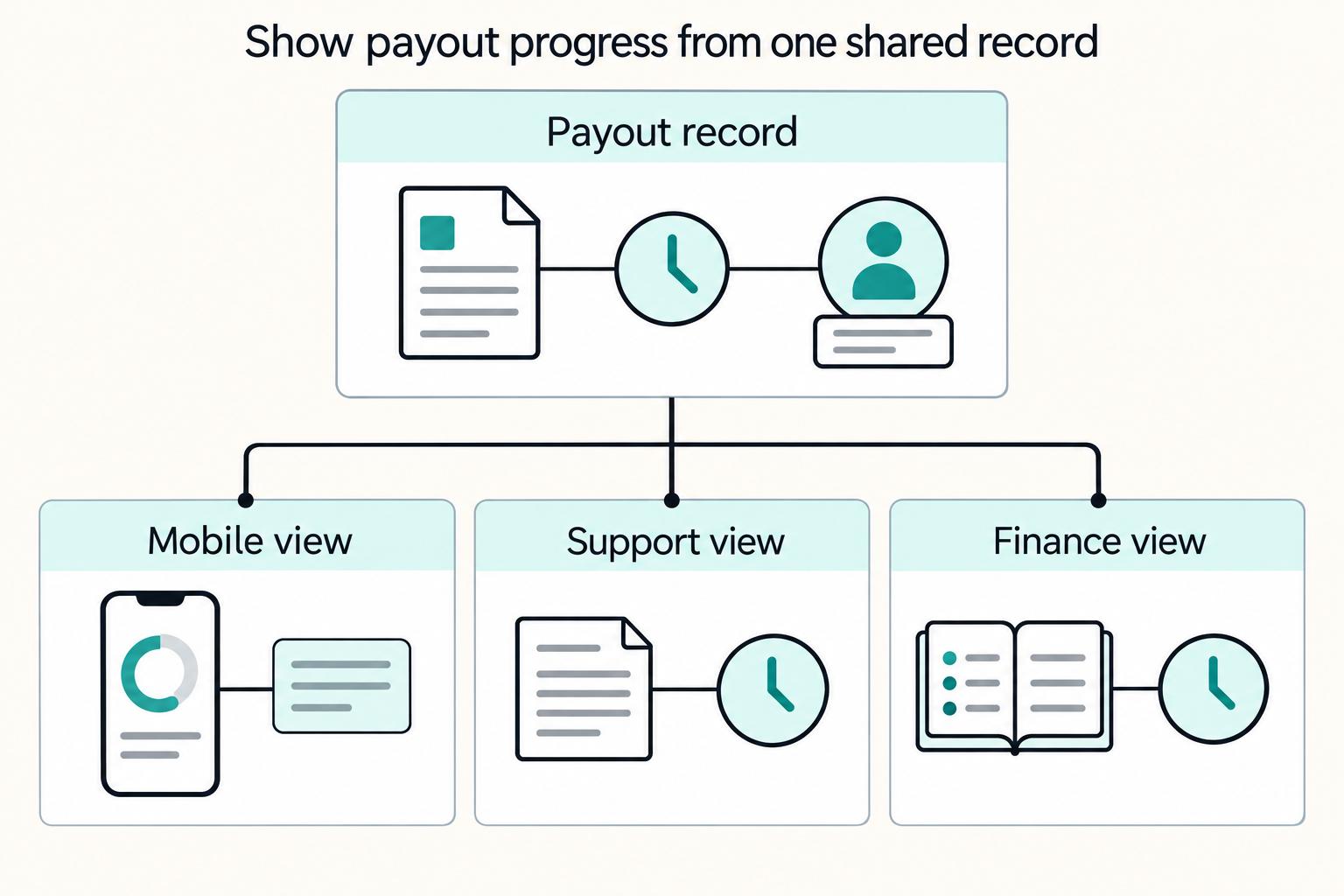
Mobile Contractor Payout UX: Design Rules and Launch Checks
Mobile payout design now affects contractor trust and ops cost because speed without **traceability** fails in practice. If your flow feels instant but cannot clearly show where money is, why it is held, and what posted to the `Ledger journal`, the experience is incomplete. This guide focuses on one practical outcome: a contractor payout flow that feels immediate from first tap while staying auditable through final posting.
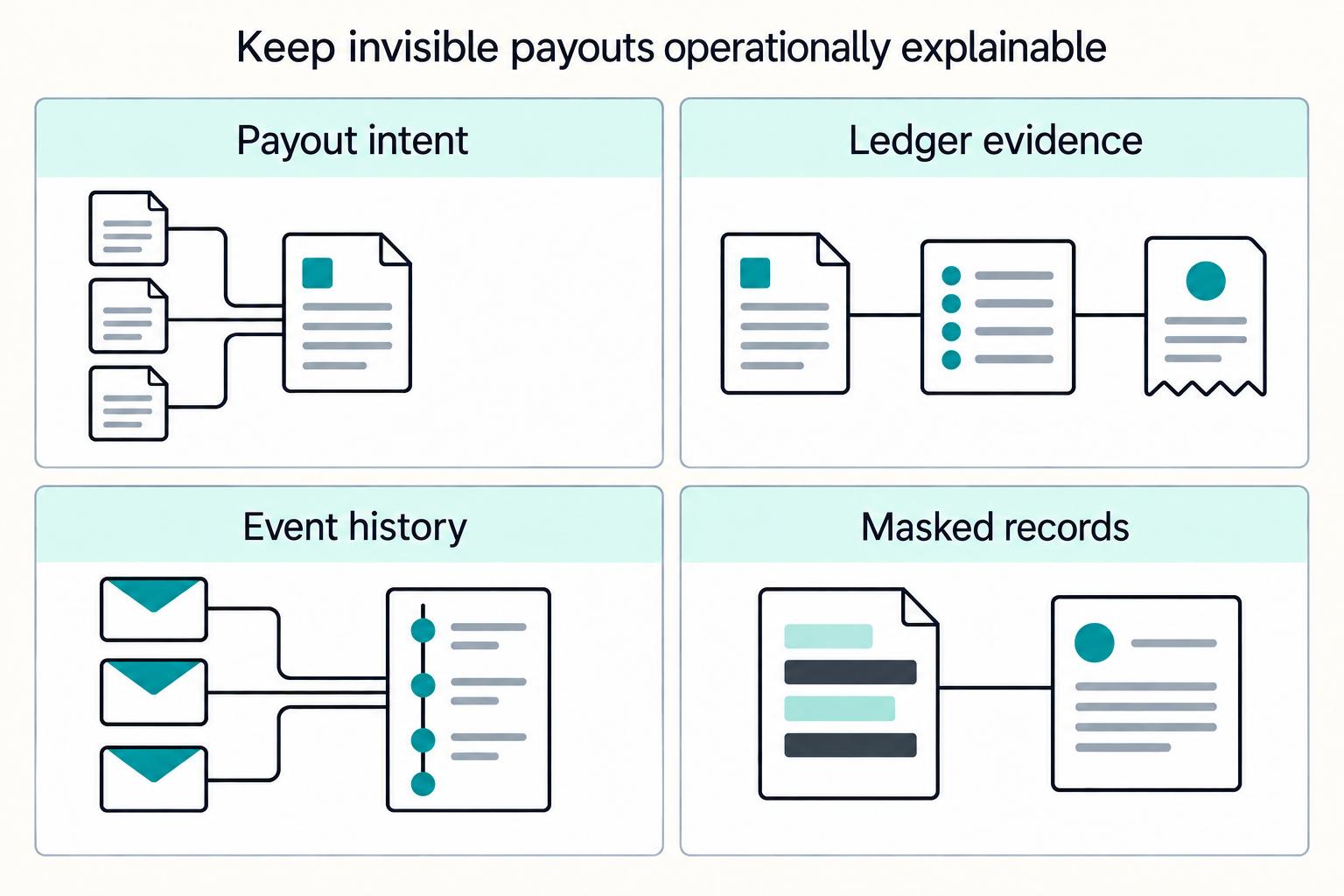
Invisible Payouts: How to Remove Payment Friction for Contractors Without Sacrificing Compliance
Invisible payouts should make life easier for contractors without hiding the controls your team needs. Contractors should get a predictable, low-friction flow, while internal teams can still enforce and document payout decisions when needed. If you run contractor payouts at scale, you need both outcomes at once. We recommend treating every easy payout as a controlled release path your team can replay later.
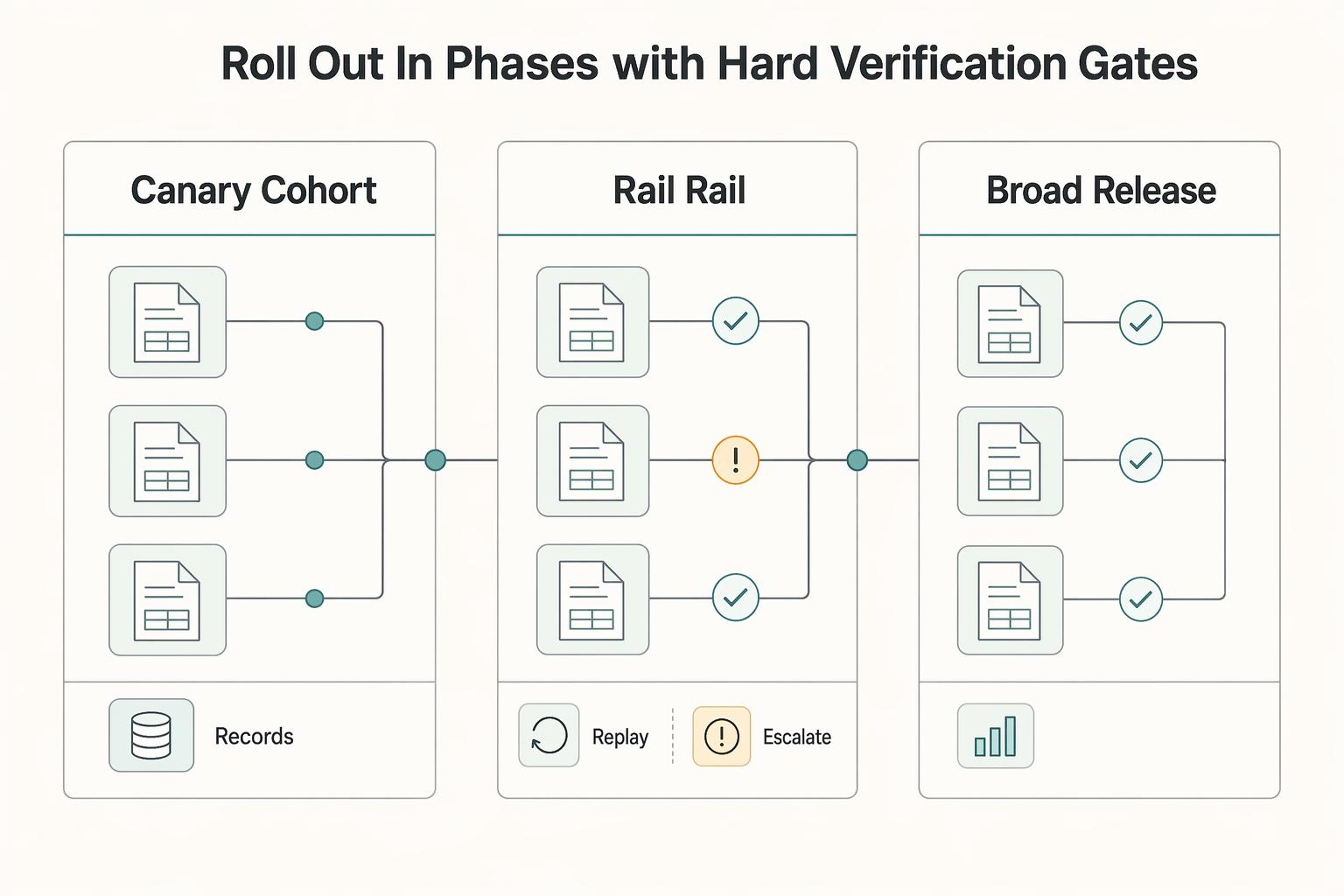
Building a Contractor Payout Tracker Recipients Trust
A payout tracker can help build trust when recipients can see what is happening, what happens next, and whether they need to act, without opening a support ticket. When payout status is vague, routine questions can turn into tickets, calls, and escalations. When status is clear, timestamped, and action-oriented, recipients can self-serve and support teams may spend less time chasing updates.