
Quick Answer
Start by treating how to evaluate a global payout platform as a strict go/no-go decision, then force every vendor through the same evidence and gate sequence. Build an internal pack with payout failures, reconciliation exceptions, and tax-document flows like W-8 BEN and Form 1042-S. Apply pass/fail checks on compliance and payout reliability before weighted scoring. Next, run sandbox tests for webhook handling, idempotency behavior, and delayed events, and require corridor-level support proof. If any core owner still marks compliance, integration, or coverage as unproven, defer signature.
Start with the decision you actually need to make#
If you are figuring out how to evaluate a global payout platform, narrow the decision immediately: is this vendor good enough for your payout mix, yes or no? Do not let the project drift into a broad payments modernization discussion. That usually buries the real decision under strategy language and polished demos.
Frame this as a go/no-go decision#
Treat this as a go/no-go decision on a platform that will run real payouts for your business model. For most teams reading this, that means contractor payouts, creator payouts, or supplier payments across multiple countries, not a generic treasury or card acceptance project.
A global payout solution is software that automates cross-border mass disbursements, but the buying decision is not about the label. It is about whether the platform removes enough operating pain, at an acceptable level of risk, to justify signing.
A useful checkpoint is to write the decision in one sentence before you talk to any vendor: "We will approve a new platform only if it improves payout reliability, reduces manual exception handling, and supports our next target markets without creating new finance or engineering risk." If your team cannot agree on that sentence, you are not ready for demos.
Define success in operator terms#
Define success in operator terms that both the Chief Financial Officer (CFO) and engineering owners care about. The CFO mandate here is practical: control cost, support growth, and tighten control discipline. In payout operations, that usually means four concrete outcomes:
- fewer payout failures and fewer cases that need manual repair
- lower manual handling across support, finance, and operations
- more predictable costs with fewer operational bottlenecks
- clearer validation of feature availability before entering new markets
Engineering owners should add a second test: can the payout execution process hold up when real events do not arrive cleanly or on time? Every payout depends on a sequence of steps aligning correctly. If a vendor cannot explain what happens when a payout is delayed, returned, or only partially visible across systems, treat that as an early red flag, not a detail to sort out after signing.
Put limits on public vendor content#
Put a hard boundary around public vendor content. Pages from Stripe, Branch, and Trolley are useful for understanding product positioning, common evaluation dimensions such as fees, coverage, compliance, and automation, and the language vendors use to describe global payouts. They are not enough for a final approval decision.
Public search results usually do not give you what you need for sign-off: a corridor-level test method, a like-for-like reliability methodology, and proof that feature behavior is consistent in your markets. Stripe notes that some features may not be available in certain regions, and payout schedules can vary by industry and country. Branch highlights payout-option breadth for worker payments, but that does not prove fit for your exact compliance or reconciliation needs. Trolley's comparison content can help you frame questions, but it cannot answer them for your environment.
So confirm audience fit now: this guide is for platform founders, product leaders, and finance and operations teams deciding whether a platform can carry live payout volume with less friction. If you need proof rather than positioning, you are in the right place. For a step-by-step walkthrough, see How to Hedge FX Risk on a Global Payout Platform.
Prepare the evidence pack before any vendor demo#
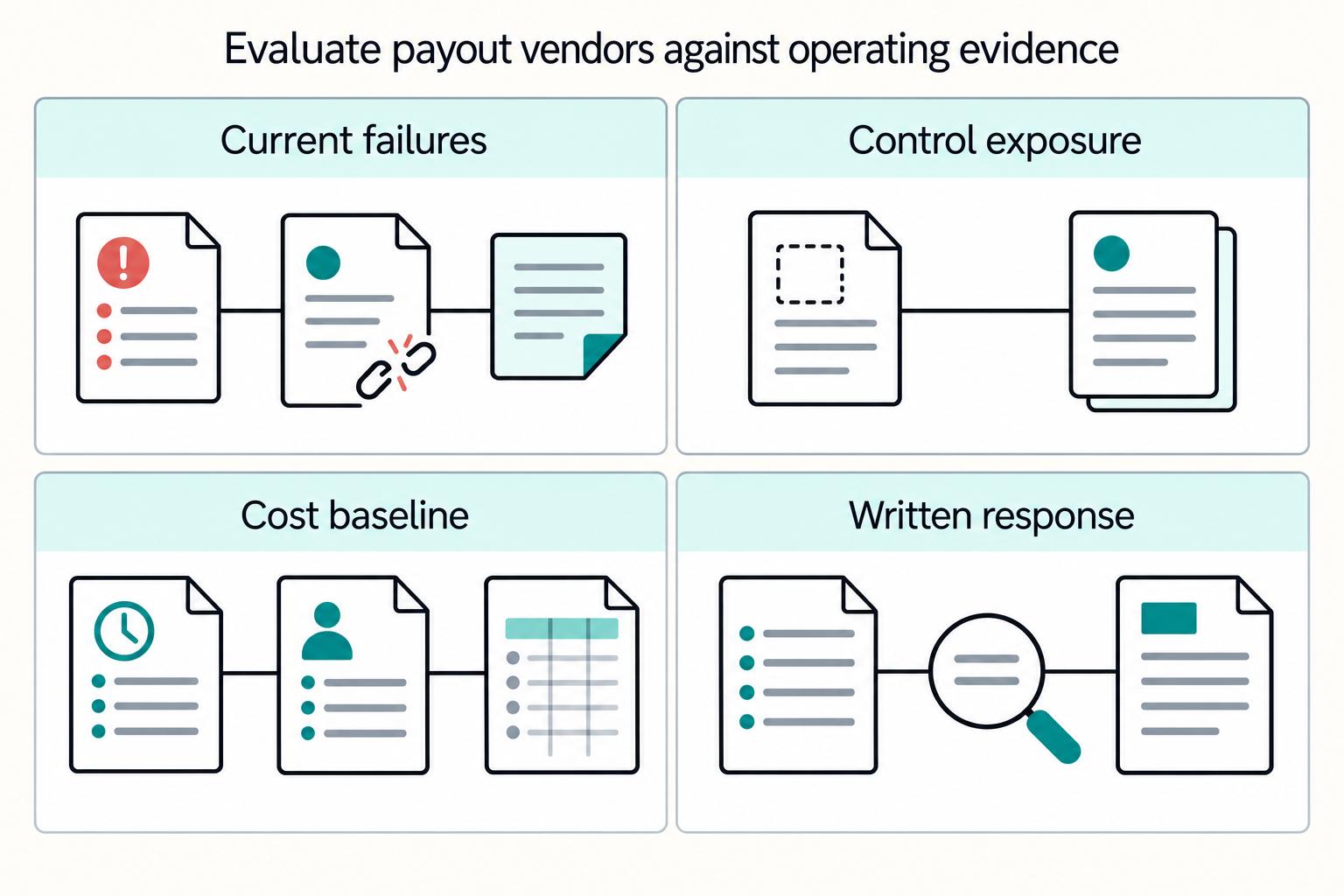
Set your evidence pack before the first sales call so you evaluate operating fit, not demo polish.
- Pull current-state payout evidence first.
Gather payout error logs, exception queues, month-end reconciliation issues, and top recipient-experience complaints. Include payout-level transaction matching by settlement batch, and show where matching fails. If you cannot identify expected payments that went unmatched and required manual review, fix that gap before scoring any provider.
- Document tax and compliance exposure end to end.
Map when Form W-8BEN is requested for foreign individuals by the withholding agent or payer, and use the applicable entity form, often W-8BEN-E, for foreign entities. Separately map how finance receives or exports data needed for Form 1042-S reporting. Add known compliance exposures and prior incidents that triggered legal review, payout holds, or concern about civil monetary penalties. Treat "automated compliance" claims as unproven if the vendor cannot show how failed checks, missing tax forms, or partial market support are handled.
- Build an ROI baseline from internal reality.
Do not model ROI from fees alone. Include current process cost, support load, finance rework time, and cleanup from failed international payments, returns, and reconciliation exceptions. This gives the CFO a decision baseline, not a pricing comparison labeled as ROI.
- Require responses against your criteria.
Send the evidence pack in advance and require written answers against predefined factors and subfactors. Evaluate vendors against those criteria, not presentation quality. If a vendor cannot answer from your evidence pack, treat the claim as unproven.
Related: How to Issue Compliant Tax Invoices in 50+ Countries as a Global Platform.
Assign decision ownership across finance, product, and engineering#
Set cross-functional ownership before you score vendors, and treat any disagreement on compliance, integration, or coverage as not ready to sign. One executive sponsor is not enough for this decision.
Give each decision area one accountable owner#
Assign one accountable owner per decision area so nothing is "shared" by default:
| Owner | Accountable for | Additional focus |
|---|---|---|
| CFO | Risk tolerance and approval gates | Acceptable compliance risk |
| Product leaders | Recipient outcomes | Market coverage fit |
| Engineering owners | Integration feasibility | Implementation risk and long-term supportability |
Finance and operations should be active owners in practice, especially for reconciliation, exception handling, tax-document exports, and payout holds. If any criterion from your evidence pack is labeled "team" or "TBD," it is still unowned.
Require finance, product, and engineering to review the same evidence pack. A vendor should remain unsigned while a core owner has unresolved compliance, integration, or coverage questions; record the owner and closure evidence for each issue.
Build one shared RACI-style checkpoint list#
Use one shared RACI-style list across finance and operations, product, and engineering so responsibility and approval are explicit. The point is role clarity: who is responsible, accountable, consulted, and informed for each decision.
At minimum, include:
- compliance controls and remediation ownership
- tax-document handling and finance review outputs
- recipient experience and corridor coverage
- integration scope, dependencies, and acceptance criteria
- reconciliation, exception handling, and post-launch support
For each line item, define what evidence marks it complete. For example, do not mark coverage complete from a demo claim alone; require the vendor's written response to your corridor cases.
Set the approval rule before vendor comparison starts#
Set the approval rule before final comparison. The CFO can own the gate, but finance should not override product on recipient harm or engineering on unworkable integration.
If any owner disagrees, log the issue, required evidence, owner, and resolution date, and keep status at not ready to sign. At final review, there should be no unresolved red items in compliance, integration, or coverage, and no criterion marked as assumed covered.
Related reading: PIX vs. SEPA vs. ACH vs. SWIFT for Platform Payout Decisions by Market.
Build a weighted vendor comparison scorecard you can defend#
Build one fixed scorecard before final comparison, then hold every vendor to it. If criteria or weights move mid-process, your result is not defensible.
Fix the criteria and weights before the next meeting#
Set criteria and weights before the next vendor meeting, and keep them unchanged across vendors. Weights should reflect business impact, not symmetry.
Use the same six criteria for every vendor:
| Criterion | What you are actually scoring | Evidence to require |
|---|---|---|
| Compliance risk | Whether controls and market support fit your operating model and risk tolerance | Written responses to your compliance scenarios, market caveats, remediation ownership |
| Integration complexity | How hard it is to connect, test, and maintain the platform in your stack | API docs, webhook behavior, sandbox results, required dependencies |
| Engineering lift | Internal build effort for onboarding, payout flows, reconciliation, and exception paths | Estimated sprint effort, implementation scope, custom logic required |
| Global coverage | Proven support for your target countries and payout methods | Corridor list mapped to your real payment mix, not headline country counts |
| Operational scalability | Whether finance and ops can run this cleanly at volume | Reconciliation outputs, exception handling paths, support model, batch/export behavior |
| Recipient experience | What your payees will actually experience when onboarding and getting paid | Onboarding flow samples, status visibility, failure messaging, payout timing caveats |
Verification point: each weighted row needs a named owner, a score range, and required evidence.
Add pass/fail gates before weighted scoring#
Add pass/fail gates before weighted scoring so minimum requirements cannot be hidden by strong presentation scores. Treat these as non-negotiable qualification checks.
For most international payments evaluations, set at least these gates:
- must support required tax-document operations for your payout models
- must meet core payout reliability requirements in test or documented operating evidence
If either gate fails, keep the vendor out of final scoring or mark it as no-go.
Record the tradeoffs in the sheet#
Write tradeoffs directly into the scorecard so they are visible at decision time. Common examples are lower implementation effort vs lower configurability, and broad footprint claims vs proven corridor depth for your mix.
If onboarding flexibility increases legal and regulatory responsibilities in your regions, score that implementation burden explicitly. If coverage claims are broad but conditional by country, industry, or context, give partial credit until corridor-level evidence is validated.
Add a confidence column next to major claims#
Add a confidence column for each major claim. Vendor-authored pages from providers such as Trolley, Stripe, or Branch are useful inputs, but treat claims as conditional until you validate them in your environment.
Use a simple scale (High, Medium, Low). Downgrade claims tied to language like "availability varies," "certain regions," or "contact sales." Upgrade confidence only with sandbox proof, written corridor-specific answers, or finance and engineering sign-off from tests.
End each vendor row with a recommendation#
End each vendor row with one decision: proceed, proceed with conditions, or no-go. For proceed with conditions, name the exact condition, owner, and proof required before signature.
Final check: you should be able to explain in two minutes why one vendor advances and another does not, using score, confidence, and gate outcomes.
Related: How Online Learning Platforms Can Pay Instructors Globally: EdTech Payout Infrastructure.
Test compliance and tax operations before discussing headline pricing#
Price is secondary until a vendor proves audit-ready compliance controls and tax-document operations. If they cannot provide evidence your CFO or finance reviewer can inspect, treat it as a no-go.
Test payout gating, not just happy-path onboarding#
Do not stop at successful onboarding demos. Test what happens when identity verification fails, when a sanctions or AML/CFT review puts a payout on hold, and when cross-border payout access is not approved for your program.
Ask the vendor to run one contractor flow and one creator flow from signup to payout release, then force exception cases. Confirm three points in each case: what blocks payout, who notifies the payee, and who owns remediation. If answers stay high-level and lack clear status states or review evidence, that is a risk.
Verification point: request sample status logs or screenshots showing hold reasons and release or rejection outcomes.
Walk the full tax-document path end to end#
"Supports tax forms" is not enough. Validate how tax documents are collected, validated, stored, and exported for the payout models you actually run.
Confirm trigger and record handling for forms such as W-8 BEN, including whether the platform can request it at the right step and retain an auditable record. Also confirm how 1099 reporting logic is handled, what payee data is required, and what finance can export for review.
Verification point: request a sample export, a sample payee record with tax-status fields, and an audit trail showing who submitted or updated tax documents.
Treat market coverage caveats as required documentation#
Assume coverage is conditional until proven for your corridors. Feature availability can vary by country, program, and payout-feature tier, and payout currency support can differ by country or region.
Require a corridor matrix for your top markets with: country, payout method, compliance controls fully supported, and partial or conditional support. Treat phrases like "availability varies" or "subject to approval" as low confidence until mapped to your exact program.
Expected outcome: clear evidence of where the platform is fully workable, where it is conditional, and who owns remediation when controls fail. If that evidence is missing, pause commercial discussions before headline pricing starts driving the decision.
Related: How to Pay Translators and Interpreters Globally: Language Services Platform Payout Infrastructure.
Verify integration path and migration risk with engineering checkpoints#
A platform can pass compliance and still fail in production if integration behavior is brittle. Use this step to prove payout events are predictable before go-live and to turn migration language into written engineering checkpoints.
Start in test mode with a strict build order#
Start in test mode and validate in this order: payout initiation, webhook delivery, retry safety, status reconciliation, then production rollout. Test mode lets you verify integration behavior without affecting live data.
Have engineering run a sandbox payout and capture the full lifecycle: request sent, provider acknowledgment, event received, internal status updated. If the provider uses asynchronous events, a working webhook endpoint is a baseline requirement, not a nice-to-have.
Verification point: request the request and event samples for the same payout, with timestamps and unique identifiers. A common failure mode is successful initiation with no reliable event trail for later status changes.
Test duplicate and delayed events on purpose#
Assume retries and delays will happen, then test them directly. Idempotent requests only reduce duplicate operations if both the provider and your application implement retries correctly.
| Test | Expected result | Evidence |
|---|---|---|
| Resend the same payout initiation request with the same idempotency key | No second payout within the documented key-retention window; beyond it, durable intent and provider-status recovery prevent a blind retry | Logs or demo showing event IDs, retry attempts, and the explicit duplicate-detection rule |
| Replay the same webhook event | Your handler ignores duplicate side effects | Logs or demo showing event IDs, retry attempts, and the explicit duplicate-detection rule |
| Delay callback processing | Statuses still reconcile when the event arrives | Logs or demo showing event IDs, retry attempts, and the explicit duplicate-detection rule |
Stripe retries live-mode webhook delivery for up to three days; sandbox retries use a shorter schedule. Confirm the selected provider’s retry policy, signature checks, duplicate handling, and recovery path for missed events. Ask for event IDs and retry logs rather than assuming every provider uses the same window.
Surface migration constraints before commercial close#
Define migration constraints before signing: coexistence with legacy payout infrastructure, rollback triggers, coexistence duration, and reconciliation ownership during cutover. If rollback steps and support commitments are not written into the implementation plan or contract, treat them as unresolved risk.
Include messaging-format and route dependencies in the migration plan. Require the provider to confirm the formats currently supported on your actual bank and corridor routes, and test any translation or coexistence path before cutover.
Expected outcome: a staged rollout plan, named engineering owners, and a documented rollback path. If any of these are missing, do not let pricing or sales urgency drive production timing.
Stress-test coverage and payout quality using real corridor scenarios#
Broad coverage claims are not enough. If a provider is weak in your priority corridors, score it below a narrower option that delivers more predictable recipient outcomes and cleaner exception handling where you actually pay people.
Map your real corridors before the demo#
Start with your real corridors, not a country-count slide. A payment corridor is a specific sending-to-receiving country path, and cross-border friction can vary by corridor.
Public datasets such as the World Bank remittance view can inform corridor comparisons. Build scenario tests from your own volume mix across contractor payouts, creator payouts, and supplier payments. For each scenario, lock the variables the vendor must test in sandbox:
- sending entity country and recipient country
- recipient type
- currency pair and typical amount band
- preferred local payout method
- expected compliance checks
- expected payout status sequence
Mark each scenario as tested, partially supported, or unsupported. Sandbox evidence proves integration behavior; require written confirmation of production corridor eligibility and limits, then validate recipient outcomes in an authorized pilot. If the vendor cannot confirm the payout method on a specific corridor, treat coverage as unverified.
Compare recipient outcomes corridor by corridor#
Compare outcomes corridor by corridor, not just technical success. Use the same core cross-border frictions that repeatedly drive failures in practice: cost, speed, access, and transparency.
Ask the vendor to show what your team and recipients can see as a payout moves through processing, posted, failed, returned, or canceled states. You want more than "submitted": require timestamps, status transitions, recipient-facing visibility where available, and a clear support path when funds are held or returned.
A common failure mode is shallow visibility: ops sees "sent," while the recipient sees no useful status and support has no practical reason code. That drives manual follow-up and avoidable support load.
Add constraint tests that challenge broad coverage claims#
Stress-test the constraints that usually expose shallow coverage. Validate local payout-method fit by country or region, and test compliance gating behavior explicitly because regulatory friction can block execution in specific markets.
Include scenarios with compliance holds and returned payouts. Confirm who owns remediation, what evidence is visible to your team, and whether a payout can be corrected and resent without losing traceability. If the answer is "varies by market," ask for a written market-by-market support matrix and a clear exception ownership model.
Expected outcome: you leave with a corridor-level view of operational reliability, not a country-count comparison. If you want a deeper dive, read How to Scale Global Payout Infrastructure: Lessons from Growing 100 to 10000 Payments Per Month.
Avoid common evaluation mistakes and recover quickly#
The quickest way to make a bad platform decision is to mistake visibility for proof. If your shortlist came from a "top platforms" list, use it for discovery only, then rerun the decision with evidence-based gates before signing.
| Mistake | Recovery | What to add |
|---|---|---|
| Selecting from a "top platforms" list without your own evidence | Rerun your vendor comparison | Pass/fail gates and confidence labels: verified, partially verified, or unproven |
| Treating ROI as a fee comparison | Rebuild ROI as a life-cycle cost model | Direct and indirect costs across planning, implementation, operations, and maintenance |
| Skipping ownership clarity | Reopen the decision until sign-off is explicit | Documented decision gates for CFO, product, and engineering |
| Accepting vendor excerpts as proof | Treat claims from Trolley, Stripe, or Branch excerpts as unproven until tested in your environment | Sandbox flow simulation, webhook verification, payout status handling, and owner sign-off |
Mistake 1: Selecting from a "top platforms" list without your own evidence#
Recovery: rerun your vendor comparison with your pass/fail gates and confidence labels on every scored item: verified, partially verified, or unproven. Vendors can look similar at first pass, but operational differences usually show up only after testing.
Mistake 2: Treating ROI as a fee comparison#
Recovery: rebuild ROI as a life-cycle cost model, not a fee table. Include direct and indirect costs across planning, implementation, operations, and maintenance: engineering build time, webhook and reconciliation work, manual exception handling, finance review effort, and compliance overhead.
Mistake 3: Skipping ownership clarity#
Recovery: reopen the decision until sign-off is explicit. RACI-style ownership only works when decision gates are documented: CFO for risk tolerance and commercial exposure, product for recipient outcomes, and engineering for integration feasibility and pre-go-live validation.
Mistake 4: Accepting vendor excerpts as proof#
Recovery: treat claims from Trolley, Stripe, or Branch excerpts as unproven until tested in your environment. Validate in sandbox by simulating flows, verifying webhooks, and testing payout status handling, then record results and owner sign-off. Need the full breakdown? Read How Platform Operators Recover Failed Payouts Without Duplicate Risk.
Make the final call with a copy-paste checklist#
Sign only after gates, scoring, migration planning, and open risks are documented, reviewed, and owned.
- Run a formal pass/fail gate review. Confirm predefined criteria are met for compliance, integration complexity, and corridor-level coverage. If a core gate is still unproven, mark the decision as not ready.
- Finish weighted scoring before approval. Confirm criteria, weights, option scores, and sensitivity analysis are complete, then review the result with CFO, product, and engineering owners.
- Lock the migration runbook before signature. Confirm timing, communication, validation, rollback strategy, and post-go-live monitoring are defined.
- Make ownership and sequencing explicit. Make sure the runbook includes task ID, dependencies, team owner, planned start date/time, and planned end date/time, plus reconciliation checks and named incident owners.
- Plan realistic monitoring time. Reserve monitoring and incident-response time based on pilot results, staffing, and the planned cutover.
- Document unknowns with accountability. For each open item, assign an owner and a deadline for closure or retest before signature.
Copy/paste decision line: "Based on risk, readiness, and verified operating fit, we choose [Vendor] / defer decision / no-go."
If that line still needs verbal caveats, defer signature. We covered this in How to Build a Global Accounts Payable Strategy for a Multi-Country Platform.
Frequently Asked Questions
What should we evaluate first in a global payout platform?
Start with the operating outcomes that matter commercially: can it scale, control costs, remain compliant, and give recipients confidence? That first screen is more useful than headline coverage claims because vendors that sound similar at first often separate on compliance, integration complexity, and global coverage. If one of those four outcomes is still unproven, treat the platform as not decision-ready.
How should we balance compliance, global coverage, and total ROI without stalling the project?
Use pass/fail gates first, then compare cost. If compliance evidence is weak or coverage does not hold in your priority corridors, do not let a lower fee table pull the decision forward. Keep ROI as a life-cycle view that includes engineering effort, exception handling, and finance review effort, then advance only the vendors that already clear your minimum compliance and corridor tests.
What are the biggest failure risks when migrating international payouts?
A major migration risk is weak retry handling that creates duplicate outcomes. Your checkpoint is retry safety: ask exactly how the API recognizes the same request on retry, including whether it uses an idempotency key. One published pattern allows keys up to 255 characters and pruning after at least 24 hours, but you still need the vendor's actual behavior, plus sandbox proof, before go-live.
How should finance and engineering split ownership in the final go/no-go decision?
Do not force one function to bless the whole choice. Ownership can vary by organization, but a practical split is finance deciding risk tolerance and commercial exposure while engineering validates the integration path and retry controls. If either side is still marking a core area as unproven, the right answer is no-go for now.
What evidence should we request from vendors before legal and procurement?
Ask for due diligence research and supplier-risk evidence before agreement, not after redlines start. At minimum, request evidence for retry behavior, corridor-level coverage limits, compliance operations, and who handles remediation when checks fail. Procurement decisions should be informed about supplier risks before they are executed, and that review should cover the full relationship lifecycle, not just onboarding.
When should we reject a lower-cost platform because integration complexity is too high?
Reject it when the fee savings depend on hidden integration and operating work your team cannot safely absorb. This is the point where cheaper becomes more expensive to operate. If engineering cannot verify retry safety and finance cannot see a credible life-cycle ROI, pick the higher-cost option or pause the decision.
Try a related tool
Researched and edited by the Gruv editorial team. Gruv builds cross-border billing, payouts, and finance-operations software for global businesses.
Sources
- acquisition.gov/far/15.305trusted
- acquisition.gov/far/15.304trusted
- bis.org/publ/bisbull119.pdftrusted
- csrc.nist.gov/pubs/sp/1326/ipdtrusted
- docs.stripe.com/webhookstrusted
- docs.stripe.com/api/idempotent_requeststrusted
- ecfr.gov/current/title-31/subtitle-B/chapter-X/part-1...trusted
- federalregister.gov/documents/2023/06/09/2023-12340/interagency-...trusted
Educational content only. Not legal, tax, or financial advice.
Related Posts
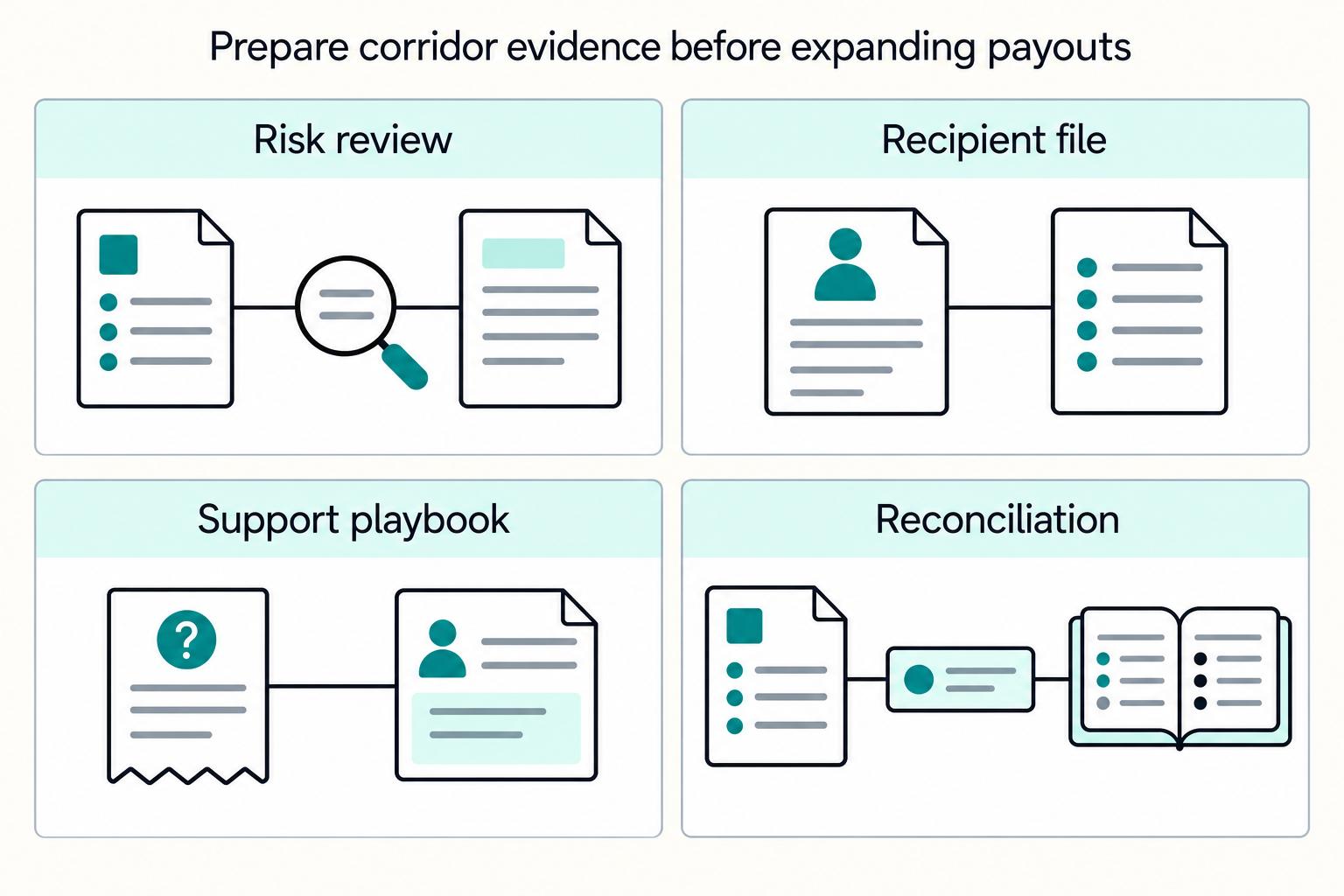
Scaling a Global Payout Platform from 100 to 10000 Monthly Payments
Scaling a global payout platform is rarely just a vendor problem. More often, it is an infrastructure and operating-discipline problem, because cross-border payments still carry persistent issues around cost, speed, access, and transparency. If growth is framed as "one more provider" or "higher API throughput," breakpoints can show up in finance, support, compliance, and reconciliation.
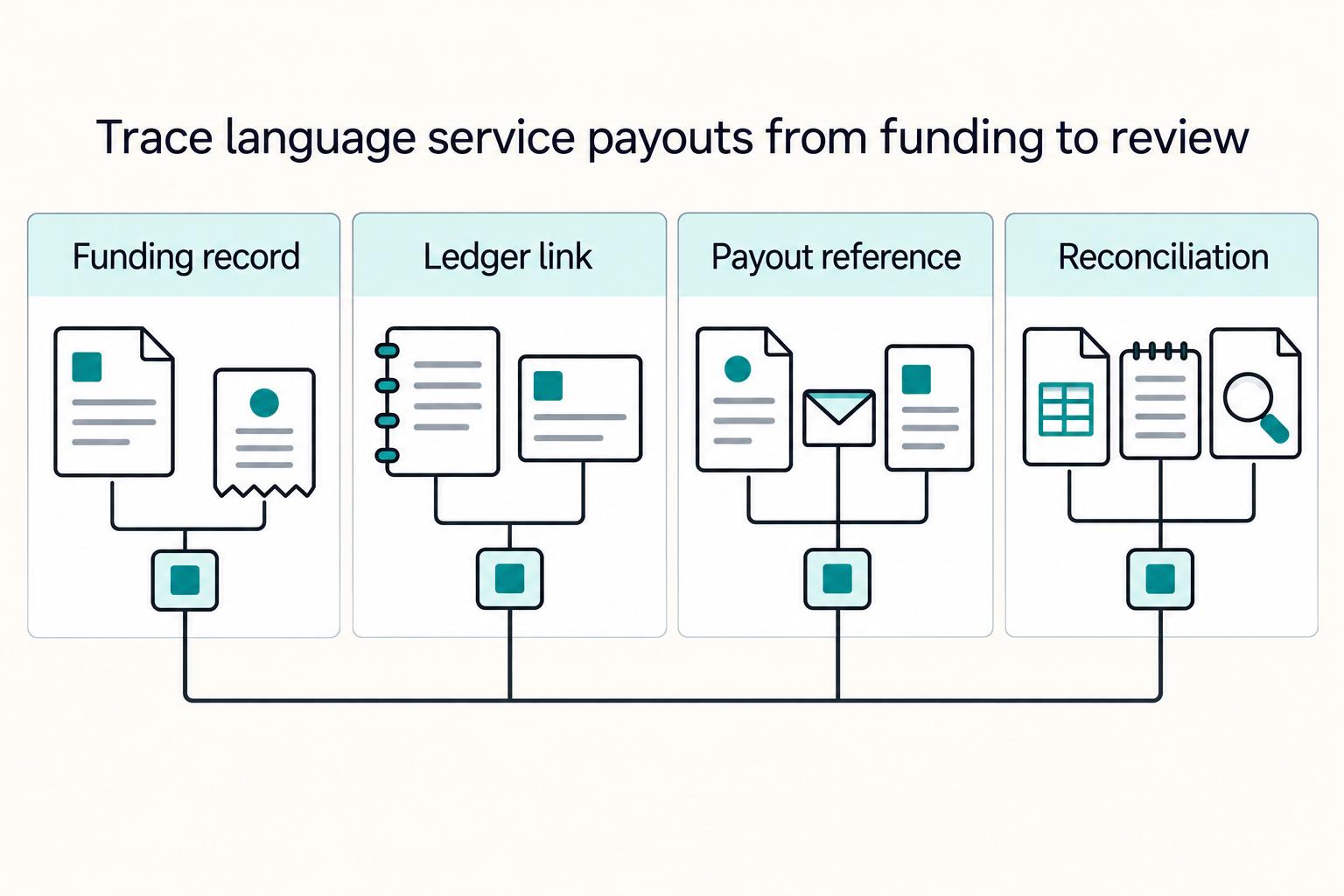
Pay Translators and Interpreters Globally for Language Services Platforms
Use Indeed, ZipRecruiter, and Vaia Talents for market signal only: they help you gauge demand and pricing, but they do not tell you how to run cross-border payouts.
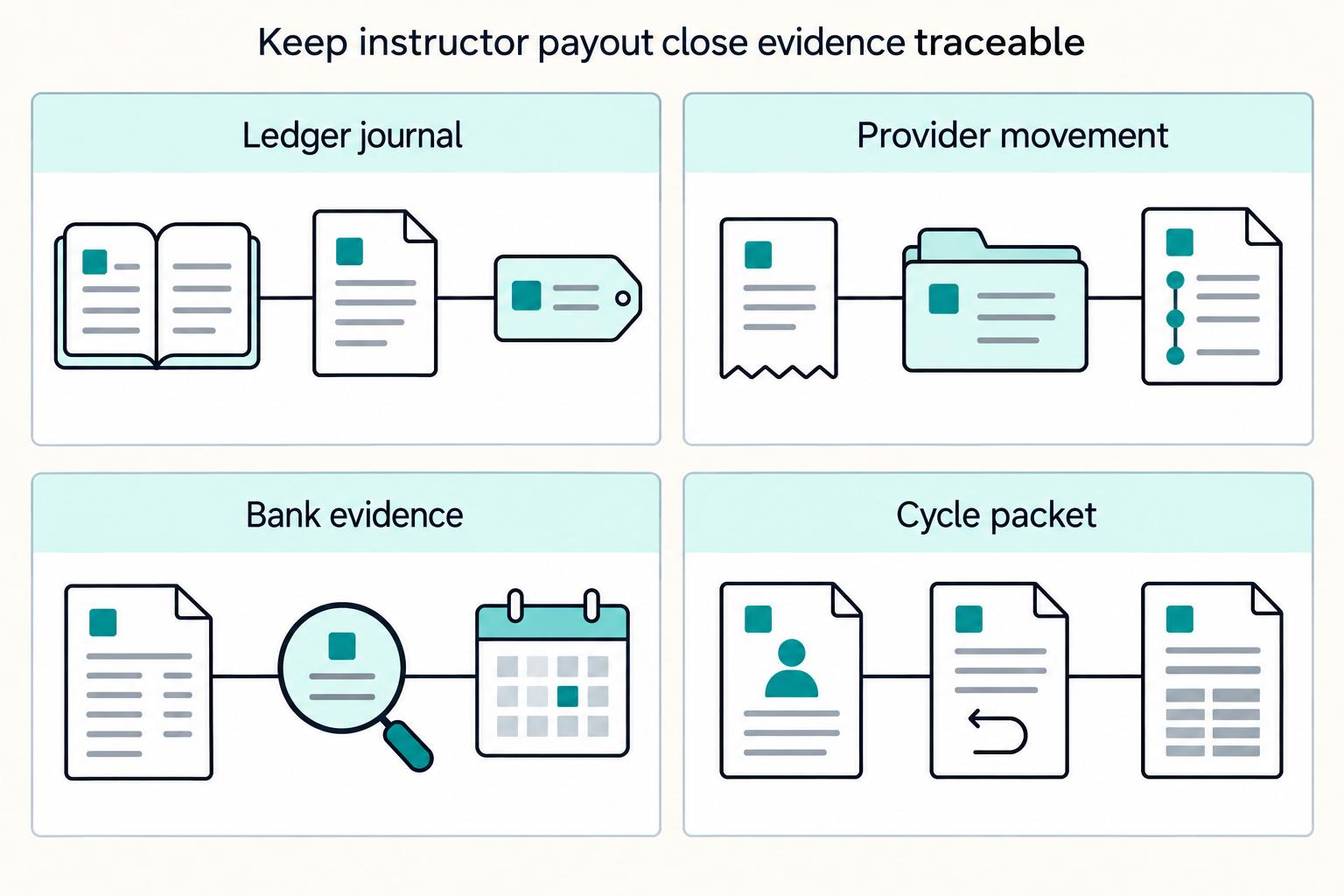
How EdTech Platforms Pay Instructors Globally: Compensation Models, Payout Controls, and Reconciliation
Treat public payout content as market color, not implementation guidance. If you searched **online learning platform pay instructors globally edtech payout**, you probably found comparison posts about which platform pays instructors the most. That is not the same as a buildable path for an EdTech team that has to ship payouts, reconcile them, and defend the result to finance.