
Quick Answer
Confirm that researchers in each target country can meet the program and payment provider requirements, receive the chosen currency and complete the required identity and tax forms. Record the approved reward, send it through a supported payout route, and reconcile the provider result to that reward. Test timeouts and duplicate events before increasing volume.
What Cross-Border Bug Bounty Payouts Need to Handle#
If you are deciding where to launch a bug bounty program next, do not anchor on who advertises the biggest reward. The better question is where you can attract credible researcher attention, meet payout eligibility requirements, and move money with less avoidable payout friction once valid reports start landing.
- Treat headline rewards as signal, not as a launch decision
Big public numbers get attention, but they do not prove a market is operationally ready for you. On December 2, 2024, Crypto.com announced a HackerOne bounty upgrade with rewards up to USD $2 million, describing it as the first HackerOne program to reach that level. That shows large incentives can be part of a serious security posture. It does not tell you whether your team can onboard researchers in a new country, clear tax requirements, or resolve payout exceptions without burning trust.
- Start with payout eligibility, because trust can break there first
A bug bounty program rewards researchers for valid findings under its published terms. On HackerOne, receiving a monetary award requires a valid tax form, approved identity verification and a selected payment method. Check whether a researcher in the target market can complete those steps and who will resolve a stalled payment setup.
- Use expansion criteria that match real operating risk
This article is for founders and operators making country and vertical bets, not for readers looking for a generic definition of a bounty. The lens here is practical: compare researcher demand, compliance burden, and payout execution readiness before you commit product, legal, and go-to-market resources. One useful checkpoint is simple. Before you open a new market, verify the payment and tax path a researcher must complete from account setup through receipt of funds.
A common failure mode is easy to miss in planning but painful in production. Rewards look compelling on paper, yet researchers can stall at payment preference or tax setup, and your support queue can become the real bottleneck.
The broader upside is still real. Bug bounty programs can tap a global researcher community, which is part of why they remain attractive for companies with expanding attack surfaces. But global reach is only an asset if your payout operations can support it. With that framing in place, the next step is to choose markets using the same standards you will have to live with after launch.
How to choose a bug bounty payout market before you launch#
Evaluate researcher access, onboarding, payout reliability and reconciliation together. These checks can run in parallel, but each needs a workable result before you promise live payouts in a new market.
| Gate | What to verify | Pause if |
|---|---|---|
| Researcher access | Confirm you can reach researchers you can actually pay, not just attract attention | You cannot show you can actually pay researchers in the target market |
| Legal and compliance readiness | Collect and validate required payout data before money moves; cover target-country payout routes, KYC/KYB/AML ownership, and payout disputes | Required payout data cannot be collected or validated before money moves |
| Payout reliability | Show webhook events update payout state and retries are idempotent | Your team cannot show observable payout state changes or retry-safe handling |
| Audit and reconciliation maturity | Finance can reconcile payouts from request through payout or settlement batch in internal records | Reward and transfer records cannot be matched, or discrepancies remain unexplained |
Use the four gates as a readiness review. For example, a supported bank-transfer route is useful only if eligible researchers can complete its onboarding requirements and finance can match the resulting payment to the approved reward.
- Researcher access
Intigriti's 2024 review reported more than 100,000 researchers across more than 180 countries. That illustrates the reach of an established community; it does not establish demand or payment eligibility in your next target country. Compare your own valid submissions and researcher requests with the payout routes you can support.
- Legal and compliance readiness
Verify which data your provider and applicable rules require before release. HackerOne, for example, requires a valid tax form, approved identity verification and a selected payout method for a monetary award. Record the target-country route, who completes verification, and who resolves payment disputes.
- Payout reliability
Prove payout state changes are observable and retry-safe. Webhook events are critical because outcomes are asynchronous, and retries should not create duplicate operations. If your team cannot show how webhook events update payout state and how idempotent retries are handled, you are still in pilot territory.
- Audit and reconciliation maturity
Confirm finance can match the approved reward, individual provider transfer, any funding or settlement batch, and fees. A controlled spreadsheet can support a small pilot; expansion becomes difficult when records cannot be joined consistently or exceptions have no owner.
Best first market archetypes for global bug bounty payouts#
If you have already passed the access, compliance, webhook, and reconciliation gates, start with the archetype that lets you prove payout discipline under live conditions. In practice, that usually means a narrower launch before broader coverage.
| Planning option | Potential advantage | What to test before choosing it |
|---|---|---|
| Single-region pilot | Fewer payout-route branches to test | Actual researcher demand, individual or entity onboarding requirements, supported methods and receiving experience |
| Multi-country cluster using a shared rail | Some integration and reconciliation logic may be reusable | Each country’s eligibility, documents, fees, currencies and failure handling |
| Market with strong demand and difficult payout access | May reach researchers underserved by current routes | Whether an approved route and workable onboarding exist; measure review time and exceptions in the pilot |
1. Single-region, high-researcher-density market#
A contained first launch can make it easier to observe payment failures and test dispute ownership. Choose it when the actual provider route and researcher demand fit, then verify the payout estimate and reconcile each reward, including any controlled manual steps.
The advantage is reduced variance: fewer KYC permutations, fewer payout-method branches, and clearer failure signals. If webhook status, ledger journal, and payout batch close do not line up here, adding countries will hide the root cause instead of fixing it.
A practical checkpoint: can you explain one researcher payout from the approved reward to its provider reference and reconciled final status? In a Trolley case study, Bugcrowd described moving from weekly payments and manual spreadsheet pulls to more automated operations. The useful lesson is to keep payment records connected as volume grows.
2. Multi-country, same-rail cluster#
Choose this archetype when your first region is stable and you want expansion without rebuilding orchestration. The core benefit is reuse: the same API handling, idempotency key logic, and most settlement and reconciliation controls can carry across the cluster.
Intigriti's 2024 review reported researchers in more than 180 countries and customer growth from 33 countries. Community reach can justify evaluating several markets, but shared payout rails do not remove country-specific eligibility, documentation or currency requirements.
The main risk is exception volume: more AML reviews, document mismatches, payout-method changes, and retry edge cases. Before opening the next cluster, confirm idempotency behavior is deterministic across retries and assign clear ownership for exception handling.
3. High-demand but high-friction markets#
Evaluate difficult payout markets against your team’s capacity to handle their actual requirements. Individual researchers may need identity and tax checks; entity payees may require business verification. A market’s friction does not itself turn an individual researcher into a KYB case.
| Item | Use or trigger | Reference detail |
|---|---|---|
| Form W-8BEN / W-8BEN-E | Foreign individual / entity documentation | Use the form appropriate to the payee when required by the payer or withholding agent |
| Form W-9 | Correct TIN collection | Used for correct TIN collection |
| Form 1099-NEC | Reportable nonemployee service payments | General threshold $2,000 for 2026; payee status and exceptions matter |
| Beneficial-owner verification | Legal-entity customers | Covered institutions under 31 CFR 1010.230 |
For US tax documentation, Form W-9 generally records a US payee’s taxpayer identification details; Form W-8BEN documents a foreign individual, and W-8BEN-E applies to foreign entities where appropriate. For reportable nonemployee service payments, the general Form 1099-NEC threshold is $2,000 for payments made in 2026, up from $600 for 2025. Determine the payment category, payee status and applicable exceptions before selecting a return; a cross-border reward does not automatically belong on Form 1099-NEC. The beneficial-owner rule in 31 CFR 1010.230 applies to covered financial institutions and covered legal-entity accounts, rather than every bounty platform directly.
Your evidence pack should show which tax forms the payer or provider requires, who verifies an entity where needed, and how expiring or changed documents are handled. Keep those responsibilities beside the payout route so an onboarding problem has a clear owner. For a related operating example, see language-services platform payouts.
Best payout operating models for security researcher trust#
Compare direct payout instructions with a prefunded, ledger-based release workflow. Either can have approval checks and reliable reconciliation. Prefunding can separate funding from reward release, while direct instructions can avoid maintaining a provider balance; actual speed and control depend on the route and implementation.
| Model | Usually fits | Trust controls that must work | Main tradeoff |
|---|---|---|---|
| Direct payout instructions | Teams instructing individual rewards through a supported route | Reward approval, durable transfer mapping, supported retry controls and status reconciliation | Funding and arrival time depend on the provider and destination |
| Prefunded release workflow | Teams separating program funding from reward release | Funding reconciliation, approved obligations, controlled release and individual-transfer reconciliation | Requires balance management as well as payout operations |
- Direct cross-border payouts
Send the payout request after the required approvals pass. If the provider supports idempotency, reuse the same operation key and unchanged parameters while the result is uncertain, within its documented retention window. Stripe, for example, saves executed-request results, including failures, but may remove keys after at least 24 hours. A key reused after pruning can create a new operation, so preserve your own reward-to-transfer record and investigate an unknown result before sending a fresh request.
Verify incoming webhook signatures and record processed event IDs. Events may arrive repeatedly or out of order, so apply valid state transitions to the original transfer rather than releasing a reward whenever a notification arrives. If events are missing or inconsistent, query the provider’s current transfer status. Keep failed and returned transfers linked to the original reward so support can explain whether money arrived and what happens next.
- Prefunded release workflow
Record the approved reward obligation and release it through the provider after policy, identity and payment checks pass. Keep the funding balance, reward obligation and external transfer as distinct records so finance can explain what is owed and what has actually been paid.
Keep complete, balanced ledger postings for the reward and its payment. A provider may offer virtual account details to identify incoming funding, but the underlying account, balance and withdrawal rights depend on the product. Those details do not by themselves enforce reward approval or prevent duplicate payouts. Use the payout API’s documented duplicate controls alongside your own durable reward identifier.
For example, suppose a payout request times out after submission. Keep the reward marked as payment outcome unknown, look up the original provider reference where available, and use the provider’s supported same-key retry rather than issuing a new reward. Process duplicate status events once and reconcile the final result to the original obligation. The test is the same whether funding was staged beforehand or the transfer was instructed directly.
Keep the reward and transfer linked#
For an illustrative $500 reward, record the finding and award ID, researcher identity, approved amount and payment currency. Agree who bears any conversion or transfer fees, confirm the selected beneficiary matches the eligible researcher, and check available funding before submission. A report dispute belongs with the program’s adjudicator; a failed transfer belongs with payment operations. Keep those queues separate.
Track the obligation as approved, awaiting payment setup, submitted with an unknown result, paid or returned as appropriate. Store the provider reference beside the reward and notify the researcher when action is needed. If a transfer returns, reconcile the return and fees, correct the receiving details and approve any replacement instruction against the original reward. Mark it paid only on the evidence your selected route provides; a submission acknowledgement is not proof of receipt.
Compliance and tax checks that cannot be deferred#
These checks are launch blockers, not post-launch cleanup. If you cannot export an audit-ready packet for one payee record showing identity evidence, sanctions status, and tax documentation, pause launch in that market.
Use this operating sequence so payable obligations do not outpace controls:
- Required verification before payment release
Record a valid finding and its approved reward even if payment setup is incomplete. Hold the transfer until the required person or business verification is finished, and show the researcher which step remains. Keep the approval date, reviewer and supporting evidence linked to the reward so a payment hold does not erase what is owed.
- AML and sanctions before release (and at release when needed)
Apply the sanctions requirements relevant to your platform, provider and destinations. FATF Recommendation 6 concerns countries’ targeted financial sanctions regimes; it is not a universal platform screening schedule. Set release checks and re-screening triggers under your applicable obligations, including material profile changes, and preserve the screening result and timestamp with the payout record.
- Tax profile capture before broad rollout
Collect the tax documents required for the payee and payment before releasing funds. Form W-9 records US taxpayer details, while W-8BEN or W-8BEN-E may document foreign status. Decide separately whether the reward is reportable, on which return, and whether withholding applies. Keep tax-form collection dates and update triggers in the payee record; HackerOne’s own process, for example, requires renewal every three years and updates when information changes.
| Check | Required documents or evidence | Owner | Verification checkpoint | Escalation path |
|---|---|---|---|---|
| KYC/KYB | Identity or business evidence, review record | Compliance ops | Approved case file with reviewer, date, and linked evidence | Country compliance lead or provider review queue |
| AML | Sanctions screening result, timestamp, release-time re-screen if needed | Compliance or payments risk | Screening record attached to payout-ready profile | Sanctions escalation and payout hold |
| Tax | W-9 or W-8BEN where requested; 1099-NEC tracking where applicable | Tax ops or finance | Downloadable payee tax packet with collection date and status | Finance tax lead and manual payout block |
| Policy | Responsible disclosure policy, vulnerability disclosure terms, dispute rules | Program owner with legal | Payout eligibility rules match program channel and scope terms | Legal review before country launch |
- Policy terms and payout rules must match exactly
Your responsible disclosure and vulnerability disclosure terms define eligibility, channel, and scope, so they are part of payout operations. Programs commonly restrict rewards to official submission channels and define in-scope and out-of-scope targets in program terms. Your dispute handling should map directly to those rules, not to ad hoc decisions in finance. If you need help tightening policy language, see How to Write a Responsible Disclosure Policy for Your Payment Platform.
Reward economics without hand-waving#
If you are choosing between bigger headline rewards and cleaner payout execution, bias toward cleaner execution. Public payout growth and public frustration can both be true when rewards are unevenly distributed across researcher cohorts.
- Growth headlines are real, but they are not distribution proof
HackerOne's 2025 report records $81 million in annual bounty payouts, drawing on more than 580,000 validated vulnerabilities and 1,950 enterprise programs. These aggregate figures show scale; they do not tell an individual researcher what a finding will earn or how quickly a particular program will pay.
- Evaluate incentive quality as a package, not a single bounty ceiling
Bugcrowd's 2026 researcher survey reports financial gain as a motivation for 74% of respondents, while 85% said reporting a critical vulnerability mattered more than making money. These are survey responses, not payment outcomes. Track reward terms, report handling and the receiving experience together:
- base bounty tiers by severity
- submission-to-first-triage timing
- dispute transparency, including reasoned downgrade or duplicate outcomes
- repeat researcher participation over time
- Predictable turnaround is a trust signal researchers use
Predictable handling makes the reward terms easier to trust. HackerOne's billing guidance gives a typical 2–7 day remittance window; that is its stated operating window, not a guarantee for every provider or destination. Publish your own supported arrival estimates and keep researchers informed when a transfer needs attention.
| Scenario | Likely researcher signal |
|---|---|
| High headline rewards + slow payout ops | Attention up front, lower trust if turnaround is inconsistent |
| Moderate rewards + fast predictable payouts | Lower hype, stronger dependability signal for repeat participation |
Track the interval from accepted finding to reward approval, payout instruction and confirmed receipt. Separating those stages helps you see whether delay comes from triage, onboarding, funding or the transfer itself.
Rollout sequence and verification checkpoints for a new country#
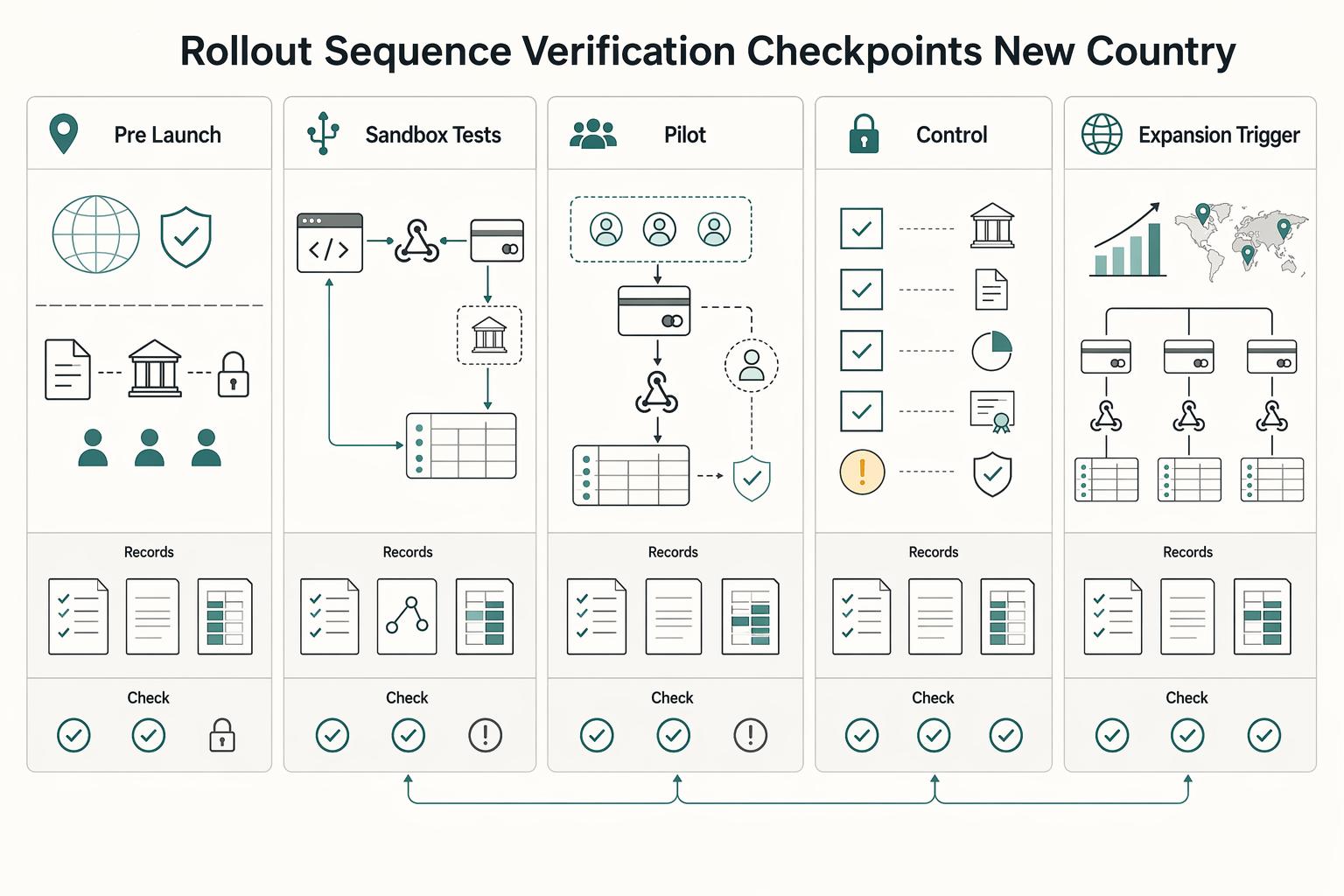
Complete eligibility and documentation checks alongside route testing, then run a constrained live pilot. Expand when the team can reconcile payments and handle failures consistently. A sandbox can exercise the integration, but only an approved live test shows the actual receiving experience.
A new-country launch is ready when payout operations are explainable, not just when a single payout succeeds. You should be able to follow a payout from API request through webhook updates and provider reference to your final ledger posting, with manual investigation paths for exceptions.
| Stage | What to prove | Go / no-go signal |
|---|---|---|
| Pre-launch checks | Confirm route design, provider behavior, exception ownership, and required identity/tax artifacts for that country | No launch date until the country evidence pack exists |
| Sandbox tests | Simulate transactions, verify webhook delivery, and reconcile expected internal postings against transaction history | No live payout until test events reconcile end to end |
| Pilot | Use eligible researchers with required documents complete, approved rewards and sufficient funding; investigate payment exceptions | Do not broaden access while material payment discrepancies remain unexplained |
| Controlled scale | Reuse the proven onboarding, release and reconciliation process with named exception owners | Pause when required documentation is missing or unresolved payment discrepancies grow |
| Expansion trigger | Move wider only after consistent report-handling and payout operations under real load | If traceability or reconciliation degrades, stop expansion and fix ops |
- Validate rails before the first live payout
Start in sandbox and force edge cases, not just happy paths. Testing should cover simulated transactions, webhook verification, and end-to-end payout flow checks, then reconciliation against transaction history. Provider status alone is not enough if your internal record does not match.
- Run a constrained pilot and treat exception closure as your internal gate
Use a controlled launch that is private to a select researcher group. Keep the cohort small enough to root-cause exceptions instead of routing around them. A strict internal standard is to delay broad participation until pilot exceptions are resolved and explainable.
- Scale only when compliance and tax artifacts are ready for audit
Before the live pilot, complete the identity and tax documentation required for its researchers and payout route. Keep foreign individual and entity forms distinct, determine the applicable reporting treatment, and track changes or expiry. Expansion should reuse that working process rather than postpone it until volume grows.
Final checkpoint: payout state changes should be explainable from request to provider reference to internal posting, with reconciliation evidence available in a sample case file. Automatic payout reporting that preserves transaction-to-payout linkage makes this review easier.
Red flags that should stop expansion immediately#
Stop expansion if any one of these is unresolved. A pilot is only a scale signal when policy clarity, payout controls, and reconciliation all hold under repeat conditions.
| Red flag | Operating problem | Launch impact |
|---|---|---|
| Vague eligibility rules | You cannot state who is eligible for payouts, what findings qualify, and how scope and Rules of Engagement apply | Pause launch |
| Provider and ledger mismatch | Provider status, transaction history, and your final ledger journal do not match | Treat as a no-go |
| Weak retry safety | Repeated requests cannot be recognized and deduplicated consistently | Duplicate payouts remain a live risk |
| Headline-driven urgency | The decision is being driven by urgency instead of a clean evidence pack | Pause |
- Eligibility rules are vague in your vulnerability disclosure terms.
If you cannot state who is eligible for payouts, what findings qualify, and how scope and Rules of Engagement apply, pause launch. Award eligibility is tied to program rules and scope, and unclear guidelines create avoidable disputes. Practical check: ask a reviewer outside the program team to read the terms and explain them back. If they cannot, tighten the policy before launch and align it with your responsible disclosure policy.
- Provider status and your ledger journal do not reconcile.
"Sent" at the provider is not enough. If provider status, transaction history, and your final ledger journal do not match, treat that as a no-go. Common pattern: payout appears complete externally while internal records remain pending because webhook handling was missed, duplicated, or mapped incorrectly.
- Retry safety is incomplete because idempotency key handling is weak.
Repeated requests and duplicate notifications must map back to the same reward and transfer. Test both retries within the provider’s key-retention window and recovery after that window expires. For Stripe, keys may be pruned after at least 24 hours; your internal reward record must prevent a new instruction from paying the same obligation again.
- Launch pressure comes from competitor headlines, not evidence.
Use market announcements to identify questions for your pilot, rather than as payment evidence. Distinguish a documented pending transfer within its expected arrival window from a material unexplained discrepancy. Pause expansion for the latter, assign an owner and resolve it before adding more researchers.
Conclusion#
The practical takeaway is simple: do not pick your next country because the public bounty numbers look impressive. Pick it because researcher demand is real and your payout, compliance, and evidence trail can survive production traffic without guesswork.
Choose one proposed country and follow a sample approved reward through onboarding, payout instruction and reconciliation. Record the fee, receiving currency, arrival estimate and owner of each exception. That case gives the team a concrete basis for expanding the program.
Frequently Asked Questions
What is the core value of a bug bounty platform for both companies and security researchers?
For companies, a bug bounty program creates a defined channel for researchers to report vulnerabilities under published terms. Researchers can earn rewards for qualifying findings. Clear scope, fair adjudication and reliable payments help both sides use that channel repeatedly.
Why can bug bounty rewards grow while some ethical hackers still report underpayment?
Both can be true because aggregate bounty totals say little about the distribution of earnings. HackerOne's 2025 report records $81 million in annual payouts across its programs. A researcher's payment still depends on a qualifying finding, the program's reward rules and completed payment setup. Clear tiers, reasoned decisions and a predictable payout process address the experience that a headline total cannot describe.
What makes paying security researchers globally harder than running a domestic bug bounty program?
Cross-border payouts are harder because they involve multiple jurisdictions, and that adds legal, payment, and operational friction that a domestic program may not face. Researcher access can also be country-constrained by sanctions and trade restrictions, so you cannot assume every market is open by default. In practice, global rollout often requires payout routing, eligibility screening, and identity checks to work together.
What should operators validate before launching payouts in a new country?
Start with three checks: researcher eligibility, payout route viability, and identity obligations. In practice, that means confirming sanctions restrictions, confirming your provider can actually send funds there, and making sure your KYC obligations can be met for the account holder. A useful checkpoint is to test whether every payout event can be traced from API request to webhook event to final internal posting without gaps.
Which is better for early expansion: direct payouts or a prefunded release workflow?
Direct transfers and prefunded release workflows can both support dependable rewards. Compare destination coverage, funding requirements, fees, approval controls and the time until the researcher receives funds. Virtual account details may help identify incoming funding, but they do not replace reward approvals, payout execution or reconciliation.
How should teams decide between faster launch and stricter compliance controls?
Fix concrete payment defects before expanding: unresolved transfer outcomes, duplicate requests or incomplete required onboarding. Test retries against the provider’s actual key retention and endpoint behavior, and keep an internal reward identifier that survives beyond that window. Reliable controls make a wider rollout easier to support.
What proof should leadership require before approving the next market launch?
Leadership should ask for an evidence pack, not a forecast deck. At minimum, require target-country payout routes, sanctions and participation rules, KYC readiness, and test results showing reliable webhook handling and retry behavior. If the team cannot show clean reconciliation for a pilot cohort and explain every payout state change, the answer should be "not yet."
Try a related tool
Researched and edited by the Gruv editorial team. Gruv builds cross-border billing, payouts, and finance-operations software for global businesses.
Sources
- bis.org/publ/bppdf/bispap167.htmtrusted
- bis.org/cpmi/cross_border/programme.htmtrusted
- docs.stripe.com/api/idempotent_requeststrusted
- docs.stripe.com/webhookstrusted
- documents1.worldbank.org/curated/en/099626506172223111/pdf/IDU0ead444...trusted
- ecfr.gov/current/title-31/subtitle-B/chapter-X/part-1...trusted
- irs.gov/forms-pubs/about-form-w-8-bentrusted
- irs.gov/newsroom/what-businesses-need-to-know-about-...trusted
Educational content only. Not legal, tax, or financial advice.
Related Posts
Responsible Disclosure Policy for Payment Platforms
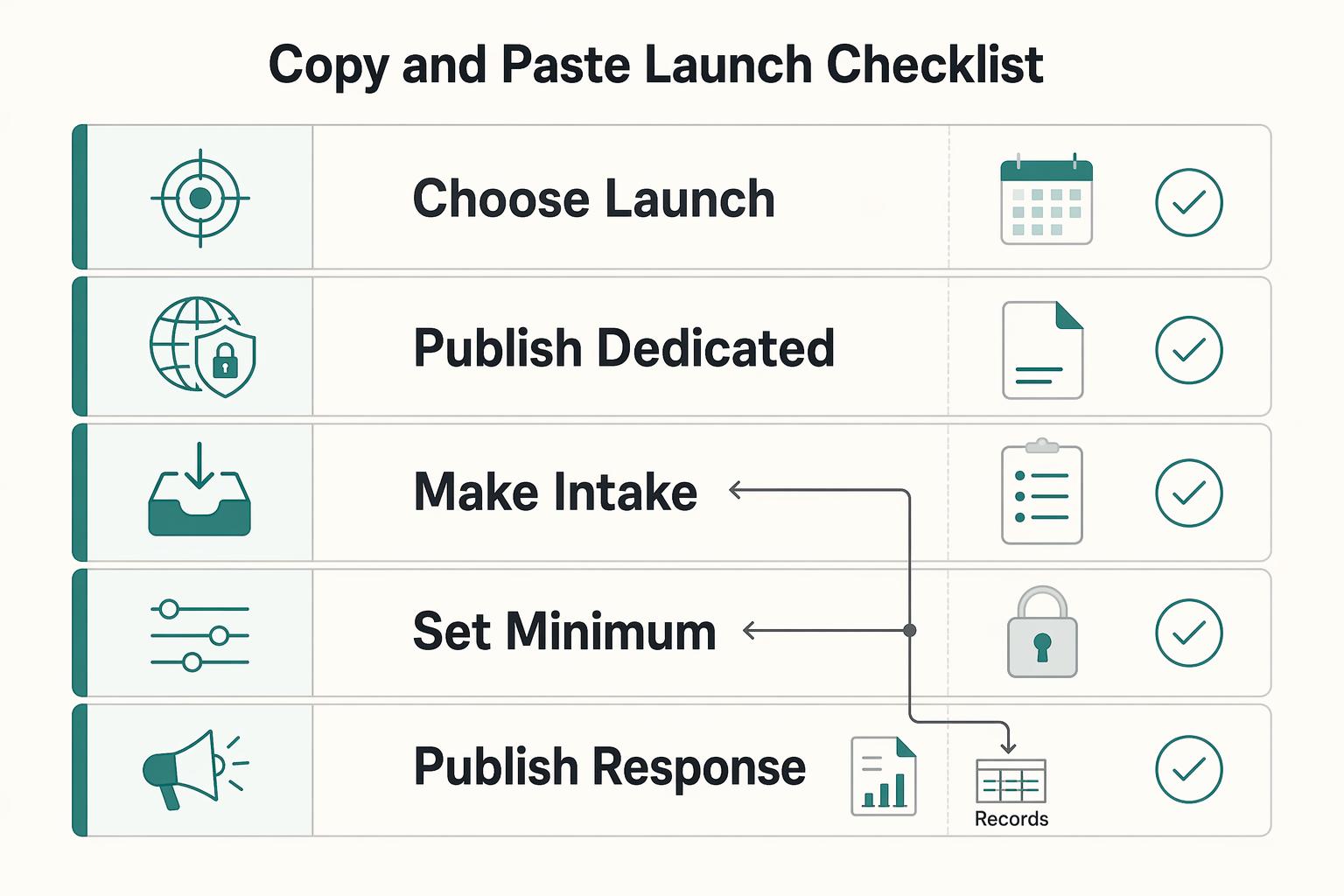
Treat your disclosure policy as an operating document, not a legal page you publish and forget. If you cannot name your in-scope assets, set the minimum evidence required, identify who accepts or rejects a report, and state your response timeline, you do not yet have an executable policy.
Solving Esports Prize Payment Distribution: How Tournament Platforms Pay Winners Globally
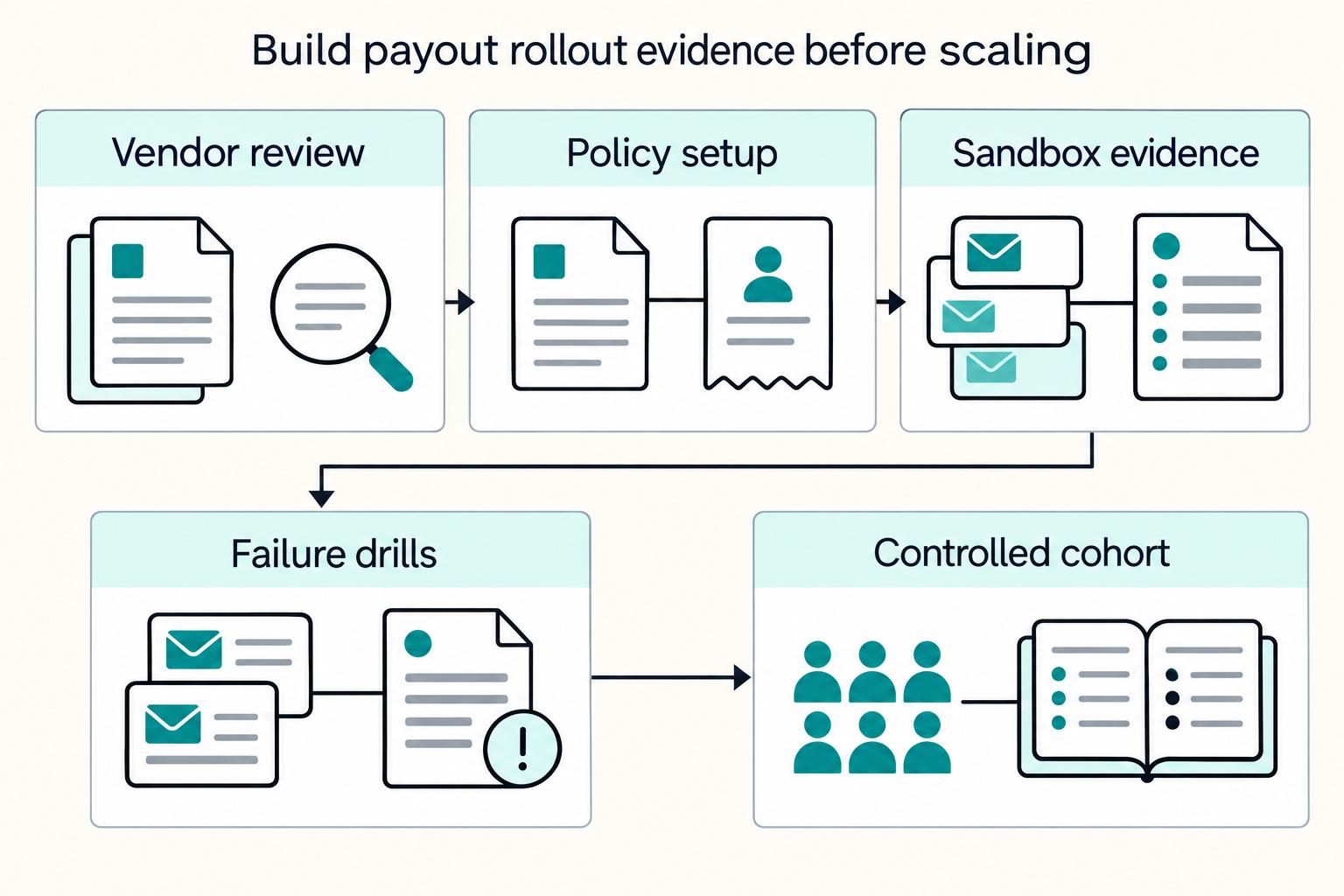
Choose your payout path based on your operating model and control requirements, not on esports messaging alone. Public pages from Payment Labs, Dots, and i-payout are useful for a shortlist, but they are not enough on their own to sign confidently or run payouts without finance and engineering surprises.
Pay Translators and Interpreters Globally for Language Services Platforms
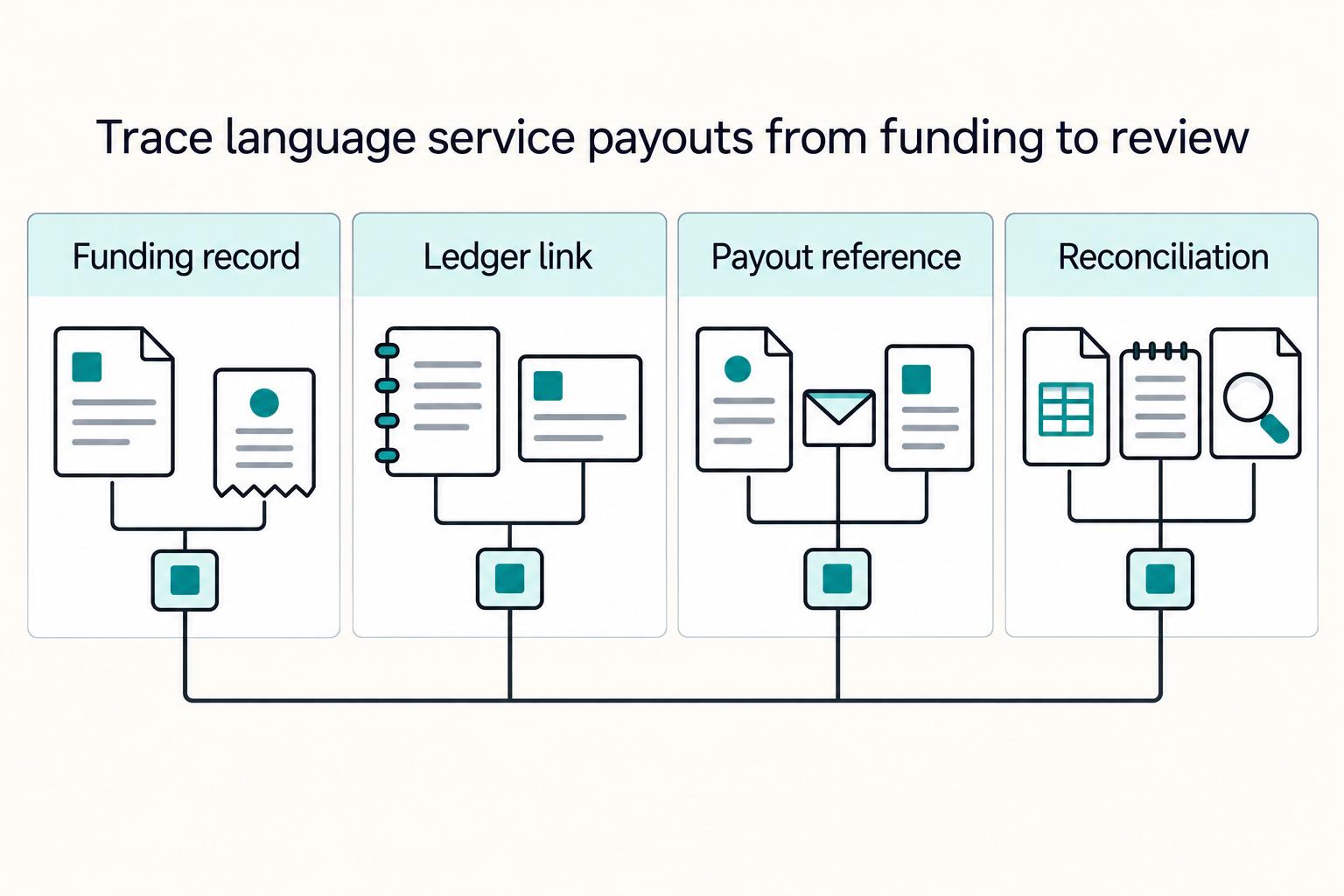
Use Indeed, ZipRecruiter, and Vaia Talents for market signal only: they help you gauge demand and pricing, but they do not tell you how to run cross-border payouts.