
Quick Answer
Count distinct payment or payout attempts by account, tokenized instrument or available IP over a documented time window. Combine concentration with outcome and account context before deciding to authenticate, review or block. Keep the rule version, contributing events, owner decision and actual execution state together; review does not automatically pause payment or payout.
Why Velocity Checks Matter#
A velocity check is a fraud control that monitors transaction frequency and patterns over a defined timeframe so you can catch suspicious concentration early. In practice, it asks whether too many payment attempts are tied to the same account, IP address, or payment instrument in too little time.
Keep the rule structure simple: quantity, tracked data element, and timeframe. For example, "five transactions in 15 minutes" shows the shape of a rule, not a universal threshold. If your team cannot state those three parts for each rule, you do not yet have a control you can review, tune, or defend.
For platforms, the useful signal is concentration, not raw count alone. An abnormally high number of attempts from one account or IP, or multiple payment instruments linked to the same IP, is what turns monitoring into a practical fraud signal.
This guide is for compliance, legal, and risk owners because these rules drive policy decisions, not just technical settings. Once you hold or block payments, the real questions are who approved the action, under what policy, and how exceptions are handled when activity is unusual but legitimate.
In multi-market operations, document the policy for each supported flow and jurisdiction. Regulated financial entities may also have incident-reporting duties: the EBA withdrew its PSD2 major-incident guidelines on 17 January 2025 as DORA reporting took effect for entities in scope. A velocity alert is not automatically a reportable incident. This guide covers four connected control elements:
- implementation logic for what gets tracked and when
- escalation policy for suspected fraud or regulatory exposure
- exception handling for legitimate but unusual activity
- audit evidence showing the alert, decision, and outcome
A usable evidence trail should let you reconstruct the case from rule to resolution. At minimum, it should tie the rule and tracked entity, such as the account, IP, or payment instrument, to the decision and outcome. If that record is missing, detection may still work, but consistent and defensible control operation is much harder to prove.
Before you scale rules, run one practical check: can an auditor, risk lead, or counsel reconstruct a sample alert without analyst tribal knowledge? If not, fix evidence design first.
That matters because the rest of the work is operational. The sections that follow focus on selecting signals, mapping alerts to actions, handling exceptions, and maintaining a clean audit record across markets.
For a step-by-step walkthrough, see Device Fingerprinting Fraud Detection Platforms for Payment Risk Teams.
What to prepare before you switch on rules#
Before launch, lock four things: ownership, minimum data fields, market constraints, and success metrics. If you skip them, the first alert becomes a debate instead of a decision.
Assign owners before rules go live#
Assign decision owners before any rule goes live. Risk can propose logic and thresholds, compliance can approve policy boundaries and escalation conditions, and a reporting owner can define reporting recipients and cadence. Record who can approve a block, temporary hold, exception and release; apply any additional governance duties required by your regulated status or partners.
| Owner | Responsibility |
|---|---|
| Risk | Proposes rule logic and thresholds |
| Compliance | Approves policy boundaries and escalation conditions |
| Reporting owner | Defines what is reported and how often |
Readiness check: each owner should be able to show the rule inventory they approve, the decisions they can make, and the decisions they cannot.
Define minimum fraud-event fields#
Define required fields for each event stage. Collection, incoming-credit and payout events do not expose identical data; record missing fields explicitly instead of inventing values:
| Field | Capture requirement |
|---|---|
| Event identity | Stable event ID, event type and original instruction or idempotency reference |
| Account | Mapped user or account reference for this stage |
| IP address | Capture where available; record unavailable or unreliable values explicitly |
| Instrument or destination | Provider token/fingerprint or beneficiary reference, not raw PAN/CVC |
| Timestamps | Event and receipt timestamps in UTC; state which drives the window |
| Outcome and action | Attempt result, rule decision and actual payment/payout state separately |
Use structured fields, including stable event IDs and UTC timestamps, so duplicate delivery does not become a new attempt. Record both the rule decision and actual execution state: a review decision, blocked collection and paused payout are different facts. Tokenized instrument or destination references are enough for linkage; do not log raw card numbers or CVC for velocity analysis.
Set market constraints before automation#
Before automating significant decisions in UK GDPR-scoped flows, assess the current Articles 22A–22C safeguards. Where a solely automated decision has legal or similarly significant effects, provide information and a way to request human intervention, make representations and challenge it; check system performance regularly. Special-category data has additional conditions. Human reviewers need authority to change the outcome. See the joint FCA/ICO statement.
Set market and partner boundaries explicitly. Card-network monitoring programs distinguish fraud, disputes and enumeration, with thresholds that vary by region and program version. Confirm the current requirements with your acquirer before using a network metric as a rule target.
Define success metrics before launch#
Define success as lower preventable loss without unnecessary customer friction. Track disputes, confirmed fraud and legitimate-user impact separately, with stated denominators and cohort dates. Dispute notifications can lag payments for months; a short clean observation window does not prove the rule prevented fraud. Apply the actual payment-method and network timelines rather than treating 120 days as a universal maximum.
Launch check: confirm you can show fewer risky repeat patterns without a meaningful increase in reviews of legitimate payments. If not, tune before scaling.
Related: Wire Fraud Prevention for Platforms: How to Spot Spoofed Bank Details Before You Pay.
Choose signals that indicate real risk#
Start with entity-level velocity signals you can actually review, then add complexity. A defensible starting point is repeated attempts tied to one IP address, one account, or one card within a defined time window.
Start with account, IP, and card velocity#
Track repeat activity on those three entities first. Card, IP address, and account velocity checks all use the same basic logic: count repeat behavior in a set timeframe and flag unusual concentration.
Write rules in provider-supported fields and syntax. An illustrative design is “review when this tokenized instrument has more than three distinct declined attempts in 15 minutes”; it is not a production threshold or executable Radar expression. Use provider fingerprints or tokens, not raw card numbers. Shared IPs, carrier networks and retrying legitimate customers can create concentration without fraud.
Prioritize surge-plus-failure patterns#
Look at surge-and-failure combinations alongside raw volume. A sudden increase in attempts is a known fraud red flag, and repeated declines across different cards can indicate card-testing behavior.
Use that as prioritization logic, not a fixed law. Volume spikes can be legitimate, so combine attributes where possible and route outcomes with branch logic, such as review versus hold, instead of relying on a single attempt counter.
Add business context before auto-blocking#
Add business context before turning strong signals into automatic blocks. Context controls can reduce false positives when normal activity surges.
These controls are design choices, not universal provider requirements. If you apply one, document why it exists, who it applies to, and when it expires.
Route weak data to lower-confidence review#
Treat weak data as weak evidence. If key fields are missing or unstable, route those cases to a lower-confidence or manual-review path instead of treating them as standard velocity hits. That helps keep data-quality noise from being mistaken for confirmed abuse and can improve decision consistency.
Related reading: How Platforms Stop Affiliate Fraud Before Commissions Are Paid.
Set risk-tiered transaction velocity rules#
Do not run every flow through one global threshold. Use a risk-tiered matrix by flow, then define the entity, time window, trigger, and action path for each tier.
Build the matrix around flow risk#
Build the matrix around flow risk, not a sitewide default. Low, medium, and high are internal labels, but they make it easier to align strictness across risk, compliance, and operations.
Higher-loss or more reversible flows need different controls from lower-exposure flows. Segment collection attempts, new-account cash-out and established recurring activity, then validate the relevant signals for each. Do not apply one threshold solely because all events involve a payment.
Specify whether the window is fixed, rolling or provider-bucketed. A fixed window resets at its boundary; a rolling count expires events as they age out. Provider buckets can include extra time. Stripe’s velocity reference explains that an hourly attribute can cover up to 65 minutes. Also document whether the current event counts, which outcomes count, timestamp choice, duplicate handling and concurrent updates.
Define the rule dimensions first#
Define the rule dimensions before you tune thresholds so each decision stays explainable.
| Entity tracked | Time window type | Trigger type | Action path |
|---|---|---|---|
| Account | Burst window and/or longer repeat window | Concentrated attempts or repeated declines from the same record | Allow, review, or block based on tier |
| IP address | Very short burst window | Sudden concentration of attempts from one IP | Allow, review, or block based on tier |
| Payment instrument | Short to medium window | Distinct attempts or declines on one tokenized instrument; threshold and counting semantics documented | Allow, review, or block based on tier |
Illustrative rolling-window test: five distinct attempts arrive at 10:00, 10:03, 10:07, 10:09 and 10:12. A rule evaluating more than four attempts in the preceding 15 minutes, including the current attempt, routes the fifth for review. A duplicate webhook for the 10:07 attempt leaves the count at five. At 10:16, the 10:00 event has aged out, leaving four before another new attempt is counted. Test the actual provider’s boundary semantics rather than assuming this exact implementation.
Use tightly bounded overrides#
Use controlled overrides only for clearly bounded legitimate bursts. Keep overrides narrow by flow, scope, and time period so they do not weaken baseline fraud controls.
Segment only where evidence supports the distinction. Compare legitimate-user impact and confirmed detection in each cohort; a tighter setting can increase friction without increasing useful detection. Give temporary overrides a scope, owner and expiry.
Backtest before launch#
Backtest the matrix on available historical events before launch. Where the provider supports a shadow or test mode, use it to compare predicted actions with current behavior without enforcing new blocks. Confirm that the tested rule version and event fields match the planned production configuration.
Verify that each alert exposes the tracked entity, distinct event IDs, timestamps, event count, matched rule version and branch outcome. Test expiration at window boundaries, duplicate delivery, concurrent attempts, missing fields and late-arriving events. Historical backtests are useful evidence; they do not guarantee performance on new traffic.
Map every alert to an action and escalation path#
Every velocity alert should map to one predefined outcome, one owner, and one response clock. Without that mapping, handling becomes inconsistent and hard to defend in an audit.
Define action tiers and owners#
Define collection actions separately from payout controls. Collection decisions may allow, request 3DS, review or block. A Stripe transaction review still lets the payment process; it does not by itself hold cash. Where supported, an account rule can separately pause payouts during review. Confirm the actual pause state and which transfers it can still affect before relying on it.
Use a simple judgment rule. If impact is primarily commercial, route it under the SLA for that risk tier. If impact may create legal or regulatory exposure, escalate immediately under policy to the designated compliance decision authority, and involve counsel where your policy requires it.
Name ownership explicitly for each tier:
- Primary owner
- Backup owner
- Target response time
- Override or closure authority
Set response clocks by severity, queue capacity and any applicable partner or legal requirement. State when the clock starts, who owns it and how overdue cases escalate. A regulator-specific suspicious-activity deadline does not automatically govern an ordinary platform fraud alert.
Create a trigger-to-action table#
Build a trigger-to-action table so each rule ID has a default outcome and minimum evidence requirements.
| Rule ID | Trigger example | Default action | Owner | Minimum audit evidence |
|---|---|---|---|---|
| VEL-IP-01 | Burst attempts from one IP in a short window | Review or request 3DS | Risk ops | Timestamps, IP, count in window, matched rule logic, reviewer rationale |
| VEL-ACC-02 | Repeated declines from the same record in a repeat window | Review, with hold where policy allows | Risk ops, with escalation when needed | Account ID, outcome history, rule ID, window definition, review notes, disposition |
| VEL-PI-03 | Repeated attempts on one instrument in a defined window | Review or block after validated risk criteria | Risk lead for override approval | Instrument reference, event count, detection logic, block reason, override record |
| VEL-PAYOUT-04 | High dispute-rate condition during payout review | Pause controllable payouts if supported and authorized | Payout risk or finance risk | Account ID, pause timestamp, reason code, supporting analysis, release or escalation decision |
Treat evidence requirements as mandatory, not optional. Records should show event data, detection logic, and the outcome conditions used for the decision. Require written rationale at review stage, and retain investigation analysis and recommendations where escalation or filing decisions are involved.
Check action precedence in the actual engine. Radar evaluates Request 3DS before Allow, Block and Review; rules within one action type are not ordered. A 3DS request is followed by later action checks, while a matching Allow bypasses Block and Review. Restrict broad allow rules and test overlapping predicates. See Radar’s processing reference.
Separate queue handling from escalation#
Separate fraud queue handling from escalation handling so analysts do not have to guess when compliance ownership begins. Your escalation policy should answer three things:
- What facts require immediate escalation?
- Who is the designated decision authority?
- What documentation is required when the team decides not to file further?
Keep triggers concrete and policy-based. For U.S. banks, SAR context includes thresholds like $5,000 and $25,000 and explicitly references documentation of decisions not to file. Use that as a documentation discipline model, not as a generic platform threshold. Avoid dual ownership. One team should own the case clock until formal handoff is accepted.
Add a recovery path for false positives#
Add a recovery path for legitimate users blocked by strict rules. False positives without documented recovery create customer friction and weak control evidence.
For each hold or block, define:
- Required verification checks
- Who can reinstate
- What state is changed
- Required closure notes
Keep reinstatement narrow. Restore the legitimate user without silently weakening baseline rules unless evidence shows the rule logic is wrong. Incident notes should capture the rule ID, why the alert was a false positive, what cleared the user, and whether tuning is needed in the next review cycle.
Verification test: sample a closed false-positive case and confirm you can reconstruct alert, matched rule, timestamps, owner, rationale, action, and final disposition in one record.
We covered this in detail in How Platforms Detect Free-Trial Abuse and Card Testing in Subscription Fraud.
As you finalize trigger-to-action ownership and SLAs, use the Gruv docs to align webhook events, payout statuses, and retry handling with your internal escalation workflow.
Design exception handling that does not break trust#
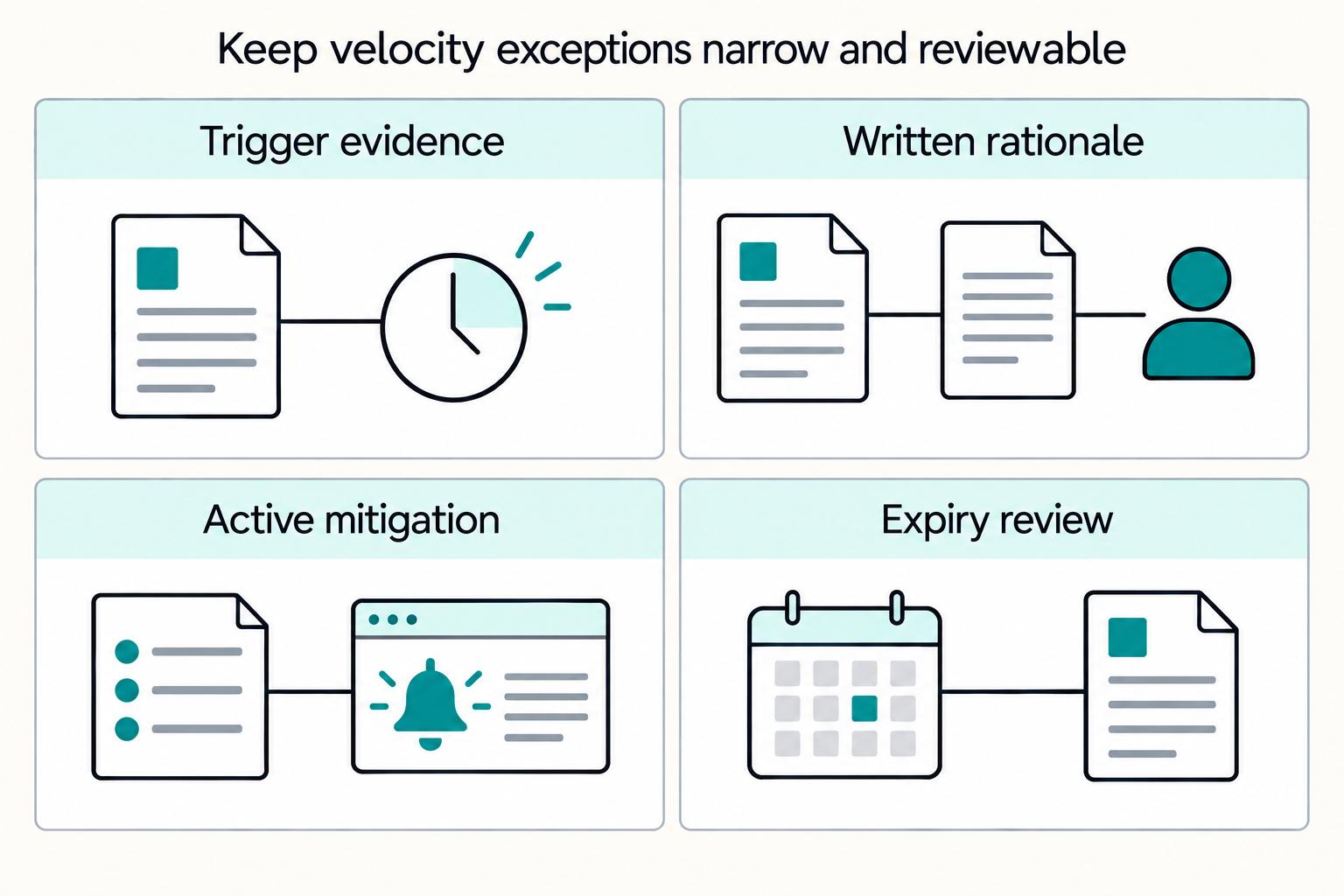
Exception handling should be a short-term, risk-assessed deviation from a standard control, not a courtesy override for noisy queues or important customers.
Define exception criteria before analysts can grant them#
Define what qualifies as an exception before analysts can grant one. Use objective risk facts: customer type, product or service, geography, prior behavior, and the exact rule that fired.
Use a simple screen:
- If activity is expected, explainable, and supported by prior good behavior, it may be an exception candidate.
- If the request involves repeated unexplained attempts or suspicious concentration across one profile, account, IP, or payment instrument, it is not an exception. Route it to review or block.
A practical guardrail is to allow a narrow temporary carve-out only when activity is explainable and consistent with prior behavior. Do not exempt the same pattern on a new record or on an instrument with repeated attempts just to reduce queue pressure.
Require written rationale for every exception#
Require written rationale for every exception touching a user record or payment instrument. NIST CSF 2.0 ID.RA-07 is a strong governance anchor: assess risk impact, record decisions, track them, and document review procedures.
The minimum record should include:
- account ID or payment instrument reference
- triggering rule ID and event window
- business justification
- acknowledged risk
- mitigation controls in place
- approver and approval date
- expiry date and next review date
Avoid vague notes such as "trusted seller" or "known customer." A defensible rationale states the prior behavior that supports the decision. It also states the control that still remains active, such as review-only handling while auto-rejection is temporarily suppressed.
Verification checkpoint: sample active exceptions and confirm you can reconstruct trigger, rationale, mitigation, and expiry from one record.
Time-box and scope exceptions tightly#
Time-box and scope exceptions tightly so they cannot become permanent loopholes. Exempt the smallest possible thing for the shortest possible time: one rule, one record or instrument, one flow, one region, one review date.
Set expiry and revalidation dates from the exception’s exposure and supporting evidence. A short operational burst may need an hours-long exception; an ongoing approved scenario may justify a longer review period. Document renewal criteria and withdraw the exception when the justification no longer holds.
A common operational risk is broad exceptions created for a legitimate surge and then left in place. If an exception suppresses auto-rejection, keep alerting active so worsening behavior is still visible.
Review exception outcomes on a fixed cadence#
Review exception outcomes on a fixed cadence to catch drift early. Weekly review is an operating choice, not a universal legal rule; use the cadence that matches your risk level.
Check for:
- exceptions renewed more than once
- exceptions linked to repeated threshold hits over similar time windows
- exceptions granted outside defined risk categories or criteria
- clusters by product, geography, customer type, or payment instrument type
When the same exception request repeats, treat it as a rule-design issue and tune the baseline control. Exception handling should stay narrow enough to improve trust, not create a side door around velocity controls.
Build the reporting and audit evidence pack#
Build one evidence pack that does two jobs: make each decision traceable end to end, and show whether fraud risk or queue pressure is drifting in the wrong direction.
Start with the records you need to produce#
Start with the records you will be asked to produce, not just dashboard visuals.
| Pack component | What to include | Why it matters |
|---|---|---|
| Active rule inventory | Rule ID, monitored entity, time window, threshold, action path, owner, effective date, and current status | Matches expectations to document detection scenarios and their assumptions, parameters, and thresholds |
| Alert volumes | Alerts opened by rule and period, plus aging and backlog counts | Shows whether controls are manageable or building review debt |
| Action outcomes | Allowed, stepped up, held, blocked, escalated, reinstated, and closed after review | Shows whether controls are changing outcomes rather than generating noise |
| Exception log | Exception ID, linked rule ID, approver, rationale, mitigation, expiry, and review date | Keeps carve-outs visible and auditable |
| Chargeback trend notes | Monthly trend summary (where relevant), linked rule themes, known drivers, and dispute or fraud watch items | Gives a loss-facing view and links rule changes to downstream impact |
Be specific in the rule inventory. Record exact thresholds and the assumption behind each rule, not labels like "high risk burst."
Make every alert traceable#
Make every alert traceable from trigger to outcome. A closed case should show which check fired, when it fired, which monitored entity or transaction was involved, who reviewed it, who approved the action, and what follow-up occurred.
Do not split evidence across tools with no linkable chain. If alert details, approval, and follow-up are scattered across separate systems, the decision may be reasonable but the audit trail is weak.
Verification checkpoint: sample five closed alerts from the last month. Confirm you can quickly answer what fired, what was decided, who approved it, whether an exception was used, and what happened next.
If suspicious-activity review is in scope, keep documented rationale for non-action in the case record, including non-filing decisions where applicable.
Publish board-ready and operator-ready views#
Use one evidence base, but publish two views: board-ready and operator-ready.
Board and finance reporting should focus on trend and exposure: chargeback direction, fraud or dispute movement, major exception themes, material backlog risk, and independent testing results. Operations reporting should focus on execution: alerts opened, queue aging, SLA misses, backlog by rule, and reopen or reinstatement rates.
Do not hide queue health behind aggregate fraud metrics. NYDFS cited a backlog of over 100,000 unreviewed alerts in the Coinbase action. Adrienne Harris stated the firm "failed to build and maintain a functional compliance program that could keep pace with its growth." Throughput failure can make a control ineffective even when policy language looks strong.
Version and retain the evidence pack#
Version and retain the pack so you can prove what was in force at a specific time. Keep monthly snapshots of rule inventory, outcomes, exceptions, and trend notes, plus a rule-change log with who changed thresholds and when.
Choose retention and independent-review requirements from your actual legal status, partner obligations and policy. Preserve rule versions and decision evidence long enough to investigate late losses and disputes, with controlled access and deletion rules. Test whether another analyst can reproduce last quarter’s rules and explain a sampled outcome without relying on memory.
Apply controls across collection, virtual accounts, and payouts#
Use stage-specific controls, not one undifferentiated rule set. Collection attempts, incoming credits, and outbound payouts show different risk patterns, but they should still feed one linked case record.
Separate signals by money stage#
Separate your signals by money stage.
| Stage | Focus | Note |
|---|---|---|
| Collection | Concentrated activity from one account or one IP address, especially when attempts spike in a short window | Treat as a red flag for review, not proof of fraud |
| Incoming credits | Whether source, timing, and follow-on behavior fit the usual pattern | If you monitor ACH activity, cover all applicable ACH entry types rather than only one subtype |
| Payouts | Destination-account changes and repeated retries | Escalate to higher-priority review; action can still vary by risk: case review or automated block when a risk signal is triggered |
At collection, velocity checks are useful for concentrated activity from one account or one IP address, especially when attempts spike in a short window. Treat that as a red flag for review, not proof of fraud, and keep the response proportionate.
For incoming credits, focus on whether source, timing, and follow-on behavior fit the usual pattern. If you monitor ACH activity, cover all applicable ACH entry types rather than only one subtype.
Verification checkpoint: sample one alert from each stage and confirm each case includes the user record, IP address where available, payment instrument or funding reference, event timestamp, and final outcome.
Treat payout changes and retries as high-priority#
For payouts, treat destination-account changes and repeated retries as high-priority triggers.
If one record repeatedly changes payout destination details and then shows repeated payout retries from one IP address, escalate to higher-priority review. Action can still vary by risk: case review or automated block when a risk signal is triggered.
Keep payout evidence explicit: prior and new tokenized destination references, change timestamp, distinct attempt IDs, provider outcomes, available IP data and release authority. Separate duplicate messages and safe retries from new payout instructions. Verify whether the payout is still controllable; an internal hold flag cannot retract money already released.
Add asynchronous reviews for virtual accounts and batches#
Add asynchronous review points for virtual accounts and payout batches.
A virtual IBAN can identify a customer or sub-account while funds are received into an underlying account. Map the reference to the actual user, funding source and ledger before joining behavior; the account identifier alone does not establish who owns or sent the funds.
Payment submission, bank posting and downstream payout release can occur at different times. Use the route’s actual posting and availability information, then review again before release when new signals or a material delay warrant it. A review label must connect to an effective release gate rather than merely adding a case to a queue.
Verification checkpoint: run one late-posting credit and one delayed payout batch through alerting, and confirm alerts can still open after the original request window ends.
Join collection, credit, and payout behavior#
Add one cross-surface checkpoint that joins collection, incoming-credit, and payout behavior.
Monitoring can span multiple transaction types, and linked-account investigation can turn weak separate signals into one credible incident. If the same user record shows repeated failed collections, then an incoming credit, then a payout-destination change before cash-out, treat that as one behavior chain.
Keep this checkpoint simple but shared across teams, with common keys such as the user record, linked payment instrument, destination details, and IP address where available. The failure mode to avoid is separate queues closing related alerts independently.
This pairs well with our guide on Transaction Monitoring for Platforms: How to Detect Fraud Without Blocking Legitimate Payments.
Tune weekly using false-positive and false-negative evidence#
Tune from outcomes, not alert volume. In a weekly review cadence, use both error types and keep only the changes that improve the tradeoff for your risk profile.
Review false positives and false negatives together#
Track both error types in one review set.
A false positive is a legitimate event flagged as fraud, and a false negative is fraud treated as legitimate. If you track only one side, noisy rules can look useful even when they are not improving detection.
For each analyst-closed case, record an outcome label such as confirmed fraud, legitimate, or unresolved, and note whether the rule action was correct. For confirmed misses found outside the original alert path, open a linked case and tag the related entities that should have triggered earlier.
Verification checkpoint: review a representative sample of analyst-confirmed false positives and confirmed misses from the same period. Confirm each case includes the triggering rule, or absent trigger, timestamp, final disposition, and supporting evidence. If that evidence is missing, exclude the case from threshold tuning.
Re-rank rules by net value#
Re-rank rules by net value, not queue activity.
Keep rules that reduce meaningful risk, and retire rules that mostly add analyst load. This is the practical version of risk-based monitoring: settings should match your institution risk, not a one-size-fits-all baseline.
Compare thresholds on the same labeled sample. Hypothetically, among 1,000 legitimate events and 100 confirmed fraudulent events, setting A flags 100 legitimate and 80 fraudulent events: false-positive rate 10%, detection rate 80%. Setting B flags 20 legitimate and 50 fraudulent events: 2% and 50%. B creates less friction but misses more known fraud. Alert precision uses a different denominator: A’s 80/180 versus B’s 50/70 flagged events. Unresolved cases and undiscovered fraud mean these sample results are not complete production error rates.
Use a standing forum for rule edits#
Use a standing cross-functional decision forum for rule edits.
Have risk, compliance, and finance review proposed changes together on a regular schedule so edits are governed, not ad hoc. Risk should present expected impact on false positives and misses, compliance should assess escalation and monitoring blind spots, and finance should assess loss and reversals impact.
Document each approved change with the rule ID, old setting, new setting, rationale, expected tradeoff, owner, and effective date. If escalation changes, record that in the same decision log.
Validate changes in a fixed window#
Validate each change in a fixed review window.
Compare equivalent cohorts, volumes and observation lengths before and after the change. Track legitimate-event impact, confirmed detection, misses discovered later and loss amounts. Keep unresolved labels separate; confirmed misses alone cannot establish a complete false-negative rate. A deployment or seasonality shift can change traffic mix even when observation windows have the same length.
Avoid stacked edits when possible. If thresholds, exceptions, and escalation all change at once, attribution is weak. The goal is not perfect detection. It is a clearer, defensible risk tradeoff with less avoidable queue noise.
Common failures and fast recovery moves#
When a rule blocks too much legitimate activity, recover by narrowing scope, clarifying ownership, and enforcing auditable case records before you add more queue capacity.
Tighten scope before loosening controls#
Fix over-broad rules by tightening scope first, not by loosening controls everywhere.
A common failure is treating any rapid burst as suspicious even when legitimate activity clusters in a short window. Start by narrowing rule criteria and action scope. For example, route a targeted segment to manual review instead of hard blocking everything that matches a broad signal. Keep exception handling explicit and time-bound so exceptions do not become permanent gaps.
Verification checkpoint: review recent false positives from the spike period and confirm whether the same customer profile or payment instrument should still be in scope.
Give edge cases one accountable owner#
Edge cases need one accountable decision owner on call.
If ownership is unclear, borderline alerts drift across teams and decisions become inconsistent. Name a primary owner and a backup in the escalation policy, with clear authority to hold, release, or escalate. Document when additional stakeholders must be involved so the team is not improvising during incidents.
A red flag is repeated "needs review" notes with no authorized decision.
Close cases only with minimum evidence#
No case should close without minimum audit evidence.
If the evidence trail is incomplete, decisions are hard to defend and hard to tune later. Require baseline audit-evidence fields: payment or case ID, triggering rule or risk output, timestamp, entity reviewed, action taken, decision owner, final disposition, and supporting notes or documents. Preserve per-payment risk-evaluation outcomes, not only the final analyst comment.
Check regularly by reopening closed cases and confirming a different analyst can reconstruct the decision.
Judge rule quality by outcomes#
Measure rule quality by outcomes, not alert volume.
Lower alert count is useful only if loss and customer outcomes support the change. Review confirmed fraud, dispute trends, recovery and legitimate-user friction together. Use mature payment cohorts and update them as delayed disputes arrive; the relevant network and reason-code timelines may extend beyond an initial 120-day observation.
When velocity checks are not enough#
A velocity check is useful, but it is only one control layer. If the same abuse keeps passing current thresholds, do not default to bigger queues and more reviewers. Add controls that target the actual fraud mechanic.
Identify the fraud mechanic first#
Decide first whether you are dealing with pattern abuse, instruction abuse, or identity abuse.
Velocity rules can alert or block repeated activity in a time window. They are weaker when fraud does not rely on speed. In affiliate fraud, abuse can come from fabricated clicks, fake leads, or stolen attribution. In wire fraud, especially business email compromise, the risk is often a spoofed or compromised payment instruction rather than transaction frequency.
Use this rule: if repeated abuse survives the current setup, add a different control type before expanding manual-review headcount. Rule-based monitoring catches known patterns, but it can miss new or evolving threats.
Add an adjacent control for each failure mode#
Add one adjacent control for each failure mode.
For wire or payout-change risk, use out-of-band verification of bank-detail changes or urgent payment requests. Use contact details sourced independently, not those provided in the request. For high-risk actions, pair this with stronger authentication or equivalent layered controls.
For affiliate abuse, validate the evidence behind the claimed conversion, not just payout volume. Check source events behind the lead or sale and confirm attribution before release. Low payment velocity does not mean low risk when the underlying conversion signal is fabricated.
Verification checkpoint: review recent confirmed misses and ask whether a non-velocity control would have prevented them earlier. If yes in most cases, the next investment should be controls, not queue capacity.
Connect payout controls to onboarding trust checks#
Link payout controls to onboarding trust checks when identity drives who gets paid.
For a creator marketplace, link payout controls to onboarding identity and beneficiary checks. Identity verification alone does not prove ownership of creative rights; verify the relevant entitlement or authorization separately. Know Your Artist (KYA) can complement behavior monitoring.
Conclusion and copy-paste rollout checklist#
Velocity checks are strongest when they are governed, traceable, and tuned for outcomes, not just thresholds. If you get ownership, evidence, and escalation readiness right first, the rest of the program is easier to defend and improve.
- Assign owners and approval rights for key transaction velocity rules.
Give each rule a named day-to-day owner, a defined scope, and a clear approver for edits, overrides, and retirement. Keep a rule inventory, for example: rule ID, tracked entity, time window, threshold, owner, approver, and last review date.
- Launch tiered velocity alert actions with a prewritten escalation policy.
Map each alert to a defined action and owner, then document when to escalate to compliance, counsel, or finance for potential legal, regulatory, or material financial impact. Make sure the policy can alert necessary parties immediately so alerts drive the intended action path, not just queue volume.
- Stand up exception handling with a documented process and review cadence.
Keep exceptions narrow, documented, and time-bounded in practice. For each exception, record the rationale, approver, scope, start date, and next review date so temporary carve-outs do not become permanent blind spots.
- Produce regular (for example, weekly) audit evidence and outcome reporting that is traceable.
Weekly reporting is an operating cadence, not a universal legal requirement. Include active rules, alert volumes, actions, exceptions and outcomes, and make one case traceable end to end. Set log review and retention by applicable security standards, regulated scope, partner terms and documented policy; fraud case records and payment-security audit logs need not have identical schedules.
- Tune for false positives and false negatives, not alert volume alone.
A false positive is benign activity flagged as suspicious, and a false negative is threat activity your control misses. Evaluate rule changes in a fixed review window, with closed-case sampling where available, and tune based on outcomes rather than analyst fatigue.
- Expand beyond velocity checks only when evidence shows persistent gaps.
Add adjacent controls when evidence identifies a gap. For ACH participants, determine the actual role and rule coverage: Nacha’s fraud-monitoring phases are already effective as of October 2026, with March 20 and June 22 implementation dates shown in its current rule summary. Meeting a velocity threshold alone does not establish compliance with the required risk-based monitoring.
If you want to pressure-test coverage, policy gates, and audit-trail requirements for your specific markets before rollout, contact Gruv.
Frequently Asked Questions
What is a velocity check in fraud prevention?
A velocity check is a fraud control that counts how often selected transaction data elements appear within a set time interval and flags anomalies. In practice, teams track repeated activity tied to entities like an account, IP address, or payment instrument. When counts cross a defined threshold, the system can alert, route for review, or block.
Which suspicious patterns should teams monitor first?
Start with distinct repeated attempts by account, tokenized instrument or available IP in a stated window, especially when concentration combines with declines or destination changes. Shared IPs and low-value transactions are context, not proof of fraud. Distinguish retries of one instruction from newly created attempts.
Can velocity alerts create false alarms for legitimate users?
Yes. A false positive is legitimate activity incorrectly flagged as suspicious; it may be reviewed, challenged or declined. Thresholds such as five transactions in 15 minutes are illustrative. Measure customer impact and test shared-network and legitimate-burst cases before enforcing a block.
How do we choose between auto-blocking and manual review?
Use automatic blocking only when validated signals, expected loss and recovery controls justify it. Prefer review or proportionate authentication when the evidence is uncertain. Confirm what review does in your provider: a payment may still process unless a separate effective hold or pause is configured.
What are the biggest risks of a poor velocity-rule setup?
The first risk is excessive noise: overly strict decline rules can create large false-positive volume. The second is evasion: simple rules can be reverse engineered, letting attackers stay just under alert thresholds. When that happens, adjust logic and add anomaly or account-context checks rather than only changing the numeric limit.
Are velocity checks enough without other fraud controls?
No. Velocity checks work better as one layer in an integrated, risk-based approach than as a standalone control. If abuse keeps passing threshold rules, combine velocity with anomaly and account-context monitoring instead of relying on counting alone.
Researched and edited by the Gruv editorial team. Gruv builds cross-border billing, payouts, and finance-operations software for global businesses.
Sources
- bsaaml.ffiec.gov/manual/AssessingComplianceWithBSARegulatoryR...trusted
- csrc.nist.gov/glossary/term/False_Positivetrusted
- csrc.nist.gov/glossary/term/False_Negativetrusted
- dfs.ny.gov/industry_guidance/transaction_monitoringtrusted
- dfs.ny.gov/reports_and_publications/press_releases/pr20...trusted
- docs.stripe.com/radar/rulestrusted
- docs.stripe.com/radar/rules/referencetrusted
- eba.europa.eu/activities/single-rulebook/regulatory-activi...trusted
Educational content only. Not legal, tax, or financial advice.
Related Posts

The Freelance Payment Penalty: A Modeled Audit of Platform Fees, FX Spreads, and Payout Delays
The money rarely disappears through a single, easy-to-spot fee. The real loss is stacked. A marketplace takes its commission, a processor adds a charge for international cards, a bank or payment company converts the currency at a spread, a platform holds the funds before release, and a wire sheds a little to intermediaries on the way in. Each layer looks defensible on its own, but the worker feels the combined result as a smaller deposit and a later payday.
How to Respond to a Subpoena for Business Records
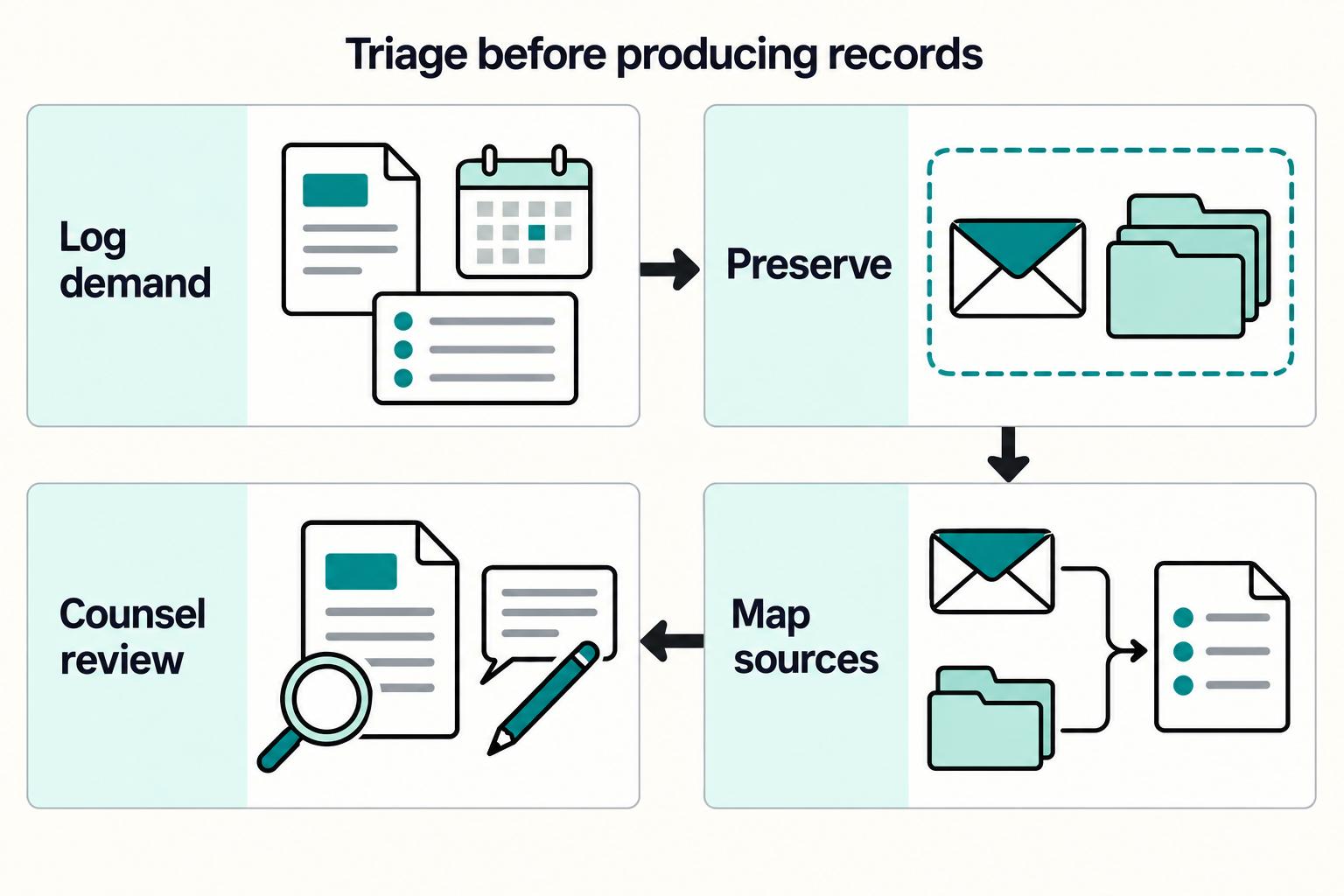
Move fast, but do not produce records on instinct. If you need to **respond to a subpoena for business records**, your immediate job is to control deadlines, preserve records, and make any later production defensible.
A US Expat's Guide to Investing in UCITS ETFs to Avoid PFIC Issues
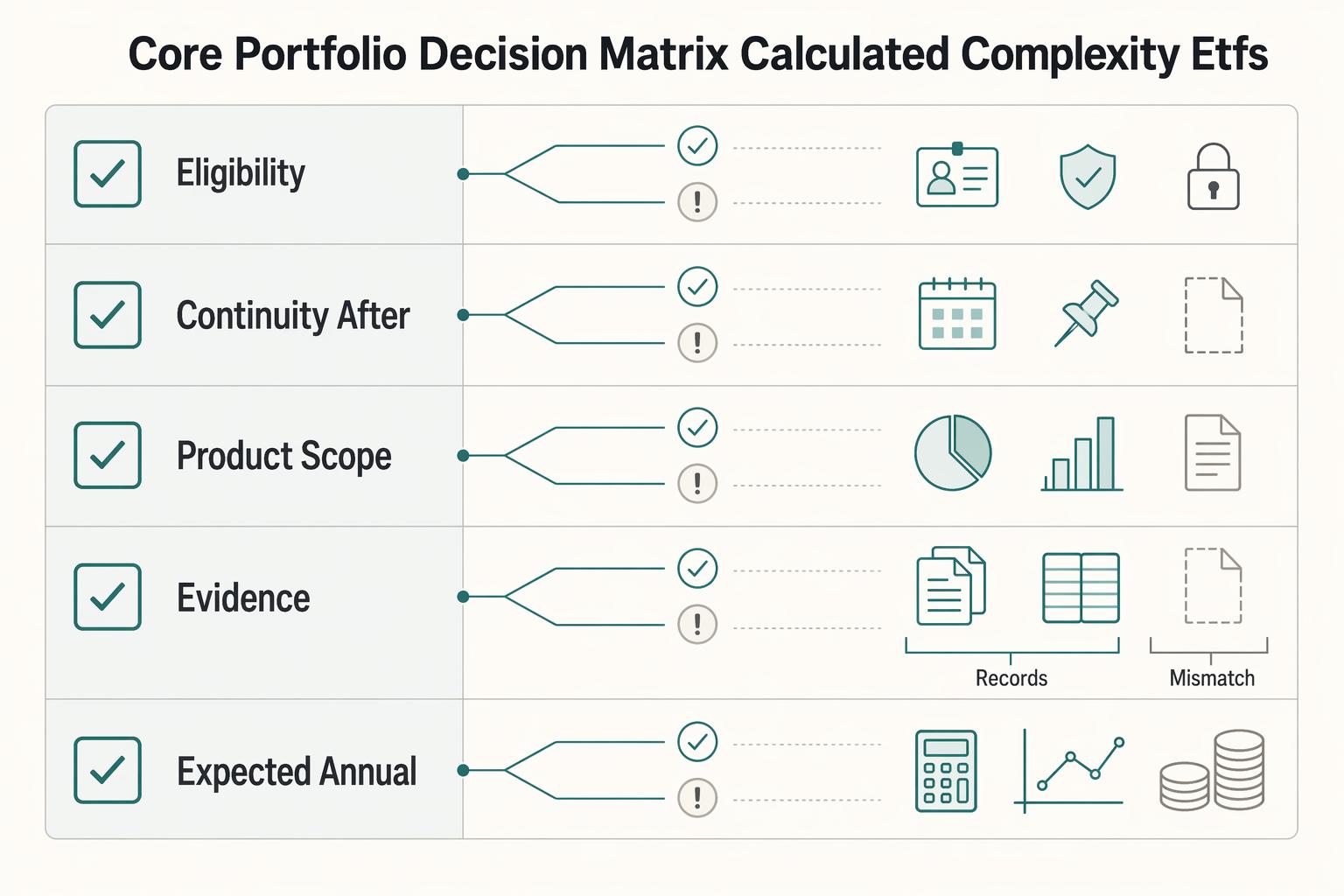
The real problem is a two-system conflict. U.S. tax treatment can punish the wrong fund choice, while local product-access constraints can block the funds you want to buy in the first place. For **us expat ucits etfs**, the practical question is not "Which product is best?" It is "What can I access, report, and keep doing every year without guessing?" Use this four-part filter before any trade: