
Quick Answer
Join conversion, affiliate and commission records to reviewed signal evidence. Use only contract-supported time-bounded holds with named owners and release criteria. Verify vendor fields/exports and false positives in your data; preserve earned liabilities and actual payouts, and investigate late signals through supported recovery.
Why Platforms Need to Catch Affiliate Fraud Before Payout#
If you approve or challenge affiliate payouts, detection quality matters only when it changes the payout decision and leaves a record you can defend. If you pay partners across markets, vendor claims about speed or AI are not enough. You need controls that catch invalid traffic and fake conversions before commission is released, plus enough evidence to explain why a conversion was approved, held, or denied.
Fake clicks/conversions, cookie stuffing and attribution manipulation can distort who gets commission. Distinguish low-quality traffic from supported fraud evidence and measure the actual risk in your program; a broad invalid-traffic percentage does not prove an individual affiliate cheated.
As spend and partners grow, validate attribution and commission eligibility before release. Preserve conversion, partner and decision evidence so reviewers can explain both withheld and paid amounts.
That is the lens for the rest of this guide:
- How to choose controls
You will get selection criteria that matter to payout owners, including real-time monitoring, conversion scoring, explainability, and reconciliation support.
- How to compare options
We will compare external detection signals, network-native controls, and internal checks so you can judge tradeoffs in speed, governance, and evidence quality.
- How to operate the process
You will get concrete escalation and documentation checkpoints, including what to retain in the case file when a conversion is flagged and what to review before payout is released.
An early red flag is simple: if your team cannot trace a suspicious conversion from signal to payout outcome, the control is not ready for payout review or partner disputes. At minimum, you should be able to verify the event trail, the affiliate or partner identifier, and the reviewer decision that caused a hold or release.
This guide is intentionally operational and risk-focused. It is about how platforms detect invalid traffic and fake conversions in ways that hold up in payout review. Program terms and review expectations can vary, so involve legal or specialist teams when those questions drive the decision.
How to choose a fraud detection option that survives audit#
Choose the option that can change payout decisions before commission is released and leave a decision trail you can defend. This section is for teams that approve affiliate payouts, handle exceptions, and retain evidence for holds, denials, or clawbacks. It is not for teams focused only on campaign optimization without ownership of disputes or audit response.
| Criterion | What to confirm | Why it matters |
|---|---|---|
| Real-time monitoring | The flag can trigger action before payout and the hold is visible in the payout flow. | It can affect approval, hold, or denial before commission is released. |
| Conversion scoring and fraud-pattern coverage | The option distinguishes low-quality traffic from click bots, cookie stuffing, false leads, ad cloaking, and tracking funnel manipulation, and reviewers can see why a conversion was marked risky. | A score is useful only when it maps to a clear approve, hold, or deny rule. |
| Explainability and override governance | There is a visible path from alert to final outcome, and any override reason is recorded. | Black-box alerts create dispute risk when finance, compliance, or legal cannot explain why money moved. |
| Reconciliation support | Flagged conversions can be matched to paid or withheld commissions. | If you cannot trace a blocked or approved conversion from signal to payout outcome, the control is not audit ready. |
- Real-time monitoring
Real-time monitoring is often bundled with AI claims and device fingerprinting, but those features are not enough on their own. Confirm the flag can trigger action before payout and that the hold is visible in the payout flow.
- Conversion scoring and fraud-pattern coverage
Score each option on whether it distinguishes routine low-quality traffic from fraud patterns such as click bots, cookie stuffing, false leads, ad cloaking, and tracking funnel manipulation. Reviewers should be able to see why a conversion was marked risky, not just a red status. A score is only useful when it maps to a clear approve, hold, or deny rule.
- Explainability and override governance
Require a visible path from alert to final outcome. If a reviewer overrides a block, the reason should be recorded with the decision. Black-box alerts create dispute risk when finance, compliance, or legal cannot explain why money moved.
- Reconciliation support
Confirm you can match flagged conversions to paid or withheld commissions. If you cannot trace a blocked or approved conversion from signal to payout outcome, the control is not audit ready.
If you want a deeper dive, read Invoice Fraud Prevention for Platforms: How to Detect and Stop Fake Invoices Before They're Paid.
Compare your options before buying or building#
Choose an external detector only if it feeds a documented payout hold and exports case-ready evidence. Alerts alone are not enough, especially in lead-generation programs where initial conversion tracking can look normal and fraud may surface only after weeks of weekly or monthly advertiser feedback.
| Option | Provider-described or internal capability | Evidence to test | Payout boundary |
|---|---|---|---|
| TrafficGuard | Traffic validation, partner analysis, reporting and custom filters | Actual event IDs/reasons, report access and joins to your conversions | Signal layer; verify internal contractual release authority |
| Trackier | Click/conversion rules, IP restrictions, dashboards/alerts and investigation/cancellation options | Configuration, false positives, case history and supported correction | Test actual cancellation/locking permissions; vendor labels do not prove fraud |
| impact.com | Partner vetting, anomaly investigation, tracking/reporting and monitoring | Partner/action references, decision history and export portability | Validate actual action-locking and payment schedule separately |
| Other external tools, including SpiderAF | Additional candidate requiring direct capability review | Trial coverage, evidence access and integration before selection | No verified ranking or payout authority claimed here |
| Internal IP/geo clustering | Group repeated/burst activity with explainable local rules | Shared networks, proxies and legitimate repeat users; back-test false positives | Investigation signal rather than proof or automatic denial |
| Internal hold/review controls | Contract-supported time-bounded decisions with owned case records | Join commission, review, accounting and execution references; test races/replay | Preserve liabilities and executed money; supported recovery for late signals |
Compare external signals, network-native controls and internal review against your data and operating capacity. A hybrid can combine signals and payout governance, but its value depends on tested joins, case review and contract-supported action—not a universal vendor ranking.
Before you sign, run two checks. First, export a sample case and trace one flagged conversion from alert to final payout status. Second, simulate a partner challenge and confirm the case file includes event IDs, affiliate ID, IP grouping, timestamps, reviewer notes, and the final approve, deny, or release outcome.
If advertiser quality feedback arrives after conversion, align review/locking and payment schedules with the actual program terms. Define permitted temporary holds, owner, review deadline and release/escalation criteria. Delayed feedback does not authorize indefinite withholding or unilateral clawback.
You might also find this useful: Subscription Fraud Trends for Platforms: How to Detect Free-Trial Abuse and Card Testing.
Best for fast deployment with external signal depth#
Use an external signal layer when you need fast coverage, but treat it as triage input unless the vendor can clearly explain and export each flagged case.
External tools can provide additional invalid-traffic signals; integration effort and accuracy depend on your event model and configuration. Trial event matching, false-positive behavior and evidence access before treating an overlay as a faster or stronger control.
For signal quality, separate General Invalid Traffic (GIVT) from Sophisticated Invalid Traffic (SIVT) when possible. GIVT is typically known bots and crawlers. SIVT involves harder patterns like hijacked devices, malware-driven traffic, and coordinated operations. If a score does not distinguish likely noise from higher-risk behavior, use it as a review trigger rather than a standalone payout decision.
The main tradeoff is control. Black-box scoring can increase false positives and make partner disputes harder to defend if exports are thin. Before you rely on any tool, confirm you can trace a flagged event through alert, review outcome, and final payout status in one defensible case record.
Related: Music Streaming Fraud: How AI Creates Fake Streams and How Platforms Can Fight Back.
Best for teams already anchored in an affiliate network stack#
If your program already runs inside an affiliate network, native controls are the right baseline. They fit your existing workflow and reduce change-management overhead.
The practical upside is operational fit. Your network stack already ties affiliate IDs, tracking events, and payout decisions together, so you can screen and place holds without rebuilding the process first. That matters in a risk area where fraud is often described as exploiting weak tracking systems and hidden gaps.
Keep the scope of those controls realistic. Native tools are useful for baseline screening and partner management, but they are not a proven catch-all for advanced manipulation. Tactics like Smart redirects and Last-click hijacking can still look legitimate when the final click and conversion record appear clean.
Do not use a broad internet-bot percentage as an affiliate fraud threshold. Establish your own baseline and inspect attribution/conversion evidence for the specific partner and program.
Use network controls as the first layer, then add independent checks where payout or dispute exposure is highest, especially for:
- high-value conversions from newly approved affiliates
- repeated flagged patterns tied to the same partner
- attribution paths that are hard to validate from network records alone
- denials that may be challenged and require stronger case evidence
Before you deny commission on a native alert, confirm you can export a defensible case record: event time, affiliate ID, conversion ID, hold or flag reason, reviewer notes, and final payout decision. If that export is thin, treat the alert as triage, not final proof.
For a step-by-step walkthrough, see Affiliate Marketing for Creators Who Need Predictable Payouts.
Best for high-control organizations with engineering capacity#
This is the right fit when you need every payout hold, release, and override to be explainable in audit terms. You get the most control with custom conversion scoring, tailored IP and geo anomaly rules, and explicit decision logs, but only if one team clearly owns the controls end to end.
This path is usually justified when payout exposure is high and a slower rollout is acceptable. Public market context describes large affiliate spend and sales impact, so finance, legal, and dispute workflows often need more than a black-box vendor flag. If the review standard from the prior section must hold up under scrutiny, building more of the control logic internally can be reasonable.
Why in-house controls can be worth the effort#
The main advantage is explainability: why a conversion was scored, held, or released. You can tune rules to your partner mix and markets, then log the specific reason for each decision.
A practical setup usually combines signals instead of relying on one:
- Event-level tracking and scoring: use real-time click and conversion tracking, then score based on observable patterns such as timing anomalies, repeated affiliate patterns, or postback mismatches.
- Network and location checks: apply your own IP clustering and geo anomaly rules; proxy, data-center, and bot-like conversion patterns can be useful review signals.
- Device and behavior signals: passive fingerprinting and behavioral modeling can help surface repeated device activity and suspicious patterns, including SIVT-style traffic. Use these as inputs, not final proof.
A concrete use case is event-driven detection for Postback manipulation and Brand bidding, followed by staged payout holds and documented overrides.
What to build first#
Where the contract allows, apply a time-bounded hold to an identified commission/action, assign a reviewer and preserve partner response and release criteria. Check the actual locking/payment schedule. A signal received after release needs investigation and supported recovery; it cannot retroactively stop executed money.
For each held conversion, make sure you can retrieve: event timestamp, affiliate ID, conversion ID, scoring factors, IP or geo indicators used, reviewer notes, override reason if any, and final payout outcome. If those fields cannot be joined reliably, the control will break down in disputes.
The tradeoff most teams underestimate#
The biggest risk is ownership gaps, not weak logic. If engineering, marketing, and finance each own only part of the process, rules drift, exceptions live in inboxes, and overrides never feed back into scoring.
If engineering ownership is fragmented, do not start with a fully custom stack. Use a hybrid model first, keep internal controls focused on decision logging and payout reconciliation, then expand custom detection once ownership is stable.
Do not treat fingerprinting, cookie-stuffing indicators, or proxy signals as a legal conclusion on their own. They are useful detection inputs, but denial decisions still need a documented review standard.
Best for balanced risk reduction without overbuilding#
Use a hybrid model when you need fast fraud coverage now and still need legal, compliance, or finance-ready payout decisions later. It is the practical middle ground between vendor-only detection and a full in-house build.
The external layer provides tested signals and reporting; your authorized internal process decides the commission disposition. Keep case decision, payable/accounting status and payment execution separate. An investigation hold does not erase an earned liability or already executed payout.
What good hybrid control looks like#
TrafficGuard’s affiliate materials describe traffic validation, partner analysis, reporting and custom filters. Confirm the actual event/reason fields and integration in a trial; these capabilities do not establish direct commission-release authority or a universal export schema. Map tested alerts to the authorized internal action:
- Hold when suspicious click or conversion activity is flagged and internal verification is still open.
- Review when the event conflicts with your internal conversion record or needs additional evidence.
- Block or deny payout only after internal policy standards are met and the case file is complete.
The control checkpoint that matters most is reconciliation. For each flagged event, you should be able to match the vendor alert to affiliate ID, click ID, conversion or order ID, timestamp, reviewer decision, and final payout outcome. If that join is weak, alert volume rises but decision quality does not.
Where teams get burned#
The most common failure is not weak detection logic. It is duplicate alerts and unclear triage ownership.
Assign one case owner and current disposition with an audit trail. Define the evidence standard, contractual hold deadline and release/escalation path. Atomically recheck eligibility before persisting one durable payout intent; duplicate alerts and concurrent reviewers must not duplicate holds, release or denial.
Recommendation: choose hybrid when compliance sign-off is required but internal data science capacity is limited. You keep governance in-house, move quickly, and avoid treating a vendor flag as the final decision.
Evidence, escalation, and payout decision checkpoints#
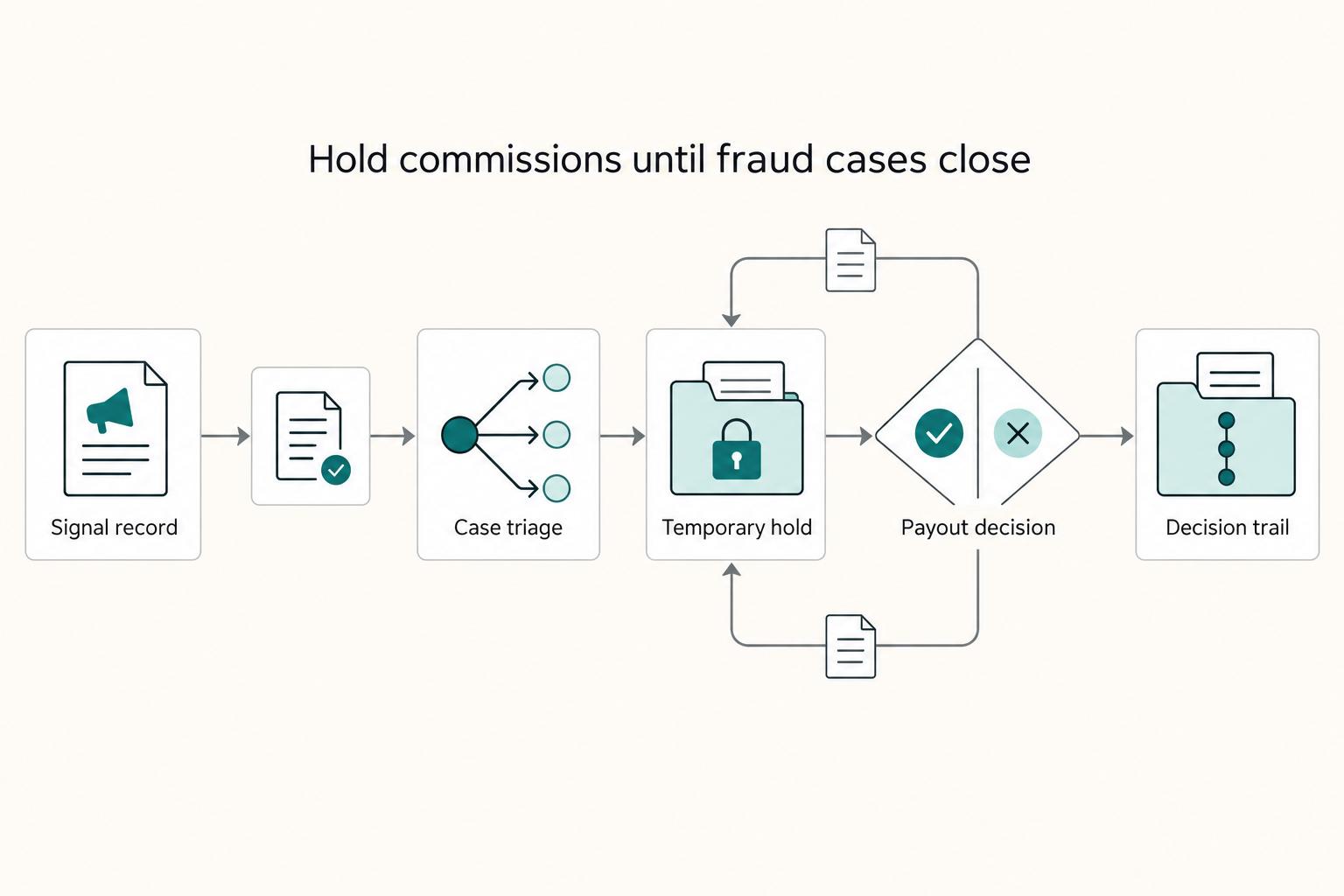
Use one documented path for suspicious cases: capture the signal, triage, investigate with a named owner and decide approve, deny or release. The diagram illustrates a hold only where program terms permit it: set a review deadline and escalation before the contractual locking/payment deadline. An unresolved case does not authorize an indefinite hold or delay of an earned obligation.
| Checkpoint | What to require | Grounded details |
|---|---|---|
| Signal capture to hold | Do not advance unless the alert is tied to a usable record. | Event ID, affiliate ID, click/conversion timestamp, and commission status. |
| Escalation triggers | Escalate when patterns repeat or scope expands. | Recurring click injection, repeated conversion-path anomalies, disputed clawbacks, and cross-market exposure. |
| Minimum evidence pack for payout decisions | Require a consistent case file before approve or deny. | Event IDs, IP address patterns, affiliate ID history, conversion path anomalies, reviewer notes, hold timing, partner response, and final approver. |
| Post-close verification checkpoints | Run recurring verification after case closure. | Monthly false-positive review, reconciliation of blocked conversions against paid commissions, and exception trends sent to finance/legal. |
Affiliate programs often run across multiple geographies, payout models, and compliance rules, so unclear ownership quickly leads to false payouts, unreliable conversion data, and clawback disputes.
- Signal capture to hold
Move cases in a fixed sequence, and do not advance unless the alert is tied to a usable record: event ID, affiliate ID, click or conversion timestamp, and commission status. Treat labels like Invalid traffic or Fake conversions as intake signals, not final judgment.
- Escalation triggers
Escalate when patterns repeat or scope expands: recurring Click injection, repeated conversion-path anomalies, disputed clawbacks, or cross-market exposure. Keep routine one-off anomalies in analyst triage, but route recurring or multi-market patterns to compliance or legal early.
- Minimum evidence pack for payout decisions
Require a consistent case file before approve or deny: event IDs, IP address patterns, affiliate ID history, conversion path anomalies, reviewer notes, hold timing, partner response if requested, and final approver. Favor records that reconcile to payout data, not screenshots alone.
- Post-close verification checkpoints
Run a monthly false-positive review, reconcile blocked conversions against paid commissions, and send exception trends to finance or legal. Use these checks to tune hold logic and rules when the same tactics keep appearing.
Operating standard: no payout denial without an evidence pack, no evidence pack without a named reviewer, and no recurring dispute pattern left at analyst level.
Conclusion#
Choose the option you can govern every month, not the one with the longest list of fraud signals. The setup that lasts is the one that can catch likely affiliate fraud, produce the same payout decision for the same fact pattern, and leave a record clear enough for finance, compliance, or audit to follow later.
- Decision traceability
Detection matters only if it changes a payout outcome you can explain. In 2025, sources describe rising tactic sophistication, including cookie stuffing, click injection, and postback manipulation, so the real differentiator is not signal count but whether each alert ties back to a specific event ID, affiliate ID, timestamp, and commission status. If you cannot trace a blocked or approved conversion from signal to payout record, treat that as a red flag, not a minor reporting gap.
- Governed payout interruption
Where program terms permit, use time-bounded hold/review before controlled release. A hold has an owner, deadline and evidence criteria; unresolved cases need authorized escalation or release under the actual contract. Signals after payout require investigation and supported recovery rather than assuming money can be rolled back.
- Evidence that survives scrutiny
The business impact is not abstract. Sources tie affiliate fraud to distorted ROI, wasted commissions, damaged data quality, and weaker partner trust. Your differentiator should be evidence export quality: the strongest option gives you a case file with the original signal, matched payout record, event IDs, affiliate ID history, timestamps, IP address patterns or conversion path anomalies, reviewer notes, hold date, any partner response, and the name of the final approver. Screenshots can support context, but they are weak on reconciliation when someone later asks why a denied conversion still became a paid commission.
Buy or build to the level your team can test, review, correct and retain consistently. Compare measured false positives, case workload and evidence portability. A hybrid may fit limited internal capacity, but verified integration and decision ownership matter more than unlinked industry loss projections.
Frequently Asked Questions
How do platforms detect invalid traffic before commissions are paid?
Join click/conversion/affiliate identifiers, event timestamps and relevant signal reasons, then review attribution and internal order evidence before the scheduled commission release. No single metric proves fraud; preserve a governed decision and contractual review deadline.
What are the clearest signs that conversions are fake rather than low-quality?
Look first for suspicious attribution behavior, not just weak performance. The sources describe click fraud as invalid clicks that waste budget without real value, and they note that attribution hijacking can make bad actors look legitimate in dashboards. Weak performance alone is not enough to prove fraud.
What should happen operationally after a conversion is flagged?
Open an owned case linked to the conversion and commission. Within the permitted contract window, apply a time-bounded hold, inspect attribution/order evidence, seek partner clarification where needed and record approve/deny/release with reasons. Signals after payout need supported recovery, not a retroactive hold.
How do we reduce fraud without blocking legitimate affiliates?
Back-test false positives and shared-network effects, compare attribution/order evidence and seek partner clarification where needed. Use a time-bounded review and documented correction/appeal path. A published customer improvement does not guarantee your program’s accuracy or sales outcome.
What evidence should compliance, legal, and finance retain for audits?
Retain relevant event/conversion/affiliate IDs, original signal reasons, approved rule/version, reviewer/partner communications and commission/payment outcome references. Limit IP/device data to the purpose and applicable retention/access rules; preserve case history and corrections for the actual program obligations.
When should fraud disputes be escalated to specialist legal counsel?
Escalate under documented triggers such as disputed clawbacks, repeated manipulation, cross-market exposure or unresolved contractual entitlement. Supply the verified case, current balance/payment effects and partner communications so specialist review can resolve the specific issue.
Try a related tool
Researched and edited by the Gruv editorial team. Gruv builds cross-border billing, payouts, and finance-operations software for global businesses.
Sources
Includes 3 external sources outside the trusted-domain allowlist.
Educational content only. Not legal, tax, or financial advice.
Related Posts
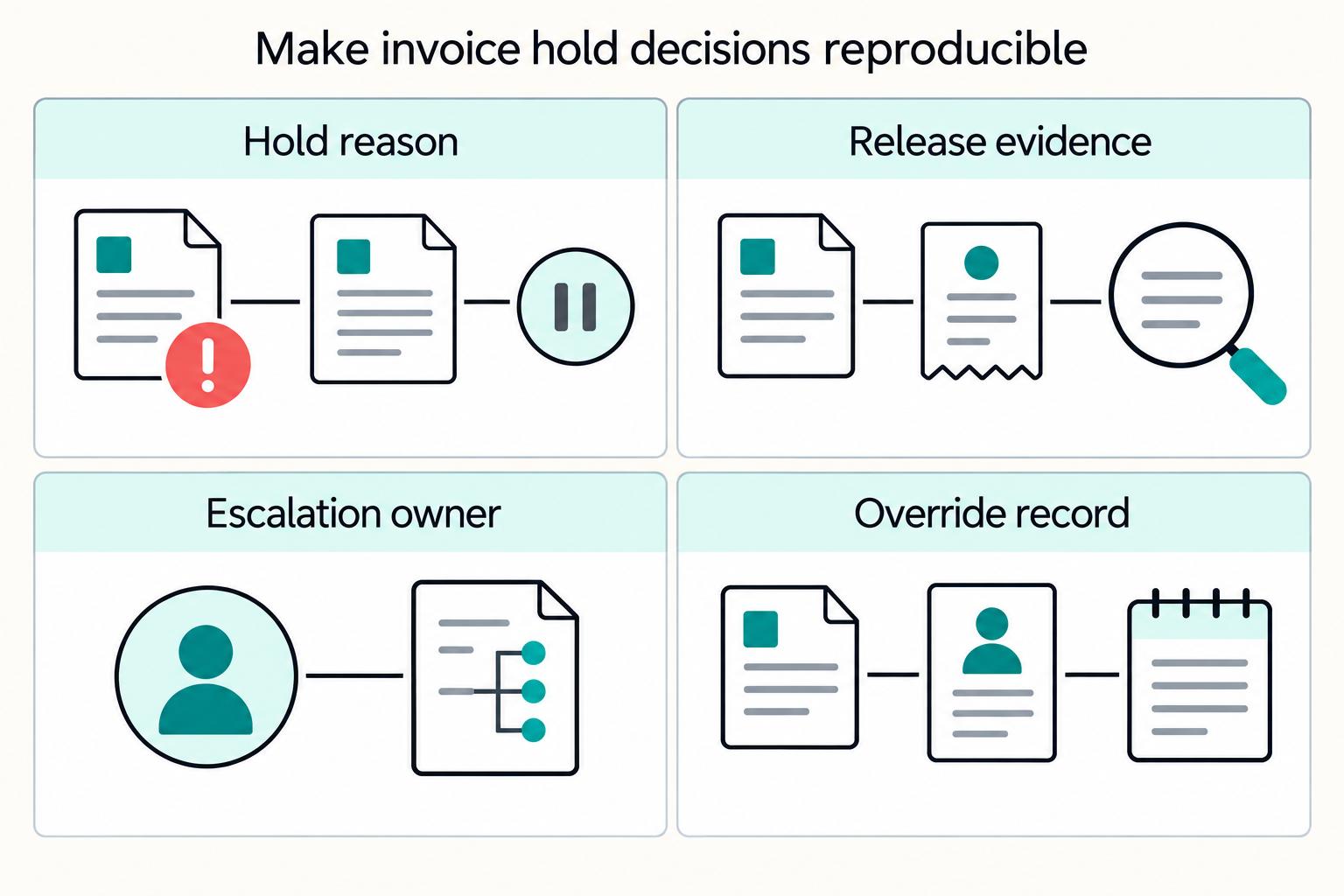
How Platforms Detect and Stop Fake Invoices Before Payment
If you run platform payment operations, fake invoice risk rarely comes from a single failure. More often, you see a chain of small gaps: weak vendor setup, unclear approval ownership, rushed payment timing, disconnected systems, and hold rules that people interpret differently.
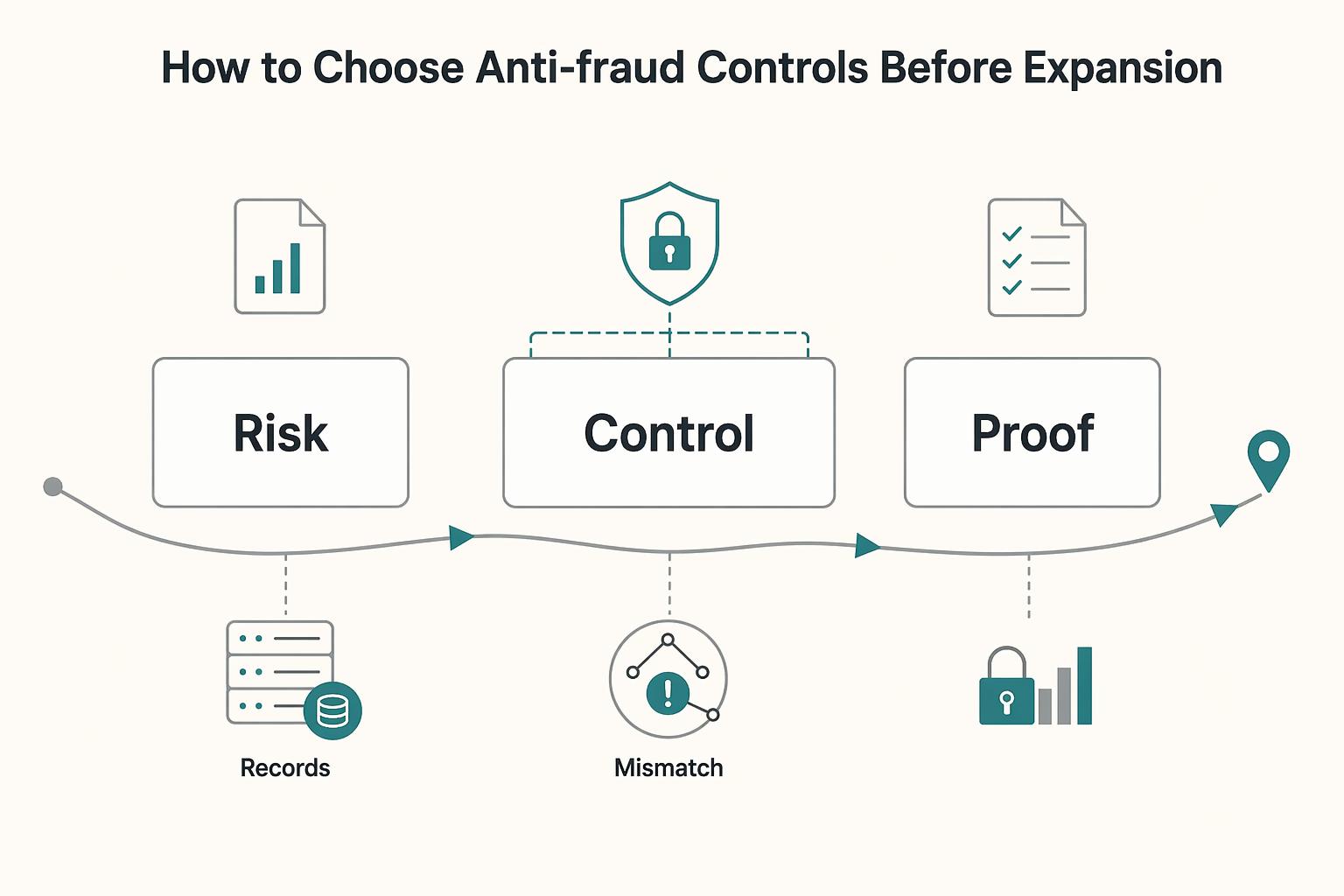
How Platforms Can Fight Back Against AI Fake Streams in Music
Music streaming fraud is now an operating risk, not a corner case you can clean up later. A recent example is the [Michael Smith case](https://www.justice.gov/usao-sdny/pr/north-carolina-man-pleads-guilty-music-streaming-fraud-aided-artificial-intelligence-0) in the United States. Federal prosecutors said he used bots to fraudulently stream AI-generated songs billions of times and obtain more than $8 million in royalties.
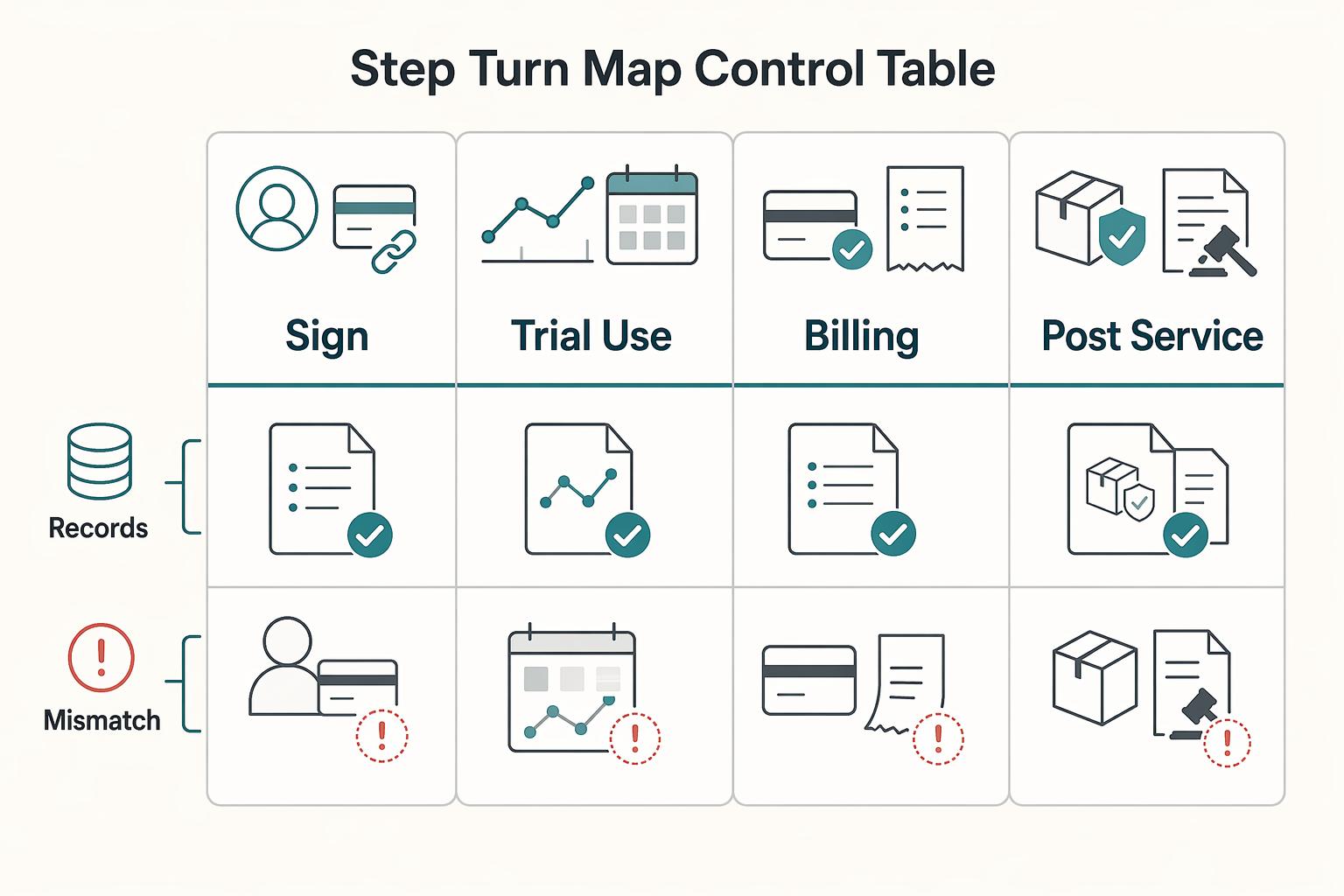
How Platforms Detect Free-Trial Abuse and Card Testing in Subscription Fraud
Trial abuse consumes product benefits; card testing probes payment credentials. They can appear in the same signup flow but need different responses. Track account behavior and payment attempts separately, then give each response an owner.