
Quick Answer
Begin with artist legitimacy checks, required payout identity checks and a documented royalty hold process. Then investigate artificial-stream signals using data available to your role. Keep provisional royalties separate from payout hold status, and retain one case file linking the evidence, review, appeal and final payment decision.
Why Fake Streams Need an Operational Response#
Music streaming fraud is now an operating risk, not a corner case you can clean up later. A recent example is the Michael Smith case in the United States. Federal prosecutors said he used bots to fraudulently stream AI-generated songs billions of times and obtain more than $8 million in royalties.
The damage does not stop with one bad actor's payout. Spotify defines an artificial stream as one that does not reflect genuine user listening intent, and the royalty impact is direct: artificial streams dilute the royalty pool and shift revenue away from legitimate artists. The Southern District of New York made the same point more bluntly in its March 19, 2026 announcement, saying streaming fraud diverts funds from musicians and songwriters whose work was legitimately streamed by real consumers.
Those facts also show why this is an operator problem, not just a trust and safety headline. Prosecutors and court filings said the scheme ran from 2017 to 2024 and involved thousands of bot accounts across Amazon Music, Apple Music, Spotify, and YouTube Music. If you run a platform that onboards artists, ingests catalog, or pays out royalties tied to those ecosystems, the failure pattern will look familiar: weak onboarding, weak upload controls, weak behavior monitoring, then real money leaving the platform before anyone can defend the decision trail.
This article is for founders and operators making launch and expansion calls, especially where payout volume can grow faster than fraud controls. The point is practical: compare the controls that actually change loss exposure before you commit to a new market or open full monetization. The rest of the piece uses three filters:
- Implementation burden
How much product, operations, and review effort a control takes to get live. A good control on paper is still the wrong first move if your team cannot run it consistently.
- Fraud coverage
Which failure pattern it catches best: bad actors at onboarding, suspicious uploads, fake streams in flight, or royalty leakage at payout. Coverage matters more than elegance once money is already moving.
- Rollout order
What has to be live before scale, and what can follow once you have baseline visibility. Teams can overinvest in detection dashboards and underinvest in payout gating.
This is not a legal brief on conspiracy to commit wire fraud or forfeiture outcomes. It is a practical ranking of controls to stop the same pattern from repeating. It includes enough operator detail to support a real go or delay call by market instead of relying on hope, policy PDFs, or post-incident cleanup.
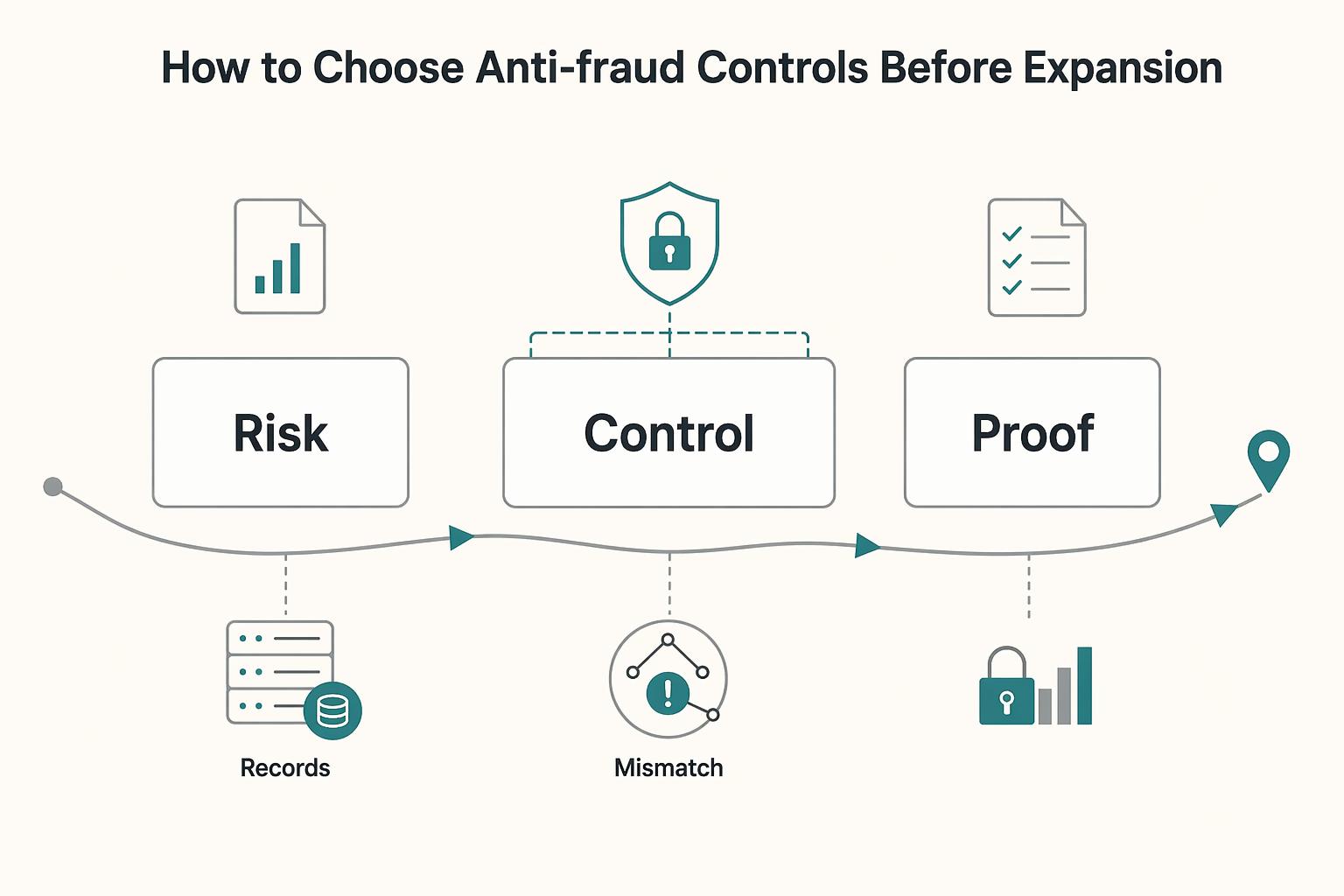
How to choose anti-fraud controls before expansion#
Choose controls by how well they reduce losses before funds are paid out, not by how polished your post-incident messaging is. If you cannot produce a clear audit trail from onboarding through payout hold or release, defer expansion in that market.
- Fraud-loss reduction
Prioritize controls that interrupt the money path. Streaming payouts are worth billions of dollars per year, and artificial streams can shift revenue away from legitimate artists and rights holders. In practice, payout gating is the key separator: pausing outgoing funds contains risk faster than detection-only controls that act after royalty entitlement exists.
- Payments Ops overhead
Select controls your team can run every day under review pressure. Ongoing due diligence and risk-profile-based testing create real operational load, so execution discipline matters as much as detection logic. Your records should show who reviewed the case, what triggered the hold, and why funds were released, reversed, or kept paused.
- Impact on legitimate creators and rights holders
Choose payout controls your provider and account configuration actually support. A pause can contain unpaid funds, but it does not recover a completed bank payment. Confirm eligibility, in-flight behavior and the release process before using it in a royalty hold policy.
This framework is for teams launching or running marketplaces with real royalty payout exposure. It is not for teams seeking PR language instead of KYC, AML, and hold-release execution. Before you expand, run one end-to-end case file: onboarding evidence, account decision, payout pause, and final release record. If any step exists only in Slack or reviewer memory, defer launch.
If you want a deeper dive, read Invoice Fraud Prevention for Platforms: How to Detect and Stop Fake Invoices Before They're Paid.
Best controls compared for speed, coverage, and operator burden#
Start with controls that can stop payout leakage, then improve detection precision once your review and evidence handling are stable.
| Control | Best for | Key pros | Key cons | Required systems | Failure mode if skipped | Rollout order | False-positive risk |
|---|---|---|---|---|---|---|---|
| Know Your Artist (KYA) | Screening new artists, labels, and catalog submitters before monetization | Catches identity and relationship gaps early; makes later investigations cleaner; supports collecting core information before access is opened | Adds onboarding friction; some legitimate creators need manual review | Onboarding forms, identity/entity verification, reviewer queue, audit log | Repeat abusers can re-enter under new profiles and reach monetization too easily | Phase 1 if manual review exists; otherwise early Phase 2 after payout gating | Medium |
| Required identity checks and risk-based payout gating | Blocking money from leaving when identity or risk status is unresolved | Strong direct loss prevention; clear decision point tied to release of funds; fits identify-first then monitor-ongoing sequencing | Requires Payments Ops discipline and documented exceptions; can delay first payout | Identity verification, screening where applicable, payout hold capability, case management | Suspicious accounts receive royalties before risk review is complete | Phase 1 | Medium |
| Upload integrity checks | Catching suspicious AI-generated songs, duplicate-like catalog, or high-risk bulk uploads before streams accumulate | Reduces blast radius early; useful at current upload scale (Deezer reported over 60,000 AI tracks/day, about 39% of daily intake) | Policy tuning is hard; can frustrate legitimate bulk distributors and prolific creators | Upload scanning, metadata validation, release staging, reviewer tooling | Detection shifts downstream after artificial streams already affect allocation | Phase 2 | High |
| Stream anomaly detection | Finding artificial streams in flight across tracks, accounts, or listening patterns | Ongoing monitoring catches post-onboarding behavior drift | Precision tradeoffs are real; investigation load can grow quickly | Event analytics, risk scoring, linkage analysis, alert queue, investigation notes | Artificial streams run long enough to dilute the royalty pool and shift revenue from legitimate artists | Phase 2 after baseline visibility is stable | High |
| Royalty hold rules | Containing damage when suspicion is strong but review is still open | Immediate payout protection; cleaner release/reversal decisions | Cash-flow friction for legitimate creators; needs clear appeal logic | Ledger hold status separate from provisional royalty amounts, payout controls and case management | Abuse is detected but funds still leave before adjudication | Phase 1 | Medium |
| Incident response and evidence retention | Turning alerts into defensible, repeatable cases | Preserves evidence chain; improves consistency across Trust, Payments Ops, and Legal; supports repeat-abuser linkage | Cross-functional overhead; easy to underbuild early | Case IDs, immutable audit trail, evidence storage, account linkage records, payout action history | Evidence gaps make actions hard to justify and repeat abuse harder to prove | Phase 1 baseline, then deepen in Phase 2 | Low |
The rollout rule is straightforward: ship payout controls first, then widen detection. In practice, that usually means KYC/AML payout gating plus royalty hold rules before heavy investment in upload and behavior models.
Two execution checks matter before you expand. First, for any artist or label that reaches monetization, you should be able to show what identifying information you collected before access opened and who approved any exception. Second, every hold, release, or reversal should map to one case file linking account, catalog, stream signal, and payout action.
The common sequencing mistake is building detection before money control. Spotify states that undetected artificial streams dilute the royalty pool and shift revenue from legitimate artists, and Deezer stated on January 29, 2026 that fraudulent AI-generated songs are demonetized and removed from the royalty pool. Detection is necessary, but payout containment prevents irreversible loss.
Set your false-positive tolerance before launch. Upload checks and anomaly detection usually create more edge-case review than payout gating or evidence retention; if your team cannot explain why a hold happened, do not widen the detection net yet.
Best for stopping bad actors at onboarding with KYA and KYC gates#
If your goal is to block repeat abusers before they can generate fake streams, put identity controls in front of monetization: KYA at onboarding, KYC before full monetization, and AML-style payout gating while verification is unresolved.
- Best for: reducing repeat-abuse accounts before they can scale.
- Key upside: earlier risk filtering, cleaner downstream investigations, and stronger linkage between identity and payouts.
- Key tradeoff: onboarding friction and manual review load when requirements vary by location or program.
- KYA at access creation
Use Know Your Artist (KYA) as the pre-access legitimacy check. Music Fights Fraud frames KYA as a high-impact onboarding control, and the value is its timing: you verify identity and legitimacy before granting platform access. That makes repeat-abuser patterns easier to investigate if the same actor returns under a new profile. For a deeper KYA breakdown, see What Is Know Your Artist (KYA)? How Music Platforms Stop Streaming Fraud Before It Starts.
- KYC before full monetization
Set onboarding identity and payee checks according to your platform policy, partner requirements and applicable law. Artist legitimacy checks support fraud prevention; bank customer-identification rules do not automatically apply to every music distributor. Publish the evidence required, manual-review path and expected response time.
- AML-style payout gating for new entities
Treat early payouts as conditional until verification is complete. If identity review is unresolved, a temporary payment hold is safer than releasing funds first. Where you use a written, risk-based program (such as a CIP-style framework), approvals, rejections, and exceptions should map to policy, not reviewer intuition.
Your checkpoint is traceability: each account decision should show requested evidence, submitted evidence, reviewer action, policy basis, and a response or appeal path. Friction is expected, especially across geographies, but ad hoc exceptions weaken the gate. This is a front-door control only, so keep ongoing monitoring in place after onboarding.
Best for reducing AI catalog abuse at upload and release time#
Use upload and release controls first when you need to stop AI-catalog abuse before fake streams scale. High-volume intake can outrun stream-side detection, so staging new catalogs and delaying monetization release until risk checks clear reduces the early blast radius.
Deezer reported on April 16, 2025 that it was receiving over 20,000 fully AI-generated tracks per day (over 18% of uploads). By January 2026, it reported roughly 60,000 AI-generated track deliveries per day (about 39% of daily intake) and said fake-stream generation remained the main reason for uploading AI-generated music. At that pace, weak upload gates push too much risk downstream.
What the control should look like#
Use tiered release review rather than blanket rejection.
| Tier | When used | Action |
|---|---|---|
| Standard | Expected patterns from established accounts | Normal release timing |
| Review | New catalogs or unusually high-volume patterns | Hold monetization until a review decision is recorded |
| Restricted | Confirmed artificial activity or a distinct content-policy violation | Apply the relevant streaming or content policy; AI origin alone is not proof of fraudulent plays |
That lines up with public controls: Spotify's optional Artist Profile Protection beta adds pre-release review before eligible releases appear on artist profiles, and Deezer says it uses an AI-music detection tool and removes fully AI-generated content from algorithmic recommendations.
What to verify before you trust it#
Before you trust it, require catalog-level traceability: assigned tier, action taken, and release or monetization outcome for each catalog. Without that record, disputes from legitimate high-volume uploaders are hard to resolve consistently.
The tradeoff is tuning effort and creator friction. Spotify notes that pre-release protection can delay or block legitimate releases if users miss a required action. That is usually the safer failure mode than relying only on post-release detection. Deezer said up to 85% of streams on AI-generated music were detected as fraudulent, demonetized, and removed from the royalty pool.
Best for detecting fake streams in-flight across account clusters#
If you need to catch coordinated fake streams after release, monitor behavior at the account-cluster level, not just per-track spikes. Upload controls reduce risk, but in-flight monitoring is what catches coordinated drift from accounts that previously looked clean.
In the U.S. Department of Justice case announced on March 19, 2026, prosecutors described bots driving AI-generated songs at scale through thousands of accounts, with more than $8 million in royalties fraudulently obtained. The same case says streams were spread across thousands of songs to avoid obvious anomalies on any single track. That pattern is exactly why single-track alerts alone are not enough.
What to monitor#
DSP operators can investigate listener-account clusters using their own telemetry. Distributors should use the DSP reports and fraud notifications they can access, alongside their catalog, artist and payee relationships. Do not assume access to listener-level data across separate DSPs.
Use a clear policy anchor for reviewers: Spotify defines an artificial stream as one that does not reflect genuine user listening intent. Keep your case view explainable, with linked accounts, affected songs, time window, and the specific reason the cluster was escalated.
What to do when the score crosses your threshold#
When a cluster crosses the review threshold, open an investigation and place a contractually supported hold on the affected payout. Preserve provisional earned or claimed royalty amounts separately from hold status until entitlement is adjudicated.
Include at minimum:
- the cluster under review and the linkage reason in plain language
- affected songs or catalog units and exact time range
- the suspicious pattern and why it diverges from expected listener behavior
- royalty evidence: provisional amount, separate payout hold, posted entries and approver
Detected artificial streams may be excluded under the relevant DSP policy. Unresolved suspicion is different: preserve the amount under review, and exclude or reverse royalties only after documented adjudication under the applicable contract and accounting policy.
Where teams get this wrong#
This is a continuous control, and it increases data review and investigation workload. Tuning too loosely lets abusive streams keep diverting funds; tuning too aggressively can put legitimate creators into unclear holds.
The failure pattern is alerts without decisions. If you cannot tie the suspicious cluster, hold action, and final release or forfeiture outcome into one audit trail, you have reporting, not containment.
Related: Affiliate Marketing Fraud: How Platforms Detect and Eliminate Invalid Traffic and Fake Conversions.
Best for containing financial damage with royalty holds and payout controls#
When suspected artificial streams cross your escalation threshold, contain payout risk first and adjudicate second. Conditional royalty holds are the most direct way to limit financial damage before a case is fully resolved. They also make reconciliation and appeals easier because the action is tied to written policy, not reviewer instinct.
That policy basis is clear in market practice. Spotify defines an artificial stream as activity that does not reflect genuine user listening intent and says those streams do not earn royalties. Deezer says detected fraudulent streams are demonetized to protect human rights holders. The U.S. Attorney's Office announcement on March 19, 2026 also states streaming fraud diverts funds from legitimately streamed music, and the Michael Smith case alleged more than $8 million in fraudulently obtained royalties.
How to apply the hold#
A royalty hold and a processor reserve serve different purposes. Use a royalty hold only where your contract and applicable rules support it, with a stated review deadline and appeal path. Provider reserve capability does not itself authorize forfeiture of artist royalties.
Use a clear decision rule:
- Hold when your review identifies suspected artificial activity tied to a defined catalog and time window.
- Keep payout blocked when required KYC checks are incomplete or unresolved.
- Release held funds or make an authorized adjustment only after entitlement is adjudicated under the contract and accounting policy.
What must be traceable#
Your control is only defensible if one case can be traced from request to ledger to payout. At minimum, link the hold request, affected royalty ledger entries, payout batch or settlement record, and any later release or reversal. Stripe's payout reconciliation supports settlement-batch matching, and Adyen's Settlement Details Report supports transaction-level reconciliation.
If a creator appeals, you should be able to show what was in scope, which dates were reviewed, what amount was paused, and who approved final disposition. The main tradeoff is creator cash-flow friction, so unclear hold reasons and unclear release paths are the failure mode to avoid.
Best for legal readiness and cross-functional incident response#
If you need incidents to hold up beyond internal enforcement, treat the first escalation as evidence preservation, not just moderation. This is what turns suspicious activity into a defensible case file instead of an isolated ban.
Teams usually fail here after making the right financial control decision. If logs, reviewer actions, and account linkages are not preserved in a controlled way, the case becomes hard to explain and harder to enforce. Federal guidance flags broken chain of custody as a real risk, and digital evidence preservation has handling considerations that differ from other evidence types.
What to preserve first#
Build the smallest evidence pack that still explains the case end to end. For suspicious stream clusters, preserve:
| Evidence type | Included items | Case focus |
|---|---|---|
| Behavior evidence | Snapshots or exports of the suspicious cluster, review date, detection/query logic used, and exact catalog and time window | Suspicious cluster and exact time range |
| Money evidence | Royalty accrual records, hold requests, payout batch IDs, release or reversal decisions, and approver identity for each action | Royalty and payout actions |
| Linkage evidence | Account identifiers, available linkage records, onboarding artifacts, and notes on policy-circumvention behavior | Account linkage and onboarding context |
That last category matters because the SDNY indictment release described a "concerted attempt to circumvent the streaming platforms' policies." Typology tags like this are more useful than broad labels such as "fraud."
How to keep the case usable#
Use one verification checkpoint before external outreach: can you show who collected each item, when it was exported, where it was stored, and whether it changed? If not, fix that first. Chain of custody is documented control of evidence handling across people and stages.
Keep outside summaries tied to charging records. The SDNY plea release dated Thursday, March 19, 2026 uses the framing: "According to the charging documents and statements made in public filings and public court proceedings." Apply the same discipline in your own legal summaries by anchoring claims to records, not reviewer interpretation.
The tradeoff is coordination load across Trust, Payments Ops, Legal, and data teams. The benefit is consistency when incidents escalate beyond platform action, as shown by the public SDNY timeline from indictment (Wednesday, September 4, 2024) to guilty plea (2026).
Practical rule: if a case may leave internal enforcement, freeze deletion, preserve exports immediately, and assign a single evidence-custody owner. The common failure mode is not missing one signal. It is losing the chain between suspicious streams and the royalty actions you already took.
Conclusion#
One red flag should inform launch decisions. If your team cannot show an audit trail from onboarding decision, to risk trigger, to royalty hold, to release or reversal, you are not ready for that market yet. Defer expansion until the baseline is real.
Before expanding, confirm the obligations that apply to your entity and payment partners in that market. Keep artist legitimacy checks, legally required identity checks and contract-based royalty holds distinct, with a documented review and release path.
Frequently Asked Questions
What is music streaming fraud when AI-generated songs are involved?
AI-generated songs are not automatically fraudulent. The fraud starts when an "artificial stream" is used, meaning a play that does not reflect genuine listener intent, to pull money from the royalty pool. That matters because artificial streams shift revenue away from legitimate artists, and current upload volume can add pressure to review capacity.
How do fake streams from bot networks evade detection on major platforms?
A documented tactic is distribution, not just volume. In the SDNY case, prosecutors said automated plays were spread across thousands of songs to avoid anomalous streaming signals, while bots streamed AI-generated songs billions of times. If your detection only looks for one track spiking, you will miss the cross-catalog cluster.
What are the first three controls a platform should implement before market expansion?
Start with identity gating at onboarding, payout gating with royalty hold rules, and then in-flight stream anomaly detection. That sequence gives you a way to block payout leakage before you try to perfect model precision. If you cannot trace an account from onboarding decision to payout decision, wait before launching that market and review What Is Know Your Artist (KYA)? How Music Platforms Stop Streaming Fraud Before It Starts.
When should a platform hold royalty payments instead of paying out immediately?
Hold an affected payout when the applicable contract or rules permit it and the case warrants review, or when required payout identity checks remain unresolved. Keep the provisional earned or claimed amount in the ledger, separately marked as held. Record the reason, deadline, appeal path and eventual release or authorized reversal.
What evidence should be retained before escalating a case to law enforcement?
Keep the items an investigator can act on: account information, transaction date and amount, who received the money, and any available name, address, telephone, email, website, and IP address. Preserve the streaming evidence that triggered the case as well, then lock down chain of custody so you can show who collected each file, when, and whether it changed. The common mistake is keeping screenshots but losing the transaction-level record.
How should teams balance false positives against fraud-loss risk?
There is no universal false-positive target, so use staged action instead of forcing a yes or no decision too early. For medium-confidence cases, hold royalties and review rather than ban first, because the loss can be real: the March 2026 plea release reported more than $8 million in fraudulently obtained royalties in the Smith matter. If your queue is overloaded, protect payouts first and tune catalog actions second.
Which controls depend on market-specific KYC or AML coverage?
Applicable KYC and AML duties depend on the entity’s regulated role, jurisdiction and payment partners. Voluntary artist legitimacy checks are a separate fraud control. Confirm which checks are legally or contractually required before copying payout gates into another market.
Try a related tool
Researched and edited by the Gruv editorial team. Gruv builds cross-border billing, payouts, and finance-operations software for global businesses.
Sources
- bsaaml.ffiec.gov/manual/AssessingTheBSAAMLComplianceProgram/03trusted
- cisa.gov/sites/default/files/publications/cisa-insigh...trusted
- docs.stripe.com/connect/pausing-payments-or-payouts-on-conne...trusted
- ecfr.gov/current/title-31/subtitle-B/chapter-X/part-1...trusted
- ecfr.gov/current/title-31/subtitle-B/chapter-X/part-1...trusted
- ic3.gov/Home/FAQtrusted
- justice.gov/usao-sdny/pr/north-carolina-man-pleads-guilt...trusted
- justice.gov/usao-sdny/pr/north-carolina-musician-charged...trusted
Educational content only. Not legal, tax, or financial advice.
Related Posts
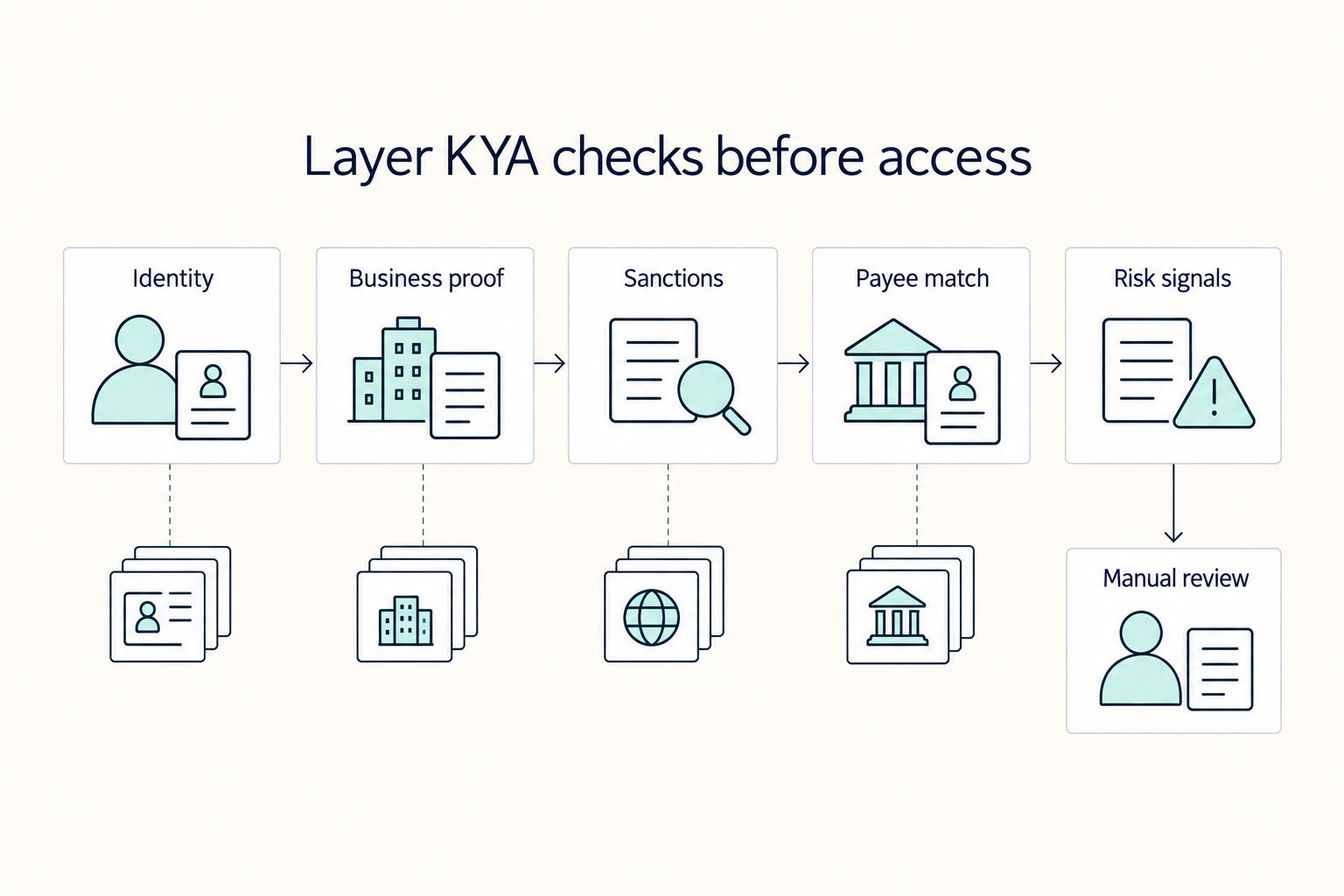
Know Your Artist (KYA): Checks to Reduce Streaming Fraud
Streaming fraud can distort royalty allocations, create payment disputes and expose a distributor to partner action. In a March 2026 guilty plea, DOJ described an operator using AI-generated songs and bot accounts to obtain more than $8 million in royalties. Identity checks can reduce impersonation and account abuse, but a verified person can still manipulate listening activity. Artist onboarding and post-release monitoring must work together.
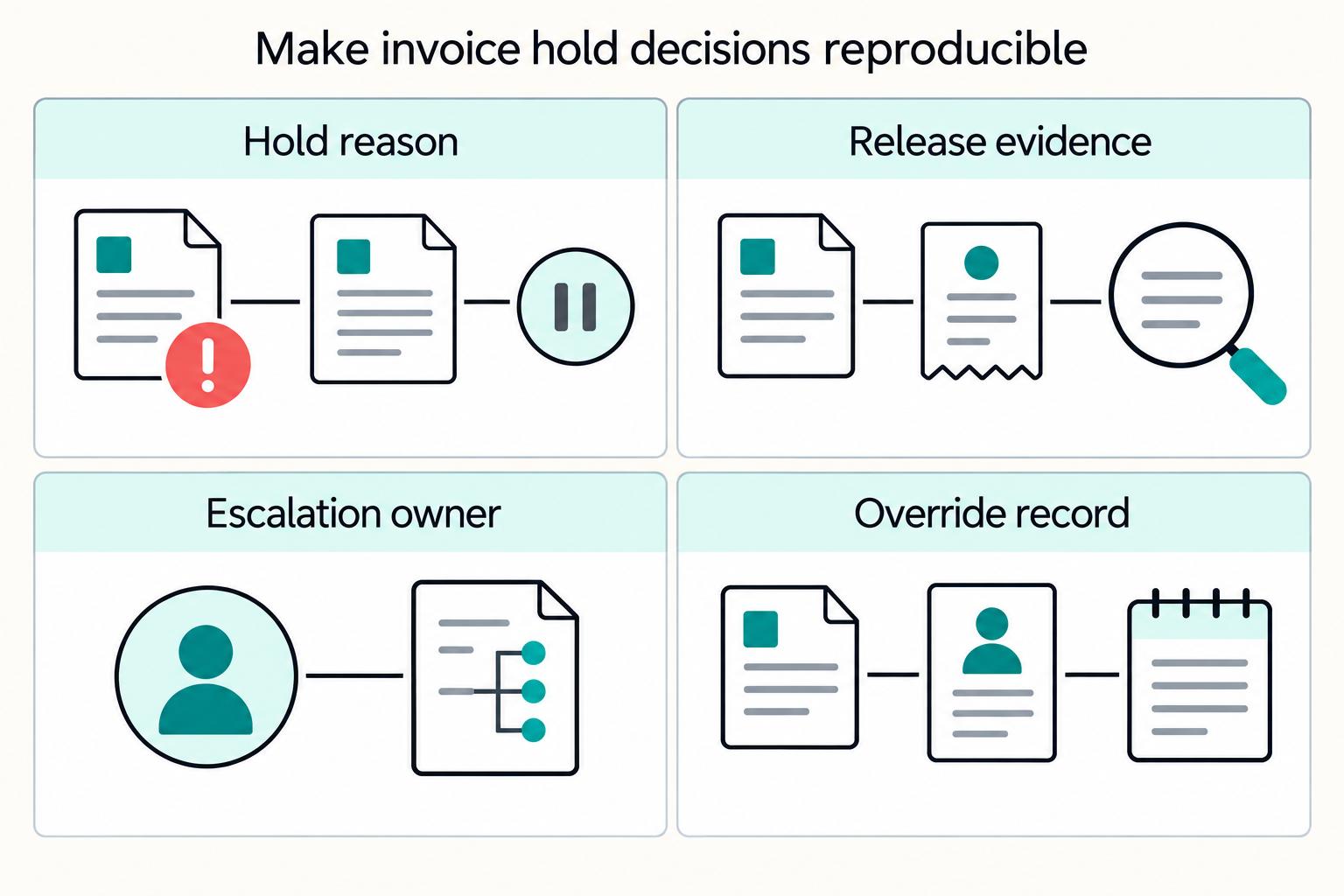
How Platforms Detect and Stop Fake Invoices Before Payment
If you run platform payment operations, fake invoice risk rarely comes from a single failure. More often, you see a chain of small gaps: weak vendor setup, unclear approval ownership, rushed payment timing, disconnected systems, and hold rules that people interpret differently.
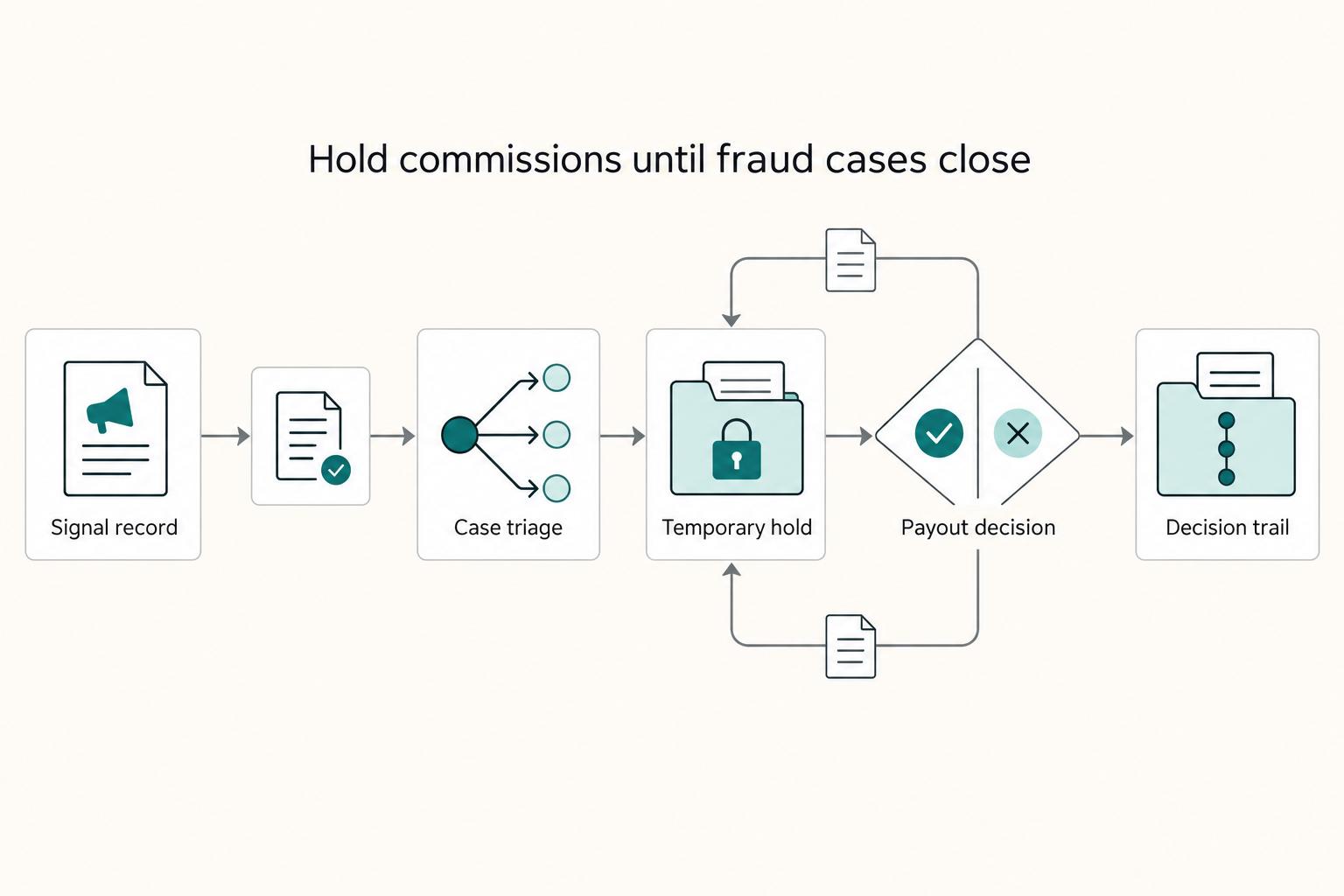
How Platforms Stop Affiliate Fraud Before Commissions Are Paid
If you approve or challenge affiliate payouts, detection quality matters only when it changes the payout decision and leaves a record you can defend. If you pay partners across markets, vendor claims about speed or AI are not enough. You need controls that catch invalid traffic and fake conversions before commission is released, plus enough evidence to explain why a conversion was approved, held, or denied.