
Quick Answer
Start with a staged control sequence before money moves: intake checks, supplier and bank-detail validation, business-validity review, approval quality, and release readiness. Route each exception into one of three paths: correction, enhanced review, or suspected fraud. Require documented release evidence and a named approver for any hold removal. Then tie invoice status to payout eligibility so a blocked record cannot be paid through manual files, emergency routes, or disconnected tools.
How fake invoice detection works before payment#
If you run platform payment operations, fake invoice risk rarely comes from a single failure. More often, you see a chain of small gaps: weak vendor setup, unclear approval ownership, rushed payment timing, disconnected systems, and hold rules that people interpret differently.
That is why invoice fraud control is strongest when you build it into the operating sequence, not bolt it on after the fact. If your team waits until a suspicious payout is already queued, the remaining control options are more limited.
A better approach is to design controls around the points where people and systems already make decisions:
- when a supplier or payee is created or changed
- when an invoice is submitted
- when invoice data is matched, approved, and scheduled
- when exceptions are reviewed
- when payment instructions are released
- when cross-border and tax checks are applied
- when a case is escalated and resolved
This article focuses on that operating model. The goal is not to stop every unusual invoice. You want a sequence that flags suspicious invoices early, routes them clearly, and pays them only after the right checks are complete. That keeps fraud risk down without turning your normal operations into permanent manual review.
What fake invoice risk looks like in platform operations#
In platform environments, fake invoice risk often looks routine at first. It can appear as a familiar vendor name, a small change to bank details, an invoice that resembles prior billing, or a payment request tied to a real project but sent through a different channel than usual.
That matters because many fraud attempts are designed to blend into the existing workflow. They can exploit urgency, fragmented ownership, and the assumption that someone else has already checked the details. Common patterns include:
- invoices that do not align with the underlying goods, services, or approvals
- duplicate invoices presented with small changes that make them look new
- vendor impersonation, where a fraudster imitates a known supplier
- account change fraud, where legitimate invoices are redirected to a new bank account
- requests to skip standard review
- document inconsistency, where the invoice, purchase record, tax information, and payout details do not align cleanly
Platform operations face extra complexity because the payment path often crosses several tools and teams. The invoice may enter through one system, approval may happen in another, vendor records may live elsewhere, and payout execution may be owned by a separate payments function. That creates risk if a blocked invoice can still reach payment through a parallel path.
Not every suspicious invoice is fraudulent. Some are incomplete or reflect process errors rather than fraud. If your controls treat every exception as fraud, they can overblock legitimate work. If your controls treat every exception as harmless admin error, they leave room for unauthorized payments.
So the practical objective is not just detection. You need classification that the team can see in the workflow, not something trapped in someone's inbox or memory:
- what can pass automatically
- what requires correction before processing
- what should be held for enhanced review
- what should be escalated as probable fraud
- what conditions must be met before a held payment can be released
We covered this in detail in Transaction Monitoring for Platforms: How to Detect Fraud Without Blocking Legitimate Payments.
What to prepare before you switch on stricter controls#
Stricter controls work better when the team has defined ownership, documented the release path, and cleaned up the underlying records. Before you tighten anything, get the basics in place so the controls are usable.
Start with the core operating decisions and the records those decisions depend on.
Define who owns each decision#
Your team should know who can:
- approve a supplier or payee record
- change bank details
- approve invoice coding
- approve an invoice for payment
- place a hold
- investigate an exception
- release a hold
- override a rule
- close a fraud case
If those actions are split across finance, procurement, operations, compliance, and payments, document the handoffs clearly. Ambiguity can leave exceptions untouched or released without full review.
Clean up vendor and payee records#
Many fraud controls depend on reliable master data. If your records are inconsistent, duplicate, outdated, or missing required documentation, a stricter control layer can create noise rather than clarity. Before rollout, review:
- duplicate suppliers or payees
- records with incomplete legal or payment details
- inactive records that should not be payable
- recent bank-detail changes
- inconsistent naming conventions
- missing tax or onboarding documentation where required by your process
A duplicate or mismatch is an investigation signal, not a fraud verdict. Preserve the original submission and normalization rules so legitimate aliases, credit notes and resubmissions can be resolved without deleting the evidence.
Map the actual invoice-to-pay path#
Do not rely on the process diagram people remember from training. Map the path the invoice really takes today, including side channels. Identify:
- where invoices can enter
- where approvals happen
- where invoice data can be edited
- where vendor records can be changed
- where a hold can be applied
- where payment instructions are generated
- whether payment can still be issued outside the standard queue
This is also where you find out whether an invoice blocked in one system could still be paid from another file, another tool, or another emergency process.
Decide what evidence supports a release#
A hold rule is only as good as its release criteria. Before stricter controls go live, define what evidence is required when a payment is stopped. That can include:
- confirmation of the underlying order or service
- proof that the supplier record is legitimate and current
- validation of bank details through your approved method
- confirmation from the authorized business owner
- review of document consistency across the invoice and supplier record
- documented signoff from the role authorized to release
Without this preparation, release decisions are more likely to vary from case to case.
Train for exceptions, not just for happy-path processing#
People usually understand how a normal invoice should move. The real problem is what happens when it does not. Train the team on exception handling:
- what makes an invoice suspicious
- how to apply a hold
- who must be contacted and through which channel
- what not to do while an issue is unresolved
- how to document findings
- when a case moves from routine exception to fraud investigation
Good training helps reduce ad hoc releases.
Build pre-payment detection gates inside the invoice-to-pay sequence#
The strongest place to stop fake invoices is before payment is scheduled. That means building detection gates into the invoice-to-pay sequence itself instead of relying on one final review at the end.
| Gate | Focus | Key checks |
|---|---|---|
| Invoice intake | Control what enters the queue and how complete it is | Required invoice fields; readable and complete supporting documents where required; alignment between invoice identity details and the approved supplier or payee record; duplicate or near-duplicate submissions; approved channels rather than ad hoc side communication |
| Supplier and bank-detail integrity | Verify supplier integrity before payment readiness | Supplier or payee is active and approved; bank details on file are the ones intended for payment; recent record changes reviewed through the proper process; sensitive data changes made by an authorized user; no manual payment instruction that bypasses the approved record |
| Business validity | Check whether the invoice makes sense in the context of the underlying transaction | Goods or services correspond to something actually ordered, received, or approved; amount, coding, and timing are consistent with related business activity; right internal owner, project, or contract path where applicable; supporting documentation aligns with what the invoice claims |
| Approval quality | Make the approver confirm the elements that matter most | Invoice corresponds to legitimate business activity; supplier or payee is the correct one; coding and amount are appropriate; exception flags have been addressed; no unresolved hold or pending investigation |
| Payment release readiness | Confirm that the invoice is fully clear to pay | Required approvals are complete; no fraud or exception hold remains open; supplier verification is complete; supporting records do not conflict; payment instruction does not differ from the approved supplier setup; no connected system still shows the invoice or vendor as restricted |
Use these gates as layered checks. A single flag may not prove fraud, but multiple flags at different points should change the invoice path.
Gate invoice intake#
At intake, your objective is to control what enters the queue and how complete it is. Do not let invoices move forward if critical information is missing or inconsistent with the supplier record. At this stage, check for:
- required invoice fields
- readable and complete supporting documents where your process requires them
- alignment between invoice identity details and the approved supplier or payee record
- duplicate or near-duplicate submissions
- submission through approved channels rather than ad hoc requests sent through side communication
Use vendor ID, invoice reference, currency, amount and underlying obligation to screen exact and near duplicates. Normalize spacing or case for search, while preserving the original reference. Check deposits, partial payments, credits and revised invoices before treating a new-looking PDF as a new payable.
Gate supplier and bank-detail integrity#
A legitimate-looking invoice can become high risk if the supplier record was recently altered or if payout details do not align with the approved vendor file. That makes supplier integrity a separate control gate, not just a master-data issue.
Before you move an invoice to payment readiness, your system or team should be able to verify:
- the supplier or payee is active and approved
- the bank details on file are the ones intended for payment
- recent record changes have been reviewed through the proper process
- the user who changed sensitive data was authorized to do so
- the invoice is not relying on a manual payment instruction that bypasses the approved record
Separate sensitive record changes from payment approval. Confirm bank changes through a known independent contact or channel already established for the supplier, not a phone number or link in the change request. Record who confirmed what, then approve the new beneficiary version. A familiar email thread can still be compromised.
Gate business validity#
An invoice can be structurally complete and still be invalid. Business-validity checks ask whether the invoice makes sense in the context of the underlying transaction. Review whether:
- the invoiced goods or services correspond to something actually ordered, received, or approved
- the amount, coding, and timing are consistent with the related business activity
- the invoice references the right internal owner, project, or contract path where applicable
- the supporting documentation aligns with what the invoice claims
Match the agreed payable event, not one universal received-goods test: an authorized deposit can be valid before delivery, while a final-service invoice may require acceptance. Hypothetical example: PO42 totals $10,000 and a verified $3,000 deposit has already been paid. A $10,000 invoice for the same obligation does not authorize another $10,000 transfer; after checking any credits or disputes, $7,000 remains. An altered invoice reference does not create a second obligation. Conversely, a distinct approved milestone needs its own payable record, not an automatic duplicate rejection.
Gate approval quality#
Approval is often treated as the control, but approval alone is weak if the approver is not reviewing the right information or if approvals can be granted mechanically.
A useful approval gate should make the approver confirm the elements that matter most, such as:
- this invoice corresponds to legitimate business activity
- the supplier or payee is the correct one
- the coding and amount are appropriate
- any exception flags have been addressed
- there is no unresolved hold or pending investigation
If the approval screen hides exception detail or approvers can approve without seeing the risk context, the gate is weaker.
Gate payment release readiness#
Before you create the payment file or payout instruction, confirm that the invoice is fully clear to pay. This is where your earlier gates come together. A release-readiness gate should block payment when:
- required approvals are incomplete
- a fraud or exception hold remains open
- supplier verification is incomplete
- supporting records conflict
- the payment instruction differs from the approved supplier setup
- a connected system still shows the invoice or vendor as restricted
Recheck eligibility at actual release, including items already exported or assembled into a batch. Compare the invoice, approval, hold and beneficiary versions with the current authorized state; if they changed, exclude or reauthorize the affected item before sending. Marking an ERP invoice held does not automatically cancel an instruction already submitted to the provider.
Set hold release and escalation rules your team can execute#
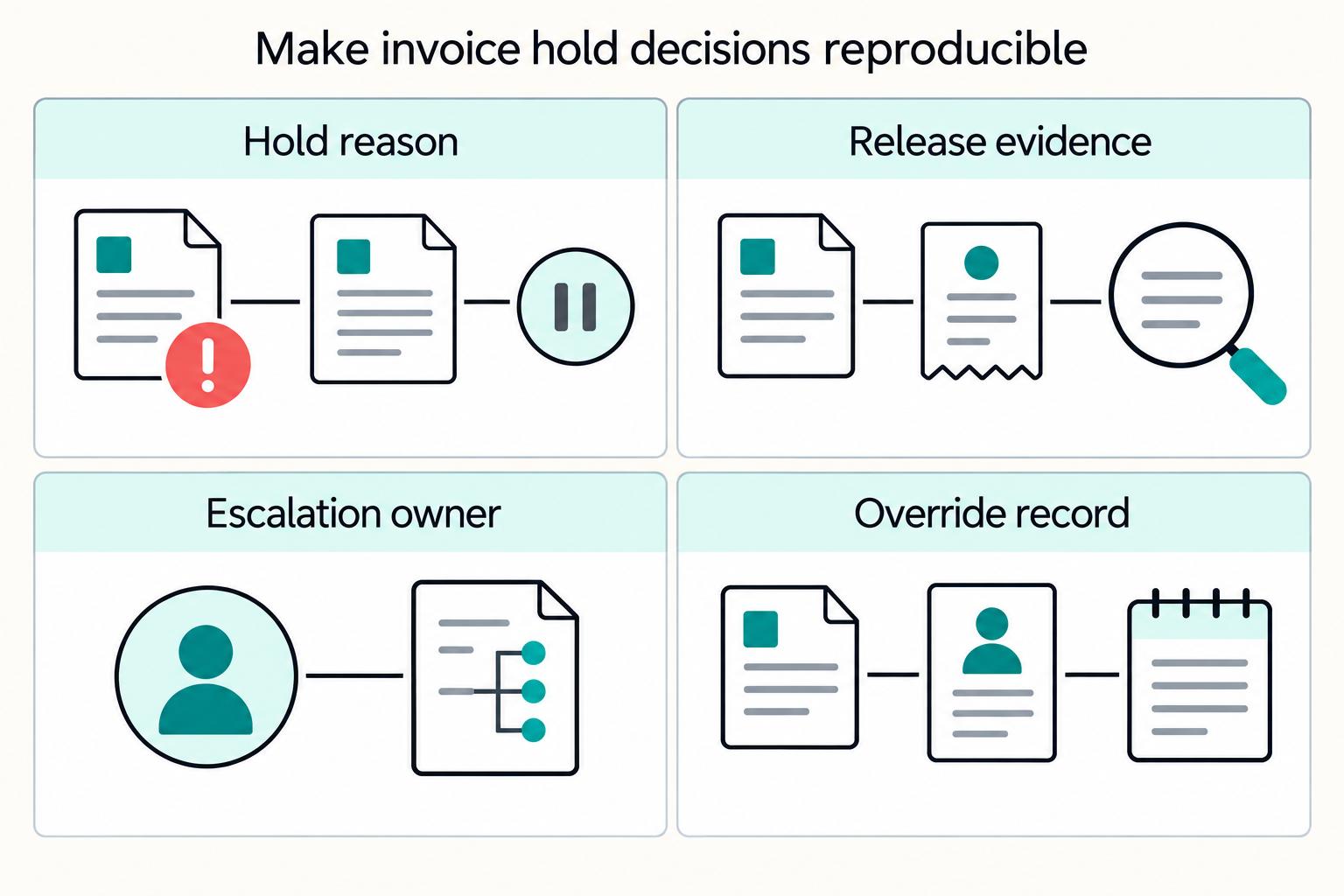
A hold only helps you if your team knows exactly what it means, what stops automatically, who investigates, and what evidence it takes to release it. If those points are unclear, holds become inconsistent. Some stay open too long, some get cleared too quickly, and some are ignored because people do not understand the next step.
Start by separating holds into clear operational categories. Your labels may differ, but the team should be able to distinguish between:
- a routine data or document issue that needs correction
- a control exception that requires enhanced review
- a suspected fraud event that requires restricted handling
- a compliance or tax issue that must be cleared before payment can proceed
Those categories should drive different response paths. Not every missing document needs the same treatment as a suspected vendor impersonation case.
Make hold actions automatic where possible#
When a relevant condition is triggered, the system should do more than display a warning. It should apply the operational consequence tied to that condition. That may include:
- stopping payment scheduling
- preventing payout file generation
- blocking bank-detail edits during review
- requiring a designated reviewer before the invoice can move
- logging the reason for the hold in a visible place
A manual note without a workflow consequence is easier to miss or ignore.
Define release criteria in plain language#
People release holds under time pressure. We recommend writing your release rules in a way an operator can apply consistently. For each hold type, define:
- what evidence is required
- who can review that evidence
- who can authorize release
- whether independent confirmation is required
- whether any related supplier or payout controls must remain in place after the invoice is released
- what must be documented in the case record
For each hold, record its scope (invoice, beneficiary, vendor or batch item), legal/policy basis, owner, start time, next review and evidence needed for resolution. Track the underlying due date and escalate overdue decisions; an internal hold is not an automatic extension of a contractual payment deadline. Mandatory restrictions require their actual clearance conditions.
Build a real escalation path#
Escalation should not begin with "tell your manager" and end there. The team should know which issues move to which function and when. Your escalation path should make clear:
- when the case stays with accounts payable or operations
- when procurement or the business owner must confirm the underlying transaction
- when payments operations must freeze payout activity
- when compliance or tax review is needed
- when legal, security, or fraud teams should be involved under your internal process
This also reduces the risk that multiple teams review the same issue separately, each assuming another team has final decision authority.
Protect against override drift#
Emergency payments and executive requests are where good controls are often tested hardest. If your process allows overrides, treat them as controlled exceptions, not informal shortcuts. A workable override model includes:
- a defined reason for the override
- named authority to approve it
- documented evidence supporting the decision
- visibility to the functions affected by the override
- post-event review to confirm the exception was handled correctly
Document an override’s limited scope, approver, expiry and resulting release state. Internal exception authority cannot waive a legal prohibition or a provider restriction outside your control. Do not let an invoice-only release accidentally clear a separate vendor or beneficiary hold.
Connect ERP approvals with payout controls so fraud cannot hop systems#
Fraud survives when the invoice is reviewed in one system but the payout is executed in another that does not inherit the same controls. In that situation, a blocked or suspicious invoice can hop systems and still get paid.
| Control area | What it should do | Key status or checks |
|---|---|---|
| Link approval status to payment eligibility | Treat invoices that are not fully approved as ineligible for payment | Current invoice approval state; whether any required exception review remains open; whether the supplier or payee record is in good standing; whether any fraud, compliance, or tax hold is unresolved |
| Carry hold signals across systems | Prevent a hold in one system from being bypassed in another | Invoice is on hold; supplier or payee is restricted; bank details are under review; case is escalated; release authority has not yet been recorded |
| Restrict manual payout creation | Keep manual payouts on a controlled path rather than a weaker path | Reference to the approved invoice or authorized payment basis; validation against the supplier or payee record; confirmation that no hold blocks payment; appropriate approval evidence; review by the team authorized to control exceptions |
| Reconcile what was approved against what was paid | Verify that executed payouts match approved and released invoices | Paid invoice was the one approved; payee was the approved payee; payout amount aligned with the released amount; no payment occurred while a hold or restriction was active; manual payment paths were not used unexpectedly |
Your objective is to make approval state, hold state, supplier state, and payout state consistent across the tools involved.
Link approval status to payment eligibility#
If an invoice is not fully approved in the ERP or invoice workflow, the payout system should treat it as ineligible for payment. That sounds basic, but it can break when teams rely on file transfers, manual exports, or status fields that are not synchronized cleanly. Payment eligibility should reflect:
- the current invoice approval state
- whether any required exception review remains open
- whether the supplier or payee record is in good standing
- whether any fraud, compliance, or tax hold is unresolved
This prevents the payout team from acting on incomplete information.
Carry hold signals across systems#
A hold in one system has limited value if it remains trapped there. The systems involved in payment should share enough status information to prevent silent bypass. At minimum, the payout side should be able to identify when:
- the invoice is on hold
- the supplier or payee is restricted
- bank details are under review
- the case is escalated
- release authority has not yet been recorded
If state cannot be transmitted automatically, use a controlled current eligibility register at batch assembly and again before bank or provider submission. Record invoice/obligation IDs, beneficiary version, approved amount/currency, hold state and authorized reviewer. Abort or remove stale items rather than relying on someone’s memory. Reconciliation afterward detects a breach; it does not substitute for this preventive check.
Restrict manual payout creation#
Many payment environments keep a manual route for unusual cases. That may be necessary operationally, but it can also create openings if controls are weaker there. If manual payouts exist, they should still require:
- reference to the approved invoice or authorized payment basis
- validation against the supplier or payee record
- confirmation that no hold blocks payment
- appropriate approval evidence
- review by the team authorized to control exceptions
A manual route should be a different path, not a weaker one.
Reconcile what was approved against what was paid#
Even with strong preventive controls, you still need a way to verify that executed payouts match the approved and released invoices. A good reconciliation asks:
- was the paid invoice the one that was approved
- was the payee the approved payee
- did the payout amount align with the released amount
- did any payment occur while a hold or restriction was active
- were any manual payment paths used unexpectedly
Keep submitted, pending, received, failed and returned states distinct. A successful file upload is not proof every supplier received funds. Before retrying a missing outcome, investigate the original instruction with its stable reference and provider status; preserve duplicate-prevention controls. If diversion is suspected after sending, contact the financial institution immediately about recall/containment, preserve the request and payment records and report through the appropriate fraud channel. The FBI BEC guidance explains immediate bank contact and IC3 reporting; recovery is not guaranteed.
Related: Accounts Payable Fraud Prevention: How Platforms Detect and Stop Business Email Compromise.
Handle cross-border compliance and tax checkpoints without overblocking payouts#
Cross-border payments add legitimate complexity. The answer is not to block everything unusual. It is to place compliance and tax checkpoints where they can stop real issues without turning every international invoice into a manual bottleneck.
Keep the purpose of each check separate. Fraud controls, compliance checks, and tax checks may interact, but they are not the same thing. A payment can be legitimate from a business perspective and still require additional compliance or tax review. A payment can also be complete from a tax documentation perspective and still be suspicious as a fraud matter. Your workflow should reflect that distinction.
Put cross-border checks early enough to matter#
If a cross-border requirement is discovered only when payment is about to be released, the team has less room to respond. Move the checkpoint earlier, ideally when the supplier is onboarded and again when the invoice is prepared for payment. That allows the team to identify whether the transaction requires:
- additional documentation
- specific review by compliance or tax
- confirmation of the payee and payment route
- restrictions on how the payout can be executed
Early routing makes it easier to separate documentation gaps from suspicious behavior.
Use targeted holds instead of blanket blocks#
Not every cross-border exception should trigger the same kind of stop. A missing document may require a corrective hold, while a mismatch between payee identity and payment instruction may justify a stricter fraud hold.
This matters because overbroad blocking creates two problems at once:
- legitimate payouts get delayed unnecessarily
- risk signals lose meaning
Targeted holds help preserve control credibility.
Keep document review tied to payment decisioning#
Where tax documentation is applicable, make the actual required form and payment treatment visible to the tax owner and release team. U.S. W-9 and W-8 forms document particular payer/payee tax contexts; an international invoice does not automatically require W-8BEN, and a tax form does not prove the service or bank account is legitimate. Keep tax clearance separate from fraud release. Visibility should answer:
- what is still missing
- who is reviewing it
- whether payment is blocked, pending, or cleared from that perspective
- whether a different type of hold remains in place even if the compliance or tax issue is resolved
This keeps the team from mistaking one clearance for full release.
Avoid "approve now, fix later"#
Cross-border payments often come with urgency. That urgency creates pressure to release the payment first and finish the paperwork later. As a control habit, that is dangerous. Once money has moved, recovery and containment options are narrower.
If a legally required checkpoint is incomplete, apply the actual restriction and escalate promptly. For an internal policy or missing tax artifact, have the authorized owner determine the permitted treatment, including any lawful alternative, instead of improvising a blanket hold. Record the due date, decision and remaining controls so urgency does not turn into an untracked bypass.
Keep the tax-document decision, reviewer and applicable payment treatment in the case record; a missing document should have a defined next action.
Common implementation mistakes and how to recover quickly#
Even well-designed invoice fraud controls can underperform after rollout. Usually the problem is not the control idea itself. It is the way the control interacts with daily operations, system limitations, and team behavior.
| Mistake | What happens | Recovery moves |
|---|---|---|
| Too many alerts and not enough decisions | Teams may start clearing alerts in bulk just to keep work moving | Narrow triggers to the signals that actually change payment eligibility; group related issues into a single review path; distinguish correction-needed cases from high-risk fraud indicators; make sure every alert maps to a required action |
| Holds exist, but no one owns them | Cases can sit until someone escalates loudly enough to force a rushed release | Assign named ownership for investigation and release; set clear routing for each hold type; require visible status notes in the workflow; review open holds regularly to separate backlog from active investigation |
| Controls stop invoices but not payments | The payout path still allows manual processing or disconnected releases | Identify every route by which funds can leave the business; apply the same payment eligibility logic across those routes; restrict emergency or manual payment paths; reconcile approved invoices against executed payouts |
| Teams confuse fraud review with process cleanup | Investigators lose focus and real risk can hide inside the backlog | Separate data correction, policy exceptions, and suspected fraud into distinct case types; train operators on when to use each path; reserve enhanced fraud handling for issues that justify it; give routine correction cases a faster resolution method |
| Release standards are too vague | Decisions will differ by person, workload, and pressure level | Document release evidence by hold type; require the reviewer to record what was checked; clarify who has release authority; check whether released cases later show signs that the standard is being applied too loosely |
| The business routes around the process | People start using side paths such as known contacts, screenshots, one-off approvals, or manual payment outside the queue | Find the root cause of the workaround; improve turnaround time on legitimate exceptions; make the approved path easier to follow than the informal one; require side-path requests to be pulled back into the controlled workflow before payment |
Here are common failure points and the fastest recovery moves.
Too many alerts and not enough decisions#
When too much is flagged, prioritization gets harder. Teams may start clearing alerts in bulk just to keep work moving. Recover by:
- narrowing triggers to the signals that actually change payment eligibility
- grouping related issues into a single review path
- distinguishing correction-needed cases from high-risk fraud indicators
- making sure every alert maps to a required action
The key is to reduce noise without lowering the standard for true risk.
Holds exist, but no one owns them#
Some teams are good at placing holds and less clear on who resolves them. Cases can sit until someone escalates loudly enough to force a rushed release. Recover by:
- assigning named ownership for investigation and release
- setting clear routing for each hold type
- requiring visible status notes in the workflow
- reviewing open holds regularly to separate backlog from active investigation
A hold without ownership is only delay, not control.
Controls stop invoices but not payments#
This happens when invoice workflow is tightened but the payout path still allows manual processing or disconnected releases. Recover by:
- identifying every route by which funds can leave the business
- applying the same payment eligibility logic across those routes
- restricting emergency or manual payment paths
- reconciling approved invoices against executed payouts
If fraud can bypass the invoice system at the payout stage, earlier controls are incomplete.
Teams confuse fraud review with process cleanup#
Not every broken invoice is suspicious. If the fraud lane becomes a parking area for ordinary admin issues, investigators lose focus and real risk can hide inside the backlog. Recover by:
- separating data correction, policy exceptions, and suspected fraud into distinct case types
- training operators on when to use each path
- reserving enhanced fraud handling for issues that justify it
- giving routine correction cases a faster resolution method
That keeps fraud review credible and usable.
Release standards are too vague#
If the rule is "release when comfortable," decisions will differ by person, workload, and pressure level. Recover by:
- documenting release evidence by hold type
- requiring the reviewer to record what was checked
- clarifying who has release authority
- checking whether released cases later show signs that the standard is being applied too loosely
Consistency matters more than aspiration here.
The business routes around the process#
When controls feel unworkable, people can start using side paths. They call known contacts, send screenshots, ask for one-off approvals, or request manual payment outside the queue. Recover by:
- finding the root cause of the workaround
- improving turnaround time on legitimate exceptions
- making the approved path easier to follow than the informal one
- requiring side-path requests to be pulled back into the controlled workflow before payment
A workaround is operational feedback. Treat it as a sign that the process needs adjustment, not as proof that the control should be abandoned.
Use the same invoice, hold and payment IDs in your case record and payout register so the next reviewer can trace each decision.
For tool selection, test one changed-beneficiary case and one duplicate/resubmission case across intake, review, batch assembly, release and reconciliation. Require evidence that the selected controls affect the actual payment path, not just dashboard labels.
Conclusion and Copy Paste Checklist#
Conclusion#
Fake invoice control in platform operations is not about one dramatic fraud rule. It is about making the normal path safer and the exception path clearer. When invoice review, supplier controls, approvals, and payouts are connected, fraud has fewer places to hide. When holds have defined owners and release standards, your team can act consistently. When cross-border and tax checkpoints are built into the flow instead of treated as last-minute obstacles, you reduce both risk and unnecessary friction.
The practical standard to aim for is this:
- suspicious invoices should be identified before payment is scheduled
- holds should create real workflow consequences
- release decisions should require defined evidence
- approval and payout systems should share enough status to prevent bypass
- compliance and tax checks should be visible, targeted, and timely
- manual or emergency paths should still follow controlled release rules
If your current process does not do all of that today, start with the handoffs. We recommend starting there because many payment control gaps appear between teams and systems, not just inside a single policy document.
Copy paste checklist#
Use this as a working review list for your invoice-to-pay fraud control setup.
Governance and ownership
- Define who can approve suppliers or payees.
- Define who can change bank details.
- Define who can approve invoices for payment.
- Define who can place, investigate, and release holds.
- Define who can authorize overrides.
- Document escalation paths across operations, payments, compliance, tax, and other relevant functions.
Supplier and payee readiness
- Review supplier and payee records for duplicates or outdated information.
- Confirm required setup documentation is present under your process.
- Identify recent changes to sensitive supplier data.
- Make sure inactive or restricted records cannot be paid inadvertently.
Invoice intake and validation
- Require invoices to enter through approved channels.
- Check required invoice fields and supporting documents.
- Screen for duplicates or near-duplicates.
- Confirm invoice identity details align with the approved supplier record.
- Stop incomplete invoices from moving forward as if they were ready for approval.
Pre-payment detection gates
- Validate supplier and bank-detail integrity before payment readiness.
- Check business validity against the underlying order, service, or approval basis.
- Make sure approvers see exception context before approving.
- Block payment scheduling when unresolved exception flags remain.
- Verify the payment instruction matches the approved supplier setup.
Hold and escalation controls
- Separate routine correction holds from suspected fraud holds.
- Make holds create operational consequences, not just warnings.
- Define release evidence for each hold type.
- Record who reviewed the issue and the release outcome.
- Route suspected fraud through a clear escalation path.
System connection and payout control
- Link invoice approval state to payment eligibility.
- Carry hold and supplier restriction signals into the payout process.
- Restrict manual payout creation to controlled cases.
- Reconcile what was approved against what was actually paid.
- Review whether any payment route can bypass standard controls.
Cross-border, compliance, and tax workflow
- Place cross-border checkpoints early in the process.
- Use targeted holds instead of blanket blocking.
- Keep compliance and tax review status visible to payment decision makers.
- Do not normalize "approve now, fix later" behavior for required checkpoints.
Rollout and recovery
- Train teams on exception handling, not only normal processing.
- Monitor alert volume and reduce noise that does not change decisions.
- Assign ownership for open holds.
- Identify and address side-path workarounds.
- Review released cases to confirm the standards are being applied consistently.
Frequently Asked Questions
What is the most important place to stop a fake invoice?
Before payment release is the strongest point, but the most effective approach is not a single stop. It is a chain of gates starting with intake, supplier integrity, business validity, approval quality, and payment eligibility. If you wait until the final payment step, you have fewer control options.
Should every unusual invoice be treated as fraud?
No. Some invoices are incomplete, reflect process errors, or arrive before the underlying setup is complete. Your process should distinguish between correction-needed cases, enhanced-review cases, and suspected fraud. That keeps the team focused and avoids unnecessary blocking.
Who should be allowed to release a hold?
The answer depends on your internal operating model, but it should always be explicit. Document the role authorized to release a hold, make the evidence required for release clear, and record the decision in the case history. Ambiguity here is where inconsistent releases happen.
How do we avoid blocking too many legitimate cross-border payouts?
Use targeted checkpoints and targeted holds. Put required compliance and tax reviews early enough that issues are found before release pressure builds. Keep those reviews visible in the invoice and payout workflow so the team knows what is missing and what is already cleared.
What if our ERP and payout system are not tightly integrated?
Use a controlled current eligibility register at batch assembly and actual provider or bank release, with linked invoice/obligation IDs, beneficiary version, amount and hold clearance. Exclude stale or restricted items. Reconcile outcomes afterward to detect breaks; reconciliation alone cannot prevent a blocked invoice from being sent.
Researched and edited by the Gruv editorial team. Gruv builds cross-border billing, payouts, and finance-operations software for global businesses.
Sources
Educational content only. Not legal, tax, or financial advice.
Related Posts
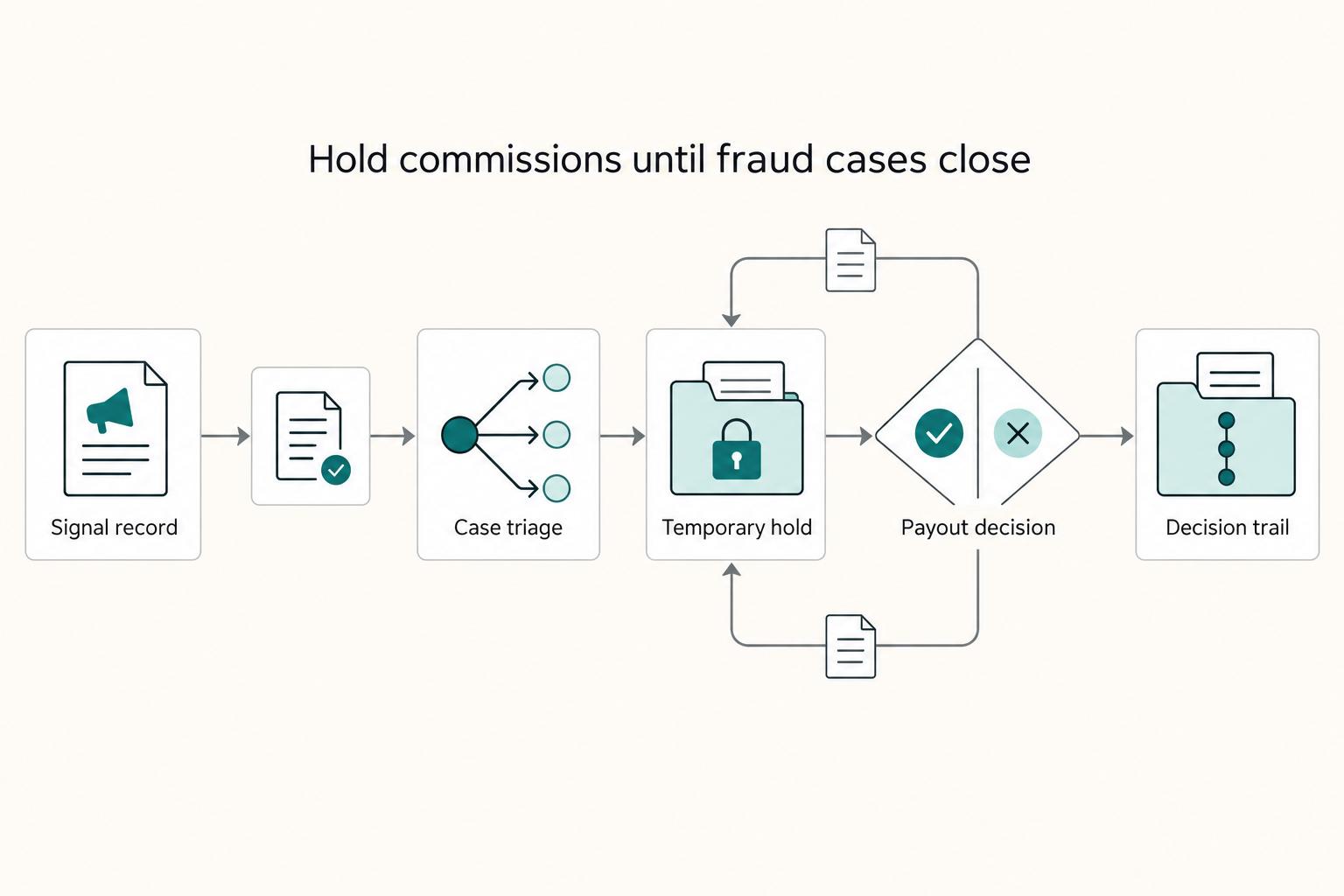
How Platforms Stop Affiliate Fraud Before Commissions Are Paid
If you approve or challenge affiliate payouts, detection quality matters only when it changes the payout decision and leaves a record you can defend. If you pay partners across markets, vendor claims about speed or AI are not enough. You need controls that catch invalid traffic and fake conversions before commission is released, plus enough evidence to explain why a conversion was approved, held, or denied.
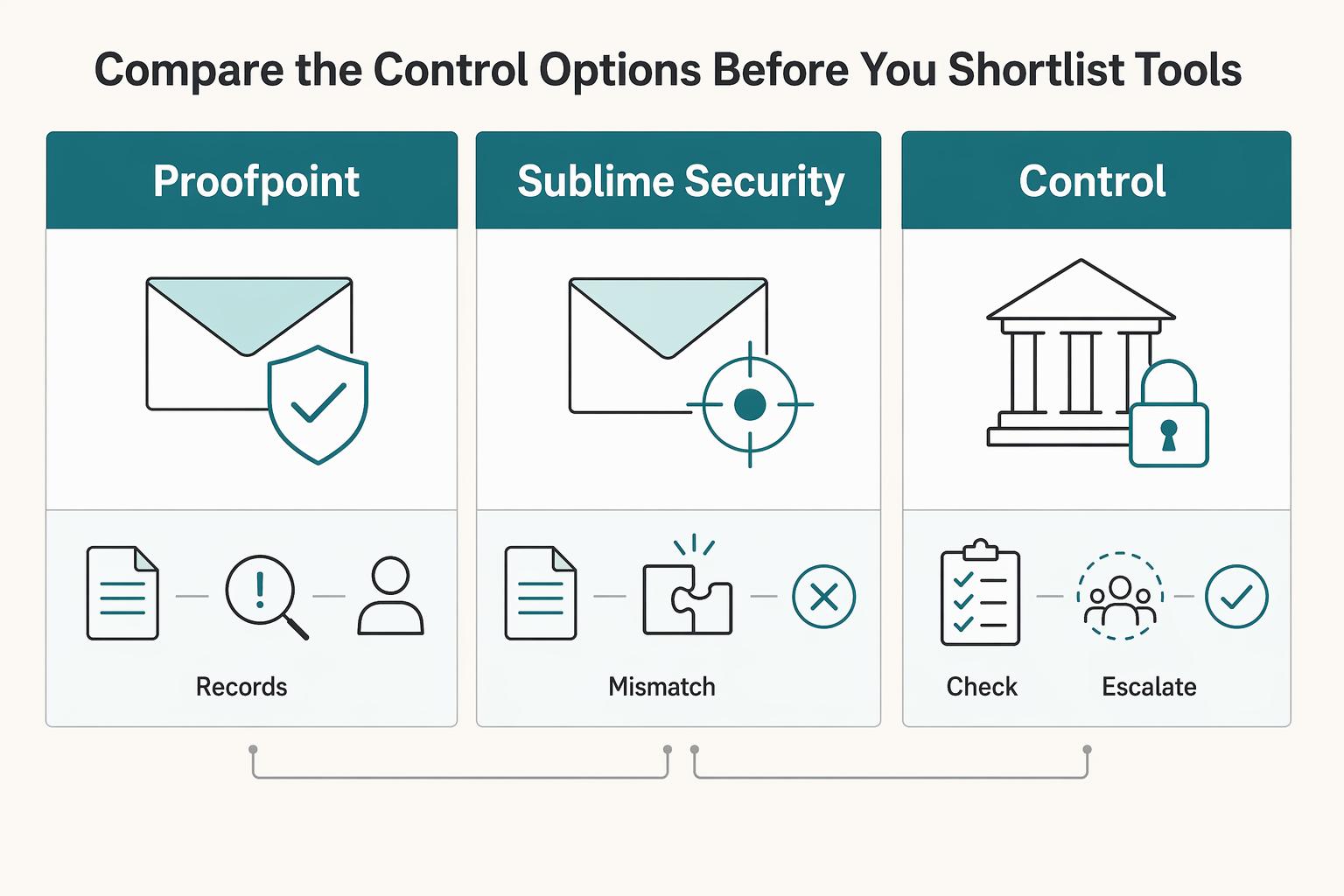
How Platforms Reduce Business Email Compromise Risk in Accounts Payable
Treat Business Email Compromise and Email Account Compromise as payment-release risks first. Email is often the delivery path. Loss happens when accounts payable accepts a fraudulent invoice, a bogus payment update request, or another convincing impersonation message and releases funds.
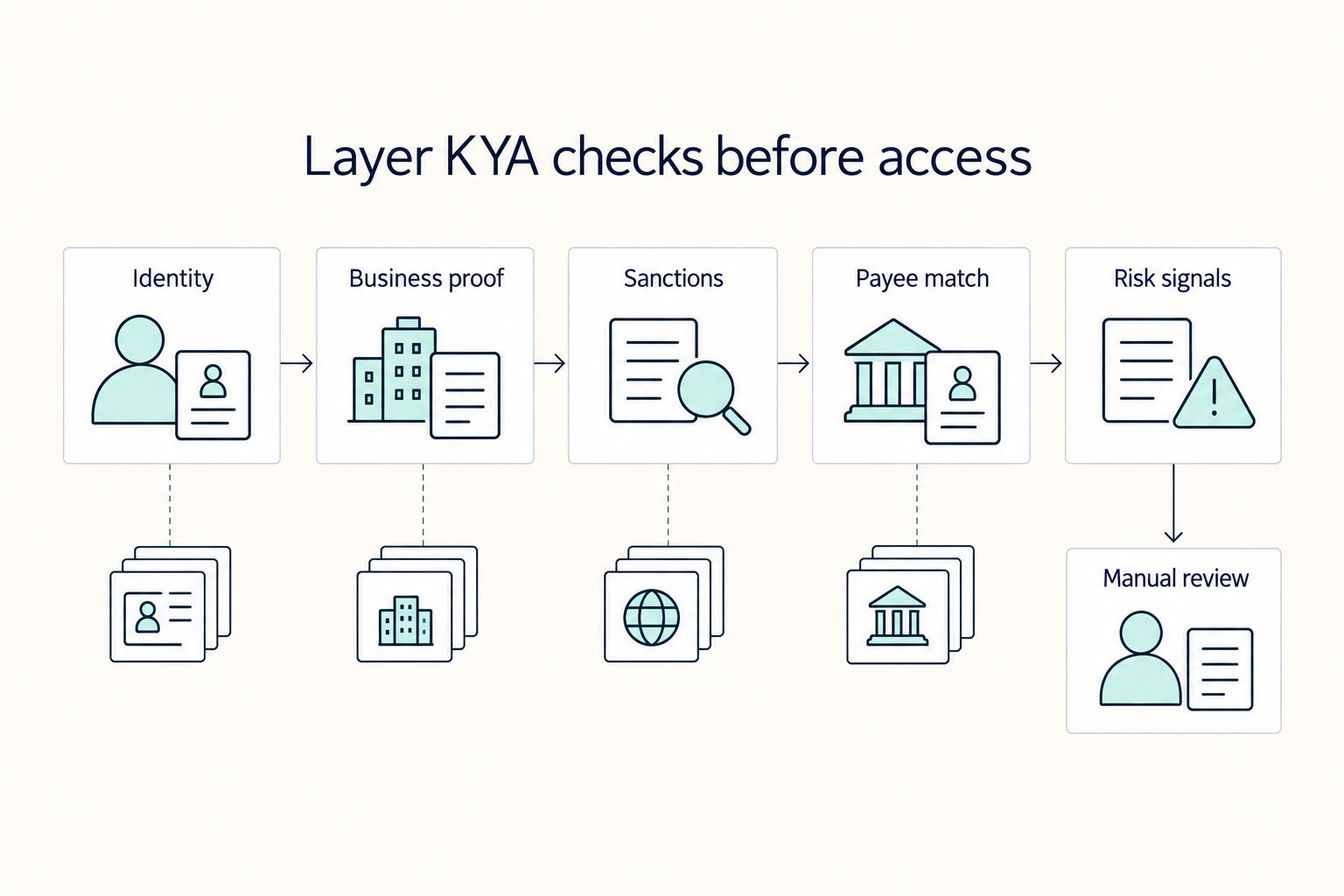
Know Your Artist (KYA): Checks to Reduce Streaming Fraud
Streaming fraud can distort royalty allocations, create payment disputes and expose a distributor to partner action. In a March 2026 guilty plea, DOJ described an operator using AI-generated songs and bot accounts to obtain more than $8 million in royalties. Identity checks can reduce impersonation and account abuse, but a verified person can still manipulate listening activity. Artist onboarding and post-release monitoring must work together.