
Quick Answer
Prioritize reliability first when doing affiliate marketing for creators: pick programs you can trace from click to paid balance, then enforce disclosure and tracking before every post. Use options like Amazon Associates Program only after you verify current terms in Amazon Associates Central, including payout cadence, thresholds, and reversal rules. The practical goal is stable monthly cashflow, not high dashboard numbers that never settle.
Start here with the real goal of affiliate marketing for creators#
The real win is not proving that affiliate links can generate revenue. It is making that revenue predictable enough to plan around. If you are a freelancer, a creator, or a small team, the useful question is not "Can this convert?" It is "Can I trust the path from click to paid balance well enough to budget against it?"
At its core, affiliate marketing is simple: you share a tracked link or code, and you earn when someone makes a qualifying purchase or signs up. That simplicity is why many creators start here. You can earn before you launch your own product by recommending tools, platforms, and services that already exist. The catch is that earning potential and cashflow reliability are not the same thing.
This guide is built around that gap. A program can look attractive on headline commission and still be hard to use as dependable income if you ignore terms, approval requirements, reporting limits, and disclosure. What looks "earned" in a dashboard and what lands in a paid balance are not always the same thing. If you need this income to cover fixed monthly costs, that difference matters more than the marketing promise.
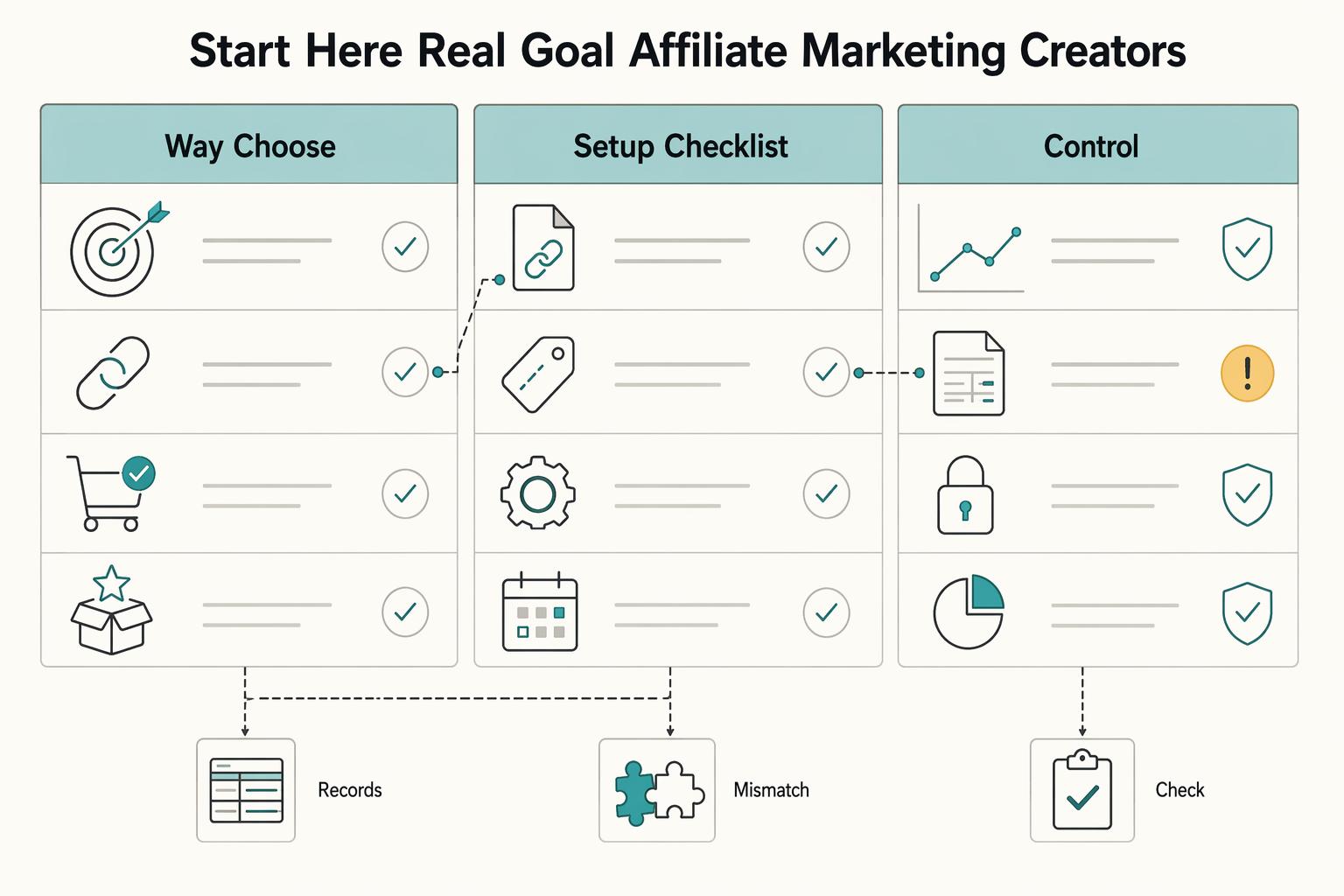
The practical aim is simple: you should leave with three reusable tools:
- a way to choose programs with reliability in mind, not just upside
- a setup checklist for tracking, link verification, and disclosure before you publish
- a monthly control routine to compare expected commissions with reported and paid results
Those three pieces work together. Selection reduces avoidable risk up front. Setup catches preventable mistakes before they go live. Monthly review helps you spot problems early instead of finding out much later.
A good early habit is to treat every affiliate placement like a small financial record, not just a content asset. Keep the original link, where it was posted, the publish date, and the disclosure you used. Then verify two things on a regular cadence: first, that the destination still matches what you intended to recommend. Second, that reported and paid amounts are directionally consistent with your own expectations. If you skip either step, it gets harder to catch issues early.
One scope note before we go deeper: this guide is operational first. It is not legal or tax advice. Program rules and terms can change, so when a rule affects compliance or money movement, verify it against the current official program documents before you act.
Define affiliate marketing early and separate it from influencer deals#
Label the deal by its primary goal before you publish: if you need near-term, attributable revenue, prioritize affiliate terms; if the goal is top-of-funnel awareness, treat affiliate as a secondary layer.
Affiliate marketing is a pay-for-performance model where you earn from measurable conversions, typically qualifying purchases, tied to tracking. Influencer marketing is broader creator collaboration in trusted content contexts, and compensation is often tied to the promotion itself rather than only the sale. In practice, one is built for attribution, while the other often builds awareness and loyalty over time.
A useful CreatorIQ-style lens is direct response vs trust building. Affiliate programs sit closer to direct response because they are designed to connect activity to conversion. Creator formats on TikTok, YouTube, and Instagram Story often do a different job: they build familiarity and intent that may convert later.
Before you sign terms, confirm the payment trigger in writing and match your KPI to that model. If it is commission per sale, evaluate it as attribution-driven revenue. If it is promotion-led compensation, evaluate it as awareness work, not as direct-response income.
If you need predictable affiliate income, keep the reach job and the revenue job separate, then measure each on its own logic.
Choose programs by payout reliability before commission upside#
Choose the program most likely to pay clearly and predictably before you chase the highest commission rate. If payout logic is hard to verify, the upside on the offer page can be misleading.
A high-looking commission can still underperform when reversals, refunds, or weak tracking eat margin. Program selection affects tracking, payment processing, reporting visibility, and how hard it is to resolve a missing commission.
Compare the payout path, not just the offer page#
Use Amazon Associates Program as one option to evaluate, not an automatic default. Compare it with niche merchant programs and network-based options such as CJ, impact.com, PartnerStack, or Awin using the same checks.
| Option | Approval and setup | Tracking and reporting | Payout reliability checks | Best fit |
|---|---|---|---|---|
| Amazon Associates Program | Confirm current onboarding and account requirements in Amazon Associates Central | Confirm the link formats you need and whether pending vs paid status is easy to read | Verify payout cadence, thresholds, and reversal handling in current terms before publishing links | Broad catalog coverage when you want a familiar starting point |
| Merchant-run niche program | Confirm whether approval depends on audience fit or content type | Test deep-link support and reporting clarity for clicks, conversions, and reversals | Confirm how disputes are handled and whether deduction reasons are clearly explained | Category-specific relevance when your audience buys in a focused niche |
| Network-based niche program | Check both network setup and advertiser-level approval | Review whether the dashboard clearly shows conversion and payout status | Verify who owns payment processing and dispute resolution (network, advertiser, or both) | Useful when you want multiple partners under one login |
What to verify before you commit#
Before you post links, save a dated evidence pack, PDFs or screenshots, for each program with:
| Item | Format | Notes |
|---|---|---|
| payout timing and payout threshold language | PDFs or screenshots | for each program |
| attribution rules | PDFs or screenshots | including cookie-window terms where applicable |
| reversal and refund policy language | PDFs or screenshots | for each program |
| support and dispute path | PDFs or screenshots | for each program |
| geographic/account coverage rules | PDFs or screenshots | relevant to your business and audience |
If affiliate income covers fixed monthly expenses, optimize for payout clarity first. Choose programs where you can explain the path from click to pending to paid and where dispute handling is explicit, even if the headline commission is lower.
Run one full test cycle before scaling. Create links, confirm they resolve, then reconcile clicks, conversions, reversals, and paid amounts against your own ledger. If you cannot reconcile without guessing, treat that as a red flag.
Do not let one program, including Amazon, carry the full channel. Keep at least one fallback partner live so a policy change, dispute backlog, or reporting issue does not freeze affiliate revenue.
For a step-by-step walkthrough, see YouTube Sponsorships for Creators Who Want to Get Paid on Time.
Set up tracking and disclosures before publishing your first link#
Before your first affiliate post, make disclosure and tracking non-negotiable: clear disclosure supports trust and is treated as a baseline FTC expectation, and clean tracking is what lets you prove attribution later.
Use one pre-publish checklist for Instagram, TikTok, and YouTube. Platform UI and wording can differ, but your operating standard should stay the same: place disclosure where the click decision happens, label the link clearly, and verify the destination yourself.
| Platform | Disclosure check | Link label check | Destination check |
|---|---|---|---|
| Put a plain-language affiliate disclosure in the same surface as the CTA. | Label the link so viewers understand it is commercial. | Test the link path and confirm it lands on the intended offer page. | |
| TikTok | If a caption, profile link, or CTA drives affiliate traffic, disclose alongside that prompt. | Make the destination clear from surrounding text. | Click through and confirm redirects do not break the tracked URL. |
| YouTube | Put disclosure where the link is listed or discussed so viewers see it in context. | Name the merchant or offer and note that the link is affiliate. | Test the description link and confirm it resolves to the correct page. |
Keep a minimum evidence pack for every post. An affiliate link is a regular URL with added tracking code, and the click can trigger a cookie window that is often 24-90 days, so keep records you can reconcile later:
- original affiliate link
- publish date
- content format
- campaign tag or tracking label
- expected payout window from program terms
- optional: screenshot showing live disclosure and link placement
Run two recurring checks to catch issues early. Weekly, do a click-to-order sanity check if a post gets clicks but no orders. Monthly, reconcile payouts against your ledger and expected payout window so missing, delayed, or reversed commissions are easier to challenge with evidence in hand.
Match content format to buying intent and attribution limits#
After your links are traceable, choose formats by purchase complexity and evaluate results through your program's attribution model, not platform views alone.
Give each platform a distinct job#
Treat short-form posts, for example TikTok clips, as discovery when the offer is easy to grasp quickly. Use longer review formats, for example YouTube, when buyers need context, comparisons, or setup detail before they act. Use continuity touchpoints, for example Instagram Story, for reminders, follow-ups, and return clicks from people who already recognize the offer.
| Platform | Job | When to use |
|---|---|---|
| TikTok clips | discovery | the offer is easy to grasp quickly |
| YouTube | longer review formats | buyers need context, comparisons, or setup detail before they act |
| Instagram Story | reminders, follow-ups, and return clicks | people already recognize the offer |
For buying intent, keep the rule practical: low-consideration offers can convert from short-form posts, while high-consideration offers usually need more context and often more than one touch.
Watch for attribution leakage across channels#
Do not over-index on one format. Affiliate monitoring often spans TikTok, Instagram, YouTube, blogs, and email, so one asset may build trust while another gets credited for the sale. If you only optimize for the credited post, you can cut the format that created demand.
This risk is sharper in a CPA model, where payout happens only after a confirmed sale. Strong click-through on one format can still appear weak in revenue when another touchpoint closes the purchase or your attribution rules credit differently.
Test one variable at a time#
Keep the offer and program constant, and test one format variable per cycle, such as format type, CTA placement, or creative style. Log platform, format, publish date, UTM, coupon code if used, and exact link for each asset. If clicks increase but confirmed sales or content-level ROI do not, check the destination first. Then check cross-channel paths and attribution rules before you judge the format.
Related: How to monetize a 'YouTube Channel'.
Build a monthly cashflow control cycle for affiliate revenue#
Run affiliate revenue on a fixed monthly control cycle: forecast, map payout windows, reserve for risk, reconcile final payouts, then adjust next month's content mix. Treat dashboard totals as in-process until commissions are approved and paid, because post-validation adjustments can still change outcomes.
Use the same order every month#
- Forecast expected commissions by program from current pending and approved balances.
- Map payout dates or payout windows so you know when funds may actually land.
- Hold a reserve buffer for holds, validation issues, and reversals.
- Reconcile paid versus expected after provider status is final.
- Adjust next month's content mix using paid outcomes, not pending earnings.
This order keeps spending decisions tied to settled cash, not early signals. Keep each program separate in your own ledger so different approval rules and payout timing do not blur your monthly view.
Keep two guardrails in place#
First, maintain a reserve buffer. Second, treat pending commissions as unconfirmed until final provider status.
These guardrails protect cashflow when tracking, approval rules, or program health shifts. If pending numbers rise but paid amounts do not, pause new spend and resolve the gap first.
Track the minimum fields needed for reconciliation#
Use one monthly table and keep it updated:
| program | expected payout window | pending amount | paid amount | disputed amount | action owner |
|---|---|---|---|---|---|
| [program name] | [enter provider window] | [enter] | [enter] | [enter] | [name] |
If Gruv supports it in your setup, this is where it can help: invoice-linked tracking, wallet views, payout status visibility, and audit-ready exports for reconciliation. Judge performance from the final paid view, not the loudest dashboard number.
Handle cross-border tax and compliance without overreacting#
Start with records, not form guesses. Cross-border reporting can vary by country, tax residency, payout route, and affiliate program, so your first job is to keep a clean trail of who paid you, where funds landed, in what currency, and when.
If you are in the United States, treat FBAR, FinCEN, FATCA, and Form 8938 as items to review with a qualified tax adviser. The IRS states that Form 8938 is used to report specified foreign financial assets when applicable thresholds are exceeded, and that it is attached to the taxpayer's annual income tax return. The IRS also gives an example of aggregate value exceeding $50,000 for certain taxpayers, but that is not a universal threshold across filing status and residency. If you are not required to file a U.S. income tax return for the year, Form 8938 is not required for that year.
Keep the archive boring and complete#
Separate operational truth from legal interpretation: first capture what happened, then map it to filing requirements. For each program and payout, keep one consistent monthly archive with:
- payer identity shown on the report or remittance
- payout currency
- account destination
- monthly total paid
- payout date
- supporting report or export filename
Use one verification checkpoint#
At month end, verify one payout line per program across the full chain: platform report, receipt, currency, and receiving account. If entity names or destination accounts differ from normal, flag them immediately so you are not reconstructing records during filing season.
Spot the red flags that make affiliate income unstable#
The main red flag is not a low commission rate; it is a payout path you cannot explain end to end. If you cannot trace click -> reported conversion -> pending amount -> paid balance, pause scaling and fix your tracking first.
| Red flag | Why it is unstable |
|---|---|
| Policy and reporting are unclear | terms are vague, reporting is hard to audit, or reversals are not clearly explained |
| Data is not usable | dashboard screenshots without exportable reports or clear adjustment logic make month-end reconciliation fragile |
| One platform controls your cashflow | most income comes from one program, so you carry concentration risk if eligibility or policy conditions change |
| Disclosure quality is weak | missing disclosures, or disclosures hidden in a footer or separate page, are warning signs |
| Offer-content mismatch | pushing irrelevant offers into your Instagram or YouTube content can weaken trust and make income less stable over time |
Watch for these instability signals in practice:
- Policy and reporting are unclear: If terms are vague, reporting is hard to audit, or reversals are not clearly explained, treat that as risk. Start from the official policy page, not summaries. For Amazon, review the Amazon Associates Program Policies directly.
- Data is not usable: Dashboard screenshots without exportable reports or clear adjustment logic make month-end reconciliation fragile.
- One platform controls your cashflow: If most income comes from one program, for example Amazon Associates, you carry concentration risk if eligibility or policy conditions change.
- Disclosure quality is weak: Missing disclosures, or disclosures hidden in a footer or separate page, are warning signs. A plain line like "This page contains partner products that may earn us compensation" is clearer and more reliable for trust.
- Offer-content mismatch: Pushing irrelevant offers into your Instagram or YouTube content can weaken trust and make income less stable over time.
Related reading: How to Structure an Affiliate Agreement for Your Digital Product.
Build a predictable affiliate income system, not a fragile side hustle#
The core takeaway is straightforward: program quality plus payout discipline matters more than a headline commission rate. Build around what you can verify in your own reporting and records, then keep that process consistent.
Use a simple operating cadence instead of chasing new offers every week:
- Re-run your program selection table with payout clarity as the deciding factor, not just the advertised rate.
- Apply your pre-publish checklist before each link goes live.
- Start one monthly reconciliation cycle so reported activity, pending amounts, and paid amounts are reviewed in one place.
Treat pending earnings as unconfirmed until final payout status is clear, and base decisions on reconciled records rather than optimistic projections. This is usually where fragile setups break: not at publishing, but at payout review.
Also keep source quality in perspective. A commonly shared Medium piece is marked as a member-only story, and its "lowest-risk side hustle" framing is a headline claim, not a payout standard to budget from.
If you need cleaner payout visibility and audit-ready records, request access or book a demo with Gruv to confirm coverage for your market and program.
Frequently Asked Questions
What is affiliate marketing for creators in practical terms?
You publish a tracked link or code, and in many programs you are paid when a qualifying action is recorded under that program's rules. The operational work is matching the offer to the content, disclosing it clearly, and keeping records that let you trace clicks, conversions, and paid balances.
How is affiliate marketing different from influencer marketing for income planning?
Affiliate income is often structured around tracked performance, while influencer deals are often broader brand campaigns that may use negotiated fees, links, or codes. For income planning, treat them as different revenue streams and prioritize the one that matches your goal and contract terms.
How do I choose between Amazon Associates and a niche creator affiliate program?
Pick the program you can explain from click to payout, not just the highest headline rate. Compare each option's policy terms, payout cadence, threshold, and reversal handling in writing, then choose the one with clearer reporting and dispute handling if cash-flow predictability matters.
Why are my affiliate earnings inconsistent month to month?
Month-to-month swings can come from changes in buyer intent, attribution gaps across channels, reversals, and payout timing that does not line up with publish dates. Heavy concentration in one platform or partner can increase that volatility.
What causes payout delays, holds, or lower than expected commissions?
Pending periods, reporting lag, reversals, payout thresholds, and program-level reviews can delay payment or reduce final commissions. A practical check is whether the partner can show how a reported conversion moves to pending and then paid status in exportable reporting.
What should I set up before posting affiliate links on TikTok, YouTube, or Instagram?
Before posting, define disclosure placement, link labeling, and destination checks, and test final URLs on mobile. Keep a simple record for each post (link, publish date, format, campaign tag, and expected payout window), then run routine click-to-order and payout-to-ledger checks so missing credits surface earlier.
How do cross-border creators in the United States think about FBAR, FATCA, and Form 8938?
Start with records, not assumptions. FBAR is the FinCEN label for reporting foreign bank and financial accounts, while Form 8938 is an IRS form used to report specified foreign financial assets and, when required, must be attached to your tax return. Higher Form 8938 thresholds apply for some taxpayers filing jointly or residing abroad, and if you are not required to file an income tax return for the year, you do not file Form 8938. Keep payer identity, payout currency, account destination, and monthly totals in one archive, then review FATCA, FBAR, and Form 8938 with a qualified tax adviser because they are separate compliance questions.
Try a related tool
Researched and edited by the Gruv editorial team. Gruv builds cross-border billing, payouts, and finance-operations software for global businesses.
Sources
- congress.gov/112/plaws/publ81/PLAW-112publ81.htmtrusted
- federalregister.gov/documents/2022/11/01/2022-23447/institutiona...trusted
- federalreserve.gov/reportforms/forms/FR_2052a20220429_f.pdftrusted
- fincen.gov/report-foreign-bank-and-financial-accountstrusted
- irs.gov/businesses/corporations/do-i-need-to-file-fo...trusted
- irs.gov/forms-pubs/about-form-8938trusted
- sec.gov/Archives/edgar/data/2071288/0001193125253164...trusted
- state.gov/wp-content/uploads/2022/05/FY-2023-CBJ-Appen...trusted
Educational content only. Not legal, tax, or financial advice.
Related Posts
How to Calculate a Freelance Rate You Can Actually Get Paid On
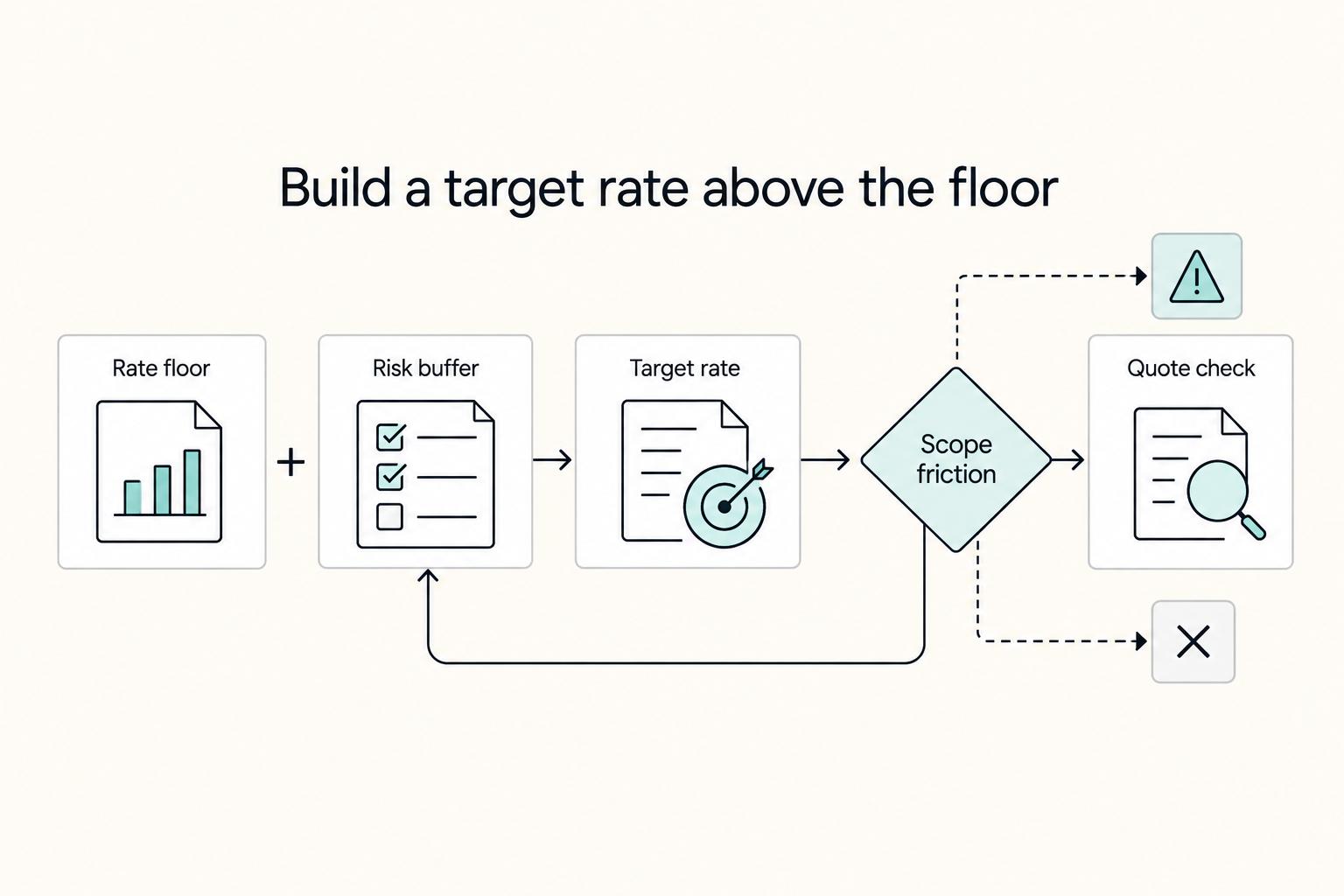
A workable rate is not the neat number a calculator produces. It is the number that still works after you account for real billable capacity, non-client time, scope drift, and the gap between sending an invoice and receiving cleared cash. Start with hourly math even if you do not plan to bill hourly, then turn that number into a quote with clear `payment terms`.
How to Monetize a YouTube Channel for Reliable Cashflow
You are not just a content creator. You are running a business of one. That shift matters because most guides stop at feature checklists. They show you how to switch revenue on, but not how to build something resilient, compliant, and easier to manage over time.

The Freelance Payment Penalty: A Modeled Audit of Platform Fees, FX Spreads, and Payout Delays
The money rarely disappears through a single, easy-to-spot fee. The real loss is stacked. A marketplace takes its commission, a processor adds a charge for international cards, a bank or payment company converts the currency at a spread, a platform holds the funds before release, and a wire sheds a little to intermediaries on the way in. Each layer looks defensible on its own, but the worker feels the combined result as a smaller deposit and a later payday.