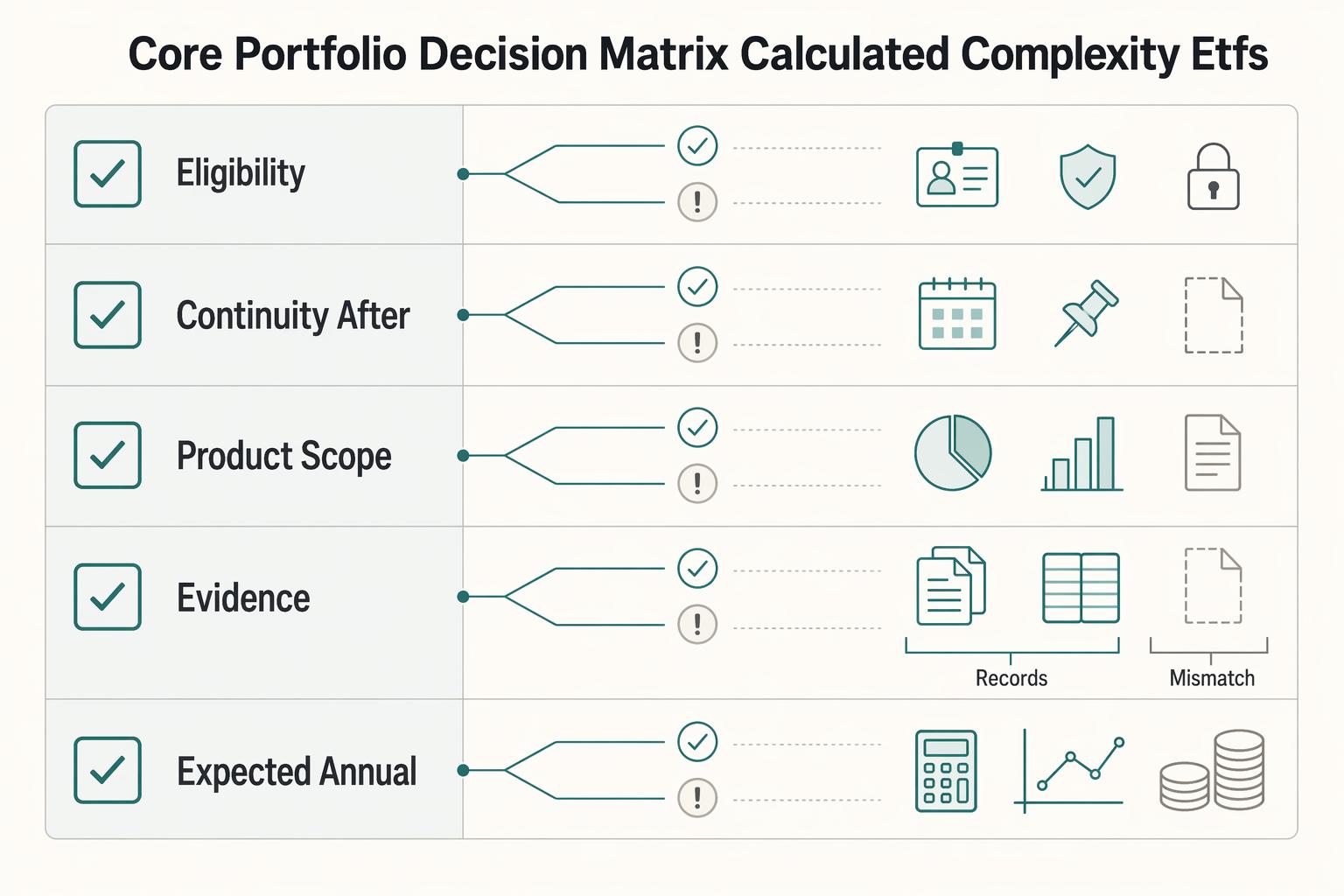
Choose by corridor, not by headline pricing: in a swift vs local bank transfers cross-border platform decision, set one default route per lane, keep a tested backup, and launch only after pilot evidence shows credited outcomes with clean ledger matching. Start with beneficiary country, currency pair, payout frequency, and return history, then enforce release gates for KYC/KYB/AML and tax-document readiness. If payment state is unclear, hold and trace instead of failing over blindly.
For platform leaders, this is a routing design decision, not a generic SWIFT versus local debate. The right rail depends on corridor coverage, intermediary-bank behavior, compliance gates, and how much operational complexity your team can absorb when payouts go off path.
Cross-border payments still face core structural frictions: high costs, low speed, limited access, and limited transparency. Evaluate rails as operating choices, not sales claims. A route that looks cheaper can still increase tracing work, support load, and reconciliation effort when status visibility is weak.
Many cross-border payments still move through correspondent banking, where banks exchange SWIFT payment instructions and intermediary banks may be involved. Local transfer options can shorten part of that chain, but they do not remove corridor constraints. First-mile and last-mile execution still depend on domestic rails.
This guide stays focused on platform payouts for contractors, creators, and marketplaces. Coverage and outcomes can vary by corridor. Even broad market data is corridor-based: the World Bank remittance database tracks 367 corridors across 48 sending countries and 105 receiving countries.
By the end, you should be able to:
Speed and headline fees matter, but reconciliation quality, exception handling, and auditability often determine whether a payout setup scales. Cross-border message data is often not harmonised, which can reduce straight-through processing and automated reconciliation.
Policy requirements shape routing too. FATF updated Recommendation 16 on 18 June 2025 to increase transparency requirements for information accompanying cross-border payments and require tools to reduce fraud and error risk. In practice, you are comparing not only price and settlement behavior, but also whether a route gives your team enough visibility to meet compliance requirements and explain payment status clearly.
Use this lens throughout: do not ask which rail wins in general. Ask which route is most dependable for each corridor you actually pay, what evidence proves that, and what fallback you will run when production behavior diverges from the sales narrative. For more on tracing, see MT103 SWIFT Message Explained for Tracing International Wire Transfers.
For most platforms, there is no universal winner, so choose by corridor, operating evidence, and fallback readiness.
| Criteria | SWIFT | Local payment rails |
|---|---|---|
| Core model | Global financial messaging layer for cross-border banking, often through correspondent banking chains. | Domestic or regional credit-transfer schemes used for last-mile delivery or more of the route, depending on setup. |
| Speed expectations | Corridor- and chain-dependent. Do not assume single-hop routing or guaranteed same-day credit. | Scheme-dependent. Some are real-time in-market. Others are next-business-day, and cut-off timing can add a day. |
| Cost drivers | Total cost can include more than bank fees: intermediary handling, FX, tracing, and exception support can raise landed cost. | Headline fees can look lower, but total cost can still depend on FX, retries, returns, and exception-handling labor. |
| Coverage | Often used when cross-border reach is the priority, but outcomes still depend on correspondent-bank and receiving-bank behavior. | Strong where scheme access is mature and enabled by your provider; bounded by scheme and jurisdiction scope. |
| Failure handling | Multi-institution chains can increase tracing effort and status ambiguity when payments are in flight. | Can be easier to triage when schemes define exception paths; in SEPA SCT, reject, return, and recall flows are explicit constructs. |
| Operational burden | Can be higher when teams must explain status across institutions and reconcile variable settlement behavior. | Can be lower when scheme behavior and status mapping are standardized; rises quickly if teams treat all local rails as equivalent. |
| Confidence level | Treat vendor claims as directional until your own payout data confirms time-to-credit, return patterns, and reconciliation quality by corridor. | Same standard: policy progress and market targets are useful context, not proof of your production outcomes. |
| Best fit | Often used for cross-border payouts where established bank-partner reach is the priority and your corridor data supports the route. | Often used for repeat or high-volume payouts where local scheme access is in scope and exception handling is already stable in your own telemetry. |
The core tradeoff is uncertainty versus standardization, not just speed versus fees. SWIFT can improve reach, but correspondent-bank payment chains can increase support and reconciliation effort when a payout stalls. Local rails can reduce that uncertainty where scheme rules are clear and your route is in scope, but those benefits do not carry across every country or currency.
Use corridor evidence, not launch claims. Before scaling volume, confirm a small set of payouts per corridor and rail with observed initiation timing, observed funds availability, and clean reconciliation to your internal ledger. Also validate failure paths, not only happy-path speed, and keep scheme-level exception labels where available so ops can distinguish retry, return, and recall handling.
Do not pick one universal rail. Pick a primary rail per corridor, and keep a live fallback. If you want a deeper dive, read International EFT Payments: How Platforms Can Send Electronic Funds Transfers Across Borders.
Start with a corridor profile, or the SWIFT versus local choice is mostly guesswork. Define the specific sending and beneficiary countries first, then map how payouts actually move in that lane. SWIFT is a messaging layer, while clearing and settlement depend on the underlying payment arrangement.
| Input | What the article says |
|---|---|
| Beneficiary country | Corridor behavior varies by jurisdiction and receiving-market conditions. |
| Currency pair | Evaluate total transfer cost as fee, FX rate or margin, and speed together, not fee alone. |
| Transfer size | Compare options at the same amount, since corridor pricing is commonly benchmarked at specific sizes such as USD 200 and USD 500 equivalents. |
| Status and exception evidence | Delayed credit, processing-chain opacity, and payment-status issues are stronger signals than launch claims. |
| Time context | Corridor pricing can vary over time, so treat assumptions as dated snapshots. |
Use those five inputs as your minimum corridor record before you treat one rail as a default.
Make uncertainty explicit in your internal profile. Label each input as known, estimated, or unknown so assumptions stay visible. Treat "known" as data-backed, "estimated" as forecast-based, and "unknown" as evidence not yet collected.
This prevents false confidence. If key fields are still unknown, run a pilot and collect corridor evidence before hard-coding long-term routing logic.
Use this as a checkpoint, not heavy process. Finance should review landed-cost assumptions such as fee, FX, and speed. Ops should review readiness for status handling and reconciliation from payment initiation to ledger posting.
A practical checkpoint is a one-page corridor record attached to the build ticket. If core inputs are still unknown, keep routing flexible and decide after pilot evidence.
Use SWIFT as your primary route when corridor reliability is the top KPI and local rail performance in that lane is still unproven. If local coverage is thin, route availability is inconsistent, or key corridor inputs are still estimated or unknown, SWIFT can be a lower-risk default until you have live local evidence.
Set SWIFT as primary and keep local payment rails as fallback when you cannot verify local consistency from your own return, delay, and reconciliation data. Do not treat a provider coverage map as proof of production reliability.
That matches how many cross-border payments still work in practice: most flows run through correspondent banking networks, where banks exchange SWIFT messages instructing debits and credits across accounts.
Plan for payment-chain complexity from day one. One transaction can pass through several intermediary correspondent banks, which adds operational complexity for tracing and exception handling.
SWIFT has reported that 75% of payments reach destination banks within 10 minutes or less, but that is an interbank-leg metric. It does not guarantee final beneficiary credit in every case, so your payout status model should separate:
SWIFT can be the safer primary when route continuity matters more than headline pricing. BIS commentary has reported ongoing contraction and concentration in correspondent banking. It notes about 3.5% and 2% declines in active relationships and corridors in 2018, and about 20% and roughly 10% declines over seven years.
That does not make SWIFT universally faster or cheaper than local rails. It means that in inconsistent corridors, established correspondent routes can be a practical starting point while you prove local rails in live traffic. As one Citi executive put it, "Moving money across borders should be as easy as making payments domestically."
The operating goal is simple: get cross-border payouts closer to the predictability of domestic payments, without assuming every corridor is already there.
For a step-by-step walkthrough, see PIX vs. SEPA vs. ACH vs. SWIFT for Platform Payout Decisions by Market.
If you run frequent, predictable payouts into a corridor with proven end-to-end local coverage, local bank transfers can be your primary route, with SWIFT as fallback. In mature lanes, the gain is not only speed potential. You may also deal with fewer moving parts than in many international wire transfers.
The reason is straightforward. BIS notes that cross-border payments are generally slower, more expensive, and more opaque than domestic payments. One transaction may also pass through several intermediary correspondent banks in a payment chain. Local rails can reduce part of that friction, but only where coverage is actually established at bank level.
Use local rails first for repeatable payout flows, then keep SWIFT ready for unsupported banks, edge currencies, and exceptions.
| Payout pattern | Why local should lead | What to verify first | When to keep SWIFT ready |
|---|---|---|---|
| Recurring contractor or workforce payments | Predictable delivery behavior matters every cycle | Bank-level rail participation, beneficiary account format, observed time to credit | Unsupported recipient banks, returns, urgent exceptions |
| High-volume batch payouts to repeat recipients | Fewer intermediaries can simplify reconciliation and fee handling | Provider route by corridor, statement or reference visibility, fallback mapping | Long-tail recipients outside mature coverage |
| Regional payouts in harmonised schemes such as SEPA | Domestic and cross-border processing differences are reduced within covered regions | Scheme participation, instant availability, cutover behavior if instant is unavailable | Banks or jurisdictions with partial or non-instant coverage |
SEPA is a strong example of when local should lead. The SCT Inst scheme, launched in November 2017, is designed to make funds available within ten seconds and to run 24/7/365.
But coverage is not universal. The ECB says instant-payment availability is not equal across all SEPA jurisdictions, and as of November 2024, 2,627 of 3,592 SCT adherents were SCT Inst participants (73%). So the checkpoint is not just "we support SEPA." Verify that your provider can originate SCT Inst in that corridor and that the recipient bank can receive it. If either side falls back to standard credit transfer, align your payout promise and ops messaging to that outcome.
For workforce and marketplace payouts, include recipient-visible behavior in route qualification, not only send-side status. In pilot, capture at least two signals per corridor: actual time to credit and the beneficiary-visible payment reference or statement label.
One failure mode is assuming "local" means instant and uniform everywhere. Partial coverage can still produce slower standard transfers or exceptions. Use local as primary only after you confirm bank-level coverage, observed settlement behavior, and recipient-visible details in live traffic. For a full breakdown, read International ACH Transfers for Platform Operators.
Teams can underprice both options when they compare headline fees instead of total landed cost. Model what it takes to get payouts credited, reconciled, and supported when exceptions happen across both SWIFT and local bank transfers.
The cost structure is not one line item. World Bank framing separates send fee, FX margin, and sometimes a recipient fee. So fee-only comparisons are incomplete. A route can show no transfer fee and still carry FX markup, and remittance disclosures can include non-covered third-party fees or taxes outside the provider fee line.
| Cost component | SWIFT | Local bank transfers | What to verify |
|---|---|---|---|
| Transaction fee | Usually visible at initiation, but not the full cost | Usually visible when corridor and bank coverage are clear | Provider quote by corridor, currency, and recipient bank type |
| FX handling | FX margin may sit outside transfer fee | Same issue when conversion happens before local delivery | Applied rate versus market reference on payout day |
| Intermediary or recipient-side fees | Can be more variable with correspondent-bank hops | Can still appear based on route setup and receiving-bank behavior | Whether estimate excludes third-party fees or recipient charges |
| Exception handling labor | Traces, returns, and beneficiary support can add internal cost | Retries, returns, and manual review can add cost when coverage is partial | Your ops time per failed or delayed payout |
| Delayed-settlement support cost | Can be material when settlement windows vary by route | Can rise when a local route falls back or settles slower than expected | Actual time to credit versus recipient promise |
Support cost from timing variance is easy to miss. If a published international wire window is 1 to 5 business days, include the follow-up load that appears before funds arrive. Apply the same logic to local routes that can be non-uniform across recipient banks.
Correspondent-bank variance should be modeled separately from headline provider pricing. BIS notes one payment can require several intermediary correspondent-bank hops. The Bank of England notes less common currency pairs may require more correspondents, with added cost and delay at each stage.
For finance planning, avoid one averaged "wire cost" assumption. Flag less common currency pairs and unsupported bank paths as higher-variance lanes. BIS also notes payment chains cannot currently be identified end to end in aggregate data, so you often cannot know every hop in advance.
Unknown until pilot
Corridor-specific FX impact and delivery variance must be measured, not assumed from search results, vendor screenshots, or global progress reports. World Bank pricing data helps, but pricing may vary over time. FSB reporting says 2025 KPIs showed only slight improvement since 2023 and that global efforts have not yet translated into tangible end-user improvements.
Treat pre-launch estimates as provisional until live corridor evidence exists.
Pair every pricing estimate with an observed payout completion report for the same corridor set. If the quote is GBP to EUR into SEPA banks, validate against that exact lane, not a regional average.
At minimum, include corridor, currency pair, rail, initiated timestamp, credited timestamp or return status, provider reference, FX rate applied, visible fee lines, and any recipient-side fee or exception note. This helps avoid approving a lane on attractive quoted fees, then losing savings to retries, traces, or delayed-settlement tickets.
This pairs well with our guide on FX Spread Comparison for Platform Teams Using Wise, Airwallex, Stripe, and Local Rails. Before locking thresholds, run your corridor assumptions through the payment fee comparison tool to pressure-test landed cost and fallback scenarios.
A cheaper rail does not matter if policy says the payout cannot be released. Build routing in this order: clear eligibility first, then compare SWIFT versus local delivery for payees who are actually payable.
There is no single global KYC, KYB, and AML rulebook. FATF sets broad AML and CFT standards, but countries implement different measures, and BIS Project Mandala frames cross-border compliance as jurisdiction-specific policy logic. Approve lanes by corridor, program, and entity type, not by price and speed alone.
| Gate | What you need to verify | Why it changes routing |
|---|---|---|
| KYC and AML | Identity data required by your program, plus sanctions screening status | A payee can look bankable but still be ineligible if screening fails or onboarding is incomplete |
| KYB and beneficial ownership | Legal-entity verification and beneficial-owner identification where required | If entity verification is incomplete, payout may need to be held rather than routed |
| U.S. tax form readiness | W-8BEN for foreign beneficial owners when requested by the payer or withholding agent; W-9 for TIN collection where IRS information-return workflows apply | Missing or mismatched forms can block release even when a bank route exists |
| Reporting classification | Whether payment is reported on Form 1099-NEC or, for nonresident aliens, Form 1042-S | Classification changes what must be in place before release and how finance supports the payout |
| VAT validation and eligibility | VIES check status where relevant, including whether the VAT number is activated for intra-EU transactions | A recipient may appear eligible for local EU payout but fail policy checks behind it |
In U.S.-regulated MSB contexts, AML controls are mandatory. Title 31 Part 1022 requires an effective written AML program, and 31 CFR 1010.230 requires beneficial-owner identification and verification for covered legal-entity customers. If your program falls in scope, treat entity verification as a release condition.
Mismatches can stall payouts. W-8BEN is provided by a foreign beneficial owner to the withholding agent or payer. W-9 provides the correct TIN to a requester required to file IRS information returns. IRS guidance uses Form 1099-NEC for nonemployee compensation, while nonresident-alien reporting can shift to Form 1042-S and withholding may apply.
| Item | What the article says |
|---|---|
| W-8BEN | Provided by a foreign beneficial owner to the withholding agent or payer. |
| W-9 | Provides the correct TIN to a requester required to file IRS information returns. |
| Form 1099-NEC | IRS guidance uses this form for nonemployee compensation. |
| Form 1042-S | Nonresident-alien reporting can shift to this form and withholding may apply. |
Before enabling a route, verify that payee legal name, tax classification, country, and tax form all match the payout profile. If names or classifications do not align across bank details, onboarding records, and tax forms, plan for manual review or a hold.
VAT validation can be missed. VIES is a search engine, not a master database, and a VAT number can fail validation if it is not activated for intra-EU transactions. If your policy requires a valid result, invalid or not-activated status can force a hold or reroute.
Sanctions screening is the other hard stop. U.S. persons are generally prohibited from transacting with listed SDNs, so there is no price-based exception.
Use one operator rule. Do not launch a corridor until each payee type has a release packet with identity status, beneficial-owner status where relevant, sanctions result, tax-form status, and VAT-check result where relevant.
After a payee clears release gates, make routing deterministic. Set one primary rail per corridor, one fallback rail, and explicit stop conditions so fallback handles known route issues instead of masking bad corridor assumptions.
Treat SWIFT and local rails as corridor tools, not global defaults. SWIFT is the primary cross-border interbank messaging layer, but it does not perform clearing and settlement. Correspondent-bank chains can add delay and variability. Use fallback only when payment state is clear enough to avoid duplicate or conflicting actions.
Do not store policy as "use local if possible." Store corridor-level route order, stop conditions, and minimum required data.
| Policy element | Local-first corridor | SWIFT-first corridor | Stop condition |
|---|---|---|---|
| Primary rail | Local payment rail | SWIFT | Required payout or routing data is missing |
| Fallback rail | SWIFT | Qualified local rail, if available | Payment state is ambiguous after submission |
| Core routing fields | Beneficiary bank and account fields required by the provider or scheme | Beneficiary details plus Intermediary Agent, if any, and Creditor Agent routing information | Intermediary or Creditor Agent details cannot be validated |
| Tracking reference | Provider payment ID | Provider payment ID plus UETR where available in the flow | No usable reference for trace, query, or cancellation |
If intermediary or creditor-agent fields are incomplete, hold the payout and fix the data pack first.
Keep ownership explicit.
| Team | Responsibility |
|---|---|
| Finance | Sets measurable route thresholds such as completion rate, support load, and fallback rate. |
| Ops | Defines exception states and handling. |
| Engineering | Implements idempotent submission so retries after timeouts or uncertain responses do not create duplicate payouts. |
For platform payouts, treat idempotency as a required control. Keep the idempotency key on the payout record and reuse it only for the same instruction.
For each payout in a batch, keep:
Submission success is not enough. Reconciliation should let you trace request -> provider reference -> ledger entry. If status mapping is inconsistent, ops and finance will interpret the same payout differently.
Set retry boundaries before launch. Retry only when the provider or network indicates a transient failure and you do not already have a success or accepted state for that same idempotent request. If a payment is accepted but credit is delayed, move to trace or investigation instead of blind resubmission.
Write one explicit house rule: if fallback usage exceeds your agreed corridor limit across repeated review cycles, pause expansion and re-qualify corridor assumptions. This is an internal tripwire, not a market-standard threshold.
Do not scale SWIFT or local bank transfers until the evidence pack documents corridor performance, traceability, and unresolved unknowns for cross-border payments.
Require pilot results by corridor, not a pooled average. Cross-border performance varies across countries and segments, and current quantitative data is still incomplete, so parity assumptions are risky. If a corridor still has estimated delivery timing, unclear return behavior, or unmeasured FX impact, record it as an unresolved unknown before launch.
| Evidence item | What you need before launch | SWIFT check | Local bank transfers check |
|---|---|---|---|
| Pilot results by corridor | Observed completion outcomes by country and currency pair | Include payment-chain issues where correspondent banks may be involved | Split results by local rail and provider route |
| Failure taxonomy | Named reasons for delay, return, reject, and status ambiguity | Include intermediary or correspondent-bank chain failures | Include route-specific return and account-validation failures |
| Time-to-credit snapshots | Distribution, not just averages (for example, share credited within one hour) | Track by payment status and trace outcome | Track by payout status and actual beneficiary credit timing |
| Reconciliation completeness | Proof that payment status and internal posting match end to end | Include provider reference and UETR | Include provider reference and local rail transaction identifier |
Traceability is a hard requirement: request -> provider reference -> ledger posting should be recoverable in the launch evidence pack. For SWIFT-network payments, keep the UETR plus payment reference, payment creation date, instructed amount, and currency so status lookup is possible. For local rails, keep the provider transaction ID and exact internal status mapping.
Before go-live, confirm two operational checks: credited payouts can be reconciled by end of day on the credit date, and support can retrieve payment status from the stored evidence pack. A payout that appears "sent" in one report and "pending" in another without clean ledger linkage should be treated as a blocker, not a minor exception.
In live payout ops, do not reroute because a transfer looks slow. Switch rails only when the failure signal is specific, traceable, and the original payout is not already on track to credit.
Focus on three failure modes: delayed credit, administrative return, and status ambiguity. Cross-border transfers can move through multiple intermediary banks, so a payout may still be in flight while visibility is limited. If you only have a provider-side "sent" status without a clean trace to ledger posting or beneficiary credit, treat it as unresolved, not successful.
| Failure mode | What to verify first | Default action |
|---|---|---|
| Delayed credit | Provider reference, payment date, amount, currency, and any available transaction trace identifier | Hold reroute until trace clarifies whether credit has posted |
| Administrative return | Exact return reason code and original payout linkage | Hold for repair, then reroute only if corridor policy allows |
| Status ambiguity | Whether request -> provider reference -> ledger posting is recoverable end to end | Escalate for manual review; do not message as paid |
For local bank transfers, let reason codes drive action. In SEPA SCT, R-transactions are codified, and in ACH, R02, R03, and R04 indicate administrative account-data failures. Treat these as repair-first events: stop, fix beneficiary data, then decide whether to resend on the same rail or fall back to SWIFT.
Use SWIFT as fallback when the local-route failure is route-specific and final enough to act on, not when status is merely stale. Use hold plus manual review when compliance checks or other investigations may be involved.
Recipient communication must match actual payment state: "submitted," "under review," "trace in progress," "returned," or "credit confirmed." Do not say "paid" or imply funds availability before credit is confirmed and reconciled.
Use an initial 30-day window to qualify corridors, not to chase volume. Scale only after each corridor clears policy gates, produces traceable payout data, and passes a dual-rail pilot with complete evidence.
| Week | Primary objective | Exit evidence you need | Red flag that should stop progress |
|---|---|---|---|
| Week 1 | Select corridors, apply KYC and AML gates, define payout-batch instrumentation | Approved corridor list, compliance decision per corridor, required fields mapped from payout request to provider reference to ledger posting | Missing-data handling is undefined, or batch-level traceability cannot be produced |
| Week 2 | Run a controlled pilot on both SWIFT and local bank transfers | Pilot results by corridor, time-to-credit snapshots, status tracking quality, return or failure taxonomy | Success is judged from provider-side "sent" status only, or thresholds are not corridor-specific |
| Week 3 | Review landed cost, reliability, exception workload, and reconciliation quality | Cost view including fees, FX handling, retries, support effort, and reconciliation completeness | Corridor looks cheap, but exceptions or unreconciled items stay high |
| Week 4 | Expand in phases with rollback rules, owners, and review cadence | Ownership matrix, rollback criteria, minimum service levels, KPI review schedule | Route drift appears, fallback behavior increases, or support cannot explain payment state clearly |
Treat corridor selection as a compliance and operability decision, not just a commercial one. Under revised FATF Recommendation 16, announced 18 June 2025, you need explicit handling for payments missing required originator or beneficiary data, including when to execute, reject, or suspend.
Define, per corridor, what data is required before payout release and what happens when data is missing. In the same week, lock instrumentation for payout request -> batch ID -> provider reference -> ledger posting -> beneficiary credit confirmation or return. If that chain is incomplete, later reviews become guesswork.
Pilot both rails on controlled cohorts so you can compare route behavior by corridor. BIS analysis of SWIFT gpi shows high overall speed, with median processing time under two hours. It also shows large route variance, from under five minutes to more than two days. That supports setting corridor-level testing thresholds before scaling.
Set success and failure thresholds before launch. Track delivery speed, status visibility, return handling, and reconciliation quality. If relevant, use the G20 wholesale benchmark of 75% credited within one hour as directional context, not as a substitute for your own results.
By Week 3, decide whether a corridor is scalable, not just functional. Review total landed cost with finance and ops, including fees, FX handling, retries, trace requests, exception labor, and delayed-settlement support work.
Keep reconciliation as a hard gate. The G20 framework expects reconciliation by end of the day a payment is credited by end-2027. Operationally, if credit lands but ledger, reporting, or return linkage breaks, the corridor is not ready to scale.
Expand in phases with named owners and rollback rules in writing. Compliance signs off on policy gating, engineering owns routing behavior, ops owns exception handling and recipient messaging, and finance owns commercial thresholds.
Run a standing KPI review for time to credit, status-tracking quality, unmatched returns, and reconciliation lag.
Before scaling beyond pilot size, pass this launch gate checklist. If any one of these is missing, do not scale yet.
Choose rails corridor by corridor, not by blanket claims about speed or price. Cross-border payments are generally slower, more expensive, and more opaque than domestic payments, so broad assumptions break quickly.
An active corridor is a directional country pair, so UK to France is not the same decision as France to the UK. Add currency, payout frequency, average ticket size, and return history, and you have a practical minimum unit for routing decisions.
The practical next step is simple: build a corridor comparison table, run a controlled pilot, and expand only when evidence is traceable from payout request to provider reference to ledger outcome.
Use three approval checkpoints before widening coverage:
You can match each payout to a provider reference, final ledger outcome, and any return or reversal state without manual guesswork.
You have a failure taxonomy for delayed credits, ambiguous statuses, unmatched returns, and fallback usage, not just a success-rate headline.
Payment-message requirements are checked before release, especially where standardized sender and receiver information matters for qualifying cross-border payments.
Do not underweight the third checkpoint. FATF's updated Recommendation 16, dated 18 June 2025, is designed to standardize sender and receiver information for peer-to-peer cross-border payments above USD/EUR 1,000. Even when your program scope differs, incomplete originator or beneficiary data may still create high-friction operations through holds, rejects, and support overhead.
Watch for hidden operational drag after pilot, not just outright failures. A route can look fine until tracing begins, especially when a single transaction moves through several intermediary correspondent banks in a payment chain. If you repeatedly see unclear outcomes like "sent" without clear credited or returned states, pause expansion and re-qualify that corridor.
Keep the final decision standard simple and strict: pick a primary rail per corridor, keep a controlled fallback, and promote only after evidence-backed checkpoints pass. If you are comparing providers, including Gruv, prioritize products where routing, reconciliation, and compliance gates are auditable for scalable platform payouts.
When you are ready to operationalize hybrid routing, review Gruv Payouts for compliance-gated execution, batch workflows, and traceable status handling where supported.
No. Cross-border payments are generally slower, more expensive, and less transparent than domestic payments, and domestic systems are not traditionally directly connected across countries. Treat local-first as a corridor decision and confirm it with corridor-level operational evidence before routing at scale.
Keep SWIFT primary when the local route is weak on delivery-state visibility, return handling, or reconciliation. Also keep it primary when "cheaper" is based on a headline fee without separating fee and FX margin. If you cannot reliably trace payout request to provider reference to ledger outcome, the route is not ready to lead.
Validate pricing structure before price level. Check fee and FX components separately, then tie them to corridor-level outcomes and provider references. If those pieces do not reconcile cleanly, defer routing decisions.
They increase variability because cross-border payments can move through intermediary banks, and each extra hop can add delay, cost, and opacity. This is more pronounced in less common currency pairs. Plan these corridors as higher-support-load routes, not just lower- or higher-fee routes.
Start with a risk-based approach, then apply jurisdiction-specific requirements rather than a single global checklist. In U.S.-regulated scope, CIP requires risk-based identity verification within the AML program, and legal-entity onboarding includes identifying beneficial owners. For route execution, define when to execute, reject, or suspend payments missing required originator or beneficiary information.
Use an idempotency key with a single operation reference across first attempt and retries so repeat calls map to the same operation. Do not fail over on a provider "sent" state alone; trigger fallback only when your policy classifies the first attempt as failed or unresolved after a defined timeout. If status is ambiguous, hold and trace before sending on a second rail.
A former product manager at a major fintech company, Samuel has deep expertise in the global payments landscape. He analyzes financial tools and strategies to help freelancers maximize their earnings and minimize fees.
With a Ph.D. in Economics and over 15 years of experience in cross-border tax advisory, Alistair specializes in demystifying cross-border tax law for independent professionals. He focuses on risk mitigation and long-term financial planning.
Educational content only. Not legal, tax, or financial advice.

---

Treat rail choice as product logic, not team habit. No rail wins everywhere. SWIFT and local payment rails solve different payout risks, so your job is to route each payout by destination, currency, speed, and cost, not by whichever option sounds more global or more modern.

Intercompany transfers fail even when the money can move, because finance and engineering may be optimizing for different outcomes. If you run a multi-entity platform, you usually feel that split before a transfer fails in production or your close team sees it in reconciliation. Finance needs controlled, arm's length treatment that stands up in tax and consolidation. Engineering needs a transfer flow that stays reliable across cross-border rails, and we need both views aligned before you release funds.