
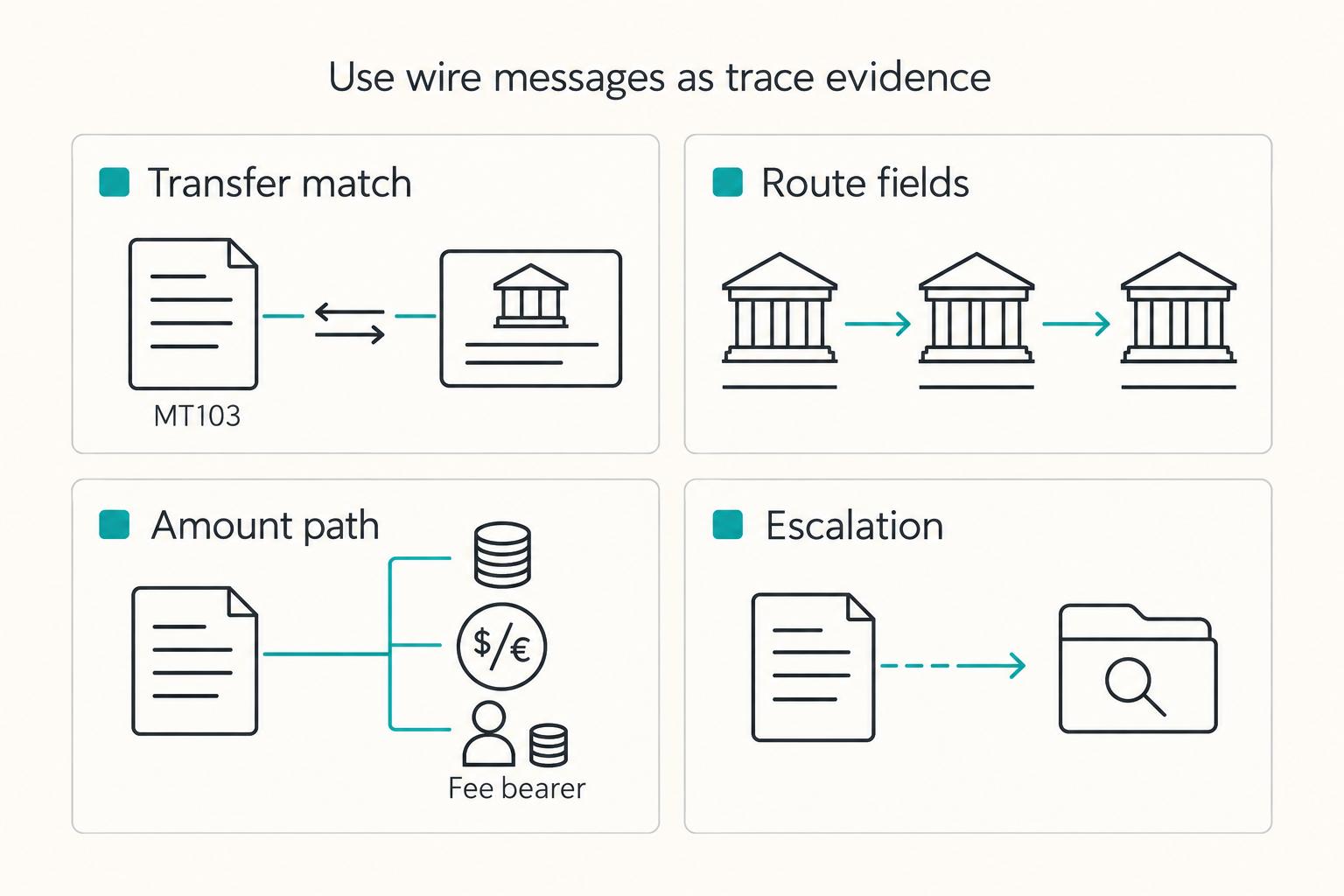
Quick Answer
Use a bank-authenticated MT103 or pacs.008 to trace a payment instruction; it does not establish final beneficiary credit. Match amount, currency, parties, reference, and UETR to one transfer, then check route and charge bearer. Ask the sending bank for tracker status and have the recipient ask their bank about posting. Do not resend while the original outcome remains unknown.
International wire traces fail when teams treat MT103 as a receipt instead of an investigation tool#
Treat a delayed international wire transfer like an investigation, not a proof dispute. Progress usually comes from separating confirmed facts from assumptions and escalating on one evidence trail.
Before you start#
This guide is for platform finance, ops, and engineering owners dealing with wire incidents at volume. If your first question is only "do we have the bank message copy?", you are already framing the case too narrowly. That document can be an important trace input, but it is not the whole incident record. It also does not remove the need to verify what your own stack, your bank, and the counterparty can each actually confirm.
Step 1. Reframe the incident around evidence. Start with a tighter question than "where is the money?" Ask: what has been initiated, what has been confirmed, and what is still unverified? That prevents a common failure mode where one team tells the customer "payment completed" while another is still trying to establish what was actually released.
Your first checkpoint is internal consistency. The amount, currency, sender name, beneficiary details, and timestamps in your ledger, bank receipt, support ticket, and any bank message copy should all point to the same transfer. If they do not, pause the trace and fix the mismatch first. Escalating with conflicting references is how cases bounce between teams.
Step 2. Build one incident record before anyone contacts a bank. Pull the minimum evidence pack into a single case file. Include the bank receipt or bank-provided message copy, your internal transaction record, the exact time the transfer was marked released or submitted, and the counterparty's statement that funds have not been received. Use one case ID across finance, ops, and engineering so every reply, screenshot, and status change lands in the same thread.
The practical benefit is fewer handoff errors. Finance can request documents, ops can manage external follow-up, and engineering can lock down the event timeline without each team creating its own version of the truth. A red flag is when the only "evidence" being shared is a cropped portal screenshot passed around in chat.
Step 3. Escalate what is known, and label what is still unknown. When bank-level visibility is limited, do not fill the gaps with confidence. State clearly which facts are confirmed by your records, which facts are supported by bank-provided documents, and which points still require confirmation from the bank or recipient side.
This guide follows that sequence: what to collect, what to verify first, what to escalate, and what you may still not know even with strong trace evidence. The goal is not to sound certain early. It is to make sure the next escalation is specific enough that someone can actually act on it.
Related background: KYC KYB CIP Explained for Cross-Border Freelancers and Small Teams.
What MT103 proves and what it does not#
A bank-authenticated MT103 provides payment-instruction evidence. A copy alone does not establish successful transmission, downstream processing, or final beneficiary credit.
| Check | MT103 status | Article note |
|---|---|---|
| Instruction details | Trace input | Authenticate the copy with the issuing bank; obtain transmission and tracker status separately |
| Payer, payee, amount, currency, and charges/fees | Records | Provides trace-critical details you can match to your internal record |
| Final credit at the beneficiary bank | Does not prove | Not proof of final credit at the beneficiary bank |
| Intermediary checks and downstream processing complete | Does not prove | Not proof that intermediary checks and downstream processing are complete |
- What it records: Payment-instruction details you can match to your internal record after authenticating the copy.
- What it does not prove: Final settlement at the beneficiary bank, or that intermediary checks and downstream processing are complete.
- How to use it in a live case: Treat it as trace evidence, not a receipt. If someone asks for wire proof, send the MT103 with status context: what is confirmed and what is still unverified.
If you want a deeper dive, read What is a SWIFT MT103 and How to Use It to Trace a Wire Transfer.
MT103 and pacs.008 in current operations#
Use either
MT103orpacs.008as valid trace input for a customer credit transfer, and do not delay an investigation waiting for one specific label.
For CBPR+ cross-border payment instructions, Swift’s coexistence period ended on 22 November 2025. The ISO 20022 customer-credit-transfer format is pacs.008. Legacy-looking copies can still appear through translations, contingency processing, or bank exports. Use the authenticated artifact the bank supplies and ask what it represents.
| Document or label | Data structure | Where your bank may issue it | How support should request it |
|---|---|---|---|
| MT103 | Legacy MT message format | Treasury portal export, bank support attachment, SWIFT payment proof output | "Please send the MT103 for this customer credit transfer." |
| pacs.008 / PACS008 | ISO 20022 XML-based message; more structured than MT103 | ISO 20022-enabled portal export or support attachment | "Please send the pacs.008 or PACS008 for this payment." |
| Bank-branded payment confirmation/export | Institution-specific wrapper; underlying message may be MT103 or pacs.008 | Online banking or treasury portal | "Please confirm whether this export is based on MT103 or pacs.008, and send the underlying message if available." |
The format can change, but your verification standard does not: confirm the file maps to the same payment before you treat it as trace evidence.
The CBPR+ deadline concerns the relevant interbank cross-border messages, not every bank document or payment channel. A portal label alone does not tell you which format was transmitted.
Banks also label these artifacts inconsistently (PACS008, pacs.008, or generic payment confirmations). If naming is unclear, ask which underlying message standard the export represents before escalation.
For related background, see What is an IBAN and How is it Different from a SWIFT Code?.
What to prepare before you start a trace#
Prepare one tight case packet before you contact any bank, so the trace can start on a specific transfer instead of a back-and-forth for missing details.
Step 1: Gather the minimum packet#
Collect only what maps the case to one payment:
| Packet item | Use in the case | Notes |
|---|---|---|
| Bank receipt or sending-side payment confirmation | Links the case to the payment | Prepare it before you contact any bank |
| Transaction details: date, amount, currency, sender, recipient | Maps the case to one payment | Match these fields to the exact payout in your ledger before escalation |
| Sender and receiver identifiers from your records | Supports party matching | Collect from your records |
| BIC code or routing identifier already provided | Supports routing checks | Include any BIC code or routing identifier already provided |
| MT103 or pacs.008 | Provides the underlying payment instruction | Request through an authenticated bank channel; turnaround and fees depend on the bank. |
This matters because MT103 includes trace-ready details like date, amount, currency, sender, and recipient, and it can show the route between banks. Match those fields to the exact payout in your ledger before escalation.
Request the message copy and bank status early. Availability, fees, and turnaround depend on your bank; do not wait for a fixed document-delivery period before raising an overdue payment.
Step 2: Confirm the transfer type before escalation#
Confirm you are tracing a single customer credit transfer, not a different rail that uses different proof artifacts. In practice, verify the payment is being handled as a SWIFT wire and that MT103 or pacs.008 is the right evidence format for this case.
If available, capture charge details (Field 71A): BEN, OUR, or SHA. That can help later if the issue becomes "payment missing" versus "payment arrived short."
Step 3: Assign ownership and one case ID#
Set ownership before external follow-ups:
- finance requests the bank document and confirms payment facts
- ops manages external follow-ups and case tracking
- engineering logs timeline and status evidence
Use one case ID across teams so updates from the originator bank to the beneficiary bank stay auditable in a single record.
Escalate when the bank’s expected arrival window has passed or the recipient disputes receipt. Saxo’s guidance uses five business days for its withdrawals; that is not a universal waiting rule.
Read the message in order so you can isolate the break point#
Read the payment instruction top-to-bottom and stop at the first verified mismatch. That sequence keeps escalation evidence-led and reduces avoidable back-and-forth with the wrong bank.
Step 1. Validate parties and route markers first. Check the originator bank, beneficiary bank, and each BIC code or intermediary bank code against your treasury record, counterparty details, and internal ledger for this specific transfer.
Use the bank-issued message copy or portal export as the source document, and attach it to the case. If a UETR is present, record it now so every follow-up stays tied to one transfer.
Treat any narrative or instruction-style free text as secondary context until core identifiers reconcile.
Step 2. Validate money fields before debating delay. Check amount, currency, and fee-related indicators against your commercial expectation for the payout.
If a charge bearer code appears (OUR/SHA/BEN or DEBT/SHAR/CRED), record the exact value shown on the bank document. If receipt amount is disputed, ask the sending bank to confirm how that code affected expected net receipt for this transfer.
If amount or currency does not match your ledger, pause routing analysis and resolve the instruction mismatch on the sending side first.
Step 3. Map the likely break point. After identifiers and money fields reconcile, narrow the delay to the most likely owner: sending-side release, correspondent banks, or beneficiary-side posting checks.
Ask the originator bank to resolve instruction mismatches and obtain route or tracker status. In parallel, have the recipient ask their bank about posting. Coherent instruction data does not establish that the payment has reached the beneficiary bank.
Step 4. Write the case summary as a table. Use a short table so escalation is based on verified checks, not assumptions.
| Field checked | Mismatch found | Owner | Next action |
|---|---|---|---|
| Originator and beneficiary identifiers | Thread details do not match message copy | Finance | Request corrected bank-issued message copy or confirmation |
BIC code and intermediary bank codes | Missing or unexpected routing party | Ops | Ask originator bank for route clarification before recipient escalation |
| Amount and currency | Message values do not match ledger | Finance | Reconcile internal payout record and confirm instructed values |
| Charge bearer code | Recipient reports short receipt | Finance and Ops | Record exact code and ask sender bank to confirm fee application |
| UETR or transaction reference | No single reference across threads | Ops | Standardize one case reference across all follow-ups |
Need the full breakdown? Read Open Banking Explained for Freelancers Managing Cross-Border Cashflow.
Escalation rules that prevent dead-end tickets#
Route the ticket to the bank that can verify the specific gap you found; dead-end tickets usually come from sending the right question to the wrong bank.
| Case pattern | Escalate to | What to include |
|---|---|---|
| Missing or unclear BIC code, sender, beneficiary, or processing institutions | Originator bank | Request the bank-issued message copy or equivalent proof of payment |
| Short receipt with charge bearer code shown as OUR, SHA, or BEN | Sender bank | Send the exact charge bearer code, instructed amount, and reported receipt |
| Instruction fields reconcile but credit remains unconfirmed | Sending bank and recipient through their bank | Request tracker status and posting checks; keep the original trace open |
| One incomplete response cycle already received | Banking relationship manager | Reuse the same evidence pack and timeline |
Step 1. Send missing-route cases to the originator bank. Ask it to authenticate the instruction copy, clarify missing or unexpected institutions, and provide the UETR and current tracker status. Verify the source through your normal bank channel rather than trusting an attachment forwarded by an unknown party.
Use one checkpoint: can you identify the sending bank, beneficiary bank, and route markers from a bank-issued record? If not, request the bank-issued message copy or equivalent proof of payment. Banks do not always issue MT103 documents automatically and may provide them only on request, sometimes for a fee.
Step 2. Anchor fee disputes on the exact charge bearer code. If the issue is short receipt, escalate with the exact charge bearer code shown on the instruction (OUR, SHA, BEN) plus the instructed amount and reported receipt. Keep the code exactly as shown on the bank document, and ask the sender bank to reconcile any deductions on this transfer.
This keeps the dispute tied to bank records instead of internal assumptions.
Step 3. Investigate unconfirmed credit from both ends. Keep the sending bank’s trace open for route and tracker status. Have the recipient contact their own bank with the matching instruction details and chronology to check posting or review. A clean copy does not prove delivery to that bank. Do not send a replacement while the original outcome remains unknown.
Ask for a definitive status update tied to the same case evidence.
Step 4. Set and enforce an internal stop rule. After one incomplete response cycle, escalate through your banking relationship manager with the same evidence pack and timeline. Do not rewrite the story each round; consistent, document-backed escalation is easier for banks to action.
This pairs well with our guide on Why International Wire Transfers Arrive Short and How to Reduce Fee Leakage.
Failure patterns in correspondent-bank chains#
A delayed wire can leave a visibility gap across multiple institutions. Cross-border processing can involve correspondents in jurisdictions different from both the originator and beneficiary banks. An authenticated instruction copy records payment details; confirm actual transmission or release separately with the issuing bank, and obtain tracker status to investigate downstream movement.
Start triage from what bank records prove, not from assumptions in the ticket thread. If your packet does not clearly show core routing and payment details, send it back to the originator bank for a cleaner document set before escalating further.
Keep route tracing and amount reconciliation as separate workstreams. When those get mixed into one ticket, teams usually end up with circular investigations and no clear owner.
Track each case by break point so escalation stays consistent:
| Break point | What you can prove | Next owner |
|---|---|---|
| Instruction sent | Originator bank released the payment instruction | Originator bank |
| Routed | Payment left sender side, but the intermediary path is still unclear | Originator bank, then relationship manager if needed |
| Posting or review | Beneficiary bank confirms whether funds are credited or held for review | Beneficiary bank |
Related: Correspondent Banking Explained: Why Your International Wire is So Slow and Expensive.
Build the evidence pack your bank will actually process#
Keep the package thin: your bank can act faster on a short file that proves one payment instruction, identifies it clearly, and shows what has not happened yet.
Step 1 Gather only traceable documents#
Start with four artifacts: the MT103 or PACS.008, the bank receipt, the core transaction details, and written confirmation from the counterparty that funds have not been received.
The message copy is the anchor because it includes the transfer details used for tracing delayed wires, including date, amount, currency, sender, recipient, and the Transaction Reference Number.
Checkpoint: can someone outside your team match the file to one payment without follow-up? If amount, currency, timestamp, sender, recipient, or reference is missing or inconsistent, go back to the originator bank before escalating.
Step 2 Add a one-page chronology#
Create a single-page timeline with timestamp, contact point, owner, and current status for each interaction with the originator bank and beneficiary bank.
Keep entries factual and specific. End each line with a clear status or next owner so the case does not stall in handoffs.
Step 3 Redact for sharing, not for confusion#
Run a redaction pass before external sharing, but keep the fields needed for traceability. You can mask sensitive account and payment-environment details while preserving transaction reference, date, amount, currency, sender and recipient names, and any routing markers shown.
If redaction removes the fields needed to locate the payment, the pack is safer but no longer usable. For a separate ops task, try the free invoice generator.
Final takeaway and copy-paste operator checklist#
Use
MT103/pacs.008as trace evidence, not as proof of final beneficiary posting.
- Confirm the document type and transfer match.
Use whichever bank-issued instruction copy you have (MT103, pacs.008, or PACS008), and verify it maps to one transfer by date, amount, currency, sender, recipient, and reference. If naming is unclear, label it as a bank-issued payment instruction copy and note the bank's label.
- Verify route fields before escalation.
Check intermediary and beneficiary routing details first (:56A/C/D, :57A/B/C/D) and the bank BIC values shown. If route data is missing, incomplete, or mismatched, raise that with the originator bank first.
- Check amount path and fee handling.
Review amount, currency, and charge bearer (OUR, SHA, BEN) before treating a shortfall as a routing failure. Confirm whether deductions can explain the received amount.
- Escalate by defect type, not by assumption.
Send instruction and routing gaps to the originator bank. For unconfirmed credit, obtain sending-bank tracker status and have the recipient request beneficiary-bank posting checks. Hold any replacement send while the original outcome remains unknown.
- Keep one evidence pack and one timeline.
Use one shared packet across finance, ops, and engineering: receipt, MT103/pacs.008, counterparty non-receipt note, and a timestamped case log. Record unknowns explicitly (for example, intermediary path, posting status, or message naming differences across banks).
Frequently Asked Questions
What is an MT103 in plain terms?
An MT103 is a standard SWIFT payment message used to send an international wire transfer. In practice, it is the bank-to-bank instruction record for a single customer credit transfer, with details like sender, recipient, amount, processing institutions, and fees.
Is MT103 proof of payment or proof of settlement?
An authenticated bank copy supports tracing the payment instruction; it does not confirm final beneficiary credit. Obtain transmission or tracker status separately and confirm posting with the receiving bank. Send the copy with current status rather than treating the document alone as settlement proof.
What changed between MT103 and pacs.008?
For CBPR+ cross-border payment instructions, MT/ISO 20022 coexistence ended on 22 November 2025. pacs.008 is the ISO 20022 customer-credit-transfer format. Banks can still supply MT-looking exports or translated copies, so accept the authenticated trace artifact and ask which transmitted instruction it represents.
When should I request MT103 or PACS008 for a delayed wire?
Request it as soon as the payment is disputed or the beneficiary says funds have not arrived, especially if your bank receipt does not show the full routing and fee details. Do not assume your bank will issue it automatically, because some banks provide it only on request and sometimes for a fee. Check that the document clearly ties to one transfer by amount, currency, date, sender, recipient, and reference.
What do OUR, SHA, and BEN mean for the final amount received?
These values sit in Field 71A (Details of Charges) and tell you who bears transfer fees. OUR means the sender covers transfer fees in full, so the total transferred amount is intended to reach the beneficiary. SHA means fees are shared, and BEN means the beneficiary covers them, so deductions can reduce the amount received, including deductions taken by intermediary banks.
Why can a payment still be delayed after an MT103 is issued?
Because the message shows the instruction exists, not that every bank in the chain has completed its part. A correspondent or intermediary bank may still be processing the payment, or the beneficiary side may not have posted it yet. A common failure mode is treating the message copy as the end of the case instead of the start of the trace.
Which bank should I contact first during a trace?
Contact your sending bank for an authenticated instruction copy, UETR, and route or tracker status. If credit remains unconfirmed, have the recipient ask their bank about posting using the same details. Keep the sending-bank investigation open until the original outcome is resolved; a clean copy does not identify the stopping point.
Try a related tool
Researched and edited by the Gruv editorial team. Gruv builds cross-border billing, payouts, and finance-operations software for global businesses.
Sources
Includes 3 external sources outside the trusted-domain allowlist.
Educational content only. Not legal, tax, or financial advice.
Related Posts

How to Use a SWIFT MT103 to Trace a Delayed Wire Transfer
If you have an MT103 copy, start with `Field 20` and the UETR when available, then verify the core details before you contact the bank. The identifiers help its wire team locate the instruction; ask the bank to authenticate the status rather than relying on the appearance of the copy.
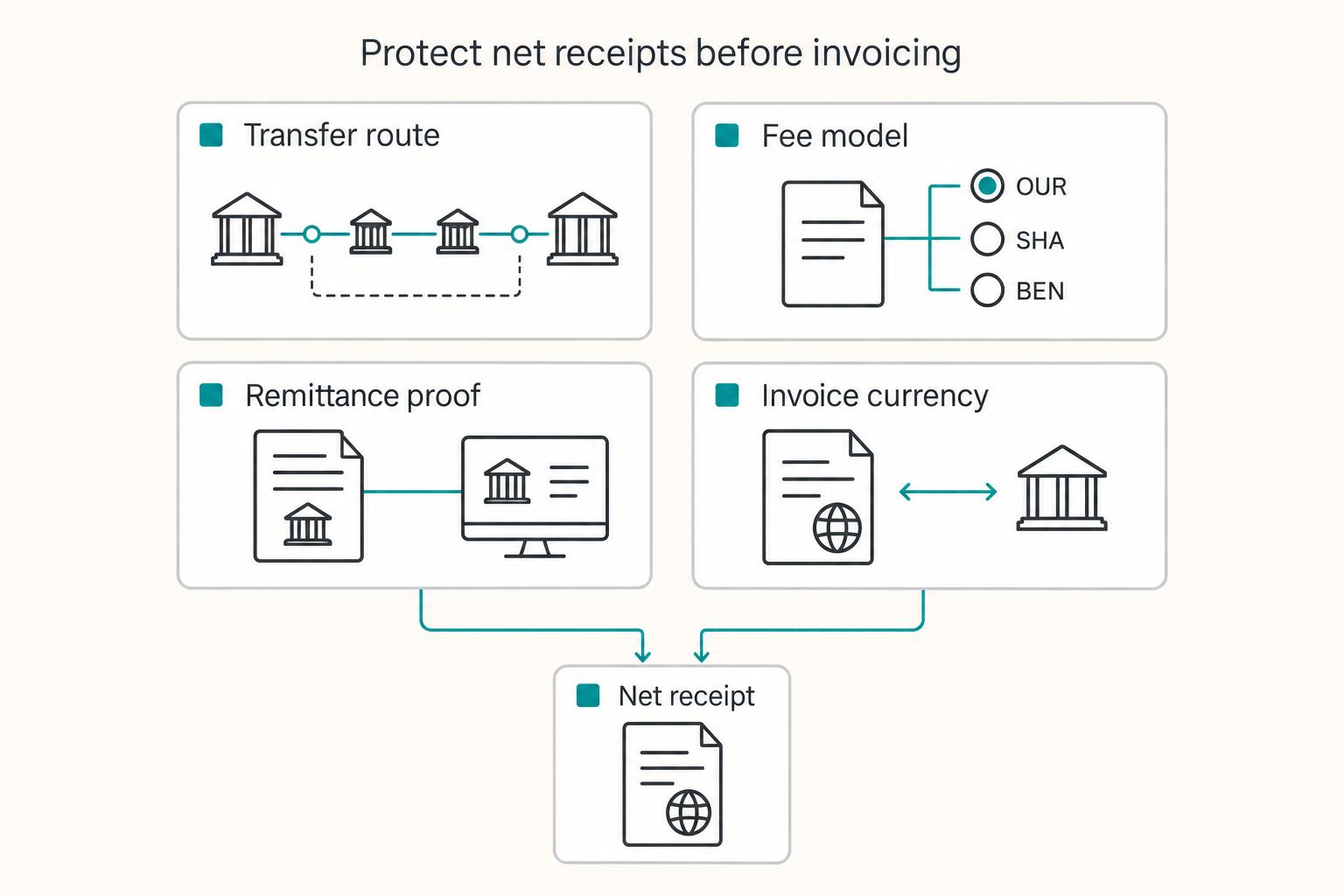
Why Your International Wire Arrives Late and Costs More
When a client says they paid but your money arrives late, lands short, or is hard to trace, that is a cash-flow risk, not a minor inconvenience. If the amount and timing are uncertain, planning your next moves gets harder.
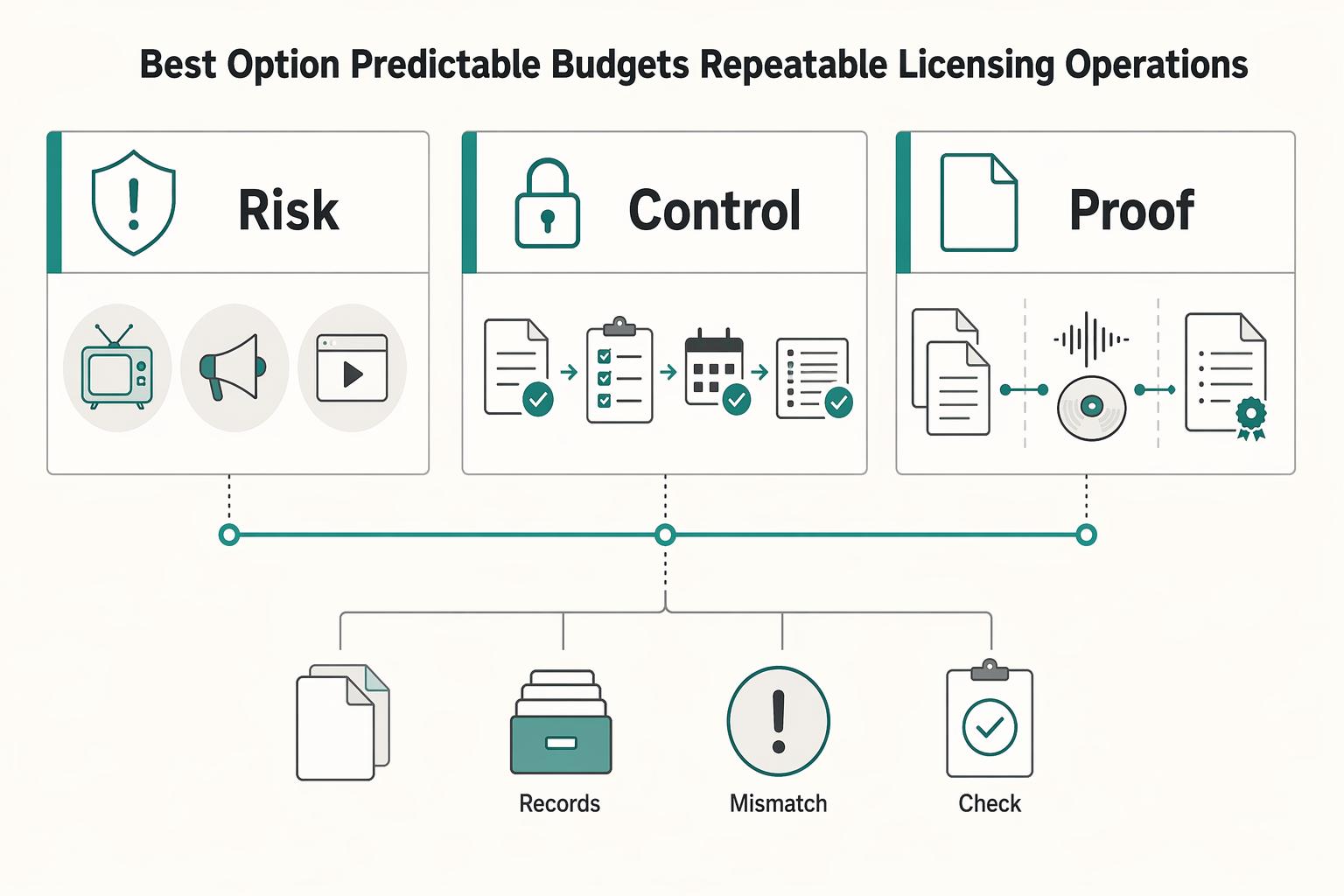
Sync Royalties for Video Platforms and What You Owe for Music Licensing
Before you ship video features, break the music question into three parts. First, identify the right you need to pair music to picture. Then identify the license fee, which is often paid up front. Finally, ask whether any ongoing royalties could still show up later. That matters more than the deal label, because it is easy to miss obligations when all music spend is treated as one bucket.