

Quick Answer
You lose money on international wire transfers because fees can be deducted at several points: the sender's bank, intermediary banks on the SWIFT route, your receiving bank, and any currency conversion. Reduce losses by agreeing on currency and fee responsibility before invoicing, using exact routing details, collecting the sender's confirmation, and reconciling the landed amount on posting day.
Why international wire fees quietly drain your invoice#
Most money lost on cross-border payments does not disappear in one obvious charge. It leaks out in small deductions at different points along the route. The client may pay an outgoing fee at their bank. One or more correspondent banks may take a cut as the payment moves across SWIFT. Your own bank may charge to receive it. If a currency conversion happens anywhere along the way, that can add more drag. By the time the funds land, the amount credited can be lower than the amount invoiced even when the client is sure they paid in full.
Swift carries standardized payment messages between institutions; funds settle through bank accounts and payment systems. Correspondent banks may charge for their part of the route. Currency conversion can add cost if the transfer or receiving account uses a different currency.
The practical fix is to inspect the payment path before money moves, not after. Ask the client for the transfer confirmation and note any correspondent details shown there. Confirm your own bank's policy for incoming international wires and how any fee appears when the credit posts. Agree on currency before you issue the invoice, because once the sender chooses a different currency or route, you usually lose control over the final net amount. Then reconcile the landed amount the day it posts, while both sides still have the transfer details in front of them.
Treat this as a sequence with clear owners. Before the due date, you send final receiving details and payment terms. On send day, the client shares the transfer confirmation and reference. On posting day, you match what was sent to what landed and flag any shortfall immediately. It sounds basic, but it prevents the usual failure where everyone assumes someone else has the record.
Keep the evidence as you go. Save the sender's confirmation, the payment reference, and your bank's credit advice. Those are the documents that let you trace a shortfall instead of arguing from memory.
A sender’s posted wire fee may not cover the full route. Agree before payment on who bears outgoing, intermediary and receiving charges and how deductions affect the invoice balance. A new note on an invoice should reflect that agreement, rather than silently change it. For currency options, see How to Get Paid in Multiple Currencies Without Losing Your Shirt.
Map the cost path from client to your account#
The fastest way to lose control of a wire is to treat it as one fee. Before the client sends anything, map the payment across four cost points: the outgoing fee at the sender's bank, route deductions taken in transit, the incoming fee at your bank, and any FX markup. That map does two useful things. It shows which costs are under someone's control, and it shows where you will need proof if the amount that lands comes in short.
Because a wire is generally hard to unwind once the receiving bank accepts it, the right time to ask questions is before the send and again on the day the payment posts.
| Component | Who controls it | What to check |
|---|---|---|
| Outgoing fee (sender bank) | Client and their bank | Ask the client to confirm the posted fee and whether cross-border pricing differs from domestic. |
| Route deductions (intermediaries) | Route dependent | Deductions may occur as funds move between banks. If the confirmation shows correspondents, note them. |
| Incoming fee (your bank) | You and your bank | Get your bank's written policy for receiving international credits and how any fee appears when the wire posts. |
| FX conversion or markup | Provider policy | Agree on currency before the transfer and compare the expected net to the invoice total. |
A simple timeline keeps those checkpoints from drifting:
- Before send: confirm channel, currency, and who covers each fee category.
- Send day: collect the confirmation, payment reference, and any route details shown by the sender's bank.
- Posting day: compare sent versus received amounts and classify the gap as inbound fee, known deduction, or unexplained difference.
- If unresolved: ask the sender to open a trace with their bank right away and share the case details so both sides work from the same reference.
Once you know where a payment can leak value, the next lever is the channel the client uses to send it.
Choose the channel with suitable pricing and records#
Compare the bank’s supported initiation channels for the actual account. Online initiation can be convenient and may have different fees, but a branch payment can also provide a usable receipt. Ask for the quoted total and required confirmation fields before choosing.
Keep a confirmation that shows amount, currency, date and reference, whether it came from a portal or a branch. The submission record helps investigation; it does not prove the beneficiary received the payment.
If branch initiation is unavoidable, keep the same evidence standard. Ask for a receipt or confirmation that still shows amount, currency, date, and transfer reference. If the client only sends a payment note without those fields, request the full confirmation before marking anything as in progress. You are not being difficult. You are preserving the minimum data needed to reconcile and trace.
The failure to avoid is relying on a verbal “sent” message rather than a usable confirmation. Require the same fields from either initiation channel.
Give the client the supported receiving instructions and the evidence fields you need. Let them use an authorized bank channel that meets those requirements.
Control what you pay to receive#
Verify your own account’s incoming wire fee and any currency-conversion policy first. An intermediary may also deduct a charge before arrival. These are different cost points; a universal incoming-fee ceiling is not a useful estimate.
Start with your own bank. Ask for the written policy on incoming international wires and confirm how any charge appears. Some banks deduct it from the credit itself. Others show it as a separate line item. That detail matters when you reconcile, because a short receipt can come from more than one source.
Confirm incoming costs with your bank and agree who bears them before payment. Repeat that allocation on the invoice and keep the bank policy with the payment file. If the posted amount differs from the expected credit, investigate the discrepancy before assigning it to the client.
Log the instructed amount, credited amount and separately posted fees. Keep any unexplained difference open until traced; it might be FX, an incorrect instructed amount or another adjustment rather than a correspondent fee. For a hypothetical $1,000 invoice, a $25 intermediary deduction leaves a $975 credit. A separate $15 receiving charge reduces account value to $960, but is a bank expense, not another reduction to the credited payment. Whether the client owes $25, $40 or neither depends on the agreed fee terms.
Reconcile the instructed amount, credit and separately posted fees before marking paid. Identify the cause of each difference, then apply the agreed fee allocation to decide whether any client balance remains. A smaller account balance does not automatically establish underpayment.
Receiving in your account currency may avoid automatic conversion at the receiving bank, but the sender may still pay to convert funds. Compare the exchange rate, fees and expected receipt in the invoice currency. For multi-currency setup choices, see How to Get Paid in Multiple Currencies Without Losing Your Shirt.
Cut intermediary charges on SWIFT routes#
Use the receiving instructions supplied by your bank for the currency and corridor. Ask the sender’s bank which supported route and charge option it will use. Neither party can necessarily select the fewest correspondent hops, and fewer hops do not guarantee lower fees.
| Instruction item | Include | Condition |
|---|---|---|
| Account details | Account name as on file; account number or IBAN | Exactly as your bank provides them |
| Bank identifiers | Receiving bank name; SWIFT or BIC | Exactly as listed by your bank |
| Correspondent details | Bank-supplied correspondent instructions | Use only as supplied for the currency and corridor |
| Currency and reference | Currency to send; invoice number | For the payment reference |
| Charge option | Bank-supported charge allocation and any coverage limits | Confirm before submission; route or code alone does not guarantee net receipt |
That matters because route charges are often the least visible part of the wire. The client may only see what their own bank charged. You may only see the final short credit. Everything in between can feel opaque unless you tighten the instructions before the payment is sent.
Where the bank offers charge options, OUR/DEBT assigns charges to the sender, SHA/SHAR shares them and BEN/CRED assigns them to the beneficiary. Availability depends on the payment. Confirm what the bank actually covers, including receiving-bank charges; an invoice clause or charge code alone is not proof of the eventual net receipt.
Copy the approved instructions exactly. Do not substitute a correspondent bank to chase a shorter route without approval from the banks involved. Incorrect account or routing fields can delay, reject or misdirect a payment.
Use a copy-ready instruction block instead of retyping details in each email. Keep one approved version per receiving account, then paste it into invoices and payment reminders without editing core fields. Small typing changes are a common source of avoidable delays, and delays often create extra handling steps you did not need.
Once the payment is in motion, your job is verification. Collect the sender's confirmation, including the transfer reference, so you can investigate quickly if the credit is short or late. On posting day, compare the amount sent with the amount received and file your bank's credit advice with the invoice. If timing slips, remember that settlement depends on the corridor, currency, and intermediaries involved. Escalate early with both sides while the transfer trail is still easy to trace.
Exact instructions reduce avoidable handling, but the bank still controls its supported route. Investigate discrepancies using the confirmation and receiving record rather than assume every extra deduction came from routing mistakes.
If a corridor keeps producing messy deductions or weak FX, that is the point where comparing the bank route with a specialist provider becomes worthwhile.
Decide when to use a money transfer provider#
Compare a specialist provider when it supports both parties and the agreed payment purpose. Evaluate total sender cost, expected receipt, funding method, delivery estimate and compliance requirements together. Transparency and speed are separate criteria, not a fixed tradeoff between providers and banks.
Wise quotes depend on amount, funding method and currency pair. Obtain a live quote for the actual business payment and check any extra SWIFT or receiving-bank cost. A headline minimum percentage is not the fee for every corridor.
Still, this is not a blanket recommendation. Treat it as a corridor-by-corridor decision. For smaller or mid-sized invoices, where fixed bank charges and FX spread can take a noticeable bite, a provider may preserve more of the payment. For very large tickets, contract-driven payments, or situations where a bank route is required, the wire may still be the right tool.
For repeat payments, check any applicable volume pricing in the account’s country and currency. Do not carry a Canadian threshold into another account’s estimate. Use the actual quote to decide whether scale changes the comparison.
To keep the comparison honest, capture two live quotes within the same hour: the provider's all-in estimate and the bank's wire cost and rate. Check recipient name formatting and any required ID fields so a preventable delivery failure does not distort the result. Then save the provider receipt and your bank's credit advice and reconcile the final amount on posting day.
For repeat corridors, keep a simple comparison log with the same fields each time: transfer amount, fee structure, rate basis, expected net, and actual net received. Consistent fields matter more than fancy formatting. They help you see whether one route is reliably cleaner or whether results swing based on timing and channel.
If a provider wins on both net amount and acceptable timing, document the route and reuse it next time. If not, you still learned something useful about that corridor. For a broader comparison of non-wire options before you standardize, see Stripe vs. PayPal vs. Wise: The 2026 Battle for Best Freelancer Payments. The practical rule is simple: get two real quotes, compare what actually lands, and pick the channel that preserves more without creating timing or compliance problems for the payment.
Align contract and invoice terms to prevent losses#
Most fee disputes start as documentation problems, not bank problems. If the contract and invoice do not say who covers fees, what currency to use, which channel is acceptable, and what proof is required, you leave the most expensive parts of the payment to assumption.
| Term | Example language | What it sets |
|---|---|---|
| Fee responsibility | Sender bears outgoing and intermediary charges; recipient bears its separately charged incoming fee, unless otherwise agreed. | A sample allocation to adapt to the actual agreement |
| Currency and channel | Pay in U.S. dollars via online wire or Pay via Wise if agreed. | The currency and, if relevant, the approved channel |
| Proof and reference | Include the invoice number and provide the transfer confirmation with the applicable transfer reference. Recipient will file the bank credit advice with the invoice. | The evidence standard |
| Receipt standard | Apply the agreed credit requirement and fee allocation when marking paid. | Separates payment credit from separately posted bank expenses |
Agree fee responsibility, currency, channel and the treatment of short payments before payment is due. Repeat the accepted terms on the invoice. Separate a short credited payment from a receiving fee charged as a separate account debit; the client’s obligation follows the agreement, not the bank statement balance alone.
Be specific enough that the client's finance team can act without a follow-up email. If both parties agree, write "Pay in U.S. dollars via online wire" or name a provider such as Wise when that channel is acceptable. That kind of instruction lowers the odds of a sender choosing the wrong currency, triggering an avoidable conversion, or paying through a channel that creates weaker records.
Ask for the confirmation and applicable transfer reference, such as a bank reference or UETR for a Swift payment where available, or the provider’s transfer ID for another route. Save the receiving record, compare instructed and credited amounts, and investigate any discrepancy.
It also helps to set an internal handoff rule: the person issuing invoices uses the same approved payment language every time, and the person reconciling receipts checks against that language before marking paid. The moment those two steps drift apart, fee disputes return. Keep one approved template and update it only when your bank details or accepted channels actually change.
Several failure modes are worth calling out because they are so common. Ambiguous fee language leads to back-and-forth the moment an intermediary takes a deduction. Missing currency direction can trigger a sender-side conversion with an avoidable markup. No transfer reference or invoice number slows reconciliation and can hide small shortfalls until month end. And naming a provider in your template without confirming the client's ability to use it can delay payment for reasons that have nothing to do with price.
Where supported, dedicated receiving details can help match client payments. Confirm the legal account structure, currency, coverage and client acceptance before putting Gruv Virtual Account details into instructions. Merchant of Record is a separate commercial and payments model, not simply another set of bank details.
If work or shipment depends on receipt, define the required amount and when funds count as received in the agreement. Apply the agreed fee allocation when resolving a short credit rather than automatically charge the client for every bank expense.
A short, repeatable checklist for every client payment#
At this point, the goal is boring, repeatable execution. SWIFT carries payment messages, not the funds themselves, so the control you actually have comes from precise instructions before the send and quick reconciliation right after the credit posts.
Use this checklist for every payment:
- Before sending an invoice: confirm the client's channel, whether online or branch, and ask what sender-side fee pattern they expect. Share your receiving bank's incoming wire policy. Agree on the payment currency so nobody triggers an unplanned conversion.
- On the invoice: repeat the agreed currency and fee allocation, and include the invoice reference.
- After the transfer: collect the sender's confirmation with the applicable transfer reference and reconcile the landed amount on the day it posts. If the net is short, including because of intermediary deductions, escalate promptly. File your bank's credit advice with the invoice.
- For future payments: retain corridor outcomes and supporting records in the payment file so the next comparison uses actual results.
Keep a minimum document pack for each payment file:
- Invoice with final payment terms and currency.
- Sender confirmation showing amount, date, currency, and transfer reference.
- Receiving-side credit advice and statement line item.
- Internal reconciliation note showing sent amount, credited amount, and disposition of any shortfall.
Two quick checks save the most time. First, compare the amount sent with the amount credited on posting day, not at month end. Second, keep the applicable transfer reference with the invoice and the credit advice. That reference is your anchor if timing slips or the final amount is lower than expected.
Flag missing fee allocation, vague currency instructions and incomplete confirmation references. Resolve deductions under the agreed terms; a missing net-of-fees clause does not make every receiving fee the client’s debt.
If you want a deeper dive before you standardize your setup, read The Best Multi-Currency Accounts for Digital Nomads and Freelancers.
Keep more of each payment without surprises#
If your volume is growing or you need cleaner records, dedicated receiving details and centralized storage can help. Where supported, explore Gruv Virtual Accounts and Payouts, and confirm coverage before you depend on them. The principle stays the same no matter what tools you use: map the route, collect proof at each step, and act quickly when the final credit does not match the invoice. For FX tradeoffs tied to currency choice, see How to Get Paid in Multiple Currencies Without Losing Your Shirt.
Frequently Asked Questions
How much do international wire transfers typically cost?
The useful way to think about cost is as a full path, not one line item. For example, Bank of America lists $30 for domestic wires and $45 for international wires sent in U.S. dollars. It also shows no outbound fee when sending in foreign currency, but exchange-rate markups can still apply. That is why the posted sender fee alone is not a reliable guide to what will actually land.
Do I pay for incoming international wires at my bank?
You may. Whether you are charged depends on your bank, your account, and the bank's posted fee schedule for incoming international wires. Some institutions charge to receive the payment, and some do not. Even when there is no inbound fee, the amount can still arrive short because of deductions taken earlier in the route.
What are intermediary bank fees and why do they happen?
These are charges taken by banks that relay the payment between the sender's bank and your bank. They happen because many cross-border wires do not move directly from one institution to another. Instead, they pass through correspondent relationships, and one or more of those banks may deduct a fee while the transfer is in transit.
Is it cheaper to initiate a wire online instead of in a branch?
Sometimes. Compare the quoted fee for the actual account and channel. Both online and branch initiation can provide usable confirmation records; require amount, currency, date and reference either way.
What does Wells Fargo charge for international wires today?
Check the current Wells Fargo schedule for the sender’s specific account, currency and initiation channel. Its online wire page directs users to account-specific fee information. Use the quoted charge and any waivers for that account, rather than a historical generic online-versus-branch number.
When should I consider using a provider like Wise instead of a bank wire?
Compare Wise when it supports the sender, recipient and business purpose and the agreement permits it. Obtain a quote for the actual amount, funding method and currency pair, then compare expected receipt, total cost and delivery timing with the bank route. Check any additional SWIFT or receiving-bank charges.
Try a related tool
Researched and edited by the Gruv editorial team. Gruv builds cross-border billing, payouts, and finance-operations software for global businesses.
Sources
Includes 4 external sources outside the trusted-domain allowlist.
Educational content only. Not legal, tax, or financial advice.
Related Posts

Stripe vs PayPal vs Wise for Freelancers in 2026
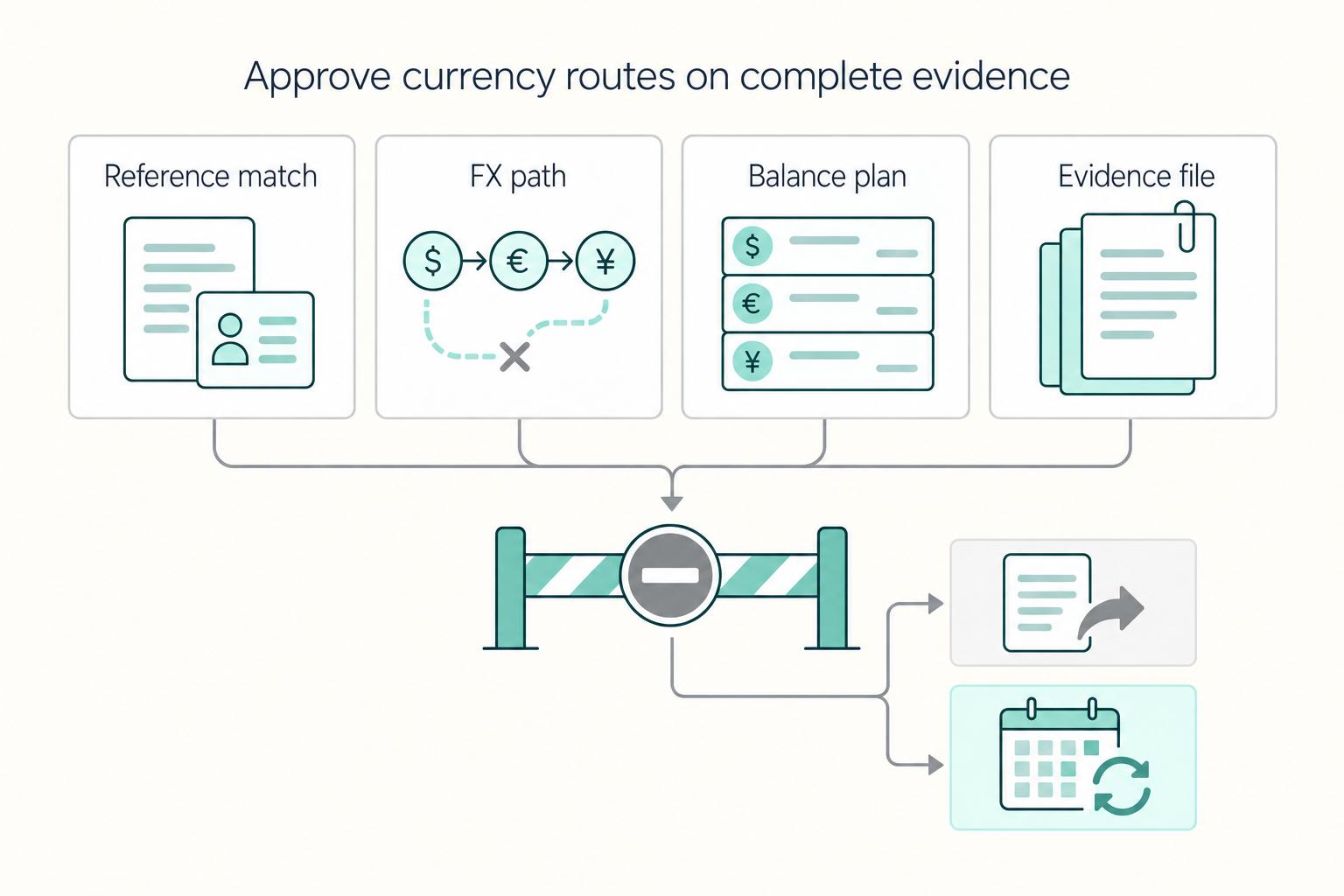
Cashflow reliability matters more than brand familiarity. If money arrives later than expected, gets reduced by fees, or loses value during conversion, margin disappears even when the client technically paid on time.
How to Get Paid in Multiple Currencies Without Forced FX
To get paid in multiple currencies, first check whether your account can receive and hold the client’s currency. Where that route is supported, separate receipt from conversion so you can choose when to convert for expenses or home-currency cash needs. Holding currency also exposes you to exchange-rate changes and the account’s protection and access terms.
Multicurrency Business Accounts for UK Freelancers and Small Companies
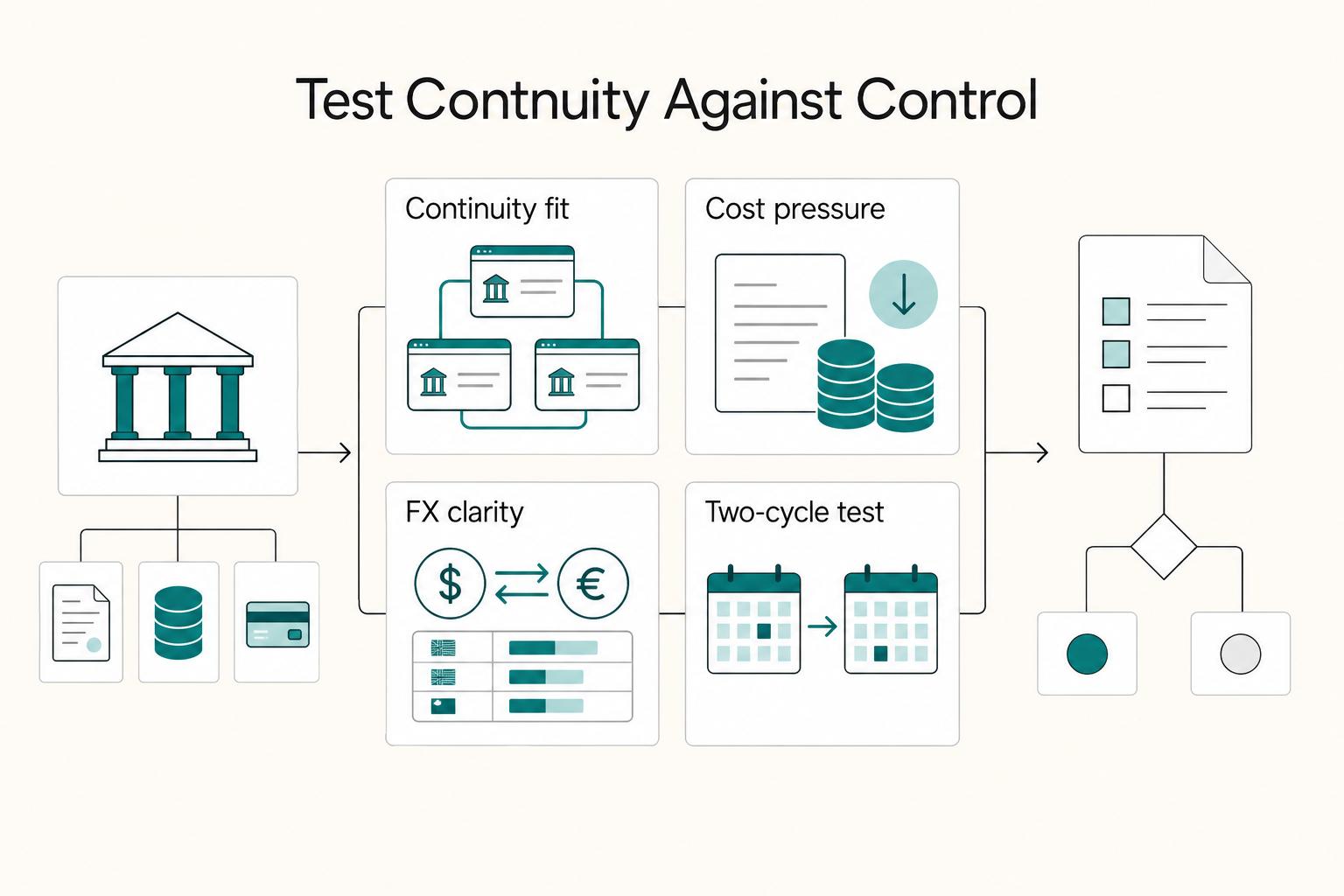
A multicurrency account can let a freelance business receive foreign client payments, keep the original currency and convert only the portion needed for local bills. The important choice is the exact product and market. A personal travel account, a UK business account and a US business edition can share a brand while having different eligibility, fees and protections.