
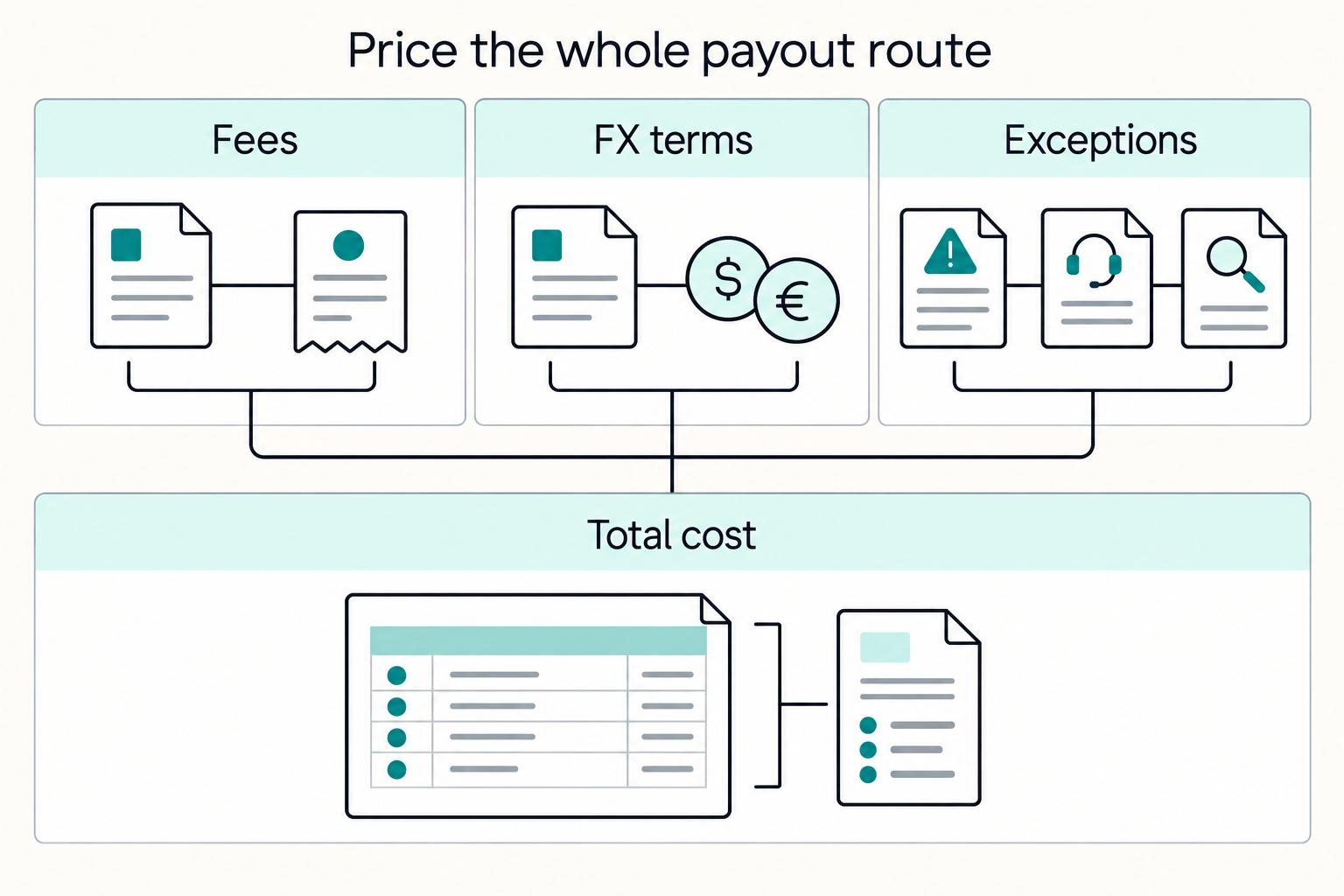
Quick Answer
Keep bank routes where delivery is predictable, and test stablecoin payouts where verified off-ramp coverage solves a real timing problem. Compare time to usable fiat, all-in cost, recovery options, and evidence quality for each lane. ACH includes same-day and standard processing; Fedwire operates on funds-transfer business days rather than continuously.
How to compare stablecoin and traditional payout rails#
If you run payouts, treat stablecoin vs traditional payment rails as a routing decision, not a vote for "new" or "old." The real question is which rail gives you more predictable settlement speed, cost predictability, visibility, and control for each payout lane.
This is an execution choice, not an ideology debate. Traditional rails remain foundational across RTGS systems, correspondent banking via SWIFT, and clearing networks. Stablecoin-based settlement can move value nearer to T+0, but it does not remove friction. It changes where friction appears and raises the governance bar for custody, compliance, and operations.
For contractor payouts, creator withdrawals, and marketplace disbursements, evaluate rails on four practical questions:
- How fast funds actually settle
- How predictable total cost is
- How visible payment status is in transit
- How much control you retain when exceptions happen
Traditional rails provide established bank controls, but cross-border delivery can still depend on cutoffs, intermediary checks, local banking hours, and reconciliation. Fedwire’s funds-transfer business day begins at 9:00 p.m. ET on the preceding calendar day and ends at 7:00 p.m. ET, excluding weekends and Federal Reserve holidays as business days. Monday processing can therefore open on Sunday evening; banks may impose earlier customer cutoffs.
Stablecoin routes may reduce dependence on long intermediary chains in some flows, but they do not remove compliance obligations or guarantee instant end-to-end payout outcomes. Settlement can still be delayed by compliance reviews and off-ramp steps, so validate each provider and corridor on actual settlement windows, status visibility, and exception ownership, not just advertised transfer speed.
The scope here is practical: cross-border payouts, hybrid routing, compliance gates, reconciliation, and go-live controls where stablecoin support exists. Start with a controlled lane-level test, not a full replacement decision, and align finance, ops, and engineering on settlement expectations, exception handling, and audit evidence before the first live batch.
At a glance comparison of stablecoin and traditional rails#
Use this as a routing baseline: ACH for routine domestic volume, wires for higher-value bank pushes, SWIFT-linked bank delivery when recipients need cross-border bank deposit, and stablecoin lanes when intermediary delays are the main constraint.
| Rail | Speed | Availability window | Traceability in transit | Reversibility / finality | Best fit | Confirm with the provider |
|---|---|---|---|---|---|---|
| ACH | Same Day ACH where eligible; standard ACH timing depends on effective date and provider submission cutoffs | Depends on submission and processing windows, not continuous end-to-end real time | Provider events, settlement files, and bank records show different stages; match them by payout reference | Returns and narrowly permitted reversals have distinct rules; an ACH credit is not freely cancellable | Routine domestic payouts and recurring disbursements | Selected ACH service, submission cutoff, settlement date, and return handling |
| Wire transfers | International can take a few days depending on correspondent routing and time zones | Depends on bank and correspondent operating windows | Payer visibility can still be limited in transit | Difficult or impossible to reverse once executed | Urgent, higher-value bank payouts | Customer cutoff, execution confirmation, beneficiary credit, and recall process |
| SWIFT-linked cross-border bank flow | Swift reports over 90% reach the beneficiary bank within one hour; recipient credit can take longer | Not 24/7 end to end across jurisdictions | Swift tracking can expose the bank journey; final recipient credit still needs confirmation | Recovery options are limited once instruction chains are moving | Cross-border bank delivery when recipient must receive local bank deposit | Tracking access, beneficiary-bank arrival, recipient credit, and investigation owner |
| Stablecoin settlement | Measure on-chain confirmation separately from on-ramp and off-ramp completion | Blockchain leg may be continuous, but end-to-end payout is not uniformly 24/7 | Token movement may be visible onchain, but end-to-end visibility depends on provider status exposure | Final on-chain transfers have no general chargeback; partner recovery and issuer restrictions are separate mechanisms | Cross-border lanes where intermediary delay is a key constraint and off-ramp reliability is proven | Supported token and network, confirmation policy, off-ramp timing, and recipient credit |
The operating difference becomes clearer once you look past speed claims and focus on control ownership.
| Rail | KYC / KYB / AML gates | Status visibility in practice | Exception handling pattern | Reconciliation effort | Dependency pattern | Operational checkpoint |
|---|---|---|---|---|---|---|
| ACH | Controls still apply in bank-mediated ACH flows | Use provider events and settlement or return files to reconcile payout state | Returns and timing exceptions are part of normal operations | Moderate to high at scale because of batching and return handling | Bank and ACH processing windows | Name the bank and platform owners for screening, returns, and reconciliation |
| Wire transfers | Controls still apply before execution in bank flows | End-to-end visibility varies by bank and corridor | Post-send repair options narrow quickly because reversal is limited | Moderate domestically; often higher cross-border with correspondent routing | Sending/receiving banks plus correspondent path for cross-border | Confirm release approvals and the bank’s repair or recall procedure |
| SWIFT-linked cross-border bank flow | Intermediary routing adds compliance layers | Swift tracking improves visibility where exposed by the provider; record beneficiary credit separately | Investigations can become slower with intermediary involvement | High due to intermediary steps, FX conversion, and settlement timing gaps | Sender bank routing through one or more partner banks | Confirm who can trace intermediaries and resolve missing beneficiary credit |
| Stablecoin settlement | On-ramp and off-ramp stages mean controls still apply; ownership must be validated provider by provider | Token movement may be visible onchain, but payout-state quality depends on provider coverage of fiat legs | Friction can shift to on-ramp/off-ramp stages and provider workflows | Moderate to high when onchain and fiat records are not aligned | Fiat on-ramp -> blockchain transfer -> fiat off-ramp | Assign custody, screening, conversion, and fiat-delivery responsibilities |
The less obvious contrast is where dependency sits: SWIFT and correspondent paths depend on intermediary banks, while stablecoin paths depend on fiat on-ramp and off-ramp partners. In both cases, measuring only the cleanest leg can overstate real payout performance, so compare full-path settlement, visibility, and exception ownership before you choose a lane.
For a step-by-step walkthrough, see Choosing Global Contractor Payment Rails in 2026 Without False Precision.
What changes in the money path when you switch rails#
The main change is not that friction disappears. It is that settlement sits in a different part of the stack, and delay risk can shift with it.
| Step | Traditional bank/SWIFT path | Stablecoin-enabled path |
|---|---|---|
| Instruction | Payment instructions move through bank messaging rails (for example, SWIFT). | Instruction and settlement can occur together in one on-chain transfer. |
| Value movement | Cash settles later through correspondent banking relationships. | Value settles on-chain between wallets, and multi-rail flows may still connect back to bank settlement. |
| Account model | Bank-account based settlement. | Wallet-based transfer with on-chain settlement. |
| Where complexity concentrates | Intermediaries in the correspondent chain can add delay, cost, and process complexity. | Complexity often shifts to reconciliation, compliance, and partner/tool workflows across rails. |
If your payout starts in fiat and ends in fiat, stablecoin can become a middle leg rather than a full replacement rail. That can improve timing on the on-chain segment, but it also creates a multi-rail operating model you still have to control end to end.
In practice, time loss shows up in different places by rail. Traditional flows are constrained by intermediary and banking-hour processes, while stablecoin-side liquidity can move 24/7/365 and overall completion still depends on cross-rail coordination and internal matching. The operational checkpoint stays the same: match bank settlement files, blockchain transactions, and your internal ledger records.
Total cost is not just fees#
Do not price a payout route on the visible transfer fee alone. Your real cost depends on fee visibility, FX treatment, and how much exception work the full path creates.
| Route | Fee input for the comparison | FX-pricing checkpoint | Hidden-cost checkpoints to document | Quote or terms to obtain |
|---|---|---|---|---|
| ACH | Confirm with your ACH provider. | Confirm rate source and markup disclosure when FX is involved. | Reconciliation lag, refund complexity, investigation time, failed-payment rework, exception labor. | Quote the selected ACH service and any FX or return fees for your payment size. |
| SWIFT | Wise shows a fixed receive fee for "Receiving USD wire and Swift payments" of 6.11 USD (provider-specific, not market-wide). | Ask where conversion happens and whether markup is disclosed. | Intermediary handoff complexity, reconciliation lag, refund complexity, investigation time, exception labor. | Obtain sender, intermediary, and recipient fee treatment for the actual corridor. |
| Wire transfers | Wise's 6.11 USD receive fee also applies to USD wire receive flows on that provider page (provider-specific). | Same checkpoint: rate source and markup disclosure. | Rework on failed payments, reconciliation lag, investigation time, exception labor. | Obtain sending-bank fees and recipient receive fees for the selected currency and route. |
| Stablecoin-enabled route | Confirm with your stablecoin provider. | If payouts start or end in fiat, verify on-ramp/off-ramp conversion terms and disclosure. | Reconciliation between on-chain and internal ledgers, refund/recovery process, investigation handling, exception labor; plus infrastructure risks such as smart contract failure and concentration. | Obtain on-ramp, network, off-ramp, liquidity, and FX charges for the full fiat-to-fiat path. |
| Non-bank baseline (Wise; plus Remitly/Western Union as comparison candidates) | Wise’s U.S. pricing page lists send fees varying by currency, from 0.23% as checked on October 2, 2026; use the actual transfer quote. | Wise states it uses the live mid-market rate and warns some providers hide fees in FX markup. | Method-level differences, exception handling, and investigation handling still need validation. | Compare quotes for the same payment amount, currencies, funding method, and recipient delivery method. |
Use direct-bank and non-bank routes as cost baselines. Wise’s U.S. page lists 6.11 USD to receive USD wire and Swift payments and send fees from 0.23%, varying by currency, as checked on October 2, 2026. Those are provider-specific examples, not all-in corridor prices. Save a quote for the actual amount, funding method, and destination before comparing a stablecoin route.
A workable decision rule is simple: for small, frequent payouts, you may prioritize lower fixed friction and cleaner operational flow. For higher-value payouts, you may prioritize controllability and credible recovery paths. If corridor-level all-in comparisons are missing or the methodology is unclear, treat that as uncertainty, not a savings claim.
Compliance and legal exposure by rail#
Map obligations to the entities and activities in the payout path. A bank partner, custody provider, and on/off-ramp can perform different checks, but your operating agreement still needs to explain who verifies the customer, screens the transaction, holds funds, and handles an investigation. Rail choice alone does not determine those responsibilities.
Define compliance and custody handoffs#
For each stablecoin lane, record who controls the wallet, who may sign a transfer, which network and token are supported, and who can convert the token into the recipient’s currency. For USDC, Circle’s terms condition direct redemption on eligibility for a Circle Mint account in good standing. Holding a token does not give every recipient direct issuer redemption access.
| Control area | Before release | Evidence to retain |
|---|---|---|
| Customer and transaction checks | Name the party performing identity, sanctions, and transaction review | Verification disposition, screening result, release decision |
| Custody and signing | Limit wallet access and define approval authority | Wallet ownership, signer permissions, approval trail |
| Issuer and redemption | Confirm the recipient or off-ramp can redeem or sell the selected token | Issuer terms, redemption eligibility, liquidity and conversion quote |
| Destination delivery | Validate wallet/network details and fiat off-ramp support | Recipient instructions, partner reference, credited amount |
Ownership and documentation discipline#
Do not blur proven obligations with assumptions. Ownership splits between product, ops, and compliance are an explicit program decision that must be made deliberately. At minimum, name primary and backup owners for key review and escalation decisions in your payout program.
| Handoff | Owner decision | Retained record |
|---|---|---|
| Compliance hold | Who can place and release a hold | Reason, review outcome, timestamp |
| Failed or uncertain send | Who confirms external state before retry | Provider or chain reference, last confirmed state |
| Fiat conversion | Who owns liquidity and off-ramp exceptions | Quote, conversion reference, bank-credit status |
Keep tax documentation and foreign-account reporting separate from transfer execution. FBAR can apply to a U.S. person with a financial interest in or signature authority over foreign financial accounts when their aggregate value exceeds $10,000 at any time during the calendar year. That is an account-reporting obligation, not a universal requirement for every cross-border payout or stablecoin transfer.
Related reading: USDC Contractor Payouts for Platforms and Stablecoin Rollout Decisions.
Failure modes that break payout operations#
Payout failures are often not clean failures. They show up in the gap between "submitted" and "settled," when your real job is to prove where a payout stopped, whether a retry is safe, and what evidence supports that call.
| Rail | Typical breakpoint | Why it stalls | Recovery constraint | Evidence to retain |
|---|---|---|---|---|
| ACH | Returns, disputes, funding lag | ACH returns and permitted error reversals follow different rules; settlement timing follows the selected service | Confirm the original item’s state and applicable return or reversal rule before retrying | Internal payout ID, provider/bank reference, return or dispute status, timestamps |
| SWIFT / correspondent banking | Investigation or tracing delay | Cross-border speed depends on intermediaries, time zones, compliance checks, and local banking hours | Final status can depend on institutions outside your direct control | Submission time, beneficiary details, provider reference, status history, outreach log |
| Wire transfers | Incorrect payment instructions | Wires are difficult or impossible to reverse once executed | Instruction errors become high severity because recall options are limited after execution | Approved instructions, release approver, execution timestamp, bank confirmation |
| Stablecoin route | Hold before send | On-chain transfer may be near T+0, but platforms can gate transfers with identity, sanctions, and monitoring checks | On-chain confirmation is only one checkpoint in the payout trail | Sender address, recipient address, amount, network fee, compliance review status |
What controls you should expect to have#
Use rail-specific retry, reconciliation, and escalation logic. An ACH return, a permitted error reversal, a final wire, and a stablecoin hold represent different recovery paths. Confirm the first attempt’s external state before issuing another payment.
Set aging alerts against the selected ACH service and provider cutoffs. For Fedwire, use the funds-transfer business-day schedule: 9:00 p.m. ET on the preceding calendar day to 7:00 p.m. ET on the business day, with earlier customer cutoffs possible. Track on-chain confirmation and fiat off-ramp completion with separate clocks.
Holds need different messaging than failures#
Do not message every delay as a failure. Some payouts marked "failed" are actually paused in review. That can happen before a stablecoin transfer proceeds, and timing in correspondent flows can also be affected by compliance checks. Tell payees "under review" or "processing delay" unless release is confirmed. Avoid saying funds are sent while review is still open.
Early triage checklist for a stuck batch#
- Identify the rail and last confirmed state.
- Isolate scope: one payee, one corridor, one provider, or full batch.
- Pause automatic retries until you know whether the original attempt is pending, reversible, or final.
- Preserve evidence before statuses change: timestamps, payloads, provider responses, approval trail, and any on-chain transaction data.
- Assign one owner for escalation and a separate owner for customer communications.
Traceability is the close-out standard. Finance sign-off and postmortem quality depend on reconstructing the path from payout request to final outcome, including stablecoin artifacts such as sender address, recipient address, amount, and network fee. Design incident handling around proof, not status labels.
Route by scenario instead of choosing one rail for everything#
A single payout rule creates avoidable problems. Use a hybrid routing model instead. Rails accumulate rather than replace each other, so your practical job is to route each payment by what you are optimizing for: cash flow, fraud risk, customer experience, or cross-border reach.
| If this is your scenario | Route usually favors | Why | Gate before routing |
|---|---|---|---|
| Domestic payout that must land fast | FedNow or RTP, where supported | Real-time settlement between banks | Confirm partner support, recipient eligibility, and exception handling |
| Routine domestic payout with low urgency | ACH | Fits lower-urgency volume; same-day or standard service depends on eligibility and cutoffs | Define ACH return handling and the narrow conditions for error reversals |
| Cross-border payout with reliable banking rails and low urgency | SWIFT or another traditional bank route | Practical fit in bank-served corridors when urgency is lower | Verify beneficiary details, local cutoffs, and tracing ownership if funds stall |
| Cross-border payout where weekend/holiday timing matters and recipient-side support is verified | Stablecoin route with strict controls | 24/7 settlement option not tied to traditional banking hours | Confirm off-ramp readiness, AML/sanctions review status, recipient wallet details, and your ledger definition of "paid" |
| High-value treasury movement where finality matters most | Wire transfer | Difficult to unwind once executed | Require approved instructions and dual review before release |
A simple rule works well here: if banking rails are reliable and urgency is low, keep ACH or a traditional bank route. If timing urgency dominates and recipient-side support is verified, test a stablecoin lane with tighter controls.
Route by payout type, not only by corridor#
Do not route contractor runs, creator withdrawals, marketplace seller disbursements, and treasury rebalancing with the same rule. Different payout types surface rail tradeoffs differently in support, reconciliation, and risk controls. Treat this as a routing decision by payout type and optimization target, not a single platform-wide philosophy.
Put risk gates ahead of speed#
An unresolved compliance hold blocks release on every rail. Weak custody controls or uncertain off-ramp coverage should block a stablecoin lane until those gaps are resolved. Route through an approved bank path only when that path independently passes its own checks.
Use one operational proof standard: can you show the recipient received usable funds, not just that a transfer was submitted or confirmed? For bank rails, retain provider reference, beneficiary details, and status history. For stablecoin lanes, retain sender address, recipient address, amount, network fee, compliance review status, and off-ramp status in one evidence trail.
Practical recommendation#
Treat hybrid routing as the target state. Start with narrow, explicit rules: instant domestic payouts to FedNow or RTP where supported, routine low-urgency flows to ACH or traditional bank routes, and selected urgent cross-border lanes to stablecoin routes only when controls and rollback criteria are already defined.
Related: FedNow vs. RTP: What Real-Time Payment Rails Mean for Gig Platforms and Contractor Payouts.
If your team is turning scenario rules into production routing, map your controls and exception paths against Gruv Payouts before pilot cutover.
Build the hybrid setup in the right order#
A safer hybrid build usually comes from sequencing. Start with policy and controls, then integration, then rollout.
| Stage | Focus | Grounded detail |
|---|---|---|
| Start with policy, not APIs | Set routing and control rules before connecting traditional rails or stablecoin partners | Decide which payout types can use each rail, which checks must happen before release, and what finance treats as "paid" |
| Then choose providers with optionality in mind | Support coexistence across traditional and tokenized paths | Avoid deep coupling to provider-specific behavior so you preserve optionality |
| Define operating checkpoints before orchestration | Define which control checkpoints must pass before funds move | Keep controls consistent as routing complexity grows |
| Roll out by exposure, not ambition | Roll out in phases with clear checkpoints | Gate each phase on pre-transaction verification and the ability to monitor outcomes across the rails you use |
Start with policy, not APIs#
Set your routing and control rules before connecting traditional rails or stablecoin partners. Decide which payout types can use each rail, which checks must happen before release, and what your finance team treats as "paid."
This matters most on faster rails, where verification needs to happen before funds move. Keep validation and compliance checks in the pre-send path, and do not assume ACH-era fraud controls will hold as settlement speed increases.
For ACH, include the applicable Nacha 2026 fraud-monitoring rules in the program design. They require risk-based processes to identify fraud; they are not a blanket new account-validation requirement for every payout.
Then choose providers with optionality in mind#
Provider choices should support coexistence across traditional and tokenized paths, not lock you into one operating model. Integration between stablecoins and legacy systems is still complex and costly, and early choices can create dependencies that limit future options.
Where possible, avoid deep coupling to provider-specific behavior so you preserve optionality.
Define operating checkpoints before orchestration#
Before you scale payout execution, define which control checkpoints must pass before funds move and how those checkpoints are monitored across rails.
The practical goal is to keep controls consistent as routing complexity grows.
Roll out by exposure, not ambition#
Roll out in phases with clear checkpoints. Gate each phase on pre-transaction verification and the ability to monitor outcomes across the rails you use.
Evidence package finance and engineering need before go live#
Do not expand exposure until finance, engineering, and compliance can all trace the same payout from request to settlement in one shared evidence pack.
| Checkpoint | Grounded requirement |
|---|---|
| Shared evidence pack | Finance, engineering, and compliance can all trace the same payout from request to settlement in one shared evidence pack |
| Reconciliation proof | Keep the reconciliation proof set in the same package so one operator can prove each state transition for one payout without ad hoc pulls from multiple teams |
| Critical exceptions | No unresolved critical exceptions remain |
| Rollback | Rollback is tested and the prior routing path can be restored cleanly |
| Audit trail | The audit trail is clear from request through final settlement outcome |
Use that pack as an internal control artifact, not a screenshot archive. Keep decision paths clear so you know who decides, who remediates, and who signs off when payouts stall.
Keep the reconciliation proof set in the same package so one operator can prove each state transition for one payout without ad hoc pulls from multiple teams.
Attach the transfer references, approval records, conversion details, and bank-credit or wallet-delivery evidence relevant to the lane. Keep sensitive identity documents in the controlled compliance system and link their review outcomes into the payout record.
A routing rollback restores the prior path for future sends. For transfers already released, use the rail-specific investigation or recovery process and check external status before rerouting so a failover cannot create a second payout.
Internally, sign-off is complete only when:
- no unresolved critical exceptions remain
- rollback is tested and the prior routing path can be restored cleanly
- the audit trail is clear from request through final settlement outcome
We covered this in detail in FX Spread Comparison for Platform Teams Using Wise, Airwallex, Stripe, and Local Rails.
Pilot scorecard and rollback triggers#
Do not treat the pilot as an open-ended test. The decision should come from predictable settlement, clean reconciliation, and lower operational strain, not headline speed alone.
Track results by rail and corridor, not as one blended metric. Averages can hide a single lane that is driving failures, investigations, or aging reconciliation breaks.
| Lane | Metrics to review each cycle | Verification checkpoint | Rollback signals |
|---|---|---|---|
| ACH | Settlement time bands, fail rate, manual touch rate, reconciliation aging | Internal request ID, provider reference, payout status export, and ledger journal align for sampled payouts | Repeated payout failures, rising unreconciled items, support queue growth |
| SWIFT | Settlement time bands, investigation time, fail rate, manual escalations | SWIFT or bank reference ties to payout request and final ledger outcome in the evidence pack | Investigation backlog growth, repeated beneficiary or routing issues, unresolved support tickets |
| Stablecoin lane | Time to on-chain completion, time to off-ramp completion, AML queue aging, manual touch rate, reconciliation aging | Wallet transaction record, off-ramp reference, payout status, and ledger entry trace end to end | Unresolved AML queue growth, repeated payout failures, reconciliation breaks, support backlog beyond threshold |
| Dual-rail lane | Route-selection accuracy, failover usage, duplicate-prevention exceptions, manual reroute volume | Approved routing rule explains rail choice, and rollback to prior route is proven | Duplicate risk, split exceptions across tools, unclear ownership, failover not clean |
Do not rely on dashboards alone. Pull real payouts from each corridor and confirm one operator can trace each state change from request through final settlement using the same Evidence Pack artifacts.
Set rollback triggers before you see results. Categories should be explicit and binary enough to avoid mid-incident debate: repeated payout failures, unresolved AML queue growth, reconciliation break count, and support backlog beyond threshold.
If a stablecoin lane depends on smart-contract logic or more complex programmable-money behavior, treat implementation risk as its own stop condition. Potential 24/7 flow benefits do not remove code and off-ramp risk; unexplained on-chain discrepancies or contract-level issues should pause expansion until root cause is clear.
Treat issuer and liquidity risk as separate from blockchain uptime. Check redemption access, the off-ramp’s ability to sell or redeem the token, and how a price deviation or redemption interruption would affect recipients. Circle’s USDC terms make redemption conditional; a completed token transfer alone does not establish that fiat is available.
Close the pilot with a short decision memo per lane: keep, expand, pause, or retire. Tie each recommendation to rail, corridor, review period, owner, scorecard metrics, rollback events, unresolved risks, and the exact query logic or manifest used so results can be rerun without drift.
Need the full breakdown? Read Stablecoin Settlement for Marketplace Platforms Without Hidden FX Leakage.
Conclusion#
The strongest answer is usually not one rail. For most platforms, a route-by-scenario model is more durable: evaluate each corridor by time to final fiat, harmonized all-in cost by payment size, operational controllability, and clear compliance ownership.
Traditional and stablecoin paths fail in different places, so treat speed claims carefully. Correspondent-bank and SWIFT routes can add intermediary delays and fees that vary by corridor, while stablecoin transfers can move quickly onchain but still depend on off-ramp and local banking before funds are usable in fiat. A blockchain confirmation or beneficiary-bank receipt is not the same as final recipient fiat availability.
Execution quality matters more than rail ideology. Keep three disciplines tight:
- Make KYC/AML/sanctions responsibilities explicit between your team and on/off-ramp partners.
- Keep reconciliation traceable from payout request to provider events to final ledger outcome.
- Run controlled pilots before scaling volume.
Use headline metrics as inputs, not decisions. Network fees that look negligible reflect chain transaction cost, not full payout economics, and SWIFT gpi speed to beneficiary bank does not prove end-recipient fund availability. If a bank-native corridor is already predictable and urgency is low, keep it. If off-hours speed and cross-border urgency matter and off-ramp coverage is reliable, test a controlled stablecoin lane.
The practical end state is usually hybrid: keep reliable bank routes, add stablecoin lanes where corridor evidence supports them, and evaluate additional rails on their own terms. For next-step implementation detail, start with Building a Hybrid Payout System: Traditional Rails Plus Stablecoin Options, then align rollout with your internal controls.
Before go-live, align finance, ops, and engineering on policy gates and reconciliation evidence, then verify implementation details in the docs.
Frequently Asked Questions
What actually changes for a platform operator when moving from ACH and SWIFT to stablecoin settlement?
The operating model shifts, not just the endpoint. Traditional bank rails depend on bank cutoffs and correspondent-bank chains where intermediary checks and fees can add delay, while stablecoin transfer can run 24/7 onchain. Even then, final fiat availability still depends on the off-ramp and local banking at the destination.
Is stablecoin settlement still cheaper after FX conversion and off-ramp costs are included?
Sometimes, but you should not assume it. Onchain transfer fees can be very low, but all-in cost still depends on FX conversion and off-ramp or local banking terms before funds are usable in fiat. Traditional rails also carry layered fees and FX spread, and SWIFT gpi visibility is not the same as guaranteed upfront all-in pricing.
When should we keep Wire transfers or SWIFT instead of adding stablecoin rails?
Keep traditional rails when the existing bank route meets the corridor’s timing and recovery needs. Fedwire is real-time gross settlement during its funds-transfer business day: from 9:00 p.m. ET on the preceding calendar day to 7:00 p.m. ET, with weekends and Federal Reserve holidays excluded as business days. Swift tracking can improve visibility, but arrival at the beneficiary bank and credit to the recipient are separate checkpoints.
What controls are mandatory before enabling stablecoin payouts in production?
Before release, define customer and transaction checks, custody and signer permissions, wallet and network validation, redemption or off-ramp access, and reconciliation ownership. The legal requirements depend on the entities, activities, and jurisdictions involved; the operational gate is that each required check has an owner and a recorded result.
How does a fiat-to-stablecoin-to-fiat payout work?
The sender’s fiat is converted into a stablecoin, the token moves between wallets, and the recipient-side partner converts it into local fiat for delivery. The blockchain is the middle leg: the recipient still depends on off-ramp liquidity, conversion terms, and local banking. Compare all three legs for cost and time to usable funds rather than treating token confirmation as a completed fiat payout.
What should finance and engineering validate before approving a hybrid payout launch?
Validate by corridor, not by blended averages: time to final fiat, full cost stack, and whether outcomes are traceable across rails. Confirm that fast onchain events are not being mistaken for completed fiat settlement. For a deeper build sequence, see Building a Hybrid Payout System: Traditional Rails Plus Stablecoin Options.
Try a related tool
Researched and edited by the Gruv editorial team. Gruv builds cross-border billing, payouts, and finance-operations software for global businesses.
Sources
- brookings.edu/articles/next-steps-for-genius-payment-stabl...trusted
- bsaefiling.fincen.gov/resources/FinCENFBARHelp.pdftrusted
- bsaefiling.fincen.gov/docs/XMLUserGuide_FinCENFBAR.pdftrusted
- fincen.gov/reporting-maximum-account-valuetrusted
- fincen.gov/report-foreign-bank-and-financial-accountstrusted
- hbs.edu/ris/download.aspxtrusted
- journals.law.harvard.edu/jol/wp-content/uploads/sites/86/2023/06/Skin...trusted
- sec.gov/files/ctf-written-sec-submission-fcck-compan...trusted
Educational content only. Not legal, tax, or financial advice.
Related Posts
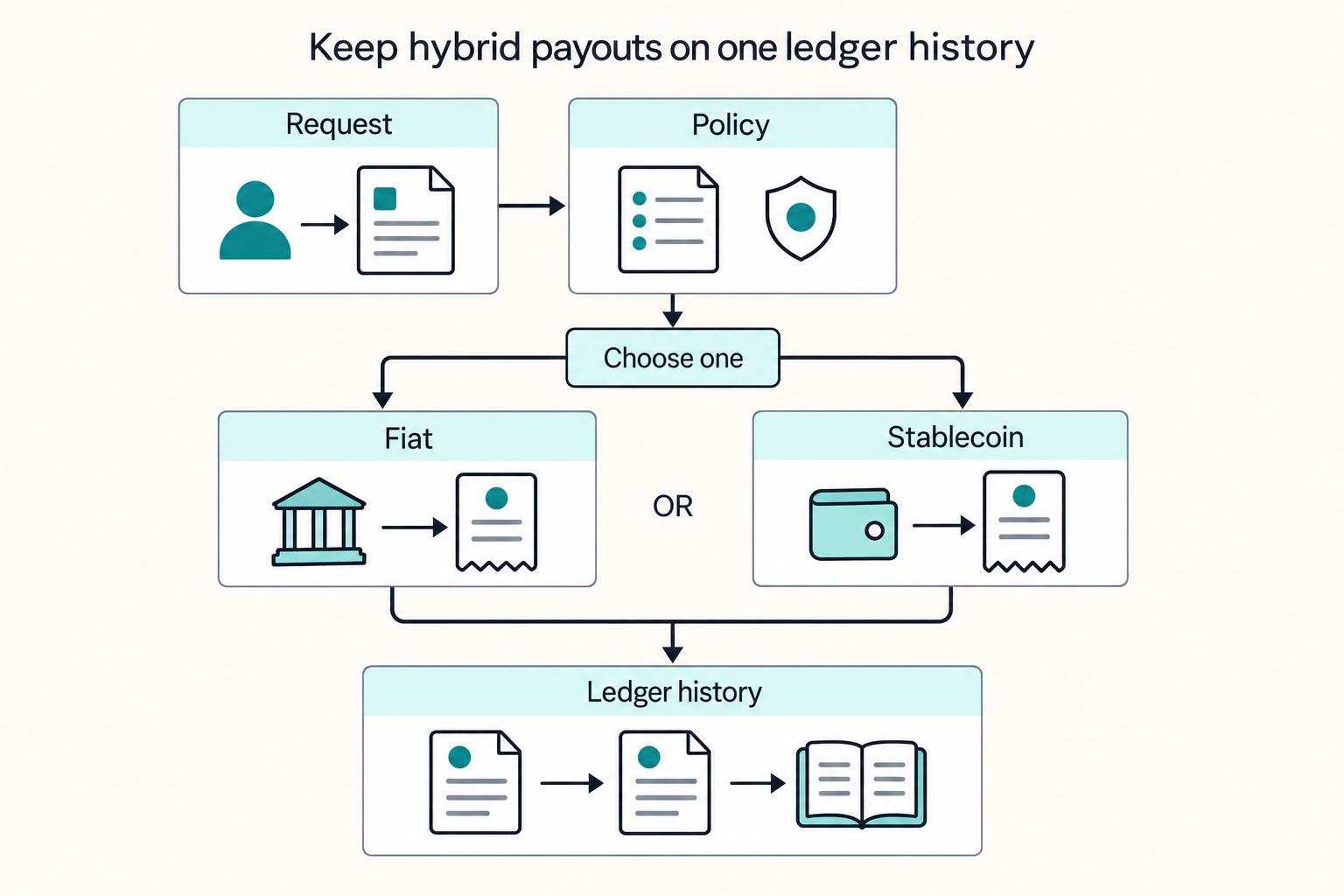
Building a Hybrid Payout System Without Disrupting Fiat Operations
A hybrid payout approach is usually a question of coexistence, not replacement. You keep your fiat rails, add a stablecoin option where it solves a real operations problem, and avoid forcing every contractor, creator, or seller into a wallet-first experience.
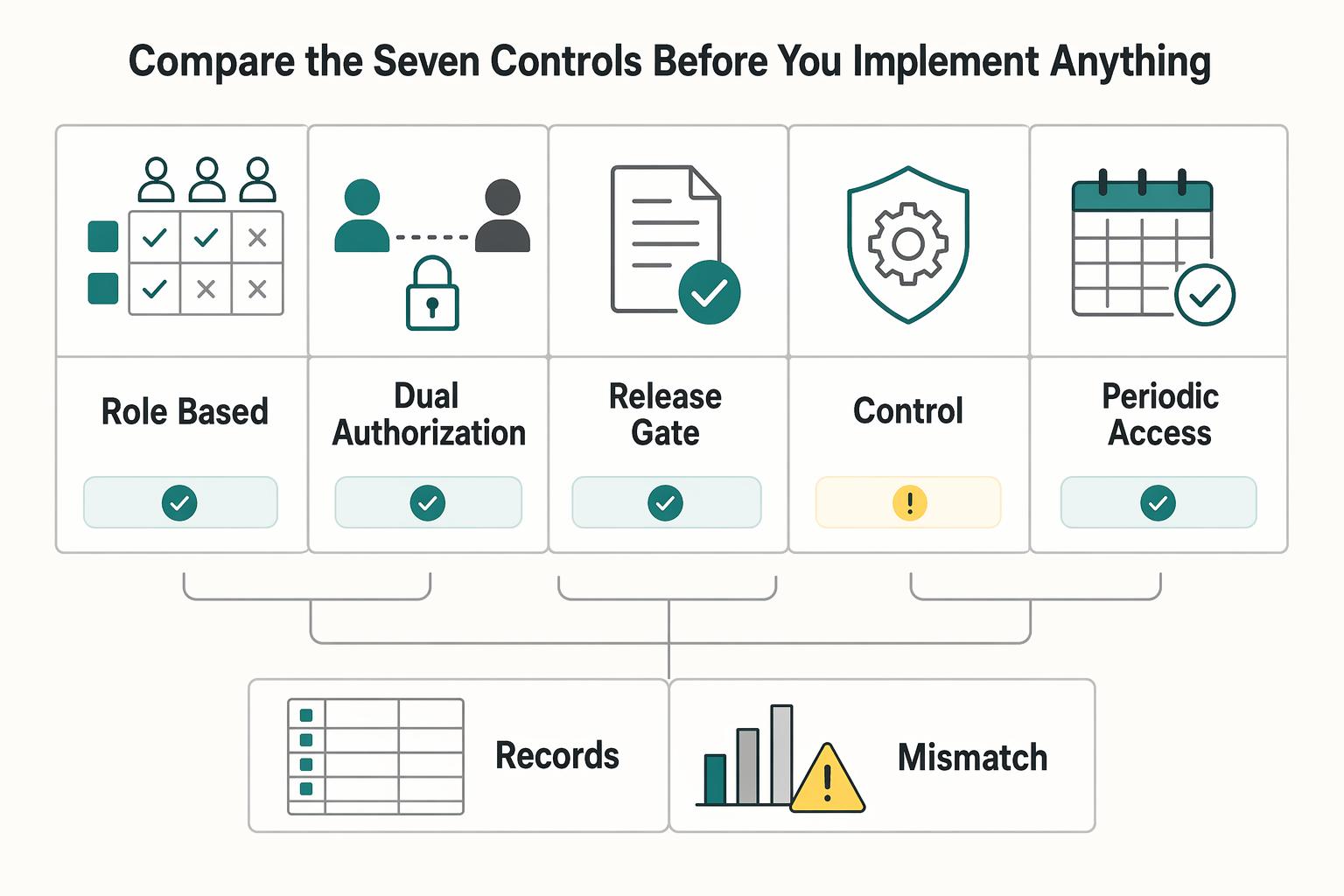
Internal Controls for Payment Platforms That Hold Up in Audit
If you own payout risk, start with a short control set you can operate, verify, and defend when a payout is challenged by compliance, finance, legal, or audit. This ranked list of seven controls aims to reduce real release risk without adding approval theater. It is not a claim that seven controls are always enough.

FedNow vs RTP for Gig Platform Contractor Payouts
You are not choosing a payments theory memo. You are choosing the institution-backed rail path your bank and provider can actually run for contractor payouts now: FedNow, RTP, or one first and the other after validation.