
Quick Answer
Pay creators and managers by separating social operations from payout operations, then defining a clear approval and evidence handoff between them. Social tools can run planning, publishing, and analytics, but payout release still needs a named approver, a durable record, status tracking, exception handling, and reconciliation exports. Start with a narrow pilot before expanding.
Social media management payments are two systems not one buying decision#
Treat this as two systems, not one buying decision: a social operations lane and a payout lane. Social media management tools are usually evaluated for running social channels, while payment-specific services are evaluated for payment workflows. If you merge those decisions too early, demos can feel efficient while production handoffs stay blurry.
Separate the social lane from the payment lane#
A social media management app is built to run social presence in one place through automation, analysis, and account management. A payment-specific service is built around sending and receiving money.
In creator programs, those lanes blur because one workflow touches both: content operations start the motion, then someone expects payment. Platforms often sit in the middle by connecting actors, supporting creation and management, and facilitating monetization, so teams can assume one category will cover the full chain. Sometimes that is enough for an early launch. Often it is not.
Use a simple check in every demo: where is payment approved, where does payout status change, and what record is produced afterward? If the flow stays inside automation, analytics, or account management, you are still in the social lane.
Name the real tension before you buy#
The core tension is speed to market versus payment reliability and control. Social operations features are visible early, but payment workflows are less forgiving when execution details are weak.
The research behind this guide highlights a common failure mode: financial transactions are vulnerable to technological disruption. That is a signal to stress-test the handoff where a commercial result becomes a payable event, not just the content calendar itself.
Keep a second tradeoff in view: creator outcomes are influenced by platform distribution and monetization incentives. If your team cannot clearly define where social performance ends and payment approval begins, treat that as a readiness gap.
Define the output this guide will help you reach#
By the end of this guide, your team should be able to make three decisions in a review meeting: choose your stack shape, define launch scope by channel and payee type, and document go or no-go checkpoints before rollout, including owner sign-off and required evidence for payout readiness.
Use a one-page decision sheet with four fields: social tool owner, payment tool owner, handoff point, and proof required before launch. Keep that proof explicit. That discipline helps keep vendor impressions from driving launch risk.
What to gather before you compare platforms#
Do not start demos with a feature checklist alone. Bring your own operating evidence first so vendors respond to your real handoffs, approvals, and reporting needs instead of a generic use case.
Inventory your current tools and breakpoints#
Map the stack you already use across schedulers, full management platforms, spreadsheets, and manual approval steps. Focus on where work changes hands, where approvals happen, and where follow-up requires manual cleanup.
For each tool, record whether it supports approval workflows, team permissions, and unified reporting outputs. Keep the depth difference in view: a basic scheduler and a full management platform are not interchangeable.
Shortlist segments by channel mix#
Build a short launch matrix by audience segment and channel mix, say TikTok, LinkedIn, X, and Threads. Define which workflows and programs are in scope for each segment.
This keeps comparisons grounded. The channel market is fragmented, and demos drift quickly when vendor assumptions do not match your actual mix.
Collect internal policies before the first demo#
Bring three internal artifacts to every walkthrough: your approval policy, your exception policy, and clear ownership for cross-team handoffs. If any of those are missing, draft lean versions first. That reduces avoidable errors. When teams already operate across multiple apps, extra context switching usually adds mistakes instead of removing them.
- your approval policy with a named approver and a clear release trigger
- your exception policy with pause, retry, and close rules
- your handoff map showing who owns creator payees, manager payees, and finance review
Build a minimum evidence pack template#
Prepare a one-page evidence pack template before speaking with any vendor. We use a minimal field set in launch reviews: payee ID, approved amount, currency, payment basis, due timing, and the report output your team will use for handoff and review.
- approved amount, for example
$1,250 USD - review date and owner for your
2026control check - supporting file or export name used in your
2025pilot evidence pack - payment basis, such as flat fee, milestone, or revenue share
Use one acceptance test in every demo: can the vendor show one work item moving from approval to a usable report without manual reconstruction? If the answer is vague, do not advance the tool.
You might also find this useful: Tail-End Spend Management: How Platforms Can Automate Long-Tail Contractor Payments.
Map your operating model for creators and managers#
Set decision rights before you compare platform workflows. Campaign activity and payment authority should stay separate, even when one system surfaces both.
Define payment roles before you compare workflows#
Write down three distinct actors: creator payee, manager payee, and approval owner. Keep them separate on paper, even if one person sometimes covers multiple tasks.
Use a short role sheet:
- who receives funds
- who submits or confirms payment details
- who approves release
- what evidence each role must provide
- who can raise an exception
Test it on one recent payable. If approval ownership is ambiguous, treat it as a control gap to fix before tooling decisions.
Separate commercial evidence from payout authorization#
Keep campaign performance signals and payout authorization in different lanes. Social operations work includes creating posts, repurposing content, and reviewing analytics, so a completed campaign signal is not enough by itself to release payment.
Treat metrics and delivery outcomes as commercial evidence only. Payment should still pass your policy checks for eligibility, approval, and evidence completeness. Some tools include an explicit Approve stage, but your payment approval still needs a named owner and a durable record.
Document the operating sequence in plain language#
Document a sequence your team will follow regardless of system, such as: intake, eligibility check, approval, payout initiation, payout status, exception handling, reconciliation close.
| Stage | Required status or artifact |
|---|---|
| intake | payee identity and program reference |
| approval | named approver |
| payout status | retained provider or platform reference |
| reconciliation close | exportable record finance can match |
Run one payable through every stage. If any stage lacks a clear owner or status label, fix the model before platform selection.
Add the failure path before launch pressure#
Define who acts first when a payout is disputed or challenged. Specify who can pause status changes, who validates the underlying commercial record, and what evidence is required before retry or close.
If you see any of these conditions, pause the payout path before anyone retries it. We would rather see you delay a cycle than explain a duplicate payout after close.
- a duplicate amount, such as
$1,250 USD, appears under the same approval record - the status is unchanged after your expected acknowledgment window and no owner can explain the delay
- the evidence pack still reflects a
2025template even though your2026workflow changed
Do this before growth adds complexity. As you plan for 12-month expansion, unclear ownership can increase approval friction and raise the risk of budget surprises.
This pairs well with our guide on How Platform Operators Pay Creators Globally Across YouTube, Twitch, and Substack.
Should you buy one suite or pair social ops with payouts#
Consider a paired setup when payout reliability and audit evidence are high risk, and treat an all-in-one suite as proven only after it demonstrates your full payment path. The comparison gets clearer once you separate what is well supported for social operations from what is still unproven for payouts.
Build the comparison table and mark unknowns#
Use a side-by-side table, but do not force false precision. The available evidence supports social management coverage for Buffer and Sprout Social. It does not provide enough evidence to score Tipalti or Impact.com on payout controls, reconciliation exports, or country readiness, so keep those cells as Verify.
| Decision point | Buffer | Sprout Social | Tipalti | Impact.com |
|---|---|---|---|---|
| Scheduling depth | Supported for straightforward scheduling and ease of use. | Supported for broad social management, including scheduling and publishing. | Not established in this research. | Not established in this research. |
| Creator discovery | Not established in this research. | Not established in this research. | Not established in this research. | Not established in this research. |
| Payout controls | Not established in this research; do not assume creator or manager payout execution. | Not established in this research; do not assume creator or manager payout execution. | Verify in demo; no grounded control detail here. | Verify in demo; no grounded control detail here. |
| Reconciliation exports | Not established in this research. | Not established in this research. | Verify; no grounded export detail here. | Verify; no grounded export detail here. |
| Country readiness | Not established in this research. | Not established in this research. | Verify; no grounded readiness detail here. | Verify; no grounded readiness detail here. |
This keeps the decision honest. Social tools are well supported for creation, scheduling, publishing, monitoring, analysis, engagement, and collaboration, but that is not proof of payout execution or finance-grade reconciliation.
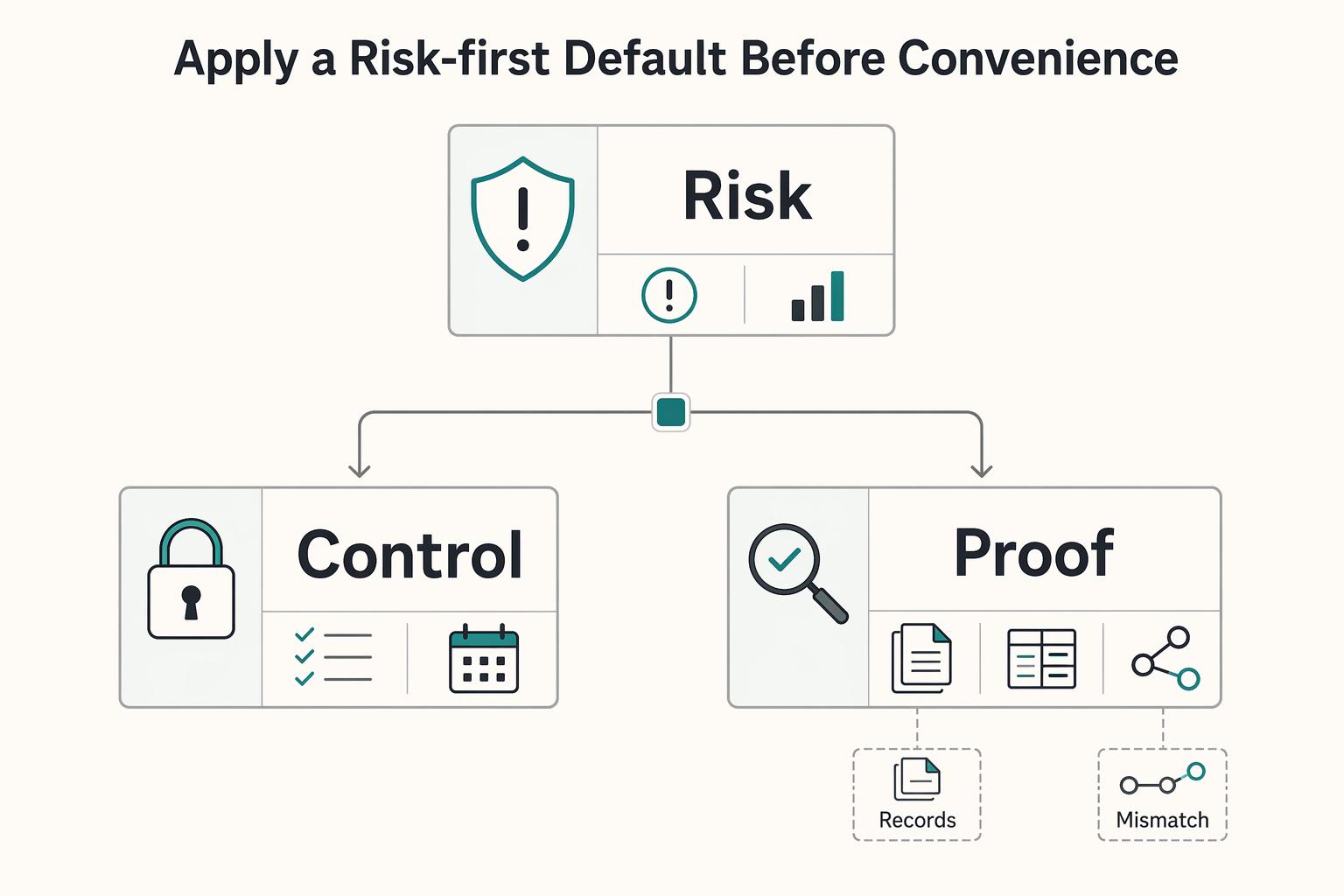
Apply a risk-first default before convenience#
However, if payout failure, weak auditability, or close-process friction is your main risk, consider a paired setup as the safer default until one vendor proves the end-to-end path in your workflow. That is an operating default, not a universal rule.
Judge tools like Hootsuite, Zoho Social, Buffer, and Sprout Social as social layers first. For example, Buffer is positioned for straightforward scheduling and usability, with a free plan for up to 3 channels and paid plans starting at $6 per channel per month. That supports a social pilot decision, not a payout-controls decision.
The tradeoff is straightforward: pairing can add integration and handoff work, while one suite can feel simpler to buy and onboard. But when teams rely on manual operations as volume grows, risk rises. The evidence here explicitly flags inconsistent responses and reputational risk as manual work scales.
Use integrated suites as a phase gate#
For a single-country launch with low payout complexity, an integrated suite may be a valid first phase, but it still needs proof. Treat it as a pilot candidate only if it passes your approval and evidence requirements.
Keep the pilot tight and small. Predefine KPIs and guardrails, then verify you can match approval, status, and export records without manual reconstruction. If that fails, move to a modular setup quickly instead of patching around control gaps.
Before you lock a vendor shortlist, run your expected corridors and payout volumes through the Payment Fee Comparison tool so cost assumptions are evidence-based, not demo-based.
Score candidate tools against expansion constraints#
Use this scorecard as a progression gate, not a feature checklist. If a candidate cannot prove readiness for your target expansion program, keep it red and do not advance it.
Build a country-by-program matrix and keep unknowns explicit#
Set one row per country and program type, then score each candidate across payout support, compliance gates, [tax document support](https://www.irs.gov/forms-pubs/about-form-w-9), and operational visibility. For Tipalti, Modash, and Impact.com, keep these cells as Verify until a live demo and sample records prove them for your target scope.
| Candidate | Payout support by country | Compliance gates | Tax document support | Operational visibility |
|---|---|---|---|---|
| Tipalti | Verify in target-country demo | Verify with evidence | Verify with document or export proof | Verify with live status trail and export sample |
| Modash | Verify in target-country demo | Verify with evidence | Verify with document or export proof | Verify with live status trail and export sample |
| Impact.com | Verify in target-country demo | Verify with evidence | Verify with document or export proof | Verify with live status trail and export sample |
Keep red or Verify cells visible. They stop assumption creep.
Score channel and business-model fit before total score#
Before you total anything up, check channel fit against the networks you actually run. These tools are meant to coordinate multi-platform campaigns, so your own operating context should drive fit: goals, team size, and existing workflows matter more than generic rankings.
In demos, require proof of:
- approval workflows and permission structures before publication
- operational visibility into handoffs with CRM, analytics, and automation integrations
Use breadth claims, such as support for over 35 networks or over 150 integrations, as checkpoints to verify, not as proof by themselves.
Mark payment-critical unknowns red for social-first tools#
For Buffer, Feedbird, and SocialPilot, keep fees, payout timing, tax handling, and manager-versus-creator payout controls as unknown unless directly proven. Current evidence supports social-operations scope, including creation, scheduling, publishing, monitoring, and analytics, not end-to-end payout execution.
If a listing shows No information available for pricing or another core field, keep that cell red until documented evidence is provided. Listing presence is not validation.
Advance vendors only with live workflow and performance proof#
Do not move a vendor forward until a live session shows the core workflow and measurable reporting outputs, not just feature claims. You need evidence that operators can retrieve status and performance data when work is reviewed or corrected.
For each candidate, collect:
- demo recording
- screenshots of approval controls
- sample export or field list
- written status-trace notes, including where status appears and how it is retrieved for reporting
When surface features look similar, prefer the vendor that reduces critical unknowns fastest.
Design the payment flow from invoice to payout status#
Lock the payment sequence before you set launch dates: decide exactly how a payable moves from creation to final settlement, and make each handoff visible.
Define the payable record before any money moves#
A payout is only as reliable as the payable record behind it. Before approval, require a record that clearly captures the contract or campaign reference, exact amount and currency, payment basis, and when payment is due.
Treat document quality as the first checkpoint. Confirm exact figures with no guessed conversions. Keep a clear timeline for when content launches and when payment is due. Clear terms reduce disputes, and performance-based models can add tracking friction when the metric snapshot is unclear. If the payable record cannot stand on its own for review, it is not ready for approval.
Separate campaign approval from payout execution#
Keep campaign approval and payout execution as separate responsibilities. If you use separate campaign and payment tools, require an approved payable instruction before payout initiation. Keep provider acknowledgment and settlement tracking in the payment system.
This boundary keeps governance clean. Campaign workflows manage deliverables and outcomes, while payment workflows provide approval visibility and audit trails for finance. Without that separation, manual coordination can sprawl across the onboarding-to-payment process. As a quick check, trace one payout end to end, from approval timestamp to provider reference, across both systems.
Define retry checks for single and batch payouts#
Retries need clear controls so teams reduce duplicate-payout risk. Timeouts, delayed acknowledgments, and partial failures are normal, and some international rails can be slower or add costs.
For single payouts, reuse the same approved payable details and check for an existing acknowledgment or payout record before resending. For batches, keep a batch-run record plus record-level tracking so accepted payables are not resent blindly during retry. No manual resend should happen until the team rechecks payee, amount, and currency.
Publish a status model that ops and finance can both use#
Use a shared status model with working, terminal, and exception states so operations and finance can reconcile the same flow.
- Working states:
Created,Pending approval,Approved,Submitted,Acknowledged,In progress - Terminal states:
Settled,Cancelled,Failed - Exception states:
On hold,Rejected,Returned,Needs correction,Reversed(if reversals are supported)
Define action and evidence for each state. For example, Acknowledged should include a provider reference, Settled should include a settlement date, and hold or correction states should include a clear reason and owner.
Set compliance gates before launch day#
Compliance gates need to block release in real time, not sit in policy docs. If you cannot show what was reviewed, who approved it, and what evidence supported the decision, keep rollout scope narrow.
Document what is confirmed vs. unknown#
Separate confirmed controls from assumptions before launch. In the material behind this guide, concrete controls are tied to regulated social content handling where PHI may be involved: define when content must be de-identified, and when valid written authorization is required before identifiable use. Also keep the hard stop explicit: PHI should not be posted or discussed publicly, including in direct messages.
For payout-specific controls, stay explicit about uncertainty. KYC, KYB, AML, and tax-profile requirements are not specified here, so treat them as dependencies to confirm separately. Every control should have an owner, trigger point, and evidence field.
- the owner who signs off before release
- the trigger point that starts the check
- the evidence field you retain in your payout record
- the date of your last live review, especially if a vendor workflow changed in
2026
Attach gates to operating moments#
Tie controls to actual moments in the process, not general policy language. Map checks to the moments when work advances, and require approval plus audit-trail evidence across planning, creation, and publication.
| Gate | What to confirm |
|---|---|
| Onboarding gate | confirm whether any vendor can access PHI, and whether HIPAA obligations and signed agreements are required |
| Release gate | block publication unless records show de-identification or valid written authorization for identifiable use |
| Re-verification gate | re-check permissions, agreements, and approval artifacts when scope, access, or workflow changes |
This prevents known failure modes from slipping through. A patient testimonial with a full-face photo is a cited noncompliant example, so your process should be able to hold that case with a clear reason and owner.
Evaluate platform readiness by proof, not claims#
For Aspire, Heepsy, and Webfluential, do not assume specific compliance-readiness features are confirmed. Use demos or trials to label each capability as supported, unsupported, or unknown.
| What to verify | What to request in demo | Red flag |
|---|---|---|
| Approval trail | Show approver identity and timestamp history | Only current status is visible |
| Evidence records | Show where authorization or de-identification proof is stored | Proof exists outside the flow with no linkage |
| Exception workflow | Show hold or reject or correction states with reason | Exceptions are handled in notes or email |
| Vendor-risk visibility | Show tracking for vendors with PHI access obligations | No visibility into obligations or agreements |
| Audit export | Export approval and exception history with timestamps | Export is missing timestamps or key events |
If a platform cannot show approval trails, exception handling, and evidence records in practice, limit launch scope and add external controls before going live. For related reading, see A Guide to Media Liability Insurance for Content Creators.
Build reconciliation and audit evidence from day one#
Your expansion decision is only as strong as your reconciliation trail. If finance cannot trace campaign activity to payout records and then to booked results, keep scope tight until that trail is reliable.
Define the payout source of truth#
Use one record model across operations, payouts, and close. For each payout, keep these fields together:
| Field | What to keep |
|---|---|
| internal request ID | keep it with each payout record |
| provider reference | keep the provider reference, such as Tipalti refCode |
| provider payment ID | keep the provider payment ID, such as Tipalti id |
| payout status timeline with timestamps | include scheduled timestamp where available, such as scheduledDate |
| finance-side ledger posting reference | require it in your internal finance record before marking the cycle closed if a provider does not expose it out of the box |
| payout-cycle export bundle | keep the payout-cycle export bundle used for close |
If a provider does not expose a ledger posting reference out of the box, require that reference in your internal finance record before marking the cycle closed.
Require export bundles finance can close from#
Build close from exports, not screenshots. Sprout Social supports Smart Inbox and Reviews CSV exports with structured columns, and Tipalti provides Payment Details reporting plus date-range exports for records added or updated in that window.
Set one frozen export bundle per payout cycle so finance is not rebuilding joins across Sprout inbox or review exports and Tipalti payout exports each month.
Run a monthly control checklist#
Once the source of truth and export bundle are set, review the same control checks every month:
- unmatched records between campaign-side and payout-side data
- delayed or non-terminal payout statuses
- unresolved exceptions, labeled by tool source, for example Hootsuite, Modash, impact.com
Do not treat upstream approval as final payment by default. impact.com distinguishes Approved Payment Pending from paid states.
Add a pre-expansion verification checkpoint#
Before expanding into a new market, require one full close cycle completed with no unresolved high-risk exceptions. Treat this as an internal readiness gate for scale, not a universal legal rule.
Integrate without duplicate payments or orphaned statuses#
Highly integrated chains can automate execution, but they should not collapse your approval checkpoints. Keep campaign events, payout approval, and payout status confirmation as separate responsibilities so one upstream event does not automatically trigger a payment.
Assign event and status responsibilities by system#
Make each system role explicit. Treat campaign tools as event producers. Keep approvals as a distinct checkpoint, and treat your payout system as the system of record for initiation and status updates.
That separation aligns with integrated, automatable workflows where screening and approvals remain a distinct checkpoint. In practice, a campaign event should create a candidate record, not a live payment instruction.
Enforce de-duplication at the intent level and the batch level#
If your workflow includes retries, use two controls: one identifier for each approved payout intent and one identifier for each batch execution. Retries should map back to the same approved intent rather than creating a second send.
Place this check in your internal payout control layer, not only in an automation step. The pass condition is simple: one approved obligation maps to one payout record, even when retries occur.
Define outage fallbacks before you need them#
Partial outages need a defined pause policy. If payout status is delayed or unavailable, pause downstream automations that assume paid or settled outcomes, and move payout handling to manual review until status flow is reliable again.
Document who can trigger the fallback and what must be true to resume automation. This prevents campaign completion and payout state from drifting apart while systems are degraded.
Monitor for orphaned states, not just hard failures#
Do not watch only for explicit failures. Monitor for missing handoffs too: campaign completion without payout intent, payout intent without initiation, or initiation without a final status.
Review exceptions from both directions before closing a cycle. If either the campaign side or payout side is missing its matching state, treat it as a broken workflow state and keep it in an owned exception queue until resolved.
For a step-by-step walkthrough, see Gaming Platform Payments: How to Pay Game Developers Studios and Tournament Players at Scale.
Pilot one country and one creator segment first#
Once your status handoffs are stable, keep rollout scope intentionally narrow: one country, one creator segment, and one or two channels until payouts close cleanly.
Limit scope on purpose#
Choose one country and a tight segment, such as solo creators or creator managers, then run the pilot through only one or two channels. The goal is to control operational variance, not lower ambition. Country-level feature availability can differ, and currency support can vary by withdrawal method, so broad early launches make payout failures harder to diagnose.
If Buffer is in scope, treat channel count carefully because each connected social account is a channel. Before the first payout cycle, list every connected account, every payee type, and every payout path in scope.
Pair a constrained social tool with a dedicated payout tool#
For the pilot, use a limited stack first, such as Buffer plus Tipalti or Hootsuite plus Impact.com, before adding suite complexity. Hootsuite can centralize publishing in one dashboard, and Tipalti can plug into an existing stack rather than forcing a full replacement. That separation makes pilot failures easier to trace.
Avoid changing too many systems at once. If publishing, approvals, tax collection, and payout execution all change together, root-cause analysis becomes unreliable.
Track operator metrics, not vanity progress#
Track three pilot signals each cycle:
- payment success rate, using explicit payment lifecycle statuses
- exception rate, with exceptions routed to a named owner
- reconciliation match quality and manual-intervention load, based on how much manual reconstruction finance needs
At cycle close, verify that each approved payout has a current or final status and a matching finance record.
Require an evidence-pack review before expansion#
Before expanding to the next country, have payments ops and finance review an evidence pack together. Include payout status exports, exception logs, reconciliation outputs, and any country-specific constraints observed in the pilot.
Document product details that affect interpretation. For example, impact.com Autopay includes a $10 USD minimum threshold, a 48-hour hold after bank-detail updates, and an invoicing period that can stretch 2 to 3 weeks. Without those details in the review, pilot performance can look better or worse than it is.
Common rollout mistakes and how to recover fast#
Rollout problems usually come from unclear process ownership. If posting and approval decisions start blending together, narrow scope and restore explicit checkpoints before expanding.
Re-rank tools beyond roundup features#
Mistake: choosing from feature roundups alone. Recovery: re-rank by process controls, including a defined approval path, named owners, timeline clarity, and a final sign-off checkpoint.
Teams without structured approval workflows make more mistakes and move slower. Keep asking one practical question: can your team show who approved what, when it changed, and what record remains?
Test workflow assumptions with live scenarios#
Mistake: assuming basic publishing features are enough for real approval operations. Recovery: run live scenarios that force exceptions, such as a rejected submission, a revision cycle, and a follow-up status after approval.
Use the same five-stage discipline many approval workflows use: creation, submission, review, revision, and sign-off. The pass-or-fail check is whether the team can reconstruct the full path without guesswork.
Roll back channel sprawl fast#
Mistake: launching across multiple channels at the same time while exceptions are still noisy. Recovery: reduce to a smaller channel scope until ownership, next actions, and timelines are predictable again.
This matters because social media management now spans team structure, tooling, reporting, and resourcing, and channels are noisier under higher scrutiny. If the current approver, next action, or timing is unclear on stuck items, scope is still too wide.
Split role rules before scale#
Mistake: running everyone through one default approval pattern. Recovery: define roles clearly and map approvers and exception owners by stage.
Use workflow evidence as the gate. If you cannot confirm consistent sign-off, revision handling, and final approval outcomes, expand later, not now.
Next steps before you commit resources#
Before you commit budget, engineering time, or launch dates, document the plan and treat every unverified item as unknown. We use this as the final gate because your next step should be obvious before spend starts.
- your go-live scope by country, channel, and payee path
- your required proof for approval, payout status, and close
- your pause rule if a
2025artifact or a2026control check is missing
Check your approver chain before you schedule a launch date. When we review a pilot-close pack, we want one answer for each payout path, not three conflicting answers from ops, finance, and the tool vendor.
Document the operating model first#
Write a one-page map that shows, for each path, who gets paid, who approves, and who owns exceptions. If both creator and manager paths exist, keep them separate.
Define the program up front: what you will say, where you will say it, and how you will measure it.
On the social side, set the primary outcome before tool comparison. One grounded framework lists 4 outcomes: credibility, demand generation, recruiting, and partner relationships. Pick one primary goal so execution stays focused.
Compare social ops and payout ops in one table#
Use an essential-features checklist, but split social workflow evidence from payout workflow evidence so they are not blended.
| Capability area | Social ops evidence | Payout ops evidence | Status |
|---|---|---|---|
| Planning, publishing, collaboration | Demo or screens or role controls | Separate provider or in-product proof | Verified / Unknown |
| Approvals and exceptions | Workflow shown | Hold or review or exception flow shown | Verified / Unknown |
| Traceability and exports | Campaign export fields | Payment reference or status or export fields | Verified / Unknown |
Do not mark an item as verified from positioning alone. Conflicting template claims like 8 platform pages vs 11 platform pages are a reminder to verify scope directly.
Validate market requirements before launch#
For each target market, document what your own legal, tax, compliance, and provider materials require before onboarding and payout release, by payee type. In your 2026 review, treat any 2025 vendor artifact as historical evidence until the live workflow is reconfirmed.
If operations cannot answer that clearly for a given market and payee path, keep that market in not ready.
Test retry handling and status traceability in a pilot#
Run pilot scenarios with interruptions, including retry, delay, and partial completion, and check whether your stack exposes statuses you can trace for one payment intent.
Capture evidence such as reference IDs, status views, exports, and alert ownership. If that chain is unclear, keep traceability as unverified.
Use a pilot-close checkpoint before expansion#
Use a pilot-close checkpoint as an internal gate before adding new countries, channels, or creator segments. Define "clean" in advance, including what must reconcile, what exceptions can remain open, and who signs off.
If the cycle still relies on ad hoc fixes, hold expansion until ownership and evidence are complete. Related reading: Expired Card Management for Platform Teams Scaling Card-on-File Payments.
After the pilot, review Gruv Payouts to map a compliance-gated flow with idempotent retries and status tracking where supported.
Frequently Asked Questions
What is the difference between a social media management tool and a creator payment platform?
A social media management tool is built for planning, scheduling, publishing, and managing social workflows. A creator payment platform is built for payout execution, including payment lifecycle states, compensation tracking, and release controls. They solve different operational problems, even when both are used in the same program.
Do tools like Buffer or Hootsuite natively handle creator and manager payouts end to end?
Their public positioning is centered on social operations such as scheduling, engagement, monitoring, and analytics. The available product evidence does not show end-to-end creator payout execution with tax-form and settlement controls. Treat payout infrastructure as a separate capability to verify directly before launch, including any manager-payout process.
When should a platform combine social ops software with a dedicated payout provider like Tipalti or Impact.com?
Combine them when your team needs payout-specific controls, not just campaign workflow. Examples include signed-contract gates, tax-form compliance checks before release, per-creator payout status tracking, and reconciliation into accounting systems. If those controls are already a launch requirement, a dedicated payout layer is usually the safer operating model.
What should operators verify before paying creators in a new country?
Verify reporting and tax obligations first, then map them to your payout flow. For EU activity, DAC7 places reporting obligations on platform operators, including certain non-EU operators, and it has applied since 1 January 2023. Also confirm current tax-form and threshold handling in your own stack because published IRS guidance and platform help documentation can differ in how rules are operationalized.
Which controls reduce duplicate payouts and reconciliation breaks the most?
Use idempotency keys on payout-related API requests so retries are recognized as the same request instead of creating duplicates. Pair that with automatic payment-status sync into your ERP or accounting system to reduce manual close work and mismatch risk. Together, these controls address duplicate execution and downstream reconciliation drift.
How do you decide whether to launch with an integrated creator suite or a modular stack?
Do not treat either model as universally better. If your near-term scope is social planning and publishing, social ops tooling may be enough for phase one. If you need contract-gated, tax-compliant, tracked payouts now, add dedicated payout infrastructure at launch. Choose based on control requirements and rollout risk, not feature-list overlap.
Researched and edited by the Gruv editorial team. Gruv builds cross-border billing, payouts, and finance-operations software for global businesses.
Sources
- cfo.ufl.edu/wp-content/uploads/2024/04/Review-Your-Accou...trusted
- cga.ct.gov/2024/act/Pa/pdf/2024PA-00081-R00HB-05523-PA.PDFtrusted
- downloads.regulations.gov/CMS-2021-0119-0053/content.pdftrusted
- ftc.gov/system/files/ftc_gov/pdf/Social-Media-6b-Rep...trusted
- irs.gov/forms-pubs/about-form-w-9trusted
- irs.gov/faqs/small-business-self-employed-other-busi...trusted
- leginfo.ca.gov/pub/11-12/bill/sen/sb_0051-0100/sb_87_bill_2...trusted
- pmc.ncbi.nlm.nih.gov/articles/PMC10208186trusted
Educational content only. Not legal, tax, or financial advice.
Related Posts

The Freelance Payment Penalty: A Modeled Audit of Platform Fees, FX Spreads, and Payout Delays
The money rarely disappears through a single, easy-to-spot fee. The real loss is stacked. A marketplace takes its commission, a processor adds a charge for international cards, a bank or payment company converts the currency at a spread, a platform holds the funds before release, and a wire sheds a little to intermediaries on the way in. Each layer looks defensible on its own, but the worker feels the combined result as a smaller deposit and a later payday.

How to Respond to a Subpoena for Business Records
Move fast, but do not produce records on instinct. If you need to **respond to a subpoena for business records**, your immediate job is to control deadlines, preserve records, and make any later production defensible.

A US Expat's Guide to Investing in UCITS ETFs to Avoid PFIC Issues
The real problem is a two-system conflict. U.S. tax treatment can punish the wrong fund choice, while local product-access constraints can block the funds you want to buy in the first place. For **us expat ucits etfs**, the practical question is not "Which product is best?" It is "What can I access, report, and keep doing every year without guessing?" Use this four-part filter before any trade: