
Quick Answer
Assess media liability before a high-risk publication or contract, then compare the actual coverage with the risk you are accepting. Broad indemnity can exceed insured liability, so insurance and contract review need to work together. Check covered activities, exclusions, claim timing, defense costs, limits and notice rules; a new policy may not cover an existing dispute or known circumstance.
Start Here With the Risk You Actually Carry#
If your income depends on publishing content, treat media risk as a current operating risk, not something to handle later when the business is bigger. Media liability insurance is a form of errors and omissions insurance focused on claims tied to content you create, publish, or distribute.
| Checkpoint | What to review |
|---|---|
| What you publish | content types, distribution channels, and who has final approval before publication |
| What you use from others | third-party materials and how you clear them |
| What your contracts require | indemnification language, ownership terms, approval rights, and complaint-handling obligations |
This exposure is broader than any one claim type. Alleged reputational harm, privacy violations, and intellectual property infringement can all trigger disputes, and a single blog post or social media image can be enough to create legal exposure.
For independent creators, the practical question is simple: could a content dispute create costs your business cannot absorb? That is why this belongs inside your broader professional liability decision, not in a separate publisher-only bucket.
For an illustrative example, a creator licenses a photograph for one newsletter but later uses it in a sponsor’s paid advertisement. A takedown demand can require legal advice even before anyone files suit. Keep the license, publication record and client instructions, and ask whether the policy covers the activity and allegation rather than assuming every IP dispute is insured.
Use this guide to make cleaner operating decisions before you buy, renew, or sign a client deal. Keep those three checkpoints in a short evidence pack so you can compare options on wording and fit, not just price. By the end, you should be able to spot when risk is worth insuring, compare coverage more clearly, and review agreements without treating insurance as a fix for weak contract terms. Related: A Freelancer's Guide to Professional Liability (E&O) Insurance.
Build the Right Mental Model Before You Shop#
Treat media liability insurance as specialized E&O coverage for third-party claims tied to publishing activity. If your main business risk comes from what you publish, this is often the first policy family to assess.
This coverage is built for publishing-related content allegations. Common allegations can include defamation, privacy/publicity issues, copyright infringement, and plagiarism. You may also see it labeled as entertainment E&O, but the label matters less than whether the policy wording matches your actual publishing work.
That is the key discipline throughout this process. Do not infer scope from marketing language. Check the insuring agreement and covered-perils wording against what you actually produce and how you produce it.
Keep one failure mode in view while you shop. Weak substantiation can materially increase libel risk, and when claims cannot be substantiated, disputes can still end in a costly settlement plus clarification or apology. Risk is also not limited to reputational or IP claims. Reliance allegations can come from people who are not formal clients but say they acted on published content and lost money. If your work can plausibly create reputational, IP, or reliance harm through content, start here and test the wording carefully.
You might also find this useful: A guide to 'media perils' insurance for journalists and bloggers.
Decide If You Need Coverage Now or Can Delay#
Assess coverage before the risk expands. If a contract requires insurance, resolve that requirement before signing or starting work. If you choose to retain a narrower risk yourself, document the potential defense cost and revisit the decision when activities or terms change.
This is not a revenue-milestone decision. People who create, share, or manage content can face media-related claims at any size, and even a lawsuit threat can create real financial strain. In defamation matters, defense costs can be severe even if you prevail in the end.
Assess coverage before accepting contract liability#
If a contract shifts liability toward you, lean toward buying sooner. An indemnification clause does not automatically mean you must buy immediately, but it can create exposure before you have much financial cushion.
When you accept another party’s terms, clarify defense and indemnity duties. A policy may exclude liability assumed solely by contract, so buying insurance does not automatically cure an unfavorable clause. Review the terms with counsel and the proposed wording with a broker before accepting that exposure.
Assess coverage before publishing higher-risk content#
Lean toward buying now if your work increases the chance of allegations such as defamation, invasion of privacy, or copyright infringement. Investigative publishing is a clear example of higher lawsuit risk.
The practical issue is not just whether your position is strong. It is whether someone can force you into a costly defense process.
Delay only with a clear paper trail#
If you are considering delaying because your current work is narrower and liability appears to be handled in writing, treat that as a provisional choice, not a settled one.
Before delaying, do two checks. First, review current policies, especially cyber coverage, to confirm whether any media protections already exist. Second, confirm the policy definition of a claim and the notice requirement. Claim definitions vary by carrier and form, and late notice can reduce or eliminate otherwise covered protection.
If you become aware of a claim circumstance, notify the carrier as soon as possible. Waiting can create a notice problem on top of the underlying content issue.
Use a simple trigger list#
Use a short internal trigger list so the assessment does not drift. These are practical checkpoints, not insurer-standard buying rules. Review the exposure when any one appears:
- first contract that shifts liability toward you
- first content with higher risk of defamation, privacy, or copyright allegations
- first investigative project
- first legal language you do not fully control
When a trigger appears, assess the risk and available cover before publication or signature. Buying a policy, retaining the risk, narrowing the work, or renegotiating the contract may each be appropriate.
Need the full breakdown? Read A Financial Planner's Guide to Choosing E&O Insurance.
Separate Media E&O From General Liability Without Guessing#
For content risk, do not compare policies by label alone. Compare where content allegations are actually covered.
Commercial general liability can include advertising injury, but that alone may not respond the way content businesses expect. For allegations like defamation, plagiarism, or copyright infringement, start by reviewing professional liability, E&O, and media liability wording, not just general liability.
Media liability is commonly positioned under the broader E&O umbrella. If a policy uses different naming, treat that as a clue, not proof of coverage. Then ask the broker or carrier to show you the exact form language for content-related harms and exclusions.
Policy labels and broad marketing language can create false comfort. Do not treat a headline description as proof of claim response. Read the insuring agreement and exclusions, then compare gaps before you compare price.
Before you decide, verify the policy's two primary limits:
- Per-claim limit: the maximum paid for one claim
- Aggregate limit: the total available across claims during the policy period
Then confirm whether defense costs are inside those limits. If they are, legal fees can reduce what is left for settlement or judgment.
If a seller cannot clearly map content allegations, exclusions, and limit structure, treat that quote as unfinished, not comparable.
For a related overview, see What is Cyber Liability Insurance and Do Freelancers Need It?.
Choose Policy Form With Eyes Open#
Occurrence and claims-made forms use different timing triggers. Occurrence wording generally looks to an incident during the policy period, even if the claim arrives later. Claims-made wording generally looks to when the claim is first made, with reporting conditions and often a retroactive date for the underlying act. Check your exact form: claims-made-and-reported wording and an extended reporting period can add important conditions.
If you expect carrier changes, business pauses, or irregular publishing cycles, scrutinize the policy wording early. That is not about predicting outcomes. It is about making your broker map your real publishing pattern to the actual form wording.
| Issue to pin down | Occurrence form quote | Claims-made policy quote | What goes wrong if this stays vague |
|---|---|---|---|
| Trigger timing | Confirm which incident or publication date must fall in the policy period | Confirm first-made and reporting windows, plus any retroactive date | You assume a post is covered, then learn the policy language responds differently than you expected. |
| Renewal and continuity | Ask how prior work is treated at renewal. | Preserve the prior-acts date where available and check exclusions for known matters | A later complaint can expose uncertainty you did not identify during renewal. |
| Carrier switch or business pause | Ask how pre-switch or pre-pause work is handled. | Ask about prior-acts coverage or an extended reporting period; neither automatically covers new work or every old claim | A complaint after a pause or switch can turn into a scope dispute. |
| Defense handling | Confirm what defense-cost coverage applies. | Confirm the same points with the same precision. | Early legal spend can create pressure before the underlying dispute is resolved. |
Your underwriting file is a useful stress test here. Media liability applications are detailed, and underwriters ask about operations, content types, distribution activity, and revenue. If your application uses a mix like 50% marketing consulting, 30% video production, 20% publishing, use that same mix when you test policy language.
Keep the filter practical. If your work is speed-first and the allegations you face include defamation, privacy, or IP issues, claim-handling uncertainty may become the real problem. This kind of coverage is meant to address damages and defense costs from content and professional-service exposures. You still need those mechanics clearly written into the quote.
This pairs well with our guide on A Cybersecurity Consultant's Guide to Professional Indemnity Insurance.
Pressure-Test Contracts Before You Rely on Insurance#
Review the contract before you rely on the policy. The goal is to compare what you agreed to in writing with the kinds of allegations that can come from your published work.
Compare two liabilities: an allegation about the content itself, and an extra duty accepted in the client contract. A broad promise to defend the client may create costs beyond the policy’s covered media allegations. Ask which duties remain uninsured before treating a quote as adequate.
Read the key contract terms next to the issued policy wording and separate two questions:
- What allegation comes from the content itself?
- What extra responsibility did you accept in the contract?
Use review triggers, not assumptions. If a contract appears to expand your responsibility beyond the content work itself, pause and get written guidance from your broker or counsel. If a client controls edits or publication choices but shifts most liability to you, renegotiate. If they refuse, treat that as a pricing and coverage decision point.
A compact repeatable checklist keeps reviews consistent:
| Risk area | Contract checkpoint | File evidence to retain |
|---|---|---|
| Defamation | Who approves claims, edits, and final publication | Source notes, approval trail, edit history |
| Copyright infringement | Who provides assets and who confirms usage rights | License records, asset list, vendor terms |
| Privacy/confidentiality | What information should not be published and who approves sensitive content | Client instructions, distribution records, approval trail |
| Contractual liability | Any clause that expands your responsibility beyond your own work | Final contract, SOW, redlines, broker or legal interpretations |
When you check legal or regulatory text online during review, verify against official editions before relying on it. Keep one deal file per client engagement so you are not reconstructing decisions from memory if a claim appears later.
For a step-by-step walkthrough, see Liability Insurance for Freelance IT Consultants: Do You Need It?. Turn your indemnity checklist into cleaner starting language with the Freelance Contract Generator.
Compare Quotes Like an Operator, Not a Shopper#
Once the contract picture is clear, make the quotes earn their place. Price comes last. First, eliminate any option that does not clearly match your contract risk and the actual policy wording.
Use the same activities and contract examples for every quote. Identify the insurer and exact form set, then compare covered allegations, limits, deductibles or retentions, defense terms and exclusions. A marketplace summary is only a starting point.
Build the file before you rank quotes#
For every option, collect the same core documents before scoring:
- quote or indication
- declarations or coverage summary
- specimen form and endorsement schedule
- exclusions wording
- claims reporting instructions and written broker responses on claim-process points
If an option only has a short summary, log it as incomplete rather than equivalent.
Use one comparison table with explicit unknowns#
Treat missing information as a real finding, not a clerical issue. A quote with unresolved wording or claims-process details is not ready to rank.
| Option | Form evidence in hand | Claim-process checks | Wording checks | Known unknowns |
|---|---|---|---|---|
| Option A (specialty program) | Confirm declarations, specimen forms, endorsements, and any form numbers. | Request written claims-reporting steps and process terms. | Request exact coverage and exclusion wording from the form set. | Missing exclusions, line-of-business fit questions, and unresolved process details. |
| Option B (carrier quote) | Confirm the quote ties to a specific form and endorsement set. | Ask the same written process questions for apples-to-apples comparison. | Require exact wording, not summary labels. | State-specific changes, incomplete form evidence, and unresolved process details. |
| Option C (brokered program) | Confirm whether you have full specimen wording or only summary output. | Verify open process items in writing before ranking. | Confirm definitions and exclusion wording before ranking. | Program-scope gaps, missing definitions, and undocumented assumptions. |
| Option D (marketplace-surfaced option) | Identify the underlying carrier or program and obtain full form evidence. | Do not score process terms until carrier wording is in hand. | Request full wording for key coverage and exclusions. | Carrier identity gaps, missing specimen forms, and unresolved state endorsements. |
Decision rule#
Do not advance options with unresolved core wording, incomplete form evidence, or clear contract mismatch. Keep a deliberate "known unknowns" log. When legal or regulatory text is referenced during quote review, verify against official editions before relying on it, and log inaccessible sources as evidence gaps.
Prepare a Coverage Evidence Pack Before Binding#
A completed application or premium payment does not by itself establish the coverage you need. Obtain written binding confirmation with the effective date, insured names and form set, and answer the application accurately.
Build a short dossier that mirrors the application#
Keep it brief, but specific enough that no one has to infer your business from a generic label. Include:
| Dossier item | What to include |
|---|---|
| service types | service types in plain language |
| distribution channels | websites, newsletters, social platforms, podcasts, and client-owned channels |
| material dispute or complaint patterns | material dispute or complaint patterns, if any |
| standard contract templates | standard contract templates, including recurring hold harmless or indemnification clause language |
| insured-entity map | an insured-entity map showing who is included as the Applicant and who is the First Named Insured |
Confirm that the insured names include the people and entities whose work needs protection. Check who can request policy changes, who must report claims and whether contributors or subcontractors are included under the actual wording.
Make the underwriter conversation specific#
Describe your publishing activities and provide the examples and attachments the application requests. Include client-owned channels as well as your own, so a broker can check whether distribution and professional services fall within the wording.
A compact content matrix helps here. List representative content categories and tag each for publication-related liability and IP issues so the wording discussion stays tied to real publishing activity.
Keep a form-choice decision log#
If you are evaluating different policy wording options, document why you selected the option you plan to bind based on the wording reviewed and the broker explanation. Keep it to one page and capture:
- option considered
- reason for selection
- who explained the tradeoff
- documents reviewed
- unresolved questions for broker follow-up
Useful follow-ups include whether activities changed from what was first described. Also ask whether external legal counsel is involved in publication review and whether the current twelve (12) months and estimated next twelve (12) months assumptions still match your operations.
Run a workflow checkpoint before signing#
Before you sign, read the application and policy-facing business description against your actual publishing workflow line by line. The file should reflect where and how you publish, not just a broad "media business" label.
Answer the actual application’s history questions, including prior names, acquisitions, disputes and known circumstances where requested. Do not omit a complaint because no suit has been filed; ask the broker how it must be disclosed and whether it affects coverage.
Related reading: A Guide to Errors and Omissions (E&O) Insurance for Software Developers.
Run Three Scenario Drills Before You Finalize#
Before you finalize, test the policy the way a real complaint would hit your business. These drills help you spot gaps early, especially around claim notice and exclusions. A policy may include defense costs and possible settlements or judgments for covered matters, but extra reporting time or continuity can still fail if an exclusion applies.
| Scenario | Issue | Initial response | Required documents |
|---|---|---|---|
| Scenario 1 | a sponsor alleges an omitted mention, disclaimer, or placement and escalates to a contract dispute | preserve the campaign record; compare agreed deliverables to what was published; decide whether notice should be sent | signed agreement; scope or deliverables; published asset record; revision history; approval communications |
| Scenario 2 | a takedown demand alleges copyright infringement | preserve the content as published; log when the demand arrived; pause further distribution until reviewed; route notice if needed | demand notice; publication timestamps; source files; permissions or licenses; contributor or rights-clearance records |
| Scenario 3 | a subject claims your post is false and harmful, triggering a defamation scenario | preserve the post and edits; gather support for contested statements; stop informal public replies; send notice through the named channel | final and prior drafts; fact-check support; interview or source records; consents or releases; the complaint |
These drills are not for predicting whether coverage will pay. They are for confirming who acts, what gets documented, and how your team can respond when a complaint arrives.
Scenario 1#
A sponsor alleges an omitted mention, disclaimer, or placement and escalates to a contract dispute. Treat the overlap between contractual liability and Errors and omissions (E&O) insurance as uncertain until you review your contract and policy wording together.
- Initial response actions: preserve the campaign record, compare agreed deliverables to what was published, and decide whether notice should be sent.
- Required documents: signed agreement, scope or deliverables, published asset record, revision history, and approval communications.
- Approval authority: define who can send factual responses and who can notify the insurer or broker.
Scenario 2#
A takedown demand alleges copyright infringement. Focus this drill on response timing, evidence preservation, and whether the allegation fits your policy's claim wording.
- Initial response actions: preserve the content as published, log when the demand arrived, pause further distribution until reviewed, and route notice if needed.
- Required documents: demand notice, publication timestamps, source files, permissions or licenses, and contributor or rights-clearance records.
- Approval authority: define who can approve temporary takedown, who can send the written response, and who decides whether to contest.
Scenario 3#
A subject claims your post is false and harmful, triggering a defamation scenario. Use this drill to confirm process under your wording, including notice flow, rather than assuming how defense obligations will work.
- Initial response actions: preserve the post and edits, gather support for contested statements, stop informal public replies, and send notice through the named channel.
- Required documents: final and prior drafts, fact-check support, interview or source records, consents or releases, and the complaint.
- Approval authority: define internal approvers for external responses and claim notice, and review counsel or settlement control points in your policy wording.
Include one failure test in every drill: an exclusion stress-check. Even with extended reporting periods, a claim can still be denied when an exclusion applies, so test continuity and exclusions together before you finalize.
Keep Coverage Current as Your Business Changes#
This is not a one-time purchase. When your business changes, re-check whether the current policy still matches your actual exposure.
Recheck coverage when exposure shifts#
Use major operating changes as a trigger to review coverage, not just renewal timing. Common triggers include:
- new content formats
- higher brand visibility
- wider distribution of what you publish
- added contributors who source, edit, or publish content
At each trigger, confirm whether your per-claim limit and aggregate limit still fit, and whether defense costs within limits could reduce what remains for settlement or judgment.
Confirm renewal details, not by assumption#
Do not assume renewal means continuity. Confirm the current coverage details and limits against your present publishing exposure.
Review adjacent policies together#
Also review existing policies, especially cyber liability, to verify what media protections are actually included. If your risk now includes both publishing and breach or system-failure exposure, assess them as a coordinated coverage decision.
Make One Defensible Decision This Week#
Do not try to solve everything at once. Make one decision you can defend in writing: bind now, gather missing decision details, or pause until key gaps are resolved.
If missing documentation is your largest unknown, handle that first. If the quote leaves material questions, get answers in writing before binding. Bind when the coverage fits the work and you accept the cost and remaining risk. Otherwise, deliberately retain the risk, reduce the scope, or renegotiate the contract rather than treating a clear quote as a reason to buy.
Pick the path that removes the largest unknown#
Use one standard for all three paths: remove the uncertainty most likely to change your decision. That keeps you from mistaking motion for progress and gives you a clear explanation for a broker, accountant, or finance stakeholder later.
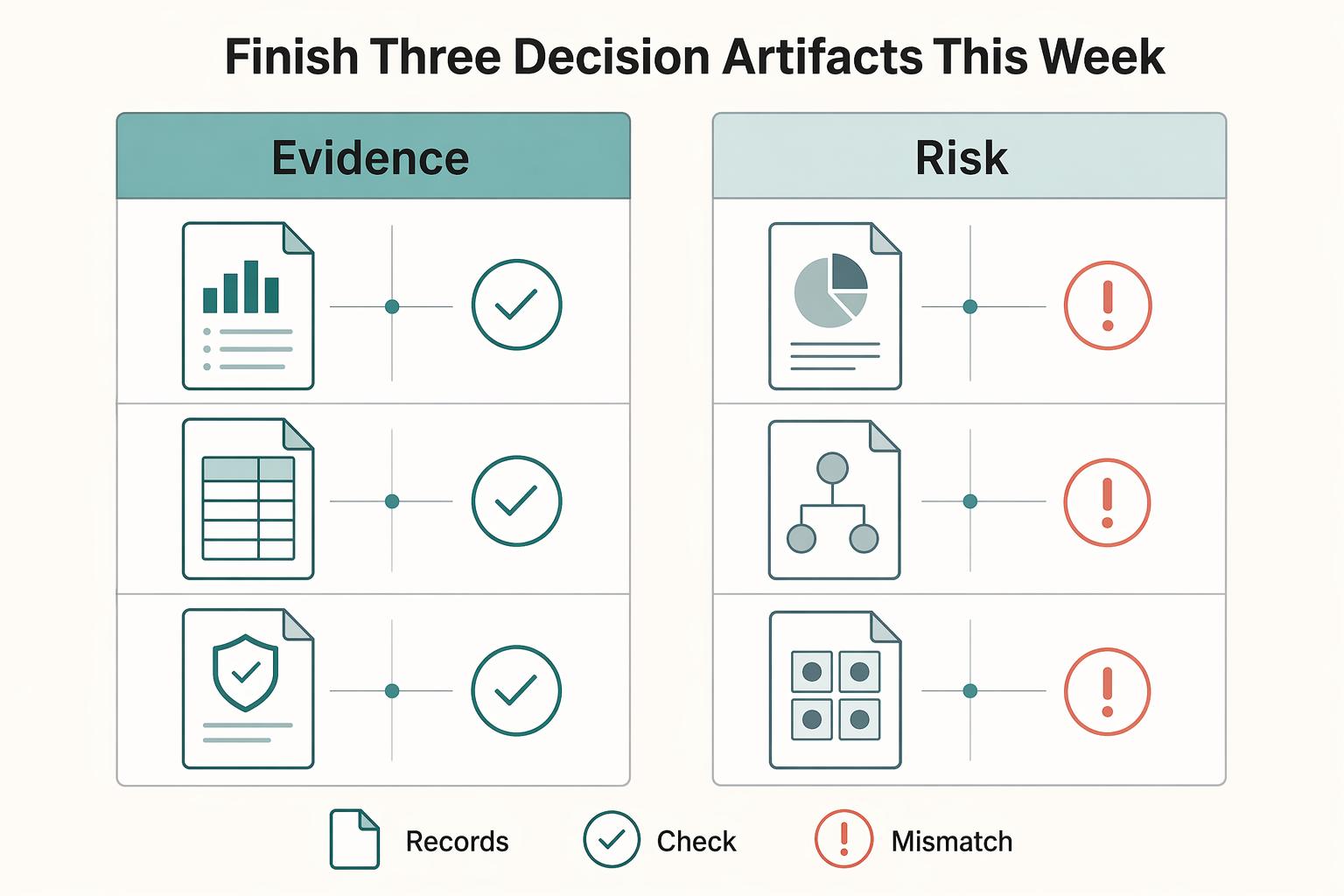
Finish three decision artifacts this week#
Keep these short and usable.
| Artifact | Include | Decision signal |
|---|---|---|
| Exposure snapshot | Content types, channels, contributor roles, rights records and contract examples | Broker can match the actual activities to the proposed wording |
| Coverage comparison | Limits, retention, defense terms, claim trigger, exclusions and open questions | You understand the remaining risk and cost before binding |
| Claims response note | Notice channel, record owner, counsel and settlement-consent requirements | Someone can preserve evidence and give timely notice when a complaint arrives |
Tie each item to a record you have: a license, contract, specimen form, written broker response or notice procedure. A new creator need not invent loss history or a board presentation to make a coverage decision.
Do not confuse more inputs with better judgment#
More data does not automatically create clarity. Keep a tight "known unknowns" list and include only items that could change your decision.
Also plan for claims friction. Documentation, oversight, and renewal strategy are practical controls before a claim is filed, not cleanup steps after.
What good looks like by Friday#
Write down the decision, its effective date if bound, and any remaining gap. If you defer, name the information needed and when you will revisit the exposure.
Take the content examples, contract terms and quote comparison to a licensed insurance broker; use legal counsel for the duties you accept in the agreement.
Frequently Asked Questions
What is media liability insurance in plain terms?
It covers claims tied to content you publish or broadcast. That commonly includes allegations like defamation, invasion of privacy, or copyright infringement. It is often not legally required, but clients or partners may still require it before they work with you.
Is media liability insurance the same as professional liability insurance or E&O insurance?
Media liability is a specialized form of E&O for publishing-related allegations. A general professional liability policy may address different services and exclude media risks. Check the covered activities and allegations rather than treating the names as interchangeable.
What does media liability insurance usually cover for content creators?
It usually responds to content-based allegations such as defamation, privacy, and copyright-related claims tied to published work. It typically does not cover intentional false publication or criminal acts like fraud or theft. Check exclusions early so you are not assuming protection that is not there.
What is the difference between occurrence form and claims-made policy?
Occurrence wording generally focuses on an incident during the policy period; claims-made wording generally focuses on when a claim is first made, subject to reporting and prior-acts conditions. Ask about retroactive dates, known-circumstance exclusions and any extended reporting period before switching insurers or stopping coverage.
How is media liability different from commercial general liability insurance?
They address different risks. Media liability focuses on content-related allegations, while bodily injury or property damage claims are generally handled under General Liability Insurance. If your business has both exposure types, you may need both policies.
What should I check in an indemnification clause before signing a client or publisher contract?
Check whose conduct you must defend, what losses are included and whether the duty extends beyond your own work. Compare those promises with contractual-liability exclusions and defense-control terms. Have counsel assess the clause and the broker identify any uninsured gap.
What important details are often unclear before purchase, and how should I verify them?
Start with the two limits that define capacity: the per-claim limit, which is the maximum for one claim, and the aggregate limit, which is the total for the policy period. Then confirm whether defense costs are inside limits, because in many policies legal spend can reduce what remains for settlement or judgment. Also verify exclusions and claims-reporting steps, and notify the insurer immediately if a claim arrives.
Try a related tool
Researched and edited by the Gruv editorial team. Gruv builds cross-border billing, payouts, and finance-operations software for global businesses.
Sources
Includes 4 external sources outside the trusted-domain allowlist.
Educational content only. Not legal, tax, or financial advice.
Related Posts

A Freelancer's Guide to Professional Liability (E&O) Insurance
Set explicit checkpoints in your risk worksheet: day 30 intake review, day 60 contract review, day 90 claim-readiness review, and a 12-month renewal review.

The Freelance Payment Penalty: A Modeled Audit of Platform Fees, FX Spreads, and Payout Delays
The money rarely disappears through a single, easy-to-spot fee. The real loss is stacked. A marketplace takes its commission, a processor adds a charge for international cards, a bank or payment company converts the currency at a spread, a platform holds the funds before release, and a wire sheds a little to intermediaries on the way in. Each layer looks defensible on its own, but the worker feels the combined result as a smaller deposit and a later payday.

How to Respond to a Subpoena for Business Records
Move fast, but do not produce records on instinct. If you need to **respond to a subpoena for business records**, your immediate job is to control deadlines, preserve records, and make any later production defensible.