
Quick Answer
Pick the option that can prove one complete chain from approved timesheet to supplier self-bill invoice, remittance advice, and payout result. For UK VAT cases, confirm the self-billing agreement is in place before rollout, because legal setup is part of validity, not admin cleanup. Based on the public evidence reviewed here, Timesheet Portal shows the clearest recruitment-style signal, Tipalti looks strong for enterprise payables but needs deeper validation, and generic tools like ServiceTitan or Square require strict testing before they are treated as true self-billing systems.
What self-billing needs to work in practice#
If you are choosing a self-billing path for a platform, the real decision is not which invoicing app looks polished. It is whether your product can turn approved work into a supplier invoice, keep finance comfortable with the paper trail, and give ops and engineering a clean path to payout and reconciliation.
This guide is for platform teams, not freelancers looking for a better way to send one-off invoices. Under HMRC guidance, self-billing means the customer prepares the supplier's invoice instead of waiting for the supplier to issue it. In practice, that is not just a template change. It usually depends on an agreed method and a self-billing agreement, especially if you operate in UK VAT scope.
In platform terms, the core object is often a supplier self-bill invoice generated after an approved timesheet or another approved work event. That is the key distinction from a contractor-submitted invoice flow, where the supplier creates the invoice and the platform only receives it. In recruitment and agency-style models, a common pattern is simple: invoice creation and payment calculations can both be based on the same client-approved timesheet. If your current stack cannot reliably link that approval record to invoice issuance, treat that as an early red flag.
The other term that matters is remittance advice. It is a payment notice that accompanies an incoming payment and carries details needed to match funds to the right invoice or account. That does not make it legally mandatory everywhere, but it is operationally important because finance often uses it to verify what got paid, against which invoice, and when. A self-billing setup gets messy fast when the invoice record, payment notice, and payout status live in different places with no shared reference. You should leave this article with four practical things:
- Selection criteria you can actually use
We will compare options on compliance surface, automation depth, reconciliation clarity, and payment platform integration quality.
- A side by side view of the main paths
That includes vertical self-billing suites, enterprise payables tools, generic contractor invoicing apps, and a modular build route.
- Implementation checkpoints before go-live
Expect specifics such as verifying the self-billing agreement, confirming the approved work event that triggers invoice creation, and checking that finance can review a sample invoice copy and the payment notice.
- Failure-mode controls that matter in production
We will look at stale approvals, invoice creation before final approval, payout failure after invoice issuance, and the audit gap that appears when reconciliation exports do not tie back to source approvals.
If you need product-native control, finance evidence, and payout linkage in one operating model, keep reading. If you only need customer billing, booking, or field-service invoicing, most of this will be the wrong buying lens. Related reading: How Platform Teams Pay Brazil Contractors with Pix.
Who this list is for and how to choose#
Use this list if you own the handoff from approved work to contractor payout and finance evidence. If your team mainly needs bookings, dispatch, or customer CRM, you will usually get more value from an operations tool than from a self-billing-focused product.
- Best fit: platform owners with payout accountability
This guide is for product leaders, finance ops, and engineering owners running contractor or marketplace payouts. The key requirement is a clear record chain from an approved timesheet or similar approved work event to invoice issuance and final payout status.
- Use four selection criteria throughout
Evaluate options on compliance surface, including HM Revenue & Customs (HMRC) self-billing conditions where UK VAT applies, automation depth, reconciliation clarity, and payment platform integration quality. Ask vendors to show how invoice data, approval statuses, and payment information stay aligned across their product and connected systems.
- Apply a minimum viability rule before shortlisting
If a tool cannot connect approval data to invoice issuance and payout state, it is not a strong self-billing fit for platform workflows. Recruitment-focused tooling often makes this explicit by generating self-bill invoices from approved timesheets and moving from timesheet to pay with minimal manual effort.
- Exclude generic ops tools when self-billing control is the real need
Tools like ServiceTitan and Square are positioned around service operations, appointments, and staff availability. They may fit field operations well, but that is different from proving approval-linked invoice issuance and payout traceability.
Quick comparison of your main paths#
If you need approval-linked contractor pay evidence quickly, the clearest match among the options covered in this guide is a vertical self-billing suite. The other paths can work, but only if you verify the full document chain.
| Path | Supplier self-bill invoice support | Remittance advice | Payroll linkage (PAYE, payroll automation) | Compliance depth (CIS, HMRC intermediary reporting) | Implementation effort (directional) | Unknowns to verify | Best for | Risk if wrong choice |
|---|---|---|---|---|---|---|---|---|
| Vertical self-billing suite | Strong public signal in recruitment-focused tooling. Timesheet Portal says it "generates supplier self-bill invoices directly from approved timesheets." | Strong public signal. Timesheet Portal says it can "Send remittance advice automatically." | Likely closer to payroll handoff than generic apps, but exact PAYE and payroll automation coverage still needs validation. | Strongest evidenced UK-specific depth in this set. Public claim includes "CIS deductions and HMRC intermediary reporting." | Usually lower when approved timesheet data is already clean and central to pay. | Payroll edge cases, export detail, reversal handling, and fit outside recruitment-style models. | UK recruitment, temp staffing, or similar models where approved timesheets trigger pay. | Fast fit now, but less flexibility later if your model expands beyond agency-style flows. |
| Enterprise payables self-billing | Tipalti publicly markets "automated invoice creation, submission, and approval workflows" for self-billing. | Not clearly evidenced in the public material reviewed here. | No public evidence here for PAYE support or payroll automation parity. | Tipalti positions around global regulatory compliance; verify CIS or HMRC intermediary-reporting depth directly with Tipalti. | Moderate to high, depending on ERP, approvals, and payout scope. | Exact supplier self-bill configuration, remittance format, reconciliation fields, onboarding burden, and UK-specific handling. | Multi-country payout operations focused on AP governance and ERP sync. | Broad payables coverage, but you may still miss the approval-linked contractor pay trail finance needs. |
| Generic contractor invoicing apps | Weak fit for self-billing. ServiceTitan discusses broad contractor invoicing app categories, and Square positions around creating and sending invoices for operations. | Not evidenced here as a self-billing remittance flow. | Not evidenced here. | No public evidence here for CIS or HMRC intermediary reporting. | Low for customer billing use cases, high once you bolt on platform-grade controls. | Whether approvals trigger invoices, whether payout references persist, and whether exports are audit-ready. | Field service and local operator use cases centered on jobs, bookings, and customer invoices. | You can mistake contractor-submitted invoicing for true self-billing and create an audit gap across approvals, invoices, and payout status. |
| Modular build on Gruv | Potentially buildable, but this section's source set does not establish out-of-the-box supplier self-bill support. | Potentially configurable, but not publicly evidenced here. | Scope-dependent; verify PAYE or payroll automation requirements directly. | Scope-dependent; no sourced claim here for CIS or HMRC intermediary-reporting coverage. | Highest design and integration responsibility of the four paths. | Actual product fit, document outputs, exception handling, and jurisdiction coverage. | Teams that want product-owned UX and are ready to validate a scoped build. | Under-scoped policy, reconciliation, or exception design can produce a custom flow that still fails finance review. |
Treat effort as directional, not a fixed ranking. Real effort depends on how reliable your approval event is, whether payout status stays in the same reference chain, and what finance evidence your team must export.
Use a document test before any shortlist. HMRC's VAT self-billing guidance defines self-billing as an arrangement where the customer prepares the supplier's invoice and forwards a copy to the supplier with the payment. Ask each vendor or build owner to show one approved timesheet through to one supplier self-bill invoice, supplier copy, and payment/remittance artifact, with traceable references throughout.
Then test compliance cadence. HMRC employment intermediary reporting guidance says relevant reports must be sent at least once every 3 months when workers are paid outside PAYE. "Supports compliance" is not enough; confirm the product outputs the data your team can review and submit.
The common failure mode is strong invoice creation but weak payout evidence. Require a small evidence pack up front: one sample self-bill invoice, one remittance/payment notice, one reconciliation export, and one example showing how a failed or held payout is reflected after the invoice exists. If that chain is not clear, move on.
We covered this in detail in How to Migrate Your Subscription Billing to a New Platform Without Losing Revenue.
Option 1 vertical self-billing suite for recruitment-heavy teams#
If your pay flow starts with approved timesheets and needs to carry cleanly into payroll, this is usually the first option to test. In UK recruitment or temp-staffing models, a vertical self-billing suite is often the most direct way to keep approval, invoice, and payment notice in one chain.
Best fit#
Timesheet Portal is the clearest public example in this guide for recruitment-shaped workflows. It says it is built for recruitment agencies and generates supplier self-bill invoices from approved timesheets, which matches agency operating logic better than generic AP tooling.
The practical advantage is continuity, not invoice creation alone. Remittance advice can be sent automatically and payroll automation runs from timesheet to bank file, so finance, ops, and payroll can work from the same approval event.
Why the UK compliance fit is stronger#
This path is a stronger fit when your obligations look like UK labour supply. The product claims include CIS deductions and HMRC intermediary reporting, which can reduce policy and process design work for matching use cases.
| Evidence item | Article note |
|---|---|
| approved timesheet | Same worker and period. |
| supplier self-bill invoice | Same worker and period. |
| payment notice | Same worker and period. |
| payroll or bank-file output | Same worker and period. |
| CIS or intermediary-reporting export | Used for that pay run. |
Treat that as a fit signal, not a compliance guarantee. HMRC says intermediary reports must be submitted every 3 months when you pay people without operating PAYE, and it explicitly includes recruitment-agency context. HMRC CIS guidance also says payments to subcontractors must account for tax status, so you still need to verify your own fields, exports, and review steps.
A practical checkpoint is one sample evidence pack showing the same worker and period across:
- approved timesheet
- supplier self-bill invoice
- payment notice
- payroll or bank-file output
- any CIS or intermediary-reporting export used for that pay run
Caveats and a concrete use case#
The tradeoff is narrower domain fit. A recruitment-focused suite can be a weaker match for mixed marketplaces, milestone-led work, or models where timesheets are not the core approval record, so test portability early.
A concrete good-fit case is a temp staffing platform that needs PAYE handoff plus holiday handling. Timesheet Portal states its PAYE assist module tracks holiday accruals and AWR status automatically, which matches common staffing operations needs. If you cannot show how held payments or post-approval changes flow after invoice creation, pause and validate reversal handling before committing.
You might also find this useful: Partial Payments and Milestone Billing: How to Implement Flexible Invoice Terms on Your Platform.
Option 2 enterprise payables self-billing for multi-country payout operations#
Choose this path when cross-border compliance and AP governance are the primary constraint, not recruitment-specific workflow fit. Tipalti is a credible shortlist option if you want one enterprise payables layer for approval controls, payout operations, and self-billing automation across countries, but you still need to validate supplier self-bill depth before committing.
Best fit#
Tipalti's public self-billing positioning covers automated invoice creation, submission, and approval, with a regulatory-compliance framing, and it states that payees can be relieved from sending invoices. That aligns with a model where the platform prepares invoices under finance-owned controls rather than collecting contractor-submitted invoices.
The stronger fit here is enterprise payables governance, not a timesheet-to-payroll staffing chain. Public marketplace positioning also describes Tipalti as a unified global payables solution with payment reconciliation and AP reporting, which is useful as a maturity signal but not proof that your exact configuration will work out of the box.
A concrete use case is a creator marketplace that wants approvals and payout rails managed in one enterprise payables layer across multiple countries.
What is evidenced and what is still unknown#
What is evidenced:
| Status | Area | Article note |
|---|---|---|
| Evidenced | Self-billing model | The customer prepares the supplier invoice. |
| Evidenced | Tipalti positioning | Public self-billing positioning covers automated invoice creation, submission, and approval, with a regulatory-compliance framing. |
| Evidenced | Enterprise AP patterns | Enterprise AP contexts use automated self-billing patterns, including ERS in SAP documentation across multiple countries/regions. |
| Validate | Approval-event configuration | How deeply supplier self-bill invoices can be configured from your real approval event. |
| Validate | Onboarding and agreement handling | What payee onboarding requires, including self-billing agreement handling. |
| Validate | Reconciliation and AP reporting | What outputs look like once holds, failures, and reissues occur. |
Use the "Validate" rows as your live-demo checklist.
Tradeoff rule#
If multi-country compliance breadth is your main blocker, keep this option high on the shortlist. If product-embedded UX control in your own platform is the main blocker, compare this directly against a modular build before deciding.
Ask for a live sample covering one payee and one period: approval trigger, generated invoice, approval state, payout result, and reconciliation/AP reporting output. If the demo stops at invoice creation and does not show exception handling after holds or corrections, treat it as positioning, not implementation proof.
Option 3 generic contractor invoicing tools when self-billing is not the core need#
Pick this category when your priority is customer billing, bookings, and job workflow, not platform-grade self-billing controls.
ServiceTitan is positioned as broad software for home and commercial contractor operations, and its contractor invoicing article (published March 16th, 2026) walks through three main types of contractor invoicing apps. Square is positioned as contractor software for managing jobs end to end, with customer booking, estimate-to-invoice conversion, and combined project, invoice, and scheduling management.
That positioning fits a local field-service operator that wants faster estimates, bookings, and invoicing. That is not, by itself, evidence of approval-linked invoice issuance on behalf of contractors.
The core limitation is simple: a polished contractor-submitted invoice flow does not automatically meet self-billing requirements. You still need to prove that an approved work event can trigger invoice issuance without contractor submission, and that finance can trace invoice status, payout outcomes, corrections, and reconciliation.
Use one end-to-end verification sample before you commit: trigger event, generated invoice, adjustment path, and what finance sees after a payment success or failure. Red flag: the demo shows customer invoicing and scheduling, but not payout linkage or audit-ready evidence if HMRC intermediary reporting or batch contractor payouts later become relevant.
Related: Platform Invoicing at Scale: How to Auto-Generate Compliant Invoices for Thousands of Contractors.
Option 4 modular build with Gruv for control and integration depth#
Choose this option when you need embedded UX and tighter control over exceptions, retries, and finance visibility across invoice, payout, and reconciliation states. A modular build with Gruv puts more design responsibility on product and engineering, but it gives you stronger control over how each state transition is recorded and reviewed.
Where this option fits#
Use this route when approval data already lives in your product and you want that same event to drive downstream finance actions. The core pattern is self-billing: the payer creates the invoice on behalf of the payee, then keeps invoice, remittance advice, and payout status connected in one traceable flow.
How to shape the build#
Start from an approval event, generate the invoice, and keep a durable link back to the approved work item. Attach remittance advice when payment is sent so finance can see what was paid and what that payment covered.
Route payout execution through Gruv Payouts, and anchor reconciliation to ledger events rather than UI status labels alone. Use idempotency on invoice and payout actions so timeout or connection-error retries do not create duplicate operations.
A practical verification checkpoint is one end-to-end sample showing:
- approved timesheet or approval event
- generated self-billing invoice
- remittance advice linked to the payment
- payout success, failure, and retry states
- what finance sees in reconciliation after each state change
Compliance and the real tradeoff#
Add policy gates to payout actions where enabled, including KYC, KYB, and AML workflows such as due diligence, identity verification, and sanctions or PEP screening. For HMRC-linked obligations, treat this as market-specific and confirm documented coverage before committing internally.
The tradeoff is ownership: you must define behavior for edge cases, like invoice issued but payout failed, or a compliance hold after approval and before release. In a benchmark published April 10, 2025 (100 finance professionals), one finance manager reported cash reconciliation alone taking 30+ hours each month when upstream data was fragmented. If that pain is already visible in your operation, this build path can improve control and traceability as you scale.
For a step-by-step walkthrough, see How to Build a Subscription Billing Engine for Your B2B Platform.
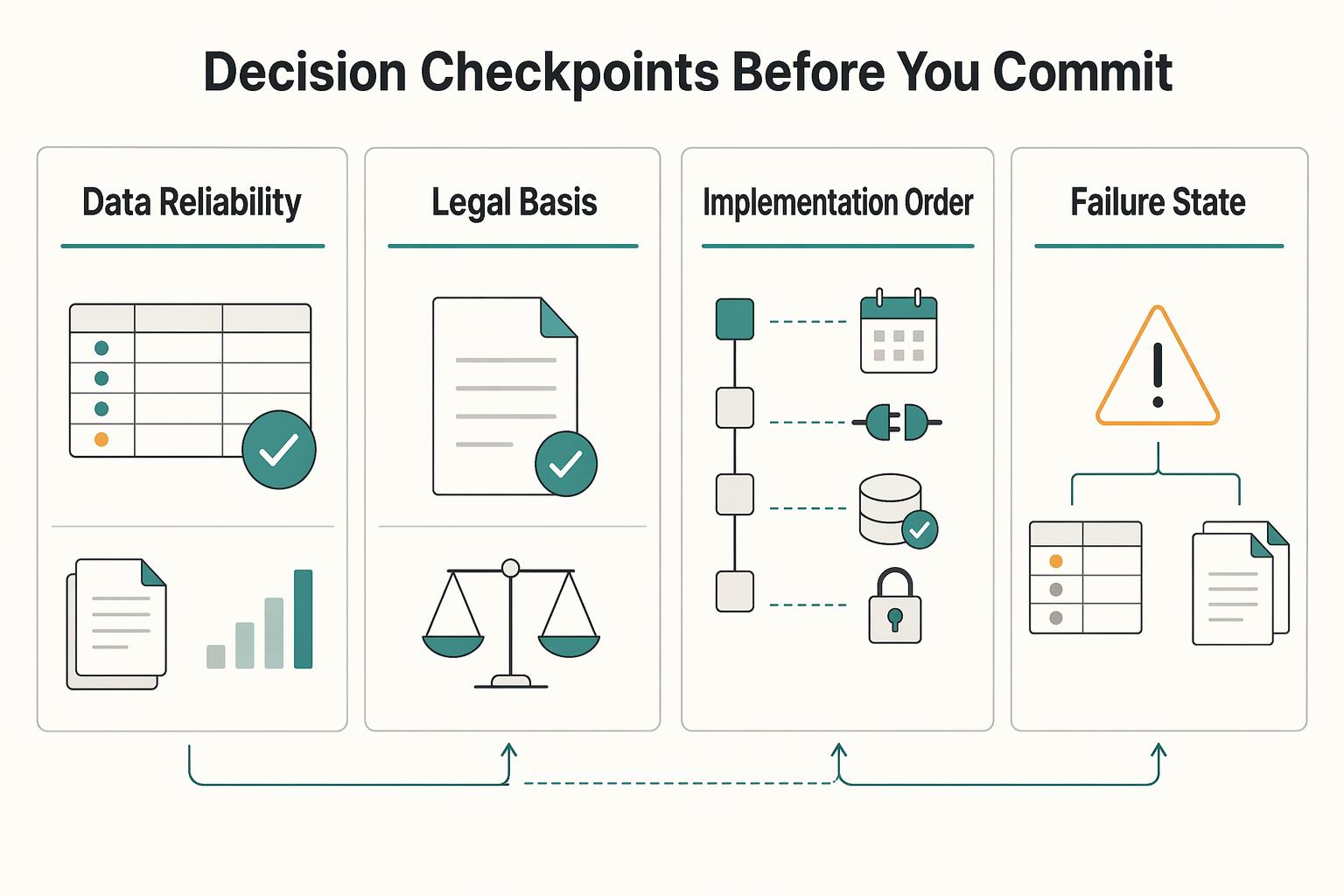
Decision checkpoints before you commit#
Choose your path based on how reliable your approval data is and how much control you need over invoice-to-payout states. If approved timesheet data is already clean and your flow is agency-like, packaged self-billing is usually faster. If you need product-native control over exceptions, reversals, and payout linkage, commit to a modular build from the start.
| Checkpoint | What to confirm | Grounded detail |
|---|---|---|
| Data reliability | One trusted approval event can trigger invoice creation. | If approvals vary across surfaces, change after signoff, or need custom payout holds, build for control. |
| Legal basis | A signed formal self-billing agreement is in place. | HMRC says include an expiry date, usually 12 months, and assign renewal ownership before go-live. |
| Implementation order | Validate invoice basis, map approval events, define reversals, then implement payout and reconciliation controls. | Define early how credit-note or reversal records are created, linked, and approved. |
| Failure-state proof | Require an evidence pack before launch. | Include a sample payment notice, a finance-signed reconciliation export, and any market-specific compliance artifacts your model needs. |
- Choose for data reliability, not feature breadth
Packaged tools work best when one trusted approval event can consistently trigger invoice creation without manual repair. If approvals vary across surfaces, change after signoff, or need custom payout holds, build for control instead of forcing a fixed workflow.
- Confirm the legal basis before integration work
For UK VAT self-billing, HMRC says you do not need prior approval, but you do need the required conditions. The key requirement is a signed, legally binding formal self-billing agreement; without it, self-billed invoices are not valid VAT invoices for input tax recovery. Include an expiry date, which HMRC says is usually 12 months, and assign renewal ownership before go-live.
- Sequence implementation in the right order
Validate the supplier self-bill invoice basis, map approval events, define reversals, then implement payout and reconciliation controls. Define early how credit-note or reversal records are created, linked, and approved, since self-billed credit-note transactions are explicitly supported. For deeper reversal design, see this credit invoice guide.
- Design for failure states and proof, not just happy-path demos
Preempt stale approvals, payout failures after invoice issuance, compliance holds between approval and release, and invoice/ledger/payout state mismatches. Make retries idempotent so timeouts do not create duplicate invoices or payouts. Before launch, require one evidence pack: a sample payment notice, a finance-signed reconciliation export, and any market-specific compliance artifacts your model needs.
Conclusion#
After the edge cases and failure modes, the choice gets simpler: pick the path that can keep approval data, compliant invoice generation, payout execution, and reconciliation evidence in one connected chain. If any part still depends on manual rekeying, inbox chasing, or spreadsheet matching, you likely have not fully solved self-billing. In practice, the value is straightforward: better accuracy, faster processing, and fewer delays from missing or inconsistent supplier-issued invoices.
- Choose the connected record, not the prettiest invoice
The practical winner is the option that can generate buyer-created invoices under a mutual agreement, then carry that same record through the payment workflow without losing traceability. That matters more than UI polish because finance will live with the exceptions, not the demo screen. A good final check is to ask for the exact chain from approved work event to invoice copy to payment evidence, plus the export your finance team will use to reconcile it.
- Score the boring controls before you score feature breadth
In practice, layouts, posting rules, and vendor configuration are what make self-billing hold up under audit and month-end pressure. So your short scorecard should test whether the product can support the legal setup, generate the right document output, and keep clean financial records once exceptions start showing up. One specific red flag to verify: some systems explicitly prevent self-billed vendors from receiving inbound AP e-documents, which helps avoid duplicate or conflicting accounts payable records. If a vendor cannot explain how they prevent that kind of collision, assume cleanup work will land on your ops team.
- Validate fit with a small test and a real sales or demo review
Do not buy on category language alone. Run a short comparison using the criteria from earlier sections, and if possible test a small contractor cohort before wider rollout so you can see where approvals, invoices, payment notices, and payouts drift apart in the real world. Ask the vendor to show sample outputs, exception handling, and what your team actually configures at the vendor level, not just what exists in a roadmap. That kind of fit check is normal: vendors explicitly offer demo and sales motions such as "Request a Demo" or "Connect with our Sales team," and you should use them to confirm market coverage, program fit, and integration depth.
If the modular path looks closer to your operating model, talk to sales before you commit engineering time. The useful conversation is not "can you do self-billing?" but "can you support our approval trigger, our document requirements, and our payout and reconciliation path without manual patchwork?"
Frequently Asked Questions
What is a self-billing invoice platform for contractors?
It is a setup where the customer or platform prepares the supplier’s invoice and forwards a copy to the supplier with payment, instead of waiting for a contractor-submitted invoice. In practice, for platform teams this often means generating a self-billed invoice from an approved work event (such as an approved timesheet), then tying that invoice to a payment notice and payout status.
When should we use self-billing instead of contractor-submitted invoices?
Use it when your approved timesheet or equivalent approval event is already trusted enough to act as the billing trigger. That is common in agency-style flows where invoicing and payment are both based on the same client-approved timesheet. If approvals are messy, frequently edited, or disputed after signoff, keep manual supplier invoicing or add stronger controls before you automate.
What must be in place before enabling supplier self-bill invoices?
The non-negotiable item in the UK VAT context is a formal self-billing agreement signed by both parties. HMRC says that without that agreement, your self-billed invoices are not valid VAT invoices, and the agreement should include an expiry date, usually 12 months. A practical pre-launch check is to confirm who owns renewal and where the signed agreement is stored for audit access.
How does the flow work from approved timesheet to remittance advice to payout?
A practical sequence is approval first, invoice generation second, payment notice third, payout last. The notice is the document or electronic message that specifies which invoices a payment covers and when funds will arrive, which is what lets finance match payment to invoice without guesswork. If your payout can proceed without that invoice-to-payment link, reconciliation will get noisy fast.
What are the biggest failure modes in self-billing implementations?
Typical failure modes include invoice issuance before legal setup is complete and state mismatches between invoice, payment notice, and payment records. Another red flag is a product that says “approved” or “paid” on screen but cannot show which exact invoice and payment notice that status came from. If the platform supports payer approval, payee approval, or both, decide that approval pattern early rather than burying it in exceptions later.
How do we handle credit invoices, reversals, and disputes without breaking reconciliation?
Reverse against the original invoice record and generate a linked credit memo so the invoice and credit stay aligned. That matters because a proper reversal based on the original invoice data avoids variances between the invoice and the credit memo. Do not assume disputes are solved by credits alone, though. You still need a separate review or hold step before payout is released. For a deeper treatment, see this guide to credit invoices and reversals.
Can generic contractor invoicing apps meet platform-grade self-billing requirements?
Sometimes they can cover basic invoicing, but public product messaging often points to customer billing and job workflows, not approval-linked supplier self-billing. ServiceTitan documentation emphasizes generating and sending customer invoices, and Square messaging centers on creating and sending invoices for contractors. If you need a true self-billing setup with audit-grade payout traceability, verify the approval trigger, payment notice support, and reversal handling before you shortlist it.
Try a related tool
Where Gruv fits
Plan and approve payout batches
See how payee status, approval rules, route review, and exception handling sit in one payout workflow.
See reconciliation and mismatch review
Compare ledger entries, provider payment records, and statement rows to see what matches and what finance needs to review.
Researched and edited by the Gruv editorial team. Gruv builds cross-border billing, payouts, and finance-operations software for global businesses.
Sources
Includes 7 external sources outside the trusted-domain allowlist.
- docs.stripe.com/api/idempotent_requeststrusted
- contractoruk.com/money/contractor_guide_self_billing.htmlexternal
- coupa.com/products/ap-automation/invoicingexternal
- gov.uk/guidance/vat-self-billing-arrangementsexternal
- gov.uk/guidance/self-billing-notice-70062external
- jpmorgan.com/insights/treasury/receivables/remittance-exp...external
- learn.microsoft.com/en-us/dynamics365/release-plan/2026wave1/smb...external
- ledge.co/content/month-end-close-benchmarks-for-2025external
Educational content only. Not legal, tax, or financial advice.
Related Posts
Credit Invoices Explained: How to Issue Reversals and Adjustments in a Subscription Billing Platform
Once volume grows, credit invoices, invoice reversals, and invoice adjustments stop being simple billing edits. They become order-to-cash events that affect customer balances, accounts receivable, accounting records, payment matching, and sometimes fund finalization on a different timeline. The practical mistake is treating them like one back-office task when they are really several linked records that have to stay in sync.

Invoice Factoring for Contractors: How Platforms Offer Early Payment and Manage Risk
If you run a platform for contractors, early payment is a product and risk decision before it is a goodwill feature. Ask four things up front: Who funds the advance? Who collects from the payer? Who absorbs nonpayment risk? Do the unit economics still work once disputes and exceptions show up?
Platform Invoicing at Scale for Compliant Auto-Generated Contractor Invoices
In practice, **platform invoicing at scale auto-generate** is not just invoice creation. It is an operations control problem. Every invoice still has to be created, validated, routed, sent, tracked, reconciled, and preserved in an audit trail without dumping cleanup on finance later.