
Quick Answer
Start with ownership proof, then pick the model. In a platform cfo mor eor payment model decision, the strongest option is the one that can show clear accountability from customer charge to settlement, payout, and ERP posting with sample records. Fee comparisons come later, because unclear liability, dispute routing, or export quality usually creates larger downstream cost than headline pricing. Confirm readiness using one transaction evidence pack plus a named exception matrix before committing rollout resources.
Choose the operating boundary before comparing fees#
Choosing between a Merchant of Record, an Employer of Record, and a Direct Payment Model is mainly a risk-and-control decision, not just a fee comparison. The cost of a weak choice usually shows up later, when timing and controls are under pressure.
Use an Office of the CFO lens here. Expansion decisions need to hold up in day-to-day operations, not just in a vendor pitch. A practical standard is to assess benefits, total cost of ownership, and risk together. Avoid the common mistake of overweighting headline revenue and underweighting timing, cost, and risk.
The opportunity is large, but execution risk is real. Bain estimates that up to $35 trillion in annual payments could be addressable by ISVs, roughly 15% of all payments. The same analysis notes that bundling payments with software can reduce reliance on disconnected vendor tools, but it also requires investment in people and technology, and success is not assured.
That is the frame for the rest of this article. The goal is not to name a universal winner. It is to help you evaluate model options, sequence rollout based on control readiness, and set clear decision checkpoints before launch.
Treat the examples here as decision aids, then validate legal, tax, and compliance requirements locally before committing product, go-to-market, or hiring resources.
For a step-by-step walkthrough, see Series A Fintech Fundraising: How Payment Platform Startups Should Present Their Revenue Model.
What each model actually means in operations#
MoR, EOR, and a Direct Payment Model are operating-boundary decisions, not fee labels. The practical question is how ownership, controls, and records are handled from transaction flow through close.
Treat these labels as different operating designs, not interchangeable packaging. If a bundled offer blurs the boundary, pause until ownership and handoffs are explicit.
Use O2C to find the real boundary#
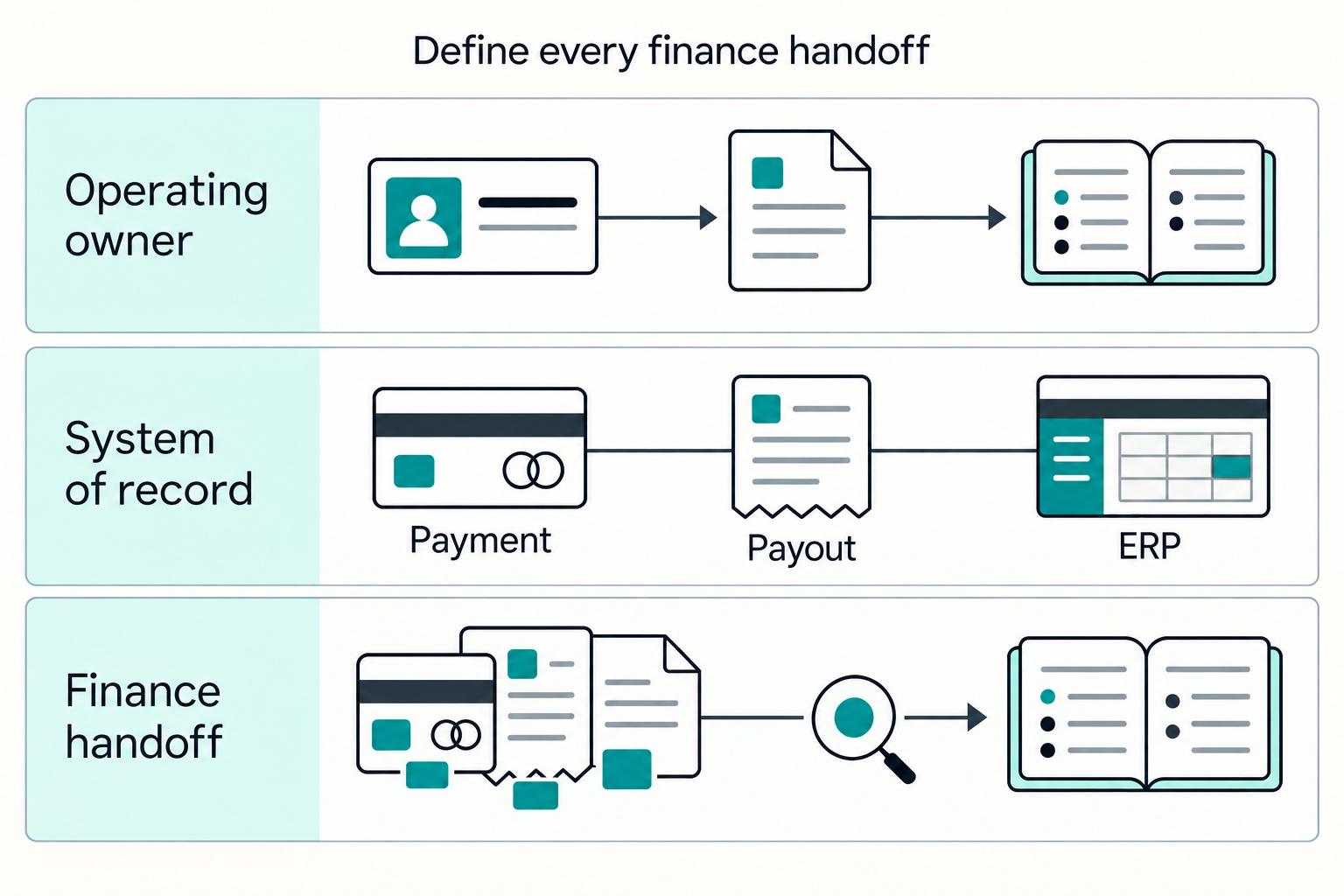
Map one transaction across Order-to-Cash (O2C): customer charge, settlement, payout, and final posting into finance systems and your ERP.
For each step, name three things: operating owner, system of record, and handoff into finance. If any of those are unclear, the model is still undefined in practice. That is where "low cost" decisions can create later risk.
One vendor does not erase finance work#
A single vendor relationship does not remove finance design work. CFO teams still need to assemble data from multiple systems and keep forecast and reporting data reliable.
Before launch, ask for a sample evidence pack that ties one transaction from customer payment to payout record to ERP posting. If that join is unclear, expect more manual reconciliation, more exception handling, and potentially a harder month-end close.
This pairs well with our guide on The Payment Operations Maturity Model: How to Benchmark Your Platform Finance Team.
Compare MoR EOR and direct side by side before debating price#
Decide structure before price. Compare MoR, EOR, and a Direct Payment Model on one page, then require each row to name an owner, a record, and proof. If you skip that step, you can spend months fighting friction that discounts or packaging changes will not fix.
Use the O2C map from the prior section to keep this grounded. The real question is simple: when money moves, an exception appears, or month-end close starts, who owns what and how do you prove it?
| Decision row | Merchant of Record (MoR) | Employer of Record (EOR) | Direct Payment Model |
|---|---|---|---|
| Legal and compliance owner | Name the merchant-facing entity and the contract clause that assigns the duty. Do not infer ownership from the label alone. | Document how employment obligations and customer/payment obligations are split, and where that split is written. | List your entity, processor, and any local counterparties. Identify which agreement assigns each obligation. |
| Payout liability | Confirm who is accountable for failed, delayed, reversed, or held payouts. Ask for the exact escalation path. | Verify whether payout responsibility sits inside or outside employment scope. Do not bundle assumptions. | Document whether liability stays with your entity or shifts under a provider agreement. |
| KYC, KYB, and AML burden | Ask who collects, reviews, refreshes, stores, and remediates blocked cases. | Confirm whether workforce checks are handled separately from customer or seller checks. | Map each control point you own and each point a vendor performs for you. |
| VAT handling | Confirm who issues the customer-facing invoice or credit note and who stores the evidence. | Check whether any tax handling is limited to payroll or employment and not customer billing. | Identify which internal team and tool carry invoice, tax evidence, and correction duties. |
| AR and AP impact | Map which events create Accounts Receivable (AR), Accounts Payable (AP), clearing, or suspense entries in your ERP. | Separate payroll-related AP from platform transaction entries. | Define your ledger logic before launch, including refunds and disputes. |
| Integration effort | List required data feeds, event IDs, settlement files, and handoffs into ERP. | Confirm whether you need separate feeds for workforce and transaction records. | List every source you may need to join yourself, including processor, bank, ledger, and payout data. |
| Exception handling | Ask who triages rejects, payout holds, missing bank data, duplicate events, and reversals. Get SLA language if available. | Confirm whether exceptions route to HR ops, finance ops, support, or multiple teams. | Name the queue owner inside your team for each exception class. |
| Dispute path | Verify who receives the notice, who responds, who funds the outcome, and what evidence pack is required. | Check if employment support and payment disputes follow different channels. | Build your own dispute ownership map and store evidence where finance can retrieve it. |
| Onboarding friction | List required documents, review steps, and likely manual steps before first live transaction. | Separate worker onboarding steps from payer, customer, or seller onboarding steps. | Document the up-front policy and data design work required if you keep more control in house. |
| Auditability in ERP and SAP exports | Request a sample export tying payment event, provider reference, ledger entry, and close support. | Confirm whether export granularity is enough for both workforce and transaction review. | Require a reproducible export into ERP or SAP with stable IDs and timestamps. |
| Who signs for what | Name the legal signer, finance approver, operations owner, and escalation approver. | Do the same, and make the employment signer distinct if needed. | Record the internal signer and any third-party counter-signing obligations. |
A filled cell is only useful if it points to a contract clause, a named role, or a sample file. "Vendor handles it" is not enough for ownership, liability, or control design.
Before launch, ask for one evidence pack that traces a transaction from customer charge through settlement and payout into ERP or SAP exports with stable references. If that trace is not clean, treat it as a risk signal and resolve the gaps before launch.
Use this as a working rule, not a legal fact: if ownership is still unclear across key rows, do not commit GTM resources yet. Pause, tighten contracts, collect export samples, and name internal approvers first.
If you want a deeper dive, read Escrow vs. MoR vs. Direct Payment: Which Model Protects Your Platform Best?.
If your comparison table shows you need one accountable owner for merchant-facing payment and compliance workflows, review how Merchant of Record for business platforms is structured before you lock the rollout plan.
Map total cost where CFOs get surprised later#
Once you map ownership, treat price as a variance map, not a headline fee. If finance cannot separate contracted cost from triggered cost, the operating model is not ready to scale.
This is where O2C friction matters. The same friction that can blur forecasts can also hide spend until close. A clean fee sheet will not protect you if month-end absorbs unplanned exceptions, manual corrections, and extra close work.
Separate visible charges from triggered charges#
Start by splitting costs into two buckets: visible charges and triggered charges. Visible charges are the recurring, contracted items everyone expects. Triggered charges are the non-obvious items that appear only when conditions change or controls are weak.
Triggered charges are where forecasts usually drift. They can include data egress fees, idle test environments, and forgotten experiments, plus internal rework needed to resolve exceptions and explain variance after close.
Where the budget misses and close feels it#
| Cost line | Usually budgeted | Often shows up later | Forecast and close impact |
|---|---|---|---|
| Contracted services | Recurring platform and service commitments | Scope changes or untagged services not reflected in plan assumptions | Variance tracking drifts and close review expands |
| Hidden usage drivers | Expected baseline usage | Data egress fees, idle test environments, and forgotten experiments | Spend jumps outside plan and requires late investigation |
| Exception handling and manual rework | Minimal exception volume | Unplanned case handling, corrections, and cross-team follow-up | More manual reconciliation and slower close |
| Planning process quality | Periodic planning cadence | Inputs shift before consolidation; variance explanations arrive late; scenario coverage stays thin | Forecast reliability weakens and decisions lag |
Verify cost drivers before rollout#
Require an evidence pack before debating price. At minimum: a current data-flow map, workload tagging standards, automated shutdown coverage, and early spend alerts.
Back that up with regular audits and FinOps collaboration so costs stay predictable. A common failure mode is stale planning: inputs shift before consolidation, variance explanations arrive late, and scenario coverage stays thin.
Use this operating rule: if the model cannot produce forecastable variance drivers, it is not ready for broader rollout decisions. You should be able to explain cost movement from contracted charges, triggered charges, and process friction that affects forecast and close quality.
Related: How Modern CFOs Make Payment Platform Expansion a Strategic Driver.
Decide by country and vertical constraints before product buildout#
Choose the model only after you map control burden by country and vertical, not before. If legal, compliance, and finance cannot agree on a minimum viable control set for a market, pause product buildout.
Build the matrix around control ownership#
Start with a country-vertical matrix that captures who owns controls, what evidence is required, and how the flow connects to finance operations. Keep it simple enough to review, but specific enough to test.
| Matrix field | What to capture | Why finance cares |
|---|---|---|
| Checks and approvals | Defined checks, exception owner, and approval path | Clarifies where manual work sits and where close risk can appear |
| Payout and transaction flow | Expected transaction path, failure points, and who resolves breaks | Surfaces where retries, reversals, and reconciliation load may land |
| Document and evidence chain | Program-required documentation and evidence artifacts, storage location, and record linkage | Shows whether evidence can be tied back to transactions during close or audit |
Use the same operating-model lens highlighted in R2R design: policy and process, people and organization, and data and technology, not tooling alone. A provider can cover part of the flow, but ownership for approval and evidence retention still needs to be explicit.
Tie document requirements to transaction evidence#
For any required document set, test the full chain. Who collects it, who validates it, what blocks payment when it is missing, and how it links to the downstream transaction record in ERP. A document that exists but cannot be tied to transaction evidence is a weak control.
Before launch, run a small evidence-pack check: one onboarding record, one stored document output, one approval log, and one linked downstream transaction record for the same counterparty ID. This exposes breakpoints early.
Also test data completeness. Finance reporting artifacts can exclude system-generated or interface-generated activity, so your matrix should include those flows instead of only happy-path processing.
Let operating complexity change the model test#
Differences across countries and verticals should change your control-proof standard based on what your team can execute and evidence. This is not a label test. It is an operating-capability test.
When comparing MoR, EOR, and direct setups, ask one practical question: can your team consistently execute and prove the defined checks, approvals, and evidence at close? If not, the market is not launch-ready.
Set an explicit gate: no country launch until legal, compliance, and finance sign off on one minimum viable control set with named owners, required artifacts, exception handling, and reconciliation outputs. For finance org design, see How to Hire a CFO for Your Payment Platform.
Use stage-based decision rules instead of one permanent model#
Treat model choice as stage-specific, not permanent. Choose the option that best solves the current operating constraint, then predefine what evidence means continue, migrate, or stop. This avoids two common platform failures: choosing the wrong model and failing to evolve when conditions change.
Match the model to the stage, not to a slogan#
Use one rule: constraint first, model second. For each market stage, define one primary operating goal, then evaluate MoR, EOR, and Direct Payment Model against that same goal with finance, legal, compliance, and operations aligned.
Do not treat any model as a default winner. The CFO decision now spans technology strategy and regulatory uncertainty, so the choice should stay evidence-led and be revisited as the stage changes.
If teams cannot describe the same constraint, owner set, and success signal in the same language, keep the current model and close that alignment gap first.
Define migration triggers before the team normalizes pain#
Set migration triggers while performance is still measurable. Use explicit timelines and achievable stakeholder targets so decisions are based on repeatable evidence, not anecdotes.
Keep triggers simple and traceable across operating cycles. Focus on signals your team can prove end to end, with a clear owner and visible finance impact.
A practical checkpoint is one end-to-end sample each cycle: originating event, approval or review output, transaction reference, and final finance reporting output. If that chain is not clean, fix observability before changing models.
Protect the handoff during model changes#
Treat handoffs as a control point during model changes. Before production cutover, run a limited transaction evidence pack with named owners, old and new approval points, required reference fields, and the reconciliation method finance will use at close.
If any required field changes name, format, or source, treat it as a controlled risk and resolve it before cutover.
Use a stop or continue gate before leadership approves the move#
Approve model changes only when cross-functional leaders agree on scope, sequence, and proof. Use the table below as the approval gate.
| Approval area | Continue if | Stop if |
|---|---|---|
| Ownership | Legal, compliance, operations, and finance have named owners for approvals, exceptions, and reporting | Any critical path still depends on informal handoffs |
| Evidence | The team can produce a sample chain from originating event through core finance reporting output | Records exist but cannot be tied together reliably |
| Sequencing | There is a dated cutover plan with achievable targets by stakeholder group | The move depends on undefined integrations or unresolved policy decisions |
| Close impact | Finance has tested close and reconciliation behavior for the overlap period | Expected result is unclear source-of-truth reporting |
If these gates are not met, continue with the current model and fix the capability gap first. Stage-based decisions work only when ownership, traceability, and sequence are explicit. For a related comparison, see MoR vs. PayFac vs. Marketplace Model for Platform Teams.
Execute the first 90 days in the right order#
Once leadership aligns on the direction, the main risk is trying to do too much at once. Keep the first 90 days narrow, sequenced, and owner-led across the teams executing the transition.
The order matters more than total task count. Start with a prioritized agenda tied to strategic priorities and current performance, then use a structured checklist or phased plan to sequence execution.
- Confirm the strategic priorities and decision rights for year one.
- Conduct a complete review of current finance processes and systems.
- Set three or four top priorities and a few quick wins with clear owners.
- Hold regular checkpoints across the 90-day window and adjust based on operating evidence.
Keep the agenda to three or four priorities plus a few quick wins, not a 20-item list.
Build reconciliation and audit trails before scaling volume#
Before you add volume, make sure finance can trace what happened from operating event to financial outcome without manual reconstruction. If that trace is weak, scale can increase cost and friction instead of improving throughput.
Start from your internal ledger, not only provider dashboards#
Ledger-first design matters because signed contracts do not fully predict realized revenue in usage-based models. Customer behavior drives outcomes, so finance needs clean, time-stamped event records for revenue recognition and review.
Across payout setups, provider dashboards are useful operational views, but finance still needs internal records it can rely on.
Document one trace path finance can rerun on demand#
Define and document a single transaction trace path that finance, operations, and engineering all use the same way. The exact system sequence can vary, but the path should be consistent enough that a reviewer can reproduce it and reach the same conclusion. As a practical check, sample transactions and confirm finance can reproduce outcomes without ad hoc intervention.
Watch for scale-related failure signals early#
As payout operations expand across currencies, rails, tax requirements, and workflows, complexity rises. Weak payout infrastructure usually shows up as slower expansion, higher operating costs, and more day-to-day friction for teams.
A key process risk is bringing finance in only after pricing and contracting decisions are already set. That ordering creates avoidable downstream risk and increases the audit-explanation burden later.
Define audit-ready as reproducible evidence#
Treat audit readiness as reproducibility: records should let your team explain outcomes from system evidence, not memory. Set that standard before volume climbs so growth does not outpace control quality.
We covered this in detail in How to Model Working Capital Needs for a Fast-Growing Payment Platform.
Prepare the compliance and tax evidence pack for reviewers and audits#
Build this part of your operating record so a reviewer can answer one question quickly: what FEIE eligibility checks were applied, what evidence supports them, what changed, and how exceptions were handled.
For FEIE-related reviews, remember that U.S. citizens and resident aliens living abroad are still taxed on worldwide income, and claiming FEIE still requires filing a return that reports the income.
Keep an evidence index, not just scattered files#
Do not assume payout geography alone determines FEIE eligibility. Standardize the retrieval structure around IRS eligibility and reporting checkpoints: evidence type, owner, storage location, effective version, and last verification date.
| Evidence area (for FEIE review) | What to index for review |
|---|---|
| Qualifying-individual check | Record that the person is being evaluated as a qualifying individual with foreign earned income |
| Tax home test | Evidence that the tax home is in a foreign country for the period reviewed |
| Physical presence test | The 12-month window used and whether 330 full days were met |
| Full-day counting method | Day-count notes using the 24-hour, midnight-to-midnight rule |
| Exception handling | Whether a waiver for war, civil unrest, or similar adverse conditions was considered and the outcome |
| Filing/reporting checkpoint | Return-filing status showing income reporting when FEIE is claimed; Form 2555 eligibility review notes |
Capture ongoing monitoring, not only onboarding evidence#
Because FEIE eligibility can change across a period, keep updates that affect qualification, including day-count changes, tax-home changes, and determinations where the 330-day threshold was not met or time in-country did not qualify.
Separate FEIE evidence from unsupported tax-ops assumptions#
This overview supports FEIE eligibility and reporting checkpoints, plus IRS review aids such as the Interactive Tax Assistant and Form 2555 "Who Qualifies." It does not establish KYC/KYB/AML requirements, W-8/W-9 workflow rules, VAT trace requirements, Form 1099 thresholds, or blocked-transaction SLA standards.
For FEIE-related touchpoints, avoid assumptions based only on payout geography. Eligibility depends on taxpayer facts and IRS tests.
Need the full breakdown? Read How MoR Platforms Split Payments Between Platform and Contractor.
Spot red flags that should pause expansion immediately#
Pause expansion immediately if accountability, compliance transparency, or auditability is unclear. The first red flag is choosing an EOR mainly on headline features or price before contract terms and responsibilities are clear.
Run a fast check: request clear documentation and reviewable contract terms before committing. If a provider dodges liability questions, avoids specifics, or relies on outdated contracts, treat that as a stop signal.
The second red flag is compliance opacity. If a provider cannot clearly explain how compliance works and where liability sits, pause and review before scaling.
The third red flag is weak auditability in finance workflows. The risk is not only delay. It is loss of auditability. When inputs, assumptions, and outputs are weakly documented, finance results can become unauditable.
If any one of these conditions is present, pause expansion until clear documentation, reviewable contract terms, transparent governance protocols, and a defensible audit trail are in place.
Conclusion#
The right choice is the model that makes ownership, controls, and reconciliation explicit and auditable under real market constraints. Use that as your decision rule when comparing MoR, EOR, and direct payment models. If you cannot trace a commercial event through payout, reconciliation impact, and review evidence, you have not finished the model decision. You have deferred it.
Before committing product or GTM spend, run a side-by-side comparison on the same rows for each option: ownership, reporting burden, exception handling, AR and AP impact, and export quality into your ERP. If ownership is still unclear, stop. That ambiguity often turns into restricted visibility, delayed execution, and weaker forecasting.
Speed can justify EOR in early expansion, especially when teams want to avoid a 6-12-month local-entity setup cycle. But as some providers expand into treasury and cross-border payment capabilities, operating boundaries can blur unless approvals, reporting outputs, and exception ownership are confirmed in writing.
Use evidence checkpoints, not broad promises. Favor defined, testable proof points. Then require:
- signed terms and current operating documents that name accountable owners
- a sample reconciliation trail from transaction or payout event into AR or AP and ERP export
- an exception matrix showing how failures, corrections, and reporting issues are handled
Next step: run one target country through your comparison table, cost map, and evidence-pack checklist, then review it with legal, compliance, and finance before launch. If documented coverage is not clearly complete, keep working before you scale. Before launch, have finance and engineering validate your control checklist against implementation details in the Gruv docs.
Frequently Asked Questions
What is the practical difference between MoR, EOR, and a Direct Payment Model?
In this guide, MoR and Direct Payment Model responsibilities are not defined in operational detail, so avoid treating the label alone as the answer. The grounded pricing signal is narrower: payroll, PEO, and EOR-style services are commonly priced per employee per month, as a percentage of payroll, or as a fixed fee. Treat the rest as a contract and operations validation exercise.
Which model owns compliance, invoicing, and payout liability in day-to-day operations?
Do not assume ownership from a model name. Confirm it in signed terms, current operating documentation, and an exception matrix that names owners for disputes, refunds, reporting submissions, and payout failures. If ownership is not clear in writing, treat it as unresolved.
When should a platform start with one model and then migrate to another?
Start with the option that gives you the clearest accountability and reconciliation path for your first market. Migrate when exception handling, reporting gaps, or auditability issues become recurring operational risk. For the migration itself, use a checklist-based project plan to reduce disruption.
What hidden costs are most often missed in EOR pricing and cross-border payment setups?
A common miss is assuming the quoted pricing basis is the full operating cost. Even when pricing is per employee per month, percentage of payroll, or fixed fee, verify what is included and excluded in reporting, corrections, and exception handling. Keep reporting and data-handoff work explicit in scope so it does not become unplanned internal effort.
How do FX events and off-cycle processing affect total model cost and forecast reliability?
Treat model-specific FX and off-cycle fee mechanics as separate, trackable variance items in your own reporting rather than blending them into one cost bucket. That keeps close and review discussions easier to reconcile.
What should a platform validate before entering a new country with different KYC/KYB/AML expectations?
This guide does not define KYC, KYB, or AML thresholds by model or country, so validate those requirements separately through your legal and compliance process. Here, the concrete reporting example is France's 2026 e-reporting context for VAT-registered companies established in France; confirm your provider setup and exports can support required submissions where applicable.
What are the clearest signs that the current model is no longer fit for expansion?
The clearest signs are unresolved ownership, recurring exception work, and weak audit trails at close. Another warning sign is operating with reporting obligations but no reliable process to produce complete and timely submissions. If your team cannot quickly produce clear documentation and event-level evidence, expansion is running ahead of control.
Try a related tool
Researched and edited by the Gruv editorial team. Gruv builds cross-border billing, payouts, and finance-operations software for global businesses.
Sources
- cms.gov/files/document/medicare-transaction-facilita...trusted
- congress.gov/event/119th-congress/house-event/LC74985/texttrusted
- digitalcommons.law.byu.edu/cgi/viewcontent.cgitrusted
- dol.gov/sites/dolgov/files/ebsa/pdf_files/ria_0.pdftrusted
- fiscal.treasury.gov/system/files/files/fit/IBC_FSSP_Application_...trusted
- health.ny.gov/facilities/public_health_and_health_planning...trusted
- hhs.texas.gov/sites/default/files/documents/cfo-reference-...trusted
- irs.gov/individuals/international-taxpayers/foreign-...trusted
Educational content only. Not legal, tax, or financial advice.
Related Posts
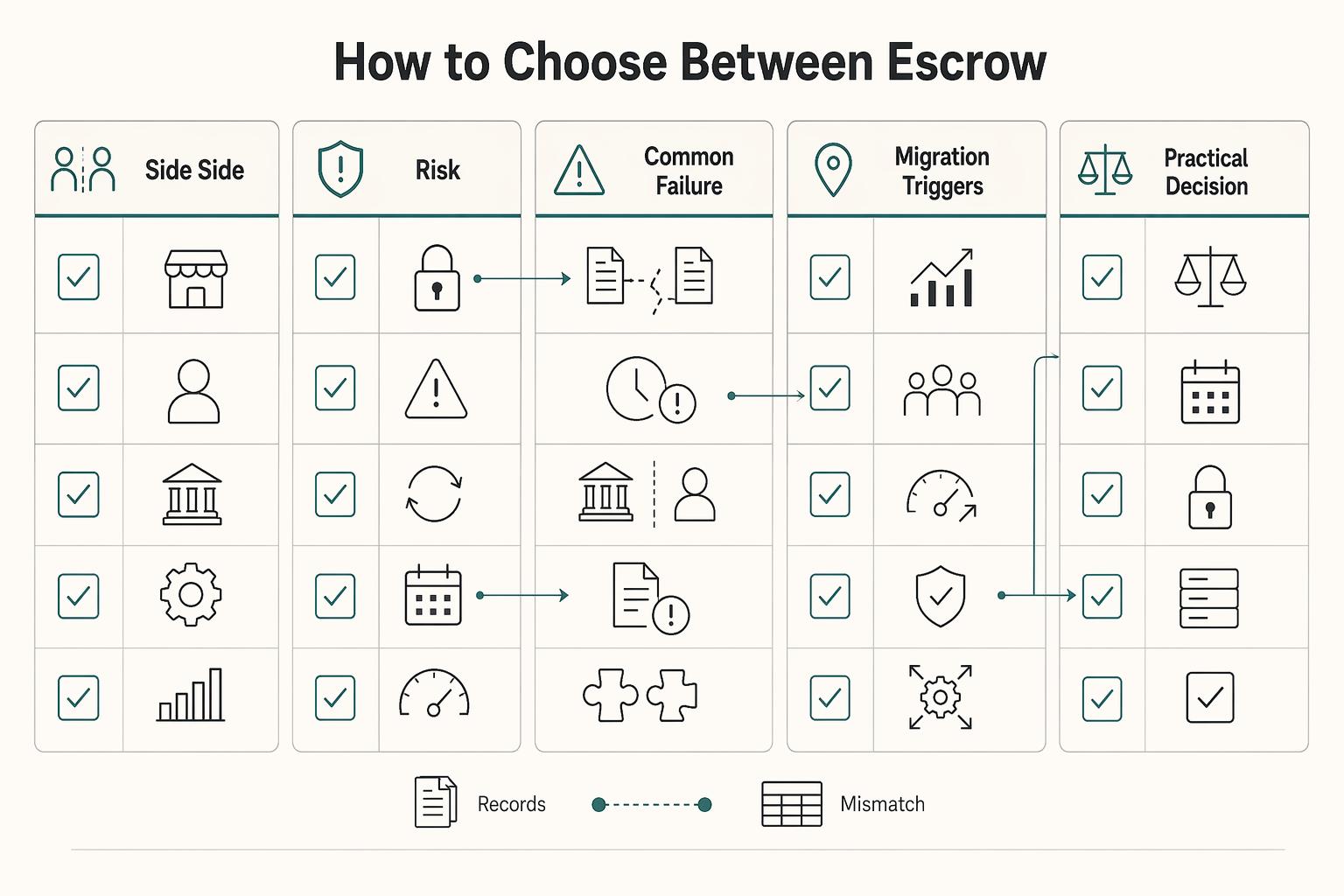
Choosing Escrow, MoR, or Direct Payment by Operational Ownership
In an **escrow vs mor vs direct payment platform** decision, the first question is ownership, not just features. Before you choose a model, get clear owners for onboarding checks, payout timing, exception handling, documentation, and transaction matching.
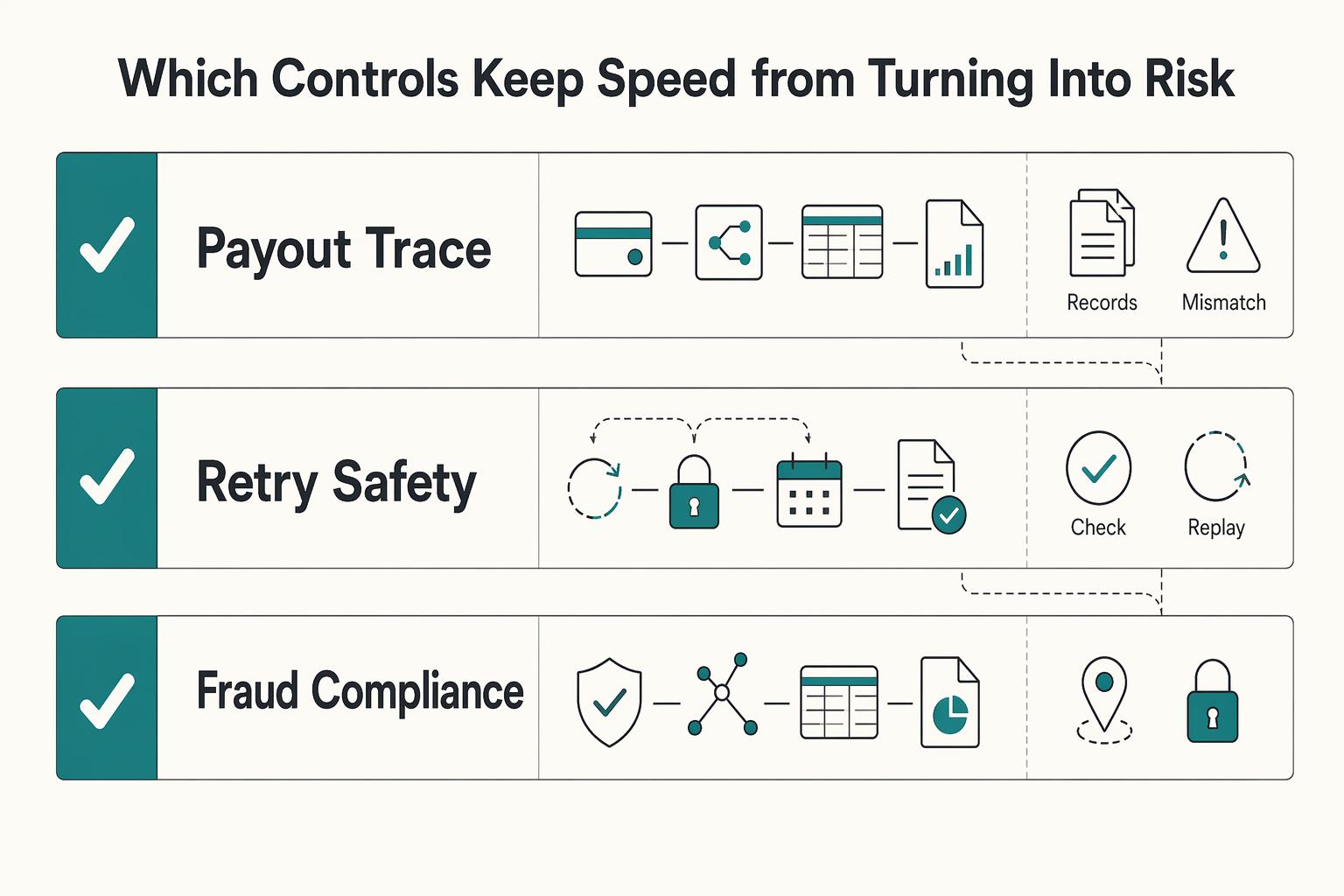
How Modern CFOs Make Payment Platform Expansion a Strategic Driver
A payment platform should choose its next market based on operational readiness, not volume forecasts alone. The real question is whether you can run that market safely and clearly without creating finance debt that later shows up as payment, reconciliation, or compliance failures. If you cannot explain that operating path cleanly, your forecast should not carry the decision.
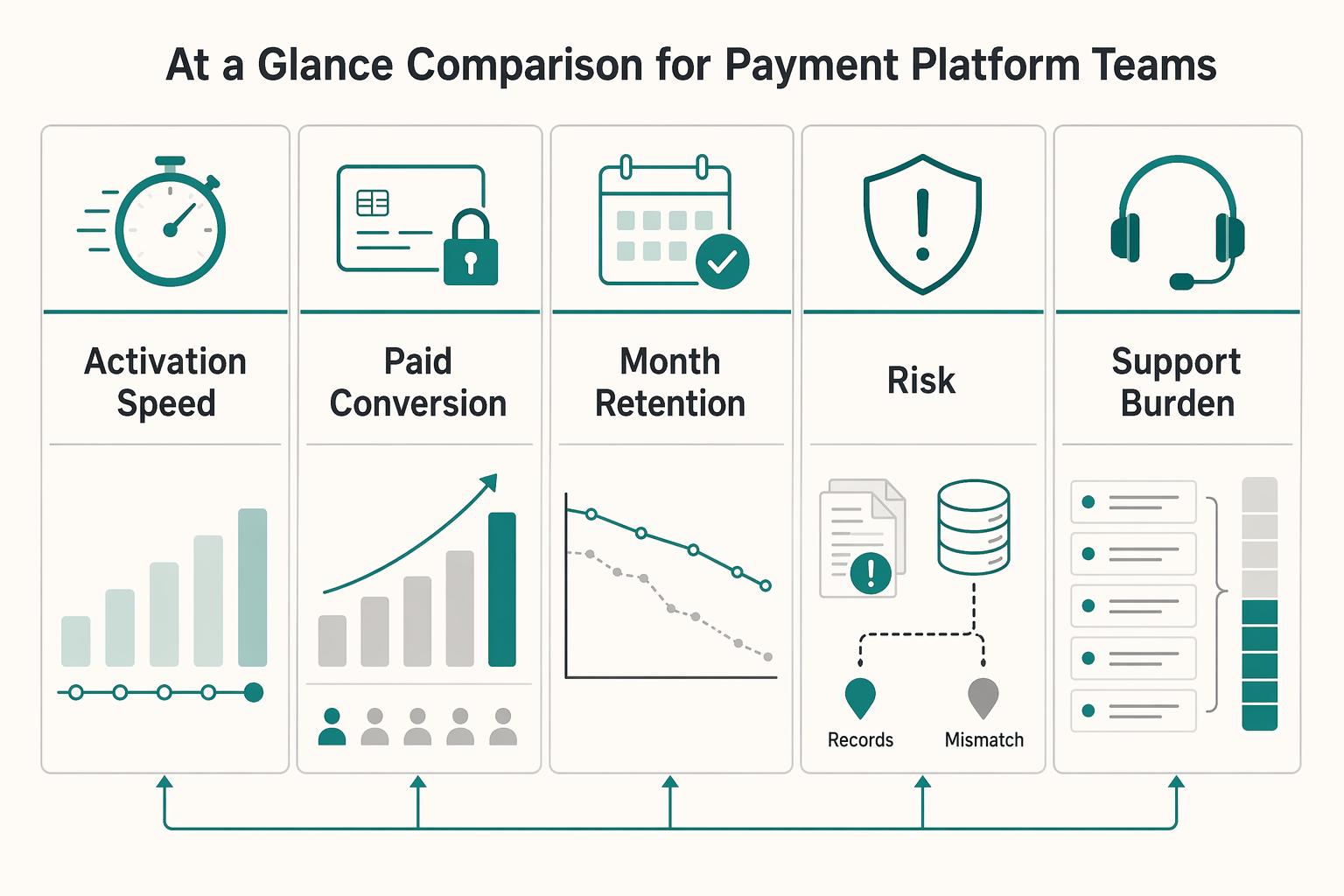
Freemium vs. Free Trial vs. Reverse Trial: Which Acquisition Model Works for Payment Platforms
If you are choosing between **freemium, free trial, and reverse trial** for a payment platform, signup lift is easy to measure and easy to overvalue. The better choice comes from conversion quality, retained revenue, downgrade behavior, abuse exposure, and the operating load your team can actually support.