

Quick Answer
Map three things separately: who sells to the buyer, who holds money before release and who processes or pays it out. Escrow does not itself transfer seller tax or dispute liability. A reseller/MoR can manage covered buyer-sale operations while deducting supplier costs. Direct processing keeps the identified seller’s role, with charge-flow and provider limits still applying.
Compare seller responsibility, fund holding and payment processing#
Escrow, Merchant of Record and direct payment processing answer different questions. Escrow controls when held funds may be released. Merchant of Record identifies the customer-facing merchant; a reseller/MoR service can also take on defined tax and billing operations. Direct processing lets the identified seller collect through a processor. A marketplace can combine these roles, so map the seller, custodian and payment path separately before choosing a provider.
Use a representative order to compare each arrangement: identify its buyer contract, seller or supplier agreement, funding confirmation, release rule, payout statement and later refund route. Record which entity appears in each document and which balance bears each adjustment.
This guide is for founders, product, finance ops, and engineering teams building a marketplace or embedded payments flow. A marketplace payment solution may look clean in a demo, but similar setups can create very different operating demands after launch.
Verify the actual seller and buyer countries, service or product type, funding method, payout currency and permitted release conditions. A global currency count does not prove that a provider supports your particular seller, marketplace split or held-funds use case.
A delayed payout or an internal balance is not automatically escrow. For an escrow arrangement, identify the escrow agent, governing instructions, where funds are held, the release and refund conditions and the dispute process. For ordinary processor payouts, use the provider’s actual balance and availability terminology.
By the end of this article, you will have:
- a side-by-side comparison table
- an ownership map for risk and operations
- common failure modes that surface after launch
- migration triggers for when your first model stops fitting
- a practical decision checklist for legal, finance, and engineering
Use the comparison to build a responsibility map for your actual buyer, seller, platform and providers. Separate contractual ownership from the team that operates a task.
Escrow, MoR, and direct payment in one view#
The table describes role boundaries, not a universal provider ranking. “Merchant of Record” here identifies the merchant; a full-service reseller/MoR offering has additional contractual services. “Direct processing” describes a seller collecting through its own or a connected merchant account, rather than a promise to operate without a payment provider.
| Question | Escrow arrangement | Reseller/MoR service | Direct processing |
|---|---|---|---|
| Who sells to the buyer? | The underlying sale contract identifies the seller; holding money does not itself replace it | The provider is the customer-facing seller for the covered reseller sale | The business identified as merchant/seller remains responsible for the customer sale |
| When can money move? | According to verified funding, release, rejection and dispute instructions | According to supplier payout terms, available balances and deductions | According to processor availability, transfer and payout rules |
| Who handles transaction tax? | Escrow alone does not determine the tax on the underlying sale | Provider handles its covered buyer-sale taxes; supplier-side obligations remain separate | Seller determines its applicable obligations, using tax services if configured |
| What happens to disputes and refunds? | Escrow instructions govern held funds; payment-method and sale disputes can be separate | Provider manages the buyer-side process; supplier deductions or indemnities can still apply | Merchant and platform duties depend on the charge flow and loss allocation |
| What must you reconcile? | Funded, held, released, refunded and disputed amounts | Orders, taxes, provider fees, adjustments, reserves and supplier payouts | Charges, fees, transfers, seller balances, payouts, refunds and disputes |
| Where does it fit? | Conditional delivery or inspection is central to the transaction | An eligible product and provider contract fit outsourced billing/tax operations | Seller-controlled processing fits the product and the platform can operate its remaining tasks |
| Important boundary | An account label or payout delay does not establish regulated escrow | Merchant identity is not proof that every cost or risk is transferred | An API direct charge is one specific flow, not a universal definition of the business model |
Worked escrow release example#
Suppose a buyer funds a $10,000 transaction, with a separately paid escrow fee, and the parties agree to a five-calendar-day inspection period after confirmed delivery. The seller should act on the provider’s verified funded state rather than a buyer screenshot. Keep funding, delivery, inspection and release as separate states; a release instruction is not proof that the seller’s bank has received the payout.
| State | Example record | Next control |
|---|---|---|
| Funded | $10,000 confirmed by the escrow provider | Authorize the agreed delivery; retain transaction ID |
| Delivered | Delivery confirmation starts the agreed inspection clock | Record the actual start time and deadline |
| Accepted or inspection completed | Provider confirms the applicable release condition | Record the authorized release, any fees and payout reference |
| Rejected or disputed | Provider records the exception before release | Follow the governing return/dispute process; do not create a second payout |
Escrow.com’s published inspection FAQ is a concrete provider example: parties agree an inspection period of 1–30 calendar days, beginning on receipt or delivery confirmation. Acceptance can end it early, and inaction can result in release at expiry. Rejection follows a separate process. Use the provider’s actual instructions for the asset or service; do not assume every escrow agent uses these rules.
A hold is different from a payout reserve#
Money held pending a delivery condition differs from a provider reserve against future refunds or losses. Record who owns the funds, what can release them and which party can dispute that decision. Neither a scheduled bank payout nor an application status labeled “held” supplies those contractual rules by itself.
For incident evidence and recovery ownership, see How to Conduct a Payment Platform Post-Mortem: Root Cause Analysis for Outages and Errors.
Platform definitions that stop team misalignment#
Identify three roles for every flow: seller to the buyer, holder of any funds before release, and provider of processing or payout services. They can be different entities. Also identify the supplier’s separate agreement with a reseller when there are two sales.
Escrow holds funds under conditions attached to the transaction. In the FinCEN escrow ruling FIN-2014-R004, the reviewed company actively arranged and monitored the sale and released funds only on its agreed conditions. That specific federal money-transmitter conclusion relied on the represented facts; it is not a blanket exemption for every marketplace calling a balance escrow.
For your own escrow design, document funding confirmation, permitted release actions, inspection or acceptance evidence, rejection route, fee treatment and payout reconciliation. Check the applicable licensing and custody requirements for the agent and flow before accepting buyer money.
In a reseller/MoR structure, the buyer contracts with the reseller for the covered sale and the original supplier has separate obligations to that reseller. Paddle’s terms illustrate the distinction: Paddle acts as reseller and handles covered sales taxes and buyer order support, while supplier fees can be reduced for refunds, chargebacks and related costs. Confirm eligible products, territories and marketplace arrangements rather than assuming the label covers your flow.
In a direct-processing flow, identify the actual merchant account and whose balance is charged for fees, refunds or disputes. Stripe Connect direct charges use the connected account as merchant; indirect charges can make the platform or connected account the merchant depending on the configuration. Merchant identity and the platform’s obligation to cover losses must be checked separately.
Compare the wider contracting roles in How a Platform CFO Chooses Between MoR, EOR, and Direct Payment Models.
Risk and responsibility map by model#
Map both customer-facing responsibility and the ultimate financial cost. A provider can operate dispute submission while charging the merchant or supplier for the loss. Escrow release authority, seller status and processor loss allocation are separate fields in the map.
Start with named owners, documents, and checkpoints. If you cannot map each risk to a function, a contract or policy, and an operating checkpoint, pause before taking direct ownership.
| Responsibility area | Escrow account | Merchant of Record (MoR) | Direct payment platform | What you must verify before launch |
|---|---|---|---|---|
| Payment dispute cost | Check escrow funding method and sale dispute terms separately | Buyer process handled by MoR; supplier chargeback/refund deductions may apply | Charge flow determines debited balance; separate terms determine unrecovered loss | Who pays, who submits evidence and which deadline applies |
| Delivery dispute | Escrow agent applies its release/rejection instructions | Supplier provides fulfillment evidence; reseller handles covered buyer process | Seller/platform handles fulfillment issues with processor evidence support | Acceptance criteria, case owner, evidence and authorized outcome |
| Fraud or release control | Agent and parties follow documented hold/release rules | Provider reviews covered sales; supplier supplies requested evidence | Provider checks plus platform’s product and seller-risk controls | Review owner, authority and appeal/recovery path |
| Service outage | Agent and funding/payout dependencies can delay states | Provider ordering, reporting and payout dependencies remain | Processor and platform event/payout dependencies remain | Status lookup, fallback, incident communications and balance reconciliation |
| Tax and records | Underlying seller/supply obligations remain | Reseller buyer-sale tax and supplier-side obligations are distinct | Seller tax obligations and platform reporting need their own scope | Required documents, responsible entity, retention and retrieval |
| Onboarding and compliance | Verify agent duties, parties and funds-flow rules | Provider eligibility and onboarding do not remove every supplier duty | Provider account requirements plus platform’s applicable responsibilities | Coverage, data/review owner, exception authority and local rules |
What the owner map must include#
For each row, assign one accountable function, one backup, and one document that proves ownership. In practice, that is usually a processor agreement, product requirement, internal policy, or provider compliance exhibit. If that document is missing, you are still assuming the ownership.
Treat vague statements as risk flags. "The provider handles disputes" is not enough unless you can name who submits evidence, tracks deadlines, stores case files, and approves holds or reversals. Apply the same standard to VAT checks, W-9 collection, and audit-record retention.
Compliance gates need official-source checks#
For a US funds flow, FinCEN states that money-transmitter classification depends on facts and circumstances. Its escrow ruling analyzed active transaction management and conditions on release; it did not grant every platform a generic exemption. Check the actual custody and transmission activity, applicable federal rules and relevant state licensing.
For KYC and AML ownership, verify requirements from official text and binding contracts, not summaries. Store the citation, the PDF, and your internal interpretation together so legal, ops, and engineering are working from the same baseline.
Document the reviewed flow, countries, entities, applicable rules and any assumptions in the launch record. Date the assessment and revisit it when the platform begins holding funds, changes seller identity or adds a new funding or payout route.
Uptime handoffs are often the hidden risk#
Map provider dependencies behind checkout, identity checks, funding, reporting and payout. Shared infrastructure can make apparently separate providers fail together. Record who detects the problem, who stops affected actions and who tells buyers and sellers about delayed state changes.
If a provider is unavailable, preserve known balances and request IDs, display pending states and reconcile after recovery. Do not turn a timeout into a second collection or payout. The recovery owner should confirm the authoritative provider outcome before another money movement.
A decision rule for this section#
For each risk, distinguish the party with the legal obligation, the team performing the work and the party bearing the final cost. Keep governing terms and an operational example for all three.
Apply the same readiness gate to every model: a critical money-movement or customer obligation needs a named owner, evidence and a tested exception path. A managed service can reduce work, but it still needs a verified boundary and reconciliation.
Keep the model assessment with the transaction map, provider agreement and dated decision log so finance, product and operations use the same boundaries.
Hidden costs most teams miss in model selection#
Model choice is not a headline-rate decision. It is an operating-cost decision. Price the full cost stack: provider fees, payout handling, dispute handling, and reconciliation work across the settlement flow.
For a hypothetical $100 tax-exclusive payment, assume $3 processing, $1 payout cost and an $80 seller entitlement. After paying the seller, the platform retains $16 before its internal costs: $100 − $3 − $1 − $80. These assumed fees are not provider quotes. If handling takes two minutes at an assumed $30/hour, another $1 of operating cost leaves $15. Model each relevant fee and activity with actual volume and contract terms.
| Cost bucket | What teams usually model | What gets missed | What to verify before launch |
|---|---|---|---|
| Provider pricing | Processor rate or visible commission such as 5%, 10%, or 15% | Gateway and payout costs outside the headline rate | Build a full cost stack, not just the processor quote |
| Internal operations | Basic finance review time | Reconciliation work around payouts, refunds, and disputes | Count manual touchpoints tied to payout and dispute states |
| Settlement flow | Capture and payout | Fee deduction, vendor split, tax handling, refunds, and disputes | Map the full chain from authorization/capture through reversals |
| Dispute handling | Network or processor fees | Operational load from reversals and dispute handling | Define clear ownership for dispute tracking and response steps |
| Documentation | Onboarding records | Retrieval work across transaction states during reconciliation | Confirm where transaction records live and how they are retrieved |
The settlement flow is where margin leaks#
Trace authorization or funding, successful collection, fee deductions, seller entitlement, any held balance, transfer, payout and later refunds or disputes. Not every flow has every step, and a transfer between provider balances differs from a bank payout. Record the event and amount for each actual movement.
Model timing as well as fees. If your platform pays a seller $80 on day 2 but collects the buyer’s $100 on day 30, it must fund $80 for 28 days, plus any earlier costs. Conditional escrow release from money already funded by the buyer is a different cash path. Neither a merchant label nor a net-fee estimate supplies the missing working capital.
Direct ownership can look cheaper when casework is omitted#
In this comparison, "processor fees" alone is too narrow. In multi-vendor setups, costs scale with basket structure, payouts, and risk, not just GMV.
Use one transaction trace as a checkpoint. If you cannot follow that transaction through authorization/capture, fee deduction, vendor split, tax handling, payouts, and refund/dispute paths, cost gaps usually surface later.
Extend the $100 example with a $20 buyer refund after the seller received $80. Assume the platform must fund the refund, receives no processing or payout fee refund, and has agreed a proportional $16 recovery from the seller. Its cash retained after the original $4 external fees drops from $16 to −$4 on refund, then reaches $12 only when the $16 recovery succeeds. A failed recovery leaves a receivable, not available cash. This is an assumed contract allocation; other providers and flows can debit different balances.
Document overhead is still operating cost#
Operational documentation can still become operating cost, even when it is not priced early. If transaction records are fragmented across systems, retrieval time adds reconciliation overhead.
Test the proposed trace with representative records before a limited authorized pilot. Include a refund, a failed payout and a case where the original outcome is unknown. Compare record retrieval time and reconciliation effort alongside fees; treat unsupported cost inputs as assumptions in the model.
Compliance and tax reality by operating model#
Compliance and tax execution depends less on the model label and more on where controls are actually built into your payment stack. In practice, the key question is whether onboarding checks, local compliance handling, and tax-document workflows are centralized in tooling or pushed into your product, ops queue, and accounting review.
What the three models actually signal#
Compare actual onboarding, transaction review and tax scope. Escrow does not automatically change seller tax obligations. A reseller can handle taxes for its covered buyer sale, while direct processing normally leaves the seller’s obligations with the identified business. Each still has its own onboarding and exception duties.
| Model | Onboarding scope | Compliance assessment | Tax and documents | Operating boundary |
|---|---|---|---|---|
| Escrow | Confirm both parties and agent requirements | Classify the actual custody/transmission activity | Underlying sale tax and documentation need identified owners | Fund holding does not alone determine seller status or licensing |
| Reseller/MoR | Provider must accept the product, supplier, territories and structure | Confirm provider and supplier obligations for the covered flow | Buyer-sale taxes may be handled by reseller; supplier-side tax remains separate | Get documented eligibility and exclusions, including refunds and payout deductions |
| Direct processing | Complete required merchant onboarding and capability checks | Provider checks do not automatically discharge platform duties | Seller tax and platform reporting need scoped responsibilities | Test missing requirements, disabled capabilities and remediation before payout |
Where compliance work lands day to day#
The work usually lands in three places at once. Product may need to collect onboarding data and enforce country-specific requirements. Ops handles exception queues and payout-related issues, including refunds and disputes. Legal and accounting handle tax-document scope, country coverage, and audit readiness.
| Function | Day-to-day work | What to review |
|---|---|---|
| Product | Collect onboarding data and enforce country-specific requirements | Onboarding screens |
| Ops | Handle exception queues and payout-related issues, including refunds and disputes | Exception queues |
| Legal and accounting | Handle tax-document scope, country coverage, and audit readiness | Tax-form status storage |
Ask the provider to demonstrate your exact seller country, product, funding method and payout lane. Test an incomplete onboarding record and a disabled payout capability, then locate the requirement, owner and remediation outcome. Keep tax-document collection and tax calculation/remittance as separate tasks; a VAT-ID check or dashboard form status does not perform all of them.
Where control gaps surface#
When compliance ownership is split across vendors, control gaps can surface in payout exceptions and reconciliation. Manual handoffs create more error risk, more inconsistency, and more time consumption, especially where precise calculations and timely disbursements are required.
If expansion depends on fast multi-country tax handling, prioritize the option that centralizes tax-document operations and reduces internal compliance overhead. If a provider cannot clearly show who reviews exceptions, where records live, and how country coverage is handled, treat that as unresolved internal work.
Check coverage per flow in the decision record rather than using a country or currency headline as a blanket approval. Retain the provider’s written answer and the test evidence for the intended lane.
Architecture impact on engineering and finance ops#
Your model choice is an architecture choice. Pick the one your team can observe, explain, and defend from checkout through payout and possible reversal. In this decision, the bigger operational risk is often not the first payment event. It is the full settlement chain and whether finance and ops can account for it later.
Marketplace payments are multi-step flows, not single events. Treat the flow as one chain from capture to split, payout, and possible reversal so finance can reconcile balances and payouts. As that chain gets longer or more branched, matching records gets harder and working-capital pressure increases.
From checkout to payout#
The simplest useful test is a straight transaction walk:
- Buyer action starts the collection or funding request; capture may be a separate step.
- Record provider-confirmed outcome, currency, gross amount, fees and references in the ledger.
- Advance only the applicable release, transfer and payout steps; track each state separately.
- Reconcile bank receipt, refunds and disputes with the same original transaction history.
A checkout success page is not proof of available funds or a final bank settlement. Use the provider’s payment-method status and risk policy to authorize delivery or release. Delayed or reversible funding can create exposure even when the customer already saw a confirmation.
| Model | Common architecture shape | Where burden usually grows | Finance-ops checkpoint |
|---|---|---|---|
| Escrow account | Settlement-flow design varies by implementation | Reconciliation across additional settlement states | Can you trace amounts from capture through payout and reversal without losing history? |
| Merchant of Record (MoR) | Settlement visibility may span your systems and provider statements | Record alignment across systems | Do internal records and provider statements stay aligned? |
| Direct payment platform | More settlement handling may remain in your stack | Event processing, payout orchestration, and record matching | Can finance tie captures, fees, payouts, and reversals together end to end? |
Reliability controls and traceability#
Regardless of model, set launch controls for reconciliation and traceability. The implementation details may differ, but the control objective is the same: one payment should produce one coherent financial story.
Verify beneficiary changes and release authority before sending a payout, especially on fast rails. Store maker/reviewer decisions where required, and query authoritative status when a payout times out. Faster transfer speed shortens the opportunity to intervene; it does not remove the need to distinguish pending, completed, failed and returned states.
Data responsibility and launch verification#
Define ownership for settlement data and status handling across support, finance, and risk. If those teams cannot retrieve a clear transaction trail without engineering log dives, the architecture is not ready.
| Launch checkpoint | What to verify | Why it matters |
|---|---|---|
| End-to-end finance matching | Across capture, split, payout, and reversal | One payment should produce one coherent financial story |
| Pre-fund verification | On any real-time settlement path | Verification needs to happen before funds move |
| Traceability | Settlement state changes are clear | Finance and ops can explain balances and payouts |
Before go-live, verify three checkpoints:
- End-to-end finance matching across capture, split, payout, and reversal.
- Pre-fund verification on any real-time settlement path.
- Clear traceability of settlement state changes so finance and ops can explain balances and payouts.
Also evaluate dependency risk. Infrastructure choices can limit future optionality for growth. Choose the model that keeps your settlement path as simple as your team can reliably operate. Related reading: Indian Freelancer Payment Analysis That Protects Net INR.
Scenario-based recommendations by platform stage#
Use stage as context, but make the decision on operational constraints. If your team cannot reliably run and explain the full settlement flow - authorization/capture, fee deduction, split, payout, reversal - prioritize the model that reduces immediate execution risk.
| Scenario | If this is true | Then start here | Layer escrow when | Watch for |
|---|---|---|---|---|
| Early-stage marketplace platform | Lean ops team, limited compliance bandwidth, launch pressure | Prioritize the option that lowers engineering/compliance lift (including Merchant of Record (MoR) where terms fit) | Conditional hold/release is core to the product | Assuming escrow alone solves tax, liability, or disputes |
| Scaling cross-border | Rising Chargeback volume, more Value-added tax (VAT) work, growing payout exceptions | Compare models lane by lane; include MoR where coverage and terms reduce burden | You need narrow release control, not a full operating model change | Fragmented ownership across tax review, disputes, and record matching |
| Mature platform | Finance and engineering can match captures, transfers, payouts, refunds and exceptions end to end | Consider a Direct payment platform where controls are already proven | You have a real conditional-release use case | Longer, branched flows increasing working-capital pressure and manual exceptions |
Scenario 1#
If your bottleneck is internal bandwidth, reduce burden before you add control surface area. Start with engineering lift, compliance risk, and payout-operations cost, and evaluate MoR if the terms fit your needs.
For a managed reseller arrangement, identify the buyer-side seller, tax service scope, supplier payout terms and any loss deductions. Check whether it accepts your actual marketplace product and multiple-supplier structure; support for software checkout does not itself prove support for arbitrary marketplace sellers.
Use an Escrow account only when release conditions are central to the product. Escrow settlement can support safer, more reliable fund exchange, but it is not a substitute for broader payment ownership controls.
Scenario 2#
In cross-border growth, hidden costs can matter as much as headline fees. Focus on engineering lift, compliance, and FX, and remember that costs can scale with basket structure, payouts, and risk, not just GMV.
If chargebacks are rising and VAT work is getting more complex, evaluate MoR and direct options lane by lane rather than assuming one default. If coverage or terms do not fit, run direct only where your controls are already strong enough to retrieve and match the full transaction timeline from capture through reversal. Keep escrow as a narrow release-control layer, not the primary model.
Scenario 3#
Choose a Direct payment platform only when your controls are already proven, not because direct routing sounds cleaner. The signal is operational: finance can tie records together end to end, engineering can manage retries and status drift, and ops can handle payout exceptions without constant escalations.
Run a volume model with your actual basket size, seller splits, payout count, funding methods, FX and dispute mix. A percentage of GMV alone hides fixed per-payout charges and casework. Keep provider prices, assumed internal time and working-capital funding costs as separate lines, and compare the same transaction mix across options.
If you need immediate operational relief, prioritize the path that reduces engineering/compliance load. If you need conditional release, layer escrow narrowly. If you already run strong controls, evaluate direct alongside alternatives.
For a step-by-step walkthrough, see MoR vs. PayFac vs. Marketplace Model for Platform Teams.
Migration triggers and transition sequence#
Reassess when a required market or product is unsupported, provider deductions or reserves disrupt seller payouts, conditional release becomes essential, or reconciliation effort exceeds the team’s operating capacity. These are evaluation signals, not automatic instructions to migrate. First identify the specific gap the new arrangement must solve.
That matters most when responsibility is unclear. If a role or obligation is not explicitly named in an authoritative document, treat it as unresolved.
Inventory the old and new obligations#
List open orders, held funds, pending payouts, refunds, disputes, reserves, supplier balances and subscriptions. Assign each to the existing provider or the new flow before routing new payments. Changing the provider for new orders does not move historical refund or chargeback obligations automatically.
Obtain terms for the new seller or escrow role, supported products and countries, payout deductions and records access. Decide which old balances and cases must finish on the original route, how long its records remain available and who funds any residual losses.
What to verify before any transition#
| Decision area | Usable proof | Red flag |
|---|---|---|
| Commercial role | Buyer terms and supplier/provider agreements identify the seller for new and historical orders | New merchant branding while old orders remain unexplained |
| Open balances and cases | Itemized currency totals for held funds, payable amounts, refunds, disputes and reserves | A pooled total cannot be tied to beneficiaries or original transactions |
| Routing and rollback | Order-level provider identity and one active route for each authorized collection or payout | Duplicate billing/payout during cutover or historical cases routed to the wrong provider |
Reconcile both counts and amounts by currency before cutover. Resolve missing beneficiary, tax or dispute records and preserve the original transaction references. If ownership of a held balance or historic refund is unresolved, limit migration to the unaffected scope rather than abandoning that balance.
Sequence only after ownership is evidenced#
Use a limited new-order cohort first. Freeze routing rules for that cohort, verify one normal payment and applicable release/payout, then test a refund and failed or unknown payout. Expand only after finance matches the provider statement, internal ledger and bank movement.
Keep a rollback route for new orders and a separate run-off plan for historical orders. Compare old and new balances daily during the cutover, retain read access to both and assign the post-cutover exception queue. Do not recreate a confirmed payment solely because the new system lacks its history.
Decision checklist to choose with confidence#
Choose a model only when every critical control has a named owner, a governing document, a clear evidence location, and a tested exception path. If any one of those is missing, treat it as a no-go.
| Decision check | What must be documented | No-go signal |
|---|---|---|
| Chargebacks and dispute management | Who responds, who stores evidence, and who absorbs losses or adjustments | Verbal agreement only; no binding terms or operating policy |
| Tax and recordkeeping path | Who collects, stores, and can produce required tax and recordkeeping documentation for each jurisdiction in scope | "We handle tax" claims without controlling terms for your regions |
| AML interventions and exceptions | Who reviews interventions, who can pause/release funds, and where the audit trail lives | Process depends on inboxes, tribal memory, or split systems with no single record |
| Reconciliation and processor operations | Matching cadence, evidence storage, escalation path, and service terms with the Payment processor | Cleanup-after-the-fact workflows or missing service language in signed agreements |
Role labels like MoR, escrow, or direct are not proof of ownership. For each responsibility, require the clause, policy, or signed document that assigns it.
For escrow, verify the agent, bank/custody arrangement, beneficiary records and release instructions for your transaction type. Reconcile funded amounts to held, released, refunded and disputed amounts, with a documented review of unmatched items. Review the agent’s applicable controls and records access for the intended flow.
Map legal, tax and reporting requirements to the actual jurisdictions, entities, activities and payment methods. Retain the transaction identity, parties, amounts, currencies and adjustments needed for the applicable records and filings. Assign collection, review and retrieval owners rather than assuming a generic dashboard satisfies every obligation.
Final gate: pause launch if any critical control lacks a clear owner, governing text, evidence path, or tested exception handling. If your checklist points to offloading merchant liability while keeping operational visibility, review Merchant of Record options.
Conclusion#
Choose the model your team can own in writing, not the one that only looks fastest to launch.
Model labels alone are not sufficient for a decision-grade comparison between escrow, MoR, and direct payment. Treat them as a starting point, then make the decision based on clear risk ownership, exception handling, and record ownership that all stakeholders can describe the same way.
Complete the checklist before rollout, assign a named owner for every control, and verify that your decision inputs are dated and directly relevant to payment-model operations before you scale. If ownership is still implied or split in ways nobody can explain plainly, pause.
Keep the final step measured: confirm model coverage by market and compliance program with your provider team in writing. Align on what they handle, what you handle, and what evidence exists when something goes wrong. Before rollout, validate market coverage, compliance gates, and payout routing with Gruv in a scoped implementation discussion.
Frequently Asked Questions
What is the practical difference between an `Escrow account`, `Merchant of Record (MoR)`, and `Direct payment platform` for a marketplace?
Escrow controls conditional release of funds; a reseller/MoR service changes the covered customer-sale role and associated contracted operations; direct processing collects for the identified seller through a processor. They can coexist. Map seller identity, custody and processing separately, then check who bears refunds, chargebacks, taxes and payout costs in your actual arrangement.
Which model usually reduces compliance burden fastest when `Know Your Customer (KYC)` and `Anti-Money Laundering (AML)` checks are required?
Model labels alone do not guarantee which approach reduces KYC or AML burden fastest. Treat model labels as insufficient on their own and verify who actually handles reviews, exceptions, and audit records.
Which model gives the most control over pricing, `Settlement flow`, and payout timing?
Direct processing can preserve seller control of pricing and payment design, but processor availability and payout rules still constrain funds movement. Escrow adds agreed release conditions. A reseller/MoR controls its covered sale within its contract. In any model, paying a seller before buyer collection creates a funding gap; compare that timing explicitly rather than assuming the label gives unrestricted control.
Can an `Escrow account` replace a `Merchant of Record (MoR)` for tax and liability ownership?
No. Escrow is a holding mechanism, while MoR is a structural role in the transaction flow. Escrow alone does not establish tax or liability ownership.
When should a platform move from `Merchant of Record (MoR)` to a `Direct payment platform` setup?
Evaluate a change when the present arrangement cannot support required products, markets, payout timing or reporting at an acceptable total cost. Compare the new role, internal controls and historical-case run-off before switching. More volume alone is not proof that direct processing is better or that a managed provider should be replaced.
What are the most common hidden failure modes in `Chargeback`, `Dispute management`, and `Reconciliation`?
Common failures include seller payouts before buyer collection, refunds not matched to original transfers, unidentified reserves, missed evidence deadlines and duplicate movements after timeouts. Use one original transaction identity, retain provider states and references, and assign owners for both the casework and its financial adjustment.
Try a related tool
Researched and edited by the Gruv editorial team. Gruv builds cross-border billing, payouts, and finance-operations software for global businesses.
Sources
Includes 4 external sources outside the trusted-domain allowlist.
- docs.stripe.com/connect/merchant-of-recordtrusted
- docs.stripe.com/connect/chargestrusted
- fincen.gov/resources/statutes-regulations/administrativ...trusted
- escrow.com/what-is-escrowexternal
- escrow.com/support/faqs/what-is-an-inspection-period,-w...external
- paddle.com/legal/termsexternal
- paddle.com/help/start/intro-to-paddle/what-am-i-not-all...external
Educational content only. Not legal, tax, or financial advice.
Related Posts
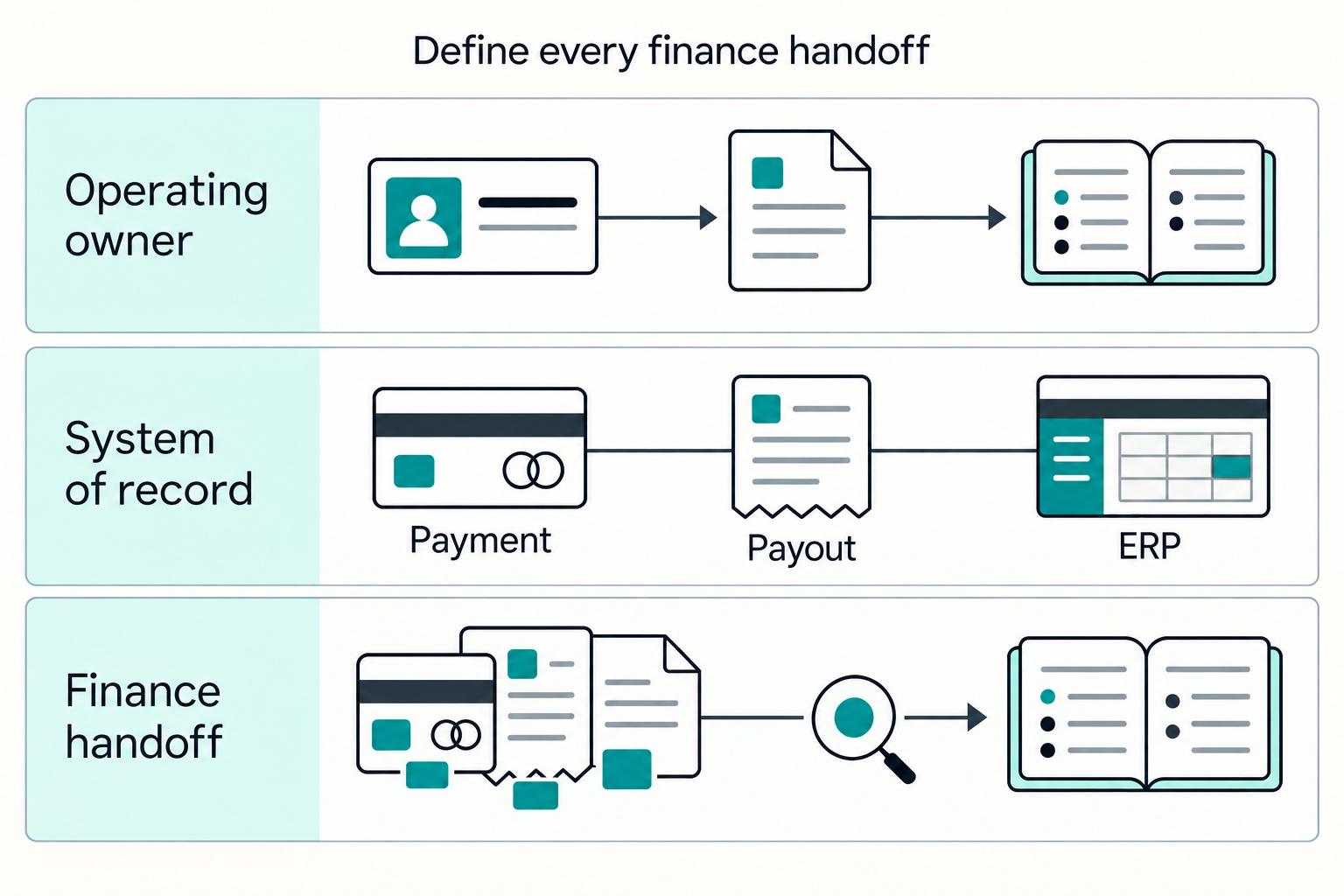
How a Platform CFO Chooses Between MoR, EOR, and Direct Payment Models
Choosing between a Merchant of Record, an Employer of Record, and a Direct Payment Model is mainly a risk-and-control decision, not just a fee comparison. The cost of a weak choice usually shows up later, when timing and controls are under pressure.
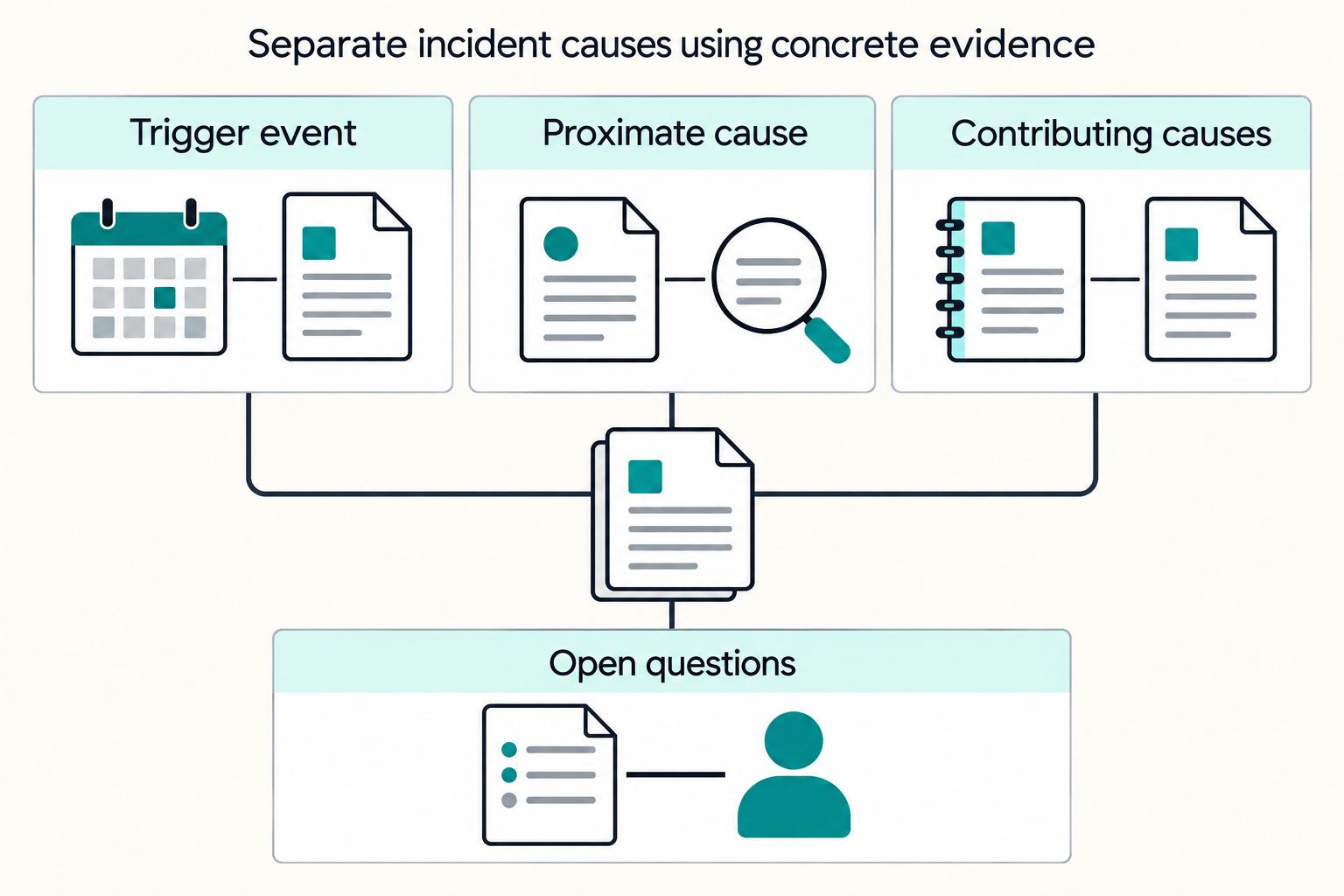
How to Conduct a Payment Platform Post-Mortem: Root Cause Analysis for Outages and Errors
Restoring the API does not settle every payment affected by an outage. A payment post-mortem should explain which transactions failed, which succeeded remotely despite local errors, what remains unresolved and which changes reduce recurrence. Bring Engineering, Payments Ops, Finance and customer-support owners into the same review.

The Freelance Payment Penalty: A Modeled Audit of Platform Fees, FX Spreads, and Payout Delays
The money rarely disappears through a single, easy-to-spot fee. The real loss is stacked. A marketplace takes its commission, a processor adds a charge for international cards, a bank or payment company converts the currency at a spread, a platform holds the funds before release, and a wire sheds a little to intermediaries on the way in. Each layer looks defensible on its own, but the worker feels the combined result as a smaller deposit and a later payday.