
Quick Answer
Define the billable entitlement before choosing a price: assigned licenses and active members have different rules. Record effective seat movements and policy versions, preview mid-cycle adjustments, and reconcile them to invoices and collections. Test pricing fit with customer value, delivery cost and clearly labeled cohort metrics; pilot hybrid pricing where the evidence supports it.
How to Scale Per-Seat Pricing Without Billing Drift#
Start with per-seat pricing when paid access is a useful proxy for customer value and buyers can predict the bill. Decide whether a seat means an assigned license, an active member or another contractual entitlement. If value or cost grows mainly through automation, throughput or AI work without added users, test usage-based or hybrid pricing alongside seats.
Per-seat pricing remains common in B2B SaaS for a reason. Charging by user is often straightforward for buyers to understand and for sellers to quote. That simplicity matters. The problem starts when seat count becomes a weak stand-in for value delivered.
Choose a metric customers can connect to the value they receive and your cost to serve. AI features can change that relationship, but their presence alone does not prove seats are wrong. Compare the commercial model and its billing mechanics in this sequence:
- Check what actually drives value.
Ask whether customers get more value mainly because more people use the product, or because the product processes more work, completes more tasks, or automates more output. If more users reliably means more value, seat-based billing can still fit. If not, seats may only describe access, not the thing the customer cares about paying for.
- Compare buyer clarity with operating reality.
Usage-based pricing means customers pay according to consumption. Hybrid pricing combines seat pricing with a usage or outcome component. In practice, teams often need predictable procurement language on the front end and more value-aligned charging logic underneath. If buyers want clean line items but product value is shifting, that is a strong signal to evaluate a hybrid instead of defending pure seats on principle.
- Pressure-test your model for AI now, not later.
Generative AI is the breakpoint to watch. When AI features complete work without a named user doing each step, seat count can become a weaker signal of value. That does not mean you need to abandon seats immediately, but you do need a migration path before pricing conversations get harder.
A useful early checkpoint is simple: write down, in one sentence, what a customer is buying when they buy one more seat. Then test that sentence with Product, Sales, and Finance. If each team describes a different unit of value, you do not have a pricing problem later. You have one now.
The sections that follow move in that order. First, decide whether seats still fit. Then define billable seats before billing logic is built. From there, implement controls that keep invoicing defensible as you scale, and track the signals that tell you when seats are still doing their job and when outcome metrics should start sharing the load.
For plan, add-on and dunning mechanics, use Subscription Billing Platforms for Plans, Add-Ons, Coupons, and Dunning.
Decide if per-seat pricing matches your product reality#
Per-seat billing can fit when paid access tracks value and delivery cost well enough for a clear commercial offer. Measure actual licensed and active users separately. When workload or automation diverges from both, compare a usage or hybrid offer using representative accounts.
Build a fit scorecard across value signal, buyer clarity, and operational complexity:
| Model | Value signal | Buyer clarity | Operational complexity |
|---|---|---|---|
| Per-seat pricing | Strong when value and cost both track active human users | High when buyers want predictable line items | Lower to start, but fragile if workload detaches from headcount |
| Usage-based pricing | Strong when value comes from throughput or completed work | Lower when invoice variability is hard to explain | Higher because metering and invoice explanation must hold up |
| Hybrid pricing | Strong when access still matters but AI or output drives more value | Often workable when seats anchor predictability | Highest early because you must govern seat rules and usage logic |
Use the scorecard as a starting hypothesis: seats fit when paid access scales with customer value; workload or automation may support usage or hybrid pricing. Test the proposed metric against customer budgets, delivery costs and representative invoices before choosing it.
Check procurement behavior separately from value-metric fit. If budget owners require predictable line items, per-seat packaging can still help on the front end even when your back end needs hybrid logic. Treat that as a buying constraint, not automatic proof that seats are the best value metric.
Run an AI stress test before locking the model. Compare two accounts with the same licensed-user count but different automated workload. If delivery cost and delivered value differ materially, model a second meter and a spend cap. Validate it with the affected customers rather than assuming every AI feature needs outcome pricing.
Compare the alternatives in Flat-Rate vs Tiered vs Per-Seat Pricing: A Decision Framework for SaaS Platforms.
Prepare the inputs before you touch billing logic#
Align Product, Finance, and Engineering on the billing primitives first, or your implementation will drift from your pricing policy.
| Step | What to lock | Why |
|---|---|---|
| Define the seat | Who can hold a seat; when it is billable; which event starts or stops charges | Lets Product, Finance, and Engineering reach the same invoice outcome |
| Lock event data | Seat adds, removals, and quantity or price changes | Keeps invoices traceable and proration explainable |
| Map compliance and ownership | Customer operating locations, invoicing entities, tax coverage, pricing policy ownership, exception approvals | Prevents compliance gaps and unapproved seat exceptions |
Step 1 Define the seat in terms everyone can test#
Define a seat as an assignable right to use the product tied to a customer record. Make three rules explicit upfront: who can hold a seat, when that seat is billable, and which event starts or stops charges inside a Billing cycle. If you sell recurring access, state the subscription seat rule directly: it is linked to the subscription and renews with that cycle.
Pressure-test the definition with a few scenarios, such as a mid-cycle add, suspension, or reassignment, and confirm Product, Finance, and Engineering reach the same invoice outcome.
Step 2 Lock the event data before you build proration#
Lock the event model before implementation: customer and subscription IDs, event ID, effective and received timestamps, old/new billable quantities, price and policy versions, and period boundaries. Proration adjusts charges or credits for partial periods according to the contract and configured billing behavior. A quantity change, price change or period reset can have different invoicing consequences; preview the actual operation.
Do not ship entitlement logic without invoice traceability. Access can work technically while billing trust fails if Finance cannot explain why a mid-cycle change did or did not create a credit.
Step 3 Map compliance and ownership before launch#
Define compliance scope before rollout: where customers operate, which entities invoice them, and where you need tax registration, collection, and remittance coverage. Filing cadence can vary by jurisdiction and may be monthly, quarterly, annually, or another local frequency.
Then set ownership clearly: who sets pricing policy, who approves exceptions, and which approvals can block billing actions. If Sales offers seat exceptions that Finance has not approved, close that gap before launch.
Related: Usage-Based Billing for Platforms: How to Meter and Charge for API Calls Storage and Seats.
Design packaging and seat rules customers can trust#
Customers trust seat-based pricing when they can predict three things: who is billable, when the bill changes, and how credits are handled.
Step 1 Define tiers by entitlement and role. Start with the paid entitlement and the role that uses it. Keep administer, create/host and view-only access explicit so price changes map to visible permissions. For example, Zoom’s concurrent-meeting documentation distinguishes account and license types: a licensed Pro user can host one meeting at a time, while licensed Business, Education and Enterprise users can host up to two. A role label alone does not establish its billable entitlement.
Run one quick test: give Sales and Finance two quotes with the same account size but different role mixes. If they cannot explain the difference clearly, tighten the tier definition.
Step 2 Publish your proration policy in customer language. Provider examples differ. GitHub’s billing-cycle guidance describes prorated added licenses and says removing users does not reduce the current cycle’s bill. Slack’s Fair Billing Policy, for website plans and add-ons paid by card or self-serve invoicing, uses active members and credits unused prepaid time when a paid member becomes inactive. These are scoped product policies, not a universal rule for seat removal.
Use one model consistently in your order form, help center, and billing UI. Before you confirm quantity or plan changes, show a billing preview so the expected impact matches the eventual invoice.
Worked example: a paid 30-day cycle with two quantity changes#
Assume a hypothetical 30-day month, 20 per seat, no tax or discounts, an already-paid starting bill and a contract that prorates both additions and removals by day. Start with 10 seats and a 200 bill. Add two seats with 15 days remaining: 2 × 20 × 15/30 = 20 extra. Remove three seats with 10 days remaining: 3 × 20 × 10/30 = 20 credit. Net adjustments are zero, and the renewal quantity is nine seats, or 180. This policy is an example, not GitHub’s current removal policy.
| Service segment | Seats | Calculation | Amount |
|---|---|---|---|
| First 15 days | 10 | 10 × 20 × 15/30 | 100 |
| Next 5 days | 12 | 12 × 20 × 5/30 | 40 |
| Last 10 days | 9 | 9 × 20 × 10/30 | 60 |
| Total service charge | 100 + 40 + 60 | 200 |
Store both quantity movements and resulting invoice adjustment IDs. The original 200 invoice plus the 20 debit and 20 credit matches the 200 service total. Cash is separate: if the extra 20 was collected before the credit, cash received is 220 until a permitted refund or future invoice application resolves the 20 credit balance. Production calculations must use configured time granularity, timezone, rounding, discounts, tax and billing mode. Stripe calculates prorations to the second by default. Preview and execute with the same effective timestamp to avoid a changed amount at confirmation.
Step 3 Set explicit rules for inactive, suspended, and over-limit states. Define the event that changes billable count, then apply it consistently. Keep inactive and suspended handling clear so access state and billing state do not drift apart. For over-limit scenarios, document what happens next in plain terms so customers are not surprised at renewal.
Step 4 Sanity-check readability against market patterns, then watch discounts. Use Slack, Zoom, and GitHub as clarity benchmarks, not as templates for your exact entitlement logic. A new buyer should be able to answer three questions quickly: who is billable, when changes hit the bill, and what happens when a user becomes inactive.
If the same seat package repeatedly needs discounts to close standard deals, treat it as a packaging signal and revisit your seat value definition before adding more exceptions.
Implement seat-based billing operations that survive scale#
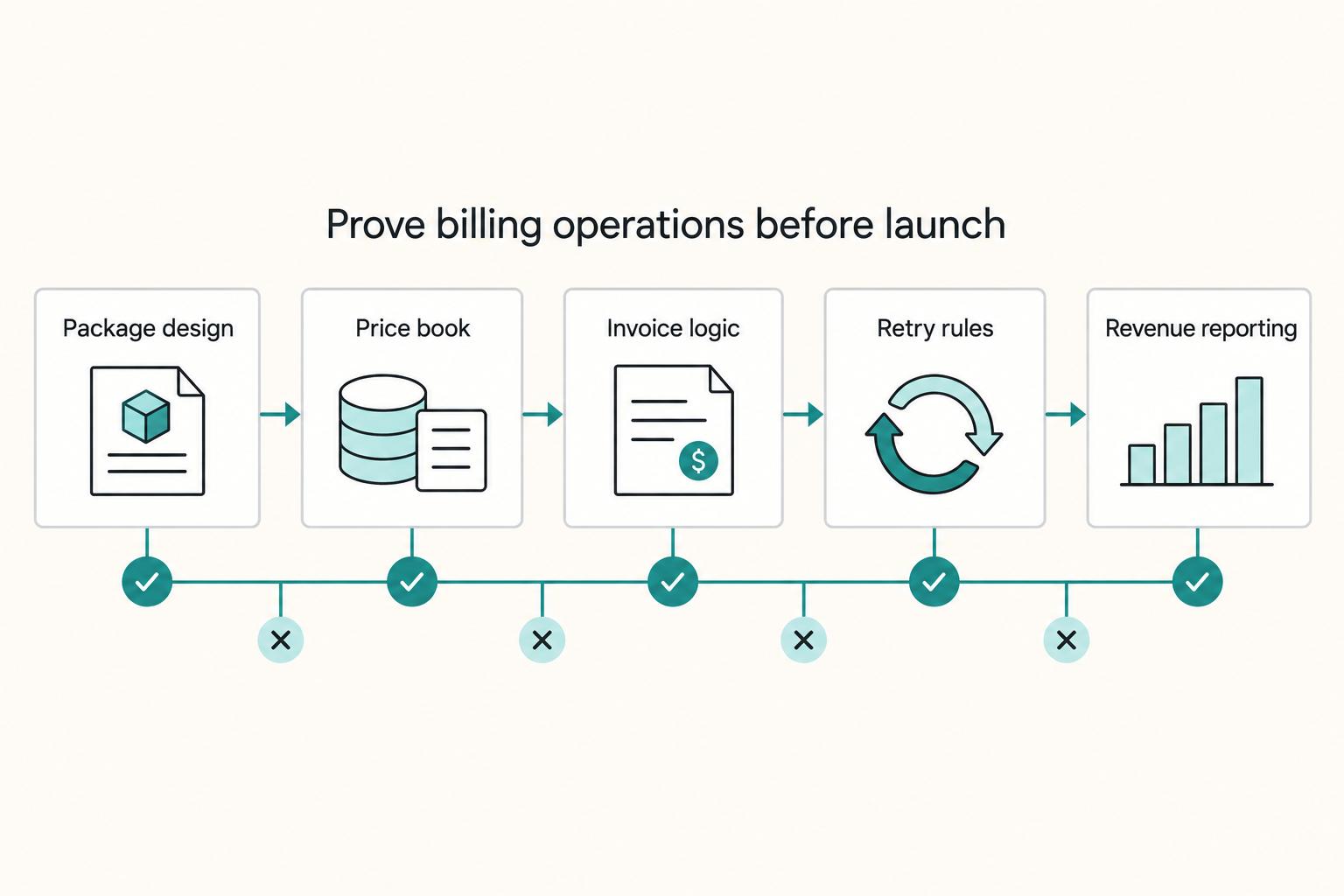
To make seat-based billing hold up at scale, implement it in this order for each billing cycle: entitlement events, seat ledgering, invoice generation, then dunning and exceptions.
Step 1 Build entitlement events before invoices#
Start from access-changing events, not invoice lines. Each seat add, removal, reactivation, and correction should create a durable record with an effective timestamp, quantity change, source, and billing-cycle anchor. The anchor and recurring interval together determine billing-period behavior, so interval alone is not enough.
You should be able to trace each seat-related invoice line to its entitlement or correction event and policy version; tax, fees and other line types need their own source references.
Step 2 Make the seat ledger retry-safe and backfill-safe#
Keep a billable seat movement ledger instead of inferring state from the latest app status. This keeps proration explainable when mid-cycle changes create partial-period charges.
| Control | Do this | Purpose |
|---|---|---|
| Operation idempotency | Persist one operation ID and reuse the same provider key and payload while resolving the same attempt; check retention limits | A provider key does not protect an indefinite backfill or a changed operation |
| Webhook processing | Authenticate and durably enqueue deliveries; commit business effects and completion status atomically or with a recoverable outbox | A receipt marker alone must not cause unfinished work to be skipped |
| Financial-effect uniqueness | Deduplicate the subscription movement or invoice adjustment separately from delivery IDs | Two distinct deliveries may describe the same financial change |
| Correction events | Add a linked correction with an effective time and policy version | Preserves history and prevents a backfill from charging twice |
Step 3 Generate invoices from the ledger, then layer in dunning#
Invoice logic should read from the ledger and apply your published proration rules, with line items traceable to event history.
At each release, verify at least these scenarios:
- Mid-cycle seat add
- Mid-cycle seat removal
- Backdated correction
After invoice behavior is stable, add failed-payment recovery. Stripe Smart Retries supports configured schedules and has non-retryable cases, including hard declines without a new payment method. Choose the recovery window, reminders and suspension policy explicitly. Keep entitlement state separate from collection attempts; a delayed or unknown charge response requires status resolution before creating a replacement payment.
Step 4 Add tax/compliance gates, reconciliation, and incident ownership#
Before you finalize invoices, require the needed tax inputs. Customer location data is required for automated tax calculation, and cross-border VAT handling depends on correct place-of-taxation logic because EU countries differ in VAT rates and invoicing requirements.
Add release and month-end controls:
- Reconcile entitlement movements to invoice quantities, periods, prices and adjustments
- Reconcile invoice collection, refunds, disputes and fees to provider movements, then reconcile provider payouts to bank cash
- Use the appropriate provider reports: Stripe’s Balance report covers account activity and closing balances; its payout-reconciliation report associates transactions with automatic payouts
- Replay duplicate, delayed and failed events and verify each financial adjustment occurs once
Define incident playbooks with named owners and internal SLA targets for duplicate charges, delayed removals, and tax misclassification. For each case, keep a standard evidence packet: source event ID, invoice ID, customer location record, billing entity, and correction event trail.
For consumption-meter design, read Usage-Based Billing Explained: How Consumption Pricing Works for B2B SaaS Platforms.
Track the metrics that tell you when to stay seat-based or go hybrid#
Treat this as an early-warning system: if seat count stops reflecting value, adjust before renewal friction shows up. Once billing operations are stable, track revenue quality, usage behavior, and margin signals together so you can decide whether to stay seat-based or test hybrid pricing.
Step 1 Measure a fixed cohort and a fixed unit. Revenue per paid seat is period revenue divided by average paid seats; average revenue per account uses average customer accounts. Label them separately and keep currency, period and revenue basis consistent. For NRR, hold the opening customer cohort fixed: (opening recurring revenue + expansion − contraction − churn) ÷ opening recurring revenue. Exclude new customers. Hypothetically, 10000 opening MRR + 2000 expansion − 500 contraction − 1000 churn gives 10500 closing cohort MRR and 105% NRR. An extra 3000 from new customers does not enter that calculation.
Step 2 Instrument telemetry to test whether seats still represent value. Track how users interact with the product: feature popularity, goal completion, drop-off points, and return behavior. Then segment by cohort to read active usage depth, automation share, and feature adoption over time. If telemetry shows value shifting to background automation, seat count may no longer be your best value meter.
Step 3 Set a directional migration trigger before renewals get harder. Do not wait for pricing disputes at renewal to test a new model. If automation rises while seat growth and expansion weaken, pilot a hybrid offer for a narrow segment. Hybrid pricing can blend per-seat with usage or outcome metrics when value creation is no longer tied mainly to licensed users.
Step 4 Run one shared dashboard on one cadence. Review revenue per paid seat, revenue per account, cohort expansion, contraction, NRR, telemetry, support load and margin together across Product, Revenue and Finance. Separate units and cohorts make pricing-model drift easier to investigate.
Roll out pricing changes without breaking sales motion#
Treat this rollout as a GTM change program, not just a billing-system update. It works when pricing stays tied to customer value, Sales can explain it clearly, and customers are guided through what changes and why.
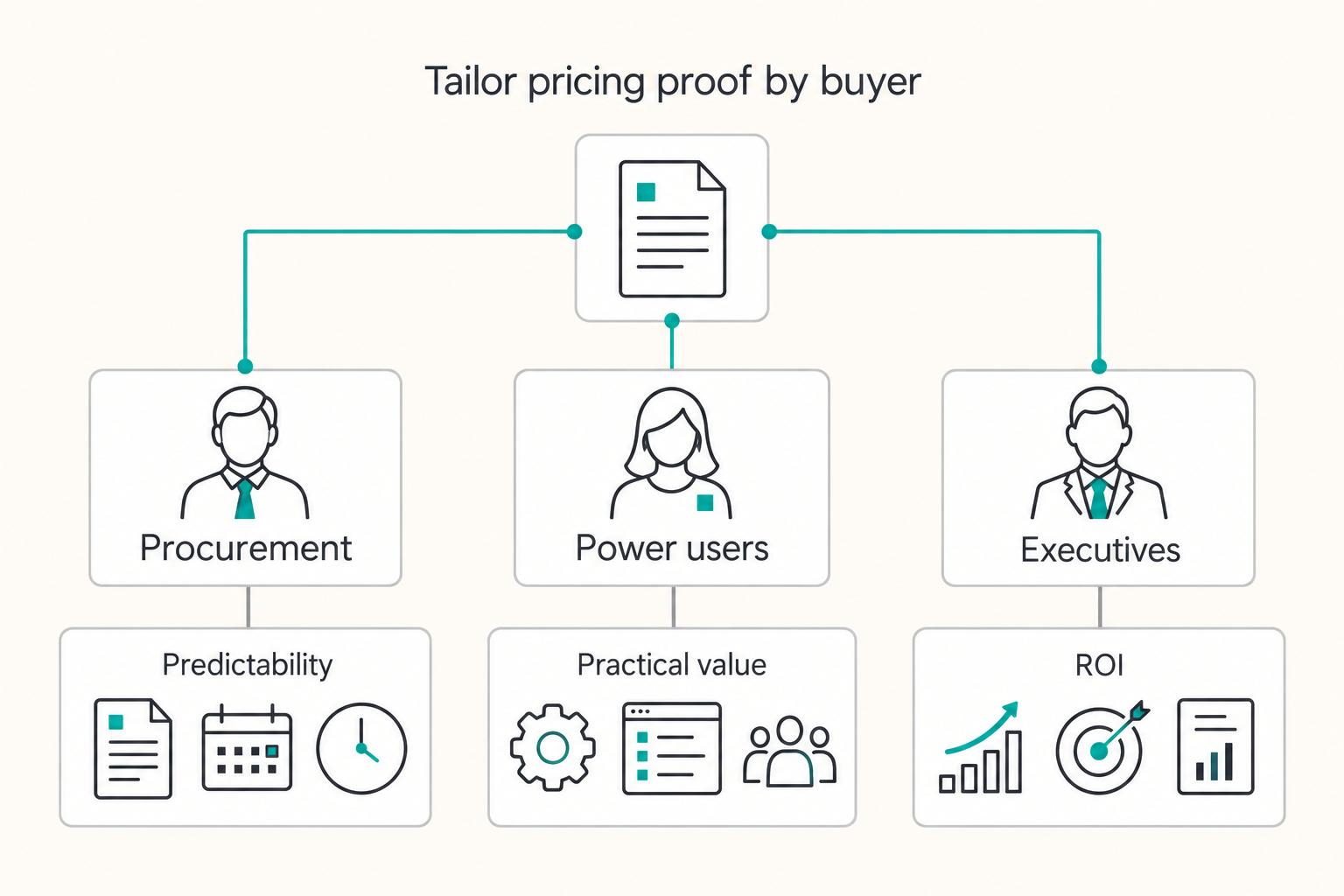
| Role | Main emphasis | Details |
|---|---|---|
| Procurement | Predictability | Spend visibility; capped exposure; cleaner approvals |
| Power users | Practical value | What they can do; what metric is included; where seats still matter |
| Executives | ROI | Why a hybrid model better matches how value is now created, including automation-heavy work |
Step 1 Package the message by buying role. One generic pricing story usually fails in enterprise deals with many stakeholders. Keep the core logic consistent, then tailor emphasis by persona: Procurement gets predictability, power users get practical value, and executives get ROI.
A quick readiness check: ask a few reps to explain the change to those personas without slides. If the rules or rationale shift by rep, tighten the messaging pack before launch.
Step 2 Give Sales and CS bill comparisons and forecasting support. Usage or hybrid pricing needs explicit talk tracks for budget exposure, caps, renewal comparisons and why a second meter is being added. Split guidance for new deals and renewals. Use concrete before-and-after invoices for a low-, medium- and high-usage account, including the same discounts and minimum commitments.
Without this, field teams tend to improvise custom hybrids, and exception volume grows faster than Finance can reliably forecast.
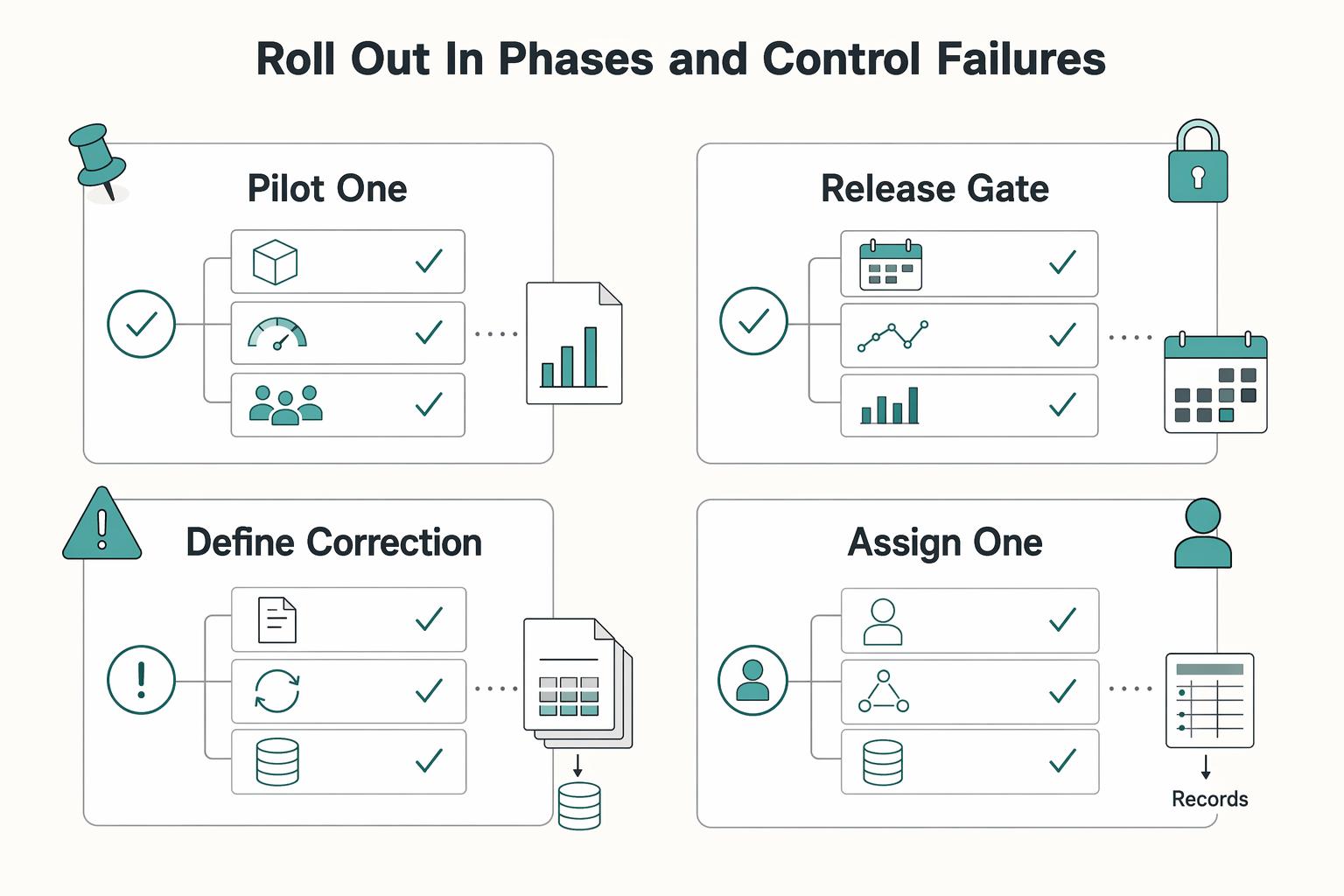
Step 3 Roll out in phases by segment and renewal date. Start with a segment where your current model fit is already under pressure, then expand by renewal cohort instead of flipping everyone at once. Before launch, publish one exception policy, one discount-approval path, and one accountable owner for approvals. Review quotes weekly against approved pricing logic, and if exceptions spike, pause expansion and fix enablement first.
For the implementation mechanics, see SaaS Usage-Based Pricing for Predictable Cashflow and Fewer Disputes.
Avoid the mistakes that create monetization debt#
After rollout, monetization debt usually comes from exceptions and execution gaps, not the headline price.
1. Do not assume seat count will keep matching value. Seat-based pricing drifts when you lack telemetry, internal capability, and sales enablement for model changes. Treat telemetry as a pricing input, and pressure-test whether Product, Revenue, and Finance can review the same account evidence and reach the same conclusion on value. If they cannot, refresh your pricing-fit scorecard before adding more seat logic.
2. Keep proration policy consistent across deals and settings. Align contract language, invoice notes, effective timestamps and provider behavior. In Stripe Billing, a positive proration is not necessarily invoiced immediately and a negative proration is not automatically a cash refund. Unpaid current-period invoices need deliberate handling: an automatic credit can otherwise credit time the customer never paid for. Resolve the old receivable and replacement charges together so later collection cannot double-charge the customer.
3. Do not expand billing entities or markets without tax mapping first. Global expansion needs upfront VAT/GST compliance checks, including non-resident and platform scenarios. Before you launch, map who invoices, where the customer is billed, whether VAT/GST collection may apply, and who signs off. Otherwise, you can quote seats correctly and still create tax exposure.
4. Evaluate realized price and margin, not close rate alone. Record discounts, free seats, waived usage and extra support as part of a nonstandard quote. Hypothetically, 10 seats at 20 each produce a 200 list bill; a 20 discount plus one free seat reduces realized revenue to 160, or 16 per included seat. Compare that revenue with expected delivery and support cost before approving the concession.
5. Do not push policy changes live before sales enablement is ready. Execution quality improves when frontline training is in place, not just pricing tools. Require practical enablement assets before launch: buyer-specific talk tracks, calculator logic that matches billing rules, and renewal examples with before-and-after invoices. If those are not ready, pause the change.
Conclusion and copy-paste launch checklist#
Choose per-seat pricing when paid access remains a useful value signal and the bill is understandable. Treat accurate entitlement records, proration policy, tax scope and migration readiness as launch requirements. If automation changes the economics, test a hybrid offer with affected customers before extending it. Use this final pre-launch pass:
- Confirm pricing fit before you lock contracts.
Compare per-seat, usage-based and hybrid offers on value alignment, buyer comprehension and operating complexity. Use representative accounts and include costs, commitments, caps and discounts. Automation-heavy workloads can weaken a seat metric; measure that effect before making a migration decision.
- Finalize the seat definition and proration logic in writing.
Your policy should answer, in plain language, who counts as a seat, when a seat becomes billable, what removes charges, and how mid-cycle changes behave. The billing-cycle event map matters most here. Explicitly map quantity changes, price changes, and billing-cycle anchor changes because those are the events that drive proration outcomes. Verification point: Finance and Support should be able to look at the same invoice and explain every seat change from the event history. If they cannot, expect avoidable invoice questions once accounts start growing.
- Validate tax scope by entity and market before rollout.
Do not assume tax obligations only apply where your company is located. In the United States, collection duties can depend on where the customer is, and tax tools also evaluate factors such as economic nexus and location attribution. An important failure mode is collecting tax before registering with the local tax authority. Make one checklist per selling entity and target market so billing does not go live in a region your tax setup cannot support yet.
- Ship telemetry and ARPU dashboards with migration triggers.
Ship workload and entitlement telemetry with separately labeled revenue-per-paid-seat and revenue-per-account dashboards. Use the same time period, currency and revenue basis for each denominator. Add fixed-cohort NRR, contraction, support burden and margin; set a pilot trigger based on your customer evidence rather than a universal benchmark.
- Train Sales and publish customer-facing policy language.
Sales should not improvise seat rules, credits, or exceptions. Give them approved language for seat adds, removals, proration timing, and future migration conversations so customer expectations match invoice behavior. The closing reminder is practical: success depends on aligning pricing with perceived value, equipping sales teams, and guiding customers through the transition.
Frequently Asked Questions
What is seat-based billing in B2B SaaS, and when is it the right default?
Seat-based billing charges for defined access entitlements. The contract might count assigned licenses, active members or another eligible user state. It fits when paid access is a useful value signal and buyers can budget around it. Test usage or hybrid pricing when workload and delivery cost diverge materially from seat count.
Should we choose per-seat pricing or hybrid pricing for an AI-heavy product?
Model both choices using representative customer workloads. If automated work grows without extra licenses, a hybrid can retain a predictable access component and add a meter for consumption or delivered output. Define the unit, evidence, included allowance and cap before quoting it. AI features alone do not establish that customers will accept the new metric.
Why are buyers in procurement often more comfortable with per-seat pricing?
Many procurement teams like seats because the math is visible: user count times price, with fewer surprises in budgeting and approval. That does not mean every buyer prefers it, but per-seat pricing often lowers friction when the buying process values forecastability over perfect precision. If you sell into centralized procurement, predictable line items usually help more than a complicated pricing story.
How should we handle mid-cycle seat additions and removals without billing disputes?
Define which changes affect the current bill and which take effect at renewal. Preview the actual quantity, price and period update; record its effective time and policy version. A credit can reduce a future invoice without creating a cash refund. Check whether the original invoice is unpaid before crediting unused time, and reconcile replacement charges against the old receivable to prevent double collection.
What metrics should we watch to know when per-seat pricing is no longer a fit?
Review paid-seat and account revenue separately, fixed-cohort NRR including contraction, workload per seat, feature adoption, cost to serve and support burden. Look for accounts with similar seat counts but materially different value or cost. Pilot a revised metric with that segment and compare bill readability, retention and margin before expanding it.
How do we introduce outcome metrics without confusing current customers?
Do not rip out seats all at once. Keep the seat component customers already understand, then add a narrow second metric tied to a visible unit of value, especially for AI-heavy features. The verification point is billing readability: if a customer cannot match the new charge to product behavior and the billing statement in one pass, simplify the rollout or phase it at renewal instead.
Try a related tool
Researched and edited by the Gruv editorial team. Gruv builds cross-border billing, payouts, and finance-operations software for global businesses.
Sources
Includes 4 external sources outside the trusted-domain allowlist.
- docs.stripe.com/billing/subscriptions/prorationstrusted
- docs.stripe.com/billing/subscriptions/billing-cycletrusted
- taxation-customs.ec.europa.eu/taxation/vat/vat-directive/place-taxation_entrusted
- docs.github.com/en/billing/concepts/billing-cyclesexternal
- learn.microsoft.com/en-us/azure/azure-monitor/app/usageexternal
- slack.com/help/articles/218915077-Slacks-Fair-Billing-...external
- support.zoom.com/hc/en/articleexternal
Educational content only. Not legal, tax, or financial advice.
Related Posts

Usage-Based Billing for B2B SaaS Platforms That Teams Can Operate
Usage-based billing works best when customer value rises with measurable consumption rather than with a fixed license. It can improve pricing fit, but only if pricing logic, billing data, and finance controls are designed together from the start.
Usage-Based Billing for Platforms That Holds Up at Month-End Close
Usage-based billing connects measured consumption to a price and an invoice. The difficult cases are specific: a retry counted twice, storage sampled with the wrong unit, an allowance deducted in two places, or a late event arriving after the invoice is final. This guide shows how to define API-call, storage and seat charges, then reconcile their different records at month-end.
Flat-Rate vs Tiered vs Per-Seat Pricing: A Decision Framework for SaaS Platforms
The useful question is not which model looks smartest on a pricing page. It is which one your team can actually sell, bill, report on, and defend when growth targets and margin targets start pulling in different directions. For B2B SaaS, that usually means choosing based on how customers actually get value and how different segments buy, not on what a competitor happens to show.