

Quick Answer
Choose a verifiable unit and cost model, agree included units and rates, and test duplicate, missing and late events before billing. Hybrid still needs an accurate meter. Reconcile usage and prices before invoicing, then receipts and settlement afterward; alerts alone do not enforce a hard spend cap.
Choose a usage model your customers can verify#
If you are considering saas usage-based pricing, treat it as an operations and collections decision first. Pricing works best when the usage unit can be measured, shown on the invoice, and explained by someone outside your product team.
That is the real issue. Usage pricing can align charges with actual consumption, but execution is where teams get into trouble. Revenue becomes less predictable, billing gets more complex, and customers demand more transparency when the bill changes month to month. In practice, finance, product, and ops each own part of the outcome. If one of those groups cannot explain the charge, invoice review slows down.
Start with a concrete meter. API calls, compute hours, and data processed are easier to defend than a proxy only your team understands. Before launch, make sure you can verify the count in the product, surface it in a usage dashboard, and send alerts before the customer is surprised by the invoice.
| Choice | Billing pattern | Complexity tradeoff | Transparency pressure | Immediate mitigation action |
|---|---|---|---|---|
| Pure usage based | Bills can move month to month with consumption | Higher because every billed unit needs clear counting logic | Higher when customers need to understand why totals changed | Add usage dashboards, threshold alerts, and invoice descriptions that clearly reference the counted unit |
| Hybrid base plus usage | Combines a predictable base with a variable component | Medium because teams explain both base and overage logic | Medium because only variable usage changes month to month | Separate fixed, included, and overage details so changes are easier to review |
| Fixed subscription | Usually more stable month to month bill amounts | Lower on monthly billing mechanics, but scope decisions still matter | Lower on variable-usage explanations | Define included scope and out-of-scope work before adding exceptions |
Judge the model on your own pilot: billed usage, cost to serve, credits, collection time and customer questions. Compare similar cohorts and periods; a pricing label alone does not explain growth or retention.
The trust test#
Before you ship pricing, run a simple check. Can you show these four items in one view?
- the usage unit
- the counting rule
- the invoice line item
- the customer-facing billing rule that makes the charge understandable
If the meter cannot pass that test, repair it before charging for usage. A hybrid plan still requires accurate counting for its variable part; a fixed plan needs explicit scope and cost limits.
From there, the work gets more practical. Choose the right model, define a value metric clients can verify, and turn that into a billing and collections process your team can actually run.
You might also find this useful: Value-Based Pricing for Strategic Consultants Under Real Payment Risk.
What is usage based pricing in SaaS and when does it actually work?#
Usage-based pricing works when you can measure usage accurately, bill the same unit clearly, and explain changes without a long dispute cycle. In practice, this is as much a collections and approval decision as a pricing decision: can finance approve variable invoices, can the customer verify the charge, and can your team defend it quickly?
Use these terms consistently in your workflow:
| Term | Definition |
|---|---|
| Usage-based pricing | Your commercial model, where charges change with usage. |
| Metered billing | The billing process that records usage so those charges can be calculated. |
| Value metric | The usage unit that should match how the customer gets value. |
Use one unit across operations so reviews move faster:
| Item | Product events | Invoice lines | Support logs |
|---|---|---|---|
| Usage unit (for example API requests, storage/bandwidth, or transactions) | Counted in the usage record for the billing period | Billed using that same unit | Retrieved with the same period and count when a customer asks why the bill changed |
| Model | How price moves | Main risk | What you must have before launch |
|---|---|---|---|
| Pure usage | Fully variable with consumption | Forecasting, budgeting, and bill-shock risk | Strong meter integrity, invoice lines that match the counted unit, and dispute evidence readiness |
| Hybrid base plus usage | Fixed base plus variable usage | Confusion about what is included vs billable | Clear base entitlement, separate usage charges, and evidence for the variable portion |
| Fixed subscription | Recurring fixed fee | Value drift if usage changes materially | Clear scope and inclusion rules |
Run a pass/fail readiness check before launch:
- Measurability: can you count the unit consistently?
- Verifiability: can the customer confirm the count?
- Explainability: can a non-technical reviewer understand the rule?
- Forecastability: can you give a reasonable spend range before invoicing?
If measurability or billing integrity fails, do not launch the variable charge. If the meter works but spend predictability is weak, consider hybrid, prepaid or fixed pricing and test their customer and cost implications.
If you want a deeper dive, read How to Use Performance-Based Pricing for Your Freelance Services.
Should you choose pure usage based pricing or a hybrid model?#
Pure usage suits measurable consumption where the buyer accepts variable spend and the business can support the costs and collection timing. Hybrid can add a base fee, but still needs a reliable meter and clear included units.
Separate the cost/value decision from payment timing. A base fee can reduce low-usage invoice variation, but neither model guarantees collection. Check the unit economics at low, expected and high usage, then validate buyer approval and the supported billing flow.
| Model | Go when | No-go when | Implementation prerequisites before it is safe |
|---|---|---|---|
| Pure usage | You can handle month-to-month revenue swings, and customers accept variable invoices tied to measured consumption | Buyers require fixed pre-approval, or usage evidence is hard to explain during invoice review | Forecast visibility for likely spend ranges, invoice lines that match the counted unit, and reconciliation readiness by customer and billing period |
| Hybrid base plus usage | You need baseline cashflow and still want usage upside | Included usage, credits, or overage rules are unclear | Clear base entitlement, clear overage rules, visibility when customers near included usage, and clean separation between fixed and variable charges |
| Fixed subscription or seat-based | Procurement requires predictable spend and simple approvals | Usage can grow faster than seats, or the value unit is not sensible per user | Stable seat/scope rules, simple invoices, and a review loop for value drift when heavy usage outgrows the fixed fee |
Design details matter. Seat-based plans with hard caps (for example, 1,000 API calls) improve cost control but can frustrate heavy users at the limit. Credits plus overage can avoid service interruption, but they increase collections exposure and require clear burn rules.
Run three checks before you decide#
Run these three checks before you decide:
| Check | If this is true | Implication |
|---|---|---|
| Volatility tolerance | A weak collections month would strain payroll or vendor timing. | Do not jump to pure usage; keep a base fee and add metered charges where your evidence is strongest. |
| Procurement friction | The buyer needs predictable spend or formal pre-approval. | Choose fixed pricing or a reliably enforced cap/approved overage when maximum spend must be predictable; a hybrid base alone does not cap the bill. |
| Dispute handling capacity | You cannot quickly produce customer-level usage for the exact billing period and tie included vs overage charges to invoice lines. | Any variable charge is premature until customer-period usage and rate evidence are reliable; hybrid still needs this evidence. |
If any one of these checks fails, treat pure usage as premature.
Pilot the chosen model before broad rollout#
Test the model that fits your customers; there is no required progression from hybrid to pure usage. Replay past usage, run a shadow bill, and pilot agreed terms with a small cohort. Track discrepancies, credits, cost and customer understanding before widening it.
Related: Value-Based Pricing for Creative Services That Protects Cashflow.
Build a value metric that clients can verify without arguing#
Choose a billable unit that reflects delivered value and can be counted consistently. API calls or compute hours may suit one product and poorly represent another; verify the customer’s usage decision and your cost to serve before choosing.
Before you launch, ask four questions: does the unit track customer value, can you measure it consistently, can customers see it during the month, and can you defend it in a dispute? If any answer is no, the metric is not ready.
| Candidate metric | Customer value alignment | Auditability risk to watch | Implementation complexity in saas billing |
|---|---|---|---|
| API calls | Fits when activity volume maps directly to delivered use | Retries, internal calls, and failed calls can cause disputes if exclusions are not explicit | Depends on whether one product event maps cleanly to one billable event |
| Data volume | Fits when stored or processed volume is part of the value delivered | Timing, averaging, and snapshot rules can create invoice challenges if definitions drift | Depends on how consistently quantity is measured across billing periods |
| Completed transactions | Fits when customers care about finished outcomes, not raw activity | Risk drops when "completed" has one stable definition everywhere | Depends on whether customer-facing reports and invoice lines use the same definition |
| Active sessions | Fits engagement products when session activity reflects delivered value | Session start, end, timeout, and duplicate logic can be hard to validate | Depends on whether session rules are consistent across product, billing, and support tooling |
Hypothetical monthly offer: $200 base includes 10,000 successful external requests; overage is $0.02 each. At 13,000 billable requests, charge $200 + 3,000 × $0.02 = $260 before tax. Specify whether failed calls, retries and internal tests count. For a separate tiered offer with no base/included units, graduated rates of $0.02 for the first 10,000 and $0.01 thereafter produce $230 at 13,000; volume pricing at the final tier’s $0.01 produces $130. These are different offers, not interchangeable interpretations of the same price.
Lock these rules before launch:
- Value alignment: the unit should reflect delivered customer value, not just internal system activity.
- Measurability: define one canonical counted event, billing period, and clear inclusions/exclusions.
- Customer visibility: customers should be able to monitor the same unit before invoice day.
- Dispute defensibility: support should be able to pull raw usage, exclusions, invoice-line mapping, and the exact metric definition used.
- Consistency: keep one canonical definition across product events, billing logic, invoice labels, and support/dispute evidence.
Version the metric and price rules with effective dates. For an ambiguous charge, resolve the evidence and terms rather than billing a “neutral placeholder.” Continue valid undisputed billing and apply any agreed correction or credit through a traceable adjustment.
For a step-by-step walkthrough, see The 'Freelancer's Dilemma': Hourly vs. Value-Based Pricing.
How do you prevent bill shock and protect monthly cashflow?#
Use forecasts, alerts, explicit rate rules and an exception path before invoice finalization. A usage alert or billing threshold is not an atomic spend cap: delayed ingestion and processing can allow further usage or charges. A strict limit needs enforcement in the application before the billable action, with concurrent requests and the contract handled explicitly.
Run one non-negotiable checkpoint before finalizing invoices: send usage totals into billing on a defined cadence (or continuously, if supported), then reconcile the billing feed against product usage counts.
| Control | Trigger owner | Customer-facing communication | Expected cashflow impact |
|---|---|---|---|
| Usage alerts at an evidence-backed threshold | Billing ops or product ops | Mid-cycle notice with current usage, trend, and likely charge range | Reduces surprise and gives the customer time to adjust spend before invoice finalization |
| Forecast range using representative recent usage and explicit scenarios | Finance or rev ops | Short pre-invoice forecast update, especially after spikes | Improves approval readiness when usage is volatile |
| Agreed soft alerts and application-enforced hard limits where required | Product plus account owner | Warning at soft cap, then explicit approval/intervention path before hard cap | Can control future exposure when enforcement is reliable; alerts alone do not guarantee a ceiling |
Make each invoice line auditable on its own. Show the usage period, unit definition, rate-card logic, and the contract term that authorizes the charge. If a reviewer cannot map a line back to recognizable usage, approval friction and dispute risk increase.
Billing ops prepares raw usage, exclusions, invoice mapping and applicable terms; the account owner checks approvals, and finance resolves credits or collection within a stated response window. Hybrid can add a base floor, but a predictable maximum requires a fixed package, enforced cap or explicitly approved overage.
If you want a fast operational next step, generate a clean draft invoice and stress-test line-item clarity before billing day: Try the free invoice generator.
Turn pricing into an audit ready billing and collections workflow#
Make every billed unit traceable before you worry about optimization. If you cannot follow a charge from event ingestion to invoice to payment status, you do not yet have a billing workflow you can reliably defend.
Use a single source of truth: one connected record chain from usage events through invoice and cash confirmation. For each billed amount, record the value metric, timestamps, customer ID, aggregation result, price version, contract term, invoice-line mapping, payment status, refunds or disputes, and the final payout or bank match.
Test duplicates, rejected and delayed events, period boundaries, plan changes, credits and entitlements. Keep the product’s durable usage record and reconcile its accepted billable quantities with the provider’s processed meter output. An API acknowledgment is not proof the asynchronous aggregation is complete.
| Step | Required record | Typical owner | Common failure mode | Prevention control |
|---|---|---|---|---|
| Usage capture | Event log with timestamp, customer ID, value metric unit, and idempotency key | Product plus finance | Duplicate, missing, or delayed events | Use durable business event IDs and local deduplication; monitor provider errors and processed totals before finalization |
| Pricing application | Versioned plan terms, credits, entitlements, and rate logic | Product plus finance | Wrong price after a plan change | Verify active price version against contract terms before billed units are finalized |
| Invoicing | Line items tied to aggregated usage and the term authorizing the charge | Finance | Reviewer cannot map charge to usage | Validate line-item totals against usage summaries before release |
| Cash confirmation | Payment status, retry handling, refunds, disputes, and payout or bank reference | Finance | Paid invoice not matched to cash, or failed payments left unresolved | Match settled payments to deposits during close and route failures into exceptions |
| Exceptions | Linked evidence pack for each invoice | Finance plus customer success or sales | Team scrambles for proof after a dispute | Build the evidence pack at invoice creation, not after a complaint |
Before invoicing, reconcile billable events, processed meter quantities, the applicable price version and draft lines. Resolve or explicitly escalate late/missing usage without ignoring contractual or statutory deadlines. After billing, separately reconcile receivables, gross receipts, fees, refunds and bank settlement. Future cash cannot be a prerequisite for issuing an invoice.
For example, keep a period [October 1 00:00, November 1 00:00) in the agreed timezone and price version v3. Deduplicate by the billable business action, not just a delivery ID. Stripe’s meter API is asynchronous and documents past/future timestamp limits; check the current endpoint rather than assuming every late event can be backfilled. Replay a late event, a repeated delivery and a mid-cycle rate change before launch.
Prebuild a dispute pack for every invoice. Include the billing terms, approval or change confirmation, usage timeline, invoice detail, and payment trail so you can answer challenges quickly.
Cash example: the $260 invoice receives a $200 gross partial payment with a hypothetical $6 fee, leaving $60 receivable and $194 net proceeds. A later full $60 gross receipt clears that receivable; its separate fee reduces proceeds, not the amount the customer paid. Keep earned revenue, credit balances and cash in their appropriate ledger accounts.
At close, assign each mismatch a record ID, affected invoice, owner, next-action date and adjustment reference. Keep resolved credits and late-event corrections linked to their original billing period.
Where do rules vary across countries and programs and how do you confirm safely?#
Rules vary across countries, programs, currencies, and payout routes, so you should not promise final terms until those four items are confirmed for the exact client setup. Once charges are traceable, this is the next failure point in cross-border usage-based billing.
Your billing model and money movement need to support the same promise. Localization is not just translation; it is adapting pricing and packaging to a specific market. Pricing in a customer's currency can influence buying decisions, and weak localization can undermine a launch in a new territory.
Check the verification requirements for your own merchant/platform account and product. Customer identity checks depend on the actual flow and provider/law; an ordinary SaaS buyer is not automatically required to complete the seller’s KYB. Confirm actual charge and settlement capabilities before promising dates.
| Checkpoint | Why it matters | What can break | Who confirms it | Contract-safe language |
|---|---|---|---|---|
| Country and program fit | Coverage and operating rules vary by market and provider program | You sign a client in a market your setup cannot support as expected | Finance owner plus provider support/account team | "Commercial terms are based on confirmed country and program availability at launch." |
| Currency and localization fit | Local-currency pricing can influence buying decisions; poor localization can hurt market fit | Client expects local-currency billing, but invoicing or settlement only works cleanly in another currency | Finance plus sales, with provider confirmation for invoicing/settlement support | "Invoice currency and settlement method are subject to confirmed supported currency options for the client's market." |
| Payout route and routing readiness | Expanding rails and geographies usually adds a routing checkpoint | You can collect funds but cannot settle on the route or timing discussed | Finance/ops plus provider support | "Payout timing begins only after the supported payout route is active for this account and market." |
| KYC/KYB readiness | The merchant/platform’s actual verification can limit account capabilities; buyer checks depend on the flow | Missing entity data or beneficial-owner checks delay launch after signature | Onboarding owner plus provider verification team | “Settlement estimates depend on the applicable account approval and capabilities; customer checks apply only where required.” |
Map which party has each verification duty and which system proves account capabilities. A CRM approval is not provider activation. Record confirmed receiving and settlement support without treating generic “international support” as an account-specific guarantee.
Use this pre-signature sequence#
- Map the exact commercial flow. Record client country, invoice currency, payout route, billing model, and value metric. For usage billing, also record whether charges are monthly, annual, prepaid credits, or pay-per-use so cost expectations are explicit.
- Confirm route and program in writing. Ask your provider to confirm the exact combination you plan to run, not generic "international support." If you are still choosing providers, use The Best Payment Gateways for SaaS Businesses before finalizing terms.
- Confirm the actual merchant/platform verification and capabilities; request buyer/beneficial-owner data only where the flow, provider and law require it.
- Write terms conditionally from confirmed facts. Keep payout timing, launch timing, and local-currency commitments conditional until approval is complete.
- At renewal, review changed rates, capabilities and applicable requirements; do not silently replace previously agreed terms.
Save provider/account capability evidence, actual verification status and agreed commercial terms. If the supported flow changes, seek the required contractual amendment or exercise applicable remedies; an internal update cannot unilaterally rewrite an existing promise.
This pairs well with our guide on How SaaS Teams Set Pricing and Packaging for International Markets.
Use a short pricing readiness review before each deal#
Before committing, verify the metric, rate logic, customer approval needs and supported collection flow. Use the short checklist to identify gaps; a full billing-cycle replay, integration testing and legal/accounting decisions require more than ten minutes.
With usage-based billing, total charges are variable and not fully known upfront. Run this checklist before first signature and again before renewal.
Pick the model that matches the risk you need to reduce#
Use the trigger condition to choose the model that protects your cashflow for this client.
| Trigger condition | Recommended model | Primary cashflow risk it mitigates |
|---|---|---|
| Your costs move with customer consumption, usage is measurable, and variable invoices are acceptable | Pure pay-as-you-go | Margin pressure when usage rises faster than billing assumptions |
| You need a baseline invoice each cycle but still want usage upside | Hybrid (base + overage) | Revenue volatility from low-usage billing periods |
| The buyer needs tighter budget control with variable usage | Prepaid credits | Payment delays tied to fluctuating monthly invoices |
| The buyer prioritizes predictable spend and clear financial boundaries | Fixed fee or subscription | Collections delays caused by unpredictable invoice totals |
If two models seem workable, choose the one that reduces billing and payment risk first. The wrong model can hurt both billing experience and margins.
Run the checklist before signature and before renewal#
| Checklist item | Owner | Output |
|---|---|---|
| Lock the value metric in plain language | Product or commercial lead | One-page metric spec with sample invoice-line mapping. |
| Prove meter-to-invoice traceability | Engineering or billing lead | Tested usage-to-invoice trace for a full billing cycle. |
| Choose the pricing model and document the reason | Founder or finance lead | Pricing decision note linked to the contract file. |
| Make the governing contract explicit | Sales or contract owner | Applicable governing agreement and authorized acceptance/acknowledgment evidence. |
| Keep dispute-readiness live before cycle close | Billing or finance ops | Dated account evidence pack attached to the billing record. |
| Reconcile before invoicing | Finance ops | Usage/rate/draft reconciliation before billing; receipt/fee/settlement reconciliation afterward. |
| Confirm actual account and route support before commitment | Finance or payments lead | Dated provider confirmation saved in the deal record. |
- Lock the value metric in plain language. Define one billable unit, what counts, what does not, and where the count comes from.
Owner: Product or commercial lead. Output: One-page metric spec with sample invoice-line mapping.
- Prove meter-to-invoice traceability. Confirm your system can track usage and associate it with invoice output.
Owner: Engineering or billing lead. Output: Tested usage-to-invoice trace for a full billing cycle.
- Choose the model and document why it fits. Prepaid cash, billed revenue and earned revenue are distinct. Apply the relevant accounting framework: IFRS 15 recognizes revenue as performance obligations are satisfied, not automatically when credits are sold or in one universal consumption pattern.
Owner: Founder or finance lead. Output: Pricing decision note linked to the contract file.
- Make the governing contract explicit. Keep the controlling document clear (typically subscription agreement or terms of service), including pricing logic, billing period, usage definition, and policy acknowledgments.
Owner: Sales or contract owner. Output: Applicable governing agreement and authorized acceptance/acknowledgment evidence.
- Keep dispute-readiness live before cycle close. Maintain an evidence pack that ties invoice lines to usage logs, internal approvals, contract terms, and policy acknowledgments before the billing cycle closes.
Owner: Billing or finance ops. Output: Dated account evidence pack attached to the billing record.
- Reconcile usage, processed quantities, price versions and draft lines before invoicing. Match gross receipts, fees, refunds and settlements after billing; do not wait for future bank cash to issue a valid invoice.
Owner: Finance ops. Output: Reconciliation sheet with exceptions resolved or escalated.
- Confirm the actual account, country, currency and collection/settlement route before commitment. Verify applicable approval requirements rather than applying merchant KYB to every SaaS customer.
Owner: Finance or payments lead. Output: Dated provider confirmation saved in the deal record.
A failure blocks the affected launch or change until it is resolved. Preserve obligations and valid billing already agreed; do not automatically suspend a renewal or existing service because an internal checklist is incomplete.
For related pricing structure decisions, see A Guide to Tiered Pricing Models for Freelance Services.
For country/program support confirmation, Talk to Gruv.
Frequently Asked Questions
What is Usage-Based Pricing in SaaS in one sentence?
Charges vary with defined consumption, using the agreed rate structure. A recurring subscription can itself include metered usage; billing frequency and fixed-versus-variable pricing are separate choices.
What are the biggest benefits and risks of Usage-Based Pricing for small teams?
Usage can align charges with consumption, but amounts and collection timing may vary. Zero usage means zero charge only if there is no base, minimum, flat fee or other applicable charge. Review unit costs, customer approvals and paid-versus-billed amounts rather than assuming usage automatically improves growth.
How is Usage-Based Pricing different from Subscription-Based Pricing?
Subscription describes a recurring commercial relationship; its price can be fixed, metered or hybrid. Hybrid adds a base component to a defined usage calculation. Do not treat recurring subscriptions and usage-based prices as mutually exclusive.
When should I avoid pure Pay-as-You-Go and use Hybrid Pricing instead?
Use hybrid when an agreed base fee fits the customer and reduces low-usage invoice variation. It still needs reliable metering and can grow without a ceiling. For a predictable maximum, use a fixed package, reliably enforced cap or explicit approval before overage; zero consumption produces no charge only when no base/minimum applies.
How can I reduce bill shock in a Metered Billing model?
Show current usage, included units, rates and a realistic projected range before invoice day. Notify customers at agreed thresholds and explain what happens at the limit. Alerts alone cannot guarantee a hard cap; enforce strict limits in the product and test delayed/concurrent activity.
How does Usage-Based Pricing affect cashflow predictability month to month?
Billed amounts move with usage, while cash also depends on payment terms, failures, refunds and settlement. A hybrid base can reduce invoice variation but is not guaranteed collected revenue. Model low, expected and high usage with costs and payment timing.
What evidence should I keep to prevent billing disputes and chargebacks?
Retain the applicable terms, metric/price version, usage IDs and period, inclusions/exclusions, aggregation, invoice lines and payment/refund trail. These records help answer disputes; they do not guarantee a bank or network will decide in your favor.
Try a related tool
Researched and edited by the Gruv editorial team. Gruv builds cross-border billing, payouts, and finance-operations software for global businesses.
Sources
Includes 1 external source outside the trusted-domain allowlist.
Educational content only. Not legal, tax, or financial advice.
Related Posts
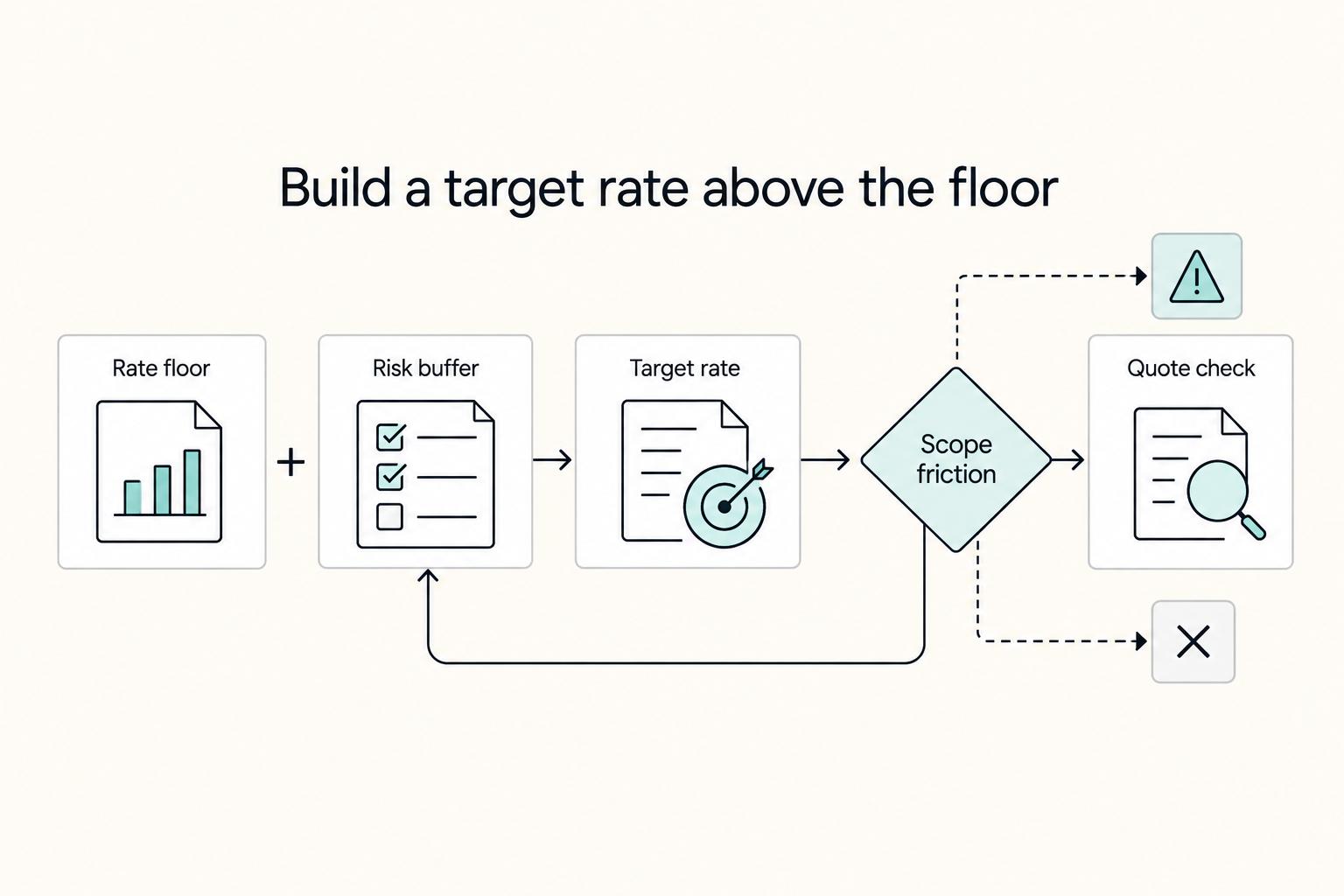
How to Calculate a Freelance Rate You Can Actually Get Paid On
A workable rate is not the neat number a calculator produces. It is the number that still works after you account for real billable capacity, non-client time, scope drift, and the gap between sending an invoice and receiving cleared cash. Start with hourly math even if you do not plan to bill hourly, then turn that number into a quote with clear `payment terms`.
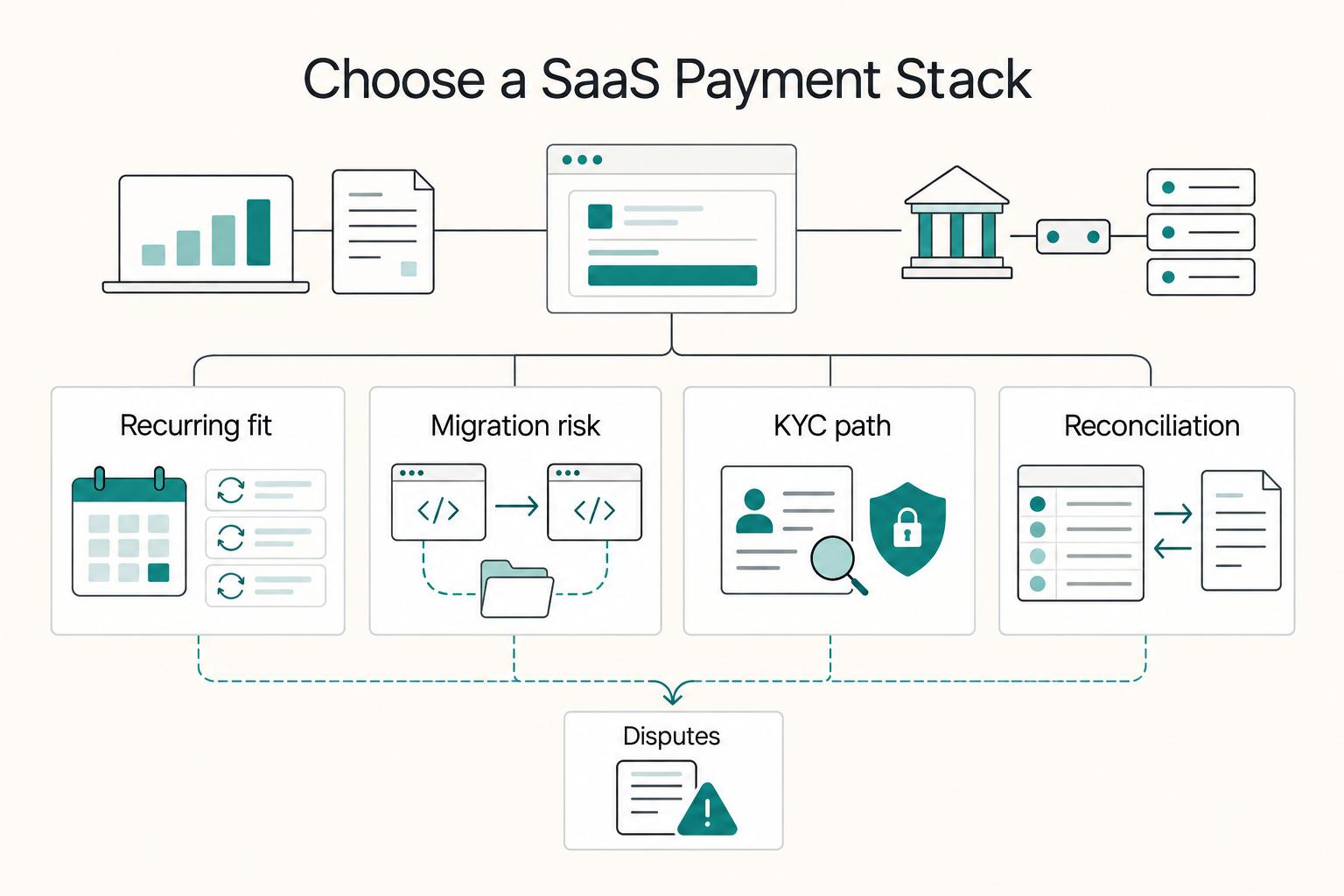
Choosing Payment Gateways and Billing for SaaS Businesses
The first checkout is only one payment in a SaaS relationship. Your provider must also support the next renewal, a seat change, a failed collection and a cancellation that stops future billing. Evaluate those cases before choosing a checkout logo.

The Freelance Payment Penalty: A Modeled Audit of Platform Fees, FX Spreads, and Payout Delays
The money rarely disappears through a single, easy-to-spot fee. The real loss is stacked. A marketplace takes its commission, a processor adds a charge for international cards, a bank or payment company converts the currency at a spread, a platform holds the funds before release, and a wire sheds a little to intermediaries on the way in. Each layer looks defensible on its own, but the worker feels the combined result as a smaller deposit and a later payday.