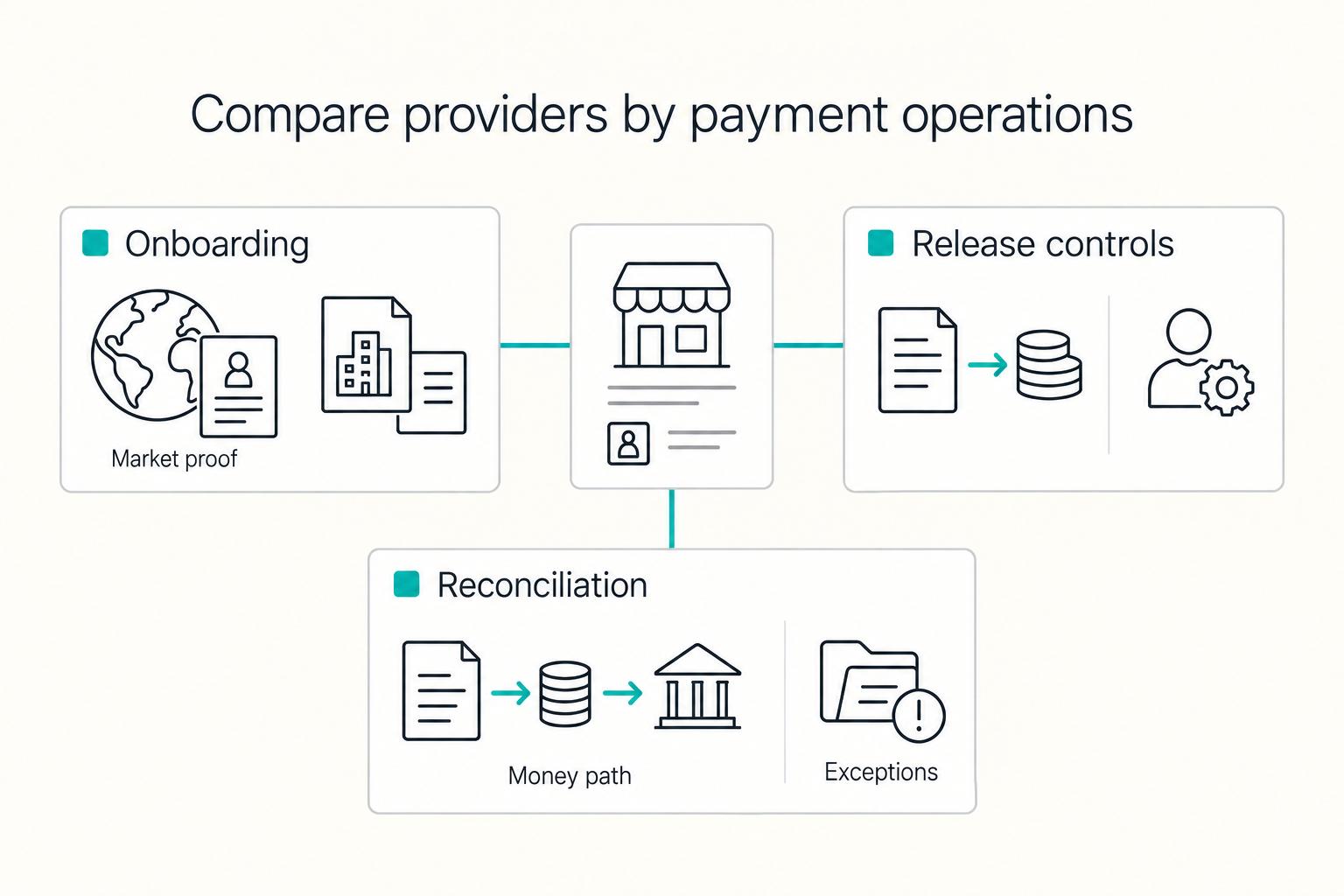
Prioritize payment accountability over marketplace branding: for payments freelance talent marketplaces toptal andela comparisons, choose the vendor that can prove contract ownership, payout timing, and exception handling in signed terms. Use concrete checkpoints such as Andela’s monthly payout date on the 5th and Toptal’s twice-monthly Net 10 billing, then verify KYC/KYB/AML and W-8/W-9 gates by country before launch. Run one invoice-to-payout reconciliation pilot in Gruv and pause expansion if hold or dispute ownership remains unclear.
In this comparison, payment operations matter more than sourcing language. Your expansion outcome depends on how reliably you can onboard talent, release payouts, and reconcile funds across the United States, Canada, Europe, and Latin America.
Toptal describes itself as an exclusive global talent network and says typically fewer than 3% of applicants are accepted. Arc describes itself as a global marketplace of vetted remote talent, claims 450,000 talent in 190 countries, and says it supports secure freelancer payments and compliant global hires via trusted EOR partners. Andela says its Talent Cloud includes 150,000 technologists in more than 135 countries, and describes a platform flow that helps companies source, hire, manage, and pay global technologists. The real decision signal is not which positioning sounds strongest. It is how much operating detail you can verify before launch on billing flow, payout routing, and compliance ownership.
If payouts are core to your model, treat KYC as a release gate. Connected accounts must satisfy KYC before they can accept payments and send payouts, and those requirements can change over time. Verification requirements also vary by account country and setup details. KYB may also be part of onboarding when business verification applies. Do not treat Europe or Latin America as single lanes. Payment infrastructure support is not universal, and evidence that works in one corridor may not transfer to another.
Reconciliation is often the hidden cost driver. Payout reconciliation exists to match bank payouts to underlying payment batches, and manual payout flows push that work back onto the operator. Before you commit GTM spend, validate one full money path in each target market: invoice to payout to bank movement. Markets that look launch-ready on onboarding can still stall at payout release because verification requirements and payout support can differ by market.
This guide reflects that operating reality. It gives you a decision-oriented shortlist, a due-diligence checklist for the unknowns that matter, and a rollout sequence you can pressure-test in Gruv before you commit expansion spend.
If you own payouts, compliance, or finance controls, choose the marketplace model by payment accountability first and talent pitch second. If your team is only comparing developer quality between Toptal and Andela, you are using the wrong lens.
| Decision lens | Documented signal | What to verify |
|---|---|---|
| Charge ownership | Direct charges are made to a connected account; indirect charges are made to the platform | Who is merchant of record and who carries negative-balance responsibility in disputes |
| Verification controls | Payout-enablement requirements vary by country, and AML implementation differs across jurisdictions | Where Form W-9 or Form W-8BEN is collected and what happens when verification is incomplete |
| Billing centralization | Toptal says it handles billing and invoicing with clients; Andela Pay says invoices and tax documents are stored in one place | Whether payout cadence, held or released states, refunded states, and dispute ownership are clearly exposed |
| Traceability | Prefer traceable identifiers from invoice through payout so finance can verify routing and ownership | Whether payout routing and reversal ownership can be exported or verified |
Decide who receives funds and who absorbs reversals before anything else. In Stripe Connect terms, direct charges are made to a connected account, while indirect charges are made to the platform. That choice changes fund distribution and which account is debited for refunds and chargebacks. Key differentiator: confirm who is merchant of record and who carries negative-balance responsibility in disputes. If this is unclear, the model is still unclear.
Choose the option that can show concrete KYC, AML, and beneficial-ownership handling, not just "global hiring" language. Payout-enablement requirements vary by country, and AML implementation differs across jurisdictions. Key differentiator: ask for an onboarding evidence pack showing where Form W-9 or Form W-8BEN is collected and what happens to payout eligibility when verification is incomplete.
Centralized invoicing is a good signal, but it does not prove payout and dispute mechanics. Toptal says it handles billing and invoicing with clients, and Andela Pay states invoices and tax documents are stored in one place. Those signals do not establish payout cadence, exception handling, or dispute ownership. Key differentiator: if invoice visibility exists but held, released, refunded, or disputed payout states are not clearly exposed, expect manual follow-up during failures.
Margin loss can come from unclear routing, reversals, and reconciliation gaps. Prefer the model that gives you traceable identifiers from invoice through payout so finance can verify routing and ownership in your ledger process, including Gruv-led operations where used. Key differentiator: if payout routing and reversal ownership cannot be exported or verified, treat that as a go/no-go risk before rollout.
We covered this in detail in How to Use Make.com to Automate Onboarding, Compliance, and Cash Flow for Your Freelance Agency.
Use this table to separate documented payment structure from marketplace positioning. The practical decision signal is who contracts talent, what payout behavior is publicly visible, and what is still unknown.
| Platform | Best for | Who contracts talent | Known payment visibility | Compliance burden | Unknowns to verify | Go/no-go risk | Evidence confidence |
|---|---|---|---|---|---|---|---|
| Toptal | Premium, curated talent sourcing with a documented AOR path for global contractor hiring | Documented for HireGlobal AOR: Toptal says HireGlobal handles contractor contracts, payroll, and compliance. Core non-AOR marketplace contracting path is not fully disclosed in the sources here. | Strong official visibility for the AOR product: pay workers in 150+ countries and 120+ currencies. Public sources here do not confirm payout cadence, dispute handling, or held-fund states. | In the documented Agent of Record model, Toptal says HireGlobal handles contracts, payroll, and compliance. Tax-document intake and exception paths still need confirmation. | Whether your engagement is actually under HireGlobal AOR, who is merchant of record, refund and chargeback ownership, and where W-8/W-9 collection sits | No-go if sales points to HireGlobal benefits but your contract does not place the contractor under that AOR structure | High for AOR and country/currency coverage from official pages; medium for broader marketplace payment model |
| Andela | Talent access with directly managed contractor relationships and visible monthly payout timing | Official support docs: talent is hired as a contractor directly by Andela | Strong payout timing visibility: Andela says it manages monthly payments, with payouts on the 5th of each month. Andela Pay is described as its payout platform with partner payout options. | Direct contracting by Andela indicates contracting and payout administration in that model. Exact KYC, AML, and tax-document checkpoints are not public in the sources here. | Payout rail options by country, hold reasons, failed payout handling, tax forms, and whether all talent paths use the same contract structure | No-go if your use case depends on self-serve payout state visibility and Andela cannot show release, hold, and failure statuses | High for direct contracting, monthly payments, and payout date from official help docs; low for broad marketplace classification claims because sources conflict |
| Arc | Teams that want both freelance and full-time options, with stated support for freelancer payments and EOR-partnered compliant hires | Arc publicly offers freelance or full-time talent and mentions compliant global hires via trusted EOR partners. Who legally contracts talent varies by path and is not fully disclosed here. | Arc states secure freelancer payments and compliant hires via EOR partners. Public sources here do not show payout cadence, hold states, or dispute ownership. | Burden split appears path-dependent and is not fully public in the sources here. | Which entity contracts freelancers, which path uses EOR, what countries are supported for each path, and how tax or KYC failures block payout | No-go if you need a single, contract-level answer on who pays talent before procurement signs | Medium for talent model and partner-based payment support from official pages; low for competitor-blog claims about peers |
| Terminal | Global hiring where HR and EOR support are central | Terminal says its platform handles recruiting, hiring, HR, and EOR in 180 countries. Exact contracting entity by engagement type is not fully detailed in the sources here. | Country coverage is visible, but public sources here do not confirm freelancer payout cadence or exception handling. | For documented EOR-enabled hiring, Terminal presents HR and EOR support; contractor payout burden is less clear from the cited sources. | Whether your use case is EOR, contractor, or both; invoice chain; local tax handling; and payout-state visibility | No-go if you are benchmarking freelance payout operations and only get EOR marketing in response | High for EOR footprint from official site; medium for contractor-payment assumptions |
| Turing | Fast access to vetted remote freelance developers when speed of matching is the headline need | Turing markets freelance developer hiring, but the contracting entity is not disclosed in the sources here | Publicly visible on hiring speed, not payout operations: claims hiring in 4 days. No supported public payout cadence in the sources here. | Compliance ownership is unclear from the cited materials, so diligence is required before treating it as provider-managed. | Contract owner, payment timing, refund and dispute handling, tax document flow, and country restrictions | No-go if speed-to-hire is clear but payment accountability is still unanswered after diligence | Medium for hiring-speed claim from official page; low for payment-model detail |
| Gigster | Buyers wanting a fully managed development-team model rather than a simple freelancer directory | Public site positions Gigster around managed delivery; who contracts individual contributors is not disclosed in the sources here | Very limited public visibility in the cited materials on payout mechanics, cadence, or exceptions | Compliance burden cannot be inferred confidently from the marketing page alone | Whether Gigster is prime contractor for delivery, how subcontracted talent is paid, and what reconciliation data a client sees | No-go if finance needs contractor-level payout traceability and Gigster cannot provide it | Medium for managed-team positioning from official site; low for underlying payment structure |
The strongest documented signals in this pack are Toptal HireGlobal AOR, Andela's direct contractor model plus 5th-of-month payouts, and Terminal's EOR coverage in 180 countries. Those signals matter because they describe an operating structure, not just a talent claim.
One source conflict still needs diligence. Arc's employer blog says Andela is not a freelancer marketplace, while G2 categorizes both Andela and Toptal as freelance platforms. Treat labels as secondary to contract structure, payout ownership, and evidence quality.
Use a document-based checkpoint before selection. Request the contract form for your deal, sample invoice flow, payout schedule, onboarding steps for KYC/KYB and W-8/W-9, and proof of hold, release, and failure payout states. If those artifacts are missing, you are still making a payments decision from marketing copy. You might also find this useful: Freelance Bookkeeping for Faster, Safer Client Payments.
Toptal can fit when you want a stronger curation signal and can run payments diligence in parallel. Its public positioning is premium and selective, with enterprise-facing messaging.
What is clearly documented:
What you should confirm before rollout:
This pairs well with our guide on Retainer Subscription Billing for Talent Platforms That Protects ARR Margin.
Consider Andela when your main objective is regional talent access across Latin America and Europe, and keep payment-ops validation on its own diligence track. The public record supports broad coverage and a named payout product, but it does not clearly document who owns KYB, AML escalation, and settlement exceptions in edge cases.
Andela's clearest documented advantage is geographic coverage. It markets paying and managing contractors in more than 100 countries, and its approved-work list includes countries across Latin America and Europe such as Argentina, Bolivia, Brazil, Austria, Belgium, and Bosnia and Herzegovina. If your expansion plan depends on running both regions without splitting sourcing lanes, that is the strongest reason to shortlist it.
There are useful operational signals, but not a complete payment playbook. Andela describes Andela Pay as its payout platform for technologists. It also publishes a specific cadence: engaged technologists are paid monthly, with payouts on the 5th of each month. Andela Pay also says invoices and tax documents are stored in one place. That helps, but you still need to inspect the actual artifacts and workflow states during diligence.
Comparison pages still leave basic gaps. For example, side-by-side sources can show no entry-level pricing for both Andela and Toptal, which limits what you can infer about fees, FX handling, or exception ownership. There is also a classification conflict. One comparison source says Andela is not a freelancer marketplace, while Andela's own 2023 launch language describes a private talent marketplace that includes pay operations.
If regional expansion is the priority, treat Andela as a candidate only after onboarding evidence is verified. Ask for proof of:
If this evidence is incomplete, keep Andela in pilot mode. If it is complete and your strategy depends on LatAm plus Europe coverage, Andela may be a stronger fit than a curated-first option.
Arc-style models can fit best when you want flexible talent access and faster matching, and your team can absorb more payment and compliance work directly.
Arc positions itself as a global marketplace of vetted remote talent across freelance and full-time roles, with broad role coverage. It also markets access to 450,000 talent in 190 countries and says companies find full-time remote developers in less than 14 days on average. The practical upside is coverage and speed, not deeper public detail on payout operations.
It can also be a strong fit for Stripe-oriented teams. Arc's Stripe hiring page lists 1,182 remote Stripe developers and experts available to hire at review time, which is useful if your product and finance stack already centers on Stripe. Treat that as stack alignment, not proof that Arc natively runs your marketplace collections and payouts.
Arc's comparison content is useful for early scanning, but it is still vendor-authored and centered on pricing, features, locations, and pros and cons. It is not a substitute for payments diligence. Public pages do not fully document payout rails, payout cadence, payout fees, dispute handling, or full KYC, KYB, and AML ownership.
If you plan to collect funds yourself and orchestrate payouts outside the marketplace layer, Stripe Connect can be a key lever, especially separate charges and transfers. Stripe says Connect can help platforms onboard, verify, and pay out third parties. It lets you set payout timing and collect fees, and supports sending funds to users in 118+ countries. It also supports transfers to multiple connected accounts, and Stripe explicitly documents that unsupported cross-border transfer paths return an error. Validate your actual country corridors before rollout.
Ask for evidence, not screenshots:
Decision rule: choose an Arc-style model when internal finance ops is strong enough to manage those controls. If your team does not want direct ownership of refunds, chargebacks, and KYC or AML obligations, prefer tighter operational ownership through Merchant of Record support. The MoR is the legal entity responsible for processing payments and those obligations.
If you want a deeper dive, read Curated Marketplaces vs. Open Platforms: A New Model for Sourcing Talent.
Use Terminal, Turing, and Gigster as benchmark rows before you finalize Toptal or Andela if they are in your shortlist. If your preferred option cannot clearly outperform these three on payment accountability and reconciliation effort, you are probably choosing on talent pitch more than operating reality.
| Vendor | Public detail | What to request |
|---|---|---|
| Terminal | For contractors it handles all invoicing and payments; it also says it hires in 9 countries and handles employment and admin in 180+ countries as EOR | A country-scope exhibit plus sample billing and payout artifacts |
| Turing | It advertises 4 days to fill most roles and a 21-Day Risk-Free Trial; its terms say technical professionals work on an independent contractor basis and, unless the Order Form says otherwise, Turing does not employ, supervise, or control them | The exact Order Form language covering contractor status, payout exceptions, and handling of Form W-9 or Form W-8BEN requests |
| Gigster | Its public FAQ says clients work with an Engagement Manager and Project Manager accountable for business objectives, and Gigster says it has a 50,000+ talent network | Whether Gigster is prime contractor for delivery, how subcontracted talent is paid, and what reconciliation data a client sees |
Apply the same checks across all five vendors:
Terminal is a strong benchmark when you want public evidence of payout ownership. Its HR page says that for contractors it handles all invoicing and payments, and Terminal also says it hires in 9 countries while handling employment and admin in 180+ countries as EOR.
Your check is simple: get a country-scope exhibit plus sample billing and payout artifacts. A common failure is assuming broad EOR messaging applies to your exact contractor lane when the signed path is narrower.
Turing is the benchmark for contract-by-contract accountability. It advertises 4 days to fill most roles and a 21-Day Risk-Free Trial, but the control answer sits in the Order Form, and payment and accountability terms should be verified there. Its terms say technical professionals work on an independent contractor basis and, unless the Order Form says otherwise, Turing does not employ, supervise, or control them.
Do not rely on sales-level summaries for payout exceptions. Ask for the exact Order Form language covering contractor status, payout exceptions, and handling of Form W-9 or Form W-8BEN requests.
Gigster is useful as a managed-delivery benchmark, not as proof of payout transparency. Public FAQ language says clients work with an Engagement Manager and Project Manager accountable for business objectives, and Gigster says it has a 50,000+ talent network.
That creates a practical red flag. An option that looks cheaper or more managed can still increase operating burden if your team has to manually reconcile records or chase cross-border tax documents before funds move.
For a step-by-step walkthrough, see Proving 'Stable and Regular Income' for Portugal's D8 Visa with Lumpy Freelance Payments.
Keep one unknowns log per vendor, and block launch on any critical payment claim that is still unverified.
| Unknown area | Grounded requirement or fact | Selection impact |
|---|---|---|
| Unknowns log | Keep fields consistent: payout rails, payout timing, refund and dispute process, tax-document collection, year-end reporting, and failure escalation | Block launch on any critical payment claim that is still unverified |
| Tax documents | For U.S. payees, the first step is collecting Form W-9, and those records should be kept for four years; for foreign payees, confirm whether onboarding uses W-8BEN for individuals or W-8BEN-E for entities | Ask for sample onboarding requests and identify who validates TIN data, stores forms, and issues Form 1099-NEC where relevant |
| Backup withholding | If TIN requirements are not met, 24% backup withholding can apply to reportable nonemployee compensation | Treat missing TIN handling as a launch blocker |
| Reporting dates and thresholds | Form 1099-NEC is generally filed by January 31, and filers of 10 or more information returns must e-file; one IRS page references $600, while an FAQ references $600 ($2,000 for payments made after December 31, 2025) | Log the mismatch as a blocker until current instructions are confirmed |
| Evidence confidence | Use only official source, third-party comparison, and unverified | Pause selection if payout timing, refund ownership, or tax-form issuance remains unverified |
Keep the fields consistent: payout rails, payout timing, refund and dispute process, tax-document collection, year-end reporting, and failure escalation. For each row, record source, owner, date verified, and confidence label. Example: Andela Pay publicly says engaged technologists are paid monthly on the 5th of each month. Mark that as an official vendor source, then confirm the same cadence in signed documents for your specific engagement and country lane.
For U.S. payees, IRS guidance says the first step is collecting Form W-9, and those records should be kept for four years. For foreign payees in U.S. withholding or reporting contexts, confirm whether onboarding uses W-8BEN for individuals or W-8BEN-E for entities, and ask for sample onboarding requests that prove it. The pack should also identify who validates TIN data, who stores forms, and who issues Form 1099-NEC where relevant. If TIN requirements are not met, 24% backup withholding can apply to reportable nonemployee compensation.
Form 1099-NEC is generally filed by January 31, and filers of 10 or more information returns must e-file. In this research set, IRS pages are not fully aligned on thresholds: one references $600, while an FAQ references $600 ($2,000 for payments made after December 31, 2025). Log that mismatch as a launch blocker until you confirm current instructions. Also verify whether card or third-party network flows shift reporting toward 1099-K instead of 1099-NEC.
Limit labels to official source, third-party comparison, and unverified. Arc and Pi Tech comparison pages can inform review, but they remain third-party marketing evidence, not final operational truth. If payout timing, refund ownership, or tax-form issuance remains unverified, pause selection. For deeper workflow detail, use this W-8/W-9 operations guide.
Need the full breakdown? Read Freelance Client Retention: Weekly Systems for Repeat Work and Long-Term Relationships.
Once your vendor unknowns log is clean, treat country selection as an execution test. Do not launch a country until you have one proven path from contract to compliance approval to payout to reconciliation, with auditable evidence in Gruv. A common avoidable failure is a payout-ready account with incomplete tax documents. That can lead to held funds and delays.
| Country or region | Onboarding burden | Payout path | Tax artifacts | Support escalation |
|---|---|---|---|---|
| United States | Risk-based identity checks sit inside AML programs under CIP. For legal entities, account opening can also trigger beneficial owner collection. | Do not assume a default rail; confirm support for the exact lane and settlement path. | W-9 for U.S. payees; W-8BEN when a U.S. payer or withholding agent requests foreign payee status. Verify 1099-NEC handling against the $600 threshold and January 31 filing timeline. | Name who handles AML review, TIN mismatch, payout pauses, and year-end reporting questions. |
| Canada | Readiness depends on whether your provider treats the client relationship as a FINTRAC business relationship and which identity events apply. FINTRAC also cites triggers such as $10,000 cash and certain $1,000 international EFT or VC scenarios. | Availability is provider-specific, so confirm country and currency support before launch. | Local tax collection varies. If a U.S. payer is in the flow, also verify W-8 or W-9 handling. | Assign an owner for identity-verification failures and cross-border payout exceptions. |
| Europe | EU AML rules require customer due diligence when establishing a business relationship. Article 11 also cites an occasional transaction trigger at EUR 15,000, but do not use that as a shortcut for onboarding. | Treat Europe as multiple country lanes, not one lane. Verify each member-state and currency combination. | Country-specific tax requirements vary. If a U.S. payer sits upstream, confirm W-8 or W-9 requests and storage. | Define first-line ops handling plus provider escalation for compliance reviews and holds. |
| Latin America | This can be a high-variance bucket. Andela says it offers localized payout options and that each vendor has a unique onboarding process, so test by exact country and vendor. | Confirm the actual payout vendor, method, and currency for each country before launch. | Local contractor documentation varies by country. Also check W-8 or W-9 needs if U.S. payment reporting is relevant. | Require named contacts for payout-vendor onboarding issues, failed changes, and held-fund cases. |
Start here: if you cannot explain who contracts the talent in a country, stop the launch. That decision determines who requests onboarding documents, who owns support, and who carries risk when payout or tax setup fails. With Andela Pay, the public position is that "the only contract required is the one associated with your active engagement," so do not assume a separate payout contract will fill in missing operational detail.
Your checkpoint is a country-by-country contracting matrix in Gruv with the contracting entity, agreement name, and verification date. If the legal path differs between the United States and Latin America, expect different onboarding evidence, escalation contacts, and payout-failure queues.
Enable payout setup only after compliance gating is complete. In the United States, CIP identity verification is part of the AML compliance program, and legal-entity account opening can require beneficial owner identification. In Europe, customer due diligence applies when establishing a business relationship. In Canada, FINTRAC's business-relationship concept can determine which checks apply once financial services begin.
Plan for this failure mode: accounts can keep receiving funds while payouts are paused for missing information. Stripe states that payouts should generally unpause within two business days after successful W-8 or W-9 submission, if no other requirements remain. That condition matters, so do not mark a country live just because onboarding reached a payout screen.
Prove payout readiness by country-currency-vendor lane, not by broad "global support" claims. Stripe notes support is country-dependent, and PayPal Payouts directs teams to confirm country and currency requirements before sending payouts. Andela also combines localized payout options with vendor-specific onboarding.
Your verification artifact should be one successful test payout on the exact lane you plan to launch. If payout-method changes are only allowed from the 5th to the 25th of each month, as Andela documents, include that timing in launch planning because it can delay remediation after a failed first attempt.
A country is launch-ready only when finance can trace invoice, approval, payout, and ledger impact without manual guesswork. Stripe's payout reconciliation report is explicit: reconcile each payout with the transaction batch it settles. Stripe also notes that manual payouts must be reconciled against transaction history, and Adyen recommends API responses and webhooks for real-time reconciliation.
Keep the internal go or no-go rule strict: no launch until one end-to-end test is complete and auditable in Gruv. The minimum evidence pack should include the signed contract, compliance approval state (for example KYC/KYB/AML), tax-form record such as W-8BEN or W-9 where relevant, payout event details, a payout reconciliation report or equivalent export, and the exception-ticket path if anything failed. If that pack is incomplete, treat the country as pilot only. For related reading, see German Blue Card for Highly Skilled Workers: Eligibility, Net Pay, Tax, and Freelance Tradeoffs. Before committing rollout spend, map each checklist gate to observable payout statuses and exceptions using the Gruv docs.
Payouts move reliably only when compliance and tax policy are enforced as visible execution gates. Do not release a batch until each payee or entity is in release, hold, or investigate, with an audit trail in Gruv.
In the U.S. bank AML context, onboarding is formalized through a written Customer Identification Program, and that is a practical model for payout gating. Even if a vendor does not expose every internal step, you still need an observable identity result before payout setup is complete. Record more than "onboarded": identity status, verification date, reviewer or provider reference, and payout legal name. Treat unresolved identity mismatches as hold conditions.
For entity payees, company-name capture is not enough. U.S. customer due diligence rules include beneficial-owner identification at account opening for legal-entity customers, with identity verification under risk-based procedures. Store an explicit KYB-adjacent status such as entity verified or beneficial owner missing, not a generic green check. If your contracting matrix says "entity" but the profile is only individual, block release.
Onboarding screening is only the start. U.S. bank supervisory guidance expects customer due diligence and monitoring, including screening against OFAC and other government lists. Keep screening clear and monitoring clear as separate controls so sanctions hits or monitoring alerts cannot be buried in support queues while payouts continue. W-8 or W-9 collection does not satisfy AML monitoring.
Use Form W-9 to collect a correct U.S. TIN for IRS information reporting when required. Use Form W-8BEN when requested by the withholding agent or payer. It is request-driven, not universal for every foreign contractor. Before first payout, store form type, signed date, requester entity, and validation outcome. Andela states Andela Pay stores invoices and tax documents, but storage is not approval logic. Arc's terms also place tax filing and payment responsibility on client and talent, so keep your own evidence of who requested what and why. If your U.S. payer setup changes, document the tax-form request model before migration and use this W-8/W-9 migration playbook.
VAT, FEIE, FBAR, and Form 1099 are not interchangeable controls. EU VAT is a consumption-tax framework for goods and services supplied within and into the EU. FEIE is conditional and can reduce regular income tax but not self-employment tax. FBAR, FinCEN Form 114, applies for applicable filers when aggregate foreign financial accounts exceed $10,000 at any time during the calendar year. Form 1099-NEC may apply in U.S.-payer flows when reportable nonemployee compensation reaches the IRS threshold amount. Do not hard-code unconfirmed 2026 threshold claims from non-IRS sources.
| Payout state | When to use it | Minimum evidence |
|---|---|---|
| Release | Required identity, entity if relevant, AML, and tax gates are passed or not applicable | Status timestamps, reviewer or provider reference, approved tax-form record |
| Hold | A required document, mismatch, or verification step is incomplete | Reason code, missing item, owner, next review date |
| Investigate | Sanctions hit, monitoring alert, or conflicting identity or tax facts need review | Case ID, escalation owner, decision log, final disposition |
Before scaling beyond pilot volume, map every gate to an observable status and audit trail. If a vendor cannot provide state history, plan for exception handling to fall back on your ops team. Related: Freelance Crypto Payments That Protect Cashflow and Reduce Disputes.
Sequence determines rework: stabilize intake and billing first, add payout orchestration second, and optimize with Virtual Accounts and payout routing in Gruv where enabled only after core controls hold.
Make country-aware intake and invoice creation consistent before you mark anyone payout-ready. Onboarding requirements can vary by business model, transaction type, and country, even on infrastructure that advertises payouts in 118+ countries. Your first module set should lock the contracting party, country, billing entity, and tax-form path early.
At this stage, evidence quality is the control. Approved invoices, statements of work, and payee profiles should map to the same legal name and entity type cleared in compliance, with an audit trail for any change.
Use one checkpoint before adding payouts: run a single contractor record end to end from profile creation to approved payable amount. Confirm there is no manual rewrite of identity, entity type, or tax status midstream. If freelancers are bypassing standard onboarding with personal payment setups or cross-border workarounds, treat it as a product and ops signal and review this guide.
Connect payout orchestration only after intake and billing are stable. If you are expanding into new countries and contract, invoicing, or compliance ownership is still moving, use Merchant of Record where supported to keep legal responsibility boundaries cleaner during early rollout.
Merchant of Record is the entity legally responsible for processing payments, including tax calculation, collection, and remittance, plus KYC and AML obligations. Use a simple rule: if customer contract, invoice issuer, and payout source do not clearly align yet, prioritize MoR support first. The contract name, invoice issuer, and internal responsible-entity record should match before scaling past pilot volume.
Optimize last, after the reliability basics are proven. Virtual accounts are useful for assignment and reconciliation because each one carries a unique identifier for tracking. In Gruv, Virtual Accounts can support modular receiving and reconciliation workflows where enabled.
Run retries idempotently and ledger-first. Idempotency protects against duplicate API effects, but keys can be pruned after 24 hours, so keep a durable internal instruction ID, provider reference, and status history.
Treat webhooks as asynchronous and non-exactly-once. Deduplicate by event ID, do not assume strict event order, and keep a manual recovery path for events in the last 30 days. If a provider shows "paid" but ledger reconciliation is incomplete, hold and investigate before releasing more funds.
Choose the vendor you can verify in signed documents, not the one with the strongest talent story. In these marketplace decisions, prioritize the option whose billing terms, payout timing, and exception ownership are explicit in signed terms for the countries you plan to launch.
Marketplace labels are not reliable enough to drive payments decisions. Arc's own comparison says Andela is not a freelancer marketplace, while G2 categorizes both Andela and Toptal as freelance platforms. Use the signed agreement as the source of truth for who invoices the client, who pays talent, and who owns onboarding or payout failures.
Contract hierarchy matters. Andela's key-terms summary says it is a guide and does not replace the MSA, and it references a project-specific Statement of Work (SoW). Arc's Terms also state that a signed agreement controls if terms conflict. If sales language and signed terms do not match, resolve that before approval.
Public details are useful, but incomplete. Toptal publicly states a $79 monthly subscription, twice-monthly invoicing, and Net 10 terms. Andela publicly states payouts for engaged technologists on the 5th of each month and that contracts are available in DocuSign and AndelaPay. Treat these as signals, not full operating proof.
Evidence quality is the deciding factor. G2 shows no pricing available at the entry level for both Andela and Toptal, so do not infer total cost from comparison pages. Before committing, request a concrete evidence pack: sample client invoice, tax-document capture proof where relevant, payout-status or reconciliation export, and signed terms for holds, reversals, and failed payouts.
After shortlisting, run one end-to-end pilot in Gruv from invoice creation through payout recording and reconciliation. The goal is operational proof: observable states, auditable artifacts, and clear exception handling.
Keep the pilot strict: one country, one contractor type, one invoice cycle, and one payout event. Confirm invoice behavior matches signed terms, payout timing matches documented commitments, and each transaction traces back to the controlling agreement. If those checks fail or critical terms stay unclear, pause selection and request contractual clarification before you commit expansion budget.
If contract ownership and liability boundaries are still unclear after your pilot, evaluate whether a Merchant of Record setup fits your first-country launch model.
Toptal is clearer publicly on client billing: it says clients are typically invoiced twice a month and invoices are generated with Net 10 terms. Andela is clearer publicly on talent payouts: engaged technologists are paid monthly, payouts occur on the 5th of each month, and Andela Pay stores invoices and tax documents in one place. In practice, that means Toptal gives you more visibility into buyer invoicing cadence, while Andela gives you more visibility into worker payout timing and document access. Do not infer Toptal freelancer payout rails or timing from that gap, because those details are not confirmed here.
The label is not settled enough to use as an operating assumption. One Arc-authored comparison says Andela is not a freelancer marketplace, while Andela’s own press language describes it as a large private marketplace for technical talent. If this classification affects your model, focus on contract and flow ownership instead. Verify who contracts talent, who invoices clients, and who owns payout exceptions.
Verify six items in writing before selection: contracting party, invoice issuer, payout cadence, supported payout methods by country, tax-document collection, and exception handling for holds or failed payouts. For tax-document operations, confirm how Form W-9, Form W-8 BEN, and Form 1099-NEC handling are addressed where relevant. Ask for one pre-signature evidence pack: sample invoice, payee onboarding flow, tax-document capture proof, and a payout-status or reconciliation export. For tax-doc operations specifically, use this W-8/W-9 migration playbook as a checklist.
Use competitor comparisons to build diligence questions, not to close diligence. Arc’s comparison page is vendor-authored, and Pi Tech’s comparison page is explicitly self-promotional, so neither is a neutral primary source. Treat positioning claims as directional only. Require official documentation or contract language for fee claims, legal responsibility, payout mechanics, and dispute handling.
Start with responsibility ownership, not country-count claims. For each target country, confirm who handles KYC and AML obligations, what payout methods are available, which tax documents are required, and whether finance exports support invoice-to-payout reconciliation. Run one end-to-end pilot with auditable artifacts before scaling. If a vendor points only to broad global coverage, treat that as scope marketing until your exact countries, currencies, and failed-payout escalation path are confirmed.
Use a Merchant of Record model when contract name, invoice issuer, and payout source do not align yet, or when you are entering new countries and do not want to own the full legal and compliance burden on day one. A MoR is the entity legally responsible for processing customer payments, including financial, legal, and compliance obligations such as KYC and AML. Direct marketplace payouts can be a better fit when ownership boundaries and internal controls are already stable. If those boundaries are still moving, a MoR can lower early expansion risk.
A former product manager at a major fintech company, Samuel has deep expertise in the global payments landscape. He analyzes financial tools and strategies to help freelancers maximize their earnings and minimize fees.
With a Ph.D. in Economics and over 15 years of experience in cross-border tax advisory, Alistair specializes in demystifying cross-border tax law for independent professionals. He focuses on risk mitigation and long-term financial planning.
Includes 1 external source outside the trusted-domain allowlist.
Educational content only. Not legal, tax, or financial advice.

Skip the usual ranked-list mindset. The useful decision is which hiring model fits your next role: a curated freelance platform, a curated listing service, or an open platform. Choose based on risk, speed, and cost control, then verify before you commit budget.

Start with your Canadian Stripe account if your goal is to protect margin without adding U.S.-entity complexity. It is often the simpler path, and with the right payout setup you can receive USD without forcing immediate conversion.

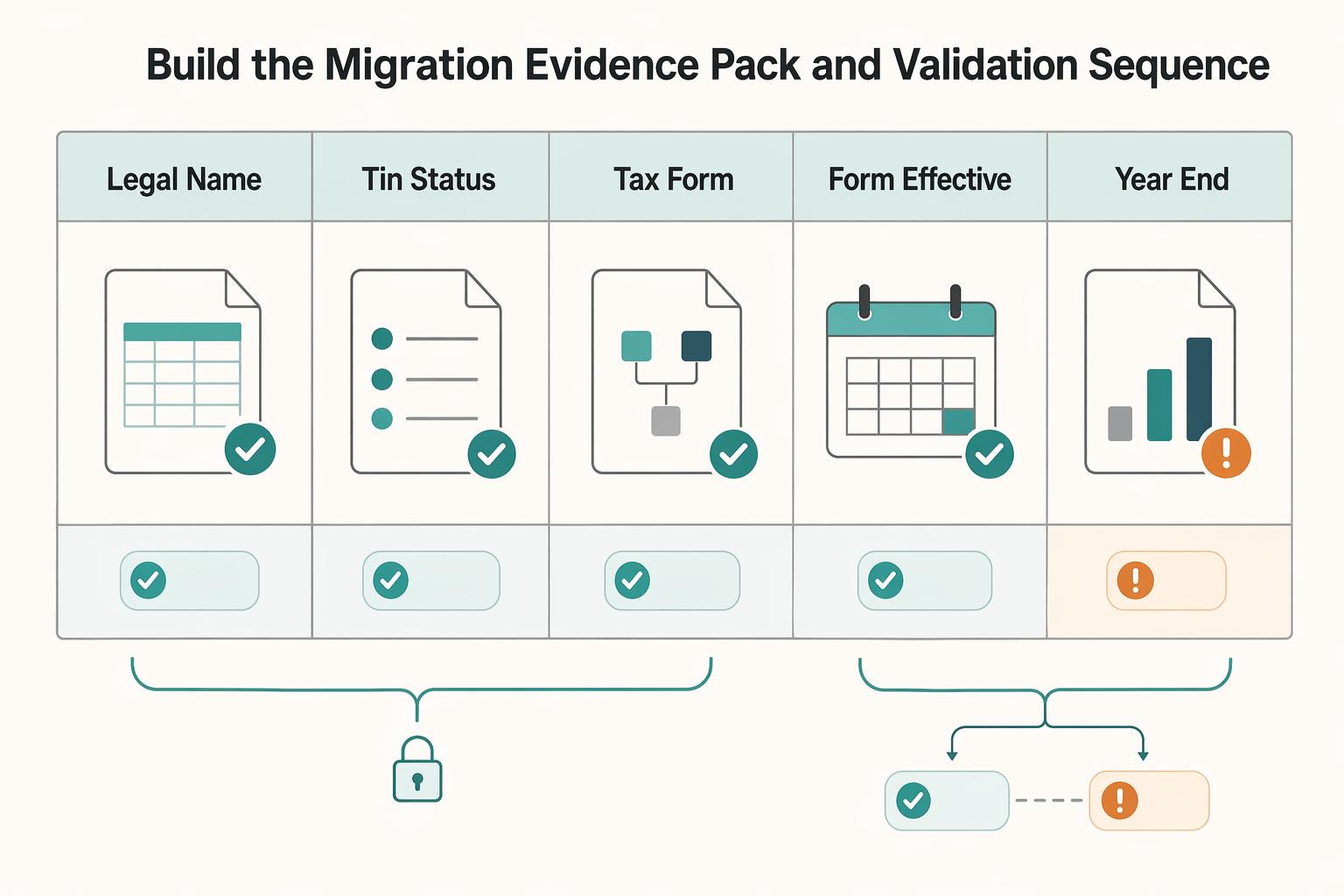
This guide walks you through moving tax profiles cleanly. Keep the right form on file, protect payouts, and avoid year-end reporting errors that only show up later. It is written for the compliance, legal, finance, and risk owners at a freelancer marketplace who have to decide what gets validated, who approves exceptions, when a payout hold is justified, and when a case needs escalation instead of a quick fix.