
Quick Answer
Define payable CPS/CPA events and approve commissions before selecting payout routes. Match each payee to the identity, tax, and provider requirements that apply. Persist a payout intent and idempotency key across retries, verify and deduplicate webhook events, and reconcile financial postings to provider and bank evidence. Choose routes by corridor eligibility, delivered cost, and exception handling.
Why affiliate network payouts get harder at scale#
Treat affiliate payouts as infrastructure, not as a payment feature. Once you are paying publishers, partners, and creators in volume, the hard part is often not the send button. It is everything around it: commission calculation, recipient onboarding, approval controls, rail selection, status handling, reconciliation, and close.
Mass payouts are high-volume disbursements to a broad network of payees, not one-off bill pay. In practice, your platform calculates earnings or commissions in its own system, then triggers payments programmatically, often by API call or CSV upload. That is why payout design quickly becomes a cross-functional job. Finance typically cares about approvals, tax records, and close. Ops cares about exceptions and support load. Product cares about recipient experience. Engineering owns the execution path and data integrity.
The key decision is straightforward: choose rails, controls, and automation based on your program constraints, not a vendor's headline claims. Bank rails may be the right default in some corridors. Stablecoin or crypto payouts may make sense in others if recipient demand, coverage, or timing justify the extra operational work. The point is not to pick a side early. It is to decide what you are optimizing for before you commit.
Before you evaluate any provider in detail, verify three things:
- Confirm how money is earned and approved. If commissions come from logic in your platform, make sure calculation and payout are treated as separate controlled steps.
- Confirm who can be paid and where. Check the exact country, currency, entity type, and route. A provider’s coverage total does not establish eligibility for your program.
- Confirm how status reaches your books. If you cannot trace a payout request to a provider reference and then to a final state such as settled, returned, or failed, you do not yet have an operable payout setup.
The main failure mode at this stage is buying for speed or fees alone. Some providers position legacy bank-wire stacks as poorly suited to high-volume, geographically diverse affiliate programs, but that does not mean alternative rails are automatically cheaper or faster for your use case. You still need evidence on coverage, exception handling, and support quality. Skip that validation and the cost usually shows up later as failed payouts, manual fixes, and a slower month-end close.
This guide gives you a decision-ready path for mass affiliate payouts, grounded in controls and operating reality. Set scope first, verify the payout chain end to end, and choose rails for your actual constraints. That approach can help you scale payouts with fewer failures, cleaner audits, and less friction for the people waiting to get paid.
For a step-by-step walkthrough, see Affiliate Marketing for Creators Who Need Predictable Payouts.
Set your payout scope and prerequisites before you automate#
Do not automate payouts until your scope, earning rules, and document gates are written down. If those decisions are made batch by batch, onboarding, tax collection, and payout eligibility break down quickly.
- Split onboarding by payee type and legal role. Separate individuals from entities and record provider capability requirements. U.S. beneficial-owner rules under 31 CFR 1010.230 apply to covered financial institutions, not every affiliate network.
Checkpoint: Keep a recipient matrix for payee type, entity type, countries, currencies, and required onboarding path, for example, individual vs entity.
- Lock earning rules before rail selection. If you pay on Cost per sale or Cost per action, define the approved event, the adjustment window, and who owns disputes or reversals. Keep commission calculation and payout release as separate controlled steps.
Checkpoint: Finance and Ops should work from one written rule set with one owner for exceptions.
-
Assemble a minimum evidence pack before launch. Include your payout policy, approval matrix, required tax forms, and ledger mapping for each payout state. Use Form W-9 to request a U.S. person's TIN, and collect Form W-8 BEN from foreign individuals when requested by the payer or withholding agent. W-8/W-9 collection is necessary workflow input, but not full tax compliance by itself.
-
Set hard launch constraints in advance. Publish supported countries, currencies, allowed rails, such as bank rails or stablecoin, and explicit block reasons. If VAT validation is in scope for your program, use VIES for EU VAT-number checks, and note that UK (GB) VAT validation is not available there after 01/01/2021.
Operating rule: If a market or rail is unclear, block it at launch.
If you want a deeper dive, read Affiliate Network Payouts: How to Pay Publishers and Partners Automatically at Scale.
Choose rails and providers with a decision table, not a slogan#
Select routes by corridor and operating evidence. A bank route may suit your existing close process; a stablecoin route may suit eligible recipients who can receive and convert it. Require the same standard of cost, status, and exception evidence for each.
Compare rails by settlement behavior and exception load#
Do not pick rails on headline speed or fee claims alone. Pick them on settlement predictability, reconciliation effort, and exception handling.
For U.S. ACH, timing is structured: Same Day ACH uses defined processing windows, including the additional window effective March 19, 2021, and FedACH publishes that non-same-day ACH items settle at 8:30 a.m. ET.
| Rail option | Eligibility | Settlement predictability | Reconciliation burden | Exception handling needs |
|---|---|---|---|---|
| Bank rails | Broad fit for standard business payouts where bank details are valid and corridor support exists | Defined processing windows help forecasting, but returns and cross-border intermediaries can still delay final receipt | Lower when statuses map cleanly to your ledger and returns are visible | Returns, rejected accounts, and cutoff misses still need queue ownership |
| Stablecoin | Use only in markets or recipient groups your policy and compliance model explicitly allows | Can be fast, but policy and compliance complexity is higher as links to traditional finance grow | Higher unless wallet data, status transitions, and FX treatment are tightly controlled | Address errors, setup gaps, compliance holds, and support escalations can increase Ops load |
| Mixed rail | Useful when some recipients need bank payout and others are eligible for crypto | Use explicit recipient eligibility and routing rules; compare both routes before choosing the default | Medium to high because you reconcile two status models | Requires clear routing rules and a fallback path when one rail fails |
Screen providers on operational depth, not map coverage#
Use coverage claims only as a first filter. Final selection should require proof of the operational details that will matter once you are live.
| Check | What to verify |
|---|---|
| Batch support | Batch payout support |
| API coverage | Create, retry, and failure paths |
| Retries | Idempotent retries to avoid duplicate operations |
| Webhook status | Webhook or callback status quality |
| Lifecycle visibility | Clear lifecycle status transparency for reconciliation |
Ask each provider to walk through three cases: successful batch, retried request, and failed payout. Your check is simple: can you trace one payout request ID to one provider reference and a full machine-consumable status sequence without manual interpretation?
Ask candidates for documentation of your actual payout flow: batch limits, outbound transfer statuses, retry rules, and reconciliation reports. Do not reuse a provider’s checkout-payment callback states as proof of its outbound payout lifecycle.
Make the call with a short proof pack#
Before committing, require a compact proof pack per finalist: sample API docs, webhook payloads, status model, batch limits, retry behavior, and named escalation path. Then run your own recipient and corridor tests.
Document the default route for each corridor and the conditions for alternatives. A cheaper candidate is useful only if its execution and close evidence meet your operating requirements.
Design payout calculations and approvals so CPS and CPA do not break at scale#
Keep commission calculation separate from payout execution. Calculate CPS/CPA in a controlled step, approve the results, and only then release payouts so approved totals stay aligned with what is actually sent.
Step 1. Calculate commissions before disbursement. Treat calculation and transfer as separate transactions: your system determines what is owed, and the payout provider executes only approved amounts. Before batch creation, each payable row should already have:
- a fixed amount
- a source event or commission basis
- an approval status
If amounts are still changing during batch assembly, approved registers and paid totals will drift.
Step 2. Route approvals by risk and amount. Use segregation of duties so one person is not initiating, authorizing, recording, and reconciling the same payout flow. Amount-based routing is a practical control in high-volume cycles, especially for higher payouts, manual adjustments, new recipient releases, and exception-heavy batches.
Do not let the same operator both edit commission outcomes and release the batch.
Step 3. Define reversal and clawback rules up front. Some providers support full or partial transfer reversals, but availability depends on rail, provider, and timing. Do not correct mistakes by manually overwriting paid totals.
Require each adjustment to be tied to the original payout or transfer reference, with:
- original payout ID or transfer reference
- adjustment reason
- amount, full or partial
- approver and posting date
This keeps adjustments auditable and prevents ledger desync.
Step 4. Add a pre-batch verification checkpoint. Before release, sample calculated rows, especially new recipients, unusually large payouts, and manually adjusted rows, then confirm recipient verification state and payout details. In global flows, collect required recipient verification data and run beneficiary checks such as IBAN or beneficiary validation where relevant.
Expected outcome: only approved, payable rows are released, while exceptions are held back for review. This will not eliminate all failures, but it reduces bounced transfers and manual corrections.
You might also find this useful: Performance Marketing Payouts: How to Pay Affiliates Influencers and Publishers Compliantly.
Implement execution with API idempotency, webhooks, and ledger-first statusing#
Once Finance approves fixed amounts, execution should be replay-safe and ledger-traceable. Make each send attempt uniquely identifiable, treat provider events as asynchronous status updates, and keep exception handling inside your system instead of spreadsheets.
| Control | Required handling | Article detail |
|---|---|---|
| Idempotency key | One key per business action with payout intent ID and batch ID | Key limits, scope, and retention depend on the provider |
| Webhook events | Process each event as a traceable ledger status update or a no-op | Events can be duplicated and can arrive stale, partial, or out of order |
| Exception states | Separate stuck or unknown submission, returned or failed after submission, and partial failures | Keep explicit owned queues in your system |
| FX quotes | Validate quote validity immediately before submission | Store expiry and quote terms from the provider response |
| Virtual Accounts | Keep the reference tied to payout intent and downstream provider reference through final posting | Unique credentials may be assigned by customer, invoice, department, or transaction |
Step 1. Persist the payout intent before submission. Store the business action, amount, currency, recipient, provider, and idempotency key. Reuse the same key and parameters for permitted retries. Keep a durable uniqueness control after the provider key expires; a timeout is an unknown result, not permission to create a new payout.
Step 2. Verify and reconcile webhook updates. Verify signatures using the provider’s required payload handling, durably capture the event, and process asynchronously. Deduplicate both event IDs and the financial effect, since different events can describe the same operation. Keep status history separate from journal entries; each accounting effect should post once. Reject stale transitions and retrieve current provider state when order or outcome is uncertain.
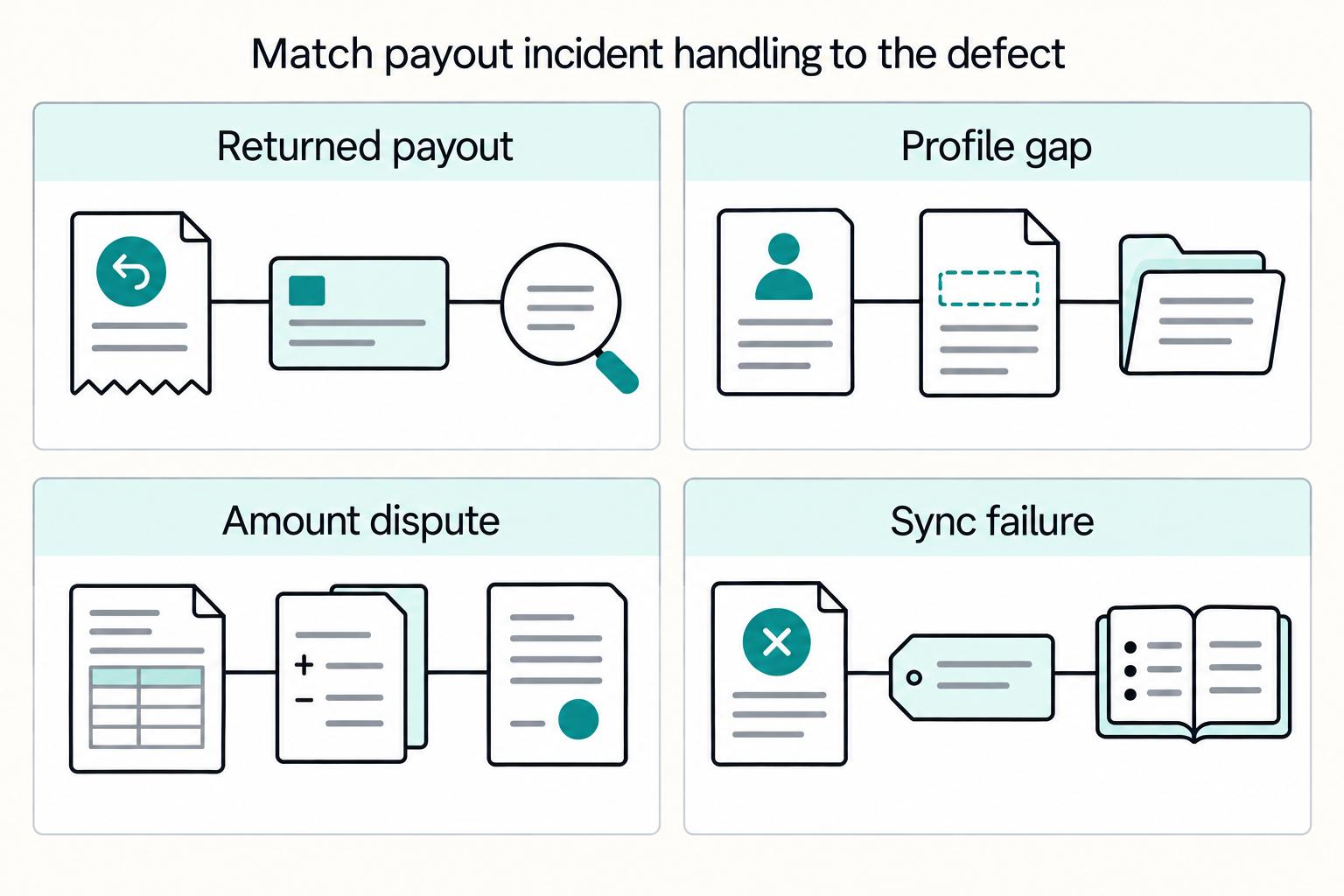
Step 3. Route non-happy-path outcomes into explicit exception states. Batches will get stuck, returned, or partially fail, so route those outcomes into owned queues in your system. At minimum, separate: stuck or unknown submission states; returned or failed after submission; and partial failures where some recipients close and others stay open. Resolve at payout- or recipient-level granularity where supported, and if not, document how you still preserve row-level traceability.
Step 4. Validate FX quotes immediately before submission. Store the quote ID, rate, fees, expiry, and approver. Re-quote an expired proposal before creating the payout; if submission already timed out, resolve that original attempt before sending under a new quote or route.
Step 5. If you use Virtual Accounts, preserve that mapping through execution. Virtual account structures can improve cash-flow tracking and reconciliation visibility only if the reference survives end to end. Where you assign unique credentials by customer, invoice, department, or transaction, keep that reference tied to payout intent and downstream provider reference through final posting. For more on getting partners to a successful first payment, see Affiliate Onboarding for Faster First Payouts Without Added Churn.
Add compliance and tax gates before first production batch#
Define eligibility by payee, regulated role, provider capability, and payment type before launch. Specify required documents and the lawful response to missing information, including remediation or withholding where applicable. Avoid a universal rule that every missing tax form makes earned funds unpayable.
| Item | When used | Article detail |
|---|---|---|
| Identity and risk | Where law or provider capability requires checks | Record the required checks, decision, and basis for any restriction |
| W-9 | U.S. payee information-return context | Capture correct name and TIN; apply backup withholding where required |
| W-8 series | Foreign payee in relevant withholding/reporting context | Select the form by status and entity type; do not use W-8BEN for all entities |
| 1099-NEC | Reportable nonemployee compensation | Generally $2,000 in 2026; backup withholding and category/channel rules need separate handling |
| VIES | Applicable VAT transaction treatment | Record the result; VAT validation is not a universal payout-license check |
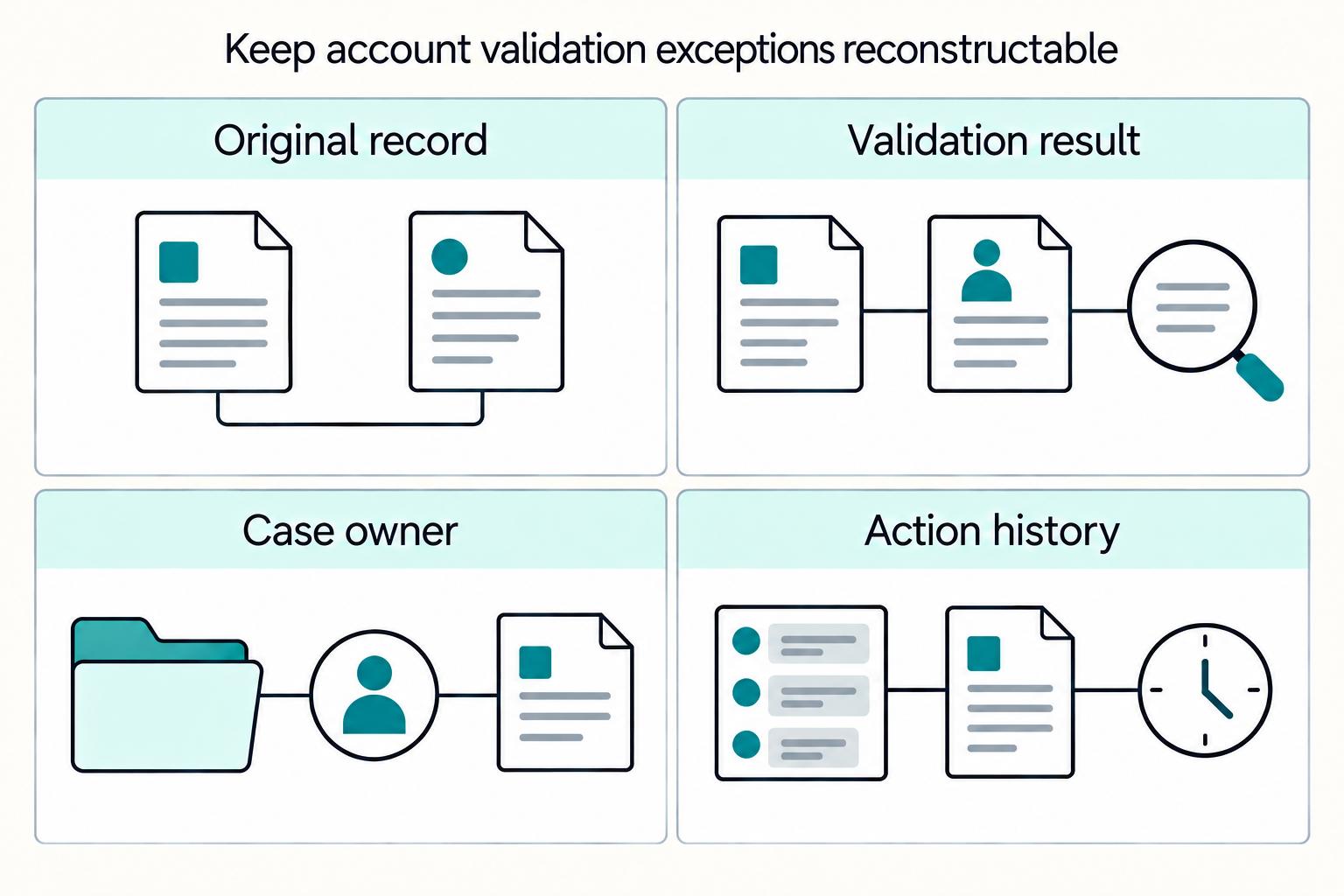
Step 1. Make KYC, KYB, and AML pass-or-block conditions. Attach KYC outcomes to individual payees before payout approval. For legal entities, include KYB due-diligence details and, where your program and provider require it, beneficial-owner identification and verification in the onboarding record. Keep blocked-reason codes visible to Ops and Support, for example, KYC pending, KYB beneficial owner missing, AML review open, so holds are explainable and auditable.
Step 2. Route tax documentation by payee status. Collect W-9 information when applicable to U.S. payees. Select the appropriate W-8 documentation for foreign individuals or entities in the relevant withholding or reporting context; service location and payment type also matter. Determine filing and withholding separately. Track 2026 reportable nonemployee compensation against the generally applicable $2,000 threshold, including exceptions such as backup withholding.
Keep individual tax-support questions separate from platform payment controls. A worker’s potential foreign-earned-income exclusion or FBAR filing is not a standard payout document.
Step 4. Add VAT validation where your program structure requires it. In relevant EU cross-border business scenarios, validate VAT registration through VIES and store the result with the payee tax profile. Treat VIES checks as recorded verification steps, not one-time assumptions, and recheck when needed before future payout cycles so payout and tax records stay aligned.
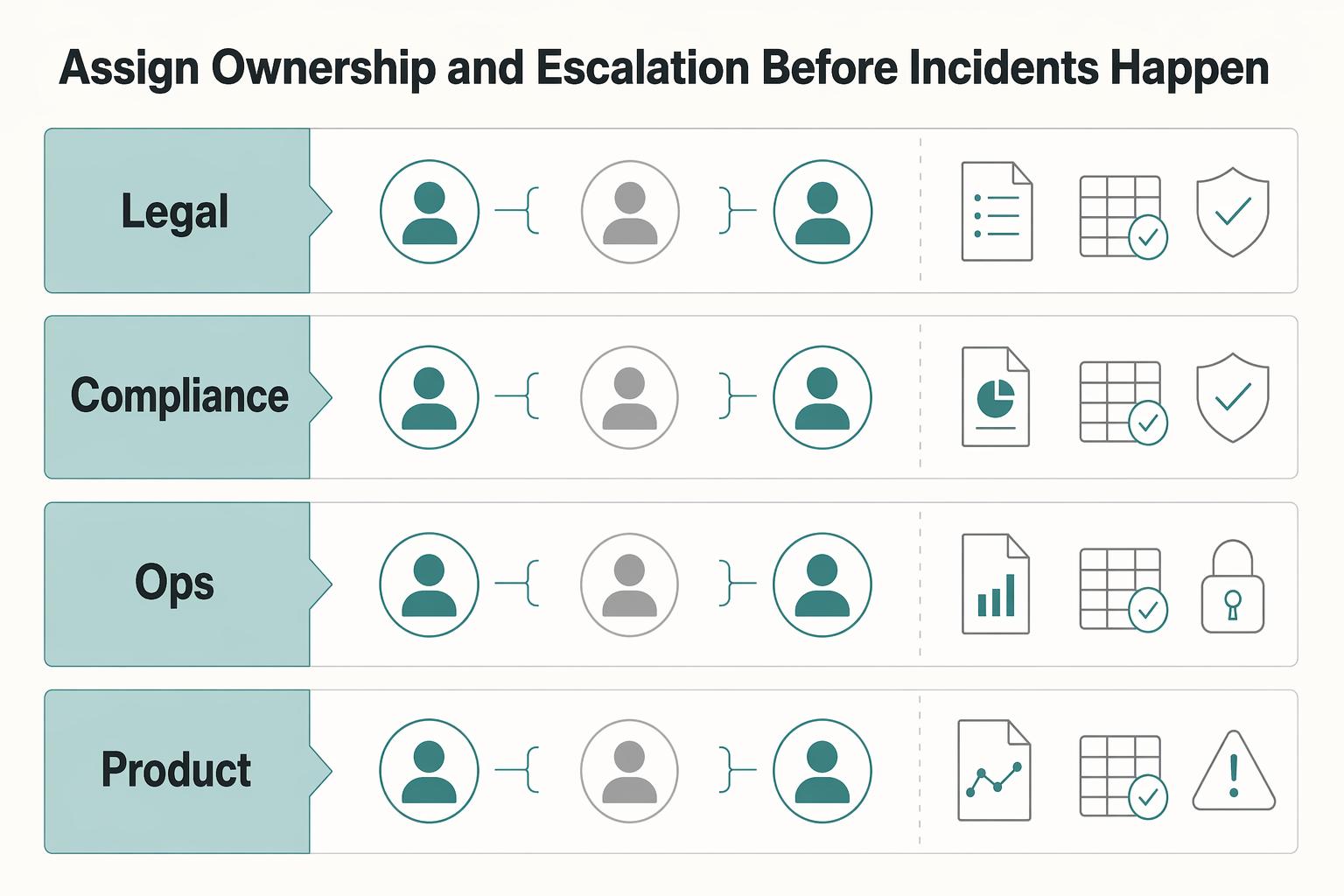
If Product and Finance do not have explicit ownership and escalation paths for these policies, pause scale-up. Ambiguous ownership is how blocked recipients, weak tax records, and exception backlogs compound during high-volume cycles.
Build reconciliation and finance close as a product requirement#
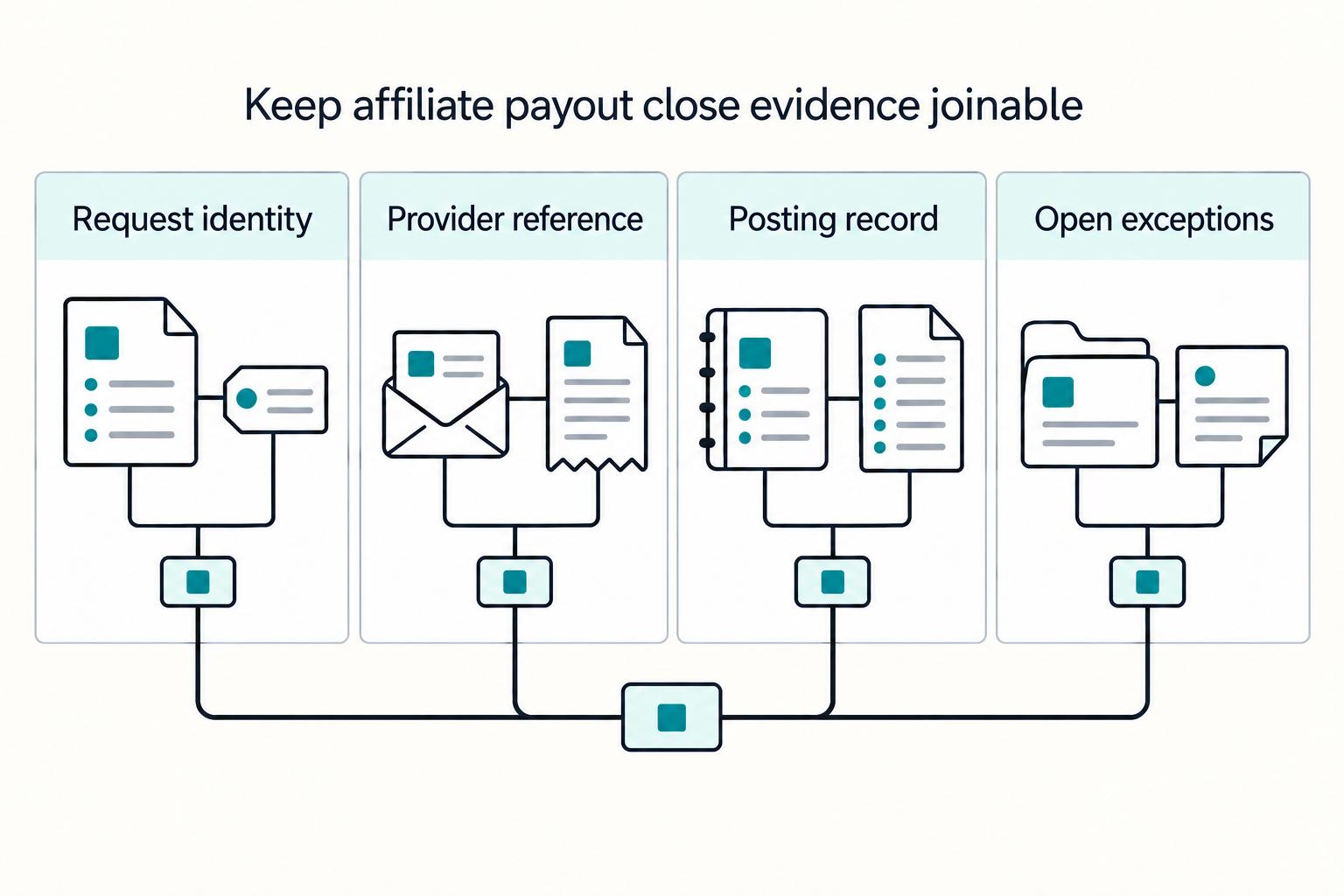
Reconciliation should be a product requirement from day one, not a month-end cleanup task. Every payout should have one auditable chain from your payout request ID to the provider reference to the final posting before you scale volume.
Step 1. Join identifiers at creation time. Persist internal payout intent, batch row, payee, approved commission, provider reference, rail, and posting references. Include your internal reference in provider metadata where supported. Keep references for provider sub-transfers if one payout intent creates several legs.
Step 2. Define close checkpoints with canonical states. Keep submitted, settled, returned, and adjusted outcomes separate. Define what provider evidence establishes each state; a customer payment marked settled is not proof that your outbound payee payout arrived. Preserve return and reversal links to the original posting.
Step 3. Give Finance exports plus visible exceptions. Finance should be able to use stable provider exports directly for close work, including payout reconciliation reporting and CSV downloads for accounting tasks. Your export should include payout request ID, provider reference, amount, currency, rail, entity type, status, posting date, and adjustment or reversal links. Keep unresolved items in an explicit exception queue instead of hiding them outside the close workflow.
Step 4. Set a close-readiness gate before increasing volume. Finance, Product, and Ops should agree written tolerances for reconciliation differences and exception aging. Align report time zones and cutoff periods with your ledger; do not assume every provider export uses the same calendar-day window.
Need the full breakdown? Read Mass Payouts for Gig Platforms That Teams Can Actually Operate.
Fix the failures that usually appear after volume increases#
After close is stable, the next failures are usually duplicate retries, blocked recipients, and rail-routing misses. Treat them as product defects, not Ops cleanup, because they compound quickly at scale.
Step 1. Test unknown outcomes and retries. Retry a simulated timeout with the same business intent, parameters, and key under the provider’s rules. For example, Stripe permits keys up to 255 characters and may prune them after at least 24 hours; cached results include 500 responses. Retain your own uniqueness record and investigate an unknown outcome before creating another operation. Stripe retries automatic live webhook delivery for up to three days, but manual replays and your backfill can occur later. Deduplication must survive the operational replay period.
Step 2. Surface verification restrictions before cutoff. Monitor provider capability and requirement states during onboarding and afterward. Let Support see a permitted explanation of the restriction and remediation owner, while keeping sensitive investigation details restricted.
Step 3. Handle missing tax information under the applicable rule. A missing or incorrect TIN on reportable U.S. payments can require backup withholding; it is not automatically a legal ban on payment. For foreign payees, document status, service location, and the correct withholding/reporting path. Record any authorized exception and its tax treatment.
Step 4. Route by eligibility and resolved execution state. An unsupported route can be replaced only by an eligible alternative before submission or after confirming that the original attempt cannot pay. Do not switch rails merely because an API request timed out or a webhook is late. Preserve the original reference and resolution evidence.
Final checklist before you scale mass payouts#
Scale only when these six checks are true, documented, and easy for another team to verify.
- Document scope and approved routes.
Define who you are paying in this phase, which markets are supported, and which rails are allowed by recipient type. If you support batch disbursements through API or CSV, state that explicitly. Before opening the next cohort, verify a few real payee profiles against approved country, currency, and rail rules; unresolved exceptions mean scope is not ready.
- Apply the required eligibility and tax treatment.
Record required identity checks and provider capabilities before release. Route tax documentation by recipient status and payment type, with withholding or remediation where applicable. Apply VAT checks to the transactions that need them and document the basis for any payout restriction.
- Test execution against duplicate and delayed-event failures.
Test same-intent retries, verified webhook replay, delayed delivery, and out-of-order updates. Confirm each accounting effect posts once and unknown submissions cannot be reissued through another route. Keep backfill and deduplication effective beyond any automatic webhook retry window.
- Set up batch operations with named owners.
Run payouts with an exception queue, defined escalation owners, and support playbooks for stuck, returned, and partially failed payouts. Each common failure reason should map to a specific team and response target. If ownership is unclear, failures will surface at cutoff and slow live money movement.
- Prove finance-close readiness with exports and traceability.
Before scaling, Finance should be able to pull a payout reconciliation report, or equivalent export, linking internal payout request IDs, provider references, and postings. Preserve transaction-to-payout associations automatically so close is auditable and repeatable. If US reporting applies, confirm records can support Form 1099-NEC output, including the $2,000 threshold for payments made after December 31, 2025.
- Roll out by bounded cohort, then expand by rule.
Start with a small canary cohort, not a full-volume launch. Review blocked payees, returned payouts, and reconciliation deltas, then expand only when failure patterns are understood and stable. Write the pause criteria in advance so exception aging or duplicate-risk signals stop expansion automatically.
Start with the mechanics in this guide, then pressure-test them against your real corridors and payee mix. Related: Payee Verification at Scale: How Platforms Validate Bank Accounts Before Sending Mass Payouts.
Frequently Asked Questions
What are mass payouts for affiliate networks in practical terms?
In practice, this means you calculate commissions or earnings in your own product, then send many disbursements in bulk through one controlled payout process. The hard part is not the payment click itself. It is keeping each approved amount tied to the right recipient, rail, tax profile, and accounting record.
How do CPS and CPA payout models change payout operations?
CPS means the payable event is a completed sale, while CPA means the payable event is a completed action such as a signup or purchase. That can change your evidence pack, adjustment window, and dispute handling because the approval trigger is different. If you mix both models, separate calculation from disbursement so Finance approves one clean payable amount before any payout is sent.
Are Stablecoin or Crypto payouts always cheaper and faster than Bank rails?
No. Treat that as a route-specific question, not a rule. If a market or recipient is not eligible for stablecoin or crypto payouts, or your exception handling is weaker there, bank rails can still be the better operating choice even if headline fees look higher.
What should we evaluate first when choosing an affiliate payout platform?
Start with controls, not marketing claims: API idempotency, webhook reliability, status transparency, payout batch handling, and reconciliation exports. A useful test is simple: retry the same payout request after a forced timeout and confirm the same result is returned, not a second payout. Also verify your webhook flow is asynchronous and replay-safe, including handling delayed redeliveries.
How do we prevent duplicate payouts when retries and webhook delays happen?
Persist one business payout intent, its provider key, and parameters before submission. Follow that provider’s retention and retry rules, and keep internal uniqueness after key expiry. Verify webhook signatures and deduplicate events and accounting effects. Resolve unknown execution before changing keys, quotes, or providers.
Which compliance and tax checks are mandatory before sending payouts at scale?
Requirements depend on jurisdiction, regulated role, provider capabilities, recipient tax status, and payment type. Use the appropriate W-9 or W-8 documentation where applicable, and determine filing or withholding separately. Validate VAT identifiers where required for the transaction; a VIES result is not a universal permission to pay.
What data does Finance need to reconcile payouts and close books cleanly?
Finance needs an auditable chain from internal payout request ID to provider reference to final posting, plus clear status history for submitted, settled, returned, and adjusted payouts. Preserve the association between each underlying transaction and the payout it was included in, because that makes reconciliation materially easier. If you expect US nonemployee compensation reporting, make sure your records can also support Form 1099-NEC output without manual reconstruction.
Try a related tool
Where Gruv fits
Researched and edited by the Gruv editorial team. Gruv builds cross-border billing, payouts, and finance-operations software for global businesses.
Sources
- docs.stripe.com/api/idempotent_requeststrusted
- docs.stripe.com/webhookstrusted
- ec.europa.eu/taxation_customs/viestrusted
- ecfr.gov/current/title-31/subtitle-B/chapter-X/part-1...trusted
- europa.eu/youreurope/business/taxation/vat/check-vat-n...trusted
- finance.cornell.edu/controller/internalcontrols/unitlevelactivit...trusted
- irs.gov/forms-pubs/about-form-w-9trusted
- irs.gov/instructions/iw9trusted
Educational content only. Not legal, tax, or financial advice.
Related Posts
Automating Affiliate Network Payouts for Publishers and Partners at Scale
Automating affiliate payouts is worth doing, but only after you decide what has to stay controlled. As programs grow, payouts become a real operational burden, and payout reliability affects whether partners stay engaged. If you automate the payment motion before you clean up approvals, tax data, and reconciliation, you usually do not remove work. You just move it into exceptions that are harder to unwind.
How Platforms Validate Bank Accounts Before Mass Payouts
For mass payouts, the real question is not whether to verify payees. It is how much verification you require before release, who can override it, and what evidence you can produce later. If you cannot show that evidence on demand, your release rule is weaker than it looks.
Performance Marketing Payouts for Affiliates, Influencers, and Publishers Without Compliance Debt
The first decision is not where you can grow fastest. It is which vertical and country pair you can launch now without creating payout compliance debt. Get that wrong, and early volume can hide messy approvals, weak records, and payout disputes that slow you down later.