
Quick Answer
Start with eligible inventory and written earnings, adjustment, threshold, timing, and receiving terms. Cointraffic, Coinzilla, AADS, and Bitmedia publish specific withdrawal details; other candidates need account-specific answers. Resolve conflicting terms before live allocation. Test net finalized yield and receipt on comparable inventory, using tags and exports or APIs as your actual setup requires.
Web3 ad networks are easy to find in search and much harder to trust in production#
Web3 ad networks are easy to find in search and much harder to trust in production. For publishers reviewing this market in 2026, the real problem is not finding names. It is figuring out which networks can deliver usable demand, clean enough traffic, and payout terms your finance and ops teams can reconcile.
A vendor ranking can help you discover names, but it cannot establish payout reliability for your site. This comparison uses publisher-facing documentation where available and identifies gaps that need written answers. It does not claim independent live testing or a measured performance ranking.
So this guide is built around execution risk, not hype. You should leave with a defensible choice based on three things that matter in practice: monetization reliability, traffic quality, and integration complexity. If a network cannot show written payout terms, explain how it handles invalid traffic, or provide a believable dispute path, headline reach claims should not decide the outcome.
The comparison covers Cointraffic, Coinzilla, AADS, DOT, Blockchain-Ads, Bitmedia, HypeLab, and the Adshares ecosystem. Coin.Network and CoinAd remain watchlist entries because current publisher terms could not be established. Their inclusion is not a recommendation to integrate. Terms were checked on October 5, 2026; recheck them against your account and contract before allocating inventory.
If you own publisher revenue workflows, this guide is for you. That usually means platform founders, product leads, finance owners, ad ops, partner managers, and engineers who have to support recurring payouts, statement reviews, traffic-quality disputes, and implementation work. If your job starts after the contract is signed, you are the audience that feels the actual cost of a weak network choice.
One practical rule up front: before you send meaningful traffic, ask for an evidence pack. At minimum, you want written payout model terms, payout timing, any minimum threshold or holdback language, fraud and bot-traffic policy, dispute contacts, and a sample reporting export or statement format. If a network is vague on those basics, treat that as an operational failure mode, not a minor paperwork issue. The rest of this article is designed to help you separate a real shortlist from the noise.
Related: AdTech Platform Payments: How DSPs SSPs and Ad Networks Pay Publishers in a Cookieless World.
Who this list is for and how to evaluate networks#
Use this guide if your team is accountable for what happens after launch: recurring payouts, reconciliation, traffic-quality disputes, and partner growth across DeFi, NFT, and GameFi inventory.
- Best fit: teams that own money movement and partner quality
This is built for finance, ad ops, product, engineering, and partner managers who need clear payment and quality controls. Different networks have different cash constraints: Cointraffic lists a €25 Bitcoin-wallet withdrawal minimum and €300 bank-transfer minimum, while Coinzilla lists €50. Compare the route you will actually use rather than a network-wide headline minimum.
- Less useful: teams optimizing only for top-of-funnel reach
A high quoted CPM or fill rate can hide later invalid-traffic deductions, fees, narrow audience coverage, and slow cash conversion. Compare equivalent inventory, geography, format, and observation periods. Vendor-reported reach and lift figures are hypotheses for your test, rather than evidence of what your property will earn.
- Score each network on four operator-critical criteria
- Audience quality: advertiser fit, allowed categories, user experience, and legitimate demand.
- Targeting depth: reachable inventory and definitions behind wallet or on-chain segments.
- Payment clarity: earnings model, currency, finalization, thresholds, timing, fees, and deductions.
- Traffic controls: detection, filtration, reporting and dispute evidence; use the MRC standards as a reference rather than assuming a vendor is accredited.
- Hard rule: no documentation, no shortlist
If a network cannot provide documented payout terms and traffic-quality controls, do not shortlist it, regardless of claimed reach. Connecting advertiser demand to publisher inventory is baseline functionality. What matters is whether payment mechanics and invalid-traffic handling are clearly documented.
Weak choices usually fail on operations, not on a headline metric: vague payment terms, uneven advertiser quality, or unclear dispute paths. If that shows up in diligence, walk away early.
For the operator side of publisher disbursements, read Mass Payouts for Affiliate Networks: How to Pay Publishers Partners and Creators at Scale.
Quick comparison table for shortlist decisions#
Start with your actual audience, eligible property, acceptable ad formats, and receiving currency. Cointraffic, Coinzilla, AADS, and Bitmedia publish concrete withdrawal details. HypeLab and DOT describe receiving routes, while Blockchain-Ads has conflicting public minimums. Adshares requires evaluating the specific AdServer operator as well as the protocol. None of these facts establishes the highest yield or best traffic quality.
| Candidate | Publisher fit | Demand or targeting question | Earnings evidence | Integration | Traffic-control question | Escalation | Public receiving terms | Open questions | Selection status |
|---|---|---|---|---|---|---|---|---|---|
| Cointraffic | Scheduled-run cash planning | Confirm eligible inventory | EUR earnings | Confirm formats and export | Get adjustment policy | Helpdesk; request dispute deadlines | BTC €25; bank €300; M/W/F runs | Fees, model, receipt lag | Diligence candidate |
| Coinzilla | Approved crypto sites | Confirm eligible campaigns | CPM | Banner/native | Valid viewed impressions | Support; request evidence process | €50; BTC/ETH; usually 1–2 business days, up to a week | Account terms, conversion, dispute window | Diligence candidate |
| AADS | Bitcoin/Lightning receipt | Confirm allocation mechanics | Confirm ad-unit revenue terms | Ad-unit setup | Get invalid-traffic policy | Helpdesk | BTC 0.001 or Lightning any sum; normally daily; destination-change lock | Fees, finalization, adjustments | Diligence candidate |
| Coin.Network | Legacy watchlist | Current offer unconfirmed | Current terms unconfirmed | Current program unconfirmed | Obtain current policy | Identify current operator | Not established | Operator, eligibility, all commercial terms | Hold outside active shortlist |
| DOT | Content-rich properties | Vendor describes combined demand | Obtain publisher model | On-page tags | Get deductions and evidence process | Obtain named dispute owner | Bank/Payoneer/PayPal/BTC/USDT ERC20 described | Minimum, timing, current approval | Confirm current written offer |
| Blockchain-Ads | Legitimate websites/apps | Behavior-based fit requires test | Impression-led guidance | Confirm approved route | Real traffic required | Dashboard/support; confirm dispute route | Net30 described; $10,000/$1,000 minimum conflict | Binding minimum and clock trigger | Resolve conflicting terms before test |
| CoinAd | Legacy watchlist | Current offer unconfirmed | Current terms unconfirmed | Current program unconfirmed | Obtain current policy | Identify current operator | Not established | Operator and current publisher program | Hold outside active shortlist |
| Bitmedia | Crypto sites with HTML support | Confirm demand for placements | Valid CPC/CPM | HTML markup; no iframe | Artificial traffic rejected | Support; get adjustment evidence/deadlines | $20 BTC; 7-day pending review; withdrawal usually up to 7 days | Commission, current account conditions | Diligence candidate |
| HypeLab | Crypto-audience display | Test reachable demand | Obtain publisher model | Display; confirm setup | Get IVT/deduction policy | Obtain dispute owner | Stablecoin/on-chain or fiat/bank described | Asset/network, minimum, cadence, external costs | Diligence candidate |
| Adshares | Operator/ADS-capable team | Evaluate specific AdServer demand | Hourly settlement described | AdServer account and ad code | Category exclusions; ask operator controls | Specific AdServer operator | ADS withdrawal; operator terms required | Custody, liquidity, fees, memo, support | Ecosystem candidate, not one uniform contract |
How to read the evidence and open questions#
The table describes public terms and integration routes, not independently measured uptime, fill, fraud-detection effectiveness, or successful receipt. A named helpdesk is not a complete dispute process. Obtain account-specific contract terms, adjustment reasons, evidence access, response deadlines, and an escalation owner before live allocation. A missing public field means ask the operator; it does not prove the capability is absent.
Transparency makes a candidate easier to evaluate, but documentation alone does not prove quality. Check real reporting samples, permitted advertiser categories, and support responses. Do not infer active demand or inactivity solely from a marketing page or a page that requires JavaScript.
Ask whether publisher identity or property verification is required, what evidence is needed, and whether review can hold serving or withdrawal. Keep this separate from advertiser verification. Confirm who owns the account, which legal entity receives earnings, and how changes to receiving details are approved.
Where to cut the shortlist#
Use the public payment terms to choose a test that fits your cash requirements: Cointraffic for a documented payout-run schedule, Coinzilla for a stated withdrawal window, AADS for Bitcoin or Lightning receipt, and Bitmedia for explicitly separated pending and withdrawable balances. These are operational fits, not a quality ranking. Approval, adjustment rules, and dispute terms still need checking.
Consider HypeLab when stablecoin or fiat receipt fits your treasury process, DOT for a content-rich property seeking multiple receiving routes, and Adshares when your team can assess an AdServer and ADS custody. Obtain a resolved written threshold from Blockchain-Ads before allocating traffic. Keep Coin.Network and CoinAd off the active shortlist until the current operator and publisher program are confirmed.
Web3 ad networks and publisher candidates to compare in 2026#
The entries below explain the fit, public evidence, and remaining approval questions. The sequence is not a performance ranking. Eight have identifiable publisher documentation; the two legacy watchlist names are included to prevent unsupported recommendations from older comparison lists.
- Cointraffic
Fit: publishers budgeting around scheduled withdrawal runs. Cointraffic’s payment terms denominate earnings in euros and list €25 for Bitcoin-wallet withdrawal or €300 for euro bank transfer. Requests are processed on the next Monday, Wednesday, or Friday payout run. Trade-off: that processing date is not guaranteed bank receipt; a small publisher may wait longer to reach the bank minimum. Test: confirm your approved formats, earnings model, adjustments, fees, and statement fields, then reconcile one eligible withdrawal to the receiving record.
- Coinzilla
Fit: approved crypto-related sites using CPM banner or native inventory. Coinzilla’s publisher FAQ states a €50 withdrawal minimum, generally 1–2 business days processing with possible delays up to a week, and no withdrawal fee. EUR earnings are converted to BTC or ETH using the stated exchange-day rate. Trade-off: final crypto value depends on conversion timing. Test: confirm your route and contract, distinguish viewable ad impressions from pageviews, and reconcile EUR earnings, conversion rate, crypto amount, and receipt.
- AADS
Fit: publishers able to receive Bitcoin or Lightning and manage withdrawal settings securely. AADS’ withdrawal guide lists BTC 0.001 for a Bitcoin-wallet withdrawal and any amount through Lightning. Withdrawals normally process once per 24 hours after the threshold is reached; changing withdrawal options triggers a three-day security lock. Trade-off: processing and chain confirmation are different events. Test: verify ad-unit revenue allocation, traffic rules, and fees separately; do not confuse an advertiser’s campaign budget minimum with a publisher withdrawal minimum.
- Coin.Network
Watchlist only: Coin.Network appears in older crypto-ad comparison lists, but current publisher onboarding, formats, receiving terms, and operator responsibility could not be established for this comparison. A known brand name is insufficient evidence for a native or contextual integration. Next step: confirm the current official program through the operator, obtain a publisher contract and sample statement, and verify the integration domain. Keep existing inventory with an approved provider until those checks are complete; do not infer current CPM/CPC terms from an older list.
- DOT Ads
Fit: content-rich sites considering an additional tag-based demand source. DOT’s publisher page describes on-page tags, coexistence with other networks, and bank transfer, Payoneer, PayPal, Bitcoin, and USDT ERC20 receiving options. Its published guideline is more than 100,000 monthly pageviews, with individual review possible. Trade-off: these are vendor descriptions, not proof of yield or payout speed. Test: obtain current threshold, schedule, deductions, and property approval in writing, then compare equivalent placements and page performance. Do not assume advertiser CPA support defines how publishers are paid.
- Blockchain-Ads
Fit: websites or apps exploring behavior-based demand. Blockchain-Ads’ eligibility guidance requires legitimate traffic and original content, with property review rather than a strict traffic minimum. Payment blocker: its earnings guide gives both $10,000 and $1,000 minimums on the same page and describes net30 processing. Get one binding account-specific threshold and the event that starts net30 before testing. Test: validate eligible inventory, segment coverage, reporting exports, and deductions. Do not underwrite forecasts using the page’s premium-CPM claims.
- CoinAd
Watchlist only: CoinAd’s current publisher program and payment terms could not be verified. Older claims of invite-only access, geo/device targeting, and CPM/CPC pricing should not be treated as current offers. Next step: identify the current official operator and receiving entity, establish that the publisher program accepts your property, and obtain terms covering revenue, adjustments, withdrawal, and disputes. Do not substitute a similarly named service without verifying that it is the intended counterparty. It remains outside the active shortlist until those questions are answered.
- Bitmedia
Fit: crypto sites that can support HTML ad markup. Bitmedia’s publisher FAQ describes payment for valid clicks or valid impressions, rejects artificial traffic, and disallows iframe placement. Earnings initially enter a seven-day pending balance, subject to change for particular circumstances. The FAQ lists a $20 withdrawal minimum, BTC receipt, no withdrawal fee, and usually up to seven days after requesting withdrawal. Trade-off: no withdrawal fee does not mean no network commission. Test: confirm the applicable revenue deduction, category exclusions, and current account terms; never test by clicking your own ads.
- HypeLab
Fit: crypto-audience publishers seeking display demand with stablecoin or fiat receipt. HypeLab’s publisher page describes payment to an on-chain address or by bank transfer and advertises no platform fees. Trade-off: the page does not establish a binding payout minimum, review period, or receipt date; external banking, conversion, or chain costs need separate confirmation. Test: request your revenue model, supported asset/network or fiat currency, schedule, adjustment policy, and sample statement. Compare finalized net yield with your baseline before extending traffic allocation.
- Adshares ecosystem
Fit: teams prepared to evaluate a decentralized advertising ecosystem and a specific AdServer operator. Adshares’ documentation describes registering on an AdServer, adding a property, choosing exclusions, generating ad code, and withdrawing ADS coins. It describes hourly advertiser-to-publisher settlement, which is distinct from final withdrawal or exchange credit. Trade-off: protocol documentation is not a guarantee of demand, fiat value, or every operator’s commercial terms. Test: confirm the operator, fees, custody, category controls, support, withdrawal requirements, and recipient wallet or exchange memo before allocating inventory.
You might also find this useful: Best Affiliate Marketing Networks for Beginners Who Need Reliable Payouts.
Payout economics that decide publisher outcomes#
Cash predictability should be your deciding filter. The winning payout model is the one your finance team can forecast, reconcile, and close with minimal manual cleanup.
| Model | How it pays | What to confirm |
|---|---|---|
| CPM | Pays per 1,000 impressions; forecasting is usually simpler when traffic is stable | When earnings are finalized and whether invalid-traffic adjustments can be applied later |
| CPC | Pays on clicks; revenue is more event-sensitive and can swing more period to period | How invalid clicks are handled, when click data is finalized, and whether deductions can be applied after reporting periods |
| Revenue share | Pays as a percentage split; volatility rises when settlement timing is unclear | Exactly when revenue becomes final and how adjustments are handled |
- CPM: CPM pays per 1,000 impressions, so forecasting is usually simpler when traffic is stable. But gross earnings are not always final because invalid-traffic adjustments can be applied later. Treat CPM as budget-friendly only when the network is clear about when earnings are finalized.
- CPC: CPC pays on clicks, so revenue is more event-sensitive and can swing more period to period. Ask how invalid clicks are handled, when click data is finalized, and whether deductions can be applied after reporting periods.
- Revenue share: Revenue share is a percentage split, and volatility rises when settlement timing is unclear. Post-run quality reviews or collection issues can lead to later deductions, so confirm exactly when revenue becomes final and how adjustments are handled.
Before signing, get payment mechanics in writing and compare them side by side:
- Cadence and threshold: distinguish finalized earnings, withdrawal eligibility, processing and receipt. Cointraffic publishes M/W/F runs; AADS normally processes daily and applies a three-day lock after withdrawal-option changes. Coinzilla states a withdrawal window, not the anonymous monthly calendar found in some general-ad guides.
- Adjustments and disputes: obtain allowed reasons, evidence, review periods, response deadlines, and an escalation owner. Preserve original and revised statements so an adjustment does not erase history.
- Reconciliation: request CSV or another usable export with period, currency, gross earnings, deductions, finalized balance, withdrawal ID, fees, and receiving reference. The publisher records a receivable from the network and matches receipt; the network’s own payable is a different ledger perspective.
If payout policy is opaque or reconciliation is mostly manual, deprioritize that network even when advertiser demand looks strong.
For the difference between publisher earnings and operator disbursement models, see How Ad Networks Pay Publishers: CPM CPC and Revenue Share Payout Models Explained.
When wallet-level and on-chain targeting are actually worth it#
Wallet-level and on-chain targeting are worth the operational overhead when conversion is directly tied to wallet ownership or blockchain behavior. If your inventory is broad and buyers mainly want reach, tighter segmentation can cut fill before it improves yield.
- Wallet-level targeting
Wallet-level targeting associates an audience with wallet ownership or blockchain activity, sometimes using off-chain signals. Ask what is observed directly, what is inferred, which chains are supported, and how address-to-visitor matching works. A wallet count is not a count of reachable people on your property. Review data collection, access, retention, and the user notices or choices required for your deployment before enabling a new signal source.
- On-chain targeting
On-chain targeting uses recorded activity such as token holdings or transactions to define segments. It can be relevant to token, DeFi, or NFT demand, but a higher-intent segment does not guarantee higher publisher revenue. Ask for segment definitions and a matched-inventory experiment. Measure actual fill, valid billable activity, finalized revenue, deductions, and receipt rather than importing a vendor’s conversion-lift claim into your forecast.
- Where publishers get burned
Use a worked comparison. Suppose 100,000 eligible ad requests achieve 80% fill at $2 per 1,000 valid impressions: revenue is $160 before fees and later deductions. A narrower segment fills 40% at $3 CPM: revenue is $120, despite a 50% higher CPM. Keep geography, placement, and window comparable and check how the network defines fill and valid impressions. If 5% of the first cohort is later rejected at the same rate, it yields $152. Require fallback demand and stop conditions before making wallet-based targeting the default.
Integration checkpoints for product, ops, and engineering#
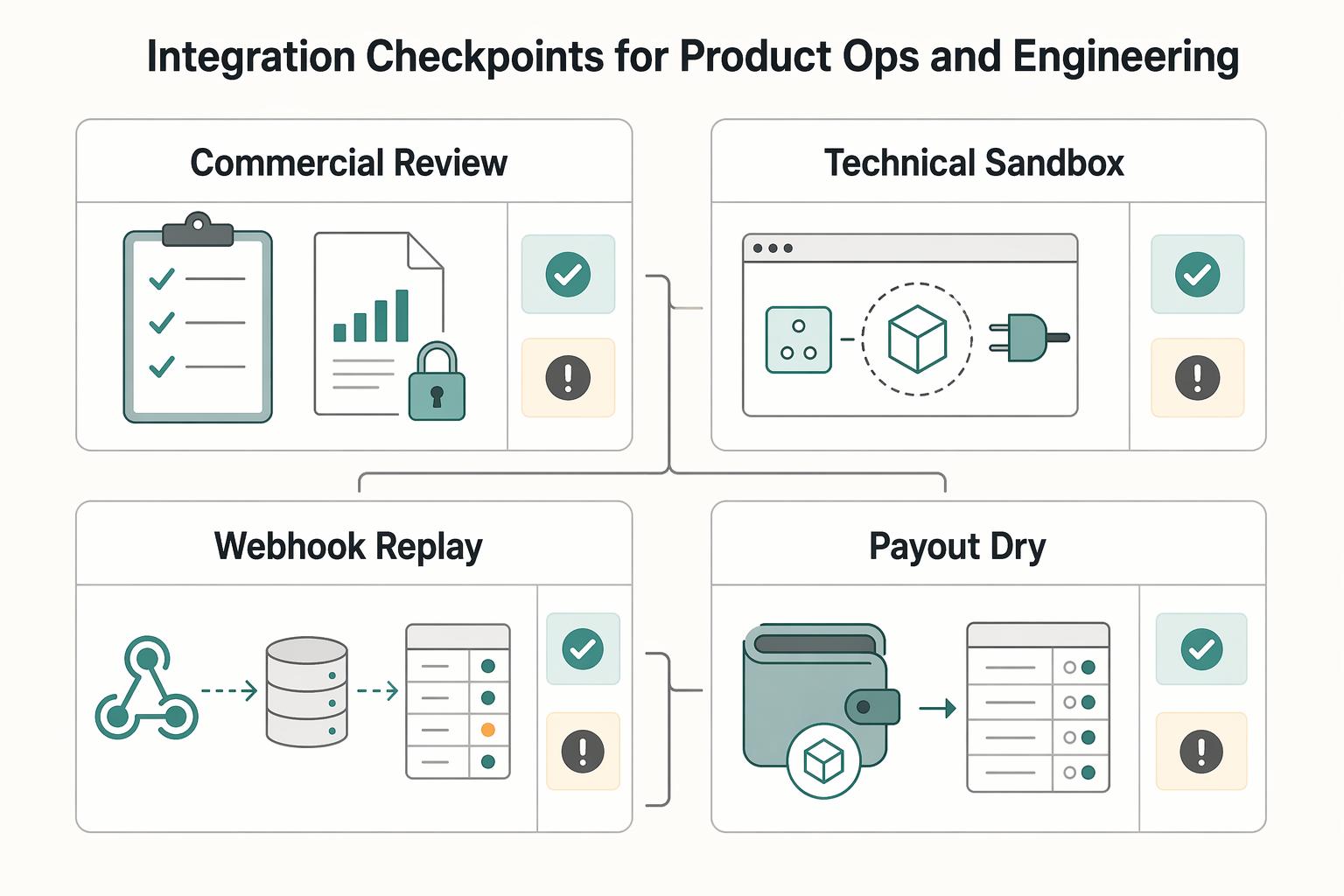
Use a phased path: commercial clarity, the integration you actually need, reliable reporting, payout reconciliation, then wider traffic. For a tag-and-dashboard publisher, manual exports may be sufficient; API and webhook checks apply when those interfaces are used. The diagram’s replay step represents reporting recovery and is literal webhook replay only for networks offering webhooks.
| Checkpoint | What to require | Failure signal |
|---|---|---|
| Commercial review | Threshold and hold conditions, invalid-activity adjustment rules, and status labels that separate estimated from finalized earnings | The network cannot explain how a disputed impression or click moves from estimate to finalized |
| Technical integration test | Approved tag/SDK/API setup, access controls, exclusions, export and page impact; API retry safety where used | Unapproved domains, unusable reports, or duplicate-unsafe money-changing requests |
| Reporting recovery; webhooks if offered | Status mapping, duplicate/out-of-order event handling or missing/revised export recovery | Sent and received confused; missing history or duplicate financial effect |
| Payout dry run and phased rollout | Statement export, reference IDs, exception handling, reconciliation, phased rollout, and verification of the gap between finalized earnings and payout issuance | Your team cannot track the timing gap between finalized earnings and payout issuance |
- Commercial review
Lock payout terms into written states your teams can reconcile: threshold and hold conditions, invalid-activity adjustment rules, and status labels that separate estimated from finalized earnings. That distinction is operational, not cosmetic, because estimated and finalized values can diverge after invalid-activity deductions. If the network cannot explain how a disputed impression or click moves from estimate to finalized, treat it as a finance risk.
- Technical sandbox
Validate the actual interface: tag placement and removal, approved domains and formats, category exclusions, page-performance impact, access controls, and report export. If an API is used, require authentication and endpoint-specific timeout, retry, and idempotency guidance. A payout-request timeout leaves execution unknown: query the original request or obtain provider confirmation before issuing another withdrawal. A generic retry instruction cannot establish duplicate safety. API absence alone is not a blocker for a tag-and-export integration.
- Event and webhook validation
Map estimated, finalized, eligible, requested, sent, received, and adjusted earnings to your internal records, using the network’s actual definitions. If webhooks exist, verify signatures, deduplicate event IDs and financial effects, handle out-of-order delivery, and reconcile from authoritative records. Otherwise test poll or export recovery across a missing day and a revised statement. A dashboard marked sent while cash is absent needs investigation, not a duplicate withdrawal. Store earnings period, adjustment reason, payout ID, asset/network, amount, fee, and receiving reference.
- Payout dry run and phased rollout
Run an end-to-end test once approval and written terms are complete. In an illustrative account, $120 estimated earnings minus a $20 invalid-traffic adjustment become $100 finalized. An $80 withdrawal leaves $20 on account; if the agreed recipient-borne fee is $2, the receiving record should show $78. Record the fee separately rather than treating the short receipt as lost earnings. Match the period, adjustment, withdrawal reference, and bank or chain evidence. For crypto, retain the asset, network, quantity, valuation basis, and any required exchange memo. Track the full interval from finalization through eligibility, request, processing, and receipt; then expand traffic in stages.
Set one internal launch rule and enforce it: no full rollout until finance, ops, and engineering all approve monitoring and reconciliation checkpoints. For crypto ad integrations, that shared sign-off is what keeps a targeting test from turning into a payout incident.
Red flags that should disqualify a network fast#
Disqualify a network quickly if it cannot clearly document payout terms, dispute handling, fraud controls, and fit boundaries for your publisher profile.
- No written payout terms for publishers
Require the earnings model, currency, threshold, timing trigger, deductions, and holds in writing. Coinzilla’s €50 minimum and stated processing window are one provider’s example, not an industry requirement. A higher or lower threshold can be acceptable if your expected valid earnings can reach it and the actual receiving route fits your cash needs.
- No usable dispute process or contract anchor
If earnings are adjusted or traffic is rejected, you need a documented path to challenge it. Look for a visible issue-reporting route and terms that clearly define governing law and jurisdiction. If escalation only happens through informal account-manager chat, treat that as a shortlist blocker.
- Performance claims without a verifiable method
Treat vendor-authored rankings and endorsements as marketing unless methodology and disclosures are clear. Endorsements should be honest, not misleading, and material connections should be disclosed clearly. If you cannot see how claims were tested, do not use them for selection.
- Vague fraud controls or no "when to use" boundaries
"Quality traffic" language is not enough without concrete invalid-traffic detection and filtration controls. A network should also explain where it fits and where it does not, including differences between DeFi-heavy and broader crypto inventory. If use-case boundaries are unclear, expect campaign and payout surprises.
Conclusion#
In 2026, the right pick is usually not the network with the biggest reach claim. It is the one you can verify on three fronts: payment transparency, traffic-quality evidence, and operational fit your team can actually manage.
- Choose proof, not pitch
Require transparent reporting, traffic controls, and an identifiable publisher agreement. Advanced targeting does not compensate for an unresolved receiving threshold or an inability to investigate adjustments. Keep an unknown legacy program off the active shortlist; for approved candidates, test whether the documented controls work on your actual inventory.
- Treat payment mechanics as a hard gate
Your finance team should not have to discover payment terms after traffic is live. Before you commit inventory, require written payment terms: schedule, thresholds, and currencies. A practical checkpoint is simple: can finance reconcile a sample dashboard export to a payout statement without manual guesswork? If the answer is no, treat that as operational risk before you scale.
- Roll out only when the evidence pack is complete
Use the shortlist table, disqualification checks, and rollout checkpoints together, not as separate exercises. A fast choice is still defensible when you have the minimum evidence pack in hand: reporting detail, traffic-quality controls, payment terms, and enough implementation detail for internal sign-off. One common failure mode is a partner that demos clean reporting and easy integration, then introduces post-launch surprises once production traffic starts. If details are missing, treat that as real risk and ask for evidence before you scale.
Compare how each candidate supports earning, finalization, adjustments, withdrawal, and reconciliation. Use public terms to direct diligence, then choose from eligible programs using comparable property-level results.
If you are down to two close options, break the tie with the boring questions. Which one gives clearer reporting? Which one spells out payments more cleanly? Which one lets you validate traffic quality before spend or volume increases? The winner is rarely the flashiest network. It is the one that creates the fewest surprises once money, traffic, and internal accountability are on the line.
Frequently Asked Questions
What is a Web3 ad network for publishers in 2026, and how is it different from general ad networks?
A Web3 ad network is a platform that connects Web3 advertisers with publishers, websites, and apps serving crypto audiences. What makes it different is not the label alone, but the audience fit, possible crypto-specific targeting options, and the need for clear placement transparency and ad content review.
How should publishers choose between CPM, CPC, and revenue share models?
CPM pays per 1,000 qualifying impressions under the network’s definition; eligibility and later invalid-traffic review still matter. CPC pays for qualifying clicks, so outcomes are more exposed to click quality, while revenue share pays you a percentage of ad revenue and can add upside if the split is clearly disclosed. If your finance team needs steadier planning inputs, many publishers start with clear CPM terms. If a partner pushes revenue share but will not show the split or reporting logic, treat that as a red flag. For a deeper breakdown, see How Ad Networks Pay Publishers: CPM CPC and Revenue Share Payout Models Explained.
When is wallet-level targeting worth the added complexity for a publisher?
It can be worth testing when a network can show that tighter targeting improves outcomes for your inventory. It can be less compelling when narrower targeting reduces scale or adds operational overhead. If you are unsure, start broader and only add wallet-level targeting after you compare yield, fill, and operational impact.
What should a publisher verify before integrating a crypto ad network?
Ask for the written payout model, the network's invalid traffic policy, and sample reporting or payout exports before you send live traffic. A good checkpoint is whether your ops and finance teams can reconcile dashboard activity to a payout statement without manual guesswork. If a partner cannot provide that clarity up front, treat it as integration risk.
Which metrics matter beyond impressions and clicks when evaluating network quality?
Do not stop at top-line CPM or click volume. You should also look at revenue stability, user experience, site performance, and how often traffic is later flagged as invalid, because invalid traffic can artificially inflate advertiser costs and publisher earnings. In practice, a network with slightly lower monetization but fewer adjustments and less page friction can be the stronger choice.
How should publishers handle unknowns when a network's payout or fraud details are not public?
Request account-specific written terms and a reporting sample before live allocation. Missing public detail may be resolved privately; a contradictory threshold or unidentified counterparty must be resolved before testing. Use a limited traffic test only after mandatory commercial and traffic-quality conditions are satisfied. A small test does not make uncertain withdrawal or custody terms safe.
Try a related tool
Researched and edited by the Gruv editorial team. Gruv builds cross-border billing, payouts, and finance-operations software for global businesses.
Sources
Includes 7 external sources outside the trusted-domain allowlist.
- ftc.gov/business-guidance/resources/ftcs-endorsement...trusted
- bitmedia.io/faq/publishersexternal
- blockchain-ads.com/es/help-articles/what-is-a-blockchain-ads-pu...external
- blockchain-ads.com/es/help-articles/revenue-earningsexternal
- coinzilla.com/faq-publishersexternal
- docs.adshares.net/adserver/how-to-use-advertising-ecosystem.htmlexternal
- faq.cointraffic.com/en/articles/2707620-what-are-the-payment-termsexternal
- help.aads.com/en/article/how-to-withdraw-your-earnings-a-g...external
Educational content only. Not legal, tax, or financial advice.
Related Posts
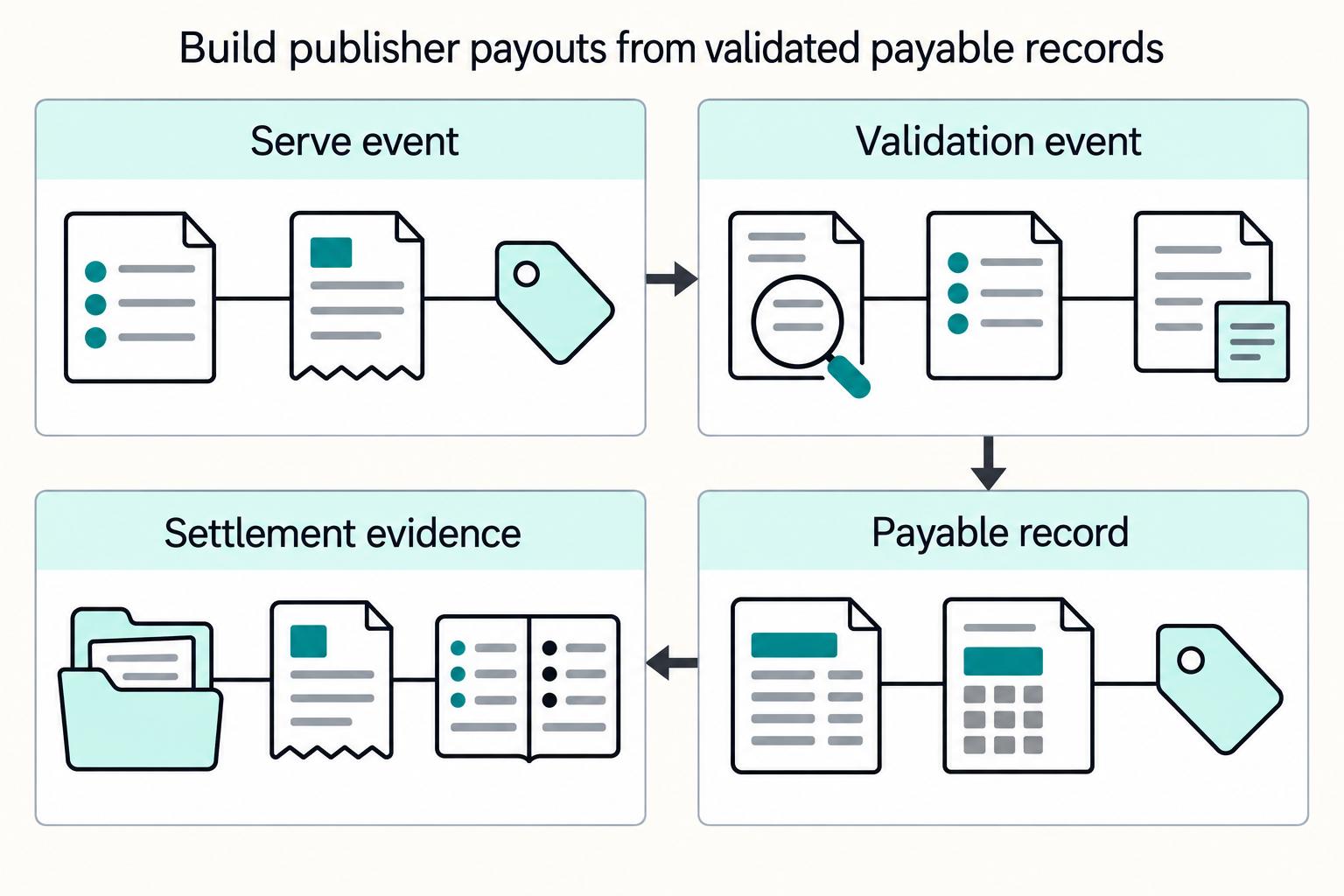
How Ad Networks Pay Publishers with CPM, CPC, and Revenue Share
A publisher agreement needs two answers: which activity or revenue creates earnings, and how much of that amount belongs to the publisher. CPM and CPC describe units used to price activity. Revenue share describes the division of a defined revenue base. They can work together; they are not three mutually exclusive stages of publisher maturity.
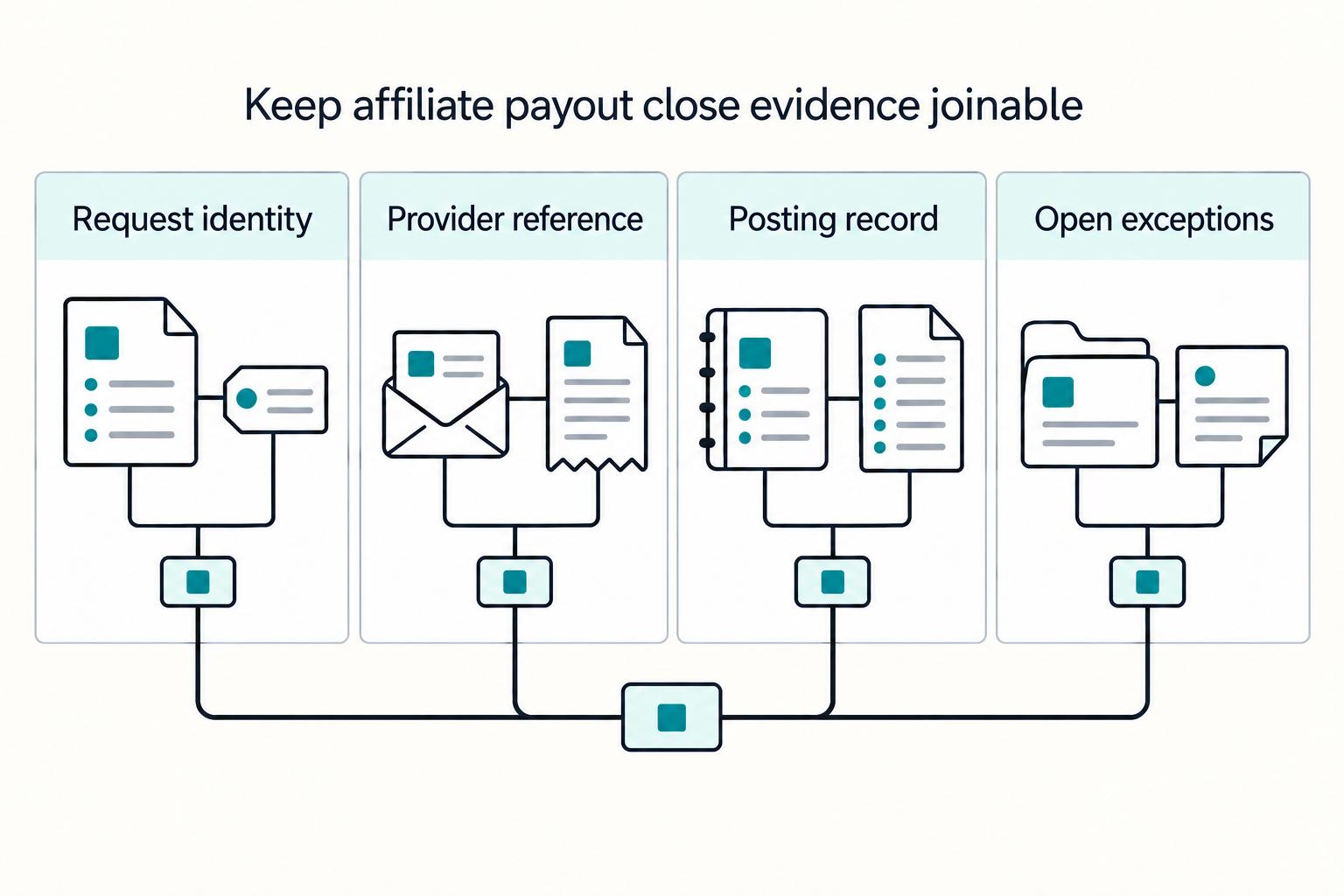
Mass Payouts for Affiliate Networks Paying Publishers, Partners, and Creators at Scale
Treat affiliate payouts as infrastructure, not as a payment feature. Once you are paying publishers, partners, and creators in volume, the hard part is often not the send button. It is everything around it: commission calculation, recipient onboarding, approval controls, rail selection, status handling, reconciliation, and close.
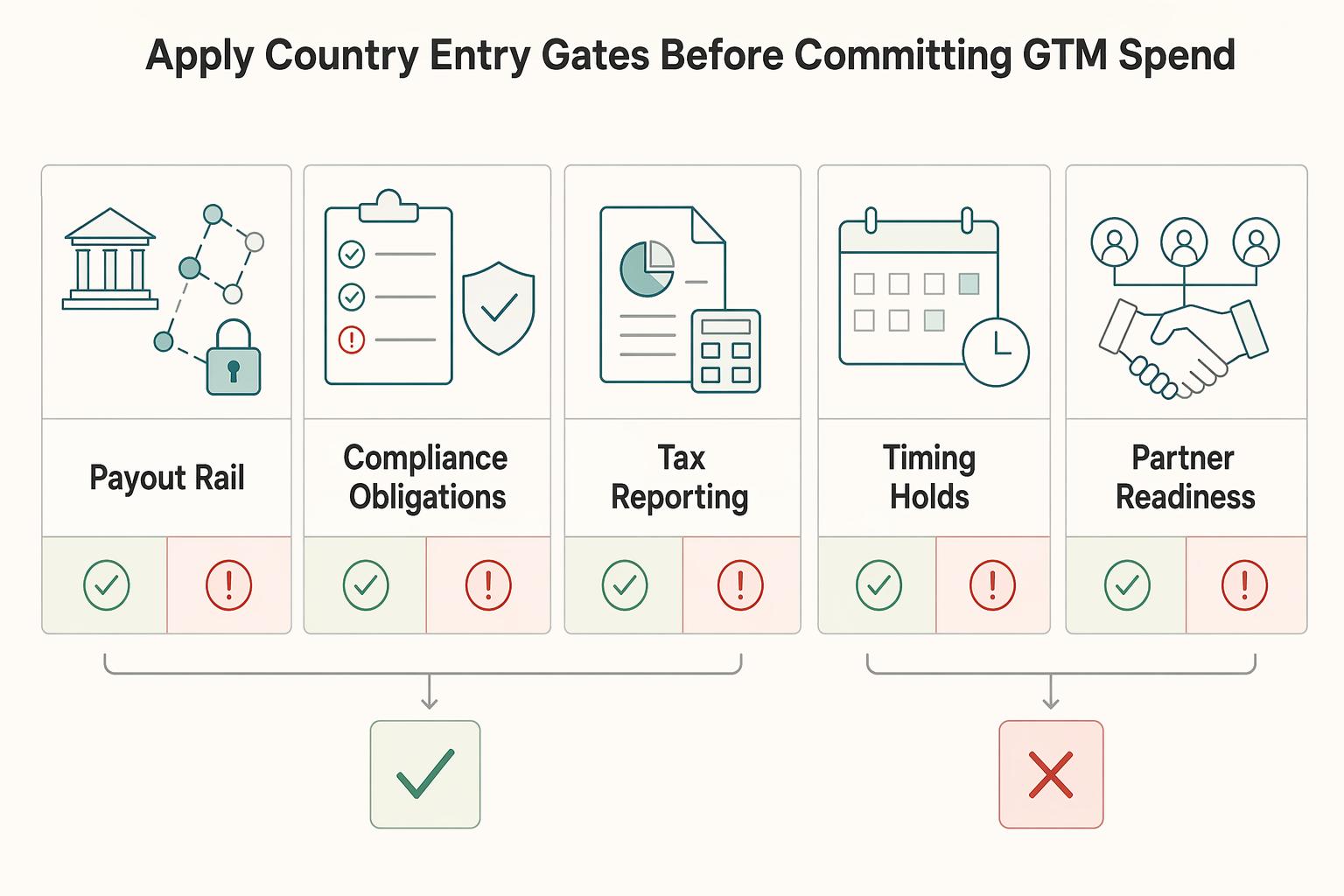
How DSPs, SSPs, and Ad Networks Pay Publishers in a Cookieless Market
If you are evaluating this market, focus on payment execution before role labels. The hard part is not memorizing definitions. It is knowing who bills whom, when cash is released, and what can break between an auction win and a publisher payout as identity signals get less reliable. We recommend starting there so your team does not confuse market labels with payout accountability.