
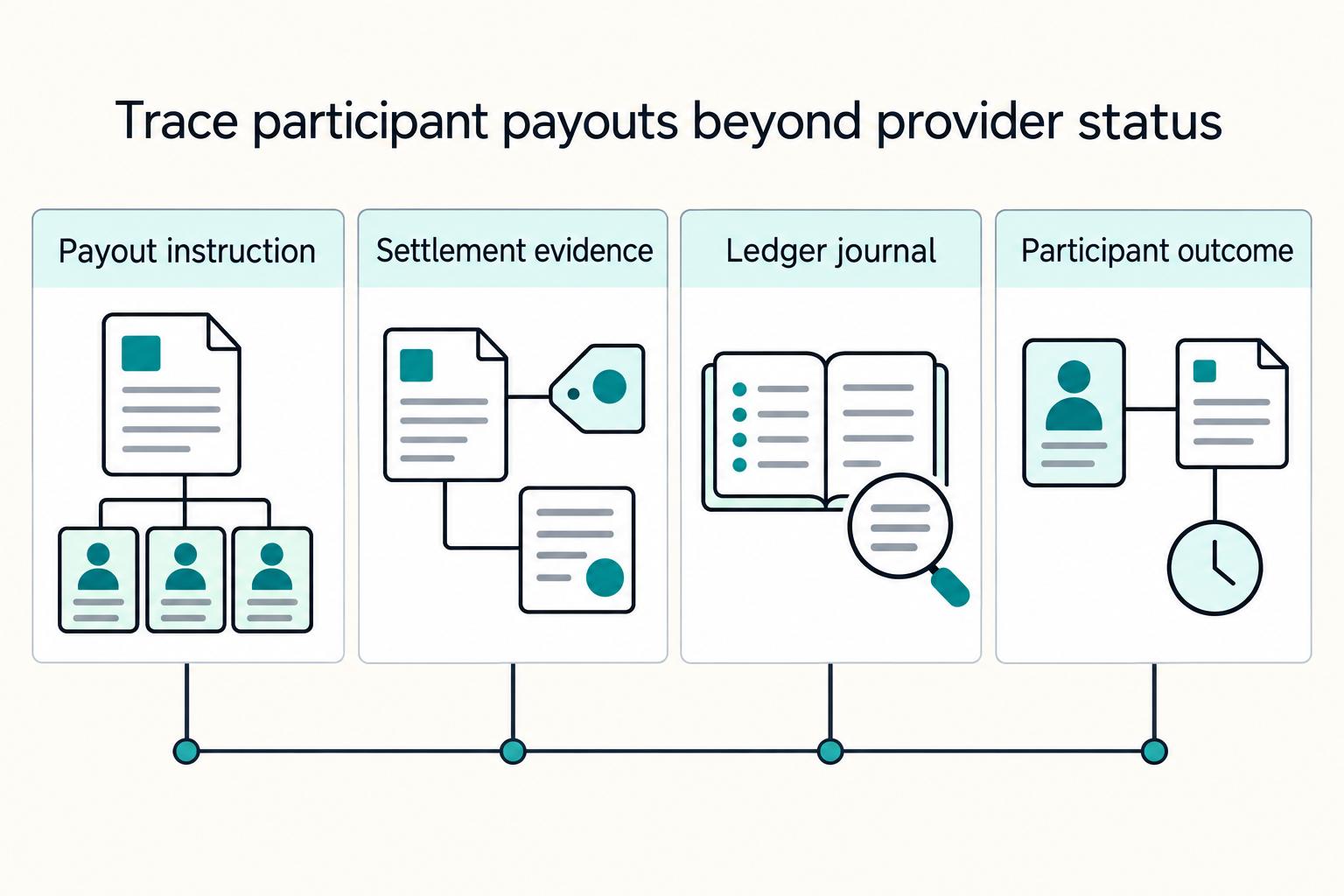
What Changes When Research Participant Payments Scale#
You may be able to run a research panel and a clinical trial program on one payout operating model if you keep protocol work separate from payout operations. This guide uses a 30-day planning window to help you choose the model, sequence implementation, and prepare a controlled first launch across both program types.
Keep this planning pass narrow. Focus on payout ownership, fund flow, supported payment methods, approval and release controls, and reconciliation. It does not cover clinical protocol design, trial design, or participant selection criteria. Those belong in a separate workstream, and your payment setup should support that workstream rather than try to replace it.
Participant payment sounds simple until you run it at scale. Institutions often frame it as money that offsets participant time and inconvenience or encourages participation, but the operating constraints vary by program, institution, and country. Global programs add compliance and data-privacy pressure, and institutional payment options and finance rules can change over time.
Step 1 Set scope before vendor comparison#
Set scope first, or you risk buying tools that still do not fit your launch constraints. For this 30-day planning window, limit scope to payout ownership, rails, approval logic, reconciliation outputs, and integration sequencing. If vendor conversations drift into protocol authoring or broad study operations, pull them back to payout operations.
Use one checkpoint: define your first two live cohorts, one panel and one trial, and list the exact payout events that trigger compensation. If those events are still fuzzy, your timeline is still too vague.
Step 2 Treat public claims as leads, not answers#
Search snippets and vendor marketing can help you build a shortlist, but they are not enough to contract against. They often leave out the details that decide go-live risk: country-by-country coverage, rail availability by market, fee structure, and payout timing definitions. A claim like "over 180 countries" and a claim like "nearly every country in every currency" are not the same, and neither confirms your launch mix.
Pricing claims can be just as incomplete. Some vendors describe enterprise pricing as usage-based and available only after direct contact, so treat commercial terms as unknown until they are documented.
Step 3 Verify the details that change go-live risk#
Before you sign, get written proof for the details that can break rollout plans:
- Country and payment-method matrix for your exact launch markets
- Full fee schedule, including tiers, FX treatment, returns, and exception charges
- Rail-by-rail timing definitions for "processed," "sent," and "received"
- Sample reconciliation and payout-status outputs for exceptions and reversals
- Current institutional policy references where relevant, since options may be versioned and updated over time
This is where rollout risk becomes concrete. Some institutional payment options are date-versioned. At least one institution states that total participant payments of $600 or more in a calendar year are IRS-reportable taxable income. You do not need every edge case solved yet, but you do need a payout model that fits inside those constraints.
Once those basics are pinned down, the next decision is ownership: whether payout orchestration is centralized at sponsor or platform level, or stays heavier at site level. That choice drives the controls, tooling, and integration pattern for the rest of implementation. Related reading: How MoR Platforms Split Payments Between Platform and Contractor.
Define your payout ownership model before picking tools#
Decide who owns payout release, exceptions, and reconciliation before you compare vendors. Without that control model, tool evaluation turns into a moving target.
Step 1 Choose the operating model first#
For clinical programs, start with role boundaries. Under 21 CFR 312.3, the sponsor initiates and takes responsibility for the investigation, and the investigator conducts it at the site. That does not force every payout task into one team, but it does mean ownership needs to be explicit.
Compare the operating models side by side:
| Model | Best fit | Main upside | Main risk |
|---|---|---|---|
| Centralized sponsor or platform orchestration | Multi-country clinical studies that need shared controls across sites | More consistent approval and reporting standards across the program | Central sponsor teams take on more operational burden when more payment work is brought in-house |
| Site-led execution | Programs where investigative sites have strong local autonomy | Local teams can handle country- or institution-specific requirements directly | Reconciliation can become harder when ownership and systems are fragmented across teams |
| Hybrid | Central standards with local execution needs | Can balance efficiency, risk reduction, and site relationship needs for many sponsors | Boundaries fail if delegation and sign-off are not documented |
IQVIA's framing is useful here: country requirements differ, and site-facing support needs separate handling. That is why a hybrid approach can make sense in many sponsor contexts, rather than using one model for every program.
Step 2 Write down what is delegated and what is not#
If you plan to delegate, document it before procurement. U.S. rules allow transfer of sponsor obligations to a CRO, but anything not explicitly described in writing is treated as not transferred.
Use a simple check: can you point to written delegation that names who approves payments, who can release or hold payouts, and who signs reconciliation? If not, ownership is still assumed rather than defined.
Step 3 Name accountable owners before procurement#
Name owners for sponsor-facing support, site-facing support, clinical operations, and finance before you start tool selection. Payment approvals, exception handling, and reconciliation sign-off should each have one accountable owner. Veeva's point is practical: payment flows span sites, clinical operations, and finance teams, and reconciliation gets harder when ownership and systems are fragmented.
Keep the evidence pack to one page: selected model, named owners, delegation scope if used, approval path, and reconciliation signer. If this page does not exist, vendor evaluation will reflect team assumptions instead of an operating design.
Gather prerequisites and the minimum evidence pack#
With ownership set, pause tool selection until the core inputs are written and approved. Otherwise, your build will hard-code assumptions and fail when exceptions or reconciliation show up.
Step 1 Clean the participant master#
As an internal control, use one participant master that gives a single payable status per person. Use explicit eligibility flags for survey participant incentives and clinical trial cohorts so release decisions are unambiguous: payable now, on hold, and why.
Before you build, pull sample records from both cohorts and confirm that cohort, eligibility status, hold reason, and payout method preference each resolve to one current value. This is an internal control choice, not a mandated regulatory schema.
Step 2 Write policy artifacts before build logic#
Write policy before you encode product rules. At minimum, lock three artifacts: identity-verification/CIP gating rules, where bank-scoped AML applies, a payout approval matrix, and audit-log retention requirements.
Scope them correctly. If your flow sits under bank-scoped AML obligations, CIP must be written and risk-based, and AML programs must include internal controls. For Part 11 closed systems, validate systems, use secure, computer-generated, time-stamped audit trails, and retain them at least as long as the underlying electronic records. If payout records support investigator records under 21 CFR 312.62, do not set retention shorter than that record class. That class carries a 2-year retention rule after the relevant approval or discontinuation point.
Step 3 Freeze launch rails and mark unknown coverage#
Declare your launch rails up front, for example direct deposit/ACH, debit card, digital wallet, and digital gift card. Direct deposit or ACH and debit card programs are documented participant options, and some institutions also allow wallet or gift card options, but coverage and approvals are not universal.
| Rail | Article-supported use | Caveat |
|---|---|---|
| direct deposit/ACH | Documented participant option; NIH also flags ACH/direct deposit as the most reliable option during debit-card disruption | Coverage and approvals are not universal |
| debit card/prepaid card | Documented participant option for participant payments | First delivery may take 7-10 business days; subsequent reloads can post in 2-3 days |
| digital wallet | Often part of a practical default alongside bank transfer and prepaid card | Some institutions allow it, but coverage and approvals are not universal |
| digital gift card | Can be available as an option rather than the only rail | Single-method programs can narrow accessibility |
If country, institution, or vendor coverage is unknown, keep that market out of launch scope. For trial cohorts, confirm that payment method and expected timing can be reflected in consent language where local IRB practice requires it. If first card delivery can take 7-10 business days, do not promise instant payout.
Step 4 Lock a versioned go-live evidence pack#
Treat the go-live evidence pack as a core internal control artifact. Version it, date it, and collect sign-off from the owners defined in the previous section.
Include four items: test cases, failure simulations, reconciliation sample exports, and approval evidence. At minimum, simulate a rejected payout, a duplicate submission replay, and a held-then-released payment. If finance cannot trace instruction to outcome in the sample export, you are not ready to scale.
For a step-by-step walkthrough, see How to Write a Payments and Compliance Policy for Your Gig Platform.
Choose the right payout mix for each program type#
Once the evidence pack is locked, pick payout methods by program fit, not by vendor branding. For many teams, a practical default is to offer participant choice across digital wallet, bank transfer, and prepaid card, with digital gift card available as an option rather than the only rail. There is usually no one-size-fits-all method for paying participants.
Step 1 Build the decision matrix#
Use one matrix for both research panel and clinical trial flows. Make every path answer the same questions: program type, payment urgency, participant geography, value size, and likely usable method.
| Program pattern | Timing need | Good default mix | Watch-outs | Verification point |
|---|---|---|---|---|
| Research panel, high volume, lower value | Scheduled daily or weekly | digital wallet plus bank transfer, keep digital gift card optional | Single-method programs can narrow accessibility | Confirm each participant has one active method and one approved fallback |
| Clinical trial, domestic, visit based | Prompt, often tied to approved visit completion | bank transfer/direct deposit, add prepaid card where issuance is operationally ready | First debit card delivery may take 7-10 business days | Confirm participant communication states payment method and expected wait time |
| Clinical trial, milestone or PRO triggered | Event-driven timing | Event-triggered bank transfer, digital wallet, or reloadable prepaid card | Event flows need strong controls for retries and corrections | Replay a milestone event and confirm only one payable instruction survives |
Step 2 Default to flexible choice and keep gift cards optional#
Multiple methods are usually the safer default for both panels and trials. Participant-payment guidance recommends offering several payment methods because it is more participant-centered and improves accessibility.
For trial cohorts, keep payment method explicit in participant communication and include expected timing where possible. If you use prepaid cards, plan around real timing: first delivery may take 7-10 business days, while subsequent reloads can post in 2-3 days. NIH also currently flags ACH, or direct deposit, as the most reliable option during debit-card disruption.
Step 3 Weigh PayPal and Venmo against control needs#
PayPal and Venmo can help with familiarity and adoption in some contexts, but familiarity is not the same as operational fit. PayPal supports multi-recipient payouts via API, including up to 15,000 payments per call, with Standard Payouts documented in 96 countries. PayPal also states that offering Venmo can help participation in rewards-style programs.
| Option | Publicly stated capability | Control note |
|---|---|---|
| PayPal | Multi-recipient payouts via API, including up to 15,000 payments per call; Standard Payouts documented in 96 countries | Before approval, verify finance can map internal payout IDs to provider references and final statuses |
| Venmo business profile, unverified | $2,499.99 weekly payments and $999.99 weekly bank-transfer limits | Limits depend on verification status |
| Venmo business profile, verified | $25,000 weekly payments to Venmo users and $49,999.99 weekly transfers to bank or eligible debit card | Before approval, verify finance can map internal payout IDs to provider references and final statuses |
Use that as one input, not the whole decision. Venmo limits depend on verification status, and before you approve either option, verify that finance can map internal payout IDs to provider references and final statuses.
Step 4 Match payout timing to study rhythm#
Use batch payouts when disbursements are naturally grouped. Batch payouts are defined as grouping large sets of disbursements into a single run, which fits many panel programs and approval-window releases.
Use event-triggered payouts when compensation should follow a study milestone or PRO event. Milestone-based trial payments can be processed promptly. The tradeoff is higher sensitivity to event timing and retry handling. Validate delayed approvals, duplicate replays, and corrected payment-method cases before go-live.
Step 5 Use vendors as patterns, not one-size-fits-all answers#
Use vendor examples to pressure-test your matrix. Runa is a pattern for multi-country digital choice and markets a network in 30 countries, 18 currencies, and 16 languages, plus mixed payout types in one order of up to 500 payouts instantaneously. PayQuicker is a pattern for coordinated bulk disbursement. B4B Payments is a pattern for prepaid-card trial flows with instant post-visit card loading.
None of those examples replace program-level validation. Confirm launch-market rail coverage, exception-state handling, and reconciliation exports before final selection.
Related: How to Pay Research Participants: Survey Incentives Gift Cards vs. Direct Deposits for UX Teams.
Design your Gruv payment architecture for traceability#
After you choose rails, Gruv should be the system that explains money movement end to end, not just the trigger point. Each payout instruction should resolve to one final outcome, even when API calls or webhooks are retried.
Step 1 Map the full money lifecycle before you wire any payout API#
Map one explicit lifecycle in Gruv before you connect any provider: funds collected, balance held, FX decision applied if needed, policy gates checked, payout executed, reconciliation export produced. Keep those as separate states so ownership and failure handling stay clear.
For inbound funding, decide whether funds land in a general operating balance or a dedicated balance. If you expect inbound bank transfer funding from multiple entities, use virtual account numbers where supported to improve attribution and reduce exposure of primary account details. If you need multiple currencies, make the FX path explicit. With multi-currency settlement, balances can accrue in additional currencies. In Stripe-style setups without it, incoming funds may auto-convert to the home-country default currency.
Use one non-home-currency test flow to confirm where balances sit, when conversion happens, and how finance sees it in exports.
Step 2 Enforce idempotency from request creation through webhook handling#
Do not stop idempotency at the first API call. Use an idempotency key for every payout-creating request, store it in Gruv, and bind it to one payout intent. In Stripe, keys can be up to 255 characters, and keys may be pruned after 24 hours, so keep your own mapping of request ID -> payout intent -> participant/study IDs -> request hash.
Apply the same discipline to webhook handling. Webhook endpoints can receive the same event more than once, so log processed event IDs and ignore repeats. A common failure mode is an idempotent API layer paired with a non-idempotent webhook consumer, which can create duplicate journal posts or release decisions.
Test this directly: send the same payout request three times and replay the same webhook twice. The expected result is one payout intent, one provider reference, and one balanced accounting outcome.
Step 3 Make the ledger the source of truth for payout status#
Use a ledger-first model, not a dashboard-first one. The traceable path is simple: payout request accepted, provider reference attached, journal entry posted, provider status updated, export generated for close.
Keep identifiers separate. Internal payout intent ID, provider reference, and payout batch ID should not collapse into one field. That separation is what makes CSV reconciliation exports and transaction-level settlement reporting usable for finance close.
Set one operational rule: do not mark a payout as finally complete until the provider reference exists and the journal entry is balanced.
Step 4 Use Virtual Accounts when inbound attribution is the real bottleneck#
Use Virtual Accounts when the hardest problem is matching inbound funds to the right entity or cohort. In that model, funds can land in a holding balance before they are usable, so represent that state explicitly.
For a Stripe-style bank transfer flow, unreconciled funds can remain in customer balance and may be returned after 75 days. Do not hard-code one universal provider taxonomy. Map provider-specific states into internal outcomes like credited, held pending reconciliation, and returned, and prevent held funds from appearing spendable before reconciliation is complete.
For more detail, read How Independent Contractors Should Use Deel for International Payments, Records, and Compliance.
Execute a 30-day rollout without stalling operations#
A 30-day rollout plan is most reliable when you keep the weekly gates tight and evidence-based. Broad launch before ownership, retries, alerting, and reconciliation checks are proven can stall operations.
| Phase | Primary work | Go/no-go check |
|---|---|---|
| Week 1 | Publish one internal launch spec naming owners, supported payout rails, covered countries, and open assumptions; validate payout timing assumptions | Each open assumption has a named owner or blocked status |
| Week 2 | Build payout APIs and webhooks together, anchor views to Gruv lifecycle states, and test batch payouts and retries | Dashboard counts and ledger counts match for the same test batch |
| Week 3 | Pilot two small cohorts with different operating profiles at controlled volume | Completion rate, duplicate count, exception types, and finance tie-out are measured against pre-set pass/fail criteria |
| Week 4 | Go live with a phased release, set on-call ownership and alerting, and include early finance checkpoints | On-call ownership and reliable alerting are in place before expanding production cohorts |
| Scale-up gate | Run recovery scenarios before widening traffic, including provider timeouts, duplicate submissions, repeated webhook delivery, and reconciliation mismatches | Alerts fired, retries stayed idempotent, manual review paths were clear, and finance could download and match records to batch and transaction data |
Step 1 Lock ownership and assumptions in Week 1#
Use Week 1 to publish one internal launch spec that names owners, supported payout rails, covered countries, and open assumptions. Be specific on market coverage early, because payout availability varies by industry and country.
Define what "ready" means across product, engineering, finance ops, and compliance. At minimum, assign a function owner, launch markets, supported rails, exception owner, reconciliation owner, and rollback owner.
Validate payout timing assumptions in the same week. Some providers note initial payout windows like 7-14 days after a first successful payment, so confirm that before you set participant or sponsor expectations.
Verification point: by the end of Week 1, each open assumption has either a named owner or a blocked status. If the spec still says "global" without confirmed country coverage, cut back to confirmed markets first.
Step 2 Build the live event path in Week 2#
Build payout APIs and webhooks together in Week 2, because payout state changes are asynchronous. Your internal status has to move from those events, not only from the initial API response.
Anchor operational views to Gruv lifecycle states: request accepted, provider reference attached, journal posted, provider status updated, export ready. If you track only provider status, you can miss ledger or export failures that break finance close.
Test batch payouts and retries in the same sprint. Repeat the same payout request and replay the same webhook, then confirm one payout intent, one provider reference, and one balanced journal outcome. Since provider-side idempotency keys may be removed after at least 24 hours, your internal request-to-intent mapping has to remain authoritative beyond that window.
Verification point: dashboard counts and ledger counts match for the same test batch. One failure mode to test for is idempotent API retries paired with a non-idempotent webhook consumer.
Step 3 Pilot narrowly in Week 3#
Week 3 should answer one question: is the model workable at small scale? Pilot work is a feasibility check, not proof of universal readiness, and pilot design choices can shape what you learn about full-scale feasibility.
A practical pattern is two small cohorts with different operating profiles at controlled volume. That gives you coverage across workflows while keeping the scope small enough for timely exception review and traceable root-cause analysis.
Set pass or fail criteria before the first payout: completion rate, duplicate count, exception types, and whether finance can tie each payout to participant-level and batch-level records. Keep those criteria stable during the pilot so the results stay interpretable.
Step 4 Go live behind guardrails in Week 4#
Go live with a phased release, not a full switch. A canary-style rollout lets you send a subset of traffic to the new flow before you widen it.
Set on-call ownership and reliable alerting before you expand production cohorts. Document who can pause batch release, who contacts the provider, and who approves participant communications when delays occur.
Include early finance checkpoints with downloadable reconciliation artifacts that tie payouts to transaction-level records. For trial-related flows, confirm audit-trail records remain secure, computer-generated, and time-stamped so events can be reconstructed later.
Step 5 Enforce a hard scale-up gate#
Make this an internal launch policy: do not scale volume until failure-recovery tests and audit export checks pass in production-like conditions.
Run recovery scenarios before you widen traffic, including provider timeouts, duplicate submissions, repeated webhook delivery, and reconciliation mismatches. Pass means alerts fired, retries stayed idempotent, manual review paths were clear, and finance could still download and match records to batch and transaction data.
If those checks fail, hold volume at the current narrow scope or roll back. Speed comes from proving recovery and traceability early.
Related: How to Price a Clinical Trial Data Analysis Project.
Put compliance gates where they reduce risk, not speed#
Compliance gates help when they answer a real requirement and end in a clear action. If they are vague, they slow launch without reducing risk.
Step 1 Scope KYC and AML by market and program#
Start with a risk-based model, not one global rule. FATF frames AML/CFT implementation as risk-based and jurisdiction-specific, and U.S. FinCEN CDD rules are scoped to specific financial-institution categories rather than all payout use cases.
Build a market-by-market policy matrix and enable identity or due-diligence gates only where requirements are confirmed. If a country or rail is still unclear, hold that market and launch only in confirmed-coverage markets. FDA guidance is nonbinding, so it is not enough on its own without confirming binding law, provider obligations, and your program policy.
Verification point: every launch market should have a current policy status of required, not required, or blocked pending review. If it says TBD, it is not launch-ready.
Step 2 Treat exceptions as records, not hallway decisions#
Exceptions should be documented decisions, not informal approvals. Payment-policy details can vary by institution and context. UCSF notes IRS reporting language at $600 in a calendar year. Johns Hopkins March 2026 guidance lists certain options under $600 per individual per year and notes a 30% withholding condition for ClinCard when SSN is not provided.
Use those as program inputs, not universal triggers for every sponsor or platform. For any exception, record the rule version, approver, date, rationale, and affected cohort or market.
Step 3 Minimize PII in events and logs#
Keep logs and events auditable, but limit them to necessary data. UK GDPR data minimisation and HIPAA minimum-necessary guidance both support reducing unnecessary personal-data exposure.
In practice, prefer participant ID, payout intent ID, batch ID, country, program type, rule result, and status timestamps instead of raw bank details, SSNs, or clinical context. For clinical-trial flows, that can also align with EMA expectations for controls that prevent unauthorized access and unwarranted data changes.
Verification point: finance and compliance can reconstruct one blocked payout and one released payout from audit exports without using raw PII from application logs.
Step 4 Map every control to block, review, or release#
Every control should resolve to one operational action. That action should be captured in a secure, computer-generated, time-stamped audit trail aligned with 21 CFR Part 11 expectations.
| Control condition | Operational action | Evidence to retain |
|---|---|---|
| Required market or program check is incomplete | Block payout | Rule result, participant ID, batch or intent ID, timestamp |
| Requirement is still unconfirmed for that market | Block rollout for that market | Review owner, open issue, decision date |
| Documented exception exists and is approved | Review, then release if approved | Approver, rationale, rule version, release timestamp |
If you cannot show why a payout moved from hold to release, the gate may not hold up in audit or sponsor review.
Related: How to Launch a Legal Compliance Platform for Freelancers and Handle Their Payments.
Build failure handling before you increase volume#
Once a payout clears policy gates, reliability becomes the next control. Do not increase batch volume until common failures have a detection rule, a recovery path, and an owner.
Step 1 Classify failures before they hit the queue#
Define the core failure classes in both product and ops views:
| Failure mode | What to detect first | Recovery starting point |
|---|---|---|
| Provider reject | Reject code or failed status from provider | Classify as hard-fail vs retryable |
| Stale bank details | Return reasons tied to closed, missing, or invalid account data | Stop retries and collect corrected details |
| Duplicate submission | Same payout intent submitted more than once | Use idempotent replay, not a new payout |
| Webhook mismatch | Missing, delayed, or duplicated status events | Reconcile provider references and processed event IDs |
| Unresolved return status | Return or hold status with no final disposition | Escalate by age and participant impact |
For ACH rails, treat administrative returns such as R02 (Account Closed), R03 (No Account/Unable to Locate Account), and R04 (Invalid Account Number Structure) as their own class. If you bury them inside generic failures, teams tend to keep retrying bad instructions instead of fixing account data.
Step 2 Build one recovery sequence and enforce it#
Use one sequence every time: detect -> classify -> retry or idempotent replay -> manual review -> participant update when appropriate. Idempotency is the first hard control against duplicate payouts: the same idempotency key should return the same result instead of creating a second payout.
Because keys may be pruned after 24 hours, add your own duplicate checks, for example payout intent ID, participant ID, amount, and program event. Apply the same discipline to webhook handling. Duplicate event delivery can happen, so log processed event IDs and return success for already-processed events. For outage recovery, pull unsuccessfully delivered events first, then backfill from event history. Build for automatic redelivery windows of up to three days and manual backfill windows of 30 days where available.
Verification point: for one failed payout, you should be able to show payout intent, provider reference, event IDs, retry history, reviewer decision, and participant-facing outcome.
Step 3 Shorten escalation for clinical trial cohorts#
Use tighter internal escalation paths for clinical trial payouts than for lower-stakes incentives. Delayed participant payments can affect continued participation, so a held payout without an owner should trigger fast manual review and participant communication on your internal timetable.
Step 4 Review defects on a regular cadence and push fixes upstream#
Run a regular defect review, for example weekly, and route recurring issues to product or ops fixes, not just manual cleanup. Two signals should trigger quick action:
- Repeat duplicate submissions, which often point to weak idempotency boundaries between API and webhook processing.
- Rising ACH administrative returns tied to R02, R03, and R04, which usually point to bank-data capture or validation issues.
If your debit-entry administrative return rate trends toward 3.0 percent for those codes, pause further bank-transfer volume increases until input quality is corrected.
For a fuller walkthrough, see Automating Market Research Incentive Disbursements for 10,000 Respondents in 24 Hours.
Run reconciliation as a product feature, not a month-end scramble#
Reconciliation should run inside the payout flow, not only at month end. If expected payout outcomes and actual settlement do not line up, that is a scale gate, not a bookkeeping detail.
Step 1 Match every payout at three practical checkpoints#
A practical model is to reconcile each payout cycle at three checkpoints: the instruction you sent, the settlement status the provider returned, and the ledger journal completion in your books. A provider status of "paid" is not the same as completed finance records.
- Match the instruction record to provider reference and amount.
- Match the provider reference to settlement output or payout reports.
- Match settled movement to your ledger journal, using the canonical money-movement record where available, for example a balance transaction.
Verification point: for one sampled payout, trace instruction ID, provider reference, settlement status, journal entry ID, and final participant outcome without filling gaps from email or spreadsheets. If you cannot do that for one payout, do not trust the batch summary.
Step 2 Standardize the finance artifacts your team reviews daily#
Keep reconciliation evidence out of scattered tickets and ad hoc CSV exports. Standardize a small set of recurring artifacts in a stable format that finance, ops, and engineering can all use. The three below are a practical baseline, not a required industry template.
| Artifact | What it should show | What to check before sign-off |
|---|---|---|
| Daily exception report | Failed payouts, held items, missing journals, amount mismatches | Owner, age, next action, participant impact |
| Unresolved returns log | Returned or reversed payouts not yet closed | Return reason, retry decision, corrected details needed |
| Month-end close pack with approvals | Roll-forward from instructions to settlements to ledger completion | Reviewer approval, unresolved items carried forward, explanation of timing gaps |
If you use Stripe, the payout reconciliation report is built for settlement-batch matching. It includes failed payout breakdown plus an ending-balance view for transactions not yet settled by the report end date. Use that as an input, not a replacement for your close pack.
Step 3 Verify timing assumptions before treating dashboards as truth#
Do not treat projected balances as settled balances. Provider events can arrive asynchronously, and eventually consistent reads can briefly return stale data after recent writes.
Set one shared finance-product rule: do not approve the next high-volume batch from wallet projection alone. Review settlement evidence and ledger completion together. Stripe sends most event types asynchronously, and some teams use eventually consistent reads because they are lower cost, but that should not be the approval surface for cash-sensitive decisions.
PayPal needs an extra check here. Its Settlement Report summarizes transactions affecting balance, but declined payments do not appear there. During batch processing, a transaction can show hold state T1503 and move to T1105 only after hold release at batch completion. If you treat T1503 as final success, you will overstate completed payouts.
Step 4 Gate the next batch with expected-versus-actual comparisons#
Before each large send, compare expected outcomes against actual outcomes and resolve unexplained variance first. Use one approval checkpoint after each batch window.
Check instruction count, total amount, settled count, failed count, held count, returns opened, and journals completed. If variance is unexplained, pause the next batch until you classify it as timing lag, reporting omission, or a real payout defect. A clean-looking report with unexplained gaps is still not clean.
Turn this section into an implementation checklist by mapping your webhook states, idempotent retries, and ledger export flow in the Gruv docs.
Measure participant experience with operational metrics#
Measure payout experience by cohort, or you will miss the problems participants actually feel. Track each research panel and clinical trial cohort separately, then connect those results to retention and engagement signals instead of assuming faster payments alone will fix the issue.
Step 1 Segment the payment metrics participants actually feel#
Track three core metrics: payout latency, successful first-attempt completion, and exception resolution time. Break each one out by cohort, country, rail, and payment purpose, especially remuneration versus reimbursement, which Mass General Brigham treats as distinct categories.
Use a simple verification check: in any weekly cohort view, trace one participant from approved payment event to provider outcome to participant notification timestamp. If your only latency marker is "batch sent," you are not measuring participant experience in a way you can act on.
Step 2 Pair operational metrics with participant feedback signals#
Add a lightweight participant feedback layer alongside payout logs. NIHR's Participant in Research Experience Survey, published 14 October 2024, is used to improve accessibility, recruitment, and retention. Its 2023/24 wave included 35,519 participants, and 91% of adults plus 89% of children and young people said they would consider participating again.
For scaled collection, the validated RPPS has been used in participant-feedback infrastructure, and 29% of responses in one implementation included free-text comments. Multi-site participant-experience programs also use dashboard and alert workflows. Together, these signals help you separate payout-speed issues from status-visibility or communication problems.
Step 3 Adjust rail mix and communication timing from observed patterns#
Make one concrete operating change per review cycle based on what you see in metrics and feedback. In survey-panel contexts, evidence supports testing incentive and payout-method choices because incentives raise response rates and cash performs strongly. Response speed is also a useful signal when you change design.
For studies recruited through Rally with Mass General Brigham, keep payment communication explicit so participants know if and how they may be paid for their time. If first-attempt success is strong but exception resolution is slow, fix status messaging, document-collection timing, and pre-study payment instructions before you change rails.
For more detail, read Clinical Trial Participant Payments: How Research Organizations Can Pay Study Participants Globally.
Evaluate vendors with hard comparison criteria#
Treat vendor selection as an evidence review, not a branding exercise. Score each option on what it can prove today, and hold procurement until open operating-model risks are answered.
Step 1 Compare what each vendor makes public, and log the gaps#
| Vendor | Publicly evidenced strengths | Important gaps to force closed | Best-fit signal |
|---|---|---|---|
| Runa | Developers page states 30 countries, 18 currencies, 16 languages. Docs are specific on retry safety: idempotency keys are required for ordering, and request/response pairs are cached for a 30 day period. | Confirm country-by-country rail coverage, payout timing guarantees, and full fee schedules directly with each vendor. | Better fit when your centralized model depends on clear API behavior and retry control. |
| PayQuicker | Homepage states 210+ countries & territories, 80+ currencies. Clinical-trials page states 210+ countries & territories in 40+ currencies. Public materials also mention cards, mobile wallets, cash, checks, batch file upload, full API integration, dashboards, and audit-ready reporting. | You need the vendor to reconcile the 80+ vs 40+ currency difference for your exact scope. Country-level availability, fees, and timing still need direct confirmation. | Strong public signal for broader payout orchestration; confirm sponsor/site operating fit for your program scope. |
| B4B Payments | Public materials support prepaid-card disbursement in USD, GBP, or EUR. Docs also point to card transaction-history retrieval and export formats including XLSX, CSV, QIF, and OFX. | Retrieved docs explicitly state no outbound payment services other than prepaid-card flows. Do not assume bank-transfer or wallet breadth from these sources. | Better fit for a narrower, card-led model where prepaid disbursement is acceptable. |
Step 2 Ask for proof artifacts, not sales claims#
Ask for three artifacts: sample webhook payloads, where webhooks are in scope, idempotency behavior documentation, where idempotency keys are supported, and screenshots of real exception queues for rejected, held, or returned payouts. Then run one verification test for vendors that support idempotency keys: send the same request twice with the same key and confirm the second call does not create a duplicate payment.
A common failure mode is polished dashboard language without usable exception evidence. If a vendor cannot show provider reference IDs, status transitions, and a finance-ready export row, the reconciliation risk stays with your team.
Step 3 Score against your ownership model before sign-off#
Weight the scorecard to fit your operating model before procurement sign-off. For centralized ownership, weight coverage transparency, rail breadth, API and webhook maturity, and reconciliation outputs higher. For site-led or hybrid ownership, weight batch-file support and site-facing exception handling higher, consistent with IQVIA's point that site support needs separate handling.
Do not sign until each vendor answers three points in writing: fee basis, country-by-country availability for your target markets, and whether payout timing is guaranteed or estimated. If those answers stay vague, the vendor is not ready for your scaled research payout program.
Conclusion#
To scale participant payouts safely, lock three decisions early and treat them as launch gates: ownership, payout rails by market, and control checks. Speed comes from clear sequencing and explicit tradeoffs, not from adding more options.
- Confirm ownership and decision rights.
Choose one launch model: centralized orchestration, site-led execution, or hybrid. In clinical trials, sponsor-investigator payment relationships are regulated, and site payments should map to defined contractual accomplishments. Verify: product, ops, finance, and compliance each have named approval rights for compensation changes, exceptions, and reconciliation sign-off.
- Finalize payout rails by market.
Define where you will support available payout options, for example bank transfer/ACH, wallet options such as PayPal or Venmo, and debit-transfer options, and list unknowns explicitly. Recipient choice across several rails can be practical, but do not assume every rail is available in every country or entity setup. Verify: each market has an approved rail set, fee assumptions, and payout timing expectations. Red flag: pause procurement if coverage, fees, or timelines are still unverified. Advertised reach is not the same as approved coverage for your launch.
- Validate duplicate prevention before first live batches.
Idempotent requests and duplicate-safe webhook handling are mandatory controls. Retries must not create a second payout, and duplicate webhook events must be ignored. Verify: retry the same payout request with the same idempotency key and confirm no duplicate payout; replay the same webhook event ID and confirm it is skipped. Failure mode: retries that create a new request identity open a duplicate-payment path.
- Run separate pilot cohorts for panel and trial flows (if both apply).
Panel and clinical-trial payouts can have different support and documentation needs. Clinical-trial payment flows are often tied to defined contractual accomplishments and country-specific requirements. Verify: pilot both flows with controlled cohorts, daily exception review, and a clear escalation path for delayed payments.
- Pass reconciliation with audit-ready exports before scale-up.
Reconcile each payout to the transaction batch it settles, then confirm settlement after batch close. If you run manual payouts, reconciliation responsibility stays with your team. Verify: exports trace payout instruction to provider reference to settlement result, with exceptions visible at participant level.
- Close unresolved unknowns before commitment.
Keep a short open-issues list for fees, coverage, payout timelines, tax-reporting triggers, and required approvals. Where relevant, make sure your controls can track reportable participant-payment thresholds, including cases at $600 or more in a calendar year. Outcome: when this list is closed, you are scaling a payout program you can operate under load.
Practical finish line: one ownership model, one payout strategy by market, and one control stack that holds through retries, delays, settlement, and audit.
Before you scale or sign a vendor, confirm market coverage, payout rails, and compliance gating for your exact rollout plan with Gruv.
Frequently Asked Questions
What payment methods should research teams offer first at scale?
For survey-panel workflows, start with cash or cash-equivalent options, then add convenience options. The cited survey research supports that incentives improve response and cash performs best, so avoid relying on gift cards as the only rail when response lift is a goal. Keep method choices aligned to the approved compensation plan for the study.
How is paying a research panel operationally different from paying clinical trial participants?
Research panels can be repeat, high-volume operations and are often primarily online in the cited panel example. Clinical-trial payments are tighter by design: the cited framework ties payment to 3 grounds, reimbursement, burden or time compensation, and enrollment or adherence incentives, and to IRB-reviewed arrangements. Operationally, panel payouts can be optimized for throughput, while trial payouts need to stay aligned to protocol and IRB-approved terms.
When should payouts be centralized vs handled at the investigative site level?
Use centralized orchestration when you need consistent sponsor-level oversight and one control framework across teams. Sponsor-side oversight duties are explicit, and a sponsor may transfer some or all obligations to a CRO when delegation is documented; investigators remain responsible for compliant conduct at the site. For site-linked payments, anchor execution to the sponsor Payment Schedule and keep each payment traceable to CTA-defined accomplishments.
What controls are non-negotiable before launching high-volume batch payouts?
At minimum, enforce participant-level payment tracking and request-time duplicate prevention with idempotency keys. In clinical research, do not change compensation amount, type, or timing unless protocol and IRB approvals are amended. Before launch, verify duplicate safety by retrying the same payout request with the same idempotency key and confirming that no second payment is created.
How should teams handle payout failures without creating duplicate payments?
Retry with the same idempotency key, not a new request identity. Monitor delivery states, for example Delivered, Pending, and Failed, so unresolved payouts are visible and triaged quickly. Before reissuing, reversing, or closing a case, refetch the latest resource state and use missed-event backfill where available to reconcile gaps.
What should finance verify before approving production scale-up?
Finance should reconcile payouts at participant level, not only at batch total. Confirm that expected payouts match completed payouts, exceptions are visible and actionable, and payment status is based on current resource state rather than stale event snapshots. If those checks fail, the program is not ready to scale.
Researched and edited by the Gruv editorial team. Gruv builds cross-border billing, payouts, and finance-operations software for global businesses.
Sources
- cc.nih.gov/recruit/crvp/paymenttrusted
- cc.nih.gov/recruit/crvptrusted
- chibe.upenn.edu/wp-content/uploads/2025/02/Short-Guide-to-Pa...trusted
- ecfr.gov/current/title-21/chapter-I/subchapter-D/part...trusted
- ecfr.gov/current/title-21/chapter-I/subchapter-D/part...trusted
- fda.gov/drugs/investigational-new-drug-ind-applicati...trusted
- fda.gov/inspections-compliance-enforcement-and-crimi...trusted
- federalregister.gov/documents/2016/05/11/2016-10567/customer-due...trusted
Educational content only. Not legal, tax, or financial advice.
Related Posts

The Freelance Payment Penalty: A Modeled Audit of Platform Fees, FX Spreads, and Payout Delays
The money rarely disappears through a single, easy-to-spot fee. The real loss is stacked. A marketplace takes its commission, a processor adds a charge for international cards, a bank or payment company converts the currency at a spread, a platform holds the funds before release, and a wire sheds a little to intermediaries on the way in. Each layer looks defensible on its own, but the worker feels the combined result as a smaller deposit and a later payday.
How to Respond to a Subpoena for Business Records
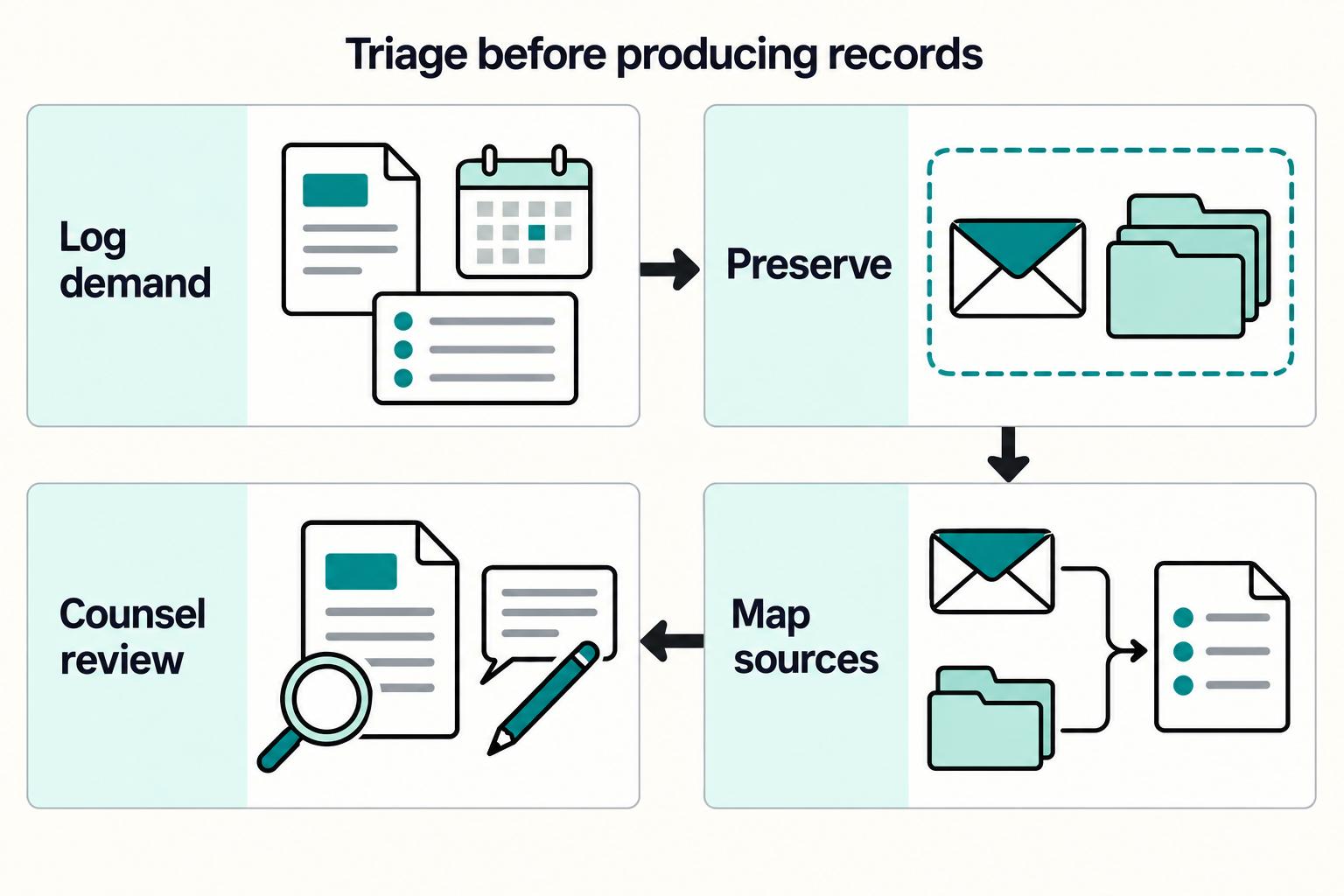
Move fast, but do not produce records on instinct. If you need to **respond to a subpoena for business records**, your immediate job is to control deadlines, preserve records, and make any later production defensible.
A US Expat's Guide to Investing in UCITS ETFs to Avoid PFIC Issues
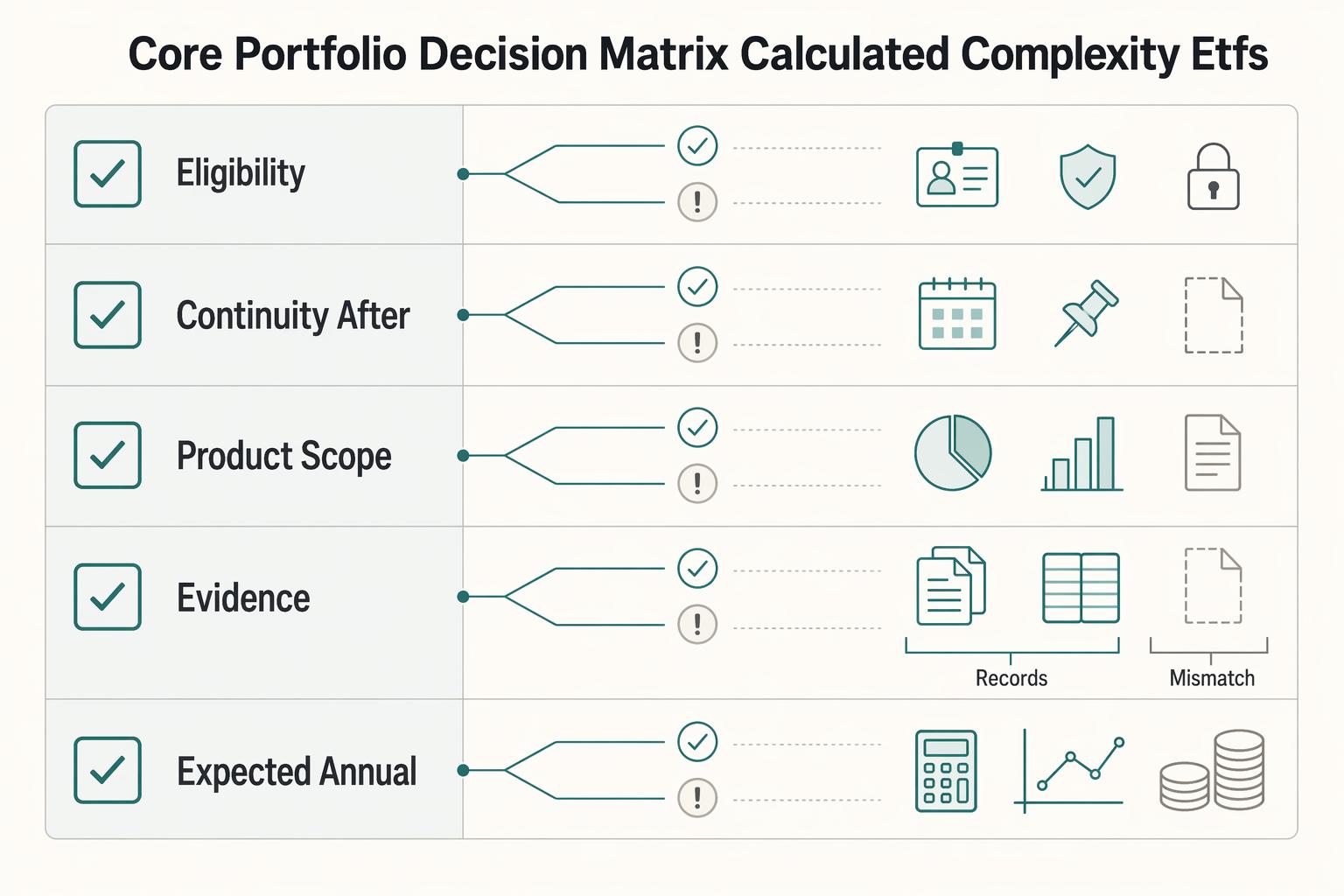
The real problem is a two-system conflict. U.S. tax treatment can punish the wrong fund choice, while local product-access constraints can block the funds you want to buy in the first place. For **us expat ucits etfs**, the practical question is not "Which product is best?" It is "What can I access, report, and keep doing every year without guessing?" Use this four-part filter before any trade: