
Quick Answer
Route invoices by category: keep 2-way matching for stable recurring spend, and require 3-way verification when delivery proof affects payment. For goods, that means PO, supplier invoice, and GRN must align; for services, use approved acceptance evidence instead of a warehouse receipt. Configure matching holds so failed checks block release, then run idempotent API and webhook retries to prevent duplicate approval or posting actions.
What 2-Way and 3-Way Verification Means for Platforms#
The real question is not whether you know the textbook difference between 2-way and 3-way matching. It is whether your team can turn that difference into a real payment gate inside Accounts Payable. In an invoice verification platform, the distinction matters only when it changes what gets paid, what gets held, and what evidence must exist before settlement moves forward.
The baseline is simple. 2-way invoice matching compares the purchase order and the invoice. 3-way invoice matching adds a third document, the goods receipt, and uses it as a pre-payment AP check. That sounds straightforward, but in practice it changes control. Once you require proof that goods were actually received, you are no longer relying only on what was ordered and what was billed.
Three ideas should shape the rest of the decision:
- Definition is the floor
Knowing that 2-way means PO plus invoice, and 3-way means PO plus invoice plus goods receipt, is only the start. The real decision is how each model fits your spend categories and control requirements.
- Reconciliation is the real test
Invoice reconciliation means matching invoices with purchase orders, receiving reports, and related documents to confirm billing accuracy. In practice, this is where overpayments and duplicate charges get caught or missed. A useful checkpoint is simple: before payment is released, confirm that the documents required for that category are present and internally consistent, not just uploaded somewhere in the ERP.
- Automation only helps when the evidence is usable
AP automation can route matched invoices into cloud ERP processes, and higher automation is associated with fewer exceptions and more timely supplier payments. The tradeoff is easy to miss. If receiving data arrives late, vendor invoices are inconsistent, or document links break between tools, automation can move bad assumptions faster and leave you with a larger, messier exception queue.
That is why this guide focuses on spend type and enforcement. You will see where 2-way matching is enough, where 3-way matching should be the default, and where other spend categories may need a different evidence standard. It also covers the failure modes that matter in practice: missing receiving records, invoice and PO mismatches that look minor but keep recurring, and approvals that clear before reconciliation is actually complete. The goal is not maximum strictness everywhere. It is cleaner reconciliation, fewer overpayments, and faster settlement without giving up control.
Related reading: 3-Way Reconciliation Explained: PSP Ledger vs. Internal Ledger vs. Bank Statement.
How to choose the right matching model for your platform#
Choose by risk and data reliability, not by textbook purity. Stricter matching improves control only when PO data, approvals, and receiving evidence are reliable enough to enforce.
| Check | Questions to ask | Article detail |
|---|---|---|
| Control strength | Do rules catch duplicate invoices, quantity mismatches, and billed amounts that should not pass? Do mismatches create a true payment gate? | In Oracle Payables, matching to a PO automatically runs 2-way matching, with stricter options such as 3-way and 4-way. Approval can place a matching hold, and that hold must be released before payment. |
| Operational burden on the exception queue | Are missing receiving records, incorrect PO lines, or delayed approvals pushing valid invoices into queue review? | Oracle's holds resolution workflow routes invoices with manually releasable holds, but teams still need to classify, investigate, and release them. |
| Integration fit across ERP, API, and webhook | Are events duplicated, delayed, or not linked by shared identifiers? Are retries protected by idempotency? | Repeated calls with the same key return the same result, including 500 errors. Keep the same idempotency key and account for at least a 24-hour minimum retention window. |
This section is most useful if you run high-volume supplier invoice approvals, payout batch releases, or audit-heavy close cycles. If PO discipline or approval workflow is weak, fix that first. Upstream data quality directly affects matching accuracy, so weak inputs usually create more holds and noise instead of better control.
- Control strength
Start with what the model can block before payment. Duplicate payments are a common AP error tied to overpayment risk, so test whether your rules catch duplicate invoices, quantity mismatches, and billed amounts that should not pass. In Oracle Payables, matching to a PO automatically runs 2-way matching, with stricter options such as 3-way and 4-way. You also need to confirm that mismatches create a true payment gate. In Oracle, approval can place a matching hold, and that hold must be released before payment.
- Operational burden on the exception queue
Stronger matching increases control but also increases exception handling when inputs are weak. Missing receiving records, incorrect PO lines, or delayed approvals can move valid invoices into queue review and slow payout operations. Oracle's holds resolution workflow routes invoices with manually releasable holds, but teams still need to classify, investigate, and release them. If your receiving data regularly arrives late, tighter matching can still be the right policy for that spend category, but expect higher exception volume until upstream behavior improves.
- Integration fit across ERP, API, and webhook
Matching controls fail when events are duplicated, delayed, or not linked by shared identifiers. Webhook endpoints can be configured via API for event notifications, and retries need idempotency protection. With idempotent requests, repeated calls with the same key return the same result, including 500 errors. For retry-heavy approval or payment-trigger paths, keep the same idempotency key and account for at least a 24-hour minimum retention window.
Use these three checks as an internal decision lens, not a universal formula. When mismatch impact is materially higher than your team can absorb, tightening matching and evidence requirements for that category is often justified; when exception load is driven by poor upstream inputs, fix those inputs first.
If you want a deeper dive, read 3-Way PO Matching for Marketplaces: How to Automate Invoice Verification at Scale.
Best for speed when upstream controls are already reliable#
Use 2-way matching when you need faster throughput and your PO-to-invoice data is consistently predictable. It speeds processing by matching invoice price information to PO price information, but it does not add a receipt or delivery verification check.
- Best for: predictable recurring spend with strong PO hygiene and supplier invoices that rarely deviate from PO terms.
- Pros: faster cycle time, fewer manual touches in the approval workflow, and exception-focused review instead of full manual checks.
- Cons: weaker protection when receipt, service acceptance, or proof-of-delivery evidence is missing or disputed.
- Use case: recurring service invoices where receipt verification is not required.
If fulfillment evidence is a frequent issue in a spend category, use a stricter model such as 3-way matching for that category, even with added operational friction.
You might also find this useful: Invoice Verification for Platforms: How to Validate Contractor Bills Before Releasing Payment.
Best for high-risk categories where payment errors are expensive#
Use 3-way matching when payment error risk is high and you need a delivery check before release. For categories with fulfillment risk, variable quantities, or recurring disputes, require the supplier invoice, purchase order (PO), and receiving record (such as a goods received note, GRN).
The key control is delivery verification. Three-way matching checks invoice, PO, and receipt together, so AP is not relying on invoice claims alone. This is most useful for goods and milestone-based billing where you can tie payment to a defined acceptance record.
Why the extra check earns its cost#
The main benefit is catching overpayment and non-delivery risk earlier. A core test is straightforward: billed quantity should be less than or equal to received quantity. If fewer items were received than ordered, or nothing was received, the mismatch can be flagged before payment.
It can also improve audit evidence quality when the pack is complete and connected: approved PO, supplier invoice, and receiving proof.
Where teams get burned#
The downside is operational. Three-way matching depends on timely receiving capture, so late or incomplete receipt records can grow the exception queue and slow approvals.
Tolerances are the second pressure point. Discrepancies should be checked against defined tolerances; if tolerances are too loose, wrong amounts can pass, and if too strict, AP spends time clearing low-risk variances.
Operator rule#
Before rolling this model out to a spend category, confirm:
- Receiving posts a GRN (or equivalent) consistently and in time for your payment cycles.
- AP can match at line level, especially billed quantity versus received quantity.
- Failed matches place invoices on hold until resolved.
That last control is the gate: if match failures do not reliably hold payment, or receiving evidence is inconsistent, fix the process first or route the category to a different verification method.
Related: Invoice Matching Explained: How Platforms Automate 2-Way and 3-Way Matching to Prevent Overpayment.
Best for mixed portfolios that need both speed and control#
If you run routine invoices and dispute-prone invoices in the same ledger and reconciliation stack, use policy-based routing instead of one match rule for everything. Default lower-risk lanes to 2-way matching, route fulfillment-sensitive lanes to 3-way matching, and tighten controls when a supplier keeps generating exceptions.
That model is practical because common AP systems support segmented policy setup. Dynamics 365 Finance lets you configure matching by item, vendor, or item-vendor combination, and Oracle AP lets you change match options at supplier, supplier site, and PO shipment levels.
1. Default stable categories to 2-way matching#
Use 2-way matching where your spend is repeatable and lower risk. In Microsoft's definition, 2-way matching compares invoice unit price to PO unit price.
This is typically the faster lane, and lower-detail controls can reduce review effort. Keep it only where price discrepancies are the main failure mode. If exceptions are mostly tied to delivery or receiving gaps, route that category out of 2-way.
2. Route fulfillment-sensitive categories to 3-way matching#
Use 3-way matching where delivery evidence is critical. The added control is quantity verification: invoice quantity is compared with matched product receipt quantity, in addition to PO checks.
To keep this control effective, make sure your PO, invoice, and receipt records are linked at line level. Also set tolerances deliberately: Oracle supports quantity- and amount-based tolerances, so loose thresholds can let discrepancies pass, while overly tight thresholds can create avoidable exception queues.
3. Escalate repeat exception patterns and re-check routing on a regular cadence#
Invoice amount alone is a weak routing signal. Escalate when you see repeated matching discrepancies, duplicate-invoice risk, or persistent variance patterns, and use contract terms where they change what counts as acceptable evidence.
Oracle supports periodic duplicate-invoice audits, and match exceptions can be routed to assigned users or roles for resolution. Re-check routing on a regular cadence (monthly can work when volume is high enough), using exception rate, approval latency, and leakage signals together. If both exceptions and cycle time worsen, adjust routing before expanding automation.
You may also want this guide: The Best Way to Invoice a Canadian Client from a US LLC to Minimize Fees.
Best for service and subcontractor billing with non-warehouse evidence#
For service-heavy and subcontractor billing, use approved service acceptance evidence as the payment gate instead of waiting for a warehouse-style GRN. If that evidence is incomplete, keep payment blocked even when the PO and supplier invoice appear aligned.
| Control | Evidence | Payment rule |
|---|---|---|
| Primary match check | Service entry sheets, services receipts, milestone sign-off, or other contract-defined acceptance records | Verify completed or accepted work, not just commercial alignment between PO and invoice. |
| Line or milestone matching | Invoice line, PO line, deliverable or milestone, and the approval record | For milestone-based billing, payment should depend on the milestone or event being fully complete. |
| Approvals and holds | Missing or unresolved evidence | Keep approval workflow strict and apply invoice holds. Holds are the clean stop that prevents payment before exceptions are resolved. |
In service procurement, the control document is often service-specific: SAP uses a service entry sheet, and accounting postings follow its approval; Oracle services flows can use services receipts, including approved supplier-entered timecards for contingent workers.
- Make service acceptance evidence the primary match check
Check service entry sheets, services receipts, milestone sign-off, or other contract-defined acceptance records first. This verifies completed or accepted work, not just commercial alignment between PO and invoice.
- Match to deliverables or milestones, not only header totals
For milestone-based billing, payment should depend on the milestone or event being fully complete. At minimum, keep line-level traceability between invoice line, PO line, deliverable or milestone, and the approval record.
- Use approvals and holds as a hard release control
Keep approval workflow strict and apply invoice holds when evidence is missing or unresolved. Holds are the clean stop that prevents payment before exceptions are resolved.
The tradeoff is operational discipline: stronger control requires clear ownership between AP and service/operations approvers so evidence is approved and attached on time. If approvals are late or outside the PO/milestone structure, fix ownership and evidence standards by category rather than weakening the gate.
We covered this in detail in Partial Payments and Milestone Billing: How to Implement Flexible Invoice Terms on Your Platform.
Side-by-side comparison and decision table#
Choose the matching model your team can prove with complete, timely documents. If core evidence arrives late, tighter matching rules usually increase holds and exception aging instead of improving control.
| Model | Purchase order (PO) | Supplier invoice | GRN | Receipt | Subcontract | Proof of delivery | Control coverage | Operational effort | Best for | Do not use when | Fails when | KPI watch |
|---|---|---|---|---|---|---|---|---|---|---|---|---|
| 2-way matching | Required | Required | Not required | Optional, process-specific | Optional | Optional | Compares invoice and PO terms, including price alignment | Low | Repeatable spend with strong PO discipline | You need receipt or acceptance proof before payment | Weak PO quality, poor PO-invoice line mapping, unmanaged exception queue | Match rate, duplicate invoice catch rate, downstream reconciliation rework |
| 3-way matching | Required | Required | Required for goods flows | Required as receipt evidence | Optional | Optional | Adds receipt-based quantity validation to PO and invoice checks | Medium | Goods purchasing where delivery quantity matters | Receipt/GRN capture is delayed or incomplete | Delayed GRN, stale approvals on receipt evidence, exception queue not actively managed | Match rate, exception aging, downstream reconciliation rework |
| Service-evidence matching | Usually required | Required | Not the primary control | Required as service acceptance receipt | Often required when billing is contract or milestone based | Often required for field delivery evidence | Uses accepted service evidence as the payment gate, not warehouse receipt alone | Medium to high | Services, subcontract work, milestone-based billing | Acceptance evidence is informal, late, or not traceable to PO/contract lines | Stale approvals, weak PO quality, missing proof of delivery in the invoice packet | Match rate by service category, exception aging, downstream reconciliation rework |
| 4-way matching | Required | Required | Required | Required | Optional | Optional unless used as supplemental evidence | Adds inspection/quality evidence to PO, invoice, and receipt controls | High | Quality-critical categories that require inspection before payment | Inspection evidence is not captured reliably | GRN exists but inspection is incomplete, stale approvals after receipt, unmanaged exception queue | Match rate after inspection, exception aging, downstream reconciliation rework, duplicate invoice catch rate |
In Microsoft Dynamics 365, line-level matching can run as 2-way or 3-way, so the practical decision is whether line evidence is consistently usable. In SAP, 3-way checks can consider goods receipts and service entry sheets, so the receipt requirement can mean warehouse receipt for goods or approved service acceptance for services.
Keep the payment gate explicit: when document checks fail, use a matching hold and route the item into an owned exception workflow. If aging buckets keep filling with unresolved holds, your control gap is not only matching logic, it is exception handling.
You may also want this guide: How to Write a Legally Compliant Invoice in Germany.
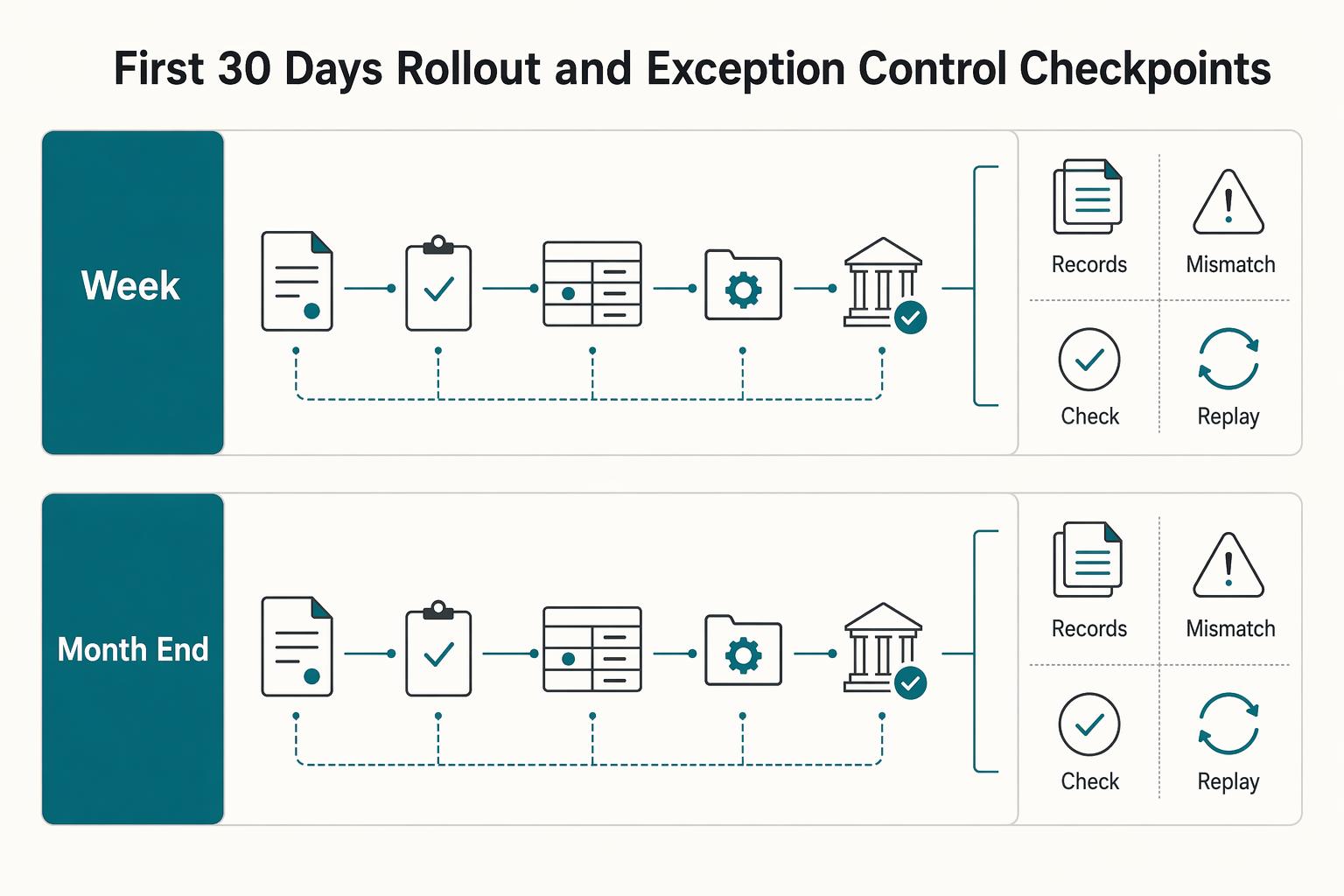
First 30 days rollout and exception control checkpoints#
In the first 30 days, treat success as control clarity: you should be able to trace an invoice from intake to settlement, explain each hold, and show that retries or duplicate events do not create duplicate actions.
| Timing | Focus | What to confirm |
|---|---|---|
| Week 1 | Map the real path to settlement | Trace one invoice through intake, approval, ledger posting, payout batch creation, and settlement. Confirm where AP posts to the general ledger and where the audit trail is stored. |
| Week 2 | Set minimum evidence packs by category | For goods, align the purchase order, supplier invoice, and product-receipt evidence such as a GRN. For services, use service-receipt or accepted-service evidence and publish clear approval rules for mismatches. |
| Week 3 | Make exception ownership explicit | Enforce one path for every exception queue item: detect, classify, assign, resolve. The key control is that no hold sits unowned. |
| Week 4 | Harden API and webhook behavior before volume grows | Make retried API requests idempotent, design webhook handlers for duplicate delivery, and test by replaying the same approval event to confirm no duplicate approval or posting action is created. |
| Month-end | Check control impact before scaling | Review payout batch accuracy, exception backlog, and reconciliation breaks together. Reconcile AP outstanding balances to the general ledger before close, then verify whether blocked items are aging or manual fixes are rising. |
- Week 1, map the real path to settlement
Trace one invoice through intake, approval, ledger posting, payout batch creation, and settlement. Confirm exactly where AP posts to the general ledger and where the audit trail is stored. If those points are unclear on a sample invoice, your automation is not ready.
- Week 2, set minimum evidence packs by category
Define the minimum document set by spend type, not one universal packet. For goods, align purchase order (PO), supplier invoice, and product-receipt evidence such as a GRN. For services, use service-receipt or accepted-service evidence (and subcontract support where your billing model depends on it), then publish clear approval rules for mismatches.
- Week 3, make exception ownership explicit
Enforce one path for every exception queue item: detect, classify, assign, resolve. Keep the taxonomy short and operational, and assign clear owners for review and action. The key control is that no hold sits unowned.
- Week 4, harden API and webhook behavior before volume grows
Make retried API requests idempotent so the same request can be replayed safely without repeating side effects. Design webhook handlers for duplicate delivery, and keep dedupe state so repeat events are safely ignored or handled once. Test this by replaying the same approval event and confirming no duplicate approval or posting action is created.
- Month-end, check control impact before scaling
Review payout batch accuracy, exception backlog, and reconciliation breaks together before expanding. Reconcile AP outstanding balances to the general ledger before close, then verify whether blocked items are aging or manual fixes are rising. If they are, fix evidence capture or exception ownership before you scale further.
Conclusion#
The practical answer is not to pick one model and force it everywhere. You can get better control and cleaner exception handling if you route invoice checks by spend category and enforce that policy consistently.
- Choose the match type by risk, not preference.
Start with the document reality of the category. 2-way matching is the baseline check between the supplier invoice and the purchase order, and it can fit service spend where there is no physical delivery to receive. Move categories to 3-way matching when delivery risk matters, because that adds the goods received note, or GRN, before payment. If you are paying for services, do not force a warehouse-style receiving document where none exists. Define service-specific approval evidence in policy and apply it consistently.
- Treat routing rules, evidence requirements, and queue ownership as the real control.
Policy-based automation can route matches, rejections, or exceptions into buyer review workflows. In practice, you want explicit rules for what goes straight through, what gets held, and who must resolve each exception type inside AP or buyer review. Before payment release, require the evidence your category policy calls for, whether that is PO plus invoice for 2-way or PO plus invoice plus GRN for 3-way.
- Automate enforcement only after the policy is clear.
ERP-integrated matching turns a written rule into an actual gate, because the ERP can perform two-way or three-way checks based on preset tolerances, rules, and user guidelines, then route matches, rejections, or exceptions for review. On the integration side, make API calls retry-safe with idempotency keys so a network retry does not create a duplicate operation. For webhooks and event handlers, assume at-least-once delivery and design for duplicates. As concrete reference points, Eventarc defaults to 24 hours of message retention with retry backoff from 10 to 600 seconds, and Stripe notes idempotency keys can be removed after they are at least 24 hours old. If your duplicate detection window is shorter than the retry behavior of your integrations, you are leaving a quiet failure path open.
Frequently Asked Questions
Is 2-way matching enough for contractor and platform payments?
Sometimes. In accounts payable invoice matching, 2-way matching checks the supplier invoice against the purchase order price, so it does not validate that work or goods were actually received. For contractor or platform payouts, teams often pair it with service receipt, milestone sign-off, or other acceptance evidence before release.
When should finance teams enforce 3-way matching by default?
Use 3-way matching by default when quantity or delivery risk matters more than approval speed. It adds invoice quantity against product receipt quantity, which helps catch billed-but-not-received cases before payment. If receiving records are often missing, expect more matching exceptions and holds until receiving discipline improves.
What documents must be present before payment release?
For goods, the minimum evidence pack is usually the PO, supplier invoice, and goods received note or other product receipt record. For services, teams often substitute a signed confirmation, service acceptance, or milestone approval where a warehouse GRN does not exist. The checkpoint is simple: if a required document is missing or does not match within tolerance, approval can place a matching hold on the invoice, and that hold must be released before payment.
What are the most common causes of invoice match exceptions?
The recurring ones are missing receiving records, quantity mismatches, price mismatches, duplicate invoices, and tax variances. If line-level exceptions remain unresolved, the invoice should not move to payment.
How do you cut exception backlog without weakening controls?
Start by tuning what fields are compared and what tolerances apply for each exception type, instead of sending every small discrepancy to manual review. That can reduce noise without removing the actual gate. Set tolerances only after reviewing root causes, so controls still surface real issues.
How do APIs, webhooks, and idempotent retries improve invoice verification reliability?
They matter because duplicate requests and duplicate events can occur in distributed payment operations. An API idempotency key lets the server recognize a retry safely instead of performing the same action twice. One common reference point is a key length of up to 255 characters, with records pruned after at least 24 hours. Webhooks should be built for at-least-once delivery, which means your handler may receive the same event more than once, and retries can back off from 10 to 600 seconds, so teams typically store an event ID and reject or safely ignore repeats.
Try a related tool
Researched and edited by the Gruv editorial team. Gruv builds cross-border billing, payouts, and finance-operations software for global businesses.
Sources
Includes 6 external sources outside the trusted-domain allowlist.
- docs.stripe.com/api/idempotent_requeststrusted
- docs.stripe.com/api/webhook_endpointstrusted
- apqc.org/resources/benchmarking/open-standards-benchm...external
- basware.com/en/solutions/ap-automation/invoice-matchingexternal
- coupa.com/blog/what-is-invoice-matchingexternal
- docs.cloud.google.com/eventarc/docs/retry-eventsexternal
- docs.oracle.com/cd/A60725_05/html/comnls/us/ap/point04.htmexternal
- docs.oracle.com/en/cloud/saas/financials/25c/fappp/invoice-h...external
Educational content only. Not legal, tax, or financial advice.
Related Posts
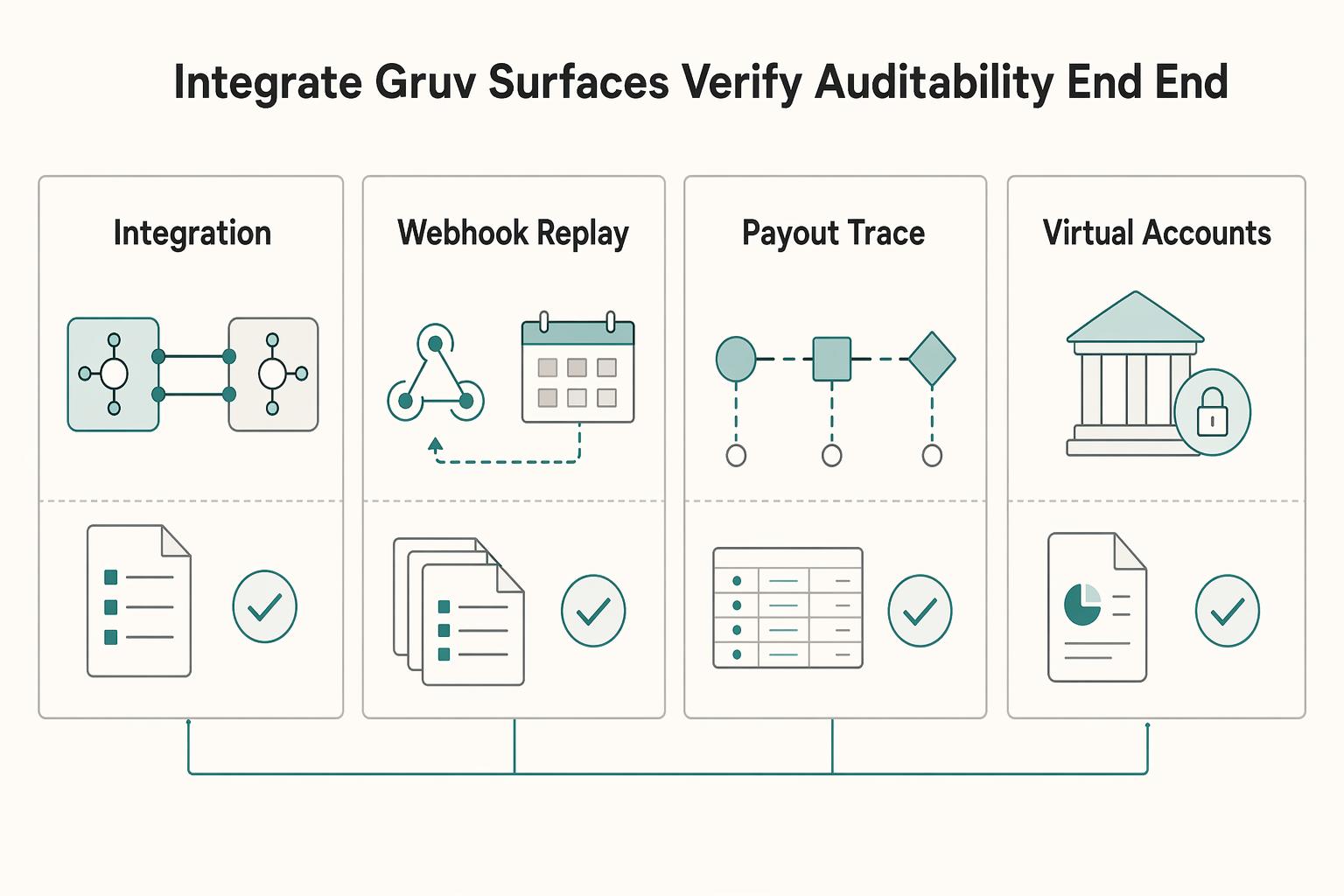
3-Way PO Matching for Marketplaces and Automated Invoice Verification
**Start here: treat three-way PO matching for marketplaces as a control decision, not a software toggle.** If you are still checking invoices only against a purchase order, you can miss cases where the invoice looks right on paper. The delivered item or service may still not match what was ordered.
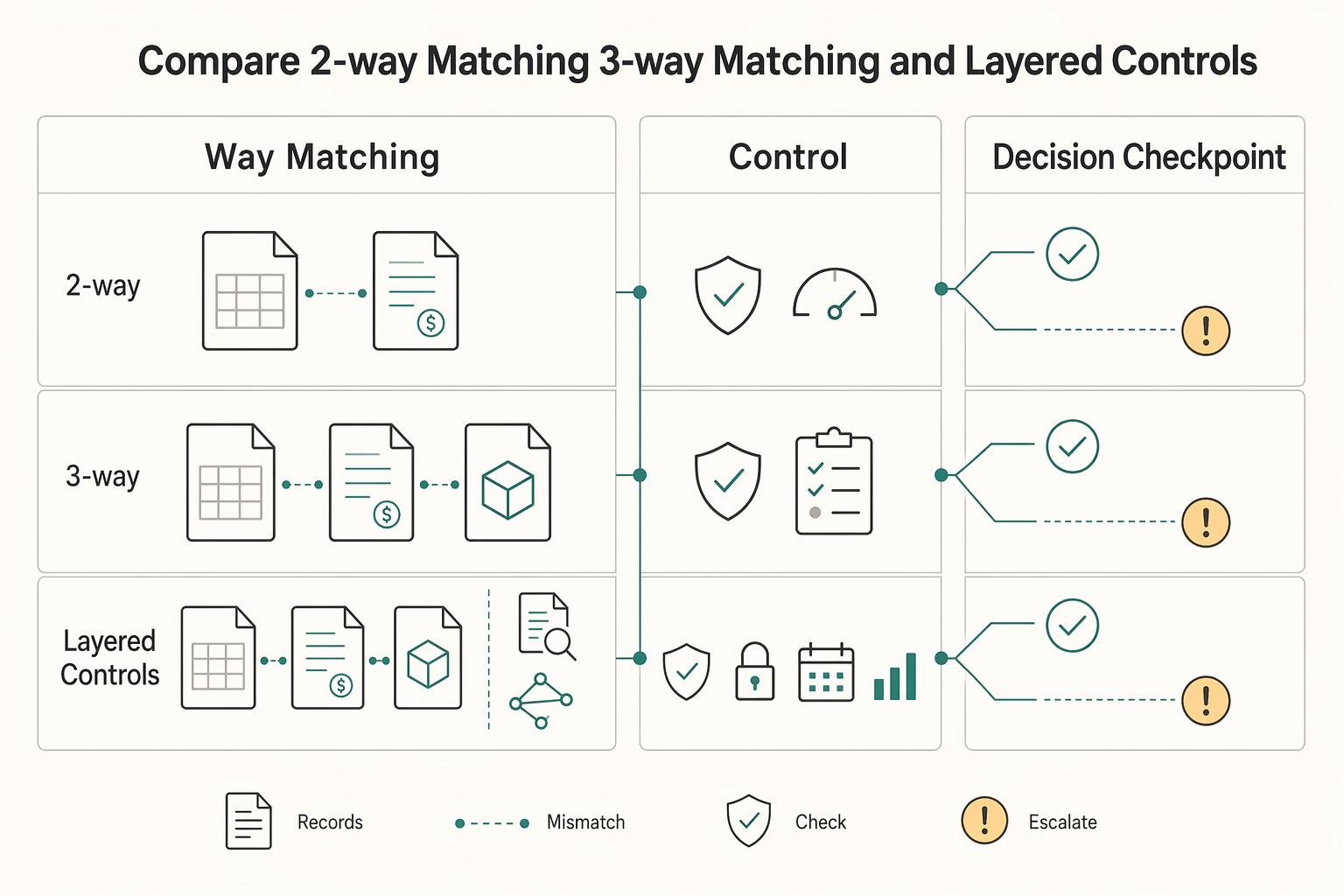
How Platform Teams Use 2-Way and 3-Way Invoice Matching to Stop Overpayment
Platform teams do not need another glossary entry on invoice matching. They need controls that stop real overpayment paths before money goes out the door. At its core, invoice matching compares an invoice with supporting records before payment. The practical question is what you add when a clean match still does not mean the invoice should be paid as submitted.
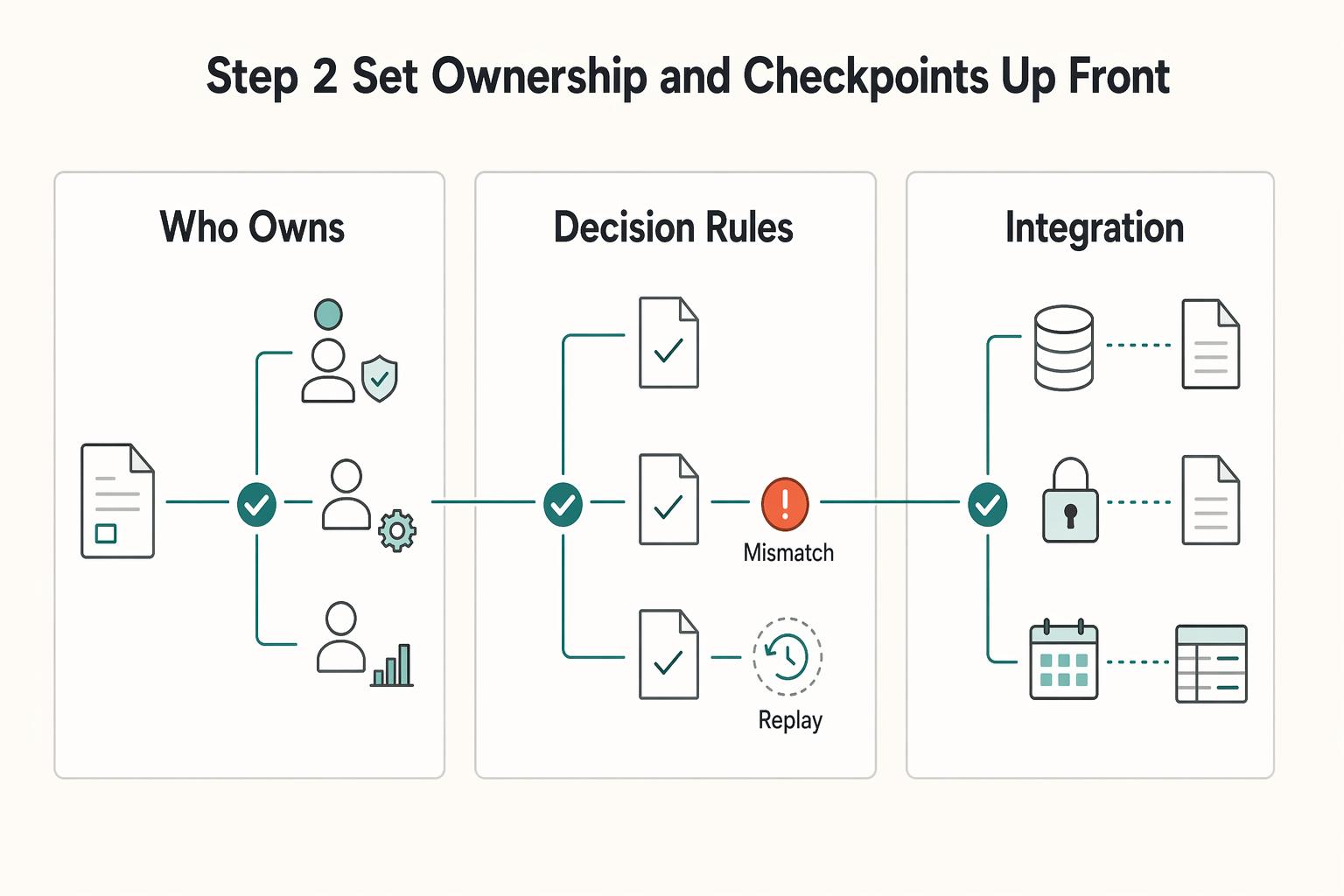
Invoice Verification for Platforms: How to Validate Contractor Bills Before Releasing Payment
Treat invoice verification as a payout gate, not a back-office cleanup step. If a contractor bill can reach payout authorization before it clears your checks, you do not just have an AP process gap. You have a release-control gap.