
Quick Answer
Invoice financing can help freelancers get cash before a Net-30 invoice is paid by advancing funds against unpaid invoices. It works best for a short-term timing gap, not as a recurring fix for pricing, billing, or client-term problems. Compare the fee with the cost of disruption, and confirm eligibility, verification steps, payout cutoffs, and contract terms before relying on promised speed.
How Invoice Financing Works for Freelancers#
Net 30 gives the buyer 30 days to pay from the agreed contractual trigger, often the invoice date but sometimes receipt or acceptance. Confirm that trigger and the actual due date before financing the invoice; an unaccepted invoice or disputed work may not qualify.
That tension is not limited to struggling businesses. When customers pay in 30, 60, or 90 days, even profitable companies can end up with cash flow gaps. The practical issue is working capital: cash is tied up in unpaid invoices instead of being available for day-to-day operations. The Federal Reserve's 2024 small business payments report adds useful context here: roughly four of every five small firms reported payment-related challenges. If delayed receivables are distorting decisions, that is not a niche problem. It is a common one.
This is where financing products enter the picture, and where many teams get sloppy. Invoice financing means using unpaid invoices to access cash before your customer pays. Invoice factoring is different: you sell the invoice to a third party, and that party collects the payment. Those are not just two labels for "get paid faster." They shift control and risk in different ways, which is why this article treats them as operating decisions rather than quick fixes.
The key judgment up front is simple: faster cash is only useful if it improves resilience more than it adds cost or risk. Invoice financing has an explicit price because you repay the advance plus a fee. That can be worth it when the alternative is missing critical payments or making short-term decisions just to bring cash forward. It can also erode profitability if it becomes a recurring way to cover structural cash-flow gaps.
So the goal here is not to sell the idea of getting paid today. It is to help you decide when early access to receivables is a smart cash-flow move, and when it is a costly patch over a deeper issue. As you read, keep one practical question in mind: are you solving a timing problem, or are you financing a business model problem?
The sections that follow stay focused on that distinction. You will get concrete decision rules for choosing between financing and factoring, contract red flags that deserve legal and finance review, and an implementation checklist for product, finance, and payments ops teams. You should also expect some skepticism around headline speed claims, because "same-day funding" only matters if the eligibility conditions, fee structure, and collection mechanics hold up in production.
Build the mental model before you compare offers#
Start by deciding what you are buying: an advance against receivables or a sale of receivables. That single choice drives collections control, nonpayment risk, and whether fast funding actually fixes your cash gap.
This guide uses invoice financing for borrowing secured by unpaid receivables and factoring for selling receivables to a factor. Terminology varies: invoice finance can be an umbrella covering both. The contract determines ownership, collections control and recourse. A lender may require a controlled collection account even when the customer relationship remains yours.
“Early Pay” and “same-day funding” describe timing, not legal structure. Confirm invoice validity, completed/accepted work, dispute status, customer credit, existing receivable liens and any assignment restrictions. Get the approved advance percentage and actual funding timeline for your invoice; a market range cannot establish your usable cash.
Treat recourse vs non-recourse factoring as a core risk decision. In recourse factoring, you remain liable if the customer does not pay; in non-recourse factoring, the factor absorbs nonpayment loss under covered terms. Do not assume non-recourse covers every nonpayment scenario. Confirm covered events, dispute carveouts, and any repurchase obligations in the signed agreement. A fast offer with tight funding limits or broad recourse language can still leave you short on cash and on the hook. For related collection options, see The Best Collection Agencies for Small Businesses.
What drives same-day payout and what usually delays it#
Same-day payout depends on verification quality and payout timing windows, not just a provider's headline claim. In practice, you get speed when the invoice and buyer checks clear quickly and the payout rail cutoff is still open.
What actually makes a same-day payout possible#
Same-day funding is usually the fast path of normal invoice financing, not a separate product. Providers still verify invoice authenticity, customer creditworthiness, and payment terms before releasing funds.
Some providers offer faster draws after initial onboarding and debtor approval. Ask separately how long facility setup, invoice verification, release and bank receipt take. A same-day draw for an existing approved customer does not establish same-day approval for a new freelancer or invoice.
Where delays usually appear after approval#
Delays can come from underwriting, incomplete onboarding, debtor confirmation, missing acceptance evidence or bank submission. Track each timestamp so you can distinguish an approval hold from a transfer delay.
Invoice data problems also block progress, including wrong tax treatment, incorrect pricing, or mismatched quantities. On the payer side, invoices can also be misrouted internally and sit untouched, which can hold up downstream confirmation and payment flow.
Payout rails add a hard timing boundary. For Same Day ACH, the Federal Reserve's third window uses a 4:45 p.m. ET input deadline and 6:00 p.m. ET settlement time; after cutoff, approval may still be valid but settlement may shift past same day.
What to require in writing before you rely on speed#
If a provider promises same-day funding, ask for the exact conditions in writing. At minimum, request:
| Request | Ask for | Grounded note |
|---|---|---|
| Eligibility scope | Whether same-day applies only to existing clients or pre-approved customers | Some providers limit same-day funding to existing clients or invoices from pre-approved customers |
| Onboarding and documents | The full onboarding and document requirements before timing starts | Funding can stall if onboarding is incomplete, or the funding application and required documents are not complete |
| Verification conditions | Invoice and buyer verification conditions that must be met | Providers verify invoice authenticity, customer creditworthiness, and payment terms before releasing funds |
| Payout methods and cutoffs | Eligible payout methods and daily cutoff times | For Same Day ACH, the third window uses a 4:45 p.m. ET input deadline and 6:00 p.m. ET settlement time |
| After-cutoff handling | What happens when approval occurs after cutoff | After cutoff, approval may still be valid but settlement may shift past same day |
| Timing proof | Approval time and fund release time on a normal invoice case | Ask the provider to time-stamp both |
- whether same-day applies only to existing clients or pre-approved customers
- the full onboarding and document requirements before timing starts
- invoice and buyer verification conditions that must be met
- eligible payout methods and daily cutoff times
- what happens when approval occurs after cutoff
Also ask them to time-stamp both approval time and fund release time on a normal invoice case. If they cannot map those conditions clearly, treat the speed claim as conditional, not guaranteed.
Compare your real options side by side#
Choose based on obligation and risk transfer, not headline speed: borrowing against invoices, selling invoices, or taking a broader business loan.
| Option | Approval path | Time to funds | Control of collections | Main failure scenario | Contract terms to pin down | Funding limits | Accepted payout methods |
|---|---|---|---|---|---|---|---|
| Invoice financing | You borrow against outstanding invoices (not a sale of the receivable), and approval is tied to the invoices and buyer profile. | Provider-specific. Do not assume uniform timing across providers. | Receivable is not sold, so collections may stay closer to your process, but confirm payment flow in contract. | Funding can fail if the provider does not approve the invoice or buyer risk. | Advance structure, repayment triggers, dispute handling, and who receives customer payment. | Provider-specific; confirm your approved line and any concentration limits in writing. | Provider-specific; confirm rails and settlement expectations in the agreement. |
| Recourse factoring | You sell invoices at a discount; the factor underwrites the receivable. | Provider-specific. | Collections often shift toward the factor; confirm notice and remittance mechanics. | If the customer does not pay, you remain responsible for the debt. | Repurchase/chargeback clauses, dispute treatment, and fee mechanics tied to aging/nonpayment. | Provider-specific; do not rely on homepage summaries. | Provider-specific; verify rails and timing terms contractually. |
| Non-recourse factoring | Similar sale-based approval path, but contract defines which nonpayment losses the factor accepts. | Provider-specific and contract-dependent. | Similar operational setup to factoring; confirm ownership of customer communication. | "Non-recourse" can be narrow; losses outside covered events may still come back to you. | Exact covered-loss definition, exclusions, dispute carve-outs, and trigger language. | Provider-specific; verify exclusions by buyer/invoice profile. | Provider-specific; confirm rail availability and timing by jurisdiction. |
| Bank loan | Business-level underwriting. For SBA 7(a), terms are negotiated between borrower and participating lender, and approval requires creditworthiness plus reasonable repayment capacity. | Not tied to a single invoice; depends on lender underwriting and closing. | You keep customer billing and collections because the loan is separate from individual receivables. | Decline risk if repayment capacity or credit profile does not meet lender requirements. | Amount, repayment schedule, collateral/guarantees, and use-of-proceeds limits. | U.S. SBA 7(a) maximum: $5 million; borrower eligibility and lender underwriting still apply. Other bank products differ. | Lender-specific disbursement methods and timing. Confirm before planning around a payment date. |
Compare offers on the same invoice and expected payment date. Obtain the advance, fees, reserve, recourse, borrower guarantee, notice-to-client requirements and net bank amount from each provider. Country coverage or payment rails for ordinary client collections do not establish that a financing product is available to you.
Related reading: How to Get Paid in Crypto as a Freelancer (and Manage the Risks).
Decide with unit economics instead of urgency#
Use fast funding only when the cash-timing benefit is worth more than the fee drag on margin. The decision is not about speed alone, but whether continuity and working-capital protection outweigh the cost.
For an illustrative $5,000 invoice, assume an 80% advance ($4,000) and a flat 2% fee on invoice face value ($100), deducted from the reserve after customer payment. You receive $4,000 now and $900 later: $4,900 total. If the fee instead accrues at 2% of face value for each 30-day period, a 60-day payment produces $200 in fees and $800 later. With $3,500 delivery costs, the original $1,500 contribution falls to $1,400 or $1,300. The contract must establish the actual fee base, partial-period rounding and recourse. The $1,000 reserve is delayed cash, not automatically an additional fee.
Financing brings cash forward but does not create revenue or improve the margin on the underlying work. A borrowing arrangement also creates a repayment liability; it does not automatically increase net working capital, defined as current assets minus current liabilities. Model liquidity, total financing cost and repayment dates separately.
| Situation | What to test | Default call |
|---|---|---|
| One-off timing gap on a solid invoice | Compare financing cost to the value of avoiding disruption (for example payroll pressure, late vendor payment, or a forced discount) | Use financing selectively |
| Repeated use on the same client term (such as Net-30) | Check whether the same buyer, project type, or service line repeatedly needs advances | Treat as a pricing or terms signal first |
| Ongoing cash strain across multiple cohorts | Test whether the issue is broader working-capital design, not a single receivable cycle | Fix billing structure, pricing, or term mix before adding advances |
Repeated advances do not automatically prove underpricing, but they are a strong signal your cash cycle and commercial model may be misaligned. If a client consistently pays on Net-30 and you keep paying to pull cash forward, that cost may belong in pricing, staged invoicing, deposits, or client selection instead of recurring advances.
Use a simple operating rule: fix structure first, then use financing as a targeted tool. If recurring Net-30 gaps are causing discount pressure, payroll stress, or delayed direct delivery costs, treat that as a structural issue before normalizing monthly advance fees.
Track invoice date, contractual due date, funding date, customer payment date, every fee, direct delivery cost and repeat-use frequency. Compare the cash gap avoided with the cost actually paid, including a customer-payment delay scenario.
One red flag is repeated use without better collection timing. If buyer payment behavior is unchanged but advance frequency rises, you are likely adding recurring margin drag rather than buying flexibility.
If the real issue is slow client payment terms, our guide on How Platform Teams Get Freelancers Paid Faster Beyond Net-30 covers operational ways to reduce the need for financing in the first place.
Contract terms that matter more than the homepage promise#
The homepage speed promise is secondary; your downside is set by contract terms and funding limits. Read the agreement assuming one invoice will go wrong.
Build a one-page review sheet from the actual agreement. Find repayment/repurchase events, disputes, reserve release, fee calculation, assignment, security interests, guarantees, termination and arbitration. Clause titles vary, so search for these obligations rather than expecting one standard set of headings.
| Clause area | What to extract into your review sheet | Why it matters |
|---|---|---|
| Repayment or repurchase triggers | Exact events that let the provider demand repayment or repurchase | This can turn an advance into your repayment obligation quickly |
| Dispute handling | How "Dispute" is defined, who decides, and whether arbitration is mandatory | A buyer dispute can change payment timing and control |
| Reserve treatment | When reserves are held, released, or netted against fees or losses | Holdbacks change effective cash yield even when headline pricing looks acceptable |
| Recourse and funding limits | Whether the structure is recourse or non-recourse, the advance percentage, and when it can be reduced | This sets nonpayment loss allocation and usable cash |
Recourse terms deserve extra scrutiny. In recourse factoring, you remain responsible if the customer does not pay. In non-recourse factoring, the factoring company accepts nonpayment loss, but do not assume that applies to every nonpayment scenario unless the agreement says so clearly.
What to verify before launch#
Treat funding limits as live controls, not static features. The advance percentage may vary by account debtor, and some agreements allow changes after an Event of Default at the purchaser's discretion. That means approved invoices can still fund at different levels over time.
When to stop and get clarification#
Pause rollout if terms are unclear on disputes, nonpayment, reserve release, or repurchase timing. Ask for written clarification on three scenarios before go-live: customer pays late, customer disputes the invoice, customer never pays.
Store those answers with the agreement, approval conditions, and your marked review sheet. If those scenarios are not addressed clearly in writing, the speed promise is not the product you are actually buying.
Execution checklist for finance and product teams#
For a solo freelancer, run the review in order: verify the provider and invoice eligibility, read the agreement, confirm bank funding timing, then finance one suitable invoice. A platform offering this to many freelancers can use the same steps as a controlled cohort pilot.
Approval and money movement are different events. Keep the reviewed terms, document checklist, support contact and exit process with the invoice. For a platform, assign monitoring and exception owners; a bank’s third-party risk guidance can inform that process but is not a universal legal requirement for freelancers.
Build the provider evidence pack#
Create one evidence pack per provider so finance, ops, and product are working from the same record.
| Evidence item | What to include |
|---|---|
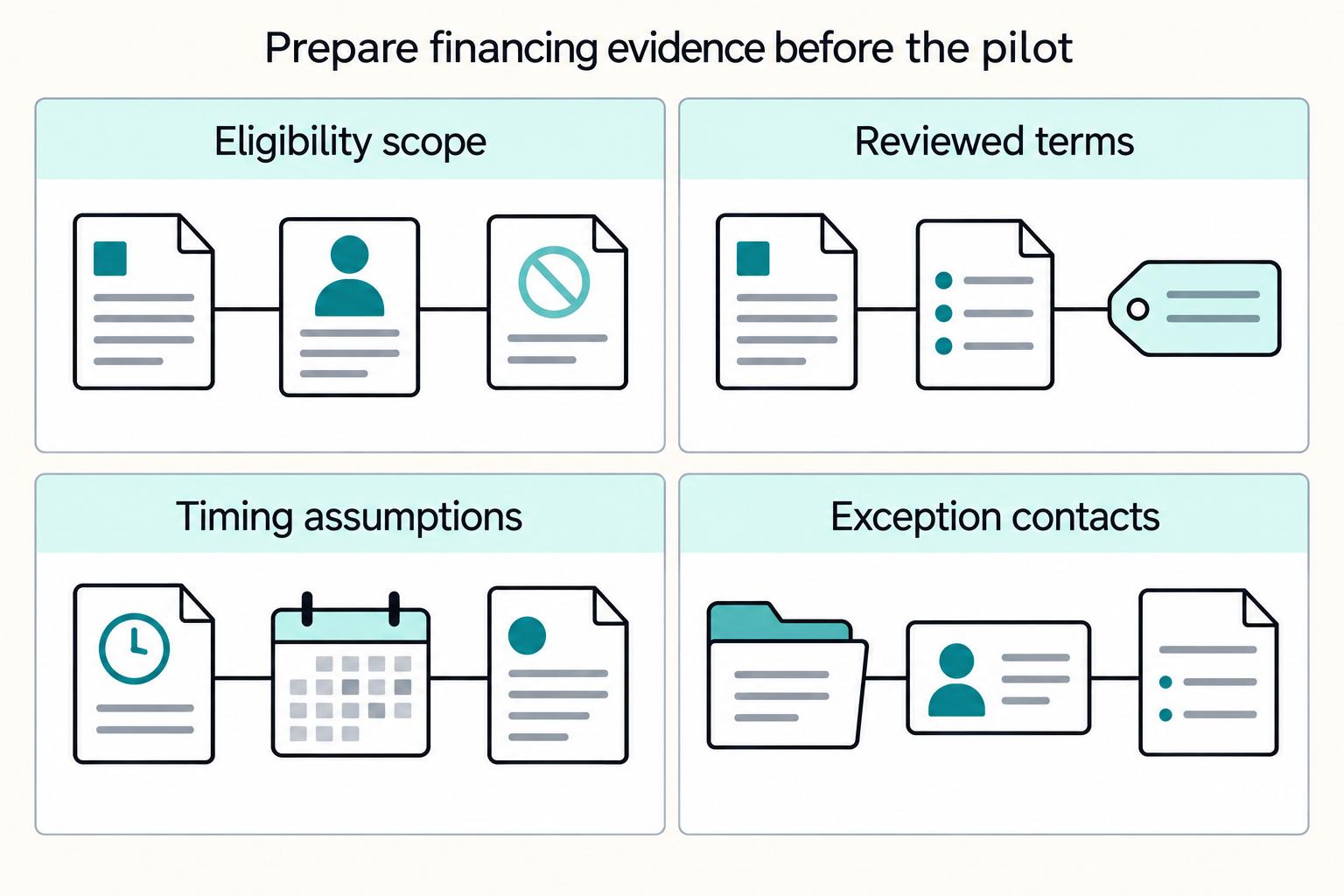
| Eligibility matrix | Invoice types, buyer profiles, and conditions in scope for the pilot, plus known exclusions |
| Sample agreement | The exact legal-reviewed version, annotated for recourse, disputes, reserves, repurchase triggers, and funding limits |
| Payout timeline assumptions | Written assumptions from approval to funds arrival, tied to rail cutoffs |
| Exception contacts | Named escalation contacts for approval failures, stalled payouts, reconciliation breaks, and disputes |
Include at least:
- Eligibility matrix: invoice types, buyer profiles, and conditions in scope for the pilot, plus known exclusions
- Sample agreement: the exact legal-reviewed version, annotated for recourse, disputes, reserves, repurchase triggers, and funding limits
- Payout timeline assumptions: written assumptions from approval to funds arrival, tied to rail cutoffs
- Exception contacts: named escalation contacts for approval failures, stalled payouts, reconciliation breaks, and disputes
For Same Day ACH, distinguish bank transmission deadlines from distribution and settlement times. The FedACH schedule lists transmission deadlines of 10:30 a.m., 2:45 p.m. and 4:45 p.m. ET, with settlement at 1, 5 and 6 p.m. ET. Your provider may impose an earlier cutoff. Noon is a distribution target, not a submission deadline.
Define the checkpoints before launch#
Use a short checkpoint set that measures whether approved invoices become settled payouts with manageable exceptions.
| Checkpoint | What to verify | Why it matters |
|---|---|---|
| Approval-to-funding time | Time from invoice approval to payout initiation and funds arrival | Separates underwriting speed from actual cash delivery |
| Exception rate | Failed approvals, returned payouts, account-data errors, and manual interventions | Reveals hidden operational drag early |
| Reconciliation completeness | Invoice, advance, bank credit, customer payment, repayment, fees and reserve release all match | Prevents "funded but not settled" ambiguity |
| Dispute resolution cycle time | Time from dispute opening to final outcome | Model the agreement’s dispute and repayment timelines; no universal 2–3 month resolution period applies |
Reconcile the entire financing lifecycle, not only the funding batch. Link the approved invoice, advance, bank credit, customer receipt, provider repayment, fees and any reserve release. If a bank transfer outcome is unknown, query and reconcile it before arranging replacement funding. Monitor errors for the actual rail; an ACH network return-rate rule is not a safe error budget for your financing program.
Make ownership and fallback explicit#
Assign one primary owner per issue type before go-live. Finance owns settlement confirmation and reconciliation, ops owns exception handling and external communication, and product owns integration states, alerting, and user-facing payout status.
Document fallback actions in the rollout plan:
- Replacement funding only after the original transfer outcome is confirmed and any duplicate risk is controlled
- Review path for approvals that fail despite apparent eligibility
- Client communication templates for delays, account-data corrections, and dispute status
- Exit trigger to pause the cohort if reconciliation gaps or exception volume exceed team capacity
Start with a small Net-30 cohort and watch approval, payout, and exception flow end to end. If the pilot cannot reconcile cleanly and escalate predictably, scaling invoice financing or invoice factoring will scale risk with it. For a step-by-step walkthrough, see A Guide to Invoice Factoring for Freelancers.
Use fallback paths when financing is a poor fit#
Use the fallback that matches the risk: use invoice financing for timing risk, and legal or collections paths for non-payment risk. Invoice financing is built to free up cash tied up in unpaid invoices (sometimes up to 90% of invoice value), but it does not solve enforcement when a buyer may not pay.
| Fallback | When it fits | Grounded note |
|---|---|---|
| Tighten invoice payment terms | Where your clients will accept them | Terms affect payment speed and unpaid balances |
| Progress invoicing | When you can bill partial amounts during delivery | Bill partial amounts during delivery instead of waiting for one end-of-project invoice |
| Selective bank borrowing | If the issue is broader working-capital pressure rather than individual invoices | U.S. SBA 7(a) is one eligible-business option; a maximum program limit is not your approved amount |
| Mechanic's lien | When receivables become delinquent and your work and jurisdiction qualify | It is a specialized statutory security interest tied to qualifying labor, materials, or services connected to improving, repairing, or maintaining property |
| Vetted collection agency | If recovery still justifies escalation | Check licensing, permitted collection conduct and dispute handling for the jurisdiction and business debt involved |
Start by fixing delay mechanics before adding funding cost. If cash delays come from term design or billing structure, these are usually cleaner first moves:
- tighten invoice payment terms where your clients will accept them, since terms affect payment speed and unpaid balances
- use progress invoicing so you bill partial amounts during delivery instead of waiting for one end-of-project invoice
For a broader cash-cycle gap, compare an overdraft or working-capital line with single-invoice funding. For eligible U.S. businesses, SBA 7(a) is one option through a participating lender, subject to repayment capacity and other program criteria. A published maximum is not a funding offer or evidence that a small freelancer invoice can be funded promptly.
When a receivable becomes delinquent, first preserve the contract, delivery acceptance, invoice and payment reminders. A mechanic’s lien is a specialized property-related remedy, usually unsuitable for ordinary freelance digital services; confirm eligible work and local deadlines before relying on it. For commercial collection, check the agency’s jurisdiction, authority, fees and conduct. The U.S. FDCPA generally covers consumer debts, not business invoices, so its consumer protections are not a universal B2B collection framework.
Conclusion#
The right call is not chasing cash today at any price. It is choosing the option that makes your working capital more reliable without turning fees, interest, and exception handling into a hidden margin tax.
Test whether cash arrives in time and whether fees remain affordable if the customer pays late. Obtain the upfront charge, recurring fee or interest schedule, default costs and any personal guarantee. Model the signed offer rather than treating a named provider’s old advertised maximum as a market price.
Use the tools from the earlier sections in order. Start with the comparison table to decide whether financing, factoring, or another path fits the kind of risk you actually have. Then use the contract review sheet to confirm repayment triggers, dispute handling, reserve treatment, and recourse terms in writing. Finish with the execution checklist, because production reality is where many good-looking offers break: approval status, invoice verification, payout rail timing, reconciliation, and exception ownership often decide whether the promised speed is real.
For cross-border invoices, confirm that the financing provider accepts your entity, customer country, invoice currency and collection account. Ordinary payment-provider coverage does not establish financing eligibility. Record whether repayment is in the invoice currency or another currency and who bears conversion costs.
Include wire fees, intermediary deductions, conversion spread and repayment-currency exposure in the same cash model. Confirm the supported borrower, debtor and bank-account combination directly. Keep the financing agreement separate from any payment platform’s account-verification or payout-service terms.
So the practical recommendation is straightforward: launch with a small cohort, measure real approval-to-funding time, exception rate, and total cost after fees, then expand only if the first cohort proves the economics. If the data does not hold up, treat that as a product fit problem, not a temporary operations glitch.
Frequently Asked Questions
What is the practical difference between invoice financing and invoice factoring for freelancers?
Invoice financing means borrowing against unpaid invoices. Invoice factoring means selling those invoices to a factor at a discount. The practical difference is ownership and obligation: with financing, the receivable is collateral for debt; with factoring, the receivable itself is being sold.
Is invoice financing effectively a loan, and why does that distinction matter in contract terms?
Usually yes. Public guidance commonly describes it as a loan or line of credit secured by your outstanding invoices, so the real economics sit in repayment triggers, default language, and fees, not just the advance rate. If the agreement is vague on what happens when a client pays late or disputes the invoice, pause and get that clarified in writing.
How realistic is same-day funding once onboarding, verification, and payout methods are considered?
Same-day funding depends on eligibility, completed verification, release and the provider’s bank cutoff. Ask when the clock starts and what “funded” means. An approved draw or sent transfer is not proof of available bank cash; verify the receipt before committing to an expense.
When does paying for early cash improve working capital instead of compressing margin?
It helps liquidity when the value of earlier cash exceeds the total financing cost. Compare actual net proceeds and repayment under both on-time and late-payment scenarios. A percentage fee is incomplete without its base, accrual period, minimum fees and reserve treatment.
What should I verify first in eligibility requirements and funding limits before choosing a provider?
Confirm that the provider accepts your business type, invoice size, completed work and customer. Check disputes, overdue status, assignment restrictions, existing liens and customer concentration limits. Obtain the approved amount and required evidence for this invoice, plus the conditions that can reduce or withdraw availability.
How do recourse factoring and non-recourse factoring change downside risk?
With recourse factoring, you remain responsible if your customers do not pay. With non-recourse factoring, the factor accepts covered nonpayment loss, but you should not assume that covers every dispute, fraud case, or deduction. The red flag is treating "non-recourse" as blanket insurance when the agreement may carve out major failure modes.
What should I do when a provider's speed claim is not met in production?
First, compare the miss against the provider's actual conditions: approval status, completed invoice verification, funding request time, and payout method. Then escalate through the provider's exception path and keep a timestamped record of approval, draw request, release, and settlement so you can see whether the delay came from underwriting, verification, or the payment rail. If misses become repeat behavior, treat that as a product reliability problem, not a one-off inconvenience.
Try a related tool
Researched and edited by the Gruv editorial team. Gruv builds cross-border billing, payouts, and finance-operations software for global businesses.
Sources
Includes 3 external sources outside the trusted-domain allowlist.
- fdic.gov/consumer-compliance-examination-manual/vii-3...trusted
- law.cornell.edu/wex/mechanic%27s_lientrusted
- sba.gov/loans/7a-loanstrusted
- stripe.com/resources/more/invoice-financing-for-small-b...trusted
- british-business-bank.co.uk/business-guidance/guidance-articles/finance/...external
- fedsmallbusiness.org/reports/survey/2024/2024-report-on-paymentsexternal
- frbservices.org/resources/resource-centers/same-day-ach-reso...external
Educational content only. Not legal, tax, or financial advice.
Related Posts
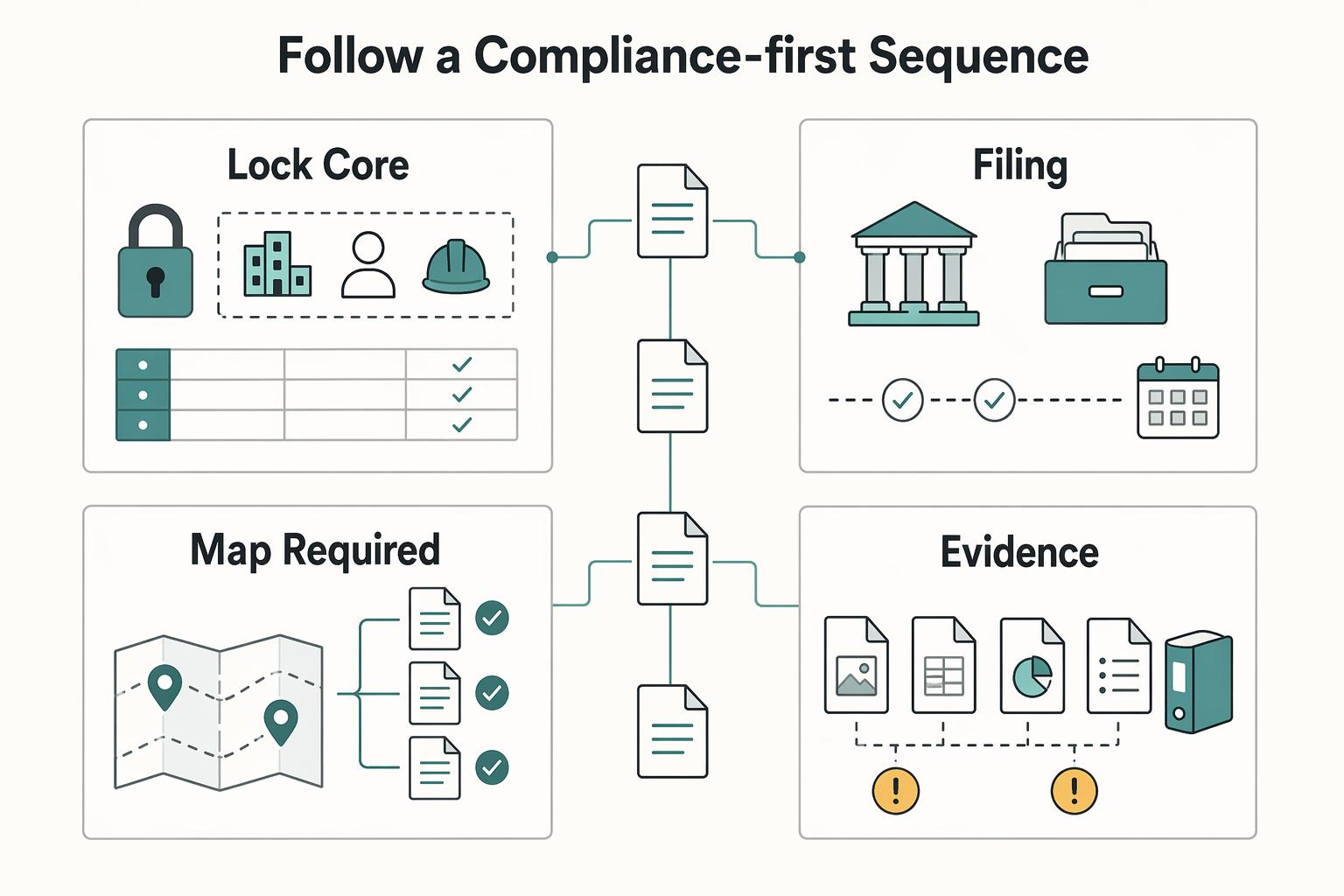
What Is a Mechanic's Lien and Can Freelancers Use It?
Unpaid invoices are an operating cash-flow risk, not just an annoyance. They force repeated decisions about follow-up and escalation, and payment friction is common. A February 13, 2025 Boston Fed summary reported that 80% of respondents in a 4,920-employer small-business dataset faced payment-related challenges.
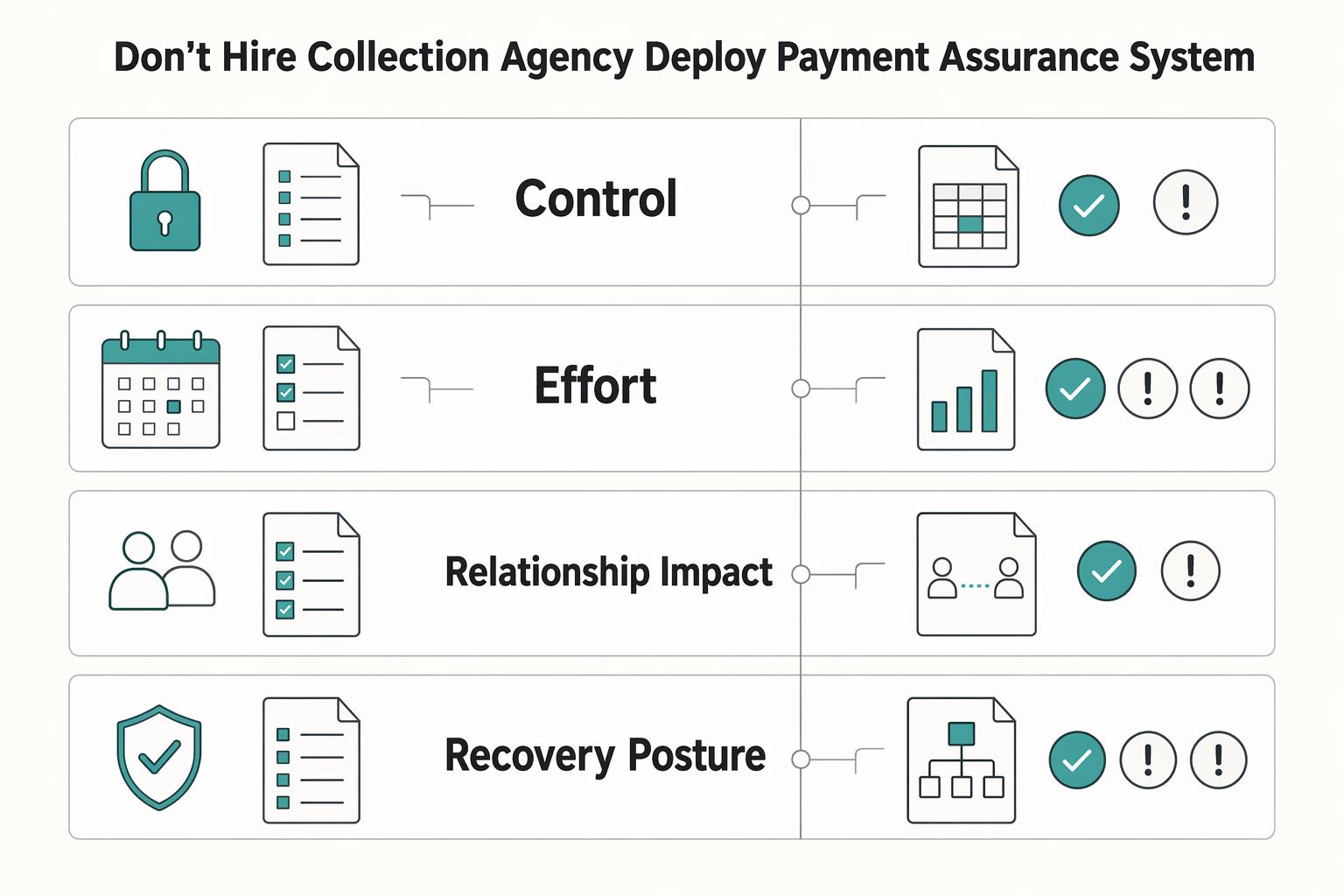
Collection Agencies for Small Businesses: Use a Payment Assurance System First
If you're searching for the **best collection agencies for small business**, the short answer is this: a collection agency is a later-stage tool, not your default operating model. Start with a payment assurance system that protects cash flow, keeps client relationships workable, and gives you a clear escalation path when invoices go past due.

The Freelance Payment Penalty: A Modeled Audit of Platform Fees, FX Spreads, and Payout Delays
The money rarely disappears through a single, easy-to-spot fee. The real loss is stacked. A marketplace takes its commission, a processor adds a charge for international cards, a bank or payment company converts the currency at a spread, a platform holds the funds before release, and a wire sheds a little to intermediaries on the way in. Each layer looks defensible on its own, but the worker feels the combined result as a smaller deposit and a later payday.