
Quick Answer
Health and wellness platform billing works best when you separate direct memberships, insurer billing, and employer-funded benefits before choosing tools. Lock trial rules, renewal behavior, lifecycle states, and edge-case money policies for direct pay first. For insurance-linked revenue, treat credentialing, payer paneling, enrollment, and exception handling as launch prerequisites, then roll out market by market with explicit go or no-go gates.
Managing memberships, trials, and insurance billing#
A common rollout mistake is treating membership billing, insurer billing, and employer-sponsored benefits as one workflow. They are not. Membership billing is automatic, recurring billing after someone subscribes. Insurer billing runs through claims, with payment moving through payer channels. Employer-sponsored benefits are different again, because coverage or reimbursements are funded through employer-backed structures such as a group health plan or an individual coverage HRA (ICHRA).
Each model changes who pays, what triggers payment, and what your product needs to support first. Direct pay centers on recurring member charges. Insurer-linked revenue may require eligibility checks, claim submission, rejection management, and payment posting. Employer-sponsored models add a different buyer-user setup, where the employer funds coverage or reimbursements and employees use the service.
Before you start#
Before you approve roadmap scope, identify who pays for your first revenue dollar and for renewal or repeat use. If that payer changes, split decisions by model before you compare tools. If your team cannot clearly say whether revenue is expected to come mainly from the member, an insurer, or an employer-funded benefit, you are not ready to select billing infrastructure.
In the U.S., this distinction is practical. Employer-sponsored health insurance is the largest source of coverage for non-elderly residents. Direct-pay demand is also substantial: about 59 million Americans spend $30.2 billion per year out of pocket on complementary health approaches. Both can be true at once. That is why consumer subscription demand does not mean insurer or employer billing will behave the same way.
Treat trials as an operations and compliance decision, not just a growth lever. In the U.S., FTC negative-option requirements explicitly cover free-trial offers and automatic renewals. The final rule applies to all negative-option programs in any media. Trial setup can therefore affect cancellation flow, renewal disclosure, and support handling when users do not convert.
Use this guide to stop mixing models early. It gives you decision checkpoints, sequencing rules, and a go/no-go checklist tied to payer reality so you can compare options without blending subscriptions, claims, and employer-funded benefits.
This pairs well with our guide on How to Integrate Your Subscription Billing Platform with Your CRM and Support Tools.
Separate the four models before you compare vendors#
Compare vendors only after you sort options by primary payer and revenue trigger. Otherwise, you end up treating practice software, premium billing, ICHRA benefits, and corporate wellness as interchangeable when they are not.
Step 1. Sort each option by primary payer#
For each option, use one simple table and keep a visible "not solved by this model" column.
| Model | Example | Primary payer | What it is built around | Not solved by this model |
|---|---|---|---|---|
| Practice management software | SimplePractice, Jane App | Often patient/member, depending on the care model | Clinic or practice operations, including scheduling, billing, and admin workflows | Full insurance premium billing operations |
| Health insurance premium billing | Certifi | Insured/member paying premiums to a health plan | Automating insurance premium billing and payment transactions | Provider practice management and clinical workflows |
| ICHRA benefits | Thatch | Employer funding employee healthcare benefits | Employer reimbursement of employees' premiums and medical expenses through an Individual Coverage HRA | Provider credentialing, payer panel participation, or a full clinic billing stack |
| Corporate wellness program | HUSK | Employer | Workforce wellness access and employer-sponsored engagement | Insurer premium billing, provider enrollment, or a full EHR/practice-management layer |
Step 2. Name the revenue trigger before feature comparison#
Before you score features, write one sentence per model: what event creates revenue for us?
For recurring consumer care, the trigger can be a member starting or renewing a paid plan, so membership billing is often an early decision. For payer-linked reimbursement, revenue depends on insurer participation conditions, including network contracts and payer-panel participation. For ICHRA, the trigger is employer benefit design and reimbursement flow, not provider-side payer operations.
Step 3. Apply sequencing early#
Apply sequencing early. The wrong starting point creates fake scope. Use this planning rule: if core revenue is recurring consumer care, start with membership billing. If revenue depends on payer reimbursement, prioritize credentialing and payer paneling first.
Credentialing includes primary-source verification of licensure or certification under 42 CFR 422.204. Medicare-linked billing privileges require successful enrollment before furnishing Medicare-covered items and services under 42 CFR 424.510. In payer-led models, launch risk sits in provider status and contracts, not just product features.
Step 4. Verify scope before approving the shortlist#
Before final demos, confirm three items:
- First-dollar and renewal-dollar payer: patient/member, premium-related payment flow, or employer-funded benefits.
- Dependency document: credentialing/contracts/enrollment for payer-led models, benefit structure for ICHRA, or membership terms and billing policy for direct care.
- Exclusion list: what this model does not solve.
Build your shortlist around the payer and revenue trigger you have now, and keep "not solved by this model" visible through contracting. That helps prevent EHR-style workflows from being mistaken for full insurance capability, and employer-benefit tooling from being mistaken for provider reimbursement readiness.
Gather the minimum evidence pack before roadmap approval#
Do not approve roadmap work from vendor demos alone. Build a minimum evidence pack first so market constraints are not mistaken for product requirements.
Step 1. Define the operating perimeter#
Start with four facts on one page: target countries, care modalities, expected payer mix, and whether HIPAA-aligned handling is in scope. In the US, a provider submitting HIPAA-standard electronic claims is a covered entity. A vendor doing billing or claims-related PHI work on that provider's behalf requires a written business associate contract.
Name exact launch markets up front. Insurance pricing constraints vary by market, and in the US, issuers use state-defined geographic rating areas. If telehealth is in scope, validate each modality against payer-specific payable service lists instead of assuming virtual care is billable everywhere.
Checkpoint: if you cannot name first-launch markets, billable care modes, and payer by market, you are not ready to estimate scope.
Step 2. Collect the contracts and policy documents you already have#
Pull the documents that already govern money flow and member expectations: provider agreements, billing terms, refund language, and written claims-handling assumptions. If assumptions exist only in chat or memory, log that as a gap.
This is where contradictions usually show up. HIPAA-standard electronic claim errors can trigger batch-level rejection and resubmission, which can affect support, reconciliation, and launch sequencing.
If Medicare institutional billing is in scope, include enrollment evidence now. Institutional enrollment uses CMS-855A, and PECOS is the online system for enrollment submissions and supporting documents, including the EFT Authorization Agreement form.
Step 3. Require one market artifact for each payer path#
Require at least one concrete artifact per path in each target market:
- Insurer billing: eligibility or enrollment constraints for that market, payer type, or provider type
- ICHRA: enrollment-verification approach plus required employee notice artifact; most of the time, notice is sent at least 90 days before the start
- Corporate wellness: reimbursement or incentive-design limits that apply to your use case
This prevents category drift. ICHRA can reimburse individual-market premiums under conditions, but it does not replace provider credentialing or claims adjudication. In that group-health context, health-contingent wellness rewards moved from 20% to 30% of coverage cost, with up to 50% for tobacco-use prevention or reduction programs.
Step 4. Log unknowns before any sprint starts#
Log unknowns before any sprint starts. This keeps roadmap pressure from overruling operating constraints.
Use specific entries, not vague risk labels. Examples: "US-only launch; non-US legal review incomplete," "business associate contract required if vendor workflows touch claims-related PHI," and "Medicare institutional enrollment path documented; commercial payer path unverified."
If implementation timing depends on enrollment, log the method dependency too. CMS roadmap timelines differ meaningfully between paper and web paths, so enrollment method is a planning variable, not an administrative detail.
For a step-by-step walkthrough, see Education and eLearning Platform Billing for Cohorts and Course Access.
Step 1 set trial and membership rules before adding insurance complexity#
Lock your direct-pay rules before you add payer logic. If trial start, end, conversion, and failure behavior are not written down, teams will make inconsistent decisions during live billing operations.
Step 1. Choose the trial entry rule#
Start by choosing one trial entry model: no-card trial or card-on-file trial. In a no-card setup, define what happens at trial end if no payment method is added: cancel or pause. In a card-on-file setup, payment details are collected up front, and charges can start at the first billing period if the user does not cancel before trial end.
Set one exact conversion trigger: a fixed day count or a specific trial-end timestamp. Avoid approximate language so product, support, finance, and engineering execute the same rule. For no-card trials, document the no-payment-method outcome at trial end so every team follows the same policy.
Verification checkpoint: your policy should explicitly state signup payment requirement, conversion trigger, cancellation window, and trial-end behavior when no payment method is present.
Step 2. Map policy into lifecycle states#
Policy becomes operational only when it turns into states and transitions. Map it into clear internal states so support and finance can act consistently. A practical model is trialing, active, grace, suspended, canceled, used as your internal operating model rather than a universal vendor standard.
Define transitions, not just labels. trialing should move to active when trial ends and billing starts. In no-card flows, trial end without a payment method should move to paused/suspended or canceled based on your policy. After paid access begins, failed renewal can move to grace while retries run, then to suspended or canceled if recovery fails.
Attach a visible reason code to each state transition. A status like suspended is only useful when teams can see whether the cause was trial-end without payment method, failed renewal, or user-requested cancellation.
Step 3. Write money rules for edge cases#
Edge cases are where revenue leakage and support pain usually start, so write the money rules before launch.
Set separate written rules for proration, refunds, and failed renewals. Proration applies when subscription changes affect billable amounts in the current cycle, and outcomes are not symmetric: negative prorations are not automatically refunded, and positive prorations are not immediately billed.
Separate cancellation policy from refund policy. Canceling does not automatically issue a refund, and access may continue through the current billing period, so support language, billing terms, and reconciliation logic should match that distinction.
Define failed-renewal retries before launch. Retries are a core recovery control, so document retry behavior, customer messaging, and the exact point where access moves from grace to suspended. If app-store billing is in scope, align customer communication with platform expectations, including Apple's guidance to cancel at least 24 hours before trial end to avoid renewal.
Step 4. Match effort to your real revenue path#
Match implementation effort to the revenue path that matters first. If trial volume is the main path, focus first on onboarding completion, reminder timing, saved-payment prompts, and clean state transitions.
If payer-led revenue is the main path, keep trial logic serviceable and prioritize enrollment and credentialing prerequisites. In the US, payer-connected revenue may be gated by enrollment requirements before payment, and CMS lists a 2026 Medicare enrollment application fee of $750 where applicable.
Operational rule: consumer-led revenue means tighten trial and membership policy first. Payer-led revenue means avoid overbuilding trial flows and move earlier on enrollment-critical work.
Step 2 scope insurance integrations with credentialing reality#
Scope insurance as three separate launch lanes, not one integration. If credentialing or payer participation is unresolved, keep phase one narrow: run coverage checks, capture billing-ready data, and stage insurer events without promising reimbursable claim flow at go live.
Step 2.1. Separate the work into three lanes#
Split ownership early so you can see what depends on payer decisions versus internal build choices.
| Lane | What it means | Launch impact |
|---|---|---|
| Credentialing | Provider acceptance with a payer before claim submission in this workflow context | Without it, payer-connected claim flow may be blocked |
| Payer paneling | In-network status with a specific payer panel through credentialing | A provider can be operationally ready but still inactive for the target payer mix |
| Operational insurer billing events | Eligibility checks, claim submission, remittance receipt/posting, and exception handling | This is the product surface you can phase, defer, or narrow |
Treat credentialing and panel status as launch prerequisites, not back-office cleanup. Credentialing and enrollment are also distinct. If Medicare is in scope, CMS frames billing readiness as a defined three-step enrollment sequence.
Step 2.2. Define the exact phase-one insurer scope#
Define phase one narrowly enough that you can verify it end to end.
- Start with 270/271 eligibility checks, but treat 271 as advisory only, not a payment guarantee.
- Limit early claims scope to claim-adjacent readiness: required payer/subscriber/provider data and the minimum data quality needed for a clean claim.
- If professional claims are in scope, use 837P as the standard electronic format.
- Promise remittance posting only if you can handle claim-level and line-level adjudication and adjustments from ERA (835).
Verification checkpoint: before enabling insurer billing for any provider, confirm credentialed, panel-active for target payer, enrollment status where required for payment reports, and clean-claim data completeness in one place.
Step 2.3. Map failure modes before you ship#
Failure queues need owners before launch, not after the first denial or delayed payment.
| Failure mode | Operational rule |
|---|---|
| Missing provider credentials | Hold claim creation until readiness is confirmed |
| Rejected or incomplete payer enrollment | Track separately from credentialing; enrollment status can control payment-report readiness |
| Delayed payer enrollment responses | Expose pending states clearly; payer-controlled enrollment timelines vary and can run from 2 weeks to over 2 months |
| Claim submission rejects | Plan for both batch-level rejections and claim-level unprocessable rejections; route to correction and resubmission |
Run one discipline consistently: every insurer event needs a reason code and owner. In a vendor-published practice-operations interview, one leader put it plainly: "Predictable income means I need to know when I'm getting paid."
Related reading: FDIC Pass-Through Insurance for Platform Wallets: How to Protect Your Contractor Funds.
Step 3 choose the stack pattern that matches your operating model#
Pick the stack based on your primary cash event now, not the broadest feature set.
Step 3.1. Map each stack to the money flow#
Match the stack to the money flow you actually need to run.
- Use
practice management softwarewhen your core flow is provider operations plus patient billing. SimplePractice is positioned as all-in-one practice management, and Jane covers booking/charting/invoicing/payments plus eligibility checks, claim submission, rejection management, and payment posting. - Use a dedicated
health insurance premium billingplatform when your core flow is payer-side premium billing and payments. Certifi is positioned for health plans, benefits administrators, Medicaid programs, and exchanges. - Use an ICHRA path when the buyer is the employer and the product is reimbursement of individual coverage costs. Thatch is positioned around ICHRA, and Healthcare.gov defines ICHRA as employer-funded, non-taxed reimbursement for qualified individual health insurance costs.
A practical rule: patient invoice flow points to practice management, premium collection points to premium billing, and employer-funded reimbursement points to ICHRA.
Step 3.2. Compare the options on decision criteria#
Use decision criteria that reflect operating fit, not just product breadth.
| Decision criterion | Practice management (SimplePractice/Jane) | Premium billing (Certifi) | ICHRA path (Thatch) |
|---|---|---|---|
| Core fit | Clinic operations plus billing; Jane also supports eligibility, claims, rejection handling, and payment posting. | Premium billing/payment operations for payer-side organizations. | Employer-funded reimbursement model for individual coverage costs. |
| Implementation control focus | Provider and patient workflow surface. | Premium billing and payment operations. | Employer benefit setup and reimbursement workflow. |
| Compliance and operating constraints | If insurer claims are in scope, paneling and payer-readiness still gate what you can run. | Validate payer-side billing/payment obligations for your operating model. | Coverage must start by the time the ICHRA begins; final HRA rules are effective August 19, 2019 and generally apply for plan years beginning on or after January 1, 2020. |
| Billing flexibility | Good for patient invoices and some insurer workflows; not a premium-billing engine. | Good for premium billing complexity; not a clinic operations stack. | Good for reimbursement design; not a replacement for provider-side claim workflows. |
| Cross-market portability | Not established by these sources; verify market by market. | Not established by these sources; verify directly. | US federal benefits construct; do not assume portability outside that context. |
| Switching cost | Migration may be partial: SimplePractice says appointments, progress/psychotherapy notes, other documentation, and billing documents cannot be transferred by its team. Jane advertises migration help and also a Contract Initiative Application Form for exiting another software contract. | Confirm export scope before signing and account for payer/admin process dependencies. | Enrollment and coverage timing dependencies can become operational blockers if start timing slips. |
Step 3.3. Verify one non-negotiable event before signing#
Do not buy on category labels. Validate the exact event you cannot afford to miss, in production terms.
- For practice stacks: confirm the specific insurer or invoice event path you need, for example eligibility response, rejection handling, or payment posting.
- For EHR switches: review migration field by field. An EHI export aligned to ONC
170.315(b)(10)helps with data extraction, but it does not guarantee full import of appointments, notes, or billing documents in the next system.
Step 3.4. Choose narrow first, then expand#
Choose the smallest stack that supports your current revenue motion, then add adjacent capability only after measured demand.
This avoids two common mistakes. One is selecting an ICHRA-led path when launch friction is actually provider billing or paneling. The other is selecting all-in-one practice software when the real requirement is payer-side premium collection. If you are split, pick the option that shows a working path from billable event to cash receipt with the fewest external dependencies.
Step 4 design money movement and control points from day one#
If you cannot trace a billing request through collection, ledger posting, and payout or refund outcome, you do not control the revenue motion yet.
Step 4.1. Map each billing event to one ledger trail#
Map a request-to-ledger trail before launch for each event you expect to ship first: trial conversion, recurring membership billing, one-off invoice collection, refund, and payout.
For each event, keep a durable reference chain:
- business event reference, for example trial conversion or invoice ID
- collection reference, payment ID or bank receipt ID
- ledger transaction reference in an immutable system of record
- disbursement reference, payout request plus final payout status
If one step cannot point to the next, reconciliation breaks, and teams start treating product status and bank exports as separate truths.
Step 4.2. Assign Gruv modules by job, not by feature overlap#
Assign modules by job, not by surface-level overlap. Use Virtual Accounts for inbound bank receipts that need clean attribution and reconciliation, where enabled.
Use Payouts for disbursements, and treat payout request and status as first-class audit events. Gruv positions payout workflows as compliance-gated, idempotent, and audit-trailed from request through completion, failure, or retry.
Use MoR when your merchant or compliance structure requires a legally responsible payment-processing entity. It changes who sits on the charge path, but not every downstream support, accounting, or market-specific obligation.
Step 4.3. Make idempotency and retries part of the design#
Build duplicate handling into the initial design, not a cleanup task.
- On outbound actions, for example creating a charge or payout, send an idempotency key tied to the business action so retries return the original result.
- On inbound webhooks, store provider event IDs and process deliveries as at-least-once because duplicates can occur.
- Do not assume one retry timeline across providers: Stripe documents live-mode retries for up to 3 days with exponential backoff, while Adyen documents three immediate retries and then queued retries for up to 30 days.
Without these controls, duplicate deliveries can create duplicate ledger postings and conflicting statuses.
Step 4.4. Verify reconciliation before finance inherits the mess#
Run one acceptance check before handoff to finance. They should be able to start from a trial conversion or membership billing event and, for the flows you have enabled, follow one evidence trail to collection result, ledger entry, payout or refund status, and bank reconciliation status.
For subscription flows, confirm the trial-to-active transition aligns with the first charge. Test edge cases: successful conversion, failed renewal, duplicate webhook delivery, and payout retry. If any case still needs manual interpretation, fix the control point before scaling.
Need the full breakdown? Read Subscription Billing for SaaS Teams Handling Trials and Plan Changes.
Step 5 roll out by market with explicit go and no-go gates#
Roll out country by country, and treat each market as go only when legal, onboarding, and payout eligibility are all green for that country.
Step 5.1. Sequence markets by payer complexity#
Sequence markets by payer complexity, not by excitement or existing demand.
Start with markets where you can prove collection and supportability with the least operational friction. In some cases, that means separating direct membership-billing markets from markets that depend on insurer or payer-connected flows.
Do not copy a go decision from one country to another just because the product is already live elsewhere. FATF uses a risk-based approach, and countries are expected to adapt implementation to their own legal and financial systems.
A strong first-wave market is one where you can verify who is being paid, confirm payout availability in-country, and confirm the required operating permissions in that jurisdiction. In telehealth contexts, licensure can vary across federal, state, and cross-state levels, so launch readiness is also an operating-permission decision.
Step 5.2. Set KYC, KYB, and AML gates before onboarding starts#
Set KYC, KYB, and AML gates as explicit policy before onboarding begins. Do not let vendor defaults become your policy. In covered U.S. financial contexts, procedures can require identifying and verifying beneficial owners of legal-entity customers, and customer identification programs use risk-based procedures.
Set a minimum market evidence pack before approving the first account. Include:
- legal entity types allowed for onboarding in that market
- required identity and business documents by entity type
- beneficial owner and controller data requirements
- allowed payout destination types and country restrictions
- market-specific exceptions and approver
Before launch, run one real onboarding file end to end and confirm every required field is collectible, reviewable, and retained in your audit trail.
Step 5.3. Verify payout eligibility separately from identity verification#
Treat payout eligibility as a separate gate from identity verification. Verification tooling does not replace your independent legal obligations, payout availability varies by country and industry, and self-serve cross-border payouts can be region-limited.
Require a distinct sign-off: "this account can be paid in this country under this product path," separate from "identity review passed."
Step 5.4. Defer payer-connected flows when insurance operations are still immature#
If insurance-linked operations in a market are still heavily manual, for example attachments handled through fax, mail, or portal uploads, avoid forcing payer-connected flows into wave one unless payer reimbursement is business-critical.
Use timing signals as risk context. The U.S. claims-attachments final rule is effective May 26, 2026, with compliance required by May 26, 2028. That supports treating some insurance workflows as transitional rather than fully normalized.
When direct membership billing can stand on its own, launching it first can reduce rollout risk. If the market only works economically with payer-connected revenue, hold launch instead of treating early direct-pay traction as proof of viability.
Step 5.5. Keep one market readiness sheet and require explicit sign-off#
Keep one readiness sheet per country and require legal, payments, and operations sign-off before each expansion wave.
Keep it explicit: jurisdiction, licensure constraints, onboarding requirements, payout path, approved exceptions, rollback owner, and open risks. If a peer cannot quickly answer "what could block collection or payout here?" and "what evidence supports launch anyway?", the decision is no-go.
Common mistakes and how to recover without replatforming#
Many teams do not need a new stack when billing breaks. They need to correct the model assumption, prove the real payer path, and pause new volume until policy and ownership are explicit.
Step 1. Run a payer path dry run before you trust your EHR#
Mistake: treating EHR adoption as proof insurer billing is ready. An EHR is a digital patient chart, not evidence that credentialing and enrollment gates are cleared. Practice tools can support insurance workflows, but they do not remove payer credentialing dependencies or Medicare enrollment prerequisites for payment.
Recovery: dry run one payer path end to end with dependencies exposed. Check not just "the provider can chart," but "this provider can be paid by this payer under this enrollment status." Verify credentialing status, payment prerequisites, and who owns exceptions when enrollment is incomplete. If any of that is still assumed, insurer billing remains no-go even if EHR rollout looks clean.
Step 2. Freeze trial launches until renewal and cancellation rules are written#
Mistake: launching trials before renewal, cancellation, and charge handling are documented. That pushes policy decisions into production. For negative-option recurring billing, federal law requires a simple way for consumers to stop recurring charges.
Recovery: freeze new trial campaigns until policy states and edge cases are explicit. Document the state logic for trialing, active, grace, suspended, and canceled, plus failed renewal, mid-trial cancellation, unfinished onboarding, and refund exceptions. Use a practical check: one reviewer should be able to cancel a trial and confirm the charge outcome, refund rule, and audit trail without support interpretation. Do not anchor policy to the vacated 2024 FTC click-to-cancel amendments; as of March 2026, federal negative-option rulemaking is active again, so treat this area as in flux and keep controls durable.
Step 3. Remap who actually pays in ICHRA and corporate wellness#
Mistake: choosing ICHRA or corporate wellness positioning without mapping who pays first and who reimburses. ICHRA is employer-funded reimbursement for employees' individual-market coverage costs, not a direct provider insurer-claims path. Workplace wellness economics can also include employer-funded incentives tied to group health plan costs.
Recovery: rewrite onboarding and pricing around the real payer flow. Ask upfront whether the employer funds, the employee pays first and seeks reimbursement, or the member pays directly. If checkout assumes insurer remittance where the real motion is employer reimbursement, fix that before adding channels. As one operator put it when unwinding a model: "The truth is there is a fundamental problem with the Unlimited plan." Sometimes recovery is not replatforming. It is correcting plan economics and payer mapping.
Related: Gig Worker Financial Wellness: How Platforms Can Offer Savings and Insurance as Benefits.
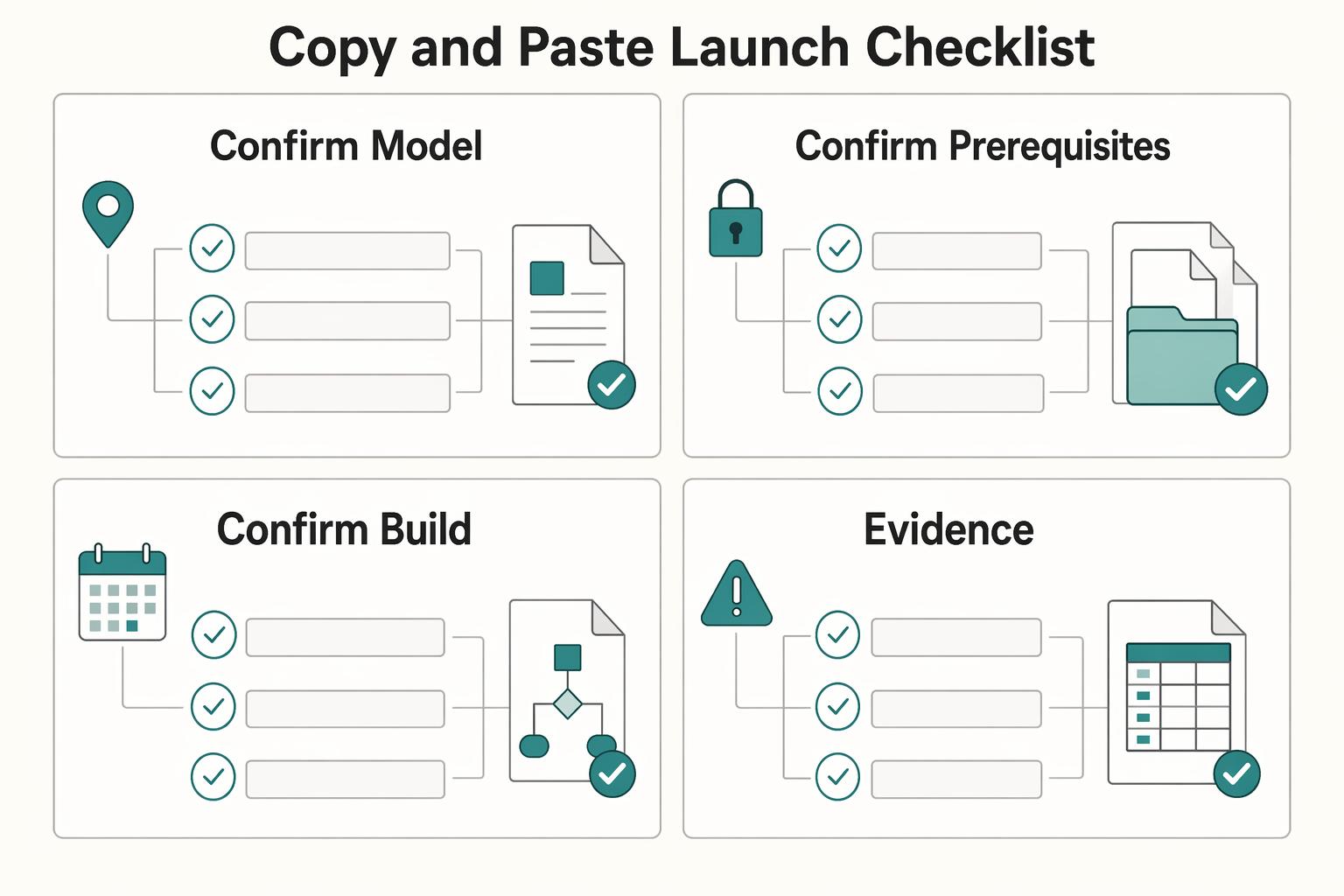
Copy and paste launch checklist#
Use this as a launch gate, not a paperwork step: if any item is still an assumption, do not launch new volume.
- Confirm model fit is explicitly chosen and approved.
Lock one primary path in writing: membership billing, insurer billing, or employer-sponsored benefits. If you use ICHRA, document the payer flow: employers fund reimbursements, and employees must hold individual health insurance coverage. In Marketplace flows, premiums are paid to the insurance company, not the Marketplace. If insurer payment is part of revenue, keep credentialing and payer enrollment assumptions named, owned, and accepted.
- Confirm prerequisites and ownership by market.
Keep a documented evidence pack for each market: licensure constraints, compliance gates, and insurer or employer dependencies. Cross-state care requires state-by-state checks because rules vary by state. If you meet HIPAA covered-entity requirements and use a business associate, confirm a written business associate contract is in place. If Medicare billing is in scope, treat PECOS enrollment as a hard prerequisite.
- Confirm build readiness before go-live.
Test idempotent request handling and webhook deduplication so duplicate events do not create duplicate financial outcomes. Ensure finance can run a trusted reconciliation report that matches payment records to accounting records. Validate an exception queue and rollback plan with replay tests before launch.
- Confirm expansion readiness with go/no-go records.
Track each target market with owner, chosen model, open unknowns, and a go or no-go decision. Do not use a single U.S. insurance readiness checkbox: exchange operations vary by market structure, and for Plan Year 2026 CMS reports 21 SBEs and 2 SBE-FPs. If key licensure, enrollment, or reimbursement questions remain open, hold launch for that market.
Once your go/no-go sheet is complete, pressure-test implementation details like idempotent retries, payout status handling, and reconciliation flows in the Gruv docs.
Conclusion#
Choose the billing model you can operate now, not the one with the longest feature list. The most expensive mistakes usually come from misreading who pays, what has to be in place before payment is allowed, and where manual exceptions still sit after go-live.
If you keep one rule from this guide, use this one: match your launch path to your payer reality. Direct memberships and trials are typically customer-lifecycle operations. Insurer-linked revenue also depends on enrollment prerequisites, required transaction handling, and exception workflows. ICHRA is a different payer model, an employer-funded reimbursement route for employees' individual coverage or medical expenses, and should not be assumed to replace provider billing operations.
- Choose the payer path you can prove today
If revenue depends on payer reimbursement, treat prerequisites as launch gates, not post-launch cleanup. Medicare makes this concrete: providers must enroll in Medicare to be paid for covered services. If your first market depends on insurer workflows and you cannot show enrollment readiness and operational handling for transactions like eligibility, claims, or remittance, narrow scope and launch direct pay first.
- Keep one go/no-go record per market
Document the jurisdiction, care model, primary payer, required documents, and open risks. No market gets a green light until an owner can show evidence for billing terms, payer prerequisites, and transaction handling. If you conduct HIPAA health care transactions electronically, record whether adopted ASC X12N or NCPDP standards apply, because that is an implementation constraint, not a product preference.
- Expand only after the first cohort reconciles cleanly
The real test is operational traceability, not a demo. Can finance, operations, and support follow key billing events in one evidence trail? Run a workflow assessment across clinical and administrative steps, since implementation changes both. If claims attachments still move through fax, mail, or portal uploads, treat that as real operating cost and sequencing input.
Claims attachments have historically stayed largely manual in many workflows, even as standards evolve. The 2026 HHS final rule is effective May 26, 2026, with compliance required by May 26, 2028 for adopted attachments transactions. Plan insurer-linked expansion for a mixed environment during that period: standards where required, manual work where processes still fall back.
For employer-benefits paths, keep economics explicit. In the 2025 KFF employer survey, family premiums reached $26,993, up 6% from 2024, and average worker contribution was $6,850. Those figures do not decide whether ICHRA fits your product, but they do show that employer-funded reimbursement needs dedicated pricing, adoption, and reimbursement design decisions.
Use this outline as your decision spine for vendor reviews, roadmap approvals, and phased expansion. Defending each gate with evidence does not remove launch risk, but it lowers the chance of discovering core billing risk after contracts are signed and launch dates are public.
If your team is locking market rollout gates and needs to confirm module fit and coverage assumptions, start a scoped planning conversation with Gruv.
Frequently Asked Questions
What is the practical difference between practice management billing and health insurance premium billing?
Practice management billing is provider-side operational billing work, including claims process activity and patient-payment management. Health insurance premium billing is the payment for coverage paid to the insurer after enrollment. If your product is built to help providers get paid for care, evaluate tools for claims and payment operations, not just premium collection.
How are memberships and free trials different from insurance-linked billing workflows?
Memberships and trials are subscription lifecycle states that move from trialing to active and depend on conversion, renewal, and failed-payment rules. Insurance-linked workflows depend on payer processes, provider credentialing, enrollment requirements, and payer edit outcomes. In practice, failures often come from claim rejection or denial workflows, not just customer churn.
When should a platform start with direct memberships before insurance integrations?
There is no universal sequence rule. Direct memberships can help you launch subscription workflows without payer-linked dependencies. If your business case depends on insurer reimbursement, payer readiness is still a launch dependency and should not be deferred.
What does an ICHRA model solve and what does it not solve?
ICHRA is an employer-funded reimbursement arrangement for employees' individual coverage costs and medical expenses, subject to requirements. It does not replace provider-side claims billing, credentialing, or insurer operational workflows. Teams should not treat it as a direct provider reimbursement path.
What role do credentialing and payer paneling play in launch timing?
They are practical launch gates for payer-connected revenue. Credentialing, payer paneling, and enrollment are related but distinct, and a provider can still be inactive for the target payer mix. If Medicare billing is in scope, enrollment must be completed before payment for covered services.
What key details are usually unknown before vendor commitment?
The biggest unknowns are usually whether payer-linked prerequisites are fully met and how exception handling and reconciliation work when claims are rejected or denied. Vendor demos can hide enrollment, credentialing, or data-completeness gaps. Require concrete proof of exception handling and reconciliation behavior, not just happy-path demos.
How should founders compare options quickly without missing risk?
Use one comparison table that makes the payer model, revenue trigger, prerequisites, and failure modes explicit before feature-by-feature scoring. Keep a visible not solved by this model column so category drift is obvious. If those fields are not backed by evidence, you are still comparing marketing narratives rather than operating risk.
Researched and edited by the Gruv editorial team. Gruv builds cross-border billing, payouts, and finance-operations software for global businesses.
Sources
- cms.gov/medicare/coding-billing/electronic-billing/e...trusted
- cms.gov/Outreach-and-Education/Medicare-Learning-Net...trusted
- dol.gov/general/topic/health-planstrusted
- ecfr.gov/current/title-42/chapter-IV/subchapter-B/par...trusted
- ecfr.gov/current/title-42/chapter-IV/subchapter-B/par...trusted
- federalregister.gov/documents/2024/11/15/2024-25534/negative-opt...trusted
- federalregister.gov/documents/2019/06/20/2019-12571/health-reimb...trusted
- ftc.gov/business-guidance/blog/2024/10/click-cancel-...trusted
Educational content only. Not legal, tax, or financial advice.
Related Posts

The Freelance Payment Penalty: A Modeled Audit of Platform Fees, FX Spreads, and Payout Delays
The money rarely disappears through a single, easy-to-spot fee. The real loss is stacked. A marketplace takes its commission, a processor adds a charge for international cards, a bank or payment company converts the currency at a spread, a platform holds the funds before release, and a wire sheds a little to intermediaries on the way in. Each layer looks defensible on its own, but the worker feels the combined result as a smaller deposit and a later payday.

How to Respond to a Subpoena for Business Records
Move fast, but do not produce records on instinct. If you need to **respond to a subpoena for business records**, your immediate job is to control deadlines, preserve records, and make any later production defensible.
A US Expat's Guide to Investing in UCITS ETFs to Avoid PFIC Issues
The real problem is a two-system conflict. U.S. tax treatment can punish the wrong fund choice, while local product-access constraints can block the funds you want to buy in the first place. For **us expat ucits etfs**, the practical question is not "Which product is best?" It is "What can I access, report, and keep doing every year without guessing?" Use this four-part filter before any trade: