

Quick Answer
Estonia is one option alongside Portugal, Poland, Germany, Netherlands, Czechia and Spain. Compare actual management and owner residence first, then local VAT registration, invoice treatment and filing costs. B2B consulting is usually outside consumer OSS. CBR participation is an optional escalation feature, not a country-quality ranking; e-Residency grants no residence or work rights.
Compare EU company options by operating controls#
An Estonian company and a company in another EU country use the same broad EU VAT framework. The practical differences lie in local registration, rates, filing interfaces and the facts of your business. Start by distinguishing B2B consulting from consumer digital services: they can lead to different invoice treatment even when the company is identical.
This comparison helps a freelancer and their accountant choose a workable VAT process. It does not rank countries by total tax burden: company management, personal residence, payroll and social insurance need their own analysis.
According to the European Commission's OSS overview, cross-border B2C e-commerce VAT rules changed on 1 July 2021. The One Stop Shop, or OSS, can simplify reporting by letting a taxable person register in one Member State of identification. If you use an OSS scheme, you must declare all supplies covered by that scheme through the OSS return. Filing cadence depends on the scheme. Union and non-Union returns are quarterly. Import-scheme returns are monthly.
For an EU-established supplier, Union OSS identification follows actual business establishment. Non-EU suppliers have distinct fixed-establishment and goods-dispatch rules. Incorporation location alone should not be used as an unlimited choice of reporting state.
For a genuinely uncertain transaction involving two or more participating countries, the Commission CBR project offers a coordinated VAT-ruling request subject to national conditions. It is an escalation option, not a measure of ordinary VAT quality or a reason by itself to incorporate in one country.
Use the country table to compare VAT administration, then test the transaction scenarios and implementation steps below against your own clients. You can investigate country options while facts are being clarified; hold the affected transactions when their legal or tax treatment remains unresolved.
At a glance comparison for Estonia and key EU alternatives#
The EU standard-rate table provides the rates below. Reduced rates, exemptions and special territories need separate treatment. CBR participation is a narrow optional feature: Germany and Czechia are absent from the Commission's current project list, but both operate OSS and have domestic tax-administration routes.
| Country | Standard VAT rate | Union OSS | CBR project | Practical comparison |
|---|---|---|---|---|
| Estonia | 24% | Available for eligible supplies | Listed | EMTA domestic and OSS workflow; digital company administration does not settle foreign taxes |
| Portugal | 23% mainland | Available for eligible supplies | Listed | Check domestic registrations, accounting and applicable regional rules |
| Poland | 23% | Available for eligible supplies | Listed | Compare the actual entity/owner regime and local filings |
| Germany | 19% | Available for eligible supplies | Not listed | BZSt offers quarterly Union OSS; domestic advice remains available |
| Netherlands | 21% | Available for eligible supplies | Listed | Belastingdienst offers Union OSS; compare local domestic filing needs |
| Czechia | 21% | Available for eligible supplies | Not listed | OSS guidance also identifies domestic informational reporting of OSS supplies |
| Spain | 21% | Available for eligible supplies | Listed | Compare domestic requirements and territorial exceptions |
How to read this quickly#
Standard VAT rates are not income-tax rates and do not decide the best incorporation country. For destination-taxed consumer services, choosing a lower-rate home country does not necessarily lower the VAT charged to foreign customers.
| Scheme | Cadence | Note |
|---|---|---|
| Union | Quarterly | Covered B2C services and intra-EU distance goods sales; B2B consulting is outside this consumer scheme |
| Non-Union | Quarterly | For qualifying services by a supplier without an EU establishment |
| Import scheme | Monthly | For eligible imported distance-sales consignments up to €150; not a general freelancer-services scheme |
Keep domestic and OSS reporting responsibilities separate. Covered sales go into the opted-in OSS scheme, while transactions outside it follow their applicable domestic or other reporting route. A country may also require informational reporting of OSS sales; Czech guidance, for example, identifies a domestic-return summary field. Avoid a blanket assumption that OSS sales disappear from every national form.
What is actually differentiated here#
CBR participation tells you whether the coordinated project is available for an eligible question. It neither guarantees a ruling nor makes routine invoices more reliable. The five listed participants in this shortlist have that option; compare service model, local compliance and costs before using it as a tie-breaker.
Germany and Czechia are not listed participants in the current CBR project. Their OSS systems and ordinary local guidance remain available; absence from this optional project does not make them lower-confidence company choices.
For an EU-established supplier, Union OSS identification normally follows its business establishment. The current-year-plus-two-years restriction concerns specified choices for non-EU-established suppliers with multiple EU fixed establishments or goods dispatch countries, rather than every EU company choosing a country.
Recommendation at this stage#
For a B2B consultant, prioritize where the business will actually be managed, client contracting requirements and the accountant's domestic/reverse-charge workflow. For consumer digital services, add customer-location evidence, destination rates and OSS or SME-scheme eligibility. Keep all seven countries in consideration until those facts produce a meaningful difference.
Keep mobility pathways separate from entity and VAT design. Do not treat Estonian e-Residency or Digital Nomad Visa discussions as substitutes for VAT design checks. You might also find this useful: Tax-Friendly Countries for Digital Nomads and Entrepreneurs.
What this comparison does and does not decide#
Use this comparison to judge VAT operating practicality and risk exposure, not where to live, immigration options, or personal tax outcomes. The value here is in reporting friction, control design, and audit readiness if your setup is reviewed later.
The €10,000 EU threshold is limited to qualifying cross-border TBE services and intra-EU distance goods sales by a supplier established in a single Member State, measured across current and preceding calendar years; it is not a universal freelancer VAT exemption. Separately, the cross-border SME scheme is available to eligible EU-established small businesses, using a €100,000 Union-turnover ceiling in both the current and previous calendar year plus each chosen country's local conditions and confirmed EX-number access. It can coexist with OSS in other countries; exempt sales are not charged VAT through OSS.
Use a ruling for an unresolved cross-border VAT question that needs coordinated treatment, not as a prerequisite for ordinary business. German and Czech domestic guidance can answer many routine questions even though those countries are not on this CBR participant list.
Estonia's standard rate is 24% from July 2025. Its domestic registration threshold is based on specified supply with an Estonian place of supply exceeding €40,000 from the beginning of the year, with statutory exclusions and exceptions. It is not a test of every euro received worldwide. Separate registration obligations can arise outside that ordinary threshold.
Resolve material residence, establishment and invoice-treatment questions before the transactions that depend on them. Research, provider selection and a documented draft process can proceed while those questions are being answered.
This pairs well with our guide on How to Handle Sanctions Screening for Payments to High-Risk Countries.
Choosing entity form before choosing country#
Choose the operating model before you choose the country. For this article, that means locking the legal seller, the Member State of establishment, the owner of domestic VAT returns, and the owner of any OSS filing before treating Estonia or any peer market as a final choice.
An Estonian OÜ incorporated under Estonian law is resident there under Estonian rules, but management abroad can create foreign company tax residence or a permanent establishment. VAT establishment is a separate analysis. A registered address or e-Residency card alone does not resolve where the business operates.
| Decision point | What is grounded here | What you must validate locally |
|---|---|---|
| Operating model baseline | Name the legal seller, establishment facts, and who owns domestic VAT and OSS filings. | Which company form, signatory rules, and liability outcomes apply in each shortlisted country. |
| OSS decision | For the Union scheme, the Member State of identification is where the business is established. | Check actual establishment and qualifying supplies; do not infer it solely from incorporation or registered address |
| Escalation route | A VAT Cross-border Ruling can be requested in a participating EU country where the taxable person is VAT-registered, subject to national ruling conditions. | Whether Estonia or another shortlisted country is the right VAT-registration base for that request. |
The practical risk is rework. If establishment facts, invoice logic, and filing ownership do not match, you can end up rebuilding invoice templates, reporting lanes, and audit evidence after launch.
Use this decision rule as a priority filter: if platform volume, counterparty risk, or payout complexity is high, stress-test the control design early and do not treat any country as an automatic winner.
Prepare these four inputs alongside country research. They help the accountant compare a local sole-trader route, a local company and a foreign company without assuming every freelancer needs the same form.
- Ownership map: who owns, controls, and can sign
- Service model: what is sold, by whom, and to whom
- Invoicing flow: legal seller, invoice issuer, and payment reference path
- Expected cross-border payout paths: where funds originate, where they settle, and any intermediaries
If you want the Estonia-specific operating context next, read Taxes in Estonia for E-Residents and Nomads.
Tax and social contribution tradeoffs that usually get oversimplified#
For Estonia, EMTA states that distributed company profits are taxed at 22/78 of the net distribution. An illustrative €7,800 net dividend produces €2,200 company tax, using €10,000 in total before any foreign or owner-level tax. Retained trading profit and owner salary have different treatment; foreign management can still create foreign tax obligations. Compare after-tax cash under the same owner residence, annual profit, salary/dividend mix and social-insurance facts for every alternative.
| Country or profile | What is grounded here | Social contribution visibility | What to verify before launch |
|---|---|---|---|
| Estonia | Company distributions normally taxed at 22/78 of net amount; compare foreign-management and owner treatment as well | Owner salary/board fees and cross-border social-insurance facts need separate analysis | Confirm establishment facts, domestic VAT ownership, OSS filing ownership, and whether any complex cross-border VAT point needs a CBR request. |
| Poland (including JDG and Ryczalt) | Confirm JDG or Ryczalt eligibility, rates, and outcomes with a local adviser. For relevant cross-border VAT flows, the OSS mechanics above are the grounded VAT framework. | ZUS-style obligations may materially affect total cost, but no Poland-specific amounts or rules are established here. | Get local written confirmation on JDG or Ryczalt treatment, social-contribution exposure, VAT registration status, and domestic-plus-OSS filing responsibilities. |
| Germany | Confirm Germany-specific freelancer company tax or social rules with a local adviser. EU-side VAT mechanics still apply: OSS can centralize certain reporting, but it does not replace domestic VAT returns. | No Germany-specific contribution treatment is established here. | Validate local registration and social-insurance position, then map domestic and OSS reporting lanes. |
| Portugal | Compare the actual current company and owner regime rather than assuming legacy NHR benefits | No Portugal-specific contribution treatment is established here. | Separate NHR questions from operating controls and confirm VAT registration, domestic filings, OSS usage, and social-security assumptions. |
| Trigger for review | If cross-border VAT treatment is unclear or tax residency is uncertain, escalate before execution. OSS is a VAT mechanism; confirm residency or treaty outcomes with a qualified adviser. CBR is a VAT tool for complex cross-border VAT treatment, requested in a participating country where you are VAT-registered. | If more than one country could claim social affiliation, do not proceed on assumptions. | Resolve the material disputed treatment before the affected transaction; continue independent preparation |
Do not compare an Estonian company's distribution rate with a sole trader's headline rate without accounting for when tax is due, deductible costs, payroll, owner taxes and recurring accounting fees. Use an annual cash model for the same commercial assumptions.
Write a short memo covering the seller, customer types, establishment, registrations/exemptions, domestic filings, OSS use and owner social-insurance facts. Estonia's domestic VAT return/payment ordinarily falls on the 20th of the following month; its quarterly Union OSS return has a separate timetable. Assign those calendar tasks before receipts begin.
We covered this in detail in Freelancer Tax in Hungary for Defensible Residency and VAT Decisions.
VAT and invoicing controls by country profile#
Classify the supply before choosing the reporting tool. Ordinary cross-border B2B services often use the customer-country reverse-charge rule, subject to exceptions, and are not Union OSS consumer sales. B2C digital services may use destination VAT and OSS; ordinary B2C services can follow the supplier-country general rule unless a special rule changes the place of supply.
| Country profile | What is grounded here | Main control question | Escalation signal |
|---|---|---|---|
| Estonia | If established there, OSS mechanics can apply for supplies in scope. Estonia is explicitly listed in the excerpted participant list for VAT Cross-Border Rulings (CBR). OSS returns are additional to domestic VAT returns. | Who owns local VAT registration, domestic returns, and OSS filings, and do any complex cross-border flows need a CBR request? | If treatment is unclear across Member States, escalate for cross-border VAT review before go-live. |
| Germany | German BZSt provides quarterly Union OSS reporting. Germany is not listed in the current coordinated CBR project. | Which local invoice and VAT-registration requirements are validated in writing? | Pause if Germany-specific shortcuts are being used without local confirmation. |
| Netherlands | If established there, OSS mechanics can apply for supplies in scope. The Netherlands is explicitly listed in the excerpted CBR participant list. OSS does not replace domestic returns. | Same ownership controls as Estonia, plus when a complex flow should be escalated for ruling review. | Escalate if country-by-country billing logic differs and no one can explain the VAT basis. |
| Czech Republic | Czech tax administration provides OSS and specifies domestic-return summary reporting. Czechia is not listed in the current CBR project. | What has been locally validated before invoice templates and tax logic are automated? | Do not reuse another Member State's invoice or tax setup without review. |
Order of operations#
An example makes the distinction concrete: an Estonian VAT-registered consultant invoices a German taxable business €1,000 for an ordinary consultancy service, assuming the general B2B rule and no exception. The invoice uses the required reverse-charge treatment and customer VAT details; it is not an OSS consumer sale. By contrast, a destination-taxed €100 electronic-service sale to a German consumer at the standard 19% rate has €19 VAT and €119 gross if the price is tax-exclusive and no exemption applies.
- Validate taxable footprint. Confirm establishment, VAT-registration country, and which supplies fall under OSS. If you use an OSS scheme, supplies under that scheme must be declared through OSS, and OSS returns are still additional to domestic VAT returns.
- Map invoice requirements. Do this after the footprint is fixed. Invoices are part of OSS record-keeping and audit controls; confirm specific invoice rules for each country with the relevant authority.
- Define evidence retention. Keep records that support both VAT treatment and invoice consistency.
- Automate checks in billing and payment flows. Tie tax treatment to verified transaction attributes and route exceptions to review.
Failure modes worth treating as real risks#
The failure modes here are common control risks. They include invoices that do not match the VAT treatment used in returns, inconsistent treatment across countries for similar supplies, and missing records during audit. OSS governance risk is also explicit: a taxable person or intermediary can be excluded from an OSS scheme by the Member State. Treat undocumented overrides as a control failure.
Verification checkpoint pack#
Before first invoice, require a compact pack:
| Artifact | Details |
|---|---|
| VAT status evidence | VAT registration proof and named Member State of identification, if OSS is used |
| Invoice samples | Examples for key cross-border scenarios, matched to intended VAT treatment |
| Reconciliation export | Invoice-level mapping of VAT coding, customer country, and reporting totals |
| Exception log | Manual overrides, disputed treatment, country mismatches, owner, and resolution status |
Have the accountant check the sample invoices and return mapping before billing begins. If one issue remains genuinely uncertain across participating countries, prepare a focused ruling request with the actual facts rather than sending the entire company choice for ruling review.
Banking and money movement readiness for freelancer companies#
A workable VAT setup can still fail if the money trail breaks. For Estonia, Portugal, Spain, and the Netherlands, take a conservative approach: do not rank "banking ease" unless your own onboarding and settlement tests are documented.
What this section supports#
Bank acceptance is provider-specific. Ask candidate banks or payment providers whether they accept the company jurisdiction, owner residence, service activity, customer locations and anticipated flows. Compare supported currencies, fees and reconciliation exports separately from VAT. CBR participation provides no banking evidence.
| Provider question | Evidence to request | Why it matters |
|---|---|---|
| Company/owner eligibility | Written jurisdiction, activity and owner-residence acceptance | Avoid applying to an unsupported model |
| Currency/rail support | Account terms, supported transfers and FX/fee schedule | Estimate receipts and business-payment costs |
| Money protection | Provider licence and applicable deposit/safeguarding terms | Determine how company funds are held |
| Reconciliation | Sample export with stable payment IDs, charges and status | Plan manual or automated matching |
Operational readiness test#
Operational readiness does not end at account opening. The key control is whether you can match money movement to invoices, customer country, VAT treatment, and reporting totals. That matters if you use OSS, because OSS covers registration, VAT declaration/payment, and record-keeping/audits, while domestic VAT returns still remain in scope.
After confirming the legal setup and provider approval, a small permitted pilot can test an inbound receipt and an outbound business payment against invoice/payment IDs, settlement currency and charges. This validates the operating process; it need not precede country selection or incorporation. If a payment status is unknown, trace the original operation before retrying so the pilot does not create a duplicate.
Tradeoff rule#
If onboarding appears fast but payout traceability is weak, prioritize traceability and auditability over convenience. Weak references or unclear settlement records can increase downstream audit and VAT support risk.
Provider readiness before commitment#
Before committing to a payment provider, agree the operating responsibilities and evidence it can produce:
- Written ownership for account onboarding, payout operations, and reconciliation review
- A reconciliation export linking payment references to invoice or payout IDs
- Evidence that exceptions are logged and resolved, not handled off-record
- A clear escalation path when cross-border payment facts create VAT ambiguity, including whether a CBR request may be needed in the VAT-registration country
Use actual provider responses to compare account suitability. A company can be incorporated before live transfer testing; plan a lawful manual reconciliation process for the initial transactions while automating proven steps later.
Residency and visa choices are not the same as company setup#
Estonian e-Residency is a digital identity, not citizenship, tax residence, physical residence or a right of entry. Company formation therefore does not establish where you may live or work. Check any visa or residence permission against the founder's actual travel/work plan.
| Item | What this evidence pack supports | What it does not prove | Operator reading |
|---|---|---|---|
| Estonian e-Residency | Digital identity for online administration | Personal residency, visa rights, or work rights in Estonia or the EU | Use for administration; assess personal permissions separately |
| Digital Nomad Visa discussions (Estonia or Portugal) | Verify separately from VAT OSS/CBR analysis | Company structure quality, VAT design, or banking readiness | Keep separate from entity selection and tax setup |
| VAT registration / OSS choice | Tax reporting mechanics, including Member State of identification and fixed-establishment rules | Immigration status or lawful personal presence | Use for tax-admin design, not mobility conclusions |
Keep personal residence and company establishment documented separately. A founder may operate an Estonian company from another country, creating local company or personal obligations there. The OSS reporting state does not grant immigration permission or settle those income-tax questions.
A key failure mode is assuming company registration also solves residency rights. If your operating model depends on personal presence, treat unresolved mobility status as a stop issue, not a cleanup item.
Keep a company file for incorporation, tax and reporting decisions, and a mobility file for personal travel/work permissions. Link them when the founder's location changes management or service-delivery facts; a visa decision and an OSS decision answer different questions.
Non-obvious failure modes and escalation triggers#
Use the proceed, pause, and stop tiers below for Estonia and peer EU shortlist reviews. They are built around official OSS and VAT-ruling mechanics plus your own operating evidence, not around marketing claims.
| Internal triage tier | Typical red flag | What to verify now | Response |
|---|---|---|---|
| Proceed | Establishment facts, VAT-registration ownership, invoice logic, and filing ownership are consistent across finance, compliance, and ops | Named Member State of identification where relevant, VAT registration evidence, sample invoices, and reconciliation owner | Proceed and keep the dated evidence pack on file |
| Pause for internal review | More than one Member State may matter, or no one can explain which supplies belong in OSS and which stay domestic | Transaction map, customer-country logic, invoice samples, unresolved-risk owner | Pause launch activity until one owner closes the mapping gap |
| Stop and seek external tax/legal counsel | Country selection depends on unverified banking, residency, or tax-rate claims, or cross-border VAT treatment is still disputed | Written brief of facts, unresolved issues, and whether a CBR route should be considered in the VAT-registration country | Stop launch or invoicing decisions that rely on unresolved assumptions |
A common stop trigger is trying to lock the country before establishment and filing ownership are settled. Under the Union OSS scheme, the Member State of identification is tied to where the business is established, and in specified cases that choice can bind for the current calendar year plus the next two.
A CBR column should remain an optional escalation field. Use ordinary authority guidance for routine matters and evaluate coordinated ruling eligibility only for the specific unresolved transaction.
Treat unresolved invoice logic as a real failure mode. If finance, tax, and operations cannot explain why a supply is reported domestically versus through OSS, pause before first invoice.
Banking friction is also a separate lane. If account opening, payout tracing, or reconciliation proof is weak, treat that as an operating hold rather than filling the gap with country-marketing claims.
One final control point: use current primary rules and dated internal evidence, not cached forum wisdom or sales copy, when your shortlist depends on tax administration or filing mechanics.
The decision checklist compliance teams can run this week#
Use the checklist to assign decisions and deadlines. Record which facts are established, which are assumptions and which actually block the next transaction. A missing live test before incorporation is an implementation dependency, not automatically a no-go on country choice.
Weekly checklist with evidence and stop rules#
| Step | What to decide or verify | Evidence artifact | If X happens, do Y |
|---|---|---|---|
| 1. Operating model | Confirm the legal seller, signatory owner, and who owns domestic VAT and OSS filings | Ownership map, approval note, and operating-model memo | If owners or entity assumptions conflict, pause and resolve before launch |
| 2. Country shortlist | Compare the plausible countries using the same service, owner and establishment facts | Comparison sheet with an explicit verified/unknown column | Keep missing facts visible; resolve those material to the choice |
| 3. OSS review | Confirm whether the planned supplies fall within OSS and what the Member State of identification would be | Transaction map, OSS memo, and VAT-registration note | If scope or filing ownership is unclear, escalate before first invoice |
| 4. Invoicing and tax-treatment controls | Define invoice/treatment checkpoints and evidence retention before billing starts | Invoicing policy, sample invoices, exception log template | If invoice treatment cannot be defended, do not issue live invoices |
| 5. Banking and reconciliation readiness | Confirm provider eligibility and plan receipts/payments/reconciliation after approval | Provider terms, sample export and permitted pilot results when available | Resolve a failed match before automating that flow; use a controlled manual process if adequate |
| 6. Escalation sign-off | Record what is confirmed, assumed, and unresolved for compliance, finance, and ops | Final sign-off memo with unresolved-risk register | If unresolved items affect VAT treatment, invoicing, or filing, move to no-go |
What to verify first#
Start with the seller, customer status, service type and actual establishment. Those facts determine the place of supply, whether VAT registration or an exemption applies, and whether any sales belong in OSS.
| Check | Grounded point |
|---|---|
| Member State of identification | For the Union scheme, it is the Member State where the business is established. |
| OSS scope | If you use an OSS scheme, all supplies covered by that scheme must be declared through the OSS return. |
| Filing cadence | Union and non-Union returns are quarterly; the import scheme is monthly. |
| CBR route | A VAT Cross-border Ruling can be requested in a participating EU country where the taxable person is VAT-registered, subject to national ruling conditions. |
Next, confirm whether your transaction pattern really belongs in OSS and who owns the domestic VAT return that still sits beside it. The clean setup is the one your team can explain invoice by invoice.
Then verify escalation rules with dates and named owners. If cross-border treatment is complex, record when the issue surfaced, which countries may be relevant, and whether a CBR route should be evaluated in the VAT-registration country.
Evidence pack that makes this defensible#
Keep the pack short and auditable:
- VAT registration evidence and establishment memo
- OSS decision memo, including Member State of identification where relevant
- sample invoices and transaction map for key cross-border flows
- reconciliation export and exception log
- unresolved-risk register with named owners and review dates
Published by the European Commission, these are the rule pages to keep close at hand: the OSS overview, the OSS registration guidance, and the VAT Cross-border Rulings page. Use them to anchor your internal memo, then add the country-specific advice you still need.
The no-go gate#
Keep a dated approval note identifying the seller, transaction classifications, registrations or exemptions, filing owners and unresolved issues. Hold the affected billing activity if a material tax point remains unresolved; preparation and permitted account work can continue.
Conclusion#
Choose the structure whose tax and operating requirements fit your actual work. Estonia provides digital administration and its own domestic filing rules; it does not remove obligations where you manage the company or deliver services. Compare alternatives under the same facts and keep the invoice-level process explicit.
If you choose OSS, treat it as a control commitment, not a convenience toggle. OSS schemes are optional, but once used, you must declare all supplies covered by that scheme through OSS VAT returns. Confirm your Member State of identification for the Union scheme, and account for specified Union-scheme cases where that choice can bind you for the current calendar year plus the next two. OSS returns are additional to, not a replacement for, domestic VAT returns.
Before finalizing jurisdiction or operating model, keep one explicit evidence pack:
- VAT registration evidence, or a documented assumption still pending confirmation
- OSS decision memo, including Member State of identification where relevant
- Invoice examples aligned to your intended VAT treatment
- Dated record-keeping outputs
- Exception log for non-standard cases
Resolve the particular uncertain VAT or residence issue before relying on it for live transactions. Use domestic advice or a coordinated CBR request where eligible. Company registration, e-Residency and a payment account each serve a different purpose; none substitutes for the others.
Document the seller and customer scenarios, assign the filing calendar and test the approved operating process. For payment status and reconciliation implementation, see Gruv Docs.
Frequently Asked Questions
Is Estonian e-Residency the same thing as EU residency rights?
No. e-Residency provides a digital identity for online services; it does not grant tax residence, physical residence or entry/work rights. Company registration and personal immigration permissions must be assessed separately.
Is there a neutral EU-wide winner for freelancer company setup?
No. Compare the same business and owner facts across the candidate countries. Local rates and filing interfaces matter, but a country's CBR participation is not an overall tax or banking ranking. A local company or sole-trader route may be simpler than a foreign company operated from home.
Why can Estonia look easier operationally but still require deeper compliance checks?
Online company administration does not settle foreign management, permanent establishment or VAT place-of-supply questions. Classify each service and customer before choosing OSS; B2B consulting and consumer digital sales may use different reporting routes. Assign domestic and OSS filings separately where applicable.
How should we compare Estonia with Poland, Portugal, Germany, Netherlands, Czech Republic, and Spain without relying on marketing claims?
Compare entity/owner facts, applicable VAT registration or exemption, domestic filings, invoice rules, provider eligibility and ongoing costs. The standard-rate table gives a starting point, not the rate for every supply. Estonia, Spain, Netherlands, Poland and Portugal appear on the coordinated CBR project list; Germany and Czechia do not, but both have OSS systems and domestic guidance.
When do tax and social contribution details become too complex for internal-only review?
Obtain specialist help when company management, personal residence, social-insurance affiliation or a specific cross-border supply cannot be resolved from the facts and ordinary guidance. More than one relevant country is common and is not by itself a reason to stop all work. A CBR request may help a qualifying uncertain VAT transaction; it cannot decide income tax, visas or social insurance.
What is the minimum evidence pack we should keep for VAT, invoicing, and banking decisions?
For VAT and invoicing, keep VAT registration evidence, an OSS decision memo if used, the chosen Member State of identification, sample invoices, a dated transaction map, record-keeping output, and an exception log. Record filing cadence in the same memo: quarterly for Union and non-Union OSS and monthly for the import scheme. For banking, keep your own onboarding result, acceptance criteria, test transfer output, and reconciliation proof.
Researched and edited by the Gruv editorial team. Gruv builds cross-border billing, payouts, and finance-operations software for global businesses.
Sources
- europa.eu/youreurope/business/finance-and-tax/vat/vat-...trusted
- europa.eu/youreurope/business/finance-and-tax/vat/cros...trusted
- financnisprava.gov.cz/cs/mezinarodni-spoluprace/mezinarodni-spolup...trusted
- learn.e-resident.gov.ee/hc/en-gb/articles/360002542297-Permanent-Est...trusted
- learn.e-resident.gov.ee/hc/en-gb/articles/360000711978-What-is-e-Res...trusted
- sme-vat-rules.ec.europa.eu/sme-scheme/cross-border-sme-scheme_entrusted
- taxation-customs.ec.europa.eu/archives/taxable-persons/vat-cross-border-ru...trusted
- vat-one-stop-shop.ec.europa.eu/one-stop-shop_entrusted
Educational content only. Not legal, tax, or financial advice.
Related Posts

The Freelance Payment Penalty: A Modeled Audit of Platform Fees, FX Spreads, and Payout Delays
The money rarely disappears through a single, easy-to-spot fee. The real loss is stacked. A marketplace takes its commission, a processor adds a charge for international cards, a bank or payment company converts the currency at a spread, a platform holds the funds before release, and a wire sheds a little to intermediaries on the way in. Each layer looks defensible on its own, but the worker feels the combined result as a smaller deposit and a later payday.
How to Respond to a Subpoena for Business Records
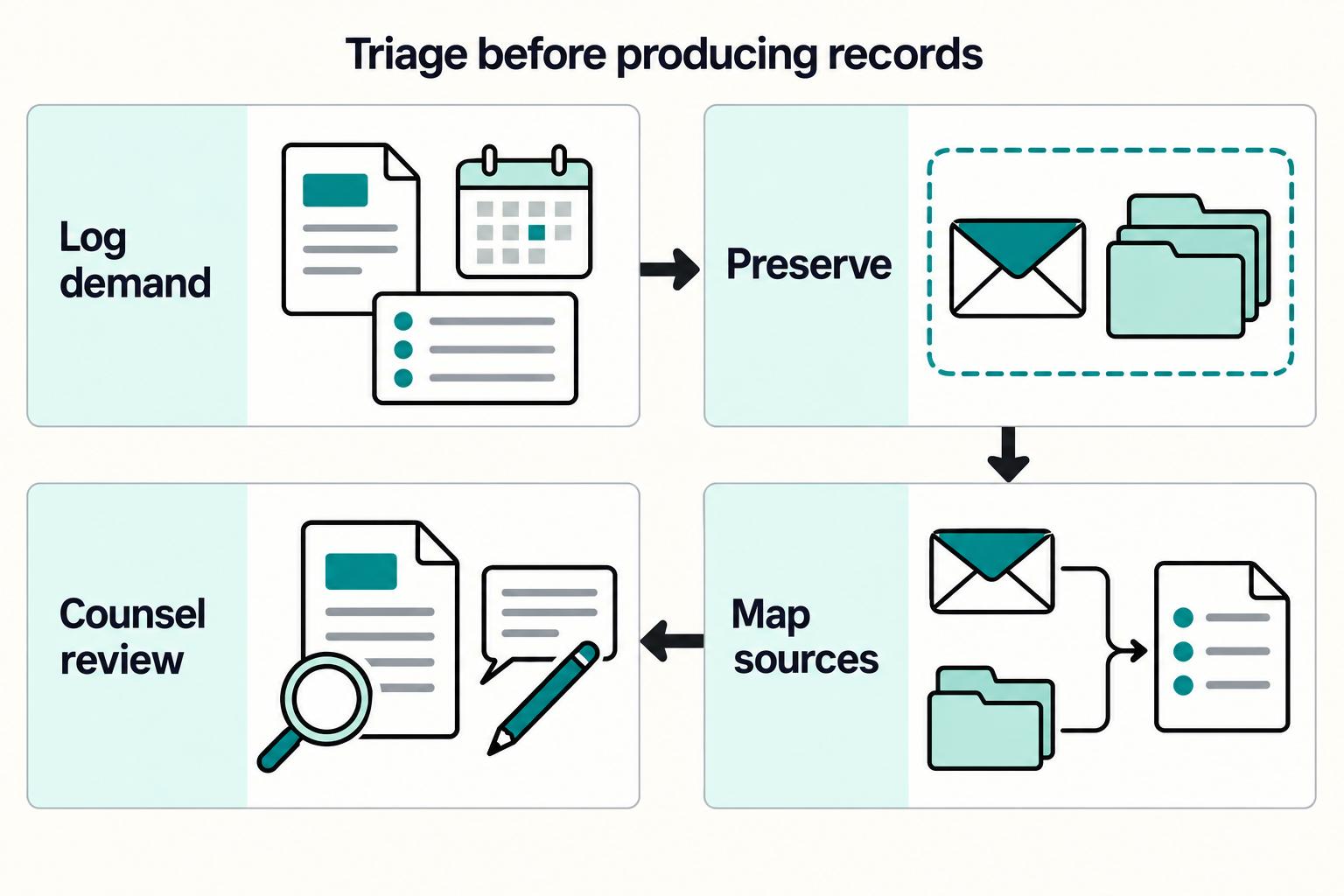
Move fast, but do not produce records on instinct. If you need to **respond to a subpoena for business records**, your immediate job is to control deadlines, preserve records, and make any later production defensible.
A US Expat's Guide to Investing in UCITS ETFs to Avoid PFIC Issues
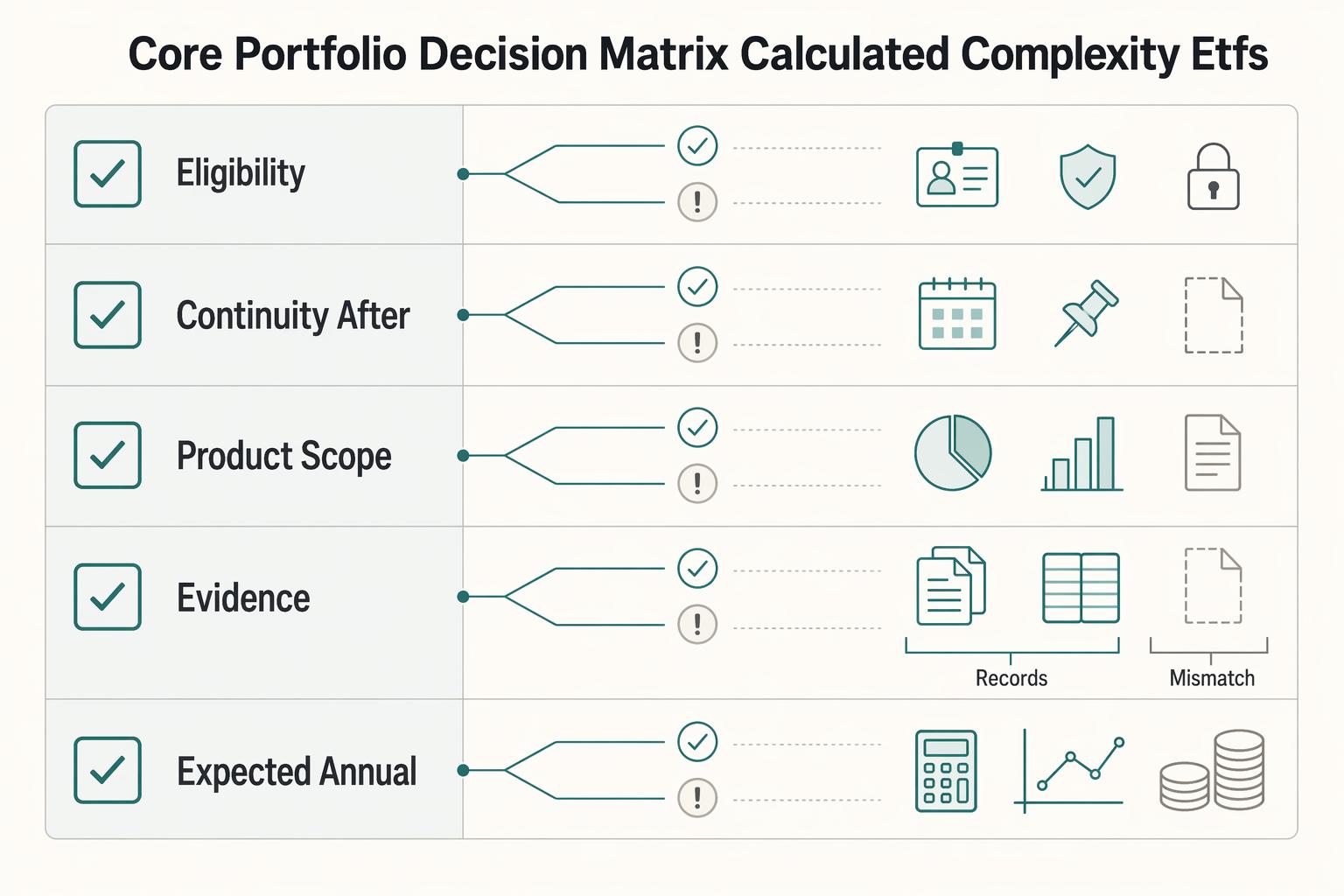
The real problem is a two-system conflict. U.S. tax treatment can punish the wrong fund choice, while local product-access constraints can block the funds you want to buy in the first place. For **us expat ucits etfs**, the practical question is not "Which product is best?" It is "What can I access, report, and keep doing every year without guessing?" Use this four-part filter before any trade: