
Quick Answer
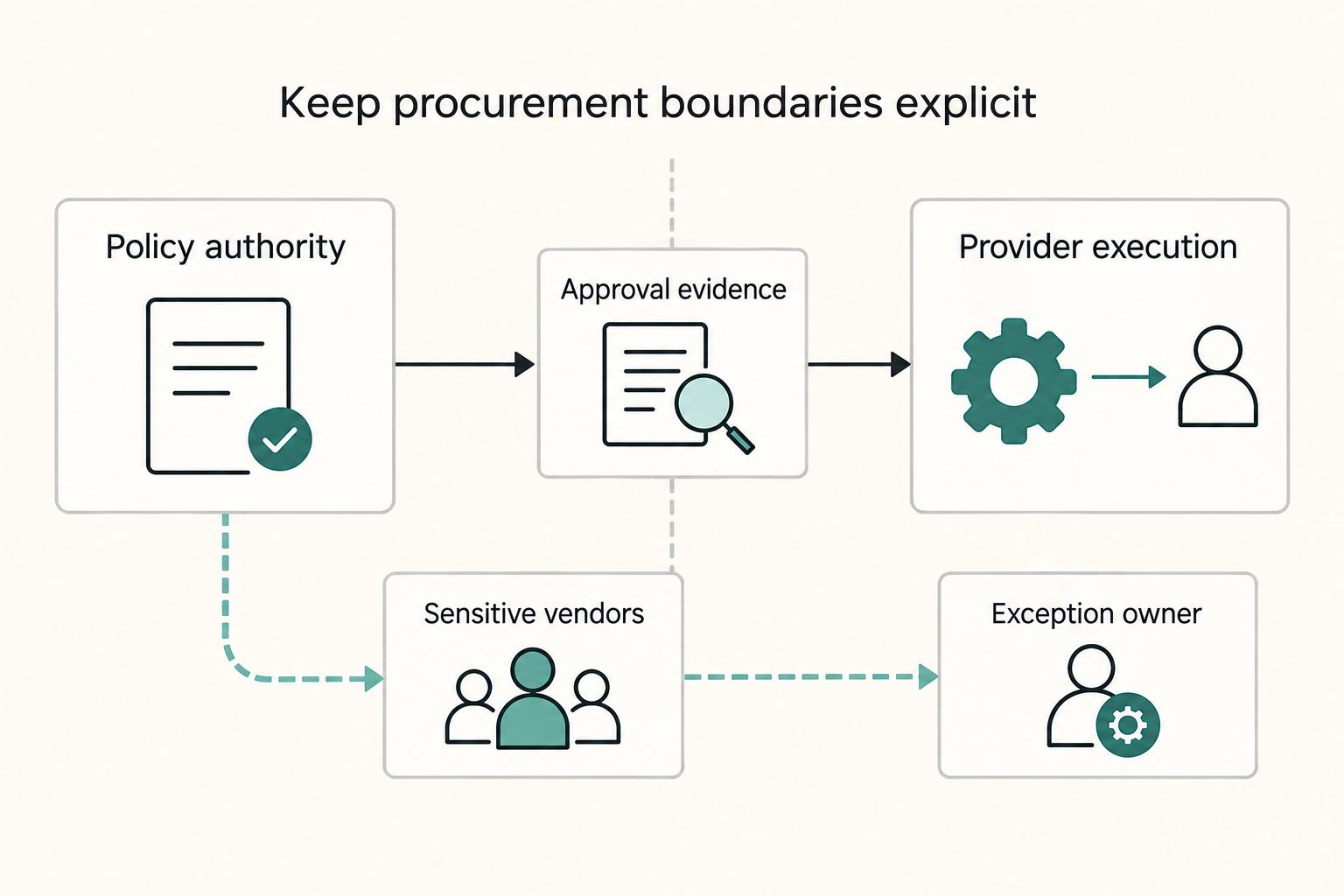
Start by setting control boundaries, then pick a Procurement as a Service model that fits your real constraint. For procurement as a service platforms vendor sourcing, the article recommends comparing four models, validating seven capability filters, and refusing to sign until Service Level Agreement terms, audit artifacts, and integration evidence are reviewable by your team. You can outsource execution, but approvals, exceptions, and governance checkpoints still need named internal owners.
What Procurement as a Service Means for Platforms#
If you are evaluating procurement as a service for vendor sourcing, start by drawing control boundaries before you outsource anything. Hosted services can scale quickly, but faster access to vendors or contracts does not automatically mean better procurement. The harder question is still who owns approvals, evidence, and exceptions.
- Why teams look at Procurement as a Service now
Procurement now covers more than buying physical goods. In an as-a-service environment, you are often procuring subscription software or remotely hosted applications delivered over the internet. Purchasing rules built for product bids can clash with cloud and service buying, which is one reason teams look for outside support with sourcing and contracting. What matters is not promised savings. It is whether the provider can handle service-based buying without hiding the decisions your team still needs to review.
- Who this guide is actually for
This guide is for founders and teams in Finance/Ops, Product, and Engineering that have more vendor activity than one person can manage cleanly, especially when onboarding touches multiple systems and internal approvals. In practice, each group feels a different part of the same problem. Finance/Ops wants traceable approvals. Product wants less delay. Engineering wants clean integration points. Leadership wants procurement treated as a business function, not a back-office chore. A useful framing is strategic vendor sourcing, a disciplined, data-driven approach to selecting and managing suppliers. So you should expect more than price comparison from any provider you hire.
- What you should get from the rest of this article
The goal is a decision-ready path, not a high-level overview. You will see how to choose the right operating model, where to keep authority in-house, what to verify before launch, and which gaps usually create painful rework later. One strategic sourcing approach uses a structured 7-step process. This article turns that discipline into practical checks for provider selection, implementation, and governance. If a provider cannot show decision logs, approval evidence, or contract history in a way your team can review, that is not a small operational gap. It is a reason to pause before handing over final vendor approval authority.
The through line is simple: outsource execution where it helps, but keep the controls that protect your vendor, contract, and spend decisions as you scale.
Who this list is for and how to judge a provider#
Use this list if vendor sourcing and contracting have become repeat work across teams, not occasional tasks. If outside support will not remove a clear bottleneck, it can add process without improving outcomes.
Strong fit You are likely a strong fit when vendor volume is growing and Procurement, Finance/Ops, Product, and Engineering all touch Procure-to-Pay decisions. In that environment, an Approved Vendor List (AVL) or pre-qualified list helps teams move faster with more consistent approval records. The value is repeatability, not just access to more suppliers.
Weaker fit If vendor count is low, spend categories are stable, and your in-house process already runs cleanly, external support may be lower priority. That is not an automatic no, but it is a signal to confirm a real constraint first. Reactive vendor decisions are more common when teams do not maintain a usable supplier list or decision history.
How to judge a provider The provider market is broad (one directory alone features 49 providers), so demos are not enough. Compare options against this guide's seven filters: sourcing depth, contracting support, API/Webhooks readiness, SLA quality, spend analysis depth, supplier performance rigor, and compliance handoff clarity. Ask for working evidence: a sample AVL or pre-qualified list, a recent sourcing packet, contract version history, integration docs, spend reporting examples, supplier scorecards, and a written exception-handoff model.
As a practical selection rule, pause before shortlisting if ownership is not written down across Procurement, Finance/Ops, Product, and Engineering. That gap often leads to approval drift and weak decision records when a vendor issue escalates. Related: Vendor Selection Process for Platforms: How to Evaluate and Choose Third-Party Service Providers. If you want a quick next step, try the free invoice generator.
The 4 operating models for Procurement as a Service#
Treat these four models as a working comparison tool, not a universal industry taxonomy. The decision is about scope and control: what you want the provider to run, and what you keep reviewable in-house.
| Model | What the provider covers | Use this when | Main upside | Main tradeoff | Concrete platform use case |
|---|---|---|---|---|---|
| 1. Full-service PaaS | Most or all procurement functions, including supplier selection, contract negotiation, supplier relationship management, and Procure-to-Pay work such as requisitions, purchase orders, invoicing, and payments | You need outside execution across the full flow | Adds capacity without building a fully dedicated internal team | Less direct day-to-day control over execution | A platform scaling vendor operations and wanting one provider to run sourcing through P2P |
| 2. Sourcing-only | Supplier discovery, market scan, and shortlist support | Sourcing is the bottleneck, but contracts and approvals are strong internally | Brings outside market coverage while you keep internal contracting ownership | If contracting and approvals are slow, cycle time can still lag | A team that needs better supplier options but already has reliable internal legal and approval workflows |
| 3. Contracting-only | Contract drafting/negotiation support and version handling during execution | Supplier choice is clear, but contracting is slow | Focuses support where deals often stall | Does not fix weak upstream supplier selection | A platform with a chosen vendor that needs help moving agreement terms to signature |
| 4. Hybrid BPO + internal tooling | Selected outsourced process execution plus internal systems for retained controls | You want external help and internal visibility at the same time | Matches a blended model where outsourced process work sits alongside cloud/internal tools and spend analysis | More handoffs to manage across provider and internal owners | A platform outsourcing repeatable execution while keeping internal policy and records visible |
| If you switch later | Transition work usually includes process mapping, records transfer, and ownership reset | You are changing model after initial rollout | You can rebalance control as needs change | Switch effort rises if history and process evidence are hard to export and review | Before signing, confirm exportability for supplier records, contract history, and spend outputs |
Practical rule: pick the narrowest model that removes your current bottleneck. If you outsource broadly before ownership and records are explicit, switching later becomes an operational cleanup project instead of a simple scope change.
For the operational side of this work, see Procurement Data Management for Platforms: How to Centralize Vendor Contracts and Payment Terms.
The non-negotiable capability checklist before you sign#
Before you sign, treat the provider review as an acceptance test, not a sales conversation. The real risk is broad promises without measurable outputs, reviewable records, and contract terms that still work when delivery slips.
| Capability | What to verify | Record or evidence |
|---|---|---|
| Functional coverage | Explicit support for Strategic Sourcing, Procure-to-Pay, Spend Analysis, and Supplier Performance Management | Ask what each area produces and request examples before signature |
| Integrations | Current API documentation, supported events, retry behavior, idempotency handling, and a sample reconciliation export | Have Engineering and Finance/Ops review the same sample together |
| Audit artifacts | Traceability across request, approval, contract version, provider reference, and payment status | One completed example from intake through payment-related status |
| Service Level Agreement | Cycle-time commitments, exception handling ownership, escalation windows, and how performance is measured and reported | Keep service levels in contract terms alongside scope and delivery schedules |
- Functional coverage with named outputs
Require explicit support for Strategic Sourcing, Procure-to-Pay, Spend Analysis, and Supplier Performance Management. Do not stop at "we handle procurement." Ask what each area produces that your team can review, and request examples before signature.
- Integration surfaces your team can verify
Do not accept "integration available" as a complete answer. Ask for current API documentation, supported events, retry behavior, idempotency handling, and a sample reconciliation export that Finance/Ops can match to internal records. Have Engineering and Finance/Ops review the same sample together.
- Audit artifacts that survive handoffs
A structured procurement process supports security, compliance, and vendor accountability only if records stay reviewable after provider handoffs. Ask for traceability across request, approval, contract version, provider reference, and payment status, with one completed example from intake through payment-related status. Dashboard summaries alone are not enough if underlying approval and version evidence is missing.
- A Service Level Agreement tied to operations, not adjectives
Procurement contracts are legally binding agreements, and service levels belong in contract terms alongside scope and delivery schedules. Make sure the Service Level Agreement defines operational outcomes such as cycle-time commitments, exception handling ownership, and escalation windows. It should also define how performance is measured and reported.
Teams are often under pressure to move quickly while avoiding costly mistakes. Use a simple rule: do not sign until outputs, records, integration evidence, and contract language match the work you expect the provider to run.
For a practical sourcing framework, see How to Find Vendors for Your Platform: Sourcing and Vetting Third-Party Service Providers at Scale.
Where to draw control boundaries so you do not lose governance#
You can outsource procurement execution, but governance stays intact only if policy authority and approval evidence remain reviewable by your team.
| Control area | Provider role | Internal control |
|---|---|---|
| Execution vs policy | Run repeatable transactional work | Keep policy thresholds, budget authority, fallback contract positions, and sensitive-vendor approvals internal |
| KYC/KYB/AML/VAT gates | Support collection and preliminary review | Inspect what was checked, what failed, what was waived, and review a redacted exception example |
| Final vendor approval | Expose decision logs and approval evidence | Keep final vendor approval in-house if those records are not exposed |
| Governance cadence | Participate in recurring reviews for SLA performance, exception handling, and Spend Analysis | Assign one owner on each side and act on aging exceptions and supplier performance trends |
- Split execution from policy
Let the provider run repeatable transactional work. Keep policy thresholds, budget authority, fallback contract positions, and sensitive-vendor approvals internal. Document ownership across intake, vendor evaluation, contracting, approvals, and Supplier Performance Management, then test that map on one real request. If intake ownership is unclear, the same issues tied to unstructured procurement can return: maverick spend, supplier duplication, and audit gaps.
- Keep risk gates transparent
For KYC, KYB, AML, and VAT checks, a provider can support collection and preliminary review, but your team should be able to inspect what was checked, what failed, and what was waived. This matters most in higher-risk services, where a risk-based approach calls for stronger assurance. Ask for a redacted exception example so you can evaluate rationale and evidence, not just a status label.
- Do not outsource final approval without auditable evidence
If a provider cannot expose decision logs and approval evidence, keep final vendor approval in-house. Strong controls help prevent fraud, support compliance, and create audit trails. Require records that connect each approval decision to the request, contract version, and documented rationale.
- Run a standing governance cadence with named owners
Put recurring reviews on the calendar and name one owner on each side for SLA performance, exception handling, and Spend Analysis. The goal is not meeting volume; it is visible action on aging exceptions and supplier performance trends. That discipline matters when vendor portfolios scale beyond spreadsheet-level oversight.
Related reading: Best Platforms for Creator Brand Deals by Model and Fit.
Integration sequence for Product and Engineering teams#
Sequence the integration around business states first, then technical connections. If you reverse that order, you usually create activity without clear ownership or reliable reconciliation.
- Map Procure-to-Pay states first
Start by assessing your current purchasing process, systems, and tools, then define the state changes you need to support across them. Trace one request end to end across sourcing and procurement, supplier lifecycle, and accounts payable operations, with a named owner at each handoff.
- Define objectives and contracts before status integrations
Set clear integration objectives, then define what each system must send, receive, and reference so Finance/Ops can reconcile records later. Only after that should you connect status notifications for the states you agreed to consume.
- Design failure handling before production
Treat reconciliation gaps and status mismatches as expected operating conditions, not surprises. Decide in advance how records are matched, how exceptions are logged, and who owns the correction path when systems disagree.
- Use a Finance/Ops handoff checklist and a controlled pilot
Agree on export formats, ledger mapping, and exception queue ownership before broad rollout. Pilot with one vendor category, then expand only after your own error-rate and cycle-time targets are consistently met.
For a step-by-step walkthrough, see Merchant of Record for Platforms and the Ownership Decisions That Matter.
Compliance and tax dependencies that can stall rollout#
Rollout stalls when ownership of compliance and tax evidence is unclear. Before go-live, document who collects, reviews, stores, and can override records in each active market so an "onboarded" vendor is also actually approvable for payout.
- Market-by-market onboarding ownership
If your onboarding flow includes KYC, KYB, AML, or VAT checks, treat each as a gate with a named owner. For each market, confirm which party collected evidence, who reviewed it, and what final status is returned to your team. A practical check is tracing one vendor file end to end with document receipt, review outcome, and onboarding status in one place.
- Tax-form support versus tax determination
For payout-adjacent flows, clarify whether your provider only stores W-8, W-9, FEIE, FBAR, and 1099 records (where enabled), or also handles exception routing and evidence retention. Keep document handling separate from tax judgment: FEIE eligibility depends on a foreign tax home and meeting the physical presence test (330 full days in a 12-month period), and that test applies to both U.S. citizens and U.S. residents. If the 330-day threshold is not met for any reason, the physical presence test is not met; even when FEIE applies, the income is still reported on a tax return, and the 2026 maximum exclusion is $132,900 per person.
- PII controls for compliance records
Require masked views for tax and compliance records, with role-based access to raw documents, extracted fields, and event logs. The operational standard is being able to show who accessed what and when. Limit full-document access to reviewers who need it, and keep everyone else on masked fields and status events.
Commercial terms and SLA red flags to catch early#
If commercial terms are vague, pause before signing. The early risk is usually not capability but language that leaves pricing, service levels, and exit obligations open to interpretation.
| Area | Lock down | Red flag or example |
|---|---|---|
| Pricing and scope | Order form, statement of work, pricing schedule, change-order policy, and named deliverables with clear assumptions | Onboarding or contract support is treated as change work because it was not included in contract language |
| Service levels | Expected service levels, how performance is measured, and what remedies apply when levels are missed | "Targets," "aims to meet," or "commercially reasonable efforts"; 99.97% availability can still allow about 13 minutes of downtime per month, and 99.999% is about five and a quarter minutes per year |
| Operational metrics | Audit from timestamps and event logs, with regular reporting on raw measurements | A green summary report without raw measurements; one law firm notes around half of the SLAs it reviews are effectively unenforceable |
| Integration, migration, and exit | Signed implementation scope, ownership, milestones, acceptance criteria, export format, timeline, and termination support | "Custom integration later" or unclear export and termination support |
- Transparent pricing and scope
Get the full commercial stack in writing: order form, statement of work, pricing schedule, and change-order policy. Scope should be named deliverables with clear assumptions, not broad support that can be repriced later. Run one checkpoint before kickoff: trace a real use case and map every cost. If your team expects onboarding or contract support to be included but the provider treats it as change work, resolve that gap in contract language.
- Binding Service Level Agreement terms
A usable SLA states expected service levels, how performance is measured, and what remedies apply when levels are missed. Treat wording like "targets," "aims to meet," or "commercially reasonable efforts" as a warning sign, because enforcement is typically weaker. Do not rely on a headline availability number alone. For example, 99.97% availability can still allow about 13 minutes of downtime per month, while 99.999% is about five and a quarter minutes per year; those numbers only matter if downtime definitions and exclusions are explicit.
- Operational metrics you can verify
Require SLA metrics you can audit from timestamps and event logs, not just a green summary report. For procurement support, that usually includes sourcing turnaround, contract revision cycles, incident response, and data export availability, plus regular reporting on raw measurements. One law firm notes that around half of the SLAs it reviews are effectively unenforceable. Do not treat that as a universal market rate, but do use it as a practical prompt to request a sample SLA report, sample export file, and a clear escalation path for missed windows.
- Integration, migration, and exit language
"Custom integration later" is a red flag when ownership, milestones, and acceptance criteria are undefined. If integration is not in signed implementation scope, accountability usually slips into a future negotiation. Apply the same standard to migration and exit. If export format, timeline, and termination support are unclear, treat that as governance risk and pause contracting.
Conclusion#
For many teams, the right answer starts with clearer scope, not a full handoff. Procurement as a Service can work when you match scope to what your team can still own well, then verify the records and controls before you expand.
- Match scope to the real gap
Start with the split that matters most: sourcing is locating and assessing external suppliers, while procurement is the buying and contracting work around terms and price. If your team is good at supplier discovery but weak on contracting, do not buy a broad service bundle just because it sounds faster.
The useful checkpoint is whether you can name the exact handoff point in plain English, such as "provider identifies and evaluates suppliers, our team approves terms and signs." If you cannot describe that boundary cleanly, you are still buying ambiguity.
- Protect the process that controls spend and payment
Even if a provider helps with vendor selection, your process still has to turn a business need into an approved purchase, a received good or service, and a paid invoice. That is where Finance keeps control over spend and where supplier payment accuracy shows up in practice, not in sales language.
Verify the checkpoints during a pilot: request created, approval captured, supplier selected, service received, invoice matched, payment status confirmed. A common risk is that a provider improves supplier discovery but leaves messy handoffs once invoices and approvals start moving.
- Require proof before scale
Before contract signature, and again during a limited pilot, ask for the concrete vendor due diligence records that matter, including licenses, permits, and insurance where relevant. Also ask for sample output from the service itself, such as supplier assessment notes or contracting records, so you can see what your team will actually inherit.
Evidence you can inspect matters more than a promise that the provider "handles procurement." That is even more important now because procurement teams are being pulled into broader business objectives. One cited report found 79% of surveyed procurement leaders said procurement is being asked to support more business objectives than a few years ago. When expectations widen, vague ownership gets expensive fast.
For vendor sourcing in a procurement-as-a-service model, score your top options against the checklist, then run a small pilot with named deliverables and reviewable records before full rollout. If the provider cannot show you how supplier assessment, contracting, approvals, and payment status connect in real records, pause there and fix scope before you scale.
Frequently Asked Questions
What is the difference between Procurement as a Service and traditional Business Process Outsourcing?
This guide does not define Procurement as a Service against traditional Business Process Outsourcing, so do not make the decision on labels alone. A useful test is scope: one source describes procurement as an eight-stage process from need identification through invoice payment, while sourcing is the supplier-finding and evaluation part. What matters is which stages the provider explicitly owns, and what records they return to you for each one.
Does PaaS usually include vendor sourcing and contract negotiation, or just software access?
Do not assume managed procurement includes full vendor sourcing or negotiation by default. The grounded distinction is that sourcing means finding and evaluating suppliers, while procurement is the operational work after that, including requisitions, purchase orders, receiving, invoicing, and payment. The real question is whether the contract names sourcing activities and deliverables, instead of bundling everything under general platform access.
When should a platform outsource all procurement versus a hybrid model?
This guide does not set a single rule for choosing full outsourcing versus hybrid. Use your internal coverage of the lifecycle as the decision frame: if your team can still own approvals, supplier decisions, and later operational stages, hybrid can keep ownership clearer. If you cannot reliably cover most of the eight stages, broader outsourcing may be easier to define and manage. The deciding factor is not team size alone, but whether ownership and handoffs are explicit enough to audit.
What should be included in a Service Level Agreement for vendor sourcing and contracting?
A Service Level Agreement should answer three questions at minimum: what is being delivered, how success is measured, and who is accountable when service slips. Ask for measurable outcomes such as delivery windows, quality thresholds, response times, and escalation paths, because an SLA is useful only when assumptions are turned into clear terms. The key test is whether performance can be verified from defined service records and whether a named escalation path is triggered when a target is missed.
Which integration checkpoints matter most for API and Webhooks reliability?
This guide does not spell out a detailed API or Webhooks checklist, so be careful with any confident, one-size-fits-all answer. What is supported is the need to treat operational dependencies as measurable service obligations, with response times and escalation paths written into the SLA. In practice, make reliability expectations explicit and reviewable rather than leaving them as informal support commitments.
What are the biggest compliance risks when PaaS touches KYC, KYB, AML, and VAT workflows?
Avoid providers that hand-wave KYC, KYB, AML, or VAT compliance. Teams adopt strategic sourcing platforms in the first place for better control, visibility, and compliance than fragmented buying. The practical test is whether your team can see the decision points and evidence behind vendor review, not just the final status.
Try a related tool
Researched and edited by the Gruv editorial team. Gruv builds cross-border billing, payouts, and finance-operations software for global businesses.
Sources
Includes 2 external sources outside the trusted-domain allowlist.
- bja.ojp.gov/sites/g/files/xyckuh186/files/media/document...trusted
- bu.edu/p2p/frequently-asked-questionstrusted
- irs.gov/individuals/international-taxpayers/figuring...trusted
- irs.gov/individuals/international-taxpayers/foreign-...trusted
- pmc.ncbi.nlm.nih.gov/articles/PMC9863984trusted
- wordpress.nccommunitycolleges.edu/wp-content/uploads/2026/03/Ex-Libris-ILS-50-...trusted
- artofprocurement.com/blog/procurement-software-providers-listexternal
- cio.com/article/274740/outsourcing-sla-definitions-a...external
Educational content only. Not legal, tax, or financial advice.
Related Posts
Procurement Data Management for Platforms: How to Centralize Vendor Contracts and Payment Terms
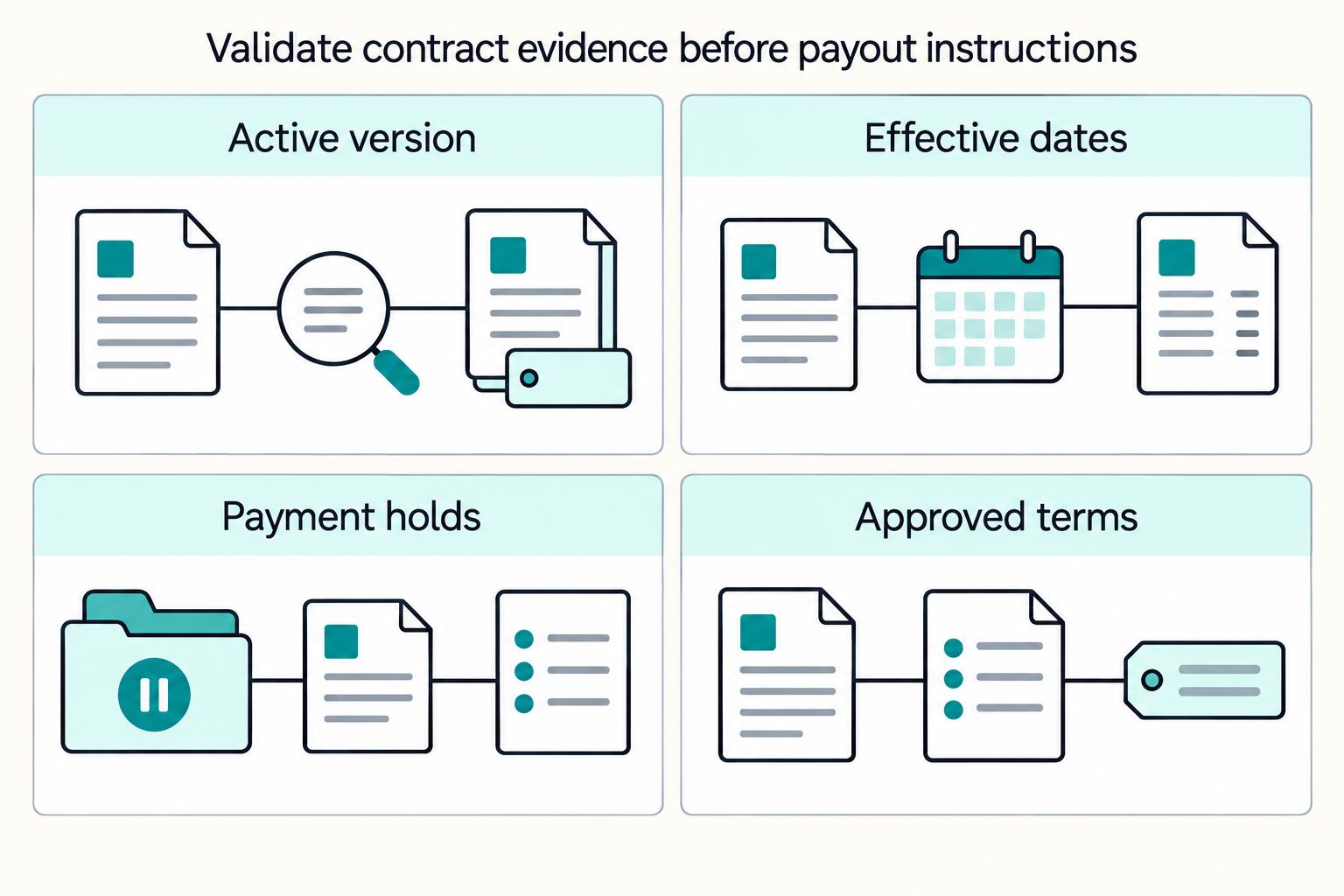
Treat every vendor contract and supplier agreement as a payment control, not a filing task. If a term can change approval, payout timing, or a payment hold, it needs to work inside your payment process, not sit in a PDF or get split across systems.
How Platforms Evaluate Third-Party Service Providers Before Signing
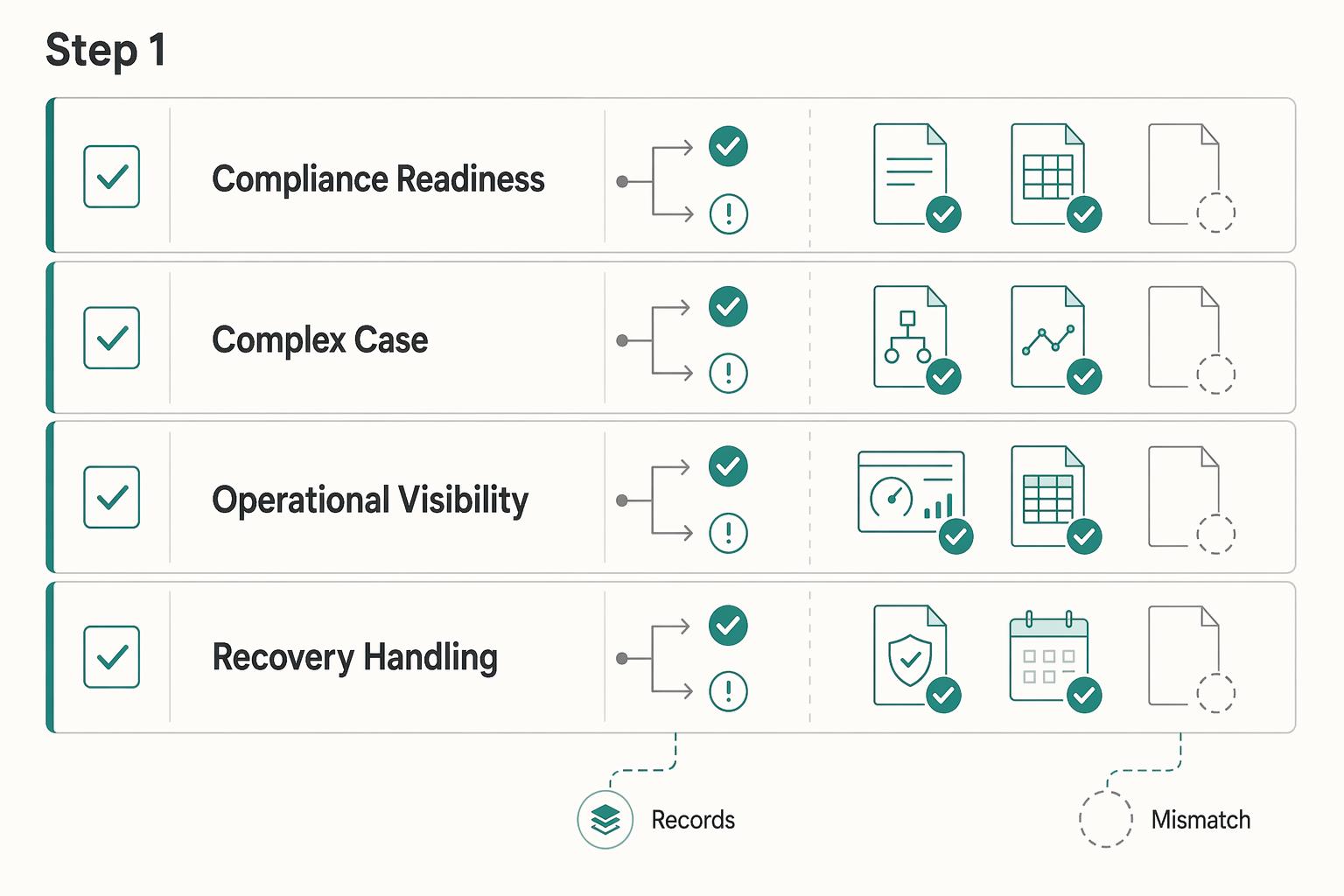
**Step 1: Treat vendor choice as a risk decision, not a feature contest.** A solid vendor selection process matches your requirements to vendor capabilities and pricing through a clear set of procurement steps. That sounds basic, but it matters because poor vendor choices have real business consequences. Feature lists rarely tell you how a provider will perform under real operational and risk constraints. If your team starts by comparing dashboards, coverage maps, or headline fees, you can end up shortlisting vendors that look strong in demos but fail once legal, finance, or operations gets involved.
How to Find Vendors for Your Platform and Vet Third-Party Providers at Scale
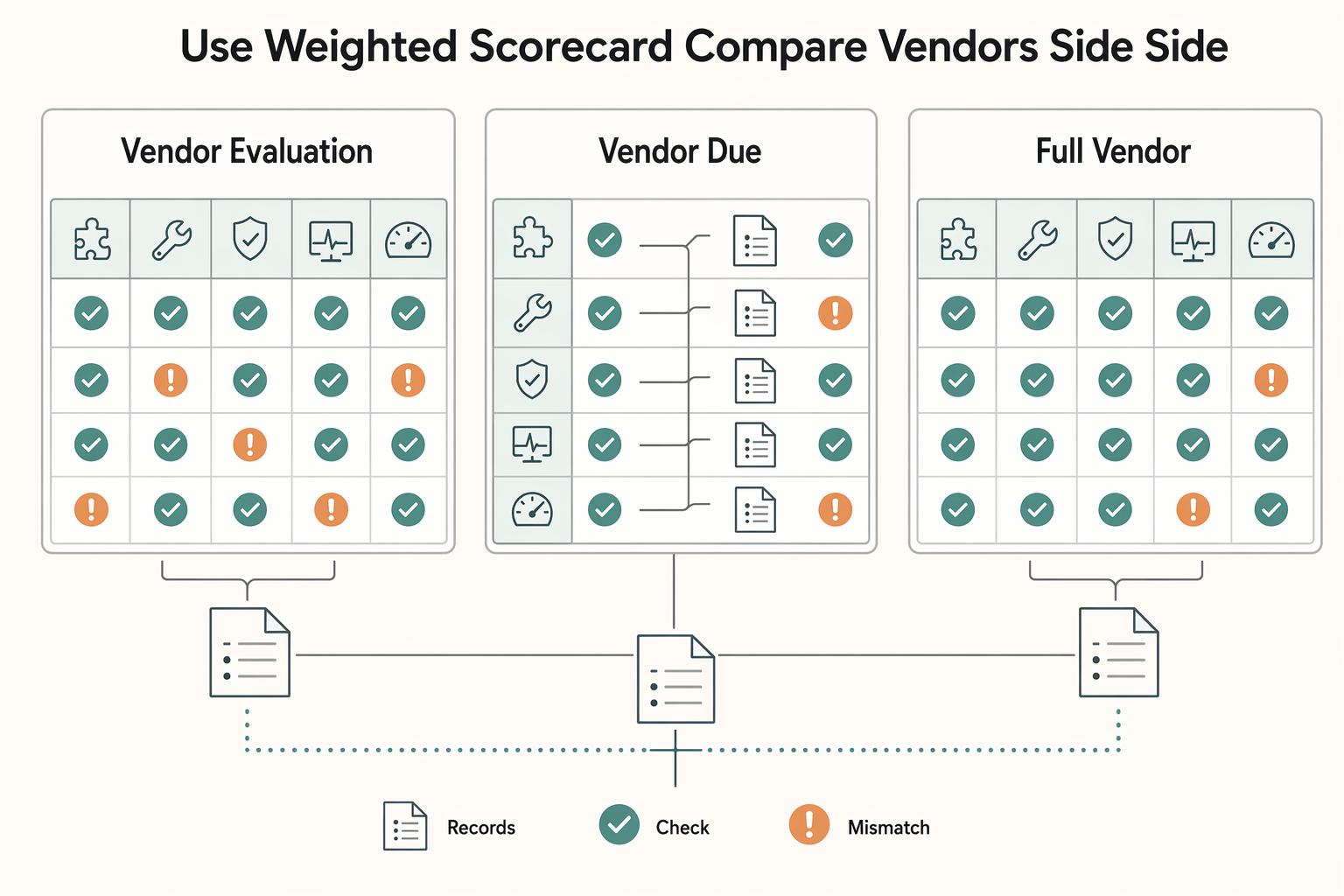
This guide treats vendor choice as a risk decision, not a shopping exercise. If a provider will touch payments, compliance, onboarding, or customer trust, roundup posts are only a starting point. They often do not give you enough evidence to approve, pilot, and monitor a third party with confidence.