

Quick Answer
Generally Corporation for a typical UK Ltd whose members all have limited liability and which has no different valid U.S. tax classification. Line 4 follows U.S. tax principles; confirm any election or unusual structure before applying that default. Active NFFE is a separate FATCA status, not the line 4 entity type.
How a UK Limited Company Fits on Form W-8BEN-E#
A typical UK private limited company whose members all have limited liability generally selects Corporation on line 4 of Form W-8BEN-E, unless a different valid U.S. tax classification applies. Line 4 follows U.S. tax principles; the UK registration label alone does not settle every case.
Form W-8BEN-E documents a foreign entity for U.S. withholding and reporting purposes. Confirm that the company is the beneficial owner of the income before choosing its classification. An intermediary or pass-through arrangement may require another form.
Give the signed form to the withholding agent or payer, who keeps it in their records. It is not an IRS return. U.S. persons generally use Form W-9; foreign individuals generally use Form W-8BEN, with other forms required for some income and exemption claims.
For example, a UK consulting Ltd with limited-liability shareholders, acting for itself and with no different U.S. tax classification, can have Corporation on line 4 and a separate FATCA status on line 5. Record the classification basis rather than copying a previous supplier’s answers.
That distinction keeps your controls defensible. Your first checkpoint should be whether the payee is actually an entity and whether the facts point to a different form path before you move into detailed entity-type or Chapter 4/FATCA choices. For example, the W-8BEN-E form text itself lists foreign partnerships, foreign simple trusts, and foreign grantor trusts among cases that use Form W-8IMY, subject to exceptions. If your intake cannot explain why the entity form is the right form, stop there and record that decision before moving into entity type, FATCA, or treaty review.
Check the payment role, U.S. tax classification, FATCA status where required, and any treaty claim separately. A complete-looking front page can still describe the wrong recipient.
This pairs well with our guide on How to Get a Foreign TIN Without W-8BEN Filing Mistakes.
At-a-glance comparison for Corporation, Partnership, and Disregarded Entity#
Start with form routing, not the UK label: if the facts point to entity beneficial-owner treatment, keep Form W-8BEN-E in scope; if they point to partnership or intermediary treatment, move to Form W-8IMY review first.
| U.S. tax classification or payment role | Likely W-8 path | Key form parts | Typical FATCA direction | Do not confuse | Evidence required | Escalate when | Payout risk if misclassified |
|---|---|---|---|---|---|---|---|
| UK Ltd treated as a corporation for U.S. tax purposes and receiving its own income | Form W-8BEN-E; Corporation on line 4 | Part I entity identification/entity type, plus separate Chapter 4 Status (FATCA status) | Review Chapter 4 separately from Part I entity type | Active NFFE is a FATCA classification, not a legal entity type field | Completed W-8BEN-E, confirmation payee is an entity (not an individual), and a short record of why entity beneficial-owner treatment fits | Facts suggest intermediary, partnership, or a different recipient/owner relationship | Withholding-agent rejection, onboarding delay, or incorrect withholding setup |
| Partnership-style fact pattern (pass-through or intermediary indicators) | Form W-8IMY is the flagged path for foreign partnerships (subject to instruction exceptions) | Stop before forcing W-8BEN-E entity type; verify whether facts fall under W-8BEN-E "Do NOT use this form" paths | FATCA review follows correct base-form routing, not the other way around | A Chapter 4 label does not fix the wrong base form; Active NFFE is not a substitute for W-8IMY review | Intake record showing partnership/intermediary indicators and who is acting for whom in the payment chain | Treaty-claim exception questions, mixed facts, or unclear role of the payee | Document rework, withholding-agent pushback, and first-payout delays |
| Disregarded-entity fact pattern (payment name differs from underlying owner name) | Usually the owner provides the appropriate W-8 or W-9; review the specific disregarded-entity exceptions | Identify owner and disregarded entity in the applicable fields; Part II applies only in specified cases | Keep owner identity and FATCA status as separate checks | Active NFFE does not answer who the proper certifying beneficial owner is | Clear file note on who owns the disregarded entity, who signs, and why payment name differs | Owner/certifier mismatch, unclear beneficial owner, or intermediary indicators | Name mismatch at payout, rejection, and manual remediation |
The payer retains the certification. If the recipient acts as an intermediary, review Form W-8IMY before accepting a beneficial-owner form.
If you want a deeper dive, read W-8BEN-E Explained for Platforms: How to Handle Tax Forms from Foreign Business Entities.
Confirm the form is correct before choosing entity type#
Choose the IRS form first, then choose the entity type. If the form path is wrong, entity-type selection on Form W-8BEN-E will not fix it.
| First gate | What should trigger it | Route first | What to record |
|---|---|---|---|
| Individual check | Payee is a foreign individual, not an entity | Form W-8BEN or, for covered compensation exemption claims, evaluate Form 8233 | Why the payee was treated as an individual and which instruction language drove the routing |
| Intermediary or partnership check | Facts indicate intermediary status, or a foreign partnership / simple trust / grantor trust fact pattern | Form W-8IMY review before collecting a full W-8BEN-E packet | The intermediary or pass-through fact that stopped entity-type review |
| Entity effectively connected income check | Foreign entity claims effectively connected income, subject to relevant treaty exceptions | Form W-8ECI review and legal escalation | Why ECI routing was considered and who approved escalation |
A foreign individual providing U.S. personal services may need Form 8233 for an eligible exemption claim or Form W-4 where appropriate. Route those cases separately from this entity guide.
Require a short decision note in the file citing the instruction rationale and the Internal Revenue Code references shown in the IRS instructions. If you cannot clearly explain why the case is W-8BEN-E instead of W-8BEN, W-8IMY, or W-8ECI, pause onboarding.
Apply entity-type decision rules for UK structures#
Set line 4 from the company’s U.S. federal tax classification. Under the foreign eligible-entity default rules, an entity whose members all have limited liability is generally an association taxable as a corporation unless it elects otherwise. Ask about any classification election or unusual structure before relying on that default.
| Classification or payment-role signal | Line 4 handling | Verify before approval | Escalate when |
|---|---|---|---|
| UK Ltd with limited-liability members and no different valid U.S. tax classification | Corporation is generally appropriate | Incorporation details, legal name match, signer authority, beneficial owner information, and tax IDs tied to the same entity | Ownership or payment facts suggest it acts for another person/entity |
| U.S. partnership classification or intermediary role | Test Partnership indicators and compare against Form W-8IMY path before accepting W-8BEN-E entity type | Beneficial owner status, whether it acts for others, and whether partnership-interest facts are present | Facts conflict between beneficial-owner and intermediary treatment |
| Disregarded-entity or branch facts appear | Do not finalize from front-page labels | Relationship between operating entity and legal owner, plus IDs for relevant parties | Any uncertainty on who should certify, or whether Part II/GIIN issues are in play |
Keep classification elections and ownership changes with the tax record. A single shareholder does not by itself make a foreign limited-liability company a disregarded entity.
Minimum evidence pack before final entity-type approval#
| Evidence item | Details |
|---|---|
| Incorporation details | For the UK entity |
| Income beneficial owner and signer | Identify who owns the income; separately verify the signer’s authority to certify for that person or entity |
| Tax IDs | Foreign TIN, U.S. TIN (if any), and UK Unique Taxpayer Reference (UTR) where available |
A practical check is to reconcile those records against the onboarding contract. If entity name, signer, and tax IDs do not align to the same payee logic, stop and re-route.
Partnership/intermediary risk branch#
Partnership classification and acting as an intermediary are different questions. Either can change documentation, but do not infer a partnership merely because the company has several shareholders. Tax review should establish its U.S. classification and payment role.
Disregarded-entity and branch edge cases#
A disregarded entity normally relies on its owner’s appropriate certification. Financial-account, hybrid treaty-claim and certain FATCA cases have specific completion rules. Record the owner and route those exceptions for specialist review instead of treating a payment-name mismatch as proof of disregarded status.
For a step-by-step walkthrough, see How a UK Limited Company Files W-8BEN-E for US Client Payments. If you want a quick next step for "W-8BEN-E entity type UK," try the W-8 form generator.
Keep FATCA status separate from U.S. tax classification#
Corporation and Active NFFE can be compatible answers: they describe different classifications. Review each field against its own requirements, rather than demanding that the labels match.
| Decision point | What it answers | What to verify | Hold or escalate when |
|---|---|---|---|
| Line 4 entity type | How the entity is classified under U.S. tax principles | Incorporation facts, legal name, signer authority, and tax IDs tied to the same entity | "Corporation" was selected by habit, not file evidence |
| Chapter 4 status | How the payee is classified for FATCA purposes | Selected status, internal consistency across the packet, and support from onboarding statements | FATCA answers conflict with the rest of onboarding or look copied from another file |
| GIIN context | Whether a GIIN is referenced in the packet | Exact value shown, entity-name match, and consistency across form and onboarding records | GIIN is missing where referenced, mismatched, or unclear |
An ordinary trading company may qualify as Active NFFE, but commercial activity alone is not the full test. Review the applicable certification and income and asset information. An ordinary Active NFFE does not need a GIIN merely because it uses W-8BEN-E.
What your FATCA evidence pack should include#
| Evidence item | What to review |
|---|---|
| Completed FATCA certification fields on Form W-8BEN-E | Reviewed for consistency |
| Short payee declaration or onboarding statement | Explaining the selected Chapter 4 status |
| Reconciliation | FATCA choice and legal-entity facts describe the same payee |
| GIIN check | Exact match check and an escalation path for exceptions, if a GIIN is included or referenced |
Line 5 and its certification are required in the circumstances specified by the instructions, including relevant withholdable payments or financial accounts. Distinguish those requirements from additional checks your platform chooses to impose.
Approve only when legal entity type, Chapter 4 certification, and any GIIN details all align to the same payee with file support.
Validate treaty claims with documentation, not assumptions#
Approve a treaty claim only when the Form W-8BEN-E treaty fields and onboarding record are consistent. For a UK payee asserting the USA-UK Tax Treaty, verify that line 14, claim of tax treaty benefits, and any line 15, special rates and conditions, are complete, specific, and reviewed by the right owners.
| Treaty item | What to verify | Primary owner | Hold and escalate when |
|---|---|---|---|
| Line 14 treaty claim | Treaty country is the United Kingdom, entity name matches onboarding, and the claimant is the same entity named elsewhere in the packet | Tax review, with payments ops checking identity match | Treaty country conflicts with onboarding/incorporation data, or claimant identity is unclear |
| Line 15 special rates and conditions | Complete line 15 when the claimed benefit needs additional representations; record the article, income type, rate and supporting conditions where required | Tax review | A required representation is missing or unsupported; a blank line alone is not a universal failure |
| Article 7 (Business Profits) reference | The citation is backed by a written payee or adviser explanation | Legal or tax specialist | Ops is asked to approve eligibility from the article number alone |
| Ownership and Base Erosion Test reference | If invoked, supporting documentation and named sign-off are present | Legal and tax | The test is referenced but no documented reviewer or basis is provided |
For a business-profits treaty claim, tax review must establish the income treatment and relevant permanent-establishment facts. An Article 7 citation alone does not establish eligibility.
Apply the same standard to any Ownership and Base Erosion Test reference. Once that language appears, this is a technical treaty decision: your file should show who signed off, what documentation they relied on, and that the conclusion applies to the same entity named on the W-8BEN-E.
Your treaty evidence pack should include the completed W-8BEN-E with line 14 and any line 15 entries, the payee's treaty support statement or adviser memo, onboarding data for legal name/country/payee type, and an internal approval note naming tax, legal, and payments reviewers. Keep this with the withholding agent or payer record, since the form is provided to the payer and not sent to the IRS.
If treaty information conflicts with the payee record, stop using the unsupported benefit and route the case to tax review. The withholding agent may approve a lawful withholding or documentation treatment; any separate platform payout hold is an internal policy decision.
Build platform checkpoints from intake to payout release#
Use a documented review sequence before approving a tax treatment. Payout activation should follow the withholding agent’s approved treatment and your platform’s recorded policy.
Keep the sequence fixed#
Collect the tax profile, confirm form routing and U.S. classification, then review applicable FATCA and treaty fields. Release under documented platform policy only when tax review or the withholding agent has approved the corrected certification or a lawful alternative treatment.
| Checkpoint | What must be true before moving on | Primary owner | Hold and escalate when |
|---|---|---|---|
| Tax profile intake | Legal name, country, payee type, and tax IDs are captured; Foreign TIN and any U.S. Taxpayer Identification Number (TIN) are masked in general ops views | Onboarding ops | Name/country conflicts with onboarding records, or IDs are missing without documented reason |
| Form path validation | Foreign beneficial-owner entities generally use W-8BEN-E; U.S. persons use W-9; foreign individuals and pass-through or intermediary cases need their own routing review | Payments ops with tax review | Selected form does not match the payee facts |
| Entity type validation | Selected entity type matches collected evidence, including Part I disregarded-entity details when applicable | Tax review | Disregarded-entity details are missing or inconsistent |
| FATCA and treaty validation | Complete FATCA fields where required and treaty fields for any benefit actually claimed | Tax or legal | FATCA or treaty entries conflict with entity/country/beneficial-owner details |
| Payout release | Approved tax packet is the same packet used to activate the payee; packet is maintained for the withholding agent or payer | Payments ops | Payee profile changed after approval, or activation data differs from the approved packet |
Add controls that stop silent drift#
Use policy gates, an audit trail, masked storage, and idempotent status transitions so retries cannot skip review states or produce duplicate approvals. Re-check withholding-agent-facing fields at first payout execution, not only at onboarding.
| Exception | Who approves | Override artifact / requirement |
|---|---|---|
| Form path or entity-type exception | Tax approves; legal reviews when facts suggest intermediary, partnership, disregarded-entity, or ECI treatment | Written decision note tied to the payee record |
| Treaty exception | Tax or legal approves | Approved W-8BEN-E package plus supporting treaty documentation already required in your process |
| Payout release after mismatch | Payments ops cannot self-override | Fresh approval note that records what changed and who revalidated |
Resolve differences between the approved tax record and the live payee record before applying a treaty benefit. Tax review must approve any alternative lawful treatment; payments ops should not invent an override.
Related: How to Fill Out Form W-8BEN-E for a Foreign Company.
Catch common failure modes before they become withholding incidents#
Most withholding incidents are preventable if you block three errors early: wrong form path, entity type/FATCA mix-ups, and incomplete treaty fields.
| Failure mode | What to verify now | Why it becomes expensive later | Hold and escalate when |
|---|---|---|---|
| Wrong form path | Confirm foreign beneficial-owner entity status and the relevant income before accepting W-8BEN-E | The withholding packet is invalid from the start, and payout can fail at release | Facts point to an individual, intermediary, foreign partnership/simple trust/grantor trust, or an effectively connected income claim that may require Form W-8IMY or Form W-8ECI |
| Entity type confused with FATCA status | Validate U.S. tax classification separately from FATCA status | A record can look complete but still fail withholding-agent review if these answers conflict | A selected classification lacks support, not merely because the two labels differ |
| Treaty claim not fully supported | Check line 14 and any line 15 entries for completeness and consistency | Gaps usually appear late, after payment setup is already in motion | Treaty fields are partial, contradictory, or inconsistent with the payee packet |
Prioritize contradictions that change the tax treatment. A missing optional field does not justify the same response as an unsupported beneficial-owner or treaty certification.
For rapid remediation, use this reset sequence:
- Stop relying on the disputed tax treatment and snapshot the relevant payee record; apply any payout hold under documented policy.
- Re-run form selection first; if facts support Form W-8BEN, Form W-8IMY, or Form W-8ECI, stop patching the old packet.
- Request a newly signed replacement form and the missing supporting tax information, including the Foreign TIN field evidence used in your workflow.
- Record the decision and approved treatment. Release under documented platform policy after the corrected certification or a lawful alternative treatment is approved by tax review or the withholding agent; ops cannot invent an override.
Conclusion#
For a typical UK Ltd, the useful starting answer is Corporation under U.S. tax principles. The review then establishes whether that starting point fits this company, this income and this payment role.
Track form validity and changes in circumstances after onboarding. A later classification, ownership or tax-profile change may invalidate a certification even when the original record was sound.
| Checkpoint | What your team is deciding | Evidence to keep in file | Stop and review when |
|---|---|---|---|
| Form selection | Whether Form W-8BEN-E is even the right form path | Signed form, onboarding profile, short decision note | The payee profile suggests a different form path or key facts are unclear |
| Entity type | The classification under U.S. tax principles | Entity details from onboarding and reviewer rationale | The selected type does not fit the payee facts on its face |
| FATCA status | The FATCA-related status answer, reviewed separately from entity type | Form responses and supporting declarations collected in intake | Entity-type and FATCA answers appear internally inconsistent |
| Ongoing validity | Whether the form can still be relied on | Date tracking, refresh history, change log | Facts changed, certification expired, or a correction was requested |
Assign separate review points for form routing, U.S. tax classification, FATCA status where required, and any treaty benefit. Keep the evidence and the approved tax treatment with the payer’s record.
Test an ordinary Ltd, a classification-election case and an intermediary case before widening automated acceptance. The routing should preserve their differences instead of approving every UK company from its name.
Related reading: A Deep Dive into Form 5472 for Foreign-Owned US LLCs.
Frequently Asked Questions
What entity type should a UK limited company select on Form W-8BEN-E?
Generally Corporation for a typical UK Ltd whose members all have limited liability and which has no different valid U.S. tax classification. Line 4 follows U.S. tax principles; confirm any election or unusual structure before applying that default.
Is Active NFFE the same thing as entity type on Form W-8BEN-E?
No. Corporation on line 4 describes U.S. tax classification; Active NFFE on line 5 describes FATCA status. They can both apply to the same company, but the FATCA certification needs its own support.
When should a UK business use Form W-8IMY instead of Form W-8BEN-E?
Generally when it acts as an intermediary or is a foreign partnership or other relevant pass-through recipient. Some treaty and account-documentation exceptions apply, so establish the payment role and classification before choosing the form.
When does a Disregarded Entity change how Form W-8BEN-E is completed?
Usually the owner provides the appropriate W-8 or W-9 and is identified as the income beneficial owner. Specific financial-account, hybrid treaty and FATCA exceptions can change completion, so confirm the applicable instructions before accepting an entity’s own certification.
Is Form W-8BEN-E sent to the IRS or to the withholding agent?
To the withholding agent or payer, who retains it. Do not send Form W-8BEN-E to the IRS as a return.
What minimum documents should a platform collect before accepting treaty claims?
Keep the signed form, the payee identity record, and evidence supporting the particular treaty claim, including residency and the applicable limitation-on-benefits basis. Complete line 15 when extra representations are required. Additional platform review notes are internal controls, not a universal IRS document checklist.
What should we do if entity type and FATCA status appear inconsistent?
Identify which answer lacks support. Corporation and Active NFFE alone are not inconsistent. Obtain a correction when the facts are wrong, and have tax review approve the withholding treatment if a certification cannot be relied on.
Try a related tool
Researched and edited by the Gruv editorial team. Gruv builds cross-border billing, payouts, and finance-operations software for global businesses.
Sources
Educational content only. Not legal, tax, or financial advice.
Related Posts
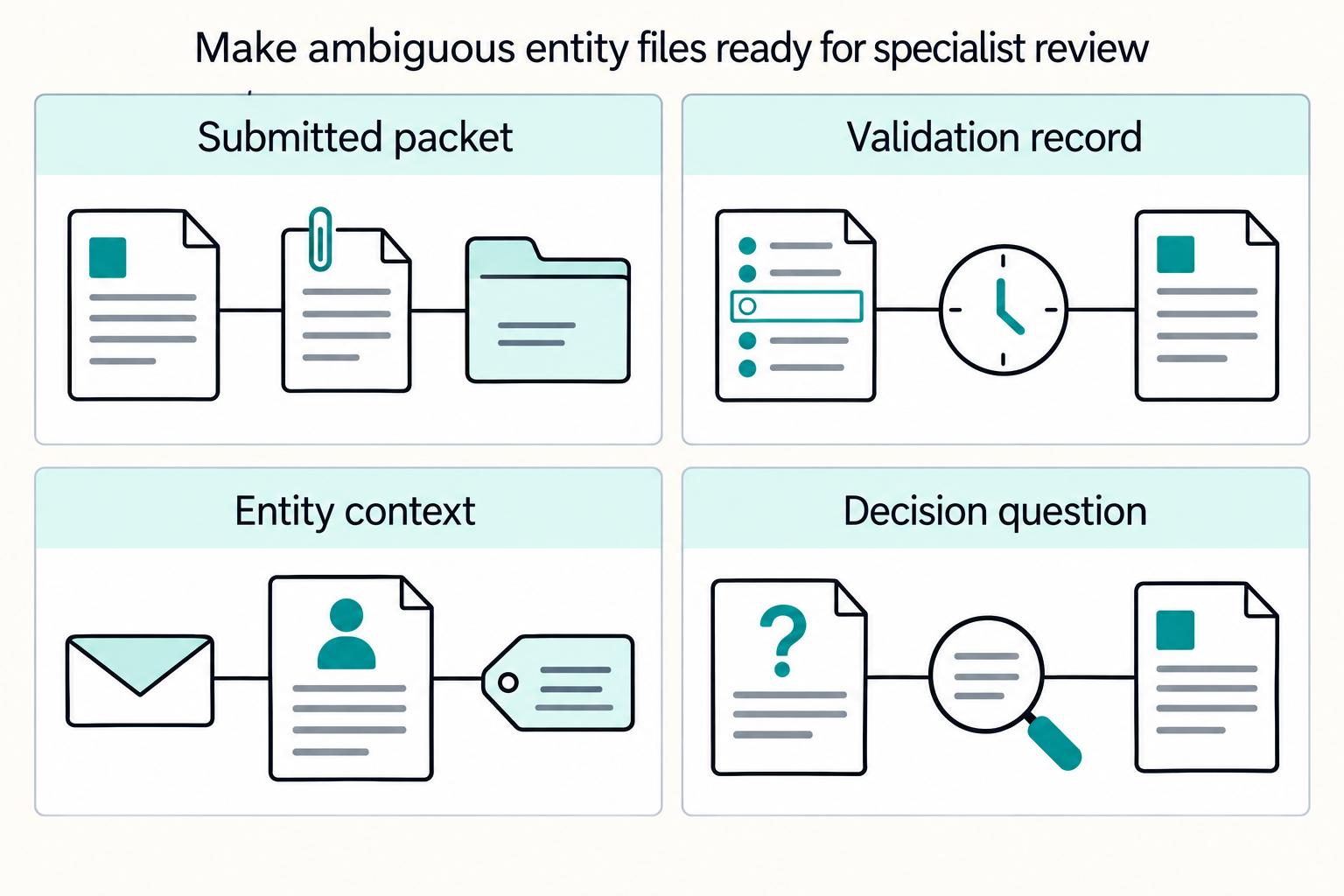
How Platforms Should Collect and Validate Form W-8BEN-E for Foreign Entities
Treat Form W-8BEN-E collection as a payout control, not a paperwork task. If you are the withholding agent, you generally must obtain valid documentation before payment. Without it, IRS guidance says you generally must withhold 30% from the gross amount paid to a foreign payee.
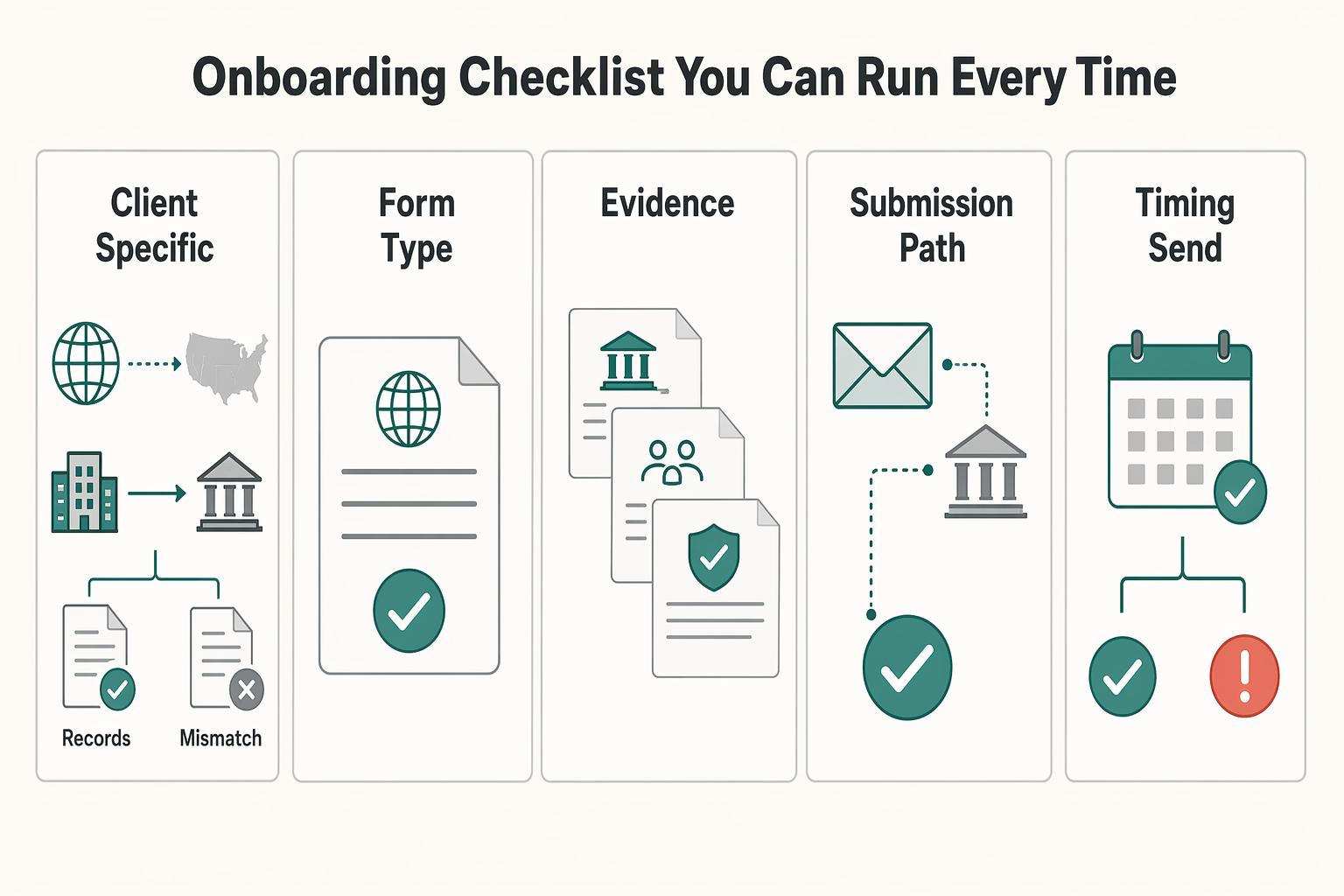
How to Fill Out Form W-8BEN-E for a Foreign Company
Form W-8BEN-E documents foreign entity status for applicable withholding and reporting purposes and can support a treaty claim. It is provided to the withholding agent, payer or financial institution requesting it, not filed with the IRS. This guide focuses on client-payment onboarding, but neither U.S. payer geography nor an immediate withholding charge is a universal prerequisite for a valid request.

How to Invoice a US Client from Mexico as a Temporary Resident
If you want to invoice a US client from Mexico without payment friction, focus on three outcomes: the client's AP team accepts the invoice, your SAT record stays compliant, and your net receipt is predictable.