
Quick Answer
For a UK company, complete W-8BEN-E from company records, choose Chapter 3 and Chapter 4 statuses separately, and give the signed form to the US payer. Check what the client is paying for and where the income is sourced before filling Part III: foreign-status documentation alone does not establish a reduced withholding rate. Keep the submitted copy and update it if the facts change.
A US client asks your UK company for Form W-8BEN-E. Start with the company and payment facts, then complete only the form sections those facts support.
What W-8BEN-E does for a UK company#
Use Form W-8BEN-E to document your company's foreign entity status for a US payer. First classify the payment and its source: services performed in the UK are generally foreign-source even when a US client pays. For a US-source amount subject to chapter 3 withholding, a reduced rate needs a separate legal basis and usable documentation. Part III supports a treaty claim only when the company meets that treaty's conditions.
A payer has to decide the source and category of the income before applying withholding. For a US-source amount subject to chapter 3 withholding, the general 30 percent rate can apply unless the payer can rely on documentation establishing a Code or treaty reduction. Missing or inconsistent documentation can also delay onboarding under the IRS presumption rules. A US client invoice alone does not establish that 30 percent applies.
| Situation | Payout timing | Amount withheld | Admin friction |
|---|---|---|---|
| W-8BEN-E on file and accepted by payer | Can stay on normal AP timing because tax status is already documented | Depends on payment source, income category, and any supported exemption or treaty claim; an accepted form alone does not set the rate | Lower friction. Payment can move without tax-status rework |
| No form on file before payment run | May be delayed while AP, procurement, or tax requests documents | Default 30 percent may be withheld on amounts subject to withholding | High friction. Multiple follow-ups after invoicing |
| Form submitted but incomplete or inconsistent | May pause while payer requests corrections or declines reliance | Reduced-rate treatment may be denied until documentation is fixed | Medium to high friction. Extra back-and-forth and first-payment risk |
Why your client enforces this#
The strictness is structural, not personal. The payer may be the withholding agent, and withholding agents are directly liable if required tax is not withheld. That exposure includes tax, interest, and penalties, so your client wants the correct IRS form and usable documentation delivered to them, not the IRS.
What the form is doing operationally#
At minimum, the form documents your company's foreign status for U.S. withholding and reporting. If you are claiming treaty benefits, this is also the document used to present that claim to the withholding agent. Treaty treatment is not automatic. The payer must be able to rely on the form, and eligibility still depends on requirements such as treaty residence and beneficial ownership.
| Operational point | Article detail |
|---|---|
| Foreign status documentation | At minimum, the form documents your company's foreign status for U.S. withholding and reporting. |
| Treaty claim support | If you are claiming treaty benefits, this is also the document used to present that claim to the withholding agent. |
| Treaty eligibility | Treaty treatment is not automatic. The payer must be able to rely on the form, and eligibility still depends on requirements such as treaty residence and beneficial ownership. |
| Payer-side delivery | Before the first invoice, confirm that the form is with the payer-side tax or AP onboarding team, not only your commercial contact. |
| Proof of receipt | Keep your copy and proof of receipt, such as an email or portal confirmation, because withholding decisions are made when payment is processed. |
Before the first invoice, make sure the form reaches the payer-side tax or AP onboarding team, not just your commercial contact, and keep proof of receipt because withholding decisions are made when payment is processed.
You can usually prepare the company identifiers internally. Bring in a cross-border tax adviser if the income type, source, entity classification, beneficial ownership, or possible US permanent establishment is unclear. Gather the records behind those decisions before filling the form.
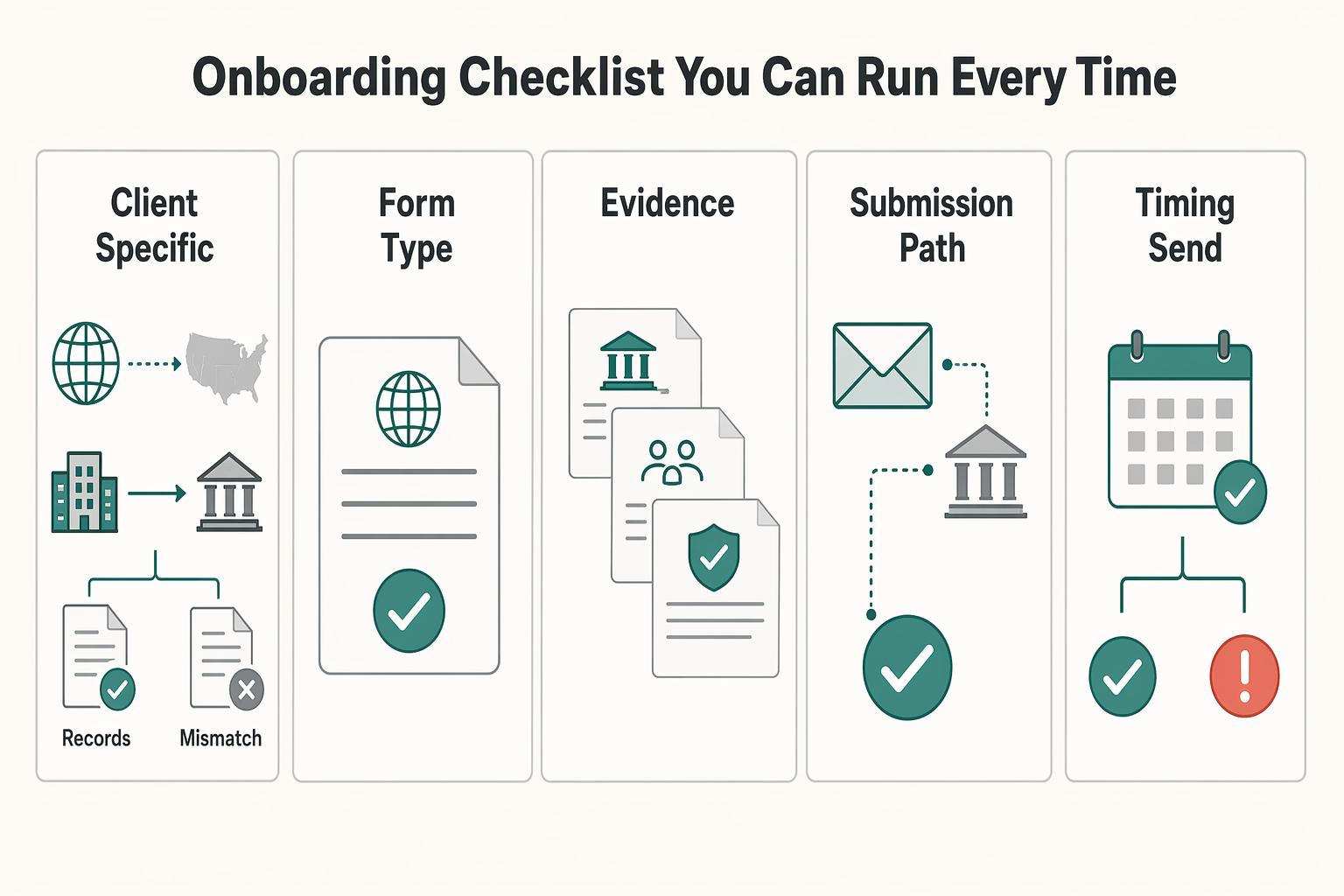
Gather company and payment records before you begin#
Do the prep before you open the form. It gives your U.S. payer a cleaner record to rely on and cuts avoidable follow-up.
Use the company's records, not a director's personal tax account:
- Company UTR: the Corporation Tax Unique Taxpayer Reference issued for the limited company; do not substitute a director's personal UTR.
- Permanent residence address: the company's address in the country where it claims tax residence under the IRS line 6 instructions; a registered office is not automatically the right answer.
- Withholding agent: the payer or agent to whom the IRS says to give Form W-8BEN-E, rather than sending it to the IRS.
- Payment facts: contract, invoice, work location, income type, and any US activity that could affect source or treaty analysis.
| Checklist item | Why your U.S. payer needs it | Common rejection trigger |
|---|---|---|
| Company legal identity | To match lines 1 and 2 to the beneficial owner and incorporation country | Director or trading name entered instead of the company name |
| Company tax-residence address and Corporation Tax UTR | To support line 6 and, where used, the foreign TIN on line 9b | Registered office copied into line 6 without checking tax residence, or a personal UTR used |
| Payment contract, invoice, and delivery facts | To classify source, income type, and whether a treaty claim is needed | US payer location mistaken for US-source income |
| Current IRS form, status evidence, and signer authority | To keep current documentation and submission handling aligned with IRS instructions | Old template, missed "do not use" gate, or no plan to provide it to the withholding agent |
- Confirm the company named as payee.
Use the incorporation record and payer contract to confirm the beneficial owner's legal name and UK incorporation. If the director or a trading name appears on the invoice, reconcile it to the actual company on line 1 before submission.
- Check tax residence and the company's UTR.
Use the company's HMRC Corporation Tax record for its UTR. For line 6, check the company's tax-residence address under the IRS instructions; it may be the registered office, but registration alone does not decide it. Line 9b takes the company's foreign TIN where required, or can be used for a treaty claim instead of a US TIN when the instructions permit.
- Classify the payment before considering Part III.
Use the contract and invoice to identify whether the payment is for services, royalties, interest, or another category. Record where services were performed and whether any US activity exists. IRS Publication 515 generally sources service income where the work is performed, regardless of the payer's residence. If the payment is not US-source or otherwise not subject to the claimed withholding, do not fill Part III just to obtain a zero rate.
- Use a fresh IRS form copy and read the instruction gates.
Download the current IRS Form W-8BEN-E and instructions. Confirm the form-choice gate, the company's Chapter 3 and Chapter 4 classifications, any matching status certification, and the signer's authority. Give the signed form to the withholding agent through the payer's process.
If you are unsure about entity classification or signing authority, pause and confirm with your accountant or a cross-border adviser before you submit anything. You might also find this useful: How to Fill Out Form W-8BEN-E for a Foreign Company.
Before you send anything to a U.S. client, create a clean first draft with the W-8 Form Generator.
Complete the form from the company's facts#
Complete the form from source records and fill it out so the payer can rely on it before payment. The usual failure points are classification mismatch, an unsupported treaty claim, or unclear signing authority.
| Form field group | What you should enter | Common validation failure | Quick self-check before sending |
|---|---|---|---|
| Beneficial owner identification | Your company's exact legal name, incorporation country, tax-residence address for line 6, and company foreign TIN where required or used | Trade name used, address mismatch, or tax ID entered from memory | Does every name and address match your company records and payer profile? |
| Entity and FATCA status | One Chapter 3 entity type only, plus the separate Chapter 4 status your facts support | Treating Chapter 3 and Chapter 4 as the same, or guessing the FATCA box | Have you confirmed both selections for this entity, not copied from an old form? |
| Treaty claim | Only if applicable: treaty residence and LOB basis on line 14; line 15 when additional conditions must be stated | Claiming a treaty rate for foreign-source income or without checking LOB and the relevant article | Is this payment subject to withholding, and does the company actually qualify for the claim? |
| Certification and signature | Signature, date, printed name, and signer capacity for the entity on line 1 | Signed by a day-to-day contact without authority | Can you show why this signer is authorized if asked? |
Part I identification#
Start with the company, not its director. Form W-8BEN-E is for entities, while individuals use Form W-8BEN. Put the company's legal name on line 1 and United Kingdom on line 2. Line 6 asks for its permanent residence address in the country where it claims tax residence; use the registered office only if it meets that test under the IRS instructions.
Line 4 is the Chapter 3 entity type; line 5 is a separate Chapter 4 FATCA status. A UK limited company taxed as a corporation may select Corporation on line 4, but its line 5 status depends on its activity and assets. Use the company's Corporation Tax UTR as the foreign TIN on line 9b when that field is required or used for a treaty claim; never use the director's personal UTR. IRS instructions distinguish required FTIN cases from optional provision for a treaty claim.
Part III treaty claim#
Part III is conditional. First decide whether the payment is US-source and subject to withholding and whether a treaty benefit is actually needed. If the company claims a treaty benefit, line 14a states treaty residence and line 14b certifies income derivation and the applicable limitation-on-benefits basis. Line 15 is for claims needing additional conditions beyond line 14; it is not a mandatory rate box for every UK invoice.
For business profits, Article 7(1) of the US-UK treaty addresses taxation where an enterprise has no permanent establishment in the other state; Article 23 contains limitation-on-benefits tests. Those provisions do not make every UK company automatically eligible. Review the company's treaty residence, income type, US footprint, ownership, and LOB route before any claim.
If a treaty claim is supported, state only the applicable article, rate and extra conditions required by the IRS line 15 instructions. Do not enter a zero rate merely because the customer is in the US or the company is incorporated in the UK. If the payment is foreign-source services performed entirely in the UK, Part III is not needed to explain why chapter 3 withholding does not apply.
Hypothetical UK-company example: services delivered from London#
Assume North Quay Design Ltd is a UK-incorporated company, UK tax resident, and the beneficial owner of a $12,000 design-services invoice to a US customer. Its staff perform all the contracted design work in London; it has no US office or US work for this invoice. Its operating income and assets satisfy the IRS Active NFFE tests, based on its preceding-year income and quarterly asset records. These facts are hypothetical and must be checked for any real company. The customer's US address does not itself turn the UK-performed services into US-source income.
| Form line | Hypothetical entry or decision | Record behind it |
|---|---|---|
| 1, 2, and 4 | North Quay Design Ltd; United Kingdom; Corporation | Incorporation record and tax classification |
| 5 and Part XXV line 39, if its certification is required | Active NFFE only after confirming both passive-income and passive-asset tests | Prior-year income and quarterly asset calculations |
| 6 and 9b | UK tax-residence address; company Corporation Tax UTR where required or provided | Tax-residence evidence and company HMRC record |
| 14 and 15 | Leave Part III blank for this UK-performed services invoice; do not invent a treaty rate | Contract, invoice, and evidence of where services were performed |
| Part XXX | Authorized signer's name, signature, date, and capacity | Company signing authority |
If the contract instead pays royalties for US use, includes services performed in the US, or presents effectively connected income, reclassify that payment before reusing this example. A supported treaty claim may involve Articles 7 and 23, line 14's LOB selection, and possibly line 15; the correct result cannot be inferred from this services example.
Status certification#
After selecting Chapter 4 status in Part I, follow the instructions to see whether a matching certification section is required. For Active NFFE, Part XXV line 39 certifies that the entity is not a financial institution, less than half of preceding-year gross income is passive, and less than half its assets are passive on a quarterly weighted-average basis. Keep the evidence behind those tests.
Final certification#
Sign as an authorized representative for the entity on line 1, and make sure the printed name, date, and capacity are clear. Also plan for updates over the life of the form. It generally remains valid through the last day of the third succeeding calendar year. You must provide a new form within 30 days if a change in circumstances makes the existing one incorrect.
Pause and escalate#
Do not guess through the technical parts. Stop and get professional review before you send the form if any of these apply:
| Escalation trigger | Why it matters | Next step |
|---|---|---|
| Treaty article or paragraph is unclear | The article or paragraph and conditions may not match the payment and facts. | Stop and get professional review before sending the form. |
| U.S. activity could affect permanent-establishment treatment | Permanent-establishment treatment can affect the treaty analysis. | Stop and get professional review before sending the form. |
| Income may be effectively connected income | Form W-8BEN-E is not the right form for that income path. | Form W-8ECI may be required. |
| Entity setup is complex enough that treaty entitlement is unclear | Treaty entitlement is unclear. | Stop and get professional review before sending the form. |
If income is effectively connected, Form W-8BEN-E may not be the right form for that income path; Form W-8ECI may be required. Once the form is complete, send it to the withholding agent or payer, not the IRS.
The Post-Submission Protocol: Securing Your Compliance and Cash Flow#
A correct form can still fail if it is routed badly, goes stale, or is hard to retrieve. After you sign, treat it as a live payment-control document.
| Post-submission task | Why it matters | What can break cash flow if skipped |
|---|---|---|
| Send through the payer's withholding-agent intake process | IRS instructions direct you to give Form W-8BEN-E to the withholding agent | The form reaches a business contact but never enters the payment-control process |
| Track expiration and changes in circumstances | IRS instructions flag both expiration and change in circumstances | The payer pauses payment until a replacement form is reviewed |
| Store a retrievable record set | You need to show what was sent, when, and what supported it | A status query turns into delay because the signed form or receipt trail is missing |
Send it where payment controls are handled#
Submit the signed form through the payer's withholding-agent process, using the channel the payer designates for this documentation when it has one. Sending it only to a commercial contact is not a reliable control.
Do not rely on a casual forward. Use the payer's intake route and keep a record of how and when you sent it. The goal is simple: clear proof that the form entered the payer's payment process.
Log the payer's receipt or portal confirmation, then check that its tax or AP team accepted the form for the company and payment type. If a required intake step is missed, ask the payer what remains open before the next payment run.
Track validity, not just send date#
This is an ongoing control, not a one-time task. IRS instructions flag both Expiration of Form W-8BEN-E and Change in circumstances, so monitor both the calendar and the facts you certified.
Record an internal review date for expiration checks, then set reminders that fit the payer's review cycle and your invoice cadence. Also set an event-triggered review for any change in circumstances that could affect the submitted form.
If you cannot quickly answer, "Is this still valid today?", your control is too weak. Do this now: record your next review date, and set both time-based and change-triggered reminders.
Build a compliance vault you can actually use#
Keep the signed form and submission trail together in one retrievable location. If it helps your workflow, use a consistent filename and store the related submission and receipt records beside it.
Do not keep only the final PDF. Keep the full support trail: what was signed, what was sent, and confirmation or receipt details where available. Also keep related records you already retain for compliance, for example bank statements or receipts where relevant. In practice, retrieval speed is often what prevents payment delays when a payer asks follow-up questions.
If the payer rejects the form or disputes the status, pause and clarify what changed before you resubmit. Do this now: create the folder, save the signed form, and attach the related submission and receipt records.
For more detail on the entity form itself, see How to Fill Out Form W-8BEN-E for a Foreign Company.
Keep the form current in the payer's records#
Keep one record of the signed form, the payer's receipt, the company facts used to complete it, and the next review date. Recheck after changes in tax residence, activity, ownership, or payment type.
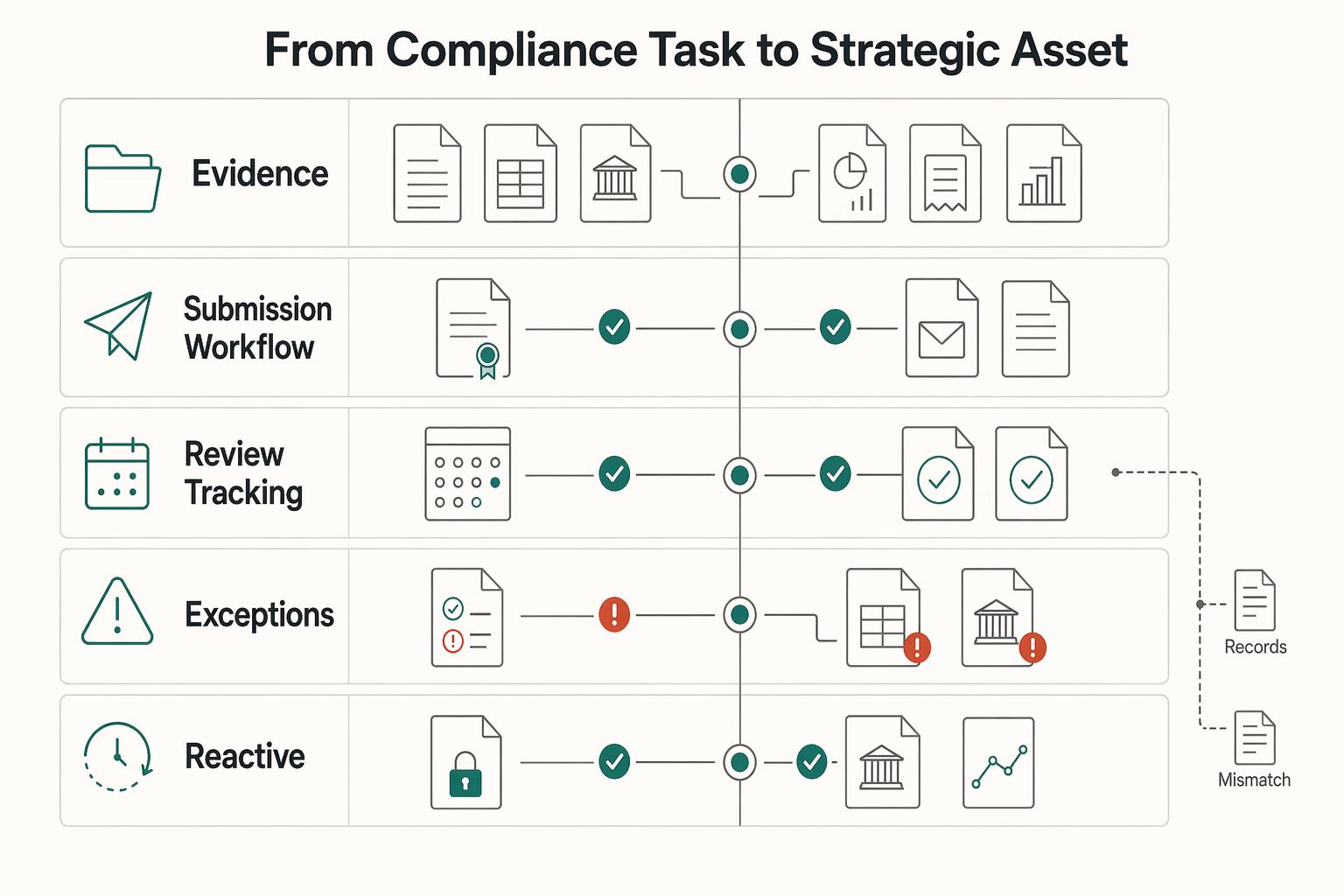
| Control area | What to do |
|---|---|
| Documentation standard | Keep the signed form, company identity and tax-residence evidence, status calculations, payment classification, and payer receipt together. |
| Submission workflow | Use the payer's actual intake channel, then confirm the record is accepted in their system. |
| Review tracking | Record a review date and a change-in-circumstances trigger; use current IRS form instructions for replacements. |
| Exception handling | When key payee details change, pause and confirm whether updated documentation is required. |
If your facts, entity classification, or treaty position are unclear, stop and validate them with a qualified adviser before you rely on treaty-based withholding assumptions.
Frequently Asked Questions
Which form do you use: W-8BEN or W-8BEN-E?
Form W-8BEN-E documents a foreign entity such as a UK limited company. Form W-8BEN is generally for a foreign individual. Confirm who is the beneficial owner and check the IRS instructions before choosing the form; effectively connected income or an intermediary can require a different form.
What does “Active NFFE” mean in plain English?
An Active NFFE is a foreign nonfinancial entity with less than 50% passive gross income in the preceding calendar year and less than 50% passive assets, measured as a quarterly weighted average. It must not be a financial institution. An operating UK company may qualify, but it should test its own income and assets before selecting line 5 and certifying Part XXV line 39.
What if you spot a mistake after sending the form?
Treat it as an operations fix and close the loop in writing. The IRS instructions explicitly include “Change in circumstances” and “Expiration of Form W-8BEN-E,” so if details are wrong or no longer current, submit an updated form through the withholding agent workflow and confirm records were updated.
When can you handle this internally, and when should you escalate?
Handle it internally when the issue is administrative, such as formatting, signature, date, or routing. Escalate to a qualified tax adviser when classification is unclear, your treaty position is uncertain, or you are in repeated payer rejection cycles without a clear basis. Rejections without clear reasoning are a signal to stop making iterative edits and get technical review.
Try a related tool
Researched and edited by the Gruv editorial team. Gruv builds cross-border billing, payouts, and finance-operations software for global businesses.
Sources
Includes 1 external source outside the trusted-domain allowlist.
Educational content only. Not legal, tax, or financial advice.
Related Posts
How to Fill Out Form W-8BEN-E for a Foreign Company
Form W-8BEN-E documents foreign entity status for applicable withholding and reporting purposes and can support a treaty claim. It is provided to the withholding agent, payer or financial institution requesting it, not filed with the IRS. This guide focuses on client-payment onboarding, but neither U.S. payer geography nor an immediate withholding charge is a universal prerequisite for a valid request.

The Freelance Payment Penalty: A Modeled Audit of Platform Fees, FX Spreads, and Payout Delays
The money rarely disappears through a single, easy-to-spot fee. The real loss is stacked. A marketplace takes its commission, a processor adds a charge for international cards, a bank or payment company converts the currency at a spread, a platform holds the funds before release, and a wire sheds a little to intermediaries on the way in. Each layer looks defensible on its own, but the worker feels the combined result as a smaller deposit and a later payday.

How to Respond to a Subpoena for Business Records
Move fast, but do not produce records on instinct. If you need to **respond to a subpoena for business records**, your immediate job is to control deadlines, preserve records, and make any later production defensible.