

Quick Answer
Choose a control model based on failure origin, then enforce intake, verification, payout-release, and ledger-reconciliation gates before funds move. The most reliable baseline is a complete vendor record with legal entity fields, payment destination data, and tax status such as W-9 or W-8BEN before batch approval. Implement this in a 90-day sequence so Finance/AP, Ops, and Engineering can validate retry behavior, webhook exception handling, and change-log evidence before scaling.
Why Accurate Contractor Payment Details Matter#
Reliable contractor payouts start with controlled vendor data, not the payout click. What looks like a payout failure is often an upstream record problem, and ACH return codes like R03 and R04 only make that visible once a payment is processed.
That is the view this article takes. First, choose the vendor data management approach that fits your operating model. Then put controls in the places that actually change outcomes, so Finance, Ops, and Engineering can rely on the same record at the same time. When onboarding, approvals, AP, and payout rails live in different systems, consistency across those systems matters more than any single form.
The focus here is practical: where policy gates belong, which approvals matter, how API and webhook behavior affects payout reliability, and what evidence you need to answer a basic but important question: who changed this vendor, when, and why did payment still move?
A few mechanics matter more than they seem. Webhook providers such as Stripe can retry undelivered events for up to three days, but that only helps if your endpoint handles duplicates correctly. Request retries work the same way. If you do not use idempotency and deduplication, a retry can create a second action instead of safely returning the first result.
Auditability is the other non-negotiable. Sensitive vendor-field changes need a clear history and a traceable link to downstream outcomes. You do not need maximum control depth on day one. But if your flow includes approval-gated payouts, multi-step onboarding, or webhook-driven status updates, treat vendor data as a controlled financial process, not a one-time setup. The next section helps you decide how much control your program actually needs.
Who this list is for and how to choose#
If your payout flow crosses teams and depends on asynchronous events, vendor data needs to behave like a control system, not just an onboarding form. This is most useful when Product, Finance or AP, and Engineering all depend on the same vendor record to run contractor or marketplace payouts across payment rails.
- Best fit: shared-ownership payout operations
This is the strongest fit when vendor setup, tax collection, approvals, and payout execution are split across systems or teams. A simple test is whether you can explain a bank-detail change from system records alone: who changed it, when, what approval applied, and how that change ties to the payout outcome.
- Lighter fit: simpler invoicing with limited automation
If your process is mostly invoice-based and has minimal compliance gating, batch release logic, or webhook-driven updates, you may not need full control depth yet. The risk is that hidden data problems stay invisible until volume and automation increase. Webhook behavior is part of that risk. Handlers can be called more than once, and delivery can fail, so you need explicit retry and resend handling.
- Use these six criteria as a baseline, and require evidence for each
| Criterion | What to verify | Red flag |
|---|---|---|
| Identity (CIP/KYC) and AML gate depth | Identity checks are risk-based, AML controls are defined, and verification records are retained | "Verified" status with no clear checks or retained verification records |
| Tax document support | W-9, W-8BEN, and Form 1099 workflow steps are tied to the vendor record | Forms stored as loose files with no status, owner, or effective-date history |
| Ledger and audit trail quality | Sensitive field changes have durable history linked to payout outcomes | Latest value is visible, but who changed it and why is missing |
| Exception handling | Duplicate-event handling, retries, resend paths, and unresolved events are visible and practical | Silent retries, no replay or resend path, or no duplicate protection |
| Integration effort | Required API and webhook endpoint work is explicit and testable | "Low-code" promise but production event handling is still undefined |
| Ongoing ops load | Manual review, overrides, and reconciliation workload are clear post-launch | Faster onboarding but rising AP cleanup and reconciliation effort |
Keep tax handling date-aware. W-9 supports correct TIN collection for IRS reporting, and W-8BEN establishes foreign status for U.S. withholding and reporting. For Form 1099 workflows, validate threshold logic by tax year and keep January 31 filing timing in your operating calendar.
- Set architecture priority from reporting risk
If auditability and reconciliation are already material for leadership or ICFR oversight, weight ledger and audit evidence ahead of front-end onboarding convenience. The decision check is simple: after an incident, can your team explain the payout end to end from system records alone, or do you still need email threads and spreadsheets to rebuild the story?
Related: Tail-End Spend Management: How Platforms Can Automate Long-Tail Contractor Payments.
The minimum vendor record required before first payout#
Do not allow a first payout until the vendor record is complete enough for verification, tax handling, and record review. Activating payment rails before required data is collected can lead to payout restrictions and exception handling.
| Record element | What must be present | Why it matters |
|---|---|---|
| Verified identity and entity data | A legal-entity profile that can pass provider verification checks, plus representative details where verification flows require them | Missing required information can disable payouts |
| Payment details plus tax status | Payout destination details plus tax profile status and document state such as Form W-9, Form W-8 BEN-E, and VAT identification status where VAT affects invoicing | Missing or incorrect TIN data can create reporting issues and trigger backup withholding at 24 percent |
| Contract and invoice evidence | Supporting invoice and payment evidence tied to the same record trail, with contract references linked when payout approval depends on contract checks | Keeps reviews traceable across vendor data, tax documents, and invoice or payout outcomes |
| Hard release gating before payout batches | Identity verification complete, payment details present, and tax documentation present or reviewed where applicable | Avoids sending a first pay run before required records are collected |
- Verified identity and entity data
Require a legal-entity profile that can pass your provider's verification checks before payout capability is enabled. Capture legal-entity and representative details where verification flows require them. In some platform models, users must complete full verification before they can process payments or receive payouts, and missing required information can disable payouts.
- Payment details plus tax status
Bank or payout destination details are necessary, but they are not enough on their own. Track tax profile status and document state: Form W-9 for U.S. payees' correct TIN, Form W-8 BEN-E for foreign entities in a U.S. withholding or reporting context, and VAT identification status where VAT affects invoicing. Assign clear ownership for "tax complete" and "payment details validated," because missing or incorrect TIN data can create reporting issues and trigger backup withholding at 24 percent.
- Contract and invoice evidence linked to the record trail
Keep supporting invoice and payment evidence tied to the same record trail so reviews stay traceable. If payout approval in your process depends on contract checks, link those references in the same record set. The control that matters is the linkage between vendor data, tax documents, and invoice or payout outcomes.
- Hard release gating before payout batches
Enforce release gates before any payout batch is sent. At minimum, require identity verification complete, payment details present, and tax documentation present or reviewed where applicable. Do not assume you can fix missing records after the first pay run.
The best platform patterns for accurate contractor payment details#
Start where errors are created. Use a unified record when payment and invoice fields must stay in sync. Use payout-first, AP-led, or VMS-led when those teams already own the release decision. The comparison below is a working model, not an industry-standard taxonomy or a universal ranking.
| Pattern | Typical data accuracy control | Typical reconciliation effort | Typical integration complexity | Best for |
|---|---|---|---|---|
| Unified infrastructure | High | Low to medium | High | Teams that want one integrated vendor master and a clearer audit trail |
| Payout-first | Medium | Medium to high | Medium | Teams with strong payout operations but weak upstream record quality |
| AP-led | Medium to high | Medium | Medium | Invoice-heavy operations where AP owns payment release |
| VMS-led | High for governance, medium for payout detail sync | Medium to high | High | Procurement-heavy or contingent workforce programs needing strict approvals |
- Unified infrastructure
Use this when payment profile and invoice profile data need to come from the same core vendor record. The benefit is tighter field consistency and one traceable record trail. The cost is heavier integration, since vendor interactions often require multiple table or entity maps working together. Concrete use case: a platform that needs one record of vendor-detail changes, invoice approval, and payout outcomes. Risk note: policy-gate drift if payout release does not check the master record at execution time. When to switch: if month-end close slows because onboarding, AP, and payout ops each keep a different "current" vendor record.
- Payout-first
Use this when the immediate pain is payout failures, retries, and event-delivery triage. The benefit is faster control close to the payout rail. The tradeoff is that upstream records can stay fragmented. Concrete use case: a marketplace where downstream payout details lag vendor-detail updates and failures repeat. Risk note: webhook dependency and duplicate side effects. Watch Delivered, Pending, and Failed states, handle retries safely, and design handlers for repeated or concurrent calls. Live redelivery attempts can continue for up to three days. When to switch: rail failures improve, but reconciliation effort stays high because invoice and vendor controls remain split.
- AP-led
Use this when invoice matching, approvals, and ledger posting controls are your main release gates. The benefit is stronger period-close evidence and clearer finance ownership. The tradeoff is manual override exposure if transaction-level posting-profile overrides are allowed. Concrete use case: imported vendor invoices route into approval workflow, and approved invoices inform payment release. Risk note: govern override paths with review rules and durable change history tied to invoice or payout outcomes. When to switch: delayed payables-to-ledger reconciliation matters more than payout-event handling.
- VMS-led
Use this when governance discipline across the third-party lifecycle is the main constraint. The benefit is centralized contingent-workforce controls, approvals, SOW governance, and consolidated invoicing. The tradeoff is sync risk between VMS approval state and payout-detail state in other systems. Concrete use case: a high-control contractor program that needs a formal system of record before AP or payouts act. Risk note: business email compromise risk on vendor-change requests, especially payment-detail updates, so approval state alone should not be treated as payment-ready. When to switch: repeated vendor-change disputes, approval gaps, or governance exceptions continue even when payout execution is stable.
Across all four patterns, require close-ready evidence you can assemble quickly: vendor change history, invoice references, payout event records, and the approval or posting control used to authorize payment.
For a step-by-step walkthrough, see Webhook Payment Automation for Platforms: Production-Safe Vendor Criteria.
Best option for teams that need one system of record#
If onboarding, invoice processing, and payouts each hold a different "current" vendor record, this is often the strongest option. Use a ledger-backed authoritative record, and enforce payout-release checks against that record at execution time, not only at intake.
What makes this the right fit#
Choose this when Finance and AP need one close-ready trail, and Engineering needs retry safety without duplicate payment actions. The advantage is not just consolidation. One record governs collection, approval state, invoice references, and payout outcomes, so policy gates are enforced in one place instead of rebuilt across tools.
That record also needs to be durable enough to support an audit trail. Ledger-derived history gives you a sequence of debit and credit events, rather than relying only on editable status fields. That can make close less about reconciling conflicting snapshots and more about matching invoice processing, payout batches, and ledger entries to one vendor identity.
Why it works operationally#
This model is strongest when API retries and webhook reliability matter. Use idempotency keys for create and update actions tied to vendor payment details and payout initiation where your provider supports them. Then verify replay behavior by resending the same request with the same key and confirming the same result, including error behavior.
Webhook consumers also need duplicate handling. Providers can deliver the same event more than once, so treat event IDs as dedupe keys and persist processed state before side effects like marking an invoice paid or releasing a payout batch. Without that, duplicate downstream updates and AP or payout status drift become hard to unwind.
It also works well when compliance controls must stay in the release path, not only onboarding. In U.S. AML rules, programs include risk-based ongoing customer due diligence backed by internal controls, so payout decisions should continue to reflect current review status.
The tradeoff you need to accept#
The cost is migration and change-management complexity. Running old and new records in parallel can increase consistency risk and testing load. This works best when you define one owner for the ledger record and one clear cutover point for payout authority, even if upstream tools still collect some inputs.
Approval paths also need care so controls do not create avoidable delays in onboarding and first-payout operations.
Use case to copy#
This is a clean choice for multi-country contractor payouts when AP needs reliable payout batches and Engineering needs idempotent retries. Cross-border payments still face pressure on speed, transparency, access, and cost, so fragmented records can make exceptions harder to resolve.
Require an evidence pack for disputed payments: vendor change history, approval record, account-validation result, invoice reference, webhook event record, and final ledger entry. That is what makes a one-record strategy defensible at close.
If you are building a broader operating model for contractor onboarding, record ownership, and issue resolution, read Vendor Relationship Management for Platforms That Finance and Ops Can Run.
Best option for teams already strong in payout operations#
If a full ledger-first rebuild is not practical now, keep your proven payout engine and tighten the vendor and tax record that feeds it. This fits best when payout batches, API retry behavior, and webhook operations are already stable. It is weaker when upstream updates to bank details, Form W-9, Form W-8 BEN, or invoice references are scattered across tools.
Why this is the right fit#
The main benefit is speed. You can harden the fields most likely to break execution without reworking payout orchestration first. For high-volume teams, place a controlled vendor profile in front of payout release and validate it again at execution time. Do not rely on whichever system last captured the data.
Before releasing a batch, confirm that payout destination, tax-document status, and invoice reference match the current approved vendor record. If you run PayPal batch payouts, keep sender_batch_id controls deliberate: duplicate checks apply across a 30-day window, and 5xx retries should reuse the same sender_batch_id.
What you gain and what still breaks#
This can be a faster, lower-disruption path to stronger payout-data reliability while keeping much of your current payout operations in place. But fragmented AP and tax records can still create reporting and withholding risk.
Form W-9 is used to provide the correct TIN for payer reporting, and missing or incorrect TIN data can trigger backup withholding at a flat 24%. Foreign payees may need Form W-8 BEN when requested by the payer. If those records stay outside core controls, payment details can look valid for release but still be wrong for reporting or withholding.
Operator notes#
Two checks matter most here: validate duplicate and stale-event handling with idempotent processing, not just happy-path delivery, and reconcile payout outcomes to transaction-level settlement or payout reports.
- Webhook endpoints can receive the same event more than once, and some providers retry up to 25 times over three days when success responses are not returned before marking delivery as failed.
- Reconcile payout outcomes to transaction-level settlement or payout reports so you can isolate whether an issue came from upstream vendor data, pending refunds or chargebacks, or rail-side behavior.
Use this pattern when payout execution is strong but vendor governance is weak. Move beyond it when AP, tax, and payout systems keep disagreeing on the current vendor record. Related reading: Global Treasury Management for Platforms Across 50+ Countries.
Best option for AP-first organizations with heavy invoice volume#
Choose this model when Accounts Payable (AP) is your release gate. If contractor payments depend more on invoice processing, purchase orders, receipts, and approval chains than on real-time payout events, an AP-first stack can give you tighter control than a payout-led design.
Best for#
This is often the right fit for procurement-led contractor programs where operational truth lives in invoices and terms. The release decision starts with whether the invoice is valid, approved, and matched, then moves to payment scheduling.
AP platforms support that sequence directly. Vendor invoices can be entered manually or received electronically, and approval is a distinct step rather than something implied by import alone. If your team asks "Was the invoice approved and matched?" before it asks "Did the payout event clear?", AP should be the control center. This matters even more when payment timing follows contract terms, since payables uses invoice payment terms to schedule payment.
Why it works well#
AP-first works because it puts control where procurement and finance already operate. Matching compares invoice, purchase order, and receipt records, and three-way matching checks pricing and quantities against both PO and receipt data, creating a checkpoint before funds move.
It is also a strong fit for VAT-sensitive flows. For EU businesses, invoicing is compulsory for most B2B transactions, and in the UK, VAT-registered parties must use VAT invoices in relevant transactions. An AP-led process keeps invoice evidence and approval records together, which can make VAT documentation easier to review.
You can still automate without losing control. Imported invoices can be auto-submitted to workflow, and receipt matching and workflow submission can run on Hour or Daily frequencies.
Where it breaks first#
A common gap after approval is payout visibility. AP can show approved, held, or scheduled status, but event-level payout detail can be weaker unless you add deeper payout integration through API and webhooks.
Webhooks are HTTP endpoints for asynchronous events, and Stripe can retry undelivered events for up to three days. If manually handled events are not marked correctly, retries can continue. If idempotency is weak, duplicate downstream actions can follow even when the invoice side looks clean. Idempotency keys may be pruned after 24 hours, so retry safety needs explicit design.
What to verify before you commit#
Two checks separate a durable AP-first setup from one that only looks controlled:
- Verify invoice hold behavior. If matching fails tolerance rules, approval can place a matching hold, and that hold must be released before payment. Test a deliberate quantity or price mismatch and confirm disbursement stops.
- Verify the payout feedback loop. For one provider, map webhook events back into AP status and confirm duplicate and undelivered events are handled intentionally. If you only see "paid" or "not paid" with no event trail, plan for manual exception handling.
Use this pattern when contract terms, approvals, and VAT evidence drive release decisions. Deepen payout integration, or move away from this pattern, when approved invoices repeatedly lack clear payout outcomes and teams keep reconciling the same exceptions by hand.
Best option for procurement-heavy teams with strict vendor governance#
Choose a VMS-led model when the main risk is releasing payments before vendor due diligence, contract controls, and remit-to approvals are complete.
Best for#
This model fits enterprise-style onboarding where a Vendor Management System (VMS) can serve as a control point for external workers and service providers across onboarding, contracting, monitoring, and offboarding. It is strongest for sensitive vendor tiers that require centralized policy gates before payment activation.
The real advantage is lifecycle governance, not just intake. Interagency U.S. guidance frames third-party risk as a full lifecycle: planning, due diligence, contract negotiation, ongoing monitoring, and termination. A VMS-led setup maps well to that sequence, while Finance and Accounts Payable (AP) can work from an approved vendor record instead of rebuilding controls downstream.
Why it works well#
The core control is straightforward: payment rails should stay inactive until the approved vendor profile is complete. In practice, remit-to bank details can be gated behind customer approval before payment is allowed, which gives you a concrete pre-payment control on high-risk payment-detail changes.
This model can tighten contract governance for external talent and services procurement. It can also reduce the gap where procurement marks a contractor as terminated but the payout system still treats them as active. A documented failure state is discovering too late that an offboarded contractor could still submit and get paid.
If a bank or payments partner requires customer-identification-style data, central collection can help. Scope still matters. Beneficial-owner identification at account opening may apply for covered institutions, and recent relief can affect repeated checks at each new account. Align your workflow to partner requirements instead of assuming every rule applies directly to your platform.
Where it breaks first#
The first tradeoff is speed. VMS-led controls can add latency between vendor onboarding and first payout because due diligence, contract approval, and remit-to approval happen before payout activation.
The second tradeoff is system ownership. If VMS, AP, and payout tools each hold their own active vendor record, payment details can drift and reconciliation work can rise. One practical failure mode is currency mismatch: payments can fail when invoice currency and bank-account currency are not aligned, even when the vendor appears approved upstream.
What to verify before you commit#
- Confirm record ownership. Define one authoritative vendor ID that flows from VMS into AP and payout systems. Update bank details and verify old remit-to paths are inactive everywhere.
- Test blocked release paths. Offboard a contractor or fail due diligence, then confirm payout activation is blocked. If pause controls are used, test timeout behavior. Some payouts are canceled if they remain paused for 10 days after creation.
- Check production evidence quality. Make sure contract version, approver identity, remit-to approval, due-diligence result, and termination status are attached to the payment-ready record, not scattered across email or shared drives.
Use this pattern when centralized oversight matters more than first-payout speed. If vendor-record ownership is unclear after approval, fix that before scaling.
If contracts and payment terms still sit across multiple systems, Procurement Data Management for Platforms: How to Centralize Vendor Contracts and Payment Terms goes deeper on centralizing that data.
Control points that actually prevent bad payment details#
A practical way to prevent bad payment details is to control four points: intake, verification, payout release, and post-payout reconciliation. If any one of those gates stays soft, errors return as failed payouts, tax-record issues, or cleanup work at close.
| Control point | Key requirement | Evidence or exception focus |
|---|---|---|
| Intake gate | Block payout activation until the vendor record is complete, including core entity and payout details, tax status, and any beneficial-owner information needed at account opening | Capture who submitted the data, when, and which document version was attached; treat bank-account and payout-destination edits as review-triggering changes |
| Verification gate | Apply verification depth based on risk; deeper review for net-new entities or material changes, including tax-status checks | The audit trail should reconstruct who approved what, when, why, and what changed |
| Payout-release gate | Before any payout batch or API call, confirm verification is current, approvals are still valid, and the payout instruction exactly matches the approved vendor record | Use idempotent retries, deduplicate repeated event deliveries, and route webhook failures, unmatched records, and stale approvals into an owned exception queue |
| Post-payout ledger reconciliation | Confirm that the ledger proves the right vendor was paid with approved details and tie payout outcomes back to the approved vendor ID, tax status, and release approval | If a settled payout cannot be traced to approved change history, treat it as a control failure |
- Intake gate
Block payout activation until the vendor record is complete. For legal entities, collect core entity and payout details, tax status, and any beneficial-owner information needed at account opening. In U.S. payer flows, W-9 is commonly used for TIN collection, and W-8BEN is submitted by foreign beneficial owners when requested by the payer or withholding agent.
Prioritize evidence quality, not just field completion: who submitted the data, when, and which document version was attached. Treat bank-account and payout-destination edits as review-triggering changes, not routine profile updates.
- Verification gate
Apply verification depth based on risk, not one uniform path. Renewals with no meaningful entity or payout-detail changes may justify a lighter review, while net-new entities or material changes generally warrant deeper review, including tax-status checks.
Dual approval can be a strong control for high-risk edits such as payout destination or tax-form status changes. Your audit trail should clearly reconstruct who approved what, when, why, and what changed.
- Payout-release gate
Treat release as its own decision point, separate from prior approval. Before any payout batch or API call, confirm verification is current, approvals are still valid, and the payout instruction exactly matches the approved vendor record.
Operationally, retries should be idempotent so repeat requests do not create duplicate operations, and webhook handlers should deduplicate repeated event deliveries. If delivery fails, some providers retry undelivered events for up to three days. Event retrieval can also be limited to the last 30 days. Route webhook failures, unmatched records, and stale approvals into an owned exception queue.
- Post-payout ledger reconciliation
Reconcile more than payment completion. Confirm that the ledger proves the right vendor was paid with approved details. Tie payout outcomes back to the approved vendor ID, tax status, and release approval on your normal finance close cadence.
In FCA safeguarding contexts, expectations can be explicit, including internal and external safeguarding reconciliations each reconciliation day. If a settled payout cannot be traced to approved change history, treat it as a control failure even when funds reached the contractor.
90-day implementation sequence with ownership checkpoints#
Do not switch every control on at once. A staged 90-day rollout with named owners and checkpoints helps catch data issues before they reach payout.
| Phase | Main actions | Ownership or checkpoint |
|---|---|---|
| Days 1 to 30 | Map one vendor record end to end, define the minimum record by vendor type, and set an evidence standard for who submitted data, when it changed, and which document version was attached | Find where the audit trail breaks, especially when approved payout details and edited payout details diverge |
| Days 31 to 60 | Turn policy into hard controls for verification checks, tax-document status checks, and internal change approval; keep change history investigation-ready; align ledger rules | Verification policy for Compliance or Risk, tax and release readiness for Finance or AP, and API, webhook, and event durability for Engineering |
| Days 61 to 90 | Migrate in controlled cohorts; test idempotent payout creation, webhook acknowledgment with 2xx, deduplication, and exception routing; validate month-end close with an evidence pack per cohort | Success means Finance can reconcile and Engineering can explain each retry path |
| Scale-up rule and success checkpoint | Pause expansion if exception volume stays high and fix intake-validation and ownership root causes before adding rails or larger cohorts | Use one shared checkpoint across Ops, Finance, and Engineering: a downward payout failure trend, plus close-cycle effort and manual overrides against a pre-launch baseline |
- Days 1 to 30: map the current path and define the minimum vendor record
Trace one vendor record end to end: intake, document upload, verification review (for example, KYC or KYB where applicable), tax review, ERP or AP handoff, API call, webhook return, payout batch, and ledger posting. Use that path to find where the audit trail breaks, especially when approved payout details and edited payout details diverge.
Define a rules-driven minimum record, not one fixed template for every vendor. Required verification data can vary by location, business type, and requested capabilities, so document what is required before first payout, what documents are required by entity type, and what changes trigger re-review. In U.S. payer flows, this commonly includes W-9 for TIN collection and W-8BEN when requested by the payer or withholding agent.
Set a hard evidence standard from day one: who submitted data, when it changed, which document version was attached, and who changed payout destination details.
- Days 31 to 60: convert policy into enforced gates and durable change history
Turn policy into hard controls: no payout activation until verification checks, tax-document status checks, and internal change-approval requirements are met. Keep ownership explicit: verification policy for Compliance or Risk, tax and release readiness for Finance or AP, and API, webhook, and event durability for Engineering.
For legal entities, beneficial-owner collection may apply, but confirm current primary requirements and provider rules before locking policy. Keep change history investigation-ready with audit logs that clearly show who did what, where, and when. Tamper-resistant system activity logs, where available, strengthen control evidence.
Align ledger rules in this phase. Approved vendor ID, tax status, and payout outcomes should post consistently for reconciliation.
- Days 61 to 90: migrate in cohorts, test retries, and prove close readiness
Use controlled migration cohorts, starting with lower-risk groups before expanding. Test payout creation with idempotent requests so retries do not duplicate side effects, and design retry handling with provider-specific windows in mind, including idempotency key retention behavior and webhook redelivery windows.
Acknowledge webhooks quickly with 2xx, then process asynchronously with deduplication and exception routing. Validate month-end close with an evidence pack per cohort: approved vendor record, tax-form state, change-log extract, payout instruction or batch, webhook receipt history, and ledger reconciliation output.
Success in this phase is not just "payments sent." It is "Finance can reconcile and Engineering can explain each retry path."
- Scale-up rule and success checkpoint: pause on sustained exceptions
If exception volume stays high after controls launch, pause expansion and fix root causes in intake validation and ownership before adding rails or larger cohorts. Use one shared checkpoint across Ops, Finance, and Engineering: target a downward payout failure trend, and measure close-cycle effort and manual overrides against a pre-launch baseline.
Before scaling to more rails, pressure-test your ownership checkpoints, idempotent retry flow, and batch visibility against the operational surfaces in Gruv Payouts.
Conclusion#
-
Choose the model that keeps data accurate from intake through reconciliation. The best fit is not the stack with the most features. It is the one that keeps a clear record across intake, approval, payment release, and reporting. Internal-control guidance treats this as an ongoing management process tied to reliable reporting, not a one-time setup.
-
Set preventive gates before payment release. Approvals, verifications, reconciliations, and recordkeeping are still core controls. Before payout approval, confirm payment details and tax identity data where required. In U.S. payer flows, Form W-9 is used to provide the TIN for information returns, and the name and TIN match is critical to avoid backup-withholding risk.
-
Keep an audit trail that reconstructs the full sequence of events. Do not rely on final status alone. Store who changed what and when, what actions were performed, and how each action ties to payout or invoice outcomes.
If you want fewer payment surprises at scale, treat vendor data quality as a controlled financial process with clear ownership, preventive checks, continuous reassessment, and defensible records. If your team is choosing between replatforming and targeted fixes, discuss your current control gaps and rollout constraints with Gruv.
Frequently Asked Questions
What causes inaccurate contractor payment details in platforms?
There is no single documented root cause in the cited guidance. Weak change control can compound duplication issues. If your logs cannot show event type, time, source or location context, outcome, and identity for payment-detail changes, payout approvals become hard to trust.
What fields must be validated before payout approval?
There is no single universal field list for every country or platform model. As a practical baseline, validate legal-entity identity, payment-rail details, tax-document status, and approval state tied to a traceable record. In U.S. payer flows, Form W-9 is used for taxpayer details, and Form W-8 BEN is submitted when requested by the payer or withholding agent. If you file information returns, IRS TIN Matching can validate name and TIN combinations before filing.
How often should contractor payment details be re-verified?
Do not rely on a fixed universal cadence. For covered financial institutions, CDD requires ongoing monitoring and risk-based updates to customer information. In operations, trigger re-verification on critical changes like legal-name edits, payout-destination changes, beneficial-ownership updates where required, or failed verification checks.
What controls reduce failed payouts without slowing onboarding?
Use risk-tiered gates so low-risk records can pass automated checks while higher-risk changes get additional review. Keep webhook handling disciplined by returning 2xx after receipt and processing asynchronously with deduplication. This matters because providers retry deliveries, including Stripe for up to three days and PayPal up to 25 attempts over three days after non-2xx responses.
Should we choose VMS, AP automation, or payout infrastructure first?
There is no universal first choice. Start with the layer where failures actually begin, then close downstream gaps to reconciliation. If the break is retry behavior or duplicate side effects, enforce idempotent requests so the same key returns the same stored result.
What should an audit-ready change log include?
At minimum, capture event type, time, source or location, outcome, and identity for each relevant action. A practical baseline is who accessed what, when, and from where. For payment-detail changes, this can include before and after values and references to the related vendor and payout or invoice outcome so investigations are fast and defensible.
Try a related tool
Researched and edited by the Gruv editorial team. Gruv builds cross-border billing, payouts, and finance-operations software for global businesses.
Sources
Includes 1 external source outside the trusted-domain allowlist.
- ecfr.gov/current/title-31/subtitle-B/chapter-X/part-1...trusted
- ecfr.gov/current/title-31/subtitle-B/chapter-X/part-1...trusted
- irs.gov/newsroom/what-businesses-need-to-know-about-...trusted
- irs.gov/businesses/small-businesses-self-employed/wh...trusted
- gov.uk/invoicing-and-taking-payment-from-customers/...external
Educational content only. Not legal, tax, or financial advice.
Related Posts
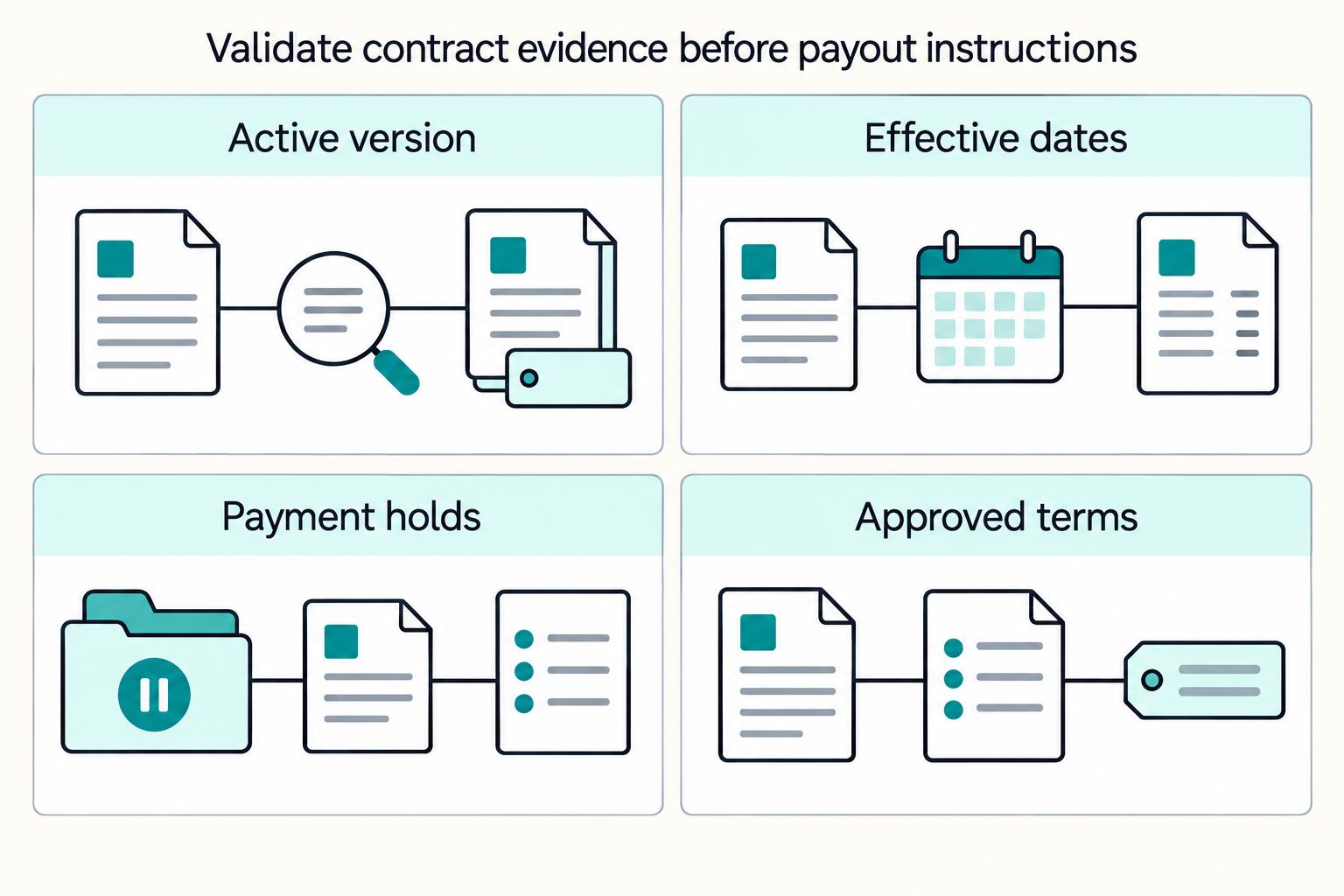
Procurement Data Management for Platforms: How to Centralize Vendor Contracts and Payment Terms
Treat every vendor contract and supplier agreement as a payment control, not a filing task. If a term can change approval, payout timing, or a payment hold, it needs to work inside your payment process, not sit in a PDF or get split across systems.
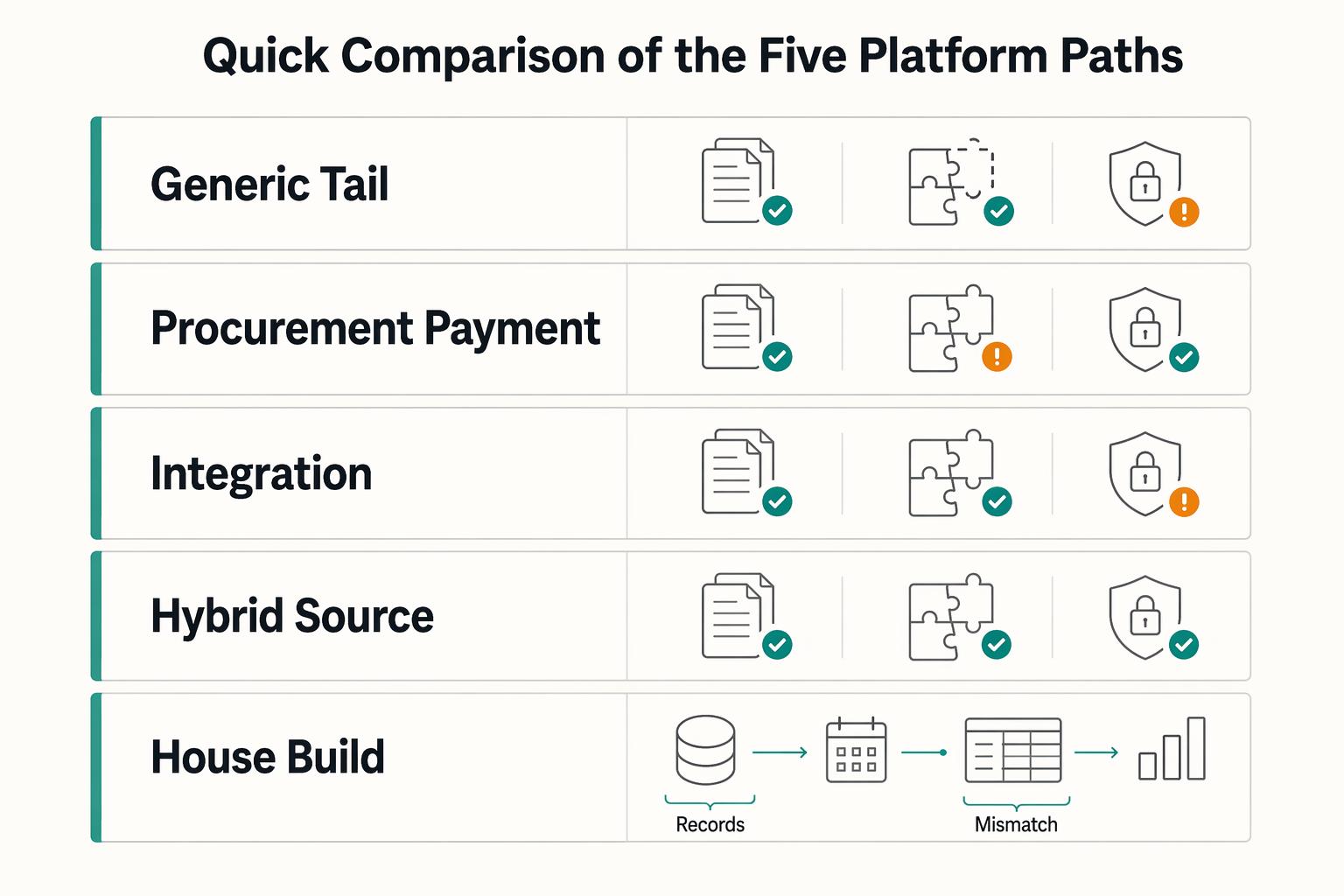
Choosing a Tail-End Spend Management Platform for Long-Tail Contractor Payments
Tail-end spend management can start to break down when long-tail contractor payouts begin to scale. Tools built for low-value, low-visibility procurement can tighten approvals and policy. They are not automatically built for payout-state tracking, retry safety, payout failures, or reconciliation evidence. That gap is the real decision here.
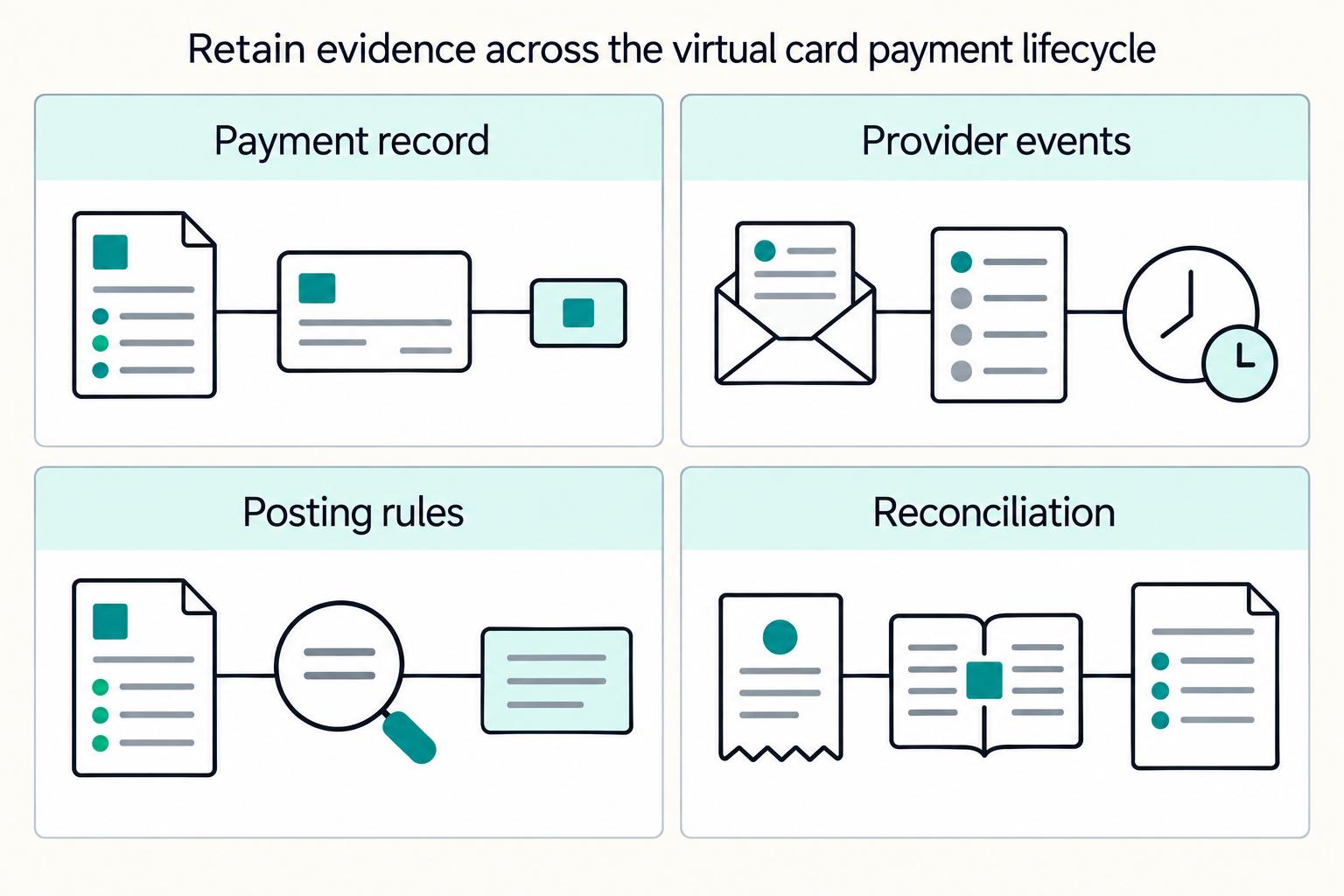
Virtual Credit Cards for Platforms: How to Issue Single-Use Cards for Contractor and Vendor Payments
Single-use virtual cards are often positioned as a fit for controlled vendor payments, but not for every contractor payout. This guide helps product, Payments Ops, and AP teams decide whether virtual cards fit their operating model, or whether cards belong alongside ACH, checks, or other payout rails.