
Quick Answer
Set a staged decision path and stop activation when evidence conflicts. Run lighter session checks first, escalate to deeper review when signals stack, and require route-level decisions: approve, hold, reject, or re-verify. Before any account moves forward, confirm the identity record, verification output, and activation request match. If they do not, keep the case held, assign ownership, and log the reason, reviewer, and timestamps so the decision can be reconstructed later.
Why contractor onboarding is the control point for synthetic identity fraud#
Contractor onboarding is the control point because it gives you an early chance to challenge identity before broader account access raises the stakes. If a synthetic or impersonated profile clears that gate, later remediation gets slower and harder to manage.
Step 1. Treat onboarding as the first strong place to stop a bad identity. Once a profile passes remote onboarding, the risk is no longer limited to account creation. It can resurface at weak points like account recovery and later account changes. Some identity-verification initiatives are aimed at financial services and cross-border payments, not just generic signup flows. Put your strongest identity decision before full account activation, not after it.
Step 2. Optimize for two outcomes at the same time. You need to keep fabricated identities out while avoiding unnecessary friction for legitimate contractors. That tradeoff matters because digital onboarding still has to balance efficiency, accuracy, and fraud prevention. If you send every applicant straight to full document review, you create avoidable friction. If onboarding is too light, bad profiles can blend in with the good ones.
A practical checkpoint is to confirm that the identity record, the verification result, and the account requesting activation all line up before you switch status to active. If those artifacts do not match, hold the case and route it for review.
Step 3. Design for the weak points attackers actually use. Synthetic identity risk does not end at the first form fill. IDEMIA notes that AI has "turbocharged impersonation fraud" and that attackers exploit weak points such as account recovery. In practice, an account that looked acceptable at signup can still become risky when recovery details change later. A common failure mode is treating the first pass as permanent approval and letting later profile changes bypass the same scrutiny.
If you use AI or ML to help triage these cases, keep one standard in view. A September 2025 FCC council report frames responsible AI and ML use around being "valid, reliable, safe, secure, and fair." That is a useful operator test: it helps you decide whether a model can support review or whether it is only giving you a rough signal.
Step 4. Decide up front what to log and when to escalate. Before you finalize the rest of your control stack, make sure onboarding decisions leave a traceable record. Log submitted identity fields, the verification method used, timestamps, decision status, the reviewer or service that made the decision, and the reason for any hold or escalation. That record helps teams reconstruct why a case moved forward or stopped.
One red flag should have a standing rule: if identity evidence is internally inconsistent, escalate before activation.
For a broader look at synthetic identity risk across payment platforms, see Synthetic Identity Fraud: What Payment Platforms Must Know.
What to prepare before you design controls#
Prepare four things first: scope boundaries, market-by-market compliance requirements, data-source gaps, and case ownership. Skip this prep and the controls can look complete while still missing the point where identity risk reaches payout.
| Prep item | What to capture | Key note |
|---|---|---|
| Scope boundaries | Which events are identity onboarding, which event changes payout from pending to active, and which later profile changes trigger re-checks | Can the team name the exact status change where a profile becomes eligible for money movement? |
| Market-by-market compliance requirements | What legal and compliance teams require for KYC, KYB, AML, privacy, retention, and review | Keep tax-and-coverage documents in a separate lane |
| Data-source gaps | What you use now, including Social Security number checks, background checks, device intelligence, behavioral biometrics, and document forensics outputs | A valid-looking SSN or passed background check alone does not resolve identity risk |
| Case ownership | Who owns holds, who can clear exceptions, who handles privacy or AML escalations, and who files required regulatory reports | Verify that every case state has a clear owner and handoff path |
Step 1. Define the exact boundary of review. Document which events are identity onboarding, which event changes payout from pending to active, and which later profile changes trigger re-checks. Use a simple checkpoint: can the team name the exact status change where a profile becomes eligible for money movement?
Step 2. Confirm market-specific compliance minimums before adding fraud logic. For each market, capture what legal and compliance teams require for KYC, KYB, AML, privacy, retention, and review. Keep tax-and-coverage documents in a separate lane: a U.S. Certificate of Coverage is tied to Social Security coverage under bilateral agreements that prevent dual Social Security taxation, not proof that a contractor identity is authentic.
Step 3. Inventory data sources and mark gaps. List what you use now, including Social Security number checks, background checks, device intelligence, behavioral biometrics, and document forensics outputs. Then map each source to the decision it supports, because a valid-looking SSN or passed background check alone does not resolve identity risk.
Step 4. Assign owners and response expectations before launch. Name who owns holds, who can clear exceptions, who handles privacy or AML escalations, and who files required regulatory reports. Before go-live, verify that every case state has a clear owner and handoff path.
Map where synthetic identities enter your contractor lifecycle#
Map the exact handoffs where a mixed real-and-fake identity can keep moving toward payout. Do this before you tune controls. If you cannot name where identity risk becomes payout exposure, the design is too vague to run.
Map the five stages before you tune controls#
Break onboarding into five stages with a clear end status for each: account creation, identity submission, verification, payout setup, and first withdrawal. A synthetic identity can look plausible at multiple steps, so do not assume it fails early.
For each stage, record:
- Data collected
- Check performed
- Status change allowed next
Use one checkpoint across the flow: what is the last stage where the profile can still be stopped before money movement starts? In most setups, that point is before payout method activation.
Mark the silent-pass points#
Silent-pass points are where weak identity resolution gets treated as a clean review. Typical examples include account creation that only checks email and phone, identity submission that accepts malformed address data, or verification that passes because one source matched while another source was never queried.
Address data is a common failure point. Typos or missing unit details can trigger failed checks and manual review, while local address-format variation can reject legitimate contractors if your stack cannot interpret regional formats. Input quality issues create friction, but over-trusting corrected data without resolving contradictions can still let a fabricated profile reach payout setup.
Give each external dependency one authoritative purpose#
If you use tools such as LexisNexis ThreatMetrix, FraudNet, GBG, or Microblink, document for each one:
- Which stage calls it
- What evidence it returns
- Whether that evidence can approve, hold, or only support manual review
Then check your decision logs. Each provider result should show a timestamp, returned result, and the specific decision it changed. Otherwise, a generic "pass" can be misread as broader KYC or AML clearance than it is.
Assign owners to stage-specific failure modes#
Document failure modes by stage and assign a named owner for remediation. Include downstream contradiction cases, such as identity passing verification but payout-profile data later conflicting with KYC or AML evidence, or first-withdrawal behavior raising concerns after onboarding looked clean.
Assign ownership by function and queue, not to a generic "risk team." If contradictions appear after payout setup but before first withdrawal, reopen review before activation proceeds.
For a step-by-step walkthrough, see Contractor Onboarding Optimization: How to Reduce KYC Drop-Off and Get to First Payout Faster.
Sequence checks in the order that catches risk early without killing conversion#
Order matters: start with low-friction session signals, then escalate only when signals stack or identity consistency breaks.
Start with low-friction session signals#
Run low-friction checks during account creation and identity entry. Behavioral biometrics fits this stage because it evaluates interaction patterns continuously during the session and can flag anomalies while the session is live, not just at login.
Use these signals for triage, not clearance. A quiet session is not proof the identity is real, and a noisy session is not automatic fraud. Log each alert with the exact signal, timestamp, and onboarding stage so reviewers can defend why a case was escalated.
Avoid collapsing these checks into an unexplained single score. If reviewers only see "high risk" without session context, you add friction without usable decision support.
Escalate when signals stack or identity consistency breaks#
Escalate depth when risk signals stack or core identity data conflicts. If identity consistency fails early, hold payout enablement and route to enhanced review before you collect more sensitive data.
For tax-identity checks, keep the logic strict:
| Item | Stated rule |
|---|---|
| TIN matching inputs | Requires both TIN and business name |
| TIN alone | Not sufficient for validation |
| Business name comparison | Uses the first four characters of the business name from Form SS-4 |
| EIN tied to a different business name | May indicate fraud rather than reassignment |
| IRS code 3 response | Inconclusive and should go to manual follow-up |
Treat credit-history and age-consistency signals as supporting inputs, not sole decision grounds. They can inform KYC/AML review, but they should not replace it.
Keep payout status as the hard gate. If identity contradictions are unresolved, the case should remain pending or held, not move to payout-ready.
Choose vendors your team can actually operate#
Choose vendors for operational fit, not feature volume. In payments, onboarding and provisioning are fraud-relevant processes, so your team needs outputs you can explain, route, and audit.
Stress-test vendors on operational questions:
- Do outputs include clear reason codes?
- Do results flow cleanly into case management?
- Do retries create duplicate or conflicting case states?
- Can you reconstruct the decision path for reporting?
This matters even more as identity fraud gets harder to evaluate, including with AI-enabled deepfake complexity. Use deeper checks when earlier signals stack, but do not accept opaque outputs that leave reviewers unable to explain why payout was blocked.
Define approve hold reject rules before launch#
Lock your decision routes before go-live so approvals, holds, and rejections stay consistent and defensible. If reviewers improvise route criteria, payout gating and reporting quality will drift.
Write the four routes as policy#
Define the four routes as explicit policy, not team memory. For each route, state the minimum evidence, who can decide, and what happens to payout enablement.
| Route | Use it when | Required evidence | Payout status |
|---|---|---|---|
| Auto-approve | Core identity signals align with no unresolved contradictions | Passed identity resolution, no material device or session conflict, no open KYC/AML issue | Payout-ready only after all required checks complete |
| Manual hold | Signals conflict or evidence is incomplete | Case record with conflicting outputs, timestamps, and reviewer queue assignment | Held |
| Reject | Evidence supports likely false, fabricated, or non-verifiable identity, and re-verification is unlikely to resolve it | Decision rationale, supporting verification outputs, reviewer identity, retained artifacts | Closed, not payout-ready |
| Re-verify | A contradiction may be resolved with another step | Reason for re-check, requested artifact or action, completion deadline, reviewer notes | Held until resolved |
Use one operating rule across all four routes: approve only when evidence aligns, and do not reject without a documented basis another reviewer can follow later. Re-verification is for resolvable gaps, not for cases that already point to a likely fabricated profile.
Default to hold when core signals conflict#
When core signals conflict, default to manual hold. If document forensics is clean but device intelligence and identity resolution disagree, route the case to case management review.
A clean document result should not override unresolved contradictions. The DHS-linked RIVR evaluation cited testing across seven document validation technologies under controlled laboratory conditions, and related material notes real-world performance variation. That is enough reason not to use document forensics as an auto-approval tie-breaker, especially in live verification conditions shaped by compression, re-encoding, and bandwidth limits.
Publish triggers for compliance and legal review#
Publish escalation triggers to legal and compliance instead of leaving escalation to reviewer discretion. At minimum, include repeated identity anomalies, suspected fabricated profiles, and unresolved KYC/AML contradictions.
Escalate based on pattern, not only one severe field result. If contradictions persist across re-verification or materially affect whether KYC/AML expectations are met, keep payout disabled and route to compliance review before activation. If your legal team needs liability context, Platform Liability: When Are You Responsible for Contractor Tax Fraud or Money Laundering? can help frame ownership.
Log every override#
Require logging for every override from the standard route. An override without rationale creates an audit gap.
At minimum, log reviewer identity, timestamp, prior decision state, new decision state, justification, and retained artifacts supporting the change. Review override patterns regularly; repeated overrides on the same rule usually mean the policy or tooling needs correction.
Build the minimum audit pack your team can produce on demand#
Before you mark any case complete, require one standard audit pack. You do not need to save everything forever; you do need a consistent case file that finance, legal, compliance, or an auditor can read later without relying on the original reviewer.
Define one standard evidence bundle for every case#
Use the same evidence bundle for approvals, holds, rejects, and re-verifications. If full detail exists only for rejects and escalations, approvals often become the weakest records when questions surface later.
| Evidence item | Include |
|---|---|
| Submitted identity data from onboarding | Field-level timestamps and the exact version reviewed |
| Verification outputs | Identity resolution, document forensics, and screening checks, including provider reference IDs and raw result labels |
| Decision rationale | Mapped to your approve, hold, reject, or re-verify policy |
| Case timeline | Submission, review touches, override events, and escalation notes |
| Payout gating history | When payout was blocked, enabled, changed, or reversed |
Treat this as your identity packet. Depending on your process, it can include ID scans, proof-of-address documents, bank information, and sanctions or PEP screening results. As a quality check, pull one approved case and one rejected case and confirm a second reviewer can reconstruct each decision from the file alone.
Keep a masked audit view of sensitive fields#
Store a masked audit view for sensitive fields instead of a fully open duplicate of each identifier. This gives operations, finance, and legal usable records while reducing unnecessary exposure of PII in onboarding data.
Do not mask so aggressively that the file loses audit value. Keep enough structure to answer practical questions later: whether the same identifier appeared across submissions, whether last-four digits aligned with a payout profile, which document type was used, and which screening result applied. The masking method should follow your legal and privacy guidance while preserving audit utility.
Link onboarding decisions to payout status changes#
Make traceability explicit from the onboarding request through payout state changes. If finance starts from a payout event, they should be able to trace back to the case ID, reviewer actions, verification outputs, and rationale for approve, hold, or close.
Record the chain directly: onboarding request ID, case ID, reviewer or service action, decision state, payout state, and transition timestamps. A common failure is split tooling with no shared reference between onboarding decisions and payout enablement, which makes reconstruction slow and unreliable.
If your case file references legal text or rulemaking, separate informational copies from authoritative records. FederalRegister.gov states its Web 2.0 display is a prototype and not the official legal edition, and it says legal research should be verified against an official edition. Keep the authoritative record or counsel-approved interpretation in the file, not just a screenshot of a convenient webpage. For adjacent detection design, see AI Fraud Detection for Subscription Platforms Beyond Rules-Based Approaches.
Implement controls in product operations and engineering handoffs#
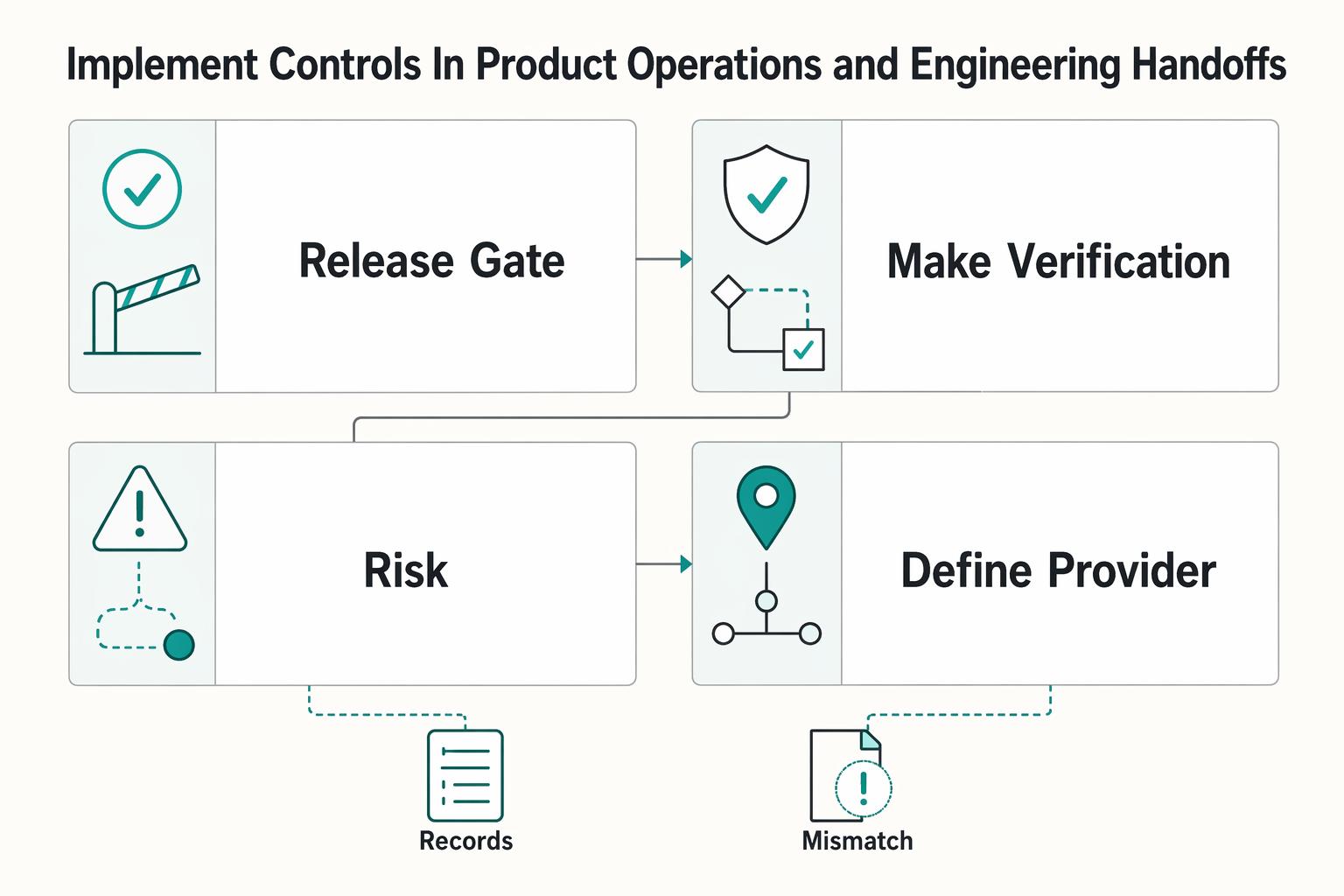
Your controls only work if verification decisions directly control operational states like payout eligibility and are recorded in one auditable path.
- Gate payout activation on completed review states, not partial signals.
Treat payout eligibility as a policy outcome: checks complete, unresolved alerts cleared or formally overridden, and final review status synced into the systems your support, finance, compliance, and payout operations teams actually use. If teams see different states across tools, enforcement breaks. Test approved, held, and overridden cases so none can activate payout unless your platform-level policy conditions are met.
- Make verification retries idempotent before shipping re-submit flows.
Repeated submissions should not create competing decisions. Use one idempotency key per submission version so the same request resolves to the same case reference and decision path. Test duplicate submissions and confirm you still have one authoritative case state and one payout-gate outcome.
- Add step-up verification at lifecycle events that change risk.
Initial onboarding is only the first checkpoint. Re-verify when payout details or key identity information changes, or when activity no longer matches prior evidence. Keep that result in the same case history. This is where an identity platform helps operationally, versus standalone ID verification SDKs focused on capture and document authenticity checks: you need policy gating plus evidence recording in one governed flow.
- Define provider handoffs and degraded-state handling before go-live.
For integrations like Horizon Identity, Kount, or Resistant AI, define what states like pending, failed, timed out, or stale mean in your product, who owns each state, and how payout eligibility is handled while unresolved. Validate timeout and failure paths so unresolved checks cannot silently pass and so evidence remains available for case-ready audit exports.
Common failure patterns and how to recover quickly#
Recover fastest by treating onboarding as a corroboration process, not a single pass/fail event. Synthetic identities can look clean in one channel, especially when a real Social Security number is combined with fabricated personal information, so approval should require agreement across signals.
- Require multi-signal corroboration before approval.
Do not approve from a clean document result alone. Document forensics can indicate whether an ID appears genuine, but it cannot prove the submitter is the rightful owner; that document-holder disconnect is a common failure point. If document checks pass but device intelligence or identity resolution conflicts with the profile, hold the case instead of approving it. Quick recovery check: sample recent approvals and confirm each case has consistent document forensics, device intelligence, and identity resolution outcomes, with no unresolved conflicts left open in case management.
- Assign named owners before any hold is cleared or overridden.
Recovery breaks when decision ownership is unclear. Assign explicit owners for holds, overrides, and escalations, and record who decided, when, and why in the case record. If multiple teams can release a case without clear ownership, premature approvals become likely. Quick recovery check: inspect one overridden case and verify reviewer identity, rationale, and payout decision are all captured in the same record.
- Standardize evidence fields so data is audit-ready.
Data without structure is hard to defend later. Use the same core fields on every case, such as case ID, timestamps, masked identity data, signal outputs, reviewer, override reason, and payout status history. If you cannot reconstruct the decision path for reporting or periodic control testing, you have stored activity, not usable evidence.
Related: How Platforms Detect Free-Trial Abuse and Card Testing in Subscription Fraud.
Copy and use this checklist before your next onboarding release#
Assign one owner to sign off before release. The goal is simple: do not approve a profile just because one signal looks clean when the full identity and risk picture do not.
-
Confirm market obligations first. For each market, document the KYC/AML (and related due-diligence) requirements that apply, and record who approved that interpretation. Do not rely on vendor defaults; keep a current market-by-market note from compliance or counsel.
-
Map the full onboarding path, not just signup. Break the flow into account creation, identity submission, verification, payout setup, and first withdrawal. Mark where a synthetic identity could pass by mixing real and fabricated identity fragments.
-
Sequence controls from lighter screening to deeper review. Start with lower-friction checks, then step up when signals conflict or stack. Synthetic identities can slip past controls tuned to known victims, so define what can proceed, what requires manual review, and what should stop.
-
Define approve/hold/reject/re-verify rules before launch. Do not leave reviewers to improvise. KYC is broader than identity establishment alone: it also covers understanding activity context, checking whether funds appear legitimate, and assessing money-laundering risk.
-
Standardize case evidence. For every hold, rejection, and override, capture the same core artifacts: masked submitted data, verification outputs, timestamps, reviewer identity, decision notes, and status changes. Weak override notes are hard to defend later.
-
Make payout-release logic explicit in your own policy and system. If payout is gated on identity/risk checks in your program, define that rule clearly and verify product behavior matches policy. Test that unresolved contradictions cannot bypass the intended decision path.
-
Test adverse scenarios before release. Run cases with conflicting signals, provider delays, and repeated submissions to expose duplicate decisions or stale holds. Where relevant, add KYCC-style review so risk checks cover key counterparties and source-of-funds legitimacy, not only the applicant.
-
Review outcomes monthly and tune where errors cluster. Track false positives, misses, and overrides. Tighten corroboration where single-signal approvals fail, and fix bottleneck steps directly when legitimate applicants are getting stuck.
Frequently Asked Questions
What is synthetic identity fraud in contractor onboarding?
Synthetic identity fraud is the creation of a fictitious persona by combining real data with fabricated details. In contractor onboarding, that means a profile can look plausible enough to pass early checks, especially when a real Social Security number or other valid data point is mixed with false personal information. The operational risk is not just a bad signup. It can include payout exposure and internal access under a made-up identity.
Which checks should run before contractor payout enablement?
Use enough identity verification to confirm the person is who they claim to be before payout is turned on, not after. There is no single mandatory sequence for every program, but one practical approach is lower-friction screening first, then stronger checks such as document scanning, biometrics, or database matching when signals conflict or risk is elevated. If identity evidence is incomplete or contradictory, keep payout on hold. Do not treat one clean result, such as a valid-looking SSN or document, as enough on its own.
What signals most often indicate a likely synthetic profile?
A common pattern is consistency on one data point and contradiction across the full identity. A valid-looking SSN, clean document result, or passed background check can still sit next to fabricated personal details or other unexplained mismatches. If the profile only looks trustworthy in one channel, move it to hold. The failure mode is approving because one signal looked clean while the rest of the record never lined up.
How do we reduce fraud risk without breaking onboarding conversion?
Start with lighter checks and only add friction when signals stack or conflict. That can keep legitimate contractors moving while giving you a path to deeper review instead of forcing every applicant through the same heavy process. If you want a practical model for that sequence, see How to Build a Contractor Onboarding Checklist: KYC Tax and Bank Verification Steps. The tradeoff is clear: lower friction can improve completion, but weak corroboration raises the chance that a fabricated profile reaches payout.
When should a case escalate to compliance or legal?
Escalate when unresolved identity contradictions persist, when identity anomalies repeat, or when signs suggest a fabricated profile may already have reached payout or access. Escalation also makes sense when a reviewer wants to override a hold without a clear, documented basis. If the question is whether to release funds while evidence is incomplete, pause payout and escalate first.
How much evidence should we keep for audits and regulatory reporting?
Keep enough evidence to reconstruct the decision from onboarding through payout status changes. Regulators may ask you to show evidence that matches your verification claims, so records should support those claims rather than only stating that a check "passed." Case-ready audit exports are useful because they help compliance, legal, and finance produce a defensible record without rebuilding the file by hand.
Try a related tool
Researched and edited by the Gruv editorial team. Gruv builds cross-border billing, payouts, and finance-operations software for global businesses.
Sources
- capitol.tn.gov/Archives/Joint/committees/fiscal-review/cont...trusted
- congress.gov/event/118th-congress/senate-event/LC74834/texttrusted
- cppa.ca.gov/meetings/materials/20250724_item5_fsor_app_a...trusted
- federalregister.gov/documents/2024/01/09/2023-28857/health-data-...trusted
- nvlpubs.nist.gov/nistpubs/ir/2024/NIST.IR.8480.ipd.pdftrusted
- sec.gov/Archives/edgar/data/0001003935/0001003935260...trusted
- ssa.gov/international/CoC_link.htmltrusted
- ssa.gov/international/agreements_overview.htmltrusted
Educational content only. Not legal, tax, or financial advice.
Related Posts
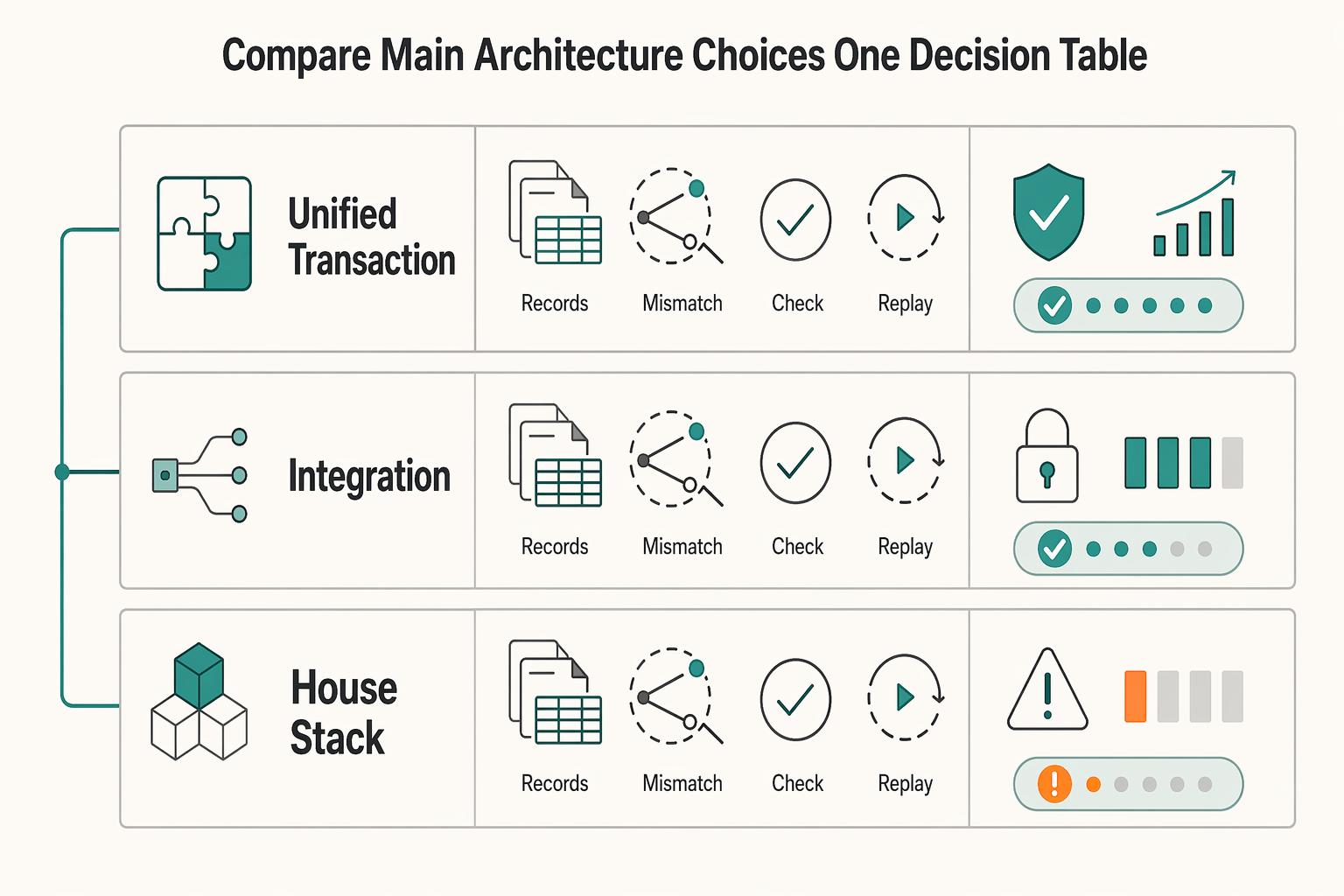
What Payment Platforms Must Know About Synthetic Identity Fraud
For cross-border payouts, your job is to set enough control depth to reduce synthetic identity abuse without turning contractor, seller, or creator onboarding into needless manual drag.
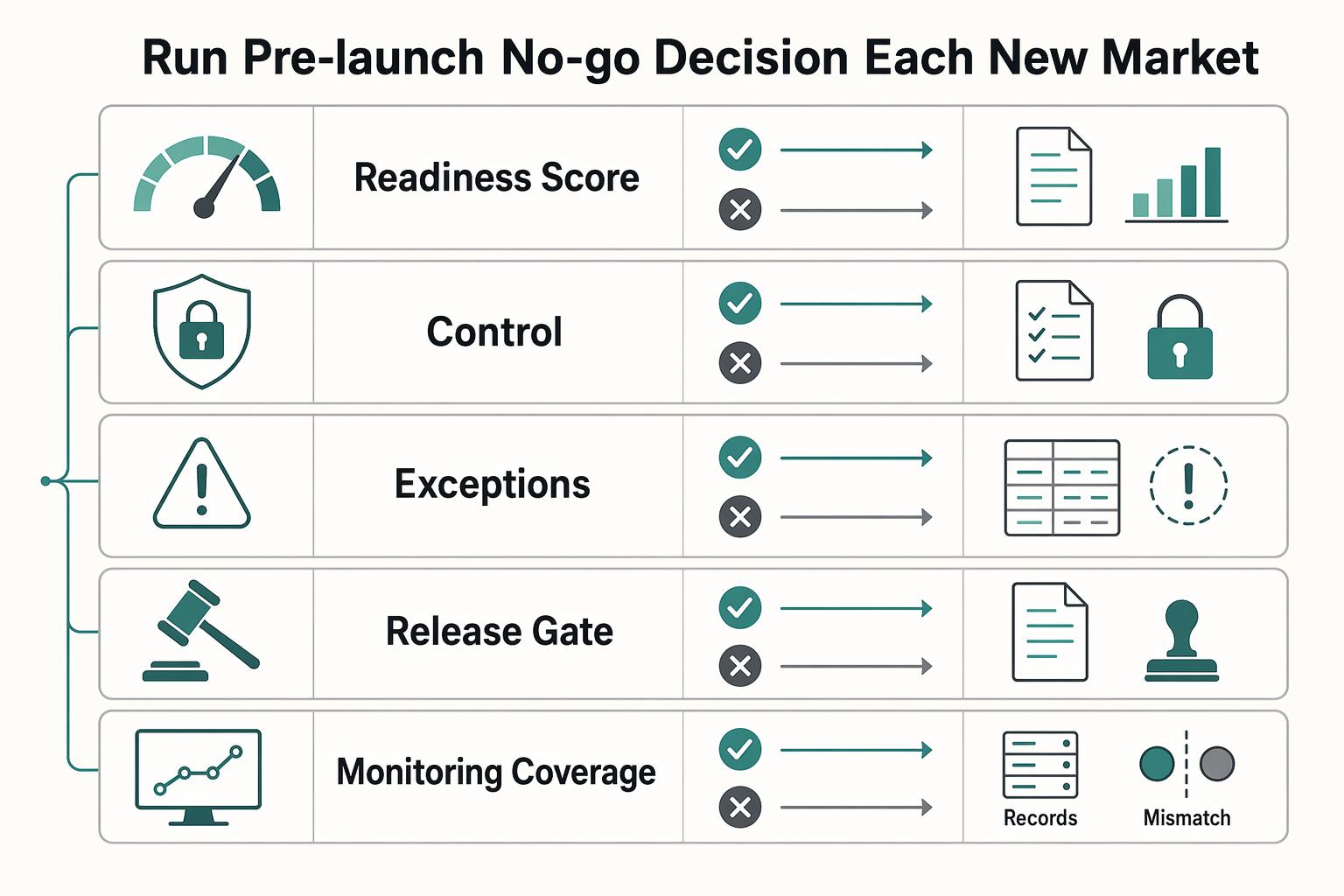
When Platforms Are Responsible for Contractor Tax Fraud or Money Laundering
If you are deciding where to launch contractor payouts, the real question is whether your current controls are strong enough for each market you want to enter. The liability issue is not just an abstract policy debate. It comes down to whether onboarding, tax-data handling, payments, and exception handling leave preventable gaps for tax crime or money laundering.
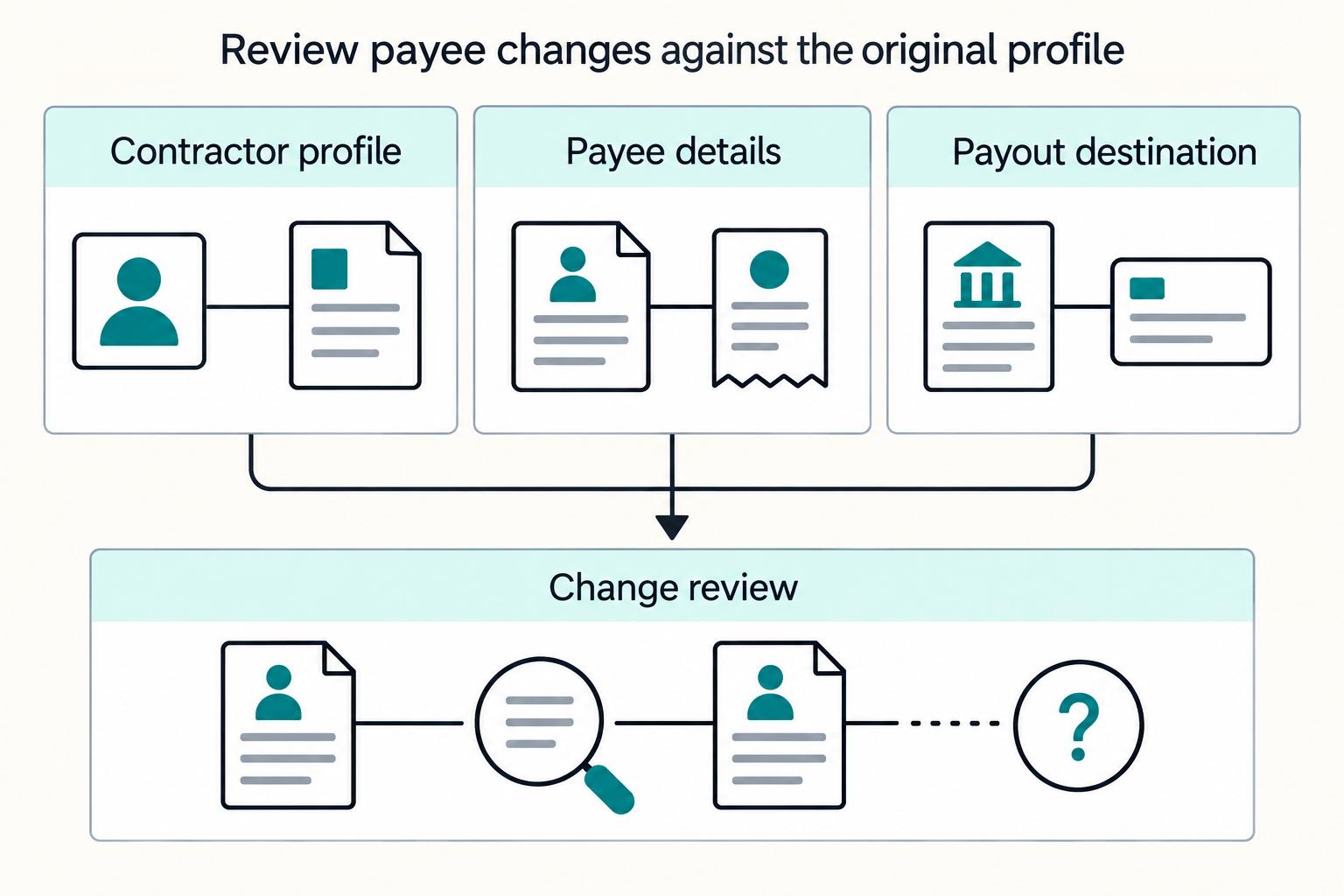
Contractor Onboarding Checklist for KYC, Tax, and Bank Checks
--- title: Contractor Onboarding Checklist: KYC, Tax, and Bank Verification meta_title: Contractor Onboarding Checklist: KYC, Tax, and Bank Verification og_title: Contractor Onboarding Checklist: KYC, Tax, and Bank Verification twitter_title: Contractor Onboarding Checklist: KYC, Tax, and Bank Verification