
Quick Answer
Use subscription business benchmarks by industry vertical only after cohort matching and evidence checks. Start with operator anchors like ARR, churn rate, retention rate, CAC payback, LTV, NRR, and gross margin, then separate directional context from decision-grade inputs. Keep B2B, B2C, and D2C in different lanes, require ARR segmentation, and treat unmatched methods as non-comparable. If unknowns outweigh knowns, run a limited pilot instead of scaling GTM spend.
How to Use Subscription Benchmarks by Vertical#
The useful question is not which vertical has the loudest growth story. It is whether the benchmark evidence behind that story is comparable enough to support a real expansion decision. Founders and platform teams usually see headline growth, category excitement, or broad market reports first. That context can help, but on its own it is a weak basis for committing product, payments, or GTM budget.
An industry vertical is simply a category used to group similar businesses for comparison. The comparison only works if the businesses are similar in the ways that matter operationally. A benchmark from B2C subscription commerce may tell you something about consumer plan design, while a benchmark from vertical SaaS may reflect software built around the workflow needs of a specific industry. Those are not interchangeable evidence sets, even if both sit inside the broader subscription economy.
That matters more in a market described as maturing and increasingly competitive. Recurly's 2026 State of Subscriptions describes a subscription economy that has matured, with tighter competition. The same report analyzes data from 76 million unique subscribers and 2,200 global merchants, and reports overall subscription growth slowing to 12.6%. Useful macro context, yes. Proof that your target vertical has healthy retention, workable acquisition economics, or a rollout path your team can actually support, no.
A practical read starts with two checks. First, verify what the source actually measured. For example, Recurly's benchmark study on subscription ecommerce covered over 900 B2C ecommerce sites over a two-year period, and found that 68% offered more than one plan-length option. That is a concrete observation about plan structure usage in a specific sample. It is not a universal rule for Private B2B SaaS, PLG B2B, or every D2C category.
Second, check what is missing. If a report gives market size or subscriber growth but not churn, retention, payback, or margin context, treat it as directional rather than decision-grade.
The common failure mode is simple. Teams mistake market optics for operator evidence. They see a growing category, assume the benchmark quality is good enough, and only later discover that the source cohort, pricing model, or regional realities do not match their own business. That is how expansion choices get guessed instead of tested.
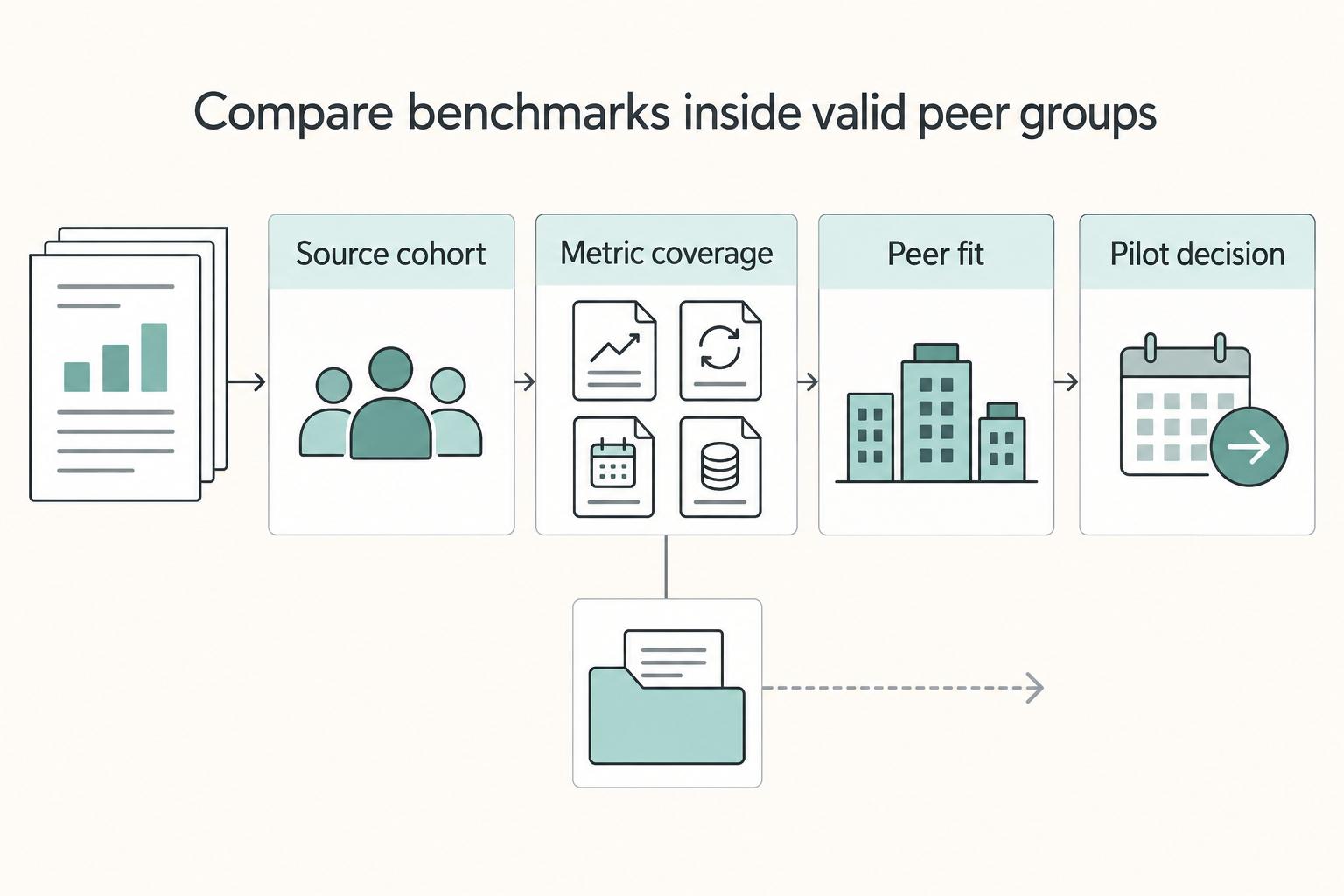
This article takes a more practical path for subscription business benchmarks by industry vertical. We will separate broad market context from operator benchmarks, compare verticals only inside valid peer groups, and make rollout choices based on benchmark quality, execution effort, and risk. If the evidence is thin, the right answer may be a smaller pilot or a delay, not a bigger forecast. Related: Payment Decline Rate Benchmarks: How Your Platform Compares to Industry Standards.
Start with benchmark definitions that prevent bad decisions#
Use benchmark definitions as a gate before you compare verticals. The subscription economy is market context, not operator performance, so it cannot by itself tell you whether retention, acquisition efficiency, or unit economics are workable in your target vertical.
Anchor your comparison in operator metrics: Annual Recurring Revenue (ARR), retention rate, Churn rate, Customer acquisition cost (CAC) payback, Customer lifetime value (LTV), Net revenue retention (NRR), and gross margin. ARR is recurring revenue normalized to a one-year period, and a common calculation is MRR × 12. Churn rate is the percentage of customers who cancel or do not renew in a period, and denominator choice matters, so verify the exact formula each source uses before comparing results.
Keep B2B, B2C, and D2C in separate benchmark lanes. Even large datasets can be narrow in scope: RevenueCat's 2026 report is built on over 115,000 apps, more than a billion transactions, and more than $16 billion in revenue, with 11 by-category breakouts. That is strong app-subscription evidence, but not automatically comparable to every contract-led SaaS or non-app subscription model.
Treat ARR range segmentation as a hard filter in your evidence sheet. A single blended median across very different ARR bases is not decision-grade benchmarking. If ARR cuts are missing, log that gap up front before you commit budget.
For a step-by-step walkthrough, see A freelance IT consultant's guide to business interruption insurance.
Segment the market before you compare any numbers#
Compare numbers only after you match cohort design. Vertical alone is not enough.
| Plan-length setup | Share | Sample context |
|---|---|---|
| Monthly only | 27% | Recurly B2C ecommerce sample; over 900 sites; two-year period |
| Annual only | 5% | Recurly B2C ecommerce sample; over 900 sites; two-year period |
| Multiple plan types | 68% | Recurly B2C ecommerce sample; over 900 sites; two-year period |
Use the same baseline segmentation used in major market reporting: business model, subscription type, industry vertical, and region. If those cuts do not match across sources, treat the comparison as directional.
| Segmentation cut | Label before comparing |
|---|---|
| Business model | B2B, B2C, D2C |
| Subscription type | Fixed subscription and other plan structures |
| Industry vertical | The source's vertical taxonomy |
| Region | Geography used in the study |
| Study design | Scope and time period |
Inside each segment, keep plan structure explicit. In Recurly's B2C ecommerce sample (over 900 sites, two-year period), plan-length mix was 27% monthly only, 5% annual only, and 68% multiple plan types. Keep those figures in their original context rather than porting them to other models or verticals.
Apply the same discipline to sub-cohorts. If a source explicitly separates PLG B2B from other B2B cohorts, keep that split. If a source distinguishes bootstrapped and equity-backed private B2B SaaS companies, keep those cohorts separate; if not, mark the missing split as an evidence gap.
If two sources use different cohort cuts, do not average them into one benchmark line. Keep them side by side and label them directional only. For more on churn measurement, see How to Calculate and Manage Churn for a Subscription Business.
Build a known versus unknown evidence table before committing budget#
Approve budget only after you can show, source by source, what is known for your target vertical and what is still unknown. Without that split, you have context, not a benchmark case.
Use a compact evidence table and make each row carry a short note: report title, publication date, cohort or category scope, geography, and exact metric fields found.
| Source | What it can support | What it cannot support (log as unknown) |
|---|---|---|
| FTC report on Social Media and Video Streaming Services | Data-practices and privacy-risk context, including targeted advertising risk language | Vertical-level NRR, CAC payback, gross margin, or operator benchmark comparables |
| Streaming-industry analysis (April 2024) | Platform monetization analysis and platform-type distinctions | Vertical-level NRR, CAC payback, gross margin, or operator benchmark comparables |
| ScienceDirect opinion paper | AI/ML governance context (ethical practice and explainability) | Vertical-level NRR, CAC payback, gross margin, or operator benchmark comparables |
| Check Point administration guide | Product licensing model context (subscription and PAYG) | Cross-vertical benchmark comparables, including NRR, CAC payback, gross margin |
A practical rule: write missing when core operator fields are not present. Do not treat adjacent market, policy, or product-model context as a substitute for benchmark evidence.
How teams usually fool themselves#
Teams often line up different source types until they seem to confirm each other. A report can clarify privacy risk or monetization structure and still leave operator economics unanswered. That is exactly why the unknowns column matters.
Make it a go or no-go gate#
If unknowns outweigh knowns for your target vertical, treat that as a no-go for full GTM allocation and run a smaller pilot first. Define the exact evidence that pilot must produce before scaling budget.
Score verticals with one comparable decision table#
Use one table to force a go-or-delay decision: advance only when evidence is comparable enough to trust and execution friction is manageable. If benchmark quality is weak and execution friction is high, delay expansion even when growth signals look strong.
| Candidate lane | Benchmark quality | Segment fit | Execution friction | Confidence level |
|---|---|---|---|---|
| Software and technology (SaaS), especially Private B2B SaaS | Medium to strong when SaaS metric sources and B2B cohorts are genuinely comparable | High when product, buyer, and ARR band align; note whether the fit is closer to horizontal SaaS or vertical SaaS | Medium | B |
| B2C subscription apps on App Store | Weak for operator benchmarking; useful mainly for demand context | Medium if you are truly mobile-first and consumer subscription-led | High if your current model is not app-led | C |
| B2C subscription apps on Google Play | Weak for operator benchmarking; useful mainly for demand context | Medium if Android distribution and consumer acquisition match your model | High if channel, pricing, and retention behavior differ from your current base | C |
Score the table with discipline:
- Benchmark quality first: prioritize lanes with direct, comparable evidence for viability metrics such as Churn rate and Retention rate, not just market momentum.
- Segment fit second: comparability beats scale; a tighter cohort match is more useful for a decision than a broader market headline.
- Execution friction third: growth data does not prove operational ease.
- Confidence last: grade confidence by source quality and comparability, not by forecast size.
The demand context is still useful, but it is not operator proof. For example, top-100 subscription app consumer spend rose to $18.3 billion in 2021 from $13 billion in 2020, and US top-100 spend rose to $8.5 billion from $5.9 billion. App Store subscription revenue exceeded $6 billion, and Google Play surpassed $2.5 billion in 2021. Treat these as market signals, not evidence that churn, retention, or acquisition performance will transfer to your lane.
As a tie-breaker, a lower-growth lane with stronger churn and retention comparability can outrank a faster-growing but opaque lane.
Decide rollout order with explicit if-then rules#
After scoring, set rollout order with explicit rules, not momentum. Launch first where evidence is closest to how you actually sell, deliver, and engage customers.
| Situation | What to focus on | Rule |
|---|---|---|
| B2B with larger contracts | Offer development, recurring-revenue model and pricing decisions, and customer engagement | Promote a vertical only when you can explain the core viability drivers with evidence close to your motion |
| PLG B2B or B2C | Early retention and payback signals | Prioritize these over broad market forecasts when sequencing rollout |
| Evidence base mostly SaaS; target non-SaaS | Transfer assumptions | Treat transfer assumptions as high risk and require a pilot before broad GTM spend |
- If your model is B2B (Business-to-Business) with larger contracts, promote a vertical only when you can explain the core viability drivers with evidence close to your motion: offer development, recurring-revenue model and pricing decisions, and customer engagement.
- If your motion is PLG B2B (Product-led growth) or B2C (Business-to-Consumer), put early retention and payback signals ahead of broad market forecasts when sequencing rollout.
- If your evidence base is mostly SaaS but your target is non-SaaS, treat transfer assumptions as high risk and require a pilot before broader GTM spend.
Use a staged order so confidence and investment stay aligned:
| Rollout tier | Entry rule | Next step |
|---|---|---|
| Primary vertical | High confidence from directly comparable evidence and clear operating fit | Fund first rollout |
| Secondary vertical | Medium confidence with known gaps | Run limited tests and close gaps |
| Watchlist vertical | Low confidence or weak comparability | Research only |
Review this order on a fixed cadence. A monthly or quarterly business review should check progress against the annual operating plan, typically within 5-10 business days after month-end, using a document of 6 pages or fewer plus appendix tables. In that review, update each tier with what changed in the evidence and what still needs pilot validation.
For a deeper retention-focused companion, see Subscription Churn Benchmarks by Vertical. For operating discipline ideas, see A Freelancer's Guide to Business Process Automation (BPA).
Pressure-test vertical choice against country and payment constraints#
A strong vertical score is not enough if your money movement path is only proven in one market. Use global payments growth as context, then treat country and region decisions as separate operating cases.
McKinsey's October 2022 report says payments revenue grew 11 percent in 2021 to a record $2.1 trillion, with healthy growth across regions. That supports a resilient global backdrop, not automatic launch readiness for North America, the United States, and Asia Pacific in your specific vertical.
Compare readiness by region, not by headline#
| Region candidate | What to verify before rollout | Red flag |
|---|---|---|
| North America | Country-specific collection and payout flows are documented for the markets you will actually launch | "North America" is used as shorthand for one proven country |
| United States | End-to-end flow is mapped from collection through payout and reconciliation artifacts | U.S. performance is treated as proof for other markets |
| Asia Pacific | Localization, FX handling, virtual account behavior, and payout routing are reviewed market by market | "APAC" is treated as one uniform lane |
Nimdzi's localization framing is useful here: if performance depends on local payment behavior or local operating setup, broad regional framing is not enough for rollout decisions.
Check money movement fit before GTM spend#
Before you commit GTM resources, require one traced transaction path per target region that your operators can review end to end. Pair that with a simple launch packet for each candidate market:
- policy gates that could block launch
- document readiness and ownership
- reconciliation artifacts your finance team can use
If your evidence base is mostly U.S. data, keep Asia Pacific out of the primary slot until that packet exists and the end-to-end path is reviewed. In this kind of vertical benchmarking, this is the control that reduces false confidence.
If payments is your segment, see Churn Rate Benchmarks by Industry: What Payment Platforms Should Expect and Target.
Common benchmark mistakes that lead to expensive false starts#
Most expensive false starts happen when teams combine different benchmark types as if they were directly comparable. Use market forecasts for direction, and use operator benchmarks only when cohort and metric definitions match your target vertical.
| Example | Detail from the article | Comparability note |
|---|---|---|
| Recurly 2024 State of Subscriptions | Acquisition, retention, and payment benchmark categories; over 2,200 merchants; more than 58 million unique subscribers | Strong operator dataset, not a universal benchmark for every model |
| Optional tool inputs | Results depend on optional tool inputs | Treat as directional unless every vertical candidate is modeled with the same assumptions |
| Baymard telco benchmark | 5 telco websites; 2,400+ weighted UX performance scores | Useful for UX benchmarking, but not directly comparable to subscription performance benchmarks |
A market forecast can size demand, but it does not prove your operating performance in a specific vertical. The same caution applies to SaaS spend medians: they may be useful inside Software and technology (SaaS), but they are transfer-risk assumptions outside that lane until validated in a comparable cohort.
Use a quick source check before any number enters your decision table:
- What is the source measuring? Recurly's 2024 State of Subscriptions reports acquisition, retention, and payment benchmark categories using data from over 2,200 merchants and more than 58 million unique subscribers. That is a strong operator dataset, not a universal benchmark for every model.
- Is the output published and comparable, or user-configured? If results depend on optional tool inputs, treat them as directional unless every vertical candidate is modeled with the same assumptions.
- Are methods being mixed? Baymard's telco benchmark covers 5 telco websites with 2,400+ weighted UX performance scores. Useful for UX benchmarking, but not directly comparable to subscription performance benchmarks.
Keep an evidence pack with source name, cohort, metric definition, date, and whether each figure is observed, modeled, or forecast. If your sheet mixes forecast TAM, SaaS medians, configurable tool outputs, and UX scores, mark the comparison as directional only and delay the rollout decision.
Conclusion#
The right move is usually not the vertical with the biggest headline. It is the one where benchmark evidence, segment fit, and execution reality line up well enough for you to act with conviction.
That matters because the loudest numbers are often the least decision-ready. A market report can tell you the subscription economy was estimated at USD 492.34 billion in 2024 and projected to reach USD 1,512.14 billion by 2033, with North America at 38.2% revenue share and B2B at 55.2% in 2024. Useful context, yes. But by themselves, those figures do not tell you whether your model can hold churn, recover acquisition costs, or sustain margin inside your target industry vertical.
The better pattern is simple and disciplined:
- Build the known-versus-unknown table first.
For each source, record the source name, cohort, metric definition, geography, date, and whether the number is observed or forecast. Your check is whether the evidence actually matches your motion: B2B, B2C, or D2C, plus the right ARR range where relevant.
- Turn that into one scored comparison table.
Score each candidate vertical on benchmark quality, segment fit, execution friction, and confidence level. Keep unlike cohorts side by side instead of averaging them. If a source is strong on market size but weak on retention or payback, mark it as directional, not decisive.
- Sequence rollout with if-then rules.
Name a primary vertical for high-confidence entry, a secondary vertical for medium-confidence testing, and a watchlist vertical for research only. If unknowns dominate, reduce scope and pilot. If benchmark quality is weak and execution friction is high, wait.
A good final sense check is whether you are importing numbers across business types without admitting the risk. Publisher benchmarks showing traffic up 5%, conversions up 14%, and subscription revenue up 28% are useful because they point to engagement and retention mattering more than volume alone in that dataset. But that does not make them directly transferable to private B2B SaaS. The same caution applies in reverse. SaaS Capital's March 31, 2025 survey of 1,000+ companies found different spend profiles even within private B2B SaaS, with bootstrapped companies at 95% of ARR median total spend versus 107% for equity-backed peers.
That is the core lesson behind subscription business benchmarks by industry vertical. Use them to reduce uncertainty, not to pretend uncertainty is gone. When the data is partial, say so plainly, assign an explicit confidence level, and run a controlled pilot instead of filling the gaps with forecast optimism. False precision is expensive. A smaller, better-evidenced rollout often wins. Related reading: Best Business Books for Freelancers Building a Durable Business.
Frequently Asked Questions
What counts as a true subscription benchmark by industry vertical versus a market-size statistic?
A usable benchmark shows operator performance within a defined cohort and metric definition (for example, CAC). A market-size or growth statistic describes category scale, not operating performance inside that cohort. If a source cannot show the cohort and metric definition, treat it as directional context, not a decision number.
How should I use ARR and ARR range segmentation when comparing verticals?
Use ARR range segmentation only when the source clearly defines the ARR cohort and comparison method. Do not assume universal ARR cutoffs apply, so avoid treating a single blended figure as a hard baseline. If segmentation is missing, label the figure directional only.
Which matters more for expansion decisions, churn and retention or market growth forecasts?
For expansion decisions, interpret acquisition performance through unit economics: CAC alone is not enough without LTV and payback context. Growth forecasts can help size opportunity, but they do not replace operating benchmark evidence. If operating evidence is thin, treat conclusions as directional and reduce commitment risk.
How do B2B, B2C, D2C, and PLG B2B change benchmark interpretation?
They change interpretation because benchmarks are not universally portable across models. One source notes benchmark figures are most actionable when segmented by channel, device, and visitor type, and an academic B2B subscription study groups subscriptions into four types based on service focus and resource integration. Use model-specific cohorts instead of reading one number across unlike motions.
What should I do when the benchmark data for my target vertical is incomplete?
Separate what is observed from what is inferred, and mark missing inputs explicitly. Do not force false precision from incomplete benchmark data. Until cohort definitions and unit-economics context are complete, treat the output as directional.
How can I compare North America, United States, and Asia Pacific without overgeneralizing?
Treat each geography label as a distinct scope and compare only like-for-like definitions. Before combining figures, verify that geography scope, customer type, and benchmark method are aligned. If they are not aligned, keep those numbers in separate comparison buckets.
Which minimum evidence checkpoints should I require before committing GTM resources?
Require, at minimum, source name, cohort definition, metric definition, geography, date, and whether the figure is observed or modeled. For acquisition metrics, keep both blended CAC and channel-specific CAC when available, because CAC interpretation depends on LTV and payback context. If these checkpoints are missing, treat the benchmark as directional rather than rollout-ready.
Try a related tool
Researched and edited by the Gruv editorial team. Gruv builds cross-border billing, payouts, and finance-operations software for global businesses.
Sources
Includes 5 external sources outside the trusted-domain allowlist.
- ec.europa.eu/research/participants/documents/downloadPublictrusted
- ftc.gov/system/files/ftc_gov/pdf/Social-Media-6b-Rep...trusted
- sics.haas.berkeley.edu/pdf_2025/paper_gss.pdftrusted
- appsflyer.com/blog/measurement-analytics/measurement-analy...external
- eightx.co/blog/average-cac-ecommerce-verticalexternal
- flgpartners.com/saas-industry-centric-business-models-horizo...external
- grandviewresearch.com/industry-analysis/subscription-economy-marke...external
- help.impact.com/brand/what-would-you-like-to-learn-about/per...external
Educational content only. Not legal, tax, or financial advice.
Related Posts
Subscription Churn Benchmarks by Vertical
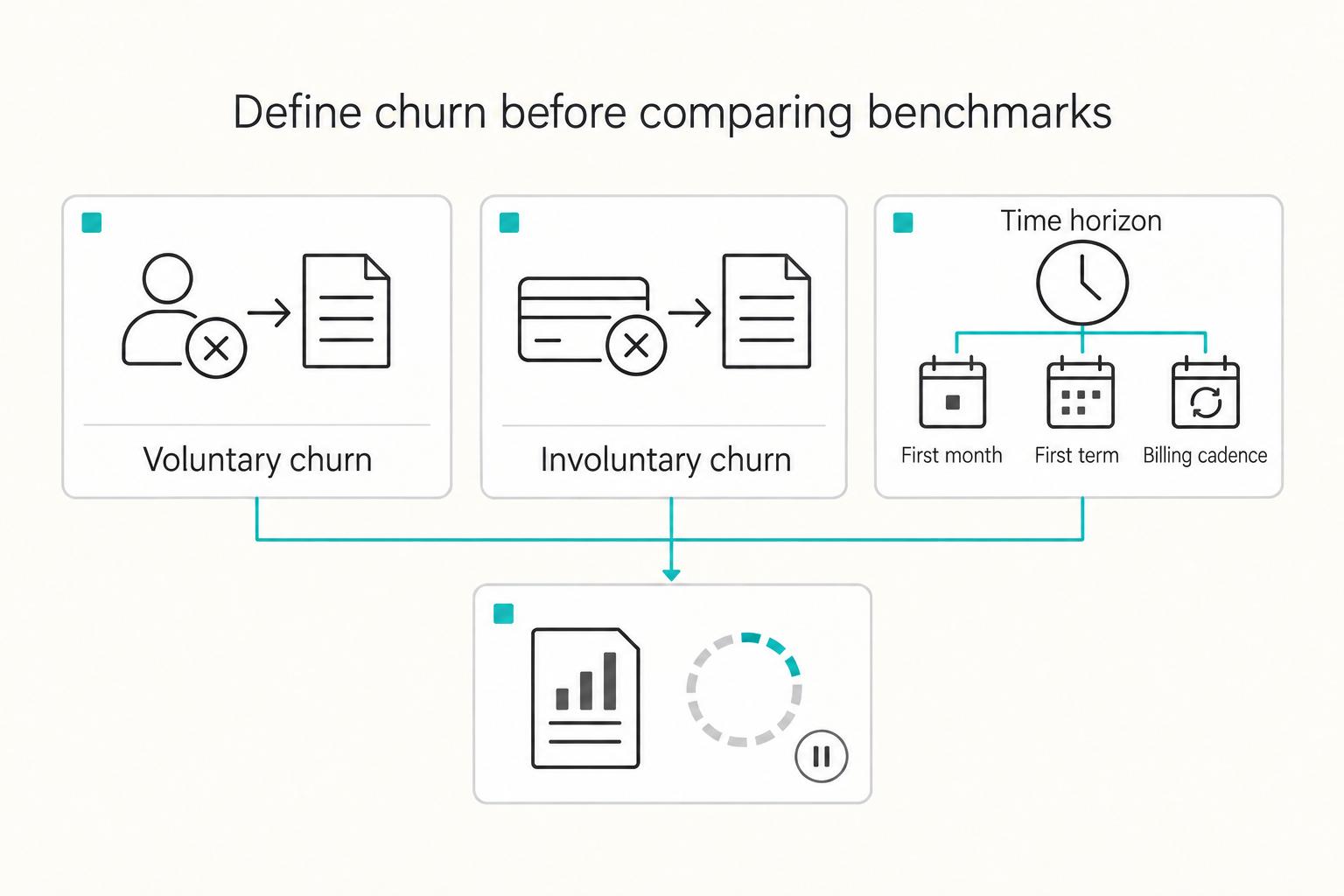
You do not need another generic average. You need a decision-ready map of **subscription churn benchmarks by vertical** that helps you judge whether your current range is healthy enough to support expansion, or weak enough to make new spend expensive.

Churn Rate Benchmarks by Industry for Payment Platforms
If you run a payment platform, start with this assumption: there is no single churn benchmark you can safely copy from search results. Published benchmarks come from different market cuts, including broad industry datasets, B2B SaaS reports, subscription-app reports, and payment-method segments. These are not directly comparable without normalization.
Payment Decline Rate Benchmarks for Platform Operations
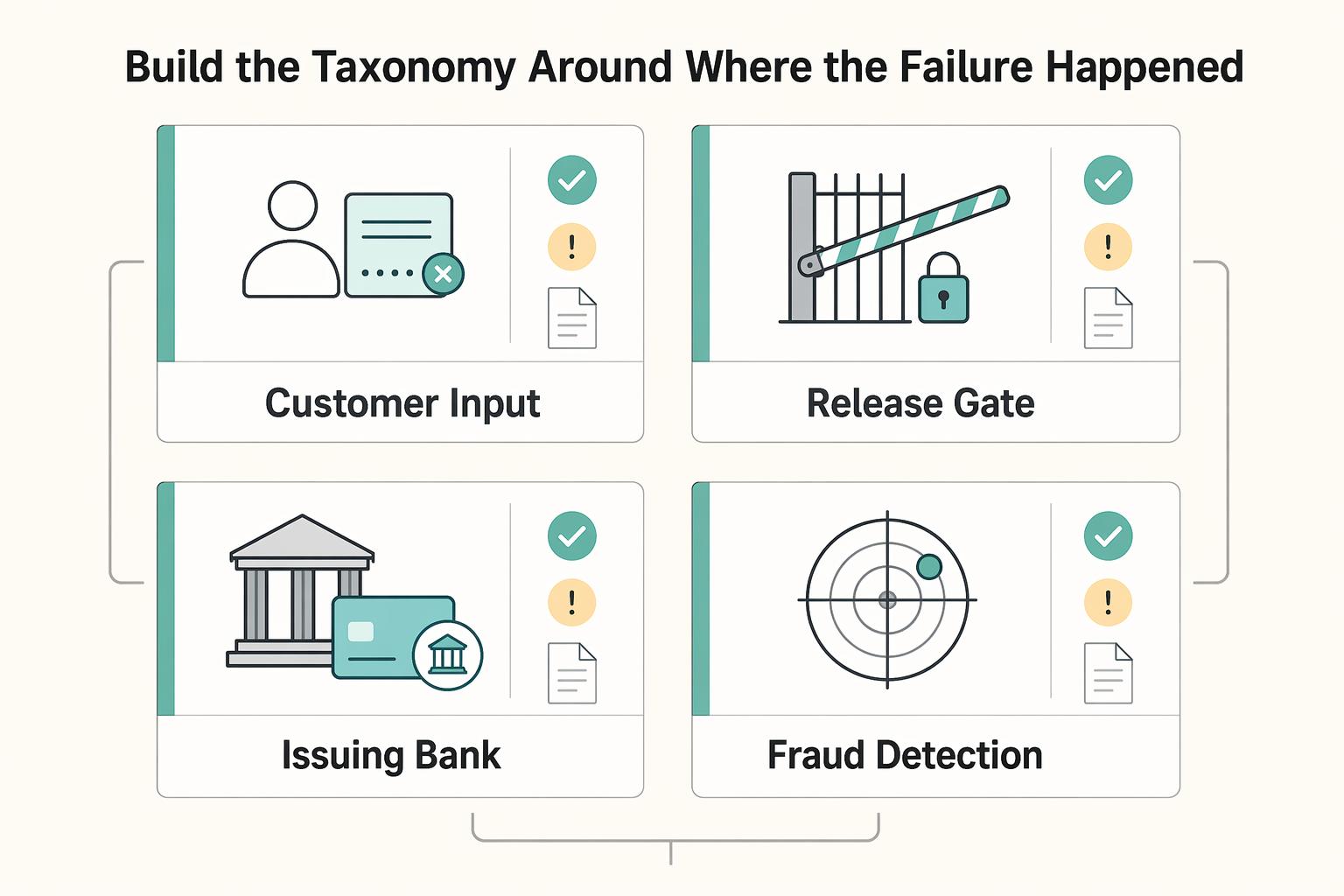
A useful decline-rate benchmark is not a headline percentage. It is a repeatable view of your own traffic that clearly defines the cohort, the processor path, and what happened after authorization through settlement and payout reconciliation.