

Quick Answer
The right book for a freelancer is the one that fixes the bottleneck hurting the business now. Choose by constraint, such as inconsistent delivery, unclear positioning, or rising risk, then turn one chapter into one scheduled action and track a visible signal like follow-up lag, proposal turnaround, or missed deadlines. If the issue touches legal, tax, payment, or insurance exposure, use books as context and escalate to specialists.
How to Use These Books#
Use this list as an execution filter, not a motivation list. Pick one live constraint, choose one matching book category, and apply one repeatable action this week. That's one reliable way to get value from the best business books for freelancers without turning reading into productive-looking delay.
Run this three-step filter in your normal week:
- Name the bottleneck
Start with the problem that is costing you time, focus, or client confidence right now: inconsistent delivery, weak pricing discipline, messy follow-up, or unclear positioning. Then choose a category that matches that constraint, not the book with the loudest reputation. This matters because lists are built differently. One entrepreneurship collection is explicitly crowdsourced, some recommendation pages disclose affiliate links, and some material sits partly behind a subscription. A publish date like June 26, 2023 or a collection date like April 2025 is useful context, but recency alone does not make a list right for you.
- Convert one chapter into one action
Do not take notes just to feel organized. After each chapter, write one action in plain language and attach it to a trigger. The four-step habit loop is a practical model here: cue, craving, response, reward. If you read about focus, block one deep work session in your calendar. If you read about outreach, draft one follow-up script and use it this week.
- Check for signal, then decide
Verify whether the action changed anything you can actually observe: outreach sent, follow-up lag, proposal turnaround, missed deadlines. A common failure mode is trying to do cognitively demanding work between meetings, email, and social media. If the bottleneck needs specialist guidance rather than broad reading, switch tracks and use a focused resource, such as How to Write a Limitation of Liability Clause.
Keep the cadence tight. Capture the action, schedule it, verify the signal, then decide whether to keep, refine, or drop it.
For a step-by-step walkthrough, see The Best Financial Podcasts for Freelancers and Solopreneurs.
Who This List Helps and How to Choose the Right Book#
This list is for independent professionals who want better decisions and steadier execution, not inspiration stacking. It is a poor fit if reading is replacing a hard decision, a client conversation, or a specialist conversation.
| Current constraint | Start with | Visible output | Key differentiator |
|---|---|---|---|
| Delivery is inconsistent | Execution, habits, or focus titles | A scheduled deep-work block or a fixed follow-up window | If you cannot map the advice to cue, craving, response, and reward, it will likely stay theoretical. |
| Offer scope is unclear | Strategy or positioning titles | A tighter service package, a clearer proposal section, or a pilot brief | If two books feel equal, pick the one that helps you ship a client-facing draft first. |
| Risk is rising faster than clarity | Reading as supporting context, then qualified legal, tax, payment, or insurance specialists | Better questions for specialist review | Do not use books as the primary answer before you change terms or increase exposure. |
Before you buy anything, run a quick triage: name your current bottleneck, match it to a book category, and define one weekly behavior you expect to change. Do that before you weigh list popularity, because a 2026 list with 7 picks and another with 34 can both be useful, some lists are explicitly always growing, and some include affiliate links.
- If delivery is inconsistent
Start with execution, habits, or focus titles. Choose a book you can turn into one repeated action in your real week, like a scheduled deep-work block or a fixed follow-up window. Key differentiator: If you cannot map the advice to cue, craving, response, and reward, it will likely stay theoretical.
- If your offer scope is unclear
Start with strategy or positioning titles, especially if you are still operating in an early-stage setup. Aim to produce a visible asset quickly: a tighter service package, a clearer proposal section, or a pilot brief. Key differentiator: If two books feel equal, pick the one that helps you ship a client-facing draft first.
- If risk is rising faster than clarity
Treat this as an escalation signal. When the active issue is legal, tax, payment operations, or insurance exposure, books are supporting context, not the primary answer. Key differentiator: Use reading to frame better questions, then move decisions to qualified legal, tax, payment, or insurance specialists before you change terms or increase exposure.
Before you buy#
Use this checklist:
- Constraint fit: Does this book match the problem you need to solve now?
- Behavior output: Can one chapter become one weekly action, script, checklist, or draft?
- Attention conditions: If the method depends on deep work, can you actually protect distraction-free time?
- Tie-break rule: If two titles tie, choose the one that can produce a working artifact by next week.
Then verify fit with one short test cycle. Pick one visible signal, such as proposal turnaround, follow-up lag, or missed deadlines, and track it. If the behavior sticks, keep the book. If not, fix your conditions, switch categories, or escalate to specialist guidance.
This pairs well with our guide on The Best Online Courses for Freelancers.
Quick Comparison Table by Business Problem#
Use this table to decide by constraint and risk, not by popularity or list length.
| Business constraint | Best-fit book type | Risk if ignored | First operational action | Proof signal before next book | Escalation path / not covered |
|---|---|---|---|---|---|
| Inconsistent delivery | Execution or habit book | Missed deadlines and follow-up lag keep repeating | Put one recurring action on your calendar this week (for example, a fixed follow-up window or protected focus block) | You see fewer misses in your weekly workflow | Pause book-hopping if the blocker is really contract terms, payment flow, or coverage scope |
| Fuzzy offer scope | Strategy or positioning book | You keep selling unclear custom work | Draft one tighter service package or pilot brief and use it with live prospects | You can compare response quality against your previous version | If scope changes affect liability, refund terms, or delivery promises, escalate to specialist review before rollout |
| Choosing from public recommendation lists | Source-validation step before purchase | You buy from a list that is dated, audience-mismatched, gated, or commercially influenced | Verify fit first: Syracuse is crowdsourced and shows an April 2025 PDF; The Admin Bar shows affiliate links and a June 26, 2023 date; Creative Boost targets freelance graphic designers and is premium-gated. Treat the fit criteria as unresolved until you confirm the source date, audience match, access model, and commercial disclosures. | You can reject at least one mismatched title before buying | List size (Top 11, 30+, 34 books) does not prove suitability |
| Legal, tax, payment, or insurance exposure tied to the offer you sell | Not a book-first problem | Contract gaps, weak payment controls, or uncovered exposure | Collect your live contract terms, billing flow, and policy wording for review | Your offer text, contract terms, and billing steps align | Books do not replace contract review, payment-control design, or coverage checks; Syracuse's "Funding, Patents, & Business Law" category is a cue to escalate |
How to use this table: scan the risk column first, choose one action you can execute in your real workflow, then confirm a visible outcome before moving to another title. If a source says "pick a book from this list, any book," treat that as a red flag, not a shortcut.
If you want a deeper dive, read The Best Business Bank Accounts for Freelancers.
If You Read Only Three Books First#
Use a flexible three-book ladder, not a fixed sequence: pick based on what is breaking in your workflow now, and do not move to the next book until one repeatable behavior is running and reviewed in your weekly checkpoint. One list tells readers to go "in the order in which you should read them," while another splits recommendations into 5 categories, so your trigger matters more than someone else's order.
| Book | Choose when | Produce | Move on when |
|---|---|---|---|
| Atomic Habits | Consistency is unstable | One scheduled behavior, such as a fixed outreach block or a daily follow-up window | You are running it weekly without renegotiating it every day. |
| Rework | Delivery is bloated, not when consistency is the core issue | One trimmed package, proposal template, or scope version with fewer extras and fewer unclear options | Real client work shows less back-and-forth and clearer delivery boundaries. |
| The Lean Startup | Your offer is clear enough to test but demand is still uncertain | A one-page pilot brief with audience, scope, price, and needed feedback | You have live demand signals from real prospects, not just a cleaner internal idea. |
- Atomic Habits
Choose this when consistency is unstable. Produce: one scheduled behavior, for example, a fixed outreach block or a daily follow-up window. Check before moving on: you are running it weekly without renegotiating it every day. Keep it systems-first, with the "four simple steps" habit frame.
- Rework
Choose this when delivery is bloated, not when consistency is the core issue. Produce: one trimmed package, proposal template, or scope version with fewer extras and fewer unclear options. Check before moving on: less back-and-forth and clearer delivery boundaries in real client work. If consistency is still failing, return to execution first.
- The Lean Startup
Choose this when your offer is clear enough to test but demand is still uncertain. Produce: a one-page pilot brief with audience, scope, price, and what feedback you need. Check before moving on: live demand signals from real prospects, not just a cleaner internal idea.
If your schedule is chaotic, treat Make Time as a bounded add-on, not as a second project. One source notes 87 tactics, so test only one or two at a time. Keep Deep Work for concentration-heavy work blocks; trying to write between meetings, email, and social posting is a common failure mode.
Mindset Books That Improve Professional Judgment#
Use mindset books to improve decisions under pressure, not to chase motivation. Treat most "best books" lists as discovery inputs, not proof of impact: one list is explicitly crowdsourced, another says it comes from founder conversations, and headline counts conflict (32, 34, 35, 38), so no single list is a definitive canon.
Keep Atomic Habits as your consistency anchor, then test it in real work this week: choose one recurring pressure moment, write one cue-response rule, and run one weekly review. Also assume one read is not enough for judgment work. Reuse the same rule until you can see it in actual client decisions.
| Decision problem | Book use | Rule to write now | Weekly pass/fail check |
|---|---|---|---|
| Consistency breaks | Start with Atomic Habits | "If this trigger appears, I run this response." | Pass: used in real work at least twice. Fail: stayed as notes only. |
| Boundary-setting stress | Use a mindset title to separate emotion from terms | Scope-change script | Pass: you held terms in writing. Fail: you accepted unpaid extra work informally. |
| Overload and focus drift | Use a mindset title to reduce reactive decisions | Message-window script | Pass: fewer avoidable context switches. Fail: reactive replies kept driving your day. |
| Emotional pressure in client threads | Use a mindset title to slow high-stakes replies | Pause-and-review script | Pass: no rushed promises you had to unwind. Fail: you committed before review. |
Quick Self-Audit#
- Review your last 5 workdays. Pass if your rule shows up in real client communication or deadline decisions; fail if it does not.
- Pull 3 recent messages involving scope, timeline, or budget. Pass if your wording is consistent; fail if each response is improvised.
- Check your calendar for one weekly review block. Pass if it happened; fail if it was skipped.
- Keep evidence: saved message text, scope update, or timeline decision.
Keep standards firm but not rigid. In scope changes, hold the rule that work changes need clear agreement; in timeline pressure, hold delivery limits while offering constrained options; in budget pushback, hold pricing boundaries while deciding whether payment timing can flex.
If risk is rising, do not let mindset work replace controls. Pair it with contract updates, payment controls, and insurance/compliance checks, including your limitation of liability clause.
Related reading: Best PR Tools for Freelancers Who Need a Lean Weekly System.
Execution Books That Turn Good Intentions Into Weekly Systems#
If you want execution books to help, put them into your week immediately. This week, produce four artifacts: one metric, scheduled blocks by work type, a short weekly review note, and one adjustment for next week.
Execution reading is easy to overconsume. One roundup lists 34 books, and at least one recommendation source discloses affiliate links, so treat listicles as discovery tools, not decision proof. Pick the one book that matches the failure you can already see: inconsistent outreach, weak focus protection, or disorganized weekly planning.
| Book | Best use case | Practical weekly action | Common misuse to avoid |
|---|---|---|---|
| Atomic Habits | Building repeatable marketing and follow-up behavior | Track one weekly pipeline count (for example, outreach actions or follow-ups completed) in one place | Reading for motivation without tracking behavior |
| Deep Work | Protecting concentrated time for demanding client delivery | Schedule one protected focus block for your hardest delivery work and keep communication closed during that block | Treating it as a full system instead of a focus support tool |
| Make Time | Giving your week a workable structure | Pre-assign blocks for client work, marketing, and rest, then compare plan vs. reality at week's end | Designing an ideal week that cannot survive interruptions |
Use Atomic Habits when repetition is the problem. A freelancer source ties it to building a habit of marketing your services, so your test is simple: show the weekly count. Use Deep Work when constant context-switching is hurting delivery. Use Make Time when tasks stay urgent because nothing has a clear place in your calendar.
Run this weekly sequence now#
- Pick one metric
Choose one count tied to your current risk. Keep it narrow so you can maintain it.
- Block the week by work type
Schedule recurring blocks for client work, marketing, and rest before the week starts.
- Write one weekly review note
Record four lines: metric result, what slipped, why it slipped, and one change for next week.
- Make one adjustment only
Change one lever, not five. If the loop fails for two weeks, reduce scope before switching books.
Diagnostic checklist when consistency breaks#
- Load mismatch: Was the task larger than the time block?
- Unclear ownership: Did follow-up, proposal edits, or admin work have no assigned slot?
- Communication interruptions: Did chat/email/calls stay open during focus blocks?
- Overplanning: Did you plan a perfect week instead of a usable one?
A book earns week two only if your calendar and review note show behavior change. If the loop holds for two weeks, then expand into strategy reading. If not, tighten this loop first.
We covered this in detail in Best Podcasts for Writers Building a Resilient Freelance Business.
Strategy Books for Positioning, Offer Testing, and Sustainable Growth#
Once your weekly system is steady, strategy reading should produce a visible business change. Match one book to one current constraint, launch one artifact, and judge it on one outcome signal before you move to another title.
That filter matters because recommendation lists are broad, not personal. One freelancer/agency list includes 34 books and also states, "This content contains affiliate links." Use lists for discovery, not as default instructions.
| Book | Best fit constraint | Required artifact | Primary outcome signal | Likely misuse |
|---|---|---|---|---|
| Rework | Your positioning is unclear | Revised service page or trimmed offer sheet | Clearer prospect responses or faster understanding | Changing scope, pricing, audience, and messaging at the same time |
| The Lean Startup | You want to test a new offer without a full reset | One-page pilot brief | Pilot replies, acceptances, or feedback quality | Calling it a test without a written stop condition |
| Contagious | Good delivery but weak message spread | Referral prompt plus one shareable proof asset | Referral asks sent and intros/replies received | Polishing wording without creating a real share moment |
Rework#
Use Rework when positioning is the bottleneck. In freelancer book lists, positioning is framed as building a clear strategy for your services, so make that concrete: rewrite one core offer so it is easier to understand quickly.
Update one offer page so it clarifies who it is for, what is included, and what is not included. Keep a before/after copy so you can compare inquiry quality. Do not bundle major changes into the same test.
The Lean Startup#
Use The Lean Startup when you need a controlled offer test, not a full rebuild. Since it appears in theme-based recommendation lists, treat it as a testing lens, not a guaranteed outcome.
Write a one-page pilot brief before launch: target client, fixed scope, pricing approach, success signal, and stop condition. Keep a basic log of responses and feedback against that brief. If you skip the brief, the test drifts and results are harder to trust.
Contagious#
Use Contagious when clients are satisfied but referrals are inconsistent. It appears as item 03 in one freelancer/agency list, but the practical use here is narrow: build a repeatable distribution step after delivery.
Add one referral prompt to your wrap-up flow and pair it with one shareable proof asset. Then check whether the prompt was actually sent and whether it generated responses. The common failure is rewriting copy instead of creating a real handoff moment.
Execution Gate for Strategy Work#
- Define one decision
Name the choice: reposition the offer, test a pilot, or improve message spread.
- Launch one artifact
Publish the revised page, send the pilot brief, or add the referral prompt to a live workflow.
- Track one outcome signal
Pick one signal tied directly to that artifact.
- Make a keep/refine/drop call
Keep what shows movement, refine what is promising but unclear, and drop what lacks support.
Final guardrail: rapid judgment can feel certain, but decision research warns about unconscious bias, including impressions formed in about two seconds. Counter that by matching each title to one live constraint and limiting major variables in each test so results stay interpretable.
Where Popular Book Lists Stay Thin on Compliance and Risk#
Popular book lists help you find ideas, but they are not a release-control system. If a book leads you to change an offer, use this gate: do not publish until contract language, payment operations, and relevant coverage checks are updated together.
| Control area | Required artifact | Use when | What to confirm |
|---|---|---|---|
| Contract redline | A contract redline tied to the scope change | When you add a deliverable, change turnaround, or expand usage rights | Your offer page, proposal, and current agreement describe the same scope in the same terms. |
| Payment control confirmation | A payment-term and escalation workflow aligned to monitoring expectations | When offer changes affect payment risk or volume grows | Invoice timing, deposit or milestone terms, relevant refund handling, who reviews unusual payment activity, and what happens when payments are late or flagged. |
| Coverage review note | An engagement-level coverage review note | When cross-border delivery, client travel requirements, or on-site work applies | Where work happens, expected travel, coverage areas checked, exclusions noticed, and emergency process. |
You can see the gap in how these lists are built. One roundup is optimized for navigation, with categories, a clickable table of contents, and per-book summaries across 60 titles. Another shows 34 in the headline and 32 in the body, based on recommendations from founders and entrepreneurs the author spoke with or interviewed. That is useful for discovery, not for proving your live offer, agreement, billing flow, and risk checks still match.
Use lists to choose what to read, then switch to implementation. Treat How to Write a Limitation of Liability Clause, A Guide to Transaction Monitoring for High-Risk Payments, and Digital Nomad Health Insurance: A Comparison of Top Providers as implementation references while you update the offer.
Contract redline#
Every scope change needs a matching agreement edit before launch. Your required artifact is a contract redline tied to the scope change.
If you add a deliverable, change turnaround, or expand usage rights, mark the affected clauses and save the redlined version. Confirm your offer page, proposal, and current agreement describe the same scope in the same terms. The common failure is publishing first and sending an older agreement for days afterward.
Payment control confirmation#
Offer changes often change payment risk, so confirm controls before volume grows. Your required artifact is a payment-term and escalation workflow aligned to monitoring expectations.
Check invoice timing, deposit or milestone terms, relevant refund handling, who reviews unusual payment activity, and what happens when payments are late or flagged. If transaction size, frequency, geography, or refund pattern changes, re-verify the setup instead of assuming old terms still fit.
Coverage review note#
Cross-border work or travel can change exposure quickly, so review coverage at the engagement level. Your required artifact is an engagement-level coverage review note when cross-border delivery, client travel requirements, or on-site work applies.
Keep it short and dated: where work happens, expected travel, coverage areas checked, exclusions noticed, and emergency process. If you cannot point to that note, pause before accepting the engagement.
Decision pack before any offer goes live#
- Updated offer text
- Matching contract edits
- Payment-control confirmation
- Coverage notes (when cross-border or travel exposure applies)
- Dated change log with what changed and why
This pack gives you proof of alignment, not just confidence.
Need the full breakdown? Read Best No-Code Tools for Freelancers Who Need Clean Handoffs.
The 30-Day Implementation Checklist After You Finish the First Book#
Do not start a second book yet. Run a 30-day cycle first: one book, one live artifact, one decision.
Book lists help you discover options, but they do not prove what will work in your business this month. Treat the book as a resource. Once you have the useful point, put it into real use.
| Phase | Required output | Evidence to collect | Decision gate |
|---|---|---|---|
| Choose one problem | Write a one-sentence problem statement and select one artifact tied to a real workflow (for example: boundary script, SOP, pilot brief, pricing rule, or tactical plan in Excel). | Save a dated before-state note, one baseline snapshot, and one real example of the problem in client or admin work. | If you cannot name one artifact you will use in a live task, your scope is too wide. Narrow it. |
| Ship one artifact | Use the artifact in live work at least once. Do not keep it as a draft. | Keep the file link, screenshot, or sent version, plus the first-use date and context. | If it has not been used in real work, it is not shipped. Schedule first use. |
| Verify results | Track a small, consistent KPI set tied to your problem for the rest of the month. | Keep one dated log, capture one surprise and one likely cause, and add one failure note from actual work. | If your conclusion is mostly memory or "it felt better," keep logging before you decide. |
| Decide next move | Write a short closeout and choose: keep, refine, or drop. | Record three fields: what changed, what failed, and what you decided. Keep it dated and linked to the artifact. | If results are mixed, refine one variable and rerun the cycle before switching books or rebuilding the system. |
Where this process usually breaks#
The first break is scope drift: "get better at business" is too broad to implement. Pick a problem that produces one usable artifact in one real workflow.
The second break is fake shipping: polishing documents without using them. A simple artifact in live use beats a perfect draft sitting in notes.
The third break is memory bias during review. Keep a small evidence pack as you go so your month-end call comes from records, not recall.
Related: The Best Business Credit Cards for Freelancers.
Common Mistakes When Following Freelancer Book Recommendations#
Most mistakes come from selection and execution gaps, not effort. If a recommendation does not help one real constraint in your business, treat it as discovery, not a decision.
| Mistake | Early warning sign | Fix to run now |
|---|---|---|
| 1. Using popularity as proof | You pick a title because it is framed as an "ultimate list," but you cannot name the constraint it should fix. | Apply the filter first: one constraint, one behavior change, one shipped artifact. If the book cannot support all three, skip it this cycle. |
| 2. Loading too many categories at once | You mix mindset, pricing, and productivity reads in one month, but nothing changes in your calendar or workflow. | Run one category for 30 days. A post saying "pick any book" or listing 34 books is inventory, not an execution plan. |
| 3. Treating listicles as operating instructions | You follow the list without checking stage fit, commercial context, or recency. | Before acting, check for Stage Of Your Business, disclosure context (for example, affiliate links or sponsored post), and publish date (for example, Nov 14, 2016 vs June 26, 2023). |
| 4. Skipping the review checkpoint | You finish reading, feel motivated, and move to the next title without evidence. | Close each month with the same pack: baseline note, shipped artifact, KPI log, then a one-sentence keep/refine/drop decision. |
Use list posts for options, not automatic priorities. Even an 8-book list can scatter your attention, and a 30+ list can overload one cycle if you treat it like a queue.
If you are off track, recover procedurally: pause new recommendations, complete one full cycle, document the outcome in one sentence, then choose the next reading category based on the single constraint still unresolved.
Conclusion#
The best business books for freelancers are the ones that change your business in your next operating cycle. Keep the standard strict: pick one live constraint, make one visible change, review the result, then decide what stays.
- Choose for the problem you have now
Do not pick by popularity or by how often a title appears on a reading list. Choose the book that matches the issue already hurting delivery, pricing, follow-up, or scope control. Done looks like one named target and one scheduled artifact, such as a weekly outreach block or a proposal checklist tied to that bottleneck.
- Ship one change before you read more
Your reading only counts when it shows up in operations. Done looks like something live: a boundary script you actually sent, a revised service package, or invoice terms you updated before the next client bill. Watch the tradeoff here: faster output is not the same as better direction, so judge the change by what improved, not by how quickly you made it.
- Check freshness and commercial context
Before you trust a recommendation, look for signals like an affiliate disclaimer, a sponsored post label, and whether the seller points you to the most current edition. A post published on June 26, 2023 can still help you discover a title, but it should not let you skip that check. Done looks like a quick note beside the book: disclosure reviewed, source context noted, edition verified.
- Escalate when the risk gets real
Broad freelancer reading can help you think clearly, but generalized materials may not cover important legal, tax, or finance questions as your income grows. Done looks like specialist input before you implement a high-impact change.
Use the same loop every time: choose, ship, review, keep or refine. If growth changes your exposure, escalate to specialized advice instead of relying on generalized reading alone. If contract language is your next learning area, start with How to Write a Limitation of Liability Clause.
Frequently Asked Questions
Which category should I start with if my schedule is unstable?
Start with execution reading if your week keeps breaking. Pick the category that can change one recurring behavior in the next seven days and leave visible proof, such as a calendar block, a proposal checklist, or a boundary script you actually send. Go foundation-first if your basics are missing, but go bottleneck-first if one issue like missed follow-ups or late delivery is already hurting client work. You chose well if one artifact is live by the end of the week and your baseline note shows whether follow-up latency or deadline misses moved.
How do I balance motivation books with compliance and financial discipline?
Treat motivation as support reading, not your only guide. Pair each insight with one operating safeguard before you move on, such as updated contract language, tighter invoice terms, a payment-review step for a new offer, or an insurance scope check when risk is increasing. Judge progress by evidence like a revised clause, a changed billing step, or a documented review task, not just notes.
What is the right number of active books if I still need execution consistency?
There is no supported magic number. Keep your active list small enough that one implementation title clearly leads the work, and leave the rest parked unless they serve the same constraint. The real test is operational: your lead title should drive this month's shipped artifact, review checkpoint, and keep, refine, or drop decision.
When should I switch from broad book advice to specialist legal, tax, or insurance guidance?
Switch when your reading starts shaping decisions with legal, tax, or insurance consequences. Broad books are useful when you are fixing habits or clarifying offers, but specialist guidance is the better path when you need verified contract, billing, tax, or policy details. Look for concrete evidence like a reviewed agreement, a documented billing control, or confirmation of policy scope and exclusions.
Do older recommendation lists still help, or should I refresh everything for 2026?
Older lists can still help you discover titles, but they should not replace a refresh check. Use the date as a filter, then confirm the recommendation matches your current stage because books resonate differently depending on where you are in your journey. The deciding test is whether the book can produce a live deliverable now, not whether it still appears on a repeated reading list.
How can I choose quickly when several lists recommend the same titles?
When several lists repeat the same titles, do not treat repetition alone as validation. Choose the book that fits your current constraint, your stage, and the one deliverable you need to produce next week, then ignore the rest until the review cycle closes. If you cannot name the artifact, the calendar slot, and the checkpoint before you start reading, you are still shopping rather than deciding.
Try a related tool
Researched and edited by the Gruv editorial team. Gruv builds cross-border billing, payouts, and finance-operations software for global businesses.
Sources
Includes 4 external sources outside the trusted-domain allowlist.
- ofac.treasury.gov/faqs/addedtrusted
- pcc.palau.edu/wp-content/uploads/2013/07/BU110-Business-Fo...trusted
- publishing.vt.edu/en/books/53/files/9801f250-ffbc-4fae-a78c-69...trusted
- researchguides.library.syr.edu/launchpadbooklist/completelisttrusted
- altar.io/the-12-best-books-for-entrepreneurs-starting...external
- creative-boost.com/top-creative-business-booksexternal
- domenicotrimboli.com/books-for-freelancersexternal
- dropcapcopy.com/7-of-the-best-books-for-freelancersexternal
Educational content only. Not legal, tax, or financial advice.
Related Posts

Digital Nomad Health Insurance Comparison for Long-Stay Moves
Use focused time now to avoid expensive mistakes later. Start with a practical `digital nomad health insurance comparison`, then map your route in [Gruv's visa planner](/tools/visa-for-digital-nomads) so we anchor policy checks to your real plan before pricing pages pull you off course.
How to Write a Limitation of Liability Clause for a Freelance Contract
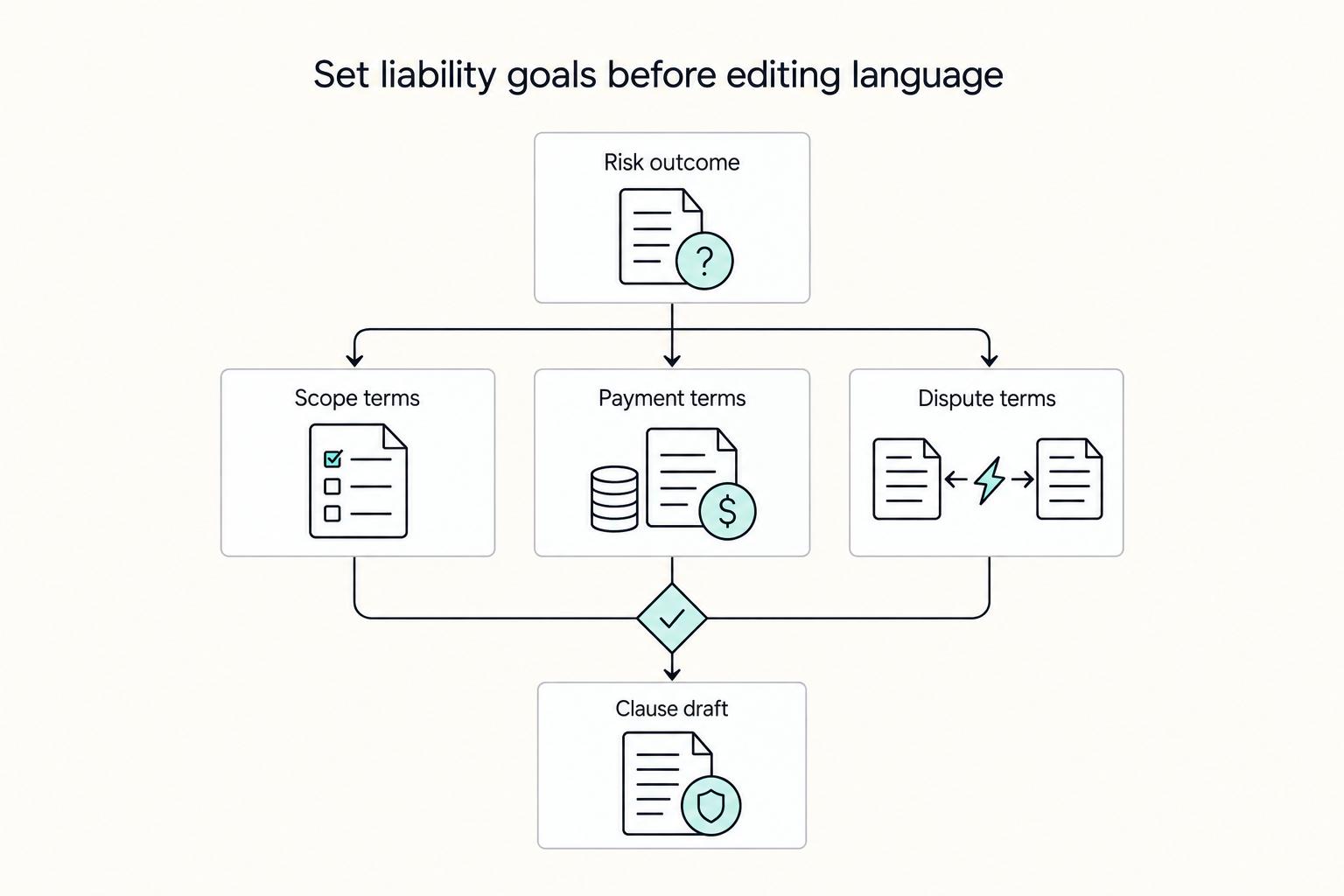
A strong limitation-of-liability clause should first put a clear ceiling on your downside without making the deal unworkable for either side. A practical starting point is a liability cap tied to the project fee instead of open-ended exposure.

Transaction Monitoring for High-Risk Payments That Protects Cashflow
A freelancer-ready transaction monitoring setup should protect cashflow and support compliance at the same time. The goal is not maximum speed or maximum friction, but risk-based oversight that keeps routine payouts moving and routes unusual activity to review.