

Quick Answer
Build a state of platform payments benchmark report as a go/no-go filter, not a trend recap. Use one country-vertical scorecard and assign each market a single status: launch now, pilot only, or defer. Treat Project Nexus and other cross-border links as upside signals until corridor tests confirm completion behavior and exception handling. Re-score at day 30, day 60, and day 90 so rollout scope follows operating evidence.
How to Rank Expansion Markets for Platform Payments#
This article translates broad payments narratives into expansion decisions: where a B2B marketplace operator should launch first, what to delay, and what to validate before committing product and GTM budget in 2026.
The scope is deliberately practical. Instead of restating market trends, it separates what public reports clearly measure from what they only suggest for go-or-no-go planning.
PwC's Payments' State of Play 2026 offers useful signal, but it is Singapore-specific, not a global operator benchmark. Its public framing is about "Shifts redefining Singapore's payment network," including PayNow, FAST, and cross-border initiatives like Project Nexus. It also flags intensifying scams and cyber risks. That is strong evidence for Singapore context, not a universal expansion score.
Marqeta's 2025 State of Payments Report is also directional, with a defined sample of 3,000 consumers and 1,000 SMBs across the US and UK, fielded in April 2025. It helps with market behavior comparisons, including Marqeta's own point that US and UK payment behaviors differ. But it is not a dedicated B2B marketplace operator dataset.
McKinsey's global payments report appears in public references such as a 2025 Sibos session listing. From that listing alone, you can treat it as evidence of a market narrative, not as evidence of methodology, cohort boundaries, or decision thresholds.
The standard in this benchmark is simple: use sources as benchmark input only when scope, sample boundaries, and measurement approach are clear enough to compare markets consistently. Everything else stays directional.
You will get a market scorecard, launch sequencing rules, a 90-day pilot checklist, and risk checkpoints for compliance and payments operations. The goal is a decision framework you can apply now: launch, pilot, or hold until the evidence is stronger.
Define what counts as a benchmark report#
Use a source as a benchmark only when it supports like-for-like comparison on standardized measures with clear methods and limits. Otherwise, treat it as directional context.
That matters because similarly titled reports can offer very different decision value. PwC's APAC payments newsletter is explicitly trends-focused, so it is useful for direction, not benchmark thresholds. Yahoo Finance reposts of Marqeta material are also not independent benchmark validation when labeled "This is a paid press release."
For this benchmark, apply a strict gate: any data point that lacks clearly stated sample boundaries, collection approach, and comparison caveats is not benchmark input yet. Even when measure names match, comparability can still fail if collection methods differ.
Minimum credibility tests#
Use a source in planning only if all three are clear:
| Source | What is explicit | Planning use |
|---|---|---|
| PwC Payments' State of Play 2026 | Singapore-specific; PDF table of contents includes "Acknowledgements and methodology" | Useful for Singapore context, not a universal operator benchmark |
| Marqeta 2025 State of Payments Report | April 2025; 3,000 consumers and 1,000 SMBs; US and UK coverage; public page points to "Read full report" | Directional; treat missing KPI methods as unknown |
| McKinsey global payments report references | Public references such as a 2025 Sibos session listing do not show methodology, cohort boundaries, or decision thresholds | Treat as a market narrative, not benchmark input |
- Methodology is explicit: how data was gathered, and whether updates or revisions are traceable, for example through a methodology section or version history
- Sample boundaries are explicit: who was measured, where, and when
- Market caveats are explicit: what comparisons the report does and does not support
PwC's Singapore Payments' State of Play 2026 passes a useful check because its PDF table of contents includes "Acknowledgements and methodology." That does not make it a universal operator benchmark. Marqeta's public page adds helpful boundaries, including April 2025, 3,000 consumers and 1,000 SMBs, and US and UK coverage. But it remains summary-level and points to "Read full report," so treat missing KPI methods as unknown. Apply the same standard to McKinsey excerpts that are available only as press-release-style summaries rather than primary report text.
Build a country-vertical scorecard before you build product#
Build the scorecard before you commit the roadmap. If a market cannot be documented on common fields with explicit unknowns, treat it as not ready for full product scope.
Comparability depends on consistency: keep the same columns, evidence rules, and caveat discipline across every market and vertical. That is what makes a benchmark useful for launch sequencing rather than just directional commentary.
A compact scorecard for like-for-like comparison#
| Market | Payment rails | Real-time payments | Cross-border payment links | Compliance friction | Fraud pressure | Payout reliability | Written caveat |
|---|---|---|---|---|---|---|---|
| Singapore | PwC names PayNow and FAST as instant payment milestones; FAST is described as instantaneous between participating banks/NFIs, with up to S$200,000 per transaction on the referenced service page | Strong domestic signal, but verify provider access and settlement behavior for your flow | PwC cites Project Nexus; treat it as a connectivity signal, not corridor-ready proof | Run separate legal and regulatory review using primary legal and regulatory sources | Not benchmarked by these public sources alone; require operator evidence | Treat as unproven until you verify sent, received, and confirmed timing and reconciliation handling | Mark cross-border readiness as directional unless corridor tests and exception evidence are documented |
| Target market A | Name domestic rails and operating limits | Record whether access is broad or provider-limited | Name interlinks or corridors and what is testable now | Record legal and regulatory burden from primary sources | Add only sourced risk signals | Use completion, return, and exception evidence | State what is directional, missing, or inferred |
| Target market B | Same structure | Same structure | Same structure | Same structure | Same structure | Same structure | Same structure |
Singapore as the worked example#
Singapore is a strong worked example because the public signals are specific without being complete. PwC explicitly cites "implementation of instant payment systems such as PayNow and FAST" and "cross-border payment links through Project Nexus," which supports the rails and cross-border columns.
For product decisions, translate those signals into operating fit. FAST's cited S$200,000 transaction limit can constrain high-value payout models, so some flows may need split-payment logic, alternate rails, or a narrower launch scope.
Project Nexus belongs in the cross-border column, but with a caveat. BIS describes a one-connection model that connects domestic instant payment systems. It also notes connected flows can complete within 60 seconds in most cases. That still does not prove your specific corridor, provider path, or exception handling is launch-ready.
Normalize every other market the same way#
Keep market structure separate from operator proof. A rail is only "usable" when you can name it, confirm access conditions, and document hard constraints. Cross-border links stay directional until corridor-level testing is complete.
Use one evidence pack per market, including:
- Primary rail or scheme documentation
- Provider confirmation of supported payout flows
- Test payouts with initiation-to-confirmation timestamps
- Exception and reconciliation evidence, including documented close timing expectations
Decision bands and evidence to move between them#
Use bands based on evidence quality and operational fit, not universal numeric cutoffs:
| Band | Evidence state | Typical gap |
|---|---|---|
| Greenlight | Core rails are verified; real-time behavior is operationally confirmed; cross-border is tested or not required for phase one | No critical unknown remains |
| Conditional pilot | The market looks viable, but one or two launch-critical inputs are still directional | Untested corridors or unclear rail access or fit |
| Hold | Comparability is weak, or major columns are still guesswork | Major columns are still guesswork |
Greenlight: Core rails are verified, real-time behavior is operationally confirmed, cross-border is tested or not required for phase one, and no critical unknown remains.
Conditional pilot: The market looks viable, but one or two launch-critical inputs are still directional, for example untested corridors or unclear rail access or fit.
Hold: Comparability is weak, or major columns are still guesswork.
Move a market up only when new proof is added. Some material still lacks enough quantitative support to carry a launch decision on its own. Keep a written caveat in every row so directional inputs are never mistaken for proof. For a step-by-step walkthrough, see Healthcare Staffing Platform Payments Compliance for Safer Rollouts.
Compare payment rail maturity and cross-border reality#
Once a market clears the scorecard stage, the launch question becomes operational: can you predict collection, settlement, and exception handling well enough to avoid payout debt in operations.
Domestic rail maturity and cross-border readiness should be treated as separate decisions. BIS notes that in over 70 countries, domestic payments reach destination in seconds, while cross-border KPI tracking still shows limited global progress and material corridor differences. For rollout planning, keep those decisions unbundled.
Judge rails by operating behavior, not by label#
Classify rail maturity by operating evidence, not by marketing labels. The core checks are immediate or near-immediate receipt, availability when users need it, and settlement finality when a payment is marked complete.
The Federal Reserve defines instant payment as immediate receipt at any time with near real-time interbank settlement. The ECB's TIPS framing is equally operational: final and irrevocable settlement. In practice, launch should depend on your actual provider path, timing behavior, and how non-happy-path outcomes are reported to your ledger.
Mature domestic rails can still hide uneven launch risk#
Strong domestic real-time behavior does not remove cross-border launch risk. What matters most is a stable operating pattern: consistent availability, clear finality, and status transitions that operations can reconcile.
One documented failure mode is timing mismatch, not necessarily outright rail failure. BIS documents that limited RTGS operating hours and cross-jurisdiction time-zone gaps can delay cross-border settlement. So even when both rails look fast on paper, payout experience can degrade when schedules do not align.
If you cannot clearly name the collection path, predict when funds are usable, and document off-happy-path behavior, keep the market in pilot status.
Treat Project Nexus as upside, not proof#
Project Nexus is an upside signal, not launch proof. BIS describes it as a way to connect domestic instant payment systems for faster, cheaper, more transparent, and more accessible cross-border payments. It also notes linked transfers can complete within 60 seconds in most cases.
At the same time, Nexus is moving toward live implementation, not broadly live across markets. Treat Nexus and similar links as capability signals until corridor-level testing proves completion behavior for your flow.
Use a compact evidence pack before rollout:
- Initiation timestamp, provider reference, and received confirmation timestamp
- Confirmation that settlement is final, or otherwise clearly defined, on the relevant rail
- Exception samples showing rejects, timeouts, and returns in provider reporting
- Reconciliation evidence for same-day close and delayed payout handling
Use fallback clarity as the rollout gate#
If fallback rails are unclear, defer full rollout and run a controlled pilot first. Do not assume a universal threshold for "clear enough"; define it in writing: the backup route, the trigger for switching traffic, and how finance and support will detect and explain the switch.
Strong domestic signals plus cross-border link momentum are not enough on their own. If fallback behavior is not documented and testable, the market is not ready for full-scale launch.
Map compliance and documentation gates that change launch speed#
Once rail behavior is workable, compliance documentation can become a major launch constraint. Sequence it in this order: complete entity and onboarding controls first, enable payouts second, and put tax documentation and reporting controls in place before scaling. If any compliance gate has an incomplete evidence pack, do not expand payout corridors.
Start with market-specific onboarding controls#
Treat onboarding controls as market-specific, not reusable by default. FATF is explicit that countries have different legal, administrative, and operational frameworks, so legal entity verification has to be mapped by market and by program.
For U.S.-linked onboarding and banking relationships, the gates are concrete. CIP must be part of the AML program. AML minimum controls include internal controls, independent testing, assigned compliance responsibility, training, and risk-based due diligence and monitoring. For legal entities, CDD procedures require beneficial-owner identification when a new account is opened.
Your launch packet should show, for each target market and provider path, which documents and checks unblock onboarding:
| Gate | What must be verified | Evidence you should keep |
|---|---|---|
| Legal entity onboarding | Entity details and beneficial-owner information where required at account opening | incorporation docs, ownership declaration, approval timestamp, reviewer notes |
| KYC and AML gating | Identity verification within the provider or bank onboarding flow, plus screening and monitoring required by program rules | CIP or equivalent check result, screening result, case disposition, responsible owner |
| Payout policy checks | Who can receive funds, to which account type, and under what restrictions | payout eligibility rules, blocked-country logic, exception examples, override approvals |
| Recordkeeping | Required retention and transaction record rules | retention policy, storage location, retrieval test, sample transaction record |
Use retrieval as the readiness test, not just document collection. If your team cannot pull a complete onboarding and payout file on demand, including the approval trail, the control is not live.
Recordkeeping is part of launch readiness#
Recordkeeping can affect launch speed because weak storage can turn reviews into manual investigations. Under BSA Chapter X, required records generally must be retained for 5 years. For certain nonbank financial institutions, recordkeeping requirements apply to transmittals of funds of $3,000 or more.
A common failure mode is assuming the provider stores everything. Providers may store transaction status while your team owns policy versions, review notes, escalation outcomes, or proof of why a payout was allowed. If those artifacts sit in email or chat, expect delays when issues surface in a new corridor.
Keep tax obligations separate from payments compliance#
Keep payments compliance and tax obligations separate in your operating model. Payments compliance governs onboarding and payout eligibility. Tax obligations govern documentation, withholding, and reporting that may attach to those flows.
| Artifact | What it covers | Threshold or date |
|---|---|---|
| Form 1042-S | Used by a withholding agent to report certain income paid to foreign addresses | Forms 1042, 1042-S, and 1042-T are generally due by March 15 of the following year |
| FATCA | Separate from Form 1042-S reporting | Potential withholding on withholdable payments when a foreign institution or entity is noncompliant |
| Form 8938 | Attached to an annual tax return for specified foreign financial assets | Cited base threshold of $50,000 for certain U.S. taxpayers |
| FBAR (FinCEN Form 114) | Can apply when the aggregate value of foreign financial accounts exceeds $10,000 during the year | Due April 15 with an automatic extension to October 15 |
For U.S. reporting, IRS Form 1042-S is used by a withholding agent to report certain income paid to foreign addresses. Forms 1042, 1042-S, and 1042-T are generally due by March 15 of the following year. FATCA is separate and links reporting obligations to potential withholding on withholdable payments when a foreign institution or entity is noncompliant. For implementation detail, see IRS Form 1042-S for Platform Operators: How to Report and Withhold on Foreign Contractor Payments.
Also keep Form 8938 separate from FBAR in your controls. Form 8938 is attached to an annual tax return for specified foreign financial assets above applicable thresholds, including a cited base threshold of $50,000 for certain U.S. taxpayers. FBAR is FinCEN Form 114 and can apply when the aggregate value of foreign financial accounts exceeds $10,000 during the year. It is due April 15 with an automatic extension to October 15. Filing Form 8938 does not replace FBAR.
The practical takeaway is not to make tax the front-door blocker in every market. It is to classify tax artifacts correctly, assign clear ownership, and test the workflow before volume ramps. If you cannot show who collects each tax form, who reviews it, what triggers withholding or reporting, and where the record is stored, keep the corridor in pilot.
Quantify fraud pressure and control cost before expansion#
Do not expand unless your team can run the required fraud controls without breaking activation and payout conversion. The key question is not just fraud exposure. It is the full control burden: controls, human review, and user friction.
Fraud pressure is material. U.S. consumers reported more than $12.5 billion in fraud losses in 2024, up 25% year over year, and the share of fraud reporters who said they lost money rose from 27% to 38%. That is not a country-by-country launch benchmark, but it is enough to rule out expansion plans that treat fraud operations as minor overhead.
Build the matrix before you price the launch#
Build a fraud risk assessment matrix before you price the launch. For each market profile, define exposure type, required controls, review load, and expected friction.
| Market profile | Main exposure to model | Minimum controls to map | Ops burden to estimate | Friction to expect |
|---|---|---|---|---|
| Push payment or bank transfer heavy | APP fraud, where users are manipulated into sending funds | recipient verification checks, risk-based payment delays for suspicious cases | manual review queue for suspicious transfers and decision logging | delayed activation or payout on flagged payments |
| Card and checkout heavy | payment disputes and chargebacks | velocity checks, dispute evidence collection and submission | dispute response handling | false positives at checkout if rules are too aggressive |
| Digital wallets for collection or payout | verification and recipient setup risk | wallet account verification, email or mobile confirmation where required, tokenization where available, velocity limits | exception handling for failed verification and payout holds | more onboarding steps and payout holds for unverified users |
For each control, define retrievable evidence. If a dispute is raised, your team should be able to pull the transaction record, review decision, verification result, and supporting files without relying on email or chat.
Price both software and human review#
Model control cost as vendor spend plus review operations. Automated screening still leaves suspicious payments that need a human decision.
Public pricing examples show how quickly unit costs can stack: 5¢, 7¢, or 2¢ per screened transaction, plus $15.00 per dispute blocked and $29.00 per dispute resolved. These are not market-wide benchmarks, but they are useful placeholders for first-pass budgeting.
Do not optimize rules for loss reduction alone. Velocity checks can block genuine users when tuned too aggressively, and anti-fraud guidance also emphasizes minimizing impact on legitimate payments.
Set a stop rule before scale#
Set one explicit trigger in market review: if projected control burden exceeds planned ops capacity, narrow launch scope.
In practice, consider reducing one or more of the following before launch:
- payout methods that add verification or review load
- user segments that require heavier verification
- transaction limits and payout frequency during pilot
This stop rule keeps a fraud plan from becoming a conversion and backlog problem at scale. Related reading: How to Embed Payments Into Your Gig Platform Without Rebuilding Your Stack.
Choose launch order with explicit if-then rules#
Set launch order with explicit rules, not by debate. Rank each market on the same four inputs: scorecard readiness, compliance effort, fraud pressure, and expected revenue quality, then record one decision per market.
Do not treat this as a universal model. There is no global weighting formula, and cross-border readiness is uneven. BIS CPMI Brief No. 10 (18 December 2025) says interoperability progress varies by system and region, and that cross-border performance depends on both domestic infrastructure and harmonised legal and regulatory frameworks. Strong rails alone are not enough.
Build the table before you rank#
Use weights that fit your business model, and document how each score was verified. Write the rules before final ranking so exceptions stay controlled.
| Input | What you are scoring | Verification detail | Common mark-down trigger |
|---|---|---|---|
| Scorecard readiness | Rail maturity, payout predictability, fallback options, exception handling | Provider-confirmed rail availability plus live test results for payout completion and returns | Domestic rail works, but cross-border or fallback behavior is unclear |
| Compliance effort | Licensing posture, onboarding obligations, recordkeeping burden, non-bank PSP access | Written legal memo or provider compliance note for your specific program | Legal access for non-bank PSPs is changing or unclear |
| Fraud pressure | Control burden, manual review load, effect of irrevocable payments | Control map, reviewer capacity estimate, and evidence retrieval path for disputes or suspicious transfers | Instant payments are available, but controls or review capacity are not ready |
| Expected revenue quality | Margin durability, payout mix, user quality, concentration risk | Forecast tied to user segment, payout behavior, and activation assumptions | Revenue case assumes broad adoption without onboarding proof |
If a score depends mostly on sales collateral, mark it unverified. If it is backed by test payouts, scheme documentation, counsel input, and explicit onboarding assumptions, treat it as decision-grade.
Turn scores into if-then house rules#
A practical house rule is to default to pilot only when rails are strong but compliance is uncertain. Use limited payouts first, for example narrower corridors or user segments, lower limits, and manual exception review, until licensing, onboarding, and recordkeeping expectations are confirmed.
When rails and compliance are both weak, a practical default is to defer. Add a recheck date tied to a concrete trigger, such as provider support changes, published regulatory guidance, or new non-bank PSP access rules.
If rails and compliance are usable but fraud pressure is high, decide based on operating capacity. Instant payments are irrevocable, so launch readiness requires reliable exception handling and retrievable records.
Adjust the rule by product shape#
The same market can rank differently depending on product design.
For embedded finance, scope can be broader than payments alone. Stripe's platform research, based on 14 platforms, shows teams often end up handling onboarding, underwriting, disputes, compliance, support, dashboards, and reporting. Pilot-first is usually safer unless those responsibilities are clearly covered.
For super apps, do not assume consumer usage patterns transfer directly to B2B marketplace payouts. Treat super-app assumptions as hypotheses and validate local payment and payout implications, plus access requirements, before broad rollout.
For stablecoins, treat support as program-specific and jurisdiction-specific. In the EU, issuers of MiCA ARTs and EMTs must hold relevant authorization. In Singapore, MAS scope applies to certain single-currency stablecoins, with redemption at par within five business days. The U.S. timeline also moved with the GENIUS Act on July 18, 2025. None of this makes stablecoin payouts launch-ready by default. Use pilot-only until counsel and providers confirm token, issuer, redemption, and conversion responsibilities for your program.
Force one written decision per market#
End each market review with exactly one status:
- Launch now: evidence is complete and remaining risk is operational
- Pilot only: one major variable remains open but can be tested safely with limits
- Defer: more than one core dependency is unresolved; assign an owner and recheck date, then revisit in the next quarterly benchmark update
If your decision table points to a pilot-first rollout, use a payouts workflow with clear status tracking and policy gates so you can validate corridors before full expansion. Review Gruv Payouts
Instrument the first 90 days so the benchmark improves itself#
Treat the first 90 days as an evidence window. Your goal is to confirm or revise the market decision with operating data, not narrative confidence.
A benchmark becomes decision-grade when your own telemetry replaces launch assumptions.
Start with a minimum measurement pack#
Keep this pack small enough to review weekly and specific enough to expose root causes.
| Metric | What to measure | Verification detail | Red flag to act on |
|---|---|---|---|
| Onboarding completion | Share and count of users who complete onboarding and are successfully onboarded | Use provider onboarding dashboards that show success rates, verification speed, and successfully onboarded account holders | Activation looks healthy, but successfully onboarded account holders are not increasing |
| Payout success | Payouts by status, not one blended success number | Track processing, posted, failed, returned, and canceled states | Topline success looks stable while failed, returned, or canceled payouts rise |
| Exception aging | Open exception cases and time-to-resolution | Track outstanding exception cases by age; where ACH workflows apply, monitor response windows such as 10 banking days | Exception backlog grows or stays open too long |
| Fraud incidents | Incident count plus dispute volume, dispute rate, fraud rate, and outcomes | Review these as trends over time, not a single-period snapshot | Dispute and fraud trends worsen across review periods, or dispute outcomes deteriorate |
| Reconciliation lag | Time from payment or payout event to matched ledger and settlement records | Check against settlement timing and payout-frequency configuration | Reconciliation delays or unmatched items increase across periods |
Read these metrics together, not as separate dashboards. Review cross-metric patterns before deciding on corrective actions.
Make every transaction traceable end to end#
Require a clear path from request to provider reference to ledger event. Without that path, root-cause analysis slows down and ownership gets fuzzy.
At minimum, retain request identifiers, including idempotency context, provider reference, final payout status, and the balance-facing ledger record for each movement. Balance transactions are a strong reporting anchor because they capture funds moving in and out of the account balance. For SWIFT cross-border flows, include UETR, but do not assume it exists for domestic or non-SWIFT rails.
Re-score at day 30, day 60, and day 90#
Use day 30, day 60, and day 90 as practical review checkpoints to keep decisions evidence-led.
Day 30 checks whether onboarding and traceability are working in production. Day 60 tests whether payout failures, returns, and fraud pressure are stabilizing or compounding. Day 90 supports a clear decision: expand, remain pilot-only, or move back to defer.
Compare each checkpoint with the prior period and note what changed in rails, controls, or compliance handling. Do not assume infrastructure changes will produce immediate user-visible KPI gains.
Feed the next benchmark cycle with evidence#
Roll these 90-day outputs into the next benchmark cycle so strategy updates follow observed behavior, not anecdote. Export the measurement pack, add a short change log, and carry it into the next Platform Payments Quarterly Benchmark Report.
If you want a deeper dive, read State of Platform Onboarding: KYB Completion, Time to First Payout, and Drop-Off Benchmarks.
Avoid the common mistakes in current SERP-style reports#
The fastest way to make a bad market call is to treat a polished trend narrative as a benchmark. If a report does not state its methodology, sample boundary, and comparability rule, use it as directional context, not as permission to commit budget.
A benchmark should be explicit about the KPI rule and cohort. Some trusted sources are aggregate system benchmarks rather than operator comparison tools. On their own, they will not tell you whether your marketplace can onboard sellers cleanly or handle payout exceptions in a specific corridor.
Innovation terms are not operating proof. Mentions of artificial intelligence or stablecoins do not remove cost, speed, access, transparency, or risk-management constraints. Reports that emphasize innovation but skip settlement behavior, exception handling, scams, or compliance documentation should carry less decision weight.
Scope mismatch is a real risk for B2B marketplace operators. Consumer or SMB trend studies can inform sentiment, but they are not direct payout or compliance benchmarks for marketplaces that must collect KYC or KYB and manage payouts under compliance constraints.
Broad checklist content has limits too. Practical guidance and market overviews can add context, but they are not benchmark methodology and should not drive irreversible launch decisions on their own.
Before you trust any benchmark report, verify four items: cohort, KPI rule, geography, and what the author still does not know. If any are missing, keep the market in pilot only.
Turn benchmark findings into concrete platform architecture choices#
Turn benchmark signals into phased architecture choices, and put compliance gates before payout scale. Start with collection, then add balances, FX, and payouts in sequence so each step is operationally validated before the next. Before enabling payouts, confirm required KYC checks are complete.
Use modular implementation to keep scope tight. If a market needs local collection plus beneficiary payout flexibility, prioritize Virtual Accounts early because they support local collection and beneficiary payouts. If not, launch with a narrower footprint and add rails only after real exception patterns justify the added complexity.
Set developer priorities that protect reliability from day one: idempotent retries for write operations, durable webhook handling, and an operations-facing event status surface. Your team should be able to see delivery state, monitor retry behavior, and reconcile missed events instead of treating async failures as black boxes.
Keep one architectural rule constant across all markets: preserve traceability and rollback. When assumptions fail, you need a clear operational trail and an automated path back to a known good state.
Related: State of Subscriptions 2026 Benchmarks for Platform Operators.
Keep the benchmark current with a quarterly update loop#
Treat this benchmark as a control document: review it quarterly, but only rescore markets when new evidence changes the decision.
Run each refresh on two evidence streams: your operating data and external updates with known cadence.
| Evidence source | Cadence to track | How to use it |
|---|---|---|
| Internal operating signals | Quarterly | Recheck onboarding fallout, payout success, exception aging, fraud cases, and compliance escalations. |
| FedNow operational data | Quarterly | Use for current rail behavior signals. |
| Payments Canada RTR update | Quarterly | Use for near-term program progress and direction. |
| FATF public documents | Three times a year | Recheck compliance exposure within-year. |
| ECB/EBA fraud reporting | Semi-annual | Update fraud-pattern assumptions as tactics evolve. |
| BIS Red Book statistics | Annual | Use for baseline resets, not quarter-to-quarter change detection. |
| Narrative reports, for example PwC Payments' State of Play 2026 | When new editions publish | Use as context, and verify methodology and sample boundaries before reusing findings. |
Keep the update narrow. Only change market fields when they materially move: rail behavior, compliance gates, fraud patterns, and rollout constraints. If local execution improves but cross-border assumptions still depend on programs that are still working toward live implementation (such as Project Nexus), keep that status unchanged or mark it explicitly conditional.
Require a documented delta log with version history for every market-status change: prior status, new status, exact trigger, evidence reviewed, owner, and recheck date. This prevents silent score drift and makes status moves auditable.
For continuity, roll deltas into your quarterly benchmark report. If a change cannot be tied to a dated evidence pack, do not move the market.
Conclusion#
The most useful platform payments benchmark is a decision tool, not a trend recap. It should tell you whether to launch, pilot, or wait.
Use one common scorecard across markets and keep it grounded in criteria you can defend, including legal and regulatory gates, cross-border frictions, fraud pressure, and real operating behavior. Growth signals alone are not enough for a launch decision.
Keep uncertainty explicit before you move a market forward:
- Keep scope boundaries attached to every external input
- Treat country-specific reports as country-specific, for example Singapore-focused findings are not a universal proxy
- Keep survey findings bounded to their sample, for example 3,000 consumers and 1,000 SMBs in the US and UK are still limited coverage
Then enforce clear go-or-no-go criteria based on verified readiness, not momentum. Start with one pilot market, re-score it at regular checkpoints using the same criteria, and expand only after unresolved risks are addressed. If you want this to hold over time, run it as a recurring operating rhythm in a dated log or a Platform Payments Quarterly Benchmark Report.
When you move from benchmark conclusions to implementation, align retries, operational statuses, and reconciliation checks with your rollout plan. Read the docs
Frequently Asked Questions
What should a platform payments benchmark report include before market expansion?
Use a market-by-market benchmark that you can compare and defend, not just a narrative. At minimum, cover rails, cross-border constraints, cost, speed, access, transparency, compliance gates, fraud pressure, and clear caveats for directional or incomplete inputs. If a score is not tied to a documented evidence pack, treat it as commentary rather than a launch decision input.
How is a platform benchmark different from a general payments trend report?
A benchmark is a comparison standard, while a trend report shows directional movement. For expansion decisions, you need comparable criteria, not just market themes. Survey-based reports can still help, but only after you confirm methodology, sample boundaries, and fit for your B2B marketplace context.
Which constraints matter most before launch: payment rails, regulation, fraud risk, or cross-border connectivity?
There is no universal ranking, and compliance can be a hard gate in practice. In the U.S., CDD rules require identifying and verifying beneficial owners of legal-entity customers, so unresolved entity checks can delay or prevent a compliant launch decision even when rails are strong. Then evaluate rails, fraud exposure, and corridor behavior together, because fast rails alone do not prove readiness.
How should operators handle missing methodology or weak data in third-party reports?
Treat it as directional input and label the uncertainty explicitly. A report with clear sample and scope details is more usable than one without transparent methods, KPI definitions, or boundaries. If those elements are missing, do not use that report alone to move a market from hold to launch.
When should a market be pilot-only instead of full launch?
Keep a market in pilot when a critical assumption is still unproven in live operations. Examples can include unclear fallback paths, weak exception traceability, incomplete compliance evidence, or fraud controls that would overwhelm current operations. Cross-border connectivity signals, including Nexus-related progress, are useful, but they do not replace corridor-level validation on cost, speed, access, and transparency.
How often should a marketplace operator update its benchmark assumptions?
Set a regular operating review cadence (for example, quarterly), then change market status only when dated evidence actually shifts the decision. External signals do not all update on the same cadence: the FSB monitors progress with KPIs and publishes annual reporting. Its latest KPI view says global progress is still limited and uneven across regions and corridors.
Where do compliance and tax artifacts fit into expansion planning for cross-border payouts?
Place them before scale, not after go-live. Keep tax workflows explicit: for U.S. flows, Form 1042-S reports certain income paid to foreign persons, and IRS guidance distinguishes withholding requirements from reporting requirements. FATCA, Form 8938, and FBAR may apply based on your entity and account structure, and FBAR includes a $10,000 aggregate foreign-account trigger.
Try a related tool
Researched and edited by the Gruv editorial team. Gruv builds cross-border billing, payouts, and finance-operations software for global businesses.
Sources
- ecfr.gov/current/title-31/subtitle-B/chapter-X/part-1...trusted
- ecfr.gov/current/title-31/subtitle-B/chapter-X/part-1...trusted
- federalreserve.gov/paymentsystems/fednow-additional-questions-a...trusted
- ftc.gov/news-events/news/press-releases/2025/03/new-...trusted
- irs.gov/businesses/small-businesses-self-employed/re...trusted
- irs.gov/businesses/corporations/foreign-account-tax-...trusted
- medicaid.gov/state-resource-center/innovation-accelerator...trusted
- qpp.cms.gov/benchmarkstrusted
Educational content only. Not legal, tax, or financial advice.
Related Posts

Platform Payments Quarterly Benchmark Report
Use this report as an expansion decision filter, not a KPI scoreboard. Its job is to help platform founders and Payments Ops teams rank where to expand next by weighing upside and execution load before product or go-to-market work starts.
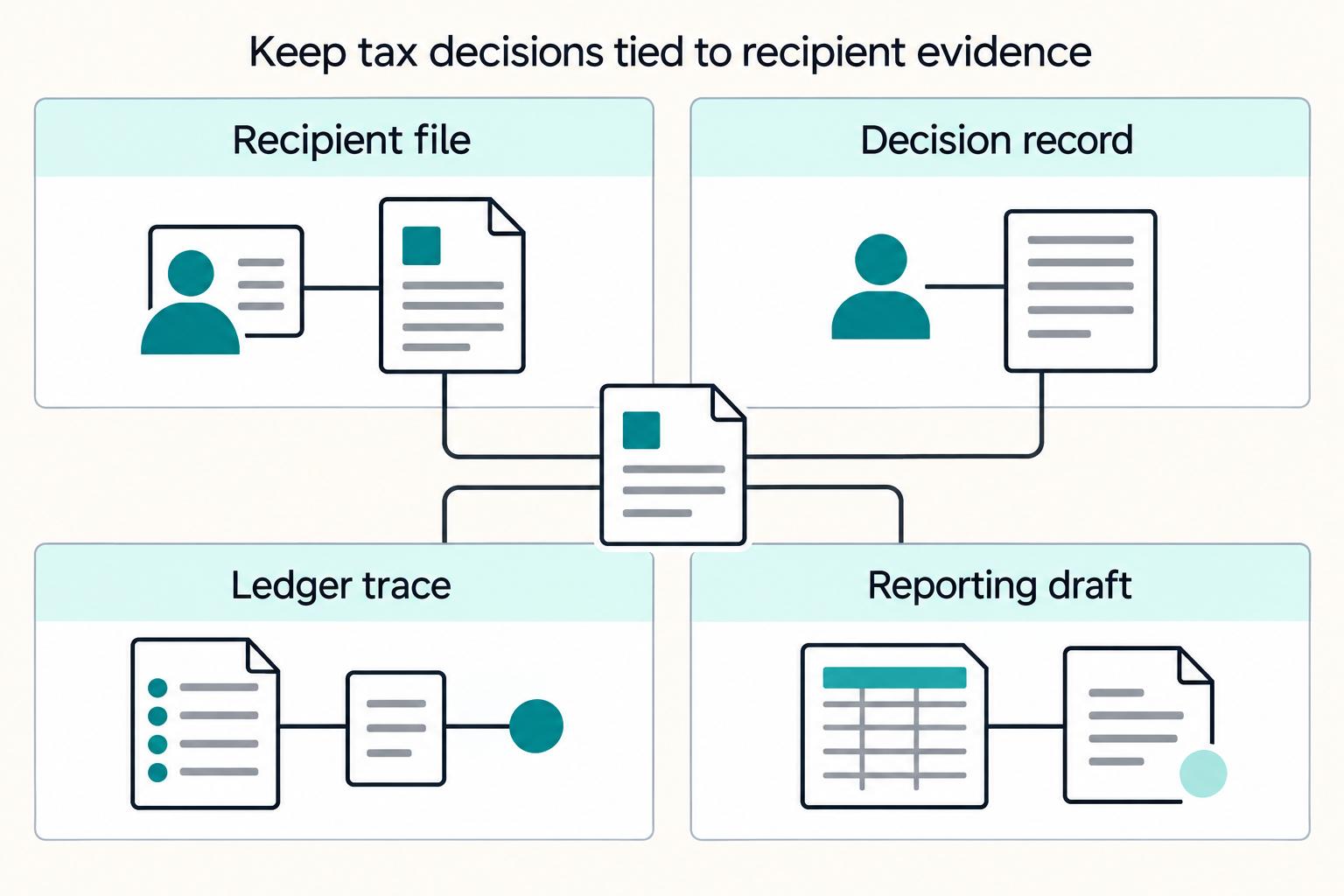
IRS Form 1042-S for Platform Operators: How to Report and Withhold on Foreign Contractor Payments
If you own compliance, legal, finance, or risk for a platform paying foreign contractors, sellers, or creators, you may need to make **Form 1042-S** operational. That means clear decisions, reliable checks, and escalation points your team can apply and defend.
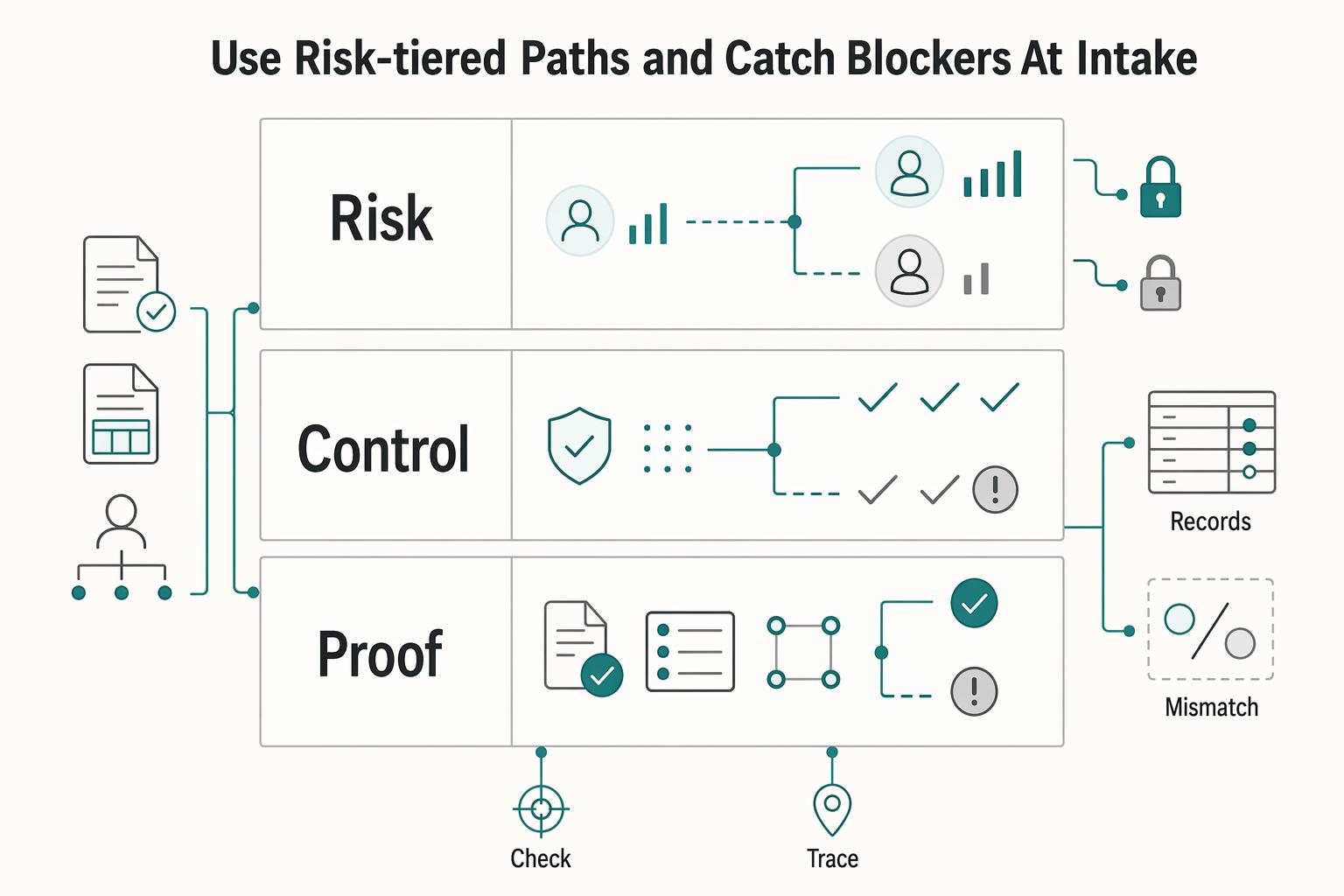
State of Platform Onboarding Benchmarks for KYB and First Payout
Many widely shared onboarding reports are written for Customer Success and implementation teams. Recent examples say that directly. OnRamp's 2026 report surveyed 161 customer success, onboarding, and implementation leaders, and Rocketlane's 2025 report is framed as a "State of Customer Onboarding Report" based on over 950 leaders and practitioners. That perspective is useful, but it is not enough if you own payouts, compliance operations, or finance controls.