
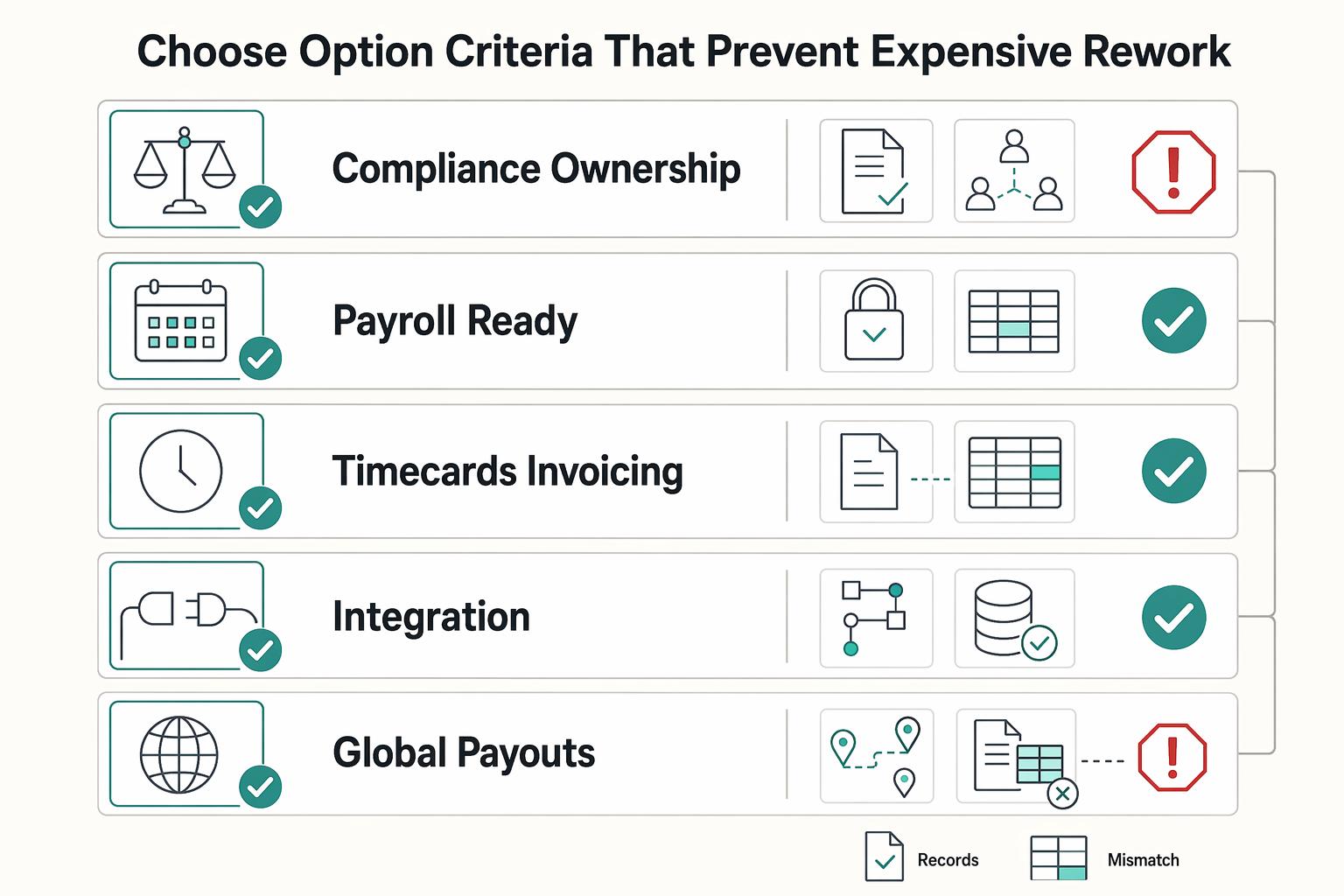
Quick Answer
Prioritize compliance ownership before payout speed when evaluating healthcare staffing platform payments compliance. Use six gates: ownership clarity, payroll-ready exports, timecard and invoicing reliability, Payouts API depth, status visibility, and corridor-level global coverage. Treat missing artifacts as active risk, especially for incident handling and failed-payment recovery. Run pilots in phases by proving domestic traceability first, then expanding to international lanes after reconciliation is stable. If a vendor cannot name who handles holds and investigations, delay instant payout paths.
Payout Speed Matters Only When Compliance Ownership Is Clear#
In healthcare staffing, payout speed matters only when compliance ownership is clear. The real decision is not who can move money fastest. It is which option improves operations without blurring who owns employment, payroll, and labor-law obligations when something goes wrong.
That framing follows how this market actually works. Frier Levitt's warning is straightforward: compliance responsibility does not shift to the platform. Liability can still sit with the hiring entity if excluded or unqualified personnel provide services. Core payroll-tax duties also stay with the employer. Federal employment taxes still must be deposited and reported. FLSA overtime still applies for covered nonexempt employees over 40 hours in a workweek, and IRS withholding rules still include thresholds like the 0.9% Additional Medicare tax above $200,000 in wages.
So the practical question is simpler than most product pages make it sound: which option gives you verified capability without creating hidden compliance debt? This article separates supported facts from thin positioning before you commit product or GTM resources. Here is the short list you are about to compare:
- Dots: Promotes an end-to-end Payouts API from onboarding and compliance through payments and tax reporting. Docs also note ACH and Venmo support, a public status API, and vendor-claimed broad global coverage. The visible API, docs, and status artifacts make technical diligence easier before a pilot.
- WurkNow: Publicly emphasizes healthcare staffing workflows for time tracking, pay-and-bill automation, compliance support, real-time visibility, automated approvals, and payroll-ready exports. The strongest signal is operations depth from time tracking through payroll handoff.
- REPAY: Positions around integrated AP and outbound payment automation to reduce paper checks and manual errors. Useful for AP efficiency, but AP automation is not the same as full employment-compliance coverage.
- VARS Health: Public payroll page claims compliance support across federal, state, and local requirements for multi-state work orders. Positioning is payroll-first, but validation depth should come from what you can verify directly.
- Gruv-led build option: A custom path for teams that want tighter control over ownership lines, data movement, and dependencies when off-the-shelf claims are incomplete.
A good working rule for the rest of this piece is simple: if compliance ownership is vague, treat the option as high risk even when payment speed looks strong. Start verification with inspectable artifacts such as API docs, product pages, status endpoints, payroll export outputs, and precise compliance language.
The rest of the article gives you four decision tools: selection criteria, a side-by-side comparison of Dots, WurkNow, REPAY, VARS, and build, rollout checkpoints for pilot design, and clear "if X, do Y" rules for balancing speed with compliance risk.
For a step-by-step walkthrough, see How Independent Contractors Should Use Deel for International Payments, Records, and Compliance.
Choose your option with criteria that prevent expensive rework#
Treat vague compliance ownership as a stop sign, not a minor gap. In these workflows, speed helps only after responsibility is explicit, because automating pay and bill does not move labor-law obligations off your desk.
Use these gates if you run a healthcare staffing platform or locum tenens flow and need a practical screen before deep diligence. This is not legal sign-off. Compliance responsibility does not shift to the platform, liability can remain with the hiring entity if excluded or unqualified workers provide services, and joint-employer situations can leave both parties responsible for worker protections. Score each option as pass, partial, or fail, and require evidence for every pass.
- Compliance ownership clarity
Require written ownership for worker-classification issues, overtime issues, reversals, disputed timecards, and excluded-worker checks. Give credit for specific controls, such as LEIE screening ownership and identity-verification steps, not broad "compliance support" language. If they cannot name incident ownership when a bad worker record gets paid, do not enable instant payouts.
- Payroll-ready exports
This is where operational claims meet real liability. "Payroll-ready exports" is a stronger signal than generic payments copy, but you still need a sample export mapped to your fields: worker ID, hours, rates, adjustments, and pay-period logic. Watch for exports that look complete but fail once multi-state rules or exception rows hit payroll import.
- Timecards and invoicing reliability
Reliable time capture matters more than payout UX. Combined time tracking, payroll automation, invoicing, and automated approvals can signal better continuity from worked shift to payable record. Verify rejected timecards, late approvals, invoice corrections, and audit history. If edits overwrite prior records, reconciliation risk rises quickly.
- Payouts API depth
Use inspectable docs, not sales language. Dots documents that in API Payouts you create user accounts and verify identity, and its Payout Links flow can force 1099 or W-8 information collection. That helps clarify where your team still owns onboarding and tax data. Also account for the 15-minute validity window on user-tied payout links in support and retry flows.
- API status visibility
Do not score reliability claims as pass without a visible status artifact. This gate is about incident handling. When payouts fail, you need to separate vendor outage from your defect without waiting on support. If there is no visible status page, incident history, or equivalent artifact, mark it unknown.
- Global payouts coverage
Score this high only when broad claims match your expansion plan. Dots makes wide geographic and currency coverage claims, which is useful for first-pass screening, but it is not corridor approval for your program. If cross-border is required, confirm country-level availability, onboarding requirements, and tax or KYC steps before treating a market as launch-ready.
Applied consistently, these six gates will expose weak options before you spend on integration. Most expensive rework starts when one question never gets answered: who owns the failure when something goes wrong?
You might also find this useful: Healthcare Accounts Payable Automation: How Staffing Platforms Pay Clinical Contractors at Scale.
Compare the options fast before deep diligence#
Here is the quick read: Dots, WurkNow, and Gruv are the clearest shortlist candidates for different jobs, while REPAY is AP-centered and VARS Health stays provisional until you get deeper artifacts.
Treat unknowns as active risk. If payee onboarding, payroll-ready exports, 1099 handling, or compliance ownership is not evidenced, assume your team carries that gap in the pilot.
| Option | Best for | Key pros | Key cons | Known unknowns | First pilot scope |
|---|---|---|---|---|---|
| Dots | Developer-led payout flows with cross-border needs | Guided payee onboarding is documented in Payout Links. API Payouts explicitly states you create user accounts and verify identity. A public status API is available. Docs also make broad country and currency coverage claims. | Payroll-ready exports are not evidenced. Native 1099 filing is not confirmed. In healthcare staffing contexts, compliance responsibility does not shift to the platform. | Corridor and program readiness, tax-document flow fit, and conflicting public coverage figures. | Narrow contractor payout lane where your team owns vetting, tax handling, and reconciliation. |
| WurkNow | Staffing operations continuity from timecards to payroll handoff | Healthcare staffing pages mention time tracking, pay-and-bill automation, collaborative approvals, and payroll-ready exports. Public API docs are indexed. | International payments are not evidenced. Native 1099 filing is not evidenced. Compliance language is broad, not ownership-specific. | Multi-state exception handling in practice and public incident or status transparency. | One domestic client cohort with real timecard approvals, export mapping, and reconciliation checks. |
| REPAY | Healthcare AP modernization for vendor or supplier payments | Healthcare page emphasizes integrated AP and outbound payment automation to reduce checks and manual errors. | Evidence is AP and vendor-payment oriented, not staffing-contractor payout rails. Payee onboarding, payroll-ready exports, and timecard linkage are not evidenced. | 1099 support, staffing-specific compliance language, international reach, and API or status artifacts. | Back-office vendor or supplier payments only, separate from clinician or locum disbursements. |
| VARS Health | Payroll-first exploration for multi-state work orders | Payroll page claims support for federal, state, and local compliance in multi-state work orders. | Public evidence depth is thin. No sourced API docs, status artifacts, or detailed operational proof appear here. | Payee onboarding, payout automation depth, export format, 1099 support, international payments, and exception evidence. | Very narrow domestic payroll pilot after document review. |
| Gruv | Compliance-gated payouts where control and traceability matter | Gruv states payouts are compliance-gated and idempotent. Its public materials also make cross-border coverage claims. | Available evidence is product-page level. Payroll-ready exports and 1099 support need confirmation. Coverage varies by market and program. | Detailed onboarding flow, public API docs or status artifacts in collected sources, and country-level launch conditions. | Controlled cross-border lane, or domestic cohort where policy gates and auditability are primary. |
| Evidence seen | Dots: API docs, Payout Links guide, status API. WurkNow: healthcare, timekeeping, and payroll pages plus API docs. REPAY: healthcare product page. VARS Health: payroll page. Gruv: payouts and global payouts product pages. |
Use the table above as a fast screen. The next table narrows the decision by capability and shows where the public record is explicit versus silent.
| Criteria | Dots | WurkNow | REPAY | VARS Health | Gruv |
|---|---|---|---|---|---|
| Payee onboarding | Documented (guided Payout Links, API flow ownership explicit) | Confirm with vendor | Confirm with vendor | Confirm with vendor | Confirm with vendor |
| Payout automation | Documented | Partial (pay-and-bill automation language) | Documented for AP and vendor outbound payments | Confirm with vendor | Documented (compliance-gated, idempotent payouts) |
| Payroll-ready exports | Not evidenced | Documented | Not evidenced | Not evidenced | Not evidenced |
| 1099 forms support | Not confirmed | Not confirmed | Not confirmed | Not confirmed | Not confirmed |
| International payments | Documented in public materials | Not evidenced | Not evidenced | Not evidenced | Documented in public materials |
| Compliance responsibility language | Integrator onboarding and identity duties are explicit; confirm whether compliance liability transfer applies in your agreement. | Broad compliance claims, ownership detail not evidenced | Ownership detail not evidenced | Ownership detail not evidenced | Compliance-gated positioning; confirm whether compliance liability transfer applies in your agreement. |
Two points usually separate the field quickly: WurkNow has explicit payroll-ready exports evidence, and Dots has explicit payee onboarding evidence. If either is launch-critical, do not advance vendors on generic automation copy.
Across this set, native 1099 filing remains unconfirmed. That matters because IRS guidance includes a $600 Form 1099-NEC trigger and filing obligations for backup withholding cases regardless of payment amount, plus the 10-return e-file threshold context.
Keep the legal-risk framing in scope, but bounded. In healthcare staffing contexts, compliance responsibility does not shift to the platform, and joint-employer standards remain litigation-sensitive. The NLRB notes the 2023 rule was vacated on March 8, 2024 before taking effect. It also references a return to pre-2023 Section 103.40 language in a Feb. 27, 2026 notice.
Related reading: I-9 and E-Verify Compliance for Contractors and First-Time Employers.
Dots as a speed-first payout layer#
If your priority is faster disbursement with strong product and engineering control, Dots is a credible speed-first option. It fits teams that want payout automation, recipient onboarding, payment links, and developer-led integration through the Payouts API while keeping healthcare-specific compliance controls outside the payout layer.
Where Dots is strongest#
Dots gives you two clear integration paths. For faster launch, Payout Links let you create and share a link so recipients can onboard, verify their identity, and choose a payout method. For tighter product control, White Label Integration supports building a custom payout UI through the API.
That flexibility matters if you have mixed operational needs. You can launch quickly with links, then move higher-volume lanes into a custom flow when support, reconciliation, or branding requirements justify it. Dots also markets an end-to-end Payouts API that includes onboarding, compliance, payments, and tax reporting, including W-9 or W-8 collection, 1099 generation, and withholding calculations. Treat that as evidence of tax workflow depth, not confirmed filing ownership.
What to verify in a pilot#
Your pilot should settle this, not marketing copy. Check three things:
- API documentation and integration path
Confirm the public docs and API reference cover the full recipient lifecycle you need: onboarding, identity steps, payout-method selection, and completion states, without relying on undocumented support.
- API status transparency
Dots provides a public status surface and API for components and active issues. At crawl time it showed "No notices reported for the past 7 days." In your pilot, verify incident visibility, notice retention, and whether support can quickly map failed payouts to status events.
- Global payouts coverage
Treat coverage as corridor-specific diligence, not a settled figure. Country and currency coverage can vary across programs, so require written confirmation for your exact launch countries, currencies, and payout methods.
The real constraint for healthcare operators#
The limit here is clear. This evidence supports payout automation and onboarding, but it does not establish healthcare-specific employment-compliance enforcement depth. Providers still retain compliance responsibility, and this pack's legal source also warns that many staffing apps may not run ongoing checks such as monthly OIG LEIE monitoring.
So use Dots as a payout layer, not as a substitute for provider-side compliance controls. Before you move beyond a narrow pilot, keep ownership explicit for LEIE checks, background screening and monitoring, and Form 1099-NEC output and filing responsibilities.
Need the full breakdown? Read How Freelancers Choose a Compliance-First Fintech Platform.
WurkNow for staffing operations depth#
When your bottleneck is operational continuity rather than payout speed alone, WurkNow can be a strong fit. If you staff long-term care facilities, keeping scheduling, timecards, invoicing, and payroll handoff in one flow can matter more than broad international payout coverage.
WurkNow's healthcare and payroll pages describe real-time visibility, automated approvals, payroll-ready exports, and a time-tracking-to-pay-and-bill flow. That setup is most useful when your team is still reconciling hours across separate scheduling, billing, and payroll tools.
Where WurkNow is strongest#
A clear strength in WurkNow's positioning is the timecard-to-payroll chain. WurkNow says clients can approve timecards under configurable compliance policies, then move approved work into payroll-ready exports.
That matters operationally because every extra handoff between approved timecards, invoices, and payroll files creates more opportunity for rate mismatches, delayed approvals, or duplicate edits. For domestic healthcare staffing operations, this is a practical fit when pay-and-bill accuracy is the immediate constraint.
What to verify in a pilot#
The right test is not whether the screens look good. It is whether records survive exceptions without breaking downstream payroll. Focus your pilot on three checks:
- Timecard approval controls
Validate how approvals, edits, re-approvals, and holds are logged. Confirm you can see status, timestamps, and who made each change.
- Payroll-ready export fidelity
Run sample exports through your payroll processor and confirm approved hours, rates, and invoice values reconcile reliably, including high-volume weeks.
- Multi-state labor-law support
WurkNow says agencies must handle multiple labor laws and that timesheets can adhere to state and federal rules. Use your own multi-state work orders to test whether the platform supports the rules you actually enforce.
A practical check is whether exported data can support downstream payroll requirements. That includes FLSA overtime after 40 hours in a workweek, the federal minimum wage floor of $7.25 per hour, 6.2% Social Security up to the $184,500 2026 wage base, and 0.9% Additional Medicare tax above $200,000.
The constraint to keep in view#
Do not mistake platform messaging for a transfer of legal responsibility. Terms are explicit that compliance responsibilities do not shift to the platform.
That matters beyond timecards, especially for exclusion screening. HHS OIG says healthcare entities should routinely check the List of Excluded Individuals/Entities (LEIE) for new hires and current employees, and hiring someone on the LEIE may lead to civil monetary penalties.
If you are evaluating WurkNow for these workflows, ask one direct question during the pilot: which controls are enforced in-product, and which still sit with your team?
If you want a deeper dive, read Nursing Agency Payouts: How Healthcare Staffing Platforms Handle Shift-Based Payments.
REPAY for AP-centric finance modernization#
If your immediate bottleneck is invoice backlog and vendor disbursement, REPAY is a practical platform to pilot first. Its documented strength is healthcare AP and vendor payment automation, not end-to-end clinician or contractor payout coverage for staffing platforms.
REPAY positions its healthcare offer around AP staffing pressure, manual processes, and late payments, and states it integrates with existing ERP or accounting systems. That makes it useful when finance needs tighter approvals and cleaner outbound vendor payments before tackling deeper staffing payout workflows.
Where REPAY is strongest#
REPAY is strongest as an AP-friction reduction move for provider groups and healthcare operators. Its vendor payment messaging includes automating outbound payments from day one, and it cites a 43-day average invoice payment timeline as context for AP delay.
In your pilot, verify two basics that matter most to finance:
- ERP and approval fidelity
Confirm vendor IDs, invoice references, approval states, and payment status stay consistent in your accounting record, including exception paths.
- Control evidence for healthcare providers
Validate logs for approvals, changes, voids, and remittance status so finance can prove who approved what, and when.
The constraint you should keep in view#
AP modernization is not the same as full healthcare staffing payout compliance. This guide covers vendor or supplier payment automation and healthcare-facing HIPAA or PCI messaging, but not full contractor or clinician payout rails, international coverage, or 1099 handling.
Keep ownership explicit. OIG says the LEIE is updated monthly, excluded parties cannot be paid by Federal health care programs, and hiring entities can face civil monetary penalties. Payment tooling does not move that responsibility.
If your real problem is vendor payment friction, pilot REPAY first. If you also need staffing payout controls tied to worker eligibility, pay rules, or contractor compensation, plan for an additional layer.
VARS Health for payroll-first messaging in multi-state staffing#
VARS Health may be worth piloting when your priority is payroll execution across multiple states, not AP modernization. VARS markets "Automated Compliance" for multi-state work orders and describes payroll-ready exports with approval workflows. That is enough to justify testing operational fit, but not enough to assume full compliance coverage.
Why it makes the shortlist#
The strongest support here is operational. VARS says its tooling combines scheduling, approval workflows, and payroll-ready exports, and says it supports multi-location and multi-state nurse credential tracking and facility management. For multi-state staffing growth, that gives you a practical workflow to validate from timekeeping through payroll export.
What to verify in pilot#
Ask for one completed pay-cycle trail across two states. Then verify:
- approved timecard record
- payroll-ready export output
- state-specific worker or facility attributes carried into payroll
- audit-oriented report output VARS marketing materials say it can generate
Use one multi-state assignment as a checkpoint and confirm identifiers, hours, approver, and credential status stay consistent from scheduling through export.
What remains unproven#
Several important points are still open. Exact labor-law scope, disputed-timecard exception handling, and investigation and reversal paths are not shown here. Treat those as active risks until demonstrated.
Keep compliance ownership explicit. Platform use does not transfer provider responsibility, and legal commentary flags that many staffing apps lack ongoing post-screening monitoring. OIG also states hiring an individual or entity on the LEIE may trigger civil monetary penalties. If VARS cannot clearly show monitoring boundaries and audit evidence in your pilot, use it for payroll operations first and keep provider-side compliance checks outside the platform.
Gruv for compliance-gated cross-border scale#
If your expansion plan depends on cross-border payouts with explicit control points, Gruv is a strong fit to evaluate. The main advantage is not just speed. Gruv frames payouts as compliance-gated, idempotent by design, and traceable from request to completion, failure, or retry. That is the structure you need when compliance responsibility still sits with your team.
Cross-border operations raise ownership and failure risk quickly. Corridor limits, identity checks, AML screening, and tax-flow variation can all block or delay funds. Your process needs clear states and evidence at each step.
Why it fits#
Gruv's public product language maps well to operator needs: compliance-gated, idempotent payout flows with a clear audit trail, plus API or webhook integration and a file import or export fallback for pilot rollout. That combination helps you answer the questions that matter after an incident: what was approved, what checks passed, which event changed status, and whether a retry created duplicates. For this kind of payout decision, those controls matter more than a generic "fast payouts" claim.
What you still have to prove#
Public coverage claims are a starting point, not launch readiness. Gruv says its coverage varies by corridor and method, and that coverage, methods, and timelines are market- and policy-dependent.
Responsibility also stays with the regulated provider even when tooling is outsourced. In practice, define ownership for hold and release decisions, investigations, reversals, and payee support before launch.
Identity controls need the same clarity. CIP and KYC procedures should tie back to AML program requirements, with clear evidence of what blocks payout release and what records are retained when funds are held.
What to verify in pilot#
Use one real corridor and one fallback failure case in the same pilot. Confirm:
- Corridor and method reality: one destination, one payout method, one currency path, with routing, FX, and timing that match your use case.
- Pre-payout gates: required KYC, AML, and policy checks, plus documented hold or reject reasons.
- Retry behavior: duplicate submission and network-failure tests to confirm idempotent retry handling.
- Event visibility: webhook status changes reconcile cleanly to your internal ledger and case records.
- Tax-flow scope: whether tax reporting support for your program or market exists, and where document history is retained.
Two details are easy to miss: tax reporting support varies by market and program, and W-8BEN expiry is described as every 3 years, so renewal handling should be part of your operating model.
Where the tradeoff shows up in practice#
A clear use case is cross-border payout orchestration with evidence-ready reconciliation while keeping compliance ownership explicit. If you also need invoicing in the same flow, validate that separately.
For U.S. contractor flows, confirm who produces Form 1099-NEC data, whether timelines can support January 31 filing readiness, and how backup withholding cases (24%) appear in records and exports. Gruv also states its materials are informational, not legal or tax advice, so these checks stay on your side of the operating boundary.
Shortlist Gruv when cross-border disbursement controls are the gating requirement, then launch corridor by corridor with hold, fail, retry, and release evidence as a go-live condition.
Related: Music Royalty Tax Compliance: How Platforms Handle 1099-MISC vs. 1099-NEC for Artist Payments.
Lock compliance ownership before you optimize speed#
Once you know which product shape fits, lock ownership before you optimize payout speed. If ownership is blurry, faster disbursement just scales mistakes, disputes, and compliance risk.
- Write down who owns each control
Name responsibility across your platform, the healthcare providers you serve, and each downstream partner. Do not assume a payments tool changes legal responsibility by itself. Frier Levitt's staffing-app risk framing is a useful baseline: compliance responsibilities do not shift to the platform. OSHA reflects the same operational reality in temporary-worker models: staffing agency and host employer are joint employers and should define compliance responsibilities in contract terms. Prefer vendors that map approval, release, hold, reversal, and support ownership in writing, not just payout speed.
- Build an evidence pack for every payout path
Treat each payout path as a defensible record: approved timecard, policy gate result, release decision, exception outcome, payout event history, and the exact vendor artifacts used at launch. Save API documentation and API status snapshots when you enable the feature, rather than relying on sales copy. For example, WurkNow docs show timecard detail fields and note 5xx errors are server-side, and at crawl time one timecards endpoint showed 2025-11-18 04:43:51 as the modified timestamp. Dots' status page showed "No notices reported for the past 7 days," which is useful context but only point-in-time. Preserve doc version and status context so you can explain what the product stated when you went live.
- Gate instant payouts on exception ownership, not vendor claims
If a vendor cannot show who handles investigations, reversals, and disputed timecards, do not enable instant payouts yet. Marketing claims about automated failures, retries, and returns across broad country and currency coverage are not the same as accountable exception handling. In pilot, force one failed payout and one disputed timecard, then verify who investigates, who communicates with the payee, what status marks hold or reversal, and where outcomes land in your ledger. The right vendor can show exception states and owner handoffs, not only successful payment flows.
- Test whether provider obligations stay enforceable
Use a Frier Levitt-style test: after your platform is introduced, can the healthcare provider still enforce employment compliance and labor-law obligations in a real dispute? If the answer depends on undocumented partner behavior, the model is not ready. OIG states hiring an excluded individual or entity from LEIE may trigger civil monetary penalties and advises routine LEIE checks, so your onboarding and payout flow cannot weaken that control. If HIPAA applies to your implementation and it touches systems containing or using ePHI, audit controls in 45 CFR 164.312 and activity-review requirements in 45 CFR 164.308 require recordable, reviewable audit trails and documented incident outcomes. A workable operating model preserves enforcement power, screening evidence, and auditability after payout tooling is added.
This pairs well with our guide on Choosing Creator Platform Monetization Models for Real-World Operations.
Before enabling instant or cross-border payout paths, map each control owner and validate policy-gate and status handling against your workflow in the Gruv docs.
Roll out in phases that reduce operational blast radius#
After ownership is clear, your rollout should get narrower before it gets bigger. A safer sequence is domestic controls first, cross-border second, and complex multi-state cohorts last.
| Phase | Scope | Key checkpoint |
|---|---|---|
| Phase 1 | Domestic flow: timecards, approvals, payroll-ready exports, invoicing, and payout automation | Trace an approved shift from timecard to payroll-ready export to invoice to payout event, and save the evidence pack |
| Phase 2 | International payments after domestic exception handling is documented and repeatable | Confirm written error-resolution procedures, ledger mapping for returns and corrections, and a named reconciliation owner; NACHA IAT applies if ACH funds enter or exit the U.S. |
| Phase 3 | Locum tenens and multi-state work orders with legal checkpoints | Licensing timelines can range from one week to six months; the suggested planning buffer is at least 90 days; New York Registration Year 3 (August 1st 2025 to July 31st 2026) shows a $1,000 non-refundable fee plus documentation obligations |
| Verification checkpoint | Recurring known-vs-unknown review per vendor | Track what is verified in docs or pilot, what failed in testing, what is unknown, and what is not sellable yet |
- Phase 1: prove the domestic baseline before you add reach
Start with the domestic flow you can audit end to end: timecards, approvals, payroll-ready exports, invoicing, and payout automation. This matches the control surface healthcare staffing vendors describe, including real-time visibility, approvals, and payroll-ready exports, and the DOL recordkeeping baseline for accurate hours worked and wages earned.
Use one hard checkpoint: can you trace an approved shift from timecard to payroll-ready export to invoice to payout event, and explain each status if it fails? Save the evidence pack for that trace: timecard fields, approval timestamp, export file version, invoice ID, payout event history, and observed failure state. Phase 1 success is not speed. It is being able to prove what happened when data changes late, payouts fail, or invoice and payout records diverge.
- Phase 2: add international payments only after reconciliation is stable
Add cross-border flows only after domestic exception handling is documented and repeatable. If ACH funds enter or exit the U.S., NACHA IAT code and format requirements apply, which changes how payments must be structured and reviewed.
Keep a second gate before launch: remittance programs require written compliance policies and procedures, including error resolution. Before you expand, confirm written error-resolution procedures, ledger mapping for returns and corrections, and a named reconciliation owner. If domestic payout failures still require manual guesswork, pause here.
- Phase 3: expand to locum tenens and multi-state work orders with legal checkpoints
Treat multi-state locum expansion as a separate phase because licensing, registration, and documentation are often early blockers. One locum staffing source describes state licensing as an early hurdle, with timelines ranging from one week to six months and a suggested planning buffer of at least 90 days. IMLC speed cases can shorten timelines, but they do not eliminate state-by-state review work.
Tighten exception handling and legal review before each state launch. NALTO materials describe 27 current state laws, and one cited update resource is refreshed once every calendar quarter. New York shows the practical impact. Temporary healthcare staffing agencies and platforms have had to register with the state Department of Health beginning August 1st, 2023. The Registration Year 3 window, August 1st 2025 to July 31st 2026, shows a $1,000 non-refundable fee plus documentation obligations tied to licensing, training, and continuing education.
- Verification checkpoint: run a recurring known-vs-unknown review per vendor
A weekly cadence is not a legal requirement, but it helps keep GTM promises aligned with what compliance and support can defend. Keep each review explicit: what is verified in docs or pilot, what failed in testing, what is unknown, and what is not sellable yet.
This cadence helps when external legal tracking refreshes quarterly while product and go-to-market decisions move faster. If a vendor cannot close unknowns on failure states, country rules, or state-specific staffing obligations, do not move them into the next phase.
Conclusion#
The winning decision is not "fastest payout wins." It is fast payouts with explicit compliance ownership, verified controls, and rollout sequencing your team can actually support.
Responsibility still sits with you. Federal interagency guidance finalized on June 6, 2023 states that using third parties does not diminish legal and compliance responsibility, and healthcare staffing guidance aligns with that point. So from the comparison table, choose the option that fits your risk tolerance, operator bandwidth, and expansion scope, not the flashiest product. Use three closing rules:
- Match the option to your real bottleneck.
If your pain is onboarding and disbursement speed, a speed-first payout layer may fit. If the pain is keeping timecards, approvals, invoicing, and payroll-ready exports aligned, favor the staffing-ops-heavy path. If finance is overloaded by vendor-payment friction, AP automation can help, but it is not end-to-end coverage for staffing payouts. For cross-border expansion, require market-by-market controls, not broad coverage claims.
- Do not launch what you cannot evidence.
Your minimum evidence pack should include sample timecards, approval logs, payroll-ready export files, payout event histories, exception states, and a failed-payment reconciliation walkthrough. Public operational evidence, such as status incidents or maintenance notices, can provide a clearer operational signal than polished API docs alone. You should also be able to name clear ownership for LEIE screening, worker classification, Form 1099-NEC reporting at $600 or more, and the general January 31 filing deadline.
- Scale in lifecycle order, not sales order.
Interagency third-party guidance frames oversight as planning, due diligence, contract negotiation, ongoing monitoring, and termination. Use that sequence for rollout: stabilize domestic baseline controls first, then expand after unknowns shrink. Multi-state work orders and international payments should follow stable reconciliation, not precede it.
Keep one risk front and center: instant payment rails raise the cost of mistakes. FedNow materials describe instant payments as final, irrevocable, and available 24x7x365. If a disputed timecard, excluded worker, or classification error passes your gate, reversal may be limited, so pre-disbursement checks matter more than payout-speed claims.
Final threshold: if you can name the owner, inspect the records, and explain failed-payout handling, proceed with a phased pilot. If not, pause rollout, close unknowns, and then scale.
If your shortlist is down to rollout sequencing and market constraints, use this article's criteria in a scoped planning call to confirm fit and coverage.
Frequently Asked Questions
Does a staffing platform take on my compliance responsibility if it handles payments?
No. Payment handling can automate workflow steps, but compliance responsibility does not automatically move to the platform. If excluded or unqualified workers provide services, liability can still remain with the hiring entity.
What are the minimum capabilities a healthcare staffing platform needs before launch?
You need accurate hours-worked and wages-earned records, plus clear ownership of worker classification and employee tax withholding and deposit duties. At minimum, you should be able to trace a shift from timecard to approval to payroll-ready export to payout event. If that trace breaks, you are not launch-ready.
Is accounts payable (AP) automation enough for healthcare staffing payout compliance?
No. AP automation can improve AP workload and payment processing, but it is not a substitute for worker classification, payroll tax handling, exclusion screening, or labor-law compliance. A smoother invoice flow does not prove payout compliance controls are covered.
Which matters first in early rollout, payout speed or compliance controls?
Compliance controls come first. Faster payouts are not defensible if you cannot explain failed approvals, corrected timecards, or payout exceptions with records. Your first gate is shared, reconcilable status visibility across support, finance, and ops.
What proof should I request to validate vendor claims beyond sales copy?
Request artifacts, not promises: sample timecards, approval logs, payroll-ready export files, payout event histories, exception states, and a failed-payment reconciliation walkthrough. If a vendor points to API depth, review API docs and status pages, but do not treat them alone as proof of audit sufficiency or ownership clarity. If tax handling is in scope, ask how W-9 collection and information-return corrections are handled, especially given 2026 information-return penalty tiers of $60, $130, $340, and $680.
How should I evaluate payroll-ready exports and timecards for multi-state work orders?
Start with record integrity, not dashboard polish. Test whether edits, approvals, and downstream exports stay aligned after late changes and exception handling. In nursing-facility contexts, use the CMS PBJ standard under Section 6106 of the Affordable Care Act as a practical defensibility check because submissions rely on payroll and other auditable data.
When should I expand from domestic payout flows to international payments?
Expand only after domestic reconciliation and exception handling are stable. Cross-border payouts add sanctions and export-control exposure, including risk for non-U.S. companies. Vendor coverage claims still need corridor-level validation of program rules and failure handling before launch.
Try a related tool
Researched and edited by the Gruv editorial team. Gruv builds cross-border billing, payouts, and finance-operations software for global businesses.
Sources
- dol.gov/agencies/whd/flsatrusted
- dol.gov/newsroom/releases/whd/whd20210729-0trusted
- ecfr.gov/current/title-31/subtitle-B/chapter-X/part-1...trusted
- federalregister.gov/documents/2024/01/10/2024-00067/employee-or-...trusted
- irs.gov/newsroom/what-businesses-need-to-know-about-...trusted
- irs.gov/forms-pubs/about-form-1099-nectrusted
- nlrb.gov/about-nlrb/what-we-do/the-standard-for-deter...trusted
- oig.hhs.gov/exclusionstrusted
Educational content only. Not legal, tax, or financial advice.
Related Posts

Choosing Nursing Agency Payout Models for Shift-Based Healthcare Staffing
Choose your payout model based on operational proof, not payout-speed marketing. For healthcare staffing platforms, the real question is whether payouts stay reliable when shifts change, get canceled, or are disputed.
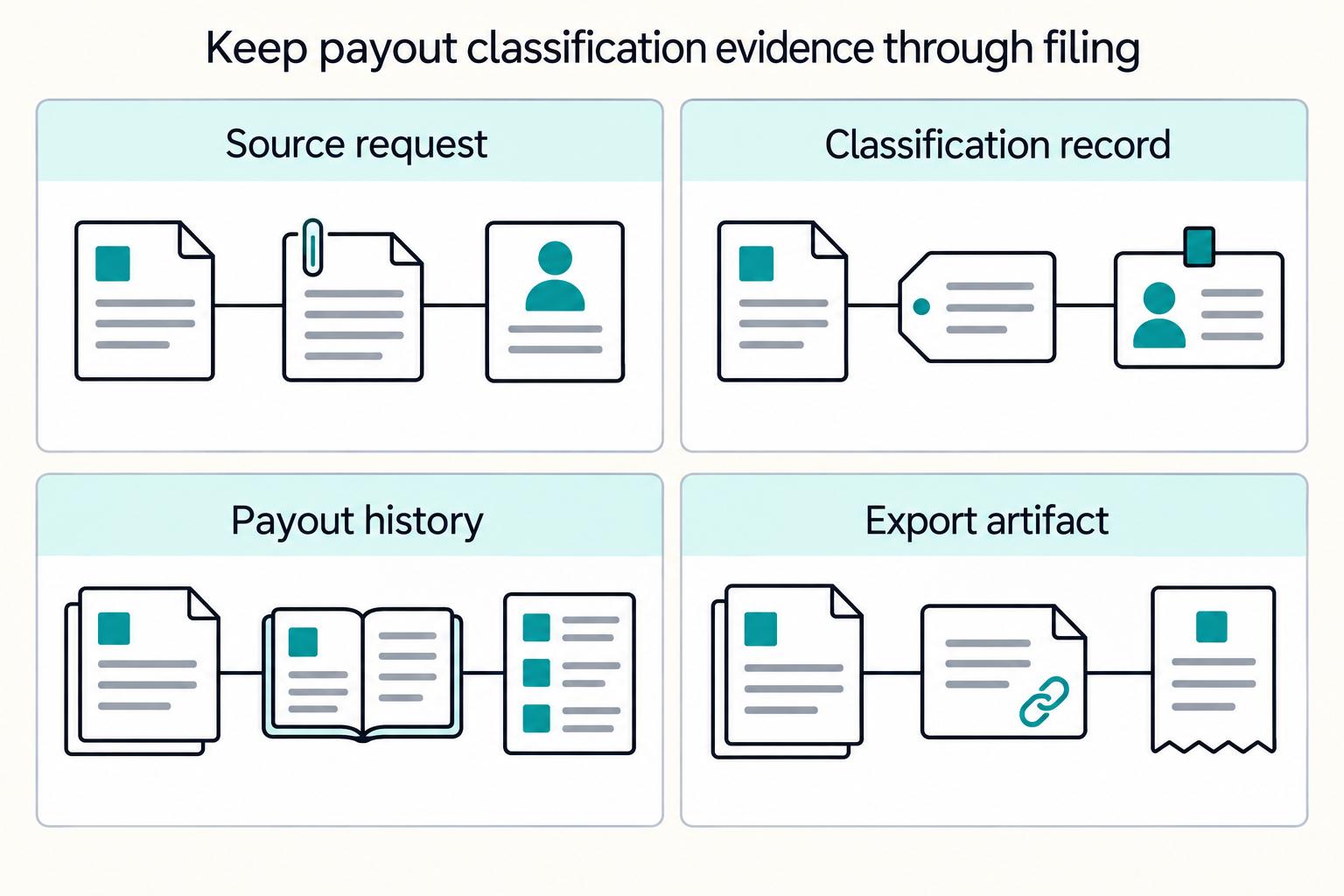
Music Royalty Tax Compliance: How Platforms Handle 1099-MISC vs. 1099-NEC for Artist Payments
This is an operating-model decision, not a year-end form choice. A team can ship quickly and still end up with misclassified payouts, correction cycles, and filing risk if the classification logic is weak. If you run creator payouts, you need the classification rule before your first batch, not after your first correction cycle.
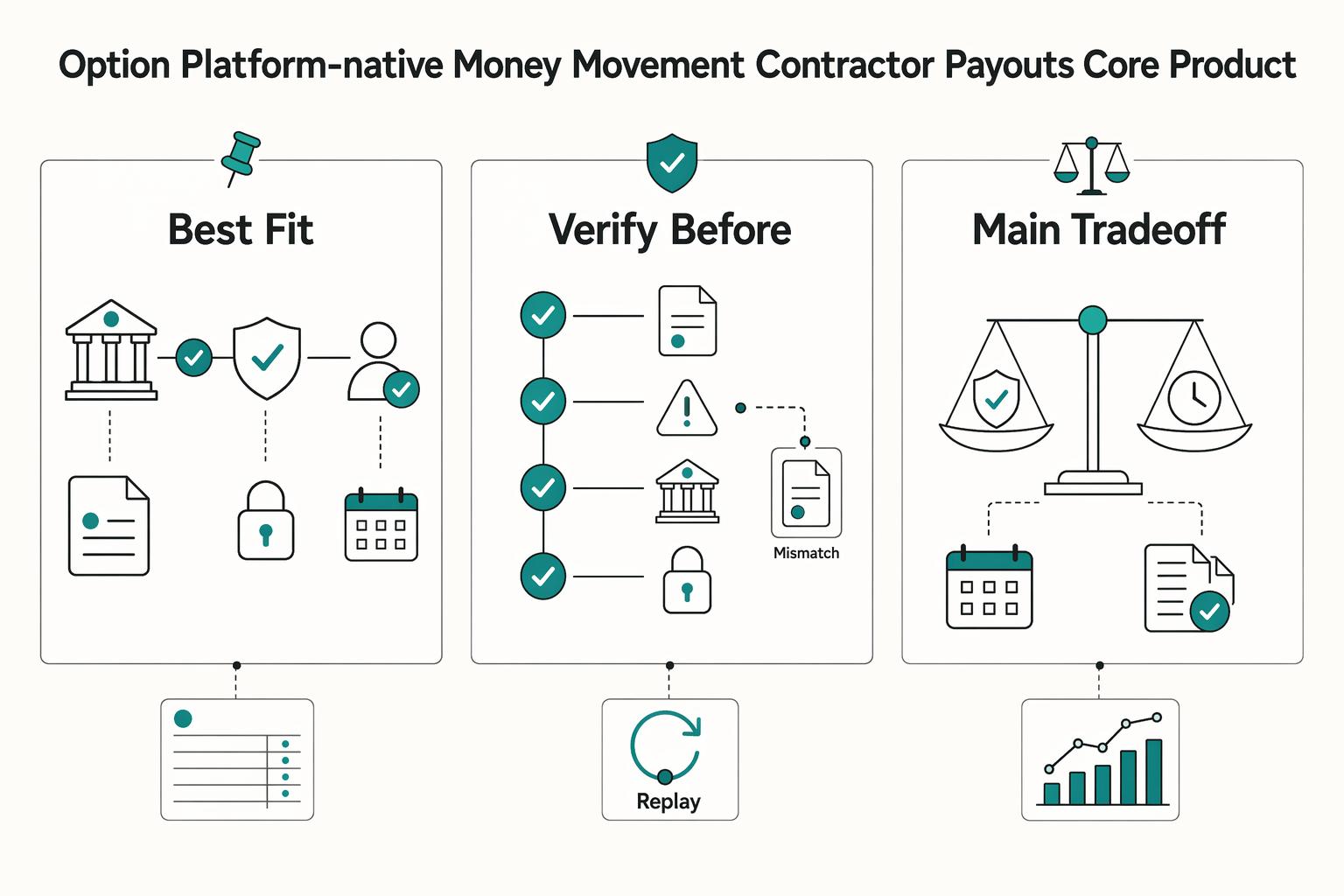
How Staffing Platforms Automate Healthcare AP for Clinical Contractors
A key distinction matters: this article focuses on healthcare AP workflows, not contractor-payout orchestration. If your expansion bet depends on reliable contractor payments, generic healthcare AP language is useful context, but it is not enough on its own.