
Quick Answer
Set permissions and approval rules before execution, reserve shared budgets across concurrent agents, and route exceptions to a named reviewer. Configure provider timeout fallback and durable duplicate protection. Reconcile provider or bank evidence with ledger postings, and collect the payee documentation required for the specific payment.
Follow the full AI-agent money path#
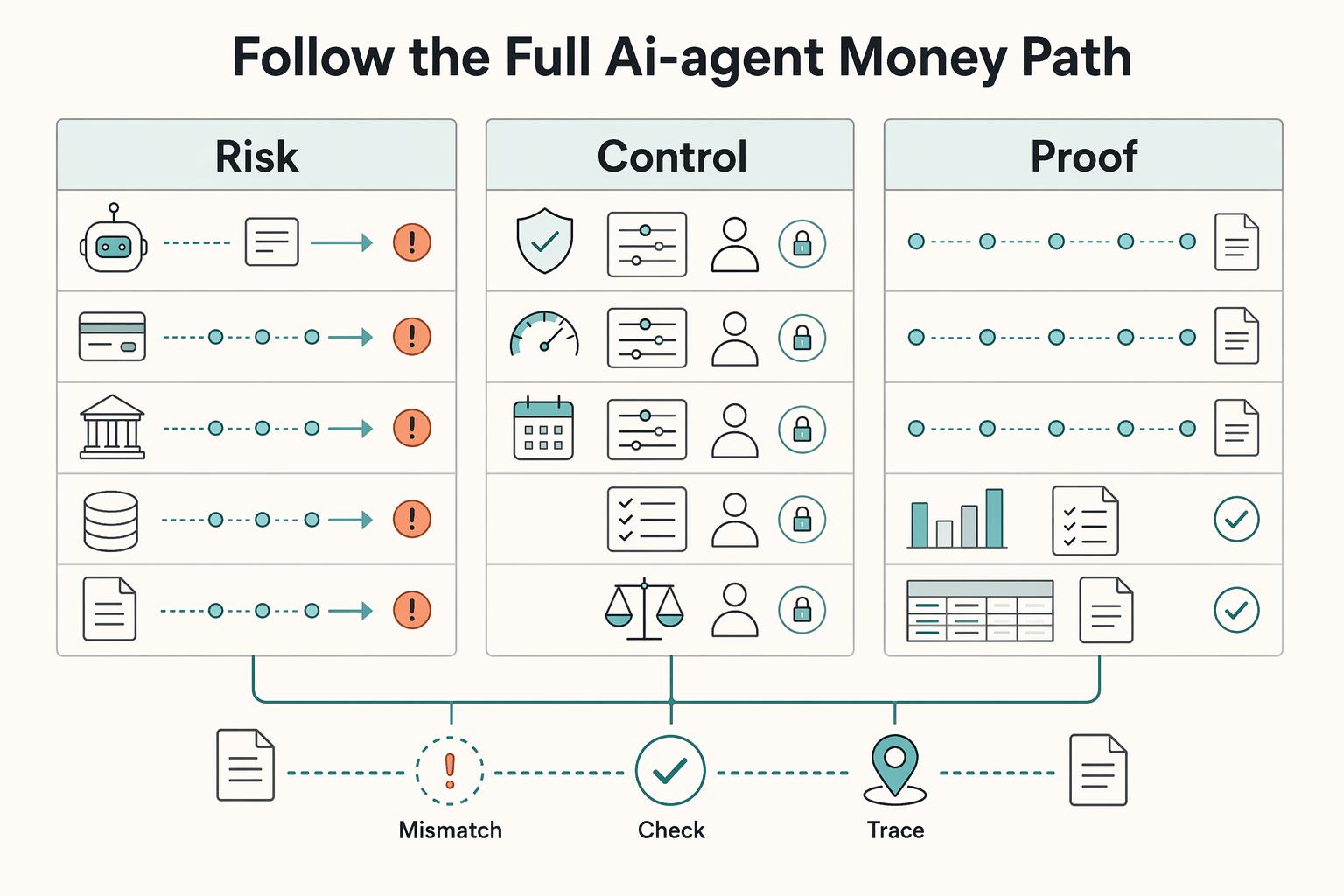
Spending controls for AI agents are only credible when they follow the full money path, not just the moment an agent asks to spend. For platform finance, ops, and product owners, the job is to set approvals, hard limits, and human-in-the-loop checkpoints that can actually be enforced from authorization through execution, settlement, posting to the books, and final record matching.
That end-to-end view matters because payment activity is staged. In common card-network processing, authorization, clearing, and settlement are distinct steps, so an approved transaction is not the same thing as completed settlement. If you design controls as if approval alone proves money movement is finished, you can miss late failures, timing gaps, and posting mismatches that show up after the agent has already moved on.
Treat the agent as a requester and initiator, not as the final authority on whether money should leave your platform. The authority comes from policy gates, approval rules, and accounting checks that stay visible after execution. A simple rule is worth adopting early: if your team cannot trace one payment from the agent decision to the execution event and then to the resulting journal entry, the control is not ready for production.
For higher-risk AI uses, human oversight should scale to risk, autonomy level, and context of use. That does not mean a person needs to click every payment. It means you should define clear intervention points for the cases most likely to cause harm or cost, such as new counterparties, policy exceptions, unusual spend patterns, or time-sensitive manual overrides. For higher-risk activity, people need a real chance to review and intervene, not just receive an alert after funds have moved.
Reconciliation is where weak designs usually get exposed. In accounting terms, it is the comparison of two sets of records to confirm they match and to identify discrepancies when they do not. In practice, that means your controls need to survive contact with provider statuses, settlement timing, and posting rules. If an execution record says paid but your books or downstream records disagree, you need an exception path, not a quiet assumption that the data will sort itself out later.
Payout availability and timing vary by country, industry and program. Confirm each provider’s release rules and fallback behavior rather than hard-coding one schedule. Expand agent autonomy only where permissions, limits and exceptions can be observed and enforced.
Define spending controls before you configure tools#
Set policy first, then configure tools to enforce it. Spending controls for AI agents should define what an agent can spend, when it can spend, and when an approval chain must intervene.
| Control family | What it covers |
|---|---|
| Per-agent limits | What an agent is allowed to spend |
| Purpose or category constraints | Prevent drift into unrelated payment types |
| Counterparty allow/deny rules | Who can receive funds |
| Variance alerts with escalation | Unusual activity that should route to blocking, freezing, or manual review |
Treat the agent wallet as an execution surface, not the authority layer. Use policy rules to gate signing actions before funds move, keep the general ledger as the accounting source of truth, and use the audit trail to preserve who did what and when. This separation is what lets you investigate cases where execution and downstream records do not match.
Your operator check should be explicit: for any executed transaction, you can trace the policy decision, execution event, ledger record, and reconciliation status. If one link is missing, the control is not production-ready in practice.
Do not treat approval as completion. Reconciliation is where you compare records and resolve discrepancies, so controls should be measurable at that checkpoint, especially for new counterparties and alerts that require human-in-the-loop review.
You might also find this useful: Internal Controls for Accounts Payable on Platforms: How to Prevent Fraud and Ensure Accurate Disbursements.
Place controls at the right layer of the payment stack#
Place controls by function: policy decides, execution moves funds, and accounting confirms truth. Keeping those layers separate makes decisions easier to defend when settlement, posting, or final record checks do not line up.
A clean split is also easier to verify. The policy layer should allow or block requests, route approvals when needed, and record approval evidence. That mirrors document-approval flows where purchase orders are routed to approvers and approval actions are recorded. Execution should follow that decision through payout rails or batch release. In procure-to-pay integrations, approved or canceled purchase orders can be published by batch; payout batches should likewise release approved instructions, not create approval at release time.
Use movement tools for movement, not authority#
Virtual accounts can help attribute activity to agents, customers or use cases. Their settlement and balance relationship depends on the provider’s account model; some are identifiers linked to a master account, while other arrangements differ. Confirm the actual model and reconcile provider or bank evidence with your accounting records.
Set the control gate before release to the rail. A practical pre-release check is whether the request has a policy decision ID, approved counterparty data, and the expected payment purpose or category. If any are missing, hold the instruction for review.
Feed upstream business signals into payment permission#
Build payment permission from upstream source-to-pay signals, not from payout-time guesses. Accounts payable invoice matching connects vendor invoice, purchase order, and product receipt information; procure-to-pay runs from purchase order through shipment, receipt, invoice, and payment; and e-invoicing flows can add business rules and audit-ready tracking without breaking source-to-pay operations.
| Signal | Related workflow | Section note |
|---|---|---|
| Matched invoice and PO status | Accounts payable invoice matching | Connects vendor invoice, purchase order, and product receipt information |
| Receipt or delivery confirmation when required | Procure-to-pay | Runs from purchase order through shipment, receipt, invoice, and payment |
| Supplier identity and approval state | Upstream source-to-pay signals | Carry forward into payment permission |
| E-invoicing rule outcomes | E-invoicing flows | Can add business rules and audit-ready tracking without breaking source-to-pay operations |
If wallet and journal records disagree, open an exception with the wallet event, payout reference, journal entry and current provider or bank state. The ledger is the accounting record, but it can contain missing or incorrect postings. Reconcile both sides against external evidence rather than declaring one correct merely because it is labeled authoritative.
Build an approval matrix that scales with risk#
Your approval matrix should answer one question first: can this payment go straight through, or does a named person need to review it? Use a simple default rule: if the request is policy-compliant and the counterparty is pre-approved, allow straight-through processing. If not, route it to a specific approval-chain owner with a review SLA set to your risk tolerance and staffing capacity.
Keep this routing in an approval rules engine, not in inbox habits. Route to identified approvers, record approval actions, and treat urgency as a routing factor, not as a source of new spending authority.
Use risk triggers that map to one owner#
Define a small set of triggers and map each one to a single owner role so exceptions do not drift between teams.
| Trigger | Required approver role | Max autonomy allowed | Required audit trail evidence |
|---|---|---|---|
| Policy-compliant request to a pre-approved counterparty | No manual approver, auto-approved by rules engine | Straight-through processing | Policy decision ID, approved counterparty record, purpose or category, release timestamp |
| First-time payee | AP or procurement owner | Request can be created, but not released until reviewed | Counterparty approval record, request details, approver identity, approval action and time |
| Policy exception, missing data, or mismatch | Finance approver or exception owner | Hold funds release pending review | Exception reason, supporting documents, policy rule hit, reviewer decision, remediation notes |
| Repeated variance alerts or manual override request | Risk, finance, or delegated control owner | Temporary hold or one-time exception only | Prior alert history, override reason, named approver, linked payout reference, post-event review note |
| Settlement marked urgent | Named business owner plus finance owner if it breaks the normal path | Limited escalation only; urgency does not create new spending rights | Urgency reason, original due date, approval actions, final release reference |
Make Human-in-the-loop explicit#
Put human-in-the-loop triggers directly in policy for first-time payees, repeated variance alerts, and manual overrides. This keeps exception handling explicit instead of reactive.
Set oversight to the autonomy and risk of the workflow. Control design should match your risk tolerance and resources, and human oversight should be effective for the system's risk, autonomy, and context of use. Before release, verify the request has a policy decision ID, counterparty status, and either an approval action or a valid auto-approval result. If a manual override was used, require the override reason and approver identity in the same audit trail path as the payout reference.
Use timed SLAs for each review tier, but set durations to your actual volume and reviewer capacity. If the SLA expires without action, keep the request blocked rather than releasing it by age.
Set limit hierarchies to stop runaway spend early#
Do not rely on one global cap; layer limits across action, agent, counterparty, and cycle so concentrated risk is blocked before money moves.
Provider spending controls can decline disallowed card purchases before real-time authorization. Stripe Issuing documents a default USD 500 daily limit when no spending limits are set and a USD10,000 per-authorization default, with support-mediated exceptions. Its aggregation is best effort and may lag by up to 30 seconds; later tips or fees can exceed limits. These controls support your policy but do not guarantee an exact aggregate cap.
| Limit type | What it protects | Where to route review |
|---|---|---|
| Per action or authorization | Prevents a single oversized or out-of-policy payment | Your approval-chain owner for payment exceptions |
| Per agent or cardholder | Limits cumulative spend from one actor | Your owner for agent/cardholder controls |
| Per counterparty | Reduces concentration to one supplier or payee | Your procurement/AP counterparty owner |
| Per cycle or time window | Caps exposure across a day, month, or settlement window | Your risk/treasury exposure owner |
Set thresholds by use case, not as one shared band. In AP Automation, tolerance should track whether invoice, purchase order, and receipt evidence align (three-way matching). In e-Procurement, controls should reflect lifecycle stage, from planning through contract management. In Supply Chain Finance, avoid inheriting AP thresholds directly, because payables finance is buyer-led and exposure/concentration controls matter differently.
When the same limit is breached repeatedly, auto-pause instead of letting alerts stack. One practical pattern is setting a cardholder to inactive status, which forces declines on attached cards. Reactivation should require a documented review decision and a clear remediation step in your own approval workflow.
For a hard platform budget, reserve available capacity atomically before each instruction across all agents and rails. Count pending reservations as exposure, bind each reservation to one operation, and release it only after a confirmed failure or cancellation. Concurrent requests must not both spend the same remaining budget. Reconcile reservations with final amounts and later adjustments before reactivation.
We covered this in detail in Best Corporate Debit Cards for Global Spending in Small Teams.
Run the authorization to reconciliation sequence in fixed order#
Define one canonical money path and run it in the same order every time: request intake, policy checks, compliance checks, execution, provider status ingest, ledger posting, then final reconciliation. The point is not that this is a universal standard, but that a fixed internal order prevents retries from creating accounting drift.
Approval is not completion. A payment can pass policy and execute, then still break close if status ingest, posting, or matching runs from stale or duplicate events.
Keep one canonical money path#
Treat each stage as gated by explicit evidence before the next step runs.
| Stage | Evidence to advance | Replay risk to block |
|---|---|---|
| Request intake | Stable operation ID and request snapshot | Same request submitted twice |
| Policy + compliance | Recorded decision and pass/hold outcome | Conflicting outcomes from re-runs |
| Execution | Provider reference for the attempt | Duplicate payout or authorization |
| Status ingest + posting + reconciliation | Current provider state, one journal post, and matched/exception state | Duplicate entries or premature close |
Keep synchronous card authorization narrow. Stripe Issuing allows 2 seconds for your response; a timeout can approve or decline according to configured fallback or Autopilot settings. Configure and test that fallback explicitly. Heavy lookups and human review should happen before this stage, and an approved flag alone does not prove your endpoint responded successfully.
Make retries boring#
Use one stable business-operation ID and durable deduplication for every money-moving or posting write. Send the provider’s supported idempotency key for safe retries, retain the request and result, and check current state after an ambiguous timeout. Stripe can prune keys after at least 24 hours; provider keys alone do not protect an old replay indefinitely. Keep your own operation record and reject changed payloads under the same identity.
Webhook/event pipelines should also assume at-least-once delivery and out-of-order arrival. When payloads look stale or partial, fetch current state before posting or matching.
Do not close until reconciliation criteria are met#
Late and reordered updates are expected. Acknowledge verified events promptly, process them through durable deduplication, and reconcile current provider state with your posting records. Close an operation only when your criteria are met; keep unresolved differences in a named exception case and reopen it for later returns or corrections.
As an operating checkpoint, keep one audit-trail view that ties together the decision record, provider reference, posting result, and current reconciliation state for each executed payout. That makes exceptions visible before period close instead of after it.
Prepare exception handling before launch day#
Before launch, define exception queues, default operator actions, and a minimum evidence pack so unresolved payments do not become ad hoc decisions.
Exception queues are the investigation stage in payment processing, so treat them as first-class controls. A practical setup for this workflow is blocked compliance checks, unmatched deposits, request-context mismatches, and posting mismatches between the agent wallet and the ledger.
| Queue | What belongs there | Default action | Minimum evidence before closure |
|---|---|---|---|
| Blocked compliance check | Payment held or rejected by compliance screening | Manual review, reject, or escalate to approval chain | Operation ID, counterparty details, screening result, request snapshot, provider reference |
| Unmatched deposit | Funds visible on a virtual account or statement with no matched open item | Manual review, then retry posting if a match is confirmed | Virtual account identifier, master account reference, amount, payer reference, statement line |
| Request-context mismatch | Execution or status event that does not align with the approved request context | Retry fetch of current state, then escalate if still inconsistent | Decision ID, request snapshot, current request version, event timestamp |
| Agent wallet vs ledger mismatch | Wallet movement without matching journal entry, or journal entry without matching wallet movement | Check current provider and posting state; retry only the confirmed missing idempotent operation, otherwise review manually | Wallet event ID, journal reference, provider reference, reconciliation status |
Keep action rules explicit. Retry only when the issue appears transport-related and the write is idempotent. Use manual review where rails can still produce later returns through manual handling. Reject when evidence shows the transaction should not proceed, and escalate when an operator cannot validate it from the current record.
Require a consistent evidence pack: operation ID, policy decision, provider reference, journal reference, and relevant external bank signals. For return handling, include camt.053 details when present. If a transaction is rejected for sanctions reasons, capture the identifying details needed for rejected-transaction reporting, to the extent available.
Virtual-account identifiers can help match funds to agents or customers. Their relationship to a master account or separate balance depends on the provider’s account model. Compare virtual-account activity, the actual provider or bank balance and ledger postings; do not infer settlement from an identifier alone. Record reopening criteria for returns and suspended agents.
Set a clear internal decision rule: if an exception cannot be resolved with existing evidence, pause new spend with that counterparty until the case is closed or a human approver accepts the risk.
Add cross-border compliance and tax gates to spending decisions#
Use cross-border compliance and tax controls as payout release gates: if required checks are missing, the payout stays queued.
| Requirement or artifact | Applicable scope | Operational treatment |
|---|---|---|
| Identity and AML checks | Your regulated program, provider and jurisdiction | Complete required checks before the relevant release or account-opening step |
| VAT treatment and identification | Transactions where VAT rules apply | Record the relevant invoice treatment; VIES supports EU VAT-number verification, not every tax obligation |
| Payee tax documentation | Payer, recipient and income-specific requirements | Collect the appropriate form or other evidence and determine applicable withholding; do not require W-8BEN for every foreign payee |
| Information-return readiness | Payments subject to reporting | Retain accurate payment and recipient records; future 1099 filing is not a prerequisite for each payout |
| Recipient personal/account reporting | Separate FEIE or FBAR facts where applicable | Keep separate from the payout release decision; neither is a universal cross-border payout gate |
Define identity and AML scope for the specific regulated program and provider. Record the required customer and beneficial-owner checks and who owns them. Do not copy one institutional account-opening checklist into every agent payout. Update requirements with the responsible compliance owner when the jurisdiction, counterparty or rail changes.
Collect the payee documentation needed for the payer, recipient and income type, and determine applicable withholding before release. W-8BEN is for relevant foreign individuals; other recipients or income can require other forms. A missing document may require withholding or a provider hold rather than one universal ban on payment. Apply the actual legal or program rule. Use VIES where relevant to EU VAT identification and retain the result with invoice treatment.
Prepare reporting through accurate payee and payment records, but keep annual filing separate from the immediate payout gate. The recipient’s foreign-earned-income exclusion and foreign-account reporting are separate, fact-dependent obligations. They do not establish whether an agent payment may be released.
Minimize personal data in review tools: show masked account and tax identifiers, status flags and document expiry rather than raw forms. Store sensitive records in controlled systems and grant access by role. Use the applicable payment-data standard for card-number display; a tax identifier or bank account does not inherit the same masking rule automatically.
Conclusion#
Teams that get spending controls for AI agents right do not treat them as nicer budget alerts. They treat them as a governance model for money movement: operating model, policies, controls, traceability, and review steps that stay connected from request to final outcome.
That matters because durable cost control is a lifecycle job, not a one-time budget setting. The stronger pattern is to start with explicit governance controls, then widen autonomy only after behavior is stable over time. In practice, that means checking more than approval success. You want visibility into exceptions, retries, and whether records remain traceable end to end without manual reconstruction.
Before granting more authority, trace executed actions to their policy decision, provider state and accounting outcome. Sample overrides and failures as well as successes. Logs must let an independent operator reconstruct what the agent requested, which control allowed it and what ultimately happened.
For rollout, prove the model on one use-case profile first. NIST AI RMF 1.0 (2023) frames profiles as specific to a setting, risk tolerance, and available resources, which is the right way to scope agent spend. A pilot should test the strengths and weaknesses of the approach before scaling. If your first candidate is too noisy to evaluate clearly, start with a cleaner repeatable flow and use that to validate controls.
The failure mode to avoid is broad autonomy backed by weak evidence. Teams can see straight-through approvals working and assume the design is mature before the underlying control evidence is strong enough. Before you extend the model to new programs, keep a short evidence pack: sampled exception cases, override reasons, linked policy decisions, event logs, and final outcomes. If that pack shows outcomes are understandable and attributable over time, then expand. If not, hold scope, tighten controls, and fix the visibility gap first.
Frequently Asked Questions
What are spending controls for AI agents in payment operations?
They are rules that determine whether an agent can authorize or release money, under what limits, and when a person must step in. In practice, these controls span approval, execution, and record checks so each payout can be traced to a policy decision and a financial record.
What controls are mandatory before allowing any autonomous spend?
There is no single mandatory global checklist. Before release, enforce policy and applicable compliance decisions, reserve shared budget capacity for pending instructions, and retain a durable business-operation record. Use provider idempotency keys within their supported retention rules, but preserve your own duplicate protection for older or cross-rail retries. Record approvals and overrides so an operator can reconstruct the outcome.
When should Human-in-the-loop approval be required instead of auto-approval?
Require human review for first-time payees, policy exceptions, abnormal exposure and overrides under your chosen risk policy. Define who can intervene and ensure the agent cannot bypass that decision through another rail. Legal oversight duties depend on the system’s classification and jurisdiction; ordinary payment automation is not automatically a high-risk AI system.
How do you prevent runaway spend across multiple agents and payout rails?
Reserve budget capacity atomically across agents and rails before releasing concurrent instructions; monitoring alone cannot stop both requests spending the same remainder. Count pending reservations, reconcile final amounts and release capacity only after confirmed cancellation or failure. Bind retries to one durable operation record and use the provider’s supported idempotency key, accounting for key-retention limits and ambiguous outcomes before any new attempt.
What must be logged in the Audit trail for finance and compliance review?
Log the initiator and tie each event to a specific user or agent identity, because review only works when activity is attributable. Keep enough context to reconstruct the decision and execution path, including approvals, key transaction identifiers, and any overrides.
How should teams handle Ledger and wallet balance mismatches?
Treat mismatches as exceptions that require reconciliation. Reconciliation is used to compare records and resolve differences, so compare payment records and accounting records directly and resolve discrepancies before proceeding.
What parts of approval and compliance policy vary by country or program?
A lot can vary by jurisdiction, program design, and use context. Do not hard-code one autonomy or compliance rule set and assume it applies the same way in every market.
Try a related tool
Researched and edited by the Gruv editorial team. Gruv builds cross-border billing, payouts, and finance-operations software for global businesses.
Sources
- docs.stripe.com/issuing/controls/spending-controlstrusted
- docs.stripe.com/issuing/controls/real-time-authorizationstrusted
- ec.europa.eu/taxation_customs/viestrusted
- ecfr.gov/current/title-31/subtitle-B/chapter-X/part-1...trusted
- federalreserve.gov/frrs/regulations/payment-clearing-and-settle...trusted
- irs.gov/businesses/small-businesses-self-employed/re...trusted
- irs.gov/individuals/international-taxpayers/foreign-...trusted
- nvlpubs.nist.gov/nistpubs/ai/NIST.AI.100-1.pdftrusted
Educational content only. Not legal, tax, or financial advice.
Related Posts
The Best CRM for a Real Estate Agent
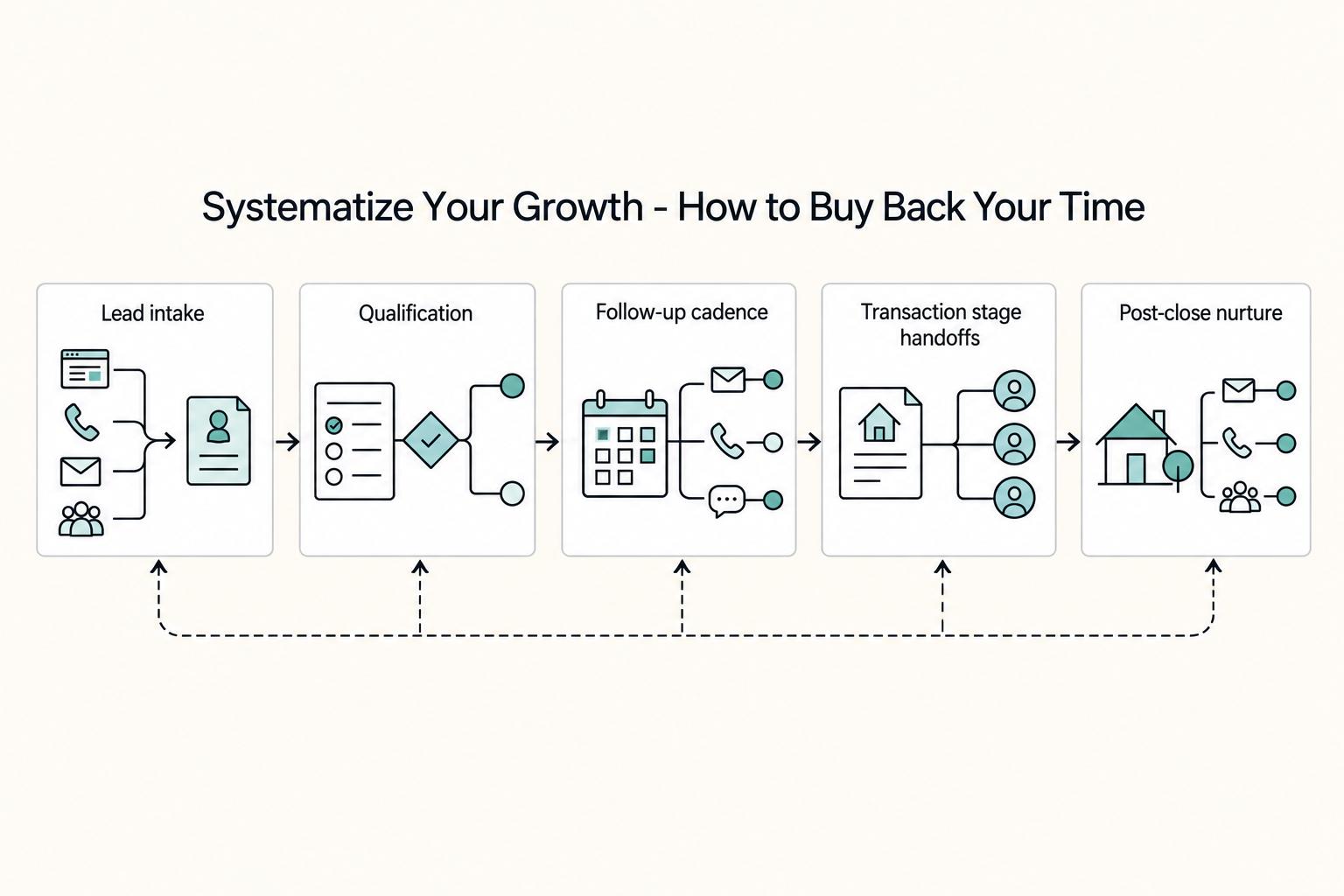
If you start with "what is the **best crm for real estate agents**," you will probably compare demos, feature grids, and pricing pages before you define what your business actually needs. That is backwards. A CRM is not just a contact database. It is where your leads, follow-ups, campaigns, client communication, and day-to-day visibility either stay organized or start slipping.
Home Office Deduction for Real Estate Agents: Qualify, Choose a Method, and Keep Records
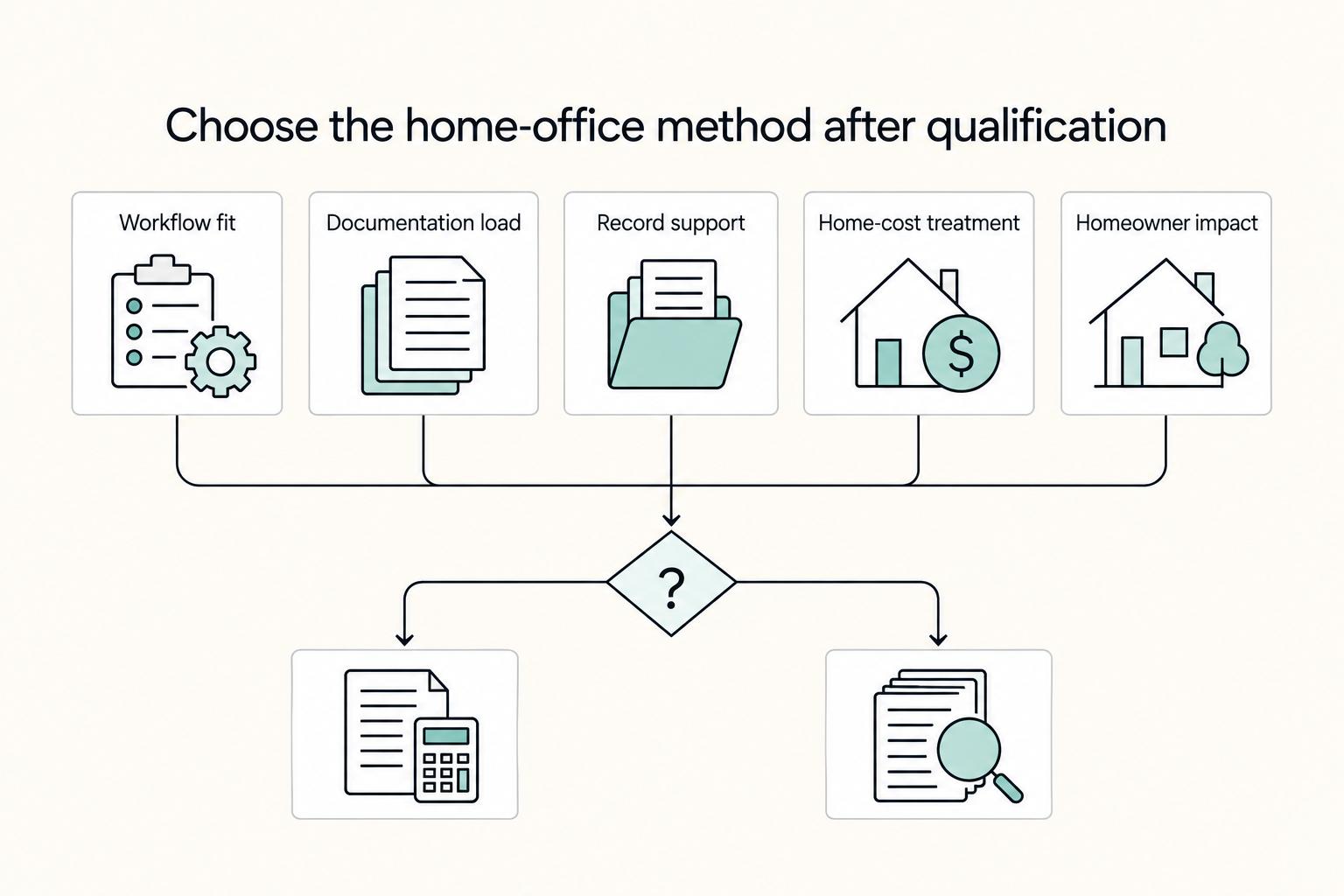
If you file Schedule C, the key question is not whether this deduction looks aggressive. It is whether you can prove you qualify, choose the right method for that tax year, and support the claim with clean records.

Internal Controls for AP Platforms to Prevent Fraudulent Disbursements
Start here: your AP control design should reduce fraudulent disbursements and payment errors without turning every payout into a bureaucratic exercise. In practice, that means clear escalation points at the moments where money can move incorrectly, not extra approvals added just to look controlled.