

Quick Answer
Choose debit when you want purchases to use existing business funds, and prepaid when you want to allocate funded budgets before spending. Airwallex’s U.S. offering supports balance-funded multi-currency cards; Chase and Wells suit teams using their business checking accounts; PEX offers a dedicated prepaid expense program. Compare international charges and cash access alongside controls. Business expense accounts should not be assumed to carry consumer Regulation E protections.
What Small Teams Need in a Corporate Debit Card for Global Spending#
Pick the card setup you can still operate on a bad cashflow week, not the one with the best marketing page. If you can fund it, monitor it, and close the books cleanly when client payments are late, you have the right starting point.
Freelancers, studios, and small teams often face a timing gap: money goes out for tools, travel, and software before client revenue lands. A card program needs a funding plan for that gap. This comparison puts usable funds and control depth ahead of rewards copy.
These cards sit on the business side, not your personal finances. The practical issue is how money becomes spendable. Some programs are built for immediate use once funds are available. Others add preload or account-setup steps that can slow spending if someone misses a handoff. When that path is fuzzy, routine purchases fail at exactly the wrong moment.
Airwallex’s U.S. card offering advertises multi-currency spending in 60+ markets with no foreign card transaction fees. That is different from making every purchase free: currency conversion can still be required when you do not hold the purchase currency. Compare the funding and conversion path for your actual spend.
Before you issue any employee card, run this short risk screen:
- Funding access check: confirm how and when money becomes spendable.
- Cross-border terms check: verify supported countries and current fee language in your account documents.
- Controls check: confirm limits, permissions, and oversight options before broad rollout.
- Reconciliation check: run a live export test and make sure it matches your ledger process.
- Dispute check: document reporting requirements and response windows from the current cardholder agreement.
If fees, limits, eligibility, or country support are vague, mark them unknown and pause. Unknowns are not minor details. They are where rollout failures start.
How to compare card programs for a small team#
This shortlist compares funding, controls, cash access, and international costs. It does not assign numerical scores or name one universal winner. Use the operating criteria below to choose candidates for your own pilot.
| Card type | Usually fits |
|---|---|
| Corporate debit card | Teams that want spending to track available cash closely |
| Prepaid business debit card | Teams that want harder caps by loading funds first |
| Corporate credit card or commercial card | The comparison point when financing float or rewards matters most |
The first decision is card type, because a type mismatch usually fails before feature differences matter.
- Corporate debit card: uses funds held in the linked business account; check overdraft terms and authorization holds as well as the displayed balance.
- Prepaid expense card: allocates funds in advance and can help enforce project budgets. Available spending may be reduced by fees or pending holds; controls and cash access depend on the program.
- Corporate credit card: compare separately when borrowing or payment float is needed. A virtual card number alone does not tell you whether the product is debit, prepaid, or credit.
Once the type fits, compare the things that affect daily use and month-end cleanup:
- Funding path clarity and speed.
- Fit with your business checking and approval flow.
- Control depth by user, merchant, and transaction behavior.
- Reconciliation effort at month-end.
- Cash access and ATM constraints.
- Cross-border constraints by program and entity.
- Protection terms, reporting windows, and dispute requirements in current documents.
Nothing stays on this list unless it passes the same verification gate:
- Confirm current fees in issuer terms, including cross-border and ATM items.
- Confirm eligibility and country or program availability for your business profile.
- Confirm support at the card-program level, not headline comparison copy.
- Confirm protection scope and reporting deadlines in the latest cardholder agreement.
Protection scope needs its own check. Regulation E’s account definition covers accounts established primarily for personal, family, or household purposes and defined prepaid categories, including payroll accounts. Do not extend consumer error-resolution or liability rules automatically to a corporate expense account. Use the business card and deposit agreements to establish reporting duties and contractual protection.
If financing float is a core requirement, compare credit directly with debit and prepaid rather than forcing a cash-funded product to solve a working-capital gap.
Quick comparison table for fast shortlisting#
Use this table to narrow the field, then verify the hard details in writing. The goal is speed without burying unknowns under launch pressure.
| Program | Funding/type | Useful fit | International cost or cash-access check | Control check |
|---|---|---|---|---|
| Airwallex Corporate Cards (U.S. offering) | Debit; funded from held balances | Multi-currency business purchases | No foreign card transaction fee advertised; conversion can apply if purchase currency is not held | Company/employee cards, spend limits, and merchant-category controls |
| Chase Business Debit | Linked business checking | U.S. operations needing bank and ATM access | More than 14,000 Chase ATMs; compare linked-account and international fees | Associate purchase/ATM limits; deposit-only employee card is separate |
| Wells Fargo Business Debit | Linked business deposit account | Existing Wells banking workflow | Selected terms list 3% on foreign-currency purchases converted to USD and $5 international non-Wells ATM withdrawals; account waivers may apply | Review card type, daily limits, and authorized-user permissions |
| PEX Prepaid Expense | Prefunded expense program; distinct from PEX Credit | Funded project budgets and field purchases | Pricing lists a 3% International Service Assessment Fee per transaction; add subscription/card costs | Cardholder, card, merchant/MCC, and time/location controls |
| Emburse Spend Cards (U.S.-based organizations) | Credit cards as described in Emburse Spend FAQ | Vendor-card comparison, outside the debit shortlist | No ATM withdrawals; cross-border fees can apply even in account currency | Test card ownership, limits, and cancellation workflow |
| U.S. Bank Focus | Prepaid payroll card | Employee wage disbursement, outside procurement shortlist | Use the payroll cardholder fee schedule and available pay options | Employer payroll administration is separate from employee access to wages |
Before a pilot, calculate one representative month of spending with the current program schedule. A low subscription price can be outweighed by international assessments, cash withdrawals, or currency conversion. Confirm eligibility and transaction limits for the entity that will actually hold the account.
With that screen in place, the next step is to match the card to the way your money actually moves. For teams with regular cross-border spend, that often starts with Airwallex.
Airwallex Corporate Cards for multi-currency business purchases#
Airwallex is worth an early pilot when your team regularly buys overseas software, travel, or supplier services and needs multi-currency reconciliation. Use cards for purchases the merchant accepts; contractor compensation may need a separate transfer or payout method.
The U.S. Airwallex card page describes debit cards that spend from held balances, company virtual cards, and employee virtual or physical cards. It advertises no foreign transaction fees. If the required currency is not held, funds are converted from an available balance, so confirm the applicable conversion price before comparing total cost.
Treat all of that as account-specific until you verify it. Transfer pricing and card transaction pricing are not the same thing, and teams often blend them together when they should not. Terms can also vary by market, entity type, and plan tier, so it is risky to lift headline copy into internal policy.
Hypothetical use case: a creator agency buys SaaS subscriptions and travel for a distributed project team, then matches each card expense to a client project ledger. Test that purchase workflow separately from paying the contractors’ invoices.
Before you issue cards, run this checkpoint:
- Confirm plan terms for card transaction fees, FX pricing method, and any country exceptions.
- Confirm foreign transaction fee terms for your entity, market, and spend pattern.
- Confirm transfer pricing separately from card pricing.
- Confirm card limits and any tier-based caps.
- Confirm control depth and expense features available in your exact account.
- Confirm accounting integration and reconciliation through one live month-end close.
- If any item is still unclear, hold rollout and move to the next option.
That last point matters because a common failure mode is assuming the cross-border value is settled because the public pitch is clear, then discovering that the account-level details are not. If your spending is mostly domestic and branch cash access matters more than multi-currency handling, this is probably not your first choice. If global spend and ledger clarity dominate your risk profile, it deserves a serious pilot.
If that is not your operating pattern, the next decision usually comes down to domestic access and day-to-day reliability.
Chase Business Debit Cards for branch access and daily operations#
Choose Chase first if your team works mostly in the US and needs dependable branch and ATM coverage for ordinary operations. This is less about feature flash and more about making daily spending boring in the best possible way.
For many small teams, practical access beats a longer feature list. When staff need to handle local purchases, same-day runs, or occasional cash needs, branch coverage and ATM availability reduce friction quickly. Chase is strongest when that convenience matters and when you want spend to sit close to business checking rather than drift into a separate card program.
Where Chase fits best#
Chase’s business debit page lists more than 14,000 ATMs, employee associate cards, and Chase Offers on eligible purchases. Debit cards must be linked to checking. Its Zero Liability Protection requires prompt reporting of unauthorized transactions and ordinary care of the card and PIN.
The protection language helps, but only if someone actually owns monitoring and escalation. Unauthorized-transaction reporting speed is part of the control plan, not a footnote. If no one is watching alerts or knows how to escalate an issue, the value of the policy drops quickly.
What to verify before rollout#
The tradeoff here is account coupling. These cards are tied to business checking, so operating cost and card behavior are one decision, not two.
Before you issue employee cards, review the whole package in one pass:
- Which checking account will be linked and what monthly service fee terms apply.
- Chase’s business checking comparison lists $15 or $0 for Business Complete Banking and $40 or $0 for Performance Business Checking; account-specific waiver conditions determine the cost.
- Check the current balance or activity waiver for the chosen account, rather than assuming the same condition applies to every checking product.
- How daily point-of-sale and ATM limits are set for each employee card.
- Which roles can change limits and who receives control alerts.
- Who owns unauthorized-transaction reporting and escalation timing.
Treat this as operations design, not account paperwork. If the checking setup is wrong, the card rollout inherits the same weakness. The clean version is simple: one account decision, one fee posture, one set of named owners for limits, alerts, and problems.
Studio use case#
A small studio can run this model cleanly with role-based limits tied to real responsibilities. Producers handling same-day rentals might need higher point-of-sale limits. Junior staff can work under tighter caps. ATM access can stay limited to roles that genuinely need cash. Chase indicates that businesses can allow employee purchases and set daily point-of-sale and ATM limits, so the real safety lever is how you design roles.
That design also improves approvals. Team members know what they can spend, managers can spot exceptions earlier, and month-end cleanup gets easier because fewer transactions sit outside expectation. If your business already banks elsewhere, continuity may matter more than Chase’s footprint.
Wells Fargo Business Debit Card for existing Wells workflows#
Wells can be a practical continuity choice for a team already using its business deposit accounts. Compare the card’s international and cash costs with a separate expense program before deciding that keeping everything at one bank is cheaper.
The Wells Fargo selected business card terms list a 3% fee for foreign-currency purchases converted by the network to U.S. dollars and a $5 fee for international non-Wells Fargo ATM withdrawals. The account may waive listed fees; ATM operators or networks can add charges. Check the linked account’s schedule alongside these card terms.
What this means for your shortlist#
Continuity can reduce changes to funding and reconciliation. It does not remove the need to check employee permissions, daily limits, mobile-wallet eligibility, and international costs. Use the exact card and account combination your team will receive.
Hypothetical cost check: if the 3% purchase fee applies, $1,000 of qualifying foreign-currency purchases adds $30 before any other charges. Compare that with the funding, subscription, and conversion costs of a multi-currency alternative.
Verification gate before employee card use#
Before any employee use, confirm and file these items:
- Current Wells Fargo Business Debit Card terms and linked business checking disclosures.
- Full fee schedule, including ATM and international-use costs where applicable.
- Written permissions and spend-control rules, if available for your program.
- Dispute and unauthorized-transaction reporting process for your account, with named owners.
- Dated internal approval note with the exact documents reviewed.
That verification file protects operations and audit readiness at the same time. If continuity is not the main goal and what you really want is a harder ceiling on spending, the spending-control options are the more relevant next step. If you want a related process improvement, see Automating Your Freelance Finances: A Zapier Workflow for Connecting Stripe.
Emburse Cards as a vendor-level credit-card comparison#
Emburse is a separate card-type comparison here. The Emburse Spend Cards FAQ describes virtual cards as credit cards, limits the capability to U.S.-based organizations, and rules out ATM withdrawals. Do not select it on the assumption that it is the same product as a prepaid expense card.
For online vendors, assign a card to a named owner and a defined purchase purpose. Where supported, use limits and pause or cancellation controls instead of sharing one broad card number. That makes it easier to identify which vendor or renewal cycle caused a charge.
International cost also deserves a separate check. The FAQ gives a USD purchase in the Bahamas as an example with a cross-border fee of 0.80% plus $0.30 even though the card’s account currency is USD. For a purchase in a currency other than the account currency, it lists a combined fee of 1% plus $0.30. Merchant country can matter as well as purchase currency.
Hypothetical use case: assign a separate virtual card to one software vendor and review it at renewal. Confirm funding and settlement terms before using it, and make sure cancellation does not interrupt another vendor’s recurring payment. For financing options, compare business credit cards separately.
If your requirement is specifically a funded expense budget, compare a dedicated prepaid program next.
PEX Prepaid Visa for higher monthly prepaid throughput#
PEX Prepaid Expense supports prefunded physical and virtual Visa cards. PEX also offers credit products, so keep the exact product name on your comparison sheet rather than treating every PEX account as prepaid.
For parallel project spending, allocate funds before the purchase and assign controls to the appropriate cardholder or card. PEX describes merchant/MCC controls and day-of-week or state-based limits. Test the rules you need with real merchants before expanding access.
Hypothetical use case: preload a campaign’s ad or travel budget against a client retainer and give each card a named owner. The useful tradeoff is a clearer budget boundary in exchange for keeping funding current when purchases or renewals arrive.
Use this checkpoint before you scale:
- Use the Prepaid Expense pricing schedule, including subscription, extra-card, and transfer charges. PEX lists a 3% International Service Assessment Fee per transaction; include it when modeling international spend.
- Define preload cadence by team and project so recurring charges do not fail mid-cycle.
- Set controls at issuance and export transaction data on a fixed close schedule for bookkeeping.
- If cash withdrawals are essential, confirm an explicit supported cash-access path rather than inferring it from the Visa logo.
PEX’s pricing page highlights named customer examples: Artisan Capital’s reported 90% reduction in reimbursement cycles and Compass to Care’s two hours per week saved on card funding. Use these as questions for your pilot, not a forecast of your own savings.
As activity rises, document issuance rights, funding approvals, and decline-response steps. Compare the international assessment and subscription costs with the staff time your pilot actually saves. Keep a credit comparison separate if the real need is working-capital float.
That same discipline matters even more if you are looking at prepaid cards for disbursements rather than ordinary purchasing.
U.S. Bank Focus for payroll, separate from business purchasing#
The U.S. Bank Focus Card is a prepaid payroll product. It loads employee pay onto a card and complements direct deposit. That is a different job from giving employees access to company funds for travel or procurement.
Compare Focus when you need an employee wage-payment option, particularly for staff without a conventional bank account. Keep wage disbursements separate from business expense budgets and use the program’s payroll agreement and employee fee disclosures.
For U.S. payroll, cards bring consumer and wage-payment requirements into the rollout. Regulation E prohibits requiring receipt of wages at a particular institution as a condition of employment. Confirm the permitted employee choices and applicable payroll rules before implementing a pay-card program.
Before rollout, require this file set:
- Exact payroll program agreement and employee cardholder fee schedule.
- Employee payment choices and the payroll rules applicable to the workforce.
- Ledger mapping that keeps wages separate from procurement spending.
- Process for correcting payroll errors and preserving employee access to paid funds.
Hypothetical use case: a seasonal employee chooses an available payroll card option for wages. The employer records the wage disbursement, while the employee uses the paid funds. Do not copy the procurement-card practice of closing access at the end of a project onto employee wage balances.
If your task is controlling company purchases, return to the debit and prepaid expense options above. Payroll cards should be evaluated through the payroll process rather than ranked against procurement cards.
Decision rules that prevent the wrong card choice#
Use these rules in order. They screen out expensive mistakes before you optimize for convenience.
- Set your cashflow stance first. If cashflow volatility is your main risk, default to corporate debit or prepaid behavior. If working-capital float is essential to your model, compare against corporate credit directly. Credit means borrowing now and repaying later, so treat that choice as a deliberate risk posture.
- Tighten access before you add convenience. For online spend, give each card a named owner and restrict permissions where your issuer supports them. Keep card details out of shared chat threads and respond promptly to unrecognized charges.
- Require written cash-access terms. A network logo does not tell you who can withdraw cash or how disputes are handled. Verify ATM capability, role permissions, and dispute process in issuer documents before launch.
- No launch without a control sheet. Document permissions, limits, alerts, and dispute steps by role before the first transaction. Name owners for card requests, limit changes, monitoring alerts, and dispute filing.
When rules pull in different directions, pick the option that limits irreversible downside first. In practice, that usually means reducing debt exposure and access sprawl before chasing perks.
Once a card clears those rules, treat the first month as a controlled test rather than a full rollout.
Rollout checklist for the first 30 days#
Launch in stages. A measured first month exposes failure points early and keeps your policy grounded in real transaction behavior rather than assumptions.
| Stage | Focus | Checkpoint |
|---|---|---|
| Week 1 | Lock ownership and funding boundaries | Document who can request cards, approve spend, and adjust controls; confirm funding timing and reconciliation ownership; start with a narrow pilot scope |
| Week 2 | Document controls before adding volume | Finalize monitoring and escalation responsibilities; document the card-program onboarding, data-handling, and security duties assigned to your team |
| Week 3 | Validate reconciliation with live activity | Run close tasks against real transactions and confirm exports map cleanly into your ledger process before broadening access |
| Week 4 | Run a failure drill end to end | Simulate a failed or unauthorized charge; walk through reporting, evidence capture, and status tracking; if protection language exists in your program, verify the exact reporting path before relying on it |
| End-of-month checkpoint | Connect spend to full money movement | Where supported, add Gruv checks so invoice collection, ledger-backed tracking, and payout operations remain traceable alongside card spend; follow one real transaction path and fix every broken handoff before issuing more cards |
If a stage fails, hold scope and close the gap before advancing. Use the first close cycle to decide whether funding, approvals, and exception handling can support more cardholders.
After that first month, most remaining questions are not about product pages. They are about how debit and prepaid tools behave in actual use.
Choose the setup you can operate every week#
The right answer is the setup your team can run cleanly in ordinary weeks and bad ones. If approvals, limits, and close tasks start failing when spending spikes, the setup is not ready for scale.
- Start with one controlled primary program for routine spend. Keep access narrow until weekly reconciliation is consistently clean. In a prepaid program, allocate project funds and test the supported controls before adding cardholders.
- Keep a backup path for real exceptions. A primary card for planned purchases and a separate cash or payment route can work when access needs differ. Confirm each program’s cash capability rather than assuming every card can withdraw from an ATM.
- Scale after a full close-cycle test. Verify limits for the exact card type, match receipts to transaction exports, and reconcile pending holds, fees, refunds, and available balances before increasing card count.
Use the shortlist table, apply the decision rules, complete the 30-day checklist, and then expand access. If reconciliation quality slips, pause new issuance and fix the root cause first. If you need help validating support for your country or program, talk to Gruv.
Frequently Asked Questions
What is a corporate debit card and how is it different from a business credit card?
A business debit card spends from deposited or held account funds, subject to the program’s authorization and overdraft terms. A business credit card draws on a credit facility that must be repaid. Check the funding model even when both products offer similar virtual-card and expense-control features.
Corporate debit card vs prepaid business debit card: which is better for cashflow control?
Prepaid can provide a useful funded-budget boundary. Hypothetical example: after fees and pending holds, a card has €500 available; plan purchases within that available amount. Standard debit uses the linked account’s funds and limits, and overdraft terms can affect the result. Confirm balance allocation and fees for the actual program.
Can corporate debit cards help build business credit profiles?
Debit and prepaid spending uses your own funds rather than repaying a credit line, so do not choose them as a credit-building strategy. If business-credit reporting is a goal, compare a credit product and ask which business bureaus receive its payment history.
What should freelancers compare first when choosing the best corporate debit cards?
Start with operating fit, not headline features. Look first at funding timing, approval ownership, and the reconciliation path. Then review fee disclosures and ATM terms so routine use does not create avoidable surprises. If you work across borders, confirm support for your actual countries and currencies before you expand issuance.
Which protections matter most besides Zero Liability Protection?
Check the business agreement’s protection scope, exclusions, and reporting deadline alongside spend limits and card-blocking controls. Chase’s published protection requires prompt reporting and ordinary care of the card and PIN. Regulation E’s consumer-account rules are not an automatic guarantee for corporate expense accounts. Assign a named owner for alerts and disputes.
Are corporate debit cards workable for global spending or should small teams use a hybrid setup?
They can work for global spend when provider support matches your actual payment geography. Make the decision from your real countries and currencies, not from generic assumptions. If coverage or fee clarity is uneven, keep a hybrid posture and scale only after the terms are confirmed in writing.
How many employee cards should a small team issue before controls become risky?
There is no universal safe number. Expand access only as fast as approvals, monitoring, and reconciliation remain clear. If visibility drops or ownership gets fuzzy, pause issuance, tighten controls, and resume only after the process is stable again.
Try a related tool
Researched and edited by the Gruv editorial team. Gruv builds cross-border billing, payouts, and finance-operations software for global businesses.
Sources
Includes 6 external sources outside the trusted-domain allowlist.
- consumerfinance.gov/rules-policy/regulations/1005/2trusted
- consumerfinance.gov/rules-policy/regulations/1005/10trusted
- airwallex.com/en-us/spend-management/cardsexternal
- chase.com/business/banking/services/account-management...external
- chase.com/business/banking/checkingexternal
- help.spend.emburse.com/hc/en-us/articles/4424782566285-Emburse-Card...external
- pexcard.com/pex-prepaid-expenseexternal
- pexcard.com/pricingexternal
Educational content only. Not legal, tax, or financial advice.
Related Posts
Automating Your Freelance Finances: A Zapier Workflow for Connecting Stripe, QuickBooks, and Wise
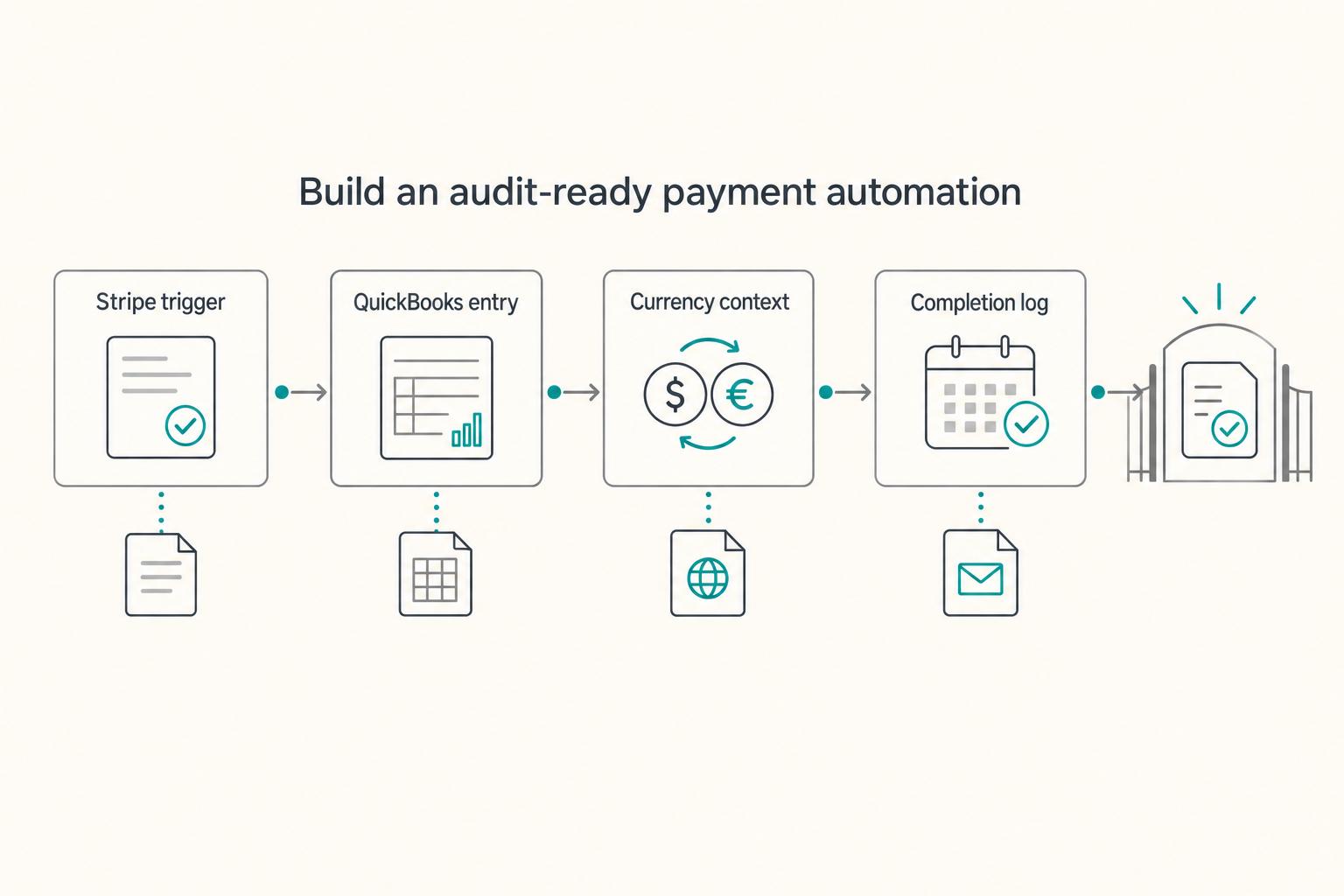
Start with one payment flow you understand, then automate its accounting record without losing the source reference. Stripe captures payments, QuickBooks holds the books, Zapier connects the selected steps, and Wise records any separate cross-border balance or conversion activity.
The Best Business Credit Cards for Freelancers
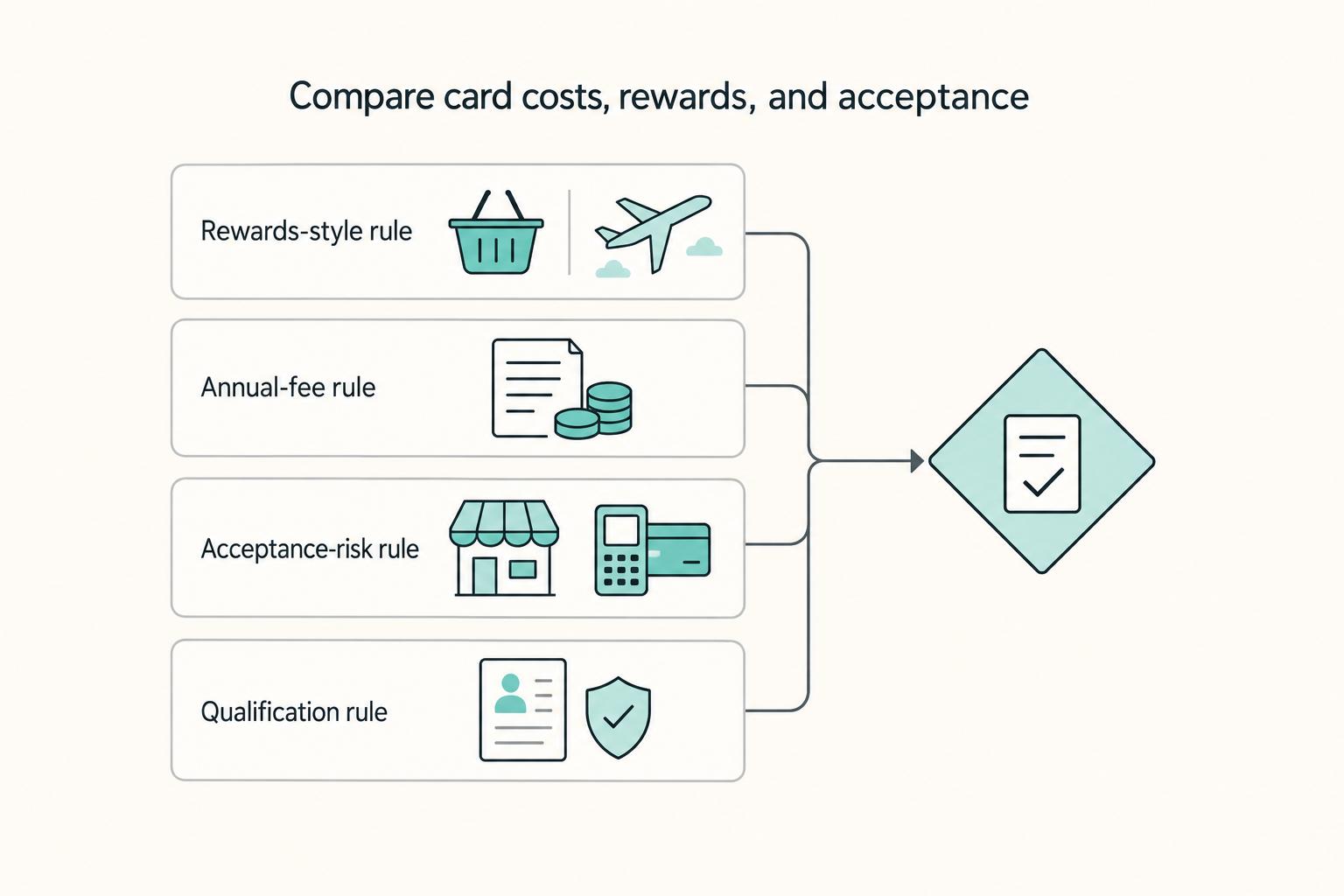
Pick for reliability first. For a freelancer, the right business card is usually the one that keeps recurring bills moving, keeps records clean, and avoids extra costs when income swings from month to month. Rewards still matter, but they sit on top of those basics. They do not replace them.

The Freelance Payment Penalty: A Modeled Audit of Platform Fees, FX Spreads, and Payout Delays
The money rarely disappears through a single, easy-to-spot fee. The real loss is stacked. A marketplace takes its commission, a processor adds a charge for international cards, a bank or payment company converts the currency at a spread, a platform holds the funds before release, and a wire sheds a little to intermediaries on the way in. Each layer looks defensible on its own, but the worker feels the combined result as a smaller deposit and a later payday.