
Quick Answer
Use a reverse trial when your product can prove premium value quickly and you can execute a clean Paid Plan-to-Free Plan transition at expiry. For reverse trial b2b platform full access conversion, the article’s guidance is to treat it as an operating model: pick a design variant, define downgrade behavior in detail, and measure outcomes in a consistent window (including post-downgrade retention), not just top-line paid upgrades.
Why reverse trials win only when monetization and operations are designed together#
Treat a reverse trial as a monetization decision, not a short-term growth play. If your B2B platform cannot support a clean downgrade, clear plan boundaries, and reliable billing and entitlement changes, more full-access signups may not help much.
- Monetization choice
A Reverse Trial gives users full access for a limited period, then asks them to either pay or downgrade instead of losing access outright. In common examples, that premium-access window is 14 or 30 days. That can be enough time to show the gap between a Paid Plan and a Free Plan, while still forcing a real packaging decision. Key differentiator: unlike a standard free trial, you are not just choosing an acquisition model. You are deciding what happens when the clock ends, including the downgrade path for people who do not upgrade.
- Cross-functional decision
This is not just a product question. Founders, revenue leaders, product teams, and finance operators all have a stake. The same design that improves paid intent can also create operational friction if the transition is messy. Key differentiator: the right yardstick is not raw signup volume alone. It is whether the model improves conversion quality while keeping downgrade and handoff problems manageable.
- Operational readiness test
The structure sounds simple. The hard part is the handoff. Across the examples cited here, the same requirement shows up: a reliable foundation for transitions with minimal friction, especially around billing and entitlements when the premium window ends. Key differentiator: before launch, verify the downgrade event in a staging environment. Confirm which paid features are removed, which free features remain, when notices are sent, and whether account history survives the switch. A failure mode is either over-downgrading, where users lose expected continuity, or under-downgrading, where paid access lingers and can create preventable disputes.
That is why this guide is written for operators, not benchmark chasers. You are here to decide whether a reverse trial fits your buying motion, packaging, and economics better than Freemium or a narrower Free Trial. Then you need to implement it in a way your team can maintain.
The promise is practical. Pick the variant that matches how customers buy, launch it with explicit downgrade logic, and put checkpoints around the transition. If your notices, plan mapping, and billing-to-entitlement rules are still fuzzy, fix those first. The cleanest trial design often beats the most generous one.
Related: Freemium vs. Free Trial vs. Reverse Trial: Which Acquisition Model Works for Payment Platforms.
Selection criteria that decide if a reverse trial fits your business#
A Reverse Trial fits when users can reach paid-feature value quickly and still land in a usable free tier after downgrade. If onboarding is slow, implementation-heavy, or services-led, start with a narrower Free Trial or a guided Product-Led Sales pilot.
| Criterion | What to verify | Grounded detail |
|---|---|---|
| Time-to-value | Users can feel the paid-feature difference inside the trial window | Standard window is usually 14 or 30 days |
| Feature depth and fallback | The downgrade lands in a usable free tier | Confirm which features remain, whether account history persists, and what users experience when the premium window ends |
| Conversion quality | Compare models on free-to-paid conversion over one fixed window | ChartMogul defines free-to-paid conversion within six months |
| Evidence standard | Treat external inputs as directional | Keep the conversion window consistent and validate claims in your own onboarding, pricing, and sales motion |
- Time-to-value
Use reverse trial only if users can feel the paid-feature difference inside a standard window, usually 14 or 30 days. If value takes weeks to show up, changing trial shape matters more than simply giving broader access up front.
- Feature depth with a clean fallback
This works best when your B2B Platform has meaningful premium depth and a clear free-tier landing state. Before launch, confirm which features remain after downgrade, whether account history persists, and what users experience when the premium window ends. If downgrade feels like product removal instead of a plan change, conversion quality usually suffers.
- Conversion quality, not signup volume
Compare Reverse Trial, Freemium, and Free Trial using free-to-paid conversion over a fixed window. ChartMogul defines free-to-paid conversion as the share of free signups or leads that become paying customers within six months. In January 2026, across 200 software products, 57% used free trial as the primary landing model, 26% freemium, and 7% reverse trial; this shows what is common, not what will work in your funnel.
- Evidence standard
Use OpenView and Inflection.io to frame model tradeoffs, and treat The Product-Led Geek and Reddit as directional practitioner input. Keep your conversion window consistent, check retained usage after downgrade, and validate any external claim inside your own onboarding, pricing, and sales motion.
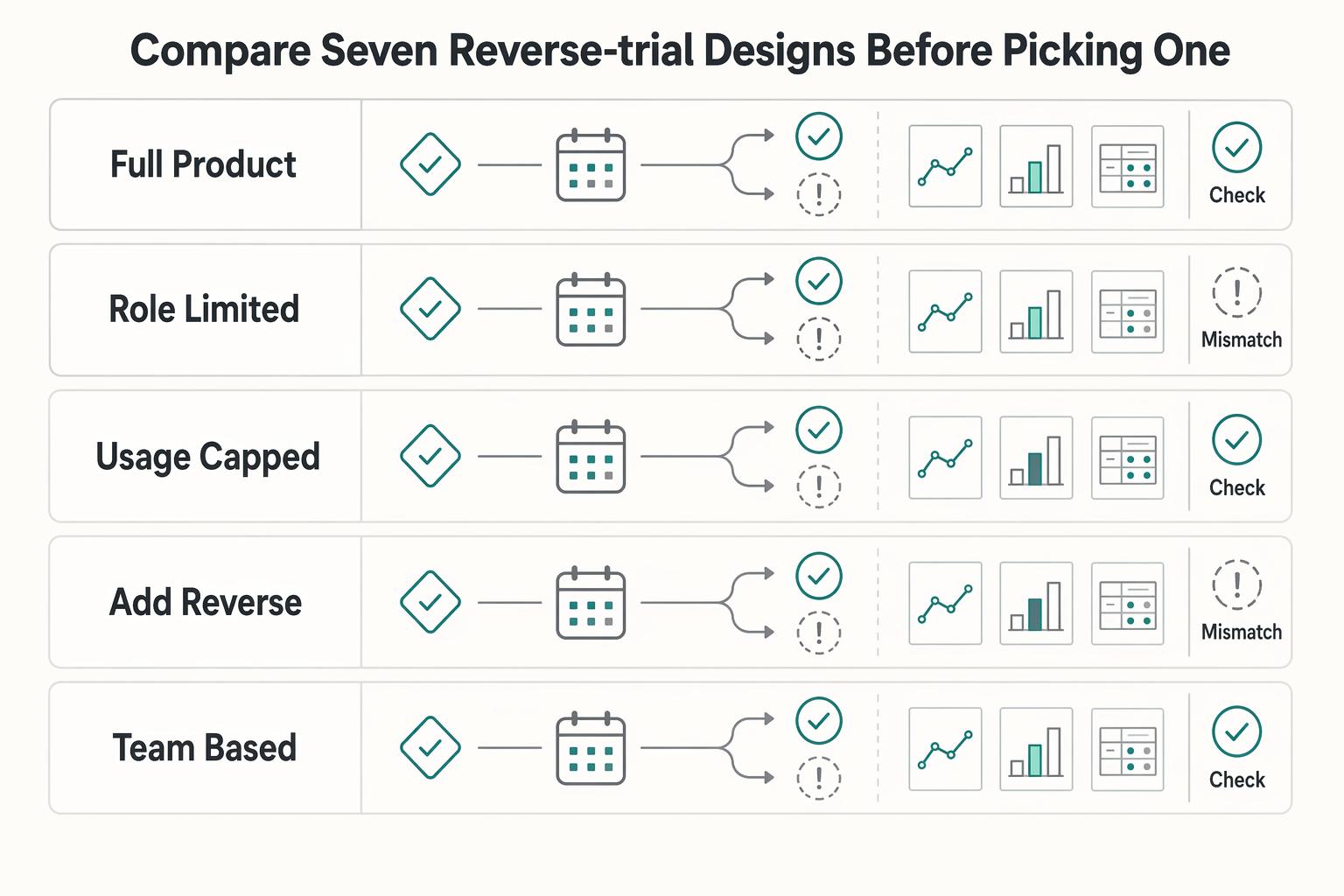
Compare seven reverse-trial designs before picking one#
Compare downgrade continuity first, then feature exposure. If two designs can show value in a typical 14-day window, choose the one with the cleaner move from Paid Plan to Free Plan and the clearer read on free-to-paid conversion within six months.
These are testable design patterns, not benchmark winners. In ChartMogul's January 2026 sample of 200 software products, only 7% used reverse trials, so treat this as an operating framework, not a standard taxonomy.
| design | best for | key pros | key cons | concrete use case | primary failure mode |
|---|---|---|---|---|---|
| Full-product Reverse Trial | Self-serve products where one user can reach premium value quickly. | Fast paid-vs-free contrast, simple offer, broad discovery. | Do not use when usage-driven costs or support load rise fast from low-intent signups. | A solo operator uses premium automation or reporting during trial, then continues on a usable free tier. | Users explore broadly but miss the core outcome before downgrade, so conversion stalls. |
| Role-limited Reverse Trial | Multi-user products where admin value is clear but broad premium access is expensive. | Shows premium controls while containing seat-level cost and support demand. | Do not use when each role needs heavy setup help or free-role continuity is weak after downgrade. | Admin gets premium controls during trial while contributors stay on lower access. | Admin sees value, team does not, so internal buying momentum never forms. |
| Usage-capped Reverse Trial | Products with meaningful variable cost by volume, storage, or processing. | Protects Unit Economics while still proving premium outcomes. | Do not use when caps are hard to explain and support must handle repeated exception requests. | Premium processing is available up to a clear cap before free-tier limits apply. | Users hit limits before they reach clear value, then drop. |
| Add-on Reverse Trial | Platforms with a strong core and one paid capability that drives upgrade intent. | Lower exposure risk, cleaner pricing story, lighter support burden than full access. | Do not use when add-on value depends on broad platform adoption first or weak attachment economics. | Free core account plus temporary premium access to integrations or automation. | Trial validates the base product, not the paid add-on. |
| Team-based Reverse Trial | Hybrid Product-Led Growth and Product-Led Sales motions with real multi-seat potential. | Captures collaboration and admin signals tied to expansion. | Do not use when each added seat increases support cost and the sales team cannot act before downgrade. | A small team invites users during trial, then sales engages when usage signals expansion. | Setup takes too long, trial ends, shared value is never reached. |
| Compliance-gated Reverse Trial | Platforms where sensitive actions require verification before activation. | Reduces risk while keeping early premium exploration available. | Do not use when verification is slow or manual, creating high support burden and delayed value. | User explores premium workflows, then completes verification before sensitive actions unlock. | Trial time is consumed by verification delays instead of product value. |
| Sales-assisted Reverse Trial | Higher-ACV accounts that start self-serve but need commercial support to close. | Preserves product intent while enabling pricing/procurement help. | Do not use when sales cycle speed cannot match trial timing or CS absorbs too many trial accounts. | Account starts with paid-feature access; rep engages when usage crosses a defined threshold. | Product-to-sales handoff is unclear, causing friction and weak conversion attribution. |
| Final recommendation | Close calls between two viable designs. | Cleaner downgrade preserves trust; cleaner measurement improves decision quality. | Do not pick added complexity if it increases support burden or weakens Unit Economics. | Choose the option with the clearest entitlement map and six-month conversion tracking. | You launch a complex design and cannot isolate whether outcomes changed because of value or friction. |
Before launch, align product, support, and finance on one entitlement map: what changes at downgrade, what remains available, and what the user experience is after trial end. Keep instrumentation consistent across designs: trial start, first premium use, downgrade completion, retained free usage, and paid conversion in the same six-month window.
As Elena Verna warns, "a trial might not be long enough for users to derive value from more advanced features." If that matches your product, narrow exposure before extending the clock, so you protect margin and keep the Free Plan feeling like continuity.
Best for self-serve PLG teams with fast time-to-value#
1. Full-access Reverse Trial#
Use this model when one user can reach core value in the first few sessions: start with full paid-feature access, then automatically downgrade to a Free Plan at trial end. For strong Product-Led Growth products, that is usually the clearest story because users see the product work before they learn limits.
A reverse trial means paid features first, then a freemium fallback. That is often easier to understand than a fragmented Freemium package where users must decode limits upfront. A public example of the downgrade mechanic is Calendly's 14-day trial flow, which states accounts are automatically downgraded to the Free tier when the trial ends.
This works best when value is immediate for a solo user, without waiting on team rollout, procurement, or implementation. Canva- or Calendly-like self-serve experiences are useful reference points for fast solo value, but do not assume they use the same downgrade setup.
The tradeoff is operational, not theoretical:
- Pros: fastest value demonstration, clearer Paid Plan vs Free Plan contrast, simpler commercial narrative.
- Cons: broader entry can pull in lower-intent users; weak onboarding can raise support and infrastructure load before paid conversion.
Before launch, confirm two things:
- Activation checkpoint: qualified users hit a premium action tied to first value during onboarding.
- Downgrade clarity: your team can explain exactly what changes at downgrade, what stays visible, and what users see after the auto-downgrade.
If users are not reaching core value, tighten the exposed premium surface before extending trial length. Full access works when it is still focused on the fastest path to value.
Related reading: Full-Time RVing on a Budget for Freelancers Who Need Reliable Cashflow.
Best for hybrid PLG and Product-Led Sales motions#
2. Team-scoped Reverse Trial with sales assist#
Use this model when self-serve starts adoption, but paid conversion depends on an account-level buying process. A team-scoped Reverse Trial lets product usage surface intent first, then hands high-intent accounts to Product-Led Sales before downgrade.
The handoff should be PQL-led and account-scoped, not based on one active user. That fits how B2B purchases actually happen: Forrester reports an average of 13 people involved in a buying decision, and 89% of purchases involve two or more departments. In that context, pure self-serve often needs sales assist once approvals, rollout, and commercial terms enter the process.
This setup is a strong fit for accounts that start self-serve, then ask for admin controls, approval paths, or invoicing before committing to a Paid Plan. Those signals usually indicate multi-stakeholder evaluation, not casual trial activity.
The upside is better qualification before downgrade and a cleaner move from product usage to commercial conversation. The tradeoff is operational overhead: product, sales, and finance need one shared operating model, or accounts get conflicting messages.
To keep execution clean:
- Define PQL handoff triggers before launch (account behaviors, follow-up owner, and late-trial trigger handling).
- Set clear downgrade notices early (what changes at trial end, whether access moves to a Free Plan, and when sales engagement can affect timing).
- Route high-intent accounts through one conversion window so product nudges, SDR outreach, and billing messages do not collide.
Use one practical checkpoint: confirm your PQL definition is account-scoped. If activity is limited to a single champion, treat sales handoff readiness as uncertain.
The common failure mode is ownership drift across product, sales, and finance. With 86% of B2B purchases reported as stalling during the buying process, unclear handoff rules increase deal risk quickly.
For a step-by-step walkthrough, see Best Lead Generation Tools for B2B SaaS Operators.
Best for regulated or finance-heavy platforms with policy gates#
3. Compliance-gated Reverse Trial#
Use this model when users can experience core product value early, but charges, payouts, or fund movement must stay gated until verification is complete. In this setup, a Reverse Trial gives broad product access first while keeping sensitive capabilities locked behind policy checks.
| Source | Requirement | Applies to |
|---|---|---|
| Adyen | User verification is required before payments or payouts can be processed | Payments or payouts |
| Stripe Connect | Verification information is required before charges and payouts are enabled | Charges and payouts |
| 31 CFR 1010.230 (U.S.) | Identify and verify beneficial owners of legal-entity customers and include those procedures in AML programs | Legal-entity customers |
The operating rule is straightforward: treat capability unlocks as the trial milestones, not elapsed trial days. Adyen requires user verification before payments or payouts can be processed, and Stripe Connect requires verification information before enabling charges and payouts, so "full access" should not imply unconstrained financial actions.
If your flow includes legal-entity onboarding, account for beneficial-owner verification requirements where applicable. In the U.S., 31 CFR 1010.230 requires covered financial institutions to identify and verify beneficial owners of legal-entity customers and include those procedures in AML programs (current page view up to date as of 3/27/2026).
The tradeoff is execution speed versus control. This design can improve trust and reduce compliance risk, but progression slows quickly when users cannot tell what is blocked, why, and what is still missing. Adyen also notes verification deadlines and potential capability loss when issues are not resolved, so milestones should track submitted information, cleared reviews, and enabled capabilities.
Before launch, confirm:
- Gated capabilities are named clearly in-product (for example, charges, payouts, or fund movement).
- Users can see verification status, missing information, and any deadline to resolve issues.
- Your audit trail can reconstruct downgrades, approvals, retries, who changed account state, and when.
Most conversion disputes happen when commercial status and compliance status get blurred. An account can be ready to pay, or already on a Paid Plan, while still not approved for the action it actually needs.
Best for margin protection when free usage can get expensive#
4. Add-on or usage-capped Reverse Trial#
Use this design when trial usage can outpace revenue: keep premium outcomes visible, but cap the cost driver. In a Reverse Trial, users get paid-feature access for a limited period, then choose a Paid Plan or downgrade to a Free Plan. For margin protection, full access should mean meaningful exposure, not unlimited consumption.
Where the prior design managed policy risk, this one manages Unit Economics. Usage caps define what a plan includes, and they work best when thresholds map to real usage, cost, and value. On a B2B Platform with expensive workflows, bound exposure by role, volume, or feature class so users can evaluate value without open-ended variable cost.
A concrete pattern is a volume cap such as 10,000 transactions/month: enough to demonstrate real workflow value while preserving upgrade signals if usage grows.
What to cap and what to keep visible#
- Keep premium outcomes visible: advanced workflows, output quality, reporting, or automation that explains why the Paid Plan exists.
- Cap the margin driver: API calls, transaction volume, processing runs, or high-cost permissions.
- Make post-trial behavior explicit: what remains on the Free Plan, what shrinks, and what requires paid access.
Execution quality matters. Effective caps depend on accurate metering, visibility, threshold alerts, and an easy upgrade path. If limits can hard-stop actions when exceeded, communicate that clearly before users hit the boundary and show remaining usage in-product so the move to paid is predictable.
Mistakes that make reverse trials look good but convert poorly#
Reverse trials usually underperform for execution reasons, not because the model is inherently weak. The common pattern is benchmark copying, weak downgrade design, conversion-only measurement, and split ownership.
- Copying public benchmarks as operating targets
Use Elena Verna, Amplitude, Inflection.io, and r/SaaS as inputs, not forecasts. In ChartMogul's January 2026 sample of 200 B2B software products, there was a 10x conversion difference between top and bottom self-serve performers, and the median free-to-paid rate was 8%. Pressure-test any borrowed benchmark against your segment, buying motion, and time-to-value reality before you treat it like a target.
- Treating downgrade design as cleanup work
A Reverse Trial gives paid-feature access first, then falls back to Freemium. If the Paid Plan to Free Plan transition is unclear, users cannot tell what remains, what stops, or what changes. Define downgrade entitlements and user-facing states before launch, and validate against the three freemium failure modes a16z flags: too generous free tier, too restrictive free tier, or too expensive entry paid tier.
- Optimizing only for top-line conversion
Free-to-paid conversion is often measured in a defined window (for example, six months), but that number alone can overstate success. ChartMogul notes model differences can disappear after including signup rates, and Amplitude highlights that low usage can limit advocacy. Treat conversion as one signal alongside retained usage quality and post-trial account health.
- Skipping real cross-functional ownership
Reverse-trial pricing outcomes are harder to sustain when product, revenue, and finance run separate success definitions. Bain's point is straightforward: results stick when cross-functional alignment is real. Use one shared success framework and review cadence so launch decisions and commercial outcomes stay connected.
If you want a deeper dive, read How to Offer Free Trials That Convert: Design Rules for B2B Platform Operators.
Conclusion#
If you are still deciding, make the call on fit, not on headline conversion claims. The right reverse-trial design is the one your buying motion, support model, and margin profile can actually carry after launch.
- Pick the design that matches how customers really buy.
A full-access trial can work when your Product-Led Growth motion helps users reach value quickly and the downgrade from Paid Plan to Free Plan is clean. If your accounts regularly need sales involvement before they buy, treat it as Product-Led Sales and design around team intent, not solo usage. The practical rule is simple: when two options look close, choose the one with the clearer downgrade path and fewer entitlement edge cases.
- Use one scorecard across product, sales, and finance.
Reverse-trial results are easier to trust when everyone agrees on what a good conversion actually is. Product should care about activation and retained use of the paid features users saw during the trial. Sales should care about qualified handoffs and expansion potential. Finance should care about cost to serve, support burden, and whether free usage is getting expensive. That shared view matters because conversion alone is incomplete. Signup volume also matters, and public 2026 benchmarks show a median free-to-paid conversion of 8% across 200 products with a 10x gap between top and bottom performers. That spread is your warning not to copy someone else's target.
- Run one controlled test before you scale anything.
Start with a single segment, one reverse-trial design, one downgrade policy, and explicit success criteria. Your evidence pack should include the exact downgrade logic, the notices users will see before expiry, what remains in the Free Plan, what stops from the Paid Plan, and what data or admin permissions change after downgrade. Also define checkpoints up front: signup rate, paid conversion, retained usage after upgrade, support tickets per converted account, and cost to serve during the trial window.
The main failure mode is easy to miss: the test "works" because paid conversion looks healthy, but signup quality, support load, or premium usage costs quietly damage Unit Economics. Another red flag is misalignment between sales and product once high-intent accounts appear, because that can stall growth. If you want a next step, run one controlled test, review the downgrade experience account by account, and scale only after you can prove the model holds up for conversion quality and economics, not just for top-line lift.
Frequently Asked Questions
What is a reverse trial in a B2B platform context?
A reverse trial gives a new account access to paid features first, then moves it to a Free Plan unless the customer upgrades. In a B2B Platform, that only works if a real lower tier exists after the trial. It is not the same as a standard Free Trial on a product with only one usable tier. Before launch, verify exactly which entitlements, data states, and admin controls remain after downgrade.
Reverse trial vs freemium vs free trial: which model should we test first?
Start with Free Trial or Freemium unless your product shows value quickly in paid features and has a clean Paid Plan to Free Plan transition. ProductLed says 75% of companies first adopting PLG choose free trial or freemium, and one 2026 sample found 57% used free trial, 26% freemium, and just 7% reverse trial. If onboarding is slow or implementation-heavy, reverse trials can underperform, so test scope carefully before exposing full paid access.
What trial length usually works when users get full paid-feature access?
There is no universal best length. In a 2026 dataset covering 200 B2B software products, 14 days was the most common trial length for 62% of products, but Amplitude notes that reverse trials weaken when users need more time to realize advanced-feature value. If users are not reaching value quickly, treat trial length as a test variable rather than a fixed rule.
Which metrics matter most beyond paid conversion rate?
Watch paid conversion alongside signals that users actually reached value in the paid features during the trial. Reverse trials are weaker when advanced-feature value takes longer to realize, so activation and time-to-value indicators are important context for conversion. It is also useful to track what usage looks like after fallback to the Free Plan.
Are public benchmark claims on reverse trials reliable enough to plan around?
No, not on their own. Public benchmark writers make the same point: what counts as good depends on your model, pricing, and audience, so the numbers are contextual rather than universally transferable. Use them directionally, then validate against your own segment and funnel behavior before setting targets.
Who should avoid reverse trials even if competitors are using them?
Be careful if your product has long implementation cycles or if users need significant time to realize advanced-feature value. Reverse access is a weaker fit when value takes too long to become obvious during the trial window. In those cases, test a standard free trial or freemium approach first.
How should we design downgrade messaging so trust and conversion both improve?
Be explicit early, then repeat the message before expiry. Trial-ending notifications and pre-expiry emails are a real communication control, and vendors like Recurly and Chargebee position them as a way to improve transparency and upgrade outcomes. Tell users the exact end date, what remains in the Free Plan, what stops from the Paid Plan, and whether any data or admin permissions change. Vague downgrade copy is the failure mode to avoid.
Try a related tool
Researched and edited by the Gruv editorial team. Gruv builds cross-border billing, payouts, and finance-operations software for global businesses.
Sources
Includes 6 external sources outside the trusted-domain allowlist.
- ecfr.gov/current/title-31/subtitle-B/chapter-X/part-1...trusted
- chartmogul.com/reports/saas-conversion-reportexternal
- docs.adyen.com/platforms/verification-overviewexternal
- inflection.io/post/complete-guide-to-reverse-trialsexternal
- openviewpartners.com/blog/your-guide-to-reverse-trialsexternal
- productled.com/blog/we-fix-the-free-trial-you-fixed-why-plg...external
- reforge.com/guides/build-a-b2b-plg-monetization-strategyexternal
Educational content only. Not legal, tax, or financial advice.
Related Posts
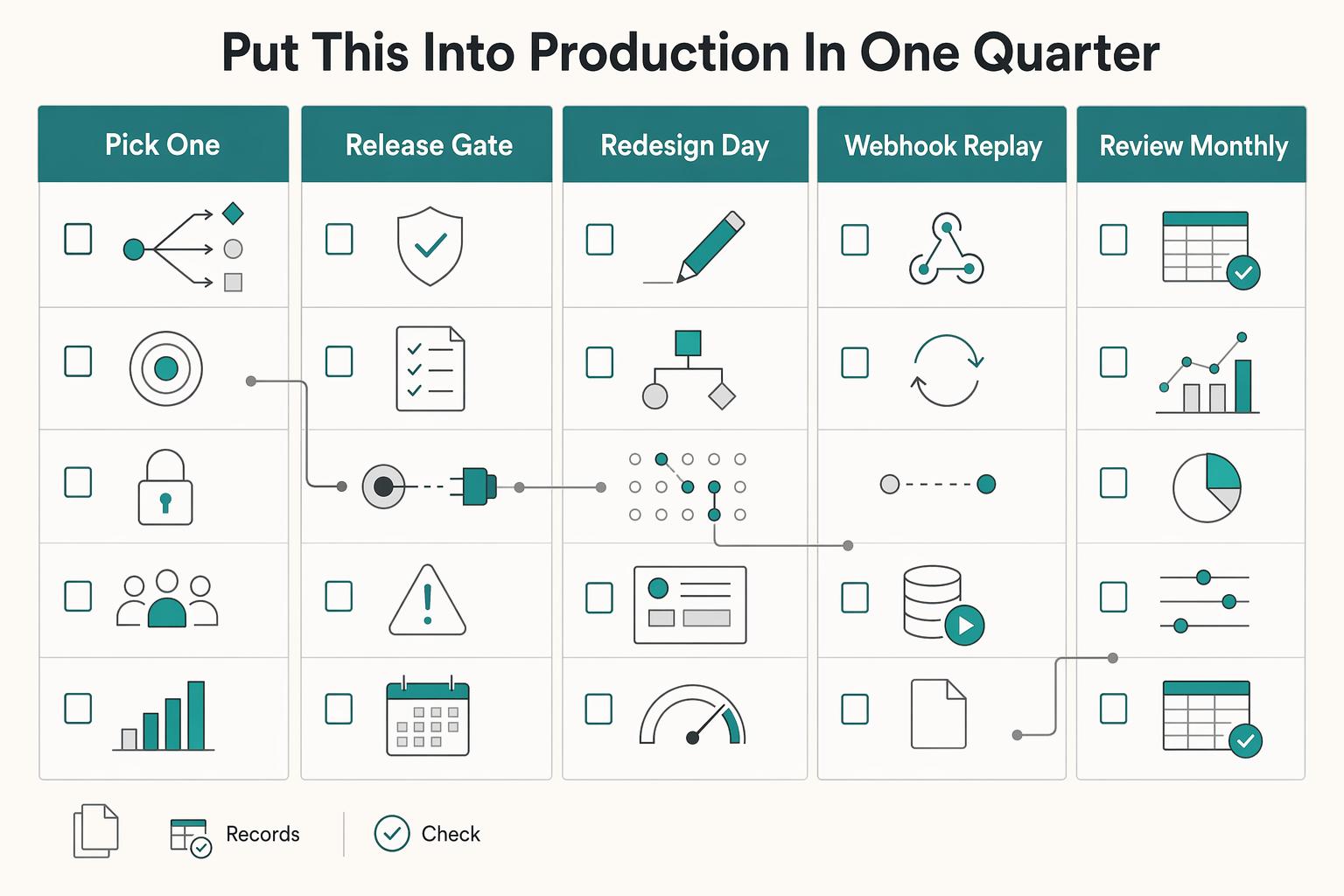
How B2B Platform Operators Design Free Trials That Convert Profitably
The main mistake is simple: teams often optimize for more starts when they should optimize for more profitable paid customers. In B2B SaaS, **trial-to-paid conversion rate** is the share of trial users that become active paying customers in a defined period. That number only matters if the customers who convert are the right ones for your business.
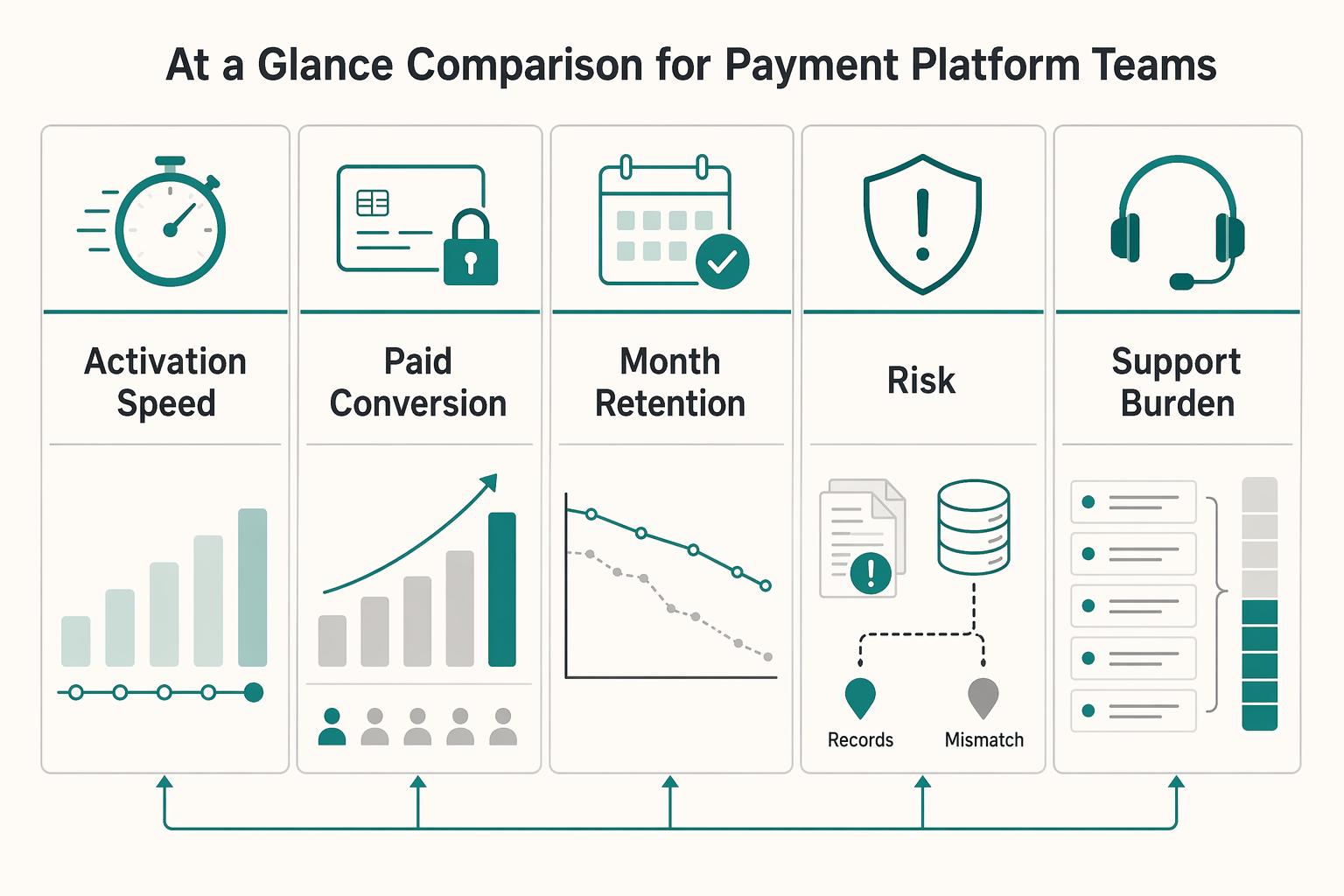
Freemium vs. Free Trial vs. Reverse Trial: Which Acquisition Model Works for Payment Platforms
If you are choosing between **freemium, free trial, and reverse trial** for a payment platform, signup lift is easy to measure and easy to overvalue. The better choice comes from conversion quality, retained revenue, downgrade behavior, abuse exposure, and the operating load your team can actually support.
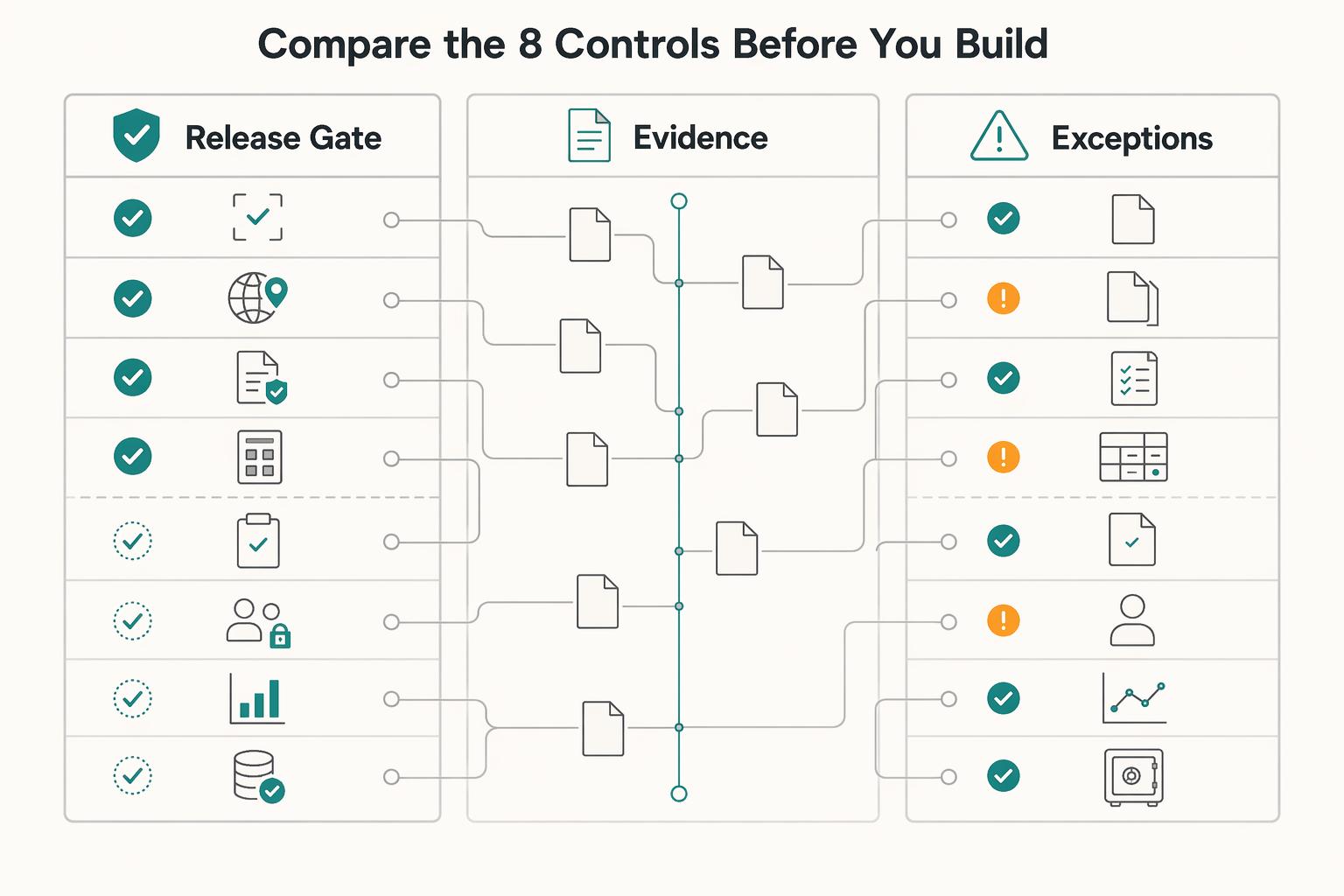
VAT Reverse Charge Controls for B2B Marketplace Operators
For cross-border B2B platforms, a common risk is not just recognizing the phrase "reverse charge." It is being able to show why a treatment was used, who owned the decision, and what happens when the facts do not fit the default path. This guide focuses on those controls so decisions can hold up at invoice, filing, and audit time.