
Quick Answer
Choose based on cash behavior and control tradeoffs, not headline cost. For revenue-based financing platforms alternative vc decisions, use Revenue-Based Financing when recurring revenue quality is strong and founder ownership is a hard priority, use Venture Capital when speed and strategic support matter more than dilution, and use Conventional Debt Financing when fixed obligations are safe under stress. Before selecting any path, verify one reconciled monthly view of MRR, churn, gross margin, and CAC payback.
How Revenue-Based Financing Compares With VC and Debt#
There is no universally cheaper or more founder-friendly option here. The right choice is the one your monetization model can carry when growth slows, margins tighten, or investors start asking for proof.
This article is a decision aid for operators, not a funding pitch. The comparison is intentionally simple. Each option is judged by what it structurally asks from your business. Can you repay from live revenue, as with Revenue-Based Financing? Are you willing to trade ownership for capital, as with Venture Capital? Or can you carry fixed repayments and possible collateral requirements, as with conventional debt?
- Revenue-Based Financing
RBF ties repayment to a fixed share of future revenue until an agreed total is repaid. The practical difference is that payments move with performance instead of staying fixed, and there is no direct ownership transfer the way there is with equity. That can preserve founder ownership while repayment tracks performance.
- Venture Capital
VC is private equity investment in exchange for shares in the business. It is commonly used to help companies scale an existing business or build new products and services. The tradeoff is straightforward: equity is dilutive, so your ownership goes down.
- Conventional Debt Financing
Term-loan style debt usually comes with a fixed repayment schedule and often collateral requirements. Its strength is predictability. You know the payment shape upfront, but the obligation does not flex with revenue performance. That rigidity and asset-based underwriting can make debt unattainable for many firms.
The lens here is unit economics, not theory. Look at the mechanics behind your pricing model, revenue visibility, gross margin, and how quickly customer acquisition pays back. A platform with recurring revenue and stable retention may tolerate different funding terms than a business still testing packaging, pricing, or take rate.
One early checkpoint matters more than most founders expect: can you defend your revenue story with clean operating evidence? If you cannot reconcile monthly revenue trends, retention movement, and margin changes with confidence, any financing path can get harder. In that case, the right move is often to fix reporting first, then choose capital from a position of clarity rather than urgency. We covered this in detail in Usage-Based Billing for B2B SaaS Platforms That Teams Can Operate.
Selection criteria and who this list fits#
Use one gate before comparing options: if your revenue signals are weak, delay financing selection and fix reporting first. Underwriting decisions rely on borrower financial data, so unclear data weakens your position.
- Good fit: your core metrics are measurable every month
This list fits teams with clear unit economics, a defined pricing model, and consistent monthly visibility into MRR, churn, and gross margin. MRR is predictable monthly recurring income, churn is customers or recurring revenue lost in a period, and gross margin shows revenue left after COGS. If you cannot reconcile these monthly, you are choosing financing with incomplete evidence.
- Not a fit yet: you are still validating the model
If you are pre-revenue, still changing monetization frequently, or lack clean cohort data for CAC payback, this list is early. That does not mean you cannot raise capital. It means repayment-based screening is often a mismatch until your data is stable. As one provider example, Lighter Capital lists at least $200K ARR and low revenue concentration as eligibility signals, which shows how quickly revenue quality becomes a screen.
- Use one scorecard across all options
Compare RBF, VC, and debt with the same five criteria: founder ownership impact, equity dilution risk, repayment pressure, financial covenants burden, and speed to cash. Equity fundraising dilutes ownership percentage, and debt often includes covenant terms that can create technical-default risk if breached. Keep one consistent monthly dataset across all three paths, including cohort retention and CAC payback; if the numbers shift by audience, pause outreach and clean reporting before underwriting.
Side by side comparison of RBF VC and debt#
Start with cash behavior and control rights, not headline cost. RBF links repayment to revenue, VC trades ownership for capital with investor consent rights, and conventional debt adds fixed-payment and covenant pressure when performance is uneven.
| Option | Non-Dilutive Growth Capital | Control rights | Repayment behavior | Downside in a revenue dip | Revenue Concentration Risk tolerance | Required MRR consistency | CAC Payback sensitivity | Likely Financial Covenants | Best for | Watch out for | Fails when |
|---|---|---|---|---|---|---|---|---|---|---|---|
| Revenue-Based Financing | Usually yes. No equity issuance in the basic structure. | Unknown upfront; provider-specific. Rights and restrictions are not standardized. | Repayment is a share of future revenue, not fixed installments. One market guide cites 2% to 8% of monthly revenue until a cap, often 1.1x to 1.5x of the advance; treat these as provider-specific examples. | Payments can decline with revenue, but the obligation remains and payoff can take longer. | Often screened closely. Providers may review customer concentration, churn, MRR growth, and net revenue retention. No universal cutoffs. | Usually important because underwriting looks at recurring-revenue quality, not a single strong month. | Meaningful. Longer payback can reduce room to reinvest while revenue share is active. | Unknown and customized. Do not assume a standard covenant package. | Stable recurring-revenue teams that want growth capital without dilution. | Repayment drag when churn rises, concentration risk increases, or expansion slows. | Revenue is lumpy or concentrated, or MRR/retention reporting is unreliable. |
| Venture Capital | No. Equity is dilutive by design. | Can be material. Protective provisions can require investor approval for specific actions, and scope is deal-specific. | No scheduled debt-style cash repayment. | No fixed installment, but weaker performance can pressure future fundraising terms and strategic flexibility. | Unknown and fund-specific. No universal underwriting template. | Unknown and thesis-specific. Consistency helps, but thresholds vary by investor and stage. | No monthly remittance, but weak payback still weakens the growth case. | Not debt covenants; control constraints are typically governance and consent rights in deal documents. | Teams prioritizing speed and scale over ownership preservation. | Dilution and consent terms that become clear only in final deal language. | Founders need to preserve ownership/control or cannot support a credible growth narrative. |
| Conventional Debt Financing | Usually yes. No direct equity dilution in standard debt. | Less direct governance than VC, but lender permissions, reporting duties, and remedies still matter. | Payments are typically fixed or pre-agreed, unlike revenue-linked RBF. | Usually the tightest downside: fixed obligations continue, and covenant compliance risk can appear before cash is exhausted. | Unknown and lender-specific. Tolerance depends on lender, collateral, and borrower profile. | Often important when repayment depends on predictable recurring cash flow; thresholds vary. | High. Long payback can create squeeze because debt service is due on schedule. | Financial covenants are common, and covenant structures are customized by borrower and lender. | Operators with auditable cash flow and strong covenant discipline. | Technical default risk, refinancing pressure, and underestimating covenant burden. | Revenue volatility, thin margins, or limited covenant headroom. |
The practical filter most teams skip: underwriting rarely stops at ARR. For RBF especially, providers may assess MRR growth, net revenue retention, customer concentration, and churn together.
If you are comparing RBF, VC, and debt, ask three direct questions early. For RBF: how is revenue defined for repayment, and which metrics set sizing? For VC: which actions require investor approval? For debt: which covenants are tested, how often, and what cure rights apply if you miss? For a related angle, read How AI Platforms Should Use Credit-Based Billing Models.
Best for stable recurring revenue platforms#
RBF is usually the strongest fit when your platform has predictable recurring revenue and enough margin to handle revenue-linked repayments without starving core growth spend.
| RBF signal | Detail | Note |
|---|---|---|
| MRR band example | $10K to $50K MRR | Cited by some providers; minimums vary by provider. |
| Operating history example | 6 to 12 months | Cited by some providers; minimums vary by provider. |
| MRR history to prepare | At least 12 months of MRR history | Show one consistent operating view before talking to providers. |
| Retention view to prepare | Retention or churn by segment | Use the same source data. |
| Margin view to prepare | Gross margin trend | Use the same source data. |
- Strong fit when recurring revenue quality is clear
These facilities are underwritten on recurring or subscription revenue, so revenue quality matters as much as the headline MRR. Providers often review retention and gross margins, and some cite entry bands like $10K to $50K MRR plus 6 to 12 months of operating history, but those minimums vary by provider. If revenue is lumpy, one-off, or hard to reconcile month to month, underwriting friction usually shows up early.
- Clear upside when ownership control is a priority
RBF is often used to raise growth capital without issuing equity, which can help preserve founder ownership versus VC. That can make it useful for measured go-to-market tests or expanding a repeatable upsell motion while keeping cap table control. Repayments still remain an obligation, even if payment size moves with revenue. One comparison source describes a common three-to-five-year repayment pattern tied to prior-month revenue, but that is not a universal term.
- Main constraint is repayment drag during weaker operating periods
Flexible payment sizing does not remove pressure. When retention or gross margin weakens, repayments can still compete with reinvestment in sales, product, and customer support. Before talking to providers, make sure you can show one consistent operating view: at least 12 months of MRR history, retention or churn by segment, and gross margin trend from the same source data.
A practical use case is a SaaS-like platform with durable margins and a repeatable upsell motion that wants to fund go-to-market experiments while preserving cap table control. If your recurring revenue quality is still unstable, fix that first.
For a payment-platform version of this financing model, see Revenue-Based Financing for Payment Platforms: How to Use Future Transaction Volume as Collateral.
Best for aggressive market capture with strategic upside#
If the bigger risk is losing the category, VC is usually the better fit because it trades dilution for speed, distribution, and strategic support in markets that can tilt toward a dominant platform.
- Strong fit when network effects reward speed
Choose VC when you are in a winner-take-most market and delayed expansion could lock you out of a durable position. In platform markets, network effects can compound into defensibility once scale is established. Over the past 30 years, VC has remained a vital funding channel for high-growth startups built around that kind of upside.
- Real advantage when capital and strategic support both matter
Venture capital financing is funding in exchange for equity, and the value can include more than cash. Early-stage companies often use VC for capital plus coaching and strategic guidance. Review governance terms early: common VC document sets include a Certificate of Incorporation, Stock Purchase Agreement, Investors' Rights Agreement, and Voting Agreement.
- Main tradeoff is dilution plus governance pressure
Equity dilution means your ownership percentage drops when new shares are issued, and governance expectations can raise execution pressure. If retention, margin quality, or monetization discipline is still fragile, growth targets can outrun unit economics. Large upside is possible in strong network-effect businesses, but high-margin marketplace outcomes like 70% (eBay) and 60% (Etsy) are examples of what has happened, not a forecast for your platform.
A concrete use case is a marketplace trying to lock in supply and demand at the same time, where slower rollout would let a rival become the default venue. In that situation, VC can be the better choice when reduced founder ownership is less risky than ceding market leadership.
Related: Revenue Recovery Playbook for Platforms: From Failed Payment to Recovered Subscriber in 7 Steps.
Best for disciplined operators with collateralizable cash flow#
Conventional debt is usually the better fit when your platform has auditable cash flow and you need operating efficiency, not speed-at-all-costs growth. The tradeoff is direct: you avoid equity dilution, but you take on fixed legal payment obligations, covenant constraints, and refinancing risk if performance slips.
- Strong fit when cash inflows are verifiable, not just forecast
Debt is most workable when lenders can verify stable collections and clean reporting from recorded revenue to cash received. That matters because debt requires interest payments and, in most cases, principal repayment regardless of whether growth is on plan. For a payments-oriented platform, reliable transaction volume and conservative burn typically matter more than narrative upside.
- Most useful for working-capital efficiency, not speculative expansion
Debt is non-equity capital, so lenders do not take direct ownership the way equity investors do. Under common cost-of-capital framing, debt can also be cheaper than equity, which is why it is often used for short- and long-term working capital and refinancing existing business debt. As a mainstream benchmark, most SBA 7(a) loans have a maximum size of $5 million, and eligible uses include working capital and refinancing. Use debt to smooth operations, not to force growth your unit economics cannot support yet.
- Main risk is covenant pressure plus refinancing stress during volatility
The downside is not only a missed payment. A covenant breach can reduce flexibility when you need it most. Federal Reserve research notes that stricter covenant structures can allow banks to reduce existing commitments after breaches during tightening, and covenant-related effects accounted for over one-third of the total decline in credit during recent federal funds rate hikes. Underwrite beyond the headline rate: review covenant terms, reporting cadence, cure mechanics, and maturity profile, then stress-test lower transaction volume, slower collections, and higher rates. If refinancing is part of the plan, assume renewal terms may worsen.
For disciplined operators, the decision rule is simple: if cash conversion is dependable and debt is funding working-capital efficiency, debt can be cleaner than VC or RBF. If a two-quarter revenue wobble could put covenants or refinancing at risk, reduce operating volatility before borrowing.
For a step-by-step walkthrough, see ASC 606 Revenue Recognition for Merchant of Record Platforms.
Disqualifiers and red flags before lender outreach#
Treat these as hard gates, not cleanup items. If one is present, expect tougher underwriting, weaker terms, or a financing structure that does not match your operating reality.
| Red flag | Why it matters | Action before outreach |
|---|---|---|
| Revenue concentration plus rising churn | This is a pause-and-repair signal before RBF or debt outreach. | Stress-test a 20% revenue drop and confirm repayment still clears without cutting core operations. |
| Longer CAC payback with thin gross margin | Growth is becoming more cash-intensive as lenders look for repayment resilience. | Fix pricing, retention, or channel efficiency before borrowing if monetization cannot absorb repayment drag. |
| MRR and cohort retention do not reconcile cleanly | Metric quality is often underwritten directly, so inconsistent reporting is a negotiating handicap. | Bring one reconciled evidence set across finance reporting and cohort views by segment and month before outreach. |
| No internal agreement on dilution tolerance | Leadership misalignment can stall a real VC process once dilution tradeoffs are on the table. | Agree on what ownership loss is acceptable for speed before starting outreach. |
- Revenue concentration plus rising churn
This is a pause-and-repair signal before RBF or debt outreach. Concentration risk already changes underwriting, and rising churn increases the chance that one account loss turns into a repayment problem. Stress-test a downside case such as a 20% revenue drop and confirm repayment still clears without cutting core operations.
- Longer CAC payback with thin gross margin
If CAC payback is getting longer while margins stay thin, growth is becoming more cash-intensive as lenders look for repayment resilience. RBF underwriting commonly checks margins, burn, monthly expenses, and your buffer for slower months. If monetization cannot absorb repayment drag, fix pricing, retention, or channel efficiency before you borrow.
- MRR and cohort retention do not reconcile cleanly
Metric quality is often underwritten directly, so inconsistent reporting is a real negotiating handicap. If Monthly Recurring Revenue does not tie cleanly to cohort retention, expect more diligence and less leverage. Bring one reconciled evidence set across finance reporting and cohort views, by segment and month, before outreach. If you need help tightening that view, start with Subscription Revenue Forecasting: How Platforms Model MRR Growth Churn and Expansion.
- No internal agreement on dilution tolerance
Do not start VC outreach until leadership aligns on founder ownership boundaries. Without that alignment, you risk running an external process that stalls when real dilution tradeoffs are on the table. Set the boundary first: agree on what ownership loss is acceptable for speed, and what is not.
If billing complexity is making close and reporting harder, see Usage-Based Billing for Platforms That Holds Up at Month-End Close.
Underwriting checklist and decision checkpoints#
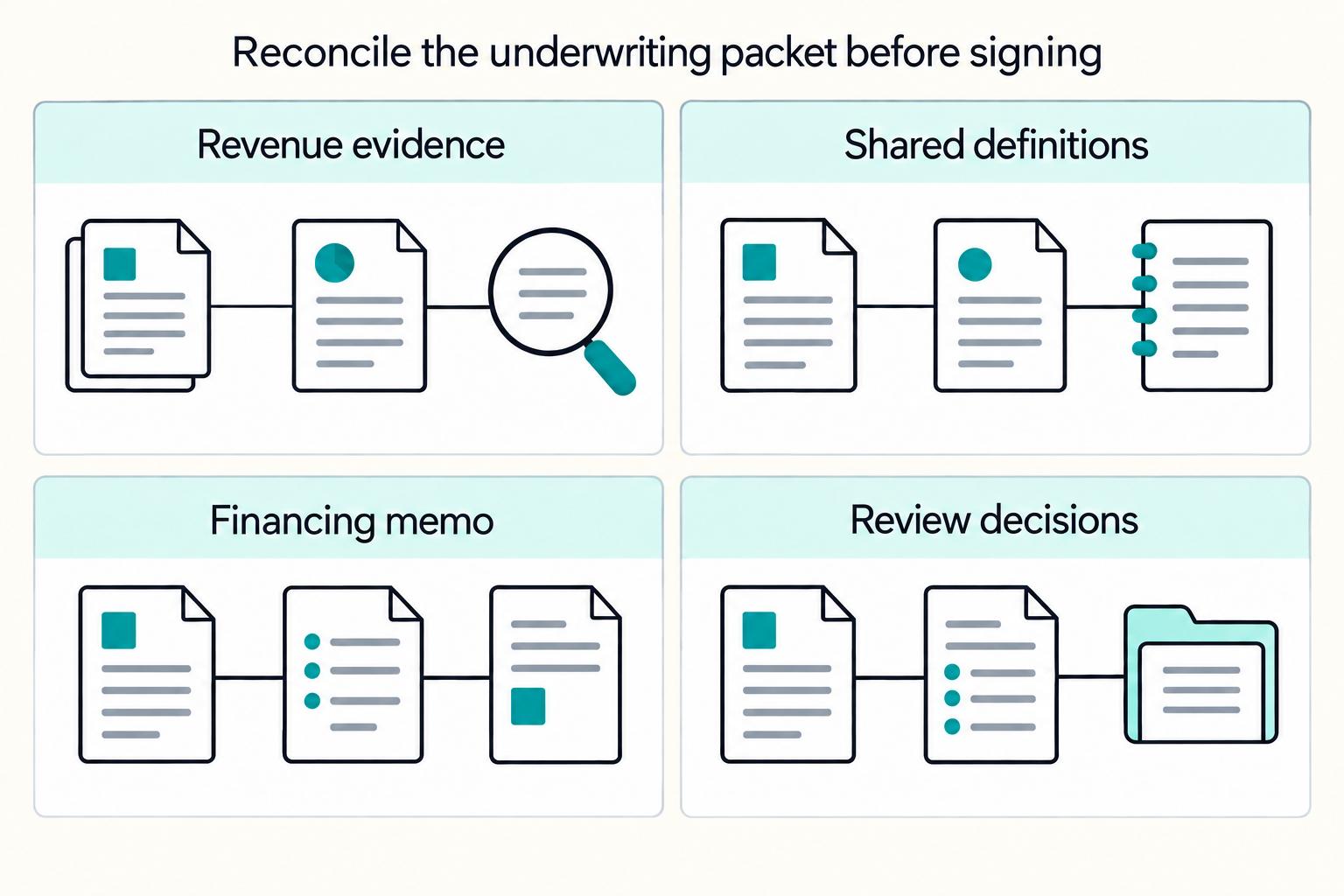
Treat this as a pre-signature gate: bring a reconciled underwriting packet, not just a narrative deck.
| Memo | What to include | Note |
|---|---|---|
| RBF memo | Downside sensitivity at -20% and -30% revenue, and repayment resilience. | If terms use a monthly revenue share, 10-15% and 120-150% of principal are illustrative stress frames, not universal terms. |
| VC memo | Dilution scenarios across this round and a likely next round. | Mark control or governance limits. |
| Debt/ARR loan memo | A covenant breach plan tied to the financial covenants being discussed. | Include monitoring ownership and response actions. |
- Build the five-part evidence pack first
Assemble it in this order: cohort-level MRR trends, churn by segment, CAC payback, gross margin bridge, and pricing model change log. This keeps the review focused on revenue durability, loss patterns, acquisition efficiency, and margin quality before anyone debates terms.
Reconciliation is the real test. Your MRR view should tie to finance reporting by month, churn cuts should use shared segment definitions, and the gross margin bridge should explain what moved margin. In recurring-revenue loan documentation, definitions around annualized revenue, revenue recognition, and financial maintenance covenants can become central quickly. If those definitions are inconsistent across teams, stop outreach and fix that first.
- Write financing-specific memos before lender outreach
Use one memo per path you are actually considering: - RBF memo: include downside sensitivity at -20% and -30% revenue and show repayment resilience. If terms use a monthly revenue share, ranges like 10-15% with a capped payback such as 120-150% of principal are illustrative stress frames, not universal terms. - VC memo: model dilution scenarios across this round and a likely next round, then mark control or governance limits. - Debt/ARR loan memo: define a covenant breach plan tied to the financial covenants being discussed, including monitoring ownership and response actions.
A useful memo proves downside handling, not just upside potential.
- Require two internal checkpoints before signing
Make both checkpoints veto points: - Finance-operator review: confirm downside liquidity under slower collections, weaker conversion, or revenue pressure. - Product-leader review: confirm monetization assumptions (packaging, billing, pricing) match the revenue profile being underwritten.
If either review finds a mismatch between liquidity resilience and monetization reality, renegotiate terms or change financing path.
To pressure-test revenue quality before you pursue financing, see 7 Revenue Leak Points in Subscription Platforms You Can Verify in 30 Days.
Conclusion#
Make this call from your monetization physics, not from what comparable startups raised last quarter. If your evidence pack does not reconcile cleanly, pause first. A weak read on revenue quality and margin resilience can make any choice between Revenue-Based Financing, Venture Capital, and Conventional Debt Financing look better on paper than it feels in execution.
- Choose Revenue-Based Financing when revenue quality is strong and control matters.
RBF is capital provided in exchange for a percentage of ongoing gross revenues, so it can fit businesses that service repayment from operating inflow rather than a future exit. It can also preserve more control characteristics than equity in some structures because the company is not required to provide investors with board seats. If your recurring revenue trends and downside case are stable enough to support repayments while preserving product and retention spend, this can be a cleaner, lower-dilution path.
- Choose Venture Capital when strategic upside matters more than near-term ownership.
Equity financing means selling a portion of the business for capital, and dilution means existing holders own a smaller percentage after new shares are issued. That trade can be rational when monthly repayment pressure is the bigger constraint. If leadership is aligned that founder ownership can decline in exchange for faster expansion, VC can be the honest answer. If the team is still arguing about dilution tolerance, do not start outreach yet because that misalignment will likely surface in term discussions.
- Choose Conventional Debt Financing when cash flow is auditable and fixed obligations are acceptable.
Debt financing is borrowed capital that must be repaid, often with interest, and lenders typically require repayment on a fixed schedule. That structure can work well when the use of funds is narrow and predictable. One concrete example is the SBA 504 program, which offers long-term, fixed-rate financing for major fixed assets with financing noted up to $5 million and a maximum loan amount of $5.5 million, though that should not be treated as representative of all debt products. If your business can absorb scheduled payments without depending on optimistic growth assumptions, debt can be a better fit than equity.
Your final checkpoint is simple. Reconcile your revenue metrics to finance reporting by month, review your margin bridge, and stress test a revenue dip before you sign anything. The common failure mode is not choosing the wrong category in theory. It is taking on a structure your current economics and execution discipline cannot actually carry.
Frequently Asked Questions
Is Revenue-Based Financing better than Venture Capital for a platform business?
Not by default. RBF is often a fit when your platform has predictable, consistent revenue and you want capital without giving up ownership, while VC is a fit when you are willing to trade ownership for growth capital. A practical rule: if the business can support repayment from revenue, RBF may fit; if dilution is acceptable for equity funding, VC may fit better.
When should a platform choose Revenue-Based Financing over Conventional Debt Financing?
Pick RBF when you want repayment tied to business performance instead of a traditional fixed repayment schedule, especially if you want to avoid collateral-heavy term-loan structures. Conventional debt can be a better fit when the business can handle fixed obligations. If a fixed monthly payment would feel tight in a soft quarter, a revenue-linked structure may be more workable.
What metrics do RBF providers usually care about most in underwriting?
They usually look beyond top-line growth and ask whether revenue is predictable and consistent, plus whether customer concentration creates avoidable risk. In practice, be ready to show stable revenue patterns, clear reporting, and a diversified customer base.
What are the main risks of using RBF during a growth slowdown?
The first risk is repayment drag. Even when payments adjust with performance, cash still leaves the business at the same time you may need to protect retention, support, and core product work. Stress-test slower periods before you sign so the structure still leaves enough operating room.
How do Equity Dilution and Founder Ownership trade off against repayment pressure?
VC is dilutive, so founders give up ownership share in exchange for capital. RBF can preserve ownership, but the tradeoff is repayment pressure on operating cash. If control is your hard line, protect ownership with non-dilutive capital only after you verify the business can carry the repayment load.
Can a platform mix VC and RBF at different stages without creating financing conflicts?
Yes, that mix can make sense because RBF can work instead of VC or alongside it in the same financing journey. Do not assume the combination is automatically clean. Before layering the two, have finance and counsel review financing documents and reporting obligations so a new repayment structure does not conflict with investor expectations.
Try a related tool
Researched and edited by the Gruv editorial team. Gruv builds cross-border billing, payouts, and finance-operations software for global businesses.
Sources
Includes 1 external source outside the trusted-domain allowlist.
- drexel.edu/nowak-lab/publications/newsletters/2024/the-...trusted
- federalreserve.gov/econres/feds/monetary-policy-exposure-of-ban...trusted
- hbs.edu/faculty/Pages/item.aspxtrusted
- investor.gov/introduction-investing/investing-basics/inve...trusted
- sba.gov/funding-programs/loans/504-loanstrusted
- sba.gov/partners/lenders/7a-loan-program/terms-condi...trusted
- stripe.com/resources/more/what-is-monthly-recurring-rev...trusted
- corporatefinanceinstitute.com/resources/career-map/sell-side/capital-marke...external
Educational content only. Not legal, tax, or financial advice.
Related Posts
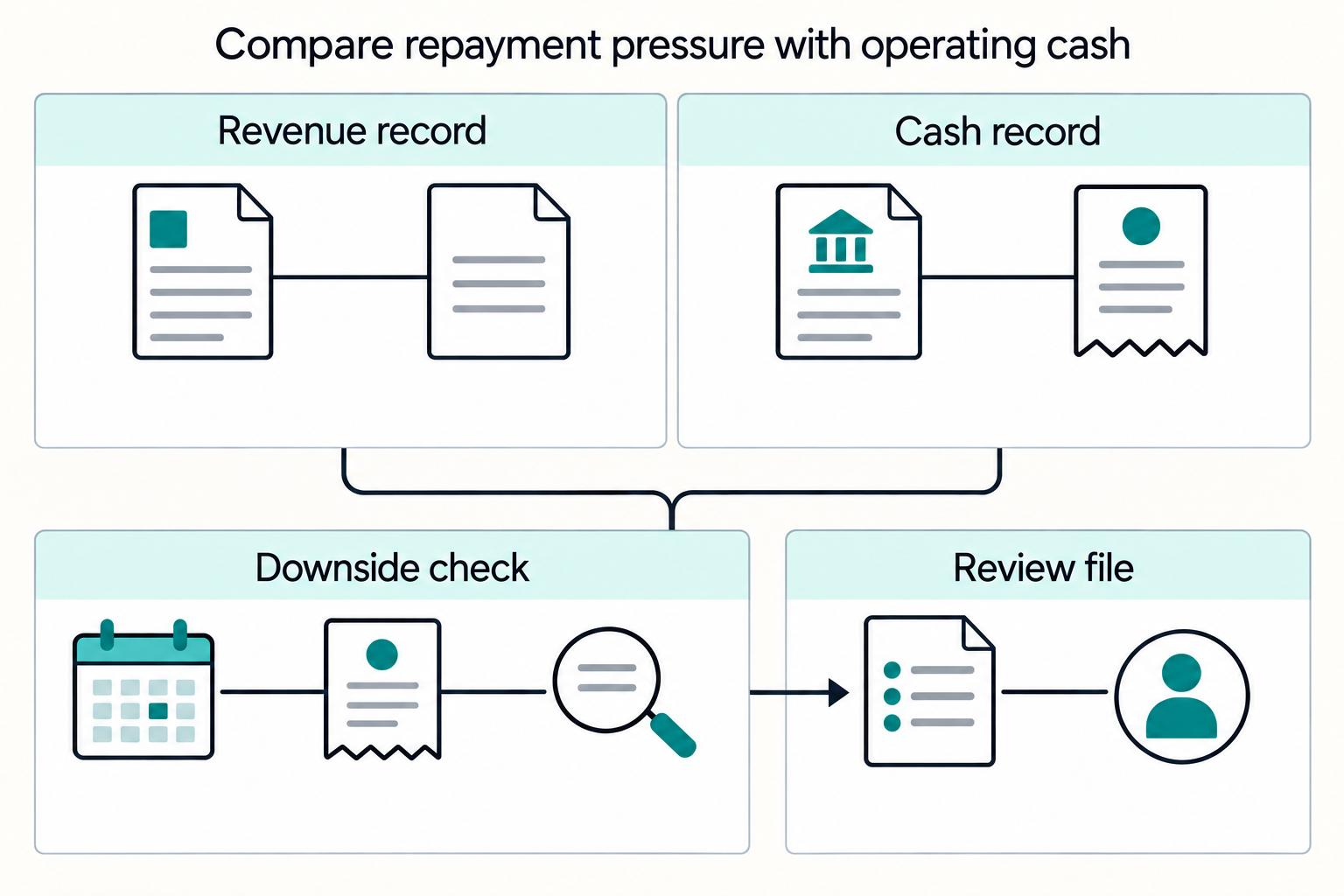
Revenue-Based Financing for Payment Platforms: How to Use Future Transaction Volume as Collateral
Revenue-based financing (RBF) can fit a payment platform with real revenue that wants growth capital without equity dilution. It only works if the repayment structure matches how cash actually comes in.

Subscription Revenue Forecasting for Platform Teams Modeling MRR Churn and Expansion
A usable forecast starts with shared definitions, not sharper formulas. If finance, ops, and product define MRR, Expansion MRR, or churn differently, the model can look precise and still fail the first serious review.
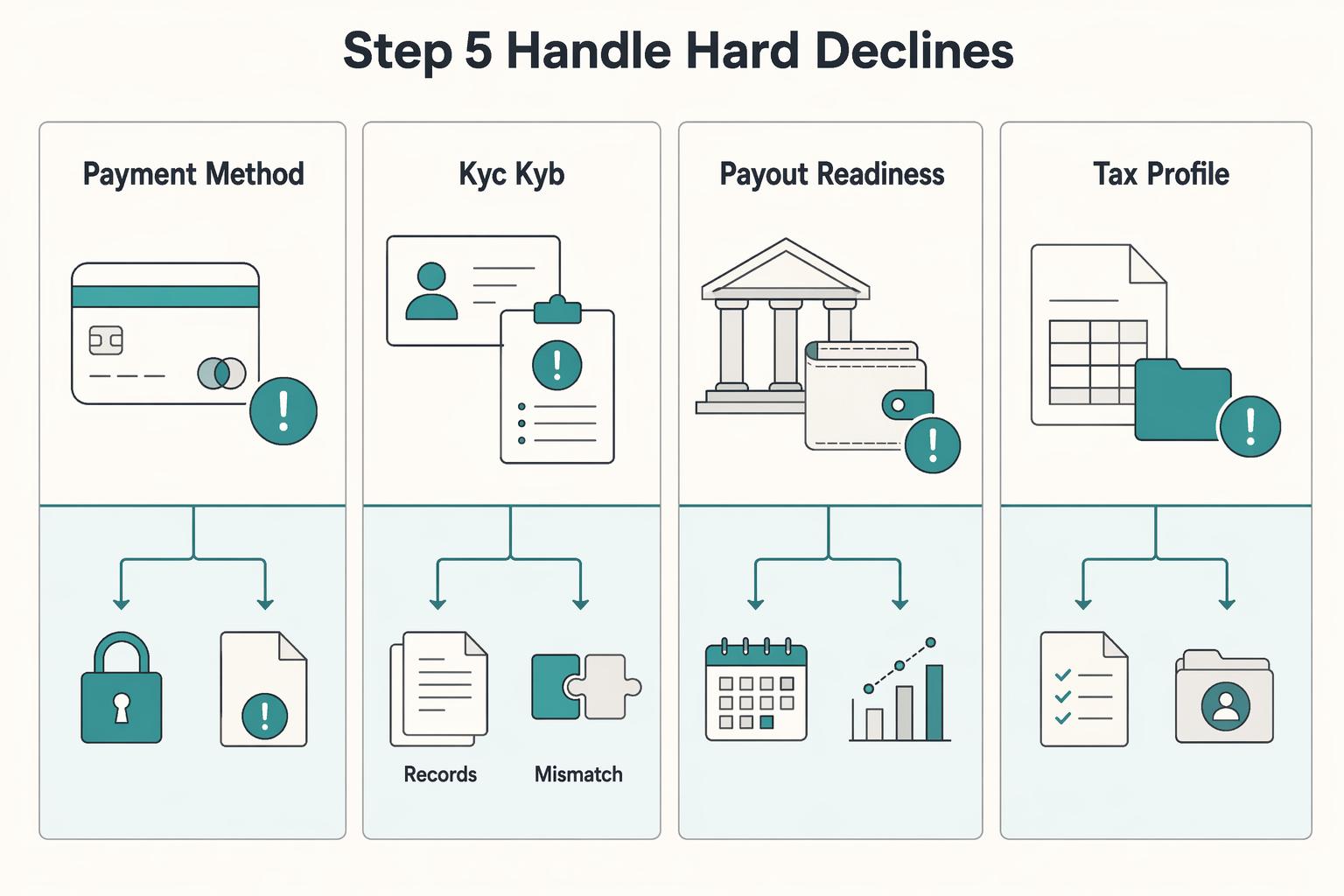
Revenue Recovery Playbook for Platforms: From Failed Payment to Recovered Subscriber in 7 Steps
Failed payment recovery is an involuntary churn problem, not just a card-retry setting. On a marketplace platform, one failed renewal can still turn into a lost subscriber when product, engineering, and operations are not running the same recovery process.