
Quick Answer
Define one enforceable flow first: eligibility checks, attribution decision, commission approval, payout instruction, and settlement confirmation. For each commissionable referral, store a stable referral ID, timestamps, rule version, approval reason, and payout reference so disputes are resolvable from records instead of screenshots. Keep one trigger event per offer, run a narrow pilot with one segment, and scale only after weekly reviews show exceptions can be explained from exports and ledger history.
Set Referral Rules and Commission Tracking Up Front#
Referral program commission tracking on a gig platform starts with reconciliation. Many referral pages focus on growth, visibility, or real-time insights. None of that helps if your team cannot trace a referral from first capture to final payout and get the same answer from product, ops, and finance.
That is the real job here. You are not just launching a partner offer. You are setting internal rules for attribution and payout decisions, and defining what record supports those decisions later. If finance has to rebuild that story from screenshots and CSV exports, you are scaling confusion.
A practical first choice is to write one clear attribution rule and apply it consistently. Keep the rule simple enough to explain quickly and test against conflicting or duplicate referrals. If the rule is hard to explain or hard to implement consistently, fix that before adding more tooling.
The second choice is economic structure. Some programs promote multiple earning paths because they sound attractive. In practice, multiple paths can increase reconciliation effort and create more opportunities for mismatched balances unless the rules are clear and locked first.
Before you scale, your audit trail has to exist in a form finance can actually use. For example, each commissionable referral can carry a stable referral ID, key event timestamps, the rule version applied, approval status, and a payout reference once money moves. Those fields make exception handling faster when month-end questions come up.
That is the guiding lens here. We will stay close to execution reality: how to document attribution decisions, how to keep commission logic auditable, and what evidence should exist before product automates more of the flow. Build those pieces in the right order and growth gets a program it can ship while finance gets one it can trust.
If you want a deeper dive, read How to Build a Referral Program for Your Gig Platform: Commission Structures and Payout Mechanics.
Prerequisites to prepare before you touch incentives#
Do not launch incentives until ownership, source systems, and payout gates are documented. If those stay fuzzy, disputes become reconciliation problems fast.
Assign one owner per lane#
Use a clear owner map so each decision has one accountable team. A common operating split is growth for offer design, product for instrumentation, and finance for payout reconciliation sign-off, but the exact split should match your org.
Write down three decisions before launch: who can change commission logic, who verifies event capture, and who approves payment release. This prevents one team from changing terms that another team has to defend later.
Lock the systems that matter#
Before you discuss rates, define one source of truth for each step: referral event capture, commission/payout records, and payout status. You do not need perfect tooling, but you do need one agreed answer for each field.
Run one end-to-end test referral and confirm the same referral ID can be traced from capture to payout status without screenshots or side notes. If teams rely on different systems, expect duplicate investigations and conflicting balances.
Front-load compliance and tax gates#
Referral programs are marketing tools, but some markets or verticals have additional policy constraints. Confirm early whether your KYC, KYB, or AML policies affect referred accounts or payout release in the markets you operate. If you need deeper prep, see What Is AML? Anti-Money Laundering Compliance for Platform Operators.
| Item | Pre-launch check |
|---|---|
| KYC | Confirm early whether policies affect referred accounts or payout release |
| KYB | Confirm early whether policies affect referred accounts or payout release |
| AML | Confirm early whether policies affect referred accounts or payout release |
| W-8 | Set that up before commission approval |
| W-9 | Set that up before commission approval |
| Form 1099 workflows | Set that up before commission approval |
Use the same discipline for payout eligibility artifacts. If your program requires W-8, W-9, or Form 1099 workflows, set that up before commission approval so finance is not resolving missing documents after liability is already accrued.
Step 1 Set referral eligibility and attribution rules in writing#
Write eligibility and attribution rules before the first partner link goes live. If credit decisions are made case by case, payout disputes become operational debt immediately.
Your attribution model should answer two things in plain language: who can earn referral credit, and what event qualifies for commission. Keep both definitions machine-readable in product logic and partner terms, not in ad hoc notes.
Define eligibility and exclusions#
List who is eligible, who is not, and how excluded cases are handled. If your policy needs exclusions such as self-referrals, internal users, or duplicate entities, define them explicitly and encode them where attribution is calculated.
Before launch, run intentional edge-case tests and confirm the same outcome appears in the app, exports, and downstream events. Keep decision fields that explain each outcome: IDs, timestamps, rule version, and approval or rejection reason. That gives finance and support a way to resolve disputes without manual guesswork.
Choose one commission trigger per offer#
Use one clearly defined trigger event per offer in your affiliate program terms. Avoid mixed trigger logic that leaves growth, product, and finance with different definitions of when commission is earned.
Set the trigger at the point where value is real for your business, then keep that definition consistent across tracking, reporting, and payout operations.
Set conflict handling and status visibility up front#
Define how conflicting claims are resolved and when overrides are allowed. Keep override handling separate from base attribution logic so exceptions do not silently rewrite your core policy.
Expose referral lifecycle updates through your webhook stream so teams can audit how each claim moved from intake to payout. Each status update should include the referral identifier, timestamp, and rule version used for the decision.
Step 2 Pick a commission structure that does not break contribution margin#
After you lock the trigger event, keep the commission model as simple as your data allows. Start with one clear payout path, and only add a second layer when your own tracking shows it improves results enough to justify the added operational load.
Affiliate program guidance also treats goals, KPIs, and payment setup as planning inputs, which is the right sequence here. Your commission structure changes not just growth outcomes, but also reconciliation work, partner support volume, and dispute handling.
| Structure | Best use at this stage | Operational cost you add | Minimum fields to track |
|---|---|---|---|
| Direct commissions | One referrer, one trigger, one payout path | Lowest rule complexity | Referrer ID, referred account ID, trigger event, commission amount, rule version |
| Overrides | Additional party receives credit on the same outcome | Extra approval and attribution logic | Parent partner ID, child partner ID, direct amount, override amount, approval basis |
| Hybrid by segment | Different partner groups need different plan logic | More exception management | Segment label, plan name, eligibility criteria, payout rule, exception owner |
Use one decision test before adding complexity: can you show, in your own ROI tracking, that the extra layer produces consistent lift? If not, keep the base structure and protect clarity.
That discipline matters for digital labor platforms because operating models differ widely. HRW cites ILO data showing over 777 active digital labor platforms in 2021, with 489 focused on ride-hailing and delivery, so imported partner-plan assumptions often fail when copied across models.
Add guardrails before publishing the plan#
Write guardrails into both your partner terms and your calculation logic. Define what qualifies, what gets reviewed, how disputes are handled, and how reversals are recorded so product, growth, and finance can reproduce the same outcome from the same record.
For each commission decision, keep a complete audit trail: referral ID, partner ID, segment or cohort, trigger timestamp, calculated amount, adjustment status, and rule version or approver. If a payout is challenged later, the decision path should be reconstructable from exports without manual interpretation.
Run a pre-launch calculator test with at least one standard conversion, one reversal case, and one dispute case. If finance cannot reproduce the result line by line, simplify before launch.
Match the structure to payout operations#
A clean structure still fails if payout operations are noisy. If your team pays in periodic cycles, design explicit batch states from day one so approved, payable, and paid are clearly separated in both internal data and partner-visible status.
Before launch, run one mock payout batch end to end. Every line should show its current state, why it moved, and which rule version applied. If that state chain is hard to explain, the plan is too complex for this phase.
Related: How to Build a Payment Platform Partner Program: Resellers Referrals and Technology Partners.
Step 3 Design payout timing, compliance, and tax gates#
Make payout timing rule-based from day one: a commission is payable only after the final validation gate clears, and that status logic should match both partner terms and your affiliate portal.
| Release pattern | When it fits | Release only after | Main failure mode |
|---|---|---|---|
| Immediate | Low-value rewards with low abuse risk and simple payout ops | Referral accepted, duplicate checks passed, terms accepted | You spend more time reversing bad payouts than processing good ones |
| Delayed | Medium-risk rewards or programs with refund and dispute exposure | Validation window closes and all enabled checks are complete | Partners read approved as payable and open avoidable support tickets |
| Staged | Higher-value, cross-border, or treasury-sensitive payouts | Initial validation clears, then final release follows the last approval gate | Partial approvals create manual adjustments that do not reconcile cleanly |
Keep status labels explicit: approved, held, pending review, and payable should not mean the same thing. If you use compliance gates, model them as product states, not inbox workflows, and verify eligibility and identity before benefits are processed. If your program applies limits like one reward per household or one per entity, resolve those checks before release.
Handle tax and document gating the same way. If your program uses W-8/W-9 collection or Form 1099 tracking, require complete records before release and keep that status on the payee record tied to commission IDs.
For cross-border or treasury-sensitive payouts, route through a Merchant of Record or your existing treasury controls so payout instructions, settlement references, and final statuses stay linked to the same commission record.
Your operational checkpoint is simple: export held payouts and confirm each line shows the exact block reason, what is missing, and who can clear it. If support still needs finance to decode payout state, the gates are not clear enough.
For a step-by-step walkthrough, see Build a Freelance Referral Program Without Payout Disputes.
Step 4 Implement the minimum tracking stack finance can audit#
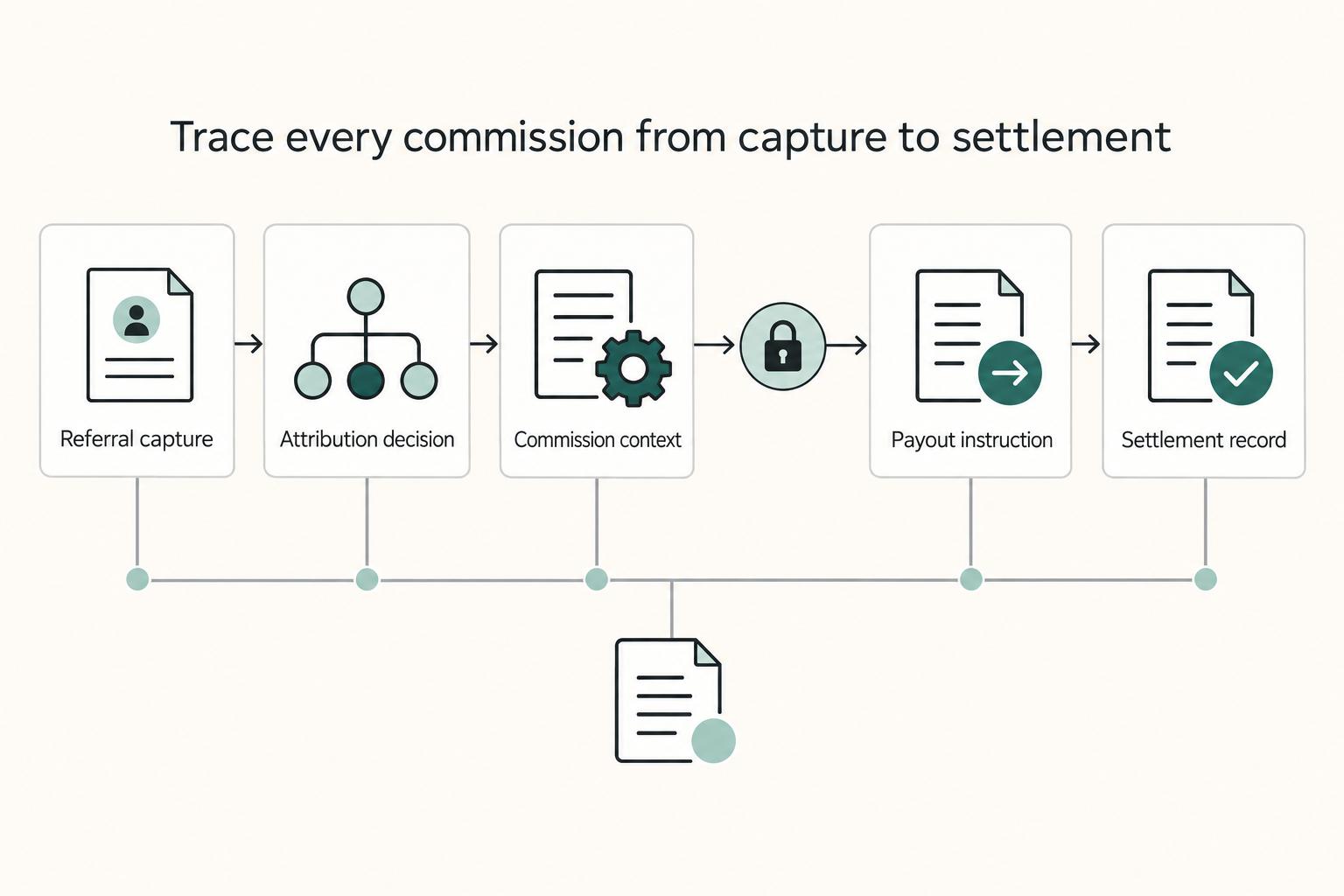
Build this step so finance can reconstruct each commission from capture to settlement without relying on dashboard memory. Use status events for operational visibility, and keep a separate accounting record you can trace over time.
| Order | Record or action |
|---|---|
| 1 | Capture the referral |
| 2 | Record the attribution decision |
| 3 | Record the commission calculation context |
| 4 | Approve only after Step 3 gates are cleared |
| 5 | Issue the payout instruction |
| 6 | Record settlement when the payout result is matched |
Instrument the event flow in business order, then keep that order intact in your records:
- Capture the referral.
- Record the attribution decision.
- Record the commission calculation context.
- Approve only after Step 3 gates are cleared.
- Issue the payout instruction.
- Record settlement when the payout result is matched.
Keep operational status and accounting evidence distinct. Status can update asynchronously, but your accounting trail should still show what happened, when it happened, and how one state connects to the next.
Standardize an evidence pack for each closed period so review is fast and repeatable, not an ad hoc export scramble. Preserve integrity so records can be shown as unchanged between creation and review, and apply legal-hold controls when an inquiry or dispute is active.
Use a month-end rehearsal as the checkpoint: have someone outside the build team trace a sample of commissions from capture through settlement using only the evidence pack and accounting records.
Step 5 Launch with a controlled pilot and weekly decision checkpoints#
Launch narrowly first: one segment, one offer, and one attribution model until you can trace each referral from capture to approved commission to payout reference to settlement without manual repair. The pilot's job is to prove tracking integrity before you expand incentives.
Hold the pilot constant long enough to trust the baseline#
Keep the core mechanics fixed in the first pilot window so you are not changing incentive design and tracking logic at the same time. Use the Step 4 evidence pack and ledger journals to verify that a referral can be reconstructed end to end by someone outside the build team. If that is not reliable yet, adding variants will make root-cause analysis harder.
Run one weekly review with growth and finance together#
Use the same source exports each week and assign an owner to every exception bucket.
| Review area | What to review |
|---|---|
| Referral-to-revenue conversion | Compare captured referrals to the revenue event that triggers commission, and flag unexplained gaps |
| Pending liabilities | Review approved but unpaid commissions, separating policy-gated items from processing backlog |
| Payout exceptions | Review rejected payout instructions, duplicate attempts, and records missing payout references |
| Payout reconciliation aging | Isolate cases where operational status and ledger outcome do not match, then assign owner and due date |
Test incentive shape only after the data is stable#
Use A/B testing only after tracking and reconciliation behavior is consistently explainable. Test incentive shape, messaging, or qualification design, not core tracking integrity. Define stop or scale rules before launch, and pause expansion if disputes, reconciliation breaks, or payout exceptions stop being explainable from your records.
If your rollout depends on legal or classification assumptions, verify against an official legal edition rather than relying only on an informational web edition. For a deeper breakdown, read How to Choose a Merchant of Record Partner for Platform Teams.
Common failure modes and how to recover quickly#
When the same exception appears twice in your weekly review, move to containment first: pause affected payouts, preserve evidence, and fix one defect class at a time.
Step 1: Contain cash movement before changing rules. If a referral payout looks wrong, stop the affected payout flow and reconcile a small sample end to end before you edit eligibility or approval logic. Keep liability records and payout records aligned, or you create a larger reconciliation issue later.
Step 2: Isolate duplicate behavior at the event boundary. If retries are creating duplicate outcomes, test replay behavior in a safe path and confirm your system posts and pays only once per valid event. Do not change multiple event-handling rules in parallel while you are debugging duplicates.
Step 3: Separate blocked payouts from earned commissions. When tax or compliance checks block release, keep statuses explicit so finance can see what is earned versus what is payable. Validate policy gates against your authoritative policy source before turning them into system rules.
Step 4: Protect unit economics with controlled changes. If incentive performance weakens margin, change one incentive lever at a time and measure on the same cohort window you used in the pilot baseline. Avoid changing attribution logic and incentive design in the same cycle, or you will not know what caused the result.
Related reading: How to Create a Channel Partner Program for a Business-of-One.
Conclusion and copy-paste launch checklist#
The FAQ points lead back to the same judgment. Do not scale a referral program until the rules are easy to explain and the outcome is easy to verify. Strong programs are usually simple ones. Clear goals, clear incentives, and simple rules are still the right standard at launch.
Step 1 is readiness. Assign clear owners for offer design, product instrumentation, and finance sign-off. Then check the gates around the program, not just the offer itself. Policy rules should be defined, the payout workflow should be documented, and the review format should be agreed in advance. Use a practical verification point: pick one test referral and ask whether your team can show eligibility, attribution, commission approval, payout status, and the review record without stitching together screenshots from five places.
Step 2 is sequence. Ship the pieces in the order that keeps disputes low. Attribution rules, then commission logic, then payout process, and only then the dashboard layer. That order matters because it keeps the operating record behind the program, not behind the interface. A common failure mode is launching with polished partner-facing status updates while the underlying attribution logic is still changing. When that happens, exception handling explodes, trust drops fast, and finance ends up cleaning up a growth decision after the fact.
Step 3 is scale discipline. Expand only after your pilot checks stay clean: attribution accuracy, consistent payout status tracking, stable ROI tracking, and low exception rates over the review cadence you set for the pilot. Specialized referral platforms can automate tracking, reward fulfillment, and analytics, but automation does not fix a loose rule set. If the only reason your numbers look healthy is that someone is manually correcting edge cases, hold the rollout and tighten the rules first.
If you want one final decision rule, use this: if you cannot defend a payout with a short evidence trail, you are not ready to increase volume. Referred customers may bring better acquisition economics over time, but that upside disappears quickly when approval logic, records, and payout controls drift apart. Copy and paste this into your launch note and require an explicit owner sign-off on each line:
eligibility rules lockedgoals and incentives definedattribution documentedcommission terms approvedtracking and payout status visiblepilot review cadence scheduled
Keep the checklist short and binary. If an item is mostly done, treat it as not done. That discipline is usually what separates a controlled pilot from a noisy launch that looks good in the dashboard and messy everywhere else.
Frequently Asked Questions
How do you track referrals accurately on a gig platform without overpaying?
MyGig describes two primary earning paths, so detailed tracking controls should be treated as platform-specific design choices rather than universal standards.
What commission structure should a gig marketplace start with first?
The verified material here does not prescribe a starting commission structure. The supported point is only that MyGig states there are two primary ways to earn, without enough detail to recommend a first-launch model.
When do overrides make sense, and when do they create margin risk?
Verified criteria for when overrides are appropriate or when they create margin risk are not standardized across platforms. Confirm direct-versus-override rules with your finance and operations teams.
Should commission payout trigger on signup, first payment, or retained revenue?
No single best payout trigger applies across all gig platforms. Evaluate signup, first payment, and retained-revenue triggers against your platform's cost structure and churn profile.
What metrics prove the referral program is actually working?
No universal metric framework exists for referral-program performance across gig platforms. Specific KPI sets and thresholds depend on your platform's model and growth stage.
What is the minimum system stack needed for auditable commission tracking?
A minimum referral-commission system stack depends on your platform's architecture. Note that OCC describes merchant processing as settlement of card transactions and as distinct from issuing payment cards, which supports keeping those functions conceptually separate when both exist.
How often should finance reconcile referral liabilities and payout activity?
No required reconciliation cadence or SLA is standardized for referral liabilities and payout activity. Confirm a specific frequency with your finance team based on payout volume and platform risk tolerance.
Try a related tool
Researched and edited by the Gruv editorial team. Gruv builds cross-border billing, payouts, and finance-operations software for global businesses.
Sources
- acquisition.gov/sites/default/files/page_file_uploads/far-co...trusted
- congress.gov/crs-product/R44365trusted
- congress.gov/event/118th-congress/senate-event/LC74137/texttrusted
- dca.ca.gov/cba/about/other_codes.pdftrusted
- docs.fcc.gov/public/attachments/FCC-22-2A1.pdftrusted
- docs.fcc.gov/public/attachments/FCC-23-83A1.pdftrusted
- eac.gov/sites/default/files/TestingCertification/VVS...trusted
- federalregister.gov/documents/2024/01/10/2024-00067/employee-or-...trusted
Educational content only. Not legal, tax, or financial advice.
Related Posts
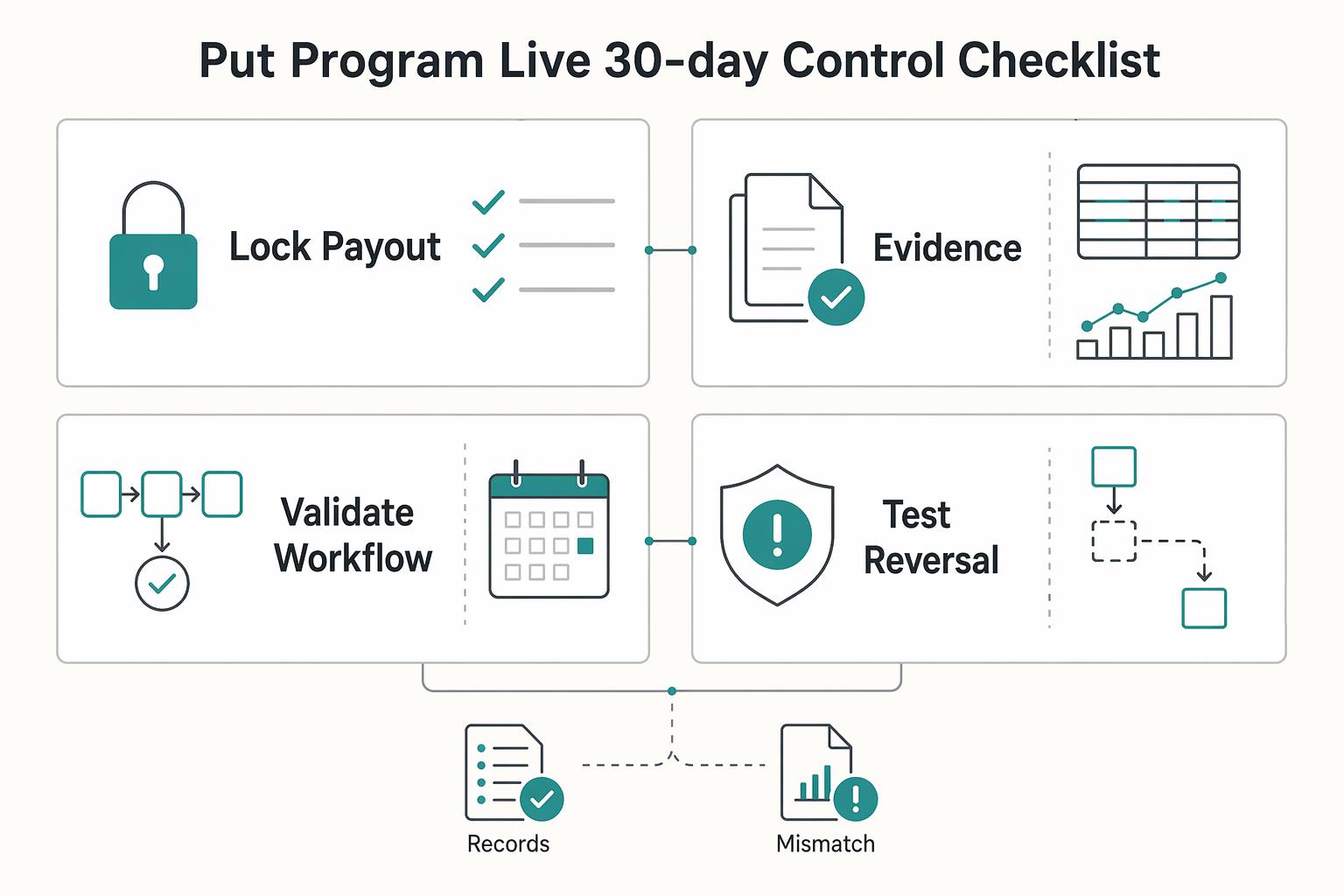
How to Build a Gig Platform Referral Commission Model That Protects Margin
Your referral program commission plan for a gig platform should pass a margin test before it chases volume. The core decision is not how generous the offer looks on a landing page. It is whether each payout trigger and each commission base still produce acceptable CAC payback and contribution margin after refunds, abuse, and variable costs.
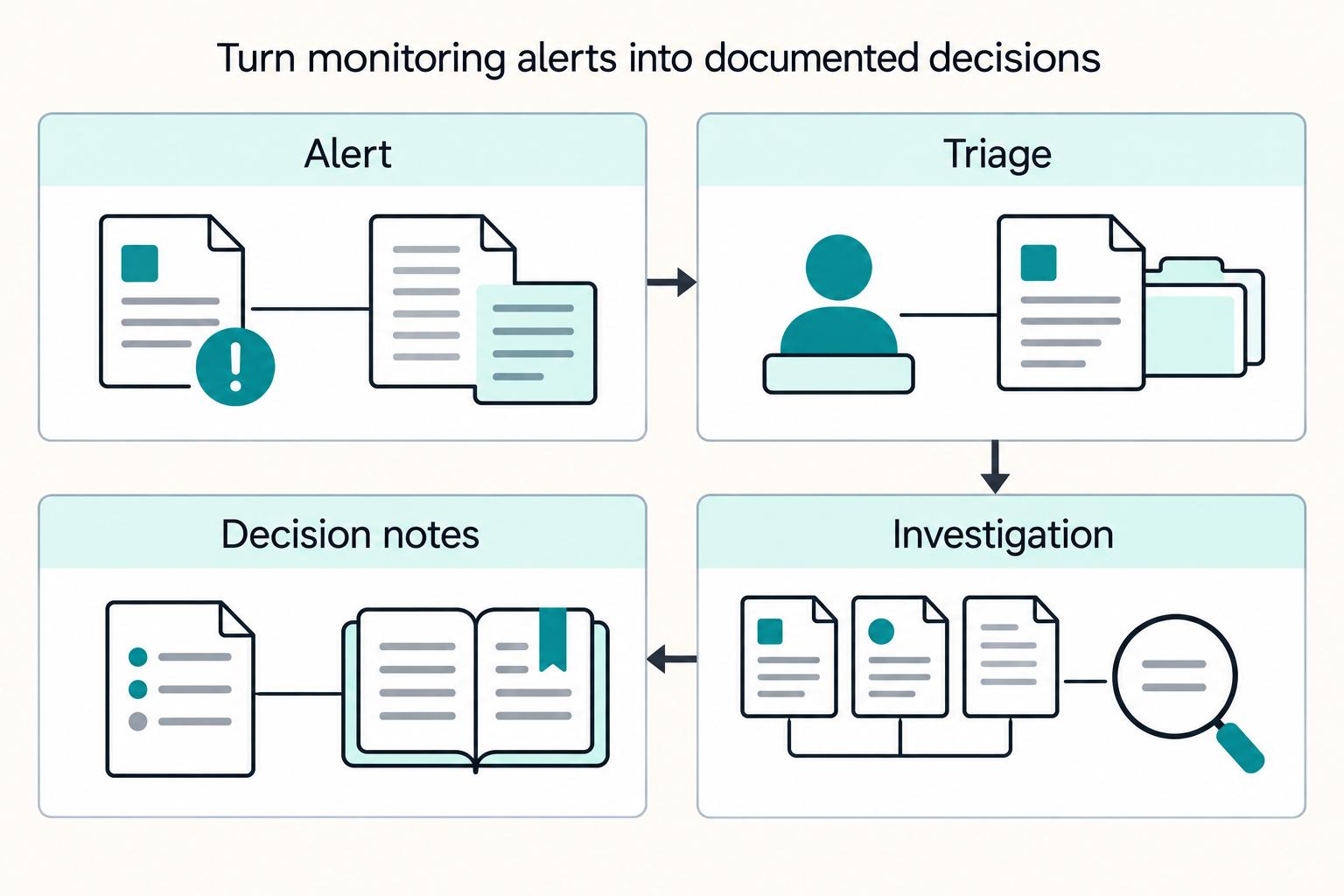
What Is AML? Anti-Money Laundering Compliance for Platform Operators
Here, **AML** means **Anti-Money Laundering**: the controls used to keep criminal profits from being concealed in the financial system.
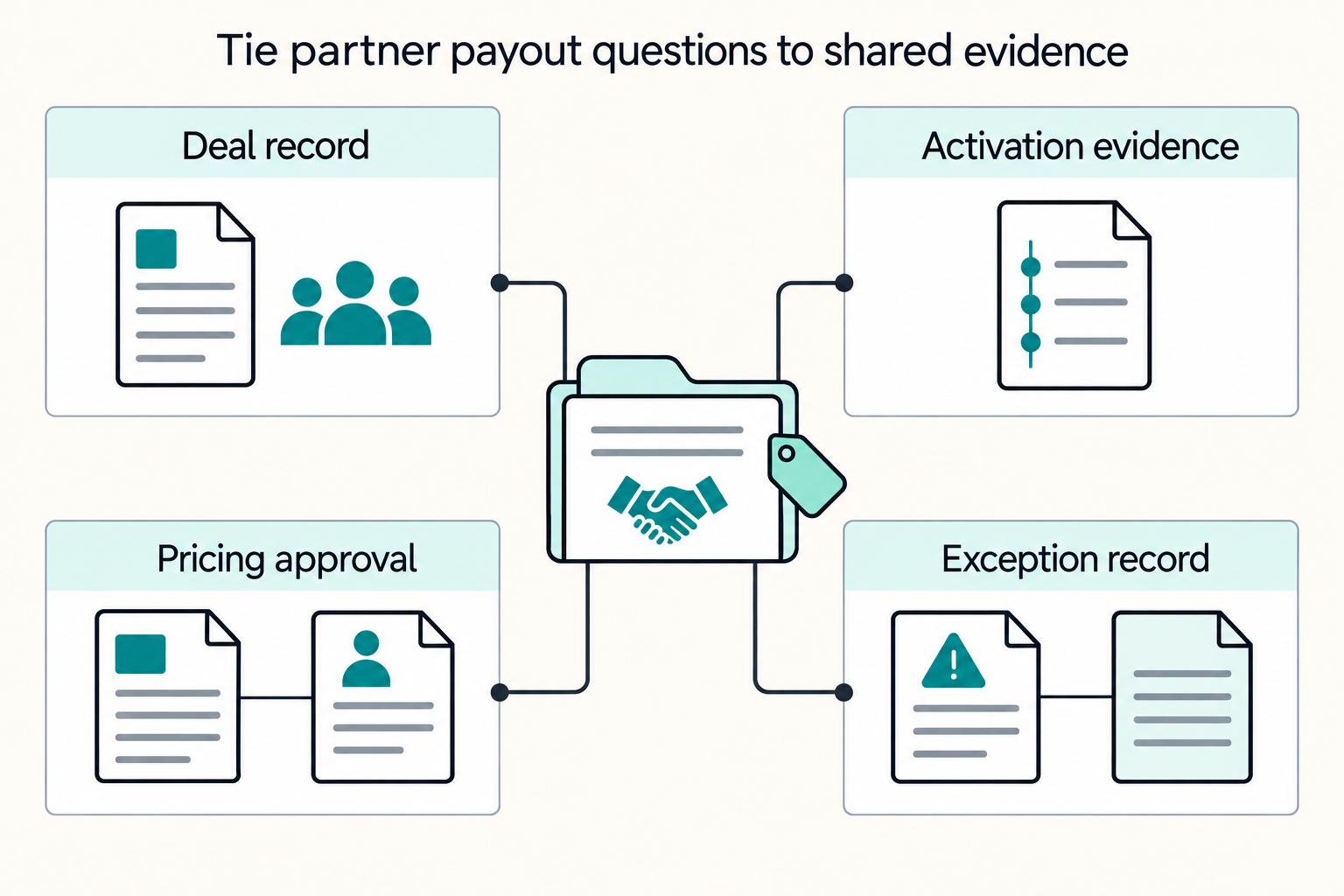
How to Build a Payment Platform Partner Program: Referrals, Resellers, and Technology Partners
Build your partner motion to widen distribution only when you can keep control of ownership, onboarding, and incentives. In payments, transactions depend on partner networks, not just product, licenses, or processing setup, so the upside is real. So is the risk. Channel volume can strain execution and economics if you scale before the model is clear.