
Quick Answer
Separate launch from readiness. Run contractor payouts on rails you can operate now, then keep CBDC work as a parallel track with explicit revisit triggers. Use country evidence packs, named owners across Product, Payments Ops, Compliance, and Finance, and a formal decision gate before build work. For U.S.-linked programs, add tax and reporting controls early, including the IRS digital-asset question and FBAR handling through FinCEN Form 114 when foreign-account exposure exists.
What CBDC Readiness Means for Contractor Payouts#
Separate your immediate payout launch from your CBDC readiness work. That is the baseline. Payment stablecoins have firmer policy signals today, while CBDC rollout paths remain market-specific and timing-sensitive.
Many discussions focus on faster settlement, lower fees, and global reach. That is not enough when you are deciding whether to open a corridor or change contractor payout operations. A payment stablecoin is a digital asset designed for payments. A CBDC is a market's fiat money in electronic form. If you treat them as interchangeable, you make the wrong launch calls.
Anchor on what is real now.
Start with operating reality in each market, not marketing claims or central bank headlines. Ask one practical question first: can you deliver a payout that contractors can receive, understand, and use without creating support chaos?
CBDC strategy is market-specific. Markets move at different speeds across policy, technical design, and links to existing payment rails. Work on CBDC-FPS interoperability also shows that practical integration with fast payment rails is a separate issue. Do not treat announcements, pilots, or sandboxes as proof of production readiness.
Use a simple checkpoint for each target country. Document the live payout rail today, the contractor cash-out path, and the owner who signs launch risk. If any one is missing, it should not be a build priority.
Split near-term execution from readiness planning.
Run two tracks. Your near-term track should use rails you can support now. Your CBDC track should reduce migration friction later by keeping policy, ledger, and payout-eligibility decisions adaptable instead of waiting on uncertain timelines.
This split also fits the current policy picture. In July 2025, the U.S. Congress passed the Genius Act, establishing a regulatory framework for payment stablecoins. That framework requires backing by relatively safe assets with low credit or valuation exposure and prohibits issuers from directly paying interest. Whether or not you use stablecoins, that is more concrete than assuming near-term CBDC availability for contractor payouts.
If leadership asks for speed, keep the build question narrow: what can launch reliably now, and what choices keep you ready for later CBDC support?
Set stage gates before you commit market resources.
Use explicit go or no-go checkpoints before you commit market resources. The IMF's September 2023 CBDC development guide is useful here. It frames digital-currency work as staged product decisions with go or no-go checkpoints, including planning and execution of low-cost proof-of-concept activities.
You do not need perfect certainty to move, but you do need written decision rules. If demand exists but payout operability is unclear, keep that market in readiness. If rails are workable now, move to pilot planning with compliance and support ownership in place.
The real tradeoff is timing. Delay fiat digitization too long and private digital money can gain broad adoption before public options arrive. Move too early without controls and you can add avoidable operational risk and trust damage. Country-by-country operational gates are how you manage that tradeoff. Related reading: IBAN vs SWIFT for International Contractor Payouts on Platforms.
Start with what is true today about CBDC and contractor payouts#
Use CBDC as a readiness track unless you can verify a live, market-specific contractor payout rail. For near-term launch, use rails you can operate now.
Separate live payout options from policy and pilot activity#
Do not treat CBDC headlines as payout readiness. Treasury's September 2022 framing for the U.S. described advance work on a possible CBDC, and the World Bank's November 2021 cross-border paper reviewed experiments and ideas. That is useful for planning, but it is not, by itself, evidence of a production contractor payout path.
For immediate execution, prioritize rails with proven operability in your target market, including existing payment infrastructure and stablecoin-linked options where they are workable.
Apply the IMF decision rule before you give CBDC priority#
The October 2025 IMF working paper gives you a practical filter. Using CBDCs only as payment delivery solutions offers limited advantages over existing faster payment systems. If the proposal is only "send payouts via CBDC," without a clear gain in administration or monitoring, keep it in readiness planning and ship what already works.
Verify proof of operability, not just availability claims#
Before you commit build resources, require evidence that a usable rail can operate in the target jurisdiction and that disruption handling is clearly defined. BIS November 2023 guidance supports that approach by emphasizing a defined risk profile before adoption and safeguards for integrity, confidentiality, and resilience.
If those controls are unclear, treat that as launch risk. The IMF also notes that privacy, compliance, and infrastructure challenges can offset expected CBDC benefits.
If you are comparing CBDC rollout plans with existing payout options, Local Currency Payouts vs USD Payouts: What Contractors Prefer and What Platforms Should Offer helps frame the currency choice.
Gather prerequisites before you compare markets#
Treat market comparison as an evidence exercise, not a bet on headlines. If you cannot document demand, operating posture, tax-document scope, and accountable owners, you are still comparing assumptions.
Build a minimum market evidence pack#
Start each market with the same three inputs. Capture the payout methods contractors actually request, the contractor segments driving volume, and your expected operating posture, whether direct, Employer of Record (EOR), or Merchant of Record (MoR). Keep the pack grounded in evidence your teams can defend, not broad labels.
Use one shared summary that Product, Payments Ops, Compliance, and Finance can read the same way. If teams disagree on core assumptions, pause scoring until that mismatch is resolved.
Confirm control ownership before launch work starts#
Define where KYC, KYB, and AML gates sit, who owns escalations, and who owns the audit log for approvals, overrides, and holds. Generic control language is not enough for launch decisions.
Run a trace test on one blocked payout from trigger to resolution. If the trail depends on inboxes or screenshots, control ownership is not ready.
Define tax-document scope while design is still cheap to change#
Set tax-document assumptions early, especially if digital-asset payouts are in scope now or on your readiness track. For U.S. tax purposes, digital assets are property, not currency. Digital-asset transactions may need to be reported on a tax return. Income from digital assets is taxable, and federal income tax returns include a required yes or no digital-assets question.
| FBAR item | Requirement |
|---|---|
| Filing threshold | File an FBAR when a single-account maximum or aggregate maximum exceeds $10,000. |
| Annual due date | April 15. |
| Automatic extension | October 15. |
| Highest value method | Use a reasonable approximation of the highest account value during the calendar year. |
| FX conversion | Convert foreign currency with the Treasury rate for the last day of the calendar year. |
| Rounding | Record amounts in U.S. dollars rounded up to the next whole dollar ($15,265.25 becomes $15,266). |
| Amendment | File a new FBAR and check the Amend box. |
| Submission risk | Missing required FBAR XML elements can cause submission rejection. |
Map your tax-document workflows early, then validate those assumptions before onboarding and payout flows are fixed. If your model creates foreign bank and financial account reporting exposure, define the FBAR path explicitly as FinCEN Form 114.
Assign one decision owner per function#
Assign one named owner each for Product, Payments Ops, Compliance, and Finance before market comparison turns into build work. This keeps control, reporting, and user-impact decisions from splitting across silos.
Use a strict go or no-go rule. If any owner cannot sign their assumptions in the evidence pack, the market is not ready to score. Related: Crypto Payouts for Contractors: How Platforms Can Offer USDC and Stablecoin Payments.
Score countries and verticals before committing build resources#
Do not let demand alone pick your next market. Score each country on operational controllability as rigorously as interest, because CBDC launch status is not proof of scalable adoption.
Once your owners and evidence pack are in place, run every candidate through the same scorecard so no market advances on narrative alone.
Build one scorecard and force every market into it#
Use one shared country scorecard for every pilot candidate. Include separate columns for CBDC readiness, compliance burden (KYC, KYB, AML), payout support load, volatility exposure, withdrawal path clarity, and contractor adoption risk.
Use a score plus an evidence note for each field. If evidence is unclear, treat the score as provisional. Keep these rules tight:
- Do not treat launch status as proof of scalable usage.
- Do not treat policy announcement volume as readiness.
- Give extra weight to jurisdiction-specific legal and policy fit.
Each country row should be evidence-backed, and weak points should be visible before build work starts.
Compare pilot countries side by side, not by story#
Compare candidates in the same sheet using the same criteria.
For volatility, test whether it creates usable payout demand for your target contractors, not just headline interest. For withdrawal options, document the real cash-out path from payout receipt to usable funds. For adoption risk, require direct signals from your own users, for example payout requests, interviews, or opt-in pilot interest. Do not assume launch or policy momentum equals contractor uptake.
Your shortlist should reflect usable demand and operational fit, not reputation.
Add a vertical lens before final ranking#
Do not finalize ranking without a vertical lens. Different operating models put different pressure on payout cadence, exception handling, and support operations.
Weight the scorecard using your current operating reality: where exceptions cluster, where manual handling is highest, and where payout-status issues already consume support time. Use this lens to adjust market rank before committing resources. That keeps the ranking tied to your business model's constraints, not a generic payments view.
Gate build work with a pilot-first rule when controllability is weak#
Use a simple rule: if a market scores high on demand but low on controllability, run a limited pilot instead of a full rollout.
Set a hard gate: no market moves to build without documented legal sign-off and support readiness. Pre-pilot governance should be explicit and testable, not implied from meetings or announcements. That keeps higher-risk markets contained in a controlled pilot while only cleared markets move into build.
Choose the payout rail mix market by market#
Pick rails market by market, not platform-wide. If local cash-out reliability is the main constraint, keep bank payouts as the default, offer USDC or USDT as opt-in, and treat CBDC as a readiness track until a production rail is available.
After scoring markets, choose the smallest rail mix you can operate reliably under load. The goal is a usable path to funds, with failure handling, reconciliation, and support you can run consistently.
Build a rail matrix around how contractors actually receive money#
Start from contractor payout behavior, not rail theory. For each market, map bank payout, wallet payout, and digital-currency payout separately. In practice, that often means stablecoin options now and CBDC on a readiness track, but only if a real production path appears.
| Use case | Default rail | Use first when | Verify before launch |
|---|---|---|---|
| Bank payout | Local transfer or cross-border bank rail | Contractors need dependable local cash-out with minimal behavior change | Beneficiary-data rules, return paths, payout-status events, time to usable funds |
| Wallet payout | Local wallet (where supported) | Contractors already withdraw to wallets and support demand exists | Identity matching, wallet limits, reversal handling, support escalation |
| Digital-currency payout | Stablecoin now; CBDC only when supported | Contractors explicitly want it and have a practical cash-out or hold path | Token support, wallet compatibility, conversion ownership, AML review, error handling |
Do not combine wallet and digital-currency scoring. Receiving USDC in a wallet still requires a reliable off-ramp or a clear hold strategy.
Keep CBDC in the matrix for strategy, but not as a near-term default. 90% of 81 surveyed central banks were actively investigating CBDC at the end of 2021. That shows broad exploration, not contractor payout readiness. Each market should end up with a default rail, one optional rail, and documented exclusions.
Compare the integration path you can control fastest#
Choose the path with the least new operational surface area that still meets required payout methods. That may be an existing orchestration layer such as Stripe Connect, or net-new provider work with Thunes, Rise, or TransFi BizPay.
| Validation point | What to confirm |
|---|---|
| Corridor coverage | Corridor-level payout types for your exact launch markets |
| Status detail | Status or callback detail for initiated, pending, paid, and returned payouts |
| Return detail | Return or rejection reason granularity |
| Reconciliation | Reconciliation exports your finance team can tie to ledger entries |
| Funding model | Funding or prefund model and FX or conversion ownership |
| Support path | Support escalation path for stuck or misrouted payouts |
Use evidence from those points, not coverage claims, to judge launch effort.
Do not assume your current stack is faster, and do not assume a new provider is slower. What you want is one controllable launch path, plus a short list of unknowns to prove.
Keep stablecoin opt in unless it clearly solves a market problem#
Use stablecoins first where they solve a specific payout problem, not as a universal default. Stablecoins are being positioned for mainstream cross-border payments, with the stated upside of faster, cheaper, more accessible cross-border dollar liquidity.
The tradeoff is operational: wallet compatibility, contractor education, treasury conversion decisions, and additional risks, including AML/CFT, cyber vulnerabilities, data or consumer protection, and digital-run risk. So USDC or USDT should usually launch as opt-in first.
If the market pain is delayed settlement or dollar access, a stablecoin option may be justified. If the pain is local cash-out reliability, keep bank rails primary until you have proof the digital-currency path is usable.
Treat reserve quality and treasury handling as launch-gate items. Stablecoins are private digital money designed to keep stable value, typically with one-to-one backing in safe, liquid assets. The cited ECB paper notes that under the GENIUS Act, stablecoins must be fully backed by U.S. Treasury bills. Finance and Compliance should be able to answer what asset is paid, who converts it, when conversion happens, and how exceptions are recorded.
Gate launch with end to end failure and support testing#
A rail is not live until failure handling, reconciliation, and contractor support flows pass end-to-end tests. Happy-path success is not enough.
Test at least these cases:
- Wrong bank details
- Wrong wallet address format
- Provider timeout
- Duplicate event delivery
- Provider marks paid but ledger is not updated
- Payout returned after contractor contacts support
- For digital currency: supported wallet+token combination matches contractor help content
Launch evidence should include sample payout events, reconciliation output, ledger mapping, and support responses for pending, returned, and under-review states. If any element is missing, keep the rail in pilot.
Build compliance and tax gates into payout eligibility#
Treat payout eligibility as a release control. If required compliance or tax evidence is incomplete, keep the payout in a non-release state until the case is resolved under written policy.
Define payout states before money moves#
Define clear internal outcomes for payout decisions, such as blocked, held, and released. Apply these labels consistently so Payments Ops, Compliance, and Finance interpret the same case the same way.
Document exception handling and require a recorded reason for each decision. The goal is an auditable decision path, not ad hoc interpretation.
Separate onboarding checks from payout-time checks#
If your workflow uses both onboarding and payout-time checks, keep them distinct in your records so you can show where and why a payout decision was made.
Keep retrievable evidence at both stages, for example vendor results, manual review notes, approvals, or document receipt logs.
Tie tax-document logic to contractor type and jurisdiction#
For U.S. handling, keep digital-asset payouts inside normal tax controls. The IRS states digital assets are treated as property, not currency, and income from digital assets is taxable.
Use eligibility fields to track which tax-document path applies for each contractor and jurisdiction, and do not assume one universal rule set across contractor types or jurisdictions. As a checkpoint, include the IRS digital-asset Yes or No question in your review flow. Versions appear on returns including 1040, 1040-NR, 1041, and 1065.
Keep an FBAR evidence pack for foreign-account exposure#
Where foreign-account exposure exists, include an annual FBAR gate (FinCEN Form 114). Filing is required when a single-account maximum or aggregate maximum exceeds $10,000 during the calendar year.
For calculations, FinCEN guidance says to use a reasonable approximation of the greatest yearly account value, record amounts in U.S. dollars, and round up to the next whole dollar, for example $15,265.25 -> $15,266. If Treasury rates are unavailable, use another verifiable exchange rate and record its source. If errors are found in a previously filed FBAR, file an amendment.
Use April 15th and automatic extension to October 15th as baseline timing from the filing instructions, but check for event-specific FinCEN relief notices. Your evidence pack should include value calculations, FX source, threshold determination, filing status, and amendment history.
If your finance team also needs a clean close process, How Platforms Reconcile Foreign Contractor Payments in QuickBooks Online walks through the reconciliation side.
Design traceable money movement and reconciliation from day one#
After payout eligibility gates, make traceability the next release control. Current CBDC references focus on system architecture and policy/privacy tradeoffs rather than a mandated contractor-payout reconciliation workflow. Recent literature also flags monetary-policy and financial-stability implications, so treat the controls below as internal operating choices.
Map explicit payout states before you integrate providers#
Use a small, stable internal state set across rails: initiated, pending provider, paid, returned, and investigated. This is an operating model, not a regulator-defined requirement, and it keeps Product, Payments Ops, and Finance aligned on case handling.
Set strict transition rules. Move to pending provider only after creating the external instruction. Move to paid only when provider confirmation and ledger posting both match. Route mismatches to investigated instead of inferring completion.
Keep this model rail-agnostic. The Federal Reserve has not decided whether to pursue or implement a U.S. CBDC, and its process has included a discussion paper and public feedback. BIS frames next-generation systems as tokenised platforms with public and private money components, while noting stablecoins are promising but not yet sufficient as the monetary system's main foundation.
Carry one reference across collection, MoR, and payout#
As an internal control pattern, use one immutable internal payout reference from request creation through collection, Merchant of Record (MoR) records, payout records, and ledger entries. If you use Virtual Accounts for collection, keep that attribution linked to the same internal reference.
Treat provider references as secondary identifiers. They are useful for external tracking, but they should not replace your internal key for reconciliation.
As a quick check, for one completed payout, confirm you can retrieve request ID, contractor ID, MoR earning record, ledger journal ID, provider reference, and final status in sequence.
Enforce idempotent retries before launch#
Use idempotent retries as an engineering safeguard before launch; this is not explicitly prescribed in the cited CBDC excerpts. Tie the retry key to the business payout event, not to each API attempt.
On replay, return the original outcome, or a clear in-progress status, rather than issuing a new instruction. Test this directly with timeout-and-replay scenarios before launch.
Standardize a monthly reconciliation pack for Finance Ops#
Set a monthly reconciliation pack standard early so unresolved items are explicit and owned. Treat this as an internal Finance Ops standard, not a source-defined format. At minimum, include:
- provider references
- ledger entries tied to internal payout IDs
- exception log with current status
- closure notes for resolved, reversed, or carried-forward items
If provider status, ledger status, and exception tracking disagree, treat that as a process gap and require documented resolution ownership.
For a step-by-step walkthrough, see Same-Day ACH for Platforms: How to Speed Up Contractor Payments Without Wire Transfer Fees.
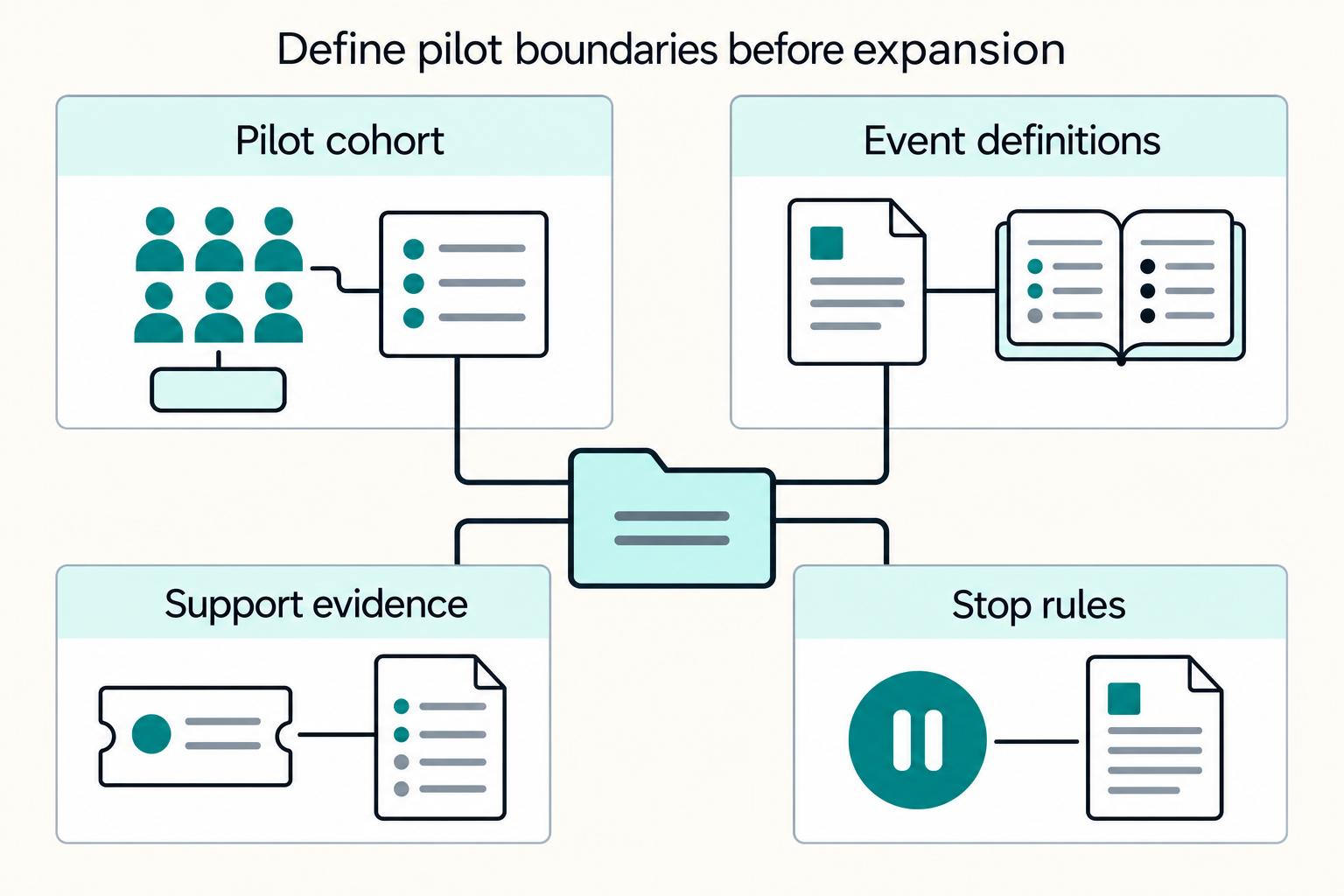
Run a bounded pilot with explicit success and stop rules#
Keep the first pilot bounded and measurable so you can trust the result before you scale. Hold expansion until payout handling, exception ownership, and support load are consistently manageable.
Narrow the cohort before you chase coverage#
Define a tight initial cohort so your early data is comparable. For example, you might start with a single corridor or a single contractor pattern to isolate operational issues instead of mixing too many rail and market variables at once.
Use one baseline payout rail, and make a stablecoin option opt-in if you are testing digital-currency demand. If CBDC questions come up, treat them as readiness planning rather than pilot success criteria. Before launch, verify each participant has a corridor tag, a segment tag, a default payout rail, and an escalation owner.
Define KPI denominators before the first payout goes out#
Lock event definitions first, then build the dashboard. Stripe Connect provides clear anchors you can use in pilot measurement. A payout is a discrete event when funds are sent to a user's bank account or debit card. A monthly active account is an account that received payouts in that month.
| KPI | Pilot definition | Why it matters |
|---|---|---|
| Payout completion time | Time from internal payout creation to confirmed paid status | Shows whether execution is actually improving contractor experience |
| Failed payout rate | Failed or returned payout events divided by total payout attempts | Exposes reliability issues early |
| Support tickets per payout | Tickets tied to the same internal payout reference divided by payouts sent | Shows support cost pressure by rail |
| Opt-in split (bank vs stablecoin) | Share of eligible contractors selecting each option | Measures real behavior, not stated preference |
Keep denominators consistent across rails. If event definitions differ, separate the metrics so failure and support signals stay interpretable.
Set stop rules and calibrate economics with current pricing#
Write stop rules before launch and tie them to observable signals. Pause expansion when completion time stays erratic, failed payouts or support load remain elevated after fixes, or reconciliation cannot close investigated items to a clear payout record.
| Pricing item | Quoted pricing |
|---|---|
| Monthly active account | $2 per monthly active account in the "You handle pricing for your users" model |
| Payout sent | 0.25% + 25¢ per payout sent in the "You handle pricing for your users" model |
| Instant Payouts | 1% of payout volume |
| Stablecoin payments | 1.5% of the transaction amount in USD, with conversion to fiat and AML screening included |
Model economics using current provider pricing, not stale assumptions. Stripe Connect lists $2 per monthly active account and 0.25% + 25¢ per payout sent in the "You handle pricing for your users" model, with Instant Payouts at 1% of payout volume. Stripe also lists stablecoin payments at 1.5% of the transaction amount in USD, with conversion to fiat and AML screening included. Recheck live pricing before rollout, since provider fees can change.
Apply clear go or no-go rules before scaling#
Scale only when the decision is defensible in writing. Treat this as a formal checkpoint, not a momentum call.
Confirm control stability first#
Go only when control handling is consistent. Outcomes should follow repeatable hold, release, and escalation paths with clear ownership and audit records.
Before approval, review recent held, released, and escalated cases and verify decisions were handled through the documented process. If edge cases are still being resolved through off-record exceptions, treat that as no-go.
Require lifecycle closure, not partial visibility#
Go only when risk handling is traceable from design assumptions through pilot outcomes and final operating state. If teams still rely on side spreadsheets to explain incidents or investigations, you are not ready to scale.
For digital-currency work, include disruption handling in the checkpoint. BIS frames risk across operating, technology, third-party, and business continuity areas, so confirm what failed in pilot scenarios, how integrity and confidentiality were protected, and how incidents were contained.
Reject speed gains that add unresolved risk#
No-go when faster rollout is offset by unresolved operating, technology, third-party, or business continuity risk.
If demand is immediate but CBDC rails remain uncertain, launch on rails you already operate reliably and keep a documented CBDC-readiness backlog with partner dependencies, policy questions, and revisit triggers. Also document the downside of delay, since delayed digitization can strengthen private digital money and weaken fiat money's role.
Finalize with written tradeoff approval#
Require written tradeoff approval before scaling. The approval should state expected upside, open risks, failure handling, and explicit downside triggers.
This aligns with IMF-style go or no-go checkpoints and separate delivery and policy oversight. If the tradeoffs cannot be signed off in writing, do not scale based on upside claims alone.
If you run the same workflow in Xero, Xero Multi-Currency for Payment Platforms: How to Reconcile Foreign Currency Payouts covers the platform accounting details.
Before approving expansion, pressure-test corridor coverage, failure handling, and support escalation paths with your real launch constraints: Talk to Gruv about payout rollout design.
Avoid common rollout mistakes and recover fast#
A common rollout mistake is treating promise as proof. You recover faster when you validate each corridor in your own data, script exception handling before launch, enforce compliance gates, and collect tax documentation before volume scales.
Verify corridors, not coverage claims#
Treat corridor-level proof as the launch standard, not a provider's "global coverage" claim. Published CBDC research indicates adoption can be slow and uncertain, so technical availability alone is not enough for a go-live decision. One published article also reports very low public demand in CBDC cases where data were available.
Before you activate a route, require corridor evidence in your records: a completed payout, an exception case, the final payout state, and a reconciled trail back to your ledger. If that packet is missing, you have marketing coverage, not production readiness.
Prewrite support scripts for digital-asset payouts#
Digital-asset payout launches are more likely to break down when support handling is improvised. Write scripts up front for wallet confirmation, returned payouts, and payouts held for review.
Your support script should define what agents must collect and what they must not promise: payout reference, receiving wallet details captured at onboarding, contractor confirmation, and the owner for manual review. Use exact internal payout states instead of "done" when a payout is still under investigation or return handling.
Enforce AML/CFT and identity-verification controls before scale#
Scale only after AML/CFT controls and identity-verification escalation paths are explicit, owned, and auditable. Weak gating can show up as off-record exceptions, which is a no-go signal.
This matters even more for digital-currency flows because technical design and regulatory choices can reduce or worsen financial-crime risk. Validate this with recent held payouts and confirm the decision path, evidence, and approvals are visible without relying on memory, especially for cross-border flows that depend on regulatory coordination.
Move tax documentation into onboarding#
Tax handling should be built into onboarding, not deferred until payout volume is high. IRS guidance states digital assets are treated as property for U.S. tax purposes, income from digital assets is taxable, and federal returns include a required Yes/No digital-asset question.
Include required tax-document workflows in onboarding and eligibility review. Before launch, confirm Finance can show where tax records are stored, who owns missing-document follow-up, and how digital-asset activity is surfaced for reporting.
Conclusion#
Do not launch digital-currency payouts as one global program. Launch only in markets where payout reliability, control coverage, and contractor experience can hold as volume rises, and keep near-term rail decisions separate from CBDC readiness.
Confirm the near-term rail and separate CBDC readiness.
[ ] Confirm whether the next live option is bank payout or a stablecoin rail such as USDC or USDT, and document CBDC as a separate readiness track.
Keep the shipping decision separate from the future-state policy track. Your checkpoint is a short approval note that names the live rail, names deferred CBDC work, and assigns one owner to each.
Complete the market scorecard before build.
[ ] Complete a market scorecard for each target country.
Use the scorecard to surface operational unknowns, not to create false precision. Require written sign-off that demand, contractor segment, withdrawal path, support burden, and legal review status are clear enough for a pilot.
Validate compliance and tax-document gates early.
[ ] Validate applicable compliance and tax-document gates before any contractor is payout-eligible.
If tax forms may apply, make collection and storage part of onboarding. For U.S. federal tax, the IRS states digital assets are treated as property and filers must answer a Yes or No digital-assets question, so tax handling should be a launch gate.
If foreign account reporting may be implicated, escalate FBAR review instead of assuming treatment. FinCEN Form 114 is the FBAR. Filing is required when a single-account maximum or aggregate maximum exceeds $10,000 during the calendar year, with an annual due date of April 15th and an automatic extension to October 15th. Confirm Finance can show how maximum account value is approximated and converted to USD with a verifiable rate source retained where needed.
Test payout states, returns, and reconciliation evidence.
[ ] Test end-to-end payout states, retries, returns, and reconciliation artifacts before expanding contractor access.
Verify traceability, not just successful sends. Each test should leave an evidence trail Finance and Support can use to explain delays, returns, or manual reviews and confirm closure.
Define success and stop rules before the first cohort.
[ ] Define pilot success criteria and stop rules before onboarding the first contractor cohort.
Write down continue, pause, and rollback conditions, plus decision ownership. If payouts start before those boundaries are set, risk handling is happening live instead of by design.
When you move from pilot to production, use a policy-gated payout layer with traceable statuses and reconciliation-ready records where coverage is supported: Explore Gruv Payouts.
Frequently Asked Questions
Are CBDCs live for contractor payouts today?
Not based on the evidence used here. The BIS material focuses on CBDC risk management across the lifecycle, not confirmed live contractor payout coverage, and it flags cybersecurity and payment-disruption risk. Treat any "ready now" claim as unproven until you have corridor-level proof in your own records.
How is CBDC preparation different from launching USDC payouts?
For a stablecoin launch such as USDC, the evidence here is about payment-stablecoin rules, including a U.S. framework described in July 2025, and one-to-one value stability relative to the U.S. dollar. By contrast, the BIS framing for CBDC emphasizes defining a risk profile and resilience planning before adoption.
Which teams must approve a digital-currency payout launch?
There is no fixed approver list to mandate. Set this as an internal governance decision with clear ownership across product, operations, compliance or legal, and finance or tax. If no owner can produce the approval packet and risk rationale, the launch is not governance-ready.
What is the minimum pilot scope for a platform founder?
Do not assume there is a universal minimum pilot scope. Keep the pilot narrow enough to make exception handling, ownership, and reconciliation easy to verify. If those controls are still ambiguous, the pilot scope is too broad.
What metrics prove a pilot is ready to scale?
There are no numeric pass thresholds to point to. Use internal criteria that show repeatable execution: stable completion behavior, controlled failures, manageable support load, and consistent reconciliation closure. Scale when those signals hold over time, not after one clean cycle.
Should platforms launch in volatile-currency markets first?
Not by default. BIS guidance points to risk profiling first, including cybersecurity and operational disruption risk. Launch only where your controls are already strong enough to absorb those risks.
Do digital-currency payouts change tax treatment or documentation needs?
Possibly. The IRS states virtual currency is treated as property for U.S. federal income tax purposes, and the cited FAQ excerpt is scoped to digital-asset transactions completed before Jan. 1, 2025. Confirm current-date tax and documentation requirements before go-live.
Try a related tool
Researched and edited by the Gruv editorial team. Gruv builds cross-border billing, payouts, and finance-operations software for global businesses.
Sources
- bis.org/publ/othp81.pdftrusted
- bis.org/publ/othp59.pdftrusted
- bsaefiling.fincen.gov/docs/XMLUserGuide_FinCENFBAR.pdftrusted
- digitalcommons.law.uga.edu/context/glr/article/1414/viewcontent/57GaLRe...trusted
- elibrary.imf.org/view/journals/063/2024/005/article-A001-en.xmltrusted
- federalreserve.gov/econres/notes/feds-notes/payment-stablecoins...trusted
- federalreserve.gov/central-bank-digital-currency.htmtrusted
- fincen.gov/reporting-maximum-account-valuetrusted
Educational content only. Not legal, tax, or financial advice.
Related Posts
Local Currency Payouts vs USD Payouts for Contractor Platforms
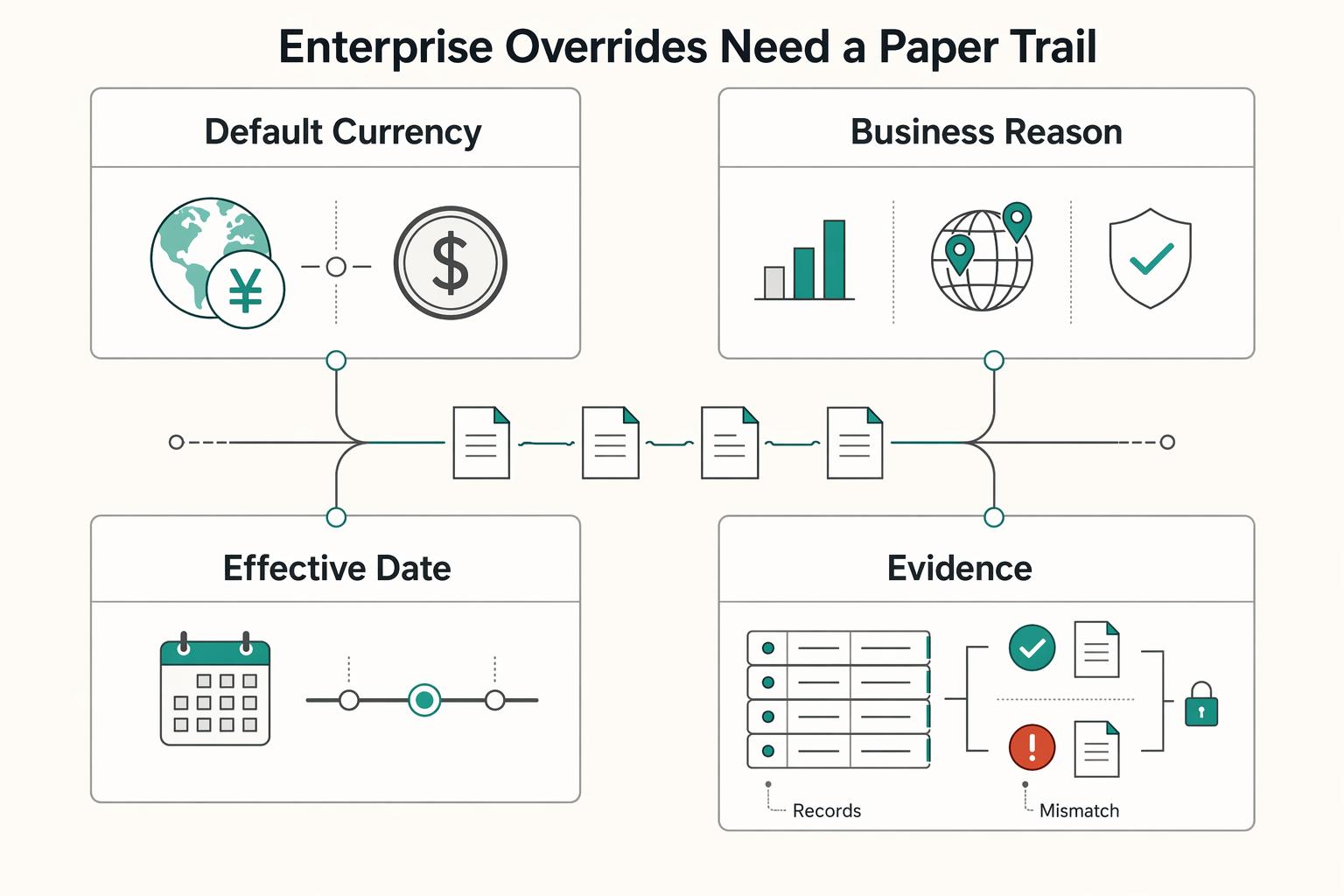
USD versus local currency is not just a finance setting. For a platform, it changes compliance scope, recipient certainty, reconciliation effort, and how much engineering depth your payout layer needs. In practice, many teams avoid picking one currency forever. A common approach is to set corridor-level rules: use local currency where it is legally and operationally supported, and keep USD as a fallback where legal, coverage, or operational constraints are still real.

USDC Contractor Payouts for Platforms and Stablecoin Rollout Decisions
If you are deciding whether to offer USDC contractor payouts, treat it first as an operating model decision: can you launch with clear eligibility, fallback payout paths, and audit-ready controls?
Bad Payouts Are Costing Your Supply in Two-Sided Platforms
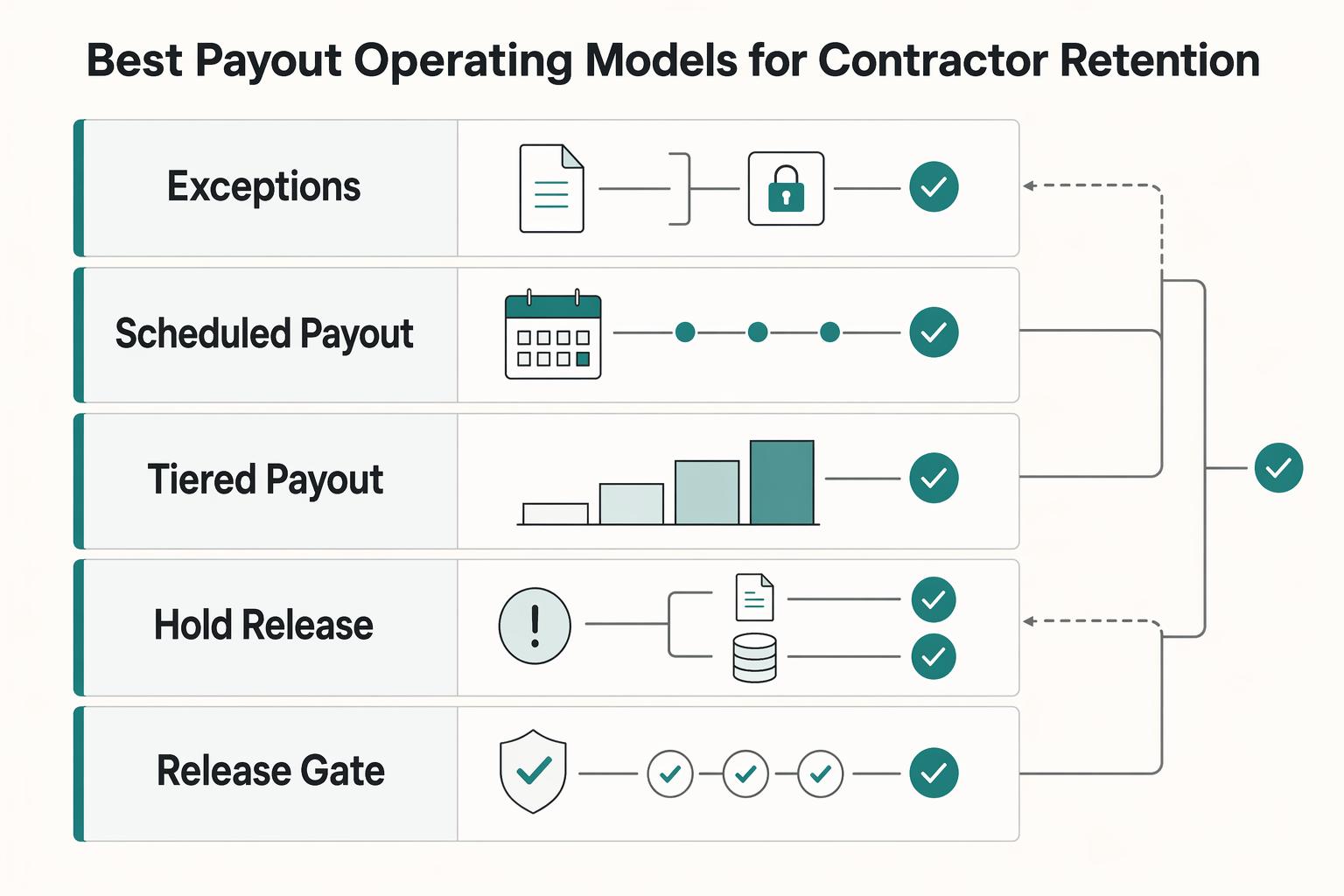
Payout issues are not just an accounts payable cleanup task if you run a two-sided marketplace. They shape supply-side trust, repeat participation, and fill reliability. They can also blur the revenue and margin signals teams rely on.