
Quick Answer
Split the metric first: track payout execution defects separately from compliance and payroll defects, then assign owners to each stream. For payout error rate contractor payroll decisions, keep the execution denominator to payout attempts and keep compliance issues in a different denominator tied to payable contractor records. Use event-level evidence for every counted case, including request ID, provider reference, webhook history, and ledger impact, so finance, ops, and engineering can resolve the same incident from the same record set.
Why Payout Error Rate Needs Its Own Measurement Track#
Many teams do not have one payroll problem. They have at least two, and both can disappear inside one blended number. The first is payout execution: failed, returned, duplicated, delayed, or misdirected contractor disbursements. The second is compliance and payroll operations: missing tax forms, blocked eligibility checks, filing defects, or classification issues. If you want a useful contractor payout metric, split those from the start.
Split the metric before you try to improve it#
Start by rejecting the catchall label of "payroll mistakes." It is too broad to show where money is leaking or who should fix it. A failed bank transfer and a missing tax form can both delay payment, but they do not belong in the same rate. They usually do not have the same owner, evidence trail, or fix path.
That split matters because blended reporting can lead to bad decisions. Engineering may spend a sprint on webhook retries when the real drag is ops holding payouts for incomplete records. Finance may escalate "payment errors" when the actual defect is a compliance queue with no SLA. If three teams can look at the same incident and describe it three different ways, you do not have a solved measurement problem. You have a definition problem.
Borrow measurement discipline, not someone else's benchmark#
The useful thing to borrow is discipline, not a rate. The CMS Payment Error Rate Measurement (PERM) Program is relevant because it treats measurement as a governed activity with a defined sampling universe, named partner responsibilities, a Data Use Agreement, and Record Retention Requirements. That mindset is the part worth copying.
For contractor payouts, define one boundary for execution errors and a separate one for compliance and payroll errors, then assign owners accordingly. Finance needs a financial impact view. Ops needs recovery ownership. Engineering needs recurrence prevention. A simple trust check is this: if a payout incident cannot be traced from request to provider status to ledger impact, your measurement is not audit-ready enough to rely on.
Build your own baseline where public benchmarks stop#
Public sources do not give you a reliable external benchmark for contractor payout error rates, and PERM is not a benchmark for this use case. Where the market does not offer a credible rate, say that plainly. Do not fill the gap with an invented target.
Your job is to build an internal baseline that stays stable enough to manage. From here, you'll set the numerator and denominator, gather the minimum evidence pack for each payout event, publish a weekly ownership map, and rank fixes by financial impact, regulatory exposure, and reversibility.
The immediate recommendation is simple. Do not start a reduction effort until you can tell whether an error came from disbursement execution or from compliance eligibility, and prove that answer from records rather than team memory.
Related: How to Pitch Instant Payouts to Gig Contractors: Messaging and Adoption Strategies. If you want a quick next step, try the free invoice generator.
Define payout error rate and measurement boundary#
Keep the payout execution rate narrow: count only disbursement execution defects, and track compliance and classification issues in separate buckets.
Step 1. Define one execution numerator and denominator. Use a numerator such as failed, returned, duplicated, delayed, or misdirected contractor disbursements, and a denominator such as total contractor payout attempts in the same cycle. Each numerator item should map to a real disbursement event with a provider reference or rail status.
Step 2. Exclude compliance-only defects from this rate. If funds never entered the payout path, keep the issue out of the execution rate and log it in a compliance bucket tied to Internal Revenue Service (IRS) and Form 941 operations. IRS correction workflows are separate: employers should use the corresponding 94X-X forms to correct employment tax errors as soon as discovered; corrections to a previously filed Form 941 use Form 941-X; requests for penalty or interest abatement use Form 843.
Step 3. Separate classification and wage-law risk from rail failures. Questions like Independent Contractor (1099) vs Employee (W-2), including issues under the IRS 20-factor test or an ABC test, are legal and tax-treatment risks, not payout rail execution failures. Track them in their own risk bucket so the right team owns remediation.
Step 4. Set one edge-case ownership rule. If a defect touches both execution and compliance, log it in both, but assign one primary owner. That keeps accountability clear and avoids double counting financial impact.
Gather prerequisites and evidence before you calculate#
Before you calculate, lock the evidence pack first, or your team will debate records instead of fixing failures.
| Area | Required records or signals | Purpose |
|---|---|---|
| Minimum evidence pack | Request ID, provider reference, status history, webhook timeline, ledger journal linkage | Trace payout attempt to provider outcome to financial posting |
| Eligibility artifacts | W-8 or W-9 status, Form 1099 status where relevant, KYC/AML gate outcomes | See whether the payout was eligible to enter the disbursement path |
| Payroll-tax dependencies | Payroll Tax Deposits status, FICA mapping, filing workflow checkpoints | Keep tax-state issues from being mislabeled as payout-rail failures |
| Measurement contract | Data Use Agreement, Record Retention Requirements, methods, documentation, due dates, data quality review, data security | Keep reporting consistent and append adjustments as a trail instead of overwriting history |
Step 1. Require one minimum evidence pack for every payout event. Each event should include a request ID, provider reference, status history, webhook timeline, and ledger journal linkage. This gives you one trace from payout attempt to provider outcome to financial posting, so each counted event is defensible.
Use a simple check: sample a failed or delayed payout and confirm you can join all five records in your internal tools. If you cannot, your measurement boundary is still weak.
Step 2. Pull eligibility artifacts as status signals. For each payable contractor record, surface whether key tax and identity artifacts are present: W-8 or W-9 status, Form 1099 status where relevant, and KYC/AML gate outcomes. Keep this operational, not interpretive: the goal is to see whether the payout was eligible to enter the disbursement path.
Every held payout should be classifiable as either eligible and sent or blocked before send, with the blocking artifact named. If that split is unclear, your execution rate will be polluted.
Step 3. Make payroll-tax dependencies visible where records overlap. If contractor payouts intersect with payroll-linked records, expose the dependency points that can block or reroute handling: Payroll Tax Deposits status, FICA mapping, and filing workflow checkpoints. This keeps tax-state issues from being mislabeled as payout-rail failures.
Step 4. Write a measurement contract before the first report. Borrow the discipline, not the domain, from the CMS PERM framework: explicit Data Use Agreement and Record Retention Requirements, plus clear methods, documentation, due dates, data quality review, and data security. Your contract should define who can edit event records, which fields are mandatory, retention windows, report-freeze timing, and how corrections are annotated.
The goal is consistency: two analysts pulling the same cycle should produce the same numerator and denominator from the same evidence base, with adjustments appended as a trail instead of overwriting history.
Build an error taxonomy and ownership map teams can run weekly#
Once your evidence pack is stable, move exceptions out of a single shared queue and into a weekly taxonomy with explicit ownership. Keep one primary owner, one escalation owner, and one evidence standard per error family.
Start with four error families#
Start with four families and make the inclusion rules strict enough that two reviewers sort the same case the same way. Borrow PERM's role-separation discipline, not its healthcare context: both the May 2020 and December 2021 manuals keep Statistical Contractor, Review Contractor, and Eligibility Review Contractor responsibilities distinct.
| error family | inclusion rule | primary owner | escalation owner | evidence required | recovery target time |
|---|---|---|---|---|---|
| payout execution | Eligible and sent, but failed, returned, duplicated, misdirected, or stuck because status and ledger state do not reconcile | Ops | Engineering | Request ID, provider reference, status history, webhook timeline, ledger journal linkage | Within your published rail recovery window |
| eligibility/compliance | Blocked before send because eligibility or compliance gating did not pass | Compliance or Ops Risk | Finance | Gate outcome, hold reason, case notes, approval trail | Before payout is released from hold |
| tax/reporting | Payment or posting exception tied to tax/reporting record state; track as IRS exposure | Finance or Payroll | Tax lead or controller | Tax/reporting status, mapping result, filing checkpoint, recordkeeping trail | Before filing or correction work proceeds |
| classification/legal | Exception tied to worker status or legal treatment that changes pay handling; track as FLSA and Workers' Compensation exposure | Legal or Compliance | Finance executive | Classification decision record, jurisdiction, exception memo, policy/coverage notes | Before next payout approval for that worker |
Checkpoint: from last week's incidents, can the primary owner classify each case using only the listed evidence? If not, the taxonomy is still an opinion map.
Split measurement, incident review, and eligibility review#
Assign boundaries that mirror PERM's split: measurement steward (internal Statistical Contractor equivalent), incident reviewer (Review Contractor equivalent), and eligibility reviewer (Eligibility Review Contractor equivalent). The December 2021 manual also keeps policy collection separate for Review Contractor vs Eligibility Review Contractor, which reinforces this boundary in practice.
Do not let one person both decide eligibility and redefine what counts in the metric.
Set one deadlock rule for shared ownership#
Use one hard rule every week: if ownership is shared across three teams, finance owns financial impact, engineering owns recurrence prevention, and ops owns recovery SLA.
End each weekly review with three outputs: count by family, open escalations by owner, and the oldest case blocked by missing evidence.
Calculate two rates every cycle and publish both#
Publish Payout Execution Error Rate and Compliance Payroll Error Rate side by side every cycle, and do not collapse them into one KPI. Keeping them separate prevents payout-rail failures from being masked by volume and keeps compliance and tax risk visible before correction work piles up.
Give each rate its own denominator#
Use different denominators and keep the boundary strict.
| line item | denominator | what belongs in the numerator | verification checkpoint |
|---|---|---|---|
| Payout Execution Error Rate | total payout attempts in the cycle | failed, returned, duplicated, misdirected, or stuck payouts where status history and ledger state do not reconcile | tie counts to request IDs or provider references in payout logs |
| Compliance Payroll Error Rate | total payable contractor records in the cycle | records blocked, held, or released with compliance or tax defects, including missing artifacts, filing exceptions, or mapping errors | tie counts to the approved payable population after holds are applied |
| Known unknowns | n/a | missing source comparables, missing data feeds, or unresolved cases that block clean comparison | publish the gap explicitly instead of forcing a target |
Do not use successfully paid contractors as the compliance denominator. Use the payable population: every contractor record due for a payout decision in that cycle.
Publish known unknowns with the rates#
Include a "known unknowns" row every cycle. It shows where the metric is complete, where data is incomplete, and where you do not have a defensible external comparison.
Be explicit about benchmark limits. The approved sources here do not provide a reliable public contractor payout benchmark. The closest analog is CMS PERM, which uses a statistically valid method, small state payment samples, and a rolling three-year cycle; use that as measurement-discipline guidance, not as a target for contractor payroll.
Break compliance into usable submetrics#
Break Compliance Payroll Error Rate into submetrics your teams can act on: Form 941 exceptions, FICA mismatches, and missing W-8/W-9 or Form 1099 artifacts. A single rolled-up rate is not enough to tell you whether the risk is filing, mapping, or document completeness.
Add one document-level checkpoint for each submetric. For Form 941-related records, confirm filing checkpoint status and whether correction work is required; the IRS says to correct errors as soon as discovered using the corresponding 94X-X forms, and a previously filed Form 941 is corrected with Form 941-X. For missing-artifact cases, require the exact missing document to be named.
For federal income tax withholding errors, correction flexibility is generally limited if the error is not discovered in the same calendar year wages were paid. Escalate those cases within the cycle instead of leaving them in backlog.
Rank fixes by cost, risk, and reversibility#
Prioritize fixes with a three-axis score: financial impact, regulatory exposure, and reversibility. Do not rank by ticket volume first; use volume only as a tie-breaker after scoring.
Score each fix on three axes#
Use one scoring rubric for every defect, with evidence attached to the ticket.
| axis | what to score | high score signals | verification checkpoint |
|---|---|---|---|
| Financial impact | money at risk and correction effort | duplicate payouts, returns, reissues, manual ledger repair, support workload | tie the score to affected payout attempts, ledger records, and known recovery steps |
| Regulatory exposure | whether the defect touches tax handling or payroll records | issues connected to federal income tax withholding or recordkeeping obligations | require the exact affected artifact or workflow, not a generic "compliance issue" label |
| Reversibility | how safely the change can be undone | isolated rule, clear rollback path, narrow blast radius | confirm owner, rollback method, and post-release reconciliation check |
A high-ticket UX issue can still be lower priority than a lower-volume defect with higher money risk or exposure. Keep the queue evidence-led, not noise-led.
A useful operating model is visible in CMS PERM: defined partner responsibilities, explicit exclusions, and a documented sampling process. You do not need to copy PERM methods, but you should copy the control discipline: define who scores each axis, what is in scope, and what is excluded.
Use a regulatory-first override#
If a defect affects withholding or recordkeeping, move it ahead of convenience improvements even when incident count is lower. IRS Publication 15 explicitly treats Federal Income Tax Withholding and Recordkeeping as core payroll-tax topics, so classify those defects as higher exposure and route them first.
Break ties by risk sequence#
When two fixes have equal impact, ship the one that reduces duplicate payout risk first, then the one that improves exception-handling speed.
Then compare prevention work versus detection and cleanup with your own data. For tax-document and payout-validation controls, track manual review hours, re-contact effort, payout reversals/reissues, ledger repair, and recordkeeping workload. Promote upstream controls when your evidence shows they reduce downstream correction work and can be rolled back safely.
Put controls in the payout path before funds move#
Put the highest-risk checks in the payout release path: if identity, eligibility, document status, or duplicate safety is unknown, hold the payout until the unknown is resolved.
Set a fixed release sequence#
Use a fixed sequence with machine-readable gate outcomes: identity and eligibility, then tax-document presence (W-8/W-9), then payout release. Treat this as an internal control choice, not a legal mandate.
For each gate, record pass/fail/hold, timestamp, and the exact artifact checked. If a contractor is missing a W-9, or a non-US payee has no valid W-8 on file, hold before any provider call.
Add pre-release policy checks for sensitive cohorts#
Make classification-sensitive branches explicit before payout creation. If your policy distinguishes 1099 vs W-2 treatment, or depends on Unemployment Insurance or Workers' Compensation handling for specific groups, encode that branch pre-release instead of relying on downstream review.
Keep the checkpoint concrete: a policy table keyed to worker treatment and jurisdiction, plus a reason code for each held payout. If classification is unresolved, route to manual review instead of guessing.
Make payout creation retry-safe and audit-ready#
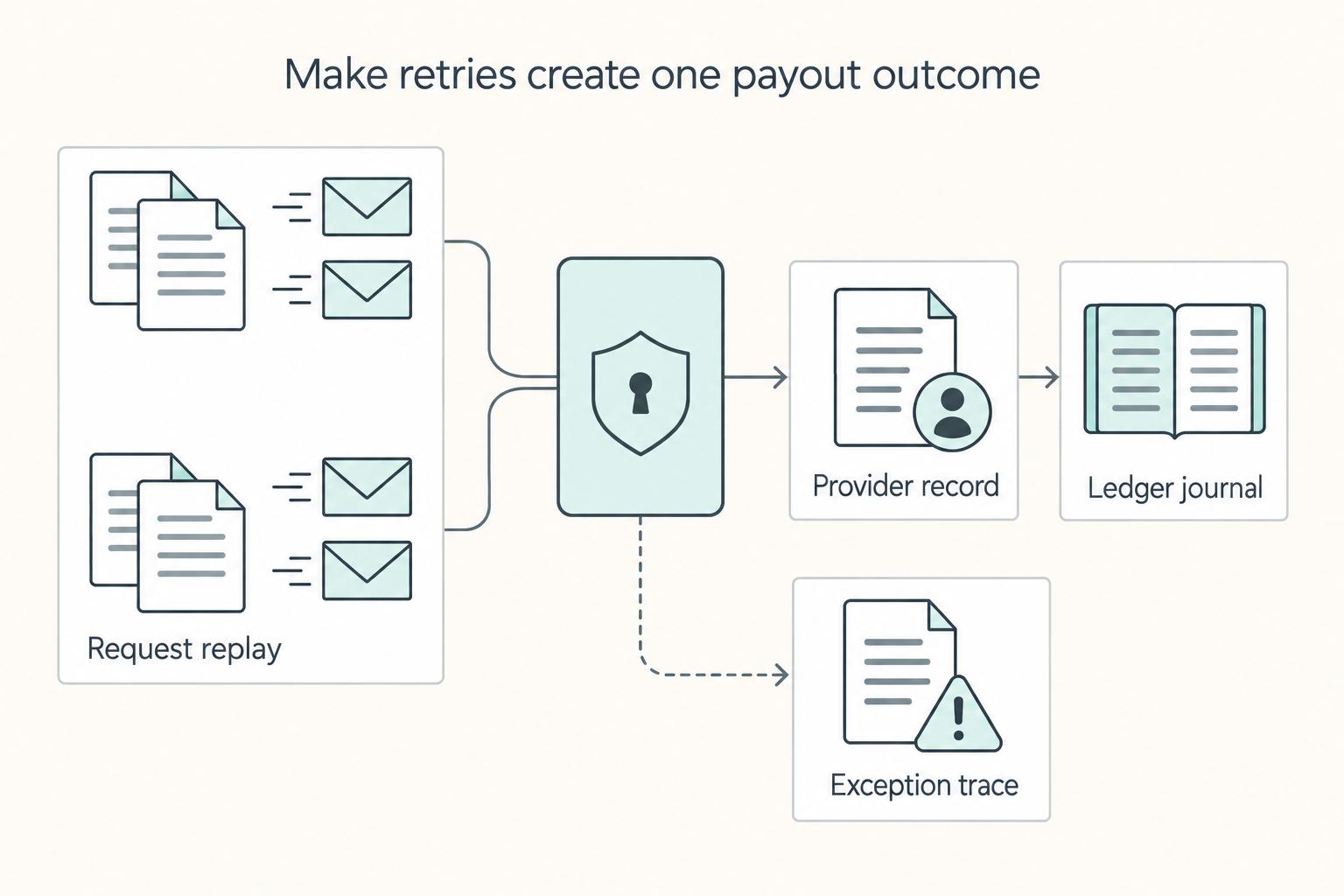
Enforce idempotent payout creation and replay-safe webhook handling so retries do not create duplicate disbursements or duplicate ledger entries. Validate this intentionally by replaying the same request and webhook event in a lower environment and confirming one payout record, one provider reference, and one journal outcome.
For every blocked, held, or released payout, keep a trace from request through ledger posting: request ID, gate outcomes, provider reference, webhook timeline, and ledger journal link. If a rule depends on a federal notice, store the official PDF from govinfo.gov; FederalRegister.gov states its XML content does not provide legal notice and remains unofficial until ACFR grants official legal status.
For a step-by-step walkthrough, see How to Classify a Worker as an Employee vs. an Independent Contractor in the US.
Recover from failures without creating second-order errors#
Recovery should branch by failure class, with one path per incident and explicit stop conditions, or you risk duplicate payouts and downstream tax corrections.
Classify the failure before choosing a recovery path#
Classify first, then pick exactly one path: retry, reroute, manual review, or cancel-and-reissue.
| Recovery path | Use when | Check before switching |
|---|---|---|
| Retry | Transient technical failures when underlying eligibility and compliance facts are unchanged | Verify the request ID, provider reference, webhook history, and ledger posting all match the same outcome |
| Reroute | A confirmed alternate rail or corrected destination | Verify the request ID, provider reference, webhook history, and ledger posting all match the same outcome |
| Manual review | Conflicting evidence | Verify the request ID, provider reference, webhook history, and ledger posting all match the same outcome |
| Cancel-and-reissue | You can show the original attempt will not settle | Verify the request ID, provider reference, webhook history, and ledger posting all match the same outcome |
Before you switch paths, verify that the request ID, provider reference, webhook history, and ledger posting all match the same outcome.
Block retries when the hold is compliance-based#
Set a hard do-not-retry flag for compliance or documentation holds until the hold condition is resolved. Keep automated retries for failures that are actually retry-safe.
| Scenario | Action | Form or limit |
|---|---|---|
| Compliance or documentation hold | Do not retry until the hold condition is resolved | Set a hard do-not-retry flag |
| Previously filed employment tax return is wrong | Correct it as soon as discovered | Use the corresponding 94X-X form |
| Previously filed Form 941 is wrong | Correct the return | Use Form 941-X |
| Penalties or interest are involved | Include Form 843 in the correction workflow | Penalty or interest abatement |
| Federal income tax withholding error | Account for timing limits in correction handling | Corrections are generally limited to errors discovered in the same calendar year wages were paid |
Before any reissue, reconcile whether the first attempt affected reporting artifacts, for example Form 1099, or payroll tax filings tied to Form 941. If a previously filed employment tax return is wrong, correct it as soon as discovered using the corresponding 94X-X form; for a filed Form 941, use Form 941-X. If assessed penalties or interest are involved, include Form 843 in the correction workflow.
For federal income tax withholding errors, account for timing limits in correction handling: corrections are generally limited to errors discovered in the same calendar year, and overcollection correction requires same-year repayment or reimbursement.
Review repeat failures by pattern, not one case at a time#
Review repeat failures weekly by error code, provider, worker cohort, and gate outcome. Assign clear ownership across financial recovery, recurrence prevention, and tax correction so process defects are fixed at the control level, not case by case.
Conclusion#
Stop managing contractor payroll with one blended error bucket. Run two rates instead: one for payout execution and one for compliance or payroll defects, with named owners for each. That is how you get faster prioritization, cleaner recovery, and fewer costs hiding in manual cleanup.
Step 1. Define two KPIs and freeze the denominator. For execution, use payout attempts in the cycle. For compliance or payroll, use payable contractor records in the cycle. If one incident touches both, log it in both and assign one primary owner. Otherwise your metric turns into a mixed signal that nobody can fix cleanly.
Step 2. Publish a weekly taxonomy and owner table. Do not leave ownership to a meeting. Borrow the separation discipline CMS uses in the PERM program, where responsibilities are split across distinct roles instead of collapsed into one team. In practice, if a case has money impact, recurrence risk, and recovery work, finance owns impact, engineering owns prevention, and ops owns recovery time.
Step 3. Require an evidence pack for every exception before you mark it resolved. Your minimum pack should stay event-level: request ID, provider reference, status history, webhook timeline, and ledger journal linkage. A useful check is simple: all five items should agree on whether funds were blocked, released, returned, or reissued. If they do not, you have not diagnosed the error yet. One failure mode to watch for is closing a case on a provider reject code while the ledger still shows a live payable or duplicate release risk.
Step 4. Gate payouts before funds move. KYC/AML outcomes and required tax artifacts, such as W-8 or W-9 where enabled, should be checked before release. If a payout is blocked for eligibility, do not treat it like a timeout and retry into the same stop condition. That is how compliance defects get miscounted as rail failures and duplicate recovery work starts piling up.
Step 5. Run a weekly top five fix list ranked by cost, risk, and reversibility. If two fixes look equal, ship the one that reduces duplicate payout risk first. Volume alone is a bad ranking rule when a lower-count issue can create tax or compliance exposure, reconciliation breaks, or hard-to-reverse misdirected funds.
A final operator note: document discipline matters as much as rate math. The CMS PERM Manual, updated December 2021, explicitly names both a Data Use Agreement and Record Retention Requirements. You do not need to copy that program, and it is not a benchmark for contractor payouts, but the lesson is solid: when records are missing, measurement degrades fast. Other federal measurement programs treat missing records as an error in their own context. Use the same standard internally. If the evidence pack is missing, keep the exception open. Copy/paste checklist:
- Define two KPIs with fixed denominators and inclusion rules
- Publish a weekly taxonomy-and-owner table
- Require event-level evidence packs for every exception
- Gate payouts with KYC/AML and required tax artifacts
- Run a weekly top-5 fix list ranked by cost, risk, and reversibility
Related reading: How to Handle Payroll Taxes for a Remote US Team.
Frequently Asked Questions
What is payout error rate in contractor payroll, exactly?
The documented reference here is CMS's Payment Error Rate Measurement (PERM) program, which measures and reports a national improper payment rate for Medicaid and CHIP annually, as required by the Payment Integrity Information Act of 2019.
What should be included in payout error rate and what should be excluded?
In the PERM workflow described here, scope is tied to review selection and medical record requests: selected providers are contacted by a PERM Review Contractor and sent a medical records request letter.
What is a good target payout error rate if external benchmarks are weak?
Do not set a universal contractor payout target from this material. PERM is a measurement-discipline example, but it is a Medicaid/CHIP improper-payment program, not a contractor payroll benchmark.
What are the top root causes in contractor payroll operations?
OMB identified Medicaid and CHIP as programs at risk for significant improper payments.
Who should own payout error reduction across product, engineering, finance, and ops?
In the PERM process shown here, provider outreach and medical-record request initiation are handled by the PERM Review Contractor.
How quickly can a team reduce payout error rate after instrumenting the basics?
The documented cadence here is PERM's review structure: CMS uses a 17- or 18-state rotation, and each state, district, and territory is reviewed once every three years.
How is payout error rate different from broader payroll compliance risk?
PERM's scope covers measuring improper payments in Medicaid and CHIP under federal payment-integrity requirements.
Try a related tool
Researched and edited by the Gruv editorial team. Gruv builds cross-border billing, payouts, and finance-operations software for global businesses.
Sources
- cms.gov/files/document/perm-manual.pdftrusted
- cms.gov/files/document/perm-manual-december-2021.pdftrusted
- dot.ca.gov/-/media/dot-media/programs/construction/docu...trusted
- dot.ca.gov/-/media/dot-media/programs/design/documents/...trusted
- ecfr.gov/current/title-42/chapter-IV/subchapter-C/par...trusted
- federalregister.gov/documents/2006/08/28/06-7133/medicaid-progra...trusted
- federalregister.gov/documents/2024/06/25/2024-13331/increased-am...trusted
- gsa.gov/sell-to-government/step-1-learn-about-govern...trusted
Educational content only. Not legal, tax, or financial advice.
Related Posts

Payout Failure Benchmark Report for Platform Teams
A useful **payout failure benchmark report** is not a prettier exception export. It is the operating document that tells your platform team which payout failures are real rail problems, which ones are recipient-data problems, which ones were held before release, and which ones were later recovered.
How to Pitch Instant Payouts to Gig Contractors Without Overpromising
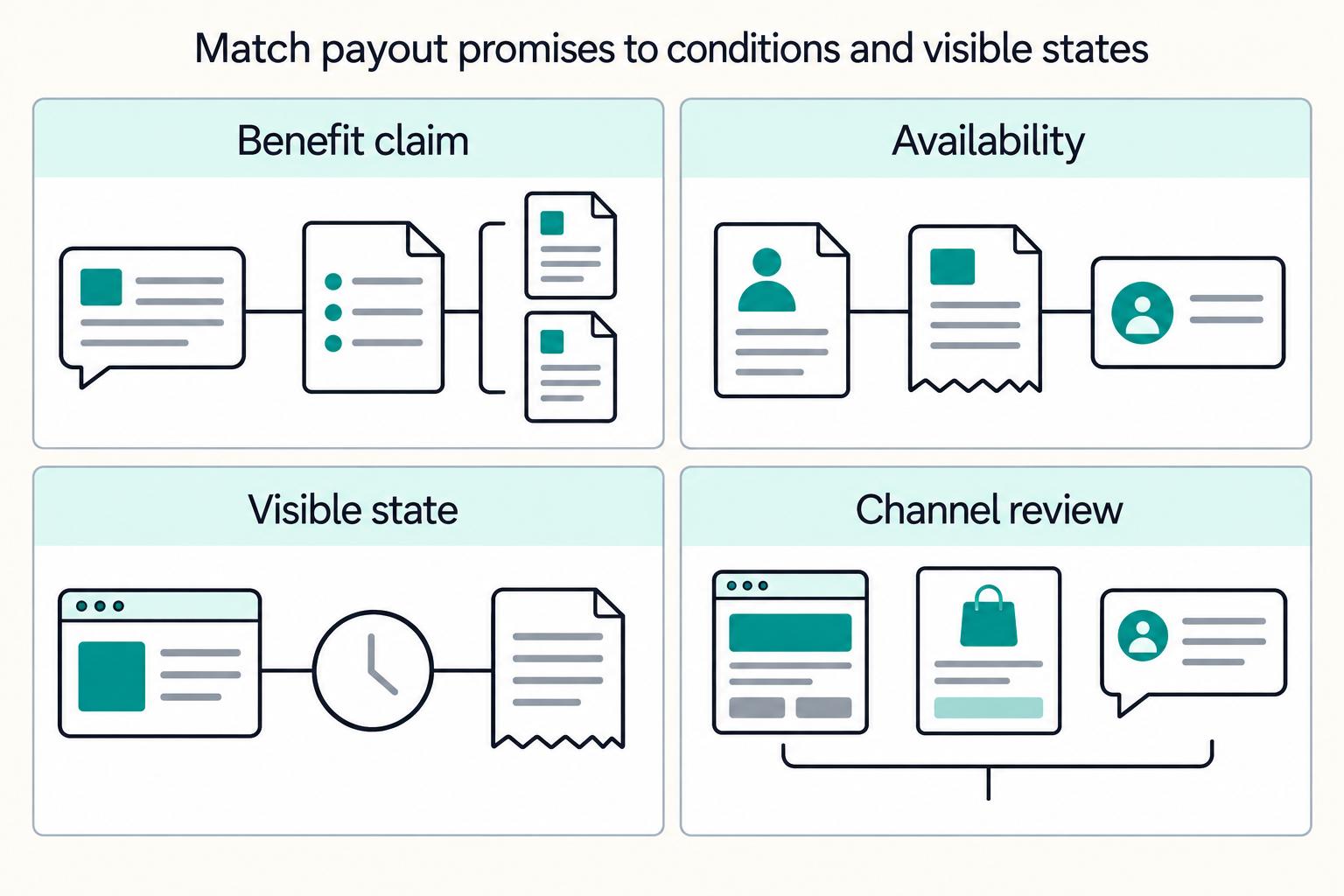
Instant payouts are not a headline feature first. They are a promise about what your payout operation can actually deliver, explain, and recover when something goes wrong. If that promise is vague, any growth upside can be short-lived, and cleanup can land in support, finance, and contractor trust.
Build a Payout Error Rate Dashboard to Reduce Failed Disbursements
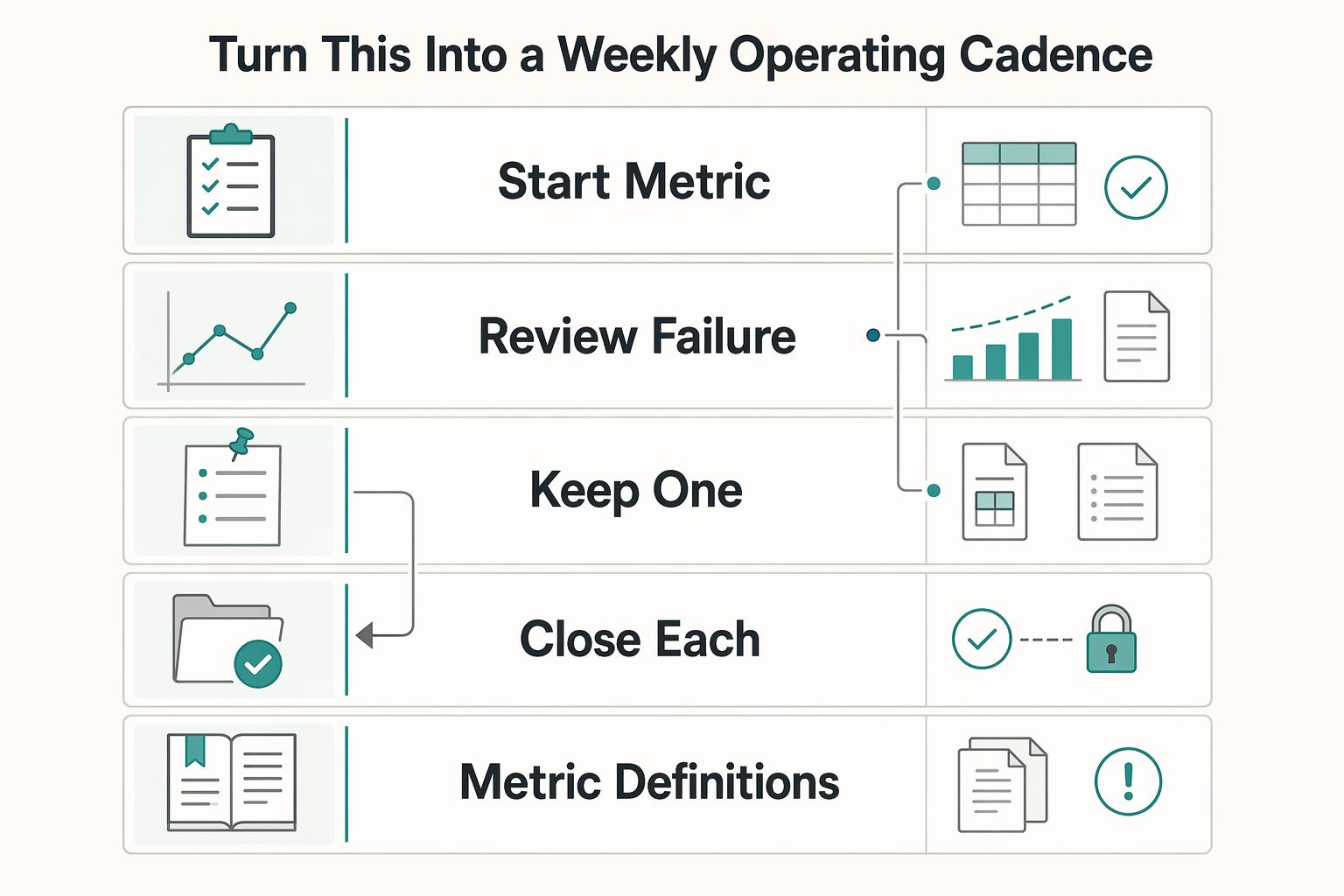
A payout dashboard is only useful if it helps you act. It should tell you what failed, where it failed, who owns the next move, and how you will verify the fix. This guide is for finance, operations, and product owners who need that level of clarity, not another blended error chart that looks tidy but hides the cause of failed disbursements.