
Quick Answer
Choose a model only after a live test leaves fewer unknowns than knowns. Build a country matrix with status labels (`verified`, `unknown`, `blocked`), and require dated proof for billing availability, payout coverage, and owner assignments before launch. If refund, chargeback, or payout disputes are likely, prioritize centralized billing ownership and a written payout rulebook over faster creator onboarding.
What to evaluate in newsletter platform payments#
Choosing a Substack-style billing and payout model is an operating decision before it is a product decision. If you commit roadmap or GTM spend before payment operations are clear, you risk promising creators something your team cannot run reliably.
A few points are clear. Substack's onboarding page says creators own their mailing list, subscriber payments, and intellectual property, and it presents portability as part of the value proposition if a creator leaves. Those claims matter because they shape who controls the audience relationship and what can move with the creator.
Monetization is also clear at a high level. Paid subscriptions are often described as a primary revenue path, and Substack's launch guidance explicitly includes setting up payments. That means you should evaluate subscriber billing and payout design early, not as a detail to clean up later.
The gaps matter just as much. The same materials do not establish country-by-country billing or payout coverage, payout timing, hold or release rules, dispute handling, or reconciliation design. Treat all of that as unconfirmed until you verify it directly. Use this article as a decision list, not a brand ranking:
- What you can launch now
Start with claims you can verify in writing: ownership of the mailing list, ownership of subscriber payments, and whether portability is explicit. Enabling paid subscriptions alone does not confirm payout operations or exception handling.
- What needs market-by-market validation
Treat billing and payouts as separate checks in each market. Confirm actual coverage and operating ownership before you call a market launch-ready.
- What should stay out of scope for now
Keep policy-gated disbursement, payout SLA promises, and audit-ready reconciliation out of your external promise set until controls are in place. Also verify current first-party terms before relying on commonly repeated third-party fee summaries.
Start with selection criteria and fit#
Use this section to decide fit, not to rank brands. Growth signals matter, but they are still just inputs. Architecture decisions should wait until you have operating proof.
| Check | Grounded input | Limit |
|---|---|---|
| Right reader | Substack reports nearly half a million paid subscriptions and more than 32 million free subscriptions in the past three months; most connections come from the feed | Strong acquisition signal, but it does not answer every operational question on its own |
| Wrong reader | A beehiiv opinion piece presents Substack as a fit for a zero-dollar budget and flags a 10% fee downside | Useful creator-level cues, but not enough for an operator-level rollout decision |
| Evaluation criteria | Acquisition source, budget fit, fee tradeoffs, and economics/exit terms | Turn each into a verification check and document what is confirmed versus still unknown |
| Architecture checkpoint | A creator case reports moving from Mailchimp to Substack in early 2019, audience growth that tripled in the first year, and later reaching 17,000 subscribers | Useful migration context, but not a substitute for your own evidence pack and sign-off path |
- Right reader: platform founders and operators
This is for teams evaluating Substack-style paid subscription models. Substack reports nearly half a million paid subscriptions and more than 32 million free subscriptions in the past three months, with most connections coming from the feed. That is a strong acquisition signal, but it does not answer every operational question on its own.
- Wrong reader: solo writers and surface feature shoppers
If you are mainly picking a newsletter UI, this framework is probably more operational than you need. The beehiiv opinion piece presents Substack as a fit for a zero-dollar budget and flags a 10% fee downside. Those are useful creator-level cues, but they are not enough for an operator-level rollout decision.
- Four non-negotiable evaluation criteria
Anchor decisions to acquisition source, budget fit, fee tradeoffs, and economics/exit terms. Turn each into a verification check, and document what is confirmed versus still unknown for your use case. A common failure mode is treating audience growth evidence as proof of operating readiness.
- Checkpoint before locking architecture
If you cannot define clear go/no-go criteria for your use case, do not finalize the stack yet. One creator case reports moving from Mailchimp to Substack in early 2019, audience growth that tripled in the first year, and later reaching 17,000 subscribers. That is useful migration context, not a substitute for your own evidence pack and sign-off path.
Compare operating models before you pick a stack#
Pick the model that leaves you with the fewest unresolved operating questions after a real test, not the one with the cleanest launch UX. Clear ownership boundaries and workflow fit matter once money starts moving.
Memberful presents Substack as a baseline with a built-in payment system and subscriber analytics, and it notes multiple alternatives with similar features across 9 platforms. That is useful category context, but similar feature lists do not prove that your operating model is ready.
| Model | Ownership of funds | Mailing list ownership | Compliance scope | Payout complexity | Failure handling |
|---|---|---|---|---|---|
| Substack native flow | Built-in monetization is part of the baseline model; confirm exact ownership in your trial. | Not established; verify export and admin terms directly. | Not established; document responsibility boundaries before commit. | Depends on your goals, business model, and workflow. | Test support and escalation paths during demos. |
| Memberful-style membership stack | Built-in payment capability is part of the baseline feature set; confirm ownership boundaries in your setup. | Not established; verify control and portability terms. | Not established; document cross-tool responsibilities before launch. | Depends on your goals, business model, and workflow. | Validate exception handling during trials. |
| Centralized platform billing | Not established; confirm billing ownership directly. | Not established; verify access and export terms. | Not established; map responsibilities before launch. | Depends on your goals, business model, and workflow. | Test who handles issue resolution before commit. |
| Hybrid split ownership | Not established; write down ownership splits before commit. | Not established; define role boundaries explicitly. | Not established; clarify shared responsibilities in writing. | Depends on your goals, business model, and workflow. | Trial escalation paths to avoid handoff gaps. |
| In-house orchestration | Not established; define ownership explicitly before launch. | Not established; verify portability and permissions in your own terms. | Not established; document internal responsibility boundaries. | Depends on your goals, business model, and workflow. | Validate retries and support paths in hands-on testing. |
Read this table as an uncertainty scan, not a ranking. The core tradeoff in the source material is straightforward: simplicity for writing-first workflows versus more complex operations for teams that need granular control.
Before you commit, run trials or demos with real content and a small subscriber segment. Use that test to document ownership boundaries and confirm whether the workflow actually fits your team. If that evidence is incomplete, the model is not ready.
Option one creator-owned model with Substack-style controls#
Use this model when your first question is whether individual writers can turn free readers into paid subscribers, rather than how to standardize centralized payout operations on day one. It fits creator-first launches where mailing list ownership and optional paid subscriptions are part of the core pitch in creator-facing materials.
Substack's official site supports that positioning with a dedicated Going paid guide. It also describes the product as "a new media app that connects you with the creators, ideas, and communities you care about most." A third-party guide published March 19, 2026 also reports scale signals, including more than 5 million paid subscriptions, which is useful context but not an official company metric.
Why teams pick this early#
In early-stage niche networks, each writer is often the growth engine. A creator-first setup keeps the first test simple: can this voice turn free readership into paid demand? That is often a fast way to validate demand before you add heavier centralized controls.
What is supported, and what still needs verification#
An independent creator tutorial dated Sep 18, 2023 says, "You own your data, including your subscriber list," and that paid subscriptions are optional. Those points can support creator-first messaging, but the source is explicitly non-official, so it is not enough on its own for hard policy claims.
| Point | What the article cites | Status |
|---|---|---|
| Mailing list ownership | Substack's onboarding page says creators own their mailing list, and an independent creator tutorial dated Sep 18, 2023 says, "You own your data, including your subscriber list" | Verify in current official terms and product flows before publishing the promise |
| Subscriber payments ownership | Substack's onboarding page says creators own subscriber payments | Verify in current official terms and product flows before publishing the promise |
| Intellectual property ownership | Substack's onboarding page says creators own intellectual property | Verify IP terms with each platform directly |
| Paid subscriptions optional | The independent creator tutorial says paid subscriptions are optional | Non-official source; not enough on its own for hard policy claims |
| Payout rules across creators and markets | The packet does not include policy text that proves payout rules across all creators and markets | Treat as unconfirmed until verified directly |
If you plan to promise control over mailing list ownership, intellectual property, or subscriber payments, verify each point in current official terms and product flows before you publish those promises.
Verification to complete before launch#
- Export and offboarding proof
Run a real export test, confirm who can export, confirm what data is included, and document what happens when a writer leaves.
- Terms and monetization alignment
Review current terms and the official Going paid guide with your intended team roles. If you cannot point to a current document or product screen, do not publish the claim.
Tradeoff to watch#
The main risk is over-promising ownership or control based on community narratives instead of verified policy and product evidence. If your launch goal is demand validation, this model can be a credible starting point. If your launch goal is centralized control from day one, use a billing model built around operator visibility and control.
Related reading: CleanTech Marketplace Payments: How to Pay Solar Installers and Energy Auditors at Scale.
Option two platform-owned billing with centralized writer payouts#
Choose this model when payout errors and disputes are costly enough that finance needs one clear owner of billing and writer disbursements. For multi-writer products, slower onboarding can be a fair trade for tighter controls and clearer accountability.
- Best for: multi-writer products that need strong finance ownership, consolidated reporting, and clearly defined payout expectations.
- Pros: can support policy-gated disbursement, more consistent handling rules for refunds and chargebacks, and reconciliation workflows that are easier to audit when implemented well.
- Cons: may require heavier compliance and operations work, plus more product effort on payout states, approvals, and exceptions.
- Concrete use-case: a vertical media platform paying many contributors where finance needs one operational source of truth.
In the Substack-style baseline, paid economics are explicit once the paywall is live. The fee is a 10% platform fee plus Stripe processing, about 2.9% and 30 cents per transaction, with payouts sent to publishers' bank accounts. One calculator example shows 200 subscribers at US$5/month netting US$811/month. Use that as a comparison artifact for fee mechanics and net-outcome testing, not as proof that centralized multi-writer controls are built in.
A notable governance risk: criticism that the platform can allow unvetted or misleading content.
If failed payments, refunds, or chargebacks regularly turn into writer disputes, this model can be safer than creator-owned flows. The tradeoff is that you must own and document the payout rulebook yourself, including when revenue becomes payable, what reduces or reverses payouts, and how exceptions are resolved.
Option three hybrid ownership with shared control boundaries#
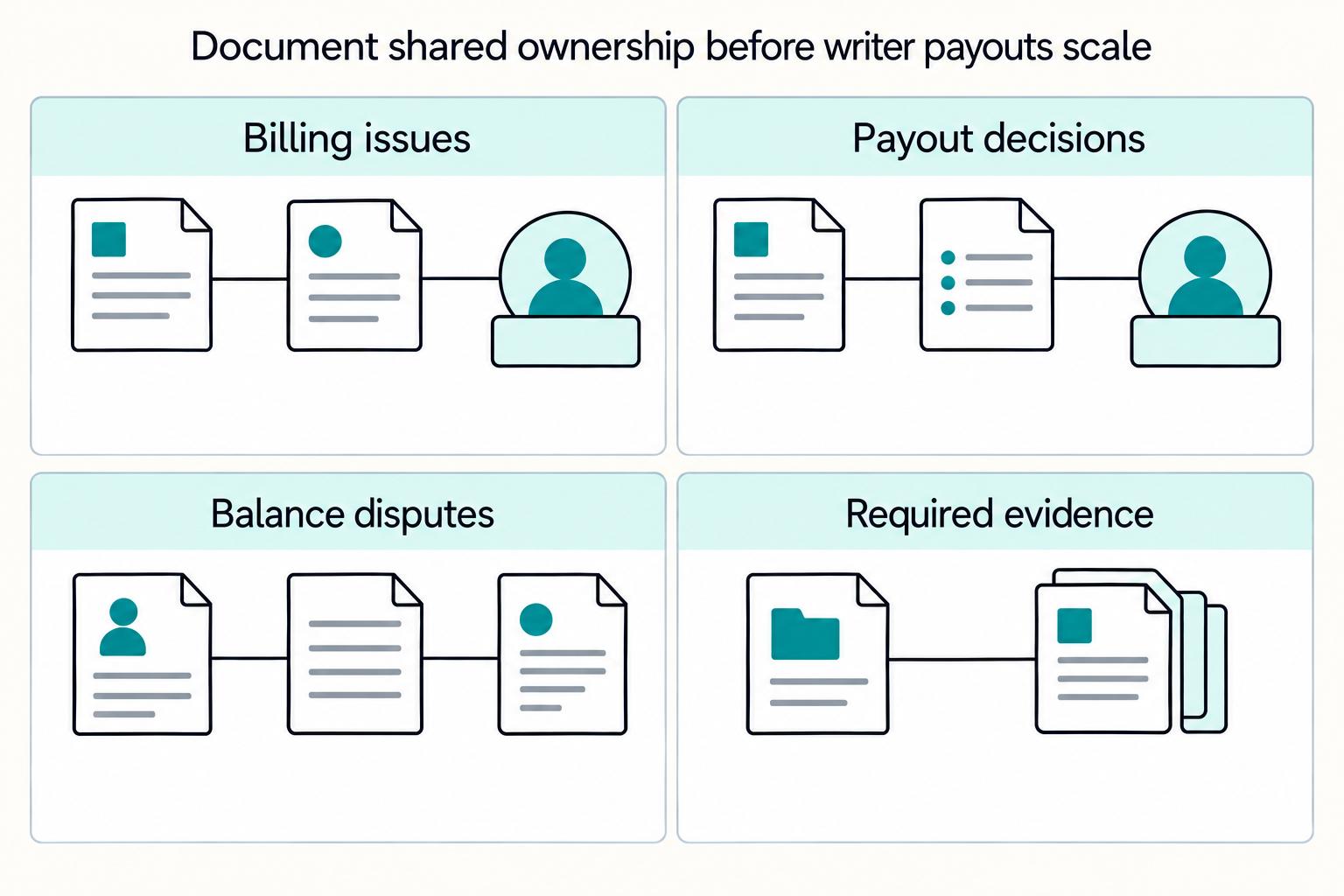
Hybrid ownership can make sense when you need tighter payout and reporting control without giving up a creator-led growth motion entirely. In practice, that can look like this:
| Control point | What to document |
|---|---|
| Billing-side issue handling | Who owns billing-side issue handling |
| Writer payout approvals and releases | Who approves and releases writer payouts |
| Subscriber issues that affect writer balances | Who makes final decisions when subscriber issues affect writer balances |
| Payout holds, reversals, and adjustments | What evidence is required to hold, reverse, or adjust payouts |
- Best for: teams moving from creator-led acquisition to operator-led controls in stages.
- Pros: preserves creator autonomy where it drives growth while centralizing payout governance and operational reporting.
- Cons: can break down if billing, support, and dispute ownership is not explicitly documented.
- Concrete use-case: a marketplace-newsletter blend where creators lead audience relationships, but payout policy and review are standardized by the platform.
- Decision rule: if tickets regularly bounce between teams, tighten ownership boundaries before expanding.
Substack's public positioning supports the creator-led side of this model. It describes "creator-centered communities, all powered by subscriptions," and surfaces creator resources such as "How to start a Substack" and the "Going paid guide." What those materials do not provide is a documented hybrid split for subscriber billing, support, and disputes, so that boundary has to come from your operating model.
Document the split in one short artifact. Name:
- who owns billing-side issue handling
- who approves and releases writer payouts
- who makes final decisions when subscriber issues affect writer balances
- what evidence is required to hold, reverse, or adjust payouts
Treat that artifact as a control boundary, not admin overhead. Substack's fundraising history makes the same operational point. An earlier broader inclusion attempt in March 2021 was described as "too complex," and a later community round on Mar 28, 2023 ran through a specific external flow, Wefunder, with participation constraints tied to investor eligibility. The same lesson applies here: when ownership is shared, clear handoff boundaries should come before scale.
Option four membership stack with Memberful-style components#
Choose this option when you want configurable membership tooling and your team can own the operational glue. It can work well, but only if payout and control details are defined in writing before you commit.
A Memberful-style stack fits teams that can turn product claims into explicit rules for billing ownership, access changes, support handling, and writer compensation.
What you can treat as known#
Memberful is presented as a membership tool that works on its own or with WordPress, which supports deployment flexibility. Adjacent coverage also mentions dynamic paywalls, and paid subscriptions are explicitly available in adjacent creator/newsletter platforms.
| Supported signal | What it helps you infer | What it does not prove |
|---|---|---|
| Memberful can work standalone or with WordPress | You have options for where membership lives and how tightly it integrates with your site | Nothing about writer payout timing, settlement flow, or fund ownership |
| Dynamic paywalls appear in adjacent membership coverage | Access control for exclusive content is part of this category's feature set | Not how access changes should be handled after failed payments, refunds, or disputes |
| Paid subscriptions are available in adjacent creator/newsletter platforms | Subscription monetization is an established option in the space | Not whether multi-writer revenue allocation is natively supported |
| Comparison guides cite platform tests and conversations with hundreds of operators | Roundups can be useful for initial discovery | Not a substitute for written finance and operations answers in your setup |
Feature parity can still mislead you. One comparison notes that many ESPs have very similar features. It also limits scope to the indie newsletter space, so do not treat indie feature comparisons as proof of production finance fit.
Where teams get burned#
A common failure pattern is selecting a platform based on visible creator features, then discovering that money-movement rules are still unclear. Cost and control mismatch, along with platform limits, are recurring reasons teams outgrow a setup.
The expensive gaps usually show up in failure states and permissions. What happens after failed charges? Who can change member status? Who approves adjustments that affect writer balances? Where are those decisions recorded? If those answers stay informal, support drift and reconciliation friction follow.
Verification before commit#
Before you commit, require written answers from the vendor or implementation owner on:
- payout timing and states between successful subscriber payment and funds available for writer compensation
- failure handling for failed charges, access rollback, refunds, disputes, and manual adjustments
- admin control granularity, including who can edit membership status, issue credits, or export transaction-level data
- reconciliation evidence, including transaction exports, membership change history, and adjustment records
If responses stay high-level or avoid failure states, treat that as a red flag. A membership stack is a strong middle path only when money movement and permission controls are explicit before launch.
For a broader look at creator payouts across channels, see How Platform Operators Pay Creators Globally Across YouTube, Twitch, and Substack.
Option five in-house billing plus payout orchestration APIs#
Choose this path only when control gaps are clear enough that vendor limits are a bigger risk than owning payments operations yourself. If you cannot assign ongoing ownership across engineering, finance, and support, do not choose it yet.
When this path is justified#
This path is usually justified when your approval controls, reporting requirements, or payout rules do not fit off-the-shelf flows. It also becomes relevant when external channel policy can force billing changes and reshape economics.
A concrete policy example is Apple in-app purchases. In the cited case, app transactions had to move to Apple's billing system or risk app-store removal, and the cited fee impact was 30%. In the same example, creators were described as either absorbing that cost or passing it to subscribers, with some threatening to leave the platform.
What you gain and what it costs#
You can gain more direct control over billing and payout rules and finance reporting aligned to your operating rules. The cost is typically the highest implementation and maintenance burden in this set.
The risk is operational, not just technical. Weak failure-state handling and unclear ownership boundaries can turn into reconciliation debt quickly. Also, advanced publisher tooling may exist in vendor ecosystems but still be rollout-limited. As of Dec 17, 2024, Substack described enterprise capabilities as being developed through an extended private beta.
What to verify before you commit#
Before you commit, require written proof before build starts:
- a channel and market ownership map for billing, payout approvals, and policy exceptions
- a reconciliation sample connecting subscriber charges, refunds, holds, and writer disbursements
- named escalation owners for policy or fee shocks that affect payouts
If your reason is only "more flexibility," that is not enough. Proceed only when the control gap is documented and your team can run the system every month, not just launch it.
For a step-by-step walkthrough, see AgriTech Platform Payments: How to Pay Farmers and Agricultural Workers in Emerging Markets.
Build a market-entry decision matrix before rollout#
Do not approve a new market from a vendor page alone. Build a country-by-country decision matrix first and require documented evidence before each launch wave moves forward.
Use platform claims like "you own your subscriber list," "you set your prices," and "you get paid directly" as inputs, not approvals. Those claims do not, by themselves, confirm that your billing and payout operations are ready for a specific market.
- Create one row per country with decision-critical fields only.
Track: country, billing availability, payout coverage, required policy checks, evidence owner, evidence date, economics notes, and status (verified / unknown / blocked). Include economics because proceeds can be reduced by platform takes and Stripe fees, which affects both margin and writer expectations.
| Country | Billing availability | Payout coverage | Policy checks | Evidence owner | Evidence date | Economics notes | Status |
|---|---|---|---|---|---|---|---|
| Example market | Unknown | Unknown | Pending | Assigned | Dated | Fee impact noted | Unknown |
- Define go/no-go criteria before exceptions start.
Treat the matrix as a gate, not a tracker. For each wave, define what evidence owners must provide to move a market from unknown to approved. Use dated evidence and revalidate older commentary before launch.
- Require minimum control artifacts before enabling paid plans.
At minimum, document: ownership policy, failure escalation map, and reconciliation requirements. If you cannot trace a sample flow from subscriber charge through fees, refunds (if any), and final disbursement state, launch risk may still be too high.
- Sequence rollout to reduce avoidable failures.
A conservative operating sequence is: validate eligibility assumptions, then launch billing, then enable writer payouts only after controls pass. This is an operating rule, not a vendor mandate.
Use "Quick decision framework" and "Pricing/ROI matrix (illustrative)" style artifacts as starting points, then tie approvals to documented unknowns. If a country row is still unresolved, hold the paid launch or keep that market free-first until evidence is complete. If your matrix is pointing toward centralized controls, review your payout operations with Payouts.
Prevent the failures competitors ignore#
Newsletter platforms fall into distinct camps, and the wrong choice can force you to rebuild the subscriber relationship later.
Standardized workflows for dunning, chargebacks, refunds, payout holds, or reconciliation mismatches are not defined here. Treat those as internal release-gate categories and assign explicit owners before rollout.
| Failure path | Support owns | Finance owns | Ops owns |
|---|---|---|---|
| Dunning | Define internally | Define internally | Define internally |
| Chargebacks | Define internally | Define internally | Define internally |
| Refunds | Define internally | Define internally | Define internally |
| Payout holds | Define internally | Define internally | Define internally |
| Reconciliation mismatches | Define internally | Define internally | Define internally |
Your key control artifact is a single failure-escalation map across billing and payouts. For every release, verify:
- Like-for-like platform testing: compare options under the same setup, with the same list import, welcome sequence, and publishing period.
- Platform dependency risk: document how platform-level changes could disrupt audience reach and operations.
- Payout friction check: where writer payouts matter, prefer paths with quick response times and simple payment methods.
Conclusion#
The right choice is the model you can run reliably when things break, not the one with the cleanest creator messaging. If ownership, failure handling, and your internal definition of audit-ready reconciliation are still fuzzy, you do not have a launch decision yet.
- Choose the setup that removes more operating drag than it adds.
The Bulwark described a split setup, with subscriber-only content on Substack and everything else on a custom WordPress site, then migrated its full archive to make Substack a single unified home, noting the separate site was no longer worth maintaining. The practical takeaway is to prefer the model that reduces duplicate surfaces and ownership ambiguity.
- Use goals, reach, and engagement before expanding paid subscriptions.
Substack's Going Paid guidance is explicit on sequence: set goals first, then review your numbers, with value measured along two axes, reach and engagement. If those signals are weak, test a smaller paid offer or a tighter cohort before expanding.
- Treat case-study upside as proof of possibility, not proof of fit.
In The Bulwark example, subscription revenue was reported as more than $3.6 million as of January 2024, with over 15% of new subscribers coming through the Substack app or network, and many new subscribers already having a Substack account or saved card. Those details may suggest lower reader friction, but they do not prove your audience fit or operating model.
Next step: build a first rollout decision matrix for your initial launch cohort, and require each launch to pass it. Expand only after your goals and performance signals are proven in practice.
Before scaling paid subscriptions, pressure-test your rollout assumptions with a solutions walkthrough tailored to your constraints on Merchant of Record.
Frequently Asked Questions
How do Substack-style platforms actually pay writers in practice?
Based on the excerpts reviewed here, the subscription side is visible: paywall prompts such as a 7-day free trial and paid-subscriber sign-in. The same excerpts do not support exact claims about payout timing, settlement cadence, or payout rails. Treat payout design details as unconfirmed until a provider shows clear payout states, hold reasons, and reconciliation evidence.
What is the difference between managing `subscriber billing` and managing `writer payouts`?
Subscriber billing is the clearer, observable path: reader charging and access states like trial gates and paid-subscriber sign-in. Specific writer payouts operations — timing, payable logic, and hold handling — should be treated as unknown until documented by the provider. If your team cannot quickly separate reader-access issues from writer-funds issues, ownership boundaries are still too unclear.
When should a platform prioritize creator ownership of `subscriber payments` over centralized controls?
Treat this as a tradeoff decision, not a default. Substack’s Going Paid guidance says to start with goals, then review your numbers, especially reach and engagement, before turning on paid subscriptions. If creator ownership does not clearly improve those inputs for your model, keep tighter centralized controls until it does.
What must be validated before expanding newsletter payments to a new market?
This guide does not establish country-by-country availability, launch eligibility, or regulatory thresholds. Validate real billing and payout support in writing instead of inferring coverage from broad marketing claims. Keep the market in no-go status until provider support and exception-handling readiness are documented.
What usually breaks first in production: `dunning`, `chargebacks`, or payout operations?
There is no supported evidence here for a universal first failure. Treat any of these as first-risk paths if ownership, visibility, or retry behavior is weak. Before launch, test retry handling, confirm failed or held events get an owner and timestamp, and make sure unresolved exceptions cannot silently block access or payout decisions.
How should founders set `go/no-go criteria` for launch decisions?
Set two gate types: demand gates and control gates. For demand, use goals plus the measurable pair of reach and engagement before scaling paid subscriptions. For control, require clear evidence for exception handling and reconciliation. If either side is still assumption-based, hold the launch.
Try a related tool
Researched and edited by the Gruv editorial team. Gruv builds cross-border billing, payouts, and finance-operations software for global businesses.
Sources
Includes 7 external sources outside the trusted-domain allowlist.
- repository.law.miami.edu/cgi/viewcontent.cgitrusted
- almcorp.com/blog/substack-digital-marketing-guideexternal
- beehiiv.com/blog/is-substack-worth-itexternal
- blog.tryletterhead.com/blog/newsletter-monetization-platformsexternal
- designmodo.com/substack-alternativesexternal
- distribb.io/blog/substack-vs-medium-the-ultimate-guide-f...external
- drmehmetyildiz.substack.com/p/section-11-frequently-asked-questionsexternal
- gijn.org/stories/how-investigative-journalists-are-us...external
Educational content only. Not legal, tax, or financial advice.
Related Posts
Choosing a Tail-End Spend Management Platform for Long-Tail Contractor Payments
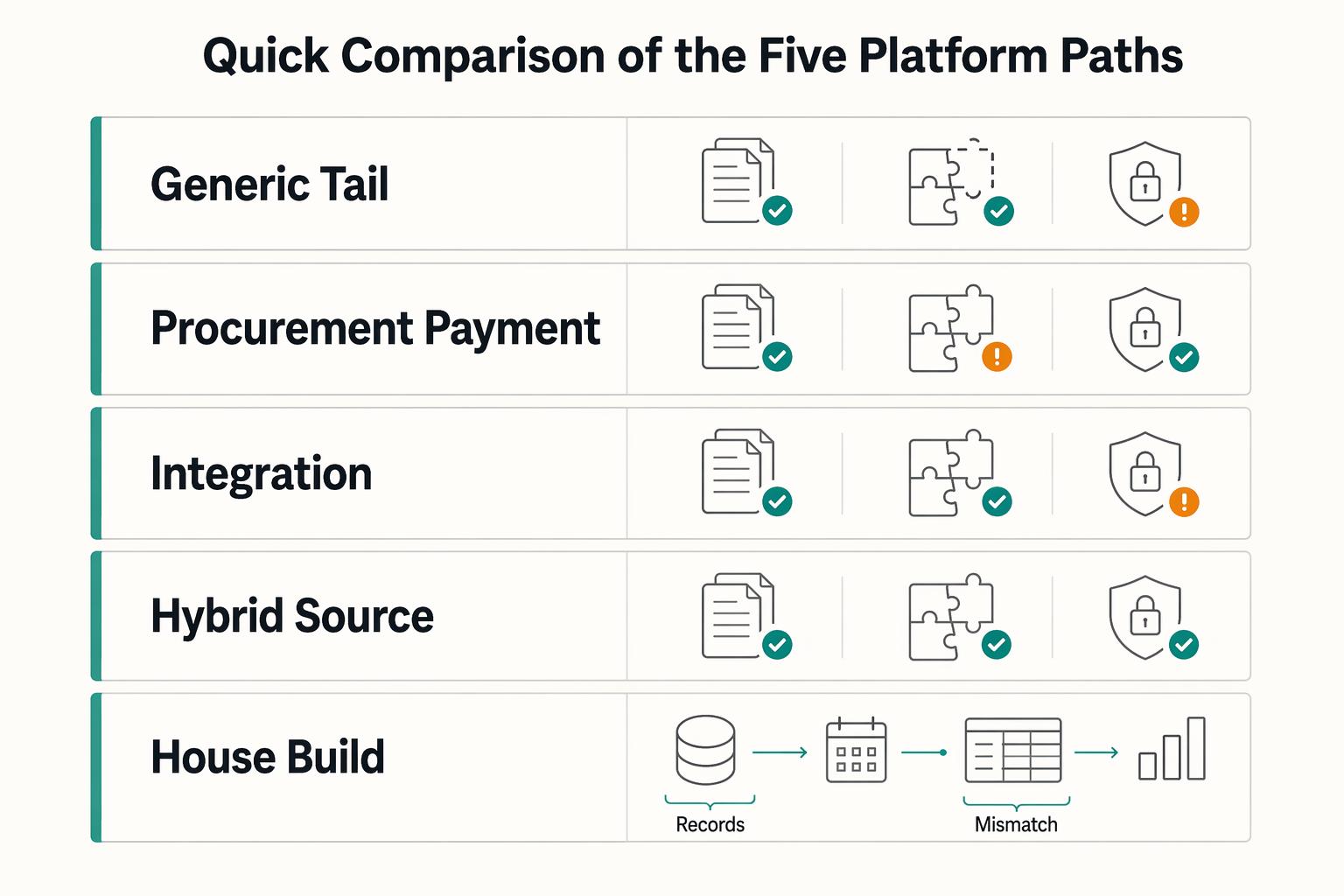
Tail-end spend management can start to break down when long-tail contractor payouts begin to scale. Tools built for low-value, low-visibility procurement can tighten approvals and policy. They are not automatically built for payout-state tracking, retry safety, payout failures, or reconciliation evidence. That gap is the real decision here.
Material Procurement for Platforms: How Marketplaces Manage Raw Material Purchases and Supplier Payments
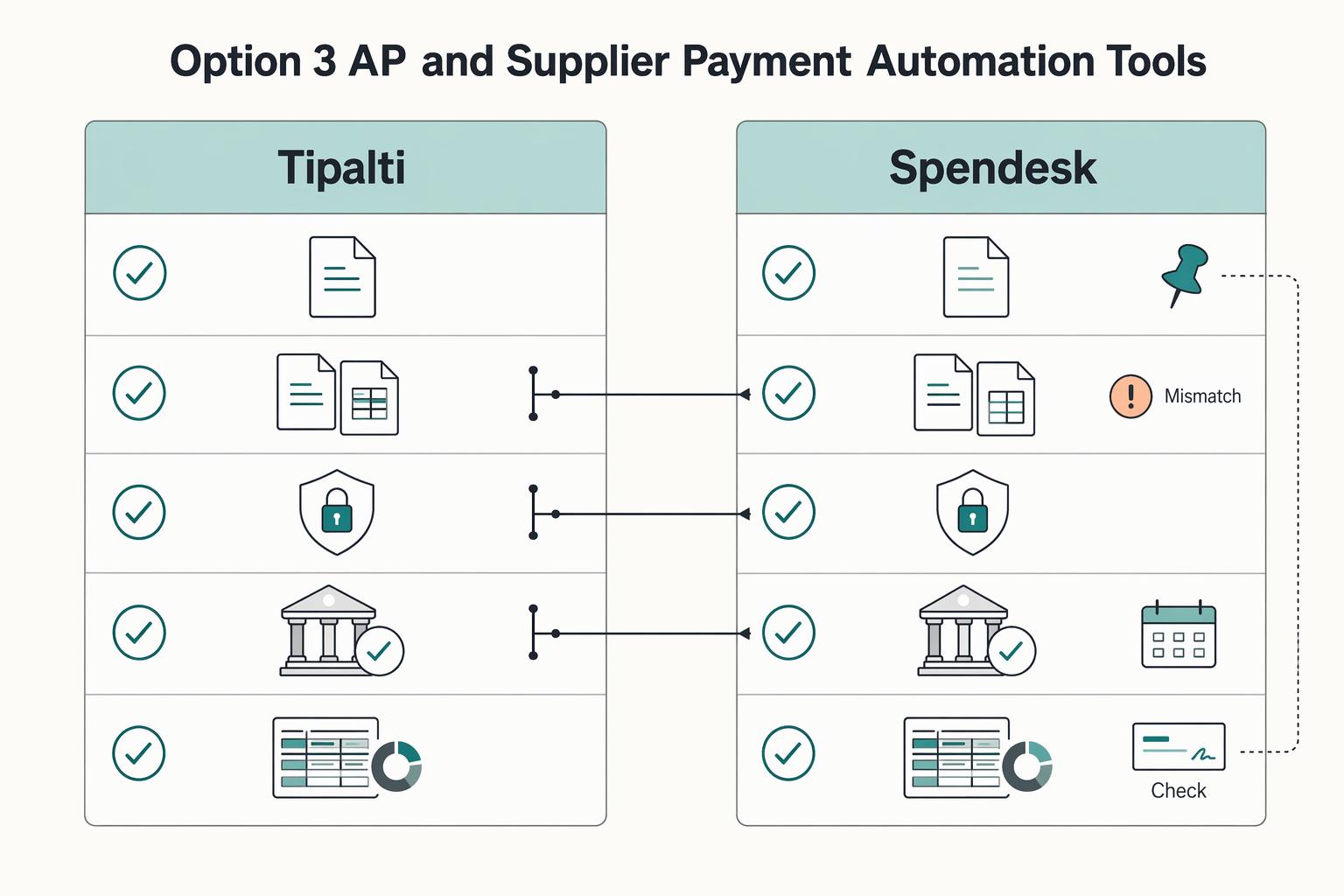
For platform teams evaluating **material procurement platforms marketplaces raw material purchases supplier payments**, the real question is whether you can keep control from start to finish. Can your workflow stay intact from internal request to supplier disbursement to ledger-ready evidence? If that chain breaks, finance inherits more manual review, ops inherits supplier friction, and engineering inherits avoidable exception handling.
Operating a DTC Subscription Box Across Payments, Fulfillment, and Churn
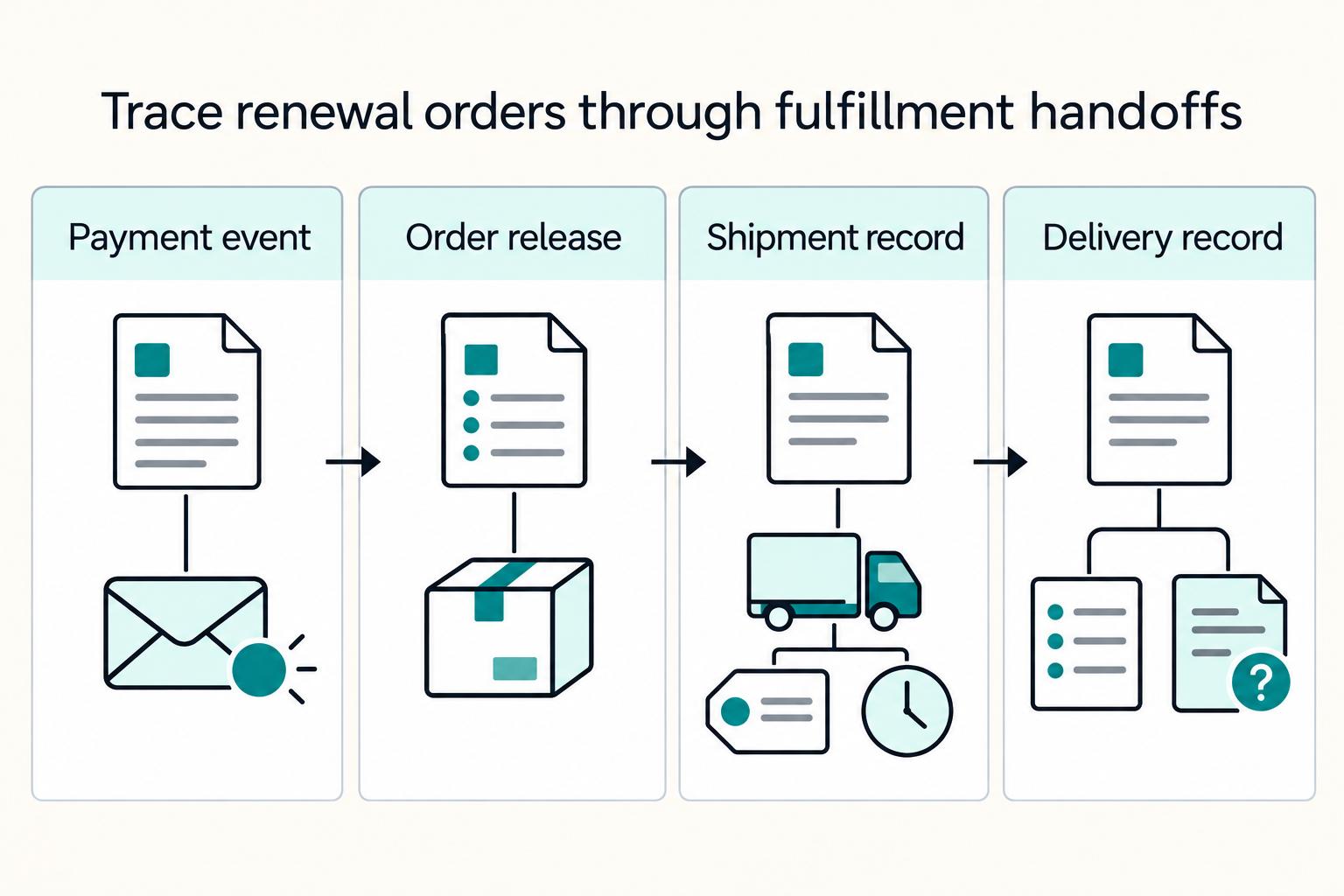
Subscription box launch decisions should start with execution risk, not growth headlines. Growth is real, but so is pressure on retention. Stripe reports recurring payment volume is growing 16% faster than one-time payment volume, while 43% of leaders expect churn to rise and 72% are worried about churn hitting the bottom line.