
Quick Answer
Track both metrics. For platform finance teams, GRR is the base-retention read after churn and downgrades, while NRR adds expansion from that same starting cohort. Use per-customer calculation before totals, or one account’s growth can hide another account’s loss. Keep cohort and period rules identical across both metrics, and treat any GRR-above-NRR result as a data issue first, not a business insight.
How Platform CFOs Should Use NRR and GRR#
If you rely on retention reporting, one number is not enough. Net Revenue Retention (NRR) and Gross Revenue Retention (GRR) answer different questions, and you should read them together before deciding whether the business has a customer problem, an expansion problem, or a reporting problem.
This split matters because the two metrics treat the same customer base differently. NRR measures revenue retained from existing customers over a set period, such as monthly or annually. GRR is stricter. It compares customers period by period and caps each customer's later revenue at the earlier level, so expansion cannot rescue a weak base. That is why GRR tells you more about core retention health, while NRR tells you whether retained customers are also growing.
That cannot stay at headline level. If retention numbers are going to guide decisions, the calculation method has to hold up in operating and finance review. It should be more than a dashboard tile borrowed from generic SaaS commentary. A solid monthly review should make it easy to answer two separate questions: did you keep the revenue base, and did the remaining customers expand enough to change the picture?
One rule matters more than most teams expect: calculate retention customer by customer before you total anything. If you sum all customers first and compare periods later, gains from one account can cover losses from another. That distorts retained-customer analysis and can push leadership toward the wrong conclusion. In a finance review, that is not a small technical detail. It changes the story you tell about risk.
There are two checks worth putting in place from day one. First, treat any case where GRR is higher than NRR as a data-quality issue, not a business insight. Under the described method, GRR should always be less than or equal to NRR. Second, keep both metrics tied to the same period definition and customer set, so you are comparing like with like.
That is the lens for the rest of this comparison. The goal is practical: help you use NRR and GRR as operating tools, with clear decision rules, a few hard checks before numbers go out, and a reporting structure you can actually use in monthly reviews. Related reading: Game Developer Revenue Sharing Agreements That Hold Up After Launch.
NRR and GRR at a glance for platform finance teams#
Use GRR to read base-retention health, then use NRR to see whether retained customers also expanded. In a subscription model, they work as a pair, not substitutes.
| Criteria | Net Revenue Retention (NRR) | Gross Revenue Retention (GRR) |
|---|---|---|
| Definition | Dollar-based recurring revenue retained from current customers over time, including expansion effects. | Recurring revenue retained from current customers, excluding expansion from upgrades or expansions. |
| Formula inputs | Same customer cohort and period, starting recurring revenue, retained recurring revenue, and expansion revenue (including upsell/cross-sell effects). | Same customer cohort and period, starting recurring revenue and retained recurring revenue, with expansion removed. |
| What is excluded | New-customer revenue is outside this retained-customer view. | Upgrade or expansion revenue is excluded by design. |
| What behavior it can hide | Expansion can mask base contraction. | Expansion momentum is not visible. |
| Primary owner | Platform CFO: headline interpretation. Finance Ops: metric construction and controls. Customer Success: expansion and loss drivers. | Platform CFO: base-health read. Finance Ops: retained-base integrity. Customer Success: context on contraction drivers. |
| Interpretation guardrails | With the same cohort and period rules, NRR should be at least as high as GRR because NRR includes upside GRR excludes. | If GRR is higher than NRR, treat it as a data-check issue before making a business call. |
| Operational use | Retention-plus-expansion signal. In this interpretation, above 100% means expansion is outpacing losses; below 100% means contraction. | Base-retention signal without expansion effects. |
Why this split matters in practice#
NRR includes expansion from retained customers, so it answers whether the customers you kept also grew. GRR strips expansion out, so it gives the cleaner read on retained recurring-revenue pressure.
That difference is operationally important: strong expansion can keep NRR looking healthy even when the underlying base is weakening. GRR helps you surface that risk earlier.
What to check before trusting either metric#
Use the same cohort, period definition, and recurring-revenue scope for both metrics. If those inputs differ, NRR-vs-GRR comparisons stop being reliable.
| Check | Article guidance |
|---|---|
| Cohort, period, and scope | Use the same cohort, period definition, and recurring-revenue scope for both metrics |
| Customer-level treatment | Keep treatment consistent at the customer level; if you only compare aggregated totals, growth in one account can hide contraction in another |
| Monthly review note | For monthly reviews, attach a short metric note stating how expansion and contraction were treated for that period |
| Risk review order | If you need one lead metric in a risk review, start with GRR and follow with NRR so expansion does not hide base weakness |
Keep treatment consistent at the customer level. If you only compare aggregated totals, growth in one account can hide contraction in another and distort the operating signal.
For monthly reviews, attach a short metric note stating how expansion and contraction were treated for that period. If you need one lead metric in a risk review, start with GRR and follow with NRR so expansion does not hide base weakness.
For a deeper walkthrough, see How to Calculate Net Revenue Retention (NRR) for a Subscription Platform.
Set metric boundaries before you calculate anything#
Set the boundary first: retention only works when both metrics use recurring revenue from the same customer cohort across periods. If the scope shifts after results move, GRR and NRR become hard to compare and harder to act on.
Use one recurring-revenue definition across teams, then apply treatment rules consistently. GRR should reflect revenue kept after churn and downgrades without expansion, while NRR should reflect churn, downgrades, upgrades, and expansion for that same existing-customer cohort. Revenue from new accounts stays out of both.
| Revenue movement | GRR treatment | NRR treatment | Boundary check |
|---|---|---|---|
| Recurring revenue from the opening customer cohort | In scope | In scope | Same customer group in both periods |
| Upsells or expansion from those same customers | Exclude | Include | Include only when the customer is in the opening cohort |
| Downgrades and revenue churn | Count as loss | Count as loss | Do not offset one account's loss with another account's gain |
| Contract expirations | Count as loss | Count as loss | Apply the same period rule consistently |
| New accounts | Exclude | Exclude | New-account revenue is outside retention measurement |
Before you publish, confirm two checks: included categories match your recurring-revenue scope, and new accounts are excluded from both metrics. Then document the rule set and effective period in a metric change log so later updates can be traced.
If retention changes are tied to pricing or take-rate design, see Monetization Models for Creator Platforms: Subscriptions Tips Ads and Revenue Share.
Build the retention dataset from ledger truth not dashboard totals#
Once the revenue boundary is locked, do not aggregate so early that you lose the unit of analysis. For defensible retention reporting, define the unit of analysis and freeze segmentation before you evaluate results.
Dashboard totals can support monitoring, but they can hide how the result was produced. In retention work, keep the analysis at the customer-period level long enough to explain what changed and why.
Keep the unit of analysis fixed until evaluation is complete#
| Decision point | Unit-of-analysis approach | Early-total approach |
|---|---|---|
| Segmentation | Defined and frozen before evaluation | Can shift during reporting |
| Retention view | Change is visible at the analysis unit | Change is compressed into one total |
| Review quality | Easier to explain and challenge assumptions | Harder to trace assumptions |
Connect retention reporting to operational risk outputs#
If you are running an operational capability review, map operational constraints to revenue and retention outcomes, not just topline movement. The expected outputs are a Revenue-at-Risk map, a Margin-at-Risk map, and a Readiness plan.
Keep the action list practical: each item should name an owner, a timeline, and a measurable impact on the P&L. That turns retention reporting into an operating tool rather than a dashboard snapshot.
If you are evaluating whether subscriptions or transaction fees will change expansion and churn patterns, read Choosing Between Subscription and Transaction Fees for Your Revenue Model.
Use NRR and GRR together to diagnose what is actually broken#
Use GRR and NRR as a pair: GRR shows whether your baseline recurring revenue is holding, while NRR shows that baseline plus expansion from the same customer base. The gap between them is often the quickest sanity check when results look good on the surface.
A simple contrast shows why this matters: 95% gross retention and 110% net retention is not the same condition as 85% gross retention and 110% net retention. In both cases, NRR is over 100%, but the second profile points to a weaker retained base that expansion is masking.
Before debating causes, go back to your per-customer retention view and rank expansion by account. If a small set of accounts drives most of the lift, check whether smaller accounts are quietly churning or downgrading underneath.
| Pattern | What it signals first | First checks |
|---|---|---|
| GRR down, NRR flat or up | Expansion may be masking baseline retention weakness | Churn accounts, downgrade reasons, expirations, and segments with the largest gross loss |
| GRR stable, NRR down | Baseline retention may be steady, but expansion motion weakened | Upsell conversion, pricing or packaging changes, and expansion performance by cohort |
| Both down | Pressure on both retained base and expansion | Whether deterioration is concentrated in one segment or broad across cohorts |
| Both stable or improving | Baseline is holding and expansion is contributing | Validate that gains are not classification or cohort-definition errors |
If GRR declines first, start with churn and downgrades. If GRR holds but NRR falls, investigate expansion execution first. Keep both metrics scoped to recurring-revenue behavior so the diagnostic signal stays consistent.
The practical rule: use the GRR-NRR gap as a decision trigger, then investigate based on which metric moved first. Related: The Best Ways to Upsell and Cross-Sell to Existing Clients.
Hidden failure modes competitors skip in platform environments#
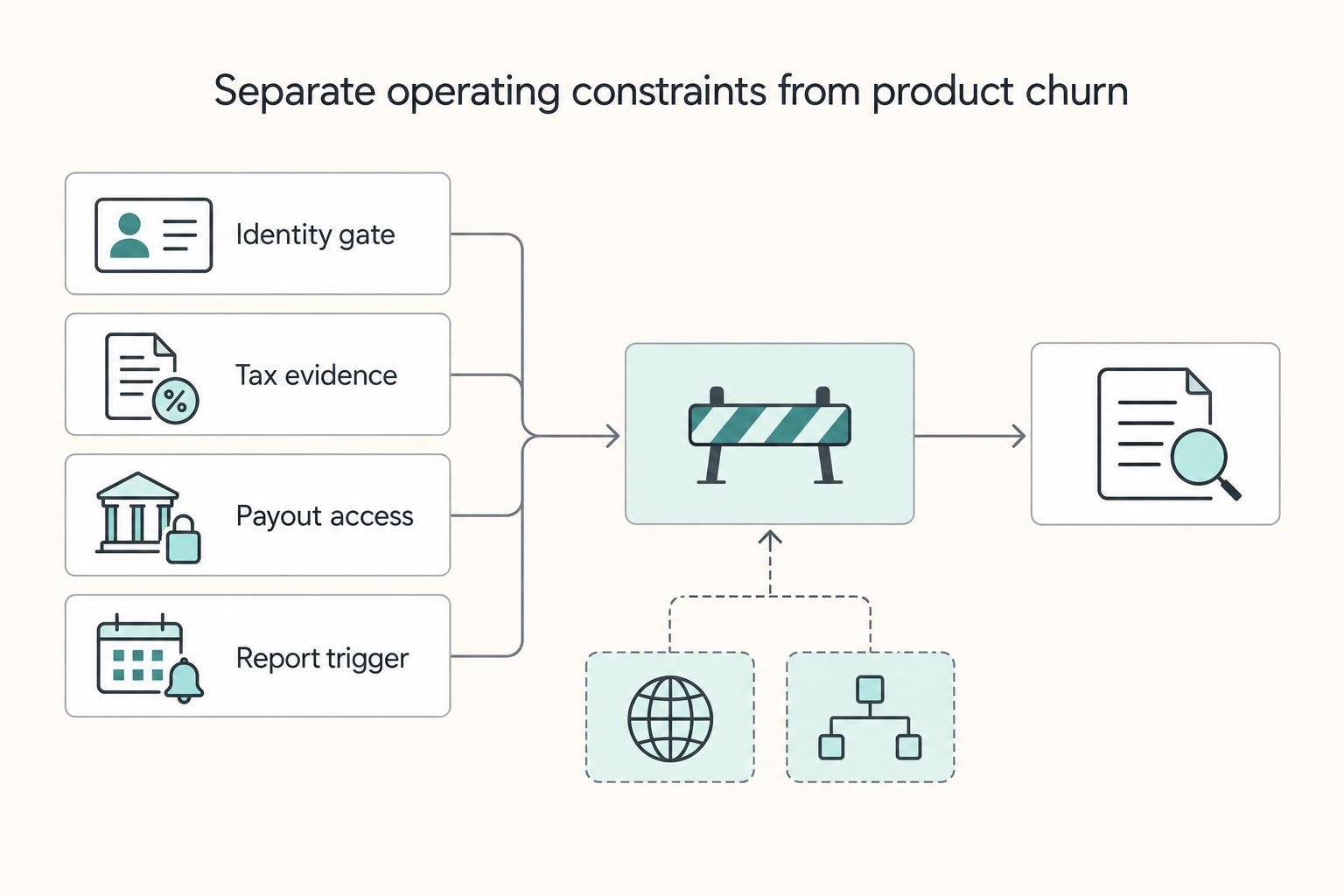
Before you label a downgrade as product churn, separate verified operational constraints from product behavior. FBAR is the only area with concrete detail here; treat other compliance, tax, and payout labels as unconfirmed until you verify applicability by market and program.
The practical classification rule is simple: use an "ops-constrained" status when an administrative gate is still open, then make a product-churn call only after that gate is resolved. That keeps GRR diagnosis tied to evidence instead of assumptions.
| Area in retention review | What this evidence pack supports | What to do in your readout |
|---|---|---|
| KYC, AML, KYB | Confirm effect and threshold with the relevant authority | Keep as a category label only; do not infer causality without program-level evidence |
| W-8, W-9, 1099, VAT validation | Confirm effect and threshold with the relevant authority | Treat as unverified in this section unless you have separate approved evidence |
| VBAs, payout batches | Confirm failure pattern with the relevant authority | Verify payout infrastructure impact before attributing retention movement to it |
| FBAR (Report of Foreign Bank and Financial Accounts) | Supported with specific filing mechanics and timeline caveats | Use concrete checks, not a generic "tax form pending" label |
Where the evidence is strong#
For FBAR, FinCEN guidance is explicit: maximum account value is a reasonable approximation of the greatest value during the calendar year, each account is valued separately, amounts are recorded in U.S. dollars and rounded up to the next whole dollar (for example, $15,265.25 becomes $15,266), and a negative computed value is entered as 0 in item 15. FBAR obligations can also apply based on signature authority even without financial interest.
| FBAR detail | Supported statement |
|---|---|
| Maximum account value | A reasonable approximation of the greatest value during the calendar year |
| Valuation method | Each account is valued separately |
| Currency and rounding | Amounts are recorded in U.S. dollars and rounded up to the next whole dollar |
| Negative computed value | A negative computed value is entered as 0 in item 15 |
| Applicability | FBAR obligations can apply based on signature authority even without financial interest |
Caveats that belong in the retention readout#
State coverage constraints directly: what is supported, when it is enabled, and whether it varies by market or program. For FBAR timing, filer-type and notice-based variation exists, including references to April 15, 2026 and April 15, 2027 in different extension contexts. If an account exits while an admin gate is still open, keep the event classified as operationally constrained until you confirm a true product-driven cancellation.
Which metric to prioritize in each operating scenario#
Prioritize Gross Revenue Retention (GRR) when you need a clear view of base stability, and prioritize Net Revenue Retention (NRR) when base retention is stable and you need to judge expansion quality.
Use GRR first when the base feels unstable, because it shows retained revenue before upsells. Keep NRR visible, but do not let expansion headlines outrank downgrade and churn signals in the same period.
Use NRR as the lead metric when the base is holding and your main decision is growth from existing customers. Keep GRR as a guardrail so expansion does not hide weakening retention underneath.
Treat both metrics cautiously when data quality is still shifting. Retention metrics are only as reliable as the data behind them, so your planning decisions should match the confidence level of the underlying records.
| Operating context | Primary metric | Secondary metric | Immediate next action |
|---|---|---|---|
| Base retention looks volatile | GRR | NRR | Review churn and downgrade patterns before interpreting expansion |
| Base retention is steady and expansion is active | NRR | GRR | Check whether expansion is broad across accounts, not concentrated in a few |
| Strong expansion headline but signs of losses elsewhere | GRR | NRR | Validate whether upgrades are offsetting underlying churn |
| Underlying revenue data confidence is low | GRR | NRR (provisional) | Resolve data reliability gaps before setting aggressive retention targets |
Run operating reviews with stability first and growth second: lead with GRR when the base or data is uncertain, and let NRR lead when both are dependable.
Decision checklist before you present retention to leadership#
Treat the retention readout as ready for leadership only when the definition is consistent, the cohort is complete, and the movement is explainable. If any one of those is not true, label the number as provisional.
| Readiness check | What to confirm | If missing |
|---|---|---|
| Metric integrity | Use one approved definition for the reporting window and one complete customer cohort. NRR should reflect retained, contracted, and expanded revenue, with churn captured as losses from contract expirations, cancellations, or downgrades. Validate this with per-customer checks in both directions. | Label the number as provisional |
| Data integrity | Make sure the slide number matches the underlying records used to produce it, and clear data-review checks before presenting conclusions | Label the number as provisional |
| Explainability | Label major movement as revenue churn, upsells, downgrades, or contract expirations, and assign an owner to each driver. Review NRR alongside GRR. | Label the number as provisional |
- Confirm metric integrity: Use one approved definition for the reporting window (typically one month or one year) and one complete customer cohort. NRR should reflect retained, contracted, and expanded revenue, with churn captured as losses from contract expirations, cancellations, or downgrades. Validate this with per-customer checks in both directions so upgrades and missing records are both visible.
- Confirm data integrity: Make sure the slide number matches the underlying records used to produce it, and clear data-review checks before you present conclusions. A polished dashboard can still hide mapping, timing, or adjustment issues at customer level.
- Confirm explainability: Label major movement as revenue churn, upsells, downgrades, or contract expirations, and assign an owner to each driver. Review NRR alongside GRR so leadership can see whether expansion is broad-based or mainly offsetting losses.
If a decision depends on uncertain coverage or interpretation, set the next validation step explicitly instead of guessing.
For client prepayments that can complicate monthly reporting, see Deferred Revenue Accounting for Client Prepayments.
Conclusion#
The practical answer is not to choose between Gross Revenue Retention (GRR) and Net Revenue Retention (NRR). Run them as a pair. GRR tells you whether existing revenue held after churn and downgrades. NRR tells you whether expansion inside that same customer base was strong enough to offset losses. One number without the other gives you only part of the story.
That paired read also improves diagnosis. If base retention is unstable, let GRR lead the conversation and use NRR as context. If GRR is steady but NRR drops, expansion may be softening. If NRR looks healthy while GRR slips, do not treat that as a clear win yet, because expansion can mask weakness in the underlying base.
The discipline behind the metric matters as much as the metric itself. Retention conclusions should come from per-customer data, not aggregate dashboard totals that net gains against losses across the book. A useful final check before you present numbers is simple: confirm that the same starting cohort was evaluated customer by customer, and make sure the result can be reproduced from a consistent source revenue record. If the figure only exists in a dashboard and cannot be traced back, treat it as a reporting risk.
You will also save time by locking definitions before the debate starts. Be explicit about what counts as recurring revenue, how expansion is handled, and who can approve a change to the calculation. Keep a small evidence pack for each reporting cycle, such as the calculation version, source extract, exception notes, and reviewer sign-off. That is not bureaucracy for its own sake. It is how you avoid spending the next operating review arguing about metric logic instead of fixing churn, downgrades, or weak expansion.
For platform operators, cleaner retention reporting is not just a finance exercise. It helps Finance, Customer Success, and commercial owners act on the right problem faster. Final recommendation: use both metrics together, require per-customer calculation, and treat unexplained movement or inconsistency as something to investigate. That is the difference between reporting retention and managing it. For a step-by-step walkthrough, see Building Subscription Revenue on a Marketplace Without Billing Gaps.
Frequently Asked Questions
What is the practical difference between Net Revenue Retention (NRR) and Gross Revenue Retention (GRR)?
GRR tells you how much recurring revenue you kept after churn and downgrades, with no credit for expansion. NRR shows the revenue change after churn, downgrades, upgrades, and expansion, so it answers a different question. It shows whether existing-customer expansion offset losses. Used together, GRR gives a base-retention view and NRR adds the net effect including expansion.
Does GRR include upsells or any expansion revenue?
No. Gross Revenue Retention excludes upsells and other expansion revenue by definition. If expansion is included, you are no longer looking at GRR, so the metric definition needs to be corrected.
Is GRR always less than or equal to NRR?
Yes, if the calculation logic is correct. Since NRR includes the same losses as GRR plus any upgrades or expansion, GRR should never come out higher. If it does, recheck the calculation method and underlying data.
Can NRR be above 100% in a subscription model?
It can be. In a subscription model, NRR goes above 100% when expansion from the starting cohort outweighs churn and downgrades in that same cohort. It should still be read alongside GRR, because expansion can mask weakness in core retention.
How often should we calculate retention metrics if our finance close is monthly?
Use a regular cadence that matches how you manage the business and review trends. The important part is consistency over time, because consistent tracking supports trend detection and decision-making.
Why does per-customer calculation matter more than aggregate dashboard totals?
Because you should compare retention at the customer level before aggregating, or gains from one account can cover up losses from another. A dashboard total can look stable while underlying churn or downgrades are obscured.
Should we run the company on NRR or GRR as the primary metric?
Use both together for a complete view. GRR shows what revenue you kept after churn and downgrades, while NRR shows the net revenue change after losses and expansion.
Try a related tool
Researched and edited by the Gruv editorial team. Gruv builds cross-border billing, payouts, and finance-operations software for global businesses.
Sources
Includes 1 external source outside the trusted-domain allowlist.
- bsaefiling.fincen.gov/docs/XMLUserGuide_FinCENFBAR.pdftrusted
- fincen.gov/reporting-maximum-account-valuetrusted
- fincen.gov/report-foreign-bank-and-financial-accountstrusted
- sec.gov/Archives/edgar/data/1835830/0001628280230306...trusted
- sec.gov/Archives/edgar/data/1583708/0001628280210116...trusted
- stripe.com/resources/more/net-revenue-retention-vs-gros...trusted
- websail-fe.cs.northwestern.edu/downloads/OTyper_data_aaai18/UMLS_dta/word_l...trusted
- amplitude.com/explore/growth/net-revenue-retentionexternal
Educational content only. Not legal, tax, or financial advice.
Related Posts

Calculate NRR for a Subscription Platform Without Reconciliation Gaps
The formula is the easy part. In practice, the hard part is producing a single Net Revenue Retention number that finance, ops, and product can all trace to the same recurring revenue base and the same set of in-period movements.
How to Upsell and Cross-Sell Existing Freelance Clients
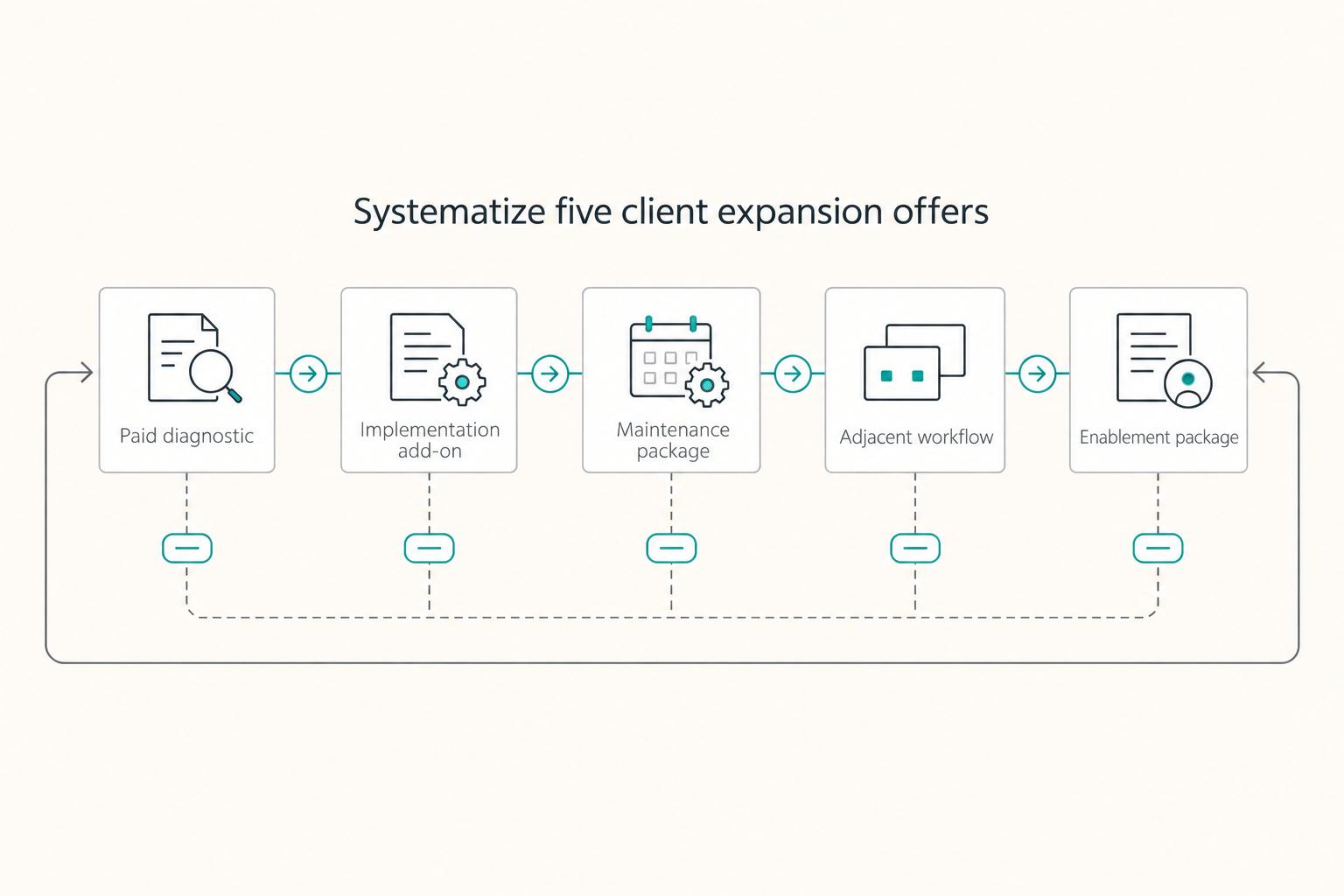
If you want to upsell freelance clients without turning every extra request into a messy side deal, stop inventing offers in the moment. The goal here is consistency: use the same decision path each time so added work is clear before you pitch it.
Choosing Creator Platform Monetization Models for Real-World Operations
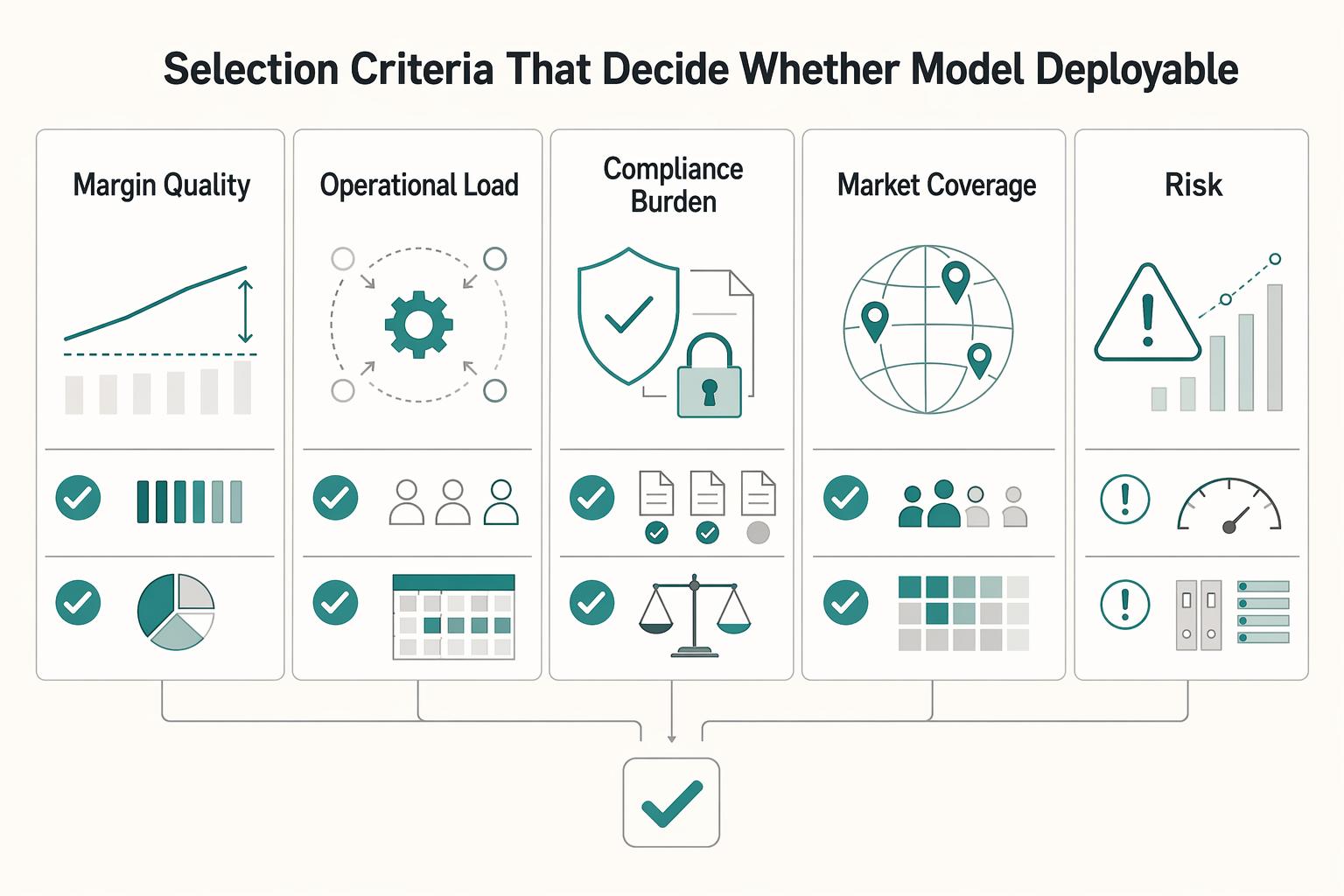
Popularity alone can be a poor way to choose among creator platform monetization models. If a model only looks good during a viral spike, a sponsorship burst, or a one-time product drop, it is a weak base for product and go-to-market bets.