

Quick Answer
Calculate NRR from the opening existing-customer recurring base, then add expansion and subtract downgrades and churn under one fixed cutoff policy. Keep new-logo revenue out, and make MRR and ARR views use the same movement classification and timestamp rule. Before final sign-off, tie the reported bridge to billing records, ledger postings, and the retained-balance report. If that three-way reconciliation still has open variance, publish the figure as provisional.
Why NRR calculations fail in real subscription operations#
The formula is the easy part. In practice, the hard part is producing a single Net Revenue Retention number that finance, ops, and product can all trace to the same recurring revenue base and the same set of in-period movements.
Start with the formula and define each line#
Start with the canonical equation, then define what each line means in your business. A defensible NRR calculation begins with starting recurring revenue, adds expansion, subtracts revenue lost from churn, and divides by the starting base: NRR = (Starting MRR + Expansion MRR - Churn MRR) ÷ Starting MRR.
That looks simple until someone asks what counted as starting MRR, what fell into expansion, and whether a cancellation, downgrade, or reprice was handled the same way in every report. Churn rate alone cannot show the direct impact on growth, because recurring revenue moves through more than one path. Upgrades, cross-sells, downgrades, and cancellations all change the picture.
Checkpoint: before you pull data, write down the allowed movement types and the exact recurring revenue base you are using. If those definitions are still ambiguous, the number is not ready for review.
Keep the metric tied to existing customers#
Keep the metric tied to existing customers only, and keep the time grain clean. NRR, also called Net Dollar Retention or NDR, measures revenue retained from the existing customer base over a period, including expansion and churn effects. If new customer revenue gets into the calculation, you are no longer measuring retention. You are measuring a blended growth story.
This is where monthly and annual views can drift apart. Monthly Recurring Revenue is the recurring revenue generated at the start of the month, which makes it a practical operating input. ARR can be useful for annual reporting, but it is a subscription metric, not a generic annualized revenue shortcut. If you use MRR for the close and ARR for the board deck, both views need to roll up from the same recurring events and the same customer cohort.
Failure mode: teams annualize a monthly number one way for ARR, but classify movements differently in the MRR view. That creates two "correct" answers that do not reconcile.
Set verification rules before debate starts#
Set verification rules before anyone starts arguing about the result. You want one version of truth that can survive a basic challenge: where did the starting balance come from, what changed during the period, and can each change be traced to a source record? The practical test is not whether the metric looks reasonable. It is whether you can walk from the reported number back to documented recurring revenue movements without hand-waving.
A good evidence pack is simple: the starting recurring base, the list of in-period movements, and the ending retained recurring revenue. If an event cannot be mapped, or the monthly and annual views tell different stories, stop and fix that before publishing. The rest of this guide shows how to lock definitions, prepare data, reconcile the result, and get to a number you can reuse with confidence.
If billing gaps are distorting your expansion or churn numbers, see Building Subscription Revenue on a Marketplace Without Billing Gaps.
Lock metric policy before any extraction#
Lock the metric policy before you pull data so review stays focused on accuracy, not label disputes.
| Area | Rule | Evidence |
|---|---|---|
| Terms | Treat Net Revenue Retention (NRR) and Net Dollar Retention (NDR) as the same metric, and define Gross Revenue Retention (GRR) separately because it excludes expansion revenue. | One controlled policy document |
| Scope | Keep new-logo revenue out of retention reporting and require an explicit period-start cohort behind the calculation before publication. | Period-start cohort behind the calculation |
| Reporting grain | Use one grain per view: MRR is monthly predictable recurring revenue, while ARR is the 12-month view of that same recurring base under current customers, pricing, and contracts. | Movement classification consistent across both views |
| Sign-off | Name who approves definitions, who approves classification logic, and who owns reproducible queries before numbers are published. | Required sign-offs before publication |
- Define terms in one controlled policy document.
State that Net Revenue Retention (NRR) and Net Dollar Retention (NDR) are the same metric for recurring revenue retained from existing customers over a defined period, and define Gross Revenue Retention (GRR) separately because it excludes expansion revenue. Then define how you classify Expansion Revenue, Downgrades, Customer Churn, and Renewals, with one plain example for each.
- Set scope to existing-customer recurring revenue only.
Keep new-logo revenue out of retention reporting. Require an explicit period-start cohort behind the calculation before publication.
- Choose reporting grain now.
MRR is monthly predictable recurring revenue, while ARR is the 12-month view of that same recurring base under current customers, pricing, and contracts. Use one grain per view, and keep movement classification consistent across both views.
- Assign sign-off owners before extraction.
Name who approves definitions, who approves classification logic, and who owns reproducible queries, then require those sign-offs before numbers are published.
Prepare source data and an evidence pack for close#
Prepare extraction and movement mapping before you calculate NRR. If a recurring change cannot be traced to a billing record and a customer in the period-start cohort, stop and fix lineage before close.
| Step | What to produce | Checkpoint |
|---|---|---|
| Extract recurring events | Land immutable source IDs unchanged in the warehouse with customer ID, subscription ID, product or plan reference, effective timestamp, and recurring amount at the locked reporting grain. | Each extracted row ties back to one source object or event without hand-typed spreadsheet keys. |
| Classify movements | Map every in-period recurring movement to Expansion Revenue, Downgrades, Customer Churn, or Renewals in transformation logic. | No unmapped statuses pass. |
| Build close pack | Produce the period-start cohort, in-period movement log, period-end recurring balance, and reconciliation exports. | Reconciliation exports tie transactional data to the general ledger and include beginning-balance and difference or variance visibility. |
| Run validation checks | Check duplicate IDs, null IDs, invalid movement values, and manual spreadsheet overrides before NRR computation. | If an override appears without clear trace documentation, treat the close pack as incomplete and hold publication. |
Step 1. Extract recurring events with immutable source IDs. Pull recurring subscription events or objects that each map to a unique source record. Stripe events expose unique identifiers, and Zuora subscription IDs are system-generated, non-editable, and queryable (Zuora also documents a 32-digit subscription ID format beginning 4028...). Land these IDs unchanged in your warehouse with customer ID, subscription ID, product or plan reference, effective timestamp, and recurring amount at your locked reporting grain.
Expected outcome: each extracted row ties back to one source object or event without hand-typed spreadsheet keys.
Step 2. Classify movements before the NRR rollup. Map every in-period recurring movement to your approved buckets: Expansion Revenue, Downgrades, Customer Churn, or Renewals. Apply this mapping in transformation logic, not only in reporting, so your metric and close evidence stay aligned.
Checkpoint: no unmapped statuses pass. If a raw billing status is outside the allowed list, fail the run and resolve classification first.
Step 3. Build the close evidence pack. Produce these four artifacts each cycle:
- period-start cohort
- in-period movement log
- period-end recurring balance
- reconciliation exports
Use reconciliation exports that tie transactional data to the general ledger and include beginning-balance and difference or variance visibility.
Step 4. Run validation checks and block silent fixes. Before NRR computation, enforce checks for duplicate IDs, null IDs, and invalid movement values. Then check for manual spreadsheet overrides; if an override appears without clear trace documentation, treat the close pack as incomplete and hold publication.
For a step-by-step walkthrough, see Choosing Between Subscription and Transaction Fees for Your Revenue Model.
Set cohort and period boundaries that do not drift#
Lock the starting cohort, cutoff rule, and timestamp policy at period open, then keep them consistent across periods. NRR is only comparable over time when it uses the same starting customers and the same period-assignment logic each cycle.
| Boundary | Rule | Control |
|---|---|---|
| Starting cohort | Freeze the starting cohort at period open and keep new-customer acquisition outside the retained cohort. | Save the period-start cohort snapshot in the evidence pack, and do not regenerate it after close unless there is an approved correction note. |
| Timestamp policy | Use either billing-posted time or ledger-posted time for recurring-revenue timing, and apply that policy consistently in every period. | For sampled records, show the exact timestamp field used to place each change in-period. |
| Cutoff date | Apply one accounting cutoff date for the period, and route late postings forward unless written policy explicitly allows controlled back-posting. | If an exception is allowed, require a trace note with the reason, approver, affected records, and policy clause. |
Step 1. Freeze the starting cohort at period open. NRR compares period-end revenue to beginning-of-period revenue from those same customers, so new-customer acquisition stays outside the retained cohort.
Document edge-case treatment before close, including reactivations, paused subscriptions, and late Renewals. Do not assume a universal rule; define your rule set once and apply it consistently. Save the period-start cohort snapshot in the evidence pack, and do not regenerate it after close unless there is an approved correction note.
Step 2. Choose one timestamp policy for both MRR and ARR. Use either billing-posted time or ledger-posted time for recurring-revenue timing, and apply that policy consistently in every period. Cohort math starts from beginning-of-period MRR, and MRR feeds ARR, so mixed timestamp fields create timing noise that can look like churn, expansion, or missing Renewals.
Verification point: for sampled records, you should be able to show the exact timestamp field used to place each change in-period.
Step 3. Enforce the cutoff date and route late postings forward. Apply one accounting cutoff date for the period. If January 31 is your cutoff, postings after that point go to February or later unless your written policy explicitly allows controlled back-posting.
The tradeoff should be explicit: consistency across periods is usually more valuable than reclassifying late items to make one close look more precise. If an exception is allowed, require a trace note with the reason, approver, affected records, and policy clause; otherwise, route it to the next period.
Related: How to Use Pause Subscriptions as a Retention Tool: Implementation Guide for Platform Builders.
Calculate NRR once and explain what it means#
After cohort and cutoff are locked, use one Net Revenue Retention definition and keep it fixed each period. Treat NDR as the same metric under a different label.
Use one canonical formula#
Use the same line items each close:
NRR = (Starting recurring revenue + Expansion Revenue - Downgrades - Customer Churn) / Starting recurring revenue
Keep the numerator tied to the same opening cohort. New-customer revenue stays out. If contractions are grouped inside churn in your source system, that is fine if your policy is explicit and applied consistently.
For review, reconcile the locked-cohort ending balance to: starting recurring revenue + expansion - downgrades - churn. If it does not tie, fix classification and scope before debating the final percentage.
Read the percentage as an operating signal#
NRR tells you whether recurring revenue from existing customers grew, held, or shrank after expansion, downgrades, and churn.
| NRR result | Operating meaning |
|---|---|
| Above 100% | Existing-customer recurring revenue expanded net of losses. |
| About 100% | The base roughly held: expansion replaced losses but did not clearly grow cohort revenue. |
| Below 100% | Contraction and churn outweighed expansion. |
Use the line items alongside the headline number. Without component values, NRR is hard to diagnose and hard to act on.
Pair NRR with GRR#
Use NRR with GRR because they answer different questions. GRR isolates retained recurring revenue from existing customers excluding expansion, while NRR includes expansion from that same base. A side-by-side helps separate retention quality from expansion effects: Net Revenue Retention (NRR) vs. Gross Revenue Retention (GRR): What Platform CFOs Need to Track.
A strong NDR can still mask weakening retention quality if GRR is falling. A flat NRR with healthy GRR often points to expansion motion as the first place to investigate, but confirm with line-item decomposition before deciding.
For period reporting, publish the formula, the four line items, and the paired GRR view together. For the churn side of that reporting, see How to Calculate and Manage Churn for a Subscription Business.
Reconcile to ledger truth and approve publication#
Approve publication only after a three-way tie-out between billing output, ledger postings, and the final NRR/GRR report. If those layers do not agree, the retention number is not close-ready.
Run the three-way tie-out#
Check billing first, then accounting, then reporting, using the same cohort and cutoff policy across all three.
If you use Stripe, use the debits and credits report as the detailed ledger-entry view for GL reconciliation and audit checks. If you use Zuora, use the accounting report and confirm it agrees with the GL revenue account value and the RC Rollforward period movement totals.
Validate these questions before sign-off:
- Do billing events for the locked cohort match the in-period movements in the retention report?
- Do posted ledger amounts reconcile to those same billing movements under the same cutoff policy?
- Does the period-end retained revenue bridge in the report match what subledger and GL reports support?
A common failure pattern is a timing mismatch between billing event time and ledger posting time. Flag that before approval so timing differences are not mistaken for real retention movement.
Route exceptions before approval#
When the tie-out fails, classify the gap and route it for correction. Reconciliation reports are there to confirm balances and expose discrepancies, so treat each break as a classification, timing, or posting issue until resolved.
| Exception seen in review | First thing to verify | Why it matters |
|---|---|---|
| Missing Renewals | Confirm the renewal exists in billing and whether posting landed in the same close window | Timing gaps can understate retained revenue |
| Duplicated Downgrades | Check immutable event IDs and movement-log joins | Duplicate contractions can artificially depress GRR and Net Revenue Retention |
| Unclassified Customer Churn | Review unmapped statuses and cancellation events before report generation | Incomplete movement mapping weakens numerator integrity |
Automation does not remove this control. Even with automated posting paths (for example, AR journals posted from Zuora into Workday Financials), you still need to verify that postings reached the target ledger in the close period.
If variance is still open, make the status explicit. A practical policy is to mark the report provisional and hold final retention publication until the variance is cleared or formally explained.
Store the audit trail with the published number#
Store the artifacts needed to reproduce the result: query version, close timestamp, approver names, variance log, and correction history. This aligns with maintaining an audit trail, and Stripe's Original accounting period field helps trace closed-period corrections back to the affected period.
Final test: can another reviewer rebuild the same output from saved artifacts and follow every post-close correction? If not, the section is not approval-ready.
Use NRR and GRR to drive operating decisions#
Do not run operations from one retention number alone. Read GRR and NRR together: GRR shows retained-base quality because it excludes expansion, and NRR shows whether expansion is offsetting contraction and churn within the same existing customer cohort.
Read GRR first to judge base health#
Start with GRR to isolate downgrade and churn pressure in existing accounts. Since GRR excludes expansion, it cannot exceed 100%. If your report shows GRR above 100%, treat it as a verification error.
Keep scope strict: both metrics should use the same period-start existing-customer cohort, and neither should include new-customer revenue. Once new-logo revenue leaks in, retention signals lose decision value.
Use the GRR-NRR gap to choose what to inspect first#
If NRR is stable while GRR declines, expansion may be masking weaker base retention. Investigate churn and contraction drivers first, then decide whether expansion tactics are solving root causes or just covering them.
If GRR is steady while NRR stalls, base retention may be holding while expansion underperforms. Inspect expansion paths such as packaging, seat growth, and renewal design before assuming a single cause.
Use the formula inputs as a control check: (Starting Revenue + Expansion Revenue - Contraction Revenue - Churn Revenue) / Starting Revenue × 100. If NRR moved but you cannot identify which input moved, your operating read is incomplete.
Set review cadence by decision speed, then keep policy consistent#
Pick a review rhythm your team can act on, and keep cohort and timestamp policy consistent across reviews. Faster reporting only helps when it uses the same rules as close; mixed policies create artificial swings and bad decisions.
Fix the mistakes most guides skip#
If your NRR result keeps shifting after close, treat it as a process issue first: classification logic, cohort scope, timing alignment, or decision ownership.
Step 1. Lock definitions and rerun from versioned logic when labels drift. NRR is only comparable when upgrades, downgrades, and churn are classified the same way each period, and when starting revenue comes from the same existing customer cohort at period start. Keep a dated metric policy and attach the query version used for close. If definitions change during a period, rerun affected periods from locked logic instead of patching only the latest month.
Step 2. Strip acquisition revenue out of the MRR base before close. NRR excludes new customers, so scope leakage breaks the metric quickly. Use cohort filters based on period-start membership, not current-period activity alone. Before close, sample newly added accounts and confirm they are not in the starting cohort export.
Step 3. Resolve or clearly flag timing gaps between billing and ledger views. Subscription workflows can show billing activity and ledger impact on different timelines, especially near close. Reconcile billing output, ledger postings, and the retained revenue report; log variances with an owner and target resolution time. If open variance could change the reported result, publish as provisional or hold final sign-off.
Step 4. Build a status crosswalk before billing migration. In migrations across systems like Recurly, Zuora, and Stripe, define how source statuses map to your NRR movement classes before cutover. For Stripe migrations, set up Stripe Billing before migration and keep remapping artifacts with close evidence. For large Zuora migrations, plan around throughput and low-activity windows.
Step 5. Assign explicit owners for exceptions and publication. A lightweight approval path helps keep exception handling traceable and publication decisions clear. Set one owner for classification exceptions and one for NDR/GRR release so unresolved issues do not turn into untracked spreadsheet edits.
Related reading: Subscription Billing Platforms for Plans, Add-Ons, Coupons, and Dunning.
Copy and use this NRR close checklist#
Use this as a publish gate: if any item is open, treat the NRR result as provisional.
- Lock definitions before extraction.
Confirm NRR and NDR are treated as the same metric, and GRR is documented separately because it excludes expansion revenue. Keep one approved metric policy in the close packet before data pulls begin.
- Freeze cohort boundary and cutoff policy.
Set the cohort once and keep it fixed across both MRR and ARR views. Use the same customer group for the full period, and keep new customers out of the cohort calculation.
- Classify every movement with one taxonomy.
Map each in-period event to Expansion Revenue, Downgrades, Customer Churn, or Renewals using one approved classification table. If you report renewals, keep a source-to-metric crosswalk so labels from Stripe Billing, Zuora, and Recurly are handled consistently.
- Reconcile billing output to ledger postings.
Do not trust retention output until billing exports tie to ledger values. For Stripe, reconcile payouts to the transaction batches they settle; for Zuora, ensure accounting report totals agree with GL revenue values and that transfer accounting is complete.
- Resolve or explicitly flag variances before publication.
If a variance is still open, mark the result provisional with an owner and SLA; do not publish final Net Revenue Retention as approved.
- Approve final NRR and attach next-cycle actions.
Publish only after approval, and pair the number with concrete follow-up actions for the next close cycle.
Frequently Asked Questions
What is included in Net Revenue Retention for a subscription platform?
NRR includes recurring revenue from the customers who were already active at the start of the period. In practice, that means your starting MRR or ARR for that cohort, plus expansion, minus downgrades or other contraction, and minus churned recurring revenue. A useful control is to classify movements consistently and tie them back to the period-start cohort.
Does NRR include new customers or only existing customers?
Only existing customers. New-logo revenue is out of scope because the metric is meant to isolate how much recurring revenue you retained and expanded inside the opening customer base. If you see recently acquired accounts in the starting cohort file, fix that filter before you trust the result.
What is the difference between NRR, NDR, and GRR in practice?
NDR is just another name for NRR. GRR measures retained recurring revenue from existing customers but excludes expansion, so it tells you how well the base held up before upsell masks any loss. Read them together: if NRR is above 100% while GRR is falling, expansion may be offsetting weakness in retained revenue.
Should we calculate NRR from MRR, ARR, or both?
You can calculate it from either Monthly Recurring Revenue or Annual Recurring Revenue, and many teams keep both views. The important rule is to keep one basis per report and use the same cohort and timestamp policy throughout that view.
How often should a SaaS platform recalculate and review NRR?
There is no single right cadence for every platform. Some tools recalculate net MRR movements once per day, which supports frequent checks between closes. Use a cadence that fits your operating model, then apply it consistently in reporting and review.
What are the most common NRR classification mistakes at month-end?
Classification risks include ambiguous movement labels and new-customer revenue leaking into the retained cohort. Movement types are not always obvious, and even a discount reduction can be classified as contraction, so your policy has to say how those events are treated.
Can NRR look healthy while customer retention quality is getting worse?
Yes. A business can post healthy results if expansion from the remaining customers is strong enough to offset churn and downgrades. That is why you should review GRR, contraction, churn, and expansion mix beside the headline number instead of treating one retained revenue metric as the whole story.
Try a related tool
Where Gruv fits
See recurring billing operations
Launch recurring billing, manage plan changes, and configure failed-payment recovery as the billing model grows.
See reconciliation and mismatch review
Compare ledger entries, provider payment records, and statement rows to see what matches and what finance needs to review.
Researched and edited by the Gruv editorial team. Gruv builds cross-border billing, payouts, and finance-operations software for global businesses.
Sources
Includes 5 external sources outside the trusted-domain allowlist.
- docs.stripe.com/revenue-recognition/reports/debits-and-creditstrusted
- stripe.com/resources/more/how-to-use-monthly-recurring-...trusted
- stripe.com/resources/more/net-dollar-retention-explainedtrusted
- accountingtools.com/articles/cutoff-dateexternal
- accountingtools.com/articles/the-consistency-principleexternal
- amplitude.com/explore/growth/net-revenue-retentionexternal
- blog.workday.com/en-us/how-to-calculate-net-revenue-retention...external
- corporatefinanceinstitute.com/resources/valuation/grr-vs-nrr-saas-retentio...external
Educational content only. Not legal, tax, or financial advice.
Related Posts
Net Revenue Retention (NRR) vs. Gross Revenue Retention (GRR) for Platform CFO Decisions
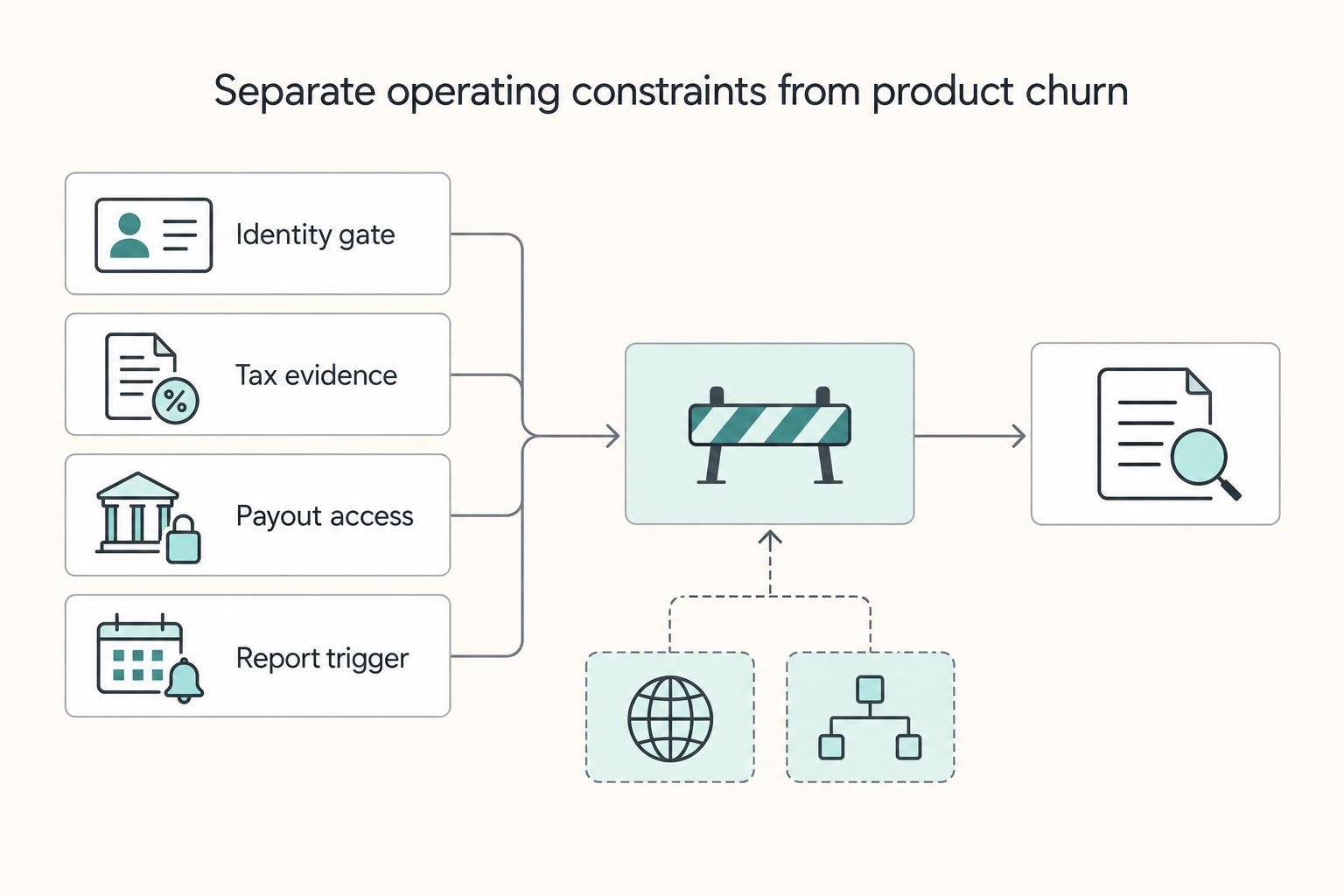
If you rely on retention reporting, one number is not enough. Net Revenue Retention (NRR) and Gross Revenue Retention (GRR) answer different questions, and you should read them together before deciding whether the business has a customer problem, an expansion problem, or a reporting problem.
Choosing Creator Platform Monetization Models for Real-World Operations
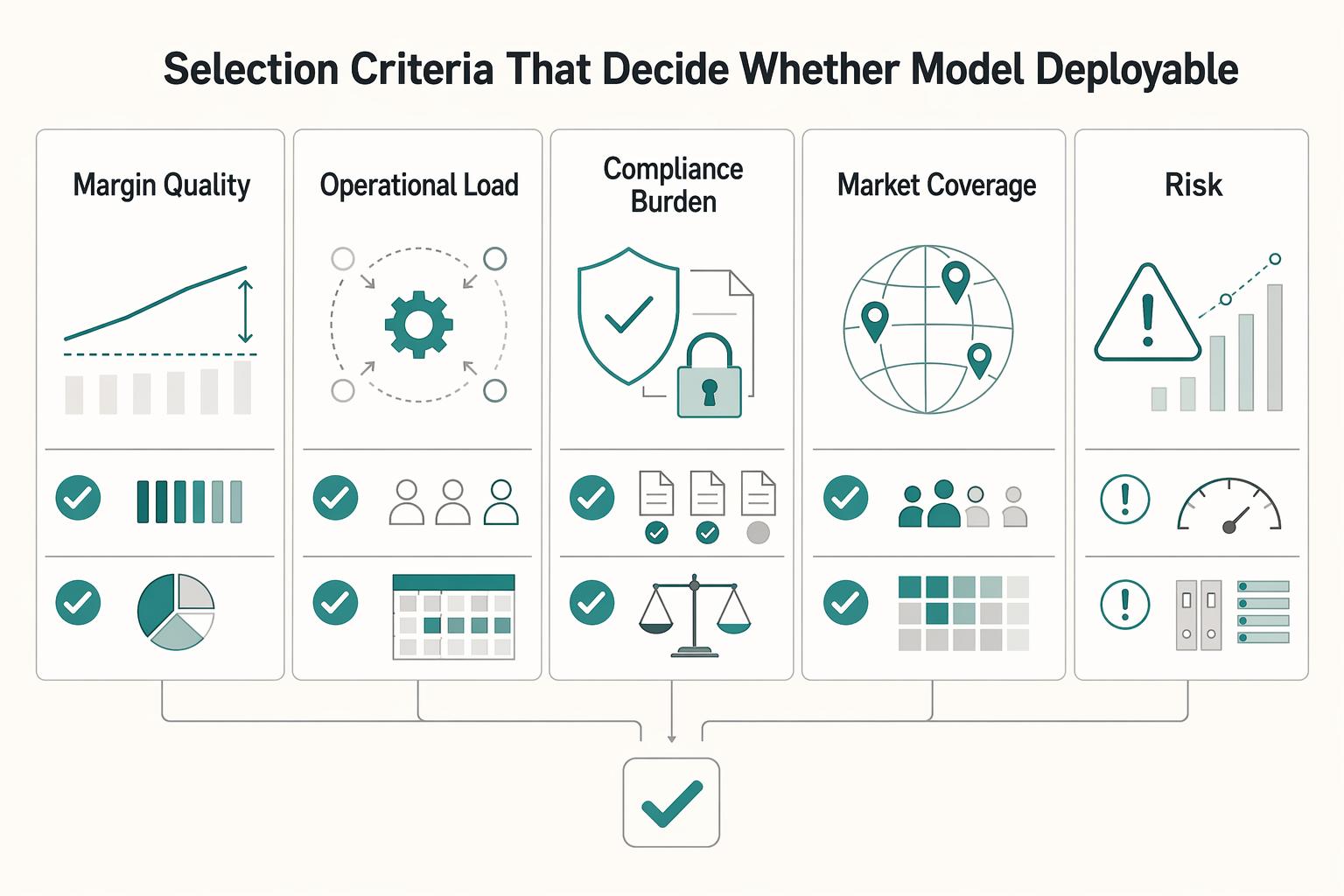
Popularity alone can be a poor way to choose among creator platform monetization models. If a model only looks good during a viral spike, a sponsorship burst, or a one-time product drop, it is a weak base for product and go-to-market bets.

How Platform Builders Implement Subscription Pause for Retention
Treat subscription pause as a policy decision in your subscription lifecycle, not a nicer-looking button in the cancellation flow. If you only surface pause when someone tries to leave, you may see short-term retention wins while creating unclear billing behavior and status handling across systems.